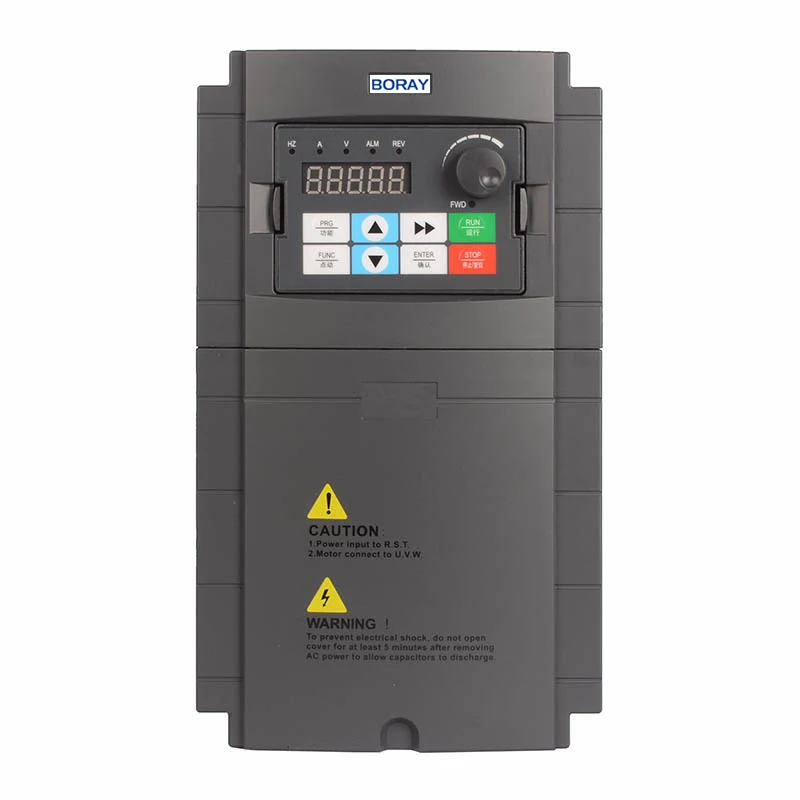
What “Frequency Inverter Braking: Resistor vs Four-Quadrant” means on an RFQ
For “Frequency Inverter Braking: Resistor vs Four-Quadrant”, write the process variable you must hold (pressure, flow, speed, torque) before choosing V/f vs vector.
RFQ data that locks voltage and power class
RFQ data for “Frequency Inverter Braking: Resistor vs Four-Quadrant”: load inertia, stops per hour, grid regen allowed (yes/no), and available panel volume for resistors or AFE filters.
Control functions that change field behaviour
Control setup for “Frequency Inverter Braking: Resistor vs Four-Quadrant”: brake duty, overvoltage stall prevention, and whether energy must return to the grid or can be burned in a resistor.
Site, EMC and protection notes
AFE panels for “Frequency Inverter Braking: Resistor vs Four-Quadrant” need grid quality and filter space; resistor kits need thermal clearance and a realistic braking duty cycle. Either way, motor cable length still drives EMC.
How Boray series map to this topic
For “Frequency Inverter Braking: Resistor vs Four-Quadrant”, AD1000-AFE is the regen path; resistor braking stays on BR110/AD1000PLUS when heat dump is acceptable.
Next step with Boray
Send the nameplate photo, duty description and site photos for “Frequency Inverter Braking: Resistor vs Four-Quadrant”. Engineering will confirm series and options.