Your motors are running at full speed, 24/7, whether your pumps need full flow or your conveyors need full speed. That’s not just wasted energy—it’s premature equipment failure and ballooning operational costs bleeding into your margins.
A Variable Frequency Drive (VFD) changes the game by matching motor speed to actual demand, not maximum capacity. For facility managers watching utility bills and engineers designing for longevity, understanding VFD technology isn’t optional—it’s the difference between reactive maintenance and predictive efficiency. By controlling how and when your motors draw power, you cut energy consumption by up to 50%, extend equipment life, and eliminate the mechanical shock that drives costly downtime.
Before you specify your next motor control system, here’s what you need to know about the technology powering modern industrial efficiency.
What Is a Variable Frequency Drive? Technical Definition and Cost Structure
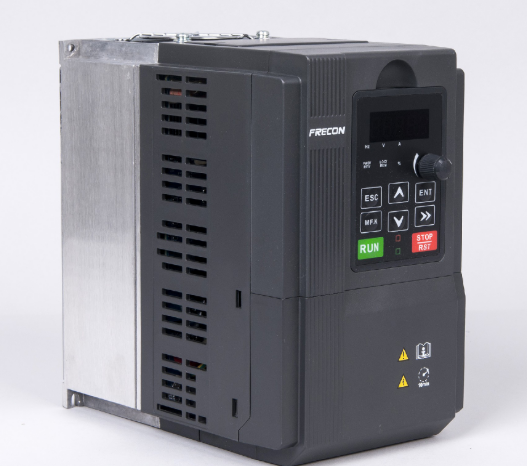
A Variable Frequency Drive (VFD) is an electronic motor controller that adjusts the rotational speed and torque of AC induction motors by dynamically varying the frequency and voltage of electrical power supplied to the motor terminals. Also referred to as Adjustable Speed Drives (ASD), Variable Speed Drives (VSD), or AC inverters, VFDs function as intelligent power conversion systems that bridge the utility grid and motor loads.
From an engineering standpoint, a VFD operates through a three-stage power conversion topology:
- Rectifier Stage: Converts incoming AC power (typically 50/60 Hz) to DC using a six-pulse diode bridge or active front-end (AFE) rectification
- DC Bus Stage: Filters and stores DC energy using electrolytic capacitors and braking resistors, maintaining stable DC link voltage (typically 1.35 × AC input voltage for diode bridges)
- Inverter Stage: Converts DC back to variable-frequency AC using Insulated-Gate Bipolar Transistors (IGBTs) or Silicon Carbide (SiC) MOSFETs via Pulse Width Modulation (PWM) switching at 2–20 kHz carrier frequencies
Cost Structure Breakdown: Industrial VFD pricing typically scales with power rating, ranging from $150–$300 per kW for low-voltage units (0.75–75 kW) to $400–$800 per kW for medium-voltage applications (>1 kV). Entry-level V/Hz control drives cost 20–30% less than high-performance vector control units, while IP66-rated harsh-environment enclosures add 15–25% to base pricing.
Technical Factors Affecting VFD Pricing and Selection
Power Rating and Overload Capacity
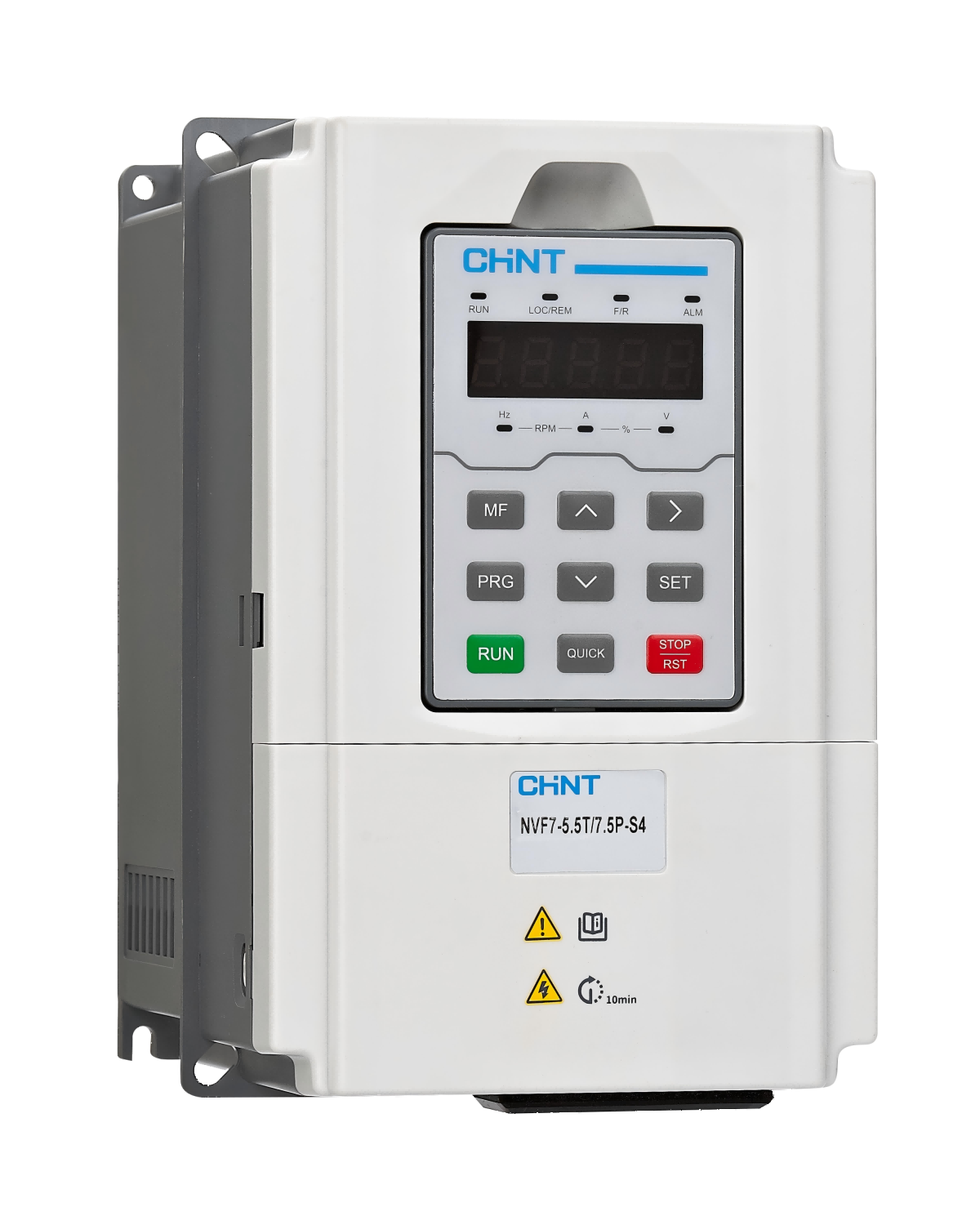
VFD selection begins with matching the drive’s continuous current rating to the motor’s full-load amperage (FLA). Critical specifications include:
– Constant Torque (CT) vs. Variable Torque (VT): CT applications (conveyors, crushers) require 150% overload capacity for 60 seconds, while VT applications (fans, pumps) utilize 110–120% overload ratings
– Derating Factors: High ambient temperatures (>40°C) or altitudes (>1000m) necessitate 10–15% current derating to prevent thermal runaway
Voltage Configuration and Phase Requirements
- Single-Phase Input: 220V single-phase to three-phase output converters (1.5–7.5 kW range) incorporate doubler circuits and require 100% output current derating
- Three-Phase Input: 380–480V industrial standard with six-pulse rectification; 690V systems for heavy industrial applications
- DC Link Voltage: 650V DC nominal for 480V AC systems, requiring capacitors rated for 800–1000V peak withstand
Control Methodology and Performance
- V/Hz Control: Open-loop scalar control suitable for pumps and fans; lowest cost but limited low-speed torque (100 HP require shaft grounding rings or insulated bearings to prevent EDM (electrical discharge machining) from capacitive coupling
Related Technical Insight
Cable Length Considerations
PWM switching creates voltage reflections at motor terminals. For cable runs >50 meters (164 feet), specify:
– Output Reactors: 3% line/load reactors to limit dv/dt to 100m cable length
Bypass and Redundancy Planning
Mission-critical applications require bypass contactors (3-contactor or 2-contactor schemes) allowing DOL (Direct-On-Line) operation during VFD maintenance. Specify manual bypass for 100 HP systems.
Sizing for Variable Torque Applications
For centrifugal pumps and fans, apply the affinity laws: Power ∝ Speed³. A 20% reduction in motor speed yields 50% energy savings. Size VFDs for the maximum anticipated operating speed, typically 50–60 Hz, with 10% overhead for system growth.
Why Source Inverters/VFDs from China?
China has emerged as the global hub for power electronics manufacturing, offering distinct competitive advantages for industrial procurement:
Advanced R&D Infrastructure: Leading Chinese manufacturers maintain vertically integrated development centers specializing in motor control algorithms, thermal simulation, and electromagnetic compatibility (EMC) testing. This concentration of engineering talent enables rapid customization of control parameters for specific regional grid codes (IEEE 519, GB/T 14549) and motor types.
Cost-Effective Manufacturing Without Quality Compromise: Domestic supply chain integration for IGBT modules, capacitors, and PCBA assembly reduces BOM costs by 20–30% compared to Western manufacturing, while maintaining ISO 9001 and ISO 14001 quality certifications. Automated SMT lines and AI-driven optical inspection ensure 30 Hz, but for continuous operation at low speeds (50m, inverter-duty motors with 1600V insulation and separate cooling fans are mandatory to prevent overheating and voltage spike damage.
How do I calculate energy savings for a pump or fan application?
Apply the Affinity Laws: Power = (Speed)³. If a 50 HP fan operates at 80% speed (40 Hz instead of 50 Hz), power consumption drops to 0.8³ = 51.2% of rated power. Subtract VFD losses (3–5%), yielding approximately 45% energy savings. ROI typically occurs within 6–12 months for high-usage (>4000 hours/year) applications.
What causes VFD harmonics, and how do I mitigate them?
Six-pulse rectifiers draw non-sinusoidal current, creating 5th (300 Hz) and 7th (420 Hz) harmonics on 50 Hz systems. Mitigation options include: 3% line reactors (40% reduction), DC link chokes, 12-pulse or 18-pulse rectifier configurations, or Active Front End (AFE) drives (<5% THDi) for installations with strict IEEE 519 compliance requirements.
When should I choose vector control over standard V/Hz control?
Select sensorless vector control for applications requiring high starting torque (150% at 0.5 Hz), precise speed regulation (±0.5%), or torque control (winding/unwinding). V/Hz control suffices for centrifugal pumps and fans where precise speed holding is unnecessary and cost minimization is prioritized.