That rock-bottom quote on your desk? It might cost you six figures in lost production. For facility managers and EPC contractors specifying motor control, Variable Frequency Drive pricing isn’t just procurement trivia—it’s a strategic decision that dictates your energy footprint for the next decade.
Understanding what truly drives VFD costs—from component quality to environmental protection—reveals why the cheapest option often becomes your most expensive asset. Whether optimizing agricultural irrigation or factory automation, grasping these price dynamics ensures you balance upfront investment with long-term efficiency, keeping critical systems running when downtime isn’t an option.
Variable Frequency Drive Pricing: A Technical Cost Analysis for Industrial Procurement
1. Engineering Cost Breakdown: VFD Price Ranges by Specification
Variable Frequency Drive pricing follows a non-linear scale relative to power capacity, with distinct economies of materializing above 7.5kW. Current market analysis indicates clear pricing tiers based on input/output phase configuration and voltage classification:
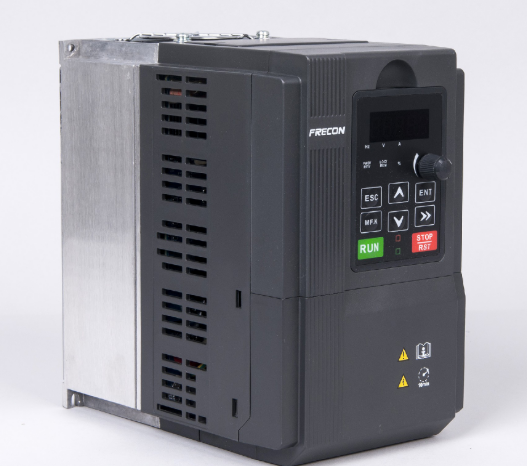
Single-Phase Input to Three-Phase Output (220-240V Class):
– Fractional HP (0.25-1 HP): $145-$200
– Low Power (2-3 HP): $180-$240
– Medium Power (5-7.5 HP): $290-$700
– High Power (10-15 HP): $990-$1,450
Three-Phase Input/Output (380-480V Class):
– Low Power (1-5 HP): $200-$295
– Medium Power (7.5-15 HP): $415-$635
– High Power (20-50 HP): $1,050-$2,275
– Industrial (60-75 HP): $3,250-$4,000
The cost-per-horsepower metric demonstrates inverse proportionality to capacity, with sub-1kW units averaging $200-300 per kilowatt, while 30kW+ industrial drives reduce to approximately $65-85 per kilowatt. Single-phase output VFDs for capacitor-start motors command premiums of 15-25% over standard three-phase output units due to specialized waveform generation requirements.
2. Technical Determinants of VFD Pricing
Related Technical Insight
Power Rating and Current Capacity
Drive pricing scales with output current requirements and thermal management infrastructure. A 0.75kW (1 HP) unit rated for 2.3A operates at approximately $200, whereas a 55kW (75 HP) unit handling 112A commands $4,000—reflecting not merely linear component costs but IGBT module specifications, DC bus capacitance, and heat sink engineering.
Control Architecture: V/f vs. Vector Control
General-purpose V/f control drives utilize open-loop algorithms suitable for centrifugal loads, representing baseline pricing. Sensorless vector control variants, offering 0.5% speed regulation and 150% starting torque, add 20-30% cost premiums. Closed-loop vector systems requiring encoder feedback interfaces increase costs by 40-50% but deliver 0.01% speed accuracy and full torque at zero speed—critical for crane and hoist applications.
Environmental Protection Ratings
IP20 enclosure drives for controlled cabinet installations represent standard pricing. NEMA 4/4X (IP65) washdown-rated units for food processing or outdoor applications incorporate conformal coating, sealed housings, and stainless hardware, typically doubling base costs. Non-enclosure (chassis) drives reduce costs by 10-15% for OEM panel integration but require external protection.
Integration and Compliance Features
RS485 Modbus communication comes standard in modern drives, but advanced fieldbus options (Profibus, CANopen, EtherCAT) add $150-$400. Integrated EMC filters per IEC 61800-3, braking chopper circuits, and DC line reactors represent additional cost layers of $50-$300 per feature. Solar pump VFDs with Maximum Power Point Tracking (MPPT) functionality command 25-35% premiums over standard industrial drives due to photovoltaic input optimization algorithms.
Phase Conversion Complexity
Single-phase input drives incorporating active power factor correction (PFC) and phase-conversion circuitry to generate three-phase output command 15-25% premiums over equivalent three-phase input units, reflecting additional rectification and DC bus stabilization components.
3. Industrial Sizing and Procurement Optimization
Avoiding Undersizing Pitfalls
Specifying drives based solely on motor nameplate horsepower risks thermal failure. High-inertia loads (centrifuges, crushers) and high-starting-torque applications (positive displacement pumps) require drives rated for heavy-duty (150% overload for 60 seconds) rather than normal duty (110% overload). The 20% cost differential between normal and heavy-duty ratings prevents catastrophic IGBT thermal runaway in demanding duty cycles.
Voltage Matching and Derating Protocols
For 460V motor applications, specify 480V-class drives to maintain proper V/f ratios