Your motors are bleeding energy—and money. In industrial and agricultural operations, electric motors often account for nearly half of total energy consumption, yet many run at full speed regardless of actual demand. That’s where Variable Frequency Drives (VFDs) step in as the unsung heroes of modern motor control.
But not all VFDs are created equal, and misunderstanding their fundamental definition can lead to mismatched systems, premature equipment failure, or missed efficiency gains. Whether you’re specifying drives for a solar pumping station or retrofitting an aging HVAC system, grasping exactly what constitutes a VFD—and how it differs from basic motor starters or soft starters—is critical. Get the definition right, and you unlock precise speed control, dramatic energy savings, and extended motor life. Get it wrong, and you’re simply trading one operational headache for another.
Variable Frequency Drive Definition: Technical Architecture and Industrial Procurement Guide
A Variable Frequency Drive (VFD) is an electronic motor controller that regulates the rotational speed and torque of an AC induction motor by dynamically varying the frequency and voltage of the electrical power supplied to the motor windings. Technically classified as an Adjustable Speed Drive (ASD) or Variable Speed Drive (VSD), the VFD operates on the principle that motor synchronous speed (N) is directly proportional to supply frequency (f) according to the formula N = 120f/p, where p represents the number of motor poles.
Three-Stage Power Conversion Topology
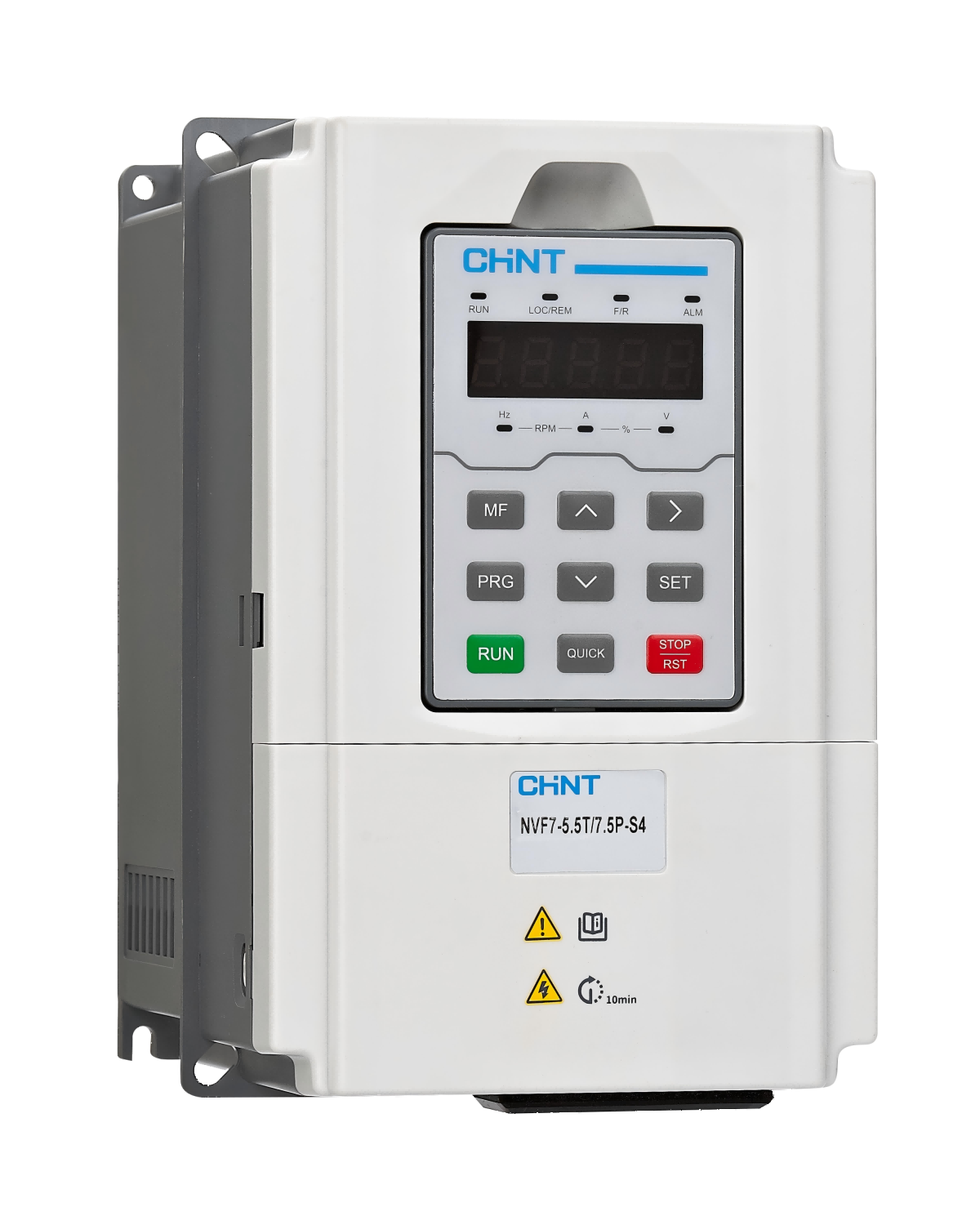
The fundamental architecture of a modern VFD consists of three distinct power processing stages:
1. Rectifier/Converter Stage: Incoming AC power (typically 380-480V three-phase or 220-240V single-phase) passes through a full-wave bridge rectifier utilizing six power diodes (six-pulse configuration) to convert alternating current to direct current. This stage produces a DC voltage approximately 1.35 times the RMS input voltage, resulting in approximately 650V DC on the bus for a standard 480V AC input system.
2. DC Bus/Filter Stage: The rectified DC contains significant ripple voltage. A capacitor bank and series inductors function as an energy reservoir, smoothing the DC ripple to maintain stable bus voltage (typically 600-700V DC for low-voltage drives). Pre-charge circuits limit inrush current during startup to protect the capacitor bank and rectifier diodes.
3. Inverter Stage: Insulated Gate Bipolar Transistors (IGBTs) or Silicon Carbide (SiC) MOSFETs switch the DC bus voltage at high frequencies (2-20 kHz carrier frequency) using Pulse Width Modulation (PWM) techniques. By varying the pulse width and switching sequence, the inverter synthesizes a variable frequency, variable voltage AC output waveform that maintains the critical Volts-per-Hertz (V/Hz) ratio required for constant motor flux.
Technical Factors Affecting VFD Pricing and Selection
Industrial procurement of VFDs requires evaluation of multiple technical parameters that directly impact system cost, performance, and longevity:
Power Rating and Voltage Classification
Drive cost scales exponentially with power rating. Low-voltage VFDs (below 1000V) dominate industrial applications, with pricing tiers typically segmented at 0.75kW, 2.2kW, 5.5kW, 11kW, 22kW, 55kW, and 110kW+ thresholds. Three-phase input configurations command premium pricing over single-phase equivalents due to higher power handling and reduced input current harmonics. Medium voltage drives (2.3kV-13.8kV) utilize multilevel topologies and isolated gate drivers, increasing cost by 300-500% compared to low-voltage equivalents.
Control Methodology and Vector Control Types
Scalar Control (V/Hz): Basic open-loop control maintaining constant flux ratio. Cost-effective for variable torque applications (fans, pumps) but limited low-speed torque performance.
Sensorless Vector Control: Closed-loop algorithm estimating motor flux and torque without encoder feedback. Adds 15-25% cost premium over scalar control but provides 150% starting torque at 0.5Hz.
Closed-Loop Vector Control: Requires encoder/resolver feedback for precise speed and torque control (±0.01% speed accuracy). Essential for crane, hoist, and positioning applications, increasing drive cost by 30-40%.
Direct Torque Control (DTC): Advanced algorithm controlling motor flux and torque directly without modulator. Premium pricing but superior dynamic response for high-performance applications.
Environmental Protection and Thermal Management
IP20 (open chassis) drives suit clean electrical rooms at lowest cost point. IP54/NEMA 12 enclosures add 20-30% cost for dust protection. IP66/NEMA 4X washdown-rated drives for food processing or outdoor solar pumping applications require sealed heat sinks and conformal coated PCBs, increasing costs by 40-60%. Ambient temperature derating above 40°C requires oversized drives or external cooling systems.
Harmonic Mitigation and Power Quality
Standard six-pulse rectifiers generate 5th, 7th, and 11th harmonic currents. Active front end (AFE) drives with IGBT rectifiers eliminate harmonics but cost 50-80% more than standard diode bridges. DC link chokes and passive harmonic filters add 10-15% to base drive cost but prevent utility penalty charges and transformer overheating in multi-drive installations.
Specialized Application Features
Solar pump inverters require Maximum Power Point Tracking (MPPT) algorithms and wide voltage input ranges (200VDC-800VDC), adding specialized firmware and hardware costs. Regenerative drives with active braking units for crane and centrifuge applications add 25-35% cost premium over standard braking resistor configurations.
Industrial Sizing and Sourcing Guidelines
Motor Nameplate Matching and Overload Capacity
Size VFDs based on motor Full Load Amps (FLA), not horsepower ratings alone. Specify drives with 110-150% overload capacity for 60 seconds for constant torque applications (conveyors, compressors). Variable torque applications (HVAC fans, centrifugal pumps) allow 110% overload sizing. Always verify the drive’s continuous output current exceeds motor FLA by minimum 10% at the installation altitude and ambient temperature.
Cable Length and Voltage Reflection Analysis
For motor cable runs exceeding 50 meters (164 feet), specify drives with dV/dt filters or sinusoidal output filters to prevent voltage reflection and insulation stress on motor windings. Calculate voltage spike magnitude using the formula V_peak = V_DC + √(L/C) × I_switching, where excessive spikes require output reactors or filter modules adding 5-8% to system cost.
Duty Cycle and Regenerative Requirements
Analyze load duty cycles for high-inertia applications. Centrifuges and downhill conveyors require dynamic braking resistors or regenerative power units sized to dissipate or return deceleration energy. Calculate braking resistor wattage using W = (0.0055 × J × ΔRPM²)/t_brake, where J represents system inertia.
Related Technical Insight
Bypass Contactor Configuration
For critical process applications, specify manual or automatic bypass contactors allowing motor operation across-the-line during drive failure. This adds contactor and protection component costs but ensures process continuity.
Why Source Inverters and VFDs from China?
China has emerged as the global center for advanced power electronics manufacturing, offering distinct advantages for industrial procurement:
Advanced R&D Integration: Leading Chinese manufacturers maintain vertical integration from semiconductor packaging to system-level integration, enabling rapid adoption of SiC MOSFETs, advanced vector control algorithms, and IoT connectivity features at competitive price points.
Manufacturing Scale and Cost Efficiency: Direct sourcing from Chinese factories eliminates distributor markups (typically 30-45% in Western supply chains) while maintaining IEC 61800 compliance and CE certification standards. Modern Chinese production facilities utilize automated SMT lines, automated testing, and ISO 9001 quality management systems comparable to Western OEMs.
Customization and OEM Flexibility: Chinese manufacturers offer extensive OEM/ODM capabilities including custom firmware development, specialized enclosure designs, and private labeling without the minimum order quantities required by European or Japanese conglomerates.
Supply Chain Resilience: Proximity to raw materials, component ecosystems, and logistics hubs ensures shorter lead times (typically 15-25 days production vs. 8-12 weeks for European brands) and reduced exposure to international shipping volatility.
Boray Inverter: Your Strategic Manufacturing Partner
Boray Inverter stands at the forefront of China’s advanced motor control industry, specializing in Solar Pump Inverters and Variable Frequency Drives engineered for demanding industrial and agricultural applications. With a workforce composition where 50% are dedicated R&D engineers, Boray maintains mastery of both Permanent Magnet Synchronous Motor (PMSM) and Induction Motor (IM) vector control algorithms, enabling precise torque control across the entire speed range.
Our manufacturing infrastructure features two modern automated production lines utilizing high-speed SMT placement and automated optical inspection (AOI). Every unit undergoes 100% full-load testing at rated current and temperature before delivery, ensuring zero defect shipment to OEM partners. Whether requiring standard VFDs for HVAC applications or specialized solar pumping solutions with integrated MPPT and dry-run protection, Boray provides comprehensive OEM/ODM services with wholesale pricing structures.
Contact Boray Inverter today to discuss your specific motor control requirements, request technical documentation, or obtain competitive wholesale quotations for your next project.
Frequently Asked Questions (FAQs)
What is the fundamental difference between a VFD and a soft starter?
A soft starter temporarily reduces motor voltage and current during startup using phase-angle control of thyristors, then bypasses to full line voltage once at speed. It provides no speed control capability. A VFD provides continuous variable speed operation from zero to maximum rated frequency by varying both voltage and frequency throughout the operating range, enabling energy savings and process control unavailable with soft starters.
Can a VFD completely replace a traditional motor starter/contactor?
While VFDs provide electronic motor protection and controlled starting, most electrical codes require a disconnecting means and short-circuit protection upstream of the drive. For critical applications, a bypass contactor arrangement allows motor operation across-the-line if the VFD fails. However, the VFD itself functions as a solid-state starter, eliminating the need for separate reduced-voltage starters or star-delta configurations.
How do I select between scalar (V/Hz) control and vector control for my application?
Select scalar V/Hz control for variable torque loads (centrifugal pumps, fans) where speed accuracy requirements exceed ±3% and starting torque requirements remain below 120%. Specify sensorless or closed-loop vector control for constant torque loads (conveyors, positive displacement pumps, hoists) requiring high starting torque (150-200%), precise speed regulation (±0.5% or better), or full torque at zero speed.
What IP protection rating is required for outdoor or wet environment installations?
For outdoor solar pumping or washdown environments, specify IP66 or NEMA 4X rated drives with sealed enclosures and conformal coated circuit boards to prevent moisture ingress and corrosion. Ensure the drive includes sun shields or operates within -20°C to +50°C ambient limits. For indoor electrical rooms, IP20 or IP21 ventilated chassis drives provide optimal thermal performance at lower cost.
What is the typical ROI period when retrofitting existing motors with VFDs?
For variable torque applications (pumps and fans), energy savings typically range 30-50% when operating at 80% rated speed, yielding ROI periods of 6-18 months depending on local electricity rates and operating hours. Constant torque applications achieve ROI through process improvements and reduced mechanical maintenance rather than energy savings alone, typically 18-36 months. Calculate specific savings using the affinity laws: Power varies with the cube of speed for centrifugal loads.