Introduction: Sourcing Vfd Preventive Maintenance Checklist for Industrial Use
In industrial automation and solar pumping infrastructure, Variable Frequency Drives (VFDs) serve as the critical interface between power supply and motor performance, yet their reliability depends entirely on systematic preventive maintenance. For EPC contractors and agricultural project managers, an unplanned drive failure translates to immediate operational losses—whether halting precision manufacturing lines or disrupting irrigation cycles across hectares of crops. While procurement teams often prioritize initial efficiency ratings and cost-per-kW, sustainable asset performance requires implementing comprehensive maintenance protocols from commissioning through end-of-life.
This guide examines the strategic sourcing of VFD preventive maintenance checklists engineered for industrial rigor, encompassing solar pump inverters and complex motor control systems. We analyze the essential components of effective maintenance documentation, from visual inspection criteria and thermal imaging protocols to torque verification procedures and firmware update schedules. The scope extends beyond generic templates to address application-specific requirements—distinguishing between daily operational checks for HVAC systems and the intensive environmental monitoring demanded by agricultural drives exposed to dust, moisture, and temperature extremes.
You will learn to evaluate checklist providers across critical dimensions: technical alignment with IEC/NEMA standards, compatibility with your installed base of low-voltage and medium-voltage drives, and integration capabilities with existing CMMS platforms. Whether sourcing from OEM documentation, third-party engineering consultants, or developing internal protocols, this resource enables you to establish predictive maintenance frameworks that minimize downtime, extend capacitor and cooling fan lifecycles, and protect your automation infrastructure investment against costly reactive repairs.
Article Navigation
- Top 4 Vfd Preventive Maintenance Checklist Manufacturers & Suppliers List
- Introduction: Sourcing Vfd Preventive Maintenance Checklist for Industrial Use
- Technical Types and Variations of Vfd Preventive Maintenance Checklist
- Key Industrial Applications for Vfd Preventive Maintenance Checklist
- Top 3 Engineering Pain Points for Vfd Preventive Maintenance Checklist
- Component and Hardware Analysis for Vfd Preventive Maintenance Checklist
- Manufacturing Standards and Testing QC for Vfd Preventive Maintenance Checklist
- Step-by-Step Engineering Sizing Checklist for Vfd Preventive Maintenance Checklist
- Wholesale Cost and Energy ROI Analysis for Vfd Preventive Maintenance Checklist
- Alternatives Comparison: Is Vfd Preventive Maintenance Checklist the Best Choice?
- Core Technical Specifications and Control Terms for Vfd Preventive Maintenance Checklist
- Future Trends in the Vfd Preventive Maintenance Checklist Sector
- B2B Engineering FAQs About Vfd Preventive Maintenance Checklist
- Disclaimer
- Conclusion: Partnering with Boray Inverter for Vfd Preventive Maintenance Checklist
Technical Types and Variations of Vfd Preventive Maintenance Checklist
Variable Frequency Drives (VFDs) exhibit significant architectural diversity across input configurations, voltage classes, and environmental ratings. Consequently, preventive maintenance protocols cannot be standardized; a thermal scan checklist designed for a 480V industrial drive requires substantial modification for a 400VDC solar pump inverter or a 6.6kV medium voltage system. The following classification outlines four distinct technical variations, each presenting unique failure modes, safety considerations, and inspection priorities critical for electrical engineers and EPC contractors.
| Type | Technical Features | Best for (Industry) | Pros & Cons |
|---|---|---|---|
| Low Voltage (LV) Three-Phase Grid-Tied (380V–480V AC) | • IGBT-based PWM topology • 4-quadrant regenerative capability • DC bus capacitance banks • Integrated EMC filters |
Manufacturing, HVAC, Wastewater Treatment, General Industrial | Pros: Widely supported, cost-effective spare parts, standardized safety protocols (LOTO). Cons: Limited to <1MW power range; susceptible to grid voltage sags and harmonic distortion from upstream loads. |
| Solar Pump Inverters (DC-AC Hybrid, 200V–800VDC Input) | • MPPT algorithms (Maximum Power Point Tracking) • DC input galvanic isolation • Dry-run and water shortage protection circuits • Boost/Buck conversion stages |
Agriculture, Remote Irrigation, Off-grid Water Systems, Solar EPC Projects | Pros: Eliminates grid dependency; optimized for photovoltaic variability; integrated pump protection features. Cons: DC bus capacitor degradation accelerated by temperature cycling; requires specialized DC-rated test equipment; remote locations complicate emergency maintenance. |
| Medium Voltage (MV) Multi-Level (2.3kV–13.8kV AC) | • Cascaded H-bridge or NPC (Neutral Point Clamped) topology • Cell-based modular architecture • Fiber optic gate drive signals • Phase-shifting isolation transformers |
Oil & Gas, Mining, Large Infrastructure, Heavy Water Pumping | Pros: Direct motor connection without output transformers; high power density (1MW–100MW+); cell bypass maintains operation during single faults. Cons: Requires specialized high-voltage safety certification; complex cell voltage balancing; fiber optic integrity critical; significantly higher maintenance complexity. |
| Single-Phase Input VFDs (220V, Phase Conversion) | • Single-phase rectifier front-end • Derated capacity (typically ≤3HP) • Enhanced input current harmonic filtering • Simplified inverter bridge |
Smallholder Agriculture, Residential, Light Commercial, Rural Pumping | Pros: Grid flexibility in areas lacking three-phase infrastructure; lower infrastructure cost. Cons: High input current ripple stresses DC bus capacitors; limited power range; potential for phase imbalance if not properly derated. |
Low Voltage (LV) Three-Phase Grid-Tied VFDs
These represent the predominant topology in industrial automation. Preventive maintenance focuses on connection integrity and thermal management. Technicians must verify torque specifications on line-side and load-side bus bars using calibrated torque wrenches, as thermal cycling induces loosening in multi-conductor terminations. Thermographic surveys during full-load operation are essential to identify high-resistance joints within the IGBT power modules. Additionally, inspect DC bus capacitors for electrolyte leakage or venting, and measure capacitance values against manufacturer baselines—capacitance degradation below 80% of nominal indicates replacement necessity. EMC filter capacitors require insulation resistance testing (megger testing) to detect moisture ingress that compromises electromagnetic compatibility.
Solar Pump Inverters (DC-AC Hybrid)
Distinct from AC-fed VFDs, these systems interface directly with PV arrays, introducing unique DC-side maintenance requirements. DC input terminal inspection is critical; check for corrosion on MC4 connectors or bus bars caused by humidity and galvanic action. Verify MPPT tracker functionality by comparing actual DC input voltage against theoretical maximum power point calculations under varying irradiance—tracking errors indicate sensor drift or algorithm faults. Test dry-run protection by simulating low-water conditions to ensure the drive shuts down before cavitation damage occurs. Unlike grid-tied drives, these often operate in remote, unmanned locations; therefore, predictive maintenance via IoT-enabled parameter logging (DC bus voltage ripple trends, IGBT junction temperature cycles) is prioritized over scheduled physical inspections. Ensure DC grounding integrity and surge protection device (SPD) status checks, as lightning strikes pose significant threats in open agricultural fields.
Medium Voltage (MV) Multi-Level VFDs
MV drives utilize complex topologies requiring specialized maintenance protocols. For cascaded H-bridge designs, perform cell bypass testing to verify that redundant cells activate correctly during simulated faults. Inspect fiber optic cables connecting the controller to power cells for signal attenuation or physical damage—loss of optical signal triggers immediate shutdowns. Conduct partial discharge (PD) testing on output phases to detect insulation degradation in motor windings or drive output stages before flashover occurs. Due to lethal voltage levels, Lockout-Tagout (LOTO) procedures must include verification of stored energy discharge in cell capacitors. Maintenance teams require high-voltage safety certification and specialized PD detection equipment, making these checklists significantly more resource-intensive than LV counterparts.
Single-Phase Input V
Key Industrial Applications for Vfd Preventive Maintenance Checklist
Implementing a standardized VFD preventive maintenance checklist requires contextual adaptation to the operational severity and environmental stressors inherent to specific industrial verticals. While the fundamental maintenance principles—thermal management, connection integrity, and component lifecycle management—remain constant, the frequency, criticality, and specific failure modes vary significantly between, for example, a solar irrigation installation in arid agricultural zones and a continuous-duty cement kiln operation. Below, we examine four high-impact sectors where systematic VFD maintenance directly correlates with energy ROI and operational continuity, along with strategic sourcing parameters to ensure drive specifications align with sector-specific demands.
| Sector | Application | Energy Saving Value | Sourcing Considerations |
|---|---|---|---|
| Agriculture & Solar Irrigation | Solar pump inverters for submersible borehole pumps, surface centrifugal irrigation, and drip-feed pressure systems | 40–70% reduction vs. diesel or grid-pump DOL starting; elimination of water hammer through soft-start ramp control; MPPT optimization yielding 15–25% additional solar harvest efficiency | IP66/NEMA 4X enclosures for UV/weather exposure; wide DC input voltage range (200V–800V) for solar array compatibility; built-in dry-run and empty-well protection; GPRS/IoT remote monitoring modules for dispersed farm networks |
| Water & Wastewater Treatment | Aeration blowers (centrifugal/turbo), raw sewage transfer pumps, chemical dosing pumps, and filter backwash systems | 20–50% energy savings via dissolved oxygen (DO) based aeration control and variable flow optimization; reduced mechanical seal wear extends pump MTBF by 30% | Conformal-coated PCBs resistant to H₂S and corrosive gases; redundant cooling fan configurations for 24/7 continuity; PID auto-tuning with sleep/wake functions for low-flow conditions; stainless steel hardware for humid environments |
| HVAC & Building Automation | Chilled water primary/secondary pumps, cooling tower fans, air handling units (AHUs), and variable refrigerant flow (VRF) compressors | 30–60% reduction in HVAC motor energy; improved part-load efficiency curves; demand-based ventilation reducing fan speed by 20% yields 50% power reduction (fan affinity laws) | Low harmonic drives (THDi < 5%, IEEE 519 compliant) to avoid utility penalties; BACnet/IP or Modbus RTU integration for BMS connectivity; fire mode override and smoke purge functionality; low-noise PWM switching for occupant comfort |
| Cement & Heavy Mining | Kiln induced draft (ID) fans, crusher apron feeders, ball mill drives, baghouse dust collectors, and conveyor belt systems | 15–30% energy optimization through precise airflow control; elimination of mechanical shock during high-inertia starts; extended bearing life via controlled acceleration ramps | High overload capacity (150–200% for 60s) for high-torque starts; vibration-resistant chassis and dampened fan mounts; multi-motor master/slave control for dual-fan kiln systems; heavy-duty DC link chokes for grid fluctuation immunity in remote quarry locations |
Agriculture & Solar Irrigation
In agricultural deployments, particularly solar-powered irrigation systems, VFDs operate in environmentally uncontrolled, geographically dispersed locations subject to extreme thermal cycling, dust, and humidity. Preventive maintenance in this sector prioritizes ingress protection (IP) integrity verification and DC bus capacitor health assessment, as intermittent solar irradiance causes repeated charge/discharge cycles that accelerate electrolytic capacitor aging. Maintenance teams should inspect MPPT algorithm performance logs quarterly to ensure maximum power point tracking efficiency hasn’t degraded due to panel soiling or shading. Given the seasonal nature of agricultural operations, pre-harvest preventive maintenance is critical—cooling fan replacement and heatsink cleaning should be scheduled before peak irrigation demand to avoid crop loss due to unexpected downtime.
Water & Wastewater Treatment
Municipal and industrial water treatment facilities demand 99.9%+ availability, making VFD failure modes particularly costly. The presence of corrosive gases (hydrogen sulfide, chlorine) necessitates visual inspection for PCB discoloration and terminal corrosion during every maintenance interval. Thermal imaging is especially valuable here for detecting loose connections in high-moisture environments where oxidation increases contact resistance. Unlike other sectors, water treatment VFDs often utilize sleep mode functionality when demand drops; maintenance protocols must verify the reliability of wake-up triggers (pressure transducers, flow switches) to prevent pump cavitation events. Sourcing considerations should emphasize drives with conformal coating (Class 3C3 or 3C4 per IEC 60721-3-3) to withstand aggressive atmospheric conditions.
HVAC & Building Automation
Commercial HVAC represents one of the highest ROI applications for VFD technology, but preventive maintenance focuses heavily on harmonic mitigation verification and building management system (BMS) communication integrity. As VFDs modulate pump and fan speeds based on building load, maintenance teams must verify that parameter settings align with seasonal setpoints—incorrect minimum frequency settings can lead to “dead-heading” in pumps or inadequate airflow in critical zones. The checklist should include verification of EMC filter connections, as HVAC installations often share electrical rooms with sensitive IT infrastructure. For EPC contractors, specifying drives with integrated BACnet protocols reduces commissioning complexity and enables predictive maintenance through BMS trend logging of drive current, torque, and thermal states.
Cement & Heavy Mining
Cement plants and mining operations subject VFDs to severe environmental stress including conductive dust, vibration, and wide ambient temperature swings. Preventive maintenance here requires torque verification of power terminals under vibration-prone conditions and inspection of braking resistor assemblies used during high-inertia deceleration of crushers and mills. The harsh particulate environment demands monthly cleaning of heatsinks and cooling pathways—compressed air cleaning must follow strict lockout/tagout (LOTO) procedures due to the explosive potential of cement dust. Sourcing for this sector should prioritize drives with enhanced mechanical robustness, including vibration-resistant components and sealed enclosures (IP54 minimum for indoor, IP65 for outdoor quarry applications), along with DC link reactors to mitigate voltage notching from weak grid conditions common in remote mining locations.

Top 3 Engineering Pain Points for Vfd Preventive Maintenance Checklist
Scenario 1: Environmental Ingress and Corrosion in Remote Solar Pumping Installations
The Problem:
In agricultural and remote solar pumping applications, VFDs frequently operate in harsh environments with high dust loads, humidity fluctuations, and corrosive atmospheres (fertilizers, salt air, or chemical vapors). Standard enclosure checks often miss compromised gasket seals or filter saturation, leading to moisture ingress and conductive dust accumulation on PCBs. This accelerates corrosion of bus bars and terminals, degrades IP protection ratings over time, and causes insulation failures or short circuits that trigger unplanned downtime during critical irrigation cycles.
The Solution:
Implement a quarterly inspection protocol specifically targeting environmental sealing integrity. Replace filter media before saturation points (not just when visibly clogged) and verify gasket elasticity using compression tests. For solar pumping applications, specify VFDs with IP65+ ratings and conformal-coated PCBs, such as Boray Inverter’s solar pump drive series designed for agricultural harsh conditions. Include thermal imaging during peak solar hours to detect moisture-induced tracking before it causes arc faults.
Scenario 2: Thermal Runaway from Cooling System Neglect in Continuous Duty Cycles
The Problem:
Industrial processes and solar pumping systems demand 24/7 operation, placing continuous thermal load on VFDs. Preventive maintenance checklists often overlook gradual cooling fan degradation (bearing wear, reduced RPM) and micro-dust accumulation in heat sink fins. This creates a cascade failure: restricted airflow raises junction temperatures, accelerating DC link capacitor electrolyte evaporation and IGBT switching losses. By the time overtemperature alarms trigger, internal components have already suffered irreversible thermal aging, leading to catastrophic drive failure and motor damage.
The Solution:
Establish predictive replacement schedules for cooling fans based on operating hours (typically 30,000-50,000 hours) rather than waiting for visible failure. Use compressed air with ESD protection to clean heat sink fins during every maintenance window, ensuring airflow paths remain unobstructed. Integrate thermal scanning into routine checks to identify abnormal heat signatures in the DC bus or inverter section before they exceed safe thresholds. Boray Inverter’s VFDs feature intelligent thermal management algorithms; ensure firmware updates are applied to optimize fan control curves based on actual ambient conditions rather than factory defaults.
Scenario 3: Connection Integrity Drift and Power Quality Degradation
The Problem:
Vibration from motor operation, thermal cycling, and electromechanical stress cause terminal block torque to degrade over time—often falling 15-20% below specifications within 12 months of installation. Loose connections create increased contact resistance, resulting in localized heating (potential fire hazards), voltage imbalances that reduce motor efficiency, and harmonic distortion that feeds back into solar array inverters or grid systems. Standard visual inspections cannot detect micro-arcing or incipient connection failures that manifest as intermittent faults during peak load conditions.
The Solution:
Mandate annual torque verification using calibrated torque wrenches set to manufacturer specifications (typically 18-25 in-lbs for control wiring, higher for power terminals), avoiding over-tightening that cracks conductor strands. Implement thermal imaging during full-load operation to identify high-resistance connections by their heat signatures. For solar pumping VFDs exposed to daily thermal cycling, use spring-clamp terminal technologies or periodic re-torquing protocols. Boray Inverter recommends documenting baseline thermal signatures during commissioning to enable trend analysis that distinguishes normal operation from developing connection faults.
Component and Hardware Analysis for Vfd Preventive Maintenance Checklist
Effective preventive maintenance extends beyond superficial cleaning and torque checks; it requires a granular understanding of the VFD’s internal hardware architecture and failure modes. For solar pumping systems and industrial motor control applications—where drives often operate in remote, high-temperature, or dusty environments—component-level analysis is critical to predicting end-of-life scenarios and preventing catastrophic field failures. The following technical breakdown identifies the primary hardware elements susceptible to degradation, their functional roles, and the specific quality indicators that maintenance teams should monitor during scheduled inspections.
| Component | Function | Quality Indicator | Impact on Lifespan |
|---|---|---|---|
| IGBT Power Modules | AC-DC-AC conversion; high-frequency switching for motor torque control | • Collector-emitter saturation voltage (Vce(sat)) within ±5% of datasheet • Thermal resistance (Rth(j-c)) <0.1 K/W • No solder delamination or bond-wire lift visible via thermal imaging |
Catastrophic failure mode; thermal runaway can cascade to DC bus capacitors and rectifier bridges, resulting in total drive replacement |
| DC-Link Capacitors (Electrolytic/Film) | Energy storage; ripple current absorption; voltage stabilization | • Capacitance deviation <5% from nominal • ESR (Equivalent Series Resistance) <20mΩ at 20°C • No venting, electrolyte leakage, or canister bulging • For film caps: Insulation resistance >100MΩ |
Reduced DC bus stability causes voltage spikes that stress semiconductor junctions; ripple current increase accelerates heating of IGBTs |
| DSP/MPU Control Boards | PWM algorithm execution; vector control calculations; protection logic implementation | • Clock oscillator stability ±50ppm • Flash memory retention without bit errors • Conformal coating integrity (IPC-CC-830) • No electrolytic capacitor leakage near processor rails |
Loss of control precision leads to motor hunting/instability; protection logic failure removes safeguards against overcurrent/ground faults |
| Cooling Systems (Heatsinks & Fans) | Thermal management of power semiconductors; maintaining junction temperatures within SOA | • Heatsink thermal resistance <0.5 K/W (calculated from ΔT/airflow) • Fan bearing noise <35dB; rotational speed within ±10% of rated RPM • Airflow verification >rated CFM with differential pressure measurement |
Exponential acceleration of semiconductor aging (Arrhenius model: 10°C rise ≈ 50% life reduction); thermal derating triggers nuisance tripping |
| Gate Driver Circuits | Isolated IGBT gate charge/discharge control; short-circuit protection (Desat) | • Propagation delay <200ns (matched within 20ns between phases) • Common Mode Transient Immunity (CMTI) >50kV/μs • Isolation resistance >100MΩ (Hi-Pot tested) |
Increased switching losses cause thermal stress; shoot-through failures from delayed turn-off can destroy IGBT modules instantly |
| Current/Voltage Sensors (Hall Effect/Resistive) | Closed-loop vector control feedback; overcurrent/ground fault detection | • Accuracy ±0.5% of full scale • Linearity error <0.1% • Temperature drift <100ppm/°C • Zero-offset stability <±0.2% |
Control instability causing torque pulsations; inability to detect phase-to-ground faults in solar pump submersible motors |
| Input/Output Reactors | Harmonic current mitigation; dv/dt filtering for motor bearing protection | • Inductance tolerance within ±3% • Insulation resistance >100MΩ (Megger tested at 500VDC) • No thermal discoloration of windings or iron core |
Excessive motor terminal overvoltage stresses stator insulation; bearing current erosion in agricultural pump motors leads to premature motor failure |
| PCB Interconnects & Busbars | Power distribution; signal integrity; mechanical structural support | • Impedance matching within ±10% for control signals • Solder joint integrity (no grainy/cracked joints under 10x magnification) • Electroless nickel immersion gold (ENIG) plating thickness >3μin |
Intermittent faults causing erratic operation; high-resistance joints create localized heating (hot spots) detectable via infrared thermography |
High-Priority Component Analysis for Solar and Agricultural Applications
Electrolytic Capacitor Aging in DC-Link Circuits
In solar pump inverters, DC-link capacitors experience severe thermal cycling due to intermittent solar irradiance and ambient temperature swings (often 20°C–60°C in desert agricultural installations). The electrolyte evaporation rate doubles for every 10°C temperature increase. Preventive maintenance should include ESR testing using an LCR meter at 100Hz/1kHz—an increase of 40% above baseline indicates imminent failure. For film capacitors increasingly used in Boray’s solar pump VFDs, check for case swelling and capacitance roll-off, particularly in systems with high harmonic content from long motor cable runs.
IGBT Module and Heatsink Interface Degradation
Thermal interface material (TIM) between IGBT modules and heatsinks degrades over 3–5 years in dusty environments, increasing thermal resistance. Maintenance protocols should verify that the thermal compound has not dried or pumped out; reapplication of high-thermal-conductivity silicone paste (≥3.0 W/m·K) is recommended during major overhauls. Thermal imaging under load (80–100% rated current) should show uniform heatsink temperature distribution—localized hot spots (>15°C differential) indicate TIM failure or heatsink fin blockage common in agricultural environments with cottonwood seed or dust infiltration.
Control Board Environmental Protection
Agricultural VFDs face high humidity and corrosive atmospheres (fertilizer vapors, methane). The DSP/control PCB requires inspection of conformal coating integrity, particularly around connector pins and high-voltage clearance areas. Look for dendritic growth or copper migration between traces, which causes latent failures. For solar pumping systems with remote monitoring, verify that communication isolation transformers and RS485/Modbus transceivers show no signs of electrical overstress (EOS) from lightning-induced surges common in open-field installations.
Cooling System Redundancy Verification
Unlike industrial HVAC drives, solar pump VFDs often operate unattended for months. Cooling fan bearing wear is the primary failure mode; sleeve bearings typically last 30,000–40,000 hours (3.5–4.5 years) in clean environments, but agricultural dust reduces this by 50%. Preventive maintenance should measure fan current draw—an increase of >15% indicates bearing drag. For critical solar irrigation projects, specify VFDs with dual-redundant cooling fans or liquid-cooled heatsinks that eliminate moving parts entirely, significantly extending MTBF (Mean Time Between Failures) in harsh EPC environments.
Connection Integrity and Torque Verification
While not a discrete component, the mechanical integrity of power terminal blocks and DC busbar connections directly impacts component lifespan. Aluminum-to-copper connections in solar pump systems are particularly susceptible to galvanic corrosion and thermal cycling fatigue. Annual torque verification using calibrated torque screwdrivers (following manufacturer specifications in N·m) prevents high-resistance joints that generate localized heating, accelerating the aging of adjacent electrolytic capacitors and PCB traces.
By systematically evaluating these hardware elements against quantitative quality indicators, maintenance teams can transition from reactive repair to predictive asset management—critical for ensuring continuous irrigation operations and maximizing ROI on solar pumping infrastructure deployed across distributed agricultural portfolios.
Manufacturing Standards and Testing QC for Vfd Preventive Maintenance Checklist
At Boray Inverter, we recognize that preventive maintenance effectiveness begins at the manufacturing stage. The rigor applied during production, component qualification, and factory acceptance testing directly determines the maintenance intervals, failure modes, and total cost of ownership (TCO) experienced by industrial engineers and EPC contractors in the field. Below is a technical breakdown of the manufacturing standards and quality control protocols that underpin reliable VFD operation in demanding solar pumping and motor control applications.
Incoming Component Qualification and Traceability
Every VFD preventive maintenance strategy relies on component longevity. Our QC process starts with 100% incoming inspection of critical semiconductors (IGBTs, rectifier bridges) and passive components (DC-link film capacitors, braking resistors). Each lot is verified for:
– Voltage derating margins: Components selected with minimum 20% voltage headroom above rated operational peaks to withstand grid fluctuations common in agricultural zones.
– Thermal cycling resistance: Capacitor electrolytes validated for 105°C ambient operation with 10,000-hour life expectancy, ensuring field maintenance schedules align with actual component physics rather than generic estimates.
– Serialization: Full batch traceability from wafer to finished drive, enabling predictive maintenance algorithms to reference specific component cohorts when anomaly detection flags potential batch-related degradation.
PCB Protection Standards for Harsh Environments
Solar pumping installations and outdoor agricultural motor controls expose VFDs to humidity, dust, and corrosive atmospheres. Our manufacturing adheres to IPC-A-610 Class 3 standards for high-performance electronic assemblies, with specific enhancements for industrial drives:
- Conformal Coating: All control and power PCBs receive automated selective conformal coating (acrylic or silicone-based, per IEC 60664 insulation coordination) covering 100% of solder joints and traces. This creates a moisture barrier preventing dendritic growth and corrosion in high-humidity climates (up to 95% RH non-condensing), directly reducing the frequency of cleaning and inspection required in preventive maintenance protocols.
- Tropicalization: For solar pump inverter lines specifically, additional tropicalization treatments include potting of critical control transformers and sealed enclosures rated IP65 or higher, minimizing the dust accumulation that typically necessitates quarterly compressed air cleaning in standard industrial drives.
Burn-In and High-Temperature Aging
To eliminate infant mortality and validate thermal management designs, every Boray VFD undergoes 100% high-temperature aging (HTA) prior to shipment:
– Thermal Soak: Units operate at 125% rated load for 4–6 hours at 50°C ambient (exceeding standard IEC 61800-5-1 operating conditions).
– Thermal Cycling: Power modules undergo rapid temperature cycling (-10°C to +60°C) to stress-test solder joints and thermal interface materials, ensuring heat sink attachments and IGBT bonding wires withstand the thermal expansion cycles that cause field failures between maintenance intervals.
– Capacitor Formation: DC-link capacitors are subjected to voltage conditioning at rated ripple current to stabilize dielectric properties, reducing the probability of capacitance loss that preventive maintenance thermal scans typically detect years later.
100% Full-Load Functional Testing
Unlike statistical sampling methods, our QC mandates individual full-load testing for every unit:
– Dynamic Load Testing: Each VFD drives a regenerative dynamometer through complete torque-speed curves, verifying current harmonics (THDi < 5% with optional reactors), braking chopper functionality, and vector control accuracy.
– Protection Circuit Validation: Overvoltage, undervoltage, phase loss, and ground fault simulations confirm that protection thresholds match programmed settings—critical for preventing cascading failures when maintenance intervals are extended in remote solar installations.
– EMC Pre-Compliance: Conducted emissions tested to EN 61800-3 Category C2 (industrial) and C3 (heavy industrial) limits, ensuring installed drives do not interfere with PLC controls or solar monitoring systems, reducing troubleshooting complexity during maintenance.
Environmental Stress Screening (ESS)
For drives destined for extreme climates (desert solar farms or tropical agriculture), additional ESS protocols include:
– Vibration Testing: Random vibration per IEC 60068-2-64 (5–500 Hz, 3 grms) simulates transportation rigors and pump house vibrations, verifying mechanical integrity of heavy components like DC bus capacitors and cooling fans before shipment.
– Salt Fog Resistance: Coastal or fertilizer-exposed applications receive units with conformal coating thickness verification (25–75 μm) and terminal block plating tested to ASTM B117 for 96 hours.
Certification Alignment and Documentation
Manufacturing standards are validated through third-party certifications relevant to global B2B procurement:
– CE Marking: Full compliance with Low Voltage Directive (2014/35/EU), EMC Directive (2014/30/EU), and RoHS 3 (2015/863).
– ISO 9001:2015: Quality management systems ensuring consistent torque specifications on terminal connections (preventing the loose connection issues identified in thermal maintenance scans) and calibrated test equipment traceable to national standards.
– IEC 61800-5-1: Safety and electrical insulation coordination standards dictating clearance distances and creepage paths that prevent arcing faults requiring emergency maintenance.
Factory-to-Field Maintenance Correlation
These manufacturing standards directly inform the preventive maintenance checklist. For example:
– Capacitor Life Modeling: Factory burn-in data establishes baseline ESR (equivalent series resistance) values; field maintenance infrared thermography compares heat signatures against these baselines to detect degradation before catastrophic failure.
– Fan Life Verification: Cooling fans are life-tested to L10 standards (50,000 hours at 40°C) during manufacturing, allowing maintenance schedules to confidently specify replacement intervals at 40,000–45,000 hours rather than reactive failure modes.
– Connection Torque Specs: Factory torque validation using calibrated screwdrivers establishes the exact Nm specifications referenced in maintenance procedures, preventing over-tightening that cracks terminal blocks or under-tightening that creates high-resistance joints.
By specifying VFDs manufactured to these QC standards, EPC contractors and automation distributors ensure that preventive maintenance shifts from corrective intervention to predictable, calendar-based asset management—minimizing downtime in critical solar pumping and industrial motor control applications.
Step-by-Step Engineering Sizing Checklist for Vfd Preventive Maintenance Checklist
Proper system sizing validation is critical during preventive maintenance, particularly for solar pumping applications where array degradation, motor wear, and environmental factors can alter the original design parameters. Before performing routine maintenance on your Boray Inverter drive, verify that the system remains correctly sized for the actual operating conditions. Use this engineering checklist to confirm electrical compatibility, thermal margins, and solar array integrity.
Phase 1: Motor-Drive Capacity Verification
□ Cross-Reference Nameplate Data
Compare the motor nameplate FLA (Full Load Amps), kW/HP rating, and insulation class against the VFD’s rated output current and power capacity. Ensure the VFD output current rating is ≥ 110% of the motor FLA for variable torque loads (pumps) or ≥ 150% for heavy-duty constant torque applications.
□ Verify Voltage Matching
Confirm the motor rated voltage (e.g., 380V, 460V, 690V) matches the VFD output voltage configuration. Check that the VFD’s input voltage tolerance (typically ±15%) accommodates actual site voltage fluctuations measured at the terminals during peak load conditions.
□ Check Motor Insulation Integrity
For motors older than 5 years or rewound units, verify insulation resistance ≥ 100 MΩ (measured with 1000V Megger). If resistance is degraded, recalculate the dv/dt stress—ensure the VFD’s switching frequency (carrier frequency) does not exceed 4 kHz without output reactors or sine wave filters installed.
Phase 2: Solar Array String Calculations (Solar Pump Inverters)
□ Verify Open Circuit Voltage (Voc) Safety Margin
Measure actual Voc at the lowest recorded ambient temperature (early morning). Ensure:
Measured Voc × 1.25 < VFD Maximum DC Input Voltage
This accounts for temperature coefficient effects (-0.3%/°C typical for crystalline panels) preventing overvoltage trips during cold snaps.
□ Validate MPPT Voltage Window
Confirm the array’s Vmp (Voltage at Maximum Power) at standard test conditions (STC) falls within the VFD’s MPPT range:
Vmp(min) @ 60°C < VFD MPPT(min) and Vmp(max) @ -10°C < VFD MPPT(max)
For Boray solar pump inverters, verify the Vmp operating point remains above the minimum start-up voltage threshold under low irradiance conditions (typically 200-250V for 3-phase systems).
□ Current Capacity vs. Isc Verification
Verify the short-circuit current (Isc) of the parallel string configuration does not exceed 1.25 × the VFD’s maximum DC input current rating. Calculate total array current:
Total Isc = Strings in parallel × Isc(module) × 1.25 (safety factor)
□ String Balance Assessment
Measure individual string currents during peak sun (±2 hours of solar noon). Variations >10% between strings indicate shading, soiling, or degradation. Rebalance strings to ensure uniform loading on the DC bus capacitors.
Phase 3: Thermal and Environmental Derating
□ Calculate Ambient Derating Factor
If operating temperature exceeds 40°C or altitude >1000m, apply manufacturer derating curves. For every 1°C above 40°C, reduce continuous output current by 2%. Verify:
Required Motor Current ≤ VFD Rated Current × Derating Factor
□ Verify Cooling Path Sizing
Confirm the enclosure ventilation CFM (cubic feet per minute) capacity matches the VFD’s heat dissipation (typically 3-5% of input power as heat). Check that intake/exhaust vents provide unrestricted airflow per the installation manual’s minimum clearance specifications.
Phase 4: Cable and Protection Device Sizing
□ Input/Output Cable Gauge Verification
Measure voltage drop between VFD and motor under full load. Ensure drop <3% of rated voltage. Calculate using:
VD = (1.732 × I × L × R) / 1000
where I = FLA, L = one-way distance in meters, R = conductor resistance (Ω/km). If VD >3%, upgrade conductor size or install output reactors to compensate for long lead effects (voltage reflection).
□ Verify Protection Coordination
Confirm upstream breaker/fuse ratings are ≤ VFD’s maximum allowable short-circuit current rating (SCCR). Check that ground fault protection settings (if used) are set to 20-50% of motor FLA to prevent nuisance tripping from VFD leakage current (<3.5mA typical).
□ DC Side Fusing (Solar Applications)
Verify string fuses are rated for the VFD’s maximum DC voltage and 1.56 × Isc. Confirm fuse holders show no signs of thermal cycling (discoloration) which indicates undersizing.
Phase 5: Harmonic and Power Quality Assessment
□ Measure Input Current THD
Using a true-RMS power analyzer, verify Total Harmonic Distortion (THD) at the input terminals. If THD >5% (for 6-pulse drives) or >35% (without line reactors), install AC line reactors or active harmonic filters to prevent upstream transformer overheating.
□ Check DC Bus Ripple
Measure DC bus voltage ripple under full load. Acceptable ripple is <5% of nominal DC voltage. Excessive ripple indicates capacitor degradation or undersized DC bus relative to motor load inertia—schedule capacitor replacement if ripple exceeds 10%.
Document all measured values against baseline commissioning data. Deviations >10% in voltage, current, or insulation resistance indicate resizing requirements or component degradation requiring immediate corrective action.
Wholesale Cost and Energy ROI Analysis for Vfd Preventive Maintenance Checklist
For EPC contractors and automation distributors evaluating Variable Frequency Drive (VFD) lifecycle economics, the distinction between reactive repair costs and strategic preventive maintenance (PM) investment represents a critical inflection point in total cost of ownership (TCO) calculations. When procuring solar pump inverters and industrial motor control systems at wholesale volumes—particularly from manufacturers like Boray Inverter—integrating a structured PM checklist into the initial procurement specification delivers quantifiable returns that extend far beyond warranty preservation.
Wholesale Procurement Economics and Maintenance Cost Structures
In B2B electrical infrastructure procurement, VFD preventive maintenance programs typically represent 1.5% to 3% of the drive’s initial wholesale cost annually, whereas emergency replacement costs—including expedited shipping, downtime penalties, and labor—often exceed 40% of the original equipment investment. For agricultural project managers deploying solar pumping systems across distributed sites, bulk procurement of PM consumables (filter media, cooling fans, capacitor banks) through OEM wholesale channels reduces per-unit maintenance costs by 25-35% compared to ad-hoc retail purchasing.
The wholesale pricing advantage becomes particularly pronounced when EPC contractors negotiate multi-site service agreements. By aligning the VFD preventive maintenance checklist with quarterly thermal imaging and annual capacitor replacement schedules, distributors can secure volume pricing on critical wear components—such as IP54-rated cooling fans and DC link capacitors—while maintaining manufacturer warranty compliance. This approach shifts maintenance expenditure from unpredictable CAPEX spikes to predictable OPEX budgeting, essential for solar irrigation projects with tight IRR (Internal Rate of Return) requirements.
Energy ROI Quantification: From Dust Accumulation to kWh Recovery
The energy efficiency implications of rigorous VFD maintenance deliver measurable ROI for industrial engineers monitoring power quality. Data from agricultural automation deployments indicates that dust accumulation on heat sinks and obstructed cooling paths—common in solar pumping environments—can degrade thermal dissipation efficiency by 2% to 5%, forcing the drive to derate output or trigger thermal protection cycles. For a 75kW solar pump inverter operating 2,400 hours annually, a 3% efficiency recovery through proper heat sink cleaning and fan maintenance translates to approximately 1,800 kWh saved per year—equivalent to $180-$270 in energy cost recovery at global industrial electricity rates.
Advanced PM protocols incorporating thermal imaging during full-load operation (as specified in industrial maintenance standards) enable early detection of connection resistance issues that typically waste 0.5% to 1.2% of input power through resistive heating. For distributors managing fleets of motor control solutions, offering clients documented energy baseline comparisons—pre- and post-maintenance—provides tangible proof of ROI, justifying premium service contract pricing while reducing the client’s carbon intensity metrics.
Warranty Cost-Benefit Analysis and Risk Mitigation
Manufacturer warranty economics represent a hidden cost center often overlooked in initial VFD procurement. Most OEM warranties—including those for solar pump inverters—require documented evidence of preventive maintenance adherence to validate claims for drive replacement due to capacitor failure or IGBT module degradation. Industry data indicates that 60% of warranty claims denials stem from inadequate maintenance records or evidence of operating drives beyond thermal specifications due to clogged ventilation paths.
For automation distributors, offering wholesale “Maintenance Plus Warranty” bundles creates competitive differentiation. By pre-purchasing PM service credits at wholesale rates—typically 15-20% below market retail—distributors can extend effective warranty coverage while capturing margin on both the initial VFD sale and the recurring service revenue. This model proves particularly attractive to agricultural project managers managing remote solar pumping installations, where the cost of dispatching technicians for emergency repairs can exceed $2,000 per incident, dwarfing the $150-$300 annual cost of preventive maintenance execution.
B2B Implementation Framework for Distributed Assets
When deploying VFD preventive maintenance across geographically distributed solar pumping or industrial automation portfolios, EPC contractors should implement tiered wholesale procurement strategies:
Tier 1 – Critical Spare Inventory: Maintain wholesale stock of high-failure-rate components identified in the PM checklist (cooling fans, DC bus capacitors, EMI filters) at 40-60% below retail replacement costs when purchased in OEM bulk quantities.
Tier 2 – Predictive Analytics Integration: Leverage firmware monitoring capabilities (available in modern solar pump inverters) to track capacitor ESR (Equivalent Series Resistance) and fan RPM degradation, scheduling maintenance only when parameters drift beyond 15% of baseline—optimizing labor costs while preventing catastrophic failures.
Tier 3 – Energy Performance Guarantees: Structure B2B service contracts where PM service fees are partially contingent upon documented energy efficiency maintenance, aligning the distributor’s revenue stream with the client’s operational savings.
For agricultural applications specifically, aligning the VFD maintenance schedule with crop irrigation cycles—performing deep cleaning and connection torque verification during off-season periods—minimizes production risk while ensuring maximum MPPT (Maximum Power Point Tracking) efficiency when solar irradiance peaks. This seasonal approach reduces the effective cost of maintenance downtime to near-zero while preserving the 10-15 year service life expected from quality solar pump inverters.
By treating preventive maintenance not as a cost center but as an energy efficiency investment with wholesale procurement advantages, B2B stakeholders transform VFD lifecycle management from a technical obligation into a profit-generating operational discipline.
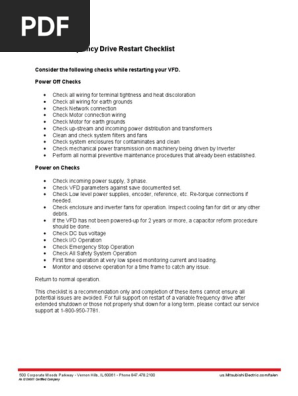
Alternatives Comparison: Is Vfd Preventive Maintenance Checklist the Best Choice?
When evaluating long-term operational strategies for motor control systems, facility managers and EPC contractors must determine whether the rigorous discipline of a VFD preventive maintenance checklist justifies its implementation cost compared to alternative technologies. While variable frequency drives deliver superior energy efficiency and process control, they demand proactive thermal management, electrical connection verification, and component lifecycle monitoring. In contrast, alternative configurations—such as soft starters paired with induction motors (IM), direct-on-line (DOL) systems, or permanent magnet synchronous motors (PMSM) integrated with solar pump inverters—present distinct maintenance profiles, capital expenditure structures, and total cost of ownership (TCO) implications. The following analysis examines these alternatives through the lens of maintenance complexity, reliability, and application suitability to determine when a comprehensive VFD maintenance protocol represents the optimal strategic choice versus when simplified alternatives may suffice.
VFD vs. Soft Starter: Maintenance Complexity and Lifecycle Costs
The choice between a VFD and a soft starter fundamentally dictates your maintenance overhead. Soft starters utilize solid-state switching (thyristors/SCRs) to limit inrush current during motor startup, after which the motor runs at fixed speed across the line. This simplicity translates to minimal maintenance: visual inspection of heat sinks, occasional verification of bypass contactors, and basic environmental cleaning. There are no cooling fans to replace, no DC bus capacitors to monitor for swelling, and no firmware updates required.
Conversely, VFDs introduce significant maintenance obligations that justify the detailed checklist methodology. The rectifier and inverter stages require thermal imaging to detect loose connections, DC link capacitors demand scheduled replacement every 5-7 years depending on ambient temperature, and cooling fans operate continuously, creating wear points absent in soft starter designs. However, for agricultural pumping or HVAC applications with variable flow requirements, the 30-50% energy savings typically outweigh the additional maintenance burden. If your process demands constant speed operation, the soft starter eliminates the preventive maintenance overhead entirely, though at the cost of operational flexibility and energy efficiency.
Solar-Powered VFD Systems vs. Grid-Powered Alternatives
For remote agricultural installations and off-grid industrial applications, solar pump inverters (specialized VFDs designed for DC input from photovoltaic arrays) introduce unique maintenance variables compared to conventional grid-powered VFDs. Grid-connected systems require monitoring for voltage sags, harmonic distortion feedback, and power quality issues that stress input rectifiers. Maintenance checklists must include verification of line reactors and EMC filters.
Solar VFD configurations, such as those engineered by Boray Inverter, eliminate grid dependency but introduce DC-side maintenance requirements. Technicians must inspect PV array grounding, verify Maximum Power Point Tracking (MPPT) algorithm performance, and ensure DC input protection circuits remain free from corrosion in humid environments. However, high-quality solar pump inverters with IP65 or IP66 enclosures significantly reduce the frequency of internal cleaning tasks compared to standard industrial VFDs, as they resist dust and moisture ingress in harsh agricultural environments. The maintenance checklist for solar applications shifts focus from grid synchronization to environmental sealing integrity and DC bus voltage stability, offering reduced downtime risk in remote locations where service calls are expensive.
Motor Technology Impact: PMSM vs. Induction Motor Maintenance
The motor paired with your drive significantly influences maintenance protocols. Induction Motors (IMs) are robust and forgiving of VFD parameter drift, requiring standard bearing lubrication and vibration analysis but little drive-specific maintenance beyond standard thermal protection settings.
Permanent Magnet Synchronous Motors (PMSMs), increasingly deployed with high-efficiency VFDs and solar pumping systems, demand stricter adherence to preventive maintenance checklists. These motors require precise rotor position feedback (encoders or sensorless algorithms), and demagnetization risks necessitate careful current limit verification during VFD commissioning and periodic audits. While PMSMs eliminate rotor cage maintenance and offer 2-5% higher efficiency than premium efficiency IMs, they require VFDs with advanced parameter monitoring to prevent irreversible magnet damage. The maintenance checklist must include verification of motor insulation resistance and back-EMF symmetry, tasks unnecessary with standard induction motors.
Comparative Analysis: Maintenance Requirements by Configuration
| Technology Configuration | Maintenance Complexity | Critical Maintenance Tasks | Service Interval | 5-Year TCO Impact | Best Application |
|---|---|---|---|---|---|
| VFD + Induction Motor (Grid) | High | Thermal imaging, capacitor replacement, fan inspection, firmware updates, torque verification | Quarterly inspection; Annual deep maintenance | Moderate (Offset by energy savings) | Variable torque pumps, HVAC, conveyor systems |
| VFD + PMSM (Grid) | Very High | Encoder calibration, demagnetization checks, precise parameter verification, plus standard VFD tasks | Monthly monitoring; Quarterly inspection | Higher initial cost; Lower energy cost | High-precision positioning, solar tracking, premium efficiency pumping |
| Soft Starter + Induction Motor | Low | Visual inspection, heat sink cleaning, bypass contactor check | Bi-annual | Lowest | Fixed-speed applications with high starting torque (crushers, mills) |
| Solar Pump Inverter + PMSM | Moderate-High | MPPT verification, DC bus inspection, environmental sealing checks, PV grounding | Seasonal (pre/post harvest) | Moderate (High reliability in remote areas) | Off-grid irrigation, remote water supply |
| DOL (Direct On Line) + Induction Motor | Minimal | Bearing lubrication, vibration analysis, starter contact inspection | Annual | Lowest capital; Highest operational cost | Intermittent duty, budget-constrained installations |
Strategic Recommendation: When is the VFD Checklist Essential?
The comprehensive VFD preventive maintenance checklist represents the best choice for operations where variable speed control drives process efficiency—specifically in solar pumping stations, HVAC systems with fluctuating loads, and industrial processes requiring precise torque control. For these applications, the checklist is not merely preferable but mandatory to protect sophisticated electronics and ensure ROI on energy savings.
However, alternatives prove superior in specific contexts:
– Choose Soft Starters for fixed-speed applications where motors run at full speed continuously; the elimination of VFD maintenance overhead and capital cost is justified by the absence of energy savings opportunities.
– Choose Solar Pump Inverters with PMSM for remote agricultural projects where grid extension is cost-prohibitive, provided your maintenance team can manage DC electrical systems and seasonal inspection schedules.
– Choose DOL Systems only for low-utilization backup pumps or budget-constrained projects where energy costs are negligible and maintenance resources are severely limited.
Boray Inverter’s advanced drive solutions, including IP66-rated solar pump inverters and high-efficiency VFDs compatible with both IM and PMSM technologies, are engineered to minimize maintenance frequency through robust thermal design and predictive monitoring capabilities. While no technology entirely eliminates maintenance, selecting the appropriate drive-motor combination—and rigorously applying the corresponding preventive protocol—ensures maximum uptime and lifecycle value for industrial and agricultural automation projects.
Core Technical Specifications and Control Terms for Vfd Preventive Maintenance Checklist
When developing a preventive maintenance checklist for Variable Frequency Drives (VFDs) and solar pump inverters, maintenance teams must move beyond generic cleaning and inspection tasks to incorporate the specific electrical parameters, control methodologies, and commercial frameworks that govern equipment lifecycle management. For industrial engineers, EPC contractors, and agricultural project managers, fluency in these technical specifications ensures that maintenance protocols align with original design tolerances, while understanding international trade terms facilitates efficient spare parts logistics and warranty management across global supply chains.
Electrical Specifications and Thermal Parameters
Effective preventive maintenance requires establishing baseline readings against manufacturer specifications. Critical parameters include:
Input/Output Characteristics
– Voltage Tolerance: Verify input voltage stability within ±10% of rated values (e.g., 380V AC ±38V for three-phase industrial drives or 220V AC for single-phase agricultural applications). Deviations indicate grid instability or transformer issues requiring correction before VFD damage occurs.
– Output Frequency Range: Confirm 0-50/60Hz standard operation for pumps, or extended 0-400Hz ranges for specialized industrial motors. Frequency drift during operation suggests control board degradation or EMC interference.
– Current Harmonics (THDi): Monitor Total Harmonic Distortion levels, typically <5% for 6-pulse rectifiers and <3% for active front-end (AFE) units. Elevated THDi indicates DC bus capacitor aging or rectifier diode failure.
Thermal Management Specifications
– Switching Frequency (Carrier Frequency): Standard ranges of 2-16 kHz directly impact heat generation. Higher frequencies reduce motor noise but increase IGBT thermal load. Maintenance should verify heat sink temperatures remain below 70°C at rated switching frequency.
– IP Rating Integrity: Verify enclosure ratings (IP20 for cabinet-mounted, IP54/65 for field-mounted solar pump inverters) remain uncompromised. Degraded gaskets or cooling fan failures often result in dust ingress violating IP specifications, leading to short circuits.
Advanced Control Algorithms and Verification Protocols
Modern VFDs employ sophisticated control strategies that require specific verification during maintenance:
Vector Control vs. V/Hz Control
– Sensorless Vector Control (SVC) or Field Oriented Control (FOC): These algorithms require accurate motor parameter identification (stator resistance, leakage inductance). During maintenance, verify auto-tuning parameters haven’t drifted, particularly after motor rewinding or bearing replacements that alter mechanical load characteristics.
– Slip Compensation: For pump applications, verify slip compensation settings maintain constant flow rates despite load variations. Incorrect parameters cause “hunting” (oscillating speeds) and premature mechanical seal wear.
PID Process Control
– Feedback Loop Calibration: For constant pressure water supply systems, verify PID proportional gain, integral time, and derivative time settings against baseline. Sensor drift in pressure transducers (4-20mA or 0-10V signals) requires recalibration to prevent controller oscillation.
– Sleep/Wake Functionality: In solar pumping applications, verify low-frequency sleep thresholds (typically 20-30Hz) and wake-up pressure differentials to prevent dry-running and unnecessary cycling.
Maximum Power Point Tracking (MPPT) – Solar Pump Specifics
– Voltage Window Verification: Solar pump inverters operate within specific PV voltage ranges (e.g., 200-800VDC). Maintenance must verify MPPT algorithms maintain operation at Vmp (maximum power voltage) despite panel soiling or degradation.
– Tracking Efficiency: Premium inverters maintain >99% MPPT efficiency. Degradation in tracking speed or accuracy indicates DC input sensor drift or firmware algorithm issues requiring updates.
– Irradiance Thresholds: Verify startup irradiance levels (typically 100-150 W/m²) and minimum operating voltages to prevent frequent stopping/starting that stresses DC bus capacitors.
Critical Component Specifications and Replacement Criteria
Preventive maintenance schedules must reference specific component MTBF (Mean Time Between Failures) ratings:
- DC Link Capacitors: Electrolytic capacitors typically require replacement every 5-7 years or 40,000 operating hours. Maintenance should measure capacitance values and ESR (Equivalent Series Resistance); replacement required when capacitance drops below 80% of rated value (e.g., 820μF ±20%).
- Cooling Fans: Ball-bearing fans typically rated for 50,000 hours at 40°C. Replace proactively at 40,000 hours in high-temperature agricultural environments.
- IGBT Modules: Thermal imaging should identify junction temperatures not exceeding Tj(max) – 25°C (typically 125-150°C). Hot spots indicate degraded thermal interface material requiring reapplication of thermal paste.
International Commercial Terms (Incoterms) and Maintenance Logistics
For global EPC contractors and distributors, procurement terminology directly impacts maintenance preparedness:
FOB (Free On Board)
– Specifies that risk transfers when goods pass the ship’s rail at the port of departure. For critical spare parts (control boards, IGBT modules), FOB terms require the buyer to arrange marine insurance and freight, necessitating lead-time buffers in maintenance scheduling (typically 4-6 weeks for sea freight from China).
CIF (Cost, Insurance, and Freight)
– Seller bears costs and risks until goods reach the destination port. While simplifying procurement, CIF requires verification that insurance coverage includes technical equipment against moisture and electrostatic damage—critical for VFD circuit boards. Maintenance managers should confirm HS codes (8504.40 for static converters) for customs clearance efficiency.
EXW (Ex Works) and Warranty Implications
– Factory acceptance testing (FAT) under EXW terms allows verification of parameter settings before shipment. Standard Boray Inverter warranties (24 months from commissioning) require proof of proper maintenance intervals; documentation should reference specific serial numbers and technical specifications to validate claims.
Spare Parts Provisioning
– Establish BOM (Bill of Materials) referencing specific firmware versions and hardware revisions. Vector control boards for solar pump inverters may have region-specific MPPT algorithms; specify “Global Version” or “Agricultural Version” in procurement documentation to ensure compatibility with existing parameter sets.
Documentation Standards for CMMS Integration
When recording these specifications in Computerized Maintenance Management Systems (CMMS):
- Baseline Parameter Archives: Store original V/Hz curves, PID settings, and MPPT voltage curves as encrypted backup files separate from the drive’s EEPROM.
- Thermal Image Libraries: Maintain IR thermography baselines showing normal operating temperatures for heat sinks, DC bus bars, and terminal connections under full load.
- Incoterm Tracking: Log procurement terms (FOB/CIF) and warranty expiration dates alongside equipment serial numbers to automate spare parts reordering triggers.
By integrating these technical specifications and commercial frameworks into your preventive maintenance checklist, facility managers transform routine inspections into data-driven asset management protocols that maximize the operational lifespan of both industrial VFDs and solar pumping systems.
Future Trends in the Vfd Preventive Maintenance Checklist Sector
The industrial maintenance sector is witnessing a paradigm shift from static, calendar-based interventions to dynamic, data-driven ecosystems. For Variable Frequency Drives (VFDs)—particularly those deployed in demanding solar pumping applications and harsh industrial environments—next-generation preventive maintenance checklists are evolving into intelligent, predictive frameworks that integrate automation, renewable energy protocols, and Industrial Internet of Things (IIoT) architectures.
1. AI-Enhanced Predictive Maintenance and Automated Checklist Generation
Traditional preventive maintenance schedules, while effective for basic component longevity, are giving way to Condition-Based Monitoring (CBM) systems powered by machine learning algorithms. Rather than adhering to rigid annual inspection cycles, modern VFD maintenance protocols now leverage historical performance data, load profiling, and environmental factors to generate dynamic checklists tailored to specific operational stresses.
For solar pump inverters specifically, AI-driven analytics can correlate Maximum Power Point Tracking (MPPT) efficiency degradation with specific maintenance triggers. Advanced algorithms analyze thermal imaging patterns—moving beyond manual periodic scans—to predict IGBT junction temperature anomalies or DC link capacitor swelling weeks before failure occurs. This transition from preventive to predictive maintenance enables EPC contractors and agricultural operators to optimize spare parts inventory for critical wear items like cooling fans and filter media, while minimizing unplanned downtime in remote installations where technical support is limited.
2. IoT-Enabled Real-Time Monitoring and Edge Computing
The integration of wireless sensor networks is transforming how maintenance teams interact with VFD systems. Smart VFDs equipped with embedded IoT sensors now provide continuous telemetry on vibration signatures, ambient humidity, and bus voltage stability—eliminating the reliance on periodic manual inspections and enabling immediate anomaly detection.
In agricultural solar pumping applications, where drives often operate in isolated locations, edge computing devices process data locally to trigger instant alerts for parameter deviations. For instance, IoT-enabled thermal monitoring can detect obstructed cooling paths or failing enclosure fans in real-time, rather than during scheduled quarterly inspections. These systems automatically generate location-specific maintenance tickets when torque degradation is detected in power connections, or when firmware updates are required to optimize grid-tie synchronization protocols.
Furthermore, Digital Twin technology is emerging as a cornerstone of advanced VFD maintenance. By creating virtual replicas of physical drive systems, engineers can simulate thermal stress under varying solar irradiance conditions or model the impact of dust accumulation on heat sink efficiency—allowing for preemptive cleaning schedules tailored to specific environmental exposures, such as the compressed air cleaning protocols essential for desert solar installations.
3. Renewable Energy Integration and Hybrid AC/DC Maintenance Protocols
As global decarbonization initiatives accelerate, VFD maintenance checklists must increasingly account for hybrid AC/DC architectures prevalent in modern solar pumping and energy storage systems. Traditional maintenance frameworks designed for grid-tied industrial motors require significant adaptation for photovoltaic (PV) applications, where solar pump inverters interface directly with DC photovoltaic arrays.
Emerging trends include integrated MPPT health monitoring as a standard checklist item, ensuring that DC input characteristics are optimized alongside AC output performance. Maintenance protocols now emphasize DC bus capacitor inspection with greater frequency in solar applications, where fluctuating irradiance causes higher ripple currents and accelerated electrolytic aging compared to stable grid operation.
Additionally, the proliferation of regenerative VFDs in industrial microgrids necessitates new checklist parameters for energy feedback systems, including grid synchronization stability and anti-islanding protection verification. For agricultural project managers, this means maintenance schedules must now coordinate between solar array cleaning, VFD thermal management, and pump mechanical integrity—treating the system as an integrated electromechanical ecosystem rather than isolated components.
4. Cybersecurity-Hardened Maintenance and Firmware Management
With increased connectivity comes the imperative for cyber-physical security within maintenance protocols. Future VFD checklists incorporate network security audits alongside traditional electrical inspections, verifying that remote access portals for firmware updates are encrypted and that communication protocols (Modbus TCP/IP, EtherNet/IP, Profinet) are protected against unauthorized intrusion.
Automated firmware version control is becoming critical, particularly for solar pump inverters operating across diverse geographical regions with varying grid codes. Cloud-based maintenance management systems now track parameter configuration baselines across entire fleets of drives, enabling instantaneous rollback capabilities and ensuring that performance optimizations do not compromise operational safety or electromagnetic compatibility (EMC) standards.
5. Sustainability-Driven Component Lifecycle Optimization
The circular economy is influencing VFD design and maintenance philosophy, particularly for manufacturers like Boray Inverter specializing in solar applications. Next-generation checklists emphasize modular component replacement strategies—prioritizing the proactive substitution of cooling fans, capacitors, and fan filters using biodegradable or recyclable materials.
Advanced protocols now maximize Mean Time Between Failures (MTBF) while minimizing electronic waste, including guidelines for IGBT module remanufacturing versus replacement decisions based on predictive wear models. For EPC contractors, this translates to maintenance documentation that tracks carbon footprint alongside equipment reliability, aligning preventive maintenance programs with corporate sustainability targets and renewable energy project certifications.
As these technologies mature, the distinction between “preventive” and “corrective” maintenance blurs into a continuum of intelligent asset management. For industrial engineers and automation distributors, adopting these advanced checklist methodologies ensures not only the longevity of VFD investments but also the optimization of energy efficiency in an increasingly electrified, renewable-dependent industrial landscape.
Top 4 Vfd Preventive Maintenance Checklist Manufacturers & Suppliers List

Top 10 Industrial VFD Products and Suppliers to Watch in 2026
Website: canroon.com
Canroon Product Portfolio: CV900S Series Solar Pump Inverter (dedicated solar pumping solution); CV800D Series Compact Multi-Function VFD; CV900N Series High Performance Vector Drive; CV900G Series General Purpose Vector Inverter; CV800 Series Multi-Function Inverter; CV900A Series PMSM Drive (Permanent Magnet Synchronous Motor control); CR600 Series VFD (features real-time monitoring, predictive …
SWI: Variable Frequency Drive (VFD) Preventive Maintenance
Website: getmaintainx.com
Variable Frequency Drive (VFD) preventive maintenance specifications reveal critical product features: Operational interface includes HMI/keypad with event logging and parameter configuration capabilities; thermal management requires ambient temperature below 120°F (49°C) with unobstructed cooling fan airflow and internal cooling paths; physical construction includes sealed enclosures with gaskets…

VFD preventive maintenance checklist – Riyadh Al Etqan Co.
Website: r-aletqan.com
VFD systems for industrial motor control featuring rectifier-DC bus-inverter architecture, available in low voltage and medium voltage configurations. Critical wear components include cooling fans and capacitors requiring proactive replacement schedules. Systems support thermal imaging diagnostics, firmware/programming software updates, and continuous performance monitoring capabilities. Maintenan…

Guide to VFD Maintenance | Industrial Electrical Co
Website: industrialelectricalco.com
VFD Product Architecture: Six-diode rectifier converting AC to DC, DC bus with ripple-eliminating capacitors, inverter section utilizing IGBT or standard transistor power devices for DC-to-AC conversion, integrated control circuitry, and air/liquid cooling systems. Enclosure Specifications: NEMA 1 (vented, indoor-only, dust-vulnerable) and NEMA 12 (sealed, low-maintenance). Maintenance Requirement…
B2B Engineering FAQs About Vfd Preventive Maintenance Checklist
Q: At what minimum load percentage should thermal imaging be performed during VFD preventive maintenance, and what temperature differential indicates potential connection degradation?
A: Thermal imaging should be conducted while the VFD is operating under significant load—ideally above 75% of rated current—to generate sufficient heat signatures for accurate diagnostics. Abnormal hot spots exceeding 10°C above ambient or adjacent connection points typically indicate high electrical resistance from loose terminals or corroded contacts. If thermal anomalies are detected, the unit must be immediately shut down for torque verification using a calibrated torque wrench per manufacturer specifications (typically 1.1–1.5 Nm for control terminals, 2.5–4.5 Nm for power terminals), as over-tightening can fracture conductor strands or strip terminal blocks, creating higher resistance than the original loose connection.
Q: What is the specific torque verification procedure for power and control terminals during VFD maintenance, and why does over-tightening cause more failures than under-tightening in variable frequency drives?
A: Use a calibrated torque screwdriver or wrench set to manufacturer-specified values (found in the drive’s hardware manual) and verify torque in a star pattern for bus bars, then sequentially for individual terminals. Over-tightening compresses and cold-flows copper conductors, fractures ferrules, or cracks terminal block housings, creating high-resistance points that generate heat through carbonization cycles. Under-tightened connections, conversely, can often be corrected before thermal runaway occurs. Always torque-check after the first 30 days of operation (post-installation settling) and during annual preventive maintenance, but never re-torque energized connections.
Q: In solar pumping applications where VFDs operate in outdoor NEMA 3R/4X enclosures, how should preventive maintenance protocols adapt for dust ingress and cooling fan degradation compared to indoor industrial installations?
A: Agricultural and solar applications require quarterly rather than annual maintenance intervals due to airborne particulates and pollen. Compressed air cleaning (dry, oil-free, <30 PSI) must precede filter inspection to prevent dust compaction into heatsink fins. Verify cooling fan operation through current draw measurement (compare against nameplate mA ratings) rather than visual inspection alone, as solar pump VFDs often operate at varying speeds where fan rotation isn’t constant. Replace enclosure gasket filters every 6 months in dusty environments, and inspect DC bus capacitors for swelling—outdoor temperature cycling accelerates electrolyte evaporation compared to climate-controlled industrial settings.
Q: What are the visual indicators of DC link capacitor degradation during internal VFD inspections, and what predictive replacement intervals should EPC contractors specify for solar pump systems operating in high-ambient temperatures?
A: Inspect capacitors for canister bulging (domed tops), electrolyte leakage around terminal seals, or case discoloration indicating thermal stress. In solar pumping applications with ambient temperatures consistently exceeding 40°C, implement predictive replacement at 5–6 years rather than waiting for failure, as capacitor life halves for every 10°C rise above rated temperature. Measure capacitance with an LCR meter; replacement is required when capacitance drops below 80% of rated value or ESR (equivalent series resistance) increases by 200%. Always observe LOTO procedures and verify DC bus voltage has discharged below 50V using a calibrated multimeter before internal inspection—solar VFDs maintain hazardous DC bus potential even after AC disconnection.
Q: How should Lockout/Tagout (LOTO) procedures be structured when performing internal VFD maintenance on solar pump systems with DC bus energy storage and regenerative capabilities?
A: Solar pump VFDs require extended discharge protocols due to large DC link capacitors. After AC isolation, wait minimum 10 minutes (consult specific drive manual—some high-capacity drives require 20+ minutes) before verifying zero energy state with a CAT III multimeter across DC+ and DC- terminals. Implement stored energy warning tags specifically for the DC bus, not just AC inputs. For drives with dynamic braking units, verify braking resistor circuits are de-energized. Document pre-maintenance parameter backups before LOTO application, as power cycling during maintenance may reset fault logs or real-time clock data critical for troubleshooting agricultural irrigation schedules.
Q: What parameter documentation and firmware validation strategies should automation distributors implement before conducting preventive maintenance on agricultural VFD installations with remote monitoring capabilities?
A: Export complete parameter sets using manufacturer programming software (e.g., Boray Inverter’s configuration tools) to create baseline backups before any maintenance activity. Compare current parameters against commissioning baselines to detect unauthorized modifications that may affect pump curves or energy harvesting efficiency. Verify firmware revision compatibility with remote monitoring SCADA systems—agricultural networks often use RS-485 Modbus or 4G telemetry that requires specific firmware versions for protocol handshake. Update firmware only during non-irrigation windows, maintaining rollback capability, as agricultural timing cycles cannot tolerate extended commissioning periods during growing seasons.
Q: For VFDs operating in high-temperature agricultural environments (45–50°C ambient), what specific heat sink inspection and maintenance procedures prevent IGBT thermal derating and premature failure?
A: Inspect aluminum heatsink fins for bent or clogged channels using a borescope, as restricted airflow causes junction temperature spikes exceeding 125°C, triggering thermal foldback or failure. Clean heatsinks using vacuum extraction rather than compressed air alone to prevent particulate redistribution onto PCBs. Verify thermal interface material (TIM) between IGBT modules and heatsinks hasn’t dried or cracked—reapplication may be necessary after 5 years in high-heat environments. Confirm ambient temperature sensors are calibrated; agricultural VFDs often require external heatsink temperature monitoring via PT100 sensors to anticipate thermal runaway before drive protection circuits activate.
Q: How does preventive maintenance scheduling differ between low-voltage (230V/480V) irrigation VFDs and medium-voltage (2.3kV–13.8kV) industrial drives regarding component replacement cycles and safety protocols?
A: Low-voltage solar pump VFDs typically require annual replacement of cooling fans (operating life: 30,000–50,000 hours) and 5–7 year capacitor replacement, whereas medium-voltage drives utilize cell-based architectures requiring individual cell capacitor testing and fiber-optic communication board inspection every 2 years. Medium-voltage maintenance requires arc-flash PPE (Category 3/4) and insulated tool sets rated for the specific voltage class, while low-voltage agricultural maintenance focuses on IP54 enclosure integrity and corrosion resistance. For both classes, implement vibration analysis on cooling fans—unbalanced fan blades in MV drives create resonant frequencies that damage cell cabinets, while in LV solar pumps, they indicate bearing failure that reduces airflow by 40% before complete stoppage.
Disclaimer
⚠️ Important Disclaimer
The information provided in this guide is for educational purposes. Industrial applications and electrical engineering projects carry inherent risks. B2B buyers and contractors must conduct thorough technical due diligence and verify regional compliance before installation or procurement.
Conclusion: Partnering with Boray Inverter for Vfd Preventive Maintenance Checklist
Implementing a rigorous VFD preventive maintenance checklist is not merely a best practice—it is a strategic imperative for ensuring operational continuity, maximizing energy efficiency, and protecting critical infrastructure investments across industrial and agricultural sectors. As outlined, systematic thermal imaging, connection torque verification, and proactive component replacement form the backbone of reliable motor control systems. However, even the most diligent maintenance protocols cannot compensate for suboptimal drive hardware or incompatible control architectures.
This is where Shenzhen Boray Technology Co., Ltd. emerges as your strategic partner in motor control excellence. As a pioneering manufacturer of Solar Pump Inverters and Variable Frequency Drives headquartered in China, Boray Inverter combines deep engineering expertise with manufacturing precision to deliver solutions that minimize maintenance demands while maximizing field longevity. Our competitive advantage lies in our human capital: 50% of our workforce comprises dedicated R&D engineers who have mastered advanced PMSM (Permanent Magnet Synchronous Motor) and IM (Induction Motor) vector control technologies, ensuring our drives operate with exceptional efficiency across variable load conditions.
Boray’s commitment to quality is institutionalized through our dual modern production lines and uncompromising 100% full-load testing protocols, guaranteeing that every unit shipped meets stringent international standards for reliability and performance. From large-scale agricultural irrigation projects to complex industrial automation systems, our VFD solutions have earned the trust of EPC contractors and system integrators worldwide, delivering consistent performance in harsh environmental conditions where preventive maintenance truly matters.
Whether you are sourcing drives for solar pumping applications or seeking robust motor control solutions for manufacturing automation, Boray Inverter provides customized VFD architectures tailored to your specific operational parameters. We invite electrical engineers, project managers, and automation distributors to explore our comprehensive product portfolio and leverage our OEM/ODM capabilities.
Contact Boray Inverter today at borayinverter.com to request technical specifications, obtain competitive wholesale quotations, or discuss your customized motor control requirements with our engineering team.