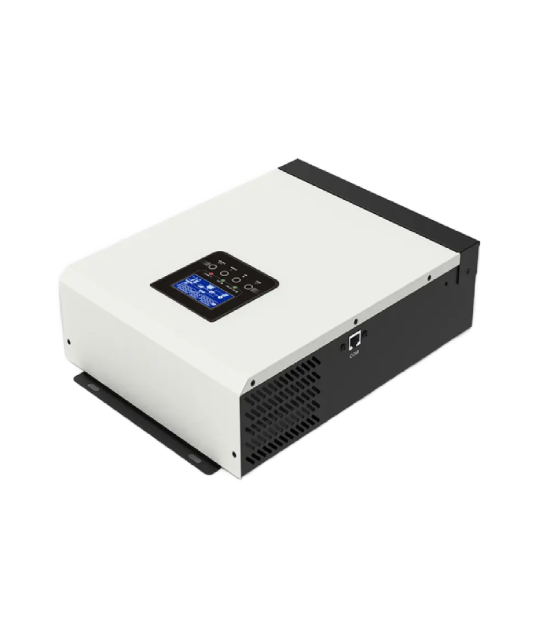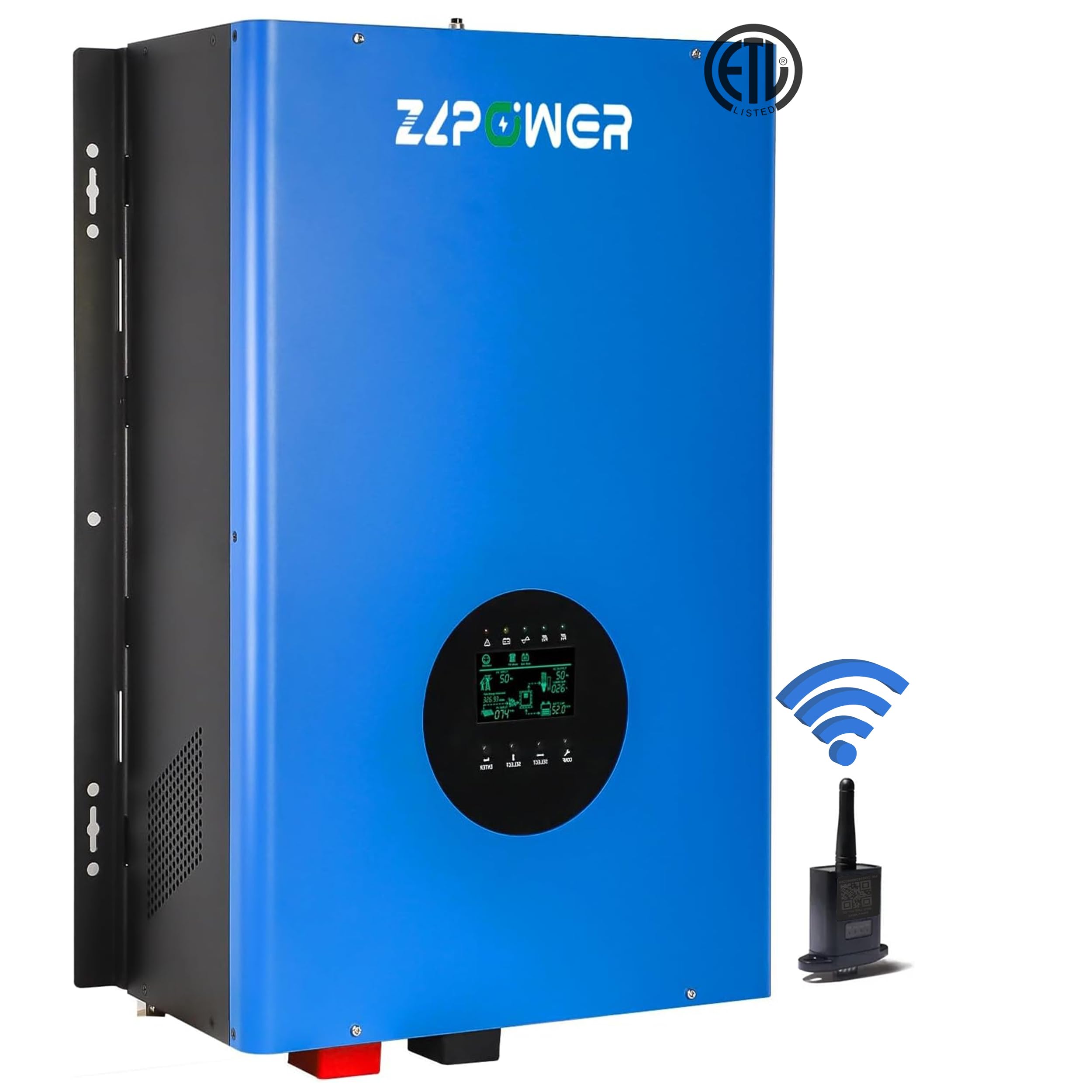
Introduction: Sourcing Hybrid Solar Power Inverter for Industrial Use
Industrial operations and large-scale agricultural projects face mounting pressure to decouple critical processes from grid instability while optimizing Levelized Cost of Energy (LCOE). Unlike residential installations, industrial hybrid solar power systems must seamlessly integrate with existing Variable Frequency Drives (VFDs), motor control centers, and high-torque pumping infrastructure—demanding inverters that handle bidirectional DC-AC conversion, battery energy storage system (BESS) management, and utility interconnection within a single, ruggedized unit.
A hybrid solar power inverter functions as the intelligent power conversion hub, combining solar PV input, battery storage dispatch, and grid-tie capabilities to ensure continuous operation for automation lines, irrigation systems, and processing equipment. For EPC contractors and automation distributors, selecting the right topology—whether inverter/charger hybrids, integrated solar charge controllers, or grid-tie hybrids with export limiting—directly impacts system efficiency, harmonic distortion, and compatibility with existing motor control architectures.
This comprehensive guide examines the technical specifications that matter in industrial procurement: MPPT voltage ranges compatible with large PV arrays, surge capacity for motor starting loads, and communication protocols essential for SCADA integration. We analyze manufacturer evaluation criteria specific to heavy-duty applications, including thermal management for harsh environments, protection ratings (IP65+), and integration pathways with Boray Inverter’s solar pump VFDs and motor control solutions. Whether designing off-grid agricultural installations or grid-connected factory microgrids, understanding these hybrid inverter fundamentals ensures your power infrastructure delivers both energy independence and precise motor control reliability.
Article Navigation
- Top 1 Hybrid Solar Power Inverter Manufacturers & Suppliers List
- Introduction: Sourcing Hybrid Solar Power Inverter for Industrial Use
- Technical Types and Variations of Hybrid Solar Power Inverter
- Key Industrial Applications for Hybrid Solar Power Inverter
- Top 3 Engineering Pain Points for Hybrid Solar Power Inverter
- Component and Hardware Analysis for Hybrid Solar Power Inverter
- Manufacturing Standards and Testing QC for Hybrid Solar Power Inverter
- Step-by-Step Engineering Sizing Checklist for Hybrid Solar Power Inverter
- Wholesale Cost and Energy ROI Analysis for Hybrid Solar Power Inverter
- Alternatives Comparison: Is Hybrid Solar Power Inverter the Best Choice?
- Core Technical Specifications and Control Terms for Hybrid Solar Power Inverter
- Future Trends in the Hybrid Solar Power Inverter Sector
- B2B Engineering FAQs About Hybrid Solar Power Inverter
- Disclaimer
- Conclusion: Partnering with Boray Inverter for Hybrid Solar Power Inverter
Technical Types and Variations of Hybrid Solar Power Inverter
Hybrid solar power inverters have evolved beyond residential applications to become critical power electronics components in industrial automation and agricultural infrastructure. For engineering teams and EPC contractors, selecting the appropriate topology requires understanding how these systems interface with motor control equipment, variable frequency drives (VFDs), and three-phase industrial loads. The following classifications represent the primary architectural approaches deployed in commercial and industrial environments, each offering distinct technical advantages for pumping systems, manufacturing equipment, and microgrid stabilization.
| Type | Technical Features | Best for (Industry) | Pros & Cons |
|---|---|---|---|
| Three-Phase Industrial Hybrid Inverters (400V/480V Class) | • IGBT-based 3-phase bridge topology • 3-phase 4-wire output (L1/L2/L3/N) • Active harmonic filtering (THDi <3%) • Motor inrush current handling (150% for 60s) • Power factor correction (leading/lagging) |
Manufacturing plants, agricultural processing, commercial HVAC, heavy machinery | Pros: Direct compatibility with industrial motors; handles inductive loads; grid support functions (Volt/VAR) Cons: Higher capital expenditure; requires balanced 3-phase battery systems or phase management controllers |
| Integrated Solar Pump Hybrid Inverters with VFD Functionality | • Built-in MPPT optimized for pump curves • V/f control and vector control modes • Dry-run protection and flow sensors • Automatic source switching (Solar/Grid/Diesel) • IP65 enclosure ratings for outdoor installation |
Agricultural irrigation, livestock watering, remote water pumping, aquaculture | Pros: Eliminates separate VFD hardware; soft-start reduces mechanical stress; operates in off-grid mode Cons: Application-specific; limited to pumping loads without auxiliary inverter; requires specific motor parameter configuration |
| DC-Coupled High-Voltage Hybrid Inverters (1000V-1500V DC) | • Multi-MPPT inputs (up to 12 strings) • High-voltage battery compatibility (400V-800V) • Reduced DC cabling (4mm² vs 35mm²) • SiC (Silicon Carbide) switching technology • String-level monitoring and diagnostics |
Utility-scale solar farms, large industrial rooftops, agricultural processing facilities | Pros: Higher conversion efficiency (98.5%+); lower BoS costs; reduced resistive losses over long PV array distances Cons: Limited battery chemistry compatibility; stringent arc-fault protection requirements; higher DC safety training needed |
| AC-Coupled Grid-Forming Hybrid Inverters | • Grid-forming capability (independent voltage/frequency reference) • Black-start functionality for microgrids • Bidirectional power conversion (AC↔DC) • IEEE 1547/IEC 62109 compliant • Communication protocols: Modbus TCP/IP, CAN Bus |
Retrofit projects, industrial microgrids, facilities with existing string inverters, critical backup power | Pros: Retrofits existing solar without DC rewiring; provides grid stability services; seamless transition between grid-tied and island modes Cons: Double conversion efficiency penalty (95-96% vs 98%+); complex synchronization requirements; additional hardware for DC coupling |
Three-Phase Industrial Hybrid Inverters (400V/480V Class)
In industrial automation environments, three-phase hybrid inverters serve as the central power conversion hub for facilities requiring robust motor control capabilities. Unlike residential single-phase units, these industrial-grade systems utilize Insulated Gate Bipolar Transistor (IGBT) bridge topologies capable of handling the high inrush currents associated with induction motors and compressor loads—often rated at 150% overload capacity for 60 seconds.
Key technical specifications include three-phase four-wire outputs (L1, L2, L3, Neutral) with active neutral management, critical for powering mixed loads of three-phase machinery and single-phase control circuits. Advanced
Key Industrial Applications for Hybrid Solar Power Inverter
Hybrid solar inverters represent the convergence of photovoltaic generation, energy storage, and intelligent power management for industrial environments. Unlike standard grid-tie inverters, these systems provide bidirectional DC-to-AC conversion essential for applications requiring uninterrupted motor operation, peak load shaving, and seamless transition between power sources. When integrated with Variable Frequency Drives (VFDs) and advanced motor control solutions, hybrid architectures enable sophisticated energy management strategies that reduce operational expenditure while ensuring process continuity.
| Sector | Application | Energy Saving Value | Sourcing Considerations |
|---|---|---|---|
| Agriculture & Irrigation | Solar-powered pumping with battery backup for 24/7 irrigation cycles | 40-60% reduction in diesel/grid dependency; optimized VFD motor control for variable flow rates | IP65-rated enclosures for outdoor installation, wide MPPT voltage range (200-800VDC), compatibility with submersible pump VFDs |
| Water Treatment & Distribution | Hybrid-powered lift stations, reverse osmosis, and aeration systems | Peak shaving 30-50% during high-tariff hours; elimination of generator runtime for critical pumps | Anti-islanding protection (IEEE 1547), total harmonic distortion <3%, Modbus RTU/TCP integration for SCADA connectivity |
| Industrial HVAC & Building Automation | Solar-battery VFD drives for chillers, cooling towers, and ventilation systems | 25-35% HVAC energy cost reduction; demand charge mitigation through stored solar dispatch | Regenerative braking compatibility, power factor correction >0.99, thermal management for -20°C to +60°C operation |
| Mining & Remote Operations | Off-grid crushing, conveying, and processing with solar-battery-generator flexibility | 60-80% diesel generator fuel savings; reduced maintenance cycles for remote motor assets | Heavy-duty chassis (IP54 minimum), vibration-resistant mounting, surge protection (Type 2 SPD), wide input voltage tolerance |
Agriculture & Irrigation: Precision Solar Pumping with Storage Integration
In large-scale agricultural and greenhouse operations, hybrid inverters enable solar pump systems to maintain constant pressure and flow rates regardless of solar irradiance fluctuations. By integrating with Boray’s specialized solar pump VFDs, these systems can modulate motor speeds based on real-time water demand while the hybrid inverter manages power flow from PV arrays, battery banks, and grid/diesel backup. This architecture proves critical for precision irrigation and livestock watering, where 24/7 availability is non-negotiable. The bidirectional conversion capability allows batteries to charge during low-demand periods and discharge during high-flow requirements, effectively decoupling energy consumption from solar generation curves and eliminating diesel generator runtime during daylight hours.
Water Treatment & Distribution: Resilient Infrastructure Power Management
Municipal and industrial water facilities utilize hybrid inverters to power high-torque pump motors and aeration equipment while reducing demand charges associated with peak utility tariffs. The system’s ability to store solar energy in battery banks and discharge during peak tariff windows enables significant cost arbitrage—often reducing electricity expenses by 30-50% during high-rate periods. For EPC contractors and automation distributors, specifying hybrid inverters with integrated anti-islanding protection and THD <3% ensures compliance with strict utility interconnection standards while maintaining power quality for sensitive PLCs and control systems. The seamless grid failover capability prevents costly process interruptions during voltage sags, ensuring continuous operation of critical lift stations and filtration systems.
Industrial HVAC & Building Automation: Intelligent Climate Control
Manufacturing facilities, cement plants, and large commercial buildings deploy hybrid solar inverters to power VFD-driven HVAC systems, optimizing energy consumption through intelligent motor control. By buffering solar generation in battery banks, these systems provide ride-through capability during grid voltage fluctuations, preventing costly compressor motor trips and production downtime. The integration allows VFDs to modulate motor speeds based on thermal loads while the hybrid inverter maintains stable DC bus voltage from both solar arrays and storage units. This configuration proves particularly valuable in heavy industrial environments where dust-resistant enclosures (IP54+) and wide temperature operation ranges are mandatory for reliable motor control.
Mining & Remote Operations: Off-Grid Power Stability
In remote mining and quarrying operations lacking reliable grid infrastructure, hybrid inverters serve as the central power management hub for crushing, conveying, and mineral processing equipment. These applications require robust motor starting capabilities—often demanding 3-5x rated current for high-torque startup—that hybrid systems can supply through combined solar and battery discharge, reducing generator sizing requirements by up to 40%. The ability to accept power from multiple sources (solar, battery, grid, or generator) ensures continuous operation of critical conveyor systems and grinding mills. Sourcing considerations include heavy-duty chassis construction to withstand mining vibrations, comprehensive surge protection for lightning-prone remote locations, and compatibility with generator auto-start protocols for extended low-irradiance periods.
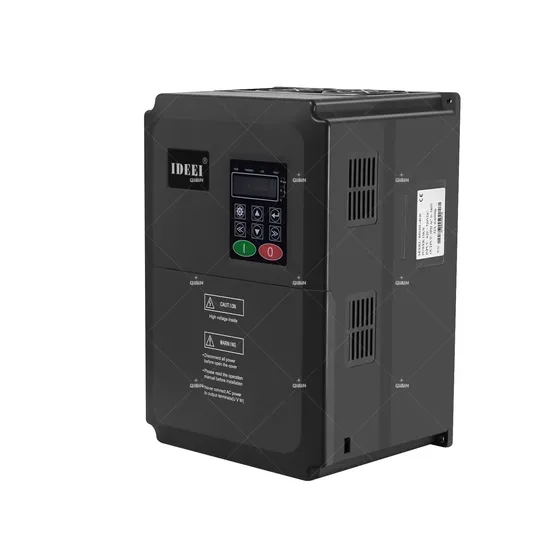
Top 3 Engineering Pain Points for Hybrid Solar Power Inverter
Scenario 1: Grid Instability and Weak Grid Conditions in Remote Agricultural Applications
The Problem:
Remote solar pumping stations frequently operate on weak utility grids or in complete off-grid environments where voltage fluctuations (±20% nominal) and frequency deviations are common. Standard residential hybrid inverters lack the robust ride-through capabilities and motor-control-grade output waveform quality required for agricultural VFDs. When grid impedance is high or generator backup is used, harmonic distortion from the inverter can interfere with pump motor controllers, causing erratic VFD behavior, overcurrent faults, and premature bearing failure in submersible pumps due to electrical noise.
The Solution:
Industrial-grade hybrid inverters featuring grid-forming (GFM) architecture with wide voltage input ranges (200–850V DC) and advanced anti-islanding protection configurable to local utility standards. For agricultural pumping, specify units with built-in sine wave filters and common-mode choke designs that suppress EMI/RFI interference to VFDs. Boray’s hybrid solar pump inverters integrate soft-start algorithms that coordinate with external motor drives, limiting inrush current to 1.5x rated current while maintaining stable DC bus voltage during pump startup—critical for protecting both the inverter’s IGBT modules and the pump motor insulation systems.
Scenario 2: Complex Energy Management Between Solar Generation, Battery Storage, and High-Inertia Motor Loads
The Problem:
Agricultural and industrial pumping systems present non-linear load characteristics that challenge standard hybrid inverter power management: high starting torque requirements (up to 200% rated torque), intermittent duty cycles, and regenerative energy during pump deceleration. Conventional hybrid inverters prioritize battery charging over load stability, leading to DC bus voltage collapse when a 15kW submersible pump starts while batteries are in bulk charging mode. This results in under-voltage faults, reduced battery cycle life due to erratic charge/discharge patterns, and potential water hammer damage from uncontrolled pump stops.
The Solution:
Intelligent hybrid inverter systems with dedicated motor control logic and dynamic power point management. The architecture should feature a prioritized energy hierarchy that temporarily reduces MPPT charging current during motor acceleration events, utilizing the battery as a buffer to prevent DC link voltage sag. Look for hybrid inverters offering seamless transfer times <20ms between solar, battery, and grid modes to prevent motor stall. Boray’s pump-specific hybrid inverters include programmable logic controllers (PLCs) that interface with pressure transducers and flow sensors, automatically adjusting VFD frequency references to match solar irradiance levels—ensuring continuous irrigation schedules even during fluctuating PV output without manual intervention.
Scenario 3: Environmental Harshness and IP Rating Deficiencies in Outdoor Installations
The Problem:
Hybrid inverters deployed in agricultural fields, desert solar farms, or coastal desalination plants face extreme thermal cycling (-25°C to +60°C ambient), dust ingress (IP5X requirements), and corrosive atmospheres (salt mist, fertilizer vapors, humidity >95% RH). Consumer-grade hybrid inverters (typically IP20–IP54) utilize cooling fans that draw contaminants into PCB assemblies, leading to capacitor electrolyte drying, terminal block corrosion, and ground fault insulation failures. In pumping applications, this translates to unplanned downtime during critical irrigation windows and costly truck rolls to remote sites for thermal derating issues or fan replacements.
The Solution:
Ruggedized hybrid inverters with IP65 or NEMA 4X protection ratings, utilizing passive cooling via finned aluminum heat sinks and conformal-coated PCBs resistant to salt fog per ASTM B117. For solar pumping stations, select units with wide operating temperature ranges (-30°C to +60°C without derating) and sealed cable entry glands that prevent moisture ingress during pressure washing. Boray’s industrial hybrid pump inverters feature die-cast aluminum housings with thermal management optimized for 100% continuous duty cycles in 50°C ambient temperatures, ensuring reliable communication with external VFDs and BMS systems. The absence of mechanical cooling components eliminates single points of failure while maintaining efficiency >97% even in dusty agricultural environments.
Component and Hardware Analysis for Hybrid Solar Power Inverter
In industrial solar pumping and motor control applications, the reliability of a hybrid solar power inverter hinges on the robustness of its internal component architecture. Unlike standard residential units, industrial-grade hybrid inverters must withstand harsh agricultural environments, manage high inrush currents from submersible pumps, and deliver precise VFD (Variable Frequency Drive) functionality while simultaneously handling grid-interactive and energy storage operations. The following analysis examines the critical hardware subsystems that determine operational longevity, efficiency, and total cost of ownership for EPC contractors and automation distributors.
Power Semiconductor Stage (IGBT/SiC Modules)
The power module represents the primary energy conversion interface, executing high-speed switching between DC (solar/battery) and AC (grid/motor) domains. For solar pump inverters, these modules must handle high torque startup currents—often 3-7x rated motor current—while maintaining switching frequencies between 2-16 kHz to enable precise motor control and minimize harmonic distortion.
Critical Specifications:
– IGBT Technology: Look for NPT (Non-Punch Through) or FS (Field Stop) trench-gate IGBTs with short-circuit withstand capability (>10μs) and low Vce(sat) characteristics to minimize conduction losses during continuous agricultural pumping cycles.
– SiC MOSFETs: Emerging silicon carbide solutions offer higher switching frequencies (up to 50 kHz), reducing heatsink requirements and enabling quieter motor operation—critical for livestock applications.
– Thermal Interface: Direct Bonded Copper (DBC) substrates with Al₂O₃ or AlN ceramic bases ensure superior thermal cycling resistance compared to traditional IMS (Insulated Metal Substrate) boards.
Digital Signal Processing (DSP) and Control Architecture
The controller functions as the inverter’s central nervous system, simultaneously executing MPPT (Maximum Power Point Tracking) algorithms for PV arrays, managing battery charge/discharge cycles (CC-CV-Float), and generating PWM signals for motor V/f control or vector control strategies.
Engineering Considerations:
– Processing Power: 32-bit DSPs (e.g., TI C2000 series or STM32H7) with hardware floating-point units are required for real-time field-oriented control (FOC) of pumps, enabling sensorless vector control that eliminates the need for external encoders in deep well applications.
– ADC Resolution: 12-bit minimum analog-to-digital conversion for precise current sensing, crucial for motor protection and anti-islanding detection.
– Environmental Hardening: Conformal coating (acrylic or silicone) on PCBs protects against humidity and corrosive gases common in agricultural environments, preventing dendritic growth and electromigration failures.
Thermal Management Systems
In solar pumping installations—often located in high-ambient-temperature regions with limited shelter—thermal design directly correlates with semiconductor lifespan. Every 10°C reduction in junction temperature doubles the mean time between failures (MTBF).
Key Components:
– Heatsink Design: Extruded aluminum heatsinks with optimized fin density (typically 5-10 fins per inch) and anodized surfaces (>25μm thickness) provide corrosion resistance. Heat pipe technology enables isothermal distribution, reducing hot spots by 15-20°C compared to solid aluminum blocks.
– Active Cooling: IP55-rated dual-ball bearing fans with tachometer feedback ensure reliable forced convection. For remote desert installations, passive cooling (conduction/convection only) eliminates fan failure points but requires 30-40% larger heatsink volume.
– Thermal Interface Materials (TIM): Phase-change materials or high-conductivity silicone pads (thermal conductivity >3 W/mK) minimize contact resistance between IGBT baseplates and heatsinks.
DC-Link Capacitors and Energy Storage
The DC bus must stabilize voltage ripple from intermittent solar irradiance while supplying surge current for motor magnetization. Component selection here significantly impacts maintenance schedules.
Technology Comparison:
– Electrolytic Capacitors: Traditional aluminum electrolytics offer high capacitance density but limited lifespan (5,000-8,000 hours at 85°C), making them unsuitable for long-life industrial solar pumps without active cooling.
– Film Capacitors: Metallized polypropylene (MPP) film capacitors provide >100,000 hours lifespan, self-healing properties against dielectric breakdown, and superior ripple current handling (up to 20 Arms per μF), though requiring 3-4x the physical volume.
– Hybrid Solutions: Some advanced inverters use electrolytic capacitors for bulk capacitance paired with film capacitors for high-frequency ripple absorption, balancing size and longevity.
Protection and Monitoring Circuitry
Industrial hybrid inverters require multi-layer protection schemes to safeguard both the inverter and downstream motor assets.
Essential Protection Components:
– IGBT Driver ICs: Desaturation detection (Vce monitoring) with soft turn-off capability prevents catastrophic failure during motor stall conditions or phase-to-phase shorts in submersible pump cables.
– Surge Protection Devices (SPDs): Type 2 SPDs on both DC (PV input) and AC (motor/grid) sides protect against lightning-induced transients common in open-field agricultural installations.
– Insulation Monitoring: For IT (isolated terra) grid configurations or floating PV arrays, insulation resistance monitoring prevents leakage currents that accelerate motor bearing degradation through electrical discharge machining (EDM).
Component Analysis Matrix
| Component | Function | Quality Indicator | Impact on Lifespan |
|---|---|---|---|
| IGBT Power Module | DC-AC bidirectional conversion; motor drive switching | Tj(max) ≥ 150°C; Short-circuit withstand >10μs; Vce(sat) < 1.7V @ rated current; Al₂O₃ or Si₃N₄ ceramic substrate | Directly determines MTBF; thermal cycling causes solder fatigue. High-quality modules extend operational life to 20+ years in solar pumping applications. |
| DSP Control Board | MPPT algorithm execution; V/f and vector control; Grid synchronization | 32-bit architecture; Control loop <50μs; Operating temp -40°C to +85°C; Conformal coating IPC-CC-830 | Prevents control drift and erratic motor behavior. Industrial-grade processors reduce field failure rates by 60% compared to commercial temperature variants. |
| DC-Link Capacitors | Energy buffering; Ripple current absorption; Voltage stabilization | Metallized polypropylene film; ESR <5mΩ; Rated voltage >1.3x nominal system voltage; 100,000 hours @ 70°C | Film capacitors eliminate the “weak link” of inverter lifespan. Electrolytic alternatives typically fail within 5-7 years in solar pump duty cycles. |
| Cooling Heatsinks | Thermal dissipation for power semiconductors | Thermal resistance Rth <0.1°C/W; Anodized aluminum 6063-T5; Heat pipe thermal conductivity >8,000 W/mK | Critical for agricultural environments. Poor thermal management reduces semiconductor lifespan by 50% for every 10°C exceeding rated junction temperature. |
| EMI Filter Chokes | Suppress conducted emissions; Protect motor bearings from EDM currents | Nanocrystalline or ferrite cores; High saturation flux density (>1.2T); Temperature rating 120°C continuous | Prevents premature motor bearing failure (fluting) and ensures grid compliance. Critical for submersible pump longevity in variable speed applications. |
| Communication Interface | SCADA integration; Remote monitoring; Fault diagnostics | Isolated RS485/CAN transceivers (2.5kV isolation); Surge protection IEC 61000-4-5 Level 4; IP67 enclosure rating | Enables predictive maintenance and early fault detection, reducing unplanned downtime by up to 40% in remote solar pumping stations. |
Integration Considerations for Solar Pumping Applications
When specifying hybrid inverters for agricultural VFD systems, engineers must verify component derating curves for high-altitude and high-temperature operation. The synergy between IGBT switching characteristics and DSP control algorithms determines the inverter’s ability to handle the high starting torque of centrifugal pumps without oversizing the power module. Additionally, the selection of film capacitors over electrolytic solutions, while increasing initial BOM cost by 15-20%, typically reduces total lifecycle costs by eliminating mid-life capacitor replacement—a critical factor for EPC contractors offering 10-year performance warranties on solar pumping installations.
For Boray Inverter’s industrial portfolio, these hardware specifications ensure compatibility with submersible pump motors up to 600V class while maintaining the flexibility to integrate lithium-ion or lead-acid storage systems for 24/7 irrigation autonomy.
Manufacturing Standards and Testing QC for Hybrid Solar Power Inverter
Industrial hybrid solar inverters deployed in agricultural pumping and heavy automation environments face significantly harsher operational stresses than residential units. Exposure to high humidity, salinity, dust ingress, and constant thermal cycling demands manufacturing protocols that exceed standard consumer electronics benchmarks. For EPC contractors and automation distributors, understanding these rigorous production standards ensures selected equipment delivers the 15–20 year lifespan required for solar irrigation and industrial motor control projects.
PCB-Level Environmental Protection & Conformal Coating
The printed circuit board (PCB) assembly process for hybrid solar inverters adheres to IPC-A-610 Class 3 high-reliability standards, mandatory for industrial equipment subject to continuous operation. Critical to longevity in agricultural and desert environments is the application of conformal coating—typically 50–75 microns of acrylic, polyurethane, or silicone-based resin applied via selective spraying or dipping processes.
This protective layer provides:
– Moisture and corrosion resistance: Essential for inverters installed in tropical or coastal solar pump stations where humidity exceeds 85% RH
– Dielectric strength: Prevents arcing between high-voltage traces (up to 1000V DC in large-scale solar arrays) and sensitive MPPT control circuitry
– Dust and chemical protection: Shields against pesticide drift and fertilizer particulates common in agricultural automation
Thermal management during PCB assembly employs lead-free reflow profiles with nitrogen inerting to minimize oxidation, ensuring robust solder joints for IGBT and MOSFET power modules that handle motor inrush currents up to 300% of rated load.
Environmental Stress Screening (ESS) and Burn-In Protocols
Before final assembly, all power boards undergo High-Temperature Aging (HTA)—a burn-in process where populated PCBs operate at 60°C ambient (15–20°C above maximum rated operating temperature) for 48–72 hours under dynamic electrical load. This accelerates early-life failures (infant mortality) in capacitors, gate drivers, and auxiliary power supplies.
Additional ESS protocols include:
– Thermal cycling: -40°C to +85°C ramp cycles (5°C/minute) to validate solder joint integrity and CTE (coefficient of thermal expansion) matching between ceramic capacitors and FR4 substrates
– Highly Accelerated Life Testing (HALT): Combined temperature and vibration stress to identify design marginalities in magnetic components and connector interfaces
– Humidity freeze testing: 85°C/85% RH exposure followed by rapid freezing, simulating condensation events in outdoor solar pump enclosures
100% Full-Load Production Testing
Unlike consumer inverters where sampling inspection suffices, industrial hybrid units require 100% full-load functional testing at the end of the production line. Each inverter undergoes:
- Thermal runaway verification: Operation at 110% rated capacity for 2 hours to confirm heat sink thermal resistance and fan curve adequacy
- Motor compatibility testing: Connection to actual induction motors and permanent magnet synchronous motors (PMSM) to verify V/Hz control stability and vector control algorithms—critical for solar pump systems where water hammer and cavitation protection depend on precise torque control
- Grid-tie synchronization: Phase-lock loop (PLL) testing with programmable grid simulators to verify anti-islanding protection (UL 1741/IEC 62116) and reactive power capability
- Battery charge/discharge cycles: Full-cycle efficiency testing of bidirectional DC-DC converters, verifying >95% round-trip efficiency for lithium-ion and lead-acid storage chemistries
Certification Framework and Compliance Standards
Manufacturing facilities serving global B2B markets maintain ISO 9001:2015 quality management systems with specific adherence to:
- IEC 62109-1 & -2: Safety of power converters used in photovoltaic power systems, including protection against electric shock, energy hazards, and fire risks
- IEC 61800-3: Adjustable speed electrical power drive systems (VFD) EMC requirements and specific test methods, ensuring hybrid inverters do not interfere with PLC control networks in automation environments
- CE Marking: Compliance with Low Voltage Directive (LVD) 2014/35/EU and EMC Directive 2014/30/EU
- IP Rating Validation: Ingress protection testing to IP65 or IP66 standards for dust-tight and water-jet resistant enclosures, mandatory for outdoor solar pump installations
For agricultural applications specifically, IEC 61400-4 (wind turbine generator systems) testing methodologies are often adapted to validate mechanical stress resistance in pole-mounted solar pump inverters subject to vibration and wind loading.
Supply Chain Traceability and Component Grade Selection
Industrial-grade hybrid inverters utilize Automotive Grade (AEC-Q100/101) or Industrial Grade (-40°C to +85°C) components rather than commercial-grade (0°C to +70°C) parts. Manufacturing execution systems (MES) enforce full lot traceability for:
– IGBT modules: Tracking thermal cycling capability and short-circuit withstand ratings
– DC-link film capacitors: Polypropylene metallized film types with 100,000-hour life expectancy at rated voltage and temperature
– Enclosure gaskets: UV-resistant EPDM or silicone materials preventing IP rating degradation over 10+ years of solar exposure
Each unit receives a unique serial number linking to batch-specific test data, capacitor formation records, and conformal coating thickness measurements (verified via eddy current testing), providing EPC contractors with complete documentation for warranty claims and predictive maintenance scheduling.
Integration Testing with Motor Control Systems
Given Boray Inverter’s specialization in solar pumping and VFD applications, final QC includes system-level integration testing where the hybrid inverter communicates with variable frequency drives via RS-485 Modbus or CAN bus protocols. This validates:
– Soft-start sequences: Ramp-up control reducing mechanical stress on pump bearings and irrigation pipelines
– Dry-run protection: Logic integration between inverter output and pump load sensors
– MPPT-VFD coordination: Ensuring solar array maximum power point tracking remains stable during motor acceleration transients
This manufacturing rigor ensures that hybrid solar inverters deployed in industrial automation and agricultural projects withstand the voltage fluctuations, harmonic distortion, and environmental extremes that characterize mission-critical motor control applications.
Step-by-Step Engineering Sizing Checklist for Hybrid Solar Power Inverter
When specifying hybrid solar power inverters for industrial pumping or motor control applications, engineers must account for the unique interaction between photovoltaic (PV) generation, battery storage dynamics, and motor load characteristics. Unlike standard grid-tied residential systems, agricultural and industrial hybrid configurations require rigorous coordination between the Variable Frequency Drive (VFD) functionality, motor inrush demands, and the DC bus architecture.
Below is the technical sizing protocol used by Boray Inverter’s application engineering team for hybrid solar pump systems and industrial motor drives.
Step 1: Motor Load Characterization & Hydraulic Duty Cycle Analysis
Before selecting inverter capacity, characterize the mechanical load to determine the true power requirement beyond nameplate ratings:
- Hydraulic Load Calculation: Calculate Total Dynamic Head (TDH) including static lift, friction losses, and pressure requirements. Convert to brake horsepower (BHP) using:
$$BHP = \frac{GPM \times TDH \times SG}{3960 \times Pump\ Efficiency}$$
where SG is specific gravity (1.0 for water). Size the motor with 20–25% service factor above BHP. - Starting Torque Profile: Document the motor’s Locked Rotor Amps (LRA) and breakdown torque. For centrifugal pumps with high static head, starting torque may exceed 150% of rated torque. Verify the hybrid inverter’s surge capacity (typically 200–300% for 60 seconds) can accommodate this without faulting.
- Duty Cycle Classification: Identify IEC duty type (S1 continuous, S3 intermittent cyclic, or S6 continuous operation with intermittent loading). Hybrid inverters for agricultural irrigation often operate under S6 conditions; ensure the thermal derating curve accounts for frequent start/stop cycles.
- VFD Compatibility: Confirm motor insulation class (minimum Class F for VFD duty) and verify the hybrid inverter’s carrier frequency (2–16 kHz) won’t induce excessive bearing currents. Install shaft grounding rings if the cable run exceeds 100m.
Step 2: PV Array String Engineering & MPPT Window Optimization
Proper string sizing ensures the PV array operates within the hybrid inverter’s Maximum Power Point Tracking (MPPT) voltage window under all environmental conditions:
- Temperature Coefficient Analysis: Calculate maximum open-circuit voltage ($V_{oc}$) at the lowest anticipated ambient temperature (typically -10°C to -20°C for high-altitude sites):
$$V_{oc\ max} = V_{oc\ STC} \times N_{series} \times [1 + (T_{min} – 25) \times \frac{\%V_{oc}}{100}]$$
Ensure $V_{oc\ max}$ remains below the inverter’s maximum DC input voltage (typically 1000V or 1500V for commercial units) with 5% safety margin. - Minimum Voltage Verification: At maximum cell temperature (70–85°C), verify string voltage ($V_{mp}$) remains above the MPPT minimum start voltage:
$$V_{mp\ min} = V_{mp\ STC} \times N_{series} \times [1 + (T_{max} – 25) \times \frac{\%V_{mp}}{100}]$$ - Current Sizing: Size array current ($I_{sc}$) to be ≤ 1.25× the inverter’s maximum DC input current per MPPT channel. For dual-axis tracking agricultural systems, account for 1.2–1.3 irradiance boost factors during peak sun.
- String Configuration: For large agricultural pumps (>75kW), utilize multiple MPPT inputs (minimum 2 strings per MPPT) to mitigate mismatch losses from uneven soiling or shading by irrigation equipment.
Step 3: Hybrid Inverter/VFD Specification & Voltage Compatibility
Match the hybrid inverter’s electrical characteristics to both the PV array and motor control requirements:
- DC Bus Architecture: Verify battery voltage compatibility (48V/400V/800V DC) with the inverter’s nominal DC input. For solar pump VFDs, ensure the DC bus can sustain minimum voltage during motor acceleration ramps without triggering undervoltage faults.
- AC Output Specifications: Confirm three-phase output voltage (380V ±10% or 480V ±10%) matches motor nameplate data. For hybrid systems with grid backup, verify phase sequence protection and anti-islanding compliance (UL 1741-SA or IEC 62116).
- Power Rating Selection: Size the inverter continuous output at 1.25× the motor FLA (Full Load Amps). For submersible pumps with long cable runs, account for voltage drop by upsizing the inverter by one standard kW rating.
- THDi and Power Quality: Specify inverters with Total Harmonic Current Distortion (THDi) <5% to prevent utility-side power quality issues when operating in grid-tie mode. Ensure compliance with IEEE 519 or local grid codes.
- Control Interface: Verify Modbus RTU/TCP or CANopen compatibility for integration with SCADA or agricultural automation systems. Confirm dry-contact inputs for dry-run protection, flow switches, and level sensors.
Step 4: Battery Energy Storage Sizing for Motor Starting
Hybrid systems must provide sufficient energy storage to handle motor inrush and cloudy-day autonomy:
- Depth of Discharge (DoD): Size battery capacity using 80% DoD for lithium iron phosphate (LiFePO4) or 50% DoD for lead-acid to preserve cycle life. Calculate required capacity:
$$Capacity (Ah) = \frac{Motor\ Power (W) \times Autonomy\ Hours}{Battery\ Voltage \times DoD \times \eta_{inverter}}$$ - C-Rate Validation: Verify the battery can deliver the motor’s inrush current (5–7× FLA for 2–3 seconds) without excessive voltage sag. For a 22kW motor (43A FLA), the battery must support >250A instantaneous discharge without dropping below minimum DC bus voltage.
- Charge Controller Integration: Ensure the hybrid inverter’s built-in charge controller supports the battery chemistry’s charging profile (CC/CV for Li-ion, multi-stage for AGM). Verify maximum charge current matches battery manufacturer specifications (typically 0.3C–0.5C).
Step 5: Protection Coordination & Safety Systems
Industrial hybrid installations require robust protection against fault conditions common in agricultural environments:
- Overvoltage Protection: Install Type 1+2 combined surge protective devices (SPDs) on the DC side (between PV array and inverter) and Type 2 SPDs on the AC output. For regions with high lightning activity (e.g., tropical agricultural zones), ensure Iimp ≥ 12.5 kA (10/350μs).
- Residual Current Monitoring: Specify Type B RCDs (residual current devices) capable of detecting DC fault currents and high-frequency AC leakage typical of VFD output stages. Sensitivity should be 300mA for fire protection or 30mA if human safety is the primary concern.
- Dry-Run & Cavitation Protection: Configure the hybrid inverter’s programmable relays to accept signals from float switches or pressure transducers. Set minimum frequency thresholds (typically 20–25Hz) to prevent pump operation below the manufacturer’s minimum flow rate.
- Grounding System: Implement TN-S grounding for the AC side and functional earthing for the PV array frame. For hybrid systems with battery enclosures, ensure equipotential bonding between inverter chassis, battery rack, and motor housing to prevent ground loops.
Step 6: Environmental Derating & Installation Logistics
Final specification must account for site-specific environmental stressors:
- Altitude Derating: Reduce inverter continuous output by 1% per 100m above 1000m altitude due to reduced cooling efficiency. For installations above 2000m (e.g., Andean or Himalayan agricultural projects), specify external forced ventilation or oversized inverters.
- Thermal Management: Verify ambient temperature ratings (typically -25°C to +60°C). For desert agricultural applications with >45°C ambient, calculate additional derating: output current should be reduced by 2% per °C above 40°C.
- Ingress Protection: Specify minimum IP65 for outdoor agricultural installations to protect against irrigation spray and dust. For coastal industrial sites, specify C3 or C4 corrosion protection ratings per ISO 12944.
- Cable Sizing: Size DC cabling for voltage drop <3% (IEC 60364-5-52) and AC cabling for <1% to minimize losses. Use UV-resistant double-insulated solar cable (H1Z2Z2-K) for PV connections and shielded motor cables for VFD output to reduce EMI.
Final Verification Checklist: Prior to procurement, confirm the hybrid inverter’s firmware supports pump-specific features (sleep mode detection, pipe fill soft-start sequences, and automatic restart after grid outages). Cross-reference all specifications with IEC 61800-9-2 for VFD energy efficiency classes and IEC 62548 for PV array design requirements.
Wholesale Cost and Energy ROI Analysis for Hybrid Solar Power Inverter
When evaluating hybrid solar power inverters for industrial-scale deployments—particularly in solar pumping stations and automated motor control environments—procurement decisions extend far beyond unit sticker prices. For EPC contractors and agricultural project managers, the financial analysis must account for integration complexity with existing Variable Frequency Drive (VFD) infrastructures, bidirectional power flow capabilities for DC-coupled storage, and the long-term operational expenditure (OPEX) reductions achievable through intelligent peak-load management.
B2B Wholesale Pricing Architecture
In the industrial automation supply chain, hybrid inverter pricing follows distinct volume-tier structures that diverge significantly from residential retail markets. Wholesale procurement for agricultural solar pumping projects typically operates on three tiers:
Volume-Based Unit Economics: Single-unit wholesale pricing (1–9 units) for 30kW–75kW three-phase hybrid inverters generally ranges 15–22% below MSRP, reflecting distributor margins. Mid-tier volumes (10–49 units), common for regional irrigation cooperatives, unlock 25–30% reductions, while EPC-scale procurement (50+ units) can achieve 35–40% below retail through direct OEM partnerships. These structures account for the integrated costs of dual-functionality—combining grid-tie inversion with battery charge control—eliminating the separate procurement and installation expenses of standalone solar inverters and battery inverters.
Component Cost Transparency: For electrical engineers specifying equipment, understanding the Bill of Materials (BOM) cost drivers is essential. In hybrid units rated for industrial motor control applications, IGBT module configurations and DC bus capacitance represent 40–45% of hardware costs. Units designed for VFD compatibility require enhanced DC-link stability and regenerative braking capabilities, adding 8–12% to base manufacturing costs compared to standard residential hybrids, but eliminating the need for external braking resistors in pumping applications.
OEM/ODM Considerations: Distributors partnering with manufacturers like Boray Inverter for private-label solar pump solutions should factor in NRE (Non-Recurring Engineering) costs for firmware customization—particularly for specialized MPPT algorithms that synchronize with submersible pump VFDs. These upfront costs (typically $15,000–$30,000 for protocol adaptations) amortize effectively across volumes exceeding 100 units, yielding per-unit savings of 18–25% compared to off-the-shelf procurement.
Total Cost of Ownership (TCO) in Motor Control Integration
The true economic advantage of hybrid inverters in industrial automation emerges when analyzing system-level integration rather than isolated component costs. Traditional solar pumping architectures require separate grid-tie inverters, battery inverters, and motor VFDs, necessitating complex DC bus architectures and multiple points of failure.
Installation Complexity Reduction: Hybrid units with integrated VFD communication protocols (Modbus RTU/TCP, CANopen) reduce field wiring costs by 30–40% in solar pump stations. A single hybrid inverter managing PV input, battery storage, and AC motor output eliminates the need for external DC combiners and separate inverter enclosures, reducing Balance of System (BOS) costs by $0.08–$0.12 per watt in agricultural deployments.
Maintenance Cost Dynamics: Industrial environments demand IP65-rated enclosures minimum, with IP66 preferred for dusty agricultural settings. While this adds 5–7% to initial hardware costs compared to IP20 residential units, the elimination of separate battery inverter maintenance cycles reduces 10-year OPEX by 12–18%. For remote pumping stations, the ability to perform remote diagnostics via integrated SCADA interfaces—standard in industrial-grade hybrids—reduces truck-roll maintenance costs by approximately $450–$600 per service event.
Energy ROI and Payback Analysis
Return on investment calculations for hybrid solar inverters in industrial applications must incorporate demand charge mitigation, motor starting surge reduction, and irrigation scheduling optimization—factors rarely relevant in residential analyses.
Peak Shaving and Demand Charge Economics: For agricultural processing facilities and large-scale irrigation systems, hybrid inverters provide critical peak-demand reduction. By utilizing battery storage to handle motor inrush currents (typically 6–8x running current for submersible pumps), facilities can reduce peak demand charges that constitute 40–60% of industrial electricity bills in many markets. A 50kW hybrid system with 100kWh battery capacity can deliver annual demand charge savings of $8,000–$15,000, reducing payback periods to 3.5–4.2 years in high-tariff regions.
Solar Pumping Specific Metrics: In DC-coupled solar pumping architectures, hybrid inverters with advanced MPPT (Maximum Power Point Tracking) algorithms optimized for VFD loads achieve 3–5% higher energy yield than AC-coupled systems. For a 75kW irrigation pump operating 2,400 hours annually, this efficiency delta translates to 5,400–9,000 additional kWh per year. At industrial electricity rates of $0.12–$0.18/kWh, this generates $650–$1,620 in additional annual savings—compounding significantly over the 20–25 year system lifespan.
LCOE Comparisons: The Levelized Cost of Energy for hybrid solar pumping systems ranges from $0.04–$0.07/kWh when including battery storage, compared to $0.09–$0.14/kWh for grid-dependent pumping or $0.15–$0.22/kWh for diesel generator backup. This economic advantage becomes critical for EPC contractors bidding on off-grid agricultural projects where diesel fuel logistics add 25–35% to energy costs.
Warranty Cost Risk Analysis
Industrial hybrid inverters operate under stress conditions—high ambient temperatures, continuous motor load cycling, and potential grid instability—that necessitate robust warranty structures distinct from residential offerings.
Standard vs. Extended Coverage: Base industrial warranties typically cover 5 years for power electronics and 2 years for control boards, compared to 10–12 years for premium residential units. However, the critical metric for B2B procurement is the warranty cost per kW. Extended warranty programs to 10 years add approximately $0.015–$0.025 per watt to initial costs but transfer significant replacement risk. Given that industrial hybrid inverter failure rates in harsh agricultural environments range 2–3% annually after year 5, the expected value of extended coverage typically favors purchase when unit costs exceed $8,000.
Component-Level Warranty Economics: For distributors maintaining spare parts inventories, understanding which components drive warranty claims is essential. Cooling fans and DC capacitors represent 60% of warranty replacements in solar pumping applications. Specifying hybrid inverters with passive cooling designs or redundant fan systems may increase initial costs by 4–6% but reduce warranty service costs by 40% over the system lifetime—critical for maintaining distributor margins in competitive agricultural markets.
Firmware and Compatibility Warranty: Unlike standard solar inverters, hybrid units interfacing with VFDs require warranty coverage for communication protocol compatibility. Ensure procurement contracts include 3-year software support guarantees, as firmware updates to accommodate new VFD models or grid codes can otherwise incur $500–$2,000 per site in engineering costs.
Strategic Procurement Recommendations
For automation distributors and EPC contractors, optimizing the cost structure of hybrid solar inverter deployment requires strategic alignment between project scale and procurement channels:
-
For Agricultural Projects Under 500kW: Leverage regional distributor networks offering pre-configured hybrid-VFD bundles. These packages typically include pre-programmed communication parameters that reduce commissioning time by 8–12 hours per site, effectively saving $600–$900 in labor costs that offset slightly higher unit prices.
-
For Industrial Motor Control Retrofits: Specify hybrid inverters with DC-coupled architecture and integrated motor soft-start capabilities. While these command 10–15% premiums over AC-coupled hybrids, they eliminate the need for separate motor starters and reduce inrush current stress on existing electrical infrastructure, preserving transformer and switchgear life.
-
Volume Aggregation Strategies: Smaller EPCs should consider cooperative purchasing agreements to access tier-2 pricing (10–49 unit brackets). The 18–22% cost reduction achievable at this tier typically justifies holding inventory for 6–9 months, provided storage facilities maintain <75% humidity and temperature control to preserve capacitor shelf life.
By analyzing hybrid solar inverter procurement through the lens of integrated motor control and solar pumping system architecture, industrial buyers transform what appears as a premium-priced power conversion component into a cost-optimized platform for energy independence and demand management. The convergence of solar generation, battery storage, and VFD control within a single industrial-grade enclosure delivers measurable TCO advantages that standard grid-tie inverters or separate component assemblies cannot match in heavy-duty automation environments.
Alternatives Comparison: Is Hybrid Solar Power Inverter the Best Choice?
When designing solar-powered industrial systems—particularly for agricultural irrigation or process pumping—engineers must evaluate whether a hybrid solar power inverter represents the optimal topology or if discrete motor control solutions offer superior performance. While hybrid inverters consolidate photovoltaic (PV) conversion, battery energy storage system (BESS) integration, and grid interconnection, they differ fundamentally from dedicated solar pump inverters (VFDs) and traditional motor starting methods in both architecture and application fit.
Topology Evaluation: Hybrid vs. Specialized Solar Inverters
The selection between a hybrid solar inverter and alternative power conversion technologies depends on whether the priority is energy storage flexibility, motor control precision, or grid independence. For industrial pumping applications, the distinction between a hybrid inverter and a dedicated solar pump VFD is particularly critical, as the latter is engineered specifically for motor torque control rather than grid-feed energy management.
| Feature | Hybrid Solar Inverter | Standard Grid-Tie Inverter | Solar Pump Inverter (VFD) | Off-Grid Battery Inverter |
|---|---|---|---|---|
| Primary Function | Bidirectional PV/Grid/Battery management | Unidirectional PV-to-Grid conversion | Variable frequency motor control with MPPT | DC-to-AC conversion from battery banks |
| Power Flow Architecture | DC ↔ AC bidirectional; supports grid-tie and islanding | DC → AC only; grid-feed only | DC → AC variable frequency; motor-optimized | DC → AC only; no grid export capability |
| MPPT Optimization | 2-4 MPPT channels (PV array focused) | 1-2 MPPT channels | Single dedicated MPPT optimized for pump load curves | N/A |
| Motor Control Capability | Basic V/Hz output (VFD auxiliary required) | None | Advanced vector control, V/Hz, torque control | Basic V/Hz only |
| Starting Method | Soft start via AC contactor | N/A | Integrated soft start (0.5-60Hz ramp) | Direct online or star-delta |
| Battery Integration | Built-in charge controller (AC/DC coupled) | External inverter required | Optional DC bus connection | Mandatory |
| THD & Power Quality | <3% (grid-tie mode) | <3% | <5% (motor load optimized) | <5% |
| CAPEX per kW | $0.15–$0.25/W | $0.05–$0.10/W | $0.08–$0.15/W | $0.12–$0.20/W |
| Ideal Application | Grid-hybrid commercial/residential with backup | Utility-scale solar farms | Agricultural irrigation, borehole pumping | Remote telecom/standalone |
Motor Control Integration: VFD vs. Soft Starter in Solar Applications
For EPC contractors evaluating motor starting methods in solar pumping projects, the choice between a Variable Frequency Drive (VFD) and a soft starter significantly impacts system efficiency and component longevity. While hybrid inverters can power motors, they lack the dynamic torque control necessary for pump affinity laws optimization.
| Parameter | VFD (Variable Frequency Drive) | Soft Starter |
|---|---|---|
| Starting Current | 1.5–2.5x FLA (configurable ramp) | 3–4x FLA (voltage ramp) |
| Speed Control | 0–100% continuous (flow/pressure optimization) | Fixed speed only (bypass contactor) |
| Energy Efficiency | 30–50% reduction (affinity laws: Power ∝ Speed³) | 10–15% reduction (eliminates inrush only) |
| Solar MPPT Integration | Native DC bus coupling; real-time load matching | Requires separate DC-AC conversion |
| Motor Compatibility | IM, PMSM, BLDC, SynRM | Squirrel-cage IM only |
| Water Hammer Mitigation | Programmable S-curve deceleration | Limited (mechanical check valves required) |
| System Complexity | Single unit (inverter + controller) | Soft starter + contactor + protection |
Engineering Insight: In solar pumping systems, VFDs function as the primary power converter, eliminating the need for a separate hybrid inverter. The VFD’s DC bus directly accepts PV array voltage, performing MPPT while simultaneously controlling motor speed—a topology impossible with soft starters or basic hybrid inverters.
Prime Mover Selection: PMSM vs. Induction Motors
When pairing motor technology with your inverter selection, Permanent Magnet Synchronous Motors (PMSM) offer distinct advantages over Induction Motors (IM) in solar applications, though they require specific inverter capabilities.
| Characteristic | PMSM (Permanent Magnet) | IM (Induction Motor) |
|---|---|---|
| Full-Load Efficiency | 92–96% (IE4/IE5 class) | 85–90% (IE2/IE3 class) |
| Power Factor | >0.95 (unity capable) | 0.75–0.85 (lagging) |
| Inverter Requirements | Sensorless vector control (FOC) or encoder feedback | Standard V/Hz or basic vector control |
| Temperature Derating | Lower (NdFeB magnet limits: 80–150°C) | Higher (Class F/H insulation) |
| Initial Cost | 1.5–2.0x IM cost | Baseline |
| Maintenance | Sealed bearings only; no rotor losses | Bearing replacement; rotor bar inspection |
| Solar Array Sizing | 15–20% smaller PV requirement | Standard sizing |
Critical Consideration: PMSMs require inverters with Field-Oriented Control (FOC) algorithms, available in advanced solar pump VFDs but typically absent in hybrid solar inverters. Attempting to operate a PMSM with a hybrid inverter’s basic output will result in demagnetization risks and efficiency losses.
Strategic Decision Matrix for Industrial Projects
For agricultural project managers and automation distributors, the following framework determines when a hybrid inverter supersedes dedicated motor control solutions:
Choose Hybrid Solar Inverters when:
– The installation requires 24/7 pumping capability (battery backup for nighttime/cloudy operation)
– Grid connection exists and net metering with energy arbitrage is prioritized over pumping efficiency
– Mixed AC loads (pumps + processing equipment) must share a single inverter bus
– Retrofitting existing grid-tied pumps where the motor already has a separate VFD
Choose Dedicated Solar Pump VFDs (Boray Inverter Solutions) when:
– Daytime-only irrigation is acceptable, eliminating battery costs
– Maximum hydraulic efficiency is required (variable flow matching crop ET rates)
– Long-distance borehole pumping demands high starting torque (150-200% rated torque at 0Hz)
– Existing motors are standard IMs requiring simple V/Hz control without battery complexity
Hybrid + VFD Integration Strategy:
In large-scale agricultural microgrids, a hybrid architecture may serve as the grid-forming element while dedicated solar pump VFDs handle motor loads. This configuration allows the hybrid inverter to manage BESS and grid interconnection while specialized VFDs optimize pump efficiency—leveraging the strengths of both topologies without compromise.
For EPC contractors, the critical specification is load priority: if the primary load is rotational machinery (pumps, compressors, conveyors), a solar pump VFD provides superior ROI through energy harvest optimization and mechanical stress reduction. If the project requires energy storage for grid services or multi-purpose backup power, the hybrid inverter’s bidirectional capability becomes the decisive factor, though motor control performance will require supplemental VFD installation.
Core Technical Specifications and Control Terms for Hybrid Solar Power Inverter
When specifying hybrid solar power inverters for industrial solar pumping stations or grid-tied motor control systems, engineers must evaluate both electrical performance metrics and procurement logistics. Unlike standard residential units, industrial-grade hybrid inverters—such as those deployed in Boray’s solar pump VFD series—must manage bidirectional power flows while maintaining precise motor control under variable irradiance conditions. Below is a technical breakdown of critical specifications, control methodologies, and commercial terms essential for EPC contractors and automation distributors.
Electrical Performance & Conversion Specifications
Maximum Power Point Tracking (MPPT) Efficiency
In solar pumping applications, the inverter’s MPPT algorithm determines the PV array’s energy harvest efficiency. Look for dual or triple MPPT inputs with tracking efficiencies exceeding 99.5% and voltage ranges (typically 200VDC–850VDC) that accommodate fluctuating solar irradiance without disconnecting the load. For agricultural projects with long cable runs between arrays and pump houses, MPPT voltage windows must account for temperature-induced voltage drops while maintaining stable DC bus levels for the subsequent inversion stage.
DC-to-AC Bidirectional Conversion
Hybrid inverters for motor control require IGBT-based bridge architectures capable of bidirectional power conversion. Key specifications include:
– Conversion Efficiency: Peak efficiency ≥98% and CEC-weighted efficiency ≥97% to minimize thermal losses in NEMA 3R/4X enclosures
– DC Voltage Range: Wide MPPT voltage windows (e.g., 250V–800V) to accommodate both thin-film and crystalline silicon arrays
– AC Output: Three-phase 380V/480V ±1% voltage regulation with <3% Total Harmonic Distortion (THD) to prevent motor insulation stress and bearing currents
Surge Capacity & Ride-Through
Industrial pumps demand high starting torque. Specify inverters with 150% overload capacity for 60 seconds and Low Voltage Ride-Through (LVRT) capabilities to maintain operation during grid voltage sags—a critical feature for hybrid systems that must switch seamlessly between grid-tie and off-grid pumping modes.
Advanced Control Architectures
Field-Oriented Vector Control (FOC)
For solar pump inverters and VFD integration, sensorless vector control (also known as Field-Oriented Control) provides dynamic torque response independent of motor speed. This is essential for:
– Constant Torque Applications: Positive displacement pumps requiring full torque at zero speed
– Variable Torque Loads: Centrifugal pumps where torque varies with the square of speed, optimizing energy consumption via automatic voltage/frequency (V/Hz) adjustment
PID Process Control Integration
Hybrid inverters deployed in irrigation systems require embedded PID controllers for closed-loop pressure or level maintenance. When paired with 4–20mA pressure transducers or ultrasonic level sensors, the inverter automatically adjusts pump speed to maintain setpoints (e.g., constant water pressure at 4.5 bar) without external PLCs, reducing system complexity for agricultural project managers.
Battery Management System (BMS) Communication
In hybrid configurations, the inverter must communicate with lithium-ion or lead-acid BMS via CAN bus or RS485 Modbus protocols. Critical parameters include charge/discharge current limits, State of Charge (SOC) monitoring, and temperature compensation coefficients (typically -3mV/°C/cell) to prevent thermal runaway during extended off-grid pumping operations.
Protection Ratings & Environmental Specifications
Ingress Protection (IP) & Cooling
Agricultural and industrial environments demand IP65 or IP66-rated enclosures for dust and high-pressure water jet protection. For desert installations, specify inverters with active cooling systems (forced air with replaceable dust filters) operating within ambient temperature ranges of -25°C to +60°C with automatic derating above 45°C.
Electromagnetic Compatibility (EMC)
Ensure compliance with IEC 61000-6-2 (immunity) and IEC 61000-6-4 (emissions) standards to prevent interference with SCADA systems monitoring multiple pump stations across large irrigation districts.
International Commercial Terms (Incoterms 2020)
For EPC contractors managing global solar pumping projects, understanding trade terms ensures accurate landed cost calculations and risk allocation:
FOB (Free On Board)
Under FOB terms, Boray delivers the hybrid inverters to the designated port of shipment (e.g., Shenzhen or Shanghai), cleared for export. Risk transfers to the buyer once goods pass the ship’s rail. This term favors buyers with established freight forwarding relationships for containerized shipments of solar pump VFDs to African or Southeast Asian markets.
CIF (Cost, Insurance, and Freight)
CIF includes ocean freight and marine insurance to the destination port. While the seller bears transit risk, the buyer assumes responsibility upon discharge. For high-value hybrid inverter shipments (>$50,000), CIF provides cost predictability but requires verification that insurance covers “All Risks” including moisture damage during tropical transits.
EXW (Ex Works) & DDP (Delivered Duty Paid)
– EXW: Buyer collects goods from Boray’s manufacturing facility, assuming all export clearance and transport costs. Suitable for distributors consolidating mixed container loads of VFDs and pump controllers.
– DDP: Seller delivers to the project site (e.g., agricultural pump station in rural Kenya), bearing all duties, taxes, and inland transport. This term simplifies procurement for EPCs but requires the manufacturer to possess import licenses in the destination jurisdiction.
Critical Documentation
Regardless of Incoterm, ensure provision of:
– IEC 62109-1/2 safety certification reports for grid-interactive inverters
– CE marking documentation for European projects
– Certificate of Origin (Form A or EUR.1) for preferential tariff treatment under trade agreements
By aligning technical specifications—such as vector control precision and MPPT voltage windows—with appropriate logistics frameworks, industrial stakeholders can optimize both the hydraulic performance of solar pumping systems and the total cost of ownership across international supply chains.
Future Trends in the Hybrid Solar Power Inverter Sector
The hybrid solar inverter sector is undergoing a paradigm shift from residential energy storage toward industrial automation and agricultural electrification. As DC-coupled architectures mature, these systems are evolving into intelligent power hubs that seamlessly integrate with Variable Frequency Drives (VFDs), solar pumping infrastructure, and smart motor control networks. For EPC contractors and automation distributors, this convergence represents a fundamental reimagining of how renewable energy interfaces with industrial loads, offering opportunities for enhanced energy autonomy, demand response capabilities, and reduced Levelized Cost of Energy (LCOE) in pumping applications.
Convergence with Motor Control and VFD Architectures
The next generation of hybrid inverters is being architected specifically for compatibility with industrial VFDs and solar pump controllers, moving beyond simple AC coupling. Manufacturers are increasingly deploying common DC bus solutions that allow hybrid inverters to feed directly into VFD DC links, eliminating redundant AC-DC conversion stages. This topology reduces energy losses by 3–5% in solar pumping applications while simplifying system design for agricultural project managers overseeing large-scale irrigation deployments.
Advanced vector control algorithms are being integrated into hybrid inverter firmware, enabling direct torque control (DTC) capabilities for induction and permanent magnet motors without separate drive units. For complex industrial automation environments, this means hybrid systems can simultaneously manage battery storage, grid interaction, and motor control through unified power electronics. The trend toward hybrid inverter-VFD integration reduces panel complexity, minimizes electromagnetic interference (EMI) issues, and allows for regenerative braking energy capture in motor-driven systems, feeding excess kinetic energy back into battery storage rather than dissipating it as heat.
Grid-Forming Technology and Microgrid Integration
Future hybrid inverters are transitioning from grid-following to grid-forming architectures, critical for industrial microgrids and remote agricultural operations. These systems utilize virtual synchronous machine (VSM) technology to establish voltage and frequency references independently, enabling stable “island mode” operation for solar pumping stations in off-grid or weak-grid environments. Bidirectional power conversion capabilities—converting DC solar/battery power to AC for motors while also converting AC grid power to DC for battery charging—allow these inverters to provide ancillary grid services including voltage regulation, frequency response, and reactive power compensation.
For EPC contractors designing hybrid renewable systems, this evolution means solar inverters can serve as primary power conditioning units that integrate PV generation, battery storage, and backup generators while maintaining power quality for sensitive motor loads. Advanced energy management algorithms enable sophisticated load-shifting strategies, such as peak shaving for high-power irrigation pumps during tariff peak hours and automated stored energy dispatch during grid instability. This capability is particularly valuable for agricultural operations requiring consistent water pressure across variable solar irradiance conditions.
IoT-Enabled Predictive Maintenance and Digital Twin Technology
The integration of Industrial Internet of Things (IIoT) platforms is transforming hybrid inverters from passive power conversion equipment into intelligent edge computing devices. Modern systems provide real-time visibility into DC-AC conversion efficiency, battery state-of-health (SOH), and motor load characteristics through integrated communication protocols including Modbus TCP/IP, CANopen, and EtherCAT. For distributed solar pumping installations, cloud-based SCADA integration enables predictive maintenance algorithms that analyze inverter thermal patterns, IGBT switching characteristics, and motor vibration signatures to preemptively identify bearing failures, pump cavitation, or misalignment issues before catastrophic failure.
Machine learning-driven Maximum Power Point Tracking (MPPT) optimization represents a significant innovation, with algorithms analyzing historical weather patterns, soil moisture data, and crop water requirements to automatically adjust pumping schedules. These systems utilize digital twin technology to simulate inverter and motor performance under varying load conditions, allowing agricultural project managers to optimize energy storage sizing and pumping sequences for maximum crop yield per kilowatt-hour. Remote firmware update capabilities ensure that VFD parameters and inverter control logic can be refined throughout the operational lifecycle without site visits.
Wide Bandgap Semiconductors and Modular Scalability
The adoption of Silicon Carbide (SiC) MOSFETs and Gallium Nitride (GaN) devices is driving higher switching frequencies (up to 50-100 kHz) and improved thermal performance in next-generation hybrid inverters. For motor control applications, this translates to reduced harmonic distortion (THD < 3%), minimized motor heating, and quieter operation—critical for agricultural installations near residential areas or livestock facilities. Peak efficiency ratings approaching 98.5% minimize cooling requirements and enable IP65-rated enclosures suitable for harsh environmental conditions in remote pumping stations.
This technological evolution supports the development of modular, scalable hybrid inverter architectures that allow automation distributors to configure systems ranging from 2.2kW submersible pumps to multi-megawatt industrial motor control centers. Hot-swappable power modules and redundant control systems minimize Mean Time To Repair (MTTR) during critical irrigation periods, while standardized communication interfaces ensure interoperability with existing Building Management Systems (BMS) and Process Control Systems (PCS).
As these trends converge, the distinction between hybrid solar inverters, motor drives, and energy management systems continues to blur. For industrial engineers and EPC contractors, selecting platforms with native VFD integration, grid-forming capabilities, and robust IoT connectivity will be essential for delivering next-generation renewable energy solutions that prioritize both energy independence and operational reliability in demanding pumping and motor control applications.
Top 1 Hybrid Solar Power Inverter Manufacturers & Suppliers List

Top Solar Inverter Supplier 2025: Trusted Brands & Expert Guidance
Website: aforenergy.com
Afore Energy Product Portfolio Analysis: 1) PV STRING INVERTERS – Single Phase: 1-3kW, 3-6kW, 7-10kW ranges; Three Phase: 3-25kW, 30kW, 36-60kW, 70-110kW ranges; Low-Voltage Three Phase Series: 3-15kW, 17-30kW, 40-60kW. 2) HYBRID INVERTERS – Single Phase: Plus Series 4-6kW, standard 1-3.6kW, 8-12kW; Split Phase: 3-9.6kW; Three Phase: 3-15kW, 3-30kW, 36-50kW, Plus Series variants; AC Coupled: Singl…
B2B Engineering FAQs About Hybrid Solar Power Inverter
-
How does a hybrid solar inverter interface with VFDs in solar pumping applications to ensure stable motor operation during rapid irradiance fluctuations?
In solar pumping systems, the hybrid inverter must act as a stable DC bus voltage source for the downstream VFD, rather than directly driving the motor. When irradiance drops suddenly (e.g., cloud transients), the hybrid inverter’s battery energy storage system (BESS) must provide seamless power supplementation to maintain the DC bus voltage within the VFD’s operating range (typically 400-800VDC for medium-voltage drives). Engineers should verify that the hybrid inverter features a fast transient response (<100ms) and programmable DC voltage setpoints. This prevents the VFD from tripping on undervoltage faults or entering regenerative braking modes that could destabilize the pump system. For Boray solar pump inverters specifically, the hybrid unit should support Modbus RTU communication to coordinate power ramp rates with the VFD’s acceleration/deceleration curves. -
What are the critical power quality parameters engineers must verify when selecting a hybrid inverter for inductive motor loads in agricultural projects?
For motor control applications, Total Harmonic Distortion of current (THDi) and voltage (THDu) are paramount. Agricultural pump motors are highly sensitive to voltage waveform distortion; THDu should remain below 3% to prevent overheating and torque pulsation. The hybrid inverter must feature a high switching frequency (4-16 kHz) and output filters to mitigate harmonics when driving VFDs or direct motor loads. Additionally, verify the inverter’s power factor capability under partial load—hybrid inverters should maintain >0.95 leading/lagging power factor to support the reactive power requirements of submersible pumps without requiring additional capacitor banks. -
Can hybrid inverters provide grid-forming capabilities for off-grid solar pumping, and how does this affect motor starting torque compared to traditional VFD soft-start methods?
Yes, advanced hybrid inverters with grid-forming (GFM) capability can establish voltage and frequency references in off-grid mode, effectively replacing the utility grid. However, for high-torque motor starting (e.g., deep-well submersible pumps), a hybrid inverter paired with a dedicated VFD provides superior performance. The VFD handles the soft-start ramp (0-50Hz over 10-30 seconds), eliminating the 6-7x inrush current that would otherwise require the hybrid inverter to be massively oversized. Engineers should specify “VFD-ready” hybrid inverters that can tolerate the regenerative energy feedback during pump deceleration, or install braking resistors to dissipate excess DC bus energy. -
What protection coordination strategies are required between hybrid inverter output stages and downstream motor control equipment?
Protection coordination requires selective tripping hierarchies. The hybrid inverter’s AC output protection (overcurrent/ground fault) should have a time-current curve that allows the downstream VFD’s motor protection relays to operate first during locked-rotor or overload conditions. Critical settings include: (1) Hybrid inverter overvoltage protection set 10% above VDC bus rating to accommodate pump deceleration regeneration; (2) Frequency deviation limits (±2Hz) to prevent motor flux saturation; and (3) Islanding detection that doesn’t nuisance-trip during legitimate off-grid motor starting events. Install Type 2 SPDs (Surge Protective Devices) on both DC input and AC output to protect the inverter’s IGBT modules from lightning-induced transients common in remote agricultural installations. -
How do hybrid inverters handle high inrush currents from submersible pump motors, and what derating factors apply when sizing inverters for motor loads versus resistive loads?
Submersible pumps typically exhibit 6-8x locked-rotor current (LRC) during startup. When a hybrid inverter drives a motor directly (without VFD), it must be sized at 3-5x the motor’s rated kW to handle the inrush. However, in a hybrid-VFD architecture, the inverter can be sized closer to 1.2-1.5x motor kW because the VFD limits inrush current to 150% of rated current. For direct-drive applications, specify hybrid inverters with “boost” or “overload” capacity of 150% for 60 seconds. Always derate the inverter’s continuous power rating by 15-20% when operating in ambient temperatures above 40°C, as agricultural installations often experience high thermal loads. -
In hybrid solar pumping systems, what communication protocols enable seamless integration between the inverter, VFD, and SCADA for remote flow optimization?
Industrial hybrid inverters should support Modbus RTU/TCP and CANopen protocols for integration with Boray VFDs and pump controllers. Advanced systems utilize RS-485 daisy-chaining to transmit: (1) Irradiance and PV power data from the hybrid inverter to the VFD for predictive flow control; (2) Motor speed feedback to the inverter for power point optimization; and (3) Fault registers for centralized monitoring. For large EPC projects, ensure compatibility with IEC 61850 or MQTT for cloud-based SCADA integration, allowing operators to coordinate battery charging schedules with irrigation demands to minimize grid electricity costs. -
What are the efficiency implications of operating hybrid inverters at partial load conditions typical of variable-flow solar pumping?
Solar pumping systems rarely operate at full rated power due to seasonal irradiance variations and varying water demand. Hybrid inverters typically exhibit peak efficiency (>98%) at 50-75% load, but efficiency can drop to 90-93% at <20% load. Engineers should specify inverters with multiple MPPT inputs and automatic phase-shedding (for three-phase models) to maintain high efficiency across the power curve. When paired with VFDs, implement a “sleep mode” protocol where the hybrid inverter enters low-power standby when the pump reaches minimum speed threshold, waking only when the water level sensor triggers or battery SOC drops below setpoints. -
How do anti-islanding protection and grid synchronization requirements in hybrid inverters impact the design of solar pumping systems requiring seamless transition between grid-tied and off-grid operation?
IEEE 1547 and IEC 62109 compliant hybrid inverters incorporate anti-islanding protection (frequency drift, voltage jump detection) that disconnects from the grid within 2 seconds of utility loss. For critical agricultural pumping, this creates a challenge: the system must distinguish between true grid failure (switch to battery/off-grid) and temporary voltage sags (ride-through). Specify hybrid inverters with programmable “grid support” functions and a seamless transfer time <10ms to prevent VFD trips during grid transitions. In regions with weak grids, enable “grid-forming” backup mode with frequency-watt droop control, allowing multiple hybrid inverters to synchronize and share pump loads without communication wires (droop characteristics).
Disclaimer
⚠️ Important Disclaimer
The information provided in this guide is for educational purposes. Industrial applications and electrical engineering projects carry inherent risks. B2B buyers and contractors must conduct thorough technical due diligence and verify regional compliance before installation or procurement.
Conclusion: Partnering with Boray Inverter for Hybrid Solar Power Inverter
As the renewable energy landscape accelerates toward intelligent, multi-modal power architectures, the hybrid solar power inverter has evolved from a simple conversion device into the central nervous system of modern distributed energy resources. For industrial engineers, agricultural project managers, and EPC contractors tasked with deploying mission-critical solar pumping and motor control infrastructure, the selection of technology partners directly impacts system reliability, efficiency, and long-term operational economics. The complexity of managing bidirectional DC-to-AC conversion, battery energy storage integration, and grid-interactive functionalities demands manufacturers with deep expertise in both power electronics and precision motor control.
Shenzhen Boray Technology Co., Ltd. stands as the definitive solution provider in this sophisticated technical landscape. As an innovative manufacturer headquartered in China, Boray Inverter has carved a distinguished position in Solar Pump Inverters and Variable Frequency Drive (VFD) technologies, specifically architected for rigorous applications in agricultural irrigation and industrial automation. What fundamentally differentiates Boray is its formidable engineering foundation: with an R&D team comprising 50% of its workforce, the company commands mastery over advanced PMSM (Permanent Magnet Synchronous Motor) and IM (Induction Motor) vector control algorithms. This expertise ensures precise torque response, superior MPPT efficiency, and optimized energy harvesting across dynamic load conditions inherent in solar pumping systems.
Boray’s manufacturing excellence is anchored by dual state-of-the-art production lines and uncompromising 100% full-load testing protocols, ensuring every unit withstands the demands of continuous industrial operation before deployment. This rigorous quality assurance, combined with sophisticated hybrid solar integration capabilities—seamlessly orchestrating photovoltaic input, battery charge/discharge cycles, and grid-synchronization—has established Boray Inverter as a trusted partner for EPC contractors and automation distributors across global agricultural and industrial markets.
For organizations seeking scalable manufacturing partnerships or engineered solutions for complex solar pumping topologies, Boray Inverter offers comprehensive technical consultation and customization services. Contact the engineering team at borayinverter.com to explore tailored VFD configurations, request detailed technical specifications, or obtain competitive wholesale quotations for your next hybrid solar power project.