Every minute your pumps or conveyors sit idle costs money—and solar alone can’t guarantee 24/7 reliability. For agricultural facilities and industrial plants balancing energy independence with motor control precision, the solar hybrid inverter is the critical bridge between fluctuating PV generation and stable AC power.
Understanding exactly how these systems intelligently switch between solar, battery, and grid sources isn’t just technical trivia—it’s the key to eliminating downtime, extending motor lifespan, and optimizing your ROI. When your VFDs and pump systems demand consistent torque but your energy sources vary by the hour, the hybrid inverter’s logic becomes your operational lifeline.
Let’s break down the mechanics that keep your operations running while your energy bills drop.
Solar Hybrid Inverter Working Principle: Technical Cost Breakdown and Engineering Analysis
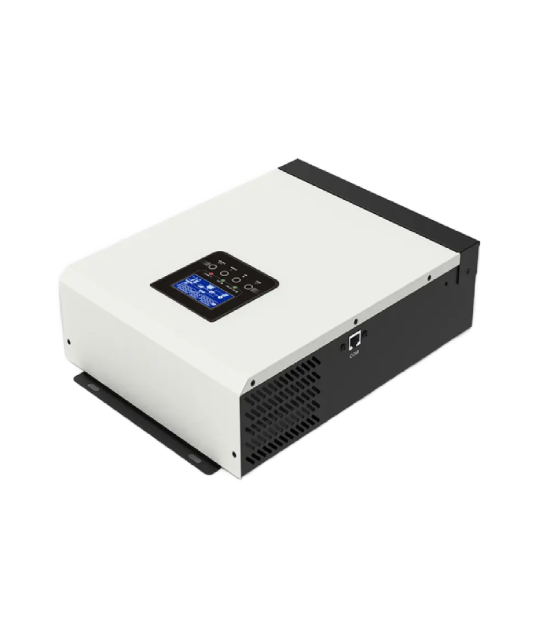
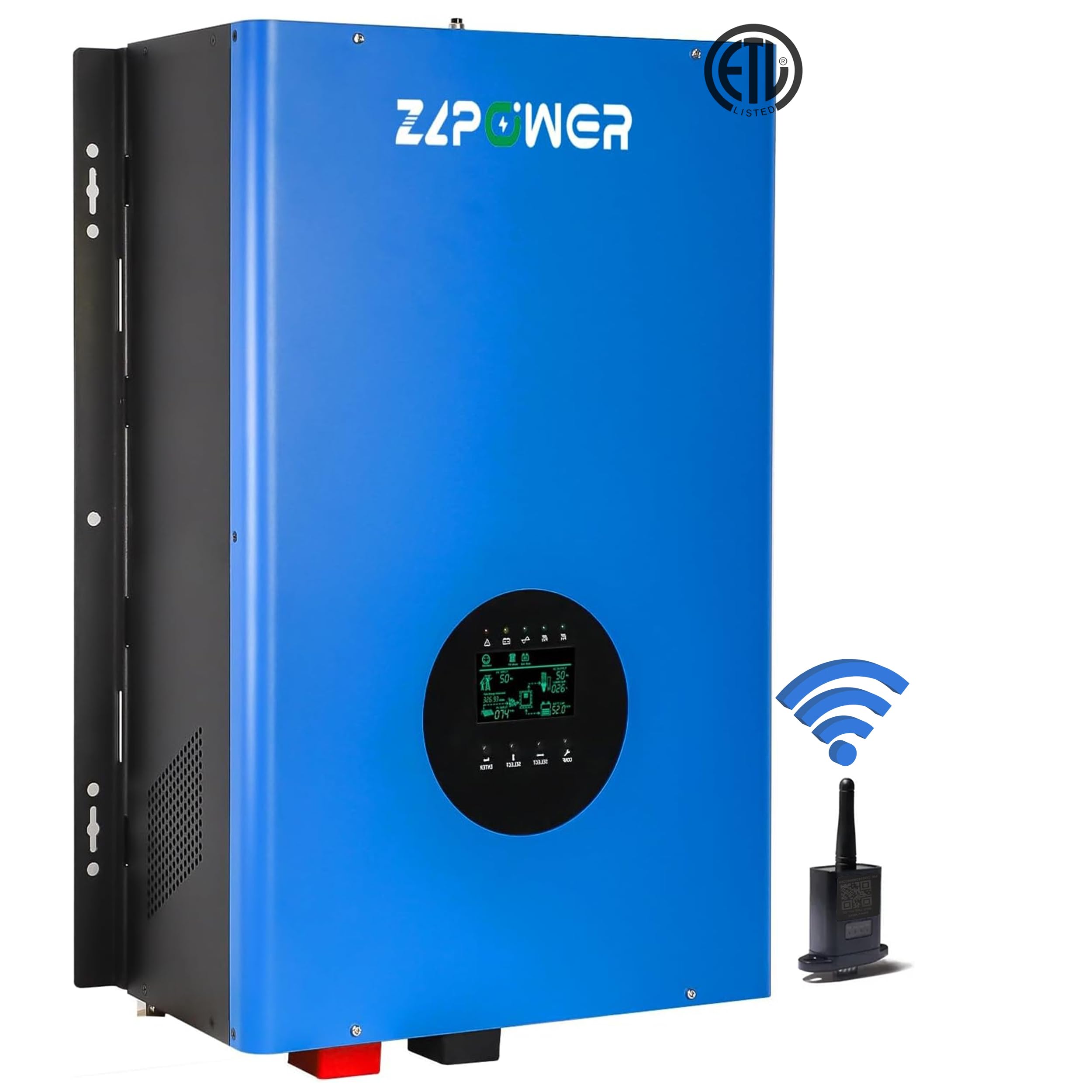
A solar hybrid inverter functions as the central power electronic hub that executes bidirectional DC-AC conversion while managing multi-source energy flows between photovoltaic (PV) arrays, battery storage systems, and utility grids. Unlike conventional string inverters that only convert DC solar generation to AC loads, hybrid inverters integrate rectifier functionality to convert grid AC power into DC for battery charging, effectively combining inverter and charger operations within a single power conversion unit.
Core Working Mechanism:
The system operates through intelligent power flow arbitration. During daylight generation, Maximum Power Point Tracking (MPPT) algorithms optimize DC input from PV arrays (typically 200-1000VDC) before conversion to AC (230V/400V/480V depending on region). Excess generation beyond immediate load requirements routes to battery banks via DC-DC converters rather than dissipating or exporting to grid. During nocturnal periods or grid outages, the inverter reverses operation, drawing DC from batteries through internal bus bars, converting to AC via IGBT or SiC-based H-bridge topologies, and synchronizing voltage/frequency with critical loads.

Cost Structure Analysis:
Hybrid inverter pricing scales non-linearly with power capacity. A 5kW residential unit typically ranges $800-$1,500, while industrial 50kW three-phase systems exceed $8,000-$15,000. Primary cost drivers include:
– Power Semiconductors: IGBT modules account for 25-30% of BOM cost; SiC MOSFETs increase efficiency but add 15-20% premium
– Magnetics: High-frequency transformers and inductors for galvanic isolation represent 18-22% of material costs
– Enclosure Engineering: IP65-rated aluminum die-cast housings cost 40% more than standard IP20 steel enclosures
– Control Electronics: Dual-core DSP controllers with proprietary MPPT algorithms contribute 12-15% to manufacturing cost
Critical Technical Parameters Affecting Hybrid Inverter Selection and Cost
Power Rating and Phase Configuration
Industrial applications require precise kW sizing with 1.25-1.5x oversizing factors for motor starting currents. Single-phase (230V) units suit residential loads up to 10kW, while three-phase (400V/480V) configurations handle commercial/industrial demands from 10kW to 100kW+. Three-phase topology increases hardware costs by 35-45% due to additional power stages and complex synchronization requirements.

MPPT Efficiency and Channel Architecture
High-efficiency MPPT controllers (98.5%+ tracking efficiency) justify 10-15% price premiums through enhanced energy harvest. Dual or quad MPPT inputs allow separate array orientation/tilt configurations, adding $200-$400 per channel but optimizing generation in partially shaded installations. String voltage ranges (150V-1000V) must match local PV module specifications to avoid clipping losses.
Environmental Protection Ratings
Harsh environment installations demand IP65 or IP66 ingress protection against dust/water infiltration, increasing enclosure costs by $300-$800 compared to IP20 indoor units. Operating temperature ranges (-25°C to +60°C) require thermal management systems—forced air cooling adds $150-$300, while liquid cooling solutions for 50kW+ units add $1,000+ but enable higher power density.
Vector Control Capabilities for Motor Loads
When driving solar pumping systems or industrial motors, Field-Oriented Control (FOC) vector algorithms provide precise torque control for Permanent Magnet Synchronous Motors (PMSM) and Induction Motors (IM). Advanced vector control implementations using encoder feedback or sensorless estimation increase controller costs by 20-30% but deliver 95%+ motor efficiency versus 85% with V/f control methods.
Battery Voltage Compatibility
Low-voltage systems (48VDC) suit residential storage but require high-current handling (200A+ for 10kW), necessitating heavy copper buswork. High-voltage architectures (400V-800VDC) reduce current requirements and cable costs but require sophisticated insulation monitoring systems, adding $500-$1,200 to system cost.
Industrial Procurement Strategy: Sizing and Sourcing Guidelines
Load Analysis and Sizing Protocol
Project managers must conduct 24-hour load profiling before specification. Calculate continuous power requirements, then apply diversity factors (typically 0.7-0.8) for non-coincident loads. For motor-driven applications (solar pumping, HVAC), verify inverter surge capacity—minimum 150% rated current for 60 seconds for induction motor starting. Undersizing results in nuisance tripping; oversizing by >200% reduces conversion efficiency by 2-4%.
Grid Code Compliance Verification
Specify inverters certified to local grid interconnection standards: IEEE 1547 for North America, IEC 62109 for international safety, and G99/G100 for UK connections. Anti-islanding protection, frequency-watt control, and voltage ride-through capabilities are mandatory for utility approval but add $400-$600 to certification and hardware costs.
Battery Integration Protocols
Verify communication compatibility between inverter Battery Management Systems (BMS) and selected chemistry (LFP, NMC, or Lead-acid). CAN-bus or RS485 communication protocols prevent overcharge scenarios. For industrial applications, specify 48V or 400V nominal systems with 0.5C to 1C charge/discharge rates to match inverter power ratings.
Temperature Derating Considerations
In tropical or desert installations, apply 1.5% power derating per degree above 40°C ambient. A 50kW inverter rated at 25°C delivers only 42.5kW at 50°C ambient. Specify forced ventilation or shade structures to maintain rated output, or procure oversized units (60kW+ for 50kW actual load).
Why Source Inverters/VFDs from China?
China maintains global leadership in power electronics manufacturing through vertically integrated supply chains spanning semiconductor packaging, magnetic component fabrication, and precision assembly. Chinese manufacturers offer distinct competitive advantages:
Advanced R&D Infrastructure: Leading Chinese factories employ 40-60% engineering staff ratios, enabling rapid prototyping of custom topologies (multi-level inverters, cascaded H-bridge designs) that Western competitors require 6-12 months longer to develop.
Cost-Effective Manufacturing: Direct sourcing from tier-1 Chinese facilities eliminates distributor markups (typically 30-45% in Western markets) while maintaining ISO 9001 and ISO 14001 quality standards. Component costs for IGBTs, capacitors, and heat sinks run 20-35% lower due to proximity to raw material suppliers and electronics manufacturing clusters.
Related Technical Insight
Customization Agility: Chinese OEMs provide firmware customization, private labeling, and mechanical modifications (enclosure dimensions, connector types) with 4-6 week lead times versus 12-16 weeks for European manufacturers. This agility proves critical for project-specific requirements such as specific grid codes or integration with existing SCADA systems.
Quality Assurance: Modern Chinese production facilities utilize automated optical inspection (AOI), automated guided vehicles (AGV) for material handling, and 100% burn-in testing protocols that match or exceed Western manufacturing standards.
Boray Inverter: Your Strategic OEM/ODM Partner for Advanced Motor Control and Solar Solutions
Boray Inverter (borayinverter.com) stands as a specialized manufacturer of Solar Pump Inverters and Variable Frequency Drives, engineered specifically for industrial motor control and renewable energy applications. Our technical differentiation stems from an organizational structure where 50% of our workforce comprises R&D engineers specializing in power electronics and motor control algorithms.
Technical Capabilities:
We maintain mastery in PMSM (Permanent Magnet Synchronous Motor) and IM (Induction Motor) vector control, implementing sensorless Field-Oriented Control (FOC) algorithms that deliver 96%+ system efficiency in solar pumping applications. Our proprietary MPPT tracking achieves 99% efficiency even under partial shading conditions.
Manufacturing Excellence:
Operating 2 modern production lines with automated PCB assembly and robotic testing stations, we enforce 100% full-load testing before delivery. Every unit undergoes 4-hour burn-in at 110% rated load to verify thermal performance and long-term reliability.
Partnership Advantages:
For industrial buyers and project managers, Boray offers wholesale pricing structures, custom firmware development for specific pump curves or grid codes, and white-label manufacturing services. Our solar pump inverters support DC input from 200V-800VDC and AC output configurations from 0.75kW to 75kW, with IP65 enclosures standard for harsh agricultural environments.
Contact Boray Inverter today to discuss wholesale pricing, technical specifications, and custom OEM/ODM solutions tailored to your solar pumping or motor control projects.
Frequently Asked Questions (FAQs)
What is the fundamental difference between a hybrid solar inverter and a standard grid-tied inverter?
A standard grid-tied inverter only converts DC solar power to AC and shuts down during grid outages for safety (anti-islanding). A hybrid inverter incorporates bidirectional conversion capability, battery charge controllers, and transfer switches that enable off-grid operation. It can charge batteries from solar or grid sources, then discharge stored energy during outages or peak rate periods, functioning as both inverter and rectifier.
Can a hybrid inverter operate effectively without battery storage?
Yes, hybrid inverters function in “solar-only” mode without batteries, operating similarly to standard grid-tied inverters during daylight hours. However, this configuration eliminates backup power capabilities and self-consumption optimization. The inverter will power loads while solar generation exceeds demand and export excess to the grid, but will not provide power during grid outages or nocturnal periods. Battery installation unlocks the full economic and resilience value of the system.
How do I calculate the correct inverter size for an industrial solar pumping application?
Calculate the pump motor’s running wattage (kW = HP × 0.746 / motor efficiency), then multiply by 1.5 for starting surge requirements. For a 10HP (7.5kW) induction motor with 90% efficiency: Running load = 8.33kW; Starting requirement = 12.5kW minimum. Select a hybrid inverter rated for continuous 10kW output with 15kW surge capacity. Additionally, verify the inverter’s DC input voltage range matches your PV array’s maximum power voltage (Vmp) under local temperature conditions.
What IP rating is required for outdoor installation in harsh environments?
For outdoor agricultural, coastal, or desert installations, specify IP65 minimum ingress protection (dust-tight and protected against water jets). IP66 (protected against powerful water jets) or IP67 (temporary immersion protection) provides additional safety margins. Ensure the enclosure utilizes marine-grade aluminum (5052-H32) with polyester powder coating to prevent corrosion. Operating temperature specifications should cover -20°C to +60°C with automatic derating above 45°C.
What are typical lead times and customization options when sourcing from Chinese manufacturers like Boray?
Standard product lead times range 15-25 days for quantities under 100 units. For OEM/ODM projects involving custom firmware (specific pump curves, communication protocols), enclosure modifications, or private labeling, expect 35-45 days for initial samples and 4-6 weeks for production ramp-up. Boray offers customization of voltage ranges (e.g., 380V/460V three-phase), specific MPPT voltage windows, and integration with Modbus or CAN-bus monitoring systems without minimum order quantity penalties for pilot projects.