Description
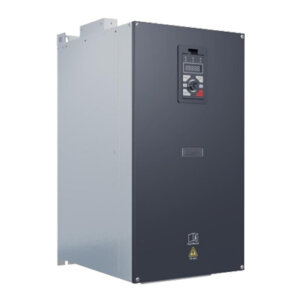
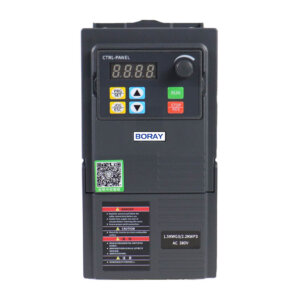
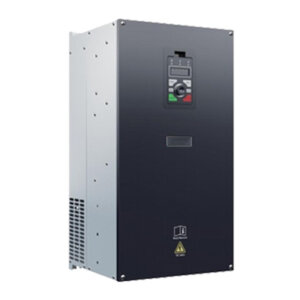
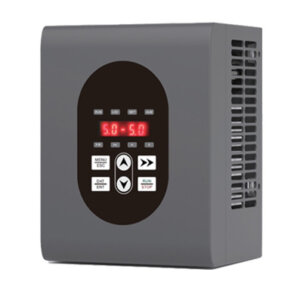
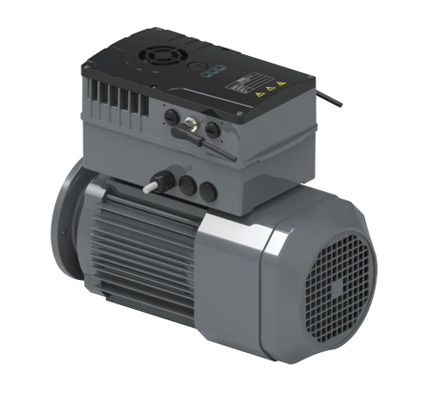
FD500 Distributed Inverter Overview
FD500 Distributed Inverter is an innovative device different from traditional centralized inverters. It allows inverters to be distributed and installed near motors, and works in coordination through the communication network between the control unit and the power unit. Technologies such as pulse width modulation (PWM) are adopted to precisely regulate the motor speed and power. It features high-precision speed regulation, fast dynamic response and high reliability. With advantages including significant energy conservation, reduced electromagnetic interference, and convenient installation and maintenance, it is widely used in various fields such as industrial automation, power systems, and transportation. It can effectively improve the operating efficiency of the system, and reduce energy consumption and maintenance costs.
Features
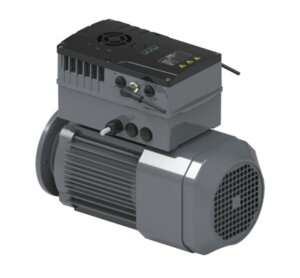
– FD500 is an inverter designed to be mounted on motors and is compatible with 90% of motors available on the market.
– Compact Size & Flexible Installation
The distributed inverter adopts a modular design, with a volume 30%-50% smaller than traditional electrical control cabinets. It can be directly installed at the equipment site, reducing cable length and lowering wiring costs.
– Rich peripheral interfaces to meet various application scenarios.
– Reduced Equipment Integration Costs
No separate electrical control cabinet is required, which cuts down on equipment investment. It is particularly suitable for
scenarios with strict space requirements such as logistics and automotive industries.
– Lower Operation & Maintenance Costs
The modular design facilitates maintenance and component replacement, and a single fault will not affect the operation of other equipment.
– Precise Control & Energy Efficiency Optimization
By independently adjusting motor speed and frequency, it avoids energy waste of traditional equipment and can save 10%-20% of energy.
– High Power Factor & Reduced Harmonics
It adopts multi-level PWM control, resulting in an output voltage waveform close to a sine wave. The power factor is as high as 0.9 or above, and input harmonics are reduced by more than 80%.
– Dynamic Response Capability
Independent control of each piece of equipment enables quick adaptation to load changes, improving the overall efficiency of the system.
– Decentralized Architecture
It does not rely on a single power source, and a single-point fault will not affect the operation of other equipment, enhancing system reliability.
– Strong Scalability
The modular design supports flexible expansion and can be adapted to industrial scenarios of different scales and complexities.
Technical Specifications
• Power Range: 220V 0.75-1.5KW / 380V 0.75-5.5KW
• Input Voltage: 220V±15% / 380V±15%
• Communication Methods: ModbusRTU, CanLink, PROFINET, PROFIBUS-DP, ASI
• Motor Control: AC Asynchronous Motor, AC Permanent Magnet Synchronous Motor
• Control Methods: VF, SVC
• Protection Class: IP65
• Analog Input: 1 channel (AI)
• Analog Output Terminal: 1 channel (AO)
• Digital Input: 5 channels (DI, supporting NPN and PNP input)
• CDigital Output: 1 channel (DO1)
• Relay Output: 1 channel of programmable relay output