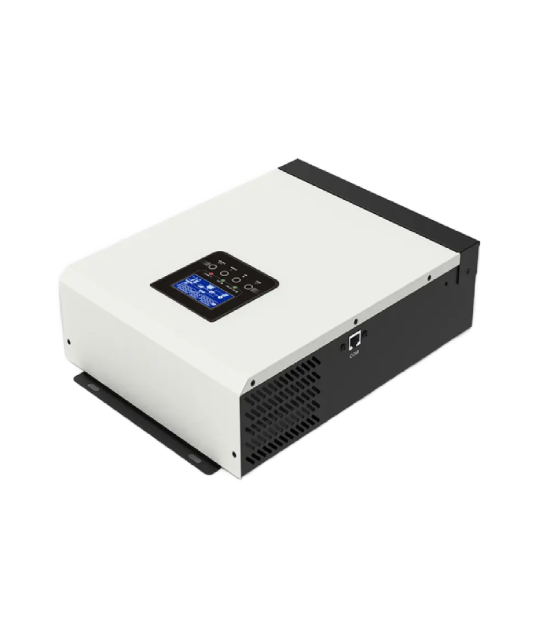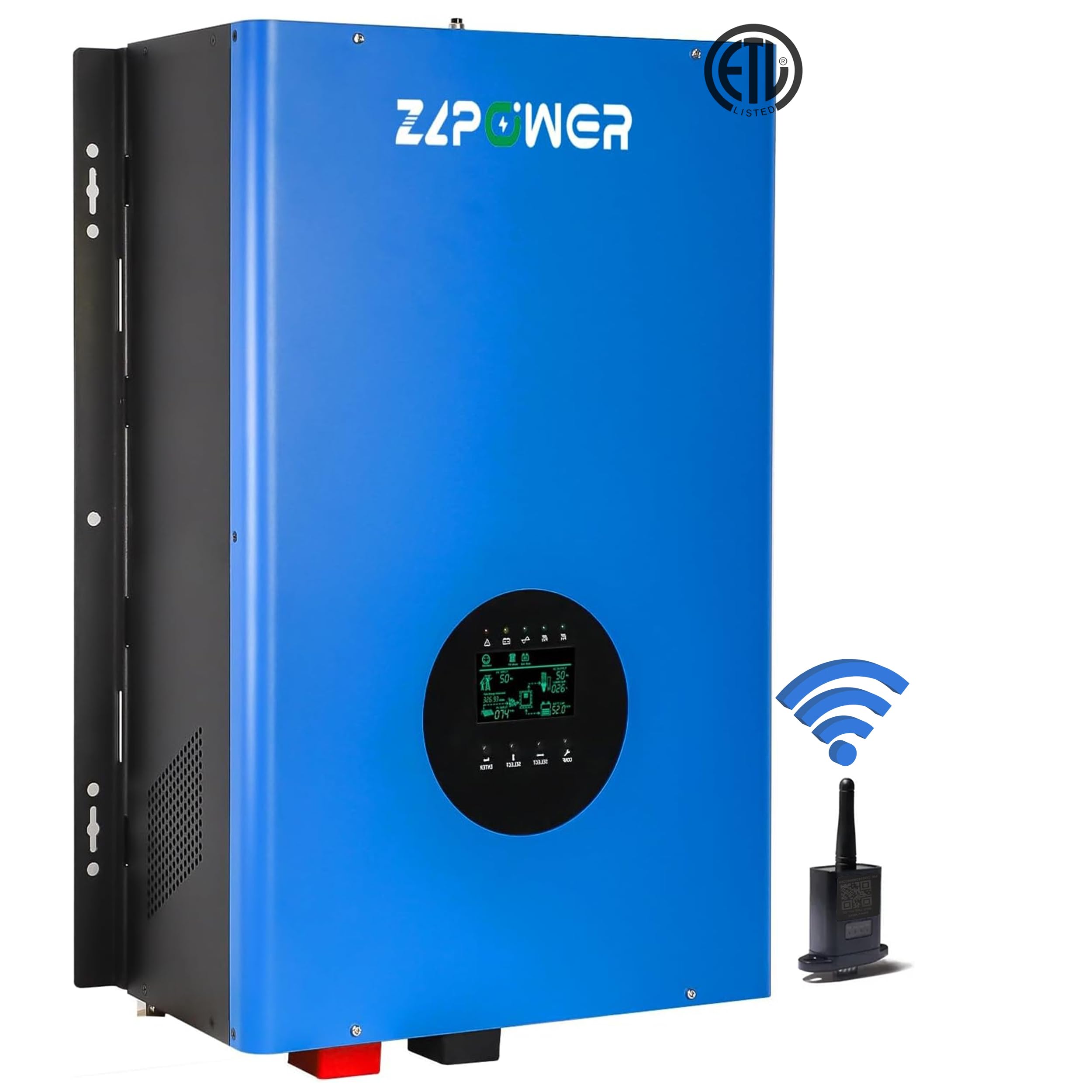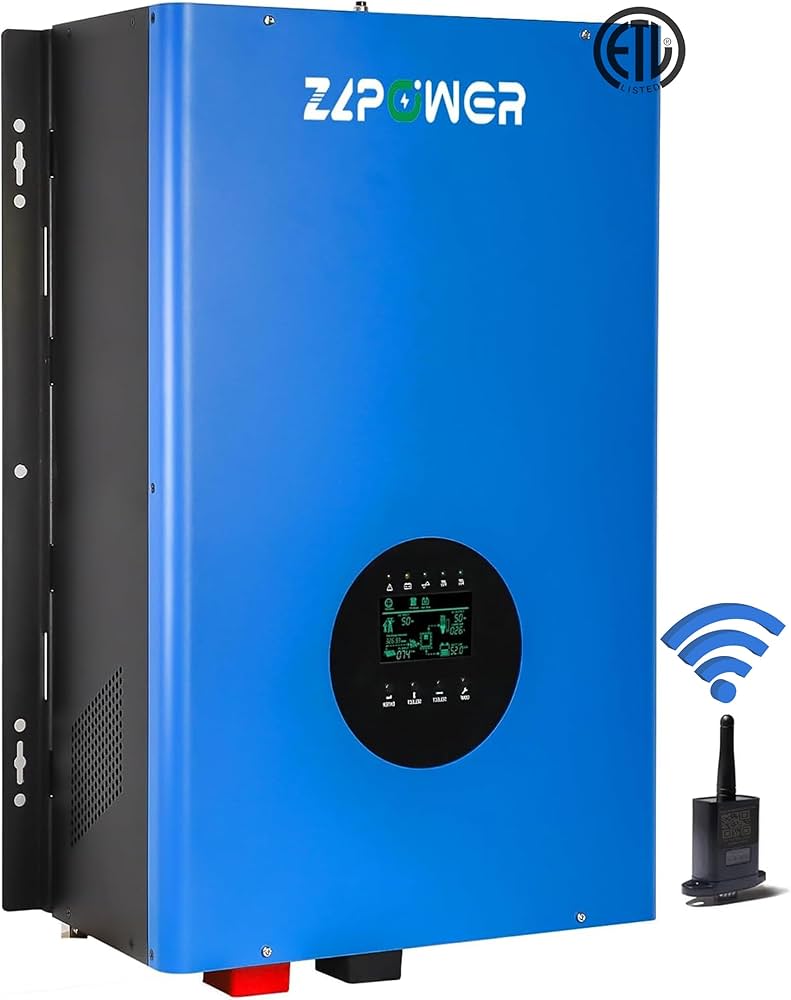
Introduction: Sourcing Hybrid Inverter For Solar System for Industrial Use
Industrial operations and large-scale agricultural projects face mounting pressure to decouple critical processes from grid instability while optimizing energy costs. Unlike standard grid-tied inverters that leave facilities vulnerable during outages, or off-grid systems that sacrifice economic efficiency, hybrid inverters for solar systems represent the intelligent convergence of power electronics—seamlessly orchestrating photovoltaic generation, battery storage, and utility interconnection through sophisticated bidirectional DC-AC conversion and MPPT algorithms.
For EPC contractors and automation engineers specifying equipment for solar pumping stations or factory microgrids, selecting the right hybrid inverter transcends simple wattage calculations. It demands rigorous analysis of power quality, harmonic distortion limits, and dynamic response capabilities when synchronizing with Variable Frequency Drives (VFDs) that govern motor performance in irrigation and heavy industrial applications. The procurement decision impacts not only energy arbitrage and peak-shaving potential but also the operational resilience of motor control systems under fluctuating solar irradiance and varying load conditions.
This comprehensive guide examines industrial-grade hybrid inverter architectures—from AC-coupled retrofit solutions compatible with existing VFD installations to DC-coupled integrated systems optimized for new solar pump deployments. We detail critical specifications including IP ratings for harsh environments, switching transient tolerances, and communication protocols for SCADA integration. Additionally, we provide manufacturer evaluation frameworks specific to B2B procurement, analyzing MTBF ratings, service network coverage, and technical compatibility with motor control infrastructure. Whether designing resilient agricultural automation or implementing industrial microgrids, understanding these electromechanical integration points ensures your specification delivers both grid independence and precision motor control while navigating the complex landscape of global component sourcing.
Article Navigation
- Top 2 Hybrid Inverter For Solar System Manufacturers & Suppliers List
- Introduction: Sourcing Hybrid Inverter For Solar System for Industrial Use
- Technical Types and Variations of Hybrid Inverter For Solar System
- Key Industrial Applications for Hybrid Inverter For Solar System
- Top 3 Engineering Pain Points for Hybrid Inverter For Solar System
- Component and Hardware Analysis for Hybrid Inverter For Solar System
- Manufacturing Standards and Testing QC for Hybrid Inverter For Solar System
- Step-by-Step Engineering Sizing Checklist for Hybrid Inverter For Solar System
- Wholesale Cost and Energy ROI Analysis for Hybrid Inverter For Solar System
- Alternatives Comparison: Is Hybrid Inverter For Solar System the Best Choice?
- Core Technical Specifications and Control Terms for Hybrid Inverter For Solar System
- Future Trends in the Hybrid Inverter For Solar System Sector
- B2B Engineering FAQs About Hybrid Inverter For Solar System
- Disclaimer
- Conclusion: Partnering with Boray Inverter for Hybrid Inverter For Solar System
Technical Types and Variations of Hybrid Inverter For Solar System
Hybrid inverter architectures vary significantly based on coupling methodologies, voltage levels, and load compatibility requirements. For industrial automation and solar pumping applications, selecting the appropriate topology directly impacts system efficiency, motor control precision, and return on investment. Below are the primary technical classifications relevant to EPC contractors and system integrators deploying hybrid solutions in demanding environments.
| Type | Technical Features | Best for (Industry) | Pros & Cons |
|---|---|---|---|
| Three-Phase Industrial Hybrid Inverter | • 380V/400V/480V AC 3-phase output • 10kW–250kW power range • 3-level NPC/ANPC topology • Grid-forming & grid-following modes • THDi < 3% |
Manufacturing facilities, commercial solar farms, grain processing plants, large-scale irrigation districts | Pros: Compatible with standard industrial motors (IE3/IE4), balanced phase loading, high power density Cons: Requires 3-phase battery configuration, higher installation complexity, significant upfront capital cost |
| DC-Coupled High-Voltage Hybrid Inverter | • 200V–1000V DC input window • Direct 400V–800V battery coupling • 98.6% peak efficiency (CEC) • 4 MPPT inputs with 30A per string • Rapid shutdown compliance |
Utility-scale solar+storage, industrial peak shaving, large agricultural pumping stations | Pros: Minimal DC cabling losses, scalable lithium-ion racks, single-point conversion efficiency Cons: Limited battery chemistry flexibility, high-voltage DC safety requirements, difficult to retrofit existing AC systems |
| Solar Pump Hybrid Inverter with Integrated VFD | • MPPT-VFD synchronization algorithm • Variable torque control (VT/CT modes) • Dry-run protection & flow sensors • Dual AC/DC input auto-switching • IP65 enclosure rating |
Precision agriculture, remote livestock watering, drip irrigation systems, borehole pumping | Pros: Eliminates separate VFD hardware, optimized pump curves (P-Q control), seamless grid fallback during low irradiance Cons: Firmware limited to motor loads, requires specific pump motor compatibility, limited surge capacity for non-pump loads |
| AC-Coupled Retrofit Hybrid Inverter | • 230V/400V AC bus connection • Frequency-watt (F-W) droop control • Compatible with existing string inverters • Modular battery expansion (2.4–20kWh blocks) • Reactive power compensation (VAR support) |
Existing commercial rooftops, building automation upgrades, distributed energy resources (DER) | Pros: Retrofit-friendly without DC rewiring, independent MPPT optimization, flexible installation timing Cons: Double conversion losses (95-96% round-trip), complex synchronization requirements, potential frequency instability during transitions |
| Off-Grid/Grid-Tied Hybrid with Generator Input | • Auto-start generator control (2-wire/3-wire) • Frequency shifting for diesel synchronization • Anti-islanding protection (UL 1741/IEC 62116) • Black-start capability • Multi-source dispatch logic |
Remote mining operations, telecom towers, off-grid agricultural facilities, emergency backup systems | Pros: Unlimited backup duration, fuel/solar hybrid optimization, remote monitoring SCADA integration Cons: Fuel dependency increases OPEX, generator maintenance complexity, emissions compliance requirements |
Three-Phase Industrial Hybrid Inverter
Designed for heavy-duty motor control applications, these inverters utilize 3-level Neutral Point Clamped (NPC) topology to reduce switching losses and improve thermal management in high-power scenarios. For agricultural project managers operating center-pivot irrigation systems or grain elevators, the 3-phase output provides the balanced power necessary for induction motors up to 250kW without requiring additional phase converters. The grid-forming capability allows these units to establish voltage and frequency references during islanding events, ensuring continuous operation of critical process equipment when utility power fails.
DC-Coupled High-Voltage Hybrid Inverter
This architecture represents the optimal choice for greenfield solar pumping installations where battery storage is integrated from the design phase. By maintaining DC coupling between the photovoltaic array, battery bank, and inverter input, systems avoid the efficiency penalties associated with AC coupling (typically 2-4% loss). For EPC contractors, the high-voltage DC bus (up to 1000V) reduces copper costs and simplifies large-scale deployments. However, these systems require sophisticated arc-fault detection and DC disconnect mechanisms to comply with NEC 690.11 and IEC 62548 safety standards.
Solar Pump Hybrid Inverter with Integrated VFD
Boray Inverter’s specialized category combines Maximum Power Point Tracking (MPPT) with Variable Frequency Drive (VFD) functionality in a single enclosure. This integration eliminates the need for separate motor drives in solar pumping systems, reducing component count and failure points. The technical advantage lies in the dedicated pump control algorithms that adjust V/Hz ratios based on real-time solar irradiance, maintaining optimal flow rates while preventing cavitation through torque limiting. For borehole applications, the dry-run protection monitors motor current signatures to detect water depletion, automatically shutting down the pump to prevent mechanical damage.
AC-Coupled Retrofit Hybrid Inverter
For industrial facilities with existing solar installations, AC-coupled hybrids provide a non-invasive upgrade path to energy storage. These systems connect to the AC bus downstream of existing string inverters, using frequency-watt control to manage battery charging without DC rewiring. While this introduces minor efficiency losses through dual conversion (DC-AC-DC), the flexibility allows automation distributors to phase in storage capacity modularly. The VAR support feature enables power factor correction for inductive motor loads, reducing demand charges in commercial applications.
Off-Grid/Grid-Tied Hybrid with Generator Input
Critical for remote agricultural operations beyond utility infrastructure, these inverters manage complex multi-source dispatch between solar arrays, battery banks, and backup generators. The frequency-shifting technology communicates with diesel or propane generators by modulating the AC frequency to signal load requirements, preventing wet-stacking in lightly loaded gensets. For mining and telecom applications, the black-start capability allows the system to restart without external grid reference using stored battery energy, then sequentially bring generators online—essential for maintaining uptime in mission-critical installations.
Key Industrial Applications for Hybrid Inverter For Solar System
Hybrid inverters function as the central power management nexus in industrial solar architectures, orchestrating complex energy flows between photovoltaic arrays, battery storage banks, utility grids, and auxiliary generators. For industrial engineers and EPC contractors, these systems provide critical integration points with Variable Frequency Drives (VFDs) and motor control solutions, enabling sophisticated load management, power quality optimization, and seamless transition between energy sources in demanding operational environments. The following applications represent high-ROI deployment scenarios where hybrid inverter technology delivers measurable operational resilience and energy independence.
| Sector | Application | Energy Saving Value | Sourcing Considerations |
|---|---|---|---|
| Agriculture & Large-Scale Irrigation | Solar pumping systems with VFD-controlled submersible motors, drip irrigation, and pivot systems requiring 24/7 water availability | 30–50% reduction in diesel/generator fuel consumption; optimized pump curves via integrated MPPT reducing motor energy draw by 15–25% | IP65/NEMA 4X enclosure ratings for outdoor installation; anti-islanding protection per IEEE 1547; direct DC-bus coupling compatibility with pump VFDs; wide MPPT voltage range (200–850V DC) |
| Water Treatment & Distribution | Membrane filtration plants, desalination facilities, sewage lift stations, and potable water pumping requiring continuous pressure maintenance | 25–40% reduction in grid electricity costs; peak shaving capabilities reducing demand charges by 20–30%; elimination of water hammer through soft-start VFD integration | IEC 62109-1/-2 safety compliance; total harmonic distortion (THD) <3% for sensitive electronic controls; seamless grid-forming capabilities for islanded operation; redundant power regulation for critical biological processes |
| HVAC & Commercial Building Automation | Chiller plants, cooling tower fans, ventilation systems, and thermal energy storage integration in industrial facilities and data centers | 20–35% reduction in HVAC-related energy expenditures; participation in demand response programs generating ancillary revenue; power factor correction reducing reactive power penalties | Bidirectional power conversion efficiency >97% at partial load; native Modbus RTU/TCP and BACnet communication protocols for BMS integration; fast transfer time <10ms to prevent compressor stall during grid transitions |
| Mining & Remote Industrial Operations | Crushing and grinding mill drives, conveyor systems, camp power supplies, and exploration drilling operations in weak-grid or off-grid locations | 40–60% diesel fuel displacement in hybrid microgrid configurations; voltage stabilization improving motor life by 30% in fluctuating grid conditions; load leveling reducing generator maintenance cycles | Wide DC input voltage range (150–1000V) for large solar arrays; generator auto-start/stop integration with programmable logic; ruggedized construction (vibration resistance 5–150 Hz, -25°C to +60°C operation); active filtering for non-linear mining loads |
| Manufacturing & Process Control | CNC machinery, injection molding equipment, robotic assembly lines, and continuous process manufacturing requiring zero-downtime power continuity | Uninterrupted production during outages preventing $10,000–$100,000+/hour losses; regenerative braking energy capture and storage; power factor correction to >0.99 reducing utility penalties | Scalable battery architecture (50kWh–10MWh+); IEC 61643-11 surge protection; active islanding detection <2 seconds; compatibility with existing motor control centers (MCCs) and VFD bypass circuits |
Agriculture & Large-Scale Irrigation
In agricultural applications, hybrid inverters serve as the intelligent interface between solar arrays and VFD-controlled pumping systems. Unlike standard solar pump inverters, hybrid configurations enable battery storage integration, ensuring irrigation schedules are maintained during cloudy periods or nighttime operations. The DC-coupled architecture allows direct MPPT optimization for submersible pumps while maintaining AC grid connection for auxiliary farm loads. Critical for EPC contractors is specifying inverters with robust anti-islanding protection and IP65-rated enclosures to withstand corrosive, high-humidity environments typical of irrigation districts. The bidirectional conversion capability also enables grid charging of batteries during off-peak tariff periods, optimizing the levelized cost of water (LCOW) for large-scale farming operations.
Water Treatment & Distribution
Municipal and industrial water facilities require 24/7 operational continuity that hybrid solar systems uniquely provide. When integrated with VFDs on high-torque pump motors, these systems eliminate water hammer through controlled acceleration ramps while maintaining constant pressure in distribution networks. The energy storage component enables peak shaving during high-tariff daytime periods and provides emergency backup for critical membrane filtration processes that cannot tolerate power interruptions. Engineers should prioritize inverters with <3% THD output to protect sensitive PLC controls and instrumentation, alongside seamless grid-forming capabilities that maintain voltage and frequency stability during utility outages without disrupting biological treatment processes.
HVAC & Commercial Building Automation
Industrial HVAC systems represent significant electrical loads with predictable demand patterns ideal for solar hybrid integration. By coupling hybrid inverters with VFD-controlled chiller compressors and cooling tower fans, facilities achieve granular load matching to available solar generation, reducing mechanical stress on rotating equipment. The bidirectional power flow enables participation in utility demand response programs, where stored energy is dispatched during grid peak events for revenue generation. Building automation integration requires inverters with native BACnet or Modbus protocols, allowing facility managers to monitor power flows alongside HVAC setpoints. The sub-10ms transfer capability prevents compressor stall and control system reboots during grid transitions, maintaining thermal stability in critical manufacturing environments.
Mining & Remote Industrial Operations
Mining operations in remote locations face high logistics costs for diesel fuel and challenges with weak or non-existent grid infrastructure. Hybrid inverters configured in microgrid architectures stabilize voltage and frequency for large motor starting events (crushers, ball mills) that would otherwise destabilize small generator sets. The wide DC voltage input range accommodates large solar arrays (500kW–10MW+) while generator integration logic optimizes fuel consumption by dispatching stored solar energy before spinning reserve activation. For these applications, sourcing teams must specify military-grade vibration resistance and wide temperature operation (-25°C to +60°C), alongside active harmonic filtering to mitigate distortion from variable speed drives on heavy machinery.
Manufacturing & Process Control
Continuous manufacturing processes—such as extrusion, semiconductor fabrication, and chemical processing—face catastrophic financial losses from even brief power interruptions. Hybrid inverters provide UPS-grade backup power while simultaneously reducing facility energy costs through solar self-consumption and peak demand management. When integrated with existing VFD installations, the system captures regenerative braking energy from high-inertia loads (centrifuges, large fans) and stores it for reuse, rather than dissipating it as heat. Procurement teams should verify compatibility with existing motor control centers and specify scalable battery architectures that can expand from initial 50kWh installations to multi-megawatt-hour systems as production lines expand, ensuring IEC 62109 compliance for personnel safety in high-voltage industrial environments.
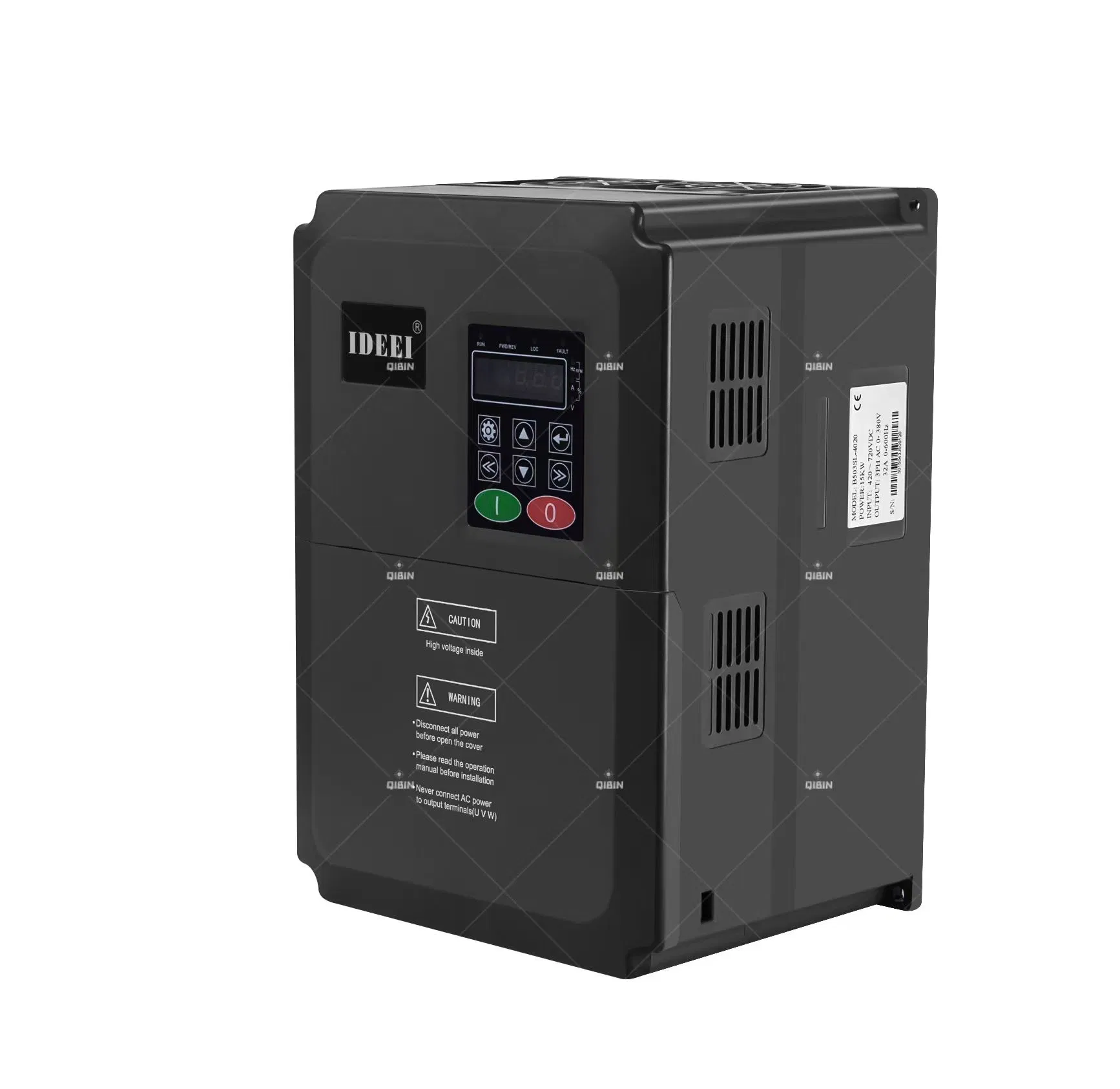
Top 3 Engineering Pain Points for Hybrid Inverter For Solar System
Scenario 1: Grid Instability and Anti-Islanding Conflicts in Weak Grid Industrial Applications
The Problem:
Industrial facilities and agricultural operations in remote regions frequently encounter weak grid infrastructure characterized by voltage fluctuations, frequency deviations, and high grid impedance. When hybrid inverters attempt seamless transfer between grid-tied and off-grid (islanding) modes—particularly during motor startup sequences or pump switching events—the rapid load transients can trigger false anti-islanding protection or failed synchronization. This results in production downtime, motor stall conditions, and potential damage to sensitive VFD-controlled equipment. Standard residential-grade hybrid inverters lack the grid-forming capabilities and voltage ride-through specifications required to maintain stable power quality when running industrial motor loads against unstable utility references.
The Solution:
Deploy hybrid inverters equipped with advanced grid-forming (GFM) topology and programmable anti-islanding thresholds compliant with IEEE 1547 and local grid codes. Implement seamless transfer switches with zero-crossing detection to eliminate voltage phase mismatches during motor load transfers. For VFD-integrated solar pumping systems, configure the hybrid inverter with dedicated motor load profiles that coordinate ramp-up sequences with the DC bus stability algorithms, ensuring that inrush currents during motor magnetization do not trigger DC under-voltage faults during islanding events.
Scenario 2: DC Bus Voltage Instability During High Inrush Motor Startup
The Problem:
Solar pumping stations and industrial motor control applications present challenging dynamic load characteristics. When hybrid systems power VFDs or direct-online motors (DOL), the initial magnetization inrush current—often 6-8 times the rated current—creates severe DC bus voltage sag within the hybrid inverter. This phenomenon is exacerbated in battery-backed systems where the instantaneous power demand exceeds the battery’s maximum discharge rate or the solar array’s MPPT output capability. The resulting voltage collapse triggers under-voltage protection lockouts, erratic MPPT behavior, or battery management system (BMS) disconnections, causing irrigation system failures or production line stoppages during critical daylight hours.
The Solution:
Engineer the hybrid system with oversized DC link capacitors and implement battery current limiting algorithms that prioritize DC bus stability over rapid charge/discharge cycles. Specify hybrid inverters featuring dual MPPT inputs with wide voltage windows (200VDC-800VDC) to maintain energy harvest during voltage sag events. For critical motor applications, integrate pre-charge circuits or utilize VFDs with “flying start” capabilities that synchronize to spinning motors before energizing, eliminating inrush current spikes. Additionally, configure ramp-up time parameters between the hybrid inverter’s transfer switch logic and the VFD’s acceleration curves to prevent power step-change conflicts.
Scenario 3: Environmental Derating and Thermal Management in Harsh Agricultural/Industrial Environments
The Problem:
Standard hybrid inverters are optimized for residential rooftop installations with moderate temperature ranges and clean environments. However, agricultural irrigation projects and industrial automation deployments expose equipment to extreme thermal cycling, corrosive dust, high humidity, and direct solar loading. These conditions force aggressive thermal derating—often reducing rated capacity by 30-50% at ambient temperatures above 40°C—precisely when solar irradiance and pumping demands peak. Ingress of dust and moisture compromises cooling fan bearings and PCB integrity, leading to premature failure of IGBT modules and capacitor banks. The mismatch between nameplate ratings and actual field capacity results in undersized systems that cannot sustain continuous motor loads during peak agricultural seasons.
The Solution:
Specify hybrid inverters with IP65 or IP66 ingress protection ratings and conformal-coated PCBs designed for outdoor cabinet-less installation. Select units with active thermal management systems—including variable-speed cooling fans and heat-pipe thermal interfaces—that maintain full-rated output up to 50°C ambient with linear derating curves thereafter. For desert or tropical agricultural applications, ensure the inverter topology utilizes high-efficiency SiC (Silicon Carbide) power components that reduce switching losses and thermal stress. Implement proper enclosure orientation and forced ventilation strategies that account for dust filtration (HEPA or cyclonic separators) while maintaining the thermal dissipation required for continuous VFD-motor operation in harsh environments.
Component and Hardware Analysis for Hybrid Inverter For Solar System
At the core of every robust hybrid solar inverter lies a sophisticated interplay of power electronics, thermal engineering, and intelligent control systems. Unlike standard grid-tied inverters, hybrid units must orchestrate bidirectional energy flow between photovoltaic (PV) arrays, electrochemical battery storage, AC motor loads (such as agricultural pumps), and the utility grid—often simultaneously. For industrial engineers and EPC contractors specifying equipment for harsh agricultural or remote industrial environments, understanding the hardware architecture is critical to predicting Mean Time Between Failures (MTBF) and optimizing Levelized Cost of Energy (LCOE).
Power Semiconductor Stage: IGBTs and SiC MOSFETs
The power stage represents the primary energy conversion interface. Modern hybrid inverters utilize Insulated Gate Bipolar Transistors (IGBTs) or increasingly, Silicon Carbide (SiC) MOSFETs, to perform high-frequency switching for DC-to-AC inversion and bidirectional DC-DC conversion for battery charging.
In solar pumping applications, these semiconductors must withstand high inrush currents from submersible pump motors while maintaining precise switching waveforms to minimize harmonic distortion. Key engineering considerations include:
– Switching Frequency: Higher frequencies (up to 20 kHz) reduce audible noise and allow smaller magnetics but increase switching losses.
– Thermal Cycling Resistance: Agricultural environments with wide diurnal temperature swings induce mechanical stress on solder joints and bond wires.
– Short-Circuit Withstand Capability: Critical for protecting against fault conditions in long cable runs typical of remote borehole pumps.
Control Architecture: DSP and FPGA-Based Systems
The intelligence of a hybrid inverter resides in its Digital Signal Processor (DSP) or Field-Programmable Gate Array (FPGA) controller. These processors execute complex algorithms for Maximum Power Point Tracking (MPPT), grid synchronization (Phase-Locked Loop algorithms), and battery charge management (CC-CV profiles with temperature compensation).
For integration with Variable Frequency Drive (VFD) motor control—Boray Inverter’s core expertise—the controller must manage soft-start sequences to mitigate mechanical water hammer in irrigation systems while seamlessly transitioning between grid-tied and islanded (off-grid) modes within 20 milliseconds to ensure uninterrupted pump operation.
Thermal Management and Mechanical Design
Thermal management determines the real-world operational lifespan more than any other factor. Industrial hybrid inverters employ aluminum extrusion heatsinks with forced air cooling (IP54-rated fans for dust protection) or liquid cooling for high-power agricultural installations exceeding 50kW.
Critical thermal components include:
– Thermal Interface Materials (TIM): Phase-change materials or high-conductivity silicone pads between IGBT modules and heatsinks.
– Heatsink Fin Geometry: Optimized for passive convection in desert environments or forced convection in humid climates.
– Fan Bearing Systems: Dual-ball bearing fans rated for 60,000+ hours MTBF, essential for continuous agricultural duty cycles.
Energy Storage Interface and Passive Components
The DC-link bus utilizes metallized polypropylene film capacitors rather than electrolytic capacitors to achieve 100,000-hour lifespans. These components filter high-frequency ripple currents from the switching stage and stabilize the DC bus voltage during transient load changes—such as when a 15HP pump motor starts across the line.
Battery interface circuits include precision current sensors (Hall-effect) and electromechanical relays rated for high DC voltage interruption, ensuring safe isolation of lithium-ion or lead-acid banks during maintenance or fault conditions.
Component Quality Analysis Matrix
| Component | Function | Quality Indicator | Impact on Lifespan |
|---|---|---|---|
| IGBT Power Modules | DC-AC power conversion; bidirectional power flow management | VCE(sat) < 1.5V; Thermal resistance Rth(j-c) < 0.8 K/W; Short-circuit withstand time > 10μs | Directly determines switching losses and thermal stress; high-quality modules extend life beyond 100,000 hours in 45°C ambient |
| DC-Link Film Capacitors | Energy buffering; ripple current absorption; voltage stabilization | ESR < 2mΩ; Ripple current capacity > 1.5× nominal; Temperature rating 105°C | Low ESR reduces heat generation; film technology prevents electrolyte dry-out, ensuring 20+ year service life |
| DSP Control Boards | Algorithm execution; MPPT; grid synchronization; battery management | Processing speed > 150 MIPS; 16-bit ADC resolution; Watchdog timer protection | Robust EMI immunity and temperature-rated components (-40°C to +85°C) prevent control board failures in remote installations |
| Thermal Management Assembly | Heat dissipation from semiconductors; maintaining junction temperatures | Heatsink thermal resistance < 0.5 K/W; Fan MTBF > 60,000 hrs; IP54 ingress protection | Inadequate cooling causes 10-15% reduction in semiconductor life for every 10°C above rated junction temperature |
| EMI Filter Chokes | Attenuation of conducted electromagnetic interference; grid compliance | Insertion loss > 60dB at 150kHz; Core material temperature stability | High-grade ferrite cores prevent saturation under high harmonic loads, maintaining grid code compliance over time |
| Surge Protection Devices (SPDs) | Protection against lightning-induced transients and grid surges | Surge current capacity > 40kA (8/20μs); Response time < 25ns; Thermal disconnect | Sacrificial protection of downstream semiconductors; replaceable modules extend overall system longevity |
Integration Considerations for Solar Pumping Systems
When deploying hybrid inverters for agricultural water pumping, hardware specifications must exceed standard residential requirements. The inverter must accommodate wide MPPT voltage windows (200VDC–800VDC) to match both solar array configurations and battery bank voltages while providing VFD-compatible output with variable frequency (0–60Hz) and torque control.
Boray Inverter’s engineering approach leverages motor control expertise to integrate pump-specific protections—such as dry-run detection, flow monitoring, and pressure transducer inputs—directly into the hybrid inverter’s control firmware, eliminating the need for external PLCs in remote solar pumping stations.
For EPC contractors, specifying inverters with conformal-coated PCBs (protection against humidity and salt spray) and galvanically isolated communication ports (RS485/CAN bus) ensures reliable integration with existing SCADA systems and long-term durability in corrosive agricultural environments.
Manufacturing Standards and Testing QC for Hybrid Inverter For Solar System
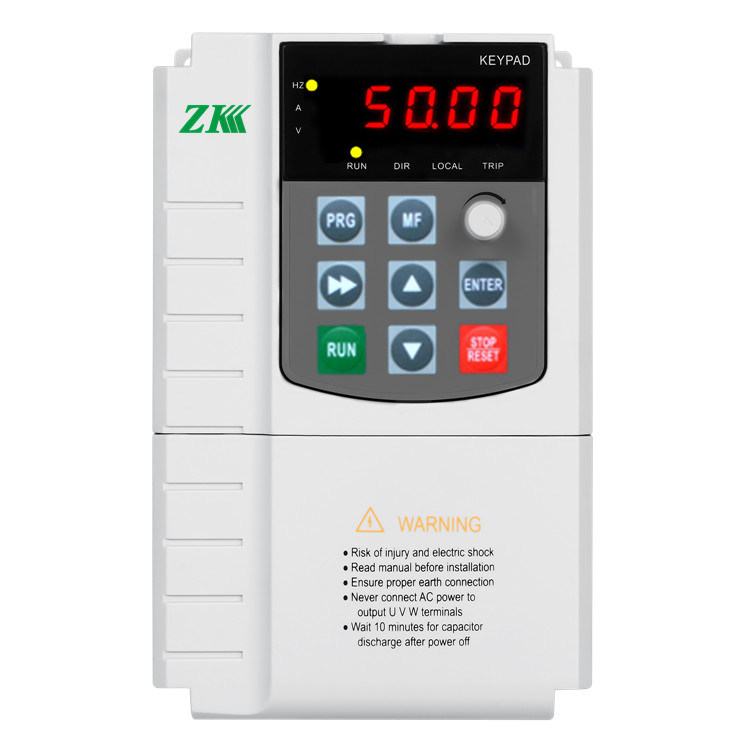
At Boray Inverter, our hybrid solar inverter manufacturing philosophy merges heavy-duty VFD reliability standards with advanced energy storage integration. Designed for agricultural pumping stations and industrial microgrids where downtime is not an option, every unit undergoes rigorous process controls that exceed conventional solar inverter norms, ensuring seamless compatibility with submersible motors, centrifugal pumps, and complex grid-interactive battery systems.
Component-Level Quality Assurance & Supply Chain Vetting
The foundation of industrial-grade hybrid inverters begins with automotive-tier component traceability. We utilize AEC-Q101 qualified IGBT modules and DC-link metallized polypropylene film capacitors rated for 105°C continuous operation—specifications inherited from our variable frequency drive (VFD) production lines. Each PCB assembly adheres to IPC-A-610 Class 3 high-reliability soldering standards with automated optical inspection (AOI) and in-circuit testing (ICT) for BGA packages critical to DSP motor control algorithms.
Multi-layer PCBs (4-6 layers) employ ENIG (Electroless Nickel Immersion Gold) surface finishing to prevent oxidation in humid agricultural environments. Prior to final assembly, all magnetic components and power semiconductors undergo X-ray fluorescence (XRF) screening and thermal impedance validation to eliminate counterfeit parts, ensuring MTBF ratings exceeding 50,000 hours in solar pumping applications.
Environmental Hardening & Conformal Coating
Recognizing that hybrid inverters frequently operate in harsh outdoor environments—adjacent to irrigation pumps or dusty agricultural fields—we implement MIL-I-46058C compliant polyurethane conformal coating (25-50μm thickness) on all control PCBs and communication interfaces. This protective layer provides moisture resistance, dust ingress protection (complementing IP65-rated enclosures), and chemical resistance against fertilizer aerosols and salt fog in coastal installations.
Thermal management follows VFD-grade standards: aluminum heat sinks undergo hard anodization (10-15μm thickness) and thermal interface materials (TIM) are robotically dispensed to ensure <0.1°C/W thermal resistance. Each unit undergoes thermal cycling testing (-40°C to +85°C, 500 cycles per IEC 60068-2-14) to validate solder joint integrity under extreme diurnal temperature swings common in remote solar pumping sites.
100% Production Burn-In & Full-Load Testing
Unlike sample-based quality control, Boray implements 100% full-load burn-in testing for every hybrid inverter. Units run at 110% rated capacity for 4 hours in 45°C ambient chambers, simulating worst-case solar pumping scenarios where motors demand high starting torque. During this accelerated aging process, we verify:
- MPPT tracking efficiency (>99.5%) under rapid irradiance transients (1000W/m² to 200W/m² in <2 seconds)
- Grid synchronization stability (frequency phase lock within ±0.5°, voltage tolerance ±2%)
- Battery charge/discharge ripple current (<3% THD to prolong LiFePO4 lifespan)
- Motor soft-start functionality (0-50Hz ramp control with torque boost for submersible pumps)
- Anti-islanding protection (UL 1741 SA/IEEE 1547 compliance, detection within 2 seconds)
Post-burn-in, units undergo automated functional testing (FCT) including insulation resistance testing (>100MΩ at 1000VDC), ground fault detection (30mA sensitivity), and surge immunity testing (4kV per IEC 61000-4-5).
Safety Certifications & Grid-Code Compliance
Our hybrid inverter platforms carry comprehensive certifications for global EPC deployment and agricultural electrification projects:
- IEC 62109-1/2: Safety requirements for power conversion equipment in PV systems (including protection against electric shock and energy hazards)
- IEC 62040-1: Uninterruptible power systems (UPS) standards for battery backup modes and transfer switching
- IEC 61000-6-2/4: EMC immunity for industrial environments (critical for VFD co-installation and motor drive compatibility)
- CE marking (LVD 2014/35/EU, EMC 2014/30/EU, RoHS 2011/65/EU)
- VDE-AR-N 4105/4110: German grid-code compliance for smart inverter functions and reactive power control
For motor control applications, we additionally certify to IEC 60034-25 (AC motors fed by inverters) to ensure compatibility with standard induction motors and permanent magnet synchronous motors (PMSM) used in solar pumping.
Motor Control Integration & Pumping Optimization
Leveraging our VFD heritage, Boray hybrid inverters incorporate sensorless vector control and V/f control algorithms specifically tuned for solar water pumping systems. Manufacturing QC includes motor compatibility testing with leading pump manufacturers (Grundfos, Franklin Electric, Pedrollo), verifying:
- Torque boost functionality (0-200% adjustable) for high-viscosity water columns and deep-well applications
- Dry-run protection response times (<2 seconds) using power curve analysis
- Anti-stall algorithms during low-irradiance conditions to prevent motor overheating
- Auto-restart sequences after grid faults or battery undervoltage events
Each inverter is pre-configured with pump-specific V/f curves and maximum power point tracking (MPPT) voltage windows before shipment, reducing field commissioning time for EPC contractors and ensuring immediate motor compatibility without additional parameter programming.
Traceability & Quality Management Systems
For industrial B2B clients and agricultural project managers, we provide complete manufacturing traceability: barcode serialization linking to component batch records, individual burn-in test reports, and calibration certificates for current sensors (±0.5% accuracy). Our facilities operate under ISO 9001:2015 certified processes with SPC (Statistical Process Control) monitoring on critical dimensions such as heatsink flatness (±0.05mm) and terminal torque specifications (per IEC 60947).
This systematic approach ensures that whether deployed in a 500kW agricultural pumping station with diesel generator backup or a hybrid industrial microgrid, Boray inverters deliver the reliability standards expected of industrial motor control equipment, minimizing O&M costs and maximizing system availability in critical water management applications.
Step-by-Step Engineering Sizing Checklist for Hybrid Inverter For Solar System
Proper sizing of a hybrid solar inverter requires simultaneous optimization of photovoltaic generation, electrochemical storage, motor load dynamics, and grid-interactive power electronics. Unlike standard grid-tied inverters, hybrid systems must manage bidirectional power flow, battery charge/discharge cycles, and critical load prioritization while maintaining motor control precision for pumping or industrial applications.
1. Load Characterization & Motor Inrush Analysis
Begin with a comprehensive load audit distinguishing between essential backup loads (critical pumps, automation controls) and non-essential loads. For agricultural or industrial pump systems:
– Calculate the Locked Rotor Amps (LRA) of submersible or surface pumps; hybrid inverters must provide ≥200% surge capacity for 3–10 seconds to handle motor starting torque without switching to grid bypass.
– Verify the inverter’s V/Hz control capability if driving pumps directly; ensure the hybrid unit supports variable frequency drive (VFD) integration or includes built-in motor control algorithms to prevent water hammer and extend motor life.
– Document duty cycles: intermittent vs. continuous operation affects battery depth of discharge (DoD) calculations.
2. DC Input Architecture & MPPT Voltage Window
Size the solar array to match the hybrid inverter’s multi-input MPPT characteristics:
– Calculate open-circuit voltage (Voc) at record low temperatures (using -0.3%/°C to -0.5%/°C temperature coefficients) to ensure string Voc never exceeds the inverter’s maximum DC input voltage (typically 600V–1000V).
– Determine maximum power point voltage (Vmp) at high cell temperatures (60°C–70°C) to confirm it remains above the MPPT’s minimum start-up voltage.
– For pump-dedicated hybrids, verify dual MPPT channels allow separate array tilting for borehole pumps vs. surface irrigation circuits without voltage mismatch losses.
3. Battery Bank Sizing & Chemistry Compatibility
Hybrid inverters function as the battery management interface; mismatched chemistry voids warranties and creates safety hazards:
– Size capacity using autonomy hours (typically 4–8 hours for agricultural pumps, 24+ hours for critical industrial automation). Calculate:
Battery Capacity (Ah) = (Daily Load (Wh) × Autonomy Days) / (System Voltage × DoD × Efficiency)
– Match nominal battery voltage (48V/400V DC) to the inverter’s battery input range; verify C-rate compatibility—lithium iron phosphate (LiFePO4) typically supports 1C continuous/2C peak, while lead-acid requires ≤0.2C for longevity.
– Confirm BMS communication protocols (CAN, RS485) between battery and inverter for state-of-charge (SOC) balancing and thermal runaway protection.
4. AC Output Rating & Power Quality Specifications
– Select inverter continuous power rating at 1.25× the maximum simultaneous load demand; for motor-heavy applications, verify the surge rating (kVA) covers starting currents without load shedding.
– Check total harmonic distortion (THDi) <3% to prevent overheating in pump windings and ensure compatibility with sensitive PLC controls.
– Verify split-phase or three-phase output matches existing distribution infrastructure; agricultural pumps often require 380V three-phase, while hybrid residential systems may need 120/240V split-phase.
5. Bidirectional Power Flow & Grid Compliance
– Confirm grid-tie standards compliance (IEEE 1547-2018, IEC 61727, or local utility requirements) including anti-islanding protection (UL 1741 SA), voltage ride-through, and frequency-watt control.
– For net-metering limitations, verify export power limiting functionality (0–100% programmable) to prevent grid saturation penalties.
– Check generator input compatibility (diesel backup) for off-grid agricultural sites: automatic generator start (AGS) dry contacts and seamless transfer switch timing <10ms to prevent control system reboots.
6. Environmental Derating & Ingress Protection
– Apply altitude derating above 1000m: typically 1% capacity reduction per 100m for air-cooled units; consider liquid-cooled hybrids for high-altitude solar pumping stations.
– Specify IP65 or IP66 enclosures for outdoor agricultural installations exposed to dust, humidity, and irrigation spray; verify operating temperature range (-20°C to +60°C) with automatic derating curves above 45°C.
– Ensure conformal coating on PCBs for corrosive environments (livestock facilities, coastal humidity).
7. Control Integration & SCADA Connectivity
– Verify Modbus RTU/TCP or CANopen protocols for integration with existing building management systems (BMS) or agricultural IoT platforms.
– Confirm dry contact inputs/outputs for pump status feedback, float switches, and emergency stop circuits.
– Check remote monitoring capabilities: cloud-based portals for EPC contractors to monitor multiple installations, with SMS/email alerts for ground faults or battery anomalies.
8. Protection Coordination & Selectivity
– Size DC-side fuses or circuit breakers between array and inverter with 1.25× Isc rating; verify arc fault circuit interrupter (AFCI) functionality for fire prevention in rooftop installations.
– Coordinate AC-side protection: inverter output breakers must coordinate with upstream distribution breakers to prevent nuisance tripping during motor starting events.
– Include surge protection devices (SPD) Type 2 on both DC and AC sides for lightning-prone agricultural regions.
9. Future Expansion Margins
– Size the inverter 20–30% above current load to accommodate future pump additions or facility expansion without inverter replacement.
– Verify parallel operation capability for modular expansion; some hybrid architectures allow master-slave configurations to scale from 10kW to 100kW+ using identical units.
– Confirm battery voltage scalability (e.g., 48V to 400V transition capability) to accommodate capacity additions without full system redesign.
Verification Protocol:
Before procurement, cross-reference the manufacturer’s datasheets (specifically maximum DC voltage, maximum charge current, and motor starting kVA) against the calculated parameters. For Boray Inverter systems, verify compatibility with their solar pump VFD controllers to ensure seamless hybrid-to-motor control handoff during grid outages.
Wholesale Cost and Energy ROI Analysis for Hybrid Inverter For Solar System
For EPC contractors and agricultural project managers evaluating distributed energy architectures, the procurement economics of hybrid inverters represent a critical junction between capital expenditure (CapEx) optimization and long-term operational efficiency. Unlike standard grid-tied units, hybrid inverters for solar systems—particularly when integrated with Variable Frequency Drive (VFD) motor control and solar pumping infrastructure—require sophisticated financial modeling that accounts for bidirectional power conversion capabilities, diesel generator synchronization, and scalable battery storage expansion.
B2B Pricing Architecture: Wholesale Procurement vs. Retail Distribution
Industrial-grade hybrid inverters operate within a stratified pricing ecosystem distinct from residential markets. Wholesale procurement channels for agricultural and industrial automation distributors typically operate on volume-tiered structures:
Volume-Based Unit Economics: For EPC contractors deploying solar pumping stations or hybrid solar-diesel systems, wholesale pricing generally follows logarithmic depreciation models. Single-unit wholesale pricing for 50kW–150kW three-phase hybrid inverters suitable for agricultural VFD integration ranges 35–45% below retail MSRP, while containerized bulk procurement (10+ units) for large-scale irrigation projects can achieve 55–60% cost reductions, inclusive of OEM customization for pump-specific MPPT algorithms.
Technical Specification Premiums: Units featuring enhanced DC voltage windows (600V–1000V DC input ranges) for direct solar array coupling without intermediate DC-DC converters command 12–18% wholesale premiums but eliminate separate charge controller costs. For Boray Inverter’s agricultural clients, hybrid models with integrated VFD communication protocols (Modbus RTU/TCP, CANopen) reduce peripheral control hardware expenses by $800–$1,200 per pumping station, effectively offsetting higher inverter base costs through system integration savings.
Regional Tariff Considerations: Industrial engineers sourcing for cross-border projects must factor in harmonized system (HS) code classifications. Hybrid inverters with integrated energy management systems (EMS) often fall under 8504.40 classifications, subject to varying duty structures, whereas discrete component procurement (separate solar inverters + battery inverters) may incur compounded tariff exposures.
Application-Specific Cost Analysis: Solar Pumping and Motor Control Integration
The financial calculus shifts significantly when hybrid inverters serve dual functions as solar array managers and VFD power interfaces for irrigation or industrial motor applications.
Solar Pumping System Economics: In remote agricultural deployments, hybrid inverters eliminate the “double conversion” penalty inherent in AC-coupled battery systems. By maintaining DC bus architecture directly compatible with solar pump inverters (such as Boray’s specialized agricultural VFD lines), these systems achieve 94–97% round-trip efficiency versus 88–91% for traditional AC-coupled storage configurations. For a 75kW irrigation pump operating 2,400 annual hours, this efficiency delta translates to 1,440–2,160 kWh additional energy harvest annually—equivalent to $180–$270 in diesel displacement value at off-grid industrial rates.
Hybrid-VFD Synchronization Costs: When retrofitting existing motor control infrastructure, hybrid inverters with seamless grid/off-grid transition capabilities reduce backup generator runtime by 40–60% in hybrid solar-diesel configurations. The capital cost avoidance of undersized diesel generators (reducing from 100% backup capacity to 40% backup capacity) typically returns the hybrid inverter premium within 18–24 months for continuous-process industrial applications.
Scalability Financial Planning: The modular architecture referenced in Source 1—allowing grid-tied initialization with subsequent battery augmentation—enables phased CapEx deployment. Agricultural project managers can initialize solar pumping with pure grid-tied hybrid inverters ($0.12–$0.18/W wholesale), then retrofit lithium iron phosphate (LFP) storage banks during second fiscal periods without inverter replacement, preserving initial capital for irrigation infrastructure while securing future energy independence pathways.
Energy ROI Modeling and LCOE Implications
Return on investment calculations for industrial hybrid inverter deployments must incorporate levelized cost of energy (LCOE) reductions and demand charge mitigation rather than simple payback periods.
Industrial Demand Charge Arbitrage: For manufacturing facilities with 500kW–2MW peak loads, hybrid inverters enable battery-assisted peak shaving strategies that reduce utility demand charges ($15–$25/kW monthly in most industrial tariffs). A 250kW hybrid system with 4-hour storage capacity can deliver $45,000–$75,000 annual demand charge savings, achieving CapEx recovery within 3.5–4.2 years despite higher upfront costs versus standard inverters.
Solar Pumping ROI Calculations: Agricultural implementations demonstrate accelerated returns when displacing diesel irrigation. At wholesale diesel prices of $1.10–$1.40/liter (global agricultural averages), solar pumping systems utilizing hybrid inverters with MPPT optimization (as detailed in Source 2) achieve energy production costs of $0.03–$0.05/kWh versus $0.22–$0.28/kWh for diesel generation. For a 100-hectare center-pivot irrigation system consuming 180,000 kWh annually, the hybrid solar configuration generates $34,200–$41,400 annual fuel savings, yielding 2.8–3.4-year payback periods on incremental hybrid inverter investments.
Bidirectional Conversion Value: The DC-to-AC bidirectional functionality (Source 2) enables grid-services revenue streams in deregulated markets. Industrial facilities can participate in frequency regulation markets, with hybrid inverters providing ancillary services valued at $5–$12/kW-year, creating additional revenue layers atop baseline energy savings.
Warranty Structures and Total Cost of Ownership (TCO)
Warranty economics constitute a significant but often underestimated component of hybrid inverter procurement decisions for automation distributors and EPC contractors.
Performance Warranty Escalations: Standard industrial hybrid inverters carry 5-year manufacturer warranties, with 10-year extensions available at 8–12% of wholesale unit cost. For solar pumping applications in harsh environments (high humidity, dust, temperature cycling), extended warranties function as risk-mitigation instruments, effectively capping maintenance expenditures at $0.008–$0.012/kWh over the system lifetime.
Component Integration Savings: Hybrid inverters consolidate the functionality of traditional solar inverters and battery inverters (Source 2), reducing potential failure points by 40–50% compared to discrete system architectures. This consolidation reduces warranty claim probability and associated O&M labor costs—critical for remote agricultural installations where technician dispatch costs exceed $500 per visit.
VFD Compatibility Guarantees: When specifying hybrid inverters for motor control applications, EPC contractors should verify harmonic distortion specifications (THD <3%) and VFD ride-through capabilities. Units certified for direct VFD integration prevent voltage sag-related motor damage, avoiding $2,000–$8,000 replacement costs for submersible pump motors in deep-well agricultural applications.
End-of-Life Valuation: Unlike standard inverters with linear depreciation, hybrid inverters retain 15–20% residual value at year 10 due to battery interface upgradability and firmware scalability, improving project IRR (Internal Rate of Return) calculations by 1.2–1.8 percentage points in financial models.
For industrial engineers and agricultural project managers, the wholesale procurement of hybrid inverters represents not merely hardware acquisition but infrastructure investment optimization—balancing upfront CapEx against 20-year operational flexibility, diesel displacement economics, and seamless integration with existing VFD motor control ecosystems.
Alternatives Comparison: Is Hybrid Inverter For Solar System the Best Choice?
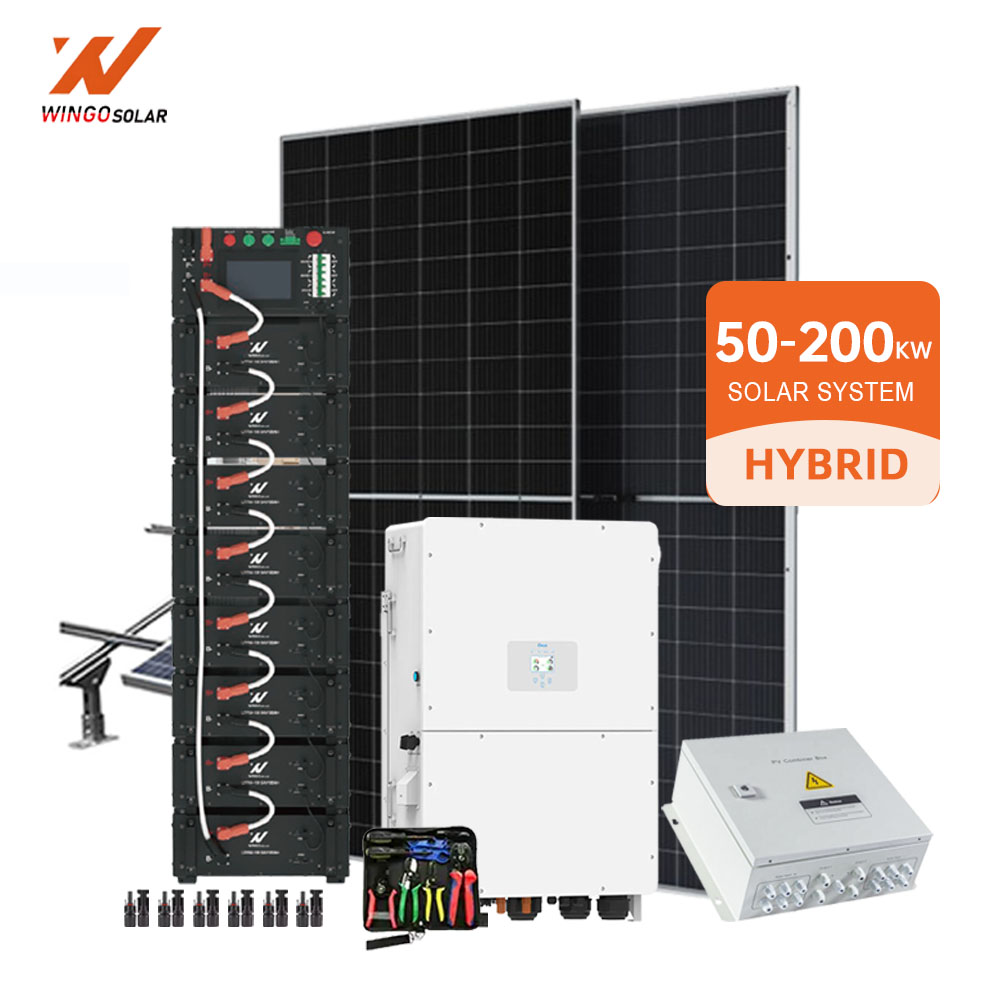
When evaluating power conversion technologies for industrial solar applications, the assumption that a hybrid inverter represents the universal “best choice” often leads to suboptimal system design. While hybrid inverters excel in residential and commercial energy storage scenarios, industrial engineers and EPC contractors must distinguish between grid-interactive energy management and specialized motor control requirements—particularly in solar pumping and heavy-duty automation contexts.
Hybrid Inverters vs. Solar Pump Inverters (VFDs): Functional Architecture
The most critical distinction for agricultural and industrial project managers lies in understanding that hybrid inverters and solar pump inverters (specialized VFDs) serve fundamentally different operational mandates.
A hybrid inverter functions primarily as a grid-forming or grid-following energy router, managing bidirectional power flow between solar arrays, battery banks, and AC loads (including the utility grid). Its control algorithms prioritize battery charging/discharging cycles, grid synchronization, and load shifting. However, when driving submersible pumps or heavy industrial motors, hybrid inverters lack the specialized motor control capabilities inherent to dedicated solar pump inverters.
Solar pump inverters (such as Boray’s SP series) are engineered as Variable Frequency Drives (VFDs) with integrated Maximum Power Point Tracking (MPPT). Unlike hybrid inverters that require stable DC input from batteries or conditioned solar arrays, solar pump VFDs can accept direct DC input from photovoltaic arrays (200VDC–800VDC range) without intermediate battery storage. They employ specialized V/Hz control curves, automatic dry-run protection, and motor flux optimization algorithms specifically calibrated for centrifugal and positive displacement pumps.
| Parameter | Hybrid Inverter | Solar Pump Inverter (VFD) |
|---|---|---|
| Primary Function | Energy storage management & grid interaction | Motor speed control & direct solar drive |
| DC Input Range | Fixed battery voltage (48V/400V typical) | Wide MPPT range (200-800VDC) |
| Battery Requirement | Mandatory for off-grid operation | Not required; direct PV-to-motor |
| Motor Control | Basic V/Hz or grid-synchronous | Advanced vector control, pump-specific curves |
| Starting Method | Direct online or soft start emulation | Variable frequency soft start (0-60Hz ramp) |
| Protection Features | Anti-islanding, battery BMS integration | Dry-run detection, water level control, motor thermal modeling |
| System Efficiency | 94-96% (including battery losses) | 98-99% (direct DC-AC conversion) |
| CAPEX Implications | High (batteries + inverter) | Moderate (no battery bank required) |
Integrated vs. Modular System Architectures
For EPC contractors designing scalable industrial microgrids, the choice between integrated hybrid inverters and modular component architectures impacts long-term maintainability.
Integrated Hybrid Systems consolidate solar charging, battery inversion, and grid-tie functionality into a single enclosure. This reduces installation complexity and communication latency between components. However, failure of the integrated unit results in complete system downtime—a significant risk for critical agricultural irrigation schedules.
Modular Configurations utilizing separate grid-tied inverters, battery charge controllers, and motor control VFDs offer superior redundancy. In solar pumping applications, this allows the pumping subsystem to operate independently of the energy storage system. If the grid-tie inverter requires maintenance, the solar pump VFD continues irrigating crops using direct PV power, whereas a hybrid inverter failure would halt both energy export and pumping operations.
Motor Control Alternatives: VFD vs. Soft Starter
In scenarios where grid power supplements solar generation, engineers must evaluate motor starting technologies. While hybrid inverters can provide basic motor starting when configured for off-grid mode, they cannot match the precision of dedicated motor control equipment.
Variable Frequency Drives (VFDs) provide complete speed control from 0 to rated frequency, reducing mechanical stress on pump systems and enabling flow rate optimization based on solar irradiance levels. VFDs maintain power factor near unity (0.95+) across the operating range, critical for avoiding utility penalties in hybrid installations.
Soft Starters offer a cost-effective alternative for fixed-speed applications, reducing inrush current by 60-70% through thyristor-based voltage ramping. However, they provide no operational energy savings beyond the starting sequence and cannot adapt pump output to variable solar availability—a significant limitation in purely solar-powered systems.
| Feature | VFD (Variable Frequency Drive) | Soft Starter | Hybrid Inverter (Motor Mode) |
|---|---|---|---|
| Speed Control | 0-100% continuous | Fixed speed only | Limited frequency range |
| Energy Savings | 30-50% (variable load) | 10-15% (reduced starting losses only) | Moderate (battery round-trip losses) |
| Power Factor Correction | Active (0.95+) | Passive (0.7-0.8 starting) | Grid-dependent |
| Solar Optimization | MPPT integration available | Not applicable | Battery-dependent |
| Mechanical Stress | Low (controlled acceleration) | Moderate | High (direct online equivalent) |
| Cost per kW | $$ | $ | $$$ |
Motor Technology: PMSM vs. Induction Motors in Solar Applications
When pairing motors with solar pump inverters, the choice between Permanent Magnet Synchronous Motors (PMSM) and Induction Motors (IM) significantly impacts system efficiency.
PMSMs offer 92-96% efficiency ratings and maintain constant torque across variable speeds, making them ideal for solar pump inverters operating in low-irradiance conditions. Their higher power density reduces pump housing size for deep-well applications. However, PMSMs require vector control-capable VFDs and are vulnerable to demagnetization if operated beyond thermal limits—protection that standard hybrid inverters typically cannot provide.
Induction Motors (IM) provide robust, maintenance-free operation with 85-90% efficiency. While less efficient than PMSMs, they tolerate wider voltage fluctuations and do not require rotor position sensors. When paired with advanced VFDs featuring sensorless vector control, IMs achieve 95% of PMSM performance at significantly lower capital cost—an important consideration for large-scale agricultural deployments.
Decision Matrix for System Selection
| Application Scenario | Recommended Solution | Rationale |
|---|---|---|
| Grid-tied commercial building with backup power | Hybrid Inverter | Optimized for energy arbitrage and UPS functionality |
| Remote agricultural irrigation (no grid) | Solar Pump VFD + IM/PMSM | Eliminates battery costs; maximizes water output per kWh |
| Industrial process with variable torque loads | Dedicated VFD | Precise speed control and regenerative braking capabilities |
| Hybrid microgrid with critical pumping | Modular: Grid-tie inverter + Separate Pump VFD | Ensures pumping continuity during grid inverter maintenance |
| Fixed-speed pump retrofit with grid connection | Soft Starter | Cost-effective inrush current limitation |
Conclusion
For industrial engineers and EPC contractors, the hybrid inverter represents a specialized tool for energy storage integration—not a universal replacement for dedicated motor control equipment. In solar pumping applications, dedicated solar pump inverters (VFDs) consistently outperform hybrid inverters in efficiency, reliability, and lifecycle cost by eliminating battery dependencies and providing pump-specific protection algorithms.
When designing systems that require both energy storage and motor control, the modular approach—utilizing separate hybrid inverters for building loads and specialized VFDs for mechanical loads—provides the redundancy and optimization necessary for industrial-grade reliability. Boray Inverter’s technical recommendation aligns with IEC 61800 standards: deploy hybrid inverters for energy management, and dedicated VFDs for precision motor control.
Core Technical Specifications and Control Terms for Hybrid Inverter For Solar System
In hybrid solar architectures, the inverter functions as the central power electronic hub, orchestrating multi-directional energy flow between photovoltaic arrays, electrochemical storage, motor loads, and utility interconnection points. For industrial engineers and EPC contractors specifying equipment for agricultural pumping or factory automation, understanding the intersection of solar harvesting algorithms, motor control topologies, and international procurement frameworks is critical for system optimization and risk mitigation.
Maximum Power Point Tracking (MPPT) and DC Input Architecture
Modern hybrid inverters utilize dual or triple MPPT inputs to accommodate varying string configurations across large-scale solar pump installations. Key specifications include:
- MPPT Voltage Range: Typically 200VDC–850VDC for commercial units, with wide tracking windows ensuring >99% conversion efficiency even under partial shading conditions common in agricultural environments.
- MPPT Algorithm: Perturb and Observe (P&O) or Incremental Conductance methods updated at millisecond intervals to maintain operation at the maximum power point (MPP) despite irradiance fluctuations.
- Startup Voltage: Low-start characteristics (as low as 150VDC) enabling early morning pump priming when Voc (open circuit voltage) is reduced.
- Maximum Input Current: Per-string ratings of 12A–15A to support high-efficiency bifacial modules without clipping losses.
Vector Control (FOC) and Motor Drive Integration
When hybrid inverters interface with Boray’s VFD-compatible solar pump controllers or direct-drive permanent magnet motors, Field-Oriented Control (FOC)—also known as Vector Control—becomes the dominant operational mode:
- Torque Control Precision: Decoupled control of flux and torque components enables 0.5Hz high-torque startup, essential for deep-well submersible pumps with high static head.
- Speed Regulation: Closed-loop vector control maintains ±0.5% speed accuracy across 1:100 dynamic range, preventing water hammer and extending mechanical seal life in irrigation systems.
- Sensorless Vector Mode: Eliminates encoder feedback requirements for outdoor pump installations, reducing maintenance points while maintaining 150% rated torque at zero speed for pressure holding.
PID Control for Process Automation
In closed-loop pumping applications, hybrid inverters implement Proportional-Integral-Derivative (PID) controllers embedded within the firmware:
- Process Variables: Automatic regulation of discharge pressure (constant pressure mode) or flow rate (constant flow mode) by adjusting motor frequency in response to transducer feedback (4–20mA or 0–10V signals).
- Sleep/Wake Functionality: PID algorithms detect low-flow demand conditions, entering sleep mode when pressure setpoints are maintained by tank storage, then automatically restarting when demand thresholds trigger wake signals—critical for 24/7 agricultural operations with variable water consumption.
Power Quality and Grid Synchronization Specifications
- Total Harmonic Distortion (THDi): <3% at rated load, complying with IEEE 519 and IEC 61000-3-6 to prevent grid resonance issues in weak rural networks.
- Power Factor: Adjustable from 0.8 leading to 0.8 lagging via reactive power compensation (VAR support), enabling voltage regulation at the point of common coupling (PCC).
- Grid Code Compliance: G99/G100 (UK), VDE-AR-N 4105 (Germany), or UL 1741-SA (California Rule 21) for anti-islanding protection, frequency-watt control, and voltage ride-through capabilities.
- Conversion Efficiency: Peak efficiency ≥98.2%, with Euro Efficiency or CEC Weighted Efficiency ratings >97.5% to maximize ROI in high-duty-cycle pumping operations.
Battery Energy Storage System (BESS) Interface
- Battery Voltage Ranges: 48V–600VDC nominal compatibility, supporting both lithium iron phosphate (LiFePO4) and lead-acid chemistries with automatic temperature compensation (3mV/°C/cell).
- Charge/Discharge Cycles: Bidirectional DC-DC conversion with 94% round-trip efficiency, enabling peak shaving for irrigation pumps during tariff peak hours.
- BMS Communication: CAN bus or RS485 Modbus RTU integration for real-time State of Charge (SOC) and State of Health (SOH) monitoring, preventing deep discharge in off-grid agricultural installations.
Environmental and Protection Ratings
- Ingress Protection: IP65 or NEMA 4X enclosures mandatory for outdoor agricultural environments with dust, humidity, and chemical exposure (fertilizer/pesticide drift).
- Operating Temperature: -25°C to +60°C with automatic derating above 45°C, utilizing forced air cooling or natural convection designs.
- Surge Protection: Type II SPD (Surge Protective Device) on both DC and AC terminals per IEC 61643-31, essential for lightning-prone rural installations.
International Trade Terms and Logistics Framework
For EPC contractors and distributors managing cross-border procurement of hybrid inverter systems, standard Incoterms® 2020 definitions apply:
FOB (Free On Board)
– Seller (Boray) delivers goods cleared for export onto the vessel designated by the buyer at the named port of shipment (typically Shanghai, Ningbo, or Shenzhen).
– Risk transfers when goods pass the ship’s rail; buyer assumes ocean freight, insurance, and destination port charges.
– Preferred for buyers with established freight forwarding relationships and volume container (FCL) consolidation capabilities.
CIF (Cost, Insurance, and Freight)
– Seller contracts for carriage and minimum insurance coverage (110% of CIF value under Institute Cargo Clauses) to the named destination port.
– Risk still transfers at origin port (ship’s rail), but seller bears freight costs and insurance premiums.
– Suitable for agricultural project managers requiring turnkey logistics to regional hubs (Mombasa, Lagos, Karachi) without in-house shipping departments.
EXW (Ex Works)
– Buyer collects goods directly from Boray’s manufacturing facility, assuming all export clearance, loading, and transport risks from factory gate.
– Offers maximum cost control for large EPCs with bonded warehousing and customs brokerage capabilities in China.
Additional Commercial Terms:
– MOQ (Minimum Order Quantity): Typically 1×40HQ container (approximate capacity 200–300 units depending on inverter kW rating) for OEM branding; sample orders of 5–10 units available for validation testing.
– Lead Time: 15–25 days EXW for standard 3-phase hybrid inverters (30kW–250kW range); 35–45 days for customized firmware or high-voltage 800VDC string inputs.
– Payment Terms: 30% T/T advance, 70% against B/L copy for FOB/CIF shipments; Irrevocable L/C at sight available for orders exceeding $100,000 USD.
– Warranty: 5-year standard product warranty extendable to 10 years for critical infrastructure projects, covering parts replacement for MPPT failures, IGBT modules, and control board defects.
Understanding these technical specifications and trade mechanisms ensures that agricultural automation projects achieve both operational resilience in harsh field conditions and supply chain efficiency in global procurement workflows.
Future Trends in the Hybrid Inverter For Solar System Sector
The convergence of distributed energy resources (DERs) and industrial automation is catalyzing a paradigm shift in how hybrid inverter architectures are engineered for commercial, agricultural, and utility-scale deployments. As grid infrastructure faces increasing decentralization pressures and EPC contractors demand higher ROI from solar pumping and motor control investments, next-generation hybrid inverters are evolving beyond simple power conversion devices into intelligent energy management hubs. This transformation is particularly critical for sectors requiring robust integration between photovoltaic arrays, Variable Frequency Drives (VFDs), and high-inertia motor loads—such as agricultural irrigation systems and industrial process controls.
AI-Optimized Power Conversion and Predictive Load Management
Emerging hybrid inverter platforms are incorporating machine learning algorithms to optimize bidirectional power flow between solar generation, battery storage, and AC loads in real-time. For solar pumping applications, advanced MPPT (Maximum Power Point Tracking) algorithms now integrate with VFD control logic to anticipate hydraulic demand curves based on weather forecasting and soil moisture data. This predictive capability enables dynamic motor speed regulation that minimizes inrush currents and extends pump motor lifespan—addressing a critical pain point for agricultural project managers managing large-scale irrigation networks. Furthermore, predictive maintenance algorithms analyze harmonic distortion patterns and thermal signatures to preemptively identify bearing failures or cavitation issues in submersible pumps before operational downtime occurs.
Seamless VFD Integration and Motor Control Synchronization
The boundary between hybrid inverters and motor control systems is dissolving through the adoption of integrated DC-bus architectures. Modern hybrid systems for solar pumping are moving toward direct DC-coupled configurations that eliminate redundant AC-DC conversion stages, allowing solar arrays to feed directly into shared DC buses that power specialized solar pump inverters and VFDs. This topology reduces conversion losses by 3-5% while enabling synchronized torque control across multiple pump stations. For industrial automation distributors, this trend represents an opportunity to offer consolidated power conversion stacks that combine grid-tie functionality, battery energy storage systems (BESS), and precision motor control within a single enclosure—reducing Balance of System (BOS) costs and simplifying commissioning for EPC contractors.
IoT-Enabled SCADA and Edge Computing Architectures
Industrial-grade IoT integration is transitioning from simple remote monitoring to edge-based autonomous control. Next-generation hybrid inverters are embedding industrial IoT gateways with Modbus TCP/IP, CAN bus, and MQTT protocols, enabling seamless integration with existing SCADA infrastructures. For agricultural deployments, this facilitates granular monitoring of pump performance metrics—such as flow rates, suction pressure, and motor efficiency—across geographically dispersed installations. Cloud-based digital twin technology now allows automation engineers to simulate hybrid inverter behavior under varying irradiance and load conditions, optimizing battery dispatch strategies for peak shaving and demand response programs. These innovations are particularly valuable for off-grid and weak-grid applications where voltage and frequency stability must be maintained across fluctuating inductive loads.
Grid-Forming Capabilities and Microgrid Orchestration
The evolution from grid-following to grid-forming inverter technology is enabling sophisticated microgrid architectures that can black-start industrial facilities without utility support. Advanced hybrid inverters now incorporate droop control algorithms and virtual synchronous machine (VSM) technology, allowing them to establish grid reference frequencies when operating in island mode. This capability is crucial for hybrid solar-diesel systems commonly deployed in remote mining operations and large-scale agricultural processing facilities. When integrated with smart VFDs, these systems can perform load shedding prioritization—automatically modulating non-critical motor loads during battery discharge events to extend critical backup power duration.
High-Voltage DC Architecture and Battery Agnosticism
The industry is migrating toward 1500V DC hybrid inverter platforms that accommodate high-voltage battery chemistries (LFP, NMC, and emerging solid-state technologies) while maintaining compatibility with existing 380V/480V three-phase motor networks. This high-voltage approach reduces cabling costs and improves charge/discharge efficiency for large-scale solar pumping stations. Additionally, battery-agnostic inverter designs—featuring programmable BMS (Battery Management System) protocols—allow EPC contractors to specify best-in-class storage solutions without vendor lock-in, future-proofing investments as lithium iron phosphate (LFP) and sodium-ion technologies continue to mature.
Hybridization with Diverse Generation Assets
Future hybrid inverter systems are being architected to manage multi-source energy inputs beyond PV, including small-scale wind turbines, hydrogen fuel cells, and biogas generators. For industrial applications requiring 24/7 process continuity, this multi-modal approach ensures that critical motor loads—such as those in HVAC, conveyor systems, and water treatment plants—receive uninterrupted power regardless of renewable intermittency. Advanced power electronics now enable seamless switching between sources with sub-cycle transfer times (<20ms), eliminating voltage sags that traditionally trigger VFD fault conditions and motor protection relays.
These technological trajectories indicate that hybrid inverters will serve as the central nervous system for next-generation industrial electrification, bridging the gap between renewable generation, intelligent storage, and precision motor control. For stakeholders across the solar pumping and automation sectors, selecting hybrid platforms with open communication protocols, high-voltage compatibility, and AI-driven optimization capabilities will be essential for maintaining competitive advantage in an increasingly decarbonized industrial landscape.
Top 2 Hybrid Inverter For Solar System Manufacturers & Suppliers List
Top 10 Solar hybrid inverter Manufactures
Website: srnesolar.com
SRNE Solar’s product portfolio focuses on solar hybrid and off-grid inverters with the following key segments: 1) Residential Hybrid Inverters (HESP series): Single/Split phase low voltage models (3.6-18kW) including HESP 4-6.5kW, 8-12kW, and 14-18kW variants; Three-phase low voltage (3-20kW) including HESP 14-18kW-US, 16-20kW-EU; Three-phase high voltage (8-12kW). Regional variants available for …

Surprise In Top Solar Inverter Manufacturer Rankings
Website: solarquotes.com.au
Wood Mackenzie Global Solar Inverter Manufacturer Rankings H1 2025 evaluated 23 manufacturers across 8 weighted criteria including regionalized assembly strategies, CSR, and ESG. Top 10 manufacturers: 1) Huawei (China, operating under iStore brand in Australia), 2) Sungrow (China), 3) SMA (Germany, struggling with 38.7% decline in Home & Business Solutions due to Chinese competition), 4) Fronius (…
B2B Engineering FAQs About Hybrid Inverter For Solar System
How does a hybrid inverter coordinate with VFDs in solar pumping applications to optimize motor efficiency?
In solar pumping systems, hybrid inverters function as the central power management unit interfacing between PV arrays, battery storage, and VFD-driven motors. Unlike standard solar inverters, hybrid units provide bidirectional DC bus voltage regulation, enabling seamless transition between direct PV-to-VFD coupling and battery-buffered operation. For agricultural projects, this ensures constant VFD input voltage (typically 380–480V AC three-phase) despite solar irradiance fluctuations. The hybrid inverter’s MPPT algorithm maintains the DC bus at the VFD’s optimal input voltage, eliminating separate boost converters and reducing system complexity. When integrated with solar pump inverters, the hybrid architecture enables “PV priority” logic—directly coupling solar generation to the motor while using batteries only for starting assistance or during low irradiance—significantly extending battery life in irrigation applications.
What generator compatibility specifications must EPC contractors verify for hybrid inverters in off-grid agricultural installations?
For remote agricultural operations requiring diesel generator backup, hybrid inverters must support specific generator input parameters: voltage tolerance (typically ±15%), frequency stability (50/60Hz ±5%), and seamless transfer switching (<20ms to prevent VFD undervoltage faults). Critical specifications include generator power factor compatibility (0.8 lagging minimum) and the ability to handle non-linear loads from pump motors. Advanced hybrid inverters feature “generator assist” mode, where battery storage supplements generator power during motor starting (inrush current compensation), allowing contractors to size generators 30–40% smaller than traditional setups. The system should also support programmable generator scheduling to optimize fuel consumption during peak solar generation periods.
How does bidirectional power conversion architecture in hybrid inverters support DC-coupled battery storage for industrial motor control systems?
Hybrid inverters employ full-bridge bidirectional converters enabling both DC-to-AC inversion (for motor/VFD power) and AC-to-DC rectification (for battery charging from grid or generator). In industrial solar pumping applications, this architecture eliminates separate battery chargers and charge controllers. The bidirectional capability allows regenerative energy capture from decelerating pump motors (when using compatible VFDs with active front ends) to be stored in batteries rather than dissipated as heat. For EPC contractors, this reduces component count and improves system efficiency by 3–5% compared to AC-coupled storage systems. The DC bus voltage stability (typically 400–800V DC) is maintained through active power flow management, ensuring VFDs receive consistent input regardless of source transitions.
What MPPT voltage window and tracking efficiency specifications are critical for hybrid inverters in variable irradiance agricultural environments?
Agricultural solar pumping systems experience rapid irradiance changes due to cloud transients and dust accumulation. Engineers should specify hybrid inverters with wide MPPT voltage ranges (typically 200–850V DC) and tracking efficiencies ≥99.5%. The MPPT algorithm must feature fast sweep capabilities (<1 second response) to maintain optimal power extraction during partial shading from irrigation equipment or vegetation. For systems powering submersible pumps via VFDs, the hybrid inverter should maintain MPPT operation even during motor starting transients, ensuring the PV array continues contributing power rather than switching entirely to battery backup. Dual MPPT inputs are recommended for large agricultural installations to accommodate multiple PV string orientations or partial array shading.
How do hybrid inverters manage high inrush currents when starting large induction motors or VFDs from battery backup mode?
When grid power fails and the system switches to battery backup, hybrid inverters must handle motor starting currents 6–7× higher than running current. Advanced units feature “boost mode” or temporary overload capacity (150–200% for 10–60 seconds) specifically for VFD/motor starting sequences. For soft starter compatibility, the hybrid inverter should provide pure sine wave output with <3% THD to prevent thyristor misfiring. In solar pumping applications, intelligent hybrid inverters coordinate with VFDs to implement “ramp start” sequences—gradually increasing frequency from 0Hz rather than direct online starting—reducing battery current spikes by 40–60%. This extends battery cycle life and allows smaller battery bank sizing for agricultural backup systems.
Which industrial communication protocols should be specified for integrating hybrid inverters with farm automation and SCADA systems?
For integration with existing irrigation control systems, hybrid inverters should support Modbus RTU/TCP (RS485 and Ethernet), CAN Bus for agricultural machinery compatibility, and optionally BACnet for building management integration. Key data points for monitoring include: DC bus voltage, battery SOC (State of Charge), generator status, load power consumption, and fault codes. Advanced systems support MQTT for cloud-based farm management platforms, enabling remote monitoring of multiple pumping stations. EPC contractors should verify that the inverter’s communication gateway supports protocol conversion between solar monitoring systems and existing motor control networks, ensuring unified SCADA visibility of both energy generation and pumping operations.
How does anti-islanding protection in hybrid inverters coordinate with existing motor protection relays in solar-diesel hybrid systems?
In hybrid systems combining solar, batteries, and diesel generators, anti-islanding protection must coordinate with existing protection schemes to prevent “islanded” operation that could damage equipment or endanger utility workers. Hybrid inverters should feature IEEE 1547 or IEC 62116 certified anti-islanding with <2 second detection times. For systems with VFDs, the inverter must detect islanding conditions even when feeding non-linear loads that create harmonic distortion. Critical for agricultural installations: the hybrid inverter should provide “grid-forming” capability when the generator is offline, maintaining voltage and frequency reference for VFDs, while switching to “grid-following” mode when the generator operates, preventing synchronization conflicts that could trip generator breakers.
What thermal management and enclosure specifications are required for hybrid inverters in harsh agricultural or desert environments?
Agricultural and desert installations expose inverters to high ambient temperatures (up to 50–60°C), dust, humidity, and corrosive atmospheres. Engineers should specify IP65 or higher protection ratings for outdoor mounting, eliminating the need for separate enclosures. Thermal management requires forced air cooling with temperature derating curves showing output capacity at 40°C, 50°C, and 60°C ambient. For solar pumping stations in remote areas, passive cooling or liquid-cooled hybrid inverters reduce maintenance requirements (no fan filters to clean). The inverter should feature conformal coating on PCBs for humidity/corrosion resistance and operate across -20°C to +60°C temperature ranges. Heat sink designs must accommodate dust accumulation without blocking airflow, critical for maintaining MPPT efficiency in agricultural environments.
Disclaimer
⚠️ Important Disclaimer
The information provided in this guide is for educational purposes. Industrial applications and electrical engineering projects carry inherent risks. B2B buyers and contractors must conduct thorough technical due diligence and verify regional compliance before installation or procurement.
Conclusion: Partnering with Boray Inverter for Hybrid Inverter For Solar System
Selecting the optimal power conversion architecture is no longer merely an efficiency consideration—it is a strategic imperative for industrial and agricultural operations seeking true energy resilience. Hybrid inverter systems represent the convergence of grid-tied economics and off-grid reliability, delivering sophisticated bidirectional power management that maximizes renewable yield while ensuring critical load continuity during grid instability. For engineers and project managers overseeing solar pumping stations, large-scale irrigation networks, or automated industrial processes, the integration of advanced vector control technologies with robust inverter hardware determines not only system longevity and motor protection, but also the overall return on investment across decades of operational service.
This is where Shenzhen Boray Technology Co., Ltd. distinguishes itself as more than a component supplier, but as a strategic engineering partner deeply embedded in the technical realities of motor control applications. As an innovative manufacturer specializing in Solar Pumping and Motor Control Solutions, Boray Inverter leverages a formidable R&D infrastructure where technical talent comprises 50% of the workforce, ensuring unparalleled expertise in Permanent Magnet Synchronous Motor (PMSM) and Induction Motor (IM) vector control algorithms. Our dual modern production lines execute rigorous 100% full-load testing protocols, guaranteeing that every variable frequency drive (VFD) and solar pumping inverter meets stringent industrial reliability standards before global deployment.
With a proven track record across agricultural irrigation projects, water management systems, and industrial automation installations worldwide, Boray delivers not just standardized products, but engineered solutions tailored to specific torque requirements, environmental conditions, and complex grid-integration challenges. Whether your specification demands precise MPPT tracking for submersible pumps or sophisticated regenerative braking for material handling systems, our technical team stands ready to optimize your power conversion strategy.
Contact Boray Inverter today at borayinverter.com to discuss your project specifications and request wholesale quotations for customized VFD solutions. Let us engineer the reliability your critical infrastructure demands.