Introduction: Sourcing Hybrid Solar Inverter With Battery Backup for Industrial Use
Industrial operations face mounting pressure to decarbonize while maintaining 24/7 uptime. When grid instability threatens critical motor loads—from irrigation pumps to conveyor systems—unplanned downtime can cost thousands per hour. Hybrid solar inverters with battery backup have emerged as the central nervous system of resilient industrial microgrids, seamlessly merging photovoltaic generation, energy storage, and intelligent load management into a single power conversion architecture.
This guide addresses the technical procurement challenges facing EPC contractors and automation engineers sourcing hybrid inverters for demanding environments. We analyze the engineering distinctions between all-in-one units (such as high-voltage 48V split-phase systems with 15kW+ PV input capacity) and modular configurations that parallel stack for 100kW+ industrial arrays. Critical specifications—including maximum power point tracking (MPPT) efficiency, compatibility with variable frequency drives (VFDs) for solar pumping applications, and battery chemistry integration (LiFePO₄ vs. lead-acid)—are evaluated against IEC 62109 and UL 1741 safety standards.
Beyond product categories, we examine manufacturer vetting criteria essential for B2B buyers: vertical integration capabilities, firmware customization for motor control synchronization, and global service networks. Whether specifying inverters for agricultural solar pumping stations or factory peak-shaving installations, understanding these technical differentiators ensures your power conversion infrastructure aligns with both immediate load requirements and long-term Industry 4.0 energy strategies.
Article Navigation
- Top 2 Hybrid Solar Inverter With Battery Backup Manufacturers & Suppliers List
- Introduction: Sourcing Hybrid Solar Inverter With Battery Backup for Industrial Use
- Technical Types and Variations of Hybrid Solar Inverter With Battery Backup
- Key Industrial Applications for Hybrid Solar Inverter With Battery Backup
- Top 3 Engineering Pain Points for Hybrid Solar Inverter With Battery Backup
- Component and Hardware Analysis for Hybrid Solar Inverter With Battery Backup
- Manufacturing Standards and Testing QC for Hybrid Solar Inverter With Battery Backup
- Step-by-Step Engineering Sizing Checklist for Hybrid Solar Inverter With Battery Backup
- Wholesale Cost and Energy ROI Analysis for Hybrid Solar Inverter With Battery Backup
- Alternatives Comparison: Is Hybrid Solar Inverter With Battery Backup the Best Choice?
- Core Technical Specifications and Control Terms for Hybrid Solar Inverter With Battery Backup
- Future Trends in the Hybrid Solar Inverter With Battery Backup Sector
- B2B Engineering FAQs About Hybrid Solar Inverter With Battery Backup
- Disclaimer
- Conclusion: Partnering with Boray Inverter for Hybrid Solar Inverter With Battery Backup
Technical Types and Variations of Hybrid Solar Inverter With Battery Backup
Hybrid solar inverters with battery backup represent a critical convergence of photovoltaic generation, energy storage, and advanced power electronics. For industrial engineers and EPC contractors designing solar pumping stations or automated motor control systems, selecting the appropriate inverter topology directly impacts system efficiency, motor starting capabilities, and long-term operational reliability. Below is a technical classification of hybrid inverter architectures most relevant to heavy-duty industrial and agricultural applications.
| Type | Technical Features | Best for (Industry) | Pros & Cons |
|---|---|---|---|
| Three-Phase Industrial Hybrid (400V Class) | • 380–480V AC three-phase output • 1000V–1500V DC maximum PV input • High surge capacity (300% rated current for 10s) • Active front-end (AFE) rectifier technology • Direct VFD synchronization via Modbus/CAN |
Large-scale agricultural irrigation, industrial process motors, wastewater treatment facilities | Pros: Direct compatibility with standard industrial pumps/VFDs; no phase conversion losses; scalable to MW-level via parallel master-slave control. Cons: Requires 3-phase infrastructure; higher capital cost; complex grounding/earthing requirements for motor loads. |
| DC-Coupled High-Voltage Architecture | • 600V–1000V battery bus voltage • Integrated 98.6%+ efficiency MPPT • Shared DC bus with solar pump inverters • Bi-directional DC-DC conversion for battery management • Arc fault detection (NEC 690.11 compliant) |
Utility-scale solar pumping, microgrids with storage, commercial & industrial (C&I) peak shaving | Pros: Eliminates AC-DC-AC conversion losses (5–8% efficiency gain vs. AC-coupled); reduced DC cabling costs; seamless integration with existing VFD DC links. Cons: Limited to high-voltage battery chemistries (LiFePO4/Li-ion); requires specialized DC safety disconnects; higher electromagnetic interference (EMI) filtering needs. |
| AC-Coupled Retrofit Hybrid | • Grid-frequency detection (50/60Hz auto-sensing) • Frequency-watt droop control for battery charging • Compatible with existing string inverters or pump controllers • Rapid shutdown (RSD) transmitter integration • Backfeed protection (IEEE 1547 compliant) |
Retrofitting existing solar pump systems, residential/light commercial battery additions, legacy system upgrades | Pros: Non-invasive installation preserving existing warranties; flexible battery placement; works with diverse existing inverter brands. Cons: Double conversion penalty (solar DC→AC→battery DC); limited motor starting surge capacity; requires precise frequency synchronization with existing inverters. |
| Split-Phase Agricultural Hybrid (120/240V) | • 120/240V split-phase output (L1-L2-N) • 48V or 400V battery compatibility • Built-in automatic transfer switch (ATS) • Submersible pump soft-start algorithms • THD <3% for sensitive motor electronics |
Small-to-medium farms (North America), remote pumping stations, mixed residential/agricultural loads | Pros: Compatible with standard NEMA pump motors; simplified single-phase permitting; integrated load shedding for critical circuits. Cons: Limited to <10HP motor loads typically; voltage imbalance under asymmetric loading; lower efficiency (90–93%) compared to three-phase systems. |
| Integrated All-in-One with VFD Interface | • Pre-wired DC bus bars for pump inverter connection • Integrated charge controller (MPPT) + inverter + ATS • Motor control relay outputs (dry contacts) • Vector control compatibility for sensorless pumps • IP65/NEMA 3R enclosure for outdoor mounting |
Turnkey EPC projects, solar water pumping systems, automated irrigation networks | Pros: Reduced installation time (plug-and-play with Boray solar pump inverters); unified monitoring platform; optimized harmonic filtering for motor loads. Cons: Single point of failure risk; limited customization of individual components; thermal management challenges in high-ambient desert environments. |
Three-Phase Industrial Hybrid (400V Class)
For industrial automation and large-scale agricultural projects, three-phase hybrid inverters operating at 380–480V AC represent the standard for direct motor integration. These units utilize Active Front End (AFE) technology to maintain unity power factor (PF >0.99) while supplying the high inrush currents required for induction motor starting—often delivering 300% rated current for 10–60 seconds to accommodate VFD acceleration ramps without voltage sag.
From a motor control perspective, these inverters provide a stable voltage source (VS) for Variable Frequency Drives, allowing the VFD to focus on torque control rather than power conditioning. When integrated with Boray solar pump inverters, the three-phase hybrid acts as the grid-forming device, maintaining voltage and frequency reference while the pump VFD handles the variable speed control. Critical specifications include common-mode noise filtering to prevent bearing currents in pump motors, and regenerative braking capability to return excess solar energy to batteries during low-demand periods.
DC-Coupled High-Voltage Architecture
DC-coupled systems represent the optimal technical solution for new solar pumping installations where round-trip efficiency is paramount. By maintaining energy in DC form from PV modules through battery storage to the pump inverter’s DC link, these systems eliminate the 3–5% conversion losses associated with AC coupling. High-voltage architectures (600V–1000V DC battery buses) reduce current flow (I = P/V), allowing for smaller gauge DC cabling between the hybrid inverter and solar pump VFDs—critical for long-distance installations in agricultural fields.
Electrical engineers must specify arc flash detection and high-voltage DC disconnects compliant with UL 1741-SA (Rule 21) or IEC 62109. The shared DC bus topology enables direct coupling with Boray’s solar pump inverter series, where the hybrid inverter manages battery state-of-charge (SOC) while the dedicated pump VFD optimizes motor speed for hydraulic efficiency. This architecture supports advanced features like DC bus voltage regulation for weak-grid conditions and seamless transition between grid-tied and islanded modes without motor speed fluctuations.
AC-Coupled Retrofit Hybrid
AC-coupled hybrids serve the growing retrofit market for existing solar pumping installations where adding battery storage without disrupting the existing DC array wiring is required. These systems utilize frequency-watt control algorithms to modulate the existing solar inverter’s output by shifting the AC frequency (typically 50Hz to 52Hz or 60Hz to 62Hz), signaling the existing inverter to curtail production when battery SOC reaches maximum.
For agricultural project managers, this means existing pump controllers can remain in service while adding backup capability. However, motor control engineers must account for the “double conversion” penalty: solar DC converts to AC via the existing inverter, then back to DC for battery charging via the hybrid inverter. This reduces overall system efficiency to 85–90%, making AC coupling suitable primarily for backup power applications rather than continuous cycling duty. The inverter must also provide voltage ride-through (VRT) capabilities to prevent nuisance tripping of pump VFDs during grid transients.
Split-Phase Agricultural Hybrid (120/240V)
In North American agricultural markets, split-phase (120/240V) hybrid inverters bridge the gap between residential solar technology and light commercial pumping applications. These units feature built-in automatic transfer switches (ATS) that isolate critical pump circuits from the grid during outages, switching to battery backup within 20ms—fast enough to prevent VFD control board resets.
Technical considerations include Total Harmonic Distortion (THD) <3% to prevent overheating of pump motor windings, and soft-start algorithms that gradually ramp motor voltage to limit inrush current to 150% of rated load. While limited to approximately 7.5–10HP maximum motor size due to single-phase current limitations (typically 80A continuous per leg), these systems excel in mixed-load environments where small pumps, sensors, and control electronics share the same backup circuit. The 48V battery option provides safer installation for maintenance personnel, though 400V systems offer better efficiency for larger submersible pumps.
Integrated All-in-One with VFD Interface
All-in-one hybrid inverters with pre-wired VFD interfaces streamline EPC contractor deployments by consolidating the MPPT charge controller, battery inverter, and automatic transfer switch into a single IP65-rated enclosure. These systems feature dedicated dry contact outputs (relay controls) that interface directly with Boray solar pump inverter start/stop circuits, enabling centralized control of pumping schedules based on battery SOC or time-of-use rates.
From a motor control standpoint, the integrated design allows for coordinated harmonic filtering; the hybrid inverter’s output filter works in conjunction with the pump VFD’s input choke to minimize reflected wave issues in long motor leads (critical for submersible pumps with 100m+ cable runs). However, thermal management requires careful attention—desert installations must ensure the integrated enclosure’s heat dissipation capacity exceeds the combined losses of both the inverter section and the battery charge controller, typically requiring derating above 40°C ambient temperatures.
Key Industrial Applications for Hybrid Solar Inverter With Battery Backup
Hybrid solar inverters with integrated battery backup are transforming industrial motor control architectures by enabling seamless transitions between photovoltaic generation, grid power, and stored energy. When synchronized with Variable Frequency Drive (VFD) systems—core to Boray Inverter’s engineering expertise—these solutions optimize energy consumption for high-inertia loads while eliminating production losses during voltage sags or outages. Below are critical implementations where hybrid inverter technology delivers measurable ROI in industrial automation environments.
| Sector | Application | Energy Saving Value | Sourcing Considerations |
|---|---|---|---|
| Agriculture | Solar Pumping & Precision Irrigation | 40–60% reduction in diesel/grid dependency; elimination of demand charges via battery arbitrage during peak tariff periods | IP65-rated enclosures for outdoor installation; VFD compatibility for submersible/surface pumps (3-phase 380V/480V output); anti-islanding protection for weak rural grids; wide MPPT voltage range (200–850VDC) to accommodate varying solar irradiance |
| Water Treatment | Lift Stations & Reverse Osmosis Feed Pumps | Peak shaving of 30–50% of pumping costs; uninterrupted membrane filtration during grid outages preventing bio-fouling | High inrush current capacity (6x motor FLA for submersible pumps); pure sine wave output (<3% THD) for sensitive PLC/VFD controls; compatibility with Boray solar pump inverter communication protocols (RS485/Modbus); seamless transfer time <10ms |
| HVAC & Industrial Cooling | Chiller Plants & Cooling Tower Fan Arrays | VFD soft-start integration reduces motor starting current by 70%; thermal energy storage optimization via battery banks | Split-phase 120/240V or three-phase 480V output flexibility; low harmonic distortion (<3%) to prevent VFD overheating; scalable parallel operation capability (up to 100kW+ systems) for large centrifugal chillers; NEMA 4X rating for cooling tower environments |
| Mining & Aggregate Processing | Conveyor Systems & Primary Crusher Drives | Fuel cost reduction in off-grid operations; regenerative braking energy capture from downhill conveyors fed back to batteries | Heavy-duty chassis with vibration resistance (IEC 60068-2-6); wide operating temperature range (-20°C to +60°C); high short-circuit current rating for motor starting; isolated transformer design for ground fault protection in dusty environments |
| Cement & Heavy Manufacturing | Raw Mill Circulation Fans & Kiln Preheater Blowers | Power factor correction (0.99 PF) reducing utility penalties; ride-through capability for voltage dips preventing kiln cooling | High overload capacity (150% for 60 seconds) for high-torque fan starts; integration with existing DCS/SCADA via Ethernet/IP or Profibus; lithium iron phosphate (LiFePO4) battery compatibility for high cycle life in high-temperature environments |
Agricultural Solar Pumping & Irrigation Systems
In large-scale agricultural operations, hybrid inverters serve as the central energy router for VFD-controlled solar pump systems. By coupling photovoltaic arrays with battery storage, these configurations enable 24/7 irrigation capabilities independent of grid availability or daylight hours. The critical synergy lies in the inverter’s ability to maintain stable DC bus voltage for VFD input sections, ensuring precise pump curve control that eliminates water hammer and extends motor life. For EPC contractors, specifying units with IP65 enclosures and wide MPPT ranges (200–850VDC) ensures compatibility with Boray’s submersible pump inverter series, particularly in remote installations where grid impedance varies seasonally.
Municipal Water Treatment & Distribution
Lift stations and reverse osmosis plants require absolute continuity; a power interruption during membrane filtration can result in catastrophic bio-fouling requiring chemical cleaning. Hybrid inverters provide the necessary bridge power while offering demand charge management by shifting high-energy pumping to off-peak hours. When sourcing for these applications, prioritize inverters with high inrush current capability—submersible pumps typically require 5–6x full load amperage at startup—and pure sine wave output to prevent VFD fault trips. Integration with Boray’s pump control logic via Modbus RTU enables centralized monitoring of both energy storage levels and pump performance metrics.
Industrial HVAC & Process Cooling
Manufacturing facilities utilizing centrifugal chillers and cooling tower fans benefit significantly from hybrid inverter systems that combine VFD soft-start functionality with battery-backed peak shaving. The inverter’s ability to supply clean, three-phase power with <3% total harmonic distortion (THD) is essential when operating multiple VFDs simultaneously, preventing cross-interference and motor bearing currents. For automation distributors, specifying scalable systems that allow parallel operation (up to 100kW+ configurations) accommodates future facility expansion without inverter replacement, while split-phase capabilities support mixed loads of 120V controls and 480V motor circuits.
Remote Mining & Aggregate Processing
Off-grid crushing and conveying operations traditionally rely on diesel generators with high operational expenditures. Hybrid inverters optimized for industrial motor loads can capture regenerative energy from downhill conveyor sections—typically dissipated as heat in dynamic braking resistors—and store it in battery banks for crusher startup sequences. Sourcing considerations must include IEC 60068-2-6 certified vibration resistance for crusher house installations and high short-circuit current ratings to handle the locked rotor amperage of 200–500 HP motors. The seamless transfer capability (<10ms) ensures that conveyor PLC controls do not reboot during generator synchronization or cloud transients.
Cement Manufacturing & High-Temperature Processes
Cement kiln operations cannot tolerate cooling; a power loss causes material solidification requiring manual jackhammer removal. Hybrid inverters provide critical ride-through capability during voltage sags while correcting power factor to 0.99, eliminating reactive power penalties from utilities. When specifying for these environments, verify high overload capacity (150% for 60 seconds) to handle the high starting torque of raw mill circulation fans. LiFePO4 battery chemistry is preferred over lead-acid for high-temperature kiln areas due to superior thermal stability and 6000+ cycle life, reducing maintenance intervals in hazardous access locations.
Technical Integration Note: For optimal performance in these applications, specify hybrid inverters that support direct communication with Boray’s solar pump inverter and VFD product lines via standard industrial protocols (RS485, Modbus TCP/IP, or CAN bus). This integration enables unified energy management where the hybrid inverter’s battery state-of-charge directly influences VFD ramp rates and pump staging, maximizing both equipment longevity and energy harvest efficiency.
Top 3 Engineering Pain Points for Hybrid Solar Inverter With Battery Backup
Scenario 1: Motor Inrush Current Overload During Grid-Independent Operation
The Problem:
When hybrid solar inverters transition to battery backup mode during grid outages, they face catastrophic failure risks from motor inrush currents. Industrial pumps, agricultural irrigation systems, and HVAC compressors controlled by traditional across-the-line starters draw 5-7x their rated current during startup. Standard hybrid inverters sized for steady-state loads cannot deliver these surge currents without tripping on overcurrent protection or entering current-limiting modes that stall motors. This results in failed irrigation cycles, production line downtime, or premature battery degradation due to high-rate discharge demands that exceed the battery management system (BMS) safety thresholds.
The Solution:
Engineers must specify hybrid inverters with 3x surge capacity ratings or integrate Variable Frequency Drive (VFD) technology upstream of the motor loads. By deploying VFDs—such as Boray Inverter’s solar pump drive series—motor starting currents are eliminated through soft-start ramp algorithms (0-60Hz gradual acceleration). For existing installations, configure the hybrid inverter’s “heavy load” or “motor mode” settings to account for power factor corrections and temporary overload capacity. Additionally, implement DC-coupled architectures where solar arrays directly supplement battery output during motor starting events, reducing the instantaneous current burden on the battery bank and extending cycle life.
Scenario 2: Battery Chemistry Constraints vs. Variable Motor Load Dynamics
The Problem:
The fundamental mismatch between battery discharge characteristics and VFD-controlled motor dynamics creates energy management inefficiencies in hybrid solar pumping systems. Lithium-ion and lead-acid batteries prefer steady, C-rate-compliant discharge curves, while agricultural VFD applications demand rapid power fluctuations based on flow rate adjustments, pressure sensor feedback, and multi-pump staging sequences. This oscillation causes frequent shallow cycling, state-of-charge (SOC) estimation errors, and potential low-voltage disconnects when the inverter’s surge demand exceeds the battery’s instantaneous power capability—particularly problematic during cloudy periods when solar generation cannot supplement the power gap.
The Solution:
Specify hybrid inverters featuring advanced energy management controllers (EMC) with programmable “ramp rate limiting” functions that smooth battery discharge curves to match motor load steps. For critical solar pumping applications, utilize AC-coupled battery systems with dedicated VFD integration ports, allowing the inverter to prioritize direct solar-to-motor power while using batteries strictly for grid-fail backup rather than primary motor operation. Engineers should also calculate battery capacity using “motor duty cycle” multipliers rather than static load calculations—typically oversizing the battery bank by 30-40% to accommodate the peak-to-average power ratios inherent in variable-speed pumping systems.
Scenario 3: Environmental Ingress and Thermal Management in Integrated Enclosures
The Problem:
Hybrid solar inverters with integrated battery backup systems face accelerated degradation in harsh agricultural and industrial environments due to conflicting thermal management requirements. The inverter’s power electronics generate significant heat requiring ventilation, while lithium battery chemistries demand narrow temperature windows (typically 20°C-30°C) for optimal cycle life. Standard IP20 or IP54 rated enclosures allow dust ingress that compromises cooling fan bearings and creates conductive paths on PCBs, while high-humidity environments (>85% RH) cause corrosion of battery terminals and inverter busbars. In desert agricultural applications, daytime ambient temperatures exceeding 45°C trigger thermal derating that simultaneously reduces solar charging capacity and available backup power precisely when irrigation demands peak.
The Solution:
Specify fully integrated hybrid systems with IP65 or NEMA 4X enclosures featuring active thermal management with separate cooling zones—forced air or liquid cooling for inverter IGBTs, while maintaining sealed, thermally insulated compartments for battery modules with dedicated heating/cooling circuits. For existing installations, deploy external battery enclosures with independent climate control (heating pads for cold climates, air conditioning for tropical zones) located separately from the inverter housing. Engineers should verify the inverter’s temperature derating curves at 50°C ambient conditions and select models with wide MPPT voltage ranges that maintain maximum power point tracking efficiency even when thermal throttling reduces switching frequencies.
Component and Hardware Analysis for Hybrid Solar Inverter With Battery Backup
At the core of every hybrid solar inverter with battery backup lies a sophisticated power electronics architecture that must simultaneously manage unpredictable PV generation, bidirectional battery energy flow, and critical load requirements. For industrial engineers and EPC contractors specifying equipment for agricultural solar pumping or factory automation backup systems, understanding the hardware topology is essential for predicting long-term reliability and total cost of ownership.
Power Semiconductor Topology (IGBT/SiC Modules)
The heart of the energy conversion process relies on Insulated Gate Bipolar Transistors (IGBTs) or Silicon Carbide (SiC) MOSFETs configured in H-bridge or three-phase bridge topologies. In hybrid applications, these modules handle not only the DC-to-AC inversion for loads but also the rectification for battery charging and grid-tie operations. Industrial-grade units utilize six-pack IGBT modules with integrated anti-parallel freewheeling diodes, rated for 600V–1500V DC bus voltages depending on system architecture. Critical specifications include collector-emitter saturation voltage (Vce(sat))—lower values (1.4V–1.7V) reduce conduction losses—and switching frequency capabilities above 16kHz for motor control applications, enabling precise VFD-like torque management when driving irrigation pumps.
Digital Control Architecture
Advanced hybrid inverters employ dual-core Digital Signal Processors (DSPs) such as the TI C2000 series or equivalent 32-bit industrial microcontrollers running real-time operating systems. These controllers execute multiple control loops simultaneously: Maximum Power Point Tracking (MPPT) for PV arrays, battery charge/discharge management, and grid synchronization via Phase-Locked Loop (PLL) algorithms. For agricultural applications integrating solar pump inverters, the DSP must handle variable frequency drive logic, protecting motors from inrush currents while maintaining power factor correction (PFC) above 0.99.
Passive Component Engineering
DC-Link capacitors stabilize the bus voltage between PV input, battery storage, and the inverter stage. Industrial hybrid systems increasingly utilize polypropylene film capacitors over electrolytic alternatives due to superior ripple current handling (often exceeding 50A RMS) and extended lifespan in high-temperature environments (105°C+ rated). Magnetic components—including nanocrystalline common-mode chokes and high-frequency transformers for galvanic isolation—must exhibit low core losses (measured in mW/cm³) to maintain efficiency above 97% during peak operation.
Thermal Management Systems
Thermal design directly correlates with semiconductor lifespan. High-capacity hybrid inverters utilize aluminum extrusion heatsinks with forced air cooling, featuring thermal interface materials (TIM) with conductivity ratings above 3.0 W/m·K. Advanced designs incorporate liquid cooling plates for installations in NEMA 3R or IP65 outdoor enclosures common in agricultural settings. Junction temperature (Tj) monitoring via NTC thermistors or PT100 sensors enables active derating, preventing thermal runaway during sustained battery discharge cycles.
Battery Integration Hardware
The battery interface requires robust DC contactors with arc-quenching capabilities, pre-charge circuits to limit inrush current to capacitive loads, and bidirectional DC-DC converters for voltage level translation between 48V/400V battery banks and the DC bus. Solid-state relays (SSRs) provide silent switching for residential applications, while industrial units employ mechanical contactors rated for 100,000+ electrical cycles.
Component Analysis Matrix
| Component | Function | Quality Indicator | Impact on Lifespan |
|---|---|---|---|
| IGBT Power Module | DC-AC conversion, bidirectional power flow | Vce(sat) < 1.7V, Tj(max) 150°C–175°C, thermal resistance Rth(j-c) < 0.6 K/W | High – thermal cycling fatigue is primary failure mode; 20-year lifespan requires ΔTj < 40°C |
| DSP Controller | MPPT, grid sync, battery management, VFD logic | 32-bit architecture, >100 MIPS processing, industrial temp range (-40°C to +85°C) | Medium – MTBF typically >200,000 hours; vulnerable to voltage transients without proper surge protection |
| DC-Link Capacitors | Bus voltage stabilization, ripple current absorption | Polypropylene film dielectric, dV/dt rating >1000 V/μs, ESR < 5 mΩ | High – film capacitors offer 100,000+ hours at rated voltage vs. 20,000 hours for electrolytic |
| Cooling Heatsinks | Thermal dissipation from semiconductors | Aluminum 6063-T5, thermal resistance < 0.5 K/W, anodized finish for corrosion resistance | Critical – every 10°C reduction in junction temperature doubles semiconductor lifespan |
| Battery Contactors/Relays | Circuit isolation, charge/discharge control | IEC 60947-4-1 compliance, 150A+ continuous rating, mechanical endurance >100,000 cycles | Medium – contact arcing and oxidation limit lifespan; silver-alloy contacts preferred |
| EMI Filters | Attenuation of conducted emissions, grid compliance | Insertion loss >60dB at 150kHz, high permeability nanocrystalline cores | Low – passive components with 20+ year lifespan unless subjected to overvoltage events |
| Thermal Interface Material | Heat transfer between module baseplate and heatsink | Thermal conductivity >3.0 W/m·K, dielectric strength >3kV, long-term stability @150°C | High – thermal degradation increases Rth, accelerating semiconductor aging |
Integration with Motor Control Applications
For agricultural project managers deploying solar pumping systems, the hybrid inverter’s hardware architecture shares significant DNA with Variable Frequency Drive (VFD) technology. The IGBT bridge topology enables direct motor starting without soft-starters, while the DSP’s vector control algorithms can maintain constant torque across varying solar irradiance. When specifying hybrid inverters for irrigation projects, verify that the power module’s switching frequency is compatible with the motor’s insulation class (typically Class F or H), and that the thermal management system is rated for continuous operation at 45°C ambient—standard for agricultural environments but often exceeding residential inverter specifications.
Procurement Considerations
EPC contractors should demand component-level traceability, particularly for power semiconductors sourced from tier-one manufacturers (Infineon, Mitsubishi, Fuji Electric). Request burn-in test data showing thermal cycling performance, and verify that capacitor banks utilize pressure-interrupt safety mechanisms for end-of-life failure modes. For industrial automation distributors, stocking hybrid inverters with modular component architecture—where IGBT drivers, control boards, and power stages are field-replaceable—minimizes Mean Time To Repair (MTTR) in critical backup power applications.
The convergence of solar generation, energy storage, and motor control within hybrid inverter hardware demands component specifications that exceed standard grid-tie inverter requirements. By prioritizing thermal management, film capacitor technology, and industrial-grade semiconductors, engineers ensure these systems deliver the 20-year operational lifespan necessary for agricultural and industrial ROI calculations.
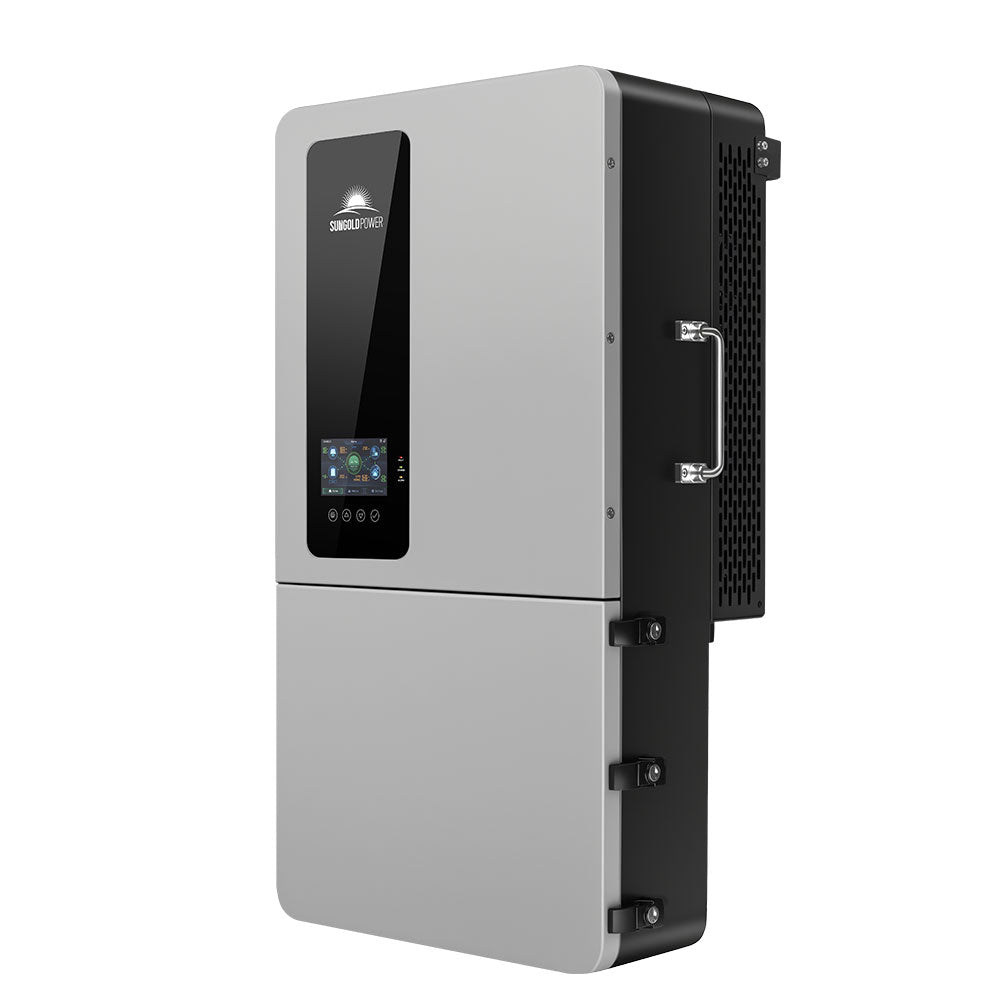
Manufacturing Standards and Testing QC for Hybrid Solar Inverter With Battery Backup
In industrial solar applications—particularly agricultural pumping and automated motor control systems—hybrid inverters with battery backup function as the critical nexus between photovoltaic generation, energy storage, and load management. Unlike standard grid-tie inverters, these systems must withstand the compounded electrical stresses of bidirectional power flow, battery charge cycling, and motor inrush currents while maintaining reliability in harsh environmental conditions. Manufacturing excellence and rigorous quality control protocols are therefore non-negotiable for EPC contractors and automation distributors specifying equipment for 25-year operational lifespans.
Component-Level Manufacturing & PCB Protection
Surface Mount Technology (SMT) & Conformal Coating
High-reliability hybrid inverters destined for agricultural or industrial automation environments undergo IPC-A-610 Class 3 assembly standards, ensuring robust solder joints on IGBT and MOSFET power stages. Critical to longevity in humid, dusty, or chemically aggressive environments (such as livestock operations or coastal solar farms), PCB conformal coating is applied per IPC-CC-830 standards. Boray Inverter utilizes polyurethane or acrylic conformal coatings on control boards, providing:
– Moisture insulation resistance >10¹² ohms per MIL-I-46058
– Protection against sulfurization and salt spray corrosion
– Dielectric withstand voltage >1500V to prevent arcing in high-altitude installations
Power semiconductor mounting employs automated torque-controlled fastening with phase-change thermal interface materials (TIMs), ensuring <0.1°C/W thermal resistance between IGBT modules and heatsinks—critical for maintaining efficiency during VFD-style motor starting sequences.
Environmental Stress Screening (ESS)
High-Temperature Aging & Burn-In Protocols
Unlike consumer-grade electronics, industrial hybrid inverters require 100% unit-level burn-in testing, not statistical sampling. Each unit undergoes:
– High-temperature operating life test (HTOL): 48-72 hours at 85°C ambient with full resistive and inductive loads, simulating desert peak-temperature operation while cycling between battery charge/discharge modes
– Thermal shock cycling: Rapid transition between -40°C and +85°C (IEC 60068-2-14) to identify solder joint fatigue and component parameter drift
– Humidity freeze cycling: 85°C/85% relative humidity followed by immediate sub-zero exposure, validating conformal coating integrity and sealing effectiveness
For solar pumping applications specifically, units undergo salt spray testing (ASTM B117, 96-240 hours) to ensure aluminum enclosures and PCB assemblies withstand corrosive agricultural environments and coastal installations.
Electrical Performance Validation
Full-Load Integration Testing
Every hybrid inverter undergoes 100% full-load testing at nominal battery voltage (48V/400V/800V configurations) with simultaneous AC output loading. This validates:
– Conversion efficiency: CEC weighted efficiency and maximum efficiency points verified against IEC 61683 standards, ensuring >97% peak efficiency for grid-tie operation and >94% for off-grid battery modes
– MPPT accuracy: Dynamic tracking efficiency >99.5% under rapidly changing irradiance (simulating cloud transients)
– Grid synchronization: Phase-lock loop (PLL) stability testing per IEEE 1547/UL 1741-SA, including anti-islanding protection verification (<2 seconds detection time)
– Motor starting capability: Locked-rotor current testing simulating VFD bypass scenarios, verifying 150-200% overload capacity for 60 seconds (critical for agricultural pump starting)
Battery Management Integration (BMS) Testing
Given the complexity of lithium-ion or lead-acid integration, QC protocols include:
– Communication protocol validation (CAN 2.0B, RS485 Modbus) with third-party battery systems
– Charge algorithm verification (CC/CV profiles, temperature compensation)
– Protection circuit testing: Over-voltage (OV), under-voltage (UV), over-current (OC), and thermal runaway protection response times <100ms
Electromagnetic Compatibility & Safety
EMC Hardening for Industrial Environments
Hybrid inverters operating alongside VFDs and motor controls must suppress conducted and radiated emissions to prevent interference with automation systems:
– EMI filtering: Common-mode chokes and X/Y capacitors meeting IEC 61000-6-2 (immunity) and IEC 61000-6-4 (emissions)
– Surge protection: IEC 61000-4-5 Level 4 (4kV common-mode, 2kV differential-mode) surge withstand testing on DC input, AC output, and communication ports
– Harmonic distortion: Verification of <3% THD at rated load (IEEE 519 compliance) to prevent grid pollution and motor heating
Safety Certifications & Standards
Manufacturing facilities must maintain:
– IEC 62109-1/-2: Safety requirements for PV power converters (including specific clauses for battery energy storage systems)
– UL 1741-SA: Grid support utility-interactive inverters (California Rule 21 compliance for frequency-watt and volt-watt functions)
– IEC 62040-1: Uninterruptible power systems (UPS) safety requirements applicable to battery backup functionality
– ISO 9001:2015: Quality management systems with documented traceability for all power semiconductor batches and capacitor lots
Mechanical Durability & Field Reliability
Enclosure Integrity & Thermal Management
For outdoor agricultural and industrial automation deployments:
– IP rating validation: IP65 (dust-tight, protected against water jets) or IP66 (powerful water jets) testing per IEC 60529, with gasket compression set testing to ensure sealing integrity over 10+ years
– Vibration resistance: IEC 60068-2-6 sinusoidal vibration (5-150Hz, 2g acceleration) and IEC 60068-2-27 shock testing (30g, 11ms half-sine) for transport and earthquake resilience
– UV resistance: Enclosure materials tested to UL 746C for UV exposure, preventing embrittlement in direct solar installations
Thermal Cycling of Power Electronics
Given the thermal stress inherent in battery charging (high current, sustained heat) and motor load variations, thermal imaging validation ensures:
– Junction temperature monitoring of IGBTs during full-load operation
– Hotspot identification in magnetic components (chokes, transformers)
– Verification of thermal derating curves for 50°C ambient operation
Documentation & Traceability for EPC Procurement
Industrial-grade manufacturing requires complete production traceability:
– Component serialization: Individual tracking of power modules, capacitors, and control boards enabling failure analysis and batch recalls
– Test data archiving: Individual unit test reports (burn-in curves, efficiency maps, insulation resistance measurements) provided with shipment
– Burn-in certificates: Documentation of 100% full-load testing for warranty validation and insurance compliance
For agricultural project managers and automation distributors, these manufacturing standards ensure that hybrid solar inverters with battery backup can reliably perform dual functions: as grid-tied solar converters and as industrial-grade power supplies capable of starting submersible pumps and driving motor loads through VFD bypass modes, while maintaining the 10-25 year operational lifespans demanded by utility-scale and commercial installations.
Step-by-Step Engineering Sizing Checklist for Hybrid Solar Inverter With Battery Backup
Proper sizing of hybrid solar inverters with battery backup for industrial and agricultural applications requires rigorous analysis beyond standard residential calculations. When integrating with motor control systems, pump inverters, or existing VFD infrastructure, engineers must account for high inrush currents, harmonic distortion, and intermittent duty cycles characteristic of irrigation and automation processes. The following methodology provides a systematic framework for EPC contractors and project engineers to specify robust systems capable of handling both continuous agricultural operations and critical motor starting events.
Phase 1: Load Characterization & Motor Dynamics Analysis
Begin with comprehensive load profiling that distinguishes between resistive loads and inductive motor loads. For solar pumping applications or facilities utilizing VFDs:
- Motor Starting Current Assessment: Calculate the Locked Rotor Amps (LRA) for all submersible pumps and surface motors. Hybrid inverters must support 3-5x the Full Load Amps (FLA) for direct-online-start (DOL) motors, or specify soft-start/VFD integration to reduce surge requirements.
- Duty Cycle Mapping: Document irrigation schedules or automation cycles. Agricultural pumps often operate 4-8 hours daily with varying flow rates; size battery capacity for autonomy during non-solar hours plus 20% reserve for weather variability.
- Power Quality Requirements: Note Total Harmonic Distortion (THD) limits. When powering VFDs directly from the hybrid inverter (bypassing grid connection), verify the inverter’s output waveform THD is <3% to prevent motor heating and bearing currents.
Phase 2: PV Array String Engineering & MPPT Optimization
Configure the solar array to maximize energy harvest while respecting inverter input limitations, particularly for high-voltage commercial strings:
- Open Circuit Voltage (Voc) Calculations: Size series strings using the lowest expected ambient temperature (typically -10°C to -20°C for global installations). Apply temperature coefficients (typically -0.3%/°C for monocrystalline modules) to ensure Voc never exceeds the inverter’s maximum input rating (e.g., 600Vdc for systems like the MidNite Solar MN 15-12KW-AIO or 1000Vdc for industrial tiers).
- MPPT Voltage Window: Target the array’s maximum power point voltage (Vmp) to fall within the inverter’s MPPT range during peak irradiance conditions. For 48V nominal battery systems, ensure the PV voltage sufficiently exceeds battery charging requirements (typically 60-80Vdc for bulk charging) while maintaining MPPT efficiency >98%.
- Current Sizing: Calculate total array short-circuit current (Isc) with 1.25 safety factor for continuous operation. Verify combined PV input plus battery discharge current does not exceed the inverter’s DC input current limits during simultaneous motor starting and solar generation.
Phase 3: Energy Storage Architecture & Capacity Sizing
Battery selection must accommodate both energy throughput and power delivery for motor starting:
- Voltage Platform Selection: Standard 48Vdc nominal systems (compatible with 51.2V LiFePO4 or 48V lead-acid) suit applications up to 15kW. For industrial pumps >20HP (15kW), consider 400Vdc battery architectures to minimize copper losses and allow direct-coupled pump inverter operation without step-up conversion.
- C-Rate Calculations: Size battery capacity (kWh) to support the C-rate required for motor starting. A 10HP (7.5kW) pump with 3x inrush requires 22.5kW momentary power. With a 48V system, this demands ~470A; ensure battery bank can deliver 1C-2C discharge rates without voltage sag below inverter low-voltage disconnect thresholds.
- Depth of Discharge (DoD) & Cycle Life: For daily cycling agricultural operations, specify lithium iron phosphate (LiFePO4) batteries with 80% DoD capability and >6000 cycles. Calculate usable capacity as:
Required kWh = (Daily Load kWh × Days of Autonomy) ÷ (DoD × Efficiency Factor [0.95 for Li-ion, 0.80 for lead-acid])
Phase 4: Inverter Topology & Parallel Configuration
Select inverter architecture based on load criticality and scalability:
- Continuous vs. Surge Rating: Verify the hybrid inverter’s continuous output rating exceeds the sum of simultaneous loads, while its surge capacity (typically 2x rated for 10 seconds) covers motor LRA. For example, a 15kW Sol-Ark or Growatt SPH 10000TL-HU-US provides 10-15kW continuous with 20-30kW surge capability suitable for multiple smaller pumps or single large motors with soft starters.
- Phase Configuration: Specify split-phase 120/240V for North American residential-scale agricultural operations, or three-phase 380V/400V for industrial pump stations. Ensure the inverter supports phase balancing when running mixed single-phase controls and three-phase motors.
- Scalability & Parallel Operation: For projects exceeding single-unit capacity (e.g., 100kW+ irrigation systems), verify master-slave or droop-control parallel capability. Reference architectures allowing up to 9 units in parallel (achieving 102.6kW with 11.4kW modules) require identical firmware versions and synchronized phase rotation. Calculate string fusing and busbar ratings for combined output currents exceeding 400A.
Phase 5: Integration with Existing Motor Control Infrastructure
When retrofitting hybrid systems to existing pump houses with VFDs:
- Bypass Configuration: Design manual or automatic bypass switches allowing direct grid connection during inverter maintenance while maintaining VFD protection.
- DC-Coupled vs. AC-Coupled: For new installations, DC-couple solar to the hybrid inverter’s battery bus, then power VFDs from the AC output. For existing grid-tie solar, use AC-coupled architecture with frequency-watt control to prevent back-feeding during outages.
- Grounding & Bonding: Implement proper equipment grounding conductor (EGC) sizing per NEC Article 250 or IEC 60364. Inverter output neutral bonding must coordinate with existing VFD RCD protection to prevent nuisance tripping.
Phase 6: Environmental & Regulatory Compliance
- Ingress Protection: Specify IP65 or NEMA 3R enclosures for outdoor agricultural environments with high humidity, dust, or chemical exposure from fertilizers.
- Arc Fault & Ground Fault Protection: Verify AFCI and GFCI compliance for fire safety in dry agricultural regions. Size DC disconnects and combiner boxes with 20% spare capacity for future expansion.
- Grid Interconnection Standards: Confirm IEEE 1541, UL 1741, or IEC 62109 compliance for export-limiting functionality when grid-tied, ensuring zero-export modes for locations with restrictive interconnection policies.
Final Verification Checklist:
– [ ] Inverter MPPT voltage range encompasses seasonal array Voc variations
– [ ] Battery C-rate supports simultaneous maximum motor inrush + base loads
– [ ] Surge capacity > 150% of largest motor LRA or VFD input current
– [ ] Parallel communication cables rated for electromagnetic interference (shielded CAT5/6 or fiber)
– [ ] Temperature derating curves reviewed for installation altitude and ambient conditions
This systematic approach ensures hybrid solar inverters function reliably as the backbone of industrial solar pumping and automation systems, providing seamless transition between solar, battery, and grid power while protecting critical motor assets.
Wholesale Cost and Energy ROI Analysis for Hybrid Solar Inverter With Battery Backup
For EPC contractors and industrial procurement engineers evaluating hybrid solar inverters with battery backup, understanding the economic architecture beyond retail sticker prices is critical for competitive bidding and long-term project viability. When integrated with Variable Frequency Drives (VFDs) and solar pumping systems, these units represent not merely power conversion equipment but strategic assets for demand management and operational continuity.
B2B Pricing Architecture and Volume Procurement Strategies
Industrial-grade hybrid inverters—particularly 10kW to 15kW three-phase units suitable for agricultural pumping and motor control applications—typically exhibit a 35–50% wholesale-to-retail spread when procured through authorized distributor channels or direct OEM partnerships. While retail markets show standalone hybrid units ranging from $2,400 to $6,500 depending on features (MPPT voltage ranges, parallel capability, and grid-forming functionality), volume procurement for agricultural projects or industrial facility upgrades often structures pricing in tiered brackets:
- Pilot/MOE Quantities (1–5 units): 15–20% below retail, suitable for site-specific feasibility studies or small-scale irrigation retrofits
- Project-Level Procurement (6–50 units): 30–40% reduction, typical for commercial solar pumping installations or factory backup power integration
- EPC Master Agreements (50+ units annually): 45–55% below retail with extended warranty terms and technical integration support
For agricultural project managers, this pricing structure becomes particularly relevant when specifying all-in-one solutions that combine hybrid inverters with Boray’s solar pump VFDs. Rather than procuring discrete grid-tie inverters and separate battery charge controllers, hybrid architectures reduce Balance of System (BOS) costs by 12–18% through integrated DC coupling and shared thermal management systems.
Total Cost of Ownership (TCO) in Motor Control Applications
The economic justification for hybrid inverters extends beyond simple energy generation metrics. In industrial motor control environments—where VFDs manage pumps, conveyors, and HVAC systems—hybrid inverters with battery backup deliver value through three primary mechanisms:
-
Peak Shaving and Demand Charge Mitigation: Industrial facilities face utility demand charges often constituting 40–60% of electricity costs. A 10kW hybrid inverter paired with 20–40kWh battery storage can reduce peak demand by 15–25kW during motor startup sequences, yielding annual savings of $3,000–$8,000 per installation depending on local utility rate structures.
-
Production Continuity: For agricultural operations utilizing solar pumping, battery backup eliminates crop irrigation downtime during grid instability. The avoided-loss calculation typically values backup power at 3–5x the standard kWh rate when accounting for crop yield protection and livestock welfare.
-
VFD Integration Efficiency: When hybrid inverters feed DC bus voltage directly to compatible VFDs (bypassing AC conversion losses), system efficiency improves by 2–4 percentage points. Over a 10-year operational life, this efficiency gain translates to 8,000–12,000 kWh additional energy harvest per 10kW array—equivalent to $1,200–$2,400 in recovered generation value at industrial electricity rates.
ROI Calculation Framework for EPC Contractors
Comprehensive ROI analysis must account for both energy arbitrage and hardware depreciation. For a typical 15kW hybrid installation serving industrial motor loads:
- Capital Expenditure: Wholesale procurement at $3,200–$4,800 per unit (depending on battery chemistry compatibility and parallel operation capability)
- Battery Integration: Lithium iron phosphate (LiFePO4) storage at $350–$450/kWh wholesale, sized for 4–6 hours of critical load backup
- Energy Revenue: $0.08–$0.15/kWh offset value depending on regional grid tariffs
- Demand Savings: $15–$30 per kW of peak demand reduced monthly
Under these parameters, hybrid solar inverter systems with battery backup typically achieve payback periods of 4.5–7 years in high-tariff regions, with Internal Rates of Return (IRR) ranging from 12–18% when factoring in 25-year solar generation lifecycles and 10–15 year battery replacement cycles.
Warranty Cost Amortization and Lifecycle Risk Management
B2B procurement agreements must explicitly address warranty cost allocation. Premium hybrid inverters for industrial applications typically carry 5-year standard warranties with extensions to 10 years available at 8–12% of hardware cost. For EPC contractors, structuring projects with manufacturer-backed warranty buyouts (transferring O&M risk to the OEM) adds approximately $0.08–$0.12 per watt to upfront costs but eliminates catastrophic failure exposure on remote agricultural or industrial sites.
Critical warranty considerations specific to VFD-integrated hybrid systems include:
– Switching Frequency Compatibility: Coverage for inverter output stages operating at 4–16kHz PWM frequencies common in precision motor control
– Environmental Derating: Warranty terms must account for 45–55°C ambient temperatures typical in solar pump installations without additional thermal management costs
– Battery Chemistry Agnosticism: Ensuring warranty coverage extends across multiple battery chemistries (LiFePO4, NMC, or future solid-state) to avoid vendor lock-in
Strategic Procurement Recommendations
For automation distributors and agricultural project managers, the optimal procurement strategy involves specifying hybrid inverters with 600V+ MPPT voltage ranges and 48V nominal battery architectures—these configurations offer maximum compatibility with high-voltage solar pump arrays and industrial VFD DC bus architectures. Volume commitments should negotiate inclusive technical support for integration with existing motor control systems, ensuring seamless communication between hybrid inverter battery management systems and VFD torque control algorithms.
When evaluating proposals, insist on wholesale pricing transparency that separates hardware costs from integration services, and require 10-year warranty terms with degradation guarantees not exceeding 20% capacity loss over the warranty period. This approach ensures that hybrid solar inverters with battery backup function not merely as backup power sources, but as integrated components of sophisticated industrial energy management ecosystems.
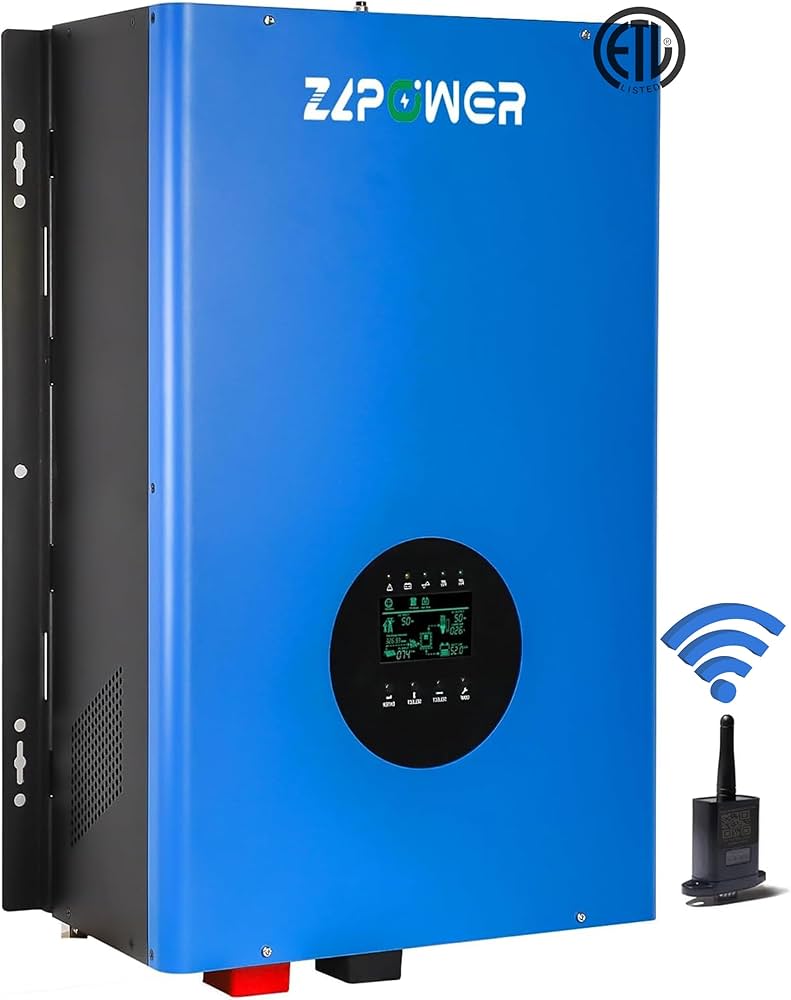
Alternatives Comparison: Is Hybrid Solar Inverter With Battery Backup the Best Choice?
For industrial engineers and EPC contractors evaluating solar integration for agricultural irrigation or process applications, the decision between hybrid battery-based architectures and direct solar conversion technologies requires rigorous analysis of duty cycles, load profiles, and total cost of ownership (TCO). While residential hybrid inverters (such as the Sol-Ark or Growatt units referenced in consumer markets) prioritize seamless backup power, industrial deployments must weigh electrochemical storage against hydraulic storage, motor control methodologies, and prime mover efficiency.
Energy Storage Paradigms: Electrochemical vs. Hydraulic
In agricultural solar pumping applications, the fundamental alternative to a hybrid solar inverter with battery backup is the direct solar pumping system utilizing a specialized solar pump inverter (VFD). Rather than storing energy in lithium-ion batteries to power a standard AC pump, this architecture stores water in elevated tanks or reservoirs—effectively using the water itself as the storage medium.
Technical Comparison:
– Round-Trip Efficiency: Battery storage achieves 85–95% round-trip efficiency but suffers from capacity degradation (typically 6,000–8,000 cycles for LiFePO₄). Hydraulic storage via water tanks offers effectively infinite cycle life but incurs pumping losses (approximately 15–20% friction losses in piping and elevation).
– Duty Cycle Economics: For applications requiring 24/7 water pressure (livestock operations, precision irrigation), hybrid battery systems provide dispatchable power independent of solar irradiance. However, for bulk water transfer with flexible timing (flood irrigation, reservoir filling), direct solar VFD systems eliminate the $0.15–$0.30/Wh capital cost of battery banks.
Motor Control Methodology: VFD Integration vs. Soft Starting
When a hybrid inverter powers a motor load, the method of motor control significantly impacts system efficiency and battery sizing. Unlike residential applications where hybrid inverters simply supply 50/60Hz grid-power to standard pumps, industrial systems benefit from integrated motor control strategies.
Variable Frequency Drive (VFD) Control:
Boray’s solar pump inverters utilize MPPT algorithms coupled with vector control or V/Hz control to vary motor speed. This enables:
– Affinity Law Compliance: Reducing pump speed by 20% decreases power consumption by approximately 50% (P ∝ n³), extending battery autonomy significantly in hybrid systems.
– Soft Starting: Limits inrush current to 1.5× rated current versus 6–8× for direct online (DOL) starting, preventing battery voltage sag during motor startup.
Alternative: Soft Starter:
Traditional soft starters reduce mechanical stress but operate at fixed line frequency. While they mitigate inrush current (2.5–4× rated), they cannot optimize pump curves for variable insolation conditions, requiring larger battery capacity to handle inefficient operating points.
Direct Online (DOL) Starting:
Not recommended for hybrid battery systems due to high inrush currents (600–800% of FLA) that trigger inverter fault protections and accelerate battery degradation through high C-rate discharge spikes.
Prime Mover Technology: PMSM vs. Induction Motors
The choice of motor technology directly impacts the viability of hybrid battery systems versus direct solar pumping.
Permanent Magnet Synchronous Motors (PMSM):
– Efficiency: 93–96% (IE5 class), reducing required battery capacity by 15–20% compared to standard induction motors.
– Control Requirements: Requires sensorless vector control or encoder feedback; compatible with advanced solar pump inverters but adds complexity to generic hybrid inverter systems unless equipped with dedicated VFD interfaces.
– Cost Premium: 30–50% higher CAPEX than IM, justified in off-grid hybrid applications where every watt-hour of battery storage is critical.
Induction Motors (IM):
– Robustness: Standard NEMA/IE3 motors offer lower efficiency (88–92%) but higher tolerance for voltage sags and harmonic distortion—relevant when hybrid inverters switch between grid-forming and grid-following modes.
– Starting Characteristics: Higher magnetizing current requirements make them less ideal for battery-powered starts without soft-start or VFD assistance.
System Architecture Comparison
| Parameter | Hybrid Solar Inverter + Battery | Solar Pump Inverter (VFD) + Water Storage | Grid-Tie + Diesel Generator | AC-Coupled Battery System |
|---|---|---|---|---|
| CAPEX ($/kW) | $800–$1,200 (includes batteries) | $150–$300 (VFD only, no batteries) | $200–$400 (solar) + $300–$600 (generator) | $1,000–$1,500 |
| OPEX ($/kWh) | $0.05–$0.12 (battery replacement) | $0.01–$0.02 (pump maintenance) | $0.25–$0.40 (diesel fuel) | $0.08–$0.15 |
| Round-Trip Efficiency | 85–90% | 80–85% (hydraulic) | 25–35% (generator) | 90–94% |
| Cycle Life | 10–15 years (battery limited) | 25+ years (tank infrastructure) | Generator: 10,000–20,000 hrs | 10–15 years |
| Dispatchability | 24/7 power availability | Water availability only | Continuous with fuel | 24/7 power availability |
| Motor Control | Requires external VFD for speed control | Integrated MPPT/VFD control | Fixed speed or VFD | Requires external VFD |
| Best Application | Precision agriculture, livestock, process critical loads | Bulk irrigation, flood farming, reservoir filling | Backup for grid-tied systems | Retrofit existing solar arrays |
Motor Control Strategy Comparison
| Feature | VFD Control (Integrated) | Soft Starter | Direct Online (DOL) |
|---|---|---|---|
| Starting Current | 1.2–1.5× FLA | 2.5–4× FLA | 6–8× FLA |
| Speed Control | 10–100% (affinity laws) | Fixed speed | Fixed speed |
| Energy Savings | 30–50% (variable load) | 0% | 0% |
| Harmonic Distortion | <5% (with active front end) | <3% | High inrush harmonics |
| Battery Impact | Low (soft start, optimized power) | Medium (current spikes) | High (voltage sag risk) |
| Relative Cost | High | Medium | Low |
Decision Framework for B2B Procurement
Select Hybrid Solar Inverter with Battery Backup when:
– The application requires pressurized water delivery during zero-insolation periods (nighttime livestock watering, drip irrigation scheduling).
– Grid stability is required for sensitive process controls (greenhouse climate control, fertigation systems).
– The site experiences frequent grid outages requiring seamless transition (UPS functionality).
Select Solar Pump Inverter (VFD) with Hydraulic Storage when:
– Bulk water transfer dominates the load profile (flood irrigation, reservoir filling).
– Capital constraints prioritize lowest $/m³ of water delivered.
– Maintenance infrastructure for battery systems is unavailable (remote agricultural sites).
Select AC-Coupled or Generator Hybrid when:
– Retrofitting existing grid-tied solar arrays where DC bus modification is impractical.
– Extreme temperature environments where battery performance degrades (desert agriculture with >50°C ambient).
Conclusion
For EPC contractors and automation distributors, the “best choice” depends on whether the economic value lies in energy dispatchability or water throughput efficiency.
Core Technical Specifications and Control Terms for Hybrid Solar Inverter With Battery Backup
For industrial applications ranging from agricultural irrigation to automated manufacturing lines, hybrid solar inverters with battery backup represent a convergence of photovoltaic (PV) generation, energy storage, and precision motor control. Unlike standard grid-tie inverters, these systems integrate bidirectional power conversion topologies that manage DC input from solar arrays, battery banks, and AC grid connections while maintaining power quality suitable for sensitive VFD-driven loads.
Maximum Power Point Tracking (MPPT) and Dynamic Voltage Ranges
At the core of any solar conversion system lies the MPPT algorithm, which continuously adjusts the electrical operating point of the PV array to extract maximum power under varying irradiance and temperature conditions. For hybrid inverters deployed in pumping stations or industrial facilities, look for dual or triple MPPT inputs with wide voltage tracking ranges—typically 200VDC to 850VDC for commercial units—to accommodate large series strings while maintaining conversion efficiencies above 98.6%. Advanced implementations utilize perturb-and-observe (P&O) algorithms with modified conductance methods to prevent oscillation during partial shading, a critical consideration when powering submersible pumps through dedicated solar pump inverters downstream.
Vector Control (Field-Oriented Control) and Motor Compatibility
While hybrid inverters primarily manage energy flow between sources, their output stage must interface seamlessly with Variable Frequency Drives (VFDs) and direct motor loads. Units featuring Space Vector Pulse Width Modulation (SVPWM) or Field-Oriented Control (FOC) provide superior torque response and reduced harmonic distortion (THD < 3%) compared to scalar V/f control methods. This becomes essential when the hybrid system feeds agricultural pump controllers or industrial conveyor systems, where voltage fluctuations can trigger nuisance tripping or motor overheating. Vector-controlled output stages enable precise voltage regulation (±1%) even during battery discharge transients, ensuring that downstream VFDs maintain their programmed acceleration/deceleration curves without torque ripple.
PID Control Integration for Pumping Applications
In solar pumping configurations, hybrid inverters often incorporate Proportional-Integral-Derivative (PID) control loops that regulate battery discharge rates based on water demand sensors or pressure transducers. When configured as the master controller in a pumping system, the inverter adjusts power export to a dedicated pump VFD based on:
– Proportional response: Immediate correction for pressure deviations from setpoint
– Integral action: Elimination of steady-state offset in flow rate
– Derivative compensation: Anticipation of pressure spikes during valve closure
This closed-loop control architecture allows EPC contractors to design systems where the hybrid inverter prioritizes battery preservation during low irradiance while ensuring constant pressure delivery—critical for drip irrigation systems where flow consistency impacts crop yield.
Bidirectional Conversion and Power Topology
Hybrid inverters employ full-bridge IGBT or SiC MOSFET topologies capable of bidirectional power flow. In Grid-Tie Mode, the unit synchronizes with utility frequency (50/60Hz ±0.5%) using phase-locked loop (PLL) algorithms, exporting excess PV generation while maintaining power factor correction (PFC) between 0.8 leading to 0.8 lagging. During Off-Grid (Island) Mode, the inverter generates a virtual grid reference, switching to Voltage Source Inverter (VSI) operation with frequency droop characteristics to support parallel operation with other distributed energy resources.
Critical Protection and Operational Parameters
- Anti-Islanding Protection: IEEE 1547/UL 1741 compliance with active frequency drift methods to detect grid loss within 2 seconds
- Insulation Resistance (IR) Monitoring: >1MΩ detection threshold for PV array ground fault protection
- Ingress Protection: IP65-rated enclosures for outdoor agricultural installations; IP20 for controlled industrial environments
- Switching Frequency: 16kHz to 20kHz to minimize audible noise in residential-adjacent agricultural projects while maintaining IGBT thermal limits
- Parallel Operation: Master-slave or droop-control configurations supporting up to 10 units for 100kW+ agricultural processing facilities
Battery Management System (BMS) Communication
Integration with lithium iron phosphate (LiFePO4) or lead-acid battery banks requires CAN Bus or RS485 Modbus RTU communication protocols. The inverter must support voltage-specific charge profiles—48V, 400V, or 800V DC bus configurations—with temperature-compensated charging coefficients (-3mV/°C/cell typical) to prevent thermal runaway in enclosed pump houses.
International Commercial Terms (Incoterms) for Industrial Procurement
When specifying hybrid solar inverters for international agricultural or automation projects, precise Incoterms 2020 definitions prevent logistical disputes:
FOB (Free On Board)
The seller (manufacturer) delivers goods cleared for export onto the vessel designated by the buyer at the named port of shipment. Risk transfers when goods pass the ship’s rail. For EPC contractors, FOB terms provide control over ocean freight and marine insurance while shifting liability only after safe stowage. Typical application: Containerized shipments of 20kW-50kW hybrid units from Chinese manufacturing facilities to African or Southeast Asian solar pumping projects.
CIF (Cost, Insurance, and Freight)
The seller contracts for carriage and procures marine insurance covering minimum Institute Cargo Clauses (C) during transit to the destination port. Risk still transfers at the port of shipment (not destination), making CIF distinct from DAT or DAP. Critical for distributors requiring turnkey logistics solutions for remote agricultural sites where local freight forwarding expertise is limited.
EXW (Ex Works)
The buyer assumes all costs and risks from the seller’s premises (factory or warehouse). While offering the lowest unit price, EXW requires the buyer to handle export clearance—a significant burden for international buyers lacking Chinese export licenses. Generally recommended only for domestic procurement or experienced trading companies.
DDP (Delivered Duty Paid)
The seller bears all costs and risks until goods are cleared for import and ready for unloading at the named destination. Essential for “turnkey” solar pumping installations where the manufacturer (such as Boray Inverter) manages customs clearance, duties, and inland delivery to the agricultural site. Requires the seller to possess import licenses in the destination country.
Additional Commercial Specifications
- MOQ (Minimum Order Quantity): Typically 1 unit for sample validation; 20-40ft container quantities (20-50 units) for production orders with customized firmware for specific pump curves
- Lead Time: 15-25 days for standard hybrid inverters; 35-45 days for OEM configurations with specialized MPPT voltage ranges or integrated motor control logic
- Payment Terms: 30% T/T deposit with 70% balance against B/L copy for new distributors; L/C at sight available for orders exceeding $100,000 USD
- Warranty Structure: 5-year standard warranty on power electronics; extendable to 10 years for critical infrastructure projects, excluding battery cells (typically separate manufacturer warranty)
OEM/ODM Considerations for Motor Control Integration
For agricultural project managers requiring hybrid inverters pre-configured to communicate with specific pump VFDs, manufacturers offer protocol customization services. This includes pre-programming RS485 registers for Grundfos, Franklin Electric, or Chinese pump controller compatibility, ensuring that the hybrid system’s frequency output (0-50/60Hz) aligns with the pump motor’s nameplate specifications without requiring additional PLC intermediaries.
Future Trends in the Hybrid Solar Inverter With Battery Backup Sector
The convergence of power electronics and intelligent control systems is fundamentally reshaping how industrial and agricultural operations manage energy resilience. As hybrid solar inverters evolve from simple DC-AC conversion devices into sophisticated energy management hubs, their integration with Variable Frequency Drives (VFDs) and motor control architectures is creating new paradigms for off-grid and weak-grid industrial applications. For EPC contractors and automation distributors, understanding these trajectories is critical for specifying systems that deliver not just backup power, but predictive operational continuity.
Integration of High-Voltage Architectures and SiC Power Electronics
Next-generation hybrid inverters are migrating toward 400V–800V battery architectures, moving beyond traditional 48V–150V DC systems. This shift reduces copper losses by 60–70% in long cable runs typical of agricultural solar pumping installations, while enabling direct coupling with high-voltage VFDs used in deep-well submersible applications. Simultaneously, the adoption of Silicon Carbide (SiC) MOSFETs over conventional IGBT topologies is pushing switching frequencies above 50kHz—allowing for smaller magnetic components and faster transient response when managing inductive motor loads. For industrial engineers, this translates to inverter systems capable of handling motor inrush currents up to 300% rated capacity without voltage sag, ensuring uninterrupted operation of critical pumps and conveyors during grid fluctuations.
Autonomous Energy Management for Solar Pumping Applications
The agricultural sector is driving demand for “solar-first” hybrid systems that intelligently arbitrage between immediate irrigation needs and battery storage optimization. Advanced Maximum Power Point Tracking (MPPT) algorithms now incorporate irradiance forecasting and soil moisture data, automatically prioritizing VFD-driven pump operation during peak solar generation while reserving battery capacity for nocturnal pressure maintenance or emergency crop protection. These systems leverage bidirectional power flow capabilities, enabling motor regeneration energy—previously dissipated through braking resistors—to be captured and stored in lithium-ion phosphate (LFP) battery banks. Project managers are increasingly specifying inverters with integrated motor protection relays (MPRs) and phase-loss detection, eliminating the need for separate motor control centers in remote pumping stations.
Industrial IoT and Edge Computing Integration
The transition toward Industry 4.0 standards is manifesting in hybrid inverters equipped with edge computing capabilities and multi-protocol communication stacks. Modern units now feature native Modbus TCP/IP, CAN bus, and MQTT connectivity, enabling seamless integration with existing SCADA systems and agricultural IoT platforms. Real-time monitoring has evolved beyond simple voltage/current telemetry to include predictive thermal modeling of power semiconductor junctions and bearing temperature estimation for connected motor loads via vibration analysis algorithms.
For automation distributors, the critical differentiator is shifting toward cybersecurity-hardened firmware with IEC 62443 compliance, ensuring that remote access capabilities for agricultural installations do not compromise operational technology (OT) networks. Cloud-based digital twin implementations allow EPC contractors to simulate entire pumping system behaviors—including inverter-battery-motor interactions—before physical deployment, optimizing string sizing and storage capacity for specific crop irrigation profiles.
Grid-Forming Capabilities and Microgrid Stability
As industrial facilities adopt hybrid inverters for true microgrid formation rather than mere backup operation, grid-forming (GFM) technology is becoming essential. Unlike traditional grid-following inverters, GFM-capable units provide synthetic inertia and primary frequency response, stabilizing voltage and frequency for entire industrial motor parks during islanded operation. This capability is particularly critical for agricultural processing facilities where induction motors constitute 70–80% of electrical load; the inverter’s ability to manage reactive power (VAR) support prevents motor stall conditions during transition events between grid-tied and off-grid modes.
The trajectory points toward modular, rack-mounted hybrid inverter systems scalable from 50kW to multi-megawatt configurations, utilizing master-slave control architectures that allow hot-swapping of power modules without interrupting motor control sequences. For technical procurement teams, specifying systems with integrated arc-fault detection and rapid shutdown compliance (NEC 690.12) while maintaining IP65/NEMA 4X enclosures ensures longevity in harsh agricultural environments.
These developments collectively signal a shift from component-centric procurement to system-level energy architecture design, where the hybrid inverter serves as the central nervous system coordinating renewable generation, electrochemical storage, and precision motor control across distributed industrial assets.
Top 2 Hybrid Solar Inverter With Battery Backup Manufacturers & Suppliers List
Top 10 Solar hybrid inverter Manufactures
Website: srnesolar.com
SRNE Solar Co., Ltd specializes in solar energy solutions with product categories including Residential Hybrid Inverters, Residential Off-Grid Inverters, C&I (Commercial & Industrial) Storage Inverters, Energy Storage Systems, Solar Charge Controllers, and RV Solar Power Kits. Key inverter series identified: HESP Hybrid Inverter series covering Single/Split Phase Low Voltage (3.6-6.5kW for US/JP/A…
48V Hybrid Inverter Comparison Charts – Clean Energy Reviews
Website: cleanenergyreviews.info
48V Hybrid Inverters: Key brands include Deye, Sol-Ark, EG4, and HBB Power. Features integrated MPPTs for solar string connection and grid-isolation (islanding) function for backup power during outages. Supports off-grid applications with integrated generator controls and configuration settings. Requires external energy meter (CT) for electricity consumption measurement. Operating MPPT voltage ran…
B2B Engineering FAQs About Hybrid Solar Inverter With Battery Backup
-
How does a hybrid solar inverter with battery backup interface with existing VFD-driven motor loads in agricultural irrigation systems?
Hybrid solar inverters function as the AC power bus master, supplying stable voltage and frequency reference to downstream VFDs. When integrating with existing pump VFDs, ensure the inverter’s output waveform THD (Total Harmonic Distortion) remains below 3% to prevent nuisance tripping of VFD DC bus overvoltage faults. For agricultural applications, configure the hybrid inverter’s transfer switch with a minimum 20ms seamless switching capability to avoid VFD undervoltage faults during grid-to-battery transitions. Boray Inverter recommends implementing a buffer time delay (typically 2–5 seconds) in the VFD’s restart sequence after inverter transfer to allow DC bus capacitance stabilization. -
What are the critical power quality considerations when using hybrid inverters to supply battery-backed power to induction motors and pump systems?
Motor loads present high inrush currents (6–8x FLA) and poor power factors (0.6–0.8 lagging) during startup. Hybrid inverters must feature sufficient surge capacity (2x rated power for 10 seconds minimum) and active power factor correction (PFC). Critical specifications include: voltage regulation within ±2% under dynamic load steps, frequency stability ±0.5Hz, and soft-start ramp capabilities to limit motor inrush. For submersible pump applications, verify the inverter’s ability to handle the capacitive leakage currents inherent in long cable runs without triggering RCD faults. -
How should EPC contractors size battery capacity for hybrid solar inverters serving cyclic motor loads with high inrush currents?
Size battery banks using the C-rate discharge capability rather than nominal Ah capacity alone. For VFD-driven pumps with cyclic operation (e.g., pressure tank systems), calculate energy requirements using the pump duty cycle profile: $E_{battery} = \frac{P_{motor} \times t_{run} \times cycles}{DOD \times \eta_{inverter} \times \eta_{VFD}}$. For lead-acid batteries, limit discharge to 50% DOD; for LiFePO₄, 80% DOD is acceptable. Critical: verify the battery’s maximum discharge current exceeds the motor locked-rotor amperage (LRA) divided by inverter efficiency, typically requiring 1C to 3C continuous discharge rates for centrifugal pumps. -
Can hybrid solar inverters replace dedicated solar pump inverters (SPDs) in applications requiring 24/7 water pumping autonomy?
While hybrid inverters provide grid fallback and battery backup, they differ fundamentally from dedicated Solar Pump Inverters (SPDs) like Boray’s VFD series. SPDs utilize MPPT algorithms optimized for DC motor/pump curves and eliminate double-conversion losses. Hybrid inverters introduce AC conversion inefficiencies (3–5% loss) and require full battery cycling for night operation. For 24/7 autonomy, a hybrid system requires 3–4x the battery capacity versus a DC-coupled SPD with water storage. However, hybrid configurations excel in mixed-load applications where pumps share circuits with processing equipment requiring strict voltage regulation. -
What protection mechanisms are essential when integrating hybrid inverters with motor control centers to prevent backfeeding and ensure safety during grid outages?
Implement a UL 1741-certified anti-islanding protection with <2 second detection and a mechanical interlock contactor rated for motor load switching (AC-3 utilization category). The hybrid inverter must feature vector shift and frequency drift protection to detect grid loss under motor regenerative feedback conditions. Install dedicated motor circuit protection (MCP) with Class 10 thermal curves upstream of the VFD, and ensure the inverter’s ground fault protection (>30mA sensitivity) is compatible with VFD common-mode noise filters. For three-phase pump systems, verify phase sequence protection within the inverter to prevent reverse rotation during battery mode. -
How do AC-coupled hybrid inverter systems interact with existing DC-powered solar pump VFD installations?
AC coupling allows retrofitting battery backup to existing DC solar pump systems without modifying the PV array wiring. The hybrid inverter connects to the AC output of the pump VFD, treating the pump system as a priority load. During solar hours, the DC pump VFD consumes PV power directly; excess generation backfeeds through the hybrid inverter to charge batteries. Critical engineering consideration: configure the hybrid inverter’s export limit function to match the pump VFD’s minimum operating power threshold to prevent array voltage collapse when batteries are full and grid is unavailable. -
What are the harmonic distortion (THD) implications of operating VFDs on battery-backed hybrid inverter power versus grid power?
VFDs generate high-frequency harmonics (5th, 7th, 11th) that reflect back to the power source. Grid impedance typically absorbs these harmonics, but battery-backed inverters present low source impedance, potentially amplifying voltage distortion. Specify hybrid inverters with active filtering capabilities or install line reactors (3% impedance minimum) at VFD inputs when powered by inverters. Measure system THD at the point of common coupling (PCC); if THD exceeds 8%, implement output filters on the VFD or select inverters with >5kHz switching frequency to move harmonics outside the audible range and reduce thermal stress on motor windings. -
How can parallel hybrid inverter configurations support scalable motor loads in industrial applications requiring phase balancing across three-phase pump systems?
Parallel hybrid inverters (master-slave or droop control) can be configured for split-phase (120/240V) or three-phase (208/480V) output using phase-shifted synchronization. For large irrigation projects, implement a “capacity stacking” architecture where multiple 10–15kW hybrid units share the load via current sharing buses. Critical parameters include: circulating current suppression (<2% of rated), phase angle synchronization within 1 degree, and dynamic load sharing algorithms. When powering three-phase pump VFDs, ensure the hybrid inverter cluster provides symmetrical voltage unbalance <2% to prevent VFD DC bus ripple and torque pulsation in induction motors.
Disclaimer
⚠️ Important Disclaimer
The information provided in this guide is for educational purposes. Industrial applications and electrical engineering projects carry inherent risks. B2B buyers and contractors must conduct thorough technical due diligence and verify regional compliance before installation or procurement.
Conclusion: Partnering with Boray Inverter for Hybrid Solar Inverter With Battery Backup
As industrial energy demands intensify and grid reliability becomes paramount across global infrastructure projects, the hybrid solar inverter with battery backup has evolved from a supplementary renewable component to a mission-critical power management system. For agricultural operations requiring uninterrupted irrigation cycles and industrial facilities demanding seamless motor control during grid fluctuations, the selection of power conversion technology directly impacts operational continuity and long-term ROI. The integration of photovoltaic generation, intelligent battery management, and precision variable frequency drive (VFD) control requires engineering partners who understand the nuanced demands of harsh environmental conditions, harmonic distortion mitigation, and dynamic load response.
This is where Shenzhen Boray Technology Co., Ltd. establishes its position as the definitive solution provider for sophisticated solar pumping and motor control applications. Unlike generic inverter suppliers, Boray Inverter operates at the intersection of renewable energy integration and advanced motor control engineering. Our R&D division constitutes 50% of our technical workforce, specializing in proprietary PMSM (Permanent Magnet Synchronous Motor) and IM (Induction Motor) vector control algorithms that optimize efficiency across variable torque demands—from deep-well solar pumps to high-inertia industrial conveyors.
Manufacturing excellence underpins our reliability promise. Operating two state-of-the-art production lines with 100% full-load testing protocols, we ensure every hybrid inverter and VFD unit withstands extreme temperature differentials, humidity, and electrical stress before reaching your project site. This rigorous quality assurance has cemented Boray’s reputation among EPC contractors and agricultural project managers across diverse global markets, from large-scale drip irrigation installations to automated industrial processing facilities.
For engineers and distributors seeking more than commodity hardware, Boray Inverter offers collaborative engineering support and scalable manufacturing capacity. We invite you to leverage our expertise in customized VFD solutions and hybrid solar integrations. Contact our technical sales team at borayinverter.com to discuss your specific application requirements, receive detailed technical specifications, and obtain competitive wholesale quotations designed to support your competitive positioning in the renewable energy and automation sectors.