Introduction: Sourcing Variable Frequency Drive For Single Phase Motor for Industrial Use
In remote agricultural installations and legacy industrial facilities worldwide, the single-phase induction motor remains the workhorse driving irrigation pumps, ventilation systems, and processing equipment. Yet for decades, these motors operated at fixed speeds, cycling inefficiently between full load and idle states while consuming excess energy and accelerating mechanical wear. The emergence of specialized Variable Frequency Drives (VFDs) engineered specifically for single-phase applications has fundamentally transformed this paradigm, enabling precise speed regulation and substantial energy recovery in scenarios where three-phase infrastructure is unavailable or cost-prohibitive.
Modern single-phase output VFDs leverage advanced flux vector control technologies—specifically orthogonal 90° two-phase control algorithms—to deliver high starting torque and operational efficiency previously achievable only with three-phase systems. For solar pumping specialists and EPC contractors deploying off-grid agricultural solutions, these drives represent critical enabling technology, allowing direct PV-to-motor integration without phase conversion losses. However, navigating the procurement landscape requires technical discernment: power ratings spanning fractional horsepower to 10HP units, input/output voltage compatibility (typically 220V-240V), and specialized control topologies that accommodate single-phase motor start-up characteristics differ significantly from standard three-phase VFD architectures.
This comprehensive guide examines the technical specifications, application scenarios, and manufacturer evaluation criteria essential for sourcing single-phase VFDs in industrial environments. We analyze drive topologies from basic V/Hz control to sensorless vector systems, explore integration considerations for solar pumping applications, and provide procurement frameworks for distinguishing between commodity converters and industrial-grade solutions engineered for continuous duty cycles in demanding agricultural and automation contexts.
Article Navigation
- Introduction: Sourcing Variable Frequency Drive For Single Phase Motor for Industrial Use
- Technical Types and Variations of Variable Frequency Drive For Single Phase Motor
- Key Industrial Applications for Variable Frequency Drive For Single Phase Motor
- Top 3 Engineering Pain Points for Variable Frequency Drive For Single Phase Motor
- Component and Hardware Analysis for Variable Frequency Drive For Single Phase Motor
- Manufacturing Standards and Testing QC for Variable Frequency Drive For Single Phase Motor
- Step-by-Step Engineering Sizing Checklist for Variable Frequency Drive For Single Phase Motor
- Wholesale Cost and Energy ROI Analysis for Variable Frequency Drive For Single Phase Motor
- Alternatives Comparison: Is Variable Frequency Drive For Single Phase Motor the Best Choice?
- Core Technical Specifications and Control Terms for Variable Frequency Drive For Single Phase Motor
- Future Trends in the Variable Frequency Drive For Single Phase Motor Sector
- B2B Engineering FAQs About Variable Frequency Drive For Single Phase Motor
- Disclaimer
- Conclusion: Partnering with Boray Inverter for Variable Frequency Drive For Single Phase Motor
Technical Types and Variations of Variable Frequency Drive For Single Phase Motor
Single-phase VFDs require specialized control architectures distinct from standard three-phase drives, as they must internally generate the auxiliary phase shift necessary for torque production in single-phase induction motors. Unlike three-phase systems where natural 120° displacement exists, single-phase VFDs employ advanced flux vector algorithms to create orthogonal 90° electrical fields that simulate the second winding excitation. Below are the primary technical configurations available for industrial and agricultural deployment.
| Type | Technical Features | Best for (Industry) | Pros & Cons |
|---|---|---|---|
| Single-Phase I/O (1φ→1φ) Standard | • 220–240V single-phase input/output • Flux vector control (90° orthogonal) • 0.5–10 HP (0.37–7.5 kW) range • 0–220V variable output • Requires capacitor removal from motor |
Agriculture (small irrigation), HVAC, Light industrial machinery | Pros: Direct retrofit for PSC motors; no phase conversion losses. Cons: Limited to ~10 HP maximum; requires motor modification (capacitor bypass). |
| Three-Phase Input / Single-Phase Output (3φ→1φ) | • 380–480V 3-phase input, 220–240V 1-phase output • Utilizes 3-phase bridge rectifier with neutral reference • Unbalanced load management • Higher power density (up to 15 HP) |
Manufacturing plants, Industrial facilities with mixed 3φ/1φ loads | Pros: Leverages existing 3-phase infrastructure; stable DC bus. Cons: Creates neutral current imbalance; requires dedicated neutral conductor sizing. |
| Solar DC-to-AC Single-Phase VFD | • 200–400V DC input (PV array direct) • MPPT algorithm (Maximum Power Point Tracking) • Battery-less operation with irradiance compensation • IP65 enclosure options for outdoor mounting |
Off-grid irrigation, Remote solar pumping, EPC solar projects | Pros: Grid independence; optimized PV energy harvest; V/f control for pump affinity laws. Cons: Requires 20–30% power oversizing for low-light conditions; weather-dependent output. |
| Capacitor-Start Motor Compatible (CSCR/CSIR) | • Electronic centrifugal switch simulation • Dual winding control (start + run windings) • High starting torque (150–200% rated) • Automatic winding transition logic |
High-torque pumps, Compressors, Agricultural conveyors, Deep well pumps | Pros: Drives CSCR motors without mechanical switch removal; superior starting torque. Cons: Complex parameter configuration; limited to 2:1 speed range during start sequence. |
| Split-Phase 120V/240V VFD | • Dual voltage output capability (L-N 120V, L-L 240V) • Neutral reference switching logic • NEMA 5-15/6-20 compatibility • Auto-sensing input voltage |
North American residential, Light commercial, Portable equipment | Pros: Compatible with standard residential outlets; flexible installation. Cons: Higher current draw at 120V (2× current vs 240V); limited to 3 HP at 120V operation. |
Detailed Technical Analysis
Single-Phase I/O (1φ→1φ) Standard VFDs
These drives represent the most common configuration for retrofitting existing permanent split capacitor (PSC) motors. The internal inverter stage utilizes true two-phase orthogonal 90° flux vector control, creating a rotating magnetic field without relying on the motor’s physical capacitor. For proper operation, engineers must remove the external capacitor and centrifugal switch (if present) from the motor terminal box, connecting the VFD output directly to the main and auxiliary windings. This topology achieves high starting torque (up to 150% rated) and is ideal for centrifugal pumps and fans where the load torque increases with the square of speed. However, the single-phase input current draw creates higher ripple on the DC bus, necessating larger electrolytic capacitors compared to three-phase equivalents.
Three-Phase Input / Single-Phase Output (3φ→1φ)
Designed for industrial environments where three-phase distribution is available but specific loads require single-phase motors, these VFDs rectify 380–480V three-phase power to create a stable DC bus, then invert to single-phase output. The critical engineering consideration is neutral current management: because the output is single-phase, the return current flows through the neutral conductor, potentially creating imbalance in the upstream three-phase supply. EPC contractors should specify drives with active front ends (AFE) or harmonic filters to mitigate this. These units offer superior power density and can drive higher horsepower single-phase motors (up to 15 HP) that would otherwise cause excessive inrush current on single-phase grids.
Solar DC-to-AC Single-Phase VFDs
As a core specialization of Boray Inverter, these photovoltaic (PV) drives eliminate the need for battery storage by directly converting DC solar array output to controlled single-phase AC. The integrated MPPT algorithm continuously adjusts the motor frequency to match available solar irradiance, preventing pump cavitation during low-light conditions while maximizing daily water yield. Technical specifications include wide DC input voltage windows (200–400VDC) to accommodate varying string configurations. For agricultural project managers, these systems enable irrigation in remote locations without grid extension, though system sizing must account for the “solar derating factor”—typically oversizing the PV array by 25% to ensure adequate torque during morning/evening operation.
Capacitor-Start Motor Compatible VFDs
Traditional single-phase VFDs struggle with capacitor-start motors (CSCR/CSIR) because the mechanical centrifugal switch and start capacitor create impedance mismatches at variable frequencies. Specialized drives in this category employ electronic switching logic that simulates the centrifugal switch function, energizing the start winding only during initial acceleration (0–30% rated speed), then transitioning to single-winding operation. This provides the high locked-rotor torque necessary for positive-displacement pumps and compressors while allowing speed control across the upper 70% of the operating range. Automation distributors should note these drives require precise motor data sheet parameters (winding resistances, turn ratios) for proper configuration.
Split-Phase 120V/240V VFDs
Addressing the North American market’s split-phase electrical system, these drives automatically detect whether they are connected to L-L (240V) or L-N (120V) and adjust internal boost algorithms accordingly. The technical challenge lies in managing the neutral conductor current at 120V operation, which requires heavier gauge wiring on the input side. These units are particularly valuable for agricultural contractors using portable pumping equipment that must operate from standard 120V convenience outlets in remote fields, though power is limited to approximately 2.2 kW (3 HP) at 120V due to NEC ampacity restrictions on 20A circuits.
Key Industrial Applications for Variable Frequency Drive For Single Phase Motor
Single-phase Variable Frequency Drives (VFDs) address a critical gap in industrial automation where three-phase infrastructure is unavailable or cost-prohibitive to install. By implementing flux vector control algorithms specifically optimized for single-phase asynchronous motors, these drives overcome the inherent starting torque limitations and capacitor-start complexities of traditional single-phase systems. Below are the primary industrial deployment scenarios where single-phase VFDs deliver measurable ROI through energy optimization and process control.
| Sector | Application | Energy Saving Value | Sourcing Considerations |
|---|---|---|---|
| Agriculture & Solar Pumping | Surface irrigation pumps, livestock watering systems, greenhouse misting | 30–50% reduction in pumping energy; optimized PV array utilization via MPPT integration | IP65 enclosure for outdoor exposure; high starting torque (>150% rated) for sticky pumps; DC input compatibility for solar hybrid systems |
| HVAC & Building Automation | Split-phase fans, blowers, exhaust systems, small compressors | 20–40% HVAC energy savings via variable airflow control; reduced mechanical wear from soft-start | EMI filtering for building electronics; PID control for pressure/flow loops; low-audible-noise switching algorithms |
| Water Treatment & Distribution | Chemical dosing pumps, small pressure boosting stations, filtration systems | Precise flow control reduces chemical waste by 15–25%; soft-start eliminates water hammer | Stainless steel heat sinks for corrosive environments; 4–20mA analog inputs for PLC integration; potable water compliance certifications |
| Food & Beverage Processing | Mixers, conveyors, packaging machinery, centrifugal separators | Process optimization through precise speed ramps; 10–20% energy recovery during deceleration | Food-grade IP54+ enclosures; smooth S-curve acceleration to prevent product spillage; washdown-resistant cabling glands |
Agriculture & Solar Pumping Systems
In remote agricultural operations where grid infrastructure is limited to single-phase 220V–240V supplies, VFDs enable sophisticated pump control previously restricted to three-phase systems. Single-phase output VFDs utilize orthogonal 90° flux vector control to generate sufficient starting torque for surface pumps and deep-well submersibles that encounter high static head or sediment resistance. When integrated with solar arrays, these drives function as hybrid solar pump inverters, accepting DC input directly from PV panels while maintaining AC single-phase output to standard induction motors. This eliminates the need for battery storage in daylight pumping operations, reducing system complexity and capital expenditure. For EPC contractors, specifying drives with built-in Maximum Power Point Tracking (MPPT) and automatic voltage boosting ensures consistent flow rates despite solar irradiance fluctuations, while IP65-rated enclosures withstand outdoor agricultural environments without additional cabinet costs.
HVAC & Commercial Building Automation
Retrofitting legacy HVAC systems in commercial buildings often reveals single-phase power distribution to rooftop units and air handling equipment. Single-phase VFDs facilitate variable air volume (VAV) control in these environments, replacing inefficient across-the-line starting methods with precise frequency modulation. The drives’ ability to maintain power factor near unity reduces reactive power penalties on utility bills, while integrated PID controllers enable direct pressure or temperature feedback loops without external PLCs. For automation distributors, critical sourcing criteria include electromagnetic interference (EMI) filtering to prevent disruption of building management systems (BMS) and carrier frequency adjustment capabilities to minimize acoustic noise in occupied spaces—essential for maintaining NR (Noise Rating) curves in commercial installations.
Water Treatment & Distribution
Municipal and industrial water treatment facilities frequently deploy single-phase motors in chemical dosing skids and small booster stations where three-phase power extension is economically unfeasible. Single-phase VFDs provide precise flow control for peristaltic and diaphragm pumps, enabling proportional dosing based on pH or turbidity sensor feedback. The soft-start functionality inherent in VFD topology eliminates water hammer effects that plague traditional capacitor-start motors, extending pipeline lifespan and reducing maintenance callouts. Engineers should specify drives with isolated 4–20mA analog inputs and RS485 Modbus connectivity to integrate with SCADA systems, while ensuring heat sink materials resist chlorine and chemical vapor corrosion common in treatment environments.
Food & Beverage Processing
Sanitary processing environments require motors and drives that withstand high-pressure washdowns while delivering precise speed control for mixing, conveying, and packaging operations. Single-phase VFDs enable variable speed operation of batch mixers and portioning conveyors without requiring facility electrical upgrades. The drives’ programmable S-curve acceleration profiles prevent product spillage and mechanical shock during start-up, while regenerative braking capabilities capture deceleration energy—particularly valuable in high-cycle packaging machinery. Sourcing considerations include IP54 or higher enclosure ratings to resist high-pressure spray, food-safe lubricants in any mechanical components, and smooth torque delivery to prevent belt slippage in conveyor applications.
For industrial engineers and project managers evaluating single-phase VFD implementations, Boray Inverter’s specialized single-phase output drives incorporate advanced flux vector control algorithms specifically calibrated for capacitor-start and split-phase motor characteristics. With power ratings spanning 0.5HP to 10HP and comprehensive solar pumping integration capabilities, these solutions bridge the gap between residential power infrastructure and industrial automation requirements.
Top 3 Engineering Pain Points for Variable Frequency Drive For Single Phase Motor
Scenario 1: Critical Starting Torque Deficiency and Auxiliary Winding Thermal Runaway
The Problem: Single-phase AC induction motors—particularly Permanent Split Capacitor (PSC) and capacitor-start designs—rely on auxiliary windings and mechanical centrifugal switches to generate initial rotation torque. When conventional VFDs apply variable frequency to these motors without specialized flux vector algorithms, they fail to maintain the requisite 90° electrical phase displacement between main and auxiliary windings. This results in pulsating torque, insufficient starting torque under pump load, and sustained current through the auxiliary winding, causing thermal overload and premature insulation failure. Additionally, standard VFDs cannot detect centrifugal switch disconnection, leading to arcing and contact welding when the switch fails to open after startup, effectively destroying the motor’s starting mechanism.
The Solution: Deploy specialized single-phase output VFDs utilizing true two-phase orthogonal 90° flux vector control technology. These drives intelligently modulate voltage magnitude and frequency to both windings independently, simulating balanced two-phase power while monitoring current asymmetry to protect the auxiliary circuit. Advanced models incorporate electronic switch detection logic that identifies centrifugal switch status via current signature analysis, automatically bypassing the start capacitor circuit to prevent thermal damage. For solar pumping applications, this ensures reliable motor start even during low irradiance conditions when DC bus voltage fluctuates between 150V-400V, eliminating the need for external soft-starters or complex bypass circuitry.
Scenario 2: Single-Phase Grid Instability and Voltage Sag Immunity
The Problem: Agricultural and remote industrial installations frequently suffer from weak single-phase grid infrastructure (220V-240V nominal) characterized by voltage sags (±20% or greater), momentary interruptions, and high source impedance. Standard VFDs trip on undervoltage faults when grid voltage drops below 200V during motor acceleration or adjacent load switching. Unlike three-phase systems where voltage imbalance is distributed across phases, single-phase voltage fluctuations directly impact DC bus stability, causing torque ripple in pumps and potential water hammer effects in irrigation pipelines. This instability is exacerbated in solar hybrid systems where rapid cloud transients create DC bus oscillations that standard motor control algorithms cannot compensate for, leading to flow rate inconsistencies and system downtime.
The Solution: Implement VFDs with extended input voltage tolerance (typically 180V-264V AC) featuring active Power Factor Correction (PFC) and automatic voltage regulation (AVR) capabilities. Specify drives with “ride-through” functionality that maintains output frequency during brief voltage dips using kinetic energy from the spinning motor load and regenerated DC bus energy. For solar-integrated pumping, select VFDs with wide DC input voltage ranges and advanced Maximum Power Point Tracking (MPPT) algorithms that decouple PV array voltage fluctuations from motor control loops. This ensures constant V/Hz ratio and torque output despite irradiance changes, preventing pump cavitation and extending mechanical seal life in submersible applications.
Scenario 3: Environmental Harshness and Thermal Derating in Unprotected Installations
The Problem: Single-phase VFDs are frequently deployed in agricultural pumping stations, livestock ventilation, and outdoor irrigation systems where ambient temperatures exceed 40°C, humidity reaches 95% RH, and dust infiltration is constant. Standard IP20-rated drives mounted in makeshift enclosures suffer from clogged cooling fans, condensation-induced PCB corrosion, and aggressive thermal derating that reduces available torque by 30-50% at high ambient temperatures. In solar pumping applications, the combination of high solar irradiance on enclosures and limited ventilation creates thermal runaway conditions, triggering overtemperature faults during peak sunlight hours when water demand is highest. Additionally, single-phase VFDs often lack the robust thermal management found in three-phase industrial drives, making them vulnerable to failure in harsh agricultural environments.
The Solution: Specify VFDs with minimum IP54 (preferably IP65) enclosure ratings featuring conformal-coated PCBs, sealed heat sinks, and forced ventilation with replaceable dust filters. Ensure the manufacturer provides detailed thermal derating curves for ambient temperatures up to 50°C or 60°C, with automatic carrier frequency reduction to minimize switching losses at high temperatures. For critical solar pumping infrastructure, select drives with dual cooling zones and passive heat sink designs that eliminate fan failure points, ensuring continuous operation in desert or tropical agricultural environments without climate-controlled electrical rooms. Look for UV-resistant enclosure materials and cable glands rated for outdoor exposure to prevent solar degradation and moisture ingress over the 15-20 year system lifespan.
Component and Hardware Analysis for Variable Frequency Drive For Single Phase Motor
Single-phase VFDs demand specialized hardware architectures distinct from three-phase systems, primarily to manage the 100 Hz pulsating DC bus inherent to single-phase rectification and to execute precise flux vector algorithms for auxiliary winding control. In solar pumping and light industrial applications, where these drives often operate in remote, thermally challenging environments, component selection directly dictates Mean Time Between Failures (MTBF) and total cost of ownership. Below is a technical decomposition of the critical subsystems governing performance and longevity.
Power Semiconductor Stage (IGBT/IPM Modules)
The inverter section typically employs an H-bridge configuration using two IGBT modules (for single-phase output) or intelligent power modules (IPMs) integrating gate drivers and protection logic. Unlike three-phase VFDs distributing current across three legs, single-phase units concentrate thermal loading across fewer switching devices, necessitating lower VCE(sat) characteristics and higher surge current capability. For solar pump applications, 600V-class IGBTs with short-circuit withstand times exceeding 10 µs are preferred to handle MPPT voltage fluctuations and regenerative energy from water hammer events.
DC-Link Energy Storage
Single-phase input creates significant second-order harmonic ripple (100 Hz at 50 Hz mains), requiring DC-link capacitors with substantially higher ripple current ratings than three-phase equivalents. Aluminum electrolytic capacitors remain standard in sub-5 HP units, though metallized polypropylene film capacitors are increasingly specified for solar pumping systems due to their 100,000+ hour lifespan and tolerance for high ambient temperatures (>70°C). The capacitance value must buffer not only rectifier ripple but also the energy pulsation at twice the motor’s fundamental frequency inherent to single-phase power transfer.
Control Architecture (DSP/MCU)
The flux vector control algorithm referenced in advanced single-phase drives requires real-time computation of two-phase orthogonal 90° magnetic fields to properly excite both main and auxiliary windings. This demands 32-bit DSPs or ARM Cortex-M4/M7 microcontrollers with clock speeds above 60 MHz and high-resolution ADCs (12-bit minimum, preferably 16-bit) for current sensing. In agricultural VFDs, these controllers also integrate MPPT algorithms when configured for solar DC input, requiring robust EMI immunity and extended temperature ranges (-20°C to +60°C operational).
Thermal Management Systems
Single-phase VFDs exhibit asymmetric thermal profiles, with the IGBT module and DC-link capacitors generating concentrated heat flux. Extruded aluminum heatsinks with forced air cooling (typically 24V DC fans with ball bearings rated for 50,000 hours) must maintain junction temperatures below 125°C under 110% overload conditions. Thermal interface materials (TIMs) with <0.5°C·cm²/W thermal resistance are critical to prevent solder fatigue from thermal cycling, particularly in solar pumping installations experiencing daily temperature swings.
Sensing and Protection Networks
Hall-effect current sensors with ±0.5% linearity provide the feedback necessary for vector control of single-phase motors, which lack the natural phase displacement of three-phase systems. These sensors must offer galvanic isolation (2.5 kV minimum) and high bandwidth (>50 kHz) to detect rapid current transients during startup of high-torque loads like positive displacement pumps. Additionally, DC bus voltage sensing circuits require precision resistive dividers with low temperature coefficients (<50 ppm/°C) to prevent overvoltage trips during solar array open-circuit conditions.
| Component | Function | Quality Indicator | Impact on Lifespan |
|---|---|---|---|
| IGBT Power Module | AC-DC-AC conversion; H-bridge motor drive | VCE(sat) < 1.8V; Rth(j-c) < 0.8 K/W; Short-circuit withstand >10 µs | Critical – Thermal cycling and switching losses cause bond wire degradation; accounts for 40% of field failures |
| DC-Link Capacitors | Filter 100 Hz rectifier ripple; buffer energy | ESR < 20 mΩ @ 100 Hz; Ripple current > 150% rated; 105°C life > 6,000 hrs | Very High – Electrolyte dry-out or film metallization erosion limits service life to 5-10 years |
| DSP Controller | Execute 90° flux vector algorithm; MPPT logic | Clock speed >60 MHz; ADC resolution ≥12-bit; Operating temp -20°C to +60°C | Medium – Failure modes typically electrostatic or moisture ingress; protected by conformal coating |
| Current Sensors | Phase current feedback for torque control | Linearity ±0.5%; Bandwidth >50 kHz; Isolation 2.5 kV | Medium – Magnetic core saturation or Hall element drift degrades control accuracy over time |
| Cooling Heatsink | Dissipate IGBT switching and conduction losses | Thermal resistance Rth(s-a) < 2.0 K/W; Aluminum alloy 6063-T5 | High – Thermal fatigue from daily cycling can cause TIM degradation and junction temperature rise |
| EMI Filter Chokes | Suppress differential/common mode noise | Insertion loss >40 dB @ 150 kHz; Saturation current >150% rated | Low-Medium – Ferrite core aging and capacitor degradation increase conducted emissions |
| Gate Driver ICs | Isolate and amplify PWM signals to IGBTs | CMTI >25 kV/µs; Propagation delay <200 ns; UVLO protection | High – Electrical overstress from motor cable reflections or ESD events |
Procurement Considerations for EPC Contractors
When specifying single-phase VFDs for solar pumping projects, prioritize units utilizing film capacitors over electrolytic for the DC link, particularly in climates with >40°C ambient temperatures. Verify that IGBT modules are rated for the specific voltage window of your PV array (typically 200-400V DC for single-phase pumps) and that the control firmware includes “search mode” or sleep/wake functionality to handle intermittent irradiance without excessive start-stop cycles that accelerate contactor and capacitor wear. For agricultural installations, specify conformal-coated PCBs (IPC-A-610 Class 3) and sealed enclosures (IP65 minimum) to mitigate dust and humidity ingress that degrades sensor accuracy and control electronics.
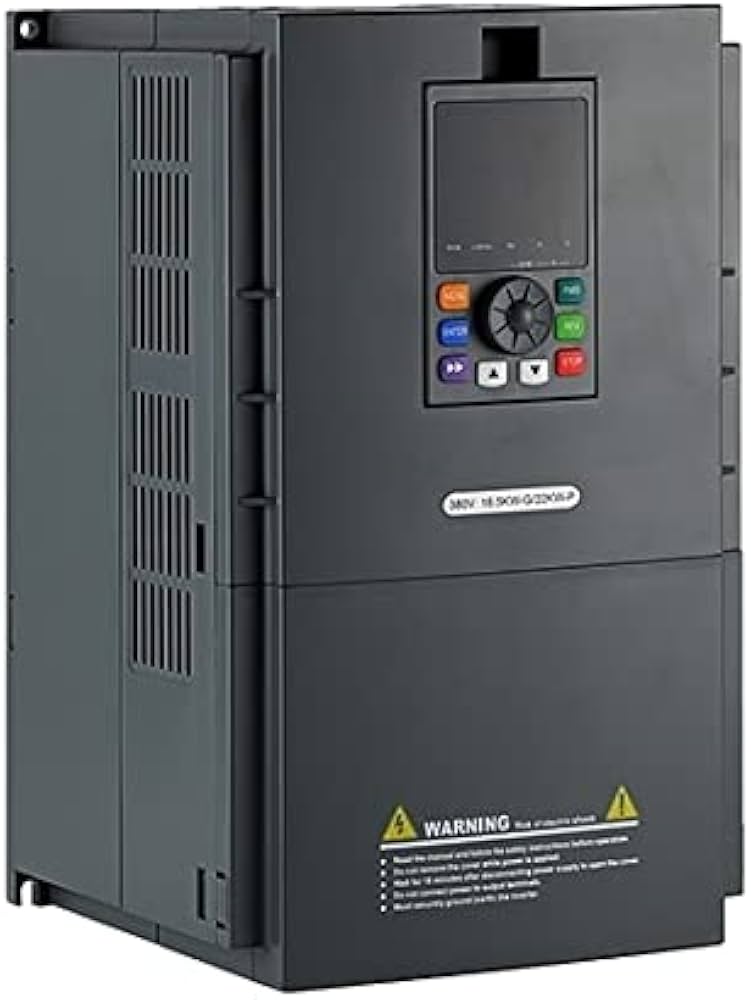
Manufacturing Standards and Testing QC for Variable Frequency Drive For Single Phase Motor
At Boray Inverter, the production of Variable Frequency Drives for single-phase motors adheres to stringent international protocols designed to withstand the rigors of agricultural irrigation, solar pumping stations, and industrial automation environments. Our manufacturing ecosystem integrates ISO 9001:2015-certified quality management systems with CE compliance (EN 61800-3 for EMC and EN 61800-5-1 for safety), ensuring each unit meets global electrical safety and electromagnetic compatibility standards critical for grid-tied and off-grid solar applications.
PCB Assembly and Environmental Protection
The foundation of reliability begins with printed circuit board (PCB) manufacturing executed under IPC-A-610 Class 2 or Class 3 standards, depending on application criticality. Given that single-phase VFDs frequently operate in harsh agricultural environments—exposed to humidity, dust, and chemical fertilizers—every control board undergoes comprehensive conformal coating processing. We utilize high-grade acrylic or polyurethane conformal coatings (typically 25-75 microns thickness) that provide moisture and corrosion resistance while maintaining thermal conductivity. This protective layer safeguards sensitive flux vector control circuitry and IGBT gate drivers from condensation-induced short circuits, a common failure mode in outdoor solar pump installations where temperature fluctuations exceed 40°C daily.
High-Temperature Aging and Burn-In Protocols
To eliminate early-life failures (infant mortality), each single-phase VFD undergoes accelerated life testing through high-temperature aging (HTA) procedures. Units are subjected to burn-in cycles at elevated ambient temperatures (typically +50°C to +60°C) for 4 to 8 hours under dynamic load conditions. This process thermally stresses solder joints, capacitors, and semiconductor components, identifying latent defects in power stage assemblies before shipment. For solar pumping applications where drives may experience enclosure temperatures exceeding 45°C in direct sunlight, this screening ensures sustained performance during peak irradiance conditions when thermal management is most challenged.
100% Full-Load Functional Testing
Unlike statistical sampling methods, Boray Inverter mandates 100% full-load testing for every single-phase VFD produced. Each drive undergoes comprehensive validation at rated output current and voltage (220V-240V single-phase output, 0.75kW to 7.5kW range) to verify:
– True two-phase orthogonal 90° flux vector control accuracy for high starting torque capability
– Output waveform quality (THD <5%) critical for single-phase capacitor-run motor compatibility
– Overcurrent, overvoltage, and undervoltage protection response times
– Thermal protection calibration and fan control logic
– MPPT algorithm functionality for solar pump models
This full-load testing simulates real-world agricultural pumping scenarios, including verification of dry-run protection and automatic restart sequences essential for borehole pump applications.
Component-Level Quality Assurance
Single-phase VFD reliability depends heavily on passive component quality. Our incoming inspection protocol includes:
– Capacitor screening: DC-link capacitors and auxiliary start capacitors undergo ESR (Equivalent Series Resistance) testing and thermal shock validation
– IGBT module characterization: Switching loss verification and thermal impedance testing to ensure efficiency in single-phase output modulation
– EMI filter validation: Compliance with conducted emission limits per CISPR 11/EN 55011 for agricultural equipment
Environmental and Mechanical Robustness
Beyond electrical testing, units undergo environmental stress screening including:
– Thermal cycling: -10°C to +60°C transition testing to validate solder joint integrity
– Vibration testing: Per IEC 60068-2-6 standards for transportation and pump-mounted vibration resistance
– Ingress protection verification: IP20 to IP65 enclosure sealing tests for dust and water jet protection in outdoor agricultural installations
Traceability and Documentation
Each VFD carries a unique serial number enabling full manufacturing traceability—from PCB conformal coating batch records to final test data sheets. For EPC contractors and agricultural project managers, we provide comprehensive test reports including insulation resistance (Hi-Pot) test results, load test waveforms, and efficiency curves specific to single-phase motor control applications.
This multi-layered quality assurance architecture ensures that whether deployed in remote solar pumping stations or continuous-duty industrial ventilation systems, Boray single-phase VFDs deliver the high starting torque, energy efficiency, and operational longevity demanded by professional automation engineers and agricultural integrators worldwide.
Step-by-Step Engineering Sizing Checklist for Variable Frequency Drive For Single Phase Motor
When specifying a Variable Frequency Drive for single-phase motor applications—particularly in remote agricultural pumping or light industrial automation—precision in the sizing phase prevents costly field failures, capacitor bank damage, and MPPT inefficiencies in solar-hybrid configurations. The following engineering checklist provides a systematic framework for EPC contractors and automation distributors to validate compatibility between motor characteristics, VFD capabilities, and power source constraints.
Step 1: Decode Motor Nameplate Data Beyond Nominal Power
Begin by extracting the complete electrical signature from the motor nameplate, not just horsepower (HP) or kilowatt (kW) ratings. Critical parameters include:
– Rated Current (A) at full load: Single-phase induction motors often exhibit higher current draw per unit of power compared to three-phase equivalents. Record both running and locked-rotor amps (LRA).
– Insulation Class (F or H): Essential for determining thermal headroom when operating at low speeds where cooling fan efficacy drops.
– Service Factor (SF): If the motor has a 1.15 SF, the VFD must accommodate intermittent overload capacity without tripping.
– Auxiliary Winding Details: For Permanent Split Capacitor (PSC) motors, note the capacitor voltage and capacitance (µF). The VFD must either bypass the capacitor entirely (preferred) or provide filtered output compatible with capacitive loads.
Step 2: Calculate True VFD Power Rating with Application Derating
Single-phase output VFDs require aggressive derating compared to their three-phase counterparts due to pulsating DC bus currents and higher harmonic content:
– Base Sizing: Select a VFD with a continuous output current rating ≥ 110% of the motor’s full-load current (FLA).
– Torque Profile Analysis: For centrifugal pumps (quadratic torque), standard VFD ratings suffice. However, for positive displacement pumps or high-starting-torque conveyors, apply a 30-50% current derating factor or select the next higher HP tier.
– Solar Input Consideration: If powering via DC solar arrays (PV-direct), verify the VFD’s DC voltage input range (typically 200V–400V for 220V AC output models) and ensure the VFD incorporates MPPT algorithms optimized for single-phase motor starting surges.
Step 3: Validate Voltage Topology and Phase Configuration
Single-phase systems present unique wiring complexities:
– Input/Output Phase Matching: Confirm whether the application requires single-phase input/single-phase output (1φ/1φ) or if a three-phase input VFD is being repurposed with single-phase derating (typically requiring 50% current reduction).
– Voltage Window: For 220V–240V nominal systems, ensure the VFD accepts input voltage fluctuations of ±15%, critical for rural grids or battery-backed solar systems experiencing voltage sag during motor startup.
– Split-Phase Compatibility: If the motor requires 120V/240V split-phase (North American standard), verify the VFD can output true two-phase orthogonal 90° flux vector control, not just modified three-phase output, to prevent winding overheating.
Step 4: Determine DC Bus and Solar String Sizing (for Solar Pump Integration)
When integrating with Boray Solar Pump Inverter architectures or similar PV-direct systems:
– MPPT Voltage Range: Calculate the solar array’s maximum power point voltage (Vmp) to fall within the VFD’s MPPT window. For a 220V single-phase motor, typical Vmp targets are 250V–350V DC.
– String Configuration: Size PV strings to provide 1.3–1.5 times the motor’s rated power at STC (Standard Test Conditions) to account for irradiance variability and ensure sufficient torque for pump priming.
– Open Circuit Voltage (Voc) Safety: Ensure the array’s Voc at lowest ambient temperature remains below the VFD’s maximum DC input voltage (typically 400V–450V for residential-grade units).
Step 5: Environmental and Thermal Derating Calculations
Single-phase VFDs often lack the robust thermal mass of industrial three-phase drives:
– Altitude Derating: Above 1,000m (3,300 ft), reduce VFD output current by 1% per 100m due to reduced air density and cooling efficiency.
– Ambient Temperature: For installations in agricultural environments (greenhouses, livestock facilities), if ambient exceeds 40°C (104°F), derate current capacity by 2.5% per degree Celsius or mandate external forced ventilation.
– Enclosure Integrity: Specify IP54 or higher protection for dusty environments, ensuring heat sink fins remain unobstructed to prevent IGBT thermal runaway.
Step 6: Cable Sizing and Harmonic Mitigation
Single-phase VFDs generate significant 2nd and 3rd order harmonics:
– Output Cable Length: Limit motor lead length to < 50 meters (164 ft) for unfiltered outputs to prevent voltage reflection and motor insulation stress. If longer runs are unavoidable, specify a dv/dt filter or sinusoidal output reactor.
– Conductor Sizing: Size input and output conductors at 125% of the VFD’s rated input current, accounting for single-phase harmonic currents that increase neutral conductor heating in split-phase systems.
– Grounding: Implement dedicated PE (Protective Earth) bonding between VFD chassis and motor frame to mitigate EMI from high-frequency switching.
Step 7: Protection Coordination and Safety Integration
- Input Protection: Size circuit breakers or fuses at 1.5–2.5 times the VFD’s rated input current, ensuring Type 2 coordination (no damage to VFD under short-circuit conditions).
- Motor Thermal Protection: Configure electronic motor overload protection within the VFD parameters, setting the motor’s FLA and service factor. Disable the motor’s internal thermal overload if present, as VFD-controlled ramping eliminates locked-rotor conditions but introduces low-speed heating risks.
- DC Injection Braking: For vertical pumping applications, verify the VFD supports DC injection braking or external dynamic braking resistors to prevent backspin during power loss.
Step 8: Control Interface and Automation Protocols
- I/O Configuration: Verify digital input compatibility (PNP/NPN) with existing float switches, pressure transducers, or flow sensors common in agricultural automation.
- Communication: For SCADA integration in distributed pumping stations, confirm RS-485 Modbus RTU or CANopen protocols are supported for remote speed adjustment and fault monitoring.
- Dry Run Protection: When driving submersible pumps, ensure the VFD includes dry-run detection via underload current monitoring or external level sensors to prevent seal damage.
Step 9: Final Compliance and Certification Verification
- Grid Code Compliance: Verify CE marking for European projects or UL 61800-5-1 for North American installations.
- Efficiency Standards: Confirm IE2 or IE3 efficiency compliance for the complete motor-drive system, particularly relevant for solar pumping ROI calculations and carbon credit qualification.
By systematically executing this checklist, engineering teams ensure the selected single-phase VFD—whether deployed in off-grid solar pumping stations or factory automation retrofits—delivers reliable variable speed control while maximizing motor lifespan and energy harvest efficiency.
Wholesale Cost and Energy ROI Analysis for Variable Frequency Drive For Single Phase Motor
When evaluating single-phase VFD procurement for distributed pumping stations, HVAC retrofits, or off-grid solar irrigation systems, decision-makers must balance upfront capital expenditure against operational efficiency gains. Unlike three-phase industrial drives, single-phase variable frequency drives (0.75kW–7.5kW range) occupy a unique niche where unit economics differ significantly from bulk industrial procurement models.
B2B Pricing Architecture and Volume Tiers
Market analysis of single-phase output VFDs reveals distinct pricing stratification based on procurement volume and technical specifications. Entry-level 0.75kW (1HP) units typically benchmark between $190–$220 at retail, while 3.7kW (5HP) industrial-grade drives range from $640–$1,000 depending on IP ratings and control topology.
For EPC contractors and automation distributors, Boray Inverter’s wholesale structure operates on graduated volume breaks that significantly alter unit economics:
- Tier 1 (1–24 units): Standard distributor pricing, approximately 25–30% below MSRP, suitable for pilot projects or facility-specific retrofits
- Tier 2 (25–99 units): OEM integration pricing, incorporating 35–40% volume discounts for equipment manufacturers embedding drives into packaged pump systems
- Tier 3 (100+ units): Project-level wholesale agreements, offering 45–55% reduction from retail benchmarks for agricultural solar pumping deployments or municipal water system upgrades
These pricing tiers assume standard IP20 enclosure specifications. For agricultural and outdoor solar pumping applications requiring IP65/NEMA 4X protection against dust and moisture ingress, expect a 12–18% premium across all tiers, though this cost is typically offset by eliminated external enclosure expenses.
Energy ROI and Payback Dynamics
The financial justification for single-phase VFD deployment hinges on the affinity laws—specifically that pump power consumption correlates with the cube of rotational speed. In centrifugal pump applications common to solar irrigation and pressure boosting systems, reducing motor speed by just 20% yields approximately 50% energy savings.
Typical ROI Calculation Framework:
For a 2.2kW (3HP) single-phase pump operating 2,400 hours annually (average agricultural seasonality) at $0.12/kWh:
- Baseline Consumption: Fixed-speed operation drawing full load = 5,280 kWh/year ($634 annual energy cost)
- VFD-Optimized Operation: 30% average speed reduction through pressure/flow modulation = 2,574 kWh/year ($309 annual cost)
- Annual Savings: $325
- Hardware Investment: ~$380 (wholesale Tier 2 pricing for 3HP single-phase VFD)
- Simple Payback: 14 months
In solar pumping applications, the ROI accelerates dramatically. By enabling direct PV-array coupling through MPPT functionality (Maximum Power Point Tracking), single-phase VFDs eliminate battery bank requirements and phase-conversion losses. A 1.5kW solar pump system utilizing VFD control typically achieves 25–35% higher water volume per kW of installed solar capacity compared to on/off battery-buffered systems, effectively reducing solar array CAPEX by $200–$400 per installation while maintaining flow rates.
Total Cost of Ownership and Warranty Considerations
Beyond unit procurement, warranty structures significantly impact long-term project economics. Standard single-phase VFD warranties in the industry range 12–18 months, covering manufacturing defects and component failure. Boray Inverter’s commercial warranty program for B2B partners includes:
- Standard Coverage: 24 months for IP20 units, 36 months for IP65-rated agricultural drives
- Extended Protection: Optional 5-year total protection plans available at 8–12% of unit wholesale cost, recommended for remote solar pumping installations where service access costs exceed hardware replacement
- Advanced Replacement: Tier 2 and above distributors qualify for cross-ship replacement programs, minimizing downtime liability in critical irrigation contracts
Mechanical stress reduction provides additional unquantified savings. Soft-start functionality inherent to VFD topology eliminates inrush currents (typically 6–8x running amps in single-phase capacitor-start motors), extending motor bearing life by 40–60% and reducing maintenance intervals. For agricultural project managers overseeing 50+ distributed pumps, this translates to avoided service calls valued at $150–$300 per incident.
Procurement Recommendations for Technical Buyers
When specifying single-phase VFDs for solar pumping or industrial fan control, engineers should evaluate the Total Installed Cost (TIC) rather than unit price alone. Drives with integrated EMC filters, brake units, and RS485/Modbus communication (standard in Boray’s industrial series) eliminate external component costs that often exceed $50–$75 per node in basic drive configurations.
For EPC contractors bidding solar irrigation projects, locking in Tier 3 wholesale pricing on 100+ unit commitments reduces per-kW installed costs to $45–$60 (including drive, sensors, and basic commissioning), compared to $120–$150 using retail-sourced components. This differential often determines project viability in competitive tender environments where energy savings guarantees form part of the contract structure.
The convergence of declining semiconductor costs and rising energy tariffs positions single-phase VFDs as standard infrastructure rather than premium upgrades. Projects achieving 18-month payback or less should prioritize immediate deployment, while seasonal applications (sub-1,000 annual operating hours) may benefit from Tier 1 procurement strategies with modular expansion capabilities.
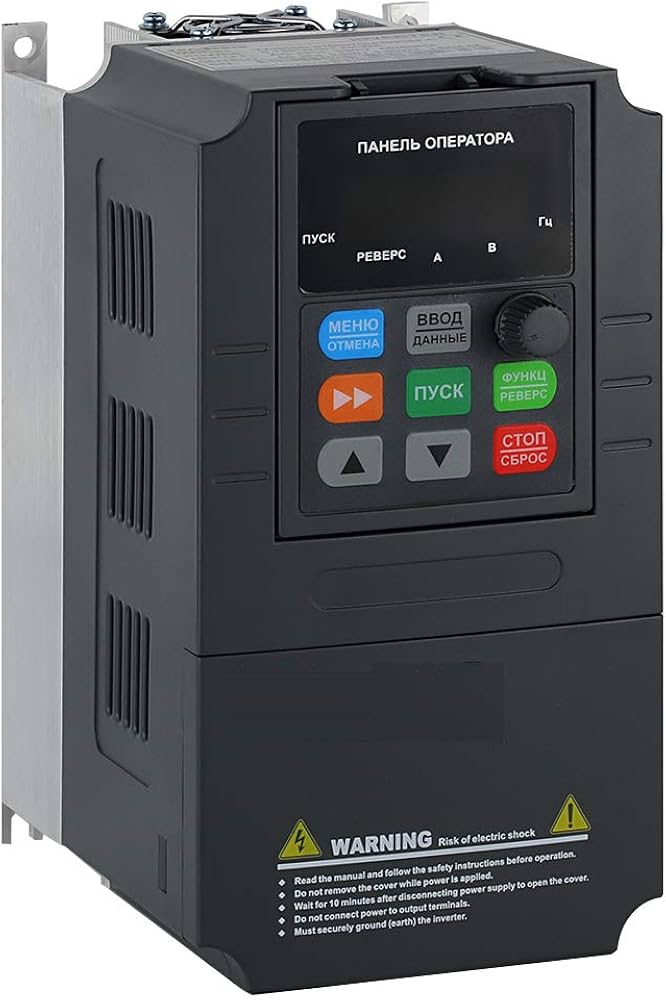
Alternatives Comparison: Is Variable Frequency Drive For Single Phase Motor the Best Choice?
When evaluating motor control strategies for single-phase asynchronous motors—particularly in agricultural pumping, HVAC retrofits, and light industrial machinery—system integrators must weigh the trade-offs between control precision, energy economics, and infrastructure constraints. While the single-phase output VFD utilizing orthogonal 90° flux vector control represents the state-of-the-art for variable torque applications, three distinct alternative architectures merit technical consideration: electronic soft starters for fixed-speed operations, solar-direct versus grid-tied power architectures, and the underlying motor electromagnetic design (PMSM versus IM).
1. Motor Control Methodology: VFD vs. Soft Starter
For single-phase motors, the “soft starter” concept differs significantly from three-phase implementations. True electronic soft starters (thyristor-based phase control) are rarely applied to single-phase PSC (Permanent Split Capacitor) motors due to capacitor winding sensitivity and torque pulsation risks. Instead, “reduced voltage starters” or part-winding start methods are the practical alternative.
Variable Frequency Drive (Single Phase I/O):
– Control Principle: Generates a variable voltage/frequency (V/Hz) output with flux vector decoupling, maintaining 90° electrical displacement between main and auxiliary windings.
– Torque Characteristics: High starting torque (150-200% rated) with programmable acceleration ramps; eliminates inrush currents (3-7x FLA typical of DOL).
– Operational Benefit: Continuous variable speed (10:1 or greater range) enables affinity laws optimization in centrifugal pumps and fans, yielding 30-50% energy savings versus throttling.
Electronic Reduced Voltage Starter (Alternative):
– Control Principle: Step-down autotransformer or triac-based voltage ramping; frequency remains fixed at line value (50/60Hz).
– Torque Characteristics: Reduced starting torque (proportional to voltage squared), suitable for high-inertia loads but incapable of speed modulation.
– Operational Limitation: Fixed-speed operation post-start; no energy recovery during partial loads. Economically viable only when variable speed is unnecessary and motor cycling is infrequent.
Engineering Verdict: For single-phase applications requiring flow/pressure modulation—such as drip irrigation systems or variable-air-volume (VAV) blowers—the VFD is the only alternative that avoids mechanical throttling losses. Soft starters serve strictly as motor protection devices in constant-speed applications.
2. Power Architecture: Solar Pump Inverters vs. Grid-Tied VFDs
In remote agricultural deployments where three-phase grid extension is cost-prohibitive, the choice between solar DC-fed single-phase VFDs (Boray’s specialized domain) and conventional AC grid VFDs becomes critical.
Solar-Powered Single Phase VFD (DC-AC):
– Input Topology: Direct PV array coupling (200-400VDC) with MPPT algorithms, eliminating battery banks in pump applications.
– System Efficiency: 92-96% end-to-end (PV-to-hydraulic), with automatic power derating during irradiance fluctuations.
– CAPEX Dynamics: Higher upfront inverter cost offset by zero grid infrastructure and operational expenditure (OPEX) elimination.
– Application Fit: Ideal for off-grid borehole pumps and livestock watering where grid availability is <4 hours/day.
Grid-Tied Single Phase VFD (AC-AC):
– Input Topology: 220-240VAC single-phase rectification with PFC (Power Factor Correction) circuits.
– System Efficiency: 95-98% (motor drive efficiency), dependent on grid stability.
– Operational Constraint: Vulnerable to voltage sags and phase imbalance in rural distribution networks; requires additional surge protection.
Hybrid Considerations: Modern solar pump inverters (such as Boray’s hybrid series) offer dual-mode operation—solar priority with grid backup—mitigating the risk of water shortage during monsoon seasons or low-irradiance periods.
3. Motor Electromagnetic Design: PMSM vs. Induction Motor (IM)
When paired with single-phase VFDs, the motor selection impacts system efficiency and control complexity.
Single-Phase Capacitor-Run Induction Motor (Standard IM):
– VFD Compatibility: Requires specialized flux vector algorithms to handle the auxiliary winding and centrifugal switch (if present) at low frequencies.
– Efficiency: Typically 55-75% at rated load; efficiency drops significantly at partial loads (<50% speed).
– Maintenance: Brushless, but capacitor replacement required every 5-7 years.
Permanent Magnet Synchronous Motor (PMSM) with Single Phase Drive:
– Control Requirement: Requires rotor position sensing (encoder or sensorless FOC) and sinusoidal PWM; standard V/Hz control is insufficient.
– Efficiency: 85-92% across wide speed range, with higher power density (30% smaller frame size for equivalent output).
– Economic Factor: Higher motor cost justified in battery-backed solar systems where every watt-hour counts, or in submersible pump applications where motor diameter constraints exist.
Note: True single-phase PMSM drives are rare above 2.2kW; most “single-phase” high-efficiency systems actually utilize three-phase PMSMs with single-phase input VFDs and phase-splitting topologies.
Comparative Technical Matrix
| Parameter | Single Phase VFD (Flux Vector) | Electronic Soft Starter | Direct Online (DOL) | Solar DC VFD (Pump Application) |
|---|---|---|---|---|
| Speed Control Range | 10:1 (5-50/60Hz) | Fixed (On/Off only) | Fixed | 5:1 (frequency tracking) |
| Starting Current | 1.0-1.5x FLA | 2.5-3.5x FLA | 6-8x FLA | 1.2x FLA (soft start) |
| Energy Efficiency | High (variable load optimization) | Low (fixed speed, throttling losses) | Low (no optimization) | Very High (MPPT + VFD) |
| Power Factor | >0.95 (controlled) | 0.6-0.8 (motor dependent) | 0.5-0.7 | >0.95 |
| Harmonic Distortion | <5% (with DC choke) | N/A (line frequency) | N/A | <8% (DC input) |
| Initial Investment | Medium ($200-$1000 for 0.75-7.5kW) | Low ($50-$150) | Very Low (contactor only) | High (includes PV array) |
| Maintenance | Low (electronic, no brushes) | Very Low | Low | Low (IP65 outdoor rated) |
| Best Application | Variable torque pumps, fans, conveyors | High-inertia fans, compressors | Intermittent duty, cost-sensitive | Off-grid irrigation, livestock |
Decision Framework for Specifiers
Choose Single Phase VFD when:
– The duty cycle involves variable flow/pressure requirements (affinity laws apply).
– Motor rating is 0.37kW – 7.5kW (0.5hp – 10hp) and three-phase conversion is economically unfeasible.
– Soft starting is required to prevent water hammer in piping systems or mechanical stress on gearboxes.
Choose Soft Starter/DOL when:
– The motor operates at fixed speed 95%+ of the time.
– Capital constraints prohibit VFD procurement, and simple across-the-line starting is acceptable for the mechanical system.
– The application involves high-cycle intermittent duty (e.g., power tools) where VFD cost cannot be amortized.
Choose Solar VFD Architecture when:
– Grid extension costs exceed $3-5 per meter.
– Daily water demand aligns with solar insolation curves (daytime pumping to storage).
– System requires MPPT optimization to maximize hydraulic output per PV watt-peak.
Conclusion
For single-phase motor applications in the 0.5hp to 10hp range—particularly solar pumping and precision fluid handling—the variable frequency drive with true two-phase orthogonal flux vector control remains the superior technical choice. While soft starters and direct-on-line configurations offer lower initial capital expenditure, they cannot deliver the energy efficiency, mechanical stress reduction, and process control required by modern EPC contracts and agricultural automation standards. When integrated with solar PV arrays, the single-phase VFD becomes not merely a motor controller, but a comprehensive energy management system, justifying its position as the default specification for distributed pumping infrastructure.
Core Technical Specifications and Control Terms for Variable Frequency Drive For Single Phase Motor
When specifying variable frequency drives for single-phase motor applications—particularly in agricultural pumping, HVAC retrofits, and light industrial machinery—engineers must evaluate both the unique electrical characteristics of single-phase induction motors and the commercial frameworks governing international equipment procurement. Unlike three-phase systems, single-phase VFDs must manage auxiliary winding currents, start-capacitor disconnect logic, and asymmetric flux fields while delivering precise speed regulation.
Critical Technical Specifications
Input/Output Electrical Characteristics
Boray single-phase VFDs typically accommodate 220–240V ±15% input (50/60Hz universal) with true single-phase output (1P→1P), eliminating the need for phase-conversion derating. Power ranges span 0.4kW to 7.5kW (0.5HP–10HP), with continuous output current ratings matched to the higher thermal demands of capacitor-start or Permanent Split Capacitor (PSC) motors. Critical specifications include:
– Voltage Tolerance: 187V–264V AC input range to accommodate rural grid fluctuations
– Carrier Frequency: 1.0kHz–16kHz adjustable, balancing acoustic noise reduction against switching losses in single-phase IGBT bridges
– Control Resolution: 0.01Hz frequency precision for low-speed pumping applications
Flux Vector Control (FVC) for Single-Phase Architecture
Standard V/F control proves insufficient for single-phase motors requiring high starting torque (e.g., borehole pumps). Boray drives employ two-phase orthogonal 90° flux vector control, synthesizing a rotating magnetic field from single-phase supply through advanced PWM algorithms. This generates discrete main and auxiliary winding currents with precise phase displacement, delivering:
– Starting torque ≥150% rated torque at 0.5Hz
– Automatic slip compensation for load variations
– Elimination of mechanical centrifugal switches via electronic capacitor bypass logic
Maximum Power Point Tracking (MPPT)
For solar-powered single-phase pumping systems, integrated MPPT algorithms continuously adjust the VFD’s DC bus voltage to extract peak power from PV arrays (typically 98.5% tracking efficiency). This is critical in off-grid agricultural projects where single-phase 220V pumps must operate across varying irradiance without battery storage.
PID Process Control
Closed-loop PID functionality enables direct pressure transducer or flow meter integration (4–20mA or 0–10V inputs). The drive automatically modulates output frequency to maintain constant water pressure in drip irrigation systems or stable airflow in ventilation networks, overriding manual speed settings when process variables deviate from setpoints.
Protection and Environmental Grades
– IP20/IP65 enclosure options for panel-mount or field-installation in dusty agricultural environments
– Electronic thermal overload: Class 10/15 motor protection curves accounting for single-phase motor cooling characteristics
– Stall prevention: Automatic current limiting during pump cavitation or mechanical jamming
Single-Phase Specific Control Terminology
Auxiliary Winding Management
Single-phase VFDs must control current displacement between main and auxiliary windings. Look for specifications referencing split-phase current ratio control, which optimizes the phase angle (typically 90° electrical) between windings to minimize circulating currents and capacitor stress.
Capacitor Discharge Protocols
Safety specifications require automatic capacitor discharge circuits (≤60V residual within 5 minutes) for external start/run capacitors, ensuring compliance with IEC 60204-1 maintenance safety standards.
V/F Curve Optimization for PSC Motors
Unlike three-phase motors, Permanent Split Capacitor motors exhibit non-linear torque curves. Advanced VFDs offer customizable V/F patterns with boost voltage settings (0–30% adjustable) to overcome the locked-rotor current limitations inherent in single-phase designs without overheating auxiliary windings.
Commercial and Logistics Terms (Incoterms 2020)
FOB (Free On Board)
Under FOB Shenzhen/Guangzhou terms, Boray assumes costs and risks until goods pass the ship’s rail at the port of origin. The buyer controls ocean freight and insurance, making this preferable for EPC contractors with established freight forwarding networks. Typical lead time to FOB readiness: 15–25 days for standard 0.75kW–5.5kW units; 30–45 days for customized IP65 enclosures or >7.5kW capacities.
CIF (Cost, Insurance, and Freight)
CIF terms suit agricultural project managers requiring turnkey logistics to destination ports (e.g., Mombasa, Lagos, or Karachi). Boray manages marine insurance (110% of invoice value, Institute Cargo Clauses A) and freight charges, transferring risk only upon arrival at the named port. Note that import duties, unloading costs, and inland transportation remain the buyer’s responsibility.
Additional Commercial Considerations
– MOQ: Standard 5-unit minimum for single-phase VFDs <3kW; 3-unit minimum for >5.5kW
– Warranty: 24-month standard coverage for manufacturing defects, extendable to 36 months with commissioning by certified technicians
– OEM/ODM: Private labeling and interface language customization (English, Spanish, Arabic, Portuguese) available for distributor orders exceeding 100 units annually
– Payment Terms: 30% T/T deposit, 70% against B/L copy for orders <$50,000; L/C at sight available for larger agricultural infrastructure contracts
Understanding these technical and commercial parameters ensures that specified drives—whether for solar-powered irrigation in Sub-Saharan Africa or industrial fan control in Southeast Asia—deliver both operational reliability and procurement efficiency aligned with project financing structures.
Future Trends in the Variable Frequency Drive For Single Phase Motor Sector
The convergence of decentralized renewable energy architectures and Industry 4.0 connectivity standards is fundamentally reshaping the single-phase VFD landscape. As agricultural automation and light industrial applications demand higher efficiency from fractional horsepower systems, the sector is moving beyond basic speed regulation toward intelligent, grid-interactive motor control solutions.
Advanced Vector Control and Miniaturization
Next-generation single-phase drives are evolving from simple V/Hz control to sophisticated flux vector algorithms capable of true two-phase orthogonal 90° flux vector control—delivering torque response characteristics previously reserved for three-phase systems. This technological leap enables single-phase VFDs to drive capacitor-start and PSC (Permanent Split Capacitor) motors with optimized starting currents, eliminating the mechanical stress associated with traditional across-the-line starting. For OEMs and automation distributors, this translates to compact, bookshelf-formatted drives (0.75kW–7.5kW range) that integrate directly into pump skids and HVAC enclosures while meeting IE5 efficiency standards through precise slip compensation and automatic voltage regulation.
Solar-Hybrid Integration and DC Bus Architectures
The most significant disruption in single-phase motor control is the seamless integration of photovoltaic power sources. Modern single-phase VFDs are increasingly designed with dual-mode AC/DC input stages, allowing direct connection to solar arrays through integrated Maximum Power Point Tracking (MPPT) algorithms. For agricultural project managers and EPC contractors deploying off-grid irrigation systems, this eliminates the need for separate solar pump inverters and battery storage banks. Advanced units now feature DC bus sharing capabilities, enabling hybrid configurations where single-phase motors draw from solar during peak irradiance and automatically supplement with grid power or storage during low-light conditions—critical for maintaining constant pressure in drip irrigation networks without expensive three-phase infrastructure upgrades.
IoT-Enabled Predictive Maintenance and Remote Asset Management
The proliferation of narrowband IoT (NB-IoT) and LoRaWAN connectivity in industrial automation is transforming single-phase VFDs from isolated control devices to edge-computing nodes. Embedded condition monitoring now tracks motor bearing frequencies, winding insulation resistance trends, and capacitor health—specifically addressing the failure modes common to single-phase induction motors. For geographically dispersed agricultural operations, cloud-connected VFDs provide real-time alerts regarding dry-run conditions, pump cavitation, or belt slippage, while allowing EPC contractors to perform remote parameter adjustments across multiple sites. This shift toward predictive maintenance reduces unplanned downtime in critical applications such as livestock watering and greenhouse climate control, where single-phase motors remain prevalent due to existing electrical infrastructure constraints.
Strategic Implications for Stakeholders
For automation distributors, the market trajectory indicates growing demand for “solar-ready” single-phase VFDs that bridge the gap between traditional motor control and renewable energy integration. Industrial engineers should anticipate regulatory mandates requiring variable speed control on all new single-phase motor installations above 0.75kW, driven by global efficiency directives. As these trends mature, the distinction between standalone VFDs and solar pump inverters will continue to blur, creating opportunities for integrated energy management systems that optimize single-phase motor performance across hybrid AC/DC microgrids.
B2B Engineering FAQs About Variable Frequency Drive For Single Phase Motor
-
Q: How does the control topology of a single-phase output VFD differ from standard three-phase drives, and why can’t a conventional VFD be used for single-phase motors?
A: Single-phase output VFDs utilize specialized flux vector control algorithms to generate true two-phase orthogonal 90° flux vectors, mimicking the auxiliary winding characteristics required by single-phase induction motors. Unlike three-phase VFDs that output three 120° displaced phases, these drives modulate the output to create the necessary rotating magnetic field in motors with capacitor-start, split-phase, or shaded-pole configurations. Attempting to run a single-phase motor on a standard three-phase VFD results in zero starting torque and immediate thermal failure due to the lack of phase displacement required for rotor induction. -
Q: When retrofitting existing capacitor-start or split-phase motors with a VFD, what critical motor modifications must agricultural project managers specify?
A: Prior to VFD integration, all mechanical centrifugal switches and start capacitors must be physically disconnected or bypassed. The VFD assumes control of the starting sequence through electronic soft-start algorithms (typically 0.5–60s ramp times), rendering mechanical starting components redundant and prone to arcing under PWM switching. Additionally, thermal protection devices must be verified for compatibility with the VFD’s carrier frequency (typically 2–16 kHz) to prevent nuisance tripping from harmonic heating. -
Q: What derating factors must EPC contractors apply when sizing single-phase VFDs for solar pumping systems in high-temperature environments?
A: For solar irrigation applications, apply a minimum 15% current derating for ambient temperatures exceeding 40°C, and an additional 10% derating for altitudes above 1,000 meters due to reduced convective cooling. Single-phase motors inherently exhibit higher copper losses than three-phase equivalents; therefore, size the VFD based on the motor’s actual full-load current (FLA) rather than nominal HP rating. In DC-coupled solar configurations, ensure the VFD’s DC input range (typically 200–400VDC for 220VAC output models) accommodates the solar array’s open-circuit voltage (Voc) at lowest expected irradiance. -
Q: How does modern flux vector control technology address the inherent low starting torque limitations of single-phase motors in constant torque applications?
A: Advanced single-phase VFDs implement sensorless vector control with automatic torque boost functions, delivering 150–200% starting torque at 0.5 Hz by dynamically adjusting the voltage-to-frequency (V/Hz) ratio and compensating for stator resistance drop. This overcomes the single-phase motor’s reliance on auxiliary windings for starting torque, enabling applications such as positive displacement pumps and conveyor systems that require high breakaway torque—traditionally the domain of three-phase systems. -
Q: What harmonic mitigation strategies are recommended when deploying single-phase VFDs in weak rural grids with limited short-circuit capacity?
A: Single-phase VFDs generate higher current harmonics (particularly 3rd, 5th, and 7th order) than balanced three-phase systems. Specify DC bus chokes or AC line reactors with 2–3% impedance to limit total harmonic distortion (THD) to <5% and prevent voltage notching. For installations with multiple single-phase drives, distribute loads across different phases (in split-phase 120/240V systems) and implement EMI filters compliant with IEC 61800-3 Category C2 to protect sensitive agricultural monitoring equipment from conducted emissions. -
Q: Can single-phase output VFDs accept direct DC input from solar arrays for off-grid pumping, and what voltage configuration is required?
A: Yes, most modern single-phase VFDs with active rectifier front-ends or dedicated DC bus terminals accept 200–400VDC input (for 220–240VAC output models), eliminating the need for separate solar inverters. For optimal energy harvesting, select VFDs with integrated Maximum Power Point Tracking (MPPT) algorithms or pair with external MPPT charge controllers sized for the pump motor’s power requirements. Ensure the VFD includes “PV mode” logic that detects dry-run conditions and low irradiance shutdown to prevent cavitation damage in submersible pumps. -
Q: What are the critical wiring differences between single-phase input/output VFDs and single-phase-to-three-phase converters when controlling existing motor infrastructure?
A: Single-phase output VFDs require four-wire connections (L, N, Motor Lead 1, Motor Lead 2) with the neutral serving as the return path for the modulated output, whereas phase-converter systems generate artificial third phases. Critical distinction: VFD outputs must never pass through contactors or disconnect switches between drive and motor during operation, as switching under load causes voltage spikes that damage IGBT output stages. Install line reactors on the input side when cable runs exceed 50 meters to mitigate voltage reflection issues common in rural installations. -
Q: How should automation distributors evaluate protection features when specifying single-phase VFDs for variable torque (centrifugal) versus constant torque (positive displacement) loads?
A: For variable torque loads (fans, centrifugal pumps), verify the VFD offers stall prevention levels adjustable to 120–150% of rated current with automatic carrier frequency reduction to prevent overheating during blocked-impeller events. For constant torque applications, confirm the drive provides “heavy-duty” overload capacity (150% for 60 seconds) and DC injection braking to handle high-inertia loads. All single-phase VFDs should include input phase loss protection (even on single-phase input models) and motor thermistor inputs, as single-phase windings are more susceptible to thermal damage from current imbalance than three-phase configurations.
Disclaimer
⚠️ Important Disclaimer
The information provided in this guide is for educational purposes. Industrial applications and electrical engineering projects carry inherent risks. B2B buyers and contractors must conduct thorough technical due diligence and verify regional compliance before installation or procurement.
Conclusion: Partnering with Boray Inverter for Variable Frequency Drive For Single Phase Motor
Implementing variable frequency drive technology for single phase motors represents a critical advancement in energy-efficient motor control, particularly for remote agricultural operations, decentralized irrigation systems, and legacy industrial infrastructure where three-phase power remains unavailable or cost-prohibitive to install. As demonstrated throughout this guide, specialized single-phase output VFDs utilizing advanced flux vector control algorithms can deliver the precise speed regulation, soft-start capabilities, and significant energy savings previously exclusive to three-phase systems, while properly accommodating the unique starting characteristics and auxiliary winding configurations inherent to single-phase asynchronous motors.
For engineering teams, agricultural project managers, and procurement specialists seeking reliable motor control partners capable of supporting both conventional grid-tied and off-grid solar applications, Shenzhen Boray Technology Co., Ltd. stands at the forefront of drive technology innovation. Operating globally under Boray Inverter (borayinverter.com), this China-based manufacturer has established itself as a premier provider of Solar Pumping Inverters and comprehensive Motor Control Solutions, with particular expertise in single-phase VFD architectures optimized for pumps, fans, and agricultural processing equipment.
What fundamentally distinguishes Boray is their substantial engineering investment: R&D personnel comprise 50% of the total workforce, ensuring continuous advancement in Permanent Magnet Synchronous Motor (PMSM) and Induction Motor (IM) vector control technologies. This technical depth translates into robust, field-proven hardware solutions manufactured across two modern production lines, where every unit undergoes rigorous 100% full-load testing to guarantee performance integrity under demanding agricultural and industrial conditions.
With a proven track record supporting global irrigation projects, solar pumping installations, and factory automation systems across diverse environmental conditions, Boray Inverter delivers the reliability and technical sophistication that EPC contractors and system integrators require. Whether optimizing existing single-phase pump stations or engineering new solar-powered irrigation networks, their engineering team provides application-specific configurations tailored to regional voltage standards, horsepower requirements, and environmental constraints.
Contact Boray Inverter today to discuss your single-phase motor control requirements, request detailed technical specifications, or obtain competitive wholesale quotations for your next automation or renewable energy project.