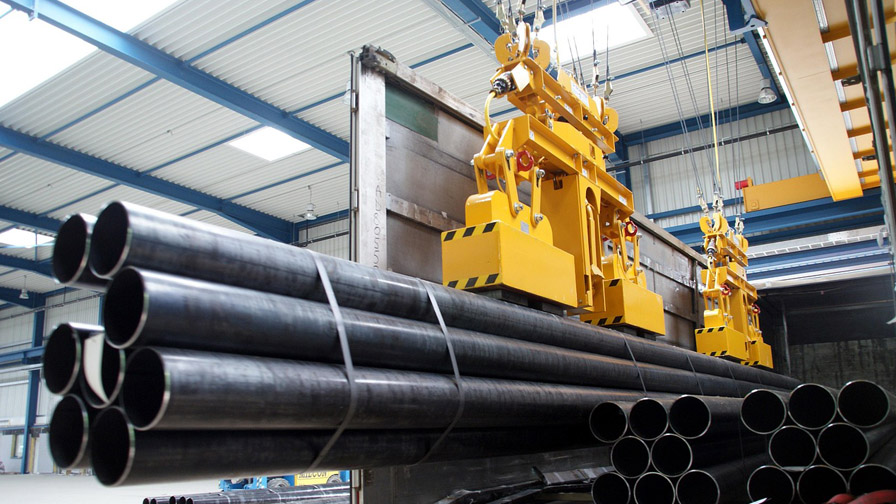
Frequency converters enable intelligent upgrades of overhead cranes and help efficient and safe operations
1. The role of frequency converters in overhead cranes
Overhead cranes are widely used in factories, ports, warehouses and other scenes, responsible for heavy object handling, loading and unloading and precise positioning. Traditional cranes use direct starting or resistance speed regulation, which has problems such as large impact, high energy consumption and inaccurate positioning. The introduction of frequency converters, by adjusting the motor speed and torque, achieves the following core functions:
- Smooth start and stop: eliminate mechanical impact and extend the life of the motor and transmission mechanism.
- Precise speed regulation: adapt to different load requirements and improve handling accuracy (such as millimeter-level positioning).
- Energy saving and consumption reduction: compared with traditional control methods, it can save 20%-40% energy.
- Safety protection: multiple protections such as overcurrent, overvoltage, and phase loss reduce the failure rate.
2. Typical application scenarios
- Metallurgical industry: inverter controls cranes to operate stably in high temperature and high dust environments.
- Port terminals: With the anti-sway function, containers can be lifted quickly and accurately.
- Intelligent manufacturing: Linked with the automation system to achieve unmanned warehousing and logistics.
3. Technology development trend
With the advancement of Industry 4.0, the application of inverters in bridge cranes is developing in the direction of intelligence and networking:
- Internet of Things integration: remote monitoring of crane operation status and predictive maintenance.
- Energy feedback: Electric energy is fed back to the power grid during braking to further reduce energy consumption.
- AI optimization algorithm: adaptive load changes and dynamic adjustment of control parameters.
The wide application of inverters is driving bridge cranes towards high efficiency, energy saving and intelligence. In the future, with the continuous innovation of technology, inverters will continue to provide stronger guarantees for the safe and stable operation of lifting equipment and help upgrade industrial automation.