Introduction: Sourcing Solar Pump Inverter for Industrial Use
Industrial water pumping represents one of the most energy-intensive operations across agriculture, mining, and process manufacturing—often consuming 30-50% of total operational expenditure in remote locations where grid connectivity is unreliable or nonexistent. As energy costs escalate and carbon neutrality mandates reshape procurement criteria, solar pump inverters have evolved from niche renewable accessories to critical infrastructure components for decarbonizing fluid management systems at scale.
At their technical foundation, solar pump inverters are specialized variable frequency drives (VFDs) engineered to convert highly variable DC output from photovoltaic arrays into stable, three-phase AC power with precise motor control capabilities. Unlike standard string inverters, these units integrate advanced Maximum Power Point Tracking (MPPT) algorithms with pump-specific protection logic—including dry-run detection, cavitation prevention, and soft-start functionality—to optimize energy harvest while extending submersible motor lifecycles in harsh environmental conditions.
This comprehensive guide equips industrial engineers, EPC contractors, and automation distributors with the technical frameworks necessary for sourcing high-reliability solar pump inverters. We analyze AC versus DC coupling architectures, examine power range specifications from fractional horsepower to 200kW industrial drives, and detail critical performance metrics including IP66/NEMA 4X environmental ratings, hybrid grid-tie functionality, and MPPT efficiency curves under partial shading conditions. Furthermore, we assess manufacturing capabilities, IEC 62109 certification requirements, and supply chain optimization strategies specific to Chinese OEM partnerships.
Whether you’re designing standalone irrigation systems or integrating solar pumping into existing SCADA-controlled process networks, mastering these electromechanical interfaces is essential for ensuring 25-year operational lifecycles and minimizing levelized cost of energy (LCOE).
Article Navigation
- Top 3 Solar Pump Inverter Manufacturers & Suppliers List
- Introduction: Sourcing Solar Pump Inverter for Industrial Use
- Technical Types and Variations of Solar Pump Inverter
- Key Industrial Applications for Solar Pump Inverter
- Top 3 Engineering Pain Points for Solar Pump Inverter
- Component and Hardware Analysis for Solar Pump Inverter
- Manufacturing Standards and Testing QC for Solar Pump Inverter
- Step-by-Step Engineering Sizing Checklist for Solar Pump Inverter
- Wholesale Cost and Energy ROI Analysis for Solar Pump Inverter
- Alternatives Comparison: Is Solar Pump Inverter the Best Choice?
- Core Technical Specifications and Control Terms for Solar Pump Inverter
- Future Trends in the Solar Pump Inverter Sector
- B2B Engineering FAQs About Solar Pump Inverter
- Disclaimer
- Conclusion: Partnering with Boray Inverter for Solar Pump Inverter
Technical Types and Variations of Solar Pump Inverter
Solar pump inverters vary significantly in electrical topology, output configuration, and power source integration methods. For industrial engineers and EPC contractors, selecting the appropriate technical type is critical to ensuring motor compatibility, maximizing MPPT efficiency, and achieving project lifecycle ROI. The following classifications represent the primary architectural variations deployed across agricultural and industrial water systems.
| Type | Technical Features | Best for (Industry) | Pros & Cons |
|---|---|---|---|
| Single-Phase Output Solar Pump Inverters | • Output: 220–240V AC, 50/60Hz single-phase • Power Range: 0.37kW – 2.2kW • MPPT Window: 150–400VDC (single string) • Control: V/Hz (Volts/Hertz) control, simple scalar control • Protection: IP20–IP65, overload capacity 150% for 60s |
Smallholder agriculture, residential boreholes, greenhouse drip irrigation, livestock watering (small scale) | Pros: Lower CAPEX, simplified installation with standard single-phase AC pumps, minimal harmonic distortion (<5% THD) Cons: Limited motor starting torque, higher current draw per kW requiring larger cable gauges, restricted to surface pumps or shallow submersibles |
| Three-Phase Output Solar Pump Inverters | • Output: 380–480V AC, 3-phase (configurable V/Hz) • Power Range: 0.75kW – 200kW+ • MPPT: Dual or triple independent MPPT inputs (250–800VDC) • Control: Sensorless vector control, torque control mode, automatic voltage regulation (AVR) • Communication: RS485/Modbus RTU, optional GPRS/WiFi for SCADA |
Large-scale irrigation districts, commercial farming operations, municipal water treatment, industrial process cooling | Pros: Superior motor control for high-inertia loads, balanced phase distribution reduces cable losses, scalable to MW-class systems, compatible with long motor cable runs (>100m with output reactors) Cons: Higher initial capital cost, requires three-phase AC induction motors, complex commissioning requiring VFD parameter knowledge |
| Hybrid Solar-Grid Pump Inverters | • Architecture: Dual-input DC (PV) + AC (Grid/Generator) with active rectifier • Switching: <10ms automatic transfer, seamless blending • Power Range: 0.75kW – 75kW • Features: Anti-islanding protection (UL1741/IEEE 1547), dry-run detection, flow control algorithms • Priority Modes: Solar priority, grid backup, or power blending (solar + grid simultaneously) |
Critical irrigation (cash crops, orchards), 24/7 livestock operations, remote mining camps, areas with unreliable grid | Pros: Ensures water security regardless of solar irradiance, maximizes solar penetration while maintaining reliability, reduces diesel generator runtime in hybrid setups Cons: Complex protection coordination required, grid interconnection compliance costs, potential for circulating currents if not properly synchronized |
| DC-Coupled BLDC/PMSM Controllers | • Topology: DC input (200–600VDC) to DC output (trapezoidal or sinusoidal commutation) • Motor Type: Permanent Magnet Synchronous Motors (PMSM) / Brushless DC (BLDC) • Efficiency: >95% (eliminates AC conversion stage) • Control: Sensorless FOC (Field-Oriented Control) or six-step commutation • Integration: Built-in MPPT specifically optimized for submersible pump curves |
Deep-well submersible applications (>100m head), solar fountains, high-efficiency agricultural projects, 3″–4″ borehole pumps | Pros: Highest system efficiency (no inverter rectification losses), compact form factor, unity power factor (no reactive power), excellent low-light performance Cons: Motor-specific compatibility (cannot drive standard AC induction motors), limited motor availability/replacement options, requires specialized commutation knowledge for troubleshooting |
Single-Phase
Key Industrial Applications for Solar Pump Inverter
Solar pump inverters function as specialized Variable Frequency Drives (VFDs) with integrated Maximum Power Point Tracking (MPPT) and DC-input capabilities, converting photovoltaic (PV) array output directly into variable-frequency AC power for motor-driven pumping systems. Unlike standard grid-tied solar inverters, these units eliminate the need for battery storage while providing intelligent motor control algorithms optimized for centrifugal pump affinity laws. Below is a technical analysis of high-value industrial deployments, followed by detailed engineering specifications for each sector.
| Sector | Application | Energy Saving Value | Sourcing Considerations |
|---|---|---|---|
| Agriculture & Agro-Processing | Center-pivot irrigation, livestock watering, greenhouse hydroponic circulation | 40–70% reduction in pumping OPEX; elimination of diesel generator dependency for remote operations | Wide MPPT voltage range (200–800VDC) to accommodate seasonal irradiance variation; IP65 enclosure rating for outdoor exposure; V/f control curves optimized for centrifugal pump affinity laws; intelligent dry-run protection with auto-restart logic |
| Municipal Water Infrastructure | Remote borehole extraction, reservoir replenishment, distribution pressure boosting | Grid independence for rural communities; 30–50% reduction in peak demand charges versus conventional AC pumping | Hybrid AC/DC input capability with seamless <20ms switchover; compliance with IEC 62109-1/2 safety standards; integrated PID control for constant pressure regulation; anti-islanding protection and ground fault monitoring |
| Industrial Process Cooling | HVAC cooling tower circulation, boiler feedwater systems, dust suppression networks | Peak demand shaving utilizing rooftop PV generation; 25–35% reduction in facility cooling energy during daylight production hours | Compatibility with 3-phase 380–480V induction motors; integrated C3-category EMC filters maintaining THDi <5%; RS485 Modbus RTU for SCADA/BMS integration; stall prevention algorithms for high-viscosity startup conditions |
| Mining & Remote Operations | Open-pit dewatering, slurry transfer, heap leach irrigation | 60–80% reduction in diesel fuel consumption; decarbonization of Scope 1 emissions for ESG compliance | Extended MPPT voltage window (250–850VDC) for large-series PV string configurations; motor insulation class F with Δ/Y configurable output; ingress protection minimum IP54 with conformal coating PCBs; automatic torque boost and slip compensation for heavy-load starting |
| Wastewater Treatment | Sewage lift stations, effluent treatment recirculation, landfill leachate extraction | Renewable Energy Credit (REC) generation; reduced grid dependency for continuous-flow biological treatment processes | Programmable soft-start ramps (0–300s) to reduce mechanical stress on impeller seals; submersible pump compatibility with output choke options for long cable runs (>100m); level sensor/float switch integration with sleep/wake functionality; chemical-resistant enclosure finishes |
Agriculture & Agro-Processing
In large-scale irrigation, solar pump inverters leverage the cubic relationship between pump speed and power consumption (the affinity laws) to maximize efficiency. By utilizing MPPT algorithms that track the PV array’s optimal operating point in real-time—typically maintaining voltage within 400–600VDC for 380V motor systems—these drives ensure maximum energy harvest even during partial shading conditions. For centrifugal irrigation pumps, the inverter’s V/f control mode maintains constant flux while varying frequency, preventing motor overheating at low speeds. Critical for agricultural deployments is dry-run protection, which monitors motor current signatures or external float switches to detect water depletion, automatically shutting down the system to prevent pump seal damage. Hybrid configurations allow seamless transition to grid power during critical irrigation windows when solar irradiance is insufficient, ensuring crop safety without manual intervention.
Municipal Water Infrastructure
Municipal applications demand 24/7 reliability and compliance with stringent safety standards (IEC 62109). Solar pump inverters in this sector often operate in hybrid mode, prioritizing PV energy while maintaining grid connection as backup. The integrated PID control loop regulates pump speed to maintain constant distribution pressure despite fluctuating water demand, eliminating the need for separate pressure vessels or throttling valves. For borehole applications, the inverter’s wide MPPT range accommodates temperature-induced voltage variations in PV arrays—critical for maintaining flow rates during early morning and late afternoon operation. EPC contractors should specify units with comprehensive protection suites, including DC reverse polarity protection, AC output phase-loss detection, and ground fault interruption to ensure safe operation in public infrastructure.
Industrial Process Cooling
Integrating solar pumping into HVAC and process cooling requires careful consideration of power quality and existing motor assets. Modern solar pump inverters utilize IGBT-based architectures with carrier frequencies up to 16kHz, minimizing audible noise while maintaining motor efficiency. For cooling tower applications, the drive’s ability to modulate flow based on heat load—communicating via Modbus with Building Management Systems (BMS)—optimizes energy use during peak solar generation hours. Engineers must verify motor insulation class (minimum Class F recommended) and consider output reactors for installations where motor cable lengths exceed 50 meters, mitigating voltage reflection issues common in VFD applications. The harmonic distortion specification (<5% THDi) ensures compliance with IEEE 519 standards when operating in hybrid mode parallel to the grid.
Mining & Heavy Industry
Mining operations present the most challenging environments for solar pump inverters, requiring robust thermal management and wide operating temperature ranges (-20°C to +60°C). In pit dewatering applications, the inverter must provide high starting torque (150% rated torque for 60 seconds) to overcome static head pressure while utilizing MPPT to extract maximum power from large PV arrays often exceeding 100kW. The wide DC input voltage range (typically 250–800VDC) allows series connection of high-voltage PV modules, reducing DC cabling costs for remote installations. For slurry applications, torque control modes prevent motor stall during particulate blockage, while automatic derating functions protect power semiconductors from thermal damage in high-ambient conditions. Integration with existing diesel generators requires synchronization capabilities or automatic transfer switches to ensure uninterrupted dewatering during night shifts or inclement weather.
Wastewater Treatment
Wastewater applications exploit the soft-start capabilities of solar pump inverters to extend mechanical seal life in submersible sewage pumps. By limiting inrush current and gradually accelerating the motor to operating speed (0–300 second adjustable ramp), mechanical stress on impellers, shafts, and bearings is significantly reduced compared to Direct-On-Line (DOL) starting. The inverter’s ability to interface with 4–20mA level transducers or simple float switches enables intelligent sleep modes, where the pump cycles based on wet-well level rather than continuous operation, maximizing PV energy utilization during daylight hours. For leachate extraction in landfills, chemical-resistant enclosures (stainless steel 304 or powder-coated aluminum) and sealed conduit entries prevent corrosion from hydrogen sulfide and methane exposure. Engineers should specify drives with regenerative braking capabilities or DC bus braking units for high-head applications where rapid deceleration is required to prevent water hammer.
Top 3 Engineering Pain Points for Solar Pump Inverter
Scenario 1: Erratic Solar Irradiance and MPPT Tracking Instability
The Problem:
Rapid cloud transients and partial shading create non-linear DC power curves that cause conventional MPPT algorithms to “hunt,” resulting in DC bus voltage collapse and frequent pump stalling. In agricultural installations with intermittent weather patterns, this leads to water hammer effects, mechanical seal damage, and significantly reduced daily water yield (m³/day). Engineers also face challenges with morning/evening low-light conditions where traditional inverters fail to maintain minimum operating voltage, preventing system startup despite available solar resource.
The Solution:
Deploy solar pump inverters featuring multi-peak MPPT scanning with <500ms tracking speed and ultra-wide DC input voltage windows (e.g., 150VDC-800VDC for 380VAC pumps). Advanced algorithms should maintain stable DC bus voltage during irradiance transients through predictive power curve modeling. Ensure the inverter includes automatic restart functions with configurable soft-start ramping (0-60 seconds) to prevent mechanical stress during cloud recovery events, alongside sleep/wake thresholds optimized for low-light operation to maximize daily pumping hours.
Scenario 2: Submersible Motor Inrush Current and Long-Distance Cable Compensation
The Problem:
Deep borehole applications (100-300m) require AC induction motors with high starting torque (often 2-3x rated torque), but long submersible cable runs create significant voltage drop (frequently >10%) and capacitive charging currents. Standard VFDs struggle with the non-linear load characteristics and high inductance of submersible pumps, causing insufficient starting torque, overcurrent trips (OC1/OC2 faults), or premature motor insulation failure due to reflected wave phenomena (dv/dt stress) at the motor terminals.
The Solution:
Implement vector-controlled solar pump inverters with automatic torque boost (ATB) and slip compensation algorithms specifically calibrated for 4-pole/6-pole submersible motors. The drive should feature built-in DC link reactors and optional sine wave filters to mitigate reflected waves and cable charging issues. Look for units with “voltage boost” functions that temporarily elevate V/Hz output during startup to overcome cable impedance (compensating for up to 15% line loss) without requiring oversizing of the solar array, alongside stall prevention during low-speed operation.
Scenario 3: Dry-Run Conditions and Environmental Ingress in Remote Installations
The Problem:
In unmanned agricultural and remote water supply projects, pumps frequently operate in low-water or dry-well conditions, leading to cavitation, overheating, and catastrophic seal failure within 2-3 minutes of dry running. Simultaneously, outdoor installations expose electronics to dust, humidity, and temperature extremes (-20°C to +60°C), compromising PCB reliability when using standard IP20/IP54 enclosures. Fan-cooled units suffer from dust accumulation on heat sinks, causing thermal derating and IGBT module failure during peak solar generation periods.
The Solution:
Select inverters with intelligent dry-run protection based on real-time power curve analysis (detecting anomalous load drops below 30% rated power) and motor current waveform recognition, rather than unreliable external float switches that corrode or tangle. Ensure IP65 or NEMA 4X enclosure ratings with conformal-coated PCBs and passive cooling designs (natural convection heat sinks) to eliminate dust ingress points and minimize maintenance. Advanced units should offer automatic sleep mode upon dry-run detection with timed retry cycles (e.g., 30-minute intervals), protecting pump mechanical seals while maximizing system MTBF in harsh, unmanned environments.
Component and Hardware Analysis for Solar Pump Inverter
At the heart of every robust solar pumping system lies a sophisticated interplay of power electronics, control algorithms, and thermal management engineering. Unlike conventional grid-tied VFDs, solar pump inverters must dynamically manage highly variable DC input—from 200V to 800V or wider depending on array configuration—while executing real-time Maximum Power Point Tracking (MPPT) and precise motor control. The hardware architecture directly determines system efficiency, Mean Time Between Failures (MTBF), and total cost of ownership in harsh agricultural or remote industrial environments.
Power Stage and Semiconductor Technology
The power conversion stage typically employs Trench-Gate Field-Stop (TGFS) IGBT modules or advanced Silicon Carbide (SiC) MOSFETs for premium models. These devices handle the critical DC-to-AC inversion with switching frequencies between 4 kHz and 16 kHz—optimized to balance audible noise reduction against switching losses. Intelligent Power Modules (IPMs) integrate gate drivers and protection logic directly with the IGBT dies, reducing component count and electromagnetic interference (EMI) susceptibility. For agricultural deployments exceeding 15kW, discrete IGBT configurations with separate driver boards often provide superior thermal management and field-serviceability.
Control Architecture and Processing Units
The control subsystem centers on a high-performance 32-bit Digital Signal Processor (DSP) or ARM Cortex-M4/M7 microcontroller operating at 100-150 MHz. This processor executes complex sensorless vector control algorithms while simultaneously running Perturb and Observe (P&O) or Incremental Conductance MPPT routines with sub-second response times. Critical analog front-end components include isolated Hall-effect current sensors with <1% linearity error and 12-bit or higher resolution ADCs for voltage sensing. The hardware must support dual-rating capabilities—seamlessly transitioning between solar DC input and AC grid backup (hybrid functionality) through intelligent relay logic and soft-start circuitry.
Thermal Management and Mechanical Design
Thermal design represents the primary determinant of long-term reliability. High-efficiency aluminum extrusion heatsinks (Alloy 6063-T5, thermal conductivity >200 W/m·K) utilize forced convection via ball-bearing fans (rated for 50,000+ hours at 40°C) or, for remote off-grid applications, passive cooling via natural convection and heat-pipe technology. Thermal Interface Materials (TIM) between the IGBT baseplate and heatsink—typically phase-change materials or high-conductivity silicone pads (>3.0 W/m·K)—must maintain dielectric strength >3kV/mm to prevent partial discharge under high humidity conditions. The enclosure integrity, specified to IP65 or IP66 with 304 stainless steel or die-cast aluminum construction and UV-resistant silicone gaskets, protects against dust ingress and irrigation spray.
Component Reliability Matrix
The following table details the critical internal components, their functional roles, and the quality indicators that distinguish industrial-grade solar pump inverters from consumer-tier alternatives:
| Component | Function | Quality Indicator | Impact on Lifespan |
|---|---|---|---|
| IGBT Power Module | High-frequency DC-AC switching, motor drive control | Trench-stop technology, Vce(sat) < 1.7V, thermal resistance Rth(j-c) < 0.6 K/W, 175°C maximum junction temperature | Critical – Primary heat source; accounts for 40% of thermal losses. High-quality modules achieve 100,000+ hours MTBF under rated conditions. |
| DC-Link Capacitor | Energy buffering, ripple current absorption, voltage stabilization | Metallized polypropylene film (not electrolytic), ESR < 5mΩ, rated for 100,000 hours at 85°C ambient, self-healing properties | High – Film capacitors extend system life 2-3x compared to electrolytic alternatives; critical for handling solar irradiance fluctuations. |
| DSP/MPU Controller | MPPT algorithm execution, PWM generation, fault protection logic | 32-bit architecture (>100 MIPS), industrial temperature range (-40°C to +85°C), hardware watchdog timers, flash endurance >100k cycles | Medium – Determines control stability; robust industrial-grade processors prevent runaway conditions that stress power components. |
| Cooling Heatsink | Thermal dissipation for power semiconductors | Aluminum alloy 6063, thermal conductivity >200 W/m·K, anodized anti-corrosion finish, fin density optimized for airflow | High – Inadequate thermal design reduces semiconductor lifespan by 50%+; thermal cycling resistance prevents solder fatigue. |
| Current Sensors | Real-time phase current monitoring for vector control and overcurrent protection | Closed-loop Hall-effect, accuracy ±0.5%, linearity <1%, isolation voltage >2.5kV, response time <1μs | Medium – Prevents catastrophic IGBT failure through instantaneous overcurrent detection; accuracy affects motor efficiency. |
| EMI Filter Chokes | Suppression of conducted emissions, protection against grid transients | High-permeability ferrite cores, vacuum-impregnated windings for moisture resistance, rated for 150% overload for 60 seconds | Low-Medium – Prevents insulation degradation in motor windings caused by high dv/dt spikes and reflected wave phenomena. |
| Thermal Interface Material | Heat transfer between semiconductor baseplates and heatsink | Thermal conductivity >3.0 W/m·K, dielectric strength >3kV/mm, long-term stability without pump-out or dry-out (>10 years) | High – Degradation increases thermal resistance by 200-300%, leading to thermal runaway and premature IGBT failure. |
| Hybrid Relay/Contactor | Automatic switching between solar DC and AC grid backup power | Silver-nickel contacts rated for 100,000+ mechanical operations, arc suppression chambers, coil surge protection | Medium – Enables continuous operation during low irradiance; contact welding prevents system startup and requires field service. |
| Dry-Run Detection Sensor | Hardware-level monitoring for cavitation prevention (pressure or vibration) | Piezoelectric pressure transducers or motor power signature analysis circuits with <50ms response time | Medium – Prevents mechanical seal damage and motor overheating during dry-well conditions, extending pump motor life. |
Integration Considerations for Solar Applications
Beyond individual component specifications, the system integration architecture must accommodate the unique demands of photovoltaic power. The DC input stage requires robust surge protection (MOV and TVS diode arrays rated for 40kA+ transient currents) and DC chokes to mitigate conducted emissions from the PV array. For systems supporting Boray Inverter’s hybrid functionality, the hardware must include synchronized phase-detection circuits to ensure bump-less transfer between solar and grid power without torque interruption—a critical feature for deep-well submersible pumps where restart delays risk water hammer effects.
Finally, qualification testing protocols including Highly Accelerated Life Testing (HALT), thermal cycling (-40°C to +75°C), and salt-spray testing (ASTM B117) validate that the component selection and mechanical assembly can withstand the 20-year operational lifespan expected in modern solar irrigation infrastructure.
Manufacturing Standards and Testing QC for Solar Pump Inverter
At Boray Inverter, manufacturing excellence for solar pump drives extends beyond assembly—it requires a vertically integrated quality architecture designed to withstand the thermal cycling, humidity, and voltage fluctuations inherent to off-grid agricultural and industrial pumping environments. Our production protocols align with IEC 62109 (safety of power converters used in photovoltaic power systems), ISO 9001:2015 quality management, and CE EMC/LVD directives, ensuring that every unit delivers consistent MPPT efficiency and motor control reliability from -25°C to +60°C ambient operation.
Component-Level Engineering and PCB Protection
The foundation of inverter longevity begins with IPC-A-610 Class 3 compliant PCB assemblies. We utilize automated optical inspection (AOI) and X-ray inspection for BGA components to eliminate soldering voids in high-frequency switching circuits critical to VFD performance. To mitigate corrosion from agricultural chemicals, high humidity, and salt mist in coastal installations, all control boards undergo conformal coating per IPC-CC-830, utilizing UV-curable polyurethane or silicone-based compounds that provide 100% dielectric coverage while maintaining thermal conductivity. This protective layer prevents dendritic growth and leakage currents between traces operating at up to 1000V DC input from solar arrays.
Thermal management is validated through infrared thermography during the SMT process, ensuring IGBT modules and rectifier bridges maintain junction temperatures within manufacturer specifications under 150% overload conditions. We exclusively employ 105°C-rated electrolytic capacitors and film capacitors with self-healing properties to accommodate the ripple currents generated by variable frequency drive algorithms.
Environmental Stress Screening and Burn-In Protocols
Prior to final assembly, every solar pump inverter undergoes high-temperature aging (HTA) in programmable thermal chambers. Units are subjected to 85°C ambient operation for 48 hours at 110% rated load to accelerate early-life failure mechanisms (infant mortality) in power semiconductors and gate drivers. This burn-in process is followed by thermal shock cycling (-40°C to +85°C, 10 cycles) to validate solder joint integrity and conformal coating adhesion under expansion/contraction stresses.
For outdoor-rated enclosures (IP65/IP66), we conduct sealed chamber dust and water ingress testing per IEC 60529, followed by UV exposure testing (ASTM G154) on polycarbonate and metal housing finishes to ensure 20-year color stability and gasket elasticity retention.
100% Full-Load Functional Testing
Unlike statistical sampling methods, Boray Inverter mandates 100% full-load testing on every unit. Each solar pump VFD is connected to a dynamometer test bench simulating actual pumping loads, where we verify:
- MPPT Tracking Accuracy: Verification of >99% efficiency in maximum power point tracking across 200V-800V DC input windows, ensuring optimal energy harvest from solar arrays during irradiance fluctuations.
- Motor Control Algorithms: Validation of vector control (FOC) and V/f curves for both asynchronous AC motors and permanent magnet synchronous motors (PMSM), including torque response times <10ms and speed regulation accuracy within ±0.5%.
- Protection System Integrity: Triggering of dry-run protection, overvoltage ride-through (OVRT), and stall prevention functions under simulated fault conditions.
- EMC Emissions: Conducted and radiated emissions testing per EN 61000-6-2 (immunity) and EN 61000-6-4 (emissions) to ensure compatibility with remote monitoring systems and grid-tied equipment.
Certification and Traceability Framework
Our quality management system maintains full material traceability through barcode serialization, tracking each IGBT, capacitor, and MCU back to the original batch for failure analysis and recall prevention. Compliance documentation includes:
- IEC 62109-1 & -2: Safety requirements for power conversion equipment in photovoltaic systems
- IEC 61000-4 Series: Immunity to surge, burst, and voltage dips critical for rural grid connections
- RoHS 3 and REACH: Restriction of hazardous substances in high-voltage electronics
Final inspection includes vibration testing (IEC 60068-2-6) to simulate transportation stresses, ensuring that terminal blocks and heatsink mounts maintain torque specifications after shipping to remote EPC project sites. This rigorous manufacturing discipline ensures that Boray solar pump inverters achieve <0.5% annual failure rates in field deployments, minimizing O&M costs for agricultural and industrial water management projects.
Step-by-Step Engineering Sizing Checklist for Solar Pump Inverter
Proper sizing of a solar pump inverter requires rigorous analysis of electro-mechanical compatibility, photovoltaic (PV) array characteristics, and environmental derating factors. Unlike standard VFD applications, solar pump systems operate with variable DC input power and must maintain motor control stability across fluctuating irradiance conditions. Use this engineering checklist to ensure your Boray solar pump inverter specification matches both the hydraulic requirements and the solar resource availability.
Step 1: Motor Nameplate Verification & Load Characteristics
Before selecting the inverter, document the pump motor’s critical parameters. Verify the motor’s Rated Power (kW/HP), Full Load Current (FLC), Nominal Voltage (V), Frequency (Hz), and Insulation Class (F or H preferred for VFD duty). Confirm the motor type—whether it is AC induction, permanent magnet synchronous (PMSM), or brushless DC—as this determines the inverter’s control algorithm (V/Hz control vs. vector control). For submersible pumps, note the cable length between the inverter and motor; voltage drop calculations must account for this distance to ensure sufficient starting torque.
Step 2: Inverter Power Rating & Overload Capacity
Size the solar pump inverter with a continuous power rating 1.1 to 1.25 times the motor’s rated kW to accommodate the service factor and thermal margins. Check the inverter’s overload capacity (typically 150% for 60 seconds); this is critical for overcoming the high starting torque required by centrifugal or positive displacement pumps. If the application involves frequent start/stop cycles or high-viscosity fluids, select an inverter with heavy-duty ratings and integrated torque boost functions.
Step 3: DC Input Voltage Range & Solar Array String Calculations
Calculate the PV array configuration to ensure the DC bus voltage remains within the inverter’s operating window under all environmental conditions:
- Maximum Open Circuit Voltage (Voc_max): Use the temperature coefficient of voltage (β, typically -0.3%/°C to -0.5%/°C) to calculate the highest Voc at the lowest anticipated ambient temperature (T_min):
- Voc_max = Voc_stc × [1 + (T_min – 25°C) × β]
- Ensure Voc_max < Inverter Max DC Input Voltage (with safety margin).
- MPPT Voltage Window: The array’s maximum power point voltage (Vmp) must fall within the inverter’s MPPT range across the operating temperature spectrum. Calculate Vmp at high temperatures (T_max) to confirm it stays above the minimum MPPT voltage:
- Vmp_min = Vmp_stc × [1 + (T_max – 25°C) × β]
- String Sizing: Configure series strings such that the nominal Vmp at STC (Standard Test Conditions) centers within the MPPT range for optimal efficiency. For Boray inverters with wide MPPT ranges (e.g., 200V–800V DC), this flexibility allows for longer strings and reduced BOS costs, but verification against local temperature extremes remains mandatory.
Step 4: PV Array Power Sizing & Irradiance Analysis
Size the total PV array power (Wp) based on the hydraulic energy requirement and local solar resource:
* Array Power = (Daily Water Volume × Total Dynamic Head) / (System Efficiency × Peak Sun Hours × 367)
(Note: 367 is a conversion factor for water energy; System Efficiency includes pump, motor, and inverter losses, typically 0.4–0.6).
As a rule of thumb, the array’s peak power should be 1.3 to 1.5 times the motor’s rated power to compensate for sub-optimal angles, soiling, and temperature losses while ensuring the inverter does not clip excessively during peak irradiance.
Step 5: AC Output Voltage & Phase Compatibility
Match the inverter’s AC output voltage and phase configuration to the motor nameplate data. For three-phase motors (380V/400V/460V), ensure the inverter can maintain stable output voltage across the input voltage sag conditions. Verify the V/Hz ratio is appropriate for the motor; submersible pumps often require specific torque curves that the inverter must support through programmable V/Hz patterns or sensorless vector control.
Step 6: Protection Coordination & Ancillary Functions
Configure protection settings specific to solar pumping:
* Dry-Run Protection: Set minimum current/frequency thresholds to detect cavitation or dry-well conditions.
* MPPT Efficiency Check: Ensure the inverter’s MPPT algorithm converges rapidly (>99% efficiency) to prevent power oscillations that could cause motor shaft stress.
* Surge Protection: Install Type 2 SPDs on both DC and AC terminals; the inverter’s internal protection should coordinate with external fusing (gPV fuses on DC side, standard motor circuit breakers on AC side).
* Grounding: For systems using Boray’s IP65-rated outdoor inverters, verify the chassis grounding conductor size meets local codes and that the DC side is either functional or protective earthed based on the PV array configuration (TN-S vs. IT systems).
Step 7: Environmental Derating & Installation Logistics
Apply derating factors for altitude (>1000m) and ambient temperature (>40°C). High-temperature environments reduce both PV output and inverter switching efficiency; ensure the inverter’s thermal management (natural convection or forced air) matches the enclosure IP rating (IP54 for dusty agricultural sites, IP65 for direct outdoor mounting). Confirm physical mounting clearances allow for heat dissipation and that cable gland sizes accommodate the calculated DC and AC cable cross-sections (based on IEC 60364-5-52 or NEC Article 690).
Step 8: Commissioning Verification Protocol
Upon installation, verify:
1. Actual Voc matches calculated values before connecting to the inverter.
2. MPPT tracking initializes without hunting (stable DC voltage within 30 seconds of startup).
3. Motor current draw does not exceed FLC at rated speed and head.
4. Automatic restart functions correctly after low-irradiance shutdowns.
By systematically validating these electrical and mechanical parameters, engineers ensure the solar pump inverter operates within its optimal efficiency envelope, maximizing water output while protecting the motor investment against thermal stress and electrical transients.
Wholesale Cost and Energy ROI Analysis for Solar Pump Inverter
When evaluating solar pump inverter procurement for large-scale agricultural or industrial dewatering projects, Total Cost of Ownership (TCO) analysis supersedes unit price comparison. For EPC contractors and automation distributors, understanding the wholesale pricing architecture—typically ranging from $0.15–$0.45 per watt at volume (10+ units) versus retail markups of 40–80%—reveals significant margin optimization opportunities while ensuring technical compliance with IEC 62109 and MPPT efficiency standards above 98%.
Wholesale Pricing Tiers and Volume Economics
Solar pump inverter pricing follows a logarithmic decay curve relative to order volume. At the distributor level (100+ units annually), three-phase 7.5kW–22kW VFD-compatible inverters typically wholesale between $380–$650 per unit, depending on MPPT channel configuration and hybrid grid-tie functionality. This contrasts with retail channel pricing of $600–$1,100 for identical specifications. For EPC contractors managing multi-site irrigation deployments, negotiating master service agreements (MSAs) that bundle inverter supply with remote monitoring modules can reduce per-unit costs by an additional 12–18% while standardizing firmware platforms across the project portfolio.
CAPEX vs. OPEX: The Diesel Displacement Calculation
The economic justification for solar pump inverters hinges on displacement of conventional pumping energy sources. In off-grid agricultural applications, the Levelized Cost of Energy (LCOE) for solar pumping typically ranges between $0.03–$0.08 per kWh equivalent, compared to diesel generator costs of $0.25–$0.45 per kWh (depending on regional fuel logistics). For a 15kW submersible pump operating 2,000 hours annually, this translates to operational savings of $6,600–$14,800 per year—yielding simple payback periods of 1.8–3.5 years on inverter and PV array investments, assuming wholesale equipment procurement.
Energy ROI Modeling and IRR Analysis
Sophisticated procurement teams model solar pump inverter ROI using discounted cash flow analysis rather than simple payback. Key variables include:
- Capacity Factor Optimization: Advanced MPPT algorithms (dual-axis tracking compatibility) increase water discharge volume by 15–25% compared to static PV systems, directly impacting revenue in commercial irrigation contracts.
- VFD Integration Value: Modern solar pump inverters incorporating Variable Frequency Drive functionality eliminate the need for separate motor starters and reduce mechanical stress on pump impellers, extending Mean Time Between Failures (MTBF) by 30–40% and reducing maintenance reserves by approximately $0.02 per cubic meter pumped.
- Grid Arbitrage Potential: Hybrid inverters with AC grid fallback capabilities enable peak-shaving strategies, allowing agricultural operations to sell excess PV generation back to utilities during high-tariff periods while pumping during off-peak hours, improving project IRR by 2–4 percentage points.
Warranty Cost Allocation and Risk Management
Warranty terms represent hidden cost centers often overlooked in initial procurement. Standard industry warranties range from 2–5 years for power electronics, with premium 7–10 year coverage adding 8–12% to wholesale unit costs. However, for remote installations where technician dispatch costs exceed $500 per incident, extended warranty contracts function as insurance against downtime. EPC contractors should negotiate “advanced replacement” clauses rather than “repair-only” terms, ensuring minimal irrigation disruption during critical growing seasons. Additionally, verify that warranty coverage includes MPPT controller failures and capacitive degradation—components representing 60% of field failures in harsh agricultural environments.
Procurement Strategy for Distributors
Automation distributors should position solar pump inverters not as commodity power electronics but as integrated motor control solutions. Bundling Boray Inverter units with compatible centrifugal pump curves and pressure transducer kits creates stickier customer relationships while justifying margin retention. For agricultural project managers, specifying IP65-rated enclosures and conformal-coated PCBs (for high-humidity greenhouse applications) adds negligible per-unit cost ($15–$25 wholesale) while preventing corrosion-related failures that void standard warranties and incur replacement costs exceeding $800 in labor and logistics.
Conclusion
The wholesale procurement of solar pump inverters demands technical-financial hybrid analysis. By leveraging volume pricing tiers, accounting for VFD-integrated energy savings, and structuring warranty terms as operational risk mitigation rather than afterthoughts, B2B buyers achieve project IRRs exceeding 18–22% in solar-rich regions. For industrial engineers, specifying inverters with 98.5%+ MPPT efficiency and hybrid grid functionality ensures the CAPEX investment translates to measurable OPEX reduction across the 15–20 year system lifecycle.
Alternatives Comparison: Is Solar Pump Inverter the Best Choice?
When specifying pumping systems for agricultural irrigation, industrial process water, or remote water supply projects, engineers must evaluate drive architectures beyond the dedicated solar pump inverter. While photovoltaic (PV) powered variable frequency drives (VFDs) with integrated Maximum Power Point Tracking (MPPT) offer compelling advantages in off-grid and sustainability-focused deployments, alternatives such as grid-coupled VFDs, electromechanical soft starters, and direct online (DOL) configurations remain viable depending on load characteristics, grid availability, and total cost of ownership (TCO) constraints. The following technical analysis evaluates these alternatives across critical performance metrics to determine optimal system selection.
Solar Pump Inverter vs. Grid-Powered Drive Systems
The primary architectural decision centers on energy sourcing: photovoltaic DC generation versus AC grid connection. While standard industrial VFDs and soft starters rely on stable grid voltage, solar pump inverters (PV-VFDs) function as hybrid-capable motor drives that convert fluctuating DC irradiance into precisely controlled AC output.
| Parameter | Solar Pump Inverter (PV-VFD) | Standard Grid-Coupled VFD | Soft Starter + Grid Motor | DOL (Direct Online) |
|---|---|---|---|---|
| Energy Input | 200V–800V DC (Solar) / AC Hybrid | 380V–480V AC 3-Phase | 380V–480V AC 3-Phase | 380V–480V AC 3-Phase |
| Speed Control Range | 0–100% (V/Hz or Vector) | 0–100% (V/Hz or Vector) | Fixed speed only | Fixed speed only |
| Starting Current | 1.0× rated (soft ramp) | 1.0× rated (soft ramp) | 2.5–3.5× rated | 6–8× rated |
| MPPT Efficiency | 99% (optimizes PV output) | N/A | N/A | N/A |
| Operational Energy Cost | Near zero (OPEX reduction 60–90%) | Medium (utility kWh) | High (demand charges) | Highest (peak demand) |
| Grid Dependency | None (island mode capable) | Total | Total | Total |
| Harmonic Distortion (THDi) | <3% (active PFC) | 3–8% (passive/active) | N/A (electromechanical) | N/A |
| Protection Features | Dry-run, PV overvoltage, MPPT fault | Overcurrent, undervoltage | Phase loss, overload | Basic thermal overload |
| Typical CAPEX | High (includes PV array) | Medium | Low | Lowest |
Engineering Insight: For EPC contractors evaluating remote agricultural projects, the solar pump inverter eliminates trenching costs for medium-voltage (MV) grid extensions, which often exceed $15–30 per meter in rugged terrain. However, for 24/7 process-critical applications without battery storage, a hybrid solar pump inverter—capable of automatic AC grid fallback—provides superior uptime compared to pure solar configurations.
Motor Control Strategies: VFD vs. Soft Starter vs. DOL
Beyond energy sourcing, the method of motor control significantly impacts mechanical stress and system efficiency. While solar pump inverters inherently utilize VFD technology, understanding their superiority over reduced-voltage starting methods clarifies specification decisions.
| Control Method | Torque Control | Energy Savings Potential | Mechanical Stress | Application Suitability |
|---|---|---|---|---|
| Solar/Grid VFD | Full vector control (150% starting torque) | 40–60% (affinity laws) | Minimal (pump ramp) | Variable flow, centrifugal pumps |
| Soft Starter | Current limit only (reduced starting torque) | 5–10% (reduced inrush only) | Moderate (mechanical shock) | High-inertia loads, fixed-speed |
| DOL Starter | Line starting (high inrush) | None | Severe (water hammer risk) | Small pumps, intermittent duty |
| Star-Delta | Reduced torque (33% peak) | None | High | Legacy systems, low-starting torque |
Critical Distinction: Soft starters reduce starting current but cannot modulate pump speed to match insolation curves or varying water demand. In solar pumping applications, this results in significant energy waste during partial irradiance conditions, whereas a solar pump inverter with MPPT dynamically adjusts motor frequency to extract maximum available PV power.
Motor Technology Selection: PMSM vs. Induction Motor (IM)
The choice between Permanent Magnet Synchronous Motors (PMSM) and standard Induction Motors (IM) significantly impacts system efficiency when paired with solar pump inverters.
| Specification | PMSM (IE5 Ultra-Premium) | Induction Motor (IE3/IE4) |
|---|---|---|
| Full-Load Efficiency | 96–98% | 88–93% |
| Partial Load Efficiency | Maintains >95% down to 25% load | Drops to 75–80% at partial load |
| Power Factor | 0.95–1.0 (unity) | 0.82–0.89 |
| Inverter Dependency | Mandatory (cannot run on grid) | Optional (grid-capable) |
| Cooling Requirements | 30–40% lower thermal losses | Standard fan cooling |
| Cost Premium | +30–50% vs IE3 | Baseline |
| Maintenance | Sealed bearings, brushless | Bearing replacement intervals |
Recommendation: For solar pump inverter systems where every watt of PV generation counts, PMSM technology maximizes water output per solar array watt (W/m³). However, for hybrid systems requiring grid-fallback operation without inverter redundancy, high-efficiency IE4 induction motors provide operational flexibility while maintaining acceptable efficiency levels.
Hybrid Architecture: The Compromise Solution
Modern solar pump inverters, such as those manufactured by Boray, increasingly offer dual-mode operation (DC solar priority with AC grid backup). This architecture eliminates the binary choice between solar and grid dependence.
Advantages of Hybrid Solar Pump Inverters:
– Continuous Operation: Automatic switching to grid power during zero-irradiance periods (nighttime, heavy cloud cover)
– Peak Shaving: Uses solar energy during daylight hours to reduce grid demand charges
– Reduced Battery Dependency: Eliminates the cost and maintenance of deep-cycle battery banks required for off-grid 24/7 operation
– Grid Feedback Prevention: Anti-islanding protection ensures compliance with IEEE 1547 and local utility interconnection standards
Decision Matrix: When to Specify Solar Pump Inverters
| Project Condition | Recommended Solution | Rationale |
|---|---|---|
| Grid >500m from pump site | Solar Pump Inverter (Pure PV) | Avoids MV infrastructure costs; ROI <3 years |
| Unreliable grid (frequent outages) | Hybrid Solar Pump Inverter | Ensures water security; reduces diesel generator dependency |
| Variable flow requirements + grid available | Grid-Coupled VFD | Lower CAPEX; suitable for constant 24/7 operation |
| High static head, large inertia | Soft Starter + Grid | Cost-effective for fixed-speed deep-well pumps with rare starts |
| Maximum efficiency mandate (ESG targets) | Solar Pump Inverter + PMSM | Lowest carbon footprint; highest system efficiency |
Conclusion
The solar pump inverter represents the optimal motor control solution for applications prioritizing energy independence, remote deployment, and maximum extraction of variable renewable energy. While standard VFDs offer similar speed control capabilities, they lack the integrated MPPT algorithms and wide DC input voltage ranges (200V–800V) necessary for direct PV coupling. Soft starters and DOL configurations, though economically attractive for fixed-speed grid applications, fail to provide the flow modulation and energy harvesting efficiency required for sustainable solar pumping. For EPC contractors and automation distributors, specifying solar pump inverters—particularly hybrid models with dry-run protection and automatic MPPT optimization—delivers superior long-term value in off-grid and unreliable grid environments, despite higher initial capital expenditure.
Core Technical Specifications and Control Terms for Solar Pump Inverter
When specifying solar pump inverters for agricultural automation or off-grid water supply projects, engineers and procurement managers must evaluate both the electromechanical performance parameters and the commercial logistics framework. Unlike standard Variable Frequency Drives (VFDs), solar pump inverters integrate photovoltaic (PV) power conversion with advanced motor control algorithms, requiring distinct technical criteria and international trade considerations.
Electrical Input/Output Specifications
DC Input Characteristics
Solar pump inverters operate with wide-range DC input voltage windows to accommodate fluctuating PV array outputs. Typical specifications include:
– MPPT Voltage Range: 200V–800V DC (configurable by model), allowing compatibility with both small residential arrays (24V/48V nominal) and large agricultural installations (400V+ strings)
– Start-up Voltage: Usually 20–30% lower than nominal MPPT minimum, ensuring pump startup during low-irradiance morning conditions
– Maximum Input Current: Determined by PV array short-circuit current (Isc) with 1.25 safety margin
– MPPT Efficiency: ≥99.5% tracking efficiency with dynamic response times under 1 second to handle cloud transients
AC Output Parameters
– Output Voltage: Three-phase 220V/380V/460V AC (selectable), with automatic voltage boost capability to compensate for long cable runs to submersible pumps
– Frequency Range: 0–400Hz (V/f control) or 0–300Hz (vector control), with 0.01Hz resolution for precise flow management
– Overload Capacity: 150% rated current for 60 seconds (pump starting torque demand) and 180% for 10 seconds (locked rotor protection)
Advanced Control Technologies
Maximum Power Point Tracking (MPPT)
Beyond basic DC-AC conversion, the MPPT algorithm functions as the PV array’s dynamic load optimizer. Modern solar pump inverters employ perturb-and-observe (P&O) or incremental conductance methods with multi-peak scanning to mitigate power losses from partial shading or soiling. For hybrid systems, the MPPT controller prioritizes solar energy while seamlessly blending grid or diesel generator power through automatic switching logic.
Sensorless Vector Control (FOC)
High-performance solar pump inverters utilize Field-Oriented Control (FOC) rather than basic V/f control, particularly for deep-well submersible pumps requiring high starting torque. This algorithm:
– Decouples flux and torque components for precise motor control
– Provides 0.5Hz/150% starting torque (critical for borehole pumps with high static heads)
– Enables automatic motor parameter identification (auto-tuning) for compatibility with induction motors (IM) and permanent magnet synchronous motors (PMSM)
PID Process Control
For pressurized irrigation or constant water supply applications, integrated PID controllers allow closed-loop operation:
– Feedback Inputs: 4–20mA or 0–10V signals from pressure transducers or flow sensors
– Setpoint Control: Maintains constant pressure (bar) or flow rate (m³/h) regardless of solar irradiance variations or tank level changes
– Sleep/Wake Function: Automatically stops the pump at target pressure (sleep mode) and restarts when pressure drops below threshold, preventing unnecessary cycling
Protection and Environmental Ratings
Pump Protection Systems
– Dry-Run Protection: Monitors motor current signatures or external float switches to detect low water conditions, shutting down the pump to prevent mechanical seal damage
– Water-Filled Cable Detection: Identifies insulation faults in submersible pump cables before catastrophic failure
– Soft-Start/Stop: Ramp times adjustable 0.1–600 seconds to eliminate water hammer in pipeline systems
Environmental Specifications
– Ingress Protection: IP65 or IP66 enclosures mandatory for outdoor agricultural environments; IP20 for indoor/cabinet installations
– Operating Temperature: -20°C to +60°C with automatic derating above 45°C
– Cooling Method: Forced air cooling with dust-resistant filters or natural convection for lower power units (<7.5kW)
Communication and Integration
Modern solar pump inverters support Industry 4.0 connectivity for remote monitoring:
– Standard Interfaces: RS485 (Modbus RTU), optional CANopen or Profibus for SCADA integration
– Wireless Options: GPRS/4G modules for SMS alerts and cloud-based monitoring platforms, essential for distributed agricultural installations
– I/O Expansion: Multi-function digital inputs for float switches, pressure tanks, and level sensors; relay outputs for fault signaling
International Trade Terms (Incoterms 2020)
For EPC contractors and distributors sourcing from Chinese manufacturers, understanding shipping terminology ensures accurate landed cost calculations and risk allocation:
FOB (Free On Board)
The seller delivers goods cleared for export onto the vessel at the named port of shipment (e.g., FOB Shenzhen). Risk transfers when goods pass the ship’s rail. Buyer assumes ocean freight, insurance, and destination port charges. Preferred by buyers with established freight forwarders and import licenses.
CIF (Cost, Insurance, and Freight)
Seller contracts for carriage and insurance to the named destination port, paying minimum marine insurance coverage (ICC C). Risk still transfers at origin port, but seller bears freight costs. Critical for agricultural projects in landlocked regions where the buyer requires cost certainty to the nearest seaport (e.g., CIF Mombasa for East African irrigation projects).
EXW (Ex Works)
Buyer collects goods at the manufacturer’s facility (e.g., EXW Boray Factory, Shenzhen), assuming all export clearance, loading, and transport risks. Offers maximum control to experienced importers but requires the buyer to handle Chinese export documentation and VAT rebates.
DDP (Delivered Duty Paid)
Seller delivers duty-paid to the named destination (e.g., DDP Nairobi Warehouse), assuming all risks and costs including import duties and customs clearance. Ideal for distributors lacking import infrastructure but requires the seller to possess import licenses in the destination country.
Logistics Considerations for Solar Inverters
– Packaging: Plywood cases with IP-rated polyethylene wrapping; gross weight typically 15–35kg for units under 15kW, requiring palletization for ocean freight
– Documentation: Certificate of Origin (CO), Commercial Invoice, Packing List, and Bill of Lading (B/L) must specify exact model numbers and serial numbers for warranty registration
– Harmonized System (HS) Codes: Typically classified under 8504.40 (Static converters) or 9032.89 (Automatic regulating/controlling instruments), affecting duty rates in destination countries
Understanding these technical specifications and commercial terms enables project engineers to specify appropriate solar pump inverters while procurement teams accurately forecast total cost of ownership (TCO) and delivery timelines for international agricultural automation projects.
Future Trends in the Solar Pump Inverter Sector
The solar pump inverter sector is undergoing a paradigm shift from standalone DC-AC conversion devices to intelligent, networked energy management hubs. As agricultural mechanization and industrial water management systems demand higher efficiency and reliability, next-generation solar pump inverters are evolving to incorporate advanced motor control algorithms, multi-source energy integration, and cloud-native monitoring architectures. For EPC contractors and automation distributors, understanding these trajectories is critical for specifying future-proof pumping infrastructure.
Intelligent Automation and AI-Driven Motor Control
The convergence of Variable Frequency Drive (VFD) technology with solar pump inverters is enabling unprecedented precision in motor control. Beyond traditional Maximum Power Point Tracking (MPPT), emerging systems employ machine learning algorithms that analyze historical irradiance data, weather forecasting, and hydraulic load profiles to predictively adjust pump curves and motor speeds. This “smart torque” management minimizes mechanical stress on centrifugal and submersible pumps while optimizing energy harvest during fluctuating solar conditions.
Advanced vector control algorithms—previously reserved for industrial automation—are now being integrated into solar pump inverters to deliver precise speed regulation without encoders. These developments allow for soft-starting capabilities that eliminate water hammer effects in large-scale irrigation networks, while adaptive flux weakening techniques extend the operational speed range of AC induction motors beyond their nominal ratings, maximizing water output during peak solar generation periods.
Hybrid Energy Architectures and Grid-Interactive Systems
The delineation between off-grid solar pumping and grid-connected systems is dissolving through the adoption of hybrid inverter architectures. Modern solar pump inverters are evolving into intelligent energy routers capable of seamless source switching between photovoltaic arrays, AC grid inputs, and battery energy storage systems (BESS). This multi-modal operation ensures continuous water supply during nocturnal periods or extended cloudy weather while maintaining grid-independence during peak sunlight hours.
DC-coupled topologies represent a significant technical advancement, allowing solar pump inverters to interface directly with high-voltage battery storage without intermediate conversion stages. By eliminating double-conversion losses, these systems achieve round-trip efficiencies exceeding 94%, making them economically viable for critical agricultural applications. Furthermore, bidirectional power flow capabilities enable solar pump inverters to function as grid-support devices, offering ancillary services such as voltage regulation and frequency response when connected to weak rural grids.
Industrial IoT and Predictive Maintenance Ecosystems
The integration of Industrial Internet of Things (IIoT) technologies is transforming solar pump inverters from passive power conversion equipment into data-rich edge computing nodes. Next-generation units feature embedded 4G/5G or NB-IoT connectivity, enabling real-time telemetry of electrical parameters, motor vibration signatures, and hydraulic performance metrics. This connectivity facilitates cloud-based SCADA integration, allowing agricultural project managers to monitor dispersed pumping stations through centralized dashboards.
Digital twin technology is emerging as a powerful tool for system optimization, wherein virtual models of solar pumping systems simulate performance under varying environmental conditions. By comparing real-time operational data against these digital replicas, algorithms can detect bearing degradation, impeller cavitation, or panel soiling before critical failures occur. Advanced inverters now incorporate edge analytics capabilities that process data locally to trigger maintenance alerts or autonomously adjust operating parameters, reducing latency and bandwidth requirements for remote installations.
Cybersecurity considerations are becoming paramount as these systems interconnect with critical infrastructure. Manufacturers are implementing hardware-based secure boot processes, encrypted communication protocols (TLS 1.3), and role-based access controls to protect against unauthorized manipulation of pumping operations—a crucial consideration for municipal water supply and large-scale agricultural automation networks.
Advanced Power Electronics and Thermal Management
The adoption of Wide Bandgap (WBG) semiconductors—specifically Silicon Carbide (SiC) and Gallium Nitride (GaN)—is revolutionizing solar pump inverter design. These materials enable switching frequencies exceeding 50 kHz, compared to traditional IGBT-based systems operating at 10-20 kHz. The resulting reduction in switching losses allows for higher power densities, passive cooling solutions, and extended operational temperature ranges up to 60°C ambient—critical specifications for desert agricultural applications.
Advanced thermal modeling and liquid-cooled heat sinks are becoming standard in high-power solar pump inverters (75kW+), ensuring consistent performance during extended midday operation when both solar irradiance and ambient temperatures peak. This thermal resilience directly correlates with longer Mean Time Between Failures (MTBF) and reduced maintenance intervals for EPC contractors managing large-scale solar pumping projects.
Strategic Implications for Stakeholders
For automation distributors, these trends necessitate inventory strategies that prioritize inverters with open communication protocols (Modbus TCP/IP, MQTT, OPC UA) and API accessibility for integration with smart agriculture platforms. Industrial engineers must specify systems with IP65+ ingress protection and conformal coating standards to ensure longevity in harsh agricultural environments, while agricultural project managers should evaluate total cost of ownership models that account for predictive maintenance capabilities and hybrid energy flexibility.
As the sector advances, solar pump inverters will increasingly function as the central nervous system of intelligent water management ecosystems—coordinating not just pumping operations, but integrating with soil moisture sensors, weather stations, and automated irrigation valves to create fully autonomous, energy-efficient agricultural infrastructures.
Top 3 Solar Pump Inverter Manufacturers & Suppliers List
Top 10 Solar Pump Inverter Manufacturers and Their Unique Offerings
Website: hobertek.com
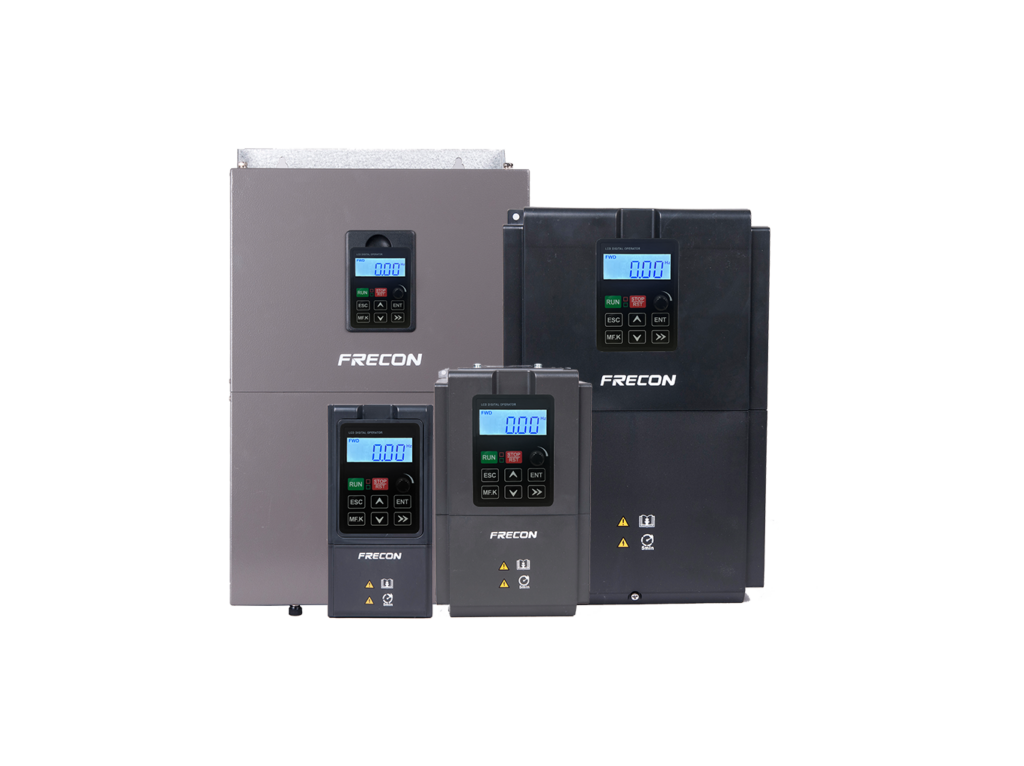
Hober: Power range 0.75kW-200kW, IP65 outdoor protection, operating temperature up to 60°C, plug-and-play installation, built-in data logger, remote monitoring capabilities, 24/7 real-time display for voltage/current/frequency/power. Frecon Electric: Advanced energy converter technology, specialized for agricultural/irrigation applications, off-grid reliability. INVT: GD100-PV series with advanced…

Solar Pump Inverter Market Analysis 2026
Website: cognitivemarketresearch.com
Solar Pump Inverter Types: String Inverters, Central Inverters, Micro Inverters. Product Type Segments: Grid-Connected, Off-Grid, Variable Frequency (VFD). Power Ratings: Up to 10 kW, 10 kW to 20 kW, Above 20 kW. Phase Configurations: Single Phase, Three Phase. Applications: Agriculture, Residential, Industrial. Industrial Automation Context: Industry 4.0 transformation in Machinery and Equipment …
top 10 solar inverter manufacturers in the world(2025) – SRNE
Website: srnesolar.com
SRNE Solar specializes in residential and commercial solar inverter solutions with no VFD or industrial motor control products detected in the provided data. Key offerings include: (1) Residential Hybrid Inverters (HESP series: 3.6-20kW; HEBP series: 8-18kW) available in single-phase, three-phase, low voltage, and high voltage configurations; (2) Residential Off-Grid Inverters (ASP series: 4-16kW;…
B2B Engineering FAQs About Solar Pump Inverter
-
How does the MPPT algorithm in a solar pump inverter optimize for pump load characteristics compared to standard grid-tied inverters?
Solar pump inverters utilize dynamic MPPT algorithms specifically tuned for motor drive applications, tracking the maximum power point (Vmp) across a wide DC input range (typically 150V–800VDC) while accounting for the cubic power relationship of centrifugal pumps. Unlike static grid-tied inverters, these systems adjust switching frequency in real-time to maintain optimal V/f ratios during irradiance fluctuations, ensuring the pump motor receives stable torque even at low light levels (down to 20% rated irradiance). -
What are the critical motor control parameters when configuring a solar pump inverter for submersible induction motors versus surface-mounted permanent magnet synchronous motors (PMSM)?
For submersible induction motors, configure V/f control with automatic torque boost (150% starting torque) and carrier frequencies between 2–4kHz to mitigate cable losses over long motor leads. For PMSM applications, enable sensorless vector control (FOC) with accurate motor parameter autotuning, ensuring the inverter matches the back-EMF waveform and pole pair count. Critical settings include stator resistance (Rs) compensation for voltage drop and slip frequency calculation to prevent stall conditions in deep-well applications exceeding 200m head. -
Can a solar pump inverter operate in hybrid AC/DC mode, and what are the switching logic requirements for seamless transition between solar and grid power?
Yes, advanced solar pump inverters support dual-input hybrid architecture with automatic source switching logic (typically <50ms transfer time). The system prioritizes DC solar input via internal DC bus sharing, automatically engaging the AC grid input through an active rectifier when irradiance drops below the minimum Vmp threshold (typically 20% below rated DC voltage). Engineers must configure the switching hysteresis band (usually 10–15VDC) and phase synchronization parameters to prevent mechanical shock during transitions, particularly in systems with high inertia flywheels. -
How do dry-run protection and cavitation prevention algorithms function without external sensors, and what are the automatic recovery protocols?
Modern solar pump inverters employ power curve analysis algorithms that monitor the relationship between output frequency, current draw, and DC bus ripple. Dry-run conditions are detected when power consumption drops below 30% of the calculated hydraulic load curve for >10 seconds, triggering immediate coast-to-stop and fault latching. Cavitation detection analyzes high-frequency current harmonics (6th and 12th order) indicative of vapor bubble collapse. Auto-restart protocols implement exponential backoff timing (initial 30 minutes, doubling up to 8 hours) with sunrise detection logic to resume operation when water levels recover. -
What are the electrical sizing considerations for long-distance pumping applications (>500m) versus high-flow irrigation systems?
For high-head (long-distance) applications, size the inverter at 1.25x the pump’s rated power to accommodate the √3×I×R voltage drop across submersible cables, selecting units with 380V–460V three-phase output and 150% overload capacity for 60 seconds. For high-flow systems, prioritize inverters with high switching frequencies (up to 16kHz) to reduce motor acoustic noise and configure S-curve acceleration ramps (0.5–3 seconds) to prevent water hammer. DC input cabling requires 4mm² minimum per 100m run to minimize resistive losses affecting MPPT efficiency. -
What communication protocols and SCADA integration capabilities are essential for agricultural IoT deployment of solar pump inverters?
Industrial solar pump inverters should support RS485/Modbus-RTU for local PLC integration and optional GPRS/4G modules with MQTT or JSON protocols for cloud-based SCADA. Advanced units offer CANopen compatibility for multi-inverter synchronization. Critical parameters for remote monitoring include: DC input voltage/current, AC output frequency/torque current, cumulative flow calculations (via pulse input from flow meters), and fault code registers (dry-run, overvoltage, phase loss). Ensure the inverter supports OTA firmware updates and provides open API documentation for integration with agricultural management platforms. -
How does a solar pump inverter handle multi-pump cascade control for large-scale irrigation zones, and what are the synchronization requirements?
Master-slave cascade control allows one inverter (master) to regulate up to 4–6 slave units via RS485 daisy-chain topology, maintaining constant pressure through PID control algorithms. The master unit calculates total system demand and distributes frequency references (±0.01Hz precision) to slave pumps, implementing staggered start sequences (2–5 second delays) to minimize inrush current on the DC bus. Synchronization requires identical ramp rates across all units and phase-aligned output waveforms to prevent circulating currents between parallel pumps. -
What are the electromagnetic compatibility (EMC) and harmonic distortion specifications that EPC contractors should verify for solar pump inverter installations near sensitive equipment?
Verify compliance with IEC 61000-6-2 (immunity) and IEC 61000-6-4 (emission) standards, ensuring conducted emissions remain below 79dBμV (quasi-peak) at 150kHz–30MHz. Total Harmonic Distortion (THD) should be <3% at rated load to prevent overheating of pump motor windings. For installations near communication towers, specify inverters with built-in DC chokes and EMC filters (C2 or C3 category per IEC 61800-3), with shielded motor cables (360° grounding at both ends) to mitigate radiated interference affecting precision agriculture sensors.
Disclaimer
⚠️ Important Disclaimer
The information provided in this guide is for educational purposes. Industrial applications and electrical engineering projects carry inherent risks. B2B buyers and contractors must conduct thorough technical due diligence and verify regional compliance before installation or procurement.
Conclusion: Partnering with Boray Inverter for Solar Pump Inverter
As the renewable energy landscape continues to evolve, the integration of sophisticated solar pump inverters remains fundamental to maximizing ROI in off-grid and hybrid pumping infrastructures. These systems represent far more than simple DC-to-AC conversion devices; they embody the convergence of advanced MPPT algorithms, intelligent motor control strategies, and robust power electronics essential for sustainable water management across agricultural, municipal, and industrial sectors. For engineers and project developers seeking to optimize system efficiency while ensuring long-term operational reliability, the selection of a manufacturing partner with deep technical expertise in variable frequency drive (VFD) technologies becomes paramount.
Shenzhen Boray Technology Co., Ltd. stands at the forefront of this technological convergence, delivering innovative Solar Pumping and Motor Control Solutions engineered specifically for demanding B2B applications. With an R&D team comprising 50% of its workforce, Boray Inverter has mastered complex PMSM (Permanent Magnet Synchronous Motor) and IM (Induction Motor) vector control technologies, enabling precise torque management, superior dynamic response, and optimized energy efficiency across diverse pump motor architectures. The company’s manufacturing excellence is evidenced by its dual modern production lines and rigorous 100% full-load testing protocols, ensuring every unit meets stringent international standards before deployment. From large-scale agricultural irrigation projects to complex industrial automation systems, Boray’s solutions have established a trusted global presence, providing EPC contractors and automation distributors with the technical confidence and engineering support required for high-stakes implementations.
To explore how Boray Inverter can enhance your next solar pumping project with customized VFD solutions tailored to specific motor parameters and environmental conditions, or to request competitive wholesale quotations for volume deployments, contact their engineering team today. Visit borayinverter.com to discover specification-grade products designed for the future of sustainable motor control.