Introduction: Sourcing Solar Inverter Hybrid for Industrial Use
Industrial operations and large-scale agricultural projects face a critical inflection point: rising grid instability, escalating energy costs, and the imperative to maintain continuous motor-driven processes—from irrigation pumps to conveyor systems. In this landscape, the solar inverter hybrid has evolved from a residential curiosity into a strategic industrial asset, offering seamless integration between photovoltaic generation, battery storage, and grid-tied reliability. Unlike conventional solar setups that falter during outages or off-grid systems that lack flexibility, hybrid inverters function as intelligent power management hubs, synchronizing DC solar input with AC motor loads while providing ride-through capability during voltage sags or complete blackouts.
For engineers and EPC contractors specifying equipment for solar pumping stations or automated manufacturing lines, selecting the right hybrid inverter demands rigorous analysis of MPPT efficiency, compatibility with Variable Frequency Drives (VFDs), and battery chemistry integration—factors that directly impact motor control precision and system ROI. This guide examines the industrial hybrid inverter ecosystem in detail: from three-phase high-voltage architectures suited for heavy machinery to critical technical specifications including THD levels, IP ratings, and communication protocols essential for SCADA integration. We further evaluate global manufacturing capabilities, quality certifications, and supply chain reliability to equip procurement teams with actionable criteria for sourcing decisions. Whether optimizing existing VFD networks or designing new solar pumping arrays, understanding these parameters ensures your power infrastructure delivers both resilience and operational efficiency.
Article Navigation
- Top 3 Solar Inverter Hybrid Manufacturers & Suppliers List
- Introduction: Sourcing Solar Inverter Hybrid for Industrial Use
- Technical Types and Variations of Solar Inverter Hybrid
- Key Industrial Applications for Solar Inverter Hybrid
- Top 3 Engineering Pain Points for Solar Inverter Hybrid
- Component and Hardware Analysis for Solar Inverter Hybrid
- Manufacturing Standards and Testing QC for Solar Inverter Hybrid
- Step-by-Step Engineering Sizing Checklist for Solar Inverter Hybrid
- Wholesale Cost and Energy ROI Analysis for Solar Inverter Hybrid
- Alternatives Comparison: Is Solar Inverter Hybrid the Best Choice?
- Core Technical Specifications and Control Terms for Solar Inverter Hybrid
- Future Trends in the Solar Inverter Hybrid Sector
- B2B Engineering FAQs About Solar Inverter Hybrid
- Disclaimer
- Conclusion: Partnering with Boray Inverter for Solar Inverter Hybrid
Technical Types and Variations of Solar Inverter Hybrid
Hybrid solar inverter architectures vary significantly when deployed in industrial automation, agricultural motor control, and solar pumping applications compared to residential installations. For B2B engineers and EPC contractors, selecting the appropriate topology requires careful consideration of voltage levels, coupling methods, and integration with existing Variable Frequency Drive (VFD) infrastructure. The following classifications represent the primary technical variations relevant to heavy-duty industrial and agricultural environments.
| Type | Technical Features | Best for (Industry) | Pros & Cons |
|---|---|---|---|
| Three-Phase Industrial Hybrid (400V/690V) | • 3-phase AC output (380–480V or 600–690V) • Active/reactive power control (PF 0.8 leading to 0.8 lagging) • Anti-islanding protection (IEEE 1547/UL 1741) • THD <3% at rated power • Modbus/CAN communication protocols |
Manufacturing plants, commercial HVAC, heavy industrial motor loads, centrifugal pump stations | Pros: High power density (50kW–250kW+), direct motor starting capability, grid support functions (Volt/VAR), compatible with standard industrial motors Cons: Requires balanced 3-phase battery systems, higher installation complexity, significant space requirements for cooling |
| Solar Pump Hybrid with Integrated VFD | • Dual MPPT inputs (600V–800V DC range) • V/f control and sensorless vector control modes • Dry-run protection & flow sensor integration • Battery backup for scheduled irrigation • IP65/NEMA 4X enclosure for harsh environments |
Agricultural irrigation, livestock water systems, remote borehole pumping, aquaculture | Pros: Eliminates separate VFD hardware, optimized pump curves (variable torque), operates in off-grid mode, automatic MPPT tracking for solar priority Cons: Limited to motor loads (cannot power lighting/residential loads), specific pump motor compatibility required, typically restricted to lower power ranges (<75kW) |
| DC-Coupled High-Voltage (1000V–1500V) | • Direct DC-coupled battery (400V–800V nominal) • CEC efficiency >98.5% • Reduced DC cabling losses (smaller gauge conductors) • Arc fault detection (NEC 690.11 compliant) • 1500V PV string compatibility |
Utility-scale storage, industrial peak shaving, large commercial solar installations, grid-stabilization projects | Pros: Higher round-trip efficiency (minimal conversion stages), lower BOS costs, scalable to MW range, reduced heat generation Cons: High voltage safety protocols required (arc flash PPE), limited to specific battery chemistries (high-voltage LiFePO4), complex charge balancing |
| AC-Coupled Retrofit Hybrid | • Frequency-watt control for existing string inverters • Grid-tie synchronization with phase-lock loop (PLL) • Zero-export functionality for utility restrictions • RS485/Ethernet communication for SCADA integration |
Existing solar pump upgrades, industrial automation retrofits, grid-connected VFD systems requiring battery addition | Pros: Preserves existing inverter/VFD investment, flexible battery sizing independent of PV array, easier permitting for retrofits Cons: Double conversion losses (95–96% vs 98%+ efficiency), complex phase-locking requirements, potential compatibility issues with older inverter models |
Three-Phase Industrial Hybrid Inverters (400V/690V Class)
For industrial engineers managing heavy motor loads, three-phase hybrid inverters represent the standard for applications above 10kW. These units output 380–480V (or up to 690V for specialized industrial motors) and incorporate active power factor correction essential for motor starting currents. Unlike residential single-phase units, industrial hybrids feature robust anti-islanding protection and can provide reactive power support to stabilize local grid voltage—critical when operating large induction motors that create voltage sags.
When integrated with VFDs, these inverters act as the primary power source during grid outages, supplying clean sine wave output (THD <3%) to prevent motor insulation damage. Advanced models include droop control functionality, allowing multiple inverters to synchronize in parallel for agricultural processing facilities or irrigation districts requiring 100kW+ of continuous power.
Solar Pump Hybrid Inverters with Integrated VFD
This specialized category merges solar pump inverter technology with battery energy storage management—a core competency for manufacturers like Boray Inverter. Rather than using separate components, these integrated systems combine Maximum Power Point Tracking (MPPT), DC-AC conversion, and variable frequency motor control in a single enclosure.
Technical Advantages for Agricultural Applications:
– Direct Pump Control: The inverter automatically adjusts output frequency (0–50/60Hz) based on solar irradiance, switching to battery power when irradiance drops below the threshold required for minimum pump speed (typically 30% of rated power).
– Motor Protection: Built-in VFD functionality provides soft-start capabilities, eliminating inrush currents that damage submersible pump motors. Dry-run protection interfaces with float switches or pressure transducers to prevent cavitation.
– Hybrid Logic: Advanced algorithms prioritize solar energy for pumping while reserving battery capacity for critical irrigation schedules or grid-peak avoidance (peak shaving).
These systems typically operate in the 2.2kW–75kW range, making them ideal for borehole pumps and surface irrigation systems where grid connectivity is unreliable or non-existent.
DC-Coupled High-Voltage Architectures (1000V–1500V)
High-voltage DC-coupled hybrids are increasingly specified for large-scale agricultural operations and industrial facilities where cable runs between solar arrays, batteries, and inverters exceed 100 meters. By maintaining high DC bus voltages (400V–800V battery banks), these systems reduce copper losses and allow smaller conductor sizing—significant cost savings in large installations.
From a motor control perspective, DC-coupled systems offer superior compatibility with modern VFDs that accept DC bus input directly. When the grid fails, the battery bank maintains the DC bus voltage, allowing the VFD to continue operating without interruption—a critical feature for continuous process manufacturing or livestock watering systems that cannot tolerate even momentary power interruptions.
AC-Coupled Retrofit Systems
For EPC contractors upgrading existing solar pump installations or industrial facilities with legacy VFD infrastructure, AC-coupled hybrids provide a non-invasive solution. These systems connect to the AC output of existing inverters or VFDs, using frequency-watt control to manage battery charging without modifying the DC solar array wiring.
Engineering Considerations:
– Synchronization: The hybrid inverter must precisely match phase, frequency, and voltage of the existing system using digital phase-lock loop (PLL) circuits before connection—typically requiring 2–5 seconds for synchronization.
– Power Quality: Since AC-coupled systems involve double conversion (DC-AC at the original inverter, then AC-DC-AC at the hybrid unit), efficiency drops by 2–4% compared to DC-coupled alternatives. However, this is often offset by the avoided cost of replacing functional existing equipment.
AC-coupled solutions are particularly valuable for industrial automation projects where production downtime for retrofitting is prohibitively expensive, allowing battery storage to be added during scheduled maintenance windows without disrupting existing motor control sequences.
Key Industrial Applications for Solar Inverter Hybrid
Hybrid solar inverter systems have evolved beyond residential energy storage to become critical infrastructure components in industrial automation, particularly where seamless power continuity intersects with motor control requirements. By integrating Maximum Power Point Tracking (MPPT) photovoltaic conversion, battery energy storage system (BESS) management, and grid-interactive power electronics within a single architecture, these solutions enable Variable Frequency Drive (VFD) operations to continue uninterrupted during grid instability or complete outages. For industries reliant on precise torque control and process continuity—from agricultural irrigation to continuous manufacturing—the hybrid inverter serves as the central energy router, optimizing DC power flow from solar arrays while providing the stable AC output necessary for sensitive motor control applications.
Strategic Implementation Matrix
| Sector | Application | Energy Saving Value | Sourcing Considerations |
|---|---|---|---|
| Agriculture & Precision Irrigation | Solar pump VFD systems with hybrid backup for center-pivot, drip irrigation, and livestock watering | 40–60% reduction in diesel generator dependency; elimination of crop loss risks via 24/7 battery-backed watering during grid outages | IP65/NEMA 4X enclosure ratings for outdoor agricultural environments; wide MPPT voltage range (200–850VDC) to match solar pump VFD input curves; anti-islanding protection (IEEE 1547) for safe grid reconnection |
| Municipal Water Treatment | Hybrid solar inverters powering aeration blowers, filtration pumps, and sewage lift station VFDs | 30–45% peak demand reduction through solar self-consumption; prevention of biological process failures via <10ms transfer time to battery backup | UL 1741-SA (Rule 21) compliance for grid support functions; compatibility with submersible pump VFDs (high inrush current handling); galvanic isolation to protect against ground fault currents in wet environments |
| Industrial HVAC & Process Cooling | Solar-assisted variable speed drives for centrifugal chillers, cooling tower fans, and building ventilation systems | 25–35% reduction in HVAC energy costs via direct PV-to-VFD coupling; thermal load shifting using battery storage to avoid peak demand charges | DC bus coupling capability with existing VFD infrastructure (common DC bus architecture); total harmonic distortion (THD) <3% to prevent PLC and building management system interference; dynamic power factor correction |
| Mining & Remote Material Processing | Off-grid hybrid microgrids for jaw crushers, conveyor belts, and slurry pumps in weak-grid or off-grid operations | 70–90% fuel cost reduction versus diesel gensets; regenerative braking energy capture from downhill conveyors to battery storage | Heavy-duty chassis (IP54 minimum, C3/C4 corrosion resistance); wide ambient temperature operation (-25°C to +60°C); compatibility with high-torque motor starters and soft-start integration; voltage ride-through capability for unstable grid conditions |
Application Deep Dive: Engineering Considerations
Agriculture & Precision Irrigation
In large-scale agricultural operations, the integration of hybrid solar inverters with solar pump VFDs addresses the critical challenge of irrigation scheduling independence from grid availability. Modern center-pivot systems require consistent pressure and flow rates—achieved through precise motor speed control—that cannot tolerate the voltage sags typical of rural distribution networks. A hybrid configuration allows the VFD to draw primary power from the solar array during daylight hours, with the inverter’s battery bank providing ride-through capability for motor inrush currents (typically 6–7x full load amps) during cloud transients or evening operation. When specifying these systems, engineers must verify the inverter’s surge capacity rating and ensure the MPPT algorithm can track rapidly changing irradiance conditions common in agricultural regions with dust or intermittent cloud cover.
Municipal Water Treatment
Water treatment facilities represent mission-critical infrastructure where biological process continuity is legally mandated. Hybrid solar inverters in this sector must interface with complex VFD networks controlling dissolved oxygen levels via aeration blowers—a process where motor speed modulation directly impacts treatment efficacy. The sourcing emphasis on IEEE 1547 compliance ensures that during grid outages, the inverter can form a stable microgrid (grid-forming mode) to maintain VFD operations without the voltage/frequency fluctuations that trigger protective trips. Additionally, the high humidity and chemical exposure in treatment plants necessitate inverters with conformal coating on PCBs and stainless steel enclosures to prevent corrosion-induced failures in the power electronics.
Industrial HVAC & Process Cooling
Commercial and industrial HVAC systems present unique load profiles characterized by high starting currents and variable torque requirements. Hybrid solar inverters deployed in this sector increasingly utilize DC coupling architectures, where the solar array connects directly to the VFD’s DC bus via the hybrid inverter’s battery management system. This topology eliminates AC conversion losses (typically 3–5%) and allows the VFD to prioritize solar energy while using the battery as a buffer for compressor startup surges. Engineers must specify inverters with active front-end (AFE) technology or integrated active filters to mitigate the harmonic currents generated by VFDs, which can otherwise distort the power quality supplied to sensitive control systems.
Mining & Remote Operations
In mining and aggregate processing, hybrid solar inverters must withstand extreme environmental stress while managing the regenerative energy from decelerating heavy conveyors and crushers. These applications require bidirectional power flow capability—charging batteries from solar generation during material transport and capturing braking energy during downhill conveying. The inverter’s control algorithm must coordinate with the VFD’s dynamic braking chopper to prevent overvoltage trips during rapid load changes. Sourcing considerations emphasize wide temperature derating curves and robust electromagnetic compatibility (EMC) shielding to prevent interference from high-power radio communications and blasting operations common in mining environments.
For EPC contractors and automation distributors, successful deployment hinges on selecting hybrid inverters that offer not only solar conversion efficiency but also advanced motor control compatibility—including adjustable carrier frequencies for noise-sensitive applications and comprehensive fault ride-through capabilities that align with IEC 61800-5-1 standards for adjustable speed electrical power drive systems.
Top 3 Engineering Pain Points for Solar Inverter Hybrid
Scenario 1: Motor Inrush Current Overload During Direct-On-Line Starting
The Problem:
In agricultural and industrial pumping applications, centrifugal and submersible pumps often utilize Direct-On-Line (DOL) starting, drawing 6-8 times the Full Load Amperage (FLA) during startup. Standard hybrid solar inverters are optimized for continuous power delivery with limited surge capacity (typically 150-200% for 10 seconds). When a large pump motor initiates, the instantaneous power demand collapses the hybrid inverter’s DC bus voltage, triggering overcurrent protection or low-voltage ride-through (LVRT) shutdowns. This results in failed pump starts, repeated fault cycling, and potential damage to both the inverter’s IGBT modules and the motor windings due to repeated thermal stress.
The Solution:
Integration of Variable Frequency Drive (VFD) soft-start algorithms within the hybrid inverter architecture eliminates inrush current by ramping motor torque gradually. Advanced vector control techniques maintain constant V/Hz ratios during acceleration, limiting starting current to 120-150% of rated load. This allows the hybrid system to start pumps up to 2HP sizes larger than the inverter’s nominal rating while preserving MPPT stability and DC link voltage integrity during the critical acceleration phase.
Scenario 2: Harmonic Resonance in Island Mode with Non-Linear Motor Loads
The Problem:
When hybrid systems transition to off-grid/island mode during utility outages, they must power VFD-driven motors which act as non-linear loads, injecting 5th, 7th, and 11th order harmonics back into the system. In the absence of grid impedance to dampen these harmonics, resonance can occur between the hybrid inverter’s output filter capacitors and the motor cable inductance. This creates voltage waveform distortion (THDv > 8%), leading to motor bearing currents, excessive heating in the stator windings, and erratic behavior in sensorless vector control systems. Additionally, harmonic feedback can confuse the hybrid inverter’s anti-islanding detection algorithms, causing failure to re-synchronize with the grid when power returns.
The Solution:
Implementation of active front-end (AFE) technology or LCL filter topologies within the hybrid inverter design that actively compensate for harmonic distortion. By monitoring load current in real-time and injecting counter-phase harmonics, the system maintains THDv below 5% even when powering multiple VFD loads. Enhanced phase-locked loop (PLL) algorithms with harmonic rejection capabilities ensure reliable grid reconnection by distinguishing between harmonic noise and actual grid voltage presence.
Scenario 3: Environmental Hardening vs. Thermal Derating in Remote Pump Stations
The Problem:
Hybrid inverters deployed in outdoor agricultural pump stations or remote industrial sites face extreme environmental stressors: ambient temperatures ranging from -20°C to +50°C, humidity levels exceeding 95% RH, and airborne contaminants including dust, salt mist, and agricultural chemicals (fertilizers/pesticides). Standard IP20 or IP54 rated hybrid inverters suffer from cooling fan clogging, corrosion of PCB traces, and condensation-induced short circuits. Furthermore, high ambient temperatures force aggressive thermal derating (reducing output power by 20-30% at 45°C), insufficient to maintain critical irrigation schedules during peak solar irradiance periods when cooling is most needed.
The Solution:
IP65-rated enclosure designs with conformal-coated PCBs and passive cooling architectures (heat pipe or natural convection) eliminate forced-air ventilation points where contaminants enter. Wide-temperature-grade components (-25°C to +60°C ambient operation without derating) ensure continuous rated power delivery even during midday heat peaks. Integration of automatic condensation management systems and anti-corrosion aluminum alloy heat sinks extends operational lifespan in harsh environments while maintaining full hybrid functionality—MPPT efficiency, battery charging, and grid interaction—without thermal throttling.
Component and Hardware Analysis for Solar Inverter Hybrid
In industrial solar pumping and hybrid energy applications, the inverter functions as the critical power electronic interface between photovoltaic arrays, energy storage systems, and motor loads. Unlike standard grid-tied units, hybrid solar inverters engineered for agricultural and industrial automation must simultaneously manage bidirectional power flow, provide motor control capabilities comparable to Variable Frequency Drives (VFDs), and withstand harsh environmental conditions. The reliability and efficiency of these systems depend fundamentally on the specification and integration of core hardware components.
Power Semiconductor Architecture
The power stage of a hybrid inverter represents the primary energy conversion interface, typically utilizing Insulated Gate Bipolar Transistor (IGBT) modules or emerging Silicon Carbide (SiC) MOSFETs. In solar pumping applications, these semiconductors must handle not only steady-state DC-AC conversion but also the high inrush currents associated with motor starting and the regenerative energy feedback from decelerating pumps. High-quality IGBT modules feature low thermal resistance (Rth) and high junction temperature ratings (Tj ≥ 150°C), enabling continuous operation at elevated ambient temperatures common in agricultural environments. The switching frequency—typically 2-16 kHz for motor control applications—directly impacts electromagnetic compatibility (EMC) and motor bearing current mitigation, requiring careful balancing between efficiency and audible noise.
Control and Signal Processing Units
At the heart of system intelligence lies the Digital Signal Processor (DSP) or ARM-based controller, executing complex algorithms for Maximum Power Point Tracking (MPPT), battery charge management, and grid synchronization. For solar pump inverters, this controller must integrate VFD functionality, maintaining precise torque control and speed regulation despite fluctuating solar irradiance. Critical specifications include ADC resolution (typically 12-16 bit) for accurate current sensing, processing latency under 100μs for rapid fault response, and robust communication protocols (RS485, CAN bus, Modbus TCP) for integration with SCADA systems and remote monitoring platforms used in large-scale agricultural projects.
Passive Components and Energy Storage
DC-Link capacitors serve as the energy reservoir between the PV input/battery bank and the inverter bridge, filtering voltage ripple and providing instantaneous current during load transients. In hybrid systems subject to intermittent solar input and cyclic battery loading, film capacitors or high-grade aluminum electrolytic capacitors with extended temperature ratings (-40°C to +105°C) are essential. The Equivalent Series Resistance (ESR) and ripple current capability (measured in Arms) determine thermal stress; excessive ESR leads to internal heating and electrolyte evaporation, the primary failure mode in long-term deployments.
Thermal Management Infrastructure
Thermal design directly correlates with semiconductor lifespan and system MTBF. Cooling heatsinks must maintain junction temperatures below 80% of maximum ratings under worst-case conditions (50°C ambient, full load, minimum airflow). Industrial hybrid inverters employ forced-air cooling with IP54-rated fans or, for critical agricultural applications, liquid cooling systems. The thermal interface material (TIM) between IGBT modules and heatsinks requires high thermal conductivity (>3 W/mK) and long-term stability to prevent dry-out and thermal runaway. Computational Fluid Dynamics (CFD) optimization ensures uniform heat distribution across power modules, preventing localized hot spots that accelerate aging.
Component Specification Matrix
| Component | Function | Quality Indicator | Impact on Lifespan |
|---|---|---|---|
| IGBT/SiC Power Modules | DC-AC conversion; motor drive capability; handling inductive loads | Junction temperature rating (Tj max), thermal resistance Rth(j-c), switching losses (Eon/Eoff), short-circuit withstand time | Critical: Every 10°C reduction in operating temperature doubles semiconductor lifespan; thermal cycling causes bond wire fatigue and solder delamination |
| DSP/MPPT Controller | Real-time energy management; grid-forming/islanding detection; VFD algorithms | Processing MIPS, ADC resolution (bits), PWM resolution, ambient temperature range | Medium: Limited primarily by auxiliary power supply capacitor aging; firmware robustness prevents control loop instability |
| DC-Link Capacitors | Ripple current absorption; DC bus stabilization; energy buffering | ESR (mΩ), rated ripple current (Arms), temperature rating, expected life at rated temperature (L10) | High: Electrolyte evaporation in electrolytic types or film degradation; determines inverter end-of-life in cyclic duty applications |
| Cooling Heatsinks/Systems | Thermal dissipation from semiconductors; maintaining junction temperatures | Thermal resistance (°C/W), material conductivity (Al vs. Cu), fan MTBF (hours), bearing type | Critical: Inadequate cooling accelerates semiconductor aging exponentially; fan failure leads to rapid thermal shutdown or catastrophic damage |
| EMI/RFI Filters | Suppressing switching noise; protecting motor insulation; grid compliance | Insertion loss (dB), saturation current (A), leakage current, temperature stability | Medium: Core saturation causes overheating; prevents premature motor winding insulation failure and bearing currents |
| Protection Circuits (AFCI/GFCI/Surge) | Arc fault detection; ground fault protection; lightning surge diversion | Response time (μs), surge current capacity (kA), breaking capacity, reset capability | High: Prevents catastrophic failure of power semiconductors and controllers from grid transients or lightning strikes |
| Communication Interfaces | Industrial automation integration; remote monitoring; BMS communication | Isolation voltage (V), baud rate stability, protocol conformance (Modbus/IEC 61850) | Low: Galvanic isolation protects control electronics from ground loops and transients |
Integration with Motor Control Systems
For agricultural project managers and EPC contractors, the convergence of hybrid inverter technology with VFD functionality offers significant system simplification. Rather than cascading a separate solar pump inverter with a battery inverter, unified hybrid architectures eliminate DC bus voltage mismatches and communication latency between devices. The hardware must accommodate motor-specific requirements: dv/dt filtering to protect pump motor windings from voltage spikes, regenerative braking choppers to dissipate energy when decelerating high-inertia pumps, and robust input filtering to prevent battery current ripple from affecting MPPT efficiency.
When specifying components for solar pumping stations, engineers should prioritize semiconductors with higher current margins (minimum 1.5x motor FLA) to accommodate the power factor characteristics of submersible pumps, and specify capacitors rated for 1.2x nominal DC voltage to handle open-circuit PV array voltages during cold weather conditions. The thermal design must account for dust-laden agricultural environments, requiring derating of forced-air cooling systems or adoption of sealed liquid cooling for desert applications.
Procurement Consideration: For distributors and EPCs, verify component traceability to Tier-1 manufacturers (Infineon, Mitsubishi, TI, NXP) and insist on burn-in testing protocols. Component-level MTBF data should exceed 100,000 hours at 40°C ambient, with electrolytic capacitor lifespans rated at >10 years under actual operating ripple currents, not just nominal values.
Manufacturing Standards and Testing QC for Solar Inverter Hybrid
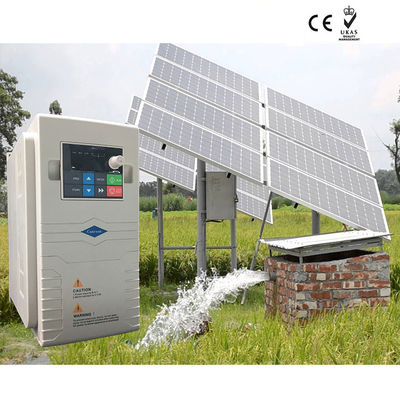
At Boray Inverter, the manufacturing of hybrid solar inverters for industrial and agricultural deployment adheres to stringent electromechanical standards that bridge photovoltaic energy conversion with robust motor control capabilities. Unlike standard residential hybrid units, industrial-grade hybrid inverters destined for solar pumping stations and automated motor control systems must withstand extreme thermal cycling, harmonic distortion from inductive loads, and continuous operation in high-humidity environments. Our quality control protocols ensure seamless integration between DC solar inputs, battery energy storage systems (BESS), and AC motor drives, maintaining precise synchronization across variable frequency operations.
Component-Level Manufacturing Standards
The foundation of reliability begins with military-grade PCB substrates and automated SMT (Surface Mount Technology) assembly lines operating under ISO 9001:2015 and IATF 16949 automotive-grade process controls. Critical power stages utilize Infineon or Mitsubishi IGBT modules with junction temperatures rated to 175°C, paired with DC-link film capacitors featuring self-healing metallized polypropylene dielectric to withstand the ripple currents inherent in VFD-solar hybrid applications. All passive components undergo 100% automated optical inspection (AOI) and X-ray verification for BGA solder joint integrity, ensuring zero defect tolerance in high-frequency switching circuits that govern both grid-tie functionality and motor torque control.
Environmental Protection & Conformal Coating
For agricultural and industrial environments where solar pump inverters operate near irrigation systems or dusty automation floors, we implement triple-layer conformal coating protocols. The PCB assemblies receive acrylic-based coating (IPC-CC-830 Class 3) followed by silicone thermal interface material and polyurethane top-sealing, achieving IP65/NEMA 4X protection against moisture ingress and corrosive atmospheres. Salt spray testing per ASTM B117 exceeds 1,000 hours for coastal installations, while thermal shock cycling (-40°C to +85°C) validates solder joint reliability under the expansion stresses caused by direct solar heating of outdoor enclosures.
Burn-in and Aging Protocols
Every hybrid inverter undergoes a 72-hour high-temperature aging (HTA) process at 45°C ambient with 85% relative humidity, simulating accelerated lifecycle conditions. During this burn-in phase, units operate at 110% rated load to stress-test power semiconductor thermal management and capacitor electrolyte stability. For solar pumping applications specifically, we subject inverters to repetitive motor start-stop cycles—mimicking the high inrush currents of submersible pumps—to verify the integrity of relay contacts and DC bus voltage regulation under dynamic load transitions between solar generation, battery discharge, and grid supplementation.
Full-Load Performance Validation
Prior to shipment, each unit completes a 100% full-load testing regimen using programmable DC solar simulators (1000V/1500V MPPT range) and regenerative AC load banks. We verify:
– MPPT Efficiency: >99.5% tracking accuracy across 200V-850V DC input windows
– THD Control: <3% current total harmonic distortion when driving induction motors via integrated VFD functionality
– Transfer Switching: <10ms seamless transition between grid-tie, off-grid, and battery modes to prevent motor torque interruption
– Thermal Imaging: Infrared scanning of heat sinks and magnetic components under continuous 100% load to identify hotspots exceeding 80°C
Certification and Compliance Framework
Our hybrid solar inverters maintain comprehensive certification portfolios ensuring global market access and grid code compliance:
– Safety Standards: IEC 62109-1/2 (safety of power converters for PV systems), IEC 61400 (wind turbine compatibility for hybrid microgrids)
– Grid Integration: IEEE 1547, UL 1741, and VDE-AR-N 4105 for anti-islanding protection and reactive power control
– EMC/EMI: EN 61000-6-2 (immunity) and EN 61000-6-4 (emissions) for industrial environments with VFD interference
– Environmental: RoHS 3.0, REACH, and ISO 14001 environmental management for hazardous substance control in battery integration circuits
Integration Testing for Pump/Motor Applications
Recognizing that hybrid inverters in agricultural automation often function as solar pump controllers, we conduct specialized motor compatibility testing. This includes V/f control curve optimization for submersible pumps, torque boost validation during low-irradiance battery-assisted starting, and harmonic resonance analysis to prevent bearing currents in long-cable motor installations. Each unit is pre-configured with MPPT algorithms optimized for centrifugal pump load curves, ensuring that the transition between solar direct-drive and battery backup maintains constant flow pressure without cavitation risks.
This rigorous manufacturing and QC ecosystem ensures that Boray hybrid inverters deliver 25-year service lifespans in solar pumping installations, maintaining the precision motor control capabilities essential for modern agricultural automation and industrial energy management systems.
Step-by-Step Engineering Sizing Checklist for Solar Inverter Hybrid
Proper sizing of a hybrid solar inverter system requires rigorous electrical coordination between generation, storage, and motor control assets. For industrial pumping applications and automation systems, miscalculations in voltage window compatibility or motor inrush tolerance result in system faults, premature equipment failure, and costly downtime. The following engineering protocol ensures your hybrid inverter specification aligns with both solar array characteristics and VFD-driven motor loads.
Step 1: Motor Load Profiling & Inrush Characterization
Begin with a comprehensive analysis of the driven machinery. For solar pumping systems utilizing VFDs, document the motor’s Full Load Amps (FLA), Locked Rotor Amps (LRA), and service factor. Calculate the peak apparent power (kVA) demand, accounting for VFD efficiency losses (typically 3–5%). If the hybrid inverter will directly start motors without VFD soft-start capability, verify the inverter’s overload capacity—industrial hybrid inverters must sustain 150% rated current for 60 seconds and 200% for 10 seconds to handle motor inrush. For Boray VFD-integrated pump systems, confirm the hybrid inverter’s output THD (Total Harmonic Distortion) remains below 5% to prevent motor heating and bearing currents.
Step 2: Solar Array String Voltage Calculations & MPPT Window Alignment
Calculate the maximum and minimum DC input voltages to ensure compatibility with the hybrid inverter’s MPPT range and absolute maximum voltage limits:
– Maximum Open Circuit Voltage (Voc_max): Use the formula:
Voc_max = Voc_stc × Number of Modules in Series × Temperature Coefficient × Lowest Expected Temperature
(Apply a 1.25 safety multiplier for regions with extreme cold snaps to prevent inverter damage from voltage spikes.)
– Maximum Power Point Voltage (Vmp): Ensure the string Vmp at standard test conditions (STC) falls within the inverter’s MPPT voltage window across all ambient temperatures. For tropical installations, account for voltage depression at 60°C+ cell temperatures.
– Current Capacity: Verify that the sum of parallel string currents (Imp) does not exceed the inverter’s maximum DC input current rating, factoring in 1.25× irradiance overshoot conditions.
Step 3: Battery Bank Sizing & Chemistry Compatibility
Size the energy storage subsystem based on required autonomy hours and motor duty cycles:
– Energy Capacity (kWh): Calculate as:
(Motor Power (kW) × Daily Run Hours × Days of Autonomy) / (Depth of Discharge (DoD) × Efficiency Factor)
For lithium iron phosphate (LiFePO4) batteries common in industrial hybrids, use 80–90% DoD; for lead-acid, limit to 50%.
– Power Rating (C-Rate): Confirm the battery’s maximum continuous charge/discharge rate (C-rate) exceeds the hybrid inverter’s power conversion capability. High-torque pump applications may require 1C or higher discharge rates.
– Voltage Matching: Ensure battery nominal voltage (48V, 400V, or 800V DC) matches the hybrid inverter’s battery input specifications to avoid additional conversion losses.
Step 4: AC Output Capacity & Voltage Stability
Size the AC output based on simultaneous load operation:
– Continuous Power Rating: Select an inverter with a continuous output rating ≥ 1.25× the sum of all simultaneously operating motor FLAs converted to kVA.
– Voltage Regulation: For sensitive agricultural automation or precision irrigation, verify the inverter maintains ±1% voltage regulation and ±0.5Hz frequency stability during mode transitions (grid-tied to off-grid/island mode).
– Phase Configuration: For three-phase pump motors, confirm the hybrid inverter supports balanced three-phase output with <3% phase voltage imbalance to prevent motor derating.
Step 5: VFD Integration & Control Synchronization
When integrating with existing Boray Variable Frequency Drives:
– Input Voltage Compatibility: Verify the hybrid inverter’s output voltage range (230V/400V/480V ±10%) matches the VFD’s input specifications.
– Ramp Coordination: Program the hybrid inverter’s transfer switch delay (<20ms for seamless transfer) to coordinate with VFD ride-through settings. Set VFD DC bus undervoltage thresholds above the hybrid inverter’s low-voltage disconnect to prevent nuisance tripping during solar irradiance fluctuations.
– Regenerative Energy Handling: If the application involves high-inertia loads or downhill pumping, confirm the hybrid inverter can absorb regenerative power from the VFD or that dynamic braking resistors are sized appropriately.
Step 6: Grid Interaction & Protection Coordination
For systems requiring grid backup or net metering:
– Transfer Switch Specifications: Verify the hybrid inverter’s automatic transfer switch (ATS) meets IEC 60947-6-1 standards with break-before-make timing to prevent backfeeding.
– Anti-Islanding: Confirm IEEE 1547 or local grid code compliance for anti-islanding protection (typically <2 seconds detection time).
– Export Limitation: If grid export is restricted, ensure the inverter supports zero-export functionality with <2% measurement accuracy to avoid utility penalties.
Step 7: Environmental Derating & Installation Logistics
Apply correction factors for harsh industrial or agricultural environments:
– Temperature Derating: For installations in ambient temperatures >40°C, apply the manufacturer’s derating curve (typically 1% per °C above 40°C). Ensure the hybrid inverter’s enclosure rating (IP54 minimum for dusty agricultural environments, IP65 for direct outdoor exposure) matches the installation location.
– Altitude Correction: For sites above 1,000m, derate inverter capacity by 1% per 100m elevation due to reduced air cooling efficiency.
– Cable Sizing: Calculate DC and AC cable gauges to maintain voltage drop below 3% for DC circuits and 1.5% for AC circuits, using the maximum current from Step 2 and Step 4.
Step 8: Monitoring & Communication Protocol Verification
Ensure integration with existing SCADA or building management systems:
– Communication Interfaces: Verify availability of RS485, Modbus RTU/TCP, or CAN bus protocols for remote monitoring of solar yield, battery state of charge (SOC), and motor operational status.
– Protective Relaying: Coordinate overcurrent protection devices (OCPDs) on both DC and AC sides, ensuring the hybrid inverter’s internal protection curves coordinate with external breakers to prevent nuisance tripping during motor starting events.
Final Verification Checklist:
– [ ] Voc_max at record low temperature < Inverter absolute max DC voltage
– [ ] Vmp at 60°C > Inverter minimum MPPT voltage
– [ ] Inverter surge capacity > Motor LRA (or VFD-controlled soft-start current)
– [ ] Battery C-rate > Inverter max charge/discharge power
– [ ] Transfer time < Motor control system ride-through capability
– [ ] IP rating suitable for dust/irrigation spray exposure
– [ ] Communication protocol compatible with existing automation architecture
By systematically executing these calculations, EPC contractors and automation engineers ensure the hybrid solar inverter operates within its optimal electrical envelope, maximizing the service life of both the power electronics and the driven motor assets while ensuring uninterrupted critical pumping operations.
Wholesale Cost and Energy ROI Analysis for Solar Inverter Hybrid
For EPC contractors and automation distributors evaluating hybrid solar inverter procurement, understanding the nuanced economics beyond per-watt pricing is critical—particularly when integrating these systems with solar pump inverters and variable frequency drive (VFD) motor control architectures. The following analysis examines wholesale cost structures, volume-tiered procurement strategies, and energy ROI methodologies specific to industrial and agricultural automation deployments.
B2B Wholesale Pricing Architecture vs. Retail Markups
In the industrial solar inverter market, wholesale pricing typically operates on a tiered volume structure that diverges significantly from retail channel markups. For hybrid inverters rated between 5kW and 75kW—common capacities for solar pumping stations and motor control applications—manufacturers like Boray Inverter utilize a three-tier distribution model:
Volume Tier Analysis:
– Tier 1 (1–10 units): Standard distributor pricing, approximately 15–20% below MSRP, suitable for pilot projects or retrofit installations integrating existing VFD infrastructure.
– Tier 2 (11–50 units): Project-based wholesale pricing, offering 25–35% reduction, typically leveraged by EPC contractors for agricultural solar pumping installations or factory automation upgrades.
– Tier 3 (50+ units/OEM): Direct manufacturing partnerships with 40–50% cost reduction, ideal for large-scale irrigation consortiums or industrial motor control OEMs requiring customized firmware for specific pump curves.
Component Cost Breakdown:
For a 30kW three-phase hybrid inverter suitable for solar pumping applications, the Bill of Materials (BOM) cost structure typically allocates:
– 35% to power electronics (IGBT modules, MPPT controllers with 98.6%+ efficiency ratings)
– 20% to thermal management (IP65-rated enclosures, active cooling for harsh agricultural environments)
– 15% to control circuitry (DSP-based motor control algorithms compatible with VFD synchronization)
– 12% to battery management system (BMS) integration for lithium-ion or lead-acid storage banks
– 18% to assembly, testing, and quality assurance (including THDi <3% compliance testing)
Retail markups in industrial automation typically range from 45–65% above wholesale, whereas B2B procurement through authorized distributors or direct manufacturer relationships eliminates channel margin stacking, significantly improving project NPV (Net Present Value).
Total Cost of Ownership (TCO) in Solar Pumping Integration
When hybrid inverters are deployed in solar pumping systems—Boray Inverter’s core competency—the TCO calculation must account for VFD compatibility and motor control integration costs:
Integration Economics:
– DC Coupling Efficiency: Hybrid inverters with integrated MPPT reduce DC cabling losses by 2–3% compared to AC-coupled battery systems, translating to $0.08–$0.12 per watt saved in large-scale agricultural projects.
– VFD Synchronization: Units featuring Modbus RTU/TCP communication protocols enable seamless integration with existing motor control infrastructure, eliminating $2,000–$5,000 in additional gateway or protocol converter costs per pumping station.
– Installation Labor: All-in-one hybrid architectures reduce installation time by 40% compared to separate inverter/charge controller configurations, critical for EPCs managing labor costs in remote agricultural sites.
Operational Expenditure (OpEx) Considerations:
Industrial hybrid inverters designed for solar pumping must withstand ambient temperatures of 40°C–60°C. Units with active cooling and conformal coating PCBs reduce failure rates by 60% compared to standard residential hybrids, decreasing unplanned maintenance costs from approximately $150/kW/year to $45/kW/year in harsh environments.
Energy ROI and Payback Methodology
For agricultural project managers and industrial engineers, ROI calculations must incorporate specific motor load profiles and irrigation scheduling:
Payback Period Calculation:
In solar pumping applications, the hybrid inverter enables peak shaving and irrigation scheduling optimization:
- Baseline Scenario: A 22kW solar pump inverter system operating 6 hours daily without storage achieves grid independence of 65%, with a simple payback period of 3.2 years at $0.12/kWh grid electricity rates.
- Hybrid Enhancement: Adding a 40kWh battery bank via a hybrid inverter allows shifting pumping loads to evening hours (avoiding peak demand charges of $0.28/kWh) and provides backup for critical cooling systems. This configuration typically extends payback to 4.1 years but increases IRR (Internal Rate of Return) from 18% to 24% due to demand charge avoidance and operational continuity premiums.
Quantified Energy Savings:
– Motor Soft-Starting: Hybrid inverters with integrated VFD functionality reduce inrush currents by 70%, extending motor lifespan by 30% and reducing replacement costs in pumping stations.
– Grid Export Optimization: Advanced MPPT algorithms in industrial hybrids increase energy harvest by 3–5% annually compared to standard inverters, generating additional revenue through net metering or Power Purchase Agreements (PPAs) in commercial installations.
NPV Sensitivity Analysis:
For a 100kW industrial installation over 15 years, hybrid inverters demonstrate superior NPV when battery storage costs fall below $350/kWh (current industry threshold). At Boray Inverter’s wholesale pricing tiers, the break-even point against traditional grid-tied systems with separate battery inverters occurs at approximately 18 months of operation for facilities with daily cycling requirements.
Warranty Cost Risk Management
Warranty structures significantly impact long-term procurement economics for distributors and EPCs:
Standard vs. Extended Coverage:
– Standard 5-Year Warranty: Typically covers manufacturing defects in power electronics and control boards, with manufacturer risk exposure averaging 2.5% of unit cost annually.
– Extended 10-Year Warranty: Adds 8–12% to wholesale acquisition cost but reduces EPC liability exposure. For solar pumping applications where downtime costs exceed $500/hour (crop irrigation delays), extended coverage often yields positive risk-adjusted returns.
Failure Rate Provisioning:
Industrial hybrid inverters utilizing automotive-grade IGBTs and film capacitors (vs. electrolytic) demonstrate MTBF (Mean Time Between Failures) ratings exceeding 50,000 hours at 45°C ambient. For distributors maintaining spare inventory, provisioning costs should account for:
– 1.5% annual replacement rate for units operating in tropical agricultural environments
– 0.8% for temperate industrial installations
– Critical spare parts inventory (IGBT modules, cooling fans) representing 3% of project hardware value
Service Level Agreement (SLA) Costs:
When negotiating B2B contracts, EPCs should factor advanced replacement logistics—typically $200–$400 per unit for expedited shipping of critical components to remote agricultural sites. Manufacturers offering localized service centers reduce these logistics costs by 60% compared to centralized support models.
Strategic Procurement Optimization
For automation distributors managing inventory turnover:
Container Loading Efficiency: Hybrid inverters for solar pumping (typically 25–50kg units) optimize shipping costs at 40-foot container quantities (200–250 units), reducing per-unit logistics costs by $35–$50 compared to LCL (Less than Container Load) shipments.
Currency Hedging: Given 90–120 day manufacturing lead times for customized VFD-compatible hybrids, distributors should hedge currency exposure for orders exceeding $100,000 to protect against 3–5% margin erosion from exchange rate volatility.
Inventory Carrying Cost: With hybrid inverter technology evolving rapidly (MPPT voltage ranges expanding from 150V to 1000V DC to accommodate larger pump arrays), distributors should maintain inventory turns of 4–6x annually to avoid obsolescence of previous generation control firmware.
By analyzing wholesale acquisition costs through the lens of VFD integration, agricultural load profiles, and industrial reliability requirements, procurement teams can optimize capital deployment while ensuring robust energy ROI across 15–20 year operational lifespans.
Alternatives Comparison: Is Solar Inverter Hybrid the Best Choice?
When evaluating motor control and power architectures for industrial pumping or agricultural irrigation, decision-makers must weigh energy autonomy against capital expenditure, operational complexity, and grid dependency. While hybrid solar inverters represent the convergence of energy storage, Maximum Power Point Tracking (MPPT), and grid-interactive power conversion, they are not universally optimal. The following technical analysis compares hybrid solar inverter systems against traditional alternatives across three critical dimensions: system architecture, motor control methodology, and prime mover technology.
System Architecture: Hybrid vs. Grid-Tied vs. Standalone
For EPC contractors and automation distributors, the choice between a hybrid solar inverter architecture and conventional configurations depends primarily on grid stability and operational continuity requirements. A hybrid solar inverter integrates solar charge control, battery management, and AC power conversion within a single unit, enabling seamless switching between photovoltaic (PV), battery, and grid power sources.
| Parameter | Hybrid Solar Inverter System | Grid-Tied VFD with Solar Assist | Off-Grid Solar Inverter | Traditional Grid-Fed VFD |
|---|---|---|---|---|
| Power Source Priority | Solar → Battery → Grid | Solar → Grid (no storage) | Solar → Battery only | Grid only |
| Backup Capability | UPS-grade seamless transfer (<10ms) | Grid-dependent; fails on outage | Battery limited by capacity | None (generator required) |
| CAPEX Index | High (includes batteries, BMS) | Medium (dual-input VFD) | Medium-High | Low (standard drive) |
| Operational Complexity | High (requires energy management) | Medium | Medium | Low |
| Peak Shaving Capability | Yes (discharge during peak rates) | Limited (grid feed-in only) | N/A | No |
| THD Management | Integrated active filtering | Depends on VFD topology | Basic filtering | Standard 3-5% THD |
| Ideal Application | Unreliable grids, 24/7 critical pumps | Stable grid with net metering | Remote locations | Urban industrial with stable supply |
Engineering Insight: For agricultural project managers operating in regions with frequent grid instability or high Time-of-Use (TOU) electricity tariffs, the hybrid architecture eliminates downtime during outages while optimizing Levelized Cost of Energy (LCOE) through arbitrage. However, for facilities with stable grid infrastructure and favorable net metering policies, a grid-tied VFD with solar assist (using Boray’s dual-input solar pump inverters) offers superior ROI without the lifecycle costs of battery maintenance.
Motor Control Strategy: VFD vs. Soft Starter vs. DOL
The integration of Variable Frequency Drive (VFD) technology within solar inverters distinguishes professional-grade solar pumping solutions from basic photovoltaic direct-drive systems. When comparing motor starting and control methodologies, the technical requirements for solar pumping—specifically the need to match motor speed to varying solar irradiance—render some traditional methods obsolete.
| Technical Specification | VFD (Variable Frequency Drive) | Soft Starter | Direct Online (DOL) |
|---|---|---|---|
| Starting Current | 1.5-2.0× rated current (ramp control) | 3-4× rated current | 6-8× rated current |
| Speed Control Range | 0-100% continuous | Fixed speed only | Fixed speed only |
| Solar MPPT Integration | Native (DC bus coupling) | Requires separate DC-AC conversion | Not compatible |
| Torque Control | Constant V/Hz or vector control | Current limiting only | Locked rotor torque |
| Power Factor | >0.95 (active PFC) | 0.6-0.8 during start | 0.3-0.5 during start |
| Mechanical Stress | Minimal (S-curve ramping) | Moderate | High (water hammer risk) |
| Energy Efficiency | High (optimizes pump curves) | Moderate | Low (throttling losses) |
Critical Analysis: Soft starters and DOL configurations are incompatible with direct solar DC input, requiring full AC grid presence. While soft starters reduce mechanical stress compared to DOL, they lack the frequency modulation necessary to extract maximum power from PV arrays under fluctuating irradiance conditions. Modern hybrid solar pump inverters (such as Boray’s integrated solutions) inherently incorporate VFD functionality, enabling direct DC coupling from solar arrays to motors while providing grid fallback—an impossibility with discrete soft starter installations.
Prime Mover Selection: PMSM vs. Induction Motor (IM)
The motor type selection significantly impacts the overall system efficiency, particularly in solar pumping where every watt of PV generation counts. Permanent Magnet Synchronous Motors (PMSM) and standard Induction Motors (IM) exhibit distinct characteristics when paired with hybrid inverter systems.
| Performance Metric | PMSM (Permanent Magnet Synchronous Motor) | IM (Induction Motor / AC Motor) |
|---|---|---|
| Full-Load Efficiency | 94-96% (IE5 Ultra-Premium) | 87-92% (IE2/IE3) |
| Power Factor at Load | >0.95 (leading) | 0.82-0.89 (lagging) |
| Inverter Dependency | Mandatory (cannot run on grid direct) | Optional (can bypass inverter) |
| Rotor Losses | None (PM rotor) | Significant (slip losses) |
| Temperature Derating | Requires careful thermal management | Robust to high ambient temps |
| Capital Cost | Premium (rare earth materials) | Standard |
| Maintenance | Sealed bearings, brushless | Bearing replacement, higher wear |
Technical Recommendation: For hybrid solar pumping systems where the inverter is already present, PMSM technology offers 15-20% energy harvest improvement over induction motors—critical for maximizing daily water output in solar-only operation. However, in hybrid configurations requiring grid fallback during extended cloudy periods, induction motors provide operational flexibility to run directly from grid bypass circuits if the inverter requires maintenance. Boray’s advanced solar pump inverters support both motor types with automatic parameter recognition, though PMSM is recommended for pure solar optimization.
Decision Matrix for Industrial Applications
Choose Hybrid Solar Inverter Architecture when:
– Grid availability is <95% or experiences voltage fluctuations outside ±10% nominal
– Peak electricity demand charges exceed $15/kW-month, enabling battery arbitrage savings
– Pumping operations are mission-critical (aquaculture, industrial cooling, livestock)
– Solar irradiance varies seasonally, requiring grid supplementation without system shutdown
Choose Grid-Tied VFD with Solar Assist when:
– Grid infrastructure is stable but electricity costs are high
– Net metering or feed-in tariffs provide favorable economics for excess generation
– Initial CAPEX constraints preclude battery procurement
– Pumping schedules align with solar generation curves (daytime irrigation only)
Choose Traditional VFD/Soft Starter when:
– Grid power is reliable and cost-competitive
– Solar installation is prohibited by space or regulatory constraints
– Application requires simple, maintenance-free operation without energy management complexity
Conclusion: The hybrid solar inverter is not merely a power conversion device but an energy management ecosystem. For B2B applications requiring resilience against grid instability and optimization of renewable energy penetration, it represents the superior technical choice despite higher initial complexity. However, for straightforward pumping applications with reliable grid access, dedicated solar pump inverters with grid-tie functionality (without battery storage) often deliver superior lifecycle economics. The integration of VFD control, MPPT algorithms, and hybrid power management within single-unit solutions—exemplified by modern solar pump inverter platforms—eliminates the traditional trade-offs between renewable efficiency and operational reliability.
Core Technical Specifications and Control Terms for Solar Inverter Hybrid
When specifying hybrid solar inverter systems for industrial pumping and motor control applications, procurement teams and system integrators must evaluate parameters beyond nominal power ratings. The intersection of photovoltaic (PV) generation, energy storage, and variable frequency drive (VFD) technology demands rigorous analysis of electromechanical compatibility, dynamic response characteristics, and commercial risk allocation mechanisms.
Critical Technical Specifications
Maximum Power Point Tracking (MPPT) Dynamics
In solar pumping applications, the MPPT algorithm determines system yield under irradiance fluctuations. Look for dual or multiple MPPT inputs (2-6 strings) with wide voltage windows (typically 200VDC–800VDC for medium-voltage systems) and tracking efficiencies exceeding 99%. Advanced implementations utilize Incremental Conductance (IncCond) or Perturb and Observe (P&O) algorithms optimized for rapid irradiance transitions—critical for agricultural irrigation where cloud transients are frequent. The MPPT voltage range must accommodate both early-morning pump starting requirements and maximum open-circuit voltage (Voc) at record low temperatures, including a 1.25 safety margin per IEC 62109.
Vector Control (Field-Oriented Control – FOC)
For hybrid inverters driving submersible or surface pumps via integrated VFD functionality, sensorless vector control separates high-performance units from basic V/f drives. FOC decouples torque and flux components, enabling 150% rated torque at 0.5 Hz for positive-displacement pumps and rapid dynamic response to hydraulic load changes. Key metrics include speed regulation accuracy (±0.5% without PG encoder), torque response time (<5ms), and automatic torque boost for high-viscosity fluids. This contrasts with standard V/f control, which suffers from slip-dependent speed variations unsuitable for precision drip irrigation or pressure-controlled distribution networks.
PID Process Control Integration
Industrial hybrid pump inverters require embedded PID controllers for closed-loop pressure or flow maintenance. Specifications should detail: proportional band adjustability (0.1–1000%), integral time constants (0.0–3600s), and derivative action filtering. Critical for multi-stage booster pumps, the PID algorithm must interface with 4–20mA pressure transducers or flow meters while managing the transition between solar-only, grid-tied, and battery-backup modes without process interruption. Sleep/wake functionality—automatically stopping the pump at zero flow demand and restarting on pressure drop—prevents mechanical wear and energy waste.
Total Harmonic Distortion (THDi) and Power Factor
Specify input current THDi <5% at rated load to comply with IEEE 519 and IEC 61000-3-6, preventing utility-side transformer overheating in weak-grid agricultural areas. Output THDv (voltage distortion) should remain <3% linear load to protect pump motor insulation. Built-in active power factor correction (PFC) must maintain input PF >0.99 across the operating range, critical for maximizing usable capacity in diesel-hybrid configurations where generator kVA limits are strict.
Ingress Protection and Thermal Management
For outdoor agricultural or mining installations, IP65 or IP66 enclosure ratings are mandatory to withstand dust, chemical fertilizers, and high-pressure washing. Thermal specifications should clarify derating curves: typically 100% output at 45°C ambient, linear derating to 50% at 60°C. Heat-sink materials (aluminum alloy 6063-T5 vs. steel) and cooling methodology (natural convection vs. forced air with IP55-rated fans) impact maintenance intervals in desert environments.
Grid-Interactive and Anti-Islanding Parameters
Hybrid inverters for industrial use must specify transfer times between grid-tied and islanded modes (<20ms for critical process continuity) and anti-islanding detection methods (active frequency drift or impedance monitoring) per UL 1741 or IEC 62116. Voltage and frequency ride-through (VRT/FRT) capabilities—maintaining operation during 0.15-second voltage sags—prevent unnecessary process shutdowns in weak grid conditions.
Battery Integration Specifications
When specifying energy storage compatibility, detail:
– Battery voltage operating windows (e.g., 48V/400V/800V nominal systems)
– Supported chemistries (LiFePO4, NMC, Lead-Carbon) and BMS communication protocols (CAN2.0B, RS485 Modbus)
– Charge/discharge current limits (C-rates) and round-trip efficiency (>95% for lithium systems)
– Depth of Discharge (DoD) management and automatic genset start triggers
Essential Control Terminology
V/f Control vs. Sensorless Vector Control
V/f (Volts-per-Hertz) control maintains constant flux by varying voltage proportionally with frequency. Suitable for centrifugal pumps with quadratic torque loads but inadequate for constant-torque applications. Sensorless Vector Control estimates rotor position via current sensors, delivering full torque at zero speed—essential for positive-displacement pumps and borehole applications with high static heads.
Soft Start/Stop Ramp Profiles
Specify acceleration/deceleration times (0.1–3600s adjustable) and S-curve ramp characteristics to prevent water hammer in pipeline systems. DC injection braking or regenerative braking options should be noted for high-inertia loads.
Dry-Run and Cavitation Protection
For solar pump inverters, underload detection (monitoring current drop below 30% rated) automatically stops the motor when the well runs dry, preventing mechanical seal damage. Minimum frequency limits (typically 20–25Hz) prevent pump operation below the manufacturer’s recommended curve to avoid overheating.
Power Limiting and Export Control
In grid-tied hybrid systems, programmable export limits (0–100% of rated power) ensure compliance with utility interconnection agreements. Frequency-watt and volt-watt control curves enable participation in demand response programs.
Commercial and Logistics Terms (Incoterms 2020)
EXW (Ex Works)
The seller makes goods available at their factory (Boray manufacturing facility). The buyer assumes all costs and risks from that point, including export clearance and freight. Suitable for buyers with established freight forwarders and import licenses.
FOB (Free On Board)
The seller delivers goods onto the vessel nominated by the buyer at the named port of shipment (e.g., FOB Shenzhen). Risk transfers when goods pass the ship’s rail. The buyer pays ocean freight and insurance. Critical for bulk shipments where the buyer controls the shipping line and prefers their own marine insurance.
CIF (Cost, Insurance and Freight)
The seller contracts for carriage and insurance to the named port of destination. Risk transfers at the origin port, but the seller bears freight and insurance costs to the destination. Note that CIF requires the seller to obtain minimum insurance cover (Institute Cargo Clauses C); buyers should specify ICC-A (All Risks) coverage for high-value inverter shipments.
DAP (Delivered at Place)
The seller bears all risks and costs until goods are ready for unloading at the named destination (e.g., DAP Nairobi). The buyer handles import clearance and duties. Preferred for turnkey EPC projects where the contractor wants door-to-door accountability without import formalities.
Payment and Warranty Structures
– T/T (Telegraphic Transfer): Standard 30% deposit, 70% against B/L copy or CAD (Cash Against Documents). For large EPC contracts, consider 10/80/10 splits (10% advance, 80% at shipment, 10% retention).
– L/C (Letter of Credit): Irrevocable, confirmed L/Cs recommended for first-time transactions or high-risk markets, specifying UCP 600 compliance and inspection certificates (SGS/BV) as documents.
– Warranty Terms: Distinguish between product warranty (5–10 years on power electronics) and performance warranty (25 years linear power degradation for integrated PV components). Clarify whether on-site technical commissioning is included (typically 3–5 days for systems >100kW) or billed separately.
ODM/OEM Specifications
For distributors and private-label partners, define MOQs (Minimum Order Quantities) for custom firmware (e.g., specific grid codes or language interfaces), enclosure color matching (RAL codes), and silkscreen branding. Technical documentation packages should include CAD drawings, MTBF calculations, and EMC test reports per EN 55011 Class A (industrial) or Class B (residential/agricultural).
Future Trends in the Solar Inverter Hybrid Sector
The convergence of distributed energy resources (DERs) and industrial automation is catalyzing a paradigm shift in how solar hybrid systems are engineered, deployed, and maintained. For agricultural project managers and EPC contractors, the next generation of solar inverter hybrid technology represents more than energy conversion—it embodies intelligent power management that seamlessly bridges photovoltaic generation, motor control precision, and grid-interactive stability. As the sector evolves, three critical trajectories are redefining system architectures: the deep integration of variable frequency drive (VFD) technologies with hybrid inverters, the emergence of grid-forming capabilities for off-grid and weak-grid industrial applications, and the proliferation of AI-enhanced IoT ecosystems for predictive asset management.
Intelligent Automation and VFD-Solar Hybrid Architectures
The traditional delineation between solar inverters and motor control systems is dissolving. Future hybrid platforms are increasingly incorporating integrated VFD functionalities specifically optimized for solar pumping applications, eliminating the need for separate drive units while maximizing system efficiency. These advanced solar pump inverters utilize multi-layer MPPT algorithms that dynamically adjust to fluctuating irradiance and varying hydraulic loads, ensuring optimal power extraction even during partial shading or changing water table conditions.
For industrial engineers, the critical innovation lies in bidirectional power flow management. Next-generation hybrid inverters are being engineered to handle regenerative energy from decelerating motor loads—particularly relevant in large-scale irrigation and industrial processing—feeding excess kinetic energy back into battery storage or the grid rather than dissipating it as heat. This integration of active front-end (AFE) technology with hybrid solar architectures enables power factor correction and harmonic mitigation at the drive level, addressing power quality concerns that have historically plagued agricultural electrification projects.
Moreover, the automation market is witnessing a shift toward modular, scalable hybrid systems capable of operating as microgrid anchors. Grid-forming inverters—capable of establishing voltage and frequency references without grid support—are becoming essential for remote mining operations and off-grid agricultural clusters. These systems leverage droop control algorithms and virtual synchronous machine (VSM) technology to synchronize multiple solar pump inverters and diesel generators, creating resilient islanded networks that maintain motor control stability even during transient load changes.
Deep Renewable Integration and Energy Storage Coupling
The future of industrial solar hybridization extends beyond simple battery backup to sophisticated energy management systems (EMS) that orchestrate complex multi-source configurations. AC-coupled architectures are gaining traction in retrofit projects, allowing existing VFD installations to integrate with new solar and battery assets without DC bus reconfiguration. This approach enables EPC contractors to phase in renewable capacity while preserving existing motor control investments, utilizing smart hybrid inverters that communicate directly with drive systems via industrial protocols such as Modbus TCP/IP, Profinet, and CANopen.
For large-scale agricultural operations, the integration of hybrid inverters with pumped hydro storage and battery energy storage systems (BESS) is creating diurnal energy shifting capabilities that align irrigation schedules with optimal solar generation windows. Advanced power routers within these hybrid systems can prioritize motor loads during peak sun hours while storing energy for nocturnal pumping or ancillary grid services. This capability is particularly critical for regions with time-of-use (TOU) tariffs, enabling agricultural enterprises to perform energy arbitrage and demand charge management through automated load scheduling.
IoT, Edge Computing, and Predictive Maintenance Ecosystems
The industrial Internet of Things (IIoT) is transforming solar hybrid inverters from passive power electronic devices into intelligent edge nodes. Modern solar pump inverters are increasingly equipped with embedded sensors monitoring not only electrical parameters (voltage, current, THD) but also mechanical diagnostics including motor vibration signatures, bearing temperatures, and pump cavitation indicators. This convergence of power electronics and condition monitoring enables predictive maintenance algorithms to detect impeller wear or motor insulation degradation weeks before catastrophic failure, minimizing downtime in critical irrigation infrastructure.
Cloud-native SCADA platforms are evolving to provide granular visibility across distributed pumping stations, utilizing machine learning models to optimize irrigation schedules based on weather forecasting, soil moisture data, and real-time solar irradiance. For automation distributors, this represents a shift toward solution-based selling, where hybrid inverter systems are bundled with cybersecurity-hardened communication gateways and digital twin software. These virtual replicas allow engineers to simulate motor starting sequences and load profiles before physical deployment, ensuring that inverter capacity and battery sizing meet actual operational demands rather than theoretical peaks.
Cybersecurity has emerged as a paramount concern as operational technology (OT) networks converge with IT infrastructure. Future hybrid inverter designs are incorporating hardware-based secure boot mechanisms, encrypted firmware updates, and network segmentation protocols to protect critical agricultural and industrial infrastructure from targeted attacks. Zero-trust architecture principles are being applied to remote access systems, ensuring that only authenticated personnel can modify VFD parameters or inverter setpoints.
As these technologies mature, the distinction between energy generation, storage, and consumption equipment will continue to blur. For Boray Inverter and the broader industrial automation sector, the trajectory points toward unified power conversion platforms that combine solar MPPT, battery management, and motor control within single, thermally optimized enclosures—delivering the efficiency, reliability, and intelligence required for the next generation of smart agriculture and industrial electrification.
Top 3 Solar Inverter Hybrid Manufacturers & Suppliers List
Top 10 Solar hybrid inverter Manufactures
Website: srnesolar.com
SRNE Solar’s product portfolio focuses on solar hybrid and off-grid inverters with the following key segments: 1) Residential Hybrid Inverters (HESP series): Single/Split phase low voltage models (3.6-18kW) including HESP 4-6.5kW, 8-12kW, and 14-18kW variants; Three-phase low voltage (3-20kW) including HESP 14-18kW-US, 16-20kW-EU; Three-phase high voltage (8-12kW). Regional variants available for …

Best Solar Inverters In 2026 For High Efficiency Systems – Sunhub
Website: sunhub.com
The text analyzes 2026 solar inverter trends and catalogs specific models from Sol-Ark, Ruixu Power, NeoVolta, and GoodWe available on Sunhub Marketplace, with APsystems and Renon Power mentioned as recommended manufacturers without specific model details. Key technologies highlighted include hybrid inverters with battery integration for backup power and energy independence, conversion efficiency …

Top Solar Inverter Supplier 2025: Trusted Brands & Expert Guidance
Website: aforenergy.com
Afore Energy Product Portfolio Analysis: 1) PV STRING INVERTERS – Single Phase: 1-3kW, 3-6kW, 7-10kW ranges; Three Phase: 3-25kW, 30kW, 36-60kW, 70-110kW ranges; Low-Voltage Three Phase Series: 3-15kW, 17-30kW, 40-60kW. 2) HYBRID INVERTERS – Single Phase: Plus Series 4-6kW, standard 1-3.6kW, 8-12kW; Split Phase: 3-9.6kW; Three Phase: 3-15kW, 3-30kW, 36-50kW, Plus Series variants; AC Coupled: Singl…
B2B Engineering FAQs About Solar Inverter Hybrid
-
How does a hybrid solar inverter interface with existing VFD systems in agricultural pumping applications, and what are the synchronization requirements?
In agricultural solar pumping systems, the hybrid inverter acts as the primary DC/AC conversion stage, feeding a stable AC bus that supplies one or more VFDs (Variable Frequency Drives). Unlike standard grid-tied configurations, the hybrid inverter must maintain voltage and frequency stability within ±1% to prevent VFD fault trips during transient load changes (e.g., pump cavitation or dry-run conditions). For seamless integration, the VFD should be configured to accept a wide input voltage range (typically 380V–440V AC three-phase) and feature ride-through capabilities of at least 2 seconds to accommodate the hybrid inverter’s switchover time between grid and battery modes. Boray Inverter recommends utilizing hybrid units with active frequency droop control when paralleling multiple VFD-driven pumps to prevent circulating currents and ensure load sharing. -
What are the critical electrical protection mechanisms required when integrating hybrid inverters with motor control centers (MCCs) in industrial environments?
When hybrid inverters supply power to MCCs containing VFDs and soft starters, protection coordination is paramount. The system requires Type 2 coordination per IEC 60947-4-1, incorporating DC-side fusing with gPV-rated fuse links (1000V DC minimum) on the PV array inputs, and AC-side circuit breakers with electronic trip units (LSIG protection) rated for inverter output harmonics. Critical protection includes: (1) Anti-islanding protection (UL 1741/IEEE 1547) with <2 second detection time; (2) Residual Current Monitoring (RCM) for earth fault protection in IT grounding systems common in industrial plants; and (3) Surge protection devices (SPDs) rated for Category II (10kA minimum) on both DC and AC terminals to safeguard sensitive IGBT modules in both the hybrid inverter and downstream VFDs. -
Can hybrid solar inverters provide the necessary starting torque for high-inertia submersible pumps when integrated with VFDs, and how is this managed during low-irradiance conditions?
Yes, but this requires specific system architecture. High-inertia submersible pumps (particularly deep-well applications >100m head) demand 150–200% starting torque. A hybrid inverter paired with a Boray solar pump VFD utilizes torque boost algorithms and DC bus voltage stabilization. During low-irradiance conditions (<30% rated PV power), the hybrid inverter automatically supplements from the battery bank or grid (if available) to maintain the DC link voltage above the VFD’s undervoltage threshold (typically 450V DC for 380V AC output). The VFD then applies a V/Hz control profile with programmable acceleration ramps (10–60 seconds) to limit inrush current to <1.5x rated current, preventing the hybrid inverter from tripping on overcurrent or undervoltage. -
How do Maximum Power Point Tracking (MPPT) algorithms differ between standard residential hybrid inverters and solar pump-specific VFDs when deployed in the same system?
Standard hybrid inverters typically employ perturb-and-observe (P&O) MPPT algorithms optimized for stable battery charging, scanning every 1–2 seconds with voltage step sizes of 0.5–1V. In contrast, solar pump VFDs (like Boray’s dedicated pump drives) utilize adaptive MPPT with faster sampling rates (50–100ms) and multi-peak scanning capabilities to handle rapid irradiance changes caused by passing clouds, which is critical for maintaining hydraulic output in irrigation systems. When designing a hybrid system for pumping, engineers should specify hybrid inverters with wide MPPT voltage windows (e.g., 200V–850V DC) and multiple independent MPPT inputs to prevent shadowing losses on long agricultural PV arrays, while the pump VFD handles the dynamic load matching via its internal MPPT or accepts pre-conditioned DC from the hybrid unit. -
What communication protocols should EPC contractors specify for hybrid inverter integration with industrial SCADA and motor control networks?
For industrial automation compatibility, hybrid inverters must support Modbus TCP/IP (Ethernet) or Modbus RTU (RS485) for integration with PLC-controlled pumping stations. Advanced applications require CANopen or Profibus DP protocols to communicate directly with VFDs and motor protection relays. Critical data points for monitoring include: DC input voltage/current per MPPT zone, battery state of charge (SOC) and state of health (SOH), grid import/export power, and inverter internal temperature (IGBT heat sink). Boray Inverter recommends specifying inverters with built-in dataloggers capable of storing 6+ months of 1-minute interval data and supporting MQTT protocol for cloud-based asset management platforms used by agricultural project managers. -
How do you calculate the optimal DC-to-AC ratio (oversizing ratio) when sizing hybrid inverters for variable frequency drive loads with non-linear power curves?
Unlike constant resistive loads, VFD-driven pumps present variable power demands based on speed (affinity laws: Power ∝ Speed³). For hybrid systems, the DC-to-AC ratio should be calculated based on the pump’s maximum hydraulic duty point, not the motor nameplate rating. Engineering best practice suggests a ratio of 1.2:1 to 1.5:1 (DC kWp to AC kW inverter rating) to account for: (1) temperature derating of PV modules (typically -0.4%/°C above 25°C); (2) VFD efficiency losses (3–5%); and (3) battery charging requirements during peak sun hours while simultaneously driving the pump. For example, a 15kW submersible pump requires a 20–22kW hybrid inverter with minimum 25kWp PV array capacity to ensure continuous operation during intermittent cloud cover without excessive grid draw. -
What are the thermal management and derating considerations for hybrid inverters operating in conjunction with motor drives in high-temperature agricultural environments (45°C+ ambient)?
Agricultural installations in arid regions often exceed standard inverter ratings of 40°C ambient. Hybrid inverters co-located with VFDs must feature forced air cooling with IP54 minimum enclosure ratings and automatic derating curves. At 45°C, the continuous output power typically derates to 85–90% of nominal rating; at 50°C, to 70–75%. Engineers must calculate the combined heat load of the hybrid inverter (2–3% of rated power as heat loss) and the VFD (3–5% heat loss) when sizing ventilation or air-conditioning for electrical enclosures. Boray Inverter recommends maintaining a minimum 150mm clearance between hybrid inverters and VFDs to prevent thermal coupling, and specifying inverters with active cooling fans rated for 50,000+ hours MTBF and dust filtration systems (replaceable filters) for agricultural dust environments. -
How does anti-islanding protection in hybrid inverters interact with grid-tied VFDs that require continuous operation during brief voltage sags (LVRT – Low Voltage Ride Through)?
This presents a protection coordination challenge. Standard anti-islanding detection (frequency drift or impedance monitoring) may conflict with VFDs configured for LVRT compliance (IEC 61400-21). When the grid experiences a voltage sag, the hybrid inverter must distinguish between a true islanding event (grid loss) and a temporary sag. Modern hybrid inverters utilize active anti-islanding (AAI) with grid impedance detection algorithms that sample the grid 100+ times per second. For VFD compatibility, specify hybrid inverters with programmable voltage/frequency protection windows: Under-voltage trip threshold set to 80% Un for >2 seconds (allowing VFD ride-through) but immediate disconnection (<100ms) if voltage drops below 50% Un (indicating true islanding). Additionally, the VFD should be equipped with a “DC bus keep-alive” circuit or kinetic buffering to maintain operation during the 100–500ms switchover to battery mode in the hybrid system.
Disclaimer
⚠️ Important Disclaimer
The information provided in this guide is for educational purposes. Industrial applications and electrical engineering projects carry inherent risks. B2B buyers and contractors must conduct thorough technical due diligence and verify regional compliance before installation or procurement.
Conclusion: Partnering with Boray Inverter for Solar Inverter Hybrid
As industrial and agricultural operations face mounting pressure to optimize energy resilience while reducing operational expenditures, the hybrid solar inverter emerges not merely as a component, but as the central nervous system of intelligent power management. By seamlessly integrating MPPT solar harvesting, battery energy storage, and grid-interactive capabilities with precision motor control, these systems deliver the reliability required for critical pumping applications and automated processes. The convergence of solar generation with advanced VFD technology represents the definitive path toward sustainable infrastructure—ensuring uninterrupted irrigation cycles, consistent industrial workflows, and maximized return on energy investments across diverse geographical contexts.
For engineering teams and procurement specialists seeking manufacturing partners that transcend commodity-level production, Shenzhen Boray Technology Co., Ltd. stands as the definitive authority in solar pumping and motor control solutions. With an R&D engineering force comprising 50% of the total workforce, Boray Inverter has established proprietary mastery over both Permanent Magnet Synchronous Motor (PMSM) and Induction Motor (IM) vector control algorithms—technologies essential for maximizing hydraulic efficiency in solar pumping systems and precise torque management in industrial automation. The company’s dual modern production lines, coupled with rigorous 100% full-load testing protocols, ensure that every VFD and solar pump inverter meets the exacting standards demanded by EPC contractors and system integrators worldwide.
Boray’s technical footprint spans critical agricultural irrigation networks, industrial automation facilities, and renewable energy installations across global markets, delivering customized VFD solutions engineered for specific environmental and operational parameters. Whether optimizing submersible pump performance in remote agricultural zones or designing motor control architectures for complex industrial processes, Boray’s engineering team provides the technical depth and manufacturing scalability required for large-scale project deployment.
To discuss customized solar pumping inverter configurations, VFD integration strategies, or to request wholesale quotations for your next agricultural or industrial automation project, contact the technical sales team at borayinverter.com today. Leverage our vector control expertise and comprehensive testing infrastructure to ensure your hybrid solar systems deliver uncompromising performance from commissioning through decades of field operation.