Introduction: Sourcing Inverter Solar Hybrid for Industrial Use
Industrial operations and large-scale agricultural projects face mounting pressure to decouple critical processes from grid instability while optimizing Levelized Cost of Energy (LCOE). The convergence of photovoltaic generation, battery storage, and intelligent motor control has positioned the inverter solar hybrid as the central nervous system of modern industrial power architecture. Unlike conventional string inverters that merely convert DC to AC, industrial-grade hybrid systems integrate bidirectional power conversion, advanced Maximum Power Point Tracking (MPPT), and millisecond-level switching between grid, solar, and battery sources—functionality essential for driving Variable Frequency Drives (VFDs), solar pump inverters, and heavy-duty motor control systems in demanding, often remote environments.
This comprehensive guide addresses the technical specifications and sourcing strategies that electrical engineers, EPC contractors, and automation distributors must evaluate when specifying hybrid inverters for industrial-scale applications. We examine the critical distinctions between AC-coupled and DC-coupled architectures, power rating methodologies for motor control compatibility, and Modbus/CAN communication protocols for SCADA integration. Beyond theoretical frameworks, we analyze manufacturer evaluation criteria—including thermal management design, IP65+ ingress protection for harsh agricultural environments, transformerless versus galvanic isolation topologies, and compliance with IEC 62109 and IEEE 1547 safety standards—while profiling leading OEM capabilities across the 5kW to 100kW+ spectrum. Whether designing off-grid irrigation networks with solar pump VFDs or grid-tied manufacturing facilities requiring seamless anti-islanding and ride-through capability, mastering these hybrid inverter fundamentals ensures robust system design, optimized energy harvesting, and long-term operational reliability.
Article Navigation
- Top 3 Inverter Solar Hybrid Manufacturers & Suppliers List
- Introduction: Sourcing Inverter Solar Hybrid for Industrial Use
- Technical Types and Variations of Inverter Solar Hybrid
- Key Industrial Applications for Inverter Solar Hybrid
- Top 3 Engineering Pain Points for Inverter Solar Hybrid
- Component and Hardware Analysis for Inverter Solar Hybrid
- Manufacturing Standards and Testing QC for Inverter Solar Hybrid
- Step-by-Step Engineering Sizing Checklist for Inverter Solar Hybrid
- Wholesale Cost and Energy ROI Analysis for Inverter Solar Hybrid
- Alternatives Comparison: Is Inverter Solar Hybrid the Best Choice?
- Core Technical Specifications and Control Terms for Inverter Solar Hybrid
- Future Trends in the Inverter Solar Hybrid Sector
- B2B Engineering FAQs About Inverter Solar Hybrid
- Disclaimer
- Conclusion: Partnering with Boray Inverter for Inverter Solar Hybrid
Technical Types and Variations of Inverter Solar Hybrid
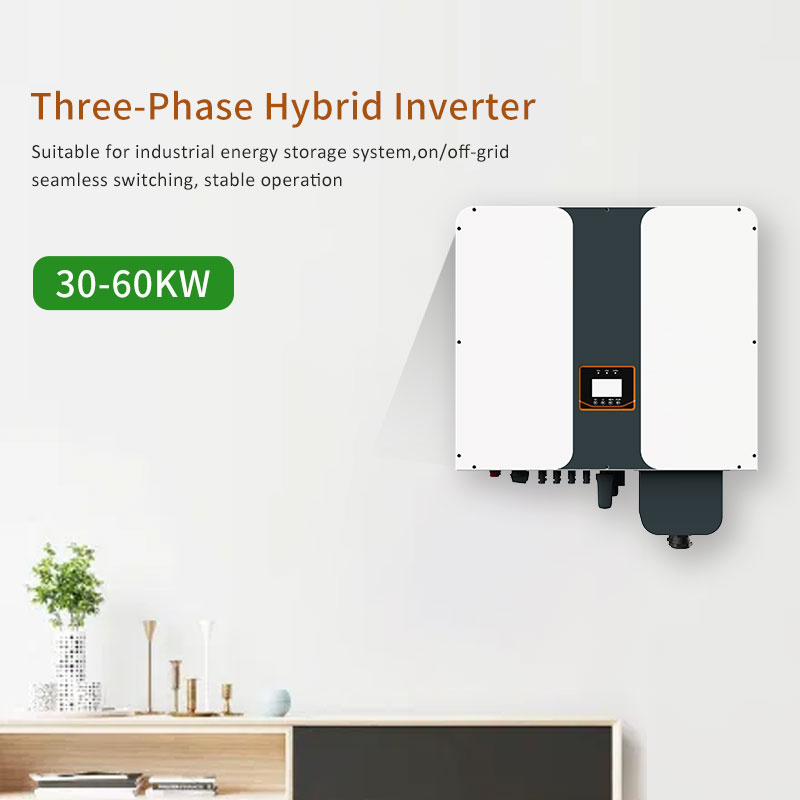
Hybrid solar inverters vary significantly in electrical topology, phase configuration, and integration capabilities depending on whether they serve residential backup, agricultural irrigation, or heavy industrial motor control. For industrial and agricultural applications—particularly where motor loads and pumping systems dominate—understanding these technical distinctions is critical for system compatibility, power quality, and long-term operational efficiency.
| Type | Technical Features | Best for (Industry) | Pros & Cons |
|---|---|---|---|
| Three-Phase Industrial Hybrid Inverters (400V/480V Class) | • 3-phase AC output (380V/400V/480V) • Dual MPPT inputs (up to 150A+ per channel) • DC voltage range: 200V–850V • THD <3% for motor compatibility • Modbus RTU/TCP, CAN communication |
Heavy industry, manufacturing plants, large-scale agricultural processing, commercial HVAC | Pros: Direct compatibility with industrial motors; high surge capacity for motor starting; grid-forming capability for islanding. Cons: Higher capital cost; requires 3-phase battery configuration; complex commissioning for phase balancing. |
| Solar Pump Hybrid Inverters with Integrated VFD | • Variable Frequency Drive (VFD) topology merged with bidirectional inverter • MPPT optimized for pump curves (P-V tracking) • Auto-switching between solar/AC grid/battery • DC bus voltage: 48V–750V configurable • IP65 enclosure for outdoor mounting |
Agricultural irrigation, remote water pumping, livestock operations, pond aeration | Pros: Eliminates separate VFD and inverter hardware; soft-start capability reduces water hammer; operates pumps during grid outages using battery storage. Cons: Limited to pump/motor loads for primary output; requires specific motor parameter configuration; battery sizing must match pump duty cycles. |
| Split-Phase Hybrid Inverters (120V/240V) | • Dual leg output: 120V L-N / 240V L-L • Stackable parallel operation (up to 10+ units) • 48V nominal battery bank compatibility • Frequency regulation: 50/60Hz auto-sensing • NEMA 3R/4X rating options |
North American agricultural facilities, rural workshops, light industrial buildings, dairy operations | Pros: Compatible with standard North American split-phase service; scalable capacity; supports both 120V controls and 240V motors. Cons: Limited to regions with split-phase infrastructure; lower efficiency at 120V loads; requires neutral wire management in 3-phase environments. |
| All-in-One (AIO) Modular Hybrid Systems | • Integrated MPPT charge controller, battery inverter, and grid charger • High PV input voltage (up to 1000V DC) • Hot-swappable battery modules (48V/400V) • Touchscreen HMI with remote monitoring • Anti-islanding protection (UL 1741/IEC 62109) |
EPC contractors, distributed energy projects, commercial solar+storage, remote telecom towers | Pros: Reduced installation complexity; single-point warranty; compact footprint; plug-and-play battery integration. Cons: Proprietary battery compatibility limitations; thermal management challenges in integrated enclosures; serviceability requires full unit replacement if controller fails. |
Three-Phase Industrial Hybrid Inverters (400V/480V Class)
These systems represent the convergence of traditional solar inverters and industrial Variable Frequency Drives (VFDs). Designed for 380V–480V three-phase motor loads, they incorporate IGBT-based power stages capable of handling the high inrush currents typical of induction motors and centrifugal pumps.
Technical Considerations for Engineers:
The DC input stage accepts high-voltage strings (up to 850V DC), reducing copper losses in PV array wiring. Critical for motor control applications, these inverters maintain voltage and frequency stability within ±1% when islanding, preventing motor overheating due to voltage sags. Advanced models include regenerative braking capabilities, allowing energy recovery from decelerating motor loads back to the battery bank—a feature particularly valuable in agricultural processing equipment with frequent start-stop cycles.
Integration with VFD Systems:
Unlike standard solar inverters, industrial hybrid units can function as grid-forming inverters, creating a stable voltage reference when disconnected from the utility. This allows direct connection to existing VFD installations without requiring separate uninterruptible power supplies (UPS) for control circuits.
Solar Pump Hybrid Inverters with Integrated VFD
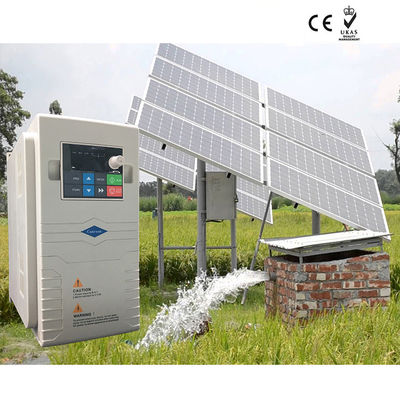
This specialized category addresses the unique requirements of solar-powered water pumping systems that require 24/7 operational reliability. By embedding VFD control algorithms directly into the hybrid inverter architecture, these units optimize pump speed based on available solar irradiance while maintaining pressure setpoints using battery reserves during cloud transients.
Motor Control Specifics:
The inverter employs Maximum Power Point Tracking (MPPT) specifically tuned for pump load characteristics rather than simple power maximization. When solar input drops below the minimum V/Hz ratio required for the motor, the system seamlessly transitions to battery power without stopping the pump—preventing the dry-running and water hammer issues common in traditional solar pumping systems. For deep-well submersible pumps, these inverters support long-cable compensation algorithms, adjusting output voltage to account for voltage drop across pump cables up to 500 meters.
Agricultural Application:
In drip irrigation systems, the hybrid functionality allows farmers to schedule pumping during off-peak grid hours using stored energy, while utilizing solar power during peak sunlight hours—effectively creating a “solar pump with night shift capability” without separate control systems.
Split-Phase Hybrid Inverters (120V/240V)
Predominantly deployed in North American and Japanese markets, these inverters manage the complexity of split-phase electrical services common in agricultural buildings and light industrial facilities. The technical challenge lies in maintaining balanced load distribution across the two 120V legs while providing 240V for heavy motor loads.
Engineering Specifications:
Modern split-phase hybrids utilize dual H-bridge topologies with independent leg control, allowing asymmetric loading (e.g., 80% load on L1, 40% on L2) without neutral current issues. For agricultural environments, units with NEMA 4X enclosures withstand corrosive atmospheres found in livestock facilities and greenhouse operations. The 48V battery interface allows integration with standard industrial battery banks while maintaining safe touch potentials for agricultural personnel.
Scalability:
Parallel operation capabilities (often up to 9 units) enable modular system expansion from 5kW residential scales to 45kW+ agricultural service entrances without replacing existing infrastructure—a critical consideration for growing operations.
All-in-One (AIO) Modular Hybrid Systems
AIO systems consolidate the functionality of separate charge controllers, battery management systems (BMS), and inverters into a single thermal management envelope. For EPC contractors and automation distributors, this integration reduces Balance of System (BOS) costs by 20–30% while minimizing points of failure.
Technical Architecture:
High-voltage AIO units (400V–1000V DC input) minimize current-carrying conductor sizes, reducing installation costs in large-scale distributed generation projects. The integrated BMS communicates directly with the inverter’s power stage via CAN bus, enabling millisecond-level response to battery state-of-charge changes—essential for protecting lithium iron phosphate (LiFePO4) batteries from overcurrent in motor starting scenarios.
Industrial Automation Integration:
These systems typically include RS485/Modbus connectivity for SCADA integration, allowing facility managers to coordinate hybrid inverter operation with existing Building Management Systems (BMS) or Agricultural Automation Platforms. Advanced units support frequency-watt and volt-watt control, enabling participation in grid services while maintaining power quality for sensitive motor loads.
Key Industrial Applications for Inverter Solar Hybrid
Hybrid solar inverter technology represents a paradigm shift in industrial energy management, converging photovoltaic generation, battery storage, and grid-interactive power conversion into a single, intelligent platform. For industries reliant on continuous motor operation—particularly in pumping, ventilation, and material handling—hybrid systems eliminate the traditional bifurcation between solar and grid power, enabling seamless transition between energy sources while maximizing self-consumption. Below are critical industrial implementations where integrated solar hybrid inverters, coupled with advanced Variable Frequency Drive (VFD) technology, deliver measurable operational advantages.
| Sector | Application | Energy Saving Value | Sourcing Considerations |
|---|---|---|---|
| Agriculture & Large-Scale Irrigation | Solar Hybrid Pumping Systems with Integrated VFD Control | 40–70% reduction in diesel/electricity costs; optimized MPPT algorithms ensure maximum water flow during peak insolation; soft-start VFD functionality reduces motor mechanical stress and maintenance by 30% | IP65+ enclosure ratings for outdoor/field environments; wide MPPT voltage range (200–800VDC) to match solar array configurations; AC grid/diesel generator auto-switching capability for 24/7 operation; anti-islanding protection compliant with IEEE 1547 |
| Water Treatment & Distribution | Hybrid Solar VFDs for Lift Stations, Filtration, and Reverse Osmosis | 25–35% reduction in peak demand charges via battery arbitrage; regenerative braking energy recovery in high-inertia centrifugal pumps; seamless grid-to-solar switching (<10ms) eliminates process interruptions and water quality variance | NEMA 4X/UL Type 4X stainless steel enclosures for corrosive/chlorine atmospheres; <5% THDi harmonic filtering to protect sensitive PLC/SCADA electronics; redundant cooling systems; Modbus TCP/RTU and EtherNet/IP integration for centralized monitoring |
| Mining & Remote Industrial Operations | Solar-Diesel Hybrid Microgrids for Crushing, Conveying, and Processing | 15,000–30,000 liters annual diesel savings per MW of installed solar capacity; 150% overload capacity for 60 seconds provides high starting torque for heavy crushers without genset oversizing; peak load shaving extends generator maintenance intervals by 40% | Wide operating temperature range (-20°C to +60°C) with derating curves; tropicalized PCBs and conformal coating for dust/sand resistance; remote monitoring via 4G/LoRaWAN for unmanned sites; compatibility with weak-grid or islanded operation modes |
| Commercial & Industrial HVAC | Solar-Assisted Variable Refrigerant Flow (VRF) and Cooling Tower Motor Control | 30–50% reduction in HVAC energy costs via direct solar self-consumption; precise VFD load matching to available PV generation eliminates energy waste; integrated power factor correction (>0.99) avoids utility reactive power penalties | Low harmonic distortion (<3% THDi) to maintain grid compliance; BACnet/IP and Modbus integration with existing Building Management Systems (BMS); modular “stackable” design for scalable capacity expansion; bidirectional grid-feed capability for net metering participation |
Agriculture & Large-Scale Irrigation
In modern agricultural operations, the convergence of solar pumping inverters and hybrid energy storage addresses the intermittency challenge of irrigation scheduling. By deploying a hybrid solar inverter with integrated VFD control, systems can prioritize PV energy for submersible pumps during daylight hours while maintaining AC grid or diesel generator backup for nocturnal or cloudy-day operation. The critical technical advantage lies in the inverter’s Maximum Power Point Tracking (MPPT) capability, which continuously adjusts the operating voltage to extract maximum energy from fluctuating irradiance conditions. When sourcing these systems, engineers must verify the inverter’s compatibility with the specific pump motor’s power curve and ensure the VFD provides sufficient starting torque (typically 150% rated current for 60 seconds) to overcome the static head of deep boreholes without drawing excessive grid current.
Water Treatment & Distribution
Municipal and industrial water facilities require absolute continuity of operation, making hybrid solar inverters with seamless transfer switches essential for critical lift stations and high-pressure reverse osmosis systems. The integration of battery storage allows these facilities to perform “peak shaving”—discharging stored solar energy during utility peak tariff periods to reduce operational expenditure (OPEX). From a motor control perspective, the VFD component must offer dynamic braking capabilities to handle the high inertia of large centrifugal pumps without mechanical wear. Sourcing considerations must prioritize ingress protection against corrosive gases (common in wastewater facilities) and electromagnetic compatibility (EMC) to prevent interference with sensitive water quality monitoring sensors.
Mining & Remote Industrial Operations
Remote mining sites traditionally rely on diesel-powered microgrids, which suffer from high fuel logistics costs and maintenance downtime. Hybrid solar inverters enable “solar-diesel hybridization,” where the inverter’s frequency-watt control actively manages the penetration of solar energy into the microgrid, preventing genset instability while maximizing renewable utilization. For crushing and conveying applications, the VFD’s ability to provide controlled acceleration prevents belt slippage and mechanical shock, while the hybrid inverter’s battery bank provides ride-through capability during transient cloud cover, avoiding costly production stoppages. When specifying equipment for these environments, engineers must prioritize wide DC input voltage ranges to accommodate large solar array configurations and robust overload capacities to handle the high inrush currents of industrial crushers.
Commercial & Industrial HVAC
Heating, ventilation, and air conditioning represent 30–40% of total energy consumption in commercial buildings. Hybrid solar inverters optimized for HVAC applications synchronize VFD-controlled compressor and fan speeds with real-time solar generation data, effectively creating a “solar-responsive” cooling system that modulates capacity based on available irradiance. This not only maximizes self-consumption but also reduces mechanical cycling wear on compressors. Critical sourcing factors include ensuring the inverter meets IEEE 519 harmonic standards to prevent distortion of the building’s power quality, and verifying compatibility with BACnet or LonWorks protocols for integration with existing Building Automation Systems (BAS). Additionally, bidirectional capability allows excess solar energy to be fed back to the grid, generating revenue through net metering schemes while maintaining grid support functions.
Top 3 Engineering Pain Points for Inverter Solar Hybrid
In industrial solar-pumping and hybrid energy applications, the convergence of photovoltaic generation, battery storage, and AC motor loads creates unique engineering challenges that residential-grade hybrid inverters fail to address. For EPC contractors and automation engineers deploying systems in demanding agricultural or remote industrial environments, these technical limitations translate directly into project risk, operational downtime, and warranty exposure.
Scenario 1: Grid-Forming Instability During Critical Load Transitions
The Problem:
When hybrid inverters transition between grid-tied and islanded modes—common in weak-grid rural installations or during utility outages—the shift from grid-following to grid-forming control can inject voltage and frequency transients (typically ±15% voltage sag, ±2Hz frequency deviation). For Variable Frequency Drive (VFD) controlled pump motors, these transients disrupt the flux vector control algorithms, causing DC bus undervoltage faults or motor stalls. In agricultural irrigation, this results in “dry-run” conditions if pumps fail to restart automatically, risking equipment damage and crop loss. Standard hybrid inverters lack the sub-cycle transfer time (<20ms) required to maintain VFD DC bus continuity, forcing a complete system restart that can take 30–60 seconds.
The Solution:
Engineered hybrid inverters with Virtual Synchronous Generator (VSG) technology and zero-transfer-time switching logic maintain stable voltage and frequency references during mode transitions. By implementing direct torque control (DTC) algorithms that decouple motor flux from grid conditions, the system maintains kinetic energy utilization during the transition. Look for units with wide DC input voltage ranges (150V–850V) and dedicated motor control modes that provide 150% overload capacity for 60 seconds—sufficient to ride through motor inrush currents while the inverter stabilizes its grid-forming output.
Scenario 2: DC Bus Collapse Under Multi-Motor Inrush Conditions
The Problem:
Solar hybrid systems powering multiple pump stations or agro-processing equipment face cumulative inrush currents (6–8x FLA per motor) that collapse the DC bus voltage. When battery State of Charge (SOC) is below 60% and solar irradiance is marginal (cloud transients), the instantaneous power demand from simultaneous motor starts can trigger Battery Management System (BMS) undervoltage disconnects or MPPT tracking instability. This creates a cascading failure where the inverter shuts down to protect the battery bank, leaving critical loads offline despite available solar generation. Standard hybrid inverters sized for continuous power rather than motor-starting kVA ratings exacerbate this issue.
The Solution:
Integrated hybrid-VFD architectures with active power buffering and intelligent load staging. Advanced systems utilize the motor’s own inertia as temporary energy storage (kinetic buffering) during acceleration ramps, reducing peak DC bus demand by up to 40%. Implementing staggered start sequences with programmable logic—prioritizing critical pumps while shedding non-essential loads during battery discharge events—prevents DC bus collapse. Specify inverters with dual MPPT inputs and high-speed DC voltage regulation (response time <100ms) to isolate PV generation from load transients, ensuring stable power delivery even during cloud-induced irradiance drops.
Scenario 3: Thermal Derating and Environmental Ingress in Harsh Field Conditions
The Problem:
Standard IP20 or IP54 hybrid inverters—designed for residential garage installation—fail prematurely in agricultural environments where ambient temperatures exceed 45°C, relative humidity reaches 95%, and airborne contaminants (dust, chemical fertilizers, salt in coastal regions) are present. Thermal derating curves typically reduce output power by 20–30% at 50°C ambient, precisely when solar irradiance and pumping demands are highest. Fan-cooled units ingest abrasive dust onto heat sinks and PCBs, leading to thermal runaway and IGBT module failure within 2–3 years—well below the 10-year project ROI threshold expected by EPC contractors.
The Solution:
Industrial-grade hybrid inverters with IP65 or NEMA 4X enclosures, conformal-coated PCBs, and passive or sealed active cooling systems rated for 55°C–60°C ambient operation without derating. Look for thermal management systems that utilize external heat sink fins with natural convection or sealed liquid cooling loops, eliminating air exchange with the environment. For desert or tropical installations, specify units with humidity protection (conformal coating IPC-A-610 Class 3) and wide operating temperature ranges (-25°C to +60°C) to ensure consistent power conversion efficiency (>97%) and battery charging profiles regardless of environmental stressors.
Component and Hardware Analysis for Inverter Solar Hybrid
At the core of every robust inverter solar hybrid system lies a sophisticated interplay of power electronics, thermal management, and intelligent control architectures. For industrial solar pumping stations, agricultural microgrids, and heavy-duty motor control applications, the hardware component selection directly dictates system efficiency, grid stability, and operational longevity in harsh environmental conditions. Unlike standard residential hybrids, industrial-grade units must withstand voltage transients from inductive motor loads, extreme temperature cycling, and continuous operation in dusty or humid agricultural environments.
Power Semiconductor Modules (IGBTs/SiC MOSFETs)
The power stage represents the critical junction where DC solar generation and battery storage convert to grid-compliant AC or variable frequency drive (VFD) output for motor control. Modern hybrid inverters utilize Trench-Field Stop IGBT modules or Silicon Carbide (SiC) MOSFETs for the DC-AC bridge and bidirectional DC-DC battery converters. In solar pumping applications, these semiconductors must handle high inrush currents from submersible pump startups while maintaining switching frequencies above 4kHz to ensure sinusoidal output quality. The thermal cycling capability of the solder joints and bond wires within these modules determines the Mean Time Between Failures (MTBF), particularly in regions with significant diurnal temperature variations.
Digital Signal Processing (DSP) and MPPT Controllers
The control architecture centers on high-performance DSPs or ARM Cortex-M7 microcontrollers executing real-time algorithms for Maximum Power Point Tracking (MPPT), grid synchronization, and battery charge management. For hybrid systems integrated with VFD functionality, the controller must simultaneously manage solar irradiance fluctuations, battery State of Charge (SoC) balancing, and motor load torque demands. Advanced implementations employ dual-core lockstep processors with functional safety certifications (IEC 61508) to prevent runaway conditions during pump dry-running or grid fault scenarios. The firmware’s hysteresis bands for switching between grid-tie and off-grid modes, typically within 20ms detection windows, rely on high-speed ADCs sampling voltage and current at 10kHz+ rates.
Thermal Management and Mechanical Integrity
Industrial hybrid inverters operating in agricultural or desert environments require passive cooling heatsinks with thermal resistance values below 0.15°C/W or active forced-air systems with redundant IP55-rated fans. The thermal interface material (TIM) between IGBT baseplates and heatsinks must maintain <0.2mm thickness with thermal conductivity >3W/mK to prevent junction temperature (Tj) excursions beyond 125°C. For solar pumping stations, anodized aluminum heatsinks with vertical fin geometries prevent dust accumulation, while conformal coating on PCBs (IPC-CC-830 Class 3) protects against humidity and corrosive atmospheres common in livestock or irrigation applications.
Energy Storage and Filtering Components
DC-link film capacitors utilizing polypropylene metallized film technology handle the high ripple currents from MPPT voltage sweeps and battery charging cycles. Unlike electrolytic capacitors, these metallized polypropylene units offer self-healing properties and 100,000-hour lifespans at rated voltage and 70°C hotspot temperatures. AC output filters employ high-permeability nanocrystalline cores to suppress harmonic distortion below 3% THD, critical for protecting submersible pump motors from insulation degradation caused by high dv/dt switching transients.
Component Analysis Table
| Component | Function | Quality Indicator | Impact on Lifespan |
|---|---|---|---|
| IGBT/SiC Power Modules | DC-AC/AC-DC bidirectional conversion; motor drive output | Tj(max) ≥ 150°C; Vce(sat) < 1.7V; Switching frequency > 4kHz; Bond wire aluminum purity > 99.99% | Directly determines power stage longevity; thermal cycling causes solder fatigue leading to 20-30% capacity degradation after 10 years |
| DSP/MPPT Controller | Real-time power flow optimization; grid synchronization; motor V/f control | ADC resolution ≥ 12-bit; Processing speed > 100 MIPS; MPPT efficiency > 99.5%; Response time < 20ms | Firmware corruption or ADC drift causes protection failures; industrial-grade components ensure 15+ year operational life |
| DC-Link Film Capacitors | Ripple current absorption; voltage stabilization during load transients | Metallized polypropylene dielectric; dV/dt rating > 1000V/μs; ESR < 2mΩ at 10kHz; Self-healing capability | Primary failure mode in solar inverters; quality units maintain 95% capacitance after 100,000 hours vs. 50% for electrolytic alternatives |
| Thermal Management System | Heat dissipation from semiconductors; maintaining Tj within safe operating area | Heatsink thermal resistance < 0.15°C/W; TIM thermal conductivity > 3W/mK; Fan MTBF > 50,000 hours (IP55) | Every 10°C reduction in junction temperature doubles semiconductor lifespan; critical in 40°C+ ambient agricultural environments |
| EMI/RFI Filters | Suppression of conducted emissions; protection of motor insulation from voltage spikes | Insertion loss > 60dB at 150kHz-30MHz; Common mode choke inductance stability ±10% over temperature | Prevents bearing currents in pump motors; reduces insulation stress extending motor life by 30-40% |
| Communication & Protection Interfaces | RS-485/CAN bus for SCADA integration; dry contact relays for safety interlocks | Isolation voltage > 2.5kV; ESD protection ±8kV contact; Protocol compliance (Modbus RTU/TCP, SunSpec) | Ensures system visibility and rapid fault isolation; prevents catastrophic failures through timely protection signaling |
Integration Considerations for Motor Control Applications
When deploying hybrid inverters for solar pumping systems, the hardware must accommodate the unique demands of VFD operation. The DC bus voltage must remain stable during rapid deceleration of pump motors, requiring appropriately sized braking resistors or active front-end regeneration capabilities. Additionally, the output filter design must account for long motor cable runs (often 100m+ in agricultural installations), necessitating sine wave filters or dv/dt reactors to prevent reflected wave phenomena that damage motor winding insulation. The enclosure ingress protection (IP54 minimum for outdoor agricultural use) and conformal coating thickness (25-75μm) become critical specifications when operating near irrigation spray, fertilizer dust, or high humidity environments typical of EPC solar pumping projects.
Manufacturing Standards and Testing QC for Inverter Solar Hybrid
At Boray Inverter, our manufacturing philosophy centers on industrial-grade survivability—engineering hybrid solar inverters that withstand the thermal stress, humidity, and corrosive atmospheres typical of agricultural irrigation and heavy industrial motor control applications. Unlike residential-grade equipment, our hybrid VFD-solar inverters undergo rigorous qualification protocols designed for 20-year operational lifecycles in environments where downtime costs exceed equipment costs.
Component-Level Environmental Protection
PCB Conformal Coating & Potting
All printed circuit boards (PCBs) receive automated polyurethane or silicone conformal coating (50–100 μm thickness) per IPC-A-610 Class 3 standards, followed by selective potting of critical power sections. This dual-layer protection ensures resistance to:
– Agricultural chemical vapors (ammonia, fertilizer aerosols)
– High-humidity condensation (95% RH non-condensing to condensing transitions)
– Dust ingress in desert solar pumping installations
– Salt fog in coastal desalination projects
We utilize automated optical inspection (AOI) post-coating to verify coverage integrity on SMT components, IGBT driver circuits, and MPPT tracker microcontrollers—eliminating the pin-hole defects that cause field failures in standard solar inverters.
Component Traceability & Derating
Critical power components (IGBTs, DC-link film capacitors, current sensors) are sourced exclusively from Tier-1 suppliers (Infineon, TDK, Texas Instruments) with full lot traceability. We apply aggressive derating criteria: semiconductor junction temperatures are limited to 80% of maximum ratings even at 50°C ambient, ensuring longevity in solar pump VFD applications where continuous full-load operation is standard.
Accelerated Life Stress Testing
High-Temperature Aging (Burn-In)
Every hybrid inverter undergoes 100% high-temperature aging (HTA) for 4–6 hours at 60°C ambient with 110% rated load—simulating the thermal stress of midsummer agricultural pumping. This screens for:
– Early-life semiconductor failures (infant mortality elimination)
– Solder joint integrity under thermal expansion
– Capacitor electrolyte stability in DC-link stages
Thermal Cycling & Shock Testing
Units are subjected to 500 thermal cycles (-25°C to +70°C) per IEC 60068-2-14, validating the integrity of power module attachments and PCB interconnects. For solar pump inverters specifically, we add rapid thermal shock testing (15°C/minute transition rates) to simulate dawn-startup thermal transients in desert climates.
100% Electrical Validation Protocol
Full-Load Burn-In with Motor Emulation
Unlike statistical sampling, Boray implements 100% full-load testing using regenerative motor emulation dynos. Each hybrid inverter is tested at:
– 100% rated PV input with MPPT efficiency verification (>99% tracking accuracy)
– Motor load simulation across the full torque-speed curve (0–400Hz for VFD functionality)
– Grid-tie synchronization with <20ms transfer time verification for hybrid mode switching
– Battery charge/discharge cycles at C-rate currents to validate bidirectional converter integrity
EMC Pre-Compliance Screening
All units undergo conducted emissions (CE) and radiated emissions (RE) pre-testing to CISPR 11 Class A (industrial) limits before final certification. This ensures compatibility with agricultural SCADA systems and prevents interference with precision motor control feedback loops.
Certification & Standards Compliance
International Safety & Quality Frameworks
Our hybrid solar pump inverters are manufactured under ISO 9001:2015 quality management systems with full material compliance to RoHS 3 and REACH. Product-specific certifications include:
– CE Marking: EN/IEC 62109-1/-2 (safety), EN 61000-6-2/-4 (EMC), EN 50549 (grid connection)
– IEC 61800-9-2: Efficiency testing for adjustable speed electrical power drive systems
– UL 1741-SA: Grid support and anti-islanding for North American markets
– IP65/NEMA 4X enclosure validation for outdoor agricultural deployment
Solar-Specific Performance Standards
For photovoltaic pumping applications, we validate against IEC 62116 (anti-islanding) and NB/T 32004 (China solar inverter standard), including:
– MPPT Voltage Range Verification: Ensuring operation from 200Vdc to 800Vdc (for 380V/460V motor compatibility)
– Dry-Run Protection Testing: Simulation of well-depletion scenarios with <2ms pump shutdown to prevent motor damage
– Irradiance Ramp Response: Testing MPPT tracking speed during cloud transient events (critical for agricultural water pressure stability)
Quality Documentation & Traceability
Each unit ships with a Digital Birth Certificate (DBC) containing:
– Individual serial number-linked thermal imaging profiles from burn-in testing
– Component batch records (traceable to semiconductor wafer lots)
– Efficiency curves measured at 25%, 50%, 75%, and 100% load points
– Insulation resistance test results (≥100MΩ at 1000Vdc)
For EPC contractors and automation distributors, we provide Factory Acceptance Test (FAT) protocols customized to project specifications, including third-party witnessed testing by TÜV Rheinland or SGS upon request.
This manufacturing rigor ensures that Boray hybrid inverters deliver not just energy conversion, but industrial process continuity—whether driving submersible pumps in Sahelian agriculture or maintaining critical cooling in hybrid solar-factory automation systems.
Step-by-Step Engineering Sizing Checklist for Inverter Solar Hybrid
Proper sizing of a hybrid solar pumping system requires rigorous analysis of electro-mechanical compatibility, irradiance profiles, and transient load behaviors. Unlike residential battery-hybrid applications, industrial solar pump hybrids integrate Variable Frequency Drive (VFD) technology with dual-source energy management (PV array + AC grid or diesel generator). The following engineering checklist ensures optimal matching between the solar array, hybrid inverter/VFD, and motor-pump assembly for agricultural and industrial deployments.
Step 1: Hydraulic Load & Motor Capacity Analysis
Before selecting inverter hardware, quantify the mechanical energy requirement at the pump shaft.
- Calculate Hydraulic Power:
$P_{hyd} (kW) = \frac{Q (m³/s) \times H (m) \times \rho (kg/m³) \times g (m/s²)}{1000 \times \eta_{pump}}$
Where $Q$ = flow rate, $H$ = total dynamic head (including friction losses), and $\eta_{pump}$ = pump efficiency (typically 0.6–0.8 for centrifugal, 0.3–0.5 for volumetric). - Motor Specification: Select a three-phase AC induction motor or Permanent Magnet Synchronous Motor (PMSM) with a rated power $P_{motor} \geq 1.25 \times P_{hyd}$ to account for service factor and transient torque demands.
- Torque Profiling: Verify the motor’s Locked Rotor Torque (LRT) and Pull-Up Torque against the inverter’s starting capability. For deep-well submersible pumps, ensure the hybrid inverter can deliver 150% rated current for ≥60 seconds during startup.
Step 2: Inverter Topology & Power Rating Selection
Match the hybrid solar pump inverter (VFD) to the motor’s electrical characteristics and the project’s hybrid architecture.
- Power Sizing: Size the inverter at 1.15–1.35 times the motor’s Full Load Amps (FLA) at the operating voltage (230V/400V/480V/690V). For constant torque loads (positive displacement pumps), use the higher end of the range.
- Dual Input Configuration: Verify the inverter supports dual AC/DC input logic with seamless transfer (typically <20ms) if critical irrigation timing is required. For non-critical loads, a manual transfer switch configuration may suffice.
- Output Characteristics: Confirm the VFD output uses PWM carrier frequency ≥4kHz to minimize motor heating, and check Total Harmonic Distortion (THDi) is <5% to comply with IEEE 519 / IEC 61000-3-6 for grid-interactive modes.
Step 3: Solar Array String Sizing & MPPT Window
Engineer the PV strings to operate within the inverter’s Maximum Power Point Tracking (MPPT) range across all ambient temperature extremes.
- Voltage Window Calculation:
Maximum Open Circuit Voltage (Cold):
$V_{oc,max} = V_{oc,STC} \times N_{s} \times [1 + (T_{min} – 25°C) \times \frac{\alpha_{Voc}}{100}]$
Minimum MPPT Voltage (Hot):
$V_{mp,min} = V_{mp,STC} \times N_{s} \times [1 + (T_{max} – 25°C) \times \frac{\alpha_{Vmp}}{100}]$
Where $N_s$ = modules in series, $\alpha$ = temperature coefficient (%/°C), and $T_{min/max}$ = record low/high cell temperatures. - Compatibility Check: Ensure $V_{oc,max}$ < inverter maximum DC input voltage (with 10% safety margin) and $V_{mp,min}$ > inverter minimum MPPT voltage.
- Current Sizing: Total array short-circuit current ($I_{sc} \times N_{p} \times 1.25$) must be less than the inverter’s maximum DC input current, where $N_p$ = parallel strings.
Step 4: AC Grid/Diesel Generator Integration
For hybrid systems utilizing AC backup, ensure electrical compatibility and protection coordination.
- Generator Sizing: If using diesel backup, size the generator at ≥1.5× the motor’s kVA rating to handle inrush current during VFD bypass or direct-online (DOL) emergency modes.
- Voltage & Frequency Tolerance: Verify the inverter’s AC input range (typically ±20% voltage, ±5% frequency) matches the grid or generator output stability.
- Phase Sequence Protection: Install phase sequence monitors to prevent reverse rotation when switching between solar VFD mode and AC grid mode.
Step 5: Environmental Derating & Enclosure Specifications
Adjust ratings for installation environment to prevent premature failure.
- Altitude Derating: Reduce inverter continuous output current by 1% per 100m above 1000m altitude due to reduced cooling efficiency.
- Thermal Management: For ambient temperatures >40°C, apply derating curves provided by the manufacturer (typically 1.5% per °C above 40°C). Ensure IP54 or IP65 enclosure rating for agricultural environments with dust, humidity, or chemical exposure.
- Cable Sizing: Size DC cables between array and inverter for <1.5% voltage drop at STC conditions. Size AC motor cables for <3% voltage drop at rated current, using 90°C rated XLPE insulation where exposed to solar radiation.
Step 6: Control, Monitoring, & Safety Integration
Specify auxiliary systems for autonomous operation and remote O&M.
- Sensor Integration: Configure dry contacts for float switches (tank full/empty) and analog inputs (4–20mA) for pressure transducers or flow meters to enable closed-loop PID control within the VFD.
- Communication Protocol: Ensure RS485/Modbus RTU or CAN bus compatibility for SCADA integration. For EPC contractors, verify remote monitoring via GPRS/Wi-Fi dataloggers is supported for fault diagnostics and performance ratio tracking.
- Protection Coordination: Install Type 2 SPDs on both DC and AC sides. Specify RCD (Residual Current Device) protection of 300mA or higher for motor circuits (Type B RCD if DC leakage is possible).
Final Verification Matrix
| Parameter | Calculation/Safety Factor | Acceptance Criteria |
|---|---|---|
| Motor Power | $P_{motor} \geq 1.25 \times P_{hyd}$ | Match inverter kW rating |
| Inverter Current | $\geq 1.15 \times I_{FLA}$ | Sustained 150% overload for 60s |
| Max String Voltage | $V_{oc,max} \times 1.1$ | < Inverter max DC voltage |
| Min MPPT Voltage | $V_{mp,min} \times 0.95$ | > Inverter min MPPT voltage |
| Generator kVA | $\geq 1.5 \times Motor\ kVA$ | For hybrid backup mode |
| Voltage Drop | DC <1.5%, AC <3% | At rated current and temp |
Complete documentation of these sizing calculations in the project’s technical datasheet ensures compliance with IEC 60364-7-712 (solar PV) and IEC 61800-5-1 (adjustable speed electrical power drive systems), reducing commissioning delays and warranty disputes for EPC contractors and distributors.
Wholesale Cost and Energy ROI Analysis for Inverter Solar Hybrid
When procuring hybrid solar inverter systems for industrial-scale solar pumping or motor control applications, the economic evaluation extends far beyond the per-unit sticker price. For EPC contractors and agricultural project managers, understanding the wholesale pricing architecture, volume-tier procurement strategies, and long-term energy ROI is critical to project viability and competitive bidding.
Wholesale Pricing Architecture and Volume Economics
Unlike residential retail markets where single-unit hybrid inverters range from $1,600 to $5,000 per unit (depending on AC output capacity and PV input ratings), industrial B2B procurement operates on fundamentally different economic models. For solar pump inverter deployments—particularly in agricultural irrigation or mining dewatering projects—volume commitments significantly alter the unit economics.
Tiered Volume Pricing Structures:
– Pilot/Batch Orders (1-49 units): Typically priced at 60-70% below retail MSRP, suitable for project feasibility testing or small-scale agricultural cooperatives.
– EPC Contract Volumes (50-499 units): Access to OEM-direct pricing with additional discounts for standardized configurations (e.g., 380V three-phase output for industrial motors).
– Utility-Scale Deployments (500+ units): Custom manufacturing agreements allowing for specification modifications, private labeling, and container-level logistics optimization.
For hybrid solar pump inverters specifically, the integration of Maximum Power Point Tracking (MPPT) and Variable Frequency Drive (VFD) functionality into a single enclosure reduces the Bill of Materials (BOM) cost by 15-22% compared to discrete solar inverter + motor drive architectures. This consolidation eliminates separate enclosure costs, reduces wiring complexity, and lowers installation labor—factors that compound savings at wholesale volumes.
Total Cost of Ownership: Capital Expenditure vs. Operational Savings
The true economic advantage of hybrid inverter solar systems in industrial motor control emerges when analyzing Total Cost of Ownership (TCO) over a 10-15 year operational horizon. While traditional grid-tied or diesel-powered pumping systems incur ongoing fuel costs and grid demand charges, hybrid solar VFD systems—despite higher upfront capital expenditure—deliver quantifiable operational savings through three primary mechanisms:
1. Diesel Displacement Calculations:
In remote agricultural applications, hybrid solar pump inverters with battery storage capabilities can offset diesel generator runtime by 70-85%. For a 75kW irrigation pump operating 1,800 hours annually, this translates to approximately 12,000-15,000 liters of diesel saved per year. At current global diesel pricing ($0.80-$1.20/liter), the annual fuel cost avoidance ranges from $9,600 to $18,000 per pump—recovering the wholesale equipment cost within 18-30 months.
2. Peak Shaving and Demand Charge Mitigation:
Industrial facilities utilizing hybrid inverters for motor control benefit from bidirectional power conversion capabilities. By storing solar energy in DC-coupled battery banks and discharging during utility peak demand periods, facilities reduce peak kW demand charges. For a 500kW industrial motor installation, this strategy typically yields $15,000-$25,000 in annual utility bill reductions, depending on local tariff structures.
3. Maintenance Cost Reduction:
Integrated hybrid inverter-VFD systems eliminate the mechanical wear associated with traditional pump throttling valves and across-the-line motor starters. The soft-start functionality inherent in VFD-controlled solar pumping reduces mechanical stress on pump bearings and piping infrastructure, extending maintenance intervals by 40-60% compared to conventional systems.
Energy ROI Modeling for Solar Pumping Applications
Return on Investment calculations for hybrid solar inverter deployments must account for variable solar irradiance, pump duty cycles, and the specific gravity of fluids being moved. For agricultural project managers, the following technical parameters drive ROI outcomes:
System Efficiency Coefficients:
Modern hybrid solar pump inverters achieve combined MPPT-VFD efficiencies of 96-98%, compared to 88-92% for traditional AC-coupled systems with separate components. This efficiency delta directly impacts daily water delivery volumes and, consequently, crop yield economics.
Payback Period Scenarios:
– Grid-Connected Hybrid Systems: 3.5-5 years (factoring in net metering benefits and battery arbitrage)
– Off-Grid Agricultural Systems: 2-4 years (depending on diesel baseline costs and solar irradiance levels)
– Industrial Process Water: 4-6 years (accounting for 24/7 operational requirements and battery cycle life degradation)
Critical to accurate ROI modeling is the inclusion of capacity factor adjustments. Unlike residential solar installations, industrial motor loads often require consistent power regardless of solar availability. Hybrid inverters mitigate this through seamless grid/generator switching logic, ensuring pump operations continue during low-irradiance periods without manual intervention—a labor cost saving often overlooked in initial ROI calculations.
Warranty Cost Analysis and Risk Mitigation
Wholesale procurement agreements must explicitly address warranty cost allocation, particularly for IGBT power modules and DC bus capacitors—the primary failure points in high-duty cycle solar pump inverters.
Standard vs. Extended Coverage:
– Standard Industrial Warranty (5 years): Typically covers manufacturing defects and component failures under normal operating conditions (ambient temperatures -20°C to +50°C, IP54 minimum enclosure rating).
– Extended Agricultural Warranty (7-10 years): Adds coverage for dust ingress (critical for desert irrigation projects) and humidity-related corrosion, with field service support included.
Lifecycle Cost Implications:
Warranty costs represent 3-5% of the wholesale unit price annually when amortized over the coverage period. However, for EPC contractors, selecting inverters with comprehensive warranty packages reduces project insurance premiums and eliminates costly field replacement logistics—particularly critical in remote agricultural regions where technician dispatch costs can exceed $500 per visit.
MTBF Considerations:
Mean Time Between Failures for industrial-grade hybrid solar pump inverters typically exceeds 50,000 hours at full load. When specifying equipment for continuous-duty applications (such as mining dewatering or municipal water supply), selecting units with 100,000-hour MTBF ratings—despite 8-12% higher wholesale costs—delivers superior lifecycle economics by minimizing production downtime losses.
Strategic Procurement Recommendations
For automation distributors and EPC contractors evaluating hybrid solar inverter portfolios, prioritize suppliers offering modular scalability—allowing initial installation of solar-only VFD systems with future-ready DC bus architecture for battery integration. This “future-proofing” capability protects wholesale investment values while enabling phased project financing, particularly valuable for agricultural development projects with multi-year implementation timelines.
Additionally, negotiate firmware update commitments as part of wholesale agreements. As grid codes and safety standards evolve (particularly regarding anti-islanding protection and battery management system communications), remote firmware update capabilities eliminate hardware obsolescence risks and extend the economic viability of deployed assets beyond the standard depreciation cycle.
Alternatives Comparison: Is Inverter Solar Hybrid the Best Choice?
Selecting the optimal power architecture for industrial pumping and motor control applications requires rigorous evaluation of operational constraints, lifecycle costs, and energy availability. While hybrid solar inverters offer compelling advantages for DC-to-AC power management with storage integration, industrial engineers must assess whether this architecture outperforms conventional alternatives—particularly when comparing motor control strategies (VFD versus Soft Starter), power sourcing (solar hybrid versus pure grid or diesel), and motor technologies (Permanent Magnet Synchronous Motors versus Induction Motors).
Motor Control Strategies: VFD vs. Soft Starter vs. Direct Online
For agricultural and industrial pumping systems, the method of motor initiation and speed control fundamentally impacts equipment longevity and energy efficiency.
Variable Frequency Drive (VFD) / Solar Pump Inverter
A VFD—whether grid-tied or solar-powered—provides full-spectrum motor control by varying both voltage and frequency. In solar hybrid pumping applications, the inverter incorporates Maximum Power Point Tracking (MPPT) to optimize PV array output while maintaining precise motor speed control. This eliminates water hammer, reduces mechanical stress by enabling soft-start ramp profiles (0 to rated speed in configurable intervals), and allows flow rate modulation based on insolation levels or demand. Critically, VFDs enable hybrid power blending, seamlessly transitioning between solar, grid, and generator inputs without stopping the motor.
Soft Starter
Soft starters limit inrush current (typically 3-5x FLC reduction) by controlling voltage application during startup, but they cannot vary operating frequency. Once the motor reaches nominal speed, the soft starter bypasses to full voltage, offering no operational energy savings during steady-state running. For solar pumping, soft starters are incompatible with DC input and cannot regulate pump speed to match variable solar irradiance, making them unsuitable for standalone PV applications. They represent a cost-effective but functionally limited alternative for grid-only installations where reduced starting torque is the primary concern.
Direct Online (DOL) Starting
The traditional across-the-line starting method applies full voltage instantaneously, drawing 6-8x full load current and generating severe mechanical shock loads on pump impellers and piping infrastructure. While capital costs are minimal, DOL starting offers no energy optimization, no solar compatibility, and significantly reduced motor lifespan due to thermal and mechanical stress.
Power Source Architecture: Solar Hybrid vs. Grid-Only vs. Diesel
For remote agricultural projects or facilities seeking energy independence, the power source topology determines system reliability and OPEX.
Solar Hybrid Inverter Systems
Hybrid solar pump inverters (such as Boray’s agricultural VFD series) integrate MPPT charge controllers, bidirectional AC/DC converters, and intelligent switching logic. These systems prioritize solar energy for daytime pumping, automatically supplementing with grid power or diesel generators during low irradiance or night operations—without manual intervention. The bidirectional capability allows AC grid power to charge DC battery banks (if configured) or directly support the DC bus, ensuring 24/7 operational continuity. This architecture reduces diesel consumption by 60-80% compared to pure generator systems while eliminating the risk of dry-running associated with pure solar systems during cloudy periods.
Pure Grid-Tied Systems
Grid-dependent pumps offer consistent availability but expose agricultural operations to utility volatility, demand charges, and transmission losses. In remote EPC projects, grid extension costs often exceed $30,000 per kilometer, making pure grid dependency economically unfeasible for distributed irrigation.
Diesel Generator Sets
While providing dispatchable power, diesel systems incur high fuel logistics costs, require frequent maintenance (oil changes every 250-500 hours), and suffer from efficiency degradation at partial loads. Modern hybrid inverters can synchronize with existing diesel infrastructure, but pure diesel operation cannot leverage free solar energy or modulate pump speed for efficiency.
Motor Technology: Permanent Magnet Synchronous Motor (PMSM) vs. Induction Motor (IM)
The motor-inverter pairing significantly influences system efficiency, particularly in solar applications where every watt of PV capacity counts.
Permanent Magnet Synchronous Motors (PMSM)
PMSMs utilize rare-earth magnets to create rotor flux, eliminating copper rotor losses inherent in induction machines. When paired with a VFD featuring advanced vector control, PMSMs achieve 95-98% efficiency across a wide speed range (20-100% rated speed), compared to 85-90% for standard IMs. For solar pumping, this translates to 20-30% lower PV array requirements for equivalent hydraulic output. However, PMSMs require precise inverter control algorithms (sensorless vector or encoder feedback) and are susceptible to demagnetization if overdriven, necessitating inverter protection features like rotor position tracking and overcurrent limiting.
Induction Motors (IM)
Standard squirrel-cage induction motors offer ruggedness, lower capital cost, and tolerance to voltage sags. When operated with VFDs, they provide good speed control but suffer from reduced efficiency at partial loads and lower power factors (0.75-0.85 lagging) compared to PMSMs (0.95-1.0). For hybrid solar systems, IMs require larger PV arrays to compensate for efficiency losses, but their robustness makes them suitable for abrasive environments (e.g., sand-laden irrigation water) where motor replacement costs are a concern.
Comparative Analysis Matrix
| Parameter | Solar Hybrid VFD System | Grid-Only VFD | Soft Starter + Grid | Diesel Generator | PMSM + Hybrid VFD | IM + Hybrid VFD |
|---|---|---|---|---|---|---|
| Starting Current | 0-150% FLC (configurable ramp) | 0-150% FLC | 300-500% FLC | 600-800% FLC | 0-120% FLC | 0-150% FLC |
| Speed Control | 0-100% continuous (MPPT-optimized) | 0-100% continuous | Fixed (on/off only) | Fixed or mechanical throttle | 20-100% high efficiency | 30-100% moderate efficiency |
| Energy Source Flexibility | Solar priority + Grid/Diesel backup | Grid only | Grid only | Diesel only | Solar/Grid hybrid | Solar/Grid hybrid |
| System Efficiency | 92-96% (inverter + motor) | 88-92% | 85-88% (motor only) | 25-35% (thermal) | 94-98% | 85-90% |
| Harmonic Distortion (THDi) | <3% (with active PFC) | <5% | N/A (bypassed) | N/A | <3% | <5% |
| Power Factor | >0.95 (unity capable) | >0.95 | 0.75-0.85 | 0.7-0.8 | >0.95 | 0.80-0.90 |
| CAPEX Index | 1.4x (PV + Inverter) | 1.0x (baseline) | 0.8x | 1.2x (gen + fuel tank) | 1.6x (motor premium) | 1.0x |
| OPEX (5-year) | Lowest (fuel-free daylight ops) | Medium (grid tariffs) | Medium | Highest (fuel/maintenance) | Very Low | Low |
| Weather Resilience | High (auto-switching to backup) | High | High | High (fuel dependent) | High | High |
| Maintenance Interval | 6-12 months (electrical only) | 6-12 months | 3-6 months (mechanical checks) | 250-500 hours (oil/filter) | 12 months | 6-12 months |
Strategic Verdict: When Hybrid Inverter Architecture is Optimal
For EPC contractors and agricultural project managers, the hybrid solar inverter configuration (VFD-based with multi-source input capability) emerges as the superior choice under the following conditions:
- Intermittent Grid Availability: Sites with unreliable grid infrastructure benefit from the seamless auto-switching logic of hybrid inverters, eliminating manual generator start protocols and ensuring crop protection during critical irrigation windows.
- High Diesel Costs: When delivered diesel prices exceed $0.80/liter, the 18-24 month payback period for hybrid solar-VFD systems typically outperforms pure diesel or soft-starter grid solutions.
- Variable Flow Requirements: Applications requiring pressure modulation (drip irrigation, center pivots) mandate VFD control; soft starters and DOL methods cannot provide the hydraulic precision necessary for modern agricultural efficiency.
- Long-Term Asset Ownership: For projects with >5-year operational horizons, the 40-60% reduction in energy OPEX and extended pump mechanical life (due to elimination of water hammer) justify the higher initial capital expenditure.
Exception Cases: Pure grid-VFD systems remain preferable for urban industrial pumps with stable utility power and no carbon reduction mandates. Soft starters may suffice for large centrifugal pumps with constant speed requirements and minimal start-stop cycles, though they preclude future solar integration without complete drive replacement.
Ultimately, the hybrid solar VFD architecture—particularly when paired with high-efficiency PMSMs—delivers the lowest total cost of ownership for distributed pumping applications while providing the control precision necessary for modern precision agriculture and industrial automation.
Core Technical Specifications and Control Terms for Inverter Solar Hybrid
In industrial solar pumping and motor control applications, the hybrid inverter serves as the central power conditioning and management unit, integrating photovoltaic (PV) generation, energy storage, and grid or generator backup into a unified drive system. Unlike residential installations, industrial hybrid configurations for agricultural and automation projects must withstand harsh environmental conditions, provide precise motor control, and ensure continuous operation across variable irradiance profiles. The following technical specifications and commercial terms define the engineering standards and procurement frameworks essential for EPC contractors and system integrators deploying robust solar hybrid solutions.
Bidirectional Power Topology and Conversion Architecture
Industrial hybrid inverters utilize bidirectional DC-AC conversion stages to manage power flow between PV arrays, battery energy storage systems (BESS), AC motors, and auxiliary grid connections. Key topological specifications include:
- Dual-Stage vs. Single-Stage Conversion: High-capacity solar pump inverters typically employ dual-stage topology (DC-DC boost with MPPT followed by DC-AC inversion) to decouple PV voltage fluctuations from motor drive requirements, ensuring stable operation across 200VDC to 800VDC input ranges.
- Transformerless Design: Modern VFD-integrated hybrid inverters utilize transformerless IGBT-based architectures to achieve peak efficiencies exceeding 98%, reducing thermal losses critical in NEMA 3R or IP65 outdoor enclosures.
- Galvanic Isolation: For agricultural submersible pump applications, specifications must confirm reinforced insulation between DC input stages and AC output phases to prevent ground fault currents in wet environments.
Advanced Control Algorithms for Motor and Power Optimization
Maximum Power Point Tracking (MPPT)
In solar pumping systems, MPPT algorithms ensure the PV array operates at the optimal voltage-current curve despite partial shading or temperature variations. Industrial-grade inverters specify:
* Tracking Efficiency: >99% with response times <2 seconds to irradiance changes
* Voltage Tracking Range: Typically 250VDC to 750VDC for 380V-460V three-phase pumps
* Algorithm Types: Perturb and Observe (P&O) or Incremental Conductance methods with multi-peak scanning for complex array configurations
Vector Control (Field-Oriented Control – FOC)
When hybrid inverters integrate Variable Frequency Drive (VFD) functionality for submersible or surface pumps, sensorless vector control provides precise torque and speed regulation without encoder feedback:
* Torque Response: <5ms dynamic response for rapid load changes in deep-well pumping
* Speed Regulation Accuracy: ±0.5% of rated speed across 1:100 speed range
* Starting Torque: 150%-200% rated torque at 0.5Hz for high-static-head applications
PID Closed-Loop Control
For constant pressure water supply or flow-regulated irrigation, hybrid inverters incorporate PID controllers that modulate motor frequency based on feedback from pressure transducers or flow sensors:
* Proportional Band: Adjustable 0.1%-100% for system stability
* Sampling Period: <100ms for real-time pressure maintenance
* Sleep/Wake Functionality: Automatic pump stoppage when demand drops below minimum flow thresholds, with pressure-based restart triggers
Electrical Specifications and Environmental Protection
Power Quality Parameters
* Total Harmonic Distortion (THD): <3% for linear loads, <5% for non-linear pump loads, ensuring compliance with IEEE 519 and IEC 61000-3-6
* Power Factor: >0.99 at rated load, >0.95 across 50%-100% load range
* Overload Capacity: 150% for 60 seconds (typical for pump starting inrush) and 200% for 3 seconds
Environmental and Mechanical Ratings
* Ingress Protection (IP): IP65 or NEMA 4X for dust-tight, water-jet-resistant enclosures in agricultural environments; IP20 for indoor electrical room installations
* Operating Temperature: -25°C to +60°C with automatic derating above 45°C
* Cooling Method: Forced air with replaceable dust filters or liquid cooling for high-power (>75kW) agricultural installations
* Surge Protection: Integrated Type 2 SPD on DC inputs (20kA-40kA) and AC outputs per IEC 61643-11
Battery Integration Specifications
* Battery Voltage Ranges: 48V, 400V, or 800V DC bus configurations depending on storage chemistry (LiFePO4, lead-acid, or flow batteries)
* Charge/Discharge Efficiency: >95% round-trip efficiency for energy storage augmentation of pumping schedules
Communication Protocols and SCADA Integration
Industrial hybrid inverters for automated pumping stations require robust connectivity:
* Fieldbus Interfaces: RS485 (Modbus RTU), CANopen for VFD networks, and Ethernet (Modbus TCP/IP) for plant-wide integration
* Analog/Digital I/O: 4-20mA inputs for pressure sensors, dry contact outputs for tank level switches, and 0-10V speed reference signals
* Remote Monitoring: Cloud-based SCADA compatibility via 4G/5G or LoRaWAN gateways, enabling O&M teams to monitor MPPT efficiency, motor current signatures, and fault codes across distributed agricultural sites
Commercial Terms and Logistics Frameworks (Incoterms 2020)
For EPC contractors and international distributors procuring containerized hybrid inverter systems, precise commercial terms govern risk transfer, insurance, and customs obligations:
FOB (Free On Board)
The seller delivers goods cleared for export onto the vessel at the named port of shipment. Risk transfers when goods pass the ship’s rail. Application: Suitable for large-volume orders where the buyer maintains established freight forwarding relationships and prefers to control ocean freight and marine insurance costs for heavy electrical equipment (transformers, inverter stations).
CIF (Cost, Insurance, and Freight)
The seller contracts for carriage and insurance to the named destination port, paying costs to bring goods to the port of discharge. Risk transfers at the loading port, but the seller bears freight and insurance costs to destination. Application: Preferred by agricultural project managers requiring turnkey logistics solutions for remote sites, ensuring the manufacturer handles specialized handling of sensitive power electronics during transit.
EXW (Ex Works)
The seller makes goods available at their premises (factory or warehouse). The buyer bears all risks and costs from collection. Application: Common for distributors with existing Chinese logistics partners who consolidate multiple product lines (solar panels, inverters, pumps) into single container loads.
DAP (Delivered at Place)
The seller delivers when goods are placed at the disposal of the buyer on the arriving means of transport, ready for unloading at the named destination. The seller bears all risks to that point. Application: Critical for time-sensitive EPC projects requiring guaranteed delivery schedules to construction sites without established unloading infrastructure.
Technical Documentation Requirements
Regardless of shipping terms, B2B procurement specifications should mandate:
* IEC 61400-4 or IEC 61800-5-1 compliance certificates
* Material composition declarations (RoHS/REACH)
* Factory Acceptance Testing (FAT) reports including MPPT efficiency curves and vector control torque verification
* Multilingual technical manuals (English, Spanish, Arabic) for global O&M teams
Understanding these technical parameters and commercial frameworks enables engineers to specify hybrid inverter systems that optimize Levelized Cost of Energy (LCOE) for solar pumping while ensuring compliant, risk-managed procurement across international supply chains.
Future Trends in the Inverter Solar Hybrid Sector
The inverter solar hybrid sector is rapidly evolving from simple energy conversion devices into intelligent, grid-interactive power management platforms. For industrial engineers and EPC contractors, this transformation represents a critical inflection point where photovoltaic (PV) generation, energy storage, and motor control systems converge into unified automation architectures. As agricultural and industrial facilities face increasing pressure to decarbonize while maintaining operational continuity, next-generation hybrid inverters are emerging as the central nervous system of smart energy ecosystems.
Integration of Grid-Forming Architectures with Industrial VFD Systems
Traditional solar pump inverters and Variable Frequency Drives (VFDs) have historically operated as distinct entities within facility infrastructure. However, the latest evolution in hybrid inverter technology enables seamless DC-bus coupling between solar arrays, battery storage, and motor control systems. Advanced three-level IGBT and SiC (Silicon Carbide) topologies now allow hybrid inverters to function as grid-forming devices, providing stable voltage and frequency references even in islanded microgrid configurations.
For agricultural project managers, this translates to solar pumping systems that no longer require separate battery inverters or complex AC-coupling configurations. Modern hybrid units integrate Maximum Power Point Tracking (MPPT) algorithms specifically optimized for centrifugal pump loads, enabling direct DC-to-AC conversion with integrated V/f control profiles. This convergence eliminates the efficiency losses associated with multiple conversion stages—typically 3-5%—while allowing bidirectional power flow for regenerative braking applications in industrial motor control scenarios.
AI-Enhanced IoT and Predictive Maintenance Protocols
The industrial Internet of Things (IIoT) is reshaping asset management strategies for distributed energy resources. Next-generation hybrid inverters are incorporating edge computing capabilities with embedded machine learning algorithms that analyze real-time performance data from connected VFDs and pumping systems. These systems utilize Modbus TCP/IP, CAN bus, and emerging MQTT protocols to transmit granular operational metrics—including DC bus ripple, IGBT junction temperatures, and motor bearing vibration signatures—to centralized SCADA platforms.
Predictive maintenance algorithms now leverage historical performance data to anticipate capacitor degradation in solar pump inverters and identify insulation resistance trends in submersible motors before catastrophic failure occurs. For automation distributors, this shift toward digital twin integration creates new value propositions: hybrid inverter systems can now offer automated derating recommendations during peak solar hours to extend motor winding lifespan, or dynamically adjust switching frequencies to minimize electromagnetic interference (EMI) in sensitive industrial environments.
High-Voltage Battery Integration and Safety Architectures
As lithium iron phosphate (LFP) and emerging solid-state battery technologies migrate into industrial applications, hybrid inverters are adapting to higher voltage DC bus configurations—ranging from 600V to 1500V DC. This architectural shift reduces copper losses in agricultural pumping installations spanning large geographical areas, while enabling direct coupling with medium-voltage motor drives through step-up transformers.
Critical safety innovations include arc fault detection and interruption (AFDI) systems integrated within hybrid inverter enclosures, specifically designed for dusty agricultural environments where PV array degradation increases series resistance and hot-spot risks. Additionally, advanced galvanic isolation techniques and residual current monitoring are becoming standard features, ensuring compliance with IEC 62109 and UL 1741-SA standards for grid support and anti-islanding protection in automated irrigation networks.
Modular Scalability and Hybrid Microgrids for Remote Operations
The trend toward modular, rack-mountable hybrid inverter systems is revolutionizing deployment strategies for EPC contractors managing remote agricultural or mining operations. Rather than centralized string inverters, distributed hybrid architectures allow for n+1 redundancy configurations where individual 50kW–250kW units can be hot-swapped without disrupting critical pumping or processing operations.
These systems increasingly support seamless transitions between grid-tied, off-grid, and diesel-hybrid modes through intelligent load-shedding algorithms. For solar pumping applications in regions with unreliable grid infrastructure, this means automatic switching between PV-battery power, grid supplementation, and backup generator sets—maintaining constant pressure in irrigation mains while optimizing fuel consumption through precise VFD speed control of pump motors.
Energy Management Software and Virtual Power Plant (VPP) Integration
Beyond hardware innovation, the software layer of hybrid inverter systems is becoming equally critical. Advanced energy management systems (EMS) now enable agricultural and industrial facilities to participate in demand response programs and virtual power plant aggregations. By forecasting solar irradiance and pump load profiles, these platforms execute automated peak-shaving strategies—reducing electricity tariffs by discharging battery storage during high-rate periods while ensuring adequate water reservoir levels for irrigation schedules.
For motor control applications, this intelligent load management extends to dynamic power factor correction and harmonic compensation, where hybrid inverters actively mitigate the reactive power demands of large induction motors, thereby reducing utility penalties and transformer loading.
As these technologies mature, the distinction between solar pump inverters, industrial VFDs, and energy storage systems will continue to blur, creating opportunities for system integrators to design highly efficient, resilient automation solutions that prioritize both energy independence and operational precision.
Top 3 Inverter Solar Hybrid Manufacturers & Suppliers List
top 10 solar inverter manufacturers in the world(2025)
Website: srnesolar.com
SRNE Solar product portfolio analysis reveals specialization in solar energy conversion and storage systems with no VFD or industrial automation offerings. Key product categories include: (1) Residential Hybrid Inverters (HESP series: 3.6-18kW, single/three-phase low voltage and high voltage variants; HEBP series: 8-20kW three-phase low voltage), (2) Residential Off-Grid Inverters (ASP series: 4-1…
2026 Best OEM High Quality Hybrid Solar Inverter Manufacturer …
Website: sunroveress.com
Extracted technical specifications for hybrid solar inverters from the analyzed content include: Efficiency ratings of 95-98% (with premium models exceeding 98%), output power range of 3kW-12kW, and input voltage range of 100V-600V. Battery compatibility covers Lead Acid, Li-ion, and Gel chemistries. Communication protocols supported: RS485, Wi-Fi, and Ethernet. Cooling methods include natural con…

Top 10 solar inverter best brands in USA
Website: tycorun.com
Based on the provided text analyzing top solar inverter brands in the USA:
**Enphase (Founded 2006, Fremont CA):**
– Primary products: Solar microinverters for DC-to-AC power conversion in distributed generation systems
– Home energy storage systems utilizing LFP (Lithium Iron Phosphate) battery technology with UL certification
– Features: Higher current ratings, long cycle life, excellent therma…
B2B Engineering FAQs About Inverter Solar Hybrid
-
How does a hybrid solar inverter differ from a dedicated solar pump inverter when integrated into agricultural VFD systems?
A dedicated solar pump inverter (like Boray’s VFD series) is optimized for direct DC-to-AC conversion to drive motors, prioritizing MPPT efficiency and motor-specific protections (dry-run, overcurrent). A hybrid inverter, conversely, manages bidirectional power flow between PV arrays, battery storage, and the AC grid. In agricultural VFD applications, hybrid inverters serve as the primary energy router: they can charge batteries from excess PV generation or the grid, then discharge to power standard VFDs during low-irradiance periods or at night. While a pump inverter offers higher conversion efficiency for direct solar-to-motor operation, the hybrid topology provides energy arbitrage and grid backup, essential for 24/7 operational continuity in critical irrigation projects. -
What are the critical electrical specifications for sizing a hybrid inverter to support both grid-tied operation and direct solar VFD motor starting?
Critical specifications include: (1) Surge Power Capacity: Hybrid inverters must handle the inrush current (6-8x FLA) of submersible pumps during VFD bypass or direct-online (DOL) starting modes. (2) DC Input Voltage Range: The MPPT window must accommodate the open-circuit voltage (Voc) of your PV string configuration while maintaining sufficient voltage for battery charging (typically 48V–400VDC for industrial hybrids). (3) Output Power Factor: Ensure the inverter supports motor loads with PF ≥ 0.8 lagging without derating. (4) Phase Configuration: For agricultural pumps >7.5kW, verify three-phase output capability (380V/400V/480V) and phase imbalance tolerance <2%. (5) THDi (Total Harmonic Current Distortion): Specify <3% to prevent overheating of upstream transformers and capacitors in the distribution network. -
How does bidirectional power conversion in hybrid inverters impact motor control strategies when switching between solar, battery, and grid sources?
Bidirectional conversion enables seamless source transitions, but introduces control complexity. When switching from solar-direct to battery backup, the hybrid inverter must maintain voltage and frequency within VFD tolerance (typically ±1% voltage, ±0.5Hz frequency) to prevent motor flux saturation or torque pulsations. Advanced hybrid systems utilize grid-forming inverters with virtual synchronous machine (VSM) algorithms to provide inertia during transitions, preventing VFD under-voltage faults (UV1/UV2). For EPC contractors, this means specifying hybrid inverters with <20ms transfer times and programmable source priority logic (e.g., Solar → Battery → Grid) to ensure continuous pump operation without triggering motor protection relays. -
What MPPT voltage window and scanning algorithms are optimal for hybrid systems driving centrifugal pumps with variable flow requirements?
For centrifugal pumps with variable flow, specify hybrid inverters with wide MPPT voltage ranges (e.g., 200V–850VDC) to accommodate both low-light morning operation and high-irradiance midday peaks without clipping. The optimal algorithm is perturb and observe (P&O) with adaptive step-size for rapid irradiance tracking, or incremental conductance (IncCond) for higher accuracy in partially shaded agricultural environments. Critical for pumping: the MPPT must scan at intervals <1 second to match the pump’s affinity laws (flow ∝ speed, power ∝ speed³). Ensure the hybrid inverter supports multiple MPPT inputs (minimum 2 strings) to mitigate mismatch losses from soiling or row shading in large-scale irrigation arrays. -
How do harmonic distortion (THD) levels in hybrid inverters affect motor insulation life and bearing currents in long-cable pumping installations?
High THD (>5%) from inverter switching creates high-frequency common-mode voltages, leading to bearing currents (EDM—electrical discharge machining) and insulation stress in submersible pumps with long cable runs (>100m). Specify hybrid inverters with output filters (dv/dt filters or sine-wave filters) and THDv <3% at rated load. For VFD-integrated systems, ensure the hybrid inverter’s carrier frequency is synchronized with the VFD’s PWM to avoid beat frequencies. In agricultural projects with deep-well pumps, implement isolated transformers or common-mode chokes at the hybrid inverter output to reduce shaft voltage and extend motor bearing life by 40–60%. -
What are the protection coordination requirements between hybrid inverter output stages and downstream VFDs/motor starters in multi-pump irrigation systems?
Protection coordination requires selective tripping: The hybrid inverter’s output overcurrent protection (typically 1.5x rated for 60s) must coordinate with VFD input fuses and motor thermal overloads. Implement zone-selective interlocking (ZSI) where the hybrid inverter acts as the main breaker, with VFDs providing branch protection. Critical settings include: (1) Anti-islanding protection (UL 1741/IEEE 1547) for grid-tied hybrids to prevent backfeeding during utility maintenance. (2) Ground fault protection (GFCI) set at 30mA for personnel safety in wet agricultural environments. (3) Under-voltage ride-through (UVRT) settings that allow VFDs to utilize kinetic buffering during brief voltage sags without tripping the hybrid inverter’s output relay. -
How does anti-islanding protection in grid-tied hybrid inverters interact with off-grid solar pumping requirements during grid failure?
Standard grid-tied hybrid inverters utilize active frequency drift or impedance detection to detect grid loss and disconnect within 2 seconds (IEEE 1547-2018). For agricultural sites requiring uninterrupted pumping during grid outages, specify hybrid inverters with off-grid (island mode) capability and black-start functionality. These units automatically transition from grid-following to grid-forming mode, using the battery as a voltage reference to power the VFD directly. Ensure the system includes frequency-watt control to shed non-critical loads when battery SOC drops below 20%, prioritizing pump motor protection over auxiliary systems. -
What are the thermal derating curves and IP rating considerations for hybrid inverters in outdoor agricultural environments with high ambient temperatures?
Agricultural installations often exceed 45°C ambient. Specify hybrid inverters with derating curves showing output capacity vs. temperature (typically 1% derating per °C above 45°C). For desert or tropical irrigation projects, select units with IP65 or IP66 enclosures to protect against dust ingress and high-pressure water jets from irrigation systems. Ensure active cooling (thermostatically controlled fans) with front-to-back airflow to prevent recirculation in NEMA 3R enclosures. For EPCs, calculate conductor sizing based on 75°C terminal ratings and provide shaded mounting (aluminum canopies) to reduce internal cabinet temperatures by 10–15°C, preserving electrolytic capacitor life (critical for the DC-link in hybrid topologies).
Disclaimer
⚠️ Important Disclaimer
The information provided in this guide is for educational purposes. Industrial applications and electrical engineering projects carry inherent risks. B2B buyers and contractors must conduct thorough technical due diligence and verify regional compliance before installation or procurement.
Conclusion: Partnering with Boray Inverter for Inverter Solar Hybrid
As industrial and agricultural operations increasingly prioritize energy resilience and operational continuity, the strategic implementation of inverter solar hybrid systems represents more than an efficiency upgrade—it constitutes a fundamental infrastructure investment. By unifying DC-to-AC conversion, bidirectional power management, and intelligent MPPT regulation within a single architecture, hybrid inverters eliminate compatibility risks while maximizing ROI across solar pumping, irrigation, and motor control applications. For EPC contractors and automation distributors, selecting components that guarantee seamless integration between photovoltaic arrays, battery storage, and high-torque motor loads remains critical to project success and long-term system reliability.
This is where Shenzhen Boray Technology Co., Ltd. distinguishes itself as a premier manufacturing partner. Operating from China with a trusted global presence, Boray Inverter specializes in advanced Solar Pump Inverters and Variable Frequency Drive (VFD) solutions engineered specifically for demanding agricultural and industrial environments. What sets Boray apart is its technical DNA: 50% of the company’s workforce comprises specialized R&D engineers who possess deep expertise in Permanent Magnet Synchronous Motor (PMSM) and Induction Motor (IM) vector control technologies—ensuring precise torque response, superior dynamic performance, and optimized energy harvesting even under variable solar irradiance and fluctuating load conditions.
Manufacturing excellence underpins Boray’s reliability promise. The company operates two modern, automated production lines where every unit undergoes rigorous 100% full-load testing before shipment, guaranteeing performance integrity from large-scale desert irrigation projects to complex factory automation floors. With proven deployments across international markets, Boray has earned the confidence of system integrators managing critical agricultural irrigation and industrial motor control projects worldwide.
For electrical engineers, project managers, and procurement specialists seeking robust, customized VFD solutions and competitive wholesale partnerships, Boray Inverter delivers the technical sophistication and manufacturing scale required to power the next generation of hybrid solar infrastructure. Contact the Boray team today at borayinverter.com to discuss your specific project requirements and request a detailed quotation tailored to your application needs.