Introduction: Sourcing Harmonic Filters For Variable Frequency Drives for Industrial Use
As industrial facilities and solar pumping installations scale their automation infrastructure, Variable Frequency Drives (VFDs) have become the backbone of motor control—delivering precision energy management across manufacturing lines and agricultural irrigation systems. However, the widespread adoption of six-pulse rectifier topology, while cost-effective, introduces significant current harmonics into the electrical distribution network. These harmonic distortions not only threaten compliance with IEEE 519 standards but accelerate transformer heating, capacitor bank failures, and premature motor insulation degradation, particularly in remote solar pump stations where grid stability is already constrained.
For EPC contractors and automation distributors sourcing power quality solutions, selecting the appropriate harmonic mitigation strategy is no longer optional—it is a critical engineering decision that impacts system reliability, operational expenditure, and grid interconnection requirements. Whether deploying active front-end drives in large-scale solar irrigation projects or retrofitting existing industrial HVAC systems with passive filtering solutions, understanding the trade-offs between line reactors, broadband filters, and active harmonic filters determines long-term asset performance in harsh environmental conditions.
This comprehensive guide examines the technical landscape of harmonic filters specifically engineered for industrial VFD applications. We analyze filter topologies—from traditional 3% impedance line reactors to advanced active filter modules—evaluate key specifications including THD-i reduction percentages, thermal ratings, and IP65 environmental protection, and provide rigorous sourcing criteria for identifying manufacturers capable of delivering marine-grade and agricultural-certified solutions. For engineers balancing stringent power quality mandates with capital expenditure constraints, this resource establishes the framework for specifying harmonic mitigation that protects both critical equipment investments and distribution grid stability.
Article Navigation
- Top 2 Harmonic Filters For Variable Frequency Drives Manufacturers & Suppliers List
- Introduction: Sourcing Harmonic Filters For Variable Frequency Drives for Industrial Use
- Technical Types and Variations of Harmonic Filters For Variable Frequency Drives
- Key Industrial Applications for Harmonic Filters For Variable Frequency Drives
- Top 3 Engineering Pain Points for Harmonic Filters For Variable Frequency Drives
- Component and Hardware Analysis for Harmonic Filters For Variable Frequency Drives
- Manufacturing Standards and Testing QC for Harmonic Filters For Variable Frequency Drives
- Step-by-Step Engineering Sizing Checklist for Harmonic Filters For Variable Frequency Drives
- Wholesale Cost and Energy ROI Analysis for Harmonic Filters For Variable Frequency Drives
- Alternatives Comparison: Is Harmonic Filters For Variable Frequency Drives the Best Choice?
- Core Technical Specifications and Control Terms for Harmonic Filters For Variable Frequency Drives
- Future Trends in the Harmonic Filters For Variable Frequency Drives Sector
- B2B Engineering FAQs About Harmonic Filters For Variable Frequency Drives
- Disclaimer
- Conclusion: Partnering with Boray Inverter for Harmonic Filters For Variable Frequency Drives
Technical Types and Variations of Harmonic Filters For Variable Frequency Drives
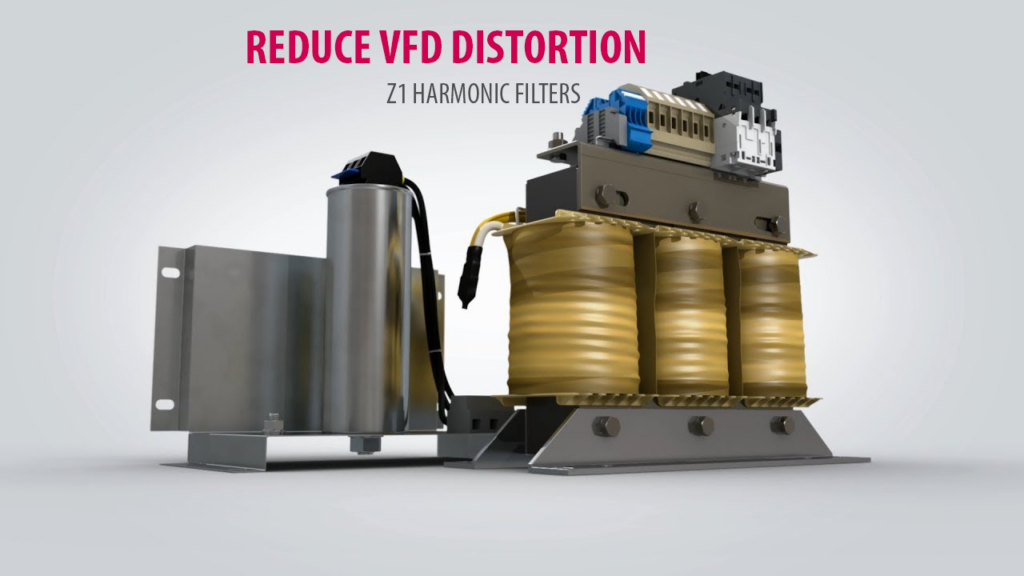
Selecting the appropriate harmonic mitigation technology requires balancing power quality targets, capital expenditure, and operational constraints. For six-pulse VFD architectures—the dominant topology in industrial and solar pumping applications—harmonic filters range from passive impedance elements to active electronic compensation systems. The following classification addresses distinct technical implementations, from basic line reactors to advanced hybrid systems, each offering specific trade-offs between Total Harmonic Distortion (THD) reduction, energy efficiency, and IEEE 519 compliance.
| Type | Technical Features | Best for (Industry) | Pros & Cons |
|---|---|---|---|
| Line Reactors (Input Impedance) | 3% or 5% impedance AC inductors installed at VFD input; creates current-limiting impedance to reduce peak charging currents of diode bridge rectifiers | General industrial automation, HVAC, light-duty agricultural pumping | Pros: Low cost, simple installation, reduces voltage notching, provides transient protection Cons: Limited THD reduction (typically 3-5% improvement), voltage drop (2-4%), requires derating at high temps |
| Tuned Passive Harmonic Filters (LC Traps) | Series resonant LC circuits tuned to specific frequencies (250Hz for 5th, 350Hz for 7th); provides low-impedance path for characteristic harmonics | Heavy manufacturing, marine vessels (IEEE 519 compliance), wastewater treatment facilities | Pros: High efficacy for target harmonics (up to 80-90% reduction), no active electronics, robust for harsh environments Cons: Risk of resonance with grid impedance, fixed tuning requires system analysis, bulky for high currents |
| Active Harmonic Filters (AHF) | Parallel-connected IGBT-based inverters that inject counter-phase harmonic currents; real-time monitoring via CTs with <10ms response | Data centers, hospitals, precision agriculture with strict power quality requirements | Pros: Dynamic compensation (2nd-50th harmonics), adapts to load changes, improves power factor simultaneously Cons: Higher initial cost, requires control power, complex commissioning, potential high-frequency EMI |
| DC Link Chokes (DC Bus Inductors) | Inductors installed in DC bus between rectifier and capacitor bank; smooths DC ripple and reduces reflected input harmonics | Solar pump inverters, retrofit applications where AC side space is constrained | Pros: No AC voltage drop, better protection against supply imbalances than AC reactors, reduces capacitor stress Cons: Less effective than AC reactors for voltage transient protection, requires internal VFD mounting or separate enclosure |
| Hybrid Harmonic Filters | Combination of passive LC elements for dominant low-order harmonics (5th, 7th) and active filter for residual high-order distortion; optimized for >100kW systems | Large-scale solar irrigation projects, EPC contractor installations, marine propulsion systems | Pros: Cost-effective for high-power applications, reduces active component rating, meets strict IEEE 519 limits Cons: Complex system integration, requires coordinated protection settings, higher maintenance than pure passive solutions |
Line Reactors (Input Impedance)
Line reactors represent the most fundamental harmonic mitigation approach for six-pulse VFDs. By introducing inductive impedance (typically 3% for line voltages stable within ±10%, or 5% for “stiff” utility sources with lower impedance), these devices limit the rate of current rise during diode conduction periods. This reduces the peakiness of the input current waveform, lowering THD(i) from approximately 80-100% (unmitigated) to 35-45%.
In solar pumping applications, 3% reactors are often preferred to minimize voltage drop that could affect MPPT efficiency in marginal irradiance conditions. However, for marine vessels or weak grid connections where source impedance fluctuates, 5% reactors provide superior protection against harmonic amplification. Engineers must account for the additional heat dissipation (typically 3-4% of rated power) and ensure adequate enclosure ventilation, particularly in tropical agricultural environments.
Tuned Passive Harmonic Filters
Tuned passive filters provide targeted attenuation of specific characteristic harmonics generated by six-pulse rectifiers. A systematic power quality assessment—measuring background harmonics and grid impedance—is mandatory before installation to avoid resonance conditions. These filters utilize precisely calculated inductor-capacitor (LC) pairs, with damping resistors to prevent quality factor (Q) amplification issues.
For industrial installations requiring IEEE 519 compliance, fifth harmonic (250Hz) traps are most common, often combined with seventh harmonic (350Hz) filters in “double-tuned” configurations. In marine vessel applications, these filters must be derated for 50°C ambient temperatures and comply with vibration standards (IEC 60068-2-6). While highly effective for steady-state loads, they present challenges in solar pumping systems where varying insolation causes fluctuating DC bus loads; detuned filters (tuned 10-15% below nominal frequency) are often specified to prevent resonance across the operating range.
Active Harmonic Filters (AHF)
Active filters operate on the principle of harmonic current cancellation rather than impedance-based attenuation. Current transformers monitor load current, and digital signal processors calculate instantaneous harmonic components. The filter’s IGBT inverter injects compensating currents 180° out of phase with the harmonic content, effectively neutralizing distortion at the point of common coupling (PCC).
For EPC contractors managing multi-drive installations in agricultural processing facilities, AHFs offer significant advantages: they compensate for harmonics from multiple VFDs simultaneously, correct power factor (leading or lagging), and adapt automatically as pump stations cycle on/off. However, the electronic complexity introduces failure modes not present in passive systems; agricultural engineers should specify IP54 minimum enclosures for dusty environments and consider bypass contactors for critical irrigation systems. The initial cost (typically 3-4x passive filter equivalents) is offset in applications with strict utility harmonic penalties or where transformer overheating from residual harmonics would necessitate infrastructure upgrades.
DC Link Chokes
DC link chokes provide an alternative harmonic suppression point by inductively filtering the DC bus current between the rectifier bridge and capacitor bank. Unlike AC line reactors, they do not cause input voltage sag, making them ideal for solar pump inverters operating at the lower end of voltage tolerance windows. The inductance (typically 1.5-3.0 mH for 480V class drives) reduces ripple current, extending DC capacitor lifespan by 30-50% while reducing input current THD by 5-8 percentage points compared to unfiltered drives.
In retrofit applications where existing enclosures lack space for AC reactors, DC chokes offer a compact solution. However, they provide no protection against AC line transients or phase imbalance—conditions common in rural agricultural grids. Boray Inverter recommends DC chokes specifically for solar pumping systems utilizing maximum power point tracking (MPPT), as the reduced current ripple improves tracking accuracy and overall system efficiency by 1-2%.
Hybrid Harmonic Filters
Hybrid systems combine the high-current handling of passive filters with the precision of active compensation. Typically, passive elements address the 5th and 7th harmonics (comprising 70-80% of distortion in six-pulse drives), while a smaller-rated active filter manages residual 11th, 13th, and higher-order components plus reactive power correction. This architecture reduces the active filter’s required current rating by 60-70%, lowering both cost and switching losses.
For large-scale solar irrigation projects exceeding 100kW, hybrid filters present an optimal lifecycle cost solution. The passive components handle continuous steady-state harmonics, while the active portion engages dynamically during transient conditions (such as pump start-up or cloud-induced irradiance fluctuations). Systematic power quality monitoring—referencing methodologies from marine vessel applications—should verify filter performance across the full irradiance spectrum, ensuring compliance with both IEEE 519 and local utility interconnection standards for distributed generation.
Key Industrial Applications for Harmonic Filters For Variable Frequency Drives
In industrial environments where Variable Frequency Drives (VFDs) constitute the majority of motor control architectures, harmonic distortion represents a critical infrastructure risk—particularly in facilities with high concentrations of non-linear loads. Strategic deployment of harmonic filters not only ensures compliance with IEEE 519 and IEC 61000-3-6 standards but unlocks measurable energy recovery, transformer derating avoidance, and extended equipment lifecycle across diverse sectors. The following applications demonstrate where harmonic mitigation delivers the highest ROI for EPC contractors and automation engineers.
| Sector | Application | Energy Saving Value | Sourcing Considerations |
|---|---|---|---|
| Agriculture & Solar Pumping | Solar pump inverters for large-scale irrigation, deep well extraction, and surface water management | 15–25% system efficiency gain via THD reduction (<5%); prevents transformer saturation in remote solar arrays; maintains MPPT tracking stability by eliminating voltage waveform distortion | IP65/NEMA 4X enclosures for UV exposure and moisture; wide DC input voltage range (200V–800V) compatibility; integration with Boray solar pump inverter communication protocols; anti-islanding protection for hybrid grid-tied systems |
| Water & Wastewater Treatment | Centrifugal pumps, aeration blowers, and filtration skids in municipal and industrial plants | 10–20% reduction in I²R losses in distribution transformers; elimination of utility power factor penalties; extended motor bearing life via common-mode voltage mitigation | NEMA 4X stainless steel construction for corrosive H₂S atmospheres; passive (broadband) or active harmonic filter options; compatibility with SCADA-based multi-pump cascade controllers and Boray VFD pump control logic |
| HVAC & Commercial Infrastructure | Chiller compressors, cooling tower fans, boiler feed pumps, and variable air volume (VAV) systems | 8–15% HVAC energy savings through improved power factor (>0.95); compliance with strict utility THD limits (<5%); reduced cooling load in electrical rooms due to low-watt-loss filter designs (<1% of rated load) | Low-profile designs for retrofit MCC installations; compliance with IEEE 519 and ASHRAE 90.1; minimal heat dissipation specifications to reduce HVAC cooling demand in confined electrical spaces |
| Cement & Heavy Mining | Conveyor belt systems, ball mills, crushers, and high-torque rotary kiln drives | 20–30% demand reduction through regenerative filtering and braking energy recovery; mitigation of voltage notching preventing PLC/control faults; avoidance of production downtime costs exceeding $50k/hour in critical process paths | Heavy-duty line/load reactors; active front end (AFE) or 18-pulse rectifier alternatives for >40% THD environments; vibration-resistant enclosures (IEC 60068-2-6) and extended temperature ranges (-20°C to +50°C) |
| Plastics & Manufacturing | Extruders, injection molding machines, and continuous mixers with high cyclic loads | 12–18% energy recovery via improved true power factor; prevention of sensitive encoder/resolver malfunctions; elimination of neutral conductor overheating in three-phase four-wire systems | Compact passive filters for space-constrained electrical panels; broad spectrum cancellation (targeting 5th, 7th, 11th, and 13th harmonics); universal VFD compatibility with major drive manufacturers |
Agriculture & Solar Pumping
In remote solar pumping installations, VFDs operate as the critical interface between photovoltaic arrays and submersible or surface pumps. Without harmonic filtration, the high impedance of long feeder cables in agricultural fields amplifies voltage distortion, causing erratic Maximum Power Point Tracking (MPPT) behavior and premature failure of pump motor insulation. Deploying passive harmonic filters specifically tuned for 5th and 7th harmonics stabilizes the DC bus voltage in solar pump inverters, ensuring consistent water flow rates while preventing transformer overheating in hybrid diesel-solar systems. When sourcing for these applications, prioritize filters with wide DC input tolerances to accommodate fluctuating solar irradiance, and ensure IP65 ingress protection to withstand outdoor exposure without dedicated electrical buildings.
Water & Wastewater Treatment
Municipal water treatment facilities represent high-density VFD environments where dozens of pumps and aeration blowers operate simultaneously. The cumulative harmonic current can cause resonance with power factor correction capacitor banks, leading to dangerous overvoltage conditions. Harmonic filters in this sector must address not only the drive input but also mitigate common-mode voltages that induce bearing currents in centrifugal pumps—a leading cause of premature motor failure. Sourcing considerations should emphasize NEMA 4X or stainless steel enclosures to resist corrosive gases common in wastewater processing, and compatibility with cascade control architectures where multiple Boray inverters operate in master-slave configurations for energy-efficient staging.
HVAC & Commercial Infrastructure
Commercial buildings face unique constraints where harmonic filters must fit within existing Motor Control Centers (MCCs) without requiring additional cooling infrastructure. Unlike heavy industrial applications, HVAC VFDs typically operate at lower switching frequencies but in high quantities, creating cumulative THD that violates utility interconnection standards. Modern low-watt-loss harmonic filters reduce heat generation by 40-60% compared to traditional line reactors, directly reducing the facility’s cooling load. For retrofit projects, specify compact, bookshelf-style filter designs that mount adjacent to VFDs in standard MCC buckets, and verify compliance with both IEEE 519 and local utility harmonic injection limits to avoid penalty tariffs.
Cement & Heavy Mining
In cement plants and mining operations, VFDs control high-inertia loads such as ball mills and conveyor systems that regenerate significant energy back to the DC bus. Standard six-pulse drives without harmonic mitigation create severe voltage notching that interferes with sensitive control electronics and causes nuisance tripping of protective relays. Active harmonic filters or 18-pulse rectifier configurations are often justified in these sectors despite higher capital costs, given the extreme cost of unplanned downtime. Sourcing for these environments requires ruggedized construction rated for high particulate contamination and vibration (per IEC 60068-2-6), with thermal management systems capable of operating in ambient temperatures up to 50°C without derating.
Plastics & Manufacturing
Extrusion and injection molding processes subject VFDs to high cyclic loading with frequent acceleration and deceleration profiles, generating dynamic harmonic content that varies with the plasticizing cycle. In these facilities, harmonic distortion often manifests as overheating of neutral conductors (sized for balanced loads) and malfunction of nearby precision control systems. Passive broadband harmonic filters provide cost-effective mitigation in space-constrained electrical panels typical of manufacturing floors. When specifying filters for plastics applications, ensure broad spectrum attenuation covering the 5th through 13th harmonics, and verify compatibility with the specific PWM carrier frequency of the installed VFDs to avoid resonance conditions that could amplify rather than attenuate distortion.
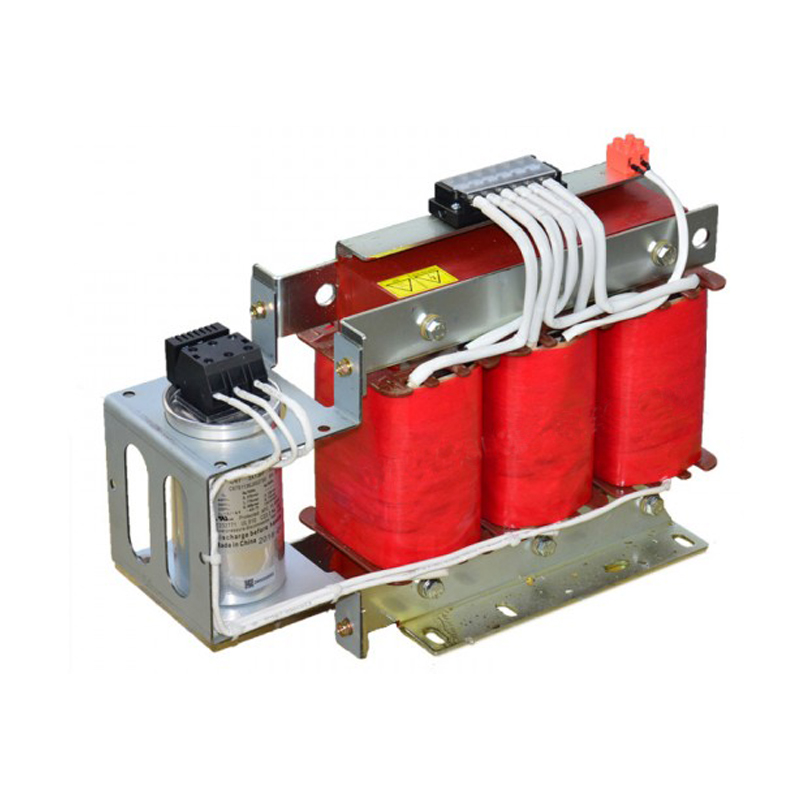
Top 3 Engineering Pain Points for Harmonic Filters For Variable Frequency Drives
Scenario 1: IEEE 519 Compliance Failures and Utility Interconnection Barriers in Industrial EPC Projects
The Problem:
The widespread deployment of cost-effective six-pulse VFDs in industrial facilities introduces significant current harmonics—particularly 5th, 7th, 11th, and 13th order—back into the electrical distribution system. As VFD penetration increases beyond the IEEE 519-1992 threshold limits (typically requiring <5% Total Harmonic Distortion of Current at the Point of Common Coupling), EPC contractors face utility rejection of interconnection agreements, penalty tariffs, and mandatory power quality mitigation mandates. The input diode bridge rectification characteristic of standard VFDs acts as a non-linear load, creating a “one-way street” for harmonic currents that distort voltage waveforms, causing nuisance tripping of sensitive protection relays, transformer overheating, and neutral conductor overloading in three-phase systems.
The Solution:
Implement systematic power quality assessment methodologies prior to filter specification to establish baseline harmonic spectra and system impedance. For high-density VFD installations, deploy active harmonic filters (AHFs) that inject real-time compensating currents to achieve <5% THDi compliance, or specify 12-pulse/18-pulse drive configurations for large horsepower applications. In cost-sensitive solar pumping stations, integrate detuned passive harmonic filter branches (5th harmonic traps with quality factors of 30-50) at the VFD input stage, ensuring resonance avoidance with existing power factor correction banks. Boray Inverter’s engineering protocols emphasize pre-commissioning harmonic spectrum analysis to validate filter performance under varying load cycles, ensuring sustained compliance with evolving global grid codes from IEC 61000 to local utility standards.
Scenario 2: Generator Instability and Motor Control Degradation in Remote Agricultural Deployments
The Problem:
Agricultural project managers deploying solar pump inverters with standby diesel generator (DG) sets encounter unique harmonic amplification challenges in weak grid environments. Standard six-pulse VFDs impose harmonic current demands that generators cannot source without significant voltage waveform distortion (often exceeding 10% THDv), resulting in generator overheating, AVR (Automatic Voltage Regulator) instability, and erratic motor control precision. This is particularly critical in long-distance pumping applications where cable capacitance interacts with harmonic frequencies to create standing wave phenomena, inducing reflected voltage spikes that exceed motor insulation ratings. The high impedance of rural distribution networks exacerbates these effects, leading to premature submersible motor failure and unreliable irrigation scheduling during critical growing periods.
The Solution:
Specify sine wave filters or dv/dt filters at the VFD output stage to mitigate voltage reflection and reduce harmonic injection into generator sets. For hybrid solar-diesel pumping systems, utilize active front-end (AFE) regenerative technologies or dedicated line reactors combined with harmonic trap filters sized specifically for the generator’s sub-transient reactance (X”d). Boray Inverter’s solar pump VFDs incorporate integrated DC choke and EMI filtering stages to reduce input current THD by 40-60%, ensuring stable operation across the 20Hz–60Hz operational range while protecting long-run motor windings from harmonic-induced thermal stress. Engineering teams should conduct generator compatibility studies to ensure filter impedance matching prevents voltage collapse during VFD startup inrush conditions.
Scenario 3: Resonance Hazards and Capacitor Bank Interactions in Retrofit Installations
The Problem:
Industrial engineers retrofitting harmonic filters into existing facilities with legacy power factor correction (PFC) systems face critical resonance hazards that can amplify rather than attenuate harmonics. When passive harmonic filters are installed without systematic power quality assessment, the interaction between filter inductance and existing capacitive reactance can create parallel resonance at non-characteristic frequencies (typically between 4th–7th order), causing dangerous overvoltage conditions and capacitor bank failures. This phenomenon, documented in marine vessel power systems and heavy industrial plants, results in fuse blowing, busbar overheating, and insulation breakdown in switchgear. Without IEEE-compliant monitoring methodology, these resonance conditions remain latent until catastrophic equipment failure occurs, particularly when variable loads cause harmonic spectra to shift across the operational profile.
The Solution:
Conduct comprehensive power quality monitoring using IEEE 519 assessment protocols to identify existing harmonic spectra and system impedance characteristics before filter installation. Implement detuned filter designs (e.g., 189Hz or 210Hz tuning frequencies for 50Hz systems) that shift resonance points below dominant harmonic frequencies, or deploy active harmonic filters that dynamically adapt to changing system impedance without risk of resonance. For facilities with existing PFC banks, Boray Inverter recommends converting capacitor stages into harmonic filter branches through the addition of series reactors (7% or 14% impedance), creating a unified power quality solution that eliminates resonance risks while maintaining target power factor correction. Always verify filter performance under minimum and maximum load conditions to ensure resonance points do not align with dominant harmonic orders during operational transients.
Component and Hardware Analysis for Harmonic Filters For Variable Frequency Drives
Effective harmonic mitigation in Variable Frequency Drive (VFD) systems—whether for industrial automation or solar pumping applications—depends fundamentally on the robustness of internal hardware architectures. While passive L-C networks remain prevalent for basic IEEE 519 compliance, modern active and hybrid harmonic filters rely on sophisticated power electronics, real-time digital signal processing, and advanced thermal management systems. For EPC contractors and agricultural project managers deploying Boray Inverter solutions in harsh environments, understanding these component-level distinctions is critical for specifying equipment that delivers 15–20 year operational lifespans rather than premature field failures.
Power Semiconductor Modules (IGBTs)
In active harmonic filter (AHF) topologies, Insulated Gate Bipolar Transistors (IGBTs) function as the primary injection switches, generating compensating currents to cancel VFD-generated harmonics (typically 5th, 7th, 11th, and 13th orders). Unlike standard inverter-grade IGBTs, those specified for harmonic filtering must sustain extremely high switching frequencies (8–20 kHz) to accurately synthesize harmonic waveforms while managing thermal stress from constant current modulation.
Critical Specifications:
– Thermal Cycling Capability: Look for AlSiC (Aluminum Silicon Carbide) baseplates and direct copper bonding (DCB) substrates that withstand >50,000 thermal cycles (ΔTj = 80°C).
– Saturation Voltage (Vce(sat)): Lower values (<1.7V at rated current) reduce conduction losses, directly impacting heatsink sizing and enclosure IP ratings for outdoor solar pump installations.
– Short-Circuit Withstand Time (tsc): Minimum 10μs protection for grid fault conditions.
Digital Signal Processing (DSP) and Control Architecture
The harmonic extraction algorithm—typically Fast Fourier Transform (FFT) or instantaneous p-q theory—executes on dedicated DSP or FPGA controllers. These processors must sample three-phase currents at >12.8 kHz (256 samples/cycle at 50Hz) to accurately detect harmonic content up to the 50th order, as required by IEC 61000-4-7 for Class A industrial equipment.
Hardware Considerations:
– ADC Resolution: 16-bit minimum sigma-delta converters prevent quantization errors that cause filter detuning.
– Industrial Temperature Range: Controllers rated for -40°C to +85°C ambient are non-negotiable for agricultural solar pumping stations experiencing diurnal thermal swings.
– Galvanic Isolation: Optocoupler or magnetic isolation between high-voltage sensing and logic circuits prevents ground loop failures in remote installations.
Passive Filter Components: Reactors and Capacitors
For cost-sensitive six-pulse VFD installations (as referenced in IEEE 519 compliance studies), passive harmonic filters dominate. These consist of tuned L-C branches:
Line Reactors (Inductors):
Iron-core reactors with gapped cores provide linear inductance (±3% tolerance) across the harmonic spectrum. Class H insulation (180°C thermal rating) is essential because harmonic currents cause additional heating (I²R losses) beyond fundamental current. Air-core reactors, while linear, require significantly more copper and enclosure volume, making them impractical for compact solar pump inverter integrations.
Filter Capacitors:
Self-healing metallized polypropylene film capacitors (not electrolytic) must feature overpressure disconnectors and dry resin filling. Key parameters include:
– Tolerance: <3% capacitance deviation to maintain tuning frequency stability (typically 189Hz for 5th harmonic filters in 50Hz systems).
– Voltage Rating: 1.1–1.15 × nominal voltage to withstand voltage distortion from the VFD DC bus.
Thermal Management Systems
Thermal design determines Mean Time Between Failures (MTBF) more than any other factor in harmonic filter reliability.
Heatsink Architecture:
Extruded aluminum heatsinks with anodized surfaces (thermal conductivity >200 W/m·K) must maintain thermal resistance (Rth) <0.5 K/W when paired with forced air cooling. For solar pump applications in desert climates, specify heatsinks with vertical fin orientation and IP65-rated fan assemblies (MTBF >50,000 hours at 40°C). Phase-change thermal interface materials (TIMs) between IGBT baseplates and heatsinks outperform silicone greases after 5+ years of thermal cycling.
Enclosure Thermal Design:
Active filters in outdoor agricultural environments require double-wall stainless steel enclosures with sun shields, maintaining internal ambient temperatures below 45°C even when external temperatures exceed 55°C.
Component Analysis Matrix
| Component | Function | Quality Indicator | Impact on Lifespan |
|---|---|---|---|
| IGBT Power Modules | High-frequency switching for harmonic current injection and cancellation | Vce(sat) < 1.7V; Tj(max) > 150°C; AlSiC baseplate; DCB substrate; >50k thermal cycles capability | Thermal fatigue is primary failure mode; premium modules extend operational life from 5 to 15+ years under continuous switching |
| DSP/FPGA Controllers | Real-time harmonic spectrum analysis (FFT) and PWM generation | >100 MIPS processing; 16-bit sigma-delta ADC; Industrial temp range (-40°C to +85°C); Galvanic isolation | Control drift from thermal stress causes filter detuning and IGBT overloading; robust thermal design prevents premature logic failures |
| Cooling Heatsinks | Thermal dissipation for power semiconductors and reactors | Thermal resistance Rth < 0.5 K/W; Anodized aluminum 6063-T5; IP65 fan MTBF >50,000 hrs | Semiconductor lifespan halves for every 10°C rise above rated junction temperature; critical for solar pump desert installations |
| Line Reactors (Inductors) | Current limiting and harmonic attenuation via impedance | Linear inductance curve (±3%); Class H insulation (180°C); Copper fill factor >0.6; Gapped iron core | Insulation degradation from harmonic heating (K-factor >4); quality reactors operate 20+ years without rewinding |
| Filter Capacitors (Power Film) | Reactive compensation and resonance tuning | Self-healing metallized polypropylene; Overpressure disconnector; <3% tolerance; IEC 61071 compliant | Electrode corrosion and dielectric aging; self-healing film technology achieves 100,000+ hours vs. 20,000 hours for electrolytic alternatives |
| Current Transducers | Precise harmonic current sensing for active control loops | Bandwidth >10kHz (to capture 50th harmonic); Accuracy class 0.5; Hall-effect with galvanic isolation | Measurement drift causes control instability and filter overload; high-linearity sensors maintain calibration >10 years |
| DC-Link Capacitors | Energy storage and ripple current absorption for active filter inverter stage | Low ESR (<1mΩ); High ripple current capability (>50A rms); Film construction (not electrolytic) | ESR increase creates thermal runaway; film capacitors eliminate electrolyte dry-out, extending life 5× over conventional electrolytics |
Integration Considerations for Solar Pumping and Industrial Automation
When specifying harmonic filters for Boray Inverter solar pump VFDs, component selection must account for wide voltage fluctuations (±20% grid variance in rural installations) and ambient temperature extremes. Passive filters should include detuning reactors (7% impedance minimum) to prevent resonance with generator sets in off-grid agricultural applications. For active filters, specify DSP controllers with automatic resonance detection algorithms that shift switching frequency away from network natural frequencies.
EPC contractors should verify that capacitor banks include internal fuses and that IGBT modules utilize NTC thermistors for direct junction temperature monitoring, enabling predictive maintenance alerts before catastrophic failure. In marine or high-humidity agricultural environments (referencing IEEE marine vessel studies), conformal coating on all PCBs (IPC-CC-830 Class 3) and hermetically sealed current sensors prevent corrosion-induced drift.
By prioritizing these hardware specifications—particularly thermal management and film capacitor technology—engineers ensure harmonic filter installations meet IEEE 519-2022 distortion limits while delivering maintenance-free operation across the 25-year asset life typical of solar pumping infrastructure.
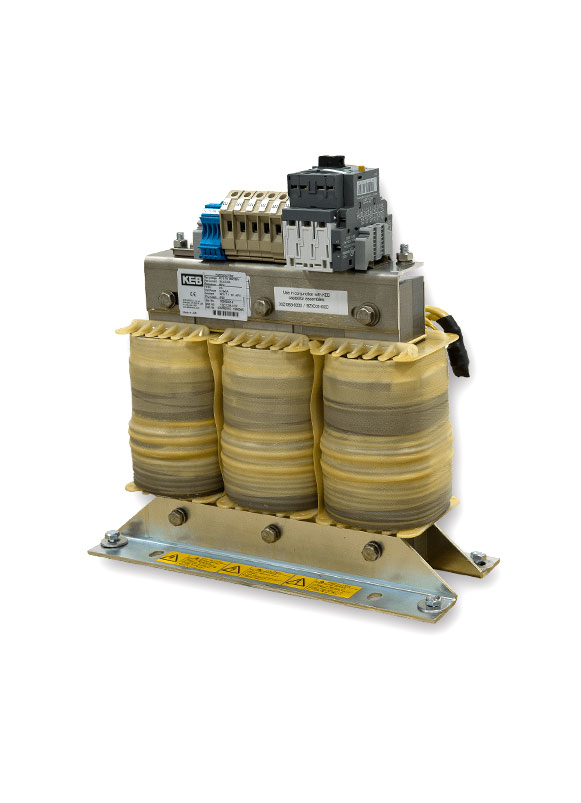
Manufacturing Standards and Testing QC for Harmonic Filters For Variable Frequency Drives
In mission-critical VFD applications—from solar irrigation systems in sub-Saharan Africa to marine propulsion drives and heavy industrial automation—harmonic filter reliability is non-negotiable. Manufacturing excellence extends beyond simple assembly; it requires rigorous process controls, environmental hardening, and 100% validation testing to ensure filters perform under thermal stress, voltage transients, and harmonic-rich grid conditions. For EPC contractors and automation distributors, understanding these manufacturing protocols ensures specification of components that maintain IEEE 519 compliance and operational continuity across decades of service.
Component-Level Quality Assurance and Incoming Inspection
The foundation of harmonic filter reliability begins with raw material traceability and component pre-screening. High-grade film capacitors must comply with IEC 61071 standards for power electronics, featuring self-healing metallized polypropylene dielectric and overpressure disconnector safety mechanisms. Each capacitor batch undergoes capacitance dissipation factor testing at 1kHz and thermal shock screening (–40°C to +85°C) to eliminate infant mortality failures.
For line reactors and tuned inductors, copper winding insulation must meet Class H (180°C) or higher thermal ratings per IEC 60085. Incoming QC includes LCR meter verification of inductance tolerance (typically ±3% for detuned filters, ±5% for broad-band applications), hi-pot testing between windings and core (2.5kVAC for 60 seconds), and insulation resistance validation exceeding 100 MΩ at 1000VDC. Magnetic core materials undergo BH curve analysis to verify saturation characteristics under harmonic loading conditions.
PCB Assembly and Environmental Protection Protocols
Harmonic filter control circuits and auxiliary monitoring PCBs require protection against the corrosive atmospheres common in agricultural pumping stations and marine environments. Manufacturing facilities should apply conformal coating—acrylic, polyurethane, or silicone-based per IPC-CC-830 standards—using selective spray or dipping processes to achieve 25–75μm thickness coverage. This prevents moisture ingress and conductive dust accumulation that can create leakage current paths in high-humidity solar installations.
For high-vibration applications such as mobile irrigation equipment or onboard vessel drives, potting compounds (epoxy or polyurethane) provide mechanical stabilization of heavy components like DC link capacitors and power resistors. Assembly processes must adhere to IPC-A-610 Class 3 acceptance criteria (high-performance/harsh environment), requiring automated optical inspection (AOI) of solder joints and X-ray verification of hidden connections in multilayer boards.
Thermal Stress Screening and Burn-In Protocols
Passive harmonic filters operate continuously at elevated temperatures, necessitating aggressive thermal aging to precipitate early-life failures. Reputable manufacturers implement 100% burn-in testing: filters operate at 110% rated current in 85°C ambient chambers for 48–72 hours, simulating worst-case solar pumping scenarios where ambient temperatures exceed 50°C and enclosure ventilation is limited. During this cycle, thermal imaging cameras monitor reactor hot spots and capacitor case temperatures, ensuring no component exceeds its thermal derating curve.
Thermal cycling tests (IEC 60068-2-14) subject completed assemblies to 50 cycles between –40°C and +85°C to validate solder joint integrity and expansion coefficient compatibility between dissimilar materials (aluminum busbars, copper windings, and steel enclosures). For solar pump inverters specifically, UV aging chambers test enclosure gasket materials and cable insulation for 1000+ hour equivalents of tropical sun exposure.
Full-Load Electrical Validation and Harmonic Performance Verification
Every harmonic filter must undergo 100% production testing at full rated current before shipment. This includes:
– Load Bank Testing: Operation at rated current for 4 hours minimum with THDi (Total Harmonic Distortion of current) verification using precision power analyzers, ensuring compliance with IEEE 519 limits (typically <5% THDi at full load)
– Insulation Resistance: Megohm testing at 1000VDC between all live parts and earth, requiring >100 MΩ minimum
– Dielectric Withstand (Hi-Pot): Application of 2kVAC (or 2.5kVDC for DC bus filters) for 60 seconds without breakdown, per IEC 61439-1
– Impedance Verification: Sweep frequency response analysis to confirm tuning frequency accuracy (e.g., 189Hz for 5th harmonic filters in 60Hz systems, 150Hz for 50Hz systems)
For active harmonic filter modules, functional testing includes step-load response verification (0–100% load in <100ms) and thermal runaway protection validation.
Standards Compliance and Traceability Frameworks
Manufacturing facilities must maintain ISO 9001:2015 quality management system certification with specific process controls for power electronics. CE marking requires demonstration of conformity to:
– EN 61000-6-2: Immunity for industrial environments (surge, EFT, radiated fields)
– EN 61000-6-4: Emission standards for harmonic and conducted disturbances
– IEC 61439-1: Low-voltage switchgear and control gear assemblies
– UL 508C or IEC 61800-5-1: Safety requirements for adjustable speed electrical power drive systems
Each filter receives a unique serial number enabling full traceability: capacitor batch codes, reactor winding dates, PCB assembly lots, and test technician identification. This traceability proves essential for agricultural project managers managing distributed solar pumping assets across multiple sites, allowing rapid identification of potential field issues and targeted recalls if component lot defects emerge.
Solar and Agricultural Application Hardening
For VFD harmonic filters deployed in solar pumping systems, manufacturing must incorporate additional environmental protections. Enclosures undergo IP65 ingress protection testing (dust-tight and protected against water jets) using high-pressure spray booths. Anti-corrosion surface treatments include phosphating and powder coating to 80μm thickness for coastal installations where salt spray accelerates degradation. Cable entry glands are torque-tested to prevent loosening under cyclic thermal expansion, and busbar connections receive silver plating or tinning to prevent oxidation in high-humidity greenhouse environments.
By enforcing these manufacturing standards—from conformal coating chemistry to 100% full-load harmonic verification—Boray Inverter ensures that harmonic filters integrated with solar pump VFDs and industrial motor controls deliver the longevity and power quality performance that global EPC contractors and automation distributors demand for their most demanding installations.
Step-by-Step Engineering Sizing Checklist for Harmonic Filters For Variable Frequency Drives
Proper sizing of harmonic mitigation equipment requires systematic analysis beyond simple nameplate matching. For solar pumping installations and heavy-duty industrial VFD applications, incorrect specification leads to resonance conditions, capacitor overload, or insufficient THD reduction. Use this engineering checklist to ensure your passive or active harmonic filter solution aligns with both the drive architecture and site-specific power quality constraints.
1. Establish Power Quality Baseline at the Point of Common Coupling (PCC)
Before specifying any filter, quantify the existing distortion profile:
* Measure Total Demand Distortion (TDD): Use a Class A power quality analyzer to record at least 7 days of data, capturing peak and minimum load cycles. For agricultural solar pumping, include seasonal irrigation patterns that affect duty cycles.
* Identify Harmonic Spectrum: Document magnitude and phase angles for the 5th, 7th, 11th, and 13th harmonics (dominant in 6-pulse diode bridge rectifiers, per standard VFD topologies). Note any pre-existing voltage distortion from the utility that could amplify resonance with new filter capacitors.
* System Impedance Calculation: Determine the short-circuit ratio (SCR) at the PCC. Low SCR systems (<20) are more susceptible to voltage distortion and may require active harmonic filters rather than passive solutions.
2. Characterize VFD Input Characteristics
Match the filter to the specific drive topology, not just the motor rating:
* Input Current vs. Motor FLA: Size based on the VFD’s input current draw, which typically exceeds motor full-load amps (FLA) by 15–25% due to switching losses and DC bus charging. For Boray solar pump inverters, reference the maximum continuous input current at worst-case MPPT voltage.
* Pulse Number Verification: Confirm if the drive uses 6-pulse, 12-pulse, or active front-end (AFE) rectification. 6-pulse drives (most common in cost-sensitive agricultural applications) require aggressive 5th harmonic filtering, while AFE drives may need minimal passive filtering but different EMI considerations.
* DC Bus Voltage Ripple: Measure or calculate peak-to-peak ripple under regenerative conditions, as this affects the filter capacitor voltage rating requirements.
3. Define Regulatory and Utility Compliance Targets
- IEEE 519 / Local Grid Codes: Determine the applicable TDD limits based on the ratio of maximum short-circuit current to maximum load current (Isc/IL) at the PCC. Industrial facilities typically target <5% TDD for systems >1000A, while rural solar pumping stations may face stricter utility requirements due to weak grid infrastructure.
- End-User Power Quality Agreements: Verify if sensitive equipment (precision controls, adjacent medical or data infrastructure) requires THD levels below IEEE 519 minimums (e.g., <3% voltage THD).
4. Select Filter Topology Based on Application Constraints
| Topology | Best Application | Sizing Consideration |
|---|---|---|
| Tuned Passive (5th or 7th) | Stable loads, 6-pulse VFDs, cost-sensitive solar pumping | Size reactive power (kVAR) at 30–50% of drive kVA; tune to 4.7× fundamental to avoid overloading during voltage fluctuations |
| Broadband Passive | Multiple VFDs, mixed loads | Current rating must sum all non-linear loads plus 20% margin; check for leading power factor at light load |
| Active Harmonic Filter (AHF) | Variable torque loads (irrigation pumps with changing flow), SCR <10, compliance <5% THD | Size based on harmonic current cancellation capacity (A), not kVAR; typically 25–50% of total non-linear load current |
| Hybrid (Active+Passive) | Large solar pump stations (>75kW) with strict utility mandates | Passive section handles 5th/7th; active section manages higher orders and load variations |
5. Execute Electrical Sizing Calculations
- Voltage Rating: Specify filter voltage ≥ 1.1 × maximum system voltage. For solar pumping, account for maximum open-circuit voltage (Voc) of PV arrays during cold mornings, which can exceed nominal by 20%.
- Current Rating: Filter busbars and conductors must handle 1.2–1.5 × VFD input current continuously, with peak capacity for motor inrush during bypass operation.
- Reactive Power (kVAR) Sizing: For passive filters, calculate required kVAR using:
$$Q_{filter} = \sqrt{3} \times V_{line} \times I_{harmonic} \times \frac{h}{h^2-1}$$
Where h is the harmonic order (typically 5). Oversizing by 10% prevents capacitor overload from grid voltage swells. - Detuning Factor: If the system includes power factor correction capacitors elsewhere, verify the filter tuning frequency does not coincide with existing capacitor banks to avoid parallel resonance.
6. Apply Environmental Derating Factors
Solar and agricultural installations present unique thermal and mechanical stresses:
* Temperature Derating: For every 10°C above 40°C ambient, reduce passive filter current capacity by 8–10%. Desert solar pump installations often require outdoor-rated enclosures with forced ventilation or liquid cooling.
* Altitude Correction: Above 1000m, reduce voltage withstand capability by 1% per 100m for air-insulated components.
* Humidity/Condensation: Marine or greenhouse applications require conformal coating on PCBs and NEMA 4X/IP65 enclosures to prevent filter capacitor degradation from moisture ingress.
7. Solar Pumping System Integration Checks
When filtering harmonics for Boray solar pump inverters or similar PV-powered VFDs:
* MPPT Voltage Range Compatibility: Ensure filter impedance does not create excessive voltage drop at the minimum MPPT voltage, which could trigger under-voltage faults during low irradiance.
* Isolation Requirements: Verify if the filter provides necessary galvanic isolation between the PV array and the pump motor, or if additional isolation transformers are required for safety compliance (IEC 62109).
* DC Component Rejection: Confirm filter reactors are gapped-core designs capable of handling any DC injection from the solar inverter without saturation.
8. Pre-Commissioning Verification Protocol
Before energizing under load:
* Resonance Scan: Perform a frequency sweep impedance measurement to confirm no anti-resonance points exist near the 5th or 7th harmonic.
* Thermal Baseline: Infrared scan all filter connections at 50%, 75%, and 100% load to verify busbar sizing and terminal torque.
* Performance Validation: Compare post-installation THD against the baseline. Target <5% current THD for 6-pulse drives, with <8% voltage THD at the PCC.
Procurement Note: When sourcing harmonic filters for international EPC projects, verify that components carry IEC 61439-1 certification for assembly compliance and IEC 60831-1 for capacitor endurance (≥100,000 hours operational life). For solar pumping specifically, request filters tested for compatibility with wide voltage range inverters (200V–1000V DC input) to ensure stable operation across varying irradiance conditions.
Wholesale Cost and Energy ROI Analysis for Harmonic Filters For Variable Frequency Drives
When evaluating harmonic mitigation strategies for six-pulse and active-front-end VFD architectures, procurement decisions must balance upfront capital expenditure against long-term operational savings and regulatory compliance risks. For EPC contractors managing solar pumping stations or industrial automation distributors specifying drive packages, understanding the wholesale cost structures and energy return profiles of harmonic filters is critical to competitive bidding and project profitability.
Procurement Economics: Wholesale vs. Retail Pricing Structures
The industrial harmonic filter market operates on a tiered pricing model that varies significantly between OEM integrators, authorized distributors, and end-user procurement. Passive harmonic filters—typically LC trap or broadband filter designs for 6-pulse VFDs—wholesale to system integrators at approximately $45–$120 per kVAR depending on voltage class (480V vs. 690V) and enclosure ratings (NEMA 1 vs. NEMA 3R/4X). In contrast, active harmonic filters (AHFs) and hybrid solutions command wholesale pricing of $180–$350 per kVAR, reflecting the cost of IGBT power stages and DSP control hardware.
For agricultural project managers and solar EPCs purchasing at volume, tiered discounts typically activate at 50+ unit thresholds, with wholesale margins allowing 25–40% markup flexibility over manufacturer direct pricing. Distributors should note that line reactors, often bundled as entry-level harmonic mitigation, wholesale at 30–50% below dedicated filter banks but offer only marginal THD reduction (3–5% vs. 8–12% for tuned passive filters), affecting long-term energy ROI calculations.
Capital Expenditure Analysis by Topology
The total installed cost of harmonic compliance varies dramatically based on VFD architecture selection:
| Filter Topology | Wholesale Equipment Cost | Installation Labor | Engineering/Commissioning | Typical THD Reduction |
|---|---|---|---|---|
| 3% Line Reactor | $15–$25/kW | Low | Minimal | 3–5% |
| 5% Line Reactor | $20–$35/kW | Low | Minimal | 5–8% |
| Passive Tuned Filter | $60–$150/kW | Medium | Medium (tuning required) | 10–15% |
| Broadband Passive Filter | $80–$200/kW | Medium | Low | 15–25% |
| Active Harmonic Filter | $200–$400/kW | High (CT installation) | High | 90–95% |
| Active Front End (AFE) | $150–$300/kW (drive premium) | Low | Medium | 95%+ |
Note: Costs normalized to 480V class industrial applications. Solar pump inverter applications (400V/690V) may see 10–15% premium due to outdoor-rated enclosures and DC bus compatibility requirements.
For solar pumping applications specifically, passive broadband filters often provide the optimal CapEx position, as the variable flow characteristics of irrigation systems rarely require the dynamic compensation range of active filters, yet IEEE 519 compliance remains mandatory for grid-connected agricultural installations exceeding 50kW.
Energy ROI and Operational Expenditure Recovery
The business case for harmonic filters extends beyond IEEE 519 penalty avoidance into quantifiable energy savings. VFDs operating with high THD (typically 80–120% without mitigation) create I²R losses in upstream transformers and cables, increasing facility demand charges by 2–8%.
Quantified Savings Framework:
– Loss Reduction: Properly specified passive filters reduce system losses by 2–4%, while active solutions achieve 4–6% energy savings through power factor correction and harmonic elimination.
– Demand Charge Impact: Improved power factor (0.95+ vs. 0.75–0.85 typical for 6-pulse drives) reduces kVA demand charges, yielding $8–$15 per kW-month in utility savings for industrial tariffs.
– Solar Pumping Efficiency: In agricultural VFD applications, harmonic distortion creates voltage notching that reduces motor efficiency by 1–3%. Filter installation restores motor nameplate efficiency, critical for off-grid solar arrays where every watt-hour affects pump runtime and crop irrigation schedules.
Payback Calculation Example:
A 75kW solar pump inverter installation with a passive broadband filter ($12,000 wholesale cost) operating 2,000 hours annually:
– Energy savings: 3% of 75kW × 2,000h × $0.12/kWh = $540/year
– Demand charge reduction: 15kVA demand reduction × $12/kVA-month × 12 months = $2,160/year
– Total annual savings: $2,700
– Simple payback: 4.4 years
For active filter installations in continuous industrial processes (8,760 hours/year), payback periods typically compress to 18–30 months due to higher utilization rates and premium utility tariffs.
Warranty Costs and Total Cost of Ownership
Harmonic filter warranties directly impact long-term project ROI. Standard industry coverage includes:
– Passive Filters: 3–5 years on capacitors and reactors; 10+ years on structural enclosures
– Active Filters: 2–3 years comprehensive, with extended warranties available at 8–12% of equipment cost annually
EPC contractors should factor replacement capacitor banks (required every 7–10 years in passive filters) into lifecycle costing—typically 15–20% of initial filter cost. In contrast, active filters carry higher semiconductor failure risks but lower maintenance requirements, with MTBF ratings of 50,000–100,000 hours.
For distributors, offering integrated warranty packages that bundle the harmonic filter with the VFD or solar pump inverter (such as Boray Inverter’s unified 5-year coverage) reduces procurement complexity and improves end-user ROI confidence by eliminating finger-pointing between component manufacturers.
Strategic Procurement Recommendations
-
For Agricultural EPCs: Specify passive broadband filters for solar pumping systems under 100kW. The wholesale cost premium over line reactors ($40–$80/kW additional) is recovered within 3–5 years through reduced transformer losses and avoided utility penalty fees.
-
For Industrial Distributors: Stock modular active harmonic filters (50A–100A modules) for retrofit applications where IEEE 519 compliance is mandated post-installation. The higher wholesale cost is offset by rapid deployment without VFD replacement.
-
For Marine/Offshore Applications: As indicated in IEEE power quality assessments for marine vessels, prioritize active filters or 12-pulse configurations despite higher CapEx. The energy density constraints and strict harmonic limits (THD <5%) in marine electrical systems justify the 20–30% cost premium through fuel savings and generator capacity recovery.
By aligning harmonic filter specifications with actual load profiles—whether variable-flow irrigation pumps or constant-torque industrial machinery—procurement teams optimize the intersection of wholesale equipment costs, energy recovery timelines, and warranty risk management.
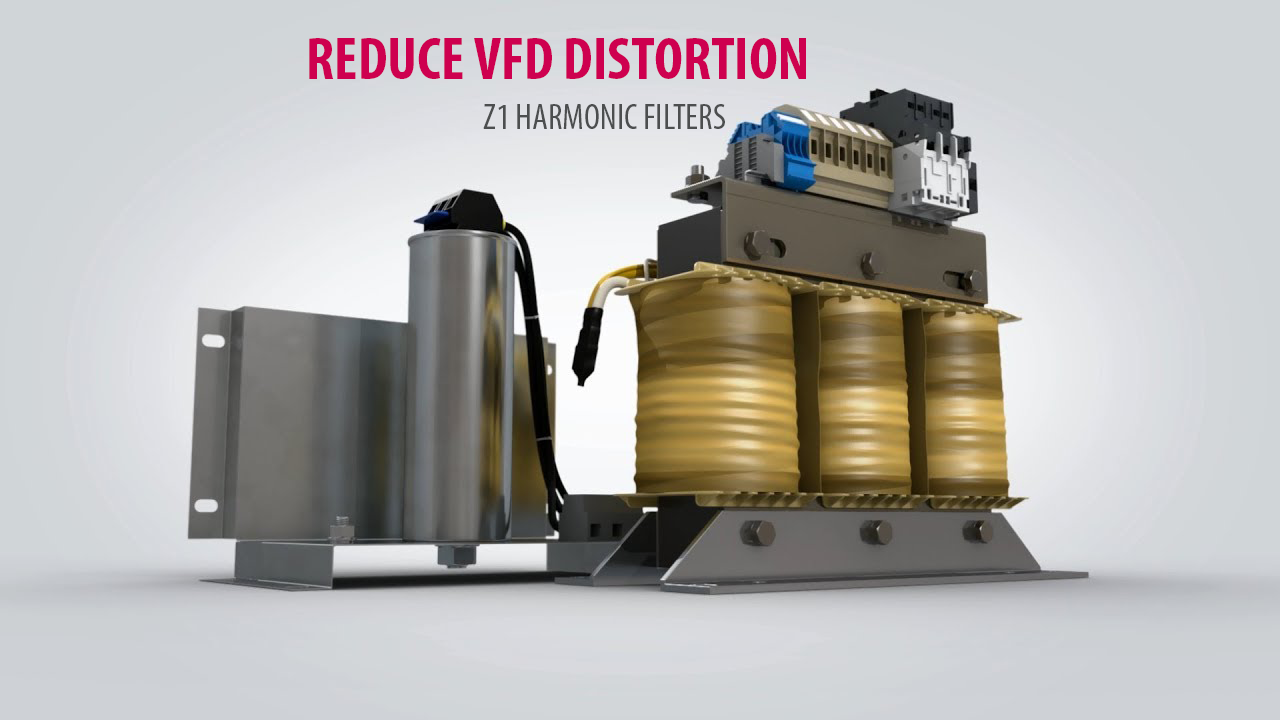
Alternatives Comparison: Is Harmonic Filters For Variable Frequency Drives the Best Choice?
When evaluating harmonic mitigation for Variable Frequency Drive (VFD) installations, passive harmonic filters represent only one point on a spectrum of power quality solutions. For industrial engineers and EPC contractors designing systems to IEEE 519 compliance—or agricultural project managers optimizing solar pumping architectures—the decision matrix extends beyond filter selection to encompass drive topology, motor technology, and power source configuration. A systematic comparison reveals that while passive filters offer compelling ROI for retrofits, alternative architectures may deliver superior lifecycle value depending on harmonic severity, spatial constraints, and operational requirements.
Mitigation Alternatives to Passive Harmonic Filters
Impedance-Based Solutions: Line Reactors and DC Chokes
AC line reactors (input chokes) and DC link chokes represent the most economically accessible alternative, typically reducing total harmonic current distortion (THD) by 40–50% when specified with 3–5% impedance. Unlike tuned passive filters—which provide a low-impedance path for specific harmonic orders (5th, 7th, 11th)—reactors limit the rate of current change through inductive impedance.
Trade-off analysis: While reactors cost significantly less than dedicated filters and require minimal panel space, they introduce voltage drop (typically 2–4%) and continuous energy losses. For marine vessel applications where space premiums are extreme (as noted in IEEE marine power quality assessments), the volumetric efficiency of reactors versus tuned filters becomes a critical design parameter. DC chokes offer superior harmonic attenuation compared to AC reactors by smoothing the DC bus current, but remain less effective than multi-tuned passive filters for meeting strict IEEE 519 limits under heavy nonlinear loading.
Drive Topology Alternatives: Active Front Ends and Multi-Pulse Systems
For new installations with severe harmonic constraints, altering the drive architecture often proves more elegant than external filtering. Active Front End (AFE) drives replace the standard six-pulse diode bridge with IGBT-based regenerative input sections, achieving <5% THD while enabling four-quadrant operation. However, AFE topology increases capital expenditure by 30–50% compared to standard VFDs with passive filters, and introduces higher switching losses.
Twelve-pulse and eighteen-pulse drives utilize phase-shifting transformers to cancel harmonic currents through vector summation, achieving 5–8% THD without external filters. These systems dominate in high-horsepower industrial applications (>500 kW) where transformer costs can be amortized across multiple drive sections. The drawback remains footprint: multi-pulse transformers require 2–3 times the mounting space of passive filter solutions, making them impractical for compact solar pumping skids or retrofitted MCCs (Motor Control Centers).
Active Harmonic Filters (AHF)
Parallel-connected active harmonic filters function as current sources that inject counter-phase harmonics to cancel distortion at the bus level. Unlike passive filters—which must be derated under light loads and risk resonance with utility capacitors—AHFs adapt dynamically to varying load profiles. For EPC contractors managing facilities with mixed VFD loads and legacy equipment, AHFs offer retrofit flexibility without modifying individual drive circuits. However, the per-ampere cost of active filtering typically exceeds passive solutions by 200–300%, positioning AHFs as strategic investments for critical power quality environments rather than standard solar pumping installations.
System Architecture Alternatives
VFD vs. Soft Starter: Eliminating the Harmonic Source
The most fundamental alternative to harmonic filtering is eliminating the harmonic generation mechanism entirely. Soft starters (thyristor-based reduced-voltage starters) eliminate high-order harmonics (5th, 7th, 11th) by limiting inrush current through phase-angle control during startup, then bypassing to full voltage for continuous operation.
For agricultural irrigation or fixed-speed industrial processes where flow control is unnecessary, soft starters provide:
– Zero continuous harmonic generation (post-bypass operation)
– Lower CAPEX (40–60% cost of equivalent VFD)
– Higher operating efficiency (no switching losses)
However, soft starters sacrifice the energy optimization and process control capabilities that justify VFD deployment. When comparing lifecycle costs, VFDs with harmonic filters typically deliver ROI within 18–24 months through energy savings (20–50% reduction in pump power consumption) despite higher initial investment, whereas soft starters offer no operational energy savings.
Solar Pumping vs. Grid-Tied Power Quality Considerations
Solar pump inverters (DC-to-AC variable frequency drives) present unique harmonic profiles distinct from grid-tied VFDs. In off-grid solar pumping systems, harmonics manifest as DC bus ripple rather than grid-side current distortion. Boray Inverter’s solar pump VFDs utilize DC link chokes and advanced MPPT algorithms to minimize ripple, often eliminating the need for AC-side harmonic filters entirely.
Conversely, grid-tied solar installations with battery storage require bidirectional inverters that generate harmonics during both rectification and inversion cycles. Here, active harmonic filters or AFE drives become necessary to prevent distortion feedback into the utility network, particularly when IEEE 519 compliance is mandated for net metering agreements.
Motor Technology: PMSM vs. Induction Motor (IM) Interaction
The motor itself influences harmonic mitigation requirements. Permanent Magnet Synchronous Motors (PMSMs) exhibit higher efficiency and power factor than Induction Motors (IMs), but their lower winding inductance makes them more susceptible to high-frequency switching harmonics from VFDs. When deploying PMSMs in solar pumping systems, the VFD requires either:
– Sine wave filters (dv/dt filters) to protect motor insulation from reflected waves
– Lower switching frequencies that increase audible noise but reduce harmonic content
Induction motors tolerate harmonic distortion better due to rotor slip and higher leakage inductance, but suffer greater efficiency penalties under harmonic loading (derating typically 5–10%). For maximum system efficiency, PMSMs paired with AFE drives or active filters outperform IMs with passive filters, despite higher component costs.
Comparative Analysis Matrix
| Mitigation/Architecture | THD Reduction Capability | Relative CAPEX | OPEX Impact | Space Requirements | Optimal Application |
|---|---|---|---|---|---|
| Passive Harmonic Filter | 85–95% (tuned to 5th/7th) | Low | Minimal losses | Medium (0.5–1.0 ft³ per 100A) | Retrofit VFDs, IEEE 519 compliance |
| AC Line Reactor (3%) | 40–50% | Very Low | Medium (voltage drop) | Minimal | Light harmonic loads, budget constraints |
| DC Link Choke | 50–60% | Low | Low | Minimal | New VFD installations |
| Active Front End Drive | <5% THD | High | Medium (switching losses) | Medium | Regenerative applications, high dynamics |
| 12-Pulse Drive | 5–8% THD | Very High | High (transformer losses) | Large | High-power (>500kW) new installations |
| Active Harmonic Filter | >95% | Very High | Medium | Medium | Mixed load facilities, variable THD |
| Soft Starter | 0% (bypassed) | Low | Very Low | Minimal | Fixed-speed, high-inrush applications |
| Solar Pump Inverter + DC Choke | Grid-side: N/A DC-side: 60–70% |
Medium | Low | Compact | Off-grid agricultural pumping |
Strategic Selection Framework
Passive harmonic filters remain the optimal choice when retrofitting existing six-pulse VFDs in space-constrained environments where IEEE 519 compliance is mandatory but regenerative braking is unnecessary. For solar pumping systems utilizing Boray Inverter’s DC-input VFDs, DC link chokes often provide sufficient ripple mitigation without AC harmonic filters, reducing system complexity and maintenance points.
However, when designing new industrial facilities with multiple high-power drives, 12-pulse transformers or AFE drives may offer lower total cost of ownership despite higher upfront investment, particularly when transformer costs can be distributed across multiple motor circuits. Soft starters should be reserved for fixed-speed applications where energy savings cannot justify VFD deployment, while active harmonic filters serve as premium solutions for critical power quality environments with unpredictable load profiles.
The marine vessel methodology referenced in IEEE standards—emphasizing systematic power quality assessment before mitigation selection—applies equally to terrestrial industrial and agricultural projects: quantify the harmonic spectrum, assess utility impedance, and select the solution that balances compliance, efficiency, and lifecycle cost for your specific operational context.
Core Technical Specifications and Control Terms for Harmonic Filters For Variable Frequency Drives
When specifying harmonic mitigation for Variable Frequency Drive (VFD) installations—whether for deep-well solar pumping systems, marine vessel propulsion, or heavy industrial conveyance—engineers must evaluate both the electrical characteristics of the filter itself and its interoperability with advanced motor control algorithms. The following technical parameters and commercial definitions provide the necessary framework for EPC contractors and automation distributors to ensure IEEE 519 / IEC 61000 compliance while maintaining optimal system performance.
Electrical Performance & Mitigation Specifications
Total Harmonic Distortion (THD) Attenuation
Harmonic filters for six-pulse VFDs—still the dominant topology in agricultural and industrial sectors—must address characteristic harmonics of the order h = 6n ± 1 (i.e., 5th, 7th, 11th, 13th). A properly tuned passive filter should limit voltage THD to < 5% at the Point of Common Coupling (PCC) under full load, with residual current THD typically < 8% for dedicated industrial systems. For marine or sensitive agricultural applications, target < 3% THD to prevent interference with navigation or precision irrigation sensors.
Tuning Frequency & Detuning Factor
Passive filters are resonant circuits tuned to specific frequencies (e.g., 250 Hz for 5th harmonic in 50 Hz grids). The detuning factor (typically 0.95–0.98 p.u.) accounts for capacitor aging and grid impedance variations. Specify filters with ±5% tuning accuracy to avoid resonance with the supply transformer.
Impedance Characteristics
The filter reactor impedance (XL) and capacitor bank (XC) must create a low-impedance path for target harmonics while presenting high impedance to the fundamental frequency. Key metrics include:
– Quality Factor (Q): 30–60 for industrial passive filters (higher Q = sharper tuning but lower bandwidth)
– Impedance Matching: Filter rated current must exceed VFD input current by ≥ 1.15 to handle PWM switching transients without saturation
Power Factor Correction
Modern broad-band filters often provide capacitive compensation. Specify the target power factor (typically ≥ 0.95 lagging to unity) and ensure the filter controller includes detuning logic to prevent leading power factor during light loads, which can destabilize solar pump inverters or soft-start sequences.
Integration with Motor Control Architectures
Vector Control (Field-Oriented Control – FOC) Compatibility
High-performance VFDs utilizing sensorless vector control rely on accurate current vector decomposition for flux estimation. Harmonic distortion introduces high-frequency noise into the d-q axis current measurements, causing torque ripple and encoderless position estimation errors. When specifying filters for vector-controlled pumps or compressors, verify that the filter’s cut-off frequency does not interfere with the drive’s carrier frequency (typically 2–16 kHz) and that residual harmonics do not exceed the current sensor bandwidth (typically 100–200 kHz).
PID Loop Stability in Pump Applications
In constant-pressure water supply or precision chemical dosing systems, the VFD’s internal PID controller modulates motor speed based on feedback from 4–20 mA pressure sensors. Unfiltered harmonics create ripple in the DC bus voltage, translating to current oscillations that the PID interprets as process noise. This results in hunting behavior (pump speed oscillation). Specify filters with < 2% voltage ripple at the DC link to ensure PID integral gain (Ki) can be tuned aggressively without instability.
MPPT (Maximum Power Point Tracking) in Solar Pumping
For solar pump inverters (such as those manufactured by Boray Inverter), input-side harmonic filters serve a dual purpose: they prevent grid-side distortion from reflecting into the DC photovoltaic array, and they stabilize the DC bus voltage for the MPPT algorithm. Harmonic distortion on the AC side creates ripple current that propagates through the rectifier, causing the MPPT to oscillate around the true maximum power point. Specify filters with low insertion loss (< 0.5%) to ensure maximum energy harvest, particularly during low-irradiance conditions when the MPPT operates at low DC voltages.
Standards Compliance & Environmental Ratings
IEEE 519 / IEC 61000-3-6
Verify that the filter design accounts for the Short-Circuit Ratio (SCR) at the installation site. For weak grids (SCR < 20), such as remote agricultural pumping stations, harmonic filters must include damping resistors to prevent resonance amplification.
Thermal Derating & IP Ratings
Specify filters with IP54 minimum enclosure rating for outdoor solar pump installations, and IP66 for marine or wash-down environments. Capacitor banks must operate at ≥ 1.1x rated voltage with ambient temperature derating curves from -25°C to +50°C.
Commercial Terms for Global Procurement
FOB (Free On Board)
Under Incoterms® 2020, FOB specifies that the seller (e.g., Boray Inverter) delivers goods cleared for export onto the vessel nominated by the buyer at the named port of shipment (e.g., Shenzhen or Shanghai). Risk transfers when goods pass the ship’s rail. This term favors buyers with established freight forwarding relationships for large-scale agricultural projects.
CIF (Cost, Insurance, and Freight)
CIF requires the seller to contract for carriage and insurance to the named destination port. While the seller bears cost and risk until the goods are loaded, risk actually transfers to the buyer upon loading (similar to FOB), despite the seller paying freight. This is preferred by EPC contractors who need turnkey cost certainty for budget forecasting but who will handle customs clearance and inland transport at the destination.
EXW (Ex Works)
The seller makes goods available at their premises (factory). The buyer assumes all costs and risks from collection. Suitable for distributors with consolidated shipping containers, but requires the buyer to handle export clearance in China—a complexity often underestimated by first-time importers.
DAP (Delivered at Place)
The seller delivers goods ready for unloading at the named destination (e.g., project site in Kenya or Chile), bearing all risks except import duty/tax. Ideal for solar pumping projects in remote locations where the contractor lacks local logistics infrastructure.
Technical Documentation Requirements
Regardless of shipping terms, specify that the supplier must provide IEC 61000-3-6 harmonic compliance certificates, thermal test reports, and impedance sweep data (Bode plots) to verify filter tuning before acceptance under the sales contract.
Future Trends in the Harmonic Filters For Variable Frequency Drives Sector
The harmonic mitigation landscape is undergoing a paradigm shift driven by the convergence of stringent power quality mandates, decentralized renewable architectures, and Industry 4.0 connectivity requirements. As six-pulse VFDs—still the dominant topology in industrial and agricultural applications—continue to proliferate, the passive harmonic filters of yesterday are evolving into intelligent, adaptive systems that address Total Harmonic Distortion (THD) not merely as a compliance checkbox, but as a critical parameter for operational resilience in mission-critical environments.
Intelligent Automation and the Evolution of Filter Architectures
The automation sector’s trajectory toward high-density, modular drive systems is fundamentally reshaping harmonic filter design. Traditional passive LC filters, while cost-effective for standard six-pulse rectifier front-ends (comprising the input diode bridge, DC-bus capacitors, and output inverter sections), are increasingly being superseded by hybrid and active filter technologies that offer dynamic impedance matching. For EPC contractors and system integrators, this shift presents both opportunities and specification challenges: modern active front-end (AFE) drives and regenerative units—particularly prevalent in solar pumping stations with bi-directional power flow requirements—demand filters capable of handling non-characteristic harmonics and fluctuating load profiles without the fixed-tuning limitations of conventional trap filters.
Space optimization in automated facilities and marine vessels (where systematic power quality assessment methodologies have proven essential) is driving demand for compact, integrated filter-drive solutions. Rather than treating harmonic mitigation as an external accessory, leading manufacturers are embedding filtering capabilities within the drive enclosure itself, reducing installation footprint while ensuring compliance with IEEE 519 standards across varying grid impedances. This integration is particularly critical for agricultural automation, where solar pump inverters must maintain power quality integrity across wide irradiance variations and long cable runs between photovoltaic arrays and submersible motors.
Renewable Integration and Distributed Generation Dynamics
The proliferation of solar-powered VFD applications—ranging from irrigation systems to industrial process water management—has introduced unique harmonic signatures that differ fundamentally from traditional grid-tied installations. In these distributed generation contexts, the “one-way street” characteristic of conventional diode bridge rectifiers (which allow energy flow into the DC bus but not back to the line) creates compatibility challenges with modern smart grids that require reactive power support and low THD during variable generation periods.
Future harmonic filter specifications for renewable-integrated VFDs must account for:
– Bi-directional power flow management: As solar pump systems and energy storage integration become standard, filters must accommodate regenerative braking energy and grid feedback without saturating or creating resonance conditions.
– Wide-frequency operation: Filters designed for 50/60Hz grid connections must maintain efficacy across the frequency variations inherent to off-grid solar applications and weak-grid scenarios common in remote agricultural installations.
– Harsh environment resilience: Drawing from marine vessel applications where systematic monitoring methodologies validate filter performance, agricultural and desert solar installations require filters with enhanced thermal management and protection against dust ingress, ensuring consistent harmonic attenuation despite ambient temperature swings that affect DC-bus capacitor lifecycles.
IoT-Enabled Power Quality Intelligence
The integration of Internet of Things (IoT) architectures into harmonic filter systems represents the most significant operational advancement for maintenance engineers and automation distributors. Rather than relying on periodic manual measurements to verify IEEE 519 compliance, next-generation filter systems incorporate embedded power quality analyzers that provide real-time THD monitoring, voltage imbalance detection, and predictive thermal trending.
For industrial engineers managing large VFD populations, cloud-connected harmonic filters offer:
– Predictive maintenance algorithms: By analyzing harmonic spectrum trends and capacitor ESR (Equivalent Series Resistance) degradation patterns, IoT-enabled filters can alert operators to impending failures before they compromise motor insulation or generate excessive heat in cable runs.
– Dynamic tuning capabilities: Active harmonic filters with network connectivity can automatically adjust compensation parameters based on real-time load profiling, accommodating the cyclical nature of agricultural pumping schedules or the variable torque demands of process automation.
– Digital twin integration: Advanced systems now offer virtual modeling of filter performance within the broader drive-motor system, allowing project managers to simulate harmonic mitigation strategies during the design phase and validate them against actual operational data post-commissioning.
Strategic Implications for System Design
As harmonic filters transition from passive electrical components to intelligent grid-interactive assets, specification criteria must expand beyond simple THD percentage ratings to encompass cyber-secure communication protocols, compatibility with regenerative drive architectures, and adaptive algorithms capable of optimizing performance across the VFD’s operational lifecycle. For agricultural project managers and industrial automation specialists, selecting filter solutions that bridge traditional power quality requirements with emerging renewable integration and IoT monitoring capabilities will be essential for maximizing both energy efficiency and system reliability in tomorrow’s electrified infrastructure.
Top 2 Harmonic Filters For Variable Frequency Drives Manufacturers & Suppliers List
Top 10 Variable Frequency Drive (VFD) Manufacturers
Website: hars-vfd.com
HARS VFD (hars-vfd.com) manufactures a comprehensive range of Variable Frequency Drives (VFDs) including the VFD-HS320 Series, VFD-HS320Pro, VFD-HS720 Series, VFD-HS720H Series, VFD-HS310 Series, VFD-HS290 Series, and VFD-HS800 Series. The company specializes in solar pump VFDs and hybrid inverter solutions (HE200 Series and HE300 Series). Their product ecosystem includes essential accessories suc…

Passive Harmonic Filter – Hammond Power Solutions
Website: americas.hammondpowersolutions.com
HPS Centurion P Passive Harmonic Filter designed for VFDs and three-phase rectifiers in industrial automation applications. Mitigates harmonic currents from non-linear loads (5-500 HP range) using LCL reactor-capacitor arrangement. Technical specs: 480VAC/600VAC ±10% voltage rating; 8-2000A (480V) / 6-505A (600V) input current; reduces 6-pulse rectifier harmonics (5th, 7th, 11th, 13th); achieves <...
B2B Engineering FAQs About Harmonic Filters For Variable Frequency Drives
-
Why do six-pulse VFDs generate characteristic 5th, 7th, 11th, and 13th harmonics, and how does this non-linear current draw impact transformer capacity in solar pumping stations?
Six-pulse diode bridge rectifiers draw current in short, discontinuous pulses rather than sinusoidal waves, creating harmonic orders calculated as h = 6n ± 1 (where n = 1, 2, 3…). In solar pumping applications, these harmonics cause additional heating in step-up transformers and distribution cables, potentially requiring transformer derating by 10–20% if left unmitigated. The 5th and 7th harmonics are typically dominant, causing the highest RMS current stress on neutral conductors and reducing the effective capacity of agricultural irrigation infrastructure. -
What is the difference between IEEE 519 compliance at the Point of Common Coupling (PCC) versus at the VFD terminals, and how does this distinction affect filter specification for EPC contractors?
IEEE 519 limits Total Demand Distortion (TDD) and Individual Harmonic Distortion (IHD) at the PCC—the electrical boundary where your facility connects to the utility—rather than at individual drive terminals. An EPC contractor must determine whether harmonic mitigation is required at the service entrance (protecting the utility grid) or at specific high-power VFDs (protecting on-site sensitive equipment). For solar farm pump houses, this often necessitates a centralized active harmonic filter (AHF) at the PCC rather than individual passive filters on each pump inverter, ensuring compliance while optimizing cost-per-kW mitigated. -
In marine vessel or offshore platform applications with limited switchboard space, how does systematic power quality monitoring influence the selection between broad-band passive filters and active harmonic filters?
Systematic monitoring using IEC 61000-4-30 Class A power quality analyzers identifies the harmonic spectrum, resonance risks, and load profiles specific to marine VFDs (e.g., thrusters, pumps, compressors). In space-constrained marine switchboards, broad-band passive filters offer lower capital cost but require de-tuning analysis to avoid resonance with generator sub-transient reactance. Active harmonic filters, while 30–50% higher in initial cost, provide dynamic compensation for varying loads (such as dynamic positioning systems) and eliminate the risk of parallel resonance that can damage vessel generators—a critical consideration validated by systematic assessment methodologies. -
How do DC link chokes and line reactors compare to dedicated harmonic filters in terms of THD-I reduction, and when is cascading these components necessary for agricultural motor control?
3% AC line reactors or DC link chokes typically reduce Total Harmonic Current Distortion (THD-I) from 80–100% down to 30–40% by increasing source impedance, whereas tuned passive harmonic filters achieve 5–12% THD-I by providing a low-impedance shunt path for specific harmonic orders. For large-scale agricultural projects using Boray solar pump inverters with multiple 75kW+ submersible pumps, cascading line reactors with 5th harmonic traps provides cost-effective compliance with utility THD limits while preventing overvoltage trips caused by long motor cable reflections—a common issue in remote irrigation fields. -
What thermal derating considerations apply to harmonic filters when installed in NEMA 3R enclosures alongside solar pump inverters operating at 45–50°C ambient temperatures?
Passive harmonic filter capacitors suffer accelerated aging (halving life for every 10°C rise above rated temperature) while iron-core reactors experience increased copper losses. In tropical solar pumping installations, specify filters with 50°C-rated metalized polypropylene capacitors and vacuum-impregnated reactors. Active filters require forced ventilation or liquid cooling when ambient exceeds 40°C. Proper thermal management ensures filter capacitance values remain stable; a 10% capacitance drop can de-tune a passive filter, shifting resonance into the 7th harmonic and exacerbating rather than solving power quality issues. -
Can harmonic filters improve the true power factor (displacement + distortion) in VFD systems, and how does this impact utility demand charges for industrial water treatment facilities?
While VFDs inherently maintain near-unity displacement power factor (cos φ), harmonic distortion creates a “distortion power factor” component that reduces true power factor to 0.85–0.90. Harmonic filters mitigate distortion power factor by eliminating harmonic currents that do no real work but circulate through the system. For water treatment plants with 500+ HP of VFD-driven pumps, improving true power factor from 0.88 to 0.98 through proper harmonic filtering can reduce utility kVA demand charges by 10–12%, often delivering ROI within 18 months through demand charge savings alone. -
What are the specific resonance risks when applying passive harmonic filters in weak grid conditions typical of rural solar pumping installations, and how are these mitigated during commissioning?
Weak grids (high source impedance, low short-circuit capacity) create conditions where passive filters can shift system resonance to the 3rd or 5th harmonic, amplifying rather than attenuating distortion. In remote agricultural solar projects, conduct impedance sweep analysis (frequency response) before energizing filters. Mitigation strategies include: (1) using de-tuned reactors (e.g., 189Hz for 50Hz systems) to avoid resonance with background harmonics, (2) implementing active filters in weak grid scenarios, or (3) installing damping resistors in series with filter capacitors to broaden the absorption bandwidth while sacrificing some efficiency. -
How does the integration of harmonic filters affect electromagnetic compatibility (EMC) and conducted emissions in VFD systems compliant with IEC 61800-3 for solar pump inverters?
Harmonic filters reduce low-frequency conducted emissions (2.5kHz–9kHz) but passive LC filters can create new high-frequency resonance points affecting radio-frequency interference (RFI) compliance. For solar pump inverters meeting IEC 61800-3 Category C2 (industrial) or C3 (domestic), ensure filter reactors use segmented winding techniques to reduce capacitive coupling, and that filter enclosures maintain 360-degree bonding to drive enclosures. Active filters introduce switching noise; proper shielding and separation of power/control cabling between the filter’s IGBT stage and the VFD’s output prevents cross-coupling of high-frequency noise into encoder feedback circuits critical for precise solar tracking pump systems.
Disclaimer
⚠️ Important Disclaimer
The information provided in this guide is for educational purposes. Industrial applications and electrical engineering projects carry inherent risks. B2B buyers and contractors must conduct thorough technical due diligence and verify regional compliance before installation or procurement.
Conclusion: Partnering with Boray Inverter for Harmonic Filters For Variable Frequency Drives
Implementing effective harmonic filtration is no longer optional for mission-critical VFD installations—it is a fundamental requirement for IEEE 519 compliance, equipment longevity, and operational efficiency across industrial and agricultural infrastructures. As variable frequency drives continue to proliferate in solar pumping systems and automated manufacturing environments, the strategic integration of harmonic filters ensures clean power distribution, reduced thermal losses, and extended capacitor life cycles. The technical evidence consistently demonstrates that proactive harmonic mitigation not only prevents costly utility penalties and transformer overheating but also unlocks measurable energy savings that compound over the system lifecycle.
For engineering teams and procurement specialists seeking a manufacturing partner that bridges advanced power electronics with rigorous quality assurance, Shenzhen Boray Technology Co., Ltd. (borayinverter.com) stands as a definitive solution provider. As an innovative force in China’s solar pumping and motor control sector, Boray Inverter distinguishes itself through an R&D-intensive culture where 50% of the workforce comprises specialized engineers mastering PMSM and IM vector control technologies. This technical depth translates into VFD solutions engineered for harmonic resilience from the ground up.
Operating two modern production lines with 100% full-load testing protocols, Boray ensures that every variable frequency drive and harmonic mitigation component meets stringent international standards before shipment. With a trusted global footprint spanning agricultural irrigation projects, industrial automation deployments, and EPC contractor networks worldwide, Boray delivers more than hardware—we provide application-engineered solutions that optimize power quality in demanding electrical environments.
Whether you require customized VFD architectures with integrated harmonic filtering for large-scale solar pumping stations or seek competitive wholesale quotations for motor control solutions, Boray’s technical team is equipped to support your specifications. Contact Boray Inverter today to discuss your harmonic mitigation requirements and discover how our vector control expertise can enhance your next project’s power quality and operational reliability.