Introduction: Sourcing 15 Hp Variable Frequency Drive for Industrial Use
In modern industrial automation and agricultural infrastructure, the 15 HP variable frequency drive represents a critical nexus between energy efficiency and operational precision. Whether optimizing centrifugal pumps for large-scale irrigation projects, fine-tuning material handling conveyors, or managing compressor loads in manufacturing facilities, selecting the appropriate 15 HP VFD directly impacts system reliability, power quality, and total cost of ownership. For EPC contractors, automation distributors, and agricultural project managers navigating complex procurement decisions, understanding the technical distinctions between sensorless vector control and traditional V/Hz control modes, input voltage compatibility across 230V, 380V, and 460V international standards, and NEMA/IP enclosure ratings becomes essential for ensuring seamless integration and long-term operational resilience.
This comprehensive guide addresses the specific sourcing challenges facing electrical engineers in both traditional motor control and emerging solar pumping applications. We examine the critical specifications that define industrial-grade 15 HP drives—including rated current capacity (typically 21-25 amps), overload capacity for high-torque startup conditions, and communication protocols such as Modbus RS485 for remote monitoring integration. Beyond technical parameters, we evaluate manufacturer selection criteria, distinguishing between specialized solar pump inverter OEMs offering integrated MPPT functionality and conventional industrial VFD suppliers with extensive global service networks. From harmonic mitigation strategies and EMC compliance requirements to installation best practices in harsh environmental conditions, this resource provides the technical depth required to specify, procure, and deploy 15 HP variable frequency drives across diverse industrial automation, water management, and renewable energy applications.
Article Navigation
- Top 5 15 Hp Variable Frequency Drive Manufacturers & Suppliers List
- Introduction: Sourcing 15 Hp Variable Frequency Drive for Industrial Use
- Technical Types and Variations of 15 Hp Variable Frequency Drive
- Key Industrial Applications for 15 Hp Variable Frequency Drive
- Top 3 Engineering Pain Points for 15 Hp Variable Frequency Drive
- Component and Hardware Analysis for 15 Hp Variable Frequency Drive
- Manufacturing Standards and Testing QC for 15 Hp Variable Frequency Drive
- Step-by-Step Engineering Sizing Checklist for 15 Hp Variable Frequency Drive
- Wholesale Cost and Energy ROI Analysis for 15 Hp Variable Frequency Drive
- Alternatives Comparison: Is 15 Hp Variable Frequency Drive the Best Choice?
- Core Technical Specifications and Control Terms for 15 Hp Variable Frequency Drive
- Future Trends in the 15 Hp Variable Frequency Drive Sector
- B2B Engineering FAQs About 15 Hp Variable Frequency Drive
- Disclaimer
- Conclusion: Partnering with Boray Inverter for 15 Hp Variable Frequency Drive
Technical Types and Variations of 15 Hp Variable Frequency Drive
Selecting the appropriate 15 HP Variable Frequency Drive requires understanding that not all 11kW-rated drives share the same electrical topology or operational philosophy. At this power tier—common for commercial irrigation pumps, industrial compressors, and material handling systems—engineers must distinguish between input voltage architectures, control algorithms, and environmental protection ratings. The following classifications detail the primary technical variations available to EPC contractors and automation integrators, ranging from standard grid-tied industrial units to specialized solar pump inverters with MPPT capabilities.
| Type | Technical Features | Best for (Industry) | Pros & Cons |
|---|---|---|---|
| Standard Industrial Three-Phase VFD | • Input: 3-phase 380V–480V AC (±15%) • Control: V/Hz or Open-Loop Vector (SVC) • Output: 0–rated input voltage, 0–400Hz • Protection: IP20/NEMA 1, built-in DC choke • Communication: Modbus RTU/RS485 standard |
Manufacturing, HVAC, Water Treatment, General Machinery | Pros: Cost-optimized, widely stocked, compatible with standard TEFC motors. Cons: Requires 3-phase infrastructure; limited starting torque (150% rated) without encoder feedback. |
| Single-Phase to Three-Phase VFD | • Input: 1-phase 220V–240V AC • Topology: Active Front End (AFE) or voltage doubler • Output: 3-phase 220V (or 380V via boost transformer) • Derating: 30–50% current derating required • Capacitor pre-charge circuit for high inrush |
Rural Agriculture, Remote Pump Stations, Retrofit Installations | Pros: Eliminates rotary phase converters; utilizes existing single-phase grid infrastructure. Cons: High input current draw (≈70A at 230V for 15 HP); reduced lifespan if thermal derating ignored; limited to specific torque profiles. |
| Solar Pump Inverter (DC/AC Hybrid) | • Input: DC 200V–800V (MPPT range) • AC Output: 3-phase 0–380V/460V • MPPT Algorithm: 99% tracking efficiency • Features: Dry-run protection, water level sensors, auto AC/DC switching (hybrid models) • Communication: GPRS/WiFi datalogging optional |
Off-grid Irrigation, Livestock Watering, Agricultural EPC Projects | Pros: Zero grid dependency; optimized PV array utilization; battery-less operation possible. Cons: Weather-dependent output; requires precise PV string sizing; higher initial capital expenditure vs. grid-tied. |
| Closed-Loop Vector Control VFD | • Feedback: Encoder/PG card (1024–4096 PPR) • Control: Flux vector with speed regulation ±0.01% • Torque: 200% rated torque at 0 Hz • Response: <5ms dynamic response • Positioning: Simple positioning mode available |
Crane/Hoist Systems, Extruders, Machine Tools, High-Precision Conveyors | Pros: Full torque at zero speed; precise speed holding; fast acceleration/deceleration ramps. Cons: Additional encoder installation/wiring; complex parameter tuning; feedback device maintenance required. |
| IP65/NEMA 4X Washdown VFD | • Enclosure: Die-cast aluminum, sealed to IP65/NEMA 4X • Coating: Conformal coated PCBs (humidity/salt resistance) • Thermal: -20°C to +60°C operation, fan-cooled with sealed bearings • Hardware: 316 stainless steel fasteners • EMC: Integrated Class A or B filters |
Food & Beverage, Dairy Farms, Wastewater Treatment, Outdoor Pumping Stations | Pros: Resists high-pressure washdown, dust, and corrosive atmospheres; eliminates external panel costs. Cons: Premium pricing (20–40% over IP20); larger form factor due to sealed heat sinks; may require derating above 40°C ambient. |
Standard Industrial Three-Phase VFD
This represents the baseline configuration for 15 HP applications in established industrial facilities. Operating from a 3-phase 380V (EU/Asia) or 460V (North America) supply, these drives utilize IGBT-based PWM switching with carrier frequencies typically adjustable between 2–16 kHz to balance acoustic noise against thermal losses. For pump and fan applications, the Volts/Hz control method suffices, providing quadratic torque curves that match centrifugal load characteristics. When paired with general-purpose induction motors, these drives offer built-in PID controllers for pressure/flow regulation, eliminating the need for external PLCs in simple pumping stations. Engineers should verify the DC link choke inclusion, as this component reduces input current THD below 5% and mitigates voltage notching that can disturb sensitive instrumentation on shared transformers.
Single-Phase to Three-Phase VFD
In agricultural and remote industrial contexts where 3-phase utility infrastructure is unavailable, 15 HP VFDs designed for single-phase input provide a solid-state alternative to rotary phase converters. These units employ either a voltage doubler circuit (yielding ~320V DC bus from 230V AC input) or active front-end rectification to synthesize three-phase output. Critical engineering considerations include the 30–50% current derating necessary to prevent IGBT thermal runaway, given the higher RMS input current (approximately 70A at full load for 15 HP at 230V). Contractors must specify oversized input conductors—typically two gauges larger than three-phase equivalents—and install dedicated line reactors to suppress harmonic distortion reflected back to the single-phase grid. While cost-effective for retrofitting existing borehole pumps, this topology is generally unsuitable for high-starting-torque applications like positive displacement pumps without significant oversizing.
Solar Pump Inverter (DC/AC Hybrid)
As a specialized subset of VFD technology, solar pump inverters for 15 HP motors integrate Maximum Power Point Tracking (MPPT) algorithms directly into the drive firmware, optimizing the voltage-current curve of PV arrays ranging from 200V to 800V DC. Unlike standard VFDs that require stable AC input, these units accept direct DC from solar strings and output variable voltage/frequency to match solar irradiance conditions. Advanced models feature dual-mode operation (AC/DC hybrid), automatically switching to grid power during low irradiance while maintaining DC priority to minimize utility costs. For EPC contractors, critical specifications include the VFD’s MPPT voltage range compatibility with local solar irradiance profiles and the inclusion of dry-run protection—essential for submersible pumps in variable water tables. The absence of battery requirements in most 15 HP solar pumping systems reduces lifecycle costs significantly, though designers must implement proper PV array oversizing (typically 1.3–1.5x the motor power) to account for inverter efficiency losses and suboptimal weather conditions.
Closed-Loop Vector Control VFD
For applications demanding precise torque control at zero or near-zero speeds—such as crane hoists, extrusion lines, or test stands—15 HP VFDs with closed-loop vector control utilize encoder feedback (typically 1024–4096 pulses per revolution) to decouple flux and torque control. This architecture delivers 200% rated torque at 0 Hz, enabling full-load holding without mechanical brakes, and maintains speed regulation within ±0.01% against load disturbances. The flux vector algorithm compensates for motor parameter variations, making this topology ideal for multi-motor coordinated systems where slip compensation is critical. Implementation requires shielded encoder cabling with differential signaling to prevent EMI-induced speed ripple, and parameter auto-tuning (motor identification) to establish accurate stator resistance and leakage inductance values. While the hardware cost exceeds open-loop variants by 15–25%, the elimination of mechanical gearboxes in some configurations often yields overall system savings.
IP65/NEMA 4X Washdown VFD
In harsh environments where 15 HP motors drive agitators in food processing or pumps in wastewater facilities, standard IP20 drives require costly external stainless steel enclosures. IP65-rated VFDs eliminate this necessity through die-cast aluminum housings with labyrinth seals and conformal-coated PCBs that resist humidity, salt spray, and caustic cleaning agents. Thermal management relies on finned heat sinks with sealed, ball-bearing fans capable of operating in 60°C ambient temperatures, though engineers must account for reduced convection efficiency in sealed designs—often necessitating a 10–15% current derating or forced air ducting. These drives typically integrate Class A or B EMC filters to prevent interference with nearby sensors in automated processing lines. For agricultural EPC projects involving livestock waste management or outdoor irrigation pivots, the IP65 rating ensures reliability against driving rain and dust ingestion without additional NEMA 3R/4 enclosures.
Key Industrial Applications for 15 Hp Variable Frequency Drive
A 15 HP (11 kW) Variable Frequency Drive represents a versatile power class that bridges light industrial automation and heavy-duty commercial applications. At this rating, VFDs deliver sufficient torque for medium-duty mechanical loads while maintaining the granular control precision required for process optimization. The following analysis examines high-impact deployment scenarios where Boray Inverter’s vector control technology and solar-compatible architectures deliver measurable ROI.
| Sector | Application | Energy Saving Value | Sourcing Considerations |
|---|---|---|---|
| Agriculture & Solar Pumping | Surface & Submersible Irrigation Pumps; Solar-Powered Deep Well Systems | 30–50% reduction in grid energy consumption; optimized PV array utilization via MPPT algorithms; elimination of battery storage in direct-solar configurations | IP65/NEMA 4X enclosure for outdoor mounting; DC 200V–800V input range compatibility; automatic AC/DC switching capability; built-in MPPT efficiency >99% |
| HVAC & Building Automation | Chilled Water Circulation Pumps; Cooling Tower Fans; Air Handling Units | 20–40% reduction in HVAC energy costs via affinity law optimization; decreased mechanical wear extending bearing life by 2–3x | PID control integration with BMS/BAS; harmonic mitigation (AC line reactors or active front end); low-noise PWM carrier frequencies (2–8 kHz adjustable) |
| Water & Wastewater Treatment | Aeration Blowers (Positive Displacement & Centrifugal); Raw Water Transfer Pumps; Filter Backwash Systems | 25–35% blower energy reduction through dissolved oxygen (DO) loop control; soft-start elimination of water hammer | Anti-corrosion conformal coating (C3/C4 environment rating); redundant cooling fans; Modbus RTU/Profibus DP connectivity for SCADA integration; STO (Safe Torque Off) safety category |
| Manufacturing & Material Handling | Conveyor Systems; Mixing & Blending Equipment; Machine Tool Spindles | 15–30% energy recovery via regenerative braking (4-quadrant operation); elimination of mechanical shock reducing gearbox maintenance by 40% | Dynamic braking chopper units; high overload capacity (150% rated current for 60s, 200% for 3s); sensorless vector control for high starting torque (0.5 Hz/150% torque) |
| Mining & Cement Processing | Crusher Feed Conveyors; Baghouse Dust Collection Fans; Ball Mill Drives | 20–30% demand-based ventilation savings; reduced peak demand charges through controlled acceleration ramps | Heavy-duty chassis with vibration dampening (per IEC 60068-2-6); input line chokes for grid stability in weak infrastructure areas; DC bus commoning capability for multi-drive systems |
Agricultural Irrigation & Solar Pumping Systems
In agricultural deployments, the 15 HP rating optimally supports submersible pumps drawing from depths of 50–150 meters, delivering flow rates of 20–40 m³/h depending on head requirements. Boray’s solar pump inverter architecture enables direct DC coupling to photovoltaic arrays (200V–800Vdc input range), eliminating the inefficiencies of battery-based storage. The VFD’s Maximum Power Point Tracking (MPPT) algorithm continuously adjusts the motor frequency to match solar irradiance, maintaining pump operation even during partial cloud cover.
Technical Implementation: For EPC contractors specifying off-grid irrigation, select drives with automatic AC/DC dual-input capability, allowing seamless switching between solar daytime operation and grid power during low-irradiance periods. IP65-rated enclosures are mandatory for outdoor cabinet-less mounting, protecting against dust ingress and high-pressure water jets common in agricultural environments.
HVAC & Building Automation Infrastructure
The 15 HP capacity aligns precisely with secondary chilled water pumps in commercial buildings (500–2,000 ton cooling loads) and induced-draft cooling tower fans. By implementing variable flow control, these drives exploit the affinity laws—where a 20% reduction in fan speed yields a 50% reduction in power consumption.
Engineering Specifications: Specify drives with integrated PID controllers to accept 4–20 mA feedback from differential pressure sensors or temperature transmitters. For installations with multiple drives on the same electrical bus, include AC line reactors or active front-end (AFE) units to maintain THDi (Total Harmonic Current Distortion) below 5%, complying with IEEE 519 standards. Select carrier frequencies above 4 kHz to minimize motor audible noise in occupied spaces.
Water & Wastewater Treatment Facilities
Municipal aeration accounts for 50–70% of total plant energy consumption. A 15 HP VFD controlling a rotary lobe blower or high-speed centrifugal aerator enables precise dissolved oxygen (DO) setpoint tracking, preventing the energy waste of constant-speed over-aeration. In pumping stations, the drive’s soft-start functionality (0–60 Hz ramp adjustable to 0.1–3,600 seconds) eliminates pressure transients that cause pipeline fatigue.
Procurement Criteria: Prioritize drives with C3 or C4 corrosion protection ratings (per ISO 12944) to withstand hydrogen sulfide exposure in wet well environments. Ensure communication redundancy via Modbus RS485 (standard) or optional Ethernet/IP for integration with plant SCADA systems. For safety-critical applications, specify STO (Safe Torque Off) functionality conforming to IEC 61800-5-2, allowing immediate removal of motor torque without removing power from the drive electronics.
Manufacturing & Material Handling Operations
In constant-torque applications such as inclined conveyors or high-viscosity mixers, 15 HP VFDs provide the low-speed torque control necessary to prevent material spillage and mechanical overload. Sensorless vector control modes maintain 150% rated torque at 0.5 Hz, enabling controlled starting of fully loaded conveyors without mechanical soft-start couplings.
Integration Requirements: For applications with frequent deceleration cycles (e.g., packaging lines), specify dynamic braking units with braking resistors sized for 10–20% duty cycle, or consider regenerative drives for energy recovery back to the grid. Verify the drive’s overload capacity—150% for 60 seconds provides the headroom necessary for jam detection and clearing in crusher applications.
Mining & Cement Processing Environments
Dust collection systems in cement plants and primary crusher feed conveyors represent ideal 15 HP VFD applications. Baghouse fans require variable speed control to maintain constant suction pressure as filter media loads increase over time, while crusher feeds demand torque-controlled acceleration to prevent belt slippage and mechanical shock.
Robustness Factors: Specify drives with conformal-coated PCBs and sealed enclosures (minimum IP54) to withstand cement dust and particulate matter. In mining applications with weak grid infrastructure (long feeder lines from substations), include 3% input line reactors to prevent nuisance tripping from voltage notching and to protect against input voltage phase imbalance common in remote sites.
Boray Inverter Advantage: Our 15 HP solar pump and industrial VFD platforms feature compact footprints (290×200×187 mm class), reducing panel space requirements by 30% compared to legacy drive architectures. With standard Modbus RS485/232 communication and optional solar MPPT controllers, these drives serve dual-purpose roles in hybrid industrial/agricultural projects, providing EPC contractors with standardized BOMs across diverse site requirements.
Top 3 Engineering Pain Points for 15 Hp Variable Frequency Drive
Scenario 1: Grid Instability and Electromagnetic Interference in Distributed Power Systems
The Problem:
In remote agricultural and industrial installations, 15 HP VFDs frequently encounter input voltage fluctuations that exceed standard ±15% tolerances (380–440V), particularly when operating on generator backup or weak grid infrastructure. More critically, stray electromagnetic interference from nearby welding equipment—common in construction-phase industrial sites—can induce high-frequency carrier currents into VFD control circuits. As noted in field applications, improper earthing of welding machines creates parallel return paths that conduct unintended currents into the drive’s inverter section, resulting in catastrophic IGBT failure, erratic fault codes, or complete control board damage. For solar pumping EPCs, additional complications arise from photovoltaic array voltage fluctuations that standard drives cannot accommodate without tripping on undervoltage or overvoltage faults.
The Solution:
Specify 15 HP drives with extended voltage ride-through capabilities (up to ±20% input variation) and active front-end (AFE) rectifier options for severe grid instability. Implement Class A or Class B EMI filters on both input and output sides to attenuate high-frequency noise from welding operations. For solar applications, select VFDs with integrated Maximum Power Point Tracking (MPPT) algorithms that dynamically adjust to PV array voltage variations between 250V–800V DC. Ensure installation protocols mandate separate earth busbars for power and control circuits, utilizing shielded twisted-pair cables for RS485/Modbus communication (standard on most 15 HP units) to prevent induced current infiltration. Verify the drive’s protection suite includes input phase loss detection and automatic restart functions to maintain uptime during momentary sags.
Scenario 2: Thermal Derating and Ingress Protection in Harsh Environments
The Problem:
While standard 15 HP VFDs (11kW) ship in compact IP20 enclosures (290 × 200 × 187 mm), agricultural and industrial deployments often expose drives to ambient temperatures exceeding 40°C, conductive dust, and humidity cycles that exceed these protection ratings. Solar pumping installations face particular thermal challenges when drives are mounted in direct sunlight within metal enclosures, creating internal temperatures above 55°C—well beyond the operational threshold for standard electrolytic capacitors and IGBT modules. Without proper derating calculations, a 15 HP drive running at 50°C ambient may only safely output 9–10 HP, leading to thermal overload trips and premature failure. Additionally, washdown environments in food processing or outdoor irrigation systems expose IP20-rated electronics to moisture ingress, causing corrosion of terminal blocks and control PCBs.
The Solution:
For harsh environments, specify NEMA 4X/IP66-rated enclosure kits or panel-mount configurations with external heat sinks that reject thermal energy outside electrical cabinets. Calculate thermal derating curves specific to the installation altitude and ambient temperature—at 50°C, select a drive with 150% overload capacity for 60 seconds (standard on 25A-rated units) to handle startup torque without nuisance tripping. Implement active thermal management through filtered forced-air ventilation, maintaining the clean, dry mounting locations essential for longevity. In solar applications, utilize liquid-cooled VFD variants or heat-pipe technology that isolates sensitive electronics from external ambient conditions while maintaining the compact 6.5 kg footprint advantageous for mobile pumping skids. Ensure all cable entry points utilize cable glands with IP65+ sealing to prevent dust infiltration that blocks cooling airflow.
Scenario 3: Mechanical Stress and Control Precision in High-Inertia Pump Applications
The Problem:
Direct-online starting of 15 HP motors creates inrush currents 6–8 times full-load amperage (FLA ~25A), generating mechanical shock loads that damage pump bearings, couplings, and pipeline infrastructure through water hammer. While VFDs theoretically eliminate this issue, improper parameterization—particularly using basic V/Hz control instead of vector control—results in insufficient torque at low speeds (below 10 Hz), causing pump cavitation and motor overheating. In variable torque applications such as centrifugal irrigation pumps or HVAC fan systems, maintaining precise speed control is critical for energy savings; however, open-loop V/Hz control suffers from speed droop under load variations, leading to process instability and reduced system efficiency. Additionally, rapid acceleration/deceleration ramps programmed without regard for load inertia (J) can trigger overcurrent faults or DC bus overvoltage during pump deceleration.
The Solution:
Utilize sensorless vector control (SVC) or flux vector control modes available in modern 15 HP drives to maintain ±0.5% speed accuracy and 150% starting torque at 0.5 Hz, eliminating cavitation risks. Program extended S-curve acceleration profiles (15–30 seconds to full speed) to minimize mechanical stress on pump impellers and shaft seals. For high-inertia loads, configure DC injection braking or dynamic braking resistors to dissipate regenerative energy during deceleration, preventing overvoltage trips. Implement PID control loops within the VFD firmware to maintain constant pressure or flow rates without external PLCs, utilizing the drive’s analog input (4–20 mA) for pressure transducer feedback. Verify that the VFD’s overload capacity (150% for 60 seconds) accommodates the motor’s service factor while providing headroom for viscous liquid startups or filter-clogging events common in agricultural irrigation systems.
Component and Hardware Analysis for 15 Hp Variable Frequency Drive
For a 15 HP (11 kW) variable frequency drive operating at 380V–440V three-phase input with nominal currents of approximately 25A, the internal component architecture determines not only immediate operational efficiency but also the total cost of ownership across 10–15 year deployment cycles. In solar pumping and heavy-duty industrial applications, where ambient temperatures fluctuate and load profiles vary from constant torque borehole pumps to quadratic fan curves, hardware specification becomes the critical differentiator between intermittent downtime and continuous reliability.
Power Stage Architecture
The power conversion section of a 15 HP VFD centers on the IGBT (Insulated Gate Bipolar Transistor) module, typically configured as a six-pack or PIM (Power Integrated Module) topology for three-phase output. At this power rating, switching devices must handle repetitive peak currents of 37.5A (150% overload for 60 seconds) while maintaining switching frequencies between 2–16 kHz to ensure motor-friendly sine wave approximation. High-grade silicon carbide (SiC) hybrid modules are increasingly preferred in solar pump inverters for their reduced switching losses, though traditional trench-gate IGBTs remain standard for cost-sensitive agricultural projects.
The rectifier front-end utilizes a three-phase bridge configuration with DC bus capacitors forming the energy reservoir. For 15 HP applications, DC link capacitance typically ranges from 2,200 µF to 4,700 µF at 800V DC working voltage. In solar pumping VFDs, these capacitors must accommodate ripple currents from variable PV input while maintaining voltage stability during sudden irradiance changes. Film capacitors offer superior lifespan in harsh environments compared to electrolytic alternatives, particularly in agricultural installations where ambient temperatures exceed 50°C.
Control and Signal Processing
The computational core relies on 32-bit DSP (Digital Signal Processing) controllers or ARM Cortex-M4 microcontrollers capable of executing vector control algorithms within microseconds. For 15 HP solar pump inverters, the control board must process multiple analog inputs—DC bus voltage, output current phases, temperature sensors, and MPPT (Maximum Power Point Tracking) feedback—while maintaining galvanic isolation between high-voltage power stages and low-voltage logic circuits. Isolated gate drivers with built-in desaturation detection protect IGBTs from shoot-through faults during rapid acceleration of high-inertia loads.
Thermal Management Systems
Thermal design directly correlates with semiconductor lifespan. A 15 HP VFD operating at full load dissipates approximately 400–500W of heat. Aluminum extrusion heatsinks with forced air cooling (typically IP20 rated) require thermal resistance below 0.15°C/W to maintain junction temperatures below 125°C. In solar pumping applications where dust ingress is common, heatsink fin spacing must balance thermal efficiency against clogging resistance, often utilizing 3–5 mm fin gaps with directional airflow baffles.
Critical Component Analysis Table
| Component | Function | Quality Indicator | Impact on Lifespan |
|---|---|---|---|
| IGBT Power Module | Converts DC bus voltage to variable frequency AC output via PWM switching; handles 25A continuous with 150% overload capability | Trench-stop technology, VCE(sat) < 1.7V, thermal resistance Rth(j-c) < 0.65 K/W, 175°C maximum junction temperature | Determines MTBF (Mean Time Between Failures); high switching losses accelerate thermal fatigue, reducing lifespan from 100,000+ hours to <30,000 hours if underspecified |
| DSP Controller | Executes vector control algorithms, V/Hz profiles, and solar MPPT logic; manages fault protection routines | 150 MHz+ processing speed, 12-bit ADC resolution, hardware-based overcurrent protection response < 3 µs | Firmware stability prevents nuisance tripping; industrial-grade temperature range (-40°C to +85°C) ensures reliability in uncontrolled agricultural environments |
| DC Bus Capacitors | Filters rectified DC voltage, absorbs regenerative energy, and supplies ripple current to IGBT bridge | Low ESR (< 20 mΩ), 105°C rated electrolytic or 85°C film construction, 1,000,000+ hour ripple current rating | Electrolytic capacitors are primary failure mode; high-grade film capacitors extend service life from 5 years to 15+ years in solar pumping duty cycles |
| Cooling Heatsink Assembly | Dissipates conduction losses from IGBTs and rectifiers; maintains semiconductor junction temperatures within safe operating area | Aluminum alloy 6063-T5, thermal resistance < 0.15°C/W, anodized surface treatment for corrosion resistance | Inadequate thermal management causes 10–15% reduction in semiconductor life for every 10°C above rated junction temperature; critical in solar pump enclosures with limited airflow |
| EMI Input Filter | Suppresses conducted electromagnetic interference from switching operations; prevents grid-side harmonic distortion | Attenuation > 40 dB at 150 kHz, rated for 380V–440V 3-phase with 25A continuous current | Poor filtering causes PLC communication errors and premature bearing currents in motors, leading to downstream equipment failures |
| Rectifier Bridge | Converts three-phase AC input to DC bus voltage; handles inrush currents during startup | 1600V reverse voltage rating, 35A+ forward current capability, surge current > 300A | Voltage transients from grid instability or lightning strikes cause catastrophic failure if derating margins are insufficient |
| Gate Driver Circuit | Provides isolated voltage pulses to IGBT gates; ensures clean switching transitions | 2.5 kV isolation voltage, UVLO (Under-Voltage Lockout) protection, active Miller clamping | Prevents shoot-through and cross-conduction; critical for protecting IGBT modules during rapid load changes in pump cycling applications |
| Braking Chopper/Resistor | Dissipates regenerative energy during deceleration; prevents DC bus overvoltage | Duty cycle rating 10–20%, resistance value calculated for 15 HP kinetic energy absorption | Essential for high-inertia loads; failure results in overvoltage trips and potential DC bus capacitor rupture |
Application-Specific Hardware Considerations
For solar pumping installations, the 15 HP VFD must incorporate enhanced DC input protection circuits capable of handling open-circuit voltages up to 800VDC from PV arrays. The control firmware requires specialized MPPT algorithms that differ from standard industrial VFDs, necessitating additional voltage sensing circuits and modified DSP programming. Agricultural project managers should specify conformal coating on PCBs (IPC-CC-830 Class 3) to protect against humidity and chemical corrosion in greenhouse or irrigation environments.
EPC contractors evaluating 15 HP drives for water treatment or HVAC applications should verify that the chassis-mounted heatsinks include thermal interface materials with phase-change properties, ensuring consistent thermal conductivity over the installation lifecycle. For automation distributors, understanding these component specifications enables proper inventory segmentation between standard-duty (light fan/pump) and heavy-duty (compressor/positive displacement pump) applications, ensuring customers receive hardware matched to actual mechanical load profiles rather than oversimplified horsepower ratings.
The integration of these components within a 290mm × 200mm × 187mm chassis (typical for 15 HP units) requires careful electromagnetic compatibility design, with power traces separated from control signals by grounded copper planes. This architectural rigor ensures that whether deployed in grid-connected industrial automation or off-grid solar irrigation, the drive maintains operational integrity through 50,000+ start-stop cycles and continuous exposure to the harmonic stresses inherent in modern motor control.
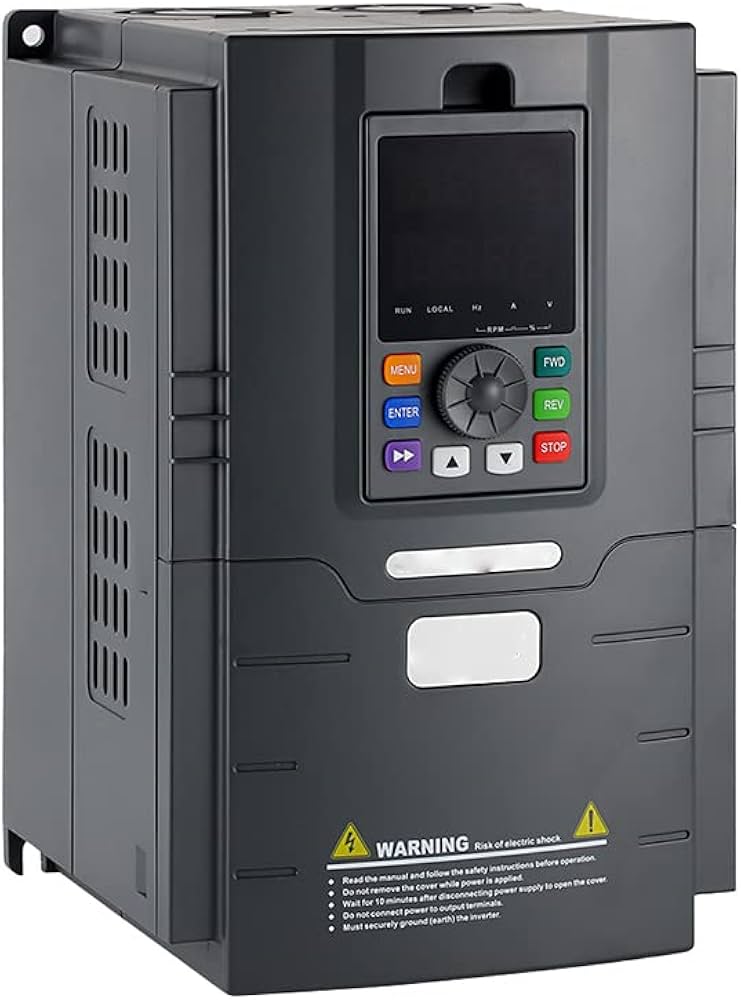
Manufacturing Standards and Testing QC for 15 Hp Variable Frequency Drive
At Boray Inverter, every 15 HP (11 kW) variable frequency drive undergoes rigorous manufacturing protocols designed to withstand the demanding operational cycles of agricultural solar pumping and industrial motor control applications. Our vertically integrated production facility adheres to international quality benchmarks, ensuring each unit delivers consistent performance across diverse environmental conditions—from dusty farm installations to high-humidity processing facilities.
Advanced PCB Protection and Assembly Standards
The foundation of a reliable 15 HP VFD begins with military-grade printed circuit board (PCB) manufacturing. We utilize IPC-A-610 Class 2 or Class 3 assembly standards, depending on application criticality, with automated optical inspection (AOI) and X-ray verification for all solder joints. Given the 25A rated current capacity typical of 15 HP drives operating at 380V-440V three-phase input, trace widths and copper thickness (2oz or greater) are engineered to minimize resistive heating under full load conditions.
For solar pump installations exposed to outdoor humidity, temperature cycling, and agricultural chemicals, we apply automated conformal coating processes using acrylic or silicone-based compounds (UL 746E certified). This protective layer insulates sensitive IGBT gate drivers and control circuitry from moisture ingress and dust accumulation, significantly extending operational lifespan in harsh environments where IP20 enclosures require additional internal protection. Select models feature vacuum-impregnated potting compounds for the power stage, eliminating thermal stress on bus bars and capacitors during the frequent start-stop cycles characteristic of water pumping applications.
Accelerated Life Testing and Thermal Validation
Prior to final assembly, all 15 HP drive components undergo high-temperature aging (burn-in) procedures that simulate 5+ years of operational stress. Power modules are subjected to 48-72 hour dynamic load testing at elevated ambient temperatures (45°C to 55°C), cycling between 0%, 50%, and 150% rated current to validate thermal management design and solder joint integrity. This process identifies infant mortality failures in electrolytic capacitors and IGBT modules before units reach your facility.
Thermal imaging verification ensures uniform heat distribution across the heatsink assembly, critical for 15 HP units where switching frequencies between 2-16 kHz generate significant thermal loads. We validate that junction temperatures remain within manufacturer specifications (typically <125°C for IGBTs) even during vector control operation with rapid torque changes, ensuring compatibility with submersible pump motors that present high inertial loads during startup.
100% Full-Load Performance Verification
Unlike statistical sampling methods, Boray Inverter conducts 100% full-load testing on every 15 HP VFD leaving our facility. Each unit operates at rated output current (25A) for a minimum duration, with simultaneous verification of:
- Output waveform fidelity: THD (Total Harmonic Distortion) measurements ensure clean sine wave output for motor bearing protection
- Overload capacity: 150% rated current for 60 seconds and 200% for 3 seconds, validating trip-free operation during pump cavitation or mechanical jam events
- Dynamic braking performance: Verification of braking resistor circuits and DC bus voltage clamping for rapid deceleration in conveyor or fan applications
- Control algorithm accuracy: Vector control response testing validates torque production within ±2% accuracy across 1:100 speed ranges, essential for maintaining constant pressure in multi-pump solar irrigation systems
Communication protocols undergo functional verification, with Modbus RS485/232 interfaces tested for signal integrity at 115.2 kbps baud rates, ensuring seamless integration with SCADA systems and remote monitoring platforms common in modern agricultural automation.
International Compliance and Certification Framework
Our 15 HP VFD manufacturing lines maintain compliance with CE marking requirements under the Machinery Directive (2006/42/EC) and Low Voltage Directive (2014/35/EU), specifically adhering to:
- EN 61800-5-1: Safety requirements for adjustable speed electrical power drive systems, including earth fault and overcurrent protection validation
- EN 61800-3: Electromagnetic compatibility (EMC) standards for the second environment (industrial), with optional filtering for sensitive agricultural installations
- IEC 61000-4-5: Surge immunity testing (4kV line-to-earth, 2kV line-to-line) to protect against lightning-induced transients common in remote solar pump installations
Quality management systems are certified to ISO 9001:2015, with component traceability maintained through barcode tracking from raw material receipt through final packaging. Critical semiconductors and capacitors are sourced from Tier-1 suppliers with AEC-Q101 automotive-grade qualifications, ensuring 100,000+ hour MTBF (Mean Time Between Failures) ratings even in continuous-duty solar pumping operations.
Environmental Stress Screening and Mechanical Validation
Beyond electrical testing, 15 HP units undergo mechanical stress screening including vibration testing (5-2000 Hz, 2G acceleration) to simulate transport and installation stresses. Thermal shock testing (-20°C to +60°C rapid cycling) validates LCD display functionality and connector integrity for climates experiencing extreme diurnal temperature variations.
For solar pump-specific applications, we conduct specialized dry-run protection testing and MPPT (Maximum Power Point Tracking) algorithm validation, ensuring the VFD responds correctly to simulated irradiance changes and low-water conditions without nuisance tripping. Enclosure integrity testing verifies IP20 protection against solid objects while offering upgrade paths to IP54 or IP65 through optional sealed enclosures for outdoor mounting without auxiliary cabinets.
This comprehensive manufacturing discipline ensures that whether your 15 HP VFD powers a centrifugal irrigation pump in agricultural applications or drives a HVAC fan in industrial facilities, the unit delivers the efficiency, protection, and longevity your projects demand.
Step-by-Step Engineering Sizing Checklist for 15 Hp Variable Frequency Drive
Proper sizing of a 15 HP (11 kW) Variable Frequency Drive requires rigorous analysis of both motor characteristics and power supply parameters, particularly for solar pumping applications where DC input compatibility and Maximum Power Point Tracking (MPPT) voltage windows are critical. The following engineering checklist ensures optimal matching between the motor, drive, and power source—whether grid-connected AC or photovoltaic DC arrays.
1. Motor Nameplate Data Verification & Current Sizing
Begin by extracting precise data from the 15 HP motor nameplate:
– Power Conversion: Confirm 15 HP equals 11 kW (metric equivalent). Size the VFD for continuous output current ≥ motor Full Load Amperage (FLA).
– Current Calculation: For a 15 HP motor operating at 460V 3-phase, typical FLA ranges 21–23A; at 380V–400V, expect 24–26A. Select a VFD with rated output current at least 110% of FLA for standard duty, or 150% for high-torque pump starting requirements.
– Service Factor: If the motor has a 1.15 service factor, ensure the VFD overload capacity (150% for 60 seconds) can accommodate temporary overloads without tripping.
2. Input Power Source Configuration
For AC Grid Applications:
– Voltage Class Selection: Match the VFD input voltage to your regional supply: 380V–440V (±15%) for IEC markets, 460V–480V for North American industrial systems, or 220V–240V for specific agricultural installations.
– Phase Configuration: Verify three-phase input compatibility. For single-phase to three-phase conversion (common in remote agricultural sites), specify a derated VFD or phase converter with 180% current oversizing.
For Solar Pump Applications (Boray Inverter Specialty):
– DC Input Voltage Range: Confirm the VFD’s DC bus voltage acceptance (typically 200V–800V DC for 400V-class drives). The solar array’s Maximum Power Point Voltage (Vmp) must fall within the VFD’s MPPT tracking window.
– Open Circuit Voltage (Voc) Safety: Calculate maximum array Voc at lowest ambient temperature (Voc increases in cold conditions). Array Voc must never exceed the VFD’s maximum DC input voltage rating (typically 800V DC for standard 400V-class units).
3. Solar Array String Sizing Calculations
When deploying the 15 HP VFD in off-grid solar pumping systems:
Voltage Calculations:
– String Sizing Formula:
– Max Voc = Module Voc × Number of modules in series × Temperature coefficient (typically 1.12–1.15 for cold climates)
– Operating Vmp = Module Vmp × Number of series modules
– Design Constraints:
– Max Voc < VFD maximum DC input voltage (e.g., < 800V DC)
– Min Vmp (at high temperature) > VFD minimum operating voltage (typically 250V–300V DC for 400V-class drives)
– Optimal Vmp should center within the VFD’s MPPT range (e.g., 400V–650V DC)
Current Sizing:
– Total array current (Imp) should exceed the VFD’s DC input current requirement by 20–25% to account for irradiance variability. For 11 kW output, expect DC input requirements of approximately 22–28A at 400V–500V DC.
4. Control Mode & Application Matching
For pump and irrigation applications typical of 15 HP deployments:
– V/Hz Control: Suitable for centrifugal pumps with variable torque loads (quadratic torque curve). Configure for pump-specific V/Hz curves to optimize energy consumption.
– Sensorless Vector Control: Required for positive displacement pumps, high-starting-torque borehole pumps, or applications requiring precise torque control at low speeds (below 10 Hz).
– Torque Boost: Verify the VFD provides adjustable starting torque (150–180% rated torque) to overcome static head in deep-well pumping applications.
5. Environmental & Mechanical Specifications
- Enclosure Ratings: Specify IP20 for clean indoor electrical rooms, IP54 for dusty agricultural environments, or IP65 for outdoor solar pump installations. Boray Inverter recommends minimum IP54 for agricultural applications.
- Temperature Derating: Above 40°C ambient, apply 2–3% current derating per °C. At altitudes exceeding 1000m, derate 1% per 100m due to reduced cooling efficiency.
- Cooling Clearance: Maintain minimum 100mm clearance above and below the VFD; for 15 HP (11 kW) units with integrated heatsinks, ensure vertical mounting with unobstructed airflow.
6. Protection Coordination & Safety
- Input Protection: Size circuit breakers or fuses at 1.5–2.5 times VFD input current rating. For 15 HP 380V applications (25A input), use 40A–63A Class J fuses or Type C/D circuit breakers.
- Motor Protection: Configure motor thermal overload (I²t protection) based on motor FLA and cooling characteristics. Enable stall prevention and overvoltage protection for pump load dumping.
- EMC Compliance: Install line reactors (3% impedance) on the input side to mitigate harmonic distortion, particularly when multiple VFDs operate on the same agricultural transformer.
7. Communication & Remote Monitoring
- Protocol Compatibility: Specify Modbus RTU (RS485) for basic SCADA integration, or Ethernet/IP for advanced agricultural automation systems. For solar pump applications, ensure compatibility with remote monitoring platforms for MPPT efficiency tracking.
- I/O Configuration: Verify analog inputs (4–20mA/0–10V) for pressure transducers or level sensors, and digital inputs for float switches or dry-run protection sensors.
8. Final Verification Checklist
Before commissioning:
– [ ] Motor FLA ≤ VFD rated output current × 0.9 (safety margin)
– [ ] Array Voc (cold) < VFD max DC voltage – 10% safety margin
– [ ] Array Vmp (hot) > VFD min MPPT voltage + 10%
– [ ] Input voltage tolerance (±15%) covers grid fluctuation range
– [ ] Control mode selected matches pump torque characteristics
– [ ] Cable sizing accounts for voltage drop (<3%) over distance
– [ ] Braking resistor calculated for high-inertia pump stopping (if required)
This systematic approach ensures your 15 HP VFD installation—whether grid-tied or solar-powered—delivers reliable performance with optimized energy efficiency across the operational lifespan.
Wholesale Cost and Energy ROI Analysis for 15 Hp Variable Frequency Drive
When procuring motor control solutions for mid-scale industrial or agricultural deployments, understanding the economic differentiation between wholesale acquisition and retail purchasing becomes critical for project viability. For a 15 HP (11 kW) variable frequency drive—whether deployed in centrifugal irrigation systems, HVAC retrofits, or conveyor automation—the capital expenditure represents only a fraction of the total value proposition. Sophisticated procurement teams evaluate these units through the lens of energy arbitrage, volumetric pricing tiers, and long-term reliability economics.
Wholesale Pricing Architecture and Volume Economics
In the B2B industrial automation supply chain, 15 HP VFDs typically exhibit a pricing elasticity of 40-60% between wholesale distributor tiers and end-user retail channels. For a standard three-phase 380V/460V unit with vector control capabilities and IP20 enclosure (dimensions approximately 290×200×187 mm), manufacturer-direct wholesale pricing for EPC contractors and agricultural project aggregators generally ranges from $280–$450 USD per unit at volumes of 10–49 pieces.
Volume breakpoints reveal significant economies of scale:
– 1–9 units: Standard wholesale tier ($420–$450/unit)
– 10–49 units: Project tier pricing ($340–$380/unit)
– 50+ units/OEM partnerships: Strategic account pricing ($280–$320/unit) with customized firmware options
These figures contrast with retail electrical supply house pricing, which typically positions equivalent 15 HP drives at $850–$1,400 USD, depending on brand premium and regional markup factors. For solar pumping integrators specifically, hybrid solar/grid VFDs with integrated MPPT (Maximum Power Point Tracking) functionality command a 15-20% premium over standard industrial drives, yet eliminate the cost of separate solar inverters—creating a net system savings of $200–$400 per installation.
Energy ROI and Payback Dynamics
The financial justification for 15 HP VFD deployment centers on kinetic energy management. A conventional 15 HP motor operating across variable load profiles (typical in pumping and HVAC applications) draws approximately 12.5 kW electrical input at full load without speed control. When coupled with a VFD featuring optimized V/Hz or sensorless vector control, energy consumption reductions of 25–40% are achievable through affinity laws (pumping) or variable air volume strategies (HVAC).
Quantified Annual Savings Analysis:
– Operating hours: 4,000 hours/year (agricultural season) to 6,000 hours/year (industrial continuous)
– Energy cost: $0.10/kWh (global blended average)
– Baseline consumption: 12.5 kW × 4,000 hrs = 50,000 kWh/year ($5,000)
– With VFD optimization: 8.75 kW average × 4,000 hrs = 35,000 kWh/year ($3,500)
– Net annual savings: $1,500–$2,400 per motor
At wholesale acquisition costs of $350/unit, the simple payback period ranges from 1.8 to 2.8 months for agricultural applications, and under 6 months for intermittent industrial processes. For solar pumping installations specifically, the ROI calculation shifts from energy savings to diesel displacement: replacing a 15 HP diesel pump with a solar VFD system eliminates approximately 2,800–3,500 liters of fuel annually, generating operational savings of $3,500–$4,500 per year at current global diesel pricing, achieving payback within 12–18 months including PV array costs.
Total Cost of Ownership: Warranty and Reliability Factors
Wholesale procurement strategies must account for warranty cost allocation and MTBF (Mean Time Between Failures) economics. Standard manufacturer warranties for 15 HP VFDs typically cover 18–24 months for IP20 general-purpose units, extending to 36 months for solar pump inverters with enhanced environmental sealing (IP54+).
Warranty Cost Structure:
– Standard coverage: Included in wholesale price; covers manufacturing defects, IGBT module failures, and capacitor degradation
– Extended warranty (Years 3–5): Typically 8–12% of unit wholesale cost ($25–$40 per unit) for agricultural distributors
– Field service integration: Advanced replacement programs add $15–$25/unit but reduce downtime costs by 70% for critical irrigation infrastructure
Reliability data indicates that properly specified 15 HP drives in solar pumping applications demonstrate MTBF rates exceeding 50,000 hours when operating within thermal derating guidelines (ambient <40°C). The critical failure mode for agricultural deployments remains electrolytic capacitor degradation; wholesale procurement agreements should specify 105°C rated capacitors with 10,000-hour lifespans rather than standard 85°C components, adding marginal cost ($8–$12/unit) but extending field life by 40%.
Strategic Procurement Recommendations
For EPC contractors managing multi-site agricultural automation or industrial retrofit portfolios:
-
Consolidate specifications around 11 kW/15 HP units with 25A continuous output rating and RS485 Modbus connectivity, enabling standardized SCADA integration across diverse applications (pumping, ventilation, material handling).
-
Negotiate bonded inventory agreements for projects with phased deployment; locking wholesale pricing for 6–12 month delivery windows protects against semiconductor market volatility while avoiding carrying costs.
-
Specify solar-ready VFDs even for grid-connected installations; units with dual AC/DC input capability and built-in MPPT provide future-proofing against grid instability and enable hybrid operating modes that maximize ROI in regions with time-of-use electricity pricing.
-
Bundle commissioning support into wholesale pricing; proper parameterization (acceleration ramps, carrier frequency optimization for long motor leads, and thermal protection curves) prevents premature failure that voids warranty coverage and erodes project margins.
The intersection of declining wholesale VFD costs ($0.025–$0.040 per watt controlled) and rising energy prices positions the 15 HP variable frequency drive as a high-velocity capital recovery instrument rather than a depreciating asset. For distributors maintaining regional inventory, the combination of 30-day payback potential for end-users and 35–45% wholesale margins creates a sustainable value chain that outperforms traditional motor starter replacement cycles.
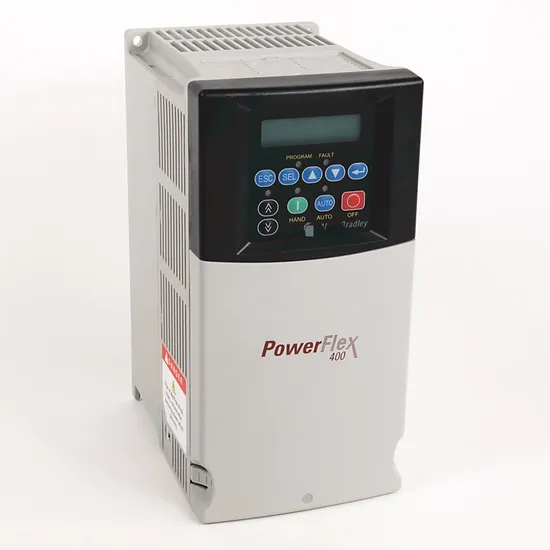
Alternatives Comparison: Is 15 Hp Variable Frequency Drive the Best Choice?
When specifying motor control for 15 HP (11 kW) loads—whether for irrigation pumps, HVAC compressors, or conveyor systems—engineers face critical technology decisions that extend far beyond simple horsepower matching. At this power threshold, the choice between control methodologies and power architectures significantly impacts Total Cost of Ownership (TCO), operational flexibility, and system efficiency. Below is a technical analysis of primary alternatives to help determine when a 15 HP Variable Frequency Drive (VFD) represents the optimal investment versus hybrid or alternative configurations.
VFD vs. Soft Starter: Control Philosophy Divergence
For fixed-speed applications requiring only reduced-voltage starting, soft starters present a lower-capital alternative to VFDs. A soft starter limits inrush current (typically 3-5x FLA rather than 7-10x) via thyristor-based voltage ramping, protecting mechanical couplings and extending motor life. However, for 15 HP motors driving centrifugal pumps or fans with variable duty cycles, the economic calculus shifts dramatically.
Key Distinction: While soft starters mitigate mechanical stress during startup, they offer no operational energy savings. A 15 HP motor running at 80% flow via damper/throttle control consumes nearly 100% rated power, whereas a VFD reducing speed to 80% drops power consumption to approximately 50% (following the cube law for centrifugal loads). For applications running 2,000+ hours annually with variable demand, the VFD’s 30-50% energy reduction typically delivers ROI within 12-18 months despite 2-3x higher initial hardware cost.
Solar-Powered VFD vs. Grid-Powered Systems
In agricultural and remote industrial contexts, Boray Inverter’s specialized Solar Pump VFDs introduce a third architecture beyond traditional grid-fed drives.
Grid-Powered VFD (Standard): Operates from 3-phase 380V-440V AC (±15%) with 25A input capacity for 15 HP loads. Offers consistent performance and unlimited runtime but incurs ongoing electricity costs and grid infrastructure dependency.
Solar VFD Configuration: Accepts DC input directly from PV arrays (typically 400V-800V DC) with integrated Maximum Power Point Tracking (MPPT). For 15 HP solar pumping systems, this eliminates inverter conversion losses (98% vs. 94% system efficiency) and enables off-grid operation. Critical considerations include derating for solar irradiance variability—ensuring the 15 HP motor receives adequate torque during low-light conditions through VFD current boost functions—and the absence of energy storage requirements when using water tanks as “storage.”
Hybrid Architectures: Advanced 15 HP VFDs now support AC/DC dual-input modes, automatically switching between solar and grid power to ensure 24/7 operation while maximizing renewable energy utilization.
Motor Technology Pairing: PMSM vs. Induction Motor (IM)
The 15 HP VFD selection must account for motor type, as control algorithms differ significantly:
Induction Motor (IM) + VFD: The industry standard for 15 HP applications. Robust, cost-effective, and compatible with V/Hz or sensorless vector control. Efficiency typically IE2/IE3 (88-91%). Suitable for general-purpose pumps and conveyors.
Permanent Magnet Synchronous Motor (PMSM) + VFD: Requires vector control VFDs with specific PM motor parameters. Offers IE4/IE5 efficiency (93-96%) and higher power density—critical for solar-powered 15 HP pumps where every watt counts. However, PMSM systems cost 40-60% more upfront and require VFDs with advanced motor identification routines to prevent demagnetization.
Comparative Decision Matrix
| Parameter | Soft Starter + IM | Grid VFD + IM | Solar VFD + IM | VFD + PMSM (Grid/Solar) |
|---|---|---|---|---|
| Initial Investment | Low ($) | Medium ($$) | Medium-High ($$) | High ($$$) |
| Energy Efficiency | 85-90% (motor only) | 88-92% (system) | 90-94% (solar-to-mechanical) | 94-96% (system) |
| Speed Control Range | Fixed (50/60Hz) | 0-400Hz | 0-Rated Frequency | 0-400Hz |
| Starting Current | 3-5x FLA | 0.5-1x FLA | 0.5-1x FLA | 0.5-1x FLA |
| Operational Cost (Annual) | High (fixed speed) | Low (variable speed) | Very Low (fuel-free) | Minimal (highest efficiency) |
| Maintenance Complexity | Minimal | Medium | Medium (PV cleaning) | Medium-High (encoder req.) |
| Best Application | Constant torque, limited starts | Variable flow, grid stable | Remote irrigation, off-grid | High-duty cycle, energy-critical |
Strategic Selection Guidelines
Choose Soft Starter + IM when: The 15 HP motor operates at constant speed with infrequent starts (<6 per hour) and mechanical stress reduction is the primary concern. Examples include emergency backup pumps or fixed-speed air compressors with unloaders.
Choose Grid VFD + IM when: Variable flow control is required, grid reliability is high, and initial capital constraints prevent solar investment. Ideal for industrial process pumps and HVAC fan arrays.
Choose Solar VFD (Boray Inverter Series) when: The installation is remote, grid extension costs exceed $5,000, or operational priority is energy independence. For 15 HP agricultural pumps, solar VFDs typically achieve payback in 3-5 years versus diesel generators, or 2-4 years versus grid electricity in high-tariff regions.
Choose VFD + PMSM when: The application runs 6,000+ hours annually, energy costs exceed $0.15/kWh, or battery-buffered solar operation requires maximum efficiency. Common in precision irrigation and continuous industrial processes.
Verdict: For 15 HP applications with variable load profiles—which constitute 70% of modern pumping and ventilation demands—the VFD remains the superior technical choice over soft starters. When integrated with solar PV arrays using MPPT-enabled drives like Boray’s solar pump inverters, the 15 HP VFD transitions from energy-saving device to energy-generating system anchor, delivering the lowest lifecycle cost for distributed agricultural and industrial automation projects.
Core Technical Specifications and Control Terms for 15 Hp Variable Frequency Drive
For EPC contractors and system integrators specifying drive solutions, the 15 HP (11 kW) Variable Frequency Drive represents a critical nexus between motor control precision and energy optimization. Whether deployed in centrifugal pumping stations, HVAC fan arrays, or solar-powered irrigation systems, this power class demands rigorous attention to electrical tolerances, control algorithms, and international procurement protocols. Below is a technical decomposition of the essential specifications and commercial terms governing these units.
Electrical Performance Parameters
A 15 HP VFD typically corresponds to an 11 kW power rating at 380V–440V three-phase input (±15% tolerance), drawing approximately 25A full-load current. Key electrical specifications include:
- Input/Output Characteristics: 3-phase 380V–440V AC (50/60 Hz universal) input with 0–rated input voltage variable output, supporting 0–400 Hz frequency range. Input voltage fluctuation tolerance of ±15% ensures stability in grid-challenged agricultural zones.
- Current Capacity: Rated output current of 25A (at 380V base), with 150% overload capacity for 60 seconds and 200% for instantaneous peak torque demands.
- DC Bus Voltage: 540V–620V DC link voltage (depending on input), utilizing IGBT (Insulated Gate Bipolar Transistor) switching technology with carrier frequencies adjustable between 2 kHz–16 kHz to balance acoustic noise against thermal losses.
- Power Factor: >0.95 at rated load, reducing reactive power penalties in industrial installations.
Advanced Control Architectures
Modern 15 HP drives employ sophisticated algorithms to match motor torque with load characteristics:
Vector Control (Sensorless/SVC): Unlike basic V/Hz control, sensorless vector control decouples flux and torque components, providing 150% starting torque at 0.5 Hz. This is essential for high-inertia loads in crushers or positive-displacement pumps where precise speed regulation (±0.5%) prevents mechanical resonance.
PID Process Control: Integrated PID (Proportional-Integral-Derivative) loops enable closed-loop regulation without external PLCs. In water treatment and pressure boosting applications, the drive maintains constant discharge pressure by modulating motor speed in response to 4–20 mA transducer feedback, eliminating hydraulic shock and valve wear.
MPPT for Solar Pumping: When configured as a solar pump inverter, the 15 HP unit employs Maximum Power Point Tracking algorithms to optimize photovoltaic array output (typically 400V–800V DC input range). The MPPT controller continuously adjusts the operating voltage to extract maximum power from solar panels despite irradiance fluctuations, achieving >99% tracking efficiency—critical for off-grid agricultural projects where every watt determines daily water yield.
Protection and Environmental Specifications
- Enclosure Ratings: Standard IP20 protection for cabinet mounting, with optional IP54 or IP66 NEMA-rated enclosures for dusty agricultural environments or washdown dairy operations.
- Thermal Management: Operating temperature range of -10°C to +50°C (derating above 40°C), with automatic carrier frequency reduction to prevent IGBT junction temperature exceedance.
- Safety Functions: Built-in protections include input/output phase loss detection, overcurrent (instantaneous trip), overvoltage (regenerative braking protection), undervoltage (stall prevention), and ground fault monitoring. Dry-run protection for pumps detects cavitation conditions via current signature analysis.
Communication and Integration
Standard interfaces include Modbus RTU via RS485, enabling centralized SCADA monitoring of multiple drives. Optional protocols (Profibus-DP, CANopen, or Ethernet/IP) facilitate integration into Industry 4.0 architectures. For solar pumping networks, GPRS/WiFi modules enable remote monitoring of flow rates, fault codes, and energy harvest statistics—essential for agricultural project managers overseeing distributed irrigation sites.
International Trade Terms (Incoterms 2020)
For global EPC contractors and distributors procuring Chinese-manufactured drives, understanding shipping liabilities is crucial:
FOB (Free On Board): Under FOB terms, Boray Inverter delivers the 15 HP VFDs to the designated port of shipment (e.g., Shanghai or Shenzhen), cleared for export. The buyer assumes risk and freight costs once goods pass the ship’s rail. This suits experienced importers with established freight forwarders and marine insurance policies.
CIF (Cost, Insurance, and Freight): CIF terms extend seller responsibility to include ocean freight and minimum insurance coverage to the destination port. The seller bears transit risk until arrival, making CIF preferable for agricultural project managers requiring turnkey procurement certainty. Note that CIF terminates at port arrival; inland transport and customs clearance remain buyer responsibilities unless DDP (Delivered Duty Paid) terms are negotiated.
Critical Considerations: For solar pump inverter shipments containing lithium capacitors or specific semiconductor classifications, verify HS Code 8504.40 (Static Converters) compliance and whether destination countries require IEC 61800-5-1 or CE certification documentation for grid-connection approval.
Mechanical and Installation Data
- Dimensions: Approximately 290 × 200 × 187 mm (compact chassis design), with 6.5 kg gross weight facilitating DIN-rail or panel mounting.
- EMC Compliance: Category C3 (industrial) or C2 (light industrial) EMC filters per IEC 61800-3, with optional external input chokes to mitigate harmonic distortion (THDi <5% with active front end).
- Braking Requirements: For high-inertia centrifugal loads, specify external braking resistors (typically 100Ω–200Ω, 1kW rating) to dissipate regenerative energy during rapid deceleration, preventing DC bus overvoltage faults.
When specifying these drives for solar pumping retrofits, ensure the VFD supports automatic switching between AC grid and DC solar inputs, allowing 24/7 operational continuity through hybrid power architectures—a decisive factor for agricultural projects in regions with intermittent grid availability.
Future Trends in the 15 Hp Variable Frequency Drive Sector
The 15 HP (11 kW) variable frequency drive market is rapidly evolving from standalone motor control devices into intelligent, networked energy management hubs. As the sweet spot for agricultural irrigation pumps, industrial compressors, and HVAC systems, this power class is witnessing convergence between traditional automation, renewable energy architectures, and Industrial Internet of Things (IIoT) ecosystems. Below are the critical developments shaping procurement decisions and system design for EPC contractors and automation engineers.
Intelligent Automation and Edge Analytics
Modern 15 HP VFDs are transitioning from simple V/Hz control to sophisticated sensorless vector and direct torque control (DTC) algorithms capable of auto-tuning to load characteristics in real time. The integration of edge computing capabilities allows these drives to process operational data locally—reducing latency for critical irrigation or conveyor applications—while filtering relevant metrics for cloud transmission.
Key Development: Embedded PLC functionality and programmable I/O expansion are becoming standard, enabling 15 HP drives to act as standalone automation nodes. This eliminates the need for separate controllers in remote solar pumping stations, reducing system complexity and points of failure. Advanced drives now support multi-pump control algorithms with automatic rotation and redundancy management, critical for agricultural projects requiring 24/7 water supply reliability.
Renewable Energy Convergence and DC-Coupled Architectures
The distinction between standard VFDs and solar pump inverters is blurring. Next-generation 15 HP drives increasingly feature built-in Maximum Power Point Tracking (MPPT) and dual-input capabilities that seamlessly switch between AC grid power and DC photovoltaic arrays. This hybrid architecture allows agricultural and industrial installations to prioritize solar energy during peak irradiance while maintaining grid backup for low-light operation—without requiring separate solar inverters or complex switchgear.
Technical Innovation: DC bus commoning technology enables 15 HP VFDs to share energy across multiple motor loads or accept direct battery storage connections. For off-grid applications, regenerative braking capabilities—previously reserved for higher horsepower industrial drives—are being scaled down to this segment, allowing energy recovery from decelerating pumps and fans to charge storage systems or feed back into microgrids.
IoT-Enabled Predictive Maintenance and Digital Twins
Connectivity has evolved beyond basic Modbus RTU/RS485 protocols. Contemporary 15 HP VFDs now offer native EtherNet/IP, Profinet, and MQTT protocols for direct integration with SCADA systems and cloud-based asset management platforms. This connectivity enables condition-based monitoring (CBM) of bearing temperatures, vibration signatures, and insulation resistance trends—allowing maintenance teams to predict motor failures weeks in advance rather than responding to catastrophic downtime.
Cybersecurity Considerations: As these drives become network endpoints, manufacturers are implementing IEC 62443-compliant security frameworks, including encrypted firmware updates, role-based access control, and network segmentation capabilities. For distributors and system integrators, this means specifying drives that offer secure remote access portals, eliminating the need for costly on-site troubleshooting visits to remote agricultural or industrial sites.
Digital Twin Integration: Leading-edge 15 HP VFDs now support digital twin modeling, where real-time operational data feeds simulation environments. This allows engineers to test process modifications—such as altering pump curves for seasonal irrigation demands—without disrupting physical operations, optimizing energy consumption while extending motor and mechanical component lifespan through soft-start and controlled deceleration profiles.
Sustainability and Regulatory Alignment
Global efficiency directives are pushing 15 HP VFD development toward seamless compatibility with IE5 ultra-premium efficiency motors and integration with Building Management Systems (BMS) for holistic energy accounting. Advanced harmonic mitigation technologies—active front ends (AFE) and active filters—are being miniaturized for this power class, ensuring compliance with IEEE 519 and IEC 61000 standards without external filtering equipment.
For agricultural and industrial project managers, these trends translate to specifying drives that offer not just motor control, but comprehensive energy management ecosystems—bridging the gap between traditional automation infrastructure and the decentralized, renewable-powered operations of the next decade.
Top 5 15 Hp Variable Frequency Drive Manufacturers & Suppliers List
Top Manufacturers & Suppliers of Variable Frequency Drives
Website: darwinmotion.com
Siemens: Sinamics series VFDs for simple pumps to complex machinery, emphasizing efficiency and versatility. Schneider Electric: Altivar series for HVAC to manufacturing, featuring energy savings, high performance, and user-friendly interfaces. Darwin Motion: Matrix-900, Matrix 350, Matrix 500, Matrix 680, and Matrix 880 series covering low, medium, and high voltage applications, designed for ener…
Top 10 Variable Frequency Drive (VFD) Manufacturers
Website: hars-vfd.com
HARS VFD (hars-vfd.com) manufactures a comprehensive range of Variable Frequency Drives (VFDs) including the VFD-HS320 Series, VFD-HS320Pro, VFD-HS720 Series, VFD-HS720H Series, VFD-HS310 Series, VFD-HS290 Series, and VFD-HS800 Series. The company specializes in solar pump VFDs and hybrid inverter solutions (HE200 Series and HE300 Series). Their product ecosystem includes essential accessories suc…
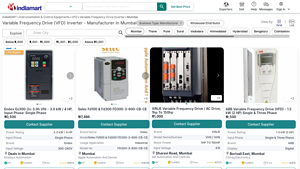
Variable Frequency Drive Inverter Manufacturers in Mumbai
Website: dir.indiamart.com
The IndiaMART Mumbai directory lists Variable Frequency Drive (VFD) inverters and motor control solutions from multiple manufacturers including Endox, TOSHIBA, ABB, Parker, Lenze, Delta, and XD1000 Series. Key specifications include power ratings ranging from 1.5 kW (2 HP) to 5.5 kW, with input phase options covering both Single Phase and Three Phase configurations. Specific models include Endox E…

Analysis of the Top 25 Variable Frequency Drive (VFD) Companies …
Website: finance.yahoo.com
The provided text does not contain any product details regarding solar inverters, VFDs, or industrial automation. The content appears to be an error page or navigation template from Yahoo Finance without the actual article content about variable frequency drives or related technologies.
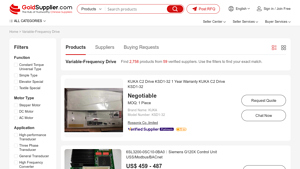
China Variable-Frequency Drive Manufacturers & Suppliers | Goldsupplier.com
Website: goldsupplier.com
Analysis of Goldsupplier.com Variable-Frequency Drive category reveals 2,758 products from 59 verified suppliers (Gold/Platinum tier). Key industrial automation products include: (1) KUKA C2 Drive KSD1-32 servo drives for robotics applications with 1-year warranty and 1-piece MOQ; (2) Siemens G120X Control Unit (6SL3200-0SC10-0BA0) priced US$459-487 featuring USS/Modbus/BACnet communication protoc…
B2B Engineering FAQs About 15 Hp Variable Frequency Drive
What is the exact kW rating and full-load current I should specify when sizing a 15 HP VFD for an 11 kW motor?
A 15 HP motor converts to approximately 11 kW (1 HP ≈ 0.746 kW). For a 3-phase 380V–440V system, the rated input current is typically 25 amps, though you must verify your motor’s specific full-load amperage (FLA) from the nameplate. When selecting your Boray Inverter drive, ensure the VFD’s continuous current rating meets or exceeds 110% of the motor FLA to accommodate pump inertia and temporary overload conditions (150% for 60 seconds as standard).
Can a 15 HP VFD operate reliably across 380V, 400V, and 440V input supplies without parameter changes?
Yes, quality 15 HP VFDs feature auto-voltage regulation (AVR) and accept 3-phase 380V–440V ±15% input ranges. The drive automatically adjusts the DC bus voltage and maintains constant V/Hz ratio or vector control flux. However, verify that the motor’s insulation rating matches the maximum line voltage (440V + 15% = 506V peak) to prevent winding stress, particularly in regions with unstable grid conditions common in agricultural solar pumping installations.
When should I configure vector control versus V/Hz control for a 15 HP solar pump application?
Use sensorless vector control for submersible pumps requiring high starting torque (150% rated torque at 0.5 Hz) or when operating across wide speed ranges (20:1 constant torque). Select V/Hz control for standard centrifugal pumps with quadratic torque loads, as it provides simpler operation and better efficiency at rated speed. For solar pumping systems, vector control offers superior tracking during irradiance fluctuations, maintaining flow stability when PV input voltage varies.
How does the IP20 enclosure rating limit outdoor installation of a 15 HP VFD, and what protection is required?
An IP20 rating protects against solid objects >12.5mm (finger-safe) but offers no dust or moisture ingress protection. For outdoor agricultural or EPC solar projects, install the 290×200×187 mm drive inside a NEMA 3R or IP54-rated cabinet with adequate ventilation (minimum 50mm clearance around the heatsink). In desert or coastal environments, specify conformal coating on PCBs and maintain ambient temperatures below 40°C; derate the drive by 2% per degree above 40°C to prevent thermal shutdown.
What communication protocols are essential for integrating a 15 HP VFD into a SCADA-managed solar pumping station?
Standard 15 HP drives include Modbus RTU (RS485/232) for basic monitoring of frequency, current, and fault status. For industrial automation or solar farm management, ensure the VFD supports Modbus TCP/IP or optional Profibus/Profinet gateways. Configure the baud rate (typically 9600–19200 bps) and station address to enable remote start/stop, speed reference adjustment based on water level sensors, and real-time alerts for dry-run protection or phase loss detection.
Do I need input line reactors or output filters with a 15 HP VFD to comply with IEEE 519 harmonic standards?
For single 15 HP installations on robust industrial grids, internal DC chokes often suffice. However, when multiple 11 kW drives operate on the same distribution transformer (particularly in rural agricultural feeders with high impedance), install 3% input line reactors to reduce 5th and 7th harmonics below 5% THD. Add dv/dt output filters when motor cable runs exceed 50 meters to mitigate reflected wave voltage spikes that damage motor insulation, or use sinusoidal filters for submersible pump motors where cable capacitance causes premature bearing failure.
How do I calculate braking resistor requirements for a 15 HP VFD controlling high-inertia borehole pumps?
While centrifugal pumps typically decelerate naturally, high-inertia applications (deep boreholes with check valves) require braking resistors to dissipate regenerative energy. Calculate braking power: P_brake = (J × ω²) / (2 × t_dec) where J is system inertia and t_dec is deceleration time. For a 15 HP drive, select a resistor rated for 2–3 kW continuous with 10% duty cycle (100 seconds cycle time). Ensure the VFD’s braking chopper activates at 750V DC bus threshold (for 380V class) to prevent overvoltage trips during rapid shutdowns or solar irradiance drops.
What cable sizing and grounding practices prevent EMI interference in 15 HP VFD installations near solar inverters?
Size input/output cables per NEC Table 310.16, typically 10 AWG (6 mm²) copper for 25A continuous duty, but verify voltage drop over distance (limit to <3%). Use shielded motor cables with the shield bonded to the VFD enclosure at one end (motor end floating) to prevent ground loops. Maintain separation of 300mm between VFD power wiring and solar DC bus cabling to avoid conducted EMI. For welding machine proximity (common in agricultural maintenance), install isolation transformers or ensure the VFD has built-in surge protection (4kV transient immunity) to prevent arc-induced control circuit damage.
Disclaimer
⚠️ Important Disclaimer
The information provided in this guide is for educational purposes. Industrial applications and electrical engineering projects carry inherent risks. B2B buyers and contractors must conduct thorough technical due diligence and verify regional compliance before installation or procurement.
Conclusion: Partnering with Boray Inverter for 15 Hp Variable Frequency Drive
Selecting the optimal 15 HP Variable Frequency Drive represents a critical investment in operational efficiency, energy conservation, and long-term equipment reliability. Whether deployed in demanding industrial automation environments, agricultural irrigation systems, or solar pumping installations, the right VFD solution must deliver precise vector control, robust protection features, and seamless integration with existing infrastructure. As global industries increasingly prioritize sustainability and operational cost reduction, partnering with a manufacturer that combines technical innovation with rigorous quality assurance becomes paramount for project success and ROI optimization.
Shenzhen Boray Technology Co., Ltd. stands at the forefront of this evolution as a specialized manufacturer of Solar Pumping and Motor Control Solutions based in China. With an R&D team comprising 50% of its workforce, Boray Inverter has established deep expertise in advanced PMSM (Permanent Magnet Synchronous Motor) and IM (Induction Motor) vector control technologies—critical competencies for maximizing efficiency in 15 HP applications across variable torque and constant torque loads. The company’s commitment to manufacturing excellence is evidenced by two state-of-the-art production lines and a mandatory 100% full-load testing protocol that ensures every unit meets stringent international performance standards before shipment.
Boray’s trusted global presence spans agricultural irrigation projects, industrial automation systems, and renewable energy installations worldwide, providing EPC contractors, agricultural project managers, and system integrators with reliable, cost-effective drive solutions engineered specifically for harsh environmental conditions and continuous operation. For engineers and procurement specialists seeking customized VFD configurations, competitive wholesale pricing, or expert technical consultation on 15 HP motor control applications, Boray Inverter offers comprehensive support from initial design through commissioning and after-sales service.
Contact the Boray Inverter team today at borayinverter.com to discuss your specific requirements and discover how our advanced 15 HP VFD solutions can optimize your next project’s performance and energy efficiency.