Introduction: Sourcing 1 Hp Variable Frequency Drive for Industrial Use
In the precision-driven landscape of industrial automation and renewable energy infrastructure, the 1 HP Variable Frequency Drive (VFD) represents a critical nexus between power efficiency and granular motor control. Whether optimizing belt grinder operations in fabrication workshops, synchronizing conveyor systems in material handling, or driving submersible pumps in off-grid solar irrigation projects, these compact drives deliver the precise frequency conversion and torque management that modern electromechanical systems demand.
As facility engineers and EPC contractors navigate the complexities of integrating single-phase grid infrastructure with three-phase motor requirements, understanding the nuanced specifications of 1 HP VFDs becomes paramount. This comprehensive guide examines the essential technical parameters—from input voltage tolerances (110V/220V/240V single-phase) and NEMA enclosure ratings (IP20 to NEMA 4X) to V/F control algorithms and PID pressure regulation capabilities—that distinguish industrial-grade drives from consumer alternatives.
We will dissect the three primary categories reshaping the market: single-phase input to three-phase output converters for legacy facility upgrades, dust-tight enclosed units for harsh agricultural environments, and solar-optimized pump inverters with MPPT functionality. For automation distributors and agricultural project managers evaluating manufacturer partnerships, we analyze build quality standards, overload capacity specifications (typically 150% for 60 seconds), and communication protocol compatibility that ensure long-term operational reliability.
By bridging theoretical electrical engineering principles with practical procurement strategies, this resource equips decision-makers to specify drives that minimize energy consumption while maximizing motor lifespan across diverse industrial and solar pumping applications.
Article Navigation
- Top 4 1 Hp Variable Frequency Drive Manufacturers & Suppliers List
- Introduction: Sourcing 1 Hp Variable Frequency Drive for Industrial Use
- Technical Types and Variations of 1 Hp Variable Frequency Drive
- Key Industrial Applications for 1 Hp Variable Frequency Drive
- Top 3 Engineering Pain Points for 1 Hp Variable Frequency Drive
- Component and Hardware Analysis for 1 Hp Variable Frequency Drive
- Manufacturing Standards and Testing QC for 1 Hp Variable Frequency Drive
- Step-by-Step Engineering Sizing Checklist for 1 Hp Variable Frequency Drive
- Wholesale Cost and Energy ROI Analysis for 1 Hp Variable Frequency Drive
- Alternatives Comparison: Is 1 Hp Variable Frequency Drive the Best Choice?
- Core Technical Specifications and Control Terms for 1 Hp Variable Frequency Drive
- Future Trends in the 1 Hp Variable Frequency Drive Sector
- B2B Engineering FAQs About 1 Hp Variable Frequency Drive
- Disclaimer
- Conclusion: Partnering with Boray Inverter for 1 Hp Variable Frequency Drive
Technical Types and Variations of 1 Hp Variable Frequency Drive
Selecting the appropriate 1 HP (0.75 kW) Variable Frequency Drive requires careful consideration of your power infrastructure, environmental conditions, and operational objectives. While all 1 HP drives serve the fundamental purpose of variable speed motor control, technical variations in input voltage handling, enclosure ratings, and power source compatibility significantly impact system design and total cost of ownership. Below is a technical classification of the primary 1 HP VFD configurations encountered in industrial automation, agricultural pumping, and solar applications.
| Type | Technical Features | Best for (Industry) | Pros & Cons |
|---|---|---|---|
| Single-Phase Input (230V/240V) to Three-Phase Output | • Input: 220–240V AC (±15%), 50/60Hz single-phase • Output: 0–input voltage, three-phase, 0–400Hz • Control: V/F (Volts/Hz) or Sensorless Vector • Current Rating: ~4.7A • Protection: IP20/NEMA 1 standard; optional NEMA 4X |
Agriculture (irrigation pumps), HVAC retrofits, small machine shops, water treatment | Pros: Eliminates need for three-phase grid infrastructure; built-in PID for pressure/flow control; cost-effective for pump applications. Cons: Input current approximately 1.73× higher than three-phase equivalent; limited overload capacity (typically 150% for 1 minute); restricted to approximately 3 HP maximum practical limit on single-phase supply. |
| Dual Voltage Auto-Ranging (120V/240V) | • Input: Auto-sensing 120V or 240V AC single-phase • Output: 240V AC three-phase (fixed) • Enclosure: NEMA 4X (washdown/dust-tight) with integrated disconnect • Control: Keypad with external potentiometer option • Ramp Control: Adjustable acceleration/deceleration |
North American residential workshops, mobile conveyor systems, food processing equipment, OEM machinery | Pros: Installation flexibility in facilities with mixed voltage infrastructure; plug-and-play compatibility; outdoor-rated options available. Cons: Higher unit cost due to auto-sensing circuitry and robust enclosures; derated output when operating on 120V input (typically 0.75 HP max at 120V). |
| Three-Phase Input (380V/400V/480V) Industrial | • Input: 380–480V AC three-phase (±15%) • Control: Full Vector Control (FOC) or Direct Torque Control • Communication: Modbus RTU, CANopen, or Ethernet/IP • Overload: Heavy-duty 150–200% capacity • Braking: Dynamic braking chopper standard |
Manufacturing automation, industrial pumps, processing facilities, EPC contractor projects | Pros: Superior torque control and response; network integration capabilities; regenerative braking options; scalable across facility voltage standards. Cons: Requires three-phase infrastructure availability; higher installation complexity; EMC compliance requirements for shielded cables. |
| Solar PV-Powered DC Input (Solar Pump Inverter) | • Input: 200–400VDC (MPPT voltage range) • MPPT Efficiency: >99% tracking accuracy • Protection: Dry-run detection, tank full stop, low irradiance sleep mode • Hybrid Option: Automatic AC grid backup switching • Enclosure: IP65 for outdoor mounting |
Off-grid irrigation, remote livestock watering, agricultural solar projects, rural water supply | Pros: Zero operational electricity costs; optimized for direct PV coupling without batteries; automatic speed adjustment based on solar irradiance. Cons: Weather-dependent output requiring proper PV array sizing; limited operation during low-light conditions (unless hybrid); higher initial capital cost per HP. |
| Integrated Motor-Drive (IMD) Systems | • Configuration: Pre-coupled TEFC motor with matched VFD • Voltage: Dual-wound for 110V/220V operation (switchable) • Shaft: Application-specific (e.g., 5/8″ grinder shafts) • Cooling: Totally Enclosed Fan Cooled (TEFC) • Wiring: Pre-wired terminal block or plug-and-play |
Belt grinders, mixing equipment, OEM machinery, compact machine tools | Pros: Eliminates wiring errors between drive and motor; optimized electromagnetic compatibility (EMC); reduced footprint; no external conduit required. Cons: Limited repair flexibility (must replace entire unit); application-specific design limits repurposing; typically higher replacement cost than separate components. |
Detailed Technical Analysis
Single-Phase Input (230V/240V) Drives represent the most common solution for agricultural and light industrial applications where three-phase grid power is unavailable. These drives utilize a diode rectifier front-end to convert AC to DC, then synthesize three-phase variable frequency output through an IGBT inverter bridge. For 1 HP applications, the input current draw is approximately 6–8A at 230V, necessitating proper circuit breaker sizing and consideration of inrush current limitations. When deployed in solar pumping retrofits, these units often require an external DC-to-AC inverter or battery bank unless specifically designed for DC input.
Dual Voltage Auto-Ranging Drives address the specific requirements of the North American market, where 120V residential and 240V commercial supplies coexist. The internal power supply automatically detects input voltage and adjusts rectifier configuration accordingly. When operating at 120V input, the drive must draw significantly higher current to deliver equivalent power, often requiring 20A circuit capacity for 1 HP output. The inclusion of NEMA 4X enclosures (as seen in conveyor applications) provides protection against corrosive agents and high-pressure washdown, making these units ideal for food-grade processing environments.
Three-Phase Input Industrial Drives offer the highest performance tier for 1 HP applications, utilizing sophisticated control algorithms such as Sensorless Vector Control or Field-Oriented Control (FOC) to maintain full torque across the speed range. These drives accept 380–480V three-phase input directly, eliminating the need for phase conversion and reducing input current harmonics through multi-pulse rectification. For EPC contractors designing multi-pump systems, these drives support master-slave configurations and automatic pump staging via built-in PLC functions, critical for maintaining constant pressure in variable flow water systems.
Solar PV-Powered Drives (Solar Pump Inverters) diverge significantly from standard VFD topology by accepting high-voltage DC input directly from photovoltaic arrays. The 1 HP solar pump inverter incorporates Maximum Power Point Tracking (MPPT) algorithms to optimize PV array voltage-current curves, ensuring maximum energy harvest even under fluctuating irradiance. Advanced models feature VFD-to-VFD communication for multi-pump cascade control, where secondary pumps activate only when the primary pump reaches maximum frequency—an essential feature for large-scale agricultural irrigation projects seeking to minimize water waste and energy consumption.
Integrated Motor-Drive Systems combine a 56C frame TEFC motor with a matched micro-drive in a single mechanical package. This configuration eliminates motor lead length issues that cause voltage reflection and bearing currents in traditional VFD-motor installations. For equipment manufacturers (OEMs), these systems reduce assembly time and warranty claims related to wiring errors. However, maintenance departments should note that failure of either component typically necessitates replacement of the entire unit, making these systems best suited for applications where reliability and compactness outweigh serviceability concerns.
Key Industrial Applications for 1 Hp Variable Frequency Drive
The 1 HP (0.75 kW) variable frequency drive serves as a critical control node for small-to-medium industrial loads, particularly in environments where single-phase infrastructure must power three-phase motors or where precise speed modulation drives process efficiency. For EPC contractors and automation distributors, selecting the appropriate topology—whether for solar pumping arrays or enclosed material handling systems—requires balancing ingress protection, input voltage flexibility, and control architecture.
| Sector | Application | Energy Saving Value | Sourcing Considerations |
|---|---|---|---|
| Agriculture & Solar Pumping | Surface & submersible irrigation pumps; livestock water systems | 30–60% reduction in energy consumption; elimination of water hammer via soft-start; optimized PV array utilization via MPPT algorithms | IP65 enclosure rating for outdoor exposure; DC solar input compatibility (400Vdc bus); single-phase 220V AC input capability for grid-tied backup; built-in PID for pressure transducer feedback |
| HVAC & Building Automation | Air handling units (AHU), cooling tower fans, and secondary circulation pumps | 20–40% fan energy savings via affinity laws (variable torque); reduced mechanical wear on bearings and belts; demand-based ventilation control | NEMA 1 (indoor) or NEMA 4X (outdoor/washdown) enclosure; integrated PID controller for static pressure regulation; low harmonic distortion (<5% THDi) to protect building power quality |
| Material Handling | Belt conveyors, packaging lines, and sortation systems | Soft-start ramping (0–60s adjustable) reduces mechanical shock; 15–30% energy recovery during controlled deceleration; precise line speed matching | NEMA 4X stainless steel enclosure for food/pharma washdown; dual-voltage input (120V/240V single-phase); dynamic braking chopper compatibility; keypad lockout for tamper prevention |
| Water Treatment | Small-scale booster stations, filtration backwash pumps, and chemical dosing | Precise pressure maintenance via closed-loop PID control (±0.5% accuracy); 25–35% pump energy savings via variable flow operation; automatic sleep/wake function for low-demand periods | 4–20mA analog input for pressure/flow sensors; dual-rated 50/60Hz for global project deployment; 150% overload capacity for 60 seconds to handle viscosity spikes; RS-485 Modbus for SCADA integration |
| Precision Manufacturing | Machine tools, belt grinders, and spindle drives | Variable speed control (0–400 Hz) for process optimization; constant torque operation at low speeds; reduced idle power consumption via standby mode | TEFC motor compatibility; 110V/220V auto-sensing input (as seen in grinding applications); compact form factor (IP20) for cabinet mounting; V/Hz control with slip compensation |
Agriculture & Solar Pumping
In off-grid and rural agricultural projects, the 1 HP VFD frequently functions as a solar pumping inverter, converting DC photovoltaic input to variable-frequency AC for submersible pumps. When deployed as a hybrid solution, units accepting single-phase 220V input (±15%) enable operation during low-irradiance periods or nighttime grid backup. The integration of Maximum Power Point Tracking (MPPT) ensures the PV array operates at optimal voltage-current curves, while built-in PID algorithms—connected to 4–20mA pressure transducers—maintain constant water pressure across varying solar insolation, eliminating the need for external PLCs in standalone installations.
HVAC & Building Automation
For commercial buildings utilizing 1 HP fractional motors in AHUs and chilled water loops, VFDs mitigate the energy penalties of throttling valves and damper control. By modulating motor speed to match thermal load rather than cycling compressors or fans on/off, systems achieve significant demand reduction. Sourcing priorities should emphasize units with integrated EMC filters to prevent interference with building management systems (BMS), and NEMA 4X enclosures for rooftop installations exposed to environmental stressors.
Material Handling
Conveyor systems in distribution centers benefit from the VFD’s ability to convert single-phase facility power (120/240V) to three-phase output for standard industrial motors, avoiding costly infrastructure upgrades. The critical specification here is ramp-time programmability (Source 2), allowing gradual acceleration to prevent material spillage and mechanical shock. For food-grade applications, stainless steel NEMA 4X enclosures with disconnect switches ensure compliance with washdown protocols while maintaining operator safety lockout capabilities.
Water Treatment
Small municipal booster stations and industrial filtration systems utilize 1 HP drives for precise flow control. The VFD’s ability to accept 0–10V or 4–20mA signals from pressure sensors enables constant-pressure operation without hydraulic accumulators. When sourcing for these applications, verify the drive’s overload capacity (150% for 1 minute minimum) to handle temporary viscosity increases during backwash cycles, and ensure 50/60Hz dual rating for international project standardization.
Precision Manufacturing
In machine shops and fabrication facilities, 1 HP VFDs power belt grinders and light machining spindles where variable speed dictates surface finish quality. Units pre-wired for 110V operation (with 220V conversion capability) provide flexibility for mobile workstations or facilities with mixed voltage infrastructure. Key sourcing criteria include a broad output frequency range (0–400 Hz) for fine speed tuning, and compatibility with TEFC (Totally Enclosed Fan Cooled) motors to resist metal particulate contamination in grinding environments.
Top 3 Engineering Pain Points for 1 Hp Variable Frequency Drive
Scenario 1: Single-Phase Infrastructure Constraints and Voltage Fluctuation in Remote Deployments
The Problem:
Industrial engineers and EPC contractors frequently encounter sites—particularly in agricultural irrigation and remote material handling—where only single-phase 220V/240V AC grid power is available, yet the application requires a three-phase 1 HP motor for operational efficiency. Additionally, rural grids exhibit significant voltage instability (often fluctuating beyond ±10%), causing conventional VFDs to trip on undervoltage or overvoltage faults. In solar pumping applications, DC bus voltage instability from fluctuating irradiance further complicates reliable motor starting, risking frequent system downtime and potential motor insulation damage from repeated hard starts.
The Solution:
Deploy a 1 HP VFD specifically engineered for single-phase input to three-phase output conversion, featuring wide voltage tolerance (±15% input range) and advanced DC bus voltage regulation algorithms. The drive should incorporate soft-start functionality with adjustable ramp-up times (0–400 Hz programmable acceleration) to eliminate inrush current spikes up to 7× nominal current. For solar hybrid systems, select VFDs with MPPT (Maximum Power Point Tracking) integration and automatic switching between AC grid and DC solar inputs, ensuring continuous operation despite grid instability or irradiance variations.
Scenario 2: Environmental Ingress and Thermal Management in Harsh Industrial Environments
The Problem:
Standard IP20-rated VFDs prove inadequate in agricultural, conveyor, or grinding applications where dust, metal shavings, moisture, and chemical exposure are prevalent. Ingress of conductive particles leads to PCB trace damage and cooling fan failure, while high ambient temperatures (exceeding 40°C) cause thermal derating and premature capacitor failure. The mismatch between enclosure ratings and environmental reality results in unplanned maintenance, voided warranties, and operational safety hazards, particularly when drives are mounted in proximity to vibrating machinery or washdown areas.
The Solution:
Specify NEMA 4X (IP65) enclosed VFDs with conformal-coated circuit boards and passive cooling designs (heatsink-based) or sealed fan systems for harsh environments. Pair the VFD with TEFC (Totally Enclosed Fan Cooled) motors featuring 56C face mounting compatibility to ensure complete dust and moisture protection. Implement proper thermal management through external heatsink mounting or cabinet ventilation calculations based on 1 HP (0.75 kW) heat dissipation loads (~40–50W losses). For high-vibration applications (e.g., belt grinders or conveyors), utilize vibration-dampening mounting brackets and verify the VFD’s compliance with IEC 60068-2-6 vibration standards.
Scenario 3: Precision Process Control and Multi-Device Integration Complexity
The Problem:
Achieving precise speed control (±0.5% accuracy) for sensitive processes—such as maintaining constant pressure in booster pump systems or synchronized material flow on power conveyors—requires more than basic V/F control. Engineers face integration challenges when attempting to cascade multiple 1 HP pumps (staging) based on demand, or when connecting external sensors (4–20 mA pressure transducers, flow meters) to analog terminals with insufficient resolution or noisy signal processing. Additionally, abrupt start/stop cycles create mechanical stress (water hammer in pumps, belt slippage in conveyors) and energy inefficiency, while inadequate technical documentation complicates commissioning and parameter configuration.
The Solution:
Implement 1 HP VFDs with built-in PID control functionality and multi-pump communication protocols (RS-485 Modbus or CANopen) to enable automatic staging of auxiliary pumps as demand increases. Utilize 4–20 mA or 0–10V analog inputs with 12-bit resolution for precise sensor feedback, configuring the VFD for closed-loop pressure or flow control. Program extended ramp-up/down times (5–30 seconds adjustable) to mitigate mechanical shock and reduce energy consumption by 20–30% through variable speed operation rather than throttling valves. Ensure the manufacturer provides comprehensive parameter manuals, wiring diagrams for external control circuits, and application-specific quick-start guides to reduce commissioning time and prevent misconfiguration errors.
Component and Hardware Analysis for 1 Hp Variable Frequency Drive
At the 0.75 kW (1 HP) power class, the internal component architecture of a Variable Frequency Drive (VFD) represents a critical balance between compact thermal management and robust power electronics reliability. Whether deployed in solar-powered irrigation systems, precision belt conveyors, or machine tool spindles, the discrete hardware choices within these drives determine Mean Time Between Failures (MTBF), harmonic distortion characteristics, and compatibility with harsh agricultural or industrial environments. Below is a technical dissection of the primary subsystems, followed by a comparative quality matrix for procurement evaluation.
Power Stage Semiconductor Topology
The inverter section of a 1 HP VFD typically utilizes a six-pack IGBT (Insulated Gate Bipolar Transistor) module or discrete MOSFETs arranged in a three-phase H-bridge configuration. For 220–240 V single-phase input units (common in solar pumping retrofits and light industrial conveyors), the DC bus voltage reaches approximately 310 VDC after rectification, necessitating 600 V-class semiconductors with conservative voltage derating (≥1.5× safety margin).
Critical Specifications:
* Switching Frequency: 2–4 kHz for standard V/F control; up to 8–16 kHz for sensorless vector drives requiring smoother torque (relevant for precision grinder applications). Higher frequencies reduce motor audible noise but increase switching losses, demanding superior thermal interface materials.
* Thermal Resistance (Rth(j-c)): Premium modules exhibit <0.8 K/W junction-to-case thermal resistance. In solar pump installations where ambient temperatures exceed 40°C, this parameter directly correlates with semiconductor longevity.
Control and Signal Processing Architecture
The Digital Signal Processor (DSP) or ARM-based microcontroller serves as the drive’s central nervous system. In modern 1 HP units, 32-bit architectures running at 60–100 MHz execute space-vector PWM algorithms, PI control loops for speed regulation, and real-time protection subroutines.
Agricultural/Solar Specific Considerations:
* Wide Voltage Input Tolerance: Quality drives incorporate DSP-managed automatic voltage regulation (AVR) to handle the ±20% voltage fluctuation typical of standalone solar arrays or rural single-phase grids.
* Protection Response Time: Hardware-level overcurrent detection (≤2 μs) is essential for protecting the IGBT module during pump cavitation or mechanical jam events, preventing shoot-through failures that plague lower-tier drives.
Passive Components and DC Link Stabilization
The DC bus capacitor bank—typically electrolytic aluminum cans or metallized polypropylene film—filters the rectified DC ripple and absorbs regenerative energy from the motor during deceleration.
- Electrolytic vs. Film: While electrolytic capacitors offer higher capacitance density (critical for 120 V input drives with high ripple current), film capacitors provide longer lifespans (>100,000 hours) and better high-temperature tolerance, albeit at higher cost. For NEMA 4X outdoor installations (as seen in conveyor washdown environments), film capacitors resist thermal shock more effectively.
- Ripple Current Rating: A 1 HP drive should specify capacitors rated for ≥120% of the calculated RMS ripple current at maximum load. Undersized capacitors lead to premature electrolyte evaporation and bus voltage instability, manifesting as erratic motor speed in pumping applications.
Thermal Management and Mechanical Integrity
Heatsink Assembly: Extruded aluminum heatsinks (typically 6063-T5 alloy) with anodized finishes provide the primary thermal path for IGBT modules. For 1 HP continuous duty, the heatsink-to-ambient thermal resistance should be <1.5 K/W when paired with forced convection.
- Cooling Strategy: TEFC (Totally Enclosed Fan Cooled) motor pairings (common in grinder and pump setups) require the VFD to operate in similar environmental conditions. Drives rated for IP20 (cabinet mounting) rely on external cabinet ventilation, whereas NEMA 4X rated units (such as the Ashland Conveyor specification) integrate sealed heatsink tunnels and external fan cooling to prevent dust/water ingress while maintaining thermal dissipation.
- Fan Longevity: Ball-bearing cooling fans (L10 life ≥50,000 hours at 40°C) are mandatory for solar pump installations where maintenance intervals are measured in years, not months.
Input/Output Protection and Filtering
EMI/RFI Filters: To comply with IEC 61800-3 for industrial environments and prevent interference with remote monitoring systems (common in solar pumping telemetry), 1 HP VFDs require Class A or Class B line filters. These typically consist of common-mode chokes and X/Y capacitors rated for 250 VAC continuous plus high-potential isolation (>2 kV).
Current Sensing: Hall-effect sensors provide galvanic isolation for phase current feedback. In single-phase-to-three-phase conversion drives (220 V input to 240 V three-phase output), accurate current sensing prevents false overload trips during the high inrush currents associated with submersible pump starting.
Component Quality and Lifespan Matrix
| Component | Function | Quality Indicator | Impact on Lifespan |
|---|---|---|---|
| IGBT Power Module | DC-to-AC conversion via high-frequency PWM switching; handles motor load currents | • Semiconductor brand tier (Infineon/Mitsubishi/Fuji vs. generic) • Thermal resistance Rth(j-c) < 0.8 K/W • Short-circuit withstand time > 10 μs • Switching frequency capability ≥ 4 kHz |
Thermal cycling stress causes solder joint fatigue; poor-quality modules exhibit 40–60% failure rate within 3 years under cyclic pump loading profiles. |
| DSP/Microcontroller | Executes V/F or vector control algorithms, generates PWM signals, manages protection logic | • 32-bit processing (>60 MHz clock) • 12-bit ADC resolution for current sensing • Hardware fault interrupt latency < 2 μs • Flash memory retention > 20 years |
Slow protection response allows overcurrent events to destroy power stages; firmware robustness prevents nuisance trips that cause mechanical wear. |
| DC Bus Capacitors | Filters rectified DC voltage; absorbs motor regenerative energy; stabilizes DC link | • Rated ripple current > 120% of calculated load • Temperature rating: 105°C (high-grade) vs. 85°C (standard) • Lifetime rating: > 50,000 hours at rated temperature • Low ESR (< 20 mΩ) |
Primary failure mode in VFDs; electrolyte evaporation doubles for every 10°C above rated temperature, leading to bus collapse and output voltage instability. |
| Cooling Heatsink Assembly | Dissipates conduction and switching losses from semiconductors to ambient air | • Thermal resistance < 1.5 K/W (heatsink-to-ambient) • Material: Anodized aluminum 6063-T5 • Fan bearing type: Ball bearing (L10 > 50,000 hrs) vs. sleeve bearing • Corrosion resistance: ASTM B117 500+ hours |
Insufficient cooling reduces semiconductor lifespan by 50% for every 10°C of junction overheating; fan failure causes rapid thermal runaway. |
| EMI/Line Filter | Suppresses conducted emissions; protects against grid-side voltage transients | • Attenuation > 40 dB across 150 kHz–30 MHz range • UL/CE certification marks • High-potential test voltage > 2 kVAC • Y-capacitor leakage current < 3.5 mA |
Poor filtering induces PLC communication errors and allows surge transients to damage gate driver ICs, particularly |
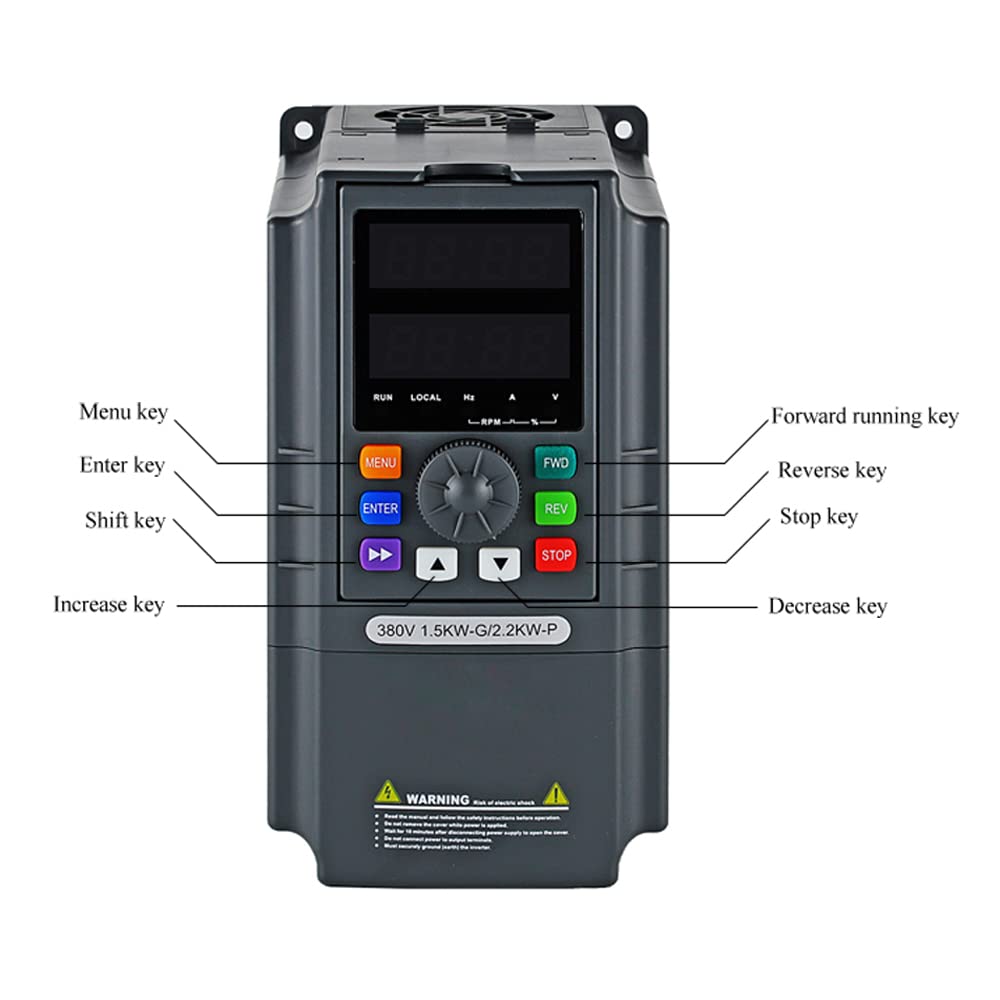
Manufacturing Standards and Testing QC for 1 Hp Variable Frequency Drive
At Boray Inverter, every 1 HP (0.75 kW) Variable Frequency Drive undergoes rigorous manufacturing protocols engineered specifically for the demands of solar pumping systems and precision motor control applications. Our production methodology ensures that units deployed in agricultural irrigation, industrial conveyance, and HVAC systems deliver consistent performance across extreme environmental conditions—from desert solar farms to humid tropical processing facilities.
Component-Level Manufacturing Standards
PCB Conformal Coating & Environmental Protection
All control boards receive a uniform three-layer conformal coating (acrylic-urethane hybrid) applied via selective robotic spraying to achieve 25–75 μm thickness per IPC-A-610 Class 3 standards. This protective barrier delivers:
– Moisture insulation resistance >10¹² Ω under 85°C/85% RH conditions (IEC 68-2-30)
– Protection against agricultural chemical vapors (fertilizers, pesticides) and airborne dust common in solar pump installations
– Prevention of dendritic growth between traces during high-humidity operation
Critical Component Sourcing
– Power Modules: Infineon or Mitsubishi 6th-generation IGBTs with junction temperatures rated to 175°C, ensuring 150% overload capacity for 60 seconds—critical for pump startup torque demands
– DC-Link Capacitors: Metallized polypropylene film capacitors (Epcos/TDK) rated for 100,000 hours at rated voltage and 85°C ambient, eliminating electrolytic capacitor failure modes in solar applications with intermittent DC input
– PCB Substrate: High-TG FR-4 (TG170) laminate with 2oz copper traces to minimize thermal impedance in 1 HP continuous duty cycles
Quality Control & Testing Protocols
100% Full-Load Burn-In Testing
Unlike statistical sampling methods, every 1 HP VFD undergoes 48-hour dynamic burn-in at 110% rated load in our automated thermal chambers:
– Ambient cycling between -10°C and +50°C to simulate diurnal solar temperature swings
– Input voltage variation ±15% (187V–253V for 220V class units) to validate single-phase to three-phase conversion stability
– Switching frequency stress testing at 16 kHz to verify thermal management of the heatsink assembly
High-Voltage & Insulation Validation
– Hi-Pot Testing: 2.5 kV AC (50 Hz) for 60 seconds between mains and earth, exceeding EN 61800-5-1 requirements for basic insulation
– Partial Discharge Testing: <10 pC at 1.5 kV to ensure long-term reliability in high-altitude solar installations (>2000m)
– Ground Bond Testing: <0.1 Ω continuity validation for safety ground paths
EMC/EMI Compliance Verification
Comprehensive electromagnetic compatibility testing ensures seamless integration with solar MPPT controllers and PLC systems:
– Conducted emissions per EN 61800-3 (Category C2) with integrated DC chokes
– Surge immunity: ±2 kV line-to-line, ±4 kV line-to-earth (IEC 61000-4-5)
– ESD protection: ±8 kV contact, ±15 kV air discharge on keypad and terminal blocks
Solar-Specific Manufacturing Considerations
DC Input Protection Integration
For solar pump applications, production includes dedicated QC checkpoints for:
– Reverse polarity protection verification (600V DC rating)
– PV array voltage tracking accuracy (MPPT voltage range 200V–400V DC for 1 HP units)
– DC bus pre-charge circuit validation to prevent inrush current damage to photovoltaic arrays
Environmental Sealing
While standard units maintain IP20 protection for cabinet installation, optional NEMA 4X (IP65) variants undergo:
– Pressure testing at 5 psi for enclosure integrity
– UV-resistant polycarbonate keypad testing per ASTM G154 for 500 hours to prevent degradation in direct solar exposure
Certification & Traceability
Standards Compliance
– CE Marking: Full conformity with EN 61800-5-1 (safety), EN 61800-3 (EMC), and Low Voltage Directive 2014/35/EU
– ISO 9001:2015: Quality management systems covering design through after-sales service
– RoHS 2.0: Restriction of hazardous substances in electrical equipment
– IEC 60721-3-3: Class 3K3/3C2 environmental condition ratings for stationary use
Serial Number Traceability
Each unit carries a laser-etched QR code linking to:
– Component batch records (capacitor ESR values, IGBT Vce(sat) measurements)
– Individual test reports (efficiency curves, no-load current draw)
– Calibration certificates for analog input terminals (4–20 mA/0–10 V accuracy ±0.5%)
This systematic approach to manufacturing ensures that Boray’s 1 HP VFDs deliver <3% total harmonic distortion (THD) and >95% conversion efficiency, providing EPC contractors and system integrators with the reliability required for 20-year operational lifespans in critical solar pumping infrastructure.
Step-by-Step Engineering Sizing Checklist for 1 Hp Variable Frequency Drive
Before specifying a 1 HP (0.75 kW) variable frequency drive, verify that the selected unit aligns with both the motor characteristics and the operational environment. Use this engineering protocol to ensure compatibility across industrial, agricultural, and solar pumping applications.
Step 1: Verify Motor Nameplate Data Against VFD Ratings
Confirm the drive’s output capacity matches or exceeds the motor’s Full Load Amps (FLA). For a 1 HP motor operating on 220V–240V single-phase input, expect approximately 4.7A continuous current draw. Check that the VFD supports the motor’s base frequency (50/60 Hz) and voltage class (110V, 220V, or 380V depending on winding configuration). Verify the motor’s insulation class (typically Class F or H) and service factor (SF) to ensure the VFD’s overload capacity—commonly 150% rated current for 60 seconds—can handle startup surges without nuisance tripping.
Step 2: Analyze Input Power Topology and Voltage Tolerance
Determine whether your site provides single-phase or three-phase input. For 1 HP applications in rural or residential agricultural settings, single-phase 220V–240V input (±15% tolerance) is standard, requiring a drive capable of single-phase to three-phase conversion. If utilizing 110V/120V input (as found in some North American light industrial setups), confirm the VFD supports dual-voltage input or specify a step-up transformer. For solar pumping applications, verify the PV array’s open-circuit voltage (Voc) and maximum power point voltage (Vmp) align with the VFD’s DC input window.
Step 3: Size Current Capacity for Application Dynamics
Beyond nominal FLA, calculate the required overload capacity based on load characteristics:
– Constant Torque (grinders, compressors): Requires 150% overload for 1 minute during startup
– Variable Torque (centrifugal pumps, fans): Standard 110%–120% current rating sufficient
– High Inertia: Extend deceleration ramp times or specify dynamic braking resistors to prevent overvoltage faults
Step 4: Define Environmental Protection Requirements
Match the enclosure rating to the installation environment:
– IP20/Open Chassis: Suitable for clean electrical panels with NEMA 1 enclosures (indoor conveyor systems)
– NEMA 4X/IP65: Required for washdown environments, outdoor solar pump installations, or agricultural settings with dust and moisture exposure
– TEFC Motor Pairing: When using Totally Enclosed Fan Cooled motors (common in 1 HP grinder applications), ensure the VFD’s switching frequency does not exceed levels that cause motor overheating; typically keep carrier frequency below 4 kHz for TEFC units without additional cooling.
Step 5: Configure Control Architecture and I/O
Specify control methodology based on automation requirements:
– Basic Speed Control: 0–10V analog potentiometer or 4–20mA signal (standard on most 1 HP drives)
– Process Control: For pump applications, verify built-in PID functionality to accept feedback from pressure transducers (4–20mA) and maintain constant pressure/flow without external PLCs
– Digital Interface: Confirm keypad programming capability for local start/stop/direction and external terminal control for remote operation
– Communication: RS-485 Modbus RTU capability for SCADA integration in distributed solar pumping systems
Step 6: Calculate Acceleration/Deceleration Profiles
Program ramp times to prevent mechanical shock and overcurrent trips:
– Conveyor Systems: 2–5 second ramp-up to prevent material spillage; utilize S-curve acceleration profiles if available
– Centrifugal Pumps: 5–10 second ramps to avoid water hammer; verify the drive includes DC injection braking or coast-to-stop options for pump applications
– Machine Tools: Sub-second response times may require vector control (sensorless) rather than basic V/F control—verify if the 1 HP drive supports enhanced control modes
Step 7: Address Harmonics and Electrical Protection
For single-phase input drives (common at 1 HP), assess harmonic distortion on the supply line:
– Install input line reactors or DC chokes if the THDi (Total Harmonic Current Distortion) exceeds 5% to protect upstream transformers
– Verify integrated protection features: overload (electronic thermal relay), short circuit, ground fault, and undervoltage protection
– Specify a disconnecting means (fused disconnect or circuit breaker) within sight of the VFD; some NEMA 4X enclosures include integrated disconnect switches for compliance with NEC Article 430
Step 8: Plan for Motor Cable and Filtering
For cable runs exceeding 50 meters (164 feet) between VFD and motor, calculate voltage drop and evaluate dV/dt filter requirements to protect motor windings from reflected wave phenomena. Use shielded cables with proper grounding at the drive end only to minimize EMI—critical when the 1 HP drive controls sensitive instrumentation in agricultural automation.
Step 9: Solar Pumping Specifics (if applicable)
When deploying as a solar pump inverter:
– Size the PV array to provide 1.25–1.5 times the motor’s nominal power to account for irradiance variability
– Verify MPPT efficiency curves at low light conditions (early morning pump priming)
– Configure dry-run protection and water level sensors utilizing the VFD’s programmable digital inputs
– Ensure automatic switching capability between solar DC and grid AC (if hybrid operation required)
Step 10: Documentation and Commissioning Protocol
Upon installation, record:
– Actual measured input/output currents under load
– Motor parameter auto-tuning results (stator resistance, leakage inductance)
– Final ramp time settings and PID tuning parameters for pump systems
– Backup of parameter sets for rapid replacement scenarios
Note: For OEMs and distributors sourcing 1 HP drives for variable markets, specify wide-range input voltage (100V–240V) and dual-frequency (50/60Hz) compatibility to minimize SKU complexity while ensuring compliance with both North American 120V residential circuits and international 220V–240V industrial standards.
Wholesale Cost and Energy ROI Analysis for 1 Hp Variable Frequency Drive
When evaluating 1 HP (0.75 kW) variable frequency drives for industrial or agricultural deployment, procurement decisions extend far beyond the initial unit cost. For EPC contractors and automation distributors, understanding the layered economics—from factory-gate pricing to long-term energy arbitrage—determines both project viability and margin sustainability.
Procurement Economics: Factory to Field Pricing Tiers
The 1 HP VFD market exhibits significant price stratification based on enclosure specifications, input voltage handling, and channel positioning. As a baseline, standard IP20-rated units with single-phase 220V input/three-phase output capabilities typically trade at factory-direct volumes between $85–$140 per unit (50+ quantity), while NEMA 4X enclosed variants with integrated disconnects—such as those specified for conveyor or outdoor pumping applications—range from $180–$320 at wholesale tiers.
Volume-Based Cost Structure:
– OEM/EPC Bulk (100+ units): Factory-direct pricing with customized parameter presets and OEM branding options, typically 40–45% below distributor list
– Distributor Stocking (10–49 units): Standard warranty terms (18–24 months), inclusive of technical documentation and multilingual keypad interfaces
– Project-Specific (1–9 units): Retail-adjacent pricing with extended configuration support, often reflecting 25–30% margins over factory costs
For solar pumping integrators, DC-input capable VFDs (solar pump inverters) command a 15–20% premium over standard AC drives due to integrated MPPT algorithms and wide DC voltage range handling (150V–450Vdc for 1 HP units), though this cost is offset by eliminated inverter/rectifier staging in standalone PV systems.
Energy Arbitrage: Quantifying 1 HP VFD ROI
The economic justification for 1 HP VFD deployment hinges on the affinity laws governing centrifugal loads. In pump and fan applications—representing 80% of 1 HP motor installations—a 20% reduction in operating speed yields a 49% reduction in power consumption (P ∝ N³).
Baseline Calculation (Continuous Duty):
– Uncontrolled Operation: 1 HP motor (0.746 kW) × 8,000 annual hours × 85% motor efficiency = 7,012 kWh/year
– Regional Energy Costs: At $0.12/kWh (global industrial average), annual baseline cost = $841
VFD-Optimized Scenario:
With PID pressure control maintaining 75% average flow demand (cubic load profile):
– Energy Consumption: 7,012 kWh × 42% average load = 2,945 kWh/year
– Annual Savings: $493 per drive
– Payback Period: At wholesale acquisition costs of $120–$200, ROI typically realizes within 4.5–10 months for continuous-duty applications.
For agricultural solar pumping systems, the calculus shifts toward diesel displacement. A 1 HP solar pump VFD replacing a diesel generator set (operating 6 hours daily) eliminates approximately 180 liters of fuel monthly. At current global diesel pricing ($1.10–$1.40/liter), monthly savings of $200–$250 achieve system payback within 14–18 months, inclusive of PV array costs.
Total Cost of Ownership: Warranty and Lifecycle Factors
Warranty structures significantly impact long-term project economics. Standard 1 HP VFD warranties range from 12 months (basic IP20 units) to 36 months (industrial-grade NEMA 4X drives). For distributors, negotiating extended warranty coverage (5-year) adds approximately 8–12% to unit cost but reduces field service liability—a critical consideration for remote agricultural installations.
Enclosure Economics:
– IP20/Open Chassis: Requires external panel integration ($40–$60 additional NRE) but facilitates heat dissipation in controlled environments
– NEMA 4X/UL Type 4: Integrated sealing against dust/moisture eliminates external cabinet costs, reducing installation labor by 1.5–2 hours per unit
MTBF data for modern IGBT-based 1 HP drives exceeds 50,000 hours under standard conditions; however, solar pump VFDs operating in high-temperature environments (40°C+ ambient) require derating or active cooling, adding $15–$25 per unit in thermal management costs over the lifecycle.
Strategic Procurement Recommendations
For automation distributors managing 1 HP VFD inventories, maintaining dual stock—standard V/F control units for fan/conveyor applications and sensorless vector variants for high-torque pump starts—maximizes addressable market coverage while minimizing SKU proliferation.
EPC contractors should specify drives with integrated DC chokes or EMC filters at the wholesale level, as retrofit compliance with IEC 61800-3 for residential/commercial environments typically costs 3× more than factory integration. When sourcing for solar pumping projects, prioritize units with automatic MPPT tracking and dry-run protection to eliminate external controller costs and reduce system complexity.
The 1 HP VFD represents a high-velocity procurement category where energy savings typically exceed capital costs within the first operational year, making wholesale acquisition strategies focused on lifecycle support and solar compatibility the dominant value drivers for industrial engineering portfolios.
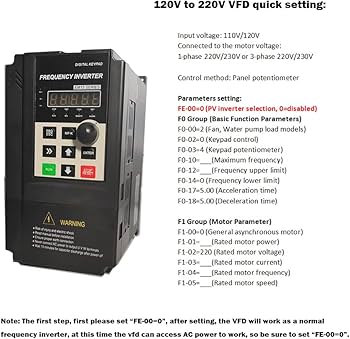
Alternatives Comparison: Is 1 Hp Variable Frequency Drive the Best Choice?
When specifying motor control for fractional and low-horsepower applications, the assumption that “bigger is better” often clouds judgment. At the 1 HP (0.75 kW) threshold—common in precision grinding, light conveyance, and small-scale agricultural pumping—the selection between a Variable Frequency Drive (VFD), Soft Starter, or direct grid connection involves nuanced trade-offs between Capital Expenditure (CAPEX), Operational Expenditure (OPEX), and process control fidelity. Below is a technical analysis of alternatives to determine when a 1 HP VFD is genuinely the optimal solution versus scenarios where competing technologies offer superior value.
VFD vs. Soft Starter: Control Precision vs. Cost Efficiency
For 1 HP three-phase motors operating from single-phase supply (as seen in 110V/220V grinder and conveyor applications), both VFDs and Soft Starters solve the inrush current problem, but their operational philosophies diverge significantly.
Soft Starters (such as phase-angle control thyristor-based units) limit starting current to 2–3 times Full Load Amperage (FLA) and reduce mechanical shock. However, they provide no speed regulation beyond the fixed 50/60 Hz supply. In variable torque applications—such as the centrifugal pumps and fans referenced in 1 HP irrigation systems—this limitation precludes energy savings during partial load conditions. Soft starters are electrically efficient for fixed-speed duty cycles but become obsolete if process requirements demand RPM modulation.
1 HP VFDs, conversely, offer 0–400 Hz output frequency (as specified in standard 220V single-phase input models), enabling precise flow control in pumping and dynamic speed adjustment in grinding operations. While the upfront cost is 40–60% higher than a soft starter, the VFD’s ability to implement PID control via 4–20 mA or 0–10 V analog inputs (for pressure/flow feedback) justifies the investment in closed-loop systems. For applications requiring only soft starting without speed control—such as conveyor belts with fixed line speeds—a Soft Starter remains the economically rational choice.
Solar Pump Inverter vs. Standard Grid-Tied VFD
In off-grid or hybrid agricultural contexts, a critical distinction exists between a standard 1 HP VFD (grid-tied) and a Solar Pump Inverter (a specialized VFD with Maximum Power Point Tracking).
Standard VFDs, like the NEMA 4X enclosed units used in material handling, require stable AC input (120/240V single-phase) and lack native DC bus optimization for photovoltaic arrays. Attempting to power a conventional VFD directly from solar panels without a separate charge controller and battery bank results in erratic operation during irradiance fluctuations.
Solar Pump Inverters (Boray’s core specialization) integrate MPPT algorithms that dynamically adjust the motor frequency to match available solar irradiance, eliminating the need for batteries and inverters. They include critical agricultural protections—dry-run detection, water level sensors, and auto-restart after fault conditions—that standard VFDs require external PLCs to replicate. For 1 HP submersible or surface pumps in remote locations, a dedicated solar pump inverter reduces system complexity and improves water yield per watt by 15–30% compared to grid-tied VFDs paired with solar conversion equipment.
Motor Technology Pairing: PMSM vs. Induction Motor (IM)
The choice of motor technology fundamentally impacts the VFD’s control strategy and efficiency profile.
Induction Motors (IM) paired with 1 HP VFDs utilize Volts-per-Hertz (V/F) control, offering robustness and tolerance to voltage sags (±15% input fluctuation capability). For general-purpose grinding and conveying, IMs provide adequate efficiency (IE2/IE3) with minimal commissioning complexity. However, at 1 HP, induction motors suffer from lower power factor at partial loads and higher rotor losses.
Permanent Magnet Synchronous Motors (PMSM) require VFDs with sensorless vector control (open-loop or closed-loop) but deliver IE4/IE5 efficiency levels—critical in battery-constrained solar pumping where every watt counts. PMSMs maintain constant torque across the speed range and offer 20–30% energy savings over IMs in variable-speed applications. The caveat: PMSM systems demand higher initial investment and precise parameter tuning, making them suitable for 1 HP precision agriculture or high-duty-cycle industrial processes rather than intermittent shop tools.
Electromechanical Alternatives: DOL and Star-Delta
For cost-sensitive installations, Direct Online (DOL) starting remains prevalent. At 1 HP, DOL inrush (6–8x FLA) is manageable on robust grids but causes voltage dips that disrupt sensitive electronics and accelerate contactor wear. Star-Delta (Wye-Delta) starters reduce starting current by 33% but impose severe torque reduction (to 33% of nominal), making them unsuitable for high-starting-torque applications like positive displacement pumps or loaded grinders.
Comparative Analysis Matrix
| Parameter | 1 HP VFD (Grid-Tied) | Soft Starter | Solar Pump Inverter | DOL Starter | PMSM + Vector VFD |
|---|---|---|---|---|---|
| Initial Cost | Medium ($150–$400) | Low ($80–$200) | Medium-High ($200–$500) | Very Low ($30–$80) | High ($300–$600) |
| Speed Control | 0–400 Hz continuous | Fixed (50/60 Hz only) | MPPT-optimized variable | Fixed | 0–rated speed precise |
| Starting Current | 1.5x FLA (adjustable) | 2–3x FLA | 1.0x FLA (soft ramp) | 6–8x FLA | 1.5x FLA |
| Energy Savings | 20–50% (variable torque) | 0% (fixed speed) | 30–60% (solar only) | 0% | 35–55% |
| Input Compatibility | 1-phase 110/220V or 3-phase | 3-phase only | DC Solar / AC Hybrid | 1-phase/3-phase | Requires VFD |
| Protection Features | Overload, undervoltage, phase loss | Limited (thermal only) | Dry-run, MPPT fault, auto-restart | Basic thermal | Overload, demagnetization protection |
| Best Application | Precision tools, HVAC, process pumps | Conveyors, compressors | Off-grid water pumping | Fans, intermittent duty | High-efficiency solar, servo-like control |
Decision Framework: When is the 1 HP VFD the Superior Choice?
Specify a Standard 1 HP VFD when:
– The application requires variable speed control (e.g., belt grinders needing 3600 RPM down to 800 RPM for material finishing).
– Operating from single-phase residential supply (110V/220V) to power three-phase motors.
– Process feedback loops (pressure transducers, flow sensors) necessitate PID integration.
Specify a Solar Pump Inverter (Specialized VFD) when:
– The 1 HP pump operates in remote locations without grid infrastructure.
– Maximum water volume per solar watt is the primary metric (agricultural EPC projects).
– System simplicity (no batteries, no separate charge controllers) is prioritized.
Choose Alternatives when:
– Soft Starter: Fixed-speed conveyors with frequent start-stop cycles where CAPEX reduction outweighs energy savings.
– DOL: Intermittent duty, budget-constrained installations with robust electrical infrastructure.
– PMSM: Only when lifecycle energy costs justify the premium (typically >2,000 operating hours/year).
For industrial engineers and automation distributors, the 1 HP VFD represents the optimal convergence of control flexibility and energy management—provided the application justifies the sophistication. In solar pumping specifically, Boray’s dedicated solar pump inverter technology supersedes standard VFDs by integrating MPPT and agricultural logic natively, eliminating the inefficiency of retrofitting grid-tied drives for photovoltaic applications.
Core Technical Specifications and Control Terms for 1 Hp Variable Frequency Drive
When specifying a 1 HP (0.75 kW) Variable Frequency Drive for industrial or agricultural deployment, engineers and procurement specialists must evaluate both the electromechanical performance envelope and the commercial logistics framework. Below is a technical breakdown of critical specifications, control methodologies, and international trade terms essential for EPC contractors and automation distributors sourcing compact motor control solutions.
Electrical Performance Parameters
Input/Output Characteristics
A standard 1 HP VFD designed for single-phase to three-phase conversion typically accepts an input voltage range of 110V–240V AC ±15% (50/60 Hz universal) and outputs a variable three-phase voltage from 0 V to the input voltage level, with a frequency range of 0–400 Hz. This wide frequency spectrum allows precise motor speed regulation from standstill to twice the nominal motor speed (3600 RPM base).
Current Ratings and Thermal Overload
The rated output current for a 1 HP unit operating at 220V is approximately 4.7 A, though this varies by voltage derating. Critical for pump and conveyor applications, the overload capacity should sustain 150% of rated current for 60 seconds and 200% for 0.5 seconds to handle inrush currents during high-torque starts. Thermal protection via integrated IGBT modules and heatsink temperature monitoring prevents failure in TEFC (Totally Enclosed Fan Cooled) motor pairings.
Power Quality and Harmonics
Input current total harmonic distortion (THDi) should remain below 5% when equipped with DC choke or active rectifier options, ensuring compliance with IEEE 519 standards for grid-connected installations.
Control Architectures and Algorithms
V/F (Volts per Hertz) Control
The fundamental control mode for 1 HP drives utilizes a linear V/F curve to maintain constant motor flux. This open-loop method delivers ±0.5% speed control accuracy of the motor’s synchronous speed, sufficient for centrifugal pumps and belt conveyors where precise torque control is secondary to flow regulation.
Sensorless Vector Control (SVC)
For applications requiring high starting torque (e.g., positive displacement pumps or grinder spindles), sensorless vector control decouples flux and torque current components, providing dynamic response without encoder feedback. This enables 150% starting torque at 0.5 Hz, critical for overcoming static friction in agricultural irrigation systems.
PID Process Control
Integrated PID (Proportional-Integral-Derivative) algorithms allow the VFD to function as a standalone process controller. By accepting 4–20 mA or 0–10 V analog signals from pressure transducers or flow sensors, the drive automatically adjusts motor frequency to maintain setpoints (e.g., constant water pressure in multi-pump booster systems). The PID loop eliminates the need for external PLCs in simple automation architectures.
Solar Pump Integration: MPPT Considerations
For photovoltaic-powered pumping systems, the 1 HP VFD must incorporate Maximum Power Point Tracking (MPPT) algorithms. This functionality continuously sweeps the DC input voltage (typically 200V–400V from solar arrays) to identify the optimal operating point where the PV module delivers maximum wattage.
- Dual Input Capability: Advanced units feature automatic switching between AC grid power and DC solar input, ensuring 24/7 operational continuity.
- Dry-Run Protection: When paired with MPPT, the drive detects under-load conditions (indicating empty wells) and triggers automatic shutdown to prevent pump damage.
Environmental Protection and Enclosure Ratings
IP20 vs. NEMA 4X
– IP20 (Ingress Protection 20) rated drives provide protection against solid objects >12.5mm and no liquid protection, suitable for controlled cabinet installations with ambient temperatures of -10°C to +50°C.
– NEMA 4X enclosures offer watertight, dust-tight, and corrosion-resistant protection (equivalent to IP66), mandatory for outdoor agricultural environments or food processing facilities requiring high-pressure washdowns. These units typically include integrated disconnect switches and conformal-coated PCBs to resist humidity and chemical exposure.
Interface and Connectivity
Analog and Digital I/O
Standard 1 HP VFDs provide:
– 1 analog input: Configurable for 0–10V or 4–20mA (for remote speed pots or sensor feedback)
– Multi-function digital inputs: For forward/reverse commands, external fault inputs, and multi-speed selection
– Relay output: Typically rated 250V AC/3A for run status or fault indication
Ramp Control
Adjustable acceleration/deceleration ramps (0.1–3600 seconds) prevent mechanical shock in conveyor systems and water hammer in pumping applications.
International Trade Terms (Incoterms)
For global distribution and EPC project procurement, understanding shipping liability transfer points is critical:
| Term | Definition | Risk Transfer Point | Applicability for VFD Procurement |
|---|---|---|---|
| EXW (Ex Works) | Buyer assumes all costs/risks from seller’s factory | Seller’s premises | Lowest cost for buyer; requires full logistics management |
| FOB (Free On Board) | Seller delivers goods on board vessel; buyer pays freight | Port of origin | Common for containerized shipments from Chinese manufacturing hubs |
| CIF (Cost, Insurance, Freight) | Seller pays freight and insurance to destination port | Port of destination | Preferred by buyers requiring cost certainty; risk transfers upon loading |
| DDP (Delivered Duty Paid) | Seller assumes all costs/risks including import duties | Buyer’s specified location | Ideal for turnkey solar pumping projects where EPC requires complete supply chain management |
Procurement Note: For agricultural projects in remote regions, CIF terms minimize currency fluctuation risks during ocean freight, while FOB offers greater control over shipping schedules for large distributor inventories.
Specification Checklist for EPC Contractors
When validating a 1 HP VFD for solar pumping or industrial automation:
- Verify Input Voltage Tolerance: Ensure ±15% range accommodates rural grid fluctuations or battery voltage sag in solar applications.
- Confirm PID Integration: For pressure-controlled irrigation, verify the drive supports closed-loop control with sleep/wake functions (auto-start when pressure drops).
- Environmental Certification: Require CE marking for European projects and UL/cUL listing for North American installations.
- EMC Filtering: Specify built-in Class A or Class B EMC filters to prevent interference with remote monitoring systems.
By aligning these technical specifications with appropriate Incoterms, project stakeholders ensure both operational reliability and supply chain efficiency for 1 HP motor control deployments.
Future Trends in the 1 Hp Variable Frequency Drive Sector
The 1 HP (0.75 kW) variable frequency drive segment is undergoing a significant transformation, evolving from standalone motor controllers into intelligent, networked edge devices. As industries prioritize energy efficiency and decentralized automation, compact VFDs are increasingly positioned as critical enablers for precision agriculture, small-scale industrial retrofitting, and off-grid renewable applications. Below are the key developments shaping the next generation of low-power motor control solutions.
Miniaturization and Infrastructure Adaptability
Modern automation demands are driving unprecedented compactness in 1 HP drive design. Next-generation units are achieving power densities exceeding 0.5 kW per liter—enabling DIN-rail mounting within crowded control cabinets or direct machine integration without dedicated electrical rooms. This miniaturization coincides with a critical infrastructure trend: universal single-phase input capability (120/240V) delivering three-phase output. For agricultural project managers and EPC contractors operating in regions with limited three-phase grid access, this functionality eliminates the cost barriers of utility infrastructure upgrades, allowing immediate deployment of efficient three-phase pump and conveyor systems in remote locations.
Furthermore, the shift toward plug-and-play modularity is reducing commissioning complexity. Pre-configured drive-motor combinations with prewired terminal blocks and standardized communication protocols are minimizing field wiring errors—a crucial advantage for distributed solar pumping installations where skilled electrical labor may be scarce.
Solar Integration and DC-Coupled Architectures
The convergence of photovoltaic (PV) technology and small-horsepower VFDs represents one of the most disruptive trends in agricultural automation. Advanced 1 HP solar pump inverters now feature dual-input AC/DC topology, allowing direct connection to PV arrays without separate charge controllers or battery banks. These drives incorporate integrated Maximum Power Point Tracking (MPPT) algorithms specifically optimized for sub-kilowatt solar arrays, maintaining pump operation even during fluctuating irradiance conditions.
For irrigation and livestock watering applications, this enables true off-grid autonomy. Modern units can automatically switch between solar DC input and grid AC backup (or generator sets), ensuring 24/7 water availability while maximizing renewable energy utilization. The trend toward common DC bus architectures also facilitates hybrid energy storage integration, where 1 HP drives can buffer energy from small-scale solar installations, reducing dependency on unstable grid connections in developing markets.
IoT-Enabled Predictive Maintenance and Edge Analytics
Industry 4.0 connectivity is no longer exclusive to high-power industrial drives. The latest 1 HP VFDs are embedding wireless communication modules (Wi-Fi, LoRaWAN, or NB-IoT) and onboard edge computing capabilities, transforming them into data acquisition nodes. For automation distributors and system integrators, this enables:
- Remote Parameterization: Cloud-based platforms allowing engineers to adjust V/F curves, ramp times, and PID setpoints for pump control systems via smartphone applications—addressing the historical pain point of complex keypad programming in field conditions.
- Condition-Based Monitoring: Real-time tracking of motor current signatures, vibration harmonics, and thermal patterns to predict bearing failures or cavitation events in pumping applications before catastrophic downtime occurs.
- Energy Analytics: Granular consumption data logging that correlates motor load profiles with solar irradiance or production schedules, providing EPC contractors with verification data for efficiency guarantees.
Cybersecurity is becoming paramount as these devices join OT networks. Expect widespread adoption of encrypted communication protocols (TLS 1.3 for MQTT connections) and secure boot functionality in 1 HP drives to prevent unauthorized access to critical agricultural or industrial infrastructure.
Advanced Semiconductor Technology and Efficiency Standards
The adoption of Silicon Carbide (SiC) and Gallium Nitride (GaN) switching technologies—previously reserved for high-power drives—is trickling down to the 1 HP class. These wide bandgap semiconductors enable switching frequencies above 16 kHz (compared to traditional 4-6 kHz), resulting in near-sinusoidal motor current waveforms that reduce heating and acoustic noise in sensitive applications such as food processing conveyors or precision grinding equipment (as referenced in specialized tooling applications).
Simultaneously, regulatory pressure is pushing 1 HP VFDs to achieve IE5/Ultra-Premium efficiency compatibility when paired with permanent magnet synchronous motors (PMSMs). This combination offers 20-30% energy savings over conventional induction motor systems, making them economically viable for solar-powered installations where every watt of PV capacity must be optimized.
Conclusion
The 1 HP VFD sector is transitioning from commodity motor control to intelligent energy management hubs. For Boray Inverter and similar manufacturers, success will depend on delivering compact, solar-ready drives with robust IoT connectivity and cybersecurity—products that serve not merely as motor starters, but as the distributed nervous system for the next generation of sustainable, automated infrastructure.
Top 4 1 Hp Variable Frequency Drive Manufacturers & Suppliers List
Top Manufacturers & Suppliers of Variable Frequency Drives
Website: darwinmotion.com
Siemens Sinamics series: efficient, versatile VFDs for applications ranging from simple pumps to complex machinery. Schneider Electric Altivar series: energy-saving drives for HVAC and manufacturing with user-friendly interfaces. Darwin Motion Matrix series (Matrix-900, Matrix 350, Matrix 500, Matrix 680, Matrix 880): designed for low, medium, and high voltage applications, maximizing energy effic…
Top 10 Variable Frequency Drive (VFD) Manufacturers
Website: hars-vfd.com
HARS VFD (hars-vfd.com) manufactures a comprehensive range of Variable Frequency Drives (VFDs) including the VFD-HS320 Series, VFD-HS320Pro, VFD-HS720 Series, VFD-HS720H Series, VFD-HS310 Series, VFD-HS290 Series, and VFD-HS800 Series. The company specializes in solar pump VFDs and hybrid inverter solutions (HE200 Series and HE300 Series). Their product ecosystem includes essential accessories suc…

Variable Frequency Drives (VFDs)
Website: vfds.com
VFDs.com specializes in Variable Frequency Drives (VFDs), also known as variable speed drives, adjustable frequency drives, AC drives, microdrives, or inverters. Product categories include standard VFDs, Medium Voltage VFDs, Electric Motors, Medium Voltage Motors, Power Quality Products, VFD Panels, and Industrial Controls. Key brands carried: Mitsubishi, Galt Electric, Delta, TMEIC, MDI, TECO, US…

Analysis of the Top 25 Variable Frequency Drive (VFD) Companies …
Website: finance.yahoo.com
No product details found. The provided text appears to be an error page or website navigation menu (‘Oops, something went wrong’) without substantive article content regarding solar inverters, VFDs, or industrial automation.
B2B Engineering FAQs About 1 Hp Variable Frequency Drive
1. Can a 1 HP VFD effectively convert single-phase input to three-phase output for motor operation in rural or legacy industrial facilities?
Yes. A 1 HP (0.75 kW) VFD with single-phase 220V/240V AC input (±15%) and three-phase output capability serves as an efficient phase converter, eliminating the need for expensive three-phase infrastructure upgrades. The drive rectifies the single-phase AC to DC, then inverts it to variable-frequency three-phase power (0–400 Hz). This configuration is particularly valuable for agricultural project managers deploying three-phase pump motors in remote locations with only single-phase grid availability. Ensure the VFD is specifically rated for single-phase input derating—typically requiring 1.5× the normal input current capacity—to maintain stable DC bus voltage under full load.
2. How does input voltage wiring configuration affect the actual mechanical power output of a 1 HP motor when controlled by a VFD?
Input voltage directly impacts available shaft power. When wired for 110V input, a nominally “1 HP” motor typically delivers approximately 0.75 HP (560W) due to current limitations and V/Hz ratio constraints, whereas 220V input achieves the full 1 HP (746W) rating. The VFD must be programmed to match the motor’s voltage rating to prevent magnetic saturation or under-fluxing. For EPC contractors specifying equipment, always verify the motor’s wiring configuration and VFD parameter settings (Pr. 0: Torque boost and Pr. 3: Base frequency) to ensure the delivered mechanical power meets the hydraulic load requirements of the application.
3. What enclosure ratings (IP/NEMA) should be specified for 1 HP VFD installations in harsh agricultural or industrial environments?
Environment dictates enclosure selection. For indoor control cabinets with IP20 protection, ensure adequate ventilation and dust filtration, as IP20 offers no protection against water ingress. For outdoor agricultural pumping stations or conveyor washdown environments, specify NEMA 4X (IP66 equivalent) stainless steel enclosures with integrated disconnect switches, as referenced in conveyor applications. NEMA 4X provides protection against dust, corrosion, and high-pressure water jets—critical for solar pumping installations in arid climates where sand infiltration is a concern. Always maintain minimum clearances (50mm above/below) for thermal dissipation regardless of enclosure rating.
4. How is closed-loop pressure control implemented using a 1 HP VFD with external sensors in constant water supply systems?
Utilize the VFD’s internal PID controller by connecting a 4–20 mA or 0–10V pressure transducer to the analog input terminals (AI1/GND). Configure the PID parameters (proportional gain, integral time) to maintain setpoint pressure. As system demand increases and line pressure drops, the sensor signals the VFD to increase output frequency (0–60 Hz or higher), accelerating the pump to restore pressure. For multi-pump installations, the 1 HP VFD can function as a master controller, cascading additional fixed-speed pumps via relay outputs when frequency exceeds 50/60 Hz for sustained periods, optimizing energy consumption versus pressure maintenance.
5. What overload protection capabilities should be expected from a 1 HP VFD to protect motors during high-torque agricultural pumping startups?
Industrial-grade 1 HP VFDs provide 150% rated current overload capacity for 60 seconds and 200% for 0.5 seconds, sufficient for high-inertia centrifugal pump startups or grinder applications. The drive should feature Class 10 or Class 20 electronic motor overload protection (EOL), adjustable ramp-up times (0.1–3600 seconds), and stall prevention during acceleration. For solar pumping applications, additional DC undervoltage protection prevents battery deep-discharge or PV array collapse during cloud transients. Always coordinate the VFD’s thermal overload curve with the motor’s TEFC (Totally Enclosed Fan Cooled) cooling characteristics, particularly at low-speed operation where self-ventilation is reduced.
6. Can standard 1 HP VFDs be integrated with solar PV arrays for off-grid water pumping applications, or are specialized solar pump inverters required?
While standard 1 HP VFDs accept AC input, solar pump inverters (like Boray’s specialized agricultural drives) accept high-voltage DC input (200–400VDC) directly from PV arrays, incorporating Maximum Power Point Tracking (MPPT) to optimize solar harvest. Standard VFDs require a separate DC-to-AC conversion stage or battery buffer, reducing efficiency by 8–12%. For pure solar pumping without grid backup, specify a solar-specific VFD with wide MPPT voltage range and dry-run protection (automatic shutdown when water level is insufficient), rather than adapting standard industrial VFDs which lack these critical agricultural protections.
7. What analog control interfaces are standard for remote speed control in automated industrial processes using 1 HP VFDs?
Standard 1 HP VFDs provide dual analog input channels: 4–20 mA (current signal, immune to electrical noise over long distances) and 0–10V DC (voltage signal, suitable for local potentiometer control). These interface with PLC analog output modules, remote speed potentiometers, or process controllers. Additionally, digital inputs (DI1–DI5) support multi-speed preset selection (8–16 steps), forward/reverse command, and emergency stop. For precision grinding or conveyor applications, ensure the VFD offers ±0.5% speed control accuracy at rated synchronous speed, with V/F control mode suitable for variable torque pump and fan loads.
8. What are the critical installation spacing and wiring considerations for 1 HP VFDs to ensure EMC compliance and thermal reliability?
Maintain minimum 100mm clearance on sides and 150mm top/bottom from heat-generating components or walls to ensure convective cooling. Use shielded motor cables (three-core plus earth) with the shield bonded to the VFD’s earth terminal at one end only to prevent ground loops. Install input line reactors (3% impedance) when the power supply capacity exceeds 500 kVA or when multiple drives share a distribution line, to mitigate harmonic distortion and voltage notching. For agricultural installations with long motor leads (>50 meters), add output dv/dt filters to protect motor insulation from voltage reflection issues, particularly critical when retrofitting older TEFC motors not designed for PWM waveforms.
Disclaimer
⚠️ Important Disclaimer
The information provided in this guide is for educational purposes. Industrial applications and electrical engineering projects carry inherent risks. B2B buyers and contractors must conduct thorough technical due diligence and verify regional compliance before installation or procurement.
Conclusion: Partnering with Boray Inverter for 1 Hp Variable Frequency Drive
Selecting the optimal 1 HP Variable Frequency Drive represents a critical inflection point for industrial engineers, agricultural project managers, and EPC contractors seeking to harmonize energy efficiency with precise motor control. From powering precision belt grinders and material handling conveyors to driving solar irrigation pumps across remote agricultural installations, the right VFD architecture—whether single-phase input to three-phase output or specialized vector control configurations—delivers measurable operational advantages through reduced energy consumption, soft-start capabilities, and extended equipment lifespan. Yet technical specifications represent only half the equation; sustainable project success ultimately hinges on collaboration with a manufacturing partner capable of translating complex engineering requirements into field-proven hardware.
Shenzhen Boray Technology Co., Ltd. emerges as that definitive partner, establishing itself as an innovative powerhouse in Solar Pumping and Motor Control Solutions from China. With research and development personnel comprising 50% of its workforce, Boray Inverter has achieved mastery over both Permanent Magnet Synchronous Motor (PMSM) and Induction Motor (IM) vector control technologies, enabling sophisticated torque response algorithms and industry-leading efficiency curves even under variable load conditions. This technical prowess translates into manufacturing excellence through two modern, automated production lines, where every 1 HP VFD undergoes rigorous 100% full-load testing to ensure reliability in harsh agricultural and industrial environments.
Recognized by automation distributors and system integrators across global markets, Boray’s solutions power critical infrastructure in agricultural irrigation, industrial automation, and renewable energy sectors. For procurement teams evaluating wholesale partnerships or engineers specifying custom VFD configurations for specialized solar pumping applications, Boray Inverter offers the technical agility and production capacity to accelerate project timelines. Contact the specialists at borayinverter.com today to discuss your specific 1 HP VFD requirements and receive a detailed quotation for customized motor control solutions.