Every year, industrial motors consume nearly 45% of global electricity, with a staggering portion wasted by systems running at fixed speeds regardless of actual demand. For facility managers watching energy bills climb and engineers troubleshooting premature motor failures, the Variable Frequency Drive (VFD) isn’t just another component—it’s the control center that transforms fixed-speed machinery into intelligent, responsive assets.
But not all VFDs are created equal, and misunderstanding their fundamental definition leads to mismatched specifications, shortened equipment life, and hidden operational costs that erode profitability. Whether you’re optimizing irrigation systems or industrial conveyors, precisely defining what constitutes a true VFD—and distinguishing it from basic speed controllers—directly impacts your system’s energy recovery, mechanical stress reduction, and long-term ROI.
Let’s cut through the technical ambiguity and define exactly what separates a robust VFD from inadequate alternatives, ensuring your next specification drives both sustainability and bottom-line performance.
What Is a Variable Frequency Drive? A Technical Definition and Cost Framework
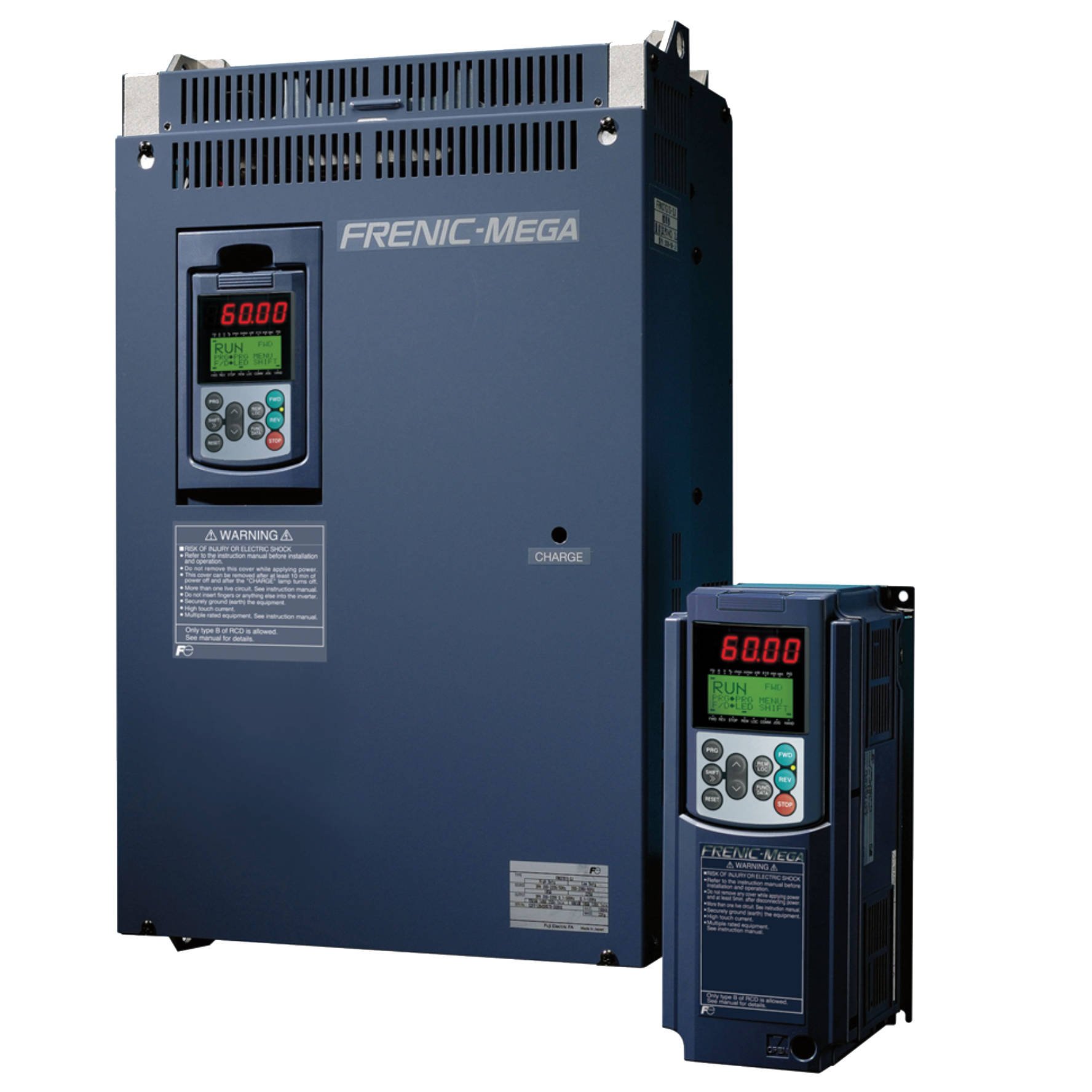
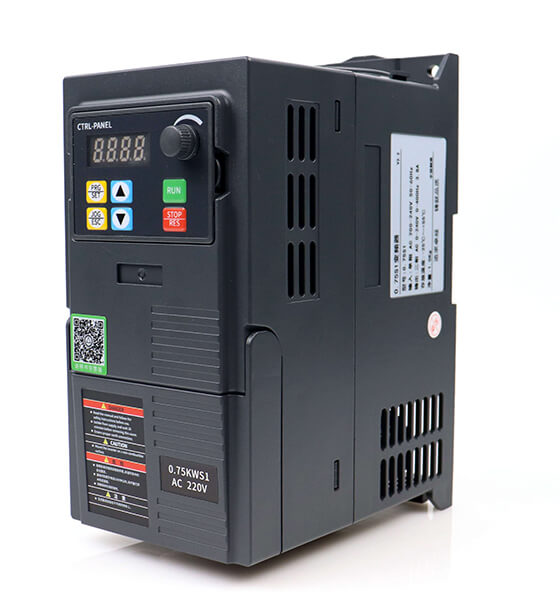
A Variable Frequency Drive (VFD)—also referred to as an Adjustable Speed Drive (ASD), Variable Speed Drive (VSD), AC Drive, or Frequency Inverter—is an electronic motor controller that manipulates the speed and torque of an AC induction or permanent magnet synchronous motor (PMSM) by varying the frequency and voltage of the electrical power supplied to it.
From a procurement perspective, VFD pricing follows a non-linear scale based on power topology and semiconductor technology. Entry-level scalar control drives for sub-5kW applications typically represent the baseline cost tier, while medium-voltage (above 1kV) and regenerative drives with Active Front End (AFE) rectifiers can command 3-5x premiums. The fundamental cost drivers include the power semiconductor configuration (six-pulse diode bridge vs. IGBT rectifier), DC bus capacitance requirements, and the sophistication of the control algorithm—ranging from basic V/Hz control to high-performance field-oriented vector control capable of servo-grade positioning.
Critical Technical Specifications Affecting VFD Selection and Pricing
Power Rating and Voltage Class
The kilowatt (kW) or horsepower (HP) rating is the primary cost determinant. Standard low-voltage drives operate below 1000V (typically 230V single-phase, 380V/480V three-phase, or 690V industrial). Single-phase input drives require higher current-carrying capacity and larger DC bus capacitors to maintain ripple voltage, resulting in 15-20% cost premiums over three-phase equivalents at similar power ratings. Medium voltage drives (2.3kV-13.8kV) utilize cascaded H-bridge or multilevel topologies, dramatically increasing complexity and cost.
Environmental Protection and Thermal Management
IP (Ingress Protection) ratings directly impact enclosure costs and longevity:
– IP20: Basic chassis drives for clean electrical rooms; lowest cost but require external protection
– IP54/55: Dust-protected and water-splash resistant; essential for pump rooms and outdoor installations
– IP65: Fully sealed against dust and low-pressure water jets; critical for agricultural irrigation and mining applications
Ambient temperature derating is crucial—standard drives operate at 40°C, but every 1°C above 45°C requires approximately 2% current derating or forced ventilation systems, adding to total cost of ownership.
Control Methodology and Motor Compatibility
Scalar Control (V/Hz): Maintains constant voltage-to-frequency ratio; cost-effective for pumps and fans but provides limited low-speed torque (below 10Hz).
Vector Control (Field-Oriented Control):
– Induction Motor (IM) Vector Control: Requires motor parameter auto-tuning; provides 150-200% starting torque at zero speed
– PMSM Vector Control: Demands higher switching precision and encoder feedback (optional sensorless); 20-30% price premium but delivers superior efficiency and dynamic response
Advanced drives featuring SiC (Silicon Carbide) MOSFETs instead of traditional IGBTs offer switching frequencies above 20kHz (reducing motor noise and heating) but currently command 40-60% premiums over silicon-based equivalents.
Harmonic Mitigation and Power Quality
Standard six-pulse rectifiers generate 5th, 7th, and 11th harmonics. Compliance with IEEE 519 or IEC 61000-3-6 may require:
– DC Link Chokes: 3-5% cost adder, reduces THD by 30%
– Active Front End (AFE): Regenerative capability and <5% THD; doubles drive cost but eliminates braking resistor expenses in high-cyclic applications
Industrial Procurement: Sizing and Sourcing Strategies for Optimal ROI
Motor FLA Matching: Always size the VFD based on the motor’s Full Load Amps (FLA) rather than just horsepower. Oversizing by more than one frame size wastes capital and reduces power factor at light loads.
Overload Capacity Verification: Verify the drive’s overload rating—standard duty (110% for 60s) versus heavy duty (150% for 60s). For crushers, conveyors, and compressors, specify heavy-duty ratings to prevent nuisance tripping during startup.
Braking Requirements: High-inertia loads (centrifuges, large fans) require dynamic braking resistors or regenerative units. Calculate braking energy: E = 0.5 × J × ω² (where J is moment of inertia, ω is angular velocity). Undersizing braking resistors leads to DC bus overvoltage faults.
Cable Distance Considerations: For motor leads exceeding 50 meters (164 feet), specify dv/dt filters or sinusoidal filters to prevent reflected wave phenomena that destroy motor insulation. Budget 10-15% of drive cost for filtering on long cable runs.
Pre-charge Circuit Integrity: Ensure the drive includes pre-charge circuits to limit inrush current to the DC bus capacitors. Drives lacking proper pre-charge protection suffer reduced capacitor lifespan and rectifier diode failure.
Why Source Inverters and VFDs from China?
China has evolved from a component assembly hub to a center for advanced power electronics R&D and manufacturing. Sourcing VFDs directly from Chinese factories offers distinct competitive advantages:
Integrated Supply Chain Ecosystem: Vertical integration from semiconductor packaging (IGBT modules) to precision current sensors and capacitors reduces lead times and eliminates multi-tier markups common in Western distribution channels.
Related Technical Insight
Advanced R&D Capabilities: Leading Chinese manufacturers now house sophisticated EMC testing labs, thermal simulation facilities, and automated aging test lines that match or exceed European standards, enabling rapid customization for specific regional grid conditions (50/60Hz, voltage fluctuations).
Cost-Effective Innovation: Access to high-volume production of advanced topologies—such as three-level NPC (Neutral Point Clamped) inverters and matrix converters—at price points 30-40% below comparable Western brands, without compromising on silicon quality or firmware sophistication.
OEM/ODM Flexibility: Chinese factories accommodate low Minimum Order Quantities (MOQs) for customized enclosures, specialized communication protocols (Modbus, CANopen, EtherCAT), and private labeling, enabling system integrators to build proprietary control platforms.
Boray Inverter: Your Strategic Partner for Advanced Motor Control Solutions
When precision motor control and agricultural automation demand reliability, Boray Inverter delivers engineering excellence backed by manufacturing scale. As a specialized manufacturer of Solar Pump Inverters and Variable Frequency Drives, Boray distinguishes itself through technical depth:
Engineering-First Culture: With 50% of our workforce dedicated to R&D engineers, we maintain mastery over complex motor control algorithms, including high-performance vector control for both PMSM (Permanent Magnet Synchronous Motors) and IM (Induction Motors). Our firmware supports advanced features such as MPPT (Maximum Power Point Tracking) optimization for solar pumping, automatic torque boost for high-starting-torque applications, and precise PID control for constant pressure water supply systems.
Manufacturing Excellence: Our two modern production lines utilize automated PCB assembly, robotic coating processes for conformal coating protection, and 100% burn-in testing protocols. Every unit undergoes full-load testing at rated current and temperature before delivery, ensuring zero-defect shipment and field reliability in harsh environments ranging from desert solar farms to humid agricultural zones.
Customization and Partnership: Whether you require specialized IP65 enclosures for outdoor pump stations, specific communication cards for SCADA integration, or branded interfaces for distribution networks, Boray provides comprehensive OEM and ODM services. Our direct-from-factory pricing structure eliminates distributor margins, maximizing your project ROI.
Contact Boray Inverter today to discuss wholesale pricing, technical specifications, and custom VFD solutions tailored to your motor control requirements. Our engineering team stands ready to optimize your drive selection for maximum efficiency and longevity.
Frequently Asked Questions (FAQs)
What is the difference between a VFD and a Soft Starter?
A Soft Starter temporarily reduces voltage during motor startup to limit inrush current (typically 2-3x full load current), but the motor always reaches full speed. A VFD varies the frequency throughout the operational range, allowing continuous speed control from zero to maximum RPM while maintaining constant torque characteristics. Soft starters are cheaper but offer no energy savings or process control benefits during running operation.
Can I install a VFD on any existing AC motor?
While most standard AC induction motors can operate with VFDs, motors manufactured before 1990 or those with insufficient insulation ratings (below 1600V peak for 480V systems) may suffer premature failure due to PWM voltage spikes. Inverter-duty motors with reinforced insulation (Class F or H) and separate cooling fans are recommended for continuous low-speed operation (below 30Hz) to prevent overheating.
Why do VFDs fail in harsh agricultural or mining environments?
Primary failure modes include: (1) Condensation and moisture ingress into PCBs due to inadequate IP ratings or missing conformal coating; (2) Corrosion of heat sink fins and power terminals from chemical exposure or high humidity; (3) Dust accumulation blocking cooling fans, causing thermal runaway; and (4) Voltage transients from lightning or grid switching damaging unprotected rectifier bridges. Specify IP65 enclosures, conformal-coated PCBs, and integrated surge protection for these applications.
How do I calculate the energy savings potential of a VFD on a pump or fan?
For centrifugal pumps and fans (variable torque loads), power consumption follows the cube law: P ∝ n³ (power is proportional to speed cubed). Reducing speed by 20% (to 80% of maximum) yields energy savings of approximately 50% (1 – 0.8³ = 0.488). For a 75kW pump operating 6,000 hours annually, reducing speed by 20% saves roughly 220,000 kWh per year. Actual savings require subtracting drive losses (3-5%) and accounting for static head in pumping systems.
Can a VFD convert single-phase input power to three-phase output for my motor?
Yes, single-phase input VFDs (typically 230V) can generate three-phase 230V output to run standard three-phase motors. However, the input current draw is significantly higher—approximately 1.73 times the three-phase equivalent—and the drive must be derated by 30-50% because the DC bus capacitor receives power only during half the AC cycle. For motors above 3kW, installing a three-phase supply or using a phase converter is more economical than oversizing the VFD.