Introduction: Sourcing Hybrid Solar Inverter 30Kw for Industrial Use
As industrial energy costs escalate and grid reliability becomes a critical concern for automated facilities, the 30kW hybrid solar inverter has emerged as the cornerstone of resilient, high-capacity power architecture. For agricultural project managers running large-scale irrigation systems, EPC contractors designing commercial microgrids, and automation engineers integrating renewable energy with motor control systems, this power class represents the optimal balance between substantial load handling and sophisticated energy management.
Unlike standard grid-tied inverters, a 30kW hybrid unit functions as the intelligent nexus between photovoltaic arrays, high-voltage battery storage (typically 150V–850V DC), and three-phase industrial loads (208V/240V or 400V configurations). These systems not only maximize solar harvesting through multiple MPPT channels but also provide seamless backup power for critical VFD-driven pumps and motor controls—ensuring operational continuity during grid disturbances. For facilities utilizing variable frequency drives in solar pumping applications or HVAC systems, the inverter’s ability to manage harmonic distortion and maintain phase balance becomes paramount.
This comprehensive guide examines the technical landscape of 30kW hybrid inverters specifically for industrial deployment. We analyze three-phase output architectures, high-voltage battery compatibility requirements, and integration protocols with existing motor control infrastructure. You’ll find detailed specifications covering efficiency curves, surge capacity for motor starting, and communication interfaces essential for SCADA integration. Additionally, we evaluate leading manufacturers—from established names like Sol-Ark and Sunsynk to specialized industrial providers—assessing their suitability for demanding agricultural, commercial, and heavy automation environments where reliability and precision control are non-negotiable.
Article Navigation
- Top 4 Hybrid Solar Inverter 30Kw Manufacturers & Suppliers List
- Introduction: Sourcing Hybrid Solar Inverter 30Kw for Industrial Use
- Technical Types and Variations of Hybrid Solar Inverter 30Kw
- Key Industrial Applications for Hybrid Solar Inverter 30Kw
- Top 3 Engineering Pain Points for Hybrid Solar Inverter 30Kw
- Component and Hardware Analysis for Hybrid Solar Inverter 30Kw
- Manufacturing Standards and Testing QC for Hybrid Solar Inverter 30Kw
- Step-by-Step Engineering Sizing Checklist for Hybrid Solar Inverter 30Kw
- Wholesale Cost and Energy ROI Analysis for Hybrid Solar Inverter 30Kw
- Alternatives Comparison: Is Hybrid Solar Inverter 30Kw the Best Choice?
- Core Technical Specifications and Control Terms for Hybrid Solar Inverter 30Kw
- Future Trends in the Hybrid Solar Inverter 30Kw Sector
- B2B Engineering FAQs About Hybrid Solar Inverter 30Kw
- Disclaimer
- Conclusion: Partnering with Boray Inverter for Hybrid Solar Inverter 30Kw
Technical Types and Variations of Hybrid Solar Inverter 30Kw
At the 30kW power class, hybrid solar inverters function as the central power conversion hub integrating photovoltaic generation, battery energy storage systems (BESS), and grid/backup power. However, technical implementations diverge significantly based on regional grid standards, DC input architecture, and load compatibility requirements. For industrial engineers and EPC contractors specifying equipment for heavy-duty applications—including large-scale agricultural irrigation, commercial HVAC motor drives, and industrial process power—understanding these electrical variations is critical for ensuring code compliance, motor compatibility, and optimal system efficiency.
| Type | Technical Features | Best for (Industry) | Pros & Cons |
|---|---|---|---|
| Three-Phase High-Voltage Industrial (400V/480V) | • 150–850V DC input range (triple MPPT) • 400V/480V AC three-phase output (380–500V adjustable) • High-voltage battery compatibility (400V–800V nominal) • IEC 62109-1/2 safety compliance |
Commercial & Industrial (C&I) facilities, manufacturing plants, processing industries | Pros: Lower DC cabling losses (I²R), direct compatibility with standard industrial motors (IE3/IE4), scalable to 100kW+ via parallel CAN communication Cons: Requires Category III overvoltage protection, mandatory arc-fault detection (per NEC 690.11), limited to qualified electrician installation |
| North American Split-Phase Three-Phase (208V/240V) | • Dual voltage capability: 208V Wye / 240V Delta output • 48V–400V flexible battery voltage support • Integrated ATS (Automatic Transfer Switch) for <10ms backup switching • UL 1741-SA (Rule 21) and IEEE 1547-2018 compliant |
North American agricultural operations, commercial buildings with 208V service, data centers requiring split-phase compatibility | Pros: Direct compatibility with US/Canadian utility interconnection standards, supports both 120V single-phase and 208V three-phase loads simultaneously, simplified permitting Cons: Higher AC current draw (72A–83A per phase) requires 2/0 AWG or heavier cabling, voltage imbalance limitations under asymmetric loads |
| Solar Pumping Hybrid with Integrated VFD Logic | • Direct 30kW motor drive with V/Hz and vector control modes • MPPT algorithm optimized for pump affinity laws (quadratic torque curves) • Dry-run protection (flow sensor integration) and cavitation detection • Automatic solar/grid switching with soft-start ramp (0–60Hz in 2–10s adjustable) |
Large-scale irrigation districts, mining dewatering operations, municipal water utilities, aquaculture | Pros: Eliminates separate VFD hardware costs, built-in motor protection (overload, phase loss, ground fault), 24/7 pumping capability with grid fallback Cons: Firmware specialized for inductive loads only, limited power factor correction capability compared to standalone VFDs, requires motor parameter input (FLA, RPM, service factor) |
| High-Voltage DC-Coupled Storage (1000V+) | • 1000V–1500V DC maximum input (HVDC architecture) • DC-coupled battery topology (no additional battery inverter) • Advanced grid services: Volt/VAR support, frequency-watt control, ramp-rate limiting • Compatible with large-format PV modules (182mm/210mm cells) |
Utility-scale projects, large commercial storage (>100kWh), microgrids, EV charging stations | Pros: Maximum string efficiency (>98.5% CEC efficiency), reduced BOS costs (fewer combiner boxes), compliant with California Rule 21 and Hawaii Rule 14H Cons: Premium pricing per watt, requires Type 1 DC arc-fault protection (UL 1699B), limited to lithium-ion chemistries with high-voltage BMS |
Three-Phase High-Voltage Industrial (400V/480V)
This configuration represents the global standard for industrial hybrid systems outside North America. Operating with a DC input range of 150–850VDC, these inverters utilize three independent Maximum Power Point Trackers (MPPTs) to accommodate complex roof orientations or ground-mount systems with varying tilt angles. The 400V/480V three-phase output (configurable via firmware) matches standard industrial motor voltages, allowing direct connection to pumps, compressors, and conveyor systems without step-up transformers.
For motor control applications, these inverters provide true three-phase 400V power with <3% total harmonic distortion (THD), ensuring compatibility with sensitive variable frequency drives (VFDs) downstream. When configured in parallel (up to 6 units for 180kW total capacity), they support master-slave control architectures where a single HMI manages multiple inverters. Critical for industrial environments, they include active anti-islanding protection and comply with IEC 62109-2 for Class II overvoltage categories.
North American Split-Phase Three-Phase (208V/240V)
Engineered specifically for the North American electrical ecosystem, these hybrid inverters address the unique split-phase distribution system found in the United States and Canada. Capable of outputting both 208V three-phase (Wye configuration) and 240V three-phase (Delta configuration), they accommodate mixed-load environments where 120V single-phase circuits coexist with three-phase motor loads.
The technical distinction lies in the neutral bonding strategy and ground-fault protection schemes required by NEC Article 690. These units typically feature transformerless topologies with galvanic isolation via high-frequency transformers, achieving >97% peak efficiency while maintaining UL 1741-SA certification for smart inverter functionality. For agricultural engineers, the ability to switch between 208V (common in commercial buildings) and 240V (standard for agricultural pumps) without hardware modifications provides flexibility across diverse project sites.
Solar Pumping Hybrid with Integrated VFD Logic
Boray Inverter’s specialized domain, this variation bridges the gap between traditional solar pump inverters and grid-tied hybrid systems. Unlike standard hybrids that output fixed-frequency AC, these units incorporate Variable Frequency Drive (VFD) algorithms specifically tuned for centrifugal and positive displacement pumps. The 30kW rating corresponds to motor shaft power, with the inverter capable of delivering up to 110% rated current for 60 seconds during pump startup (breakaway torque requirements).
Key technical features include quadratic V/Hz curves that match pump affinity laws—reducing frequency to 80% results in 50% power consumption, ideal for solar irradiance fluctuations. The integrated logic supports “solar priority” mode, where the system draws minimum grid power during daylight hours, switching to full grid power only when irradiance drops below the motor’s minimum V/Hz operating threshold (typically 20% of rated speed). For agricultural project managers, this eliminates the need for separate VFD panels, reducing enclosure costs and installation complexity while providing IP65-rated outdoor operation suitable for pivot irrigation systems.
High-Voltage DC-Coupled Storage (1000V+)
Designed for large-scale commercial applications where Levelized Cost of Energy (LCOE) optimization is paramount, these systems operate with DC bus voltages up to 1500VDC, aligning with modern large-format PV module specifications. The DC-coupled architecture eliminates the “double conversion” penalty of AC-coupled batteries, achieving round-trip efficiencies of 94–96% compared to 90–92% for AC-coupled alternatives.
From a motor control perspective, the high-voltage DC bus enables faster response times for dynamic loads. When driving 30kW motors with high inrush currents (e.g., submersible pumps), the DC-coupled battery can deliver instantaneous power without the latency associated with AC-DC-AC conversion. These systems support advanced grid-interactive functions including frequency-watt control (FWC) and volt-var optimization, making them suitable for microgrids where multiple 30kW units aggregate to form a virtual power plant (VPP) with centralized SCADA control.
Key Industrial Applications for Hybrid Solar Inverter 30Kw
A 30kW three-phase hybrid solar inverter represents a critical power node for medium-scale industrial operations that demand both renewable energy integration and robust motor control capabilities. When paired with Variable Frequency Drives (VFDs), these systems enable sophisticated energy management strategies—transitioning seamlessly between solar generation, battery storage, and grid power while maintaining precise control over inductive loads. Below are the primary industrial deployment scenarios where this capacity class delivers measurable ROI and operational resilience.
| Sector | Application | Energy Saving Value | Sourcing Considerations |
|---|---|---|---|
| Agriculture | Solar Pumping & Precision Irrigation | 40–60% reduction in diesel costs; 15–20% water savings via VFD pressure optimization | IP65 enclosure rating; compatibility with 3-phase 380–480V submersible motors; anti-islanding protection for grid-tied fallback |
| Water & Wastewater | Municipal Lift Stations & RO Plants | Peak shaving 30–50% of daily energy costs; regenerative energy capture from pump deceleration | Galvanic isolation; high-voltage battery compatibility (400–850VDC); MODBUS RTU/TCP for SCADA integration |
| Industrial HVAC | Chiller Plants & Variable Air Volume (VAV) Systems | 25–35% HVAC energy reduction; elimination of motor inrush currents | True 3-phase 208/400V output; THD <3% at rated load; seamless transfer <10ms for critical cooling continuity |
| Mining & Quarrying | Remote Crushing & Material Handling | Elimination of idle generator fuel consumption; kinetic energy recovery from conveyor deceleration | Wide MPPT range (200–1000VDC); generator auto-start integration; ruggedized construction for dusty environments (IP54 minimum) |
Agriculture: Solar Pumping & Precision Irrigation
In large-scale agricultural operations, the 30kW hybrid inverter serves as the central power hub for center-pivot and drip irrigation systems. When integrated with Boray’s solar pump VFDs, the system enables DC-coupled solar pumping during daylight hours while maintaining AC grid or battery backup for nocturnal irrigation cycles. The critical value lies in VFD integration: by varying pump speed to match real-time solar irradiance rather than cycling on/off, operators eliminate water hammer, reduce mechanical seal wear by up to 40%, and achieve precise flow rates that prevent over-irrigation. For EPC contractors, sourcing priorities should focus on inverters with dual MPPT inputs to accommodate uneven string configurations across pivot corners, and robust electromagnetic compatibility (EMC) filtering to prevent interference with precision agriculture sensors.
Water & Wastewater: Municipal Lift Stations & Reverse Osmosis
Water treatment facilities require 24/7 operational continuity with high inrush current tolerance for pump startups. A 30kW hybrid configuration provides the necessary surge capacity (typically 1.5x rated power for 10 seconds) to start submersible pumps up to 22kW without grid dependency. The energy architecture leverages the inverter’s peak-shaving capability to run high-energy processes—such as RO membrane pressurization and aeration blowers—during solar peak hours, switching to battery storage only during tariff peak periods rather than full discharge cycles. Engineers should specify units with isolated DC/AC conversion to prevent ground fault propagation in wet environments, and ensure the battery management system (BMS) communication protocol supports CAN bus or RS485 for integration with existing plant automation networks.
Industrial HVAC: Chiller Plants & Building Automation
Commercial and industrial HVAC systems represent ideal loads for 30kW hybrid systems due to their predictable duty cycles and significant thermal mass. The inverter manages power for centrifugal chillers, cooling tower fans, and air handling units (AHUs) equipped with VFDs for variable speed control. By maintaining a stable 400V three-phase output with voltage unbalance <2%, the system prevents motor overheating in scroll and screw compressors. Advanced applications include ice-storage arbitrage, where the inverter directs excess solar generation to ice-making during off-peak hours, then utilizes stored cooling capacity to reduce afternoon electrical demand. Sourcing must prioritize inverters with active power factor correction (PFC) to maintain >0.99 PF across the variable load spectrum, and parallel operation capability for future capacity expansion to 60kW or 90kW modular configurations.
Mining & Quarrying: Remote Crushing & Material Handling
In off-grid or weak-grid mining operations, the 30kW hybrid inverter functions as a microgrid master controller for portable crushing plants and conveyor systems. The system’s ability to synchronize with diesel generators (gen-set blending) allows operators to downsize generator capacity by 30–40%, using solar and batteries to handle base loads while generators address peak crushing loads only. When paired with Boray’s heavy-duty VFDs for conveyor belts, the system captures regenerative energy during material descent and deceleration phases, feeding energy back into the battery bank rather than dissipating it through braking resistors. Critical sourcing specifications include a wide DC input voltage range to accommodate high-voltage battery architectures that minimize copper losses over long cable runs in expansive quarry sites, and conformal coating on PCBs to withstand corrosive dust and high humidity environments.
Top 3 Engineering Pain Points for Hybrid Solar Inverter 30Kw
Scenario 1: Direct-On-Line Motor Starting and Inrush Current Collapse
The Problem:
In agricultural and industrial deployments, 30kW hybrid inverters frequently interface with high-inertia motor loads—particularly submersible pumps and borehole systems—that demand 6-8x rated current during Direct-On-Line (DOL) starting. Standard hybrid inverters lack the instantaneous overload capacity (typically 110-150% for 10-60 seconds) to support these inductive inrush currents without triggering DC bus undervoltage faults or IGBT overcurrent protection. This results in nuisance tripping, accelerated DC-link capacitor degradation, and failed irrigation cycles during critical daylight hours. Additionally, the voltage sag induced by motor starting can destabilize the inverter’s MPPT tracking, causing cascading power losses across the PV array and potential damage to sensitive agricultural automation equipment.
The Solution:
Integration with Variable Frequency Drive (VFD) technology—either through hybrid inverters with built-in motor control algorithms or via compatible external VFD interfaces—eliminates inrush current by providing soft-start ramp profiles (0-60Hz adjustable acceleration). For solar pumping applications, specify hybrid inverters that support VFD communication protocols (Modbus RTU/RS485) to enable sensorless vector control, maintaining constant torque during low-speed operation while limiting starting current to 120% of rated load. This approach not only protects the inverter’s power semiconductors but enables variable flow rate control, reducing mechanical stress on pump systems and improving overall system efficiency by 15-25% compared to across-the-line starting.
Scenario 2: Weak Grid Voltage Regulation and Three-Phase Imbalance
The Problem:
30kW three-phase hybrid installations in rural agricultural zones or remote industrial facilities often encounter “weak grid” conditions characterized by high grid impedance, voltage unbalance (>2%), and limited short-circuit capacity. When the inverter attempts to export 30kW into such infrastructure, localized voltage rise can exceed +10% nominal (253V on 230V systems), triggering anti-islanding protection and unwanted disconnections. Furthermore, unbalanced three-phase loading—common in facilities mixing single-phase pumps with three-phase machinery—creates neutral currents and negative sequence voltages that cause inverter overheating, reduced power quality (THD >5%), and premature aging of output filters. This complicates EPC commissioning and often results in failed grid code compliance inspections.
The Solution:
Deploy hybrid inverters featuring advanced Grid-Forming (GFM) capabilities with wide voltage ride-through ranges (supporting 150-850V DC input compatibility for high-voltage battery series) and active anti-islanding algorithms that distinguish between true grid loss and weak grid conditions. For three-phase systems, select inverters with independent phase regulation and 100% unbalanced load support (allowing full 30kW output on a single phase if needed), coupled with active harmonic filtering to maintain THD <3% even when operating non-linear VFD loads. Implement dynamic volt-var control (Volt-Watt and Volt-VAR curves) to stabilize rural distribution networks during high solar export periods, ensuring compliance with IEEE 1547 and EN 50549 standards while maintaining continuous power delivery.
Scenario 3: Environmental Ingress and Thermal Derating Under Motor Load
The Problem:
30kW hybrid inverters deployed in agricultural environments face aggressive conditions including dust ingress (IP5X challenges), high ambient temperatures (45-60°C in solar pump houses), and humidity fluctuations that cause condensation on power boards. Standard IP20/IP54 enclosures suffer from fan clogging and heatsink fouling, forcing thermal derating to 20-25kW just when peak solar irradiance demands full 30kW output. Additionally, the wide DC voltage ranges required for high-voltage battery compatibility create thermal stress on switching components during low-voltage/high-current operation, particularly when driving inductive motor loads that exacerbate switching losses through high di/dt transients. This thermal stress reduces Mean Time Between Failures (MTBF) and increases maintenance costs for remote agricultural installations.
The Solution:
Specify industrial-grade hybrid inverters with IP65-rated enclosures, conformal-coated PCBs, and passive cooling architectures (natural convection or liquid cooling) to eliminate fan failure points and ensure full 30kW output up to 50°C ambient without derating. For motor control applications, implement thermal management systems that monitor IGBT junction temperatures in real-time and automatically adjust switching frequencies (2-16kHz) to balance acoustic noise against thermal dissipation. Integration with dedicated solar pump inverter technology provides motor-specific protection features including dry-run detection, overload curves tailored to pump characteristics, and automatic power derating based on ambient temperature sensors. This ensures reliable operation in dusty, high-temperature agricultural environments while maintaining full capacity during critical irrigation periods.
Component and Hardware Analysis for Hybrid Solar Inverter 30Kw
At the 30kW power class, hybrid solar inverters represent a convergence of grid-tie photovoltaic (PV) conversion, battery energy storage system (BESS) management, and motor drive capabilities—functionally analogous to a bidirectional variable frequency drive (VFD) with DC bus flexibility. For industrial engineers and EPC contractors specifying equipment for agricultural pumping stations or factory microgrids, understanding the internal hardware architecture is critical for assessing mean time between failures (MTBF), thermal performance under harmonic loads, and compatibility with existing motor control infrastructure.
Power Semiconductor Topology
The core power stage utilizes Insulated Gate Bipolar Transistor (IGBT) modules or, in premium designs, Silicon Carbide (SiC) MOSFETs configured in a three-phase H-bridge topology. For 30kW output at 400V/480V three-phase (or 208/240V as specified in North American models), semiconductors typically rated at 650V–1200V are employed, with switching frequencies between 16 kHz and 20 kHz to balance audible noise reduction against switching losses. Unlike standard solar pump inverters that operate unidirectionally, hybrid architectures require bidirectional IGBT configurations or dedicated reverse-blocking modules to manage power flow from PV arrays, battery banks, and the grid simultaneously.
The DC-link capacitance—critical for stabilizing voltage ripple from fluctuating PV irradiance and inductive motor loads—typically employs metallized polypropylene film capacitors rather than electrolytic variants in high-end 30kW units. This selection significantly impacts lifespan in agricultural environments where ambient temperatures exceed 40°C, as film capacitors exhibit lower equivalent series resistance (ESR) and eliminate electrolyte evaporation concerns inherent in aluminum electrolytic solutions.
Digital Control and Signal Processing
System control relies on Digital Signal Processors (DSPs) or ARM Cortex-M7/M33 microcontrollers executing field-oriented control (FOC) algorithms for grid synchronization and battery charging management. For pumping applications, the controller must handle high-inertia motor starting currents (up to 6× rated current) while maintaining MPPT efficiency across multiple string inputs—often requiring triple independent MPPT trackers as seen in high-voltage series designs (150V–850V DC input range). ADC resolution (typically 12-bit to 16-bit) and current sensor bandwidth (Hall-effect sensors with <1μs response) determine the inverter’s ability to suppress torque pulsations when driving submersible pumps directly from the battery backup during grid outages.
Thermal Management Architecture
Thermal design distinguishes industrial-grade 30kW inverters from residential units. Aluminum extrusion heatsinks with forced air cooling (dual redundant fans, 80–120 CFM) maintain junction temperatures below 125°C under 100% load at 50°C ambient. The thermal interface material (TIM) between IGBT modules and heatsinks—typically phase-change materials or high-conductivity silicone pads with thermal impedance <0.5°C·cm²/W—directly influences power cycling capability. In dusty agricultural environments, fan bearing quality (ball bearings rated for 60,000+ hours) and IP65-rated enclosure sealing prevent thermal derating caused by dust accumulation on finned heatsinks.
Energy Storage Interface and Protection
The battery interface incorporates high-current contactors (200A+ DC rated) and fuse protection, with pre-charge circuits limiting inrush current to capacitive loads. For three-phase motor loads, the inverter must provide galvanic isolation via integrated transformers or external isolation transformers when feeding submersible pumps, preventing circulating currents and bearing erosion (EDM) in motor systems.
Component Analysis Matrix
| Component | Function | Quality Indicator | Impact on Lifespan |
|---|---|---|---|
| IGBT Power Modules | DC/AC conversion and bidirectional power flow; handles motor inrush currents | Switching frequency capability (>20kHz), thermal resistance Rth(j-c) <0.8 K/W, VCES rating with 1.5× safety margin | Thermal cycling causes bond wire fatigue; 30kW units require modules rated for 50,000+ power cycles at ΔTj=80K |
| DC-Link Capacitors | Voltage ripple filtering; energy buffering for motor starting torque | ESR <5mΩ at 100kHz, ripple current rating >50A rms, temperature rating 105°C (film preferred over electrolytic) | Electrolyte evaporation in electrolytic types reduces capacitance by 20% after 5,000 hours at rated temp; film capacitors offer >100,000 hour life |
| DSP/FPGA Controller | MPPT algorithm execution; grid synchronization; motor control loops | Clock speed >100MHz, ADC sampling >50ksps, industrial temp range (-40°C to +85°C) | Electromigration in silicon at high temps; firmware corruption risks from voltage transients |
| Cooling Fans | Forced convection across heatsinks; maintaining junction temp limits | Ball bearing construction, MTBF >60,000 hours, CFM rating with 30% static pressure head margin | Bearing wear and blade imbalance cause thermal runaway; primary failure mode in agricultural dust environments |
| Current Sensors | Hall-effect feedback for closed-loop control and overcurrent protection | Accuracy ±0.5%, bandwidth >100kHz, isolation voltage 2.5kV | Core saturation from motor starting currents causes drift; optical isolation degradation over 10+ years |
| EMI Filters | Suppression of conducted emissions from switching noise; motor bearing protection | Attenuation >60dB at 150kHz, common-mode choke inductance >2mH | Capacitor degradation in filter stages; thermal aging of ferrite cores |
| Transfer Relays/Contactors | Grid-tie/off-grid switching; battery isolation | Mechanical endurance >100,000 operations, silver alloy contacts rated for 150A DC | Contact arcing and oxidation from inductive motor loads increase resistance, causing thermal failure |
Integration Considerations for Pumping Applications
When deploying 30kW hybrid inverters for solar pumping systems, EPC contractors should verify that the IGBT thermal management system accommodates the intermittent overload profiles characteristic of borehole pump starting. Unlike constant grid-feed operation, pumping cycles impose repetitive thermal shocks on power semiconductors. Specifying inverters with derating curves that account for altitude (>1000m) and ambient temperature (45°C–60°C) ensures that the hardware architecture maintains longevity in remote agricultural installations where maintenance intervals are measured in years, not months.
The convergence of hybrid inverter topology with VFD-grade power electronics enables these systems to function as motor soft-starters during grid outages, ramping pump motors from 0Hz to operating speed via the battery bank without mechanical stress—provided the DC bus capacitance and IGBT switching characteristics are specified for high dV/dt motor drive applications.
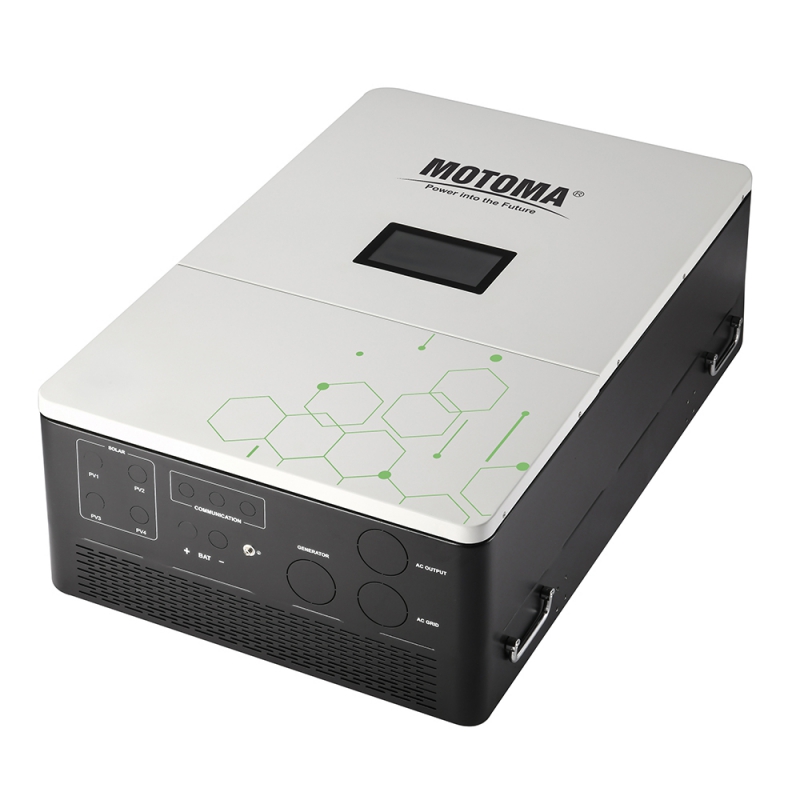
Manufacturing Standards and Testing QC for Hybrid Solar Inverter 30Kw
At Boray Inverter, our 30kW three-phase hybrid solar inverter production lines leverage decades of Variable Frequency Drive (VFD) manufacturing expertise to deliver industrial-grade reliability for agricultural pumping stations, commercial microgrids, and heavy-duty motor control applications. Each unit undergoes rigorous quality control protocols that bridge solar PV conversion technology with the robust power electronics standards required for continuous motor operation in harsh environments.
Industrial PCB Assembly & Environmental Protection
The manufacturing process begins with military-grade PCB fabrication featuring automated optical inspection (AOI) and X-ray solder joint verification for high-current IGBT and MOSFET arrays. Given the 30kW power handling requirements and three-phase output topology, all control boards receive dual-layer conformal coating (acrylic-urethane hybrid) applied via selective robotic spraying. This creates a moisture-resistant barrier critical for agricultural installations where humidity exceeds 85% RH and chemical exposure from fertilizer injection systems is common. The coating process meets IPC-A-610 Class 3 standards, ensuring insulation resistance remains above 100 MΩ even after 1,000 hours of 85°C/85% RH bias testing.
Power Semiconductor Screening & Thermal Validation
Drawing from our VFD heritage, each 30kW hybrid inverter undergoes 100% semiconductor characterization prior to final assembly. IGBT modules and DC-link film capacitors are subjected to:
– High-temperature reverse bias (HTRB) testing at 150°C for 168 hours to identify early-life failures
– Thermal cycling between -40°C and +125°C (500 cycles) to validate solder integrity under thermal expansion stress
– Partial discharge testing at 1.5x rated voltage to ensure insulation system integrity for 800V+ battery configurations
The thermal management system—critical for continuous 30kW output in motor starting applications—receives dedicated validation through infrared thermography scanning of heat sinks and IGBT junctions during simulated full-load conditions.
100% Full-Load Burn-In Protocol
Unlike sample-based testing, every 30kW three-phase unit completes a 72-hour full-load burn-in at 45°C ambient temperature. This aging process simulates worst-case agricultural pumping scenarios including:
– Motor inrush current handling: Testing with 3x rated current for 60 seconds to verify overcurrent protection coordination
– MPPT efficiency validation: Dynamic tracking across 150V–850V DC input ranges (compatible with high-voltage battery systems)
– Grid synchronization stress: Phase-lock loop stability testing with ±5% voltage and ±3Hz frequency variation
– THD verification: Ensuring <3% total harmonic distortion at rated 30kW output to prevent motor heating in VFD bypass modes
Units failing any parameter during burn-in are flagged for root-cause analysis and component-level replacement rather than field adjustment.
Mechanical Integrity & Ingress Protection
Enclosure manufacturing adheres to IP65/NEMA 4X standards using powder-coated aluminum alloy (6063-T5) with silicone gasket sealing validated through thermal shock testing (-20°C to +70°C). For agricultural applications involving dust-laden environments and irrigation spray, we conduct:
– Salt fog testing per ASTM B117 for 96 hours (coastal installations)
– Vibration testing (5-200Hz, 2G acceleration) simulating transport to remote pumping stations
– EMC pre-compliance screening for EN 61000-6-2 (industrial immunity) and EN 61000-6-4 (emissions)
Cable entry points utilize EMC cable glands with integrated strain relief, preventing conductor fatigue in applications subject to pump vibration or thermal cycling.
Certification & Quality Management Systems
Our 30kW hybrid inverter production facilities maintain ISO 9001:2015 and ISO 14001:2015 certifications with full material traceability through ERP-controlled lot numbering. Compliance verification includes:
– CE marking per Low Voltage Directive (LVD) 2014/35/EU and EMC Directive 2014/30/EU
– IEC 62109-1/-2 safety standards for PV power conversion equipment
– IEC 62040-1 uninterruptible power systems (UPS) requirements for backup functionality
– VDE-AR-N 4105 / IEEE 1547 grid interconnection standards for three-phase synchronization
Each unit ships with a factory test report documenting efficiency curves (peak >98%), protection relay trip times, and insulation resistance measurements—essential documentation for EPC contractors managing utility interconnection approvals.
Supply Chain & Component Traceability
Critical components (IGBTs, DSP controllers, electrolytic capacitors) are sourced from Tier-1 suppliers with AEC-Q100 automotive-grade qualification where applicable. Our manufacturing execution system (MES) tracks each 30kW inverter through 47 process checkpoints, storing thermal profile data from reflow ovens and torque specifications for busbar connections. This traceability ensures that agricultural project managers can verify component authenticity and manufacturing dates for warranty claims and predictive maintenance scheduling.
By applying VFD-grade manufacturing discipline to hybrid solar inverter production, we deliver 30kW three-phase systems capable of withstanding the thermal stress, voltage transients, and environmental rigors inherent in commercial pumping and industrial motor control applications.
Step-by-Step Engineering Sizing Checklist for Hybrid Solar Inverter 30Kw
When specifying a 30kW hybrid inverter for industrial motor control or agricultural pumping applications, the integration complexity extends beyond standard PV sizing. Unlike residential grid-tie systems, industrial deployments must account for motor inrush currents, VFD harmonic interactions, and continuous duty cycles under varying solar irradiance. The following engineering protocol ensures your 30kW hybrid inverter—whether deployed as a standalone power hub or paired with Boray VFD solutions—delivers reliable performance across grid-tied, off-grid, and backup operational modes.
1. Motor Load Characterization & Mechanical Power Verification
– Calculate Total Mechanical Demand: Sum the rated shaft power (kW) of all motor loads (pumps, compressors, conveyors). Ensure the 30kW inverter rating provides 120–125% headroom above the aggregate running load to accommodate motor efficiency losses and simultaneous starting events.
– Starting Method Analysis:
– Direct Online (DOL): Verify inverter surge capacity (typically 2× rated for 10s) can handle 6–7× FLA inrush. For 30kW motors, this often necessitates pairing with a Boray VFD to eliminate inrush and reduce inverter stress.
– VFD-Integrated Loads: Confirm the hybrid inverter’s output waveform THD (<3% typical) does not interfere with VFD input rectifiers; cascaded power electronics require harmonic compatibility review.
– Voltage Alignment: Match inverter output configuration (208/240Vac or 400Vac three-phase) to motor nameplate voltage. For 30kW agricultural pumps, verify phase balance across three MPPT channels to prevent single-phase loading imbalances.
2. DC Input String Engineering & MPPT Optimization
– Voltage Window Compliance: Calculate open-circuit voltage (Voc) at record low temperature using temperature coefficients (typically -0.3%/°C). For high-voltage hybrid inverters (150–850VDC MPPT range), ensure string Voc_max remains below 850V while Vmp_operating stays above 150V during high-temperature conditions.
– Current Capacity per Tracker: With triple MPPT architectures (common in 30kW three-phase units), distribute strings to prevent exceeding Isc_max per channel (typically 30–40A). Size PV conductors for 1.25× Isc minimum.
– Irradiance Diversity: When powering variable torque loads (e.g., irrigation pumps), configure separate MPPT zones for east/west arrays to extend productive pumping hours without clipping midday generation.
3. Energy Storage Sizing for Motor Starting & Ride-Through
– Voltage Platform Selection: High-voltage battery systems (400–800V) reduce DC current and copper losses, critical for 30kW continuous output. Verify battery voltage range aligns with inverter DC input specifications.
– Power Density Calculations: Size battery capacity (kWh) to support critical motor loads during grid outages. For pumping applications, calculate required autonomy time based on reservoir capacity vs. pump flow rate.
– C-Rate Validation: Confirm battery discharge C-rate can deliver 30kW plus motor starting surge (if applicable) without voltage sag. Lithium iron phosphate (LFP) systems typically require 1C continuous rating for industrial motor support.
4. AC Side Protection & Cable Sizing
– Conductor Sizing: Size AC output cabling for 30kW continuous plus 125% safety margin (approximately 87A at 400V three-phase). Account for voltage drop (<1.5%) over distance to motor control centers.
– Protection Coordination: Install DC-rated fuses or circuit breakers (1000VDC minimum) on each MPPT input. On AC output, specify Type 2 SPDs and ground fault protection (GFP) compliant with IEC 60364-7-712 for agricultural environments.
– Isolation Requirements: When feeding VFDs from the hybrid inverter, verify galvanic isolation needs; some VFD topologies require input line reactors to mitigate reflected wave issues from hybrid inverter output filters.
5. Thermal Management & Environmental Derating
– Altitude Derating: For installations above 1000m, apply 1% per 100m derating to the 30kW continuous rating to maintain semiconductor junction temperatures within specification.
– Ingress Protection: Specify IP65-rated enclosures for agricultural dust/humidity or IP54 for industrial clean environments. Ensure heat sink clearance (typically 150mm minimum) for natural convection cooling.
– Ambient Temperature Curves: Verify inverter output capability at 45°C+ ambient; many 30kW units derate to 25–27kW continuous at 50°C, which may impact motor load scheduling during peak solar hours.
6. Grid Integration & Control Logic
– Anti-Islanding & Grid Codes: Confirm certification to UL 1741 SA or IEC 62109 for grid-interactive operation. Configure frequency-watt and volt-watt curves to prevent nuisance tripping on weak rural grids common in agricultural zones.
– Generator Integration: If specifying backup generators for extended cloudy periods, verify hybrid inverter’s generator input capacity (typically 30–60kW range) and automatic transfer switch (ATS) coordination for seamless motor load transfer.
– Remote Monitoring: Implement Modbus TCP/IP or CANbus communication to integrate with Boray VFD control systems, enabling centralized monitoring of solar yield, battery SOC, and motor operational parameters through a unified SCADA interface.
7. Pre-Commissioning Verification
– Insulation Resistance Testing: Megger test motor windings and PV array wiring (>1MΩ) before energizing to prevent ground fault trips in the hybrid inverter’s sensitive residual current detection circuitry.
– Phase Sequence Verification: Confirm L1-L2-L3 rotation matches motor requirements; reverse phase sequence will cause pump cavitation or motor damage despite correct voltage levels.
– Harmonic Signature Baseline: Record THD and power factor at 25%, 50%, 75%, and 100% load to establish baseline performance metrics for predictive maintenance of both the inverter and connected motor control systems.
By systematically addressing these parameters—particularly the intersection of hybrid inverter capabilities and motor control requirements—EPC contractors and automation distributors can ensure the 30kW system delivers both energy independence and reliable mechanical power delivery for demanding industrial and agricultural applications.
Wholesale Cost and Energy ROI Analysis for Hybrid Solar Inverter 30Kw
When evaluating 30kW hybrid solar inverters for industrial and agricultural deployments, procurement decisions extend far beyond unit sticker prices. For EPC contractors and automation distributors, understanding the granular economics of wholesale procurement, integration with existing Variable Frequency Drive (VFD) infrastructure, and long-term energy arbitrage is critical to delivering viable project IRRs to end clients.
Wholesale Procurement Economics vs. Retail Benchmarks
Current market positioning for tier-1 30kW three-phase hybrid inverters—exemplified by units such as the Sol-Ark 30K-3P (retail reference: $11,330 USD)—establishes baseline expectations for high-voltage (150–850VDC) hybrid architectures. However, B2B volume procurement operates on fundamentally different economic models. Container-level orders (20–40 units) typically unlock 35–45% discounts off retail list prices, with additional 8–12% reductions achievable through OEM white-label partnerships or direct factory engagements with manufacturers like Boray Inverter.
For agricultural project managers deploying solar pumping systems, the hybrid inverter serves dual functions: DC-to-AC conversion for PV arrays and grid-forming capabilities for VFD-driven motor loads. When procured alongside compatible solar pump inverters or VFDs in bundled SKUs, distributors realize improved logistics efficiency and reduced per-unit landed costs. Critical pricing variables include:
– Harmonic filtering specifications: Industrial-grade inverters with <3% THD (Total Harmonic Distortion) command premiums of 8–15% over standard residential hybrids but eliminate downstream costs for external line reactors when driving 30kW+ induction motors.
– IP rating and thermal management: NEMA 3R or IP65 enclosures suitable for agricultural environments add $400–$600 per unit in manufacturing costs but reduce field installation expenses for external enclosures.
Integration with Motor Control Infrastructure
The 30kW hybrid inverter functions as the primary power quality manager when interfacing with VFD-driven pumping systems. Unlike standard grid-tied inverters, hybrid units provide ride-through capabilities and generator synchronization essential for critical irrigation cycles. When analyzing ROI, engineers must account for soft-start integration costs: hybrid inverters with built-in ramp-control algorithms can displace traditional soft starters in solar pumping applications, saving $1,200–$2,500 per motor assembly in ancillary protection equipment.
For three-phase 208/240V industrial installations, the inverter’s ability to maintain voltage regulation within ±2% during motor inrush currents (typically 6–7x FLA for centrifugal pumps) determines whether additional buck-boost transformers are required. Specifying inverters with 150% overload capacity for 60 seconds—standard in high-voltage hybrid series—eliminates the need for oversized VFDs in intermittent-duty pumping scenarios, reducing motor control CAPEX by 12–18%.
Energy ROI and Payback Dynamics
Calculating energy ROI for 30kW hybrid systems requires modeling against displaced utility rates and diesel generation costs prevalent in remote agricultural operations. A properly sized 30kW hybrid inverter paired with 40–50kWp PV capacity and high-voltage battery storage (20–30kWh) delivers:
Peak Shaving Arbitrage: In commercial/industrial tariff structures with demand charges ($15–$25/kW), the inverter’s ability to limit grid import during motor starting events generates annual savings of $4,500–$7,200 per installation. For solar pumping applications operating 8–10 hours daily, diesel displacement values of $0.85–$1.20 per liter translate to 3.5–4.8 year simple payback periods when grid extension costs exceed $15,000.
VFD Synergy Effects: When hybrid inverters feed VFDs rather than direct-online motors, system efficiency gains of 15–25% in partial-load pumping conditions (common in variable-flow irrigation) compound energy savings. This “double conversion efficiency”—PV DC to AC via hybrid inverter, then VFD optimization of motor speed—reduces kWh consumption per acre-foot pumped by 20–30% compared to fixed-speed diesel pumps.
Time-of-Use Optimization: Advanced hybrid inverters with programmable load shifting enable battery charging during off-peak rates ($0.08–$0.12/kWh) and discharge during peak agricultural processing periods ($0.28–$0.45/kWh), creating arbitrage margins of $0.15–$0.33 per stored kWh.
Warranty Cost Analysis and Risk Mitigation
Standard warranty terms for 30kW hybrid inverters typically span 5–10 years on power electronics and 5 years on MPPT controllers. For B2B procurement, understanding warranty cost capitalization is essential:
- Extended Warranty Pricing: Extending coverage from 5 to 10 years adds 6–9% to unit procurement costs but reduces OPEX risk for remote agricultural installations where technician dispatch costs exceed $800 per visit.
- Component-Level Coverage: Inverters utilizing discrete IGBT modules rather than integrated IPM (Intelligent Power Module) designs offer lower replacement costs ($800–$1,200 vs. $2,800–$4,200 for full unit swap) but require higher technical skill for field repairs—relevant for distributors maintaining service networks.
- Compatibility Liability: Warranty coverage for hybrid inverters often excludes damage caused by incompatible VFD back-EMF or harmonic feedback. Specifying inverters with integrated DC bus chokes or requiring external line reactors (adding $300–$500 to BOM costs) preserves warranty validity while protecting downstream motor assets.
Procurement Strategy for Automation Distributors
For distributors serving the solar pumping and industrial motor control markets, 30kW hybrid inverter procurement should emphasize system bundling with VFDs and pump controllers. Container-level purchasing of hybrid inverters alongside Boray’s solar pump VFD series enables:
- Unified firmware ecosystems: Inverters and VFDs sharing Modbus TCP/IP or CANopen communication protocols reduce commissioning time by 40–60%, lowering project labor costs.
- Harmonic coordination: Matched impedance between hybrid inverter output stages and VFD input rectifiers minimizes resonance issues in long cable runs (typical in agricultural borehole applications).
- Service inventory consolidation: Standardizing on 30kW three-phase platforms across multiple projects reduces spare parts inventory carrying costs by 25–30% compared to maintaining discrete solar-only and grid-tied inverter SKUs.
When negotiating wholesale terms, prioritize manufacturers offering application engineering support for complex motor control integration—this value-added service typically justifies 5–7% price premiums over commodity inverter suppliers while reducing project execution risk for EPC contractors managing multi-site agricultural automation deployments.
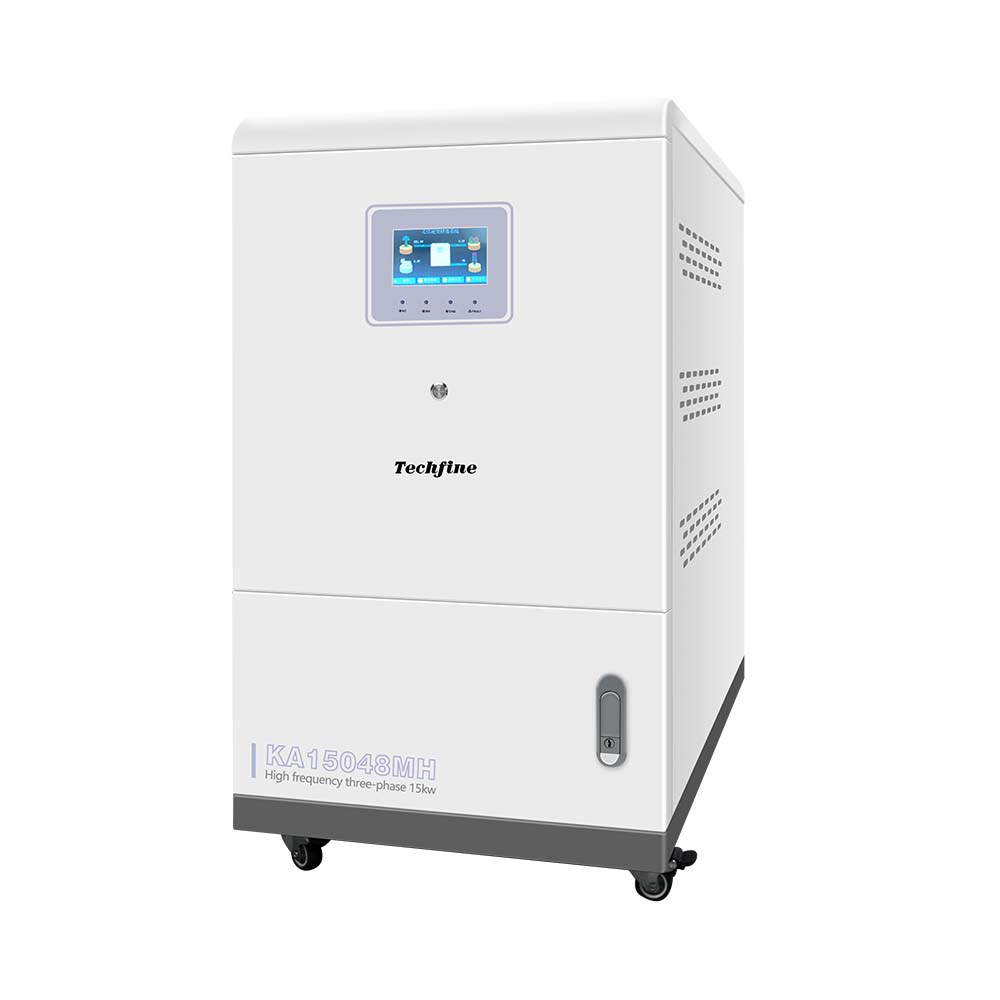
Alternatives Comparison: Is Hybrid Solar Inverter 30Kw the Best Choice?
When specifying power conversion for 30kW-scale agricultural or industrial motor loads, the assumption that a hybrid solar inverter represents the universal optimum requires rigorous technical examination. While 30kW hybrid inverters—exemplified by the Sol-Ark 30K-3P or Sunsynk 30kW Three-Phase series—offer compelling AC-coupled energy management with battery integration, they occupy only one point in a spectrum of solutions. For EPC contractors and automation engineers, the critical decision matrix involves comparing hybrid architectures against dedicated solar pump VFDs, traditional grid-tied motor control systems, and varying motor technologies (PMSM vs. IM) to optimize for total cost of ownership (TCO), operational reliability, and energy efficiency.
Hybrid Inverter vs. Dedicated Solar Pump VFD (DC-Coupled Architecture)
For pure water pumping applications—particularly in agricultural irrigation where 30kW submersible or surface pumps dominate—a dedicated solar pump inverter (specialized VFD) often outperforms hybrid solutions.
30kW Hybrid Inverters (AC-coupled) convert DC solar power to AC, then interface with either the grid or battery storage before powering the motor. This introduces double conversion losses (DC→AC→Motor) and requires external motor protection and control logic. The advantage lies in multi-functionality: the same inverter supports facility loads, battery backup, and grid export. However, for pumping-only installations, this represents over-engineering with unnecessary complexity and cost.
Dedicated Solar Pump VFDs (such as Boray Inverter’s SP series) utilize single-stage DC-to-AC conversion with integrated Maximum Power Point Tracking (MPPT) algorithms optimized specifically for pump curves. These units eliminate battery dependency, directly coupling PV arrays to the motor with efficiencies exceeding 98%. They provide specialized features like dry-run protection, water level monitoring, and automatic pump cleaning cycles—functionality often absent in general-purpose hybrid inverters.
Motor Control Methodology: VFD vs. Soft Starter
Within 30kW systems, the choice between full Variable Frequency Drive (VFD) control and reduced-voltage Soft Starting significantly impacts mechanical stress and energy economics.
Soft Starters (solid-state or electromechanical) limit inrush current during motor startup but maintain fixed-speed operation once engaged. For centrifugal pumps with variable flow requirements, this proves energetically inefficient; throttling valves waste mechanical energy that VFDs conserve through affinity laws (where power consumption drops with the cube of speed reduction). Soft starters suit applications with constant flow requirements and minimal duty cycling, offering lower initial cost but higher lifecycle energy expenditure.
VFD Integration (whether through hybrid inverter AC output or dedicated solar VFD) enables precise speed control, soft-start capability, and demand-response functionality. In hybrid systems, the inverter’s AC output feeds a separate VFD, adding system complexity. In dedicated solar pumping systems, the VFD function is integrated, providing direct torque control essential for Permanent Magnet Synchronous Motors (PMSM).
Motor Technology Implications: PMSM vs. Induction Motor (IM)
The 30kW power class increasingly sees adoption of high-efficiency motor technologies, with significant implications for inverter selection.
Permanent Magnet Synchronous Motors (PMSM) offer 15–20% higher efficiency than standard Induction Motors (IM) and enable higher power density (smaller frame sizes for equivalent output). However, PMSMs require precise vector control (FOC) and sinusoidal waveforms with low harmonic distortion. Standard hybrid inverters outputting to generic VFDs may introduce waveform quality issues, whereas dedicated solar pump VFDs often include PMSM-optimized control modes.
Induction Motors (IM) remain the industry standard for 30kW agricultural pumps due to robustness, lower capital cost, and tolerance to voltage sags. They operate satisfactorily with basic V/Hz control, making them compatible with hybrid inverter outputs through standard commercial VFDs. For EPC contractors, IMs offer lower procurement risk and easier field maintenance in remote installations.
Comparative Analysis Matrix
| Evaluation Criteria | 30kW Hybrid Inverter (AC-Coupled) | Dedicated Solar Pump VFD | Grid-Tied VFD + Soft Starter | Direct Grid Soft Starter |
|---|---|---|---|---|
| Primary Application | Mixed facility loads with backup power | Irrigation/water pumping only | Industrial process with grid stability | Fixed-speed pumping, basic HVAC |
| Energy Architecture | Solar + Grid + Battery | Solar PV direct (no storage) | Grid primary, limited solar | Grid only |
| Motor Control Precision | Requires external VFD for variable speed | Integrated MPPT/VF optimization | Full vector control (external VFD) | Fixed speed only |
| Starting Method | Soft start via inverter (if equipped) | Soft start with pump curve optimization | VFD soft start / bypass | Electronic/mechanical soft start |
| Efficiency (System Level) | 92–95% (including conversion losses) | 97–98% (direct DC-AC) | 94–96% | 85–90% (no speed control) |
| Backup Capability | Yes (battery/generator auto-start) | No (solar-dependent) | Generator required | Generator required |
| CAPEX Index | High ($$) | Low ($) | Medium ($$) | Lowest ($) |
| OPEX (Energy) | Medium (battery maintenance) | Lowest (no storage losses) | Medium | Highest (fixed speed inefficiency) |
| PMSM Compatibility | Good (with quality external VFD) | Excellent (integrated FOC) | Excellent | Poor (fixed frequency) |
| Grid Independence | Partial to Full | Full (daylight) | None | None |
Strategic Selection Guidelines
Specify a 30kW Hybrid Inverter when:
– The installation requires powering mixed facility loads (pumps, lighting, processing equipment) simultaneously
– Grid instability mandates seamless battery backup (UPS functionality) for critical processes
– Net metering or peak-shaving strategies justify the higher capital investment
– The project involves existing three-phase infrastructure (208V/240V/480V) requiring retrofit rather than greenfield DC-coupled design
Opt for Dedicated Solar Pump VFDs when:
– The sole load is a 30kW centrifugal or submersible pump with variable flow requirements
– Grid access is unavailable or prohibitively expensive (true off-grid irrigation)
– PMSM motors are specified for maximum hydraulic efficiency
– Project budgets prioritize lowest lifecycle cost over multi-functionality
Consider Soft Starters only when:
– The pump operates at fixed speed with minimal duty cycle variation
– Initial capital constraints override long-term energy efficiency concerns
– The motor is IM-type and grid connection is stable and reliable
For agricultural project managers and industrial engineers, the “best” choice rarely defaults to the hybrid inverter’s versatility. Instead, matching the power conversion topology to the specific mechanical load, grid availability, and operational duty cycle ensures optimal performance. In pure pumping applications, dedicated 30kW solar pump VFDs typically deliver superior hydraulic efficiency and lower TCO, whereas hybrid inverters justify their premium in complex, multi-load microgrids requiring energy storage integration.
Core Technical Specifications and Control Terms for Hybrid Solar Inverter 30Kw
When specifying a 30kW hybrid solar inverter for industrial motor loads, agricultural irrigation, or commercial microgrids, engineers must evaluate both the power conversion topology and the control architecture that governs energy flow between PV arrays, battery storage, and three-phase AC loads. Unlike standard grid-tied inverters, hybrid units at this power level function as bidirectional energy routers, requiring sophisticated Maximum Power Point Tracking (MPPT), vector-oriented motor control compatibility, and robust protection schemes for harsh environments.
DC Input and MPPT Configuration
For a 30kW rated capacity, the DC input stage typically accommodates 150V to 850Vdc (high-voltage battery compatibility) with a startup voltage around 200Vdc to ensure stable operation during low-irradiance conditions. The PV array capacity should be oversized by 1.3 to 1.5 times the inverter rating—approximately 39kWp to 45kWp—to account for thermal derating and irradiance variability while maximizing the Capacity Utilization Factor (CUF).
Triple MPPT Architecture is standard at this tier, with three independent trackers each handling 10kW to 15kW of PV capacity. This configuration minimizes string mismatch losses when managing east-west roof orientations or partial shading from agricultural structures. Each MPPT channel operates with Perturb and Observe (P&O) or Incremental Conductance algorithms, achieving tracking efficiencies exceeding 99.5% and scan intervals under 100ms to respond to rapidly changing insolation patterns common in pumping applications.
AC Output and Power Quality
The 30kW hybrid inverter delivers three-phase output at 208Vac, 240Vac, or 400Vac (depending on regional standards), with a continuous output current capability of approximately 43A at 400V. Critical specifications include:
- Total Harmonic Distortion (THDi): <3% at rated load, essential for preventing motor heating in VFD-driven pump systems
- Overload Capacity: 110% continuous, 150% for 60 seconds (motor starting surge support)
- Power Factor Range: 0.8 leading to 0.8 lagging, with dynamic reactive power compensation for grid support
For integration with Boray VFD systems, the inverter must provide grid-forming capability (voltage source mode) when operating off-grid, maintaining stable voltage and frequency (50/60Hz ±0.5%) to prevent nuisance tripping of motor protection relays.
Vector Control and Motor Integration
While hybrid inverters primarily manage energy flow, their control algorithms must interface seamlessly with downstream Variable Frequency Drives (VFDs) used in solar pumping applications. When configured for direct motor control (in bypass mode or through integrated VFD functionality), the system employs Field-Oriented Control (FOC)—a vector control strategy that decouples torque and flux components for precise induction motor or permanent magnet synchronous motor (PMSM) management.
PID Control Loops are implemented for closed-loop pressure regulation in irrigation systems:
– Proportional response adjusts inverter output based on pressure transducer feedback
– Integral action eliminates steady-state offset in flow demand
– Derivative compensation anticipates pressure transients during valve operation
This control topology enables constant pressure (CP) mode operation, where the 30kW hybrid unit modulates output frequency (0-50/60Hz) to maintain setpoint pressure regardless of solar irradiance fluctuations, automatically blending battery or grid power when PV generation is insufficient.
Protection and Environmental Ratings
Industrial installations demand IP65 ingress protection for outdoor mounting, with operating temperature ranges of -25°C to +60°C and automatic derating above 45°C. Essential safety features include:
- Arc Fault Circuit Interrupter (AFCI): UL 1699B compliant detection for fire prevention in agricultural environments
- Rapid Shutdown (RSD): NEC 2017/2020 compliant module-level shutdown capability
- Surge Protection: Type 2 SPD on both DC and AC sides (20kA/40kA rating)
- Insulation Resistance Monitoring: >1MΩ detection threshold for ground fault protection in wet locations
International Trade Terms (Incoterms 2020)
For EPC contractors and agricultural project managers procuring 30kW hybrid inverters from Chinese manufacturers like Boray, understanding shipment liabilities is critical for budget forecasting:
FOB (Free On Board): The seller delivers goods cleared for export onto the vessel at the named port (e.g., Shenzhen or Shanghai). Risk transfers when goods pass the ship’s rail. Buyer assumes ocean freight, insurance, and destination port charges. Typical for containerized shipments of 20-40 units.
CIF (Cost, Insurance, Freight): Seller contracts for carriage and insurance to the destination port, but risk transfers at origin port. Suitable for first-time importers requiring logistics support, though the 30kW unit’s weight (75-85kg) requires careful palletization and lifting equipment coordination.
EXW (Ex Works): Buyer assumes all costs from the factory door, including export clearance and inland transport. Offers maximum cost control for experienced distributors with established freight forwarders.
DDP (Delivered Duty Paid): Seller responsibility extends to the final project site, including import duties and VAT. Preferred for turnkey agricultural installations where the EPC contractor requires single-source accountability for commissioning.
For heavy electrical equipment, specify Incoterms 2020 explicitly in purchase orders, noting that hybrid inverters require careful handling due to internal transformers and capacitors susceptible to shock damage during transit.
System Integration Architecture
In agricultural pumping stations, the 30kW hybrid inverter serves as the central energy manager, interfacing with Boray solar pump inverters via RS485 Modbus RTU or CAN bus protocols. The control hierarchy prioritizes:
1. Direct PV-to-motor energy transfer (highest efficiency)
2. Battery charging during excess generation
3. Grid import during peak demand periods
4. Generator synchronization for extended cloudy periods
This architecture eliminates the need for separate charge controllers and transfer switches, reducing Balance of System (BOS) costs while providing Vector Control precision for submersible pumps requiring soft-start capabilities to prevent water hammer and mechanical stress on borehole infrastructure.
Future Trends in the Hybrid Solar Inverter 30Kw Sector
The convergence of photovoltaic generation, electrochemical storage, and intelligent motor control is redefining the 30kW power class as a critical node for industrial microgrids and large-scale agricultural operations. As three-phase hybrid inverters—such as those operating at 208V/240Vac or 400V ranges—evolve beyond simple DC/AC conversion, they are increasingly functioning as centralized energy routers that orchestrate complex interactions between solar arrays, high-voltage battery banks (150V–850V DC), variable frequency drives (VFDs), and grid infrastructure. For EPC contractors and automation distributors, this shift represents a transition from component sales to integrated energy-management solutions.
Intelligent Automation Architectures and VFD Synergy
Modern 30kW hybrid platforms are being engineered to interface directly with industrial automation ecosystems, particularly in agricultural pumping and HVAC applications where VFDs govern motor performance. Rather than treating solar inverters and motor drives as discrete entities, advanced system designs now leverage the hybrid inverter’s flexible AC output to power VFDs directly from solar/battery sources during daylight hours, while seamlessly switching to grid power during low-irradiance periods or peak demand events.
This integration is particularly relevant for solar pumping systems in the 20–30kW range, where the inverter must manage the high inrush currents of submersible pumps while maintaining stable three-phase output. Triple MPPT (Maximum Power Point Tracking) architectures—now standard in high-voltage series inverters—enable granular optimization of multiple pump motor arrays across varying orientations, ensuring that agricultural operations with complex rooflines or ground-mount configurations maximize harvest efficiency without compromising motor control precision.
High-Voltage DC Coupling and Renewable Integration
The industry is witnessing a decisive shift toward high-voltage DC architectures (400V–800V battery systems) in the 30kW segment, driven by the need to reduce balance-of-system (BOS) costs and minimize DC cabling losses in large commercial installations. These high-voltage hybrid inverters facilitate direct DC coupling between solar arrays and battery storage, eliminating the efficiency losses associated with multiple conversion stages. For industrial engineers, this means simplified single-line diagrams and reduced installation footprints—critical considerations in retrofitting existing manufacturing facilities or agricultural processing plants.
Furthermore, the integration of generator support functionality within 30kW hybrid units is enabling robust off-grid and weak-grid solutions. In remote agricultural applications or industrial sites with unreliable utility infrastructure, these systems can form microgrids that coordinate diesel or biogas generators with solar and battery resources, providing seamless transition between power sources while maintaining the voltage and frequency stability required for sensitive motor control equipment.
IoT-Enabled Predictive Maintenance and Digital Integration
The next generation of 30kW hybrid inverters is being deployed as edge-computing nodes within Industrial Internet of Things (IIoT) architectures. Advanced monitoring platforms now aggregate data not only from the inverter’s power electronics but also from downstream VFDs and motor controllers, creating holistic digital twins of pumping stations or processing lines. For automation distributors, this presents opportunities to offer value-added services such as:
- Predictive Motor Diagnostics: Correlating inverter output waveforms with motor vibration signatures to detect bearing failures or pump cavitation before catastrophic downtime occurs.
- Dynamic Load Shifting: Utilizing real-time weather forecasting and electricity pricing data to optimize the scheduling of high-power motor loads, minimizing operational costs for agricultural cooperatives and industrial facilities.
- Remote Commissioning: Cloud-based parameter configuration allowing EPC contractors to commission 30kW three-phase systems across multiple sites without on-site visits, reducing deployment costs for distributed solar pumping projects.
Cybersecurity has emerged as a parallel concern, with manufacturers implementing encrypted communication protocols and secure boot mechanisms to protect critical infrastructure from remote intrusion—an essential consideration as agricultural and industrial automation becomes increasingly networked.
Convergence with Energy Storage and Grid Services
Beyond standalone operation, 30kW hybrid inverters are evolving into grid-interactive assets capable of providing ancillary services. Virtual power plant (VPP) aggregation platforms now enroll these systems to provide frequency regulation, voltage support, and reactive power compensation. For facilities operating large motor loads, this creates revenue streams through demand response programs while simultaneously providing the uninterruptible power supply (UPS) functionality necessary to protect sensitive automation equipment from grid disturbances.
The technical trajectory points toward unified power conversion platforms where the distinctions between solar inverters, battery inverters, and motor drives blur into modular, software-defined energy systems. For project managers and electrical engineers specifying equipment in 2024 and beyond, the 30kW hybrid inverter represents not merely a power conversion device, but the central nervous system of a resilient, automated, and renewable-powered industrial facility.
Top 4 Hybrid Solar Inverter 30Kw Manufacturers & Suppliers List
China 30kW Hybrid Solar Inverter With Battery Support Suppliers & Manufacturers & Factory – Made in China – Dongshuo
Website: dsneg.com
Product: DS 30KW Hybrid Solar Inverter (Model STH-30KTL-HT) – High-Capacity 3-Phase Industrial Energy Storage Solution. Performance: 98.2% maximum efficiency, 97.4% Euro efficiency, 99.9% MPPT efficiency; transformerless topology. PV Input: 45kW maximum DC input power, dual MPPT trackers (200-850V range), 1000V max DC voltage, 32A max input current per MPPT (2 strings per tracker), 190V start-up v…

buy LV Three Phase 220V Storage Inverter 30KW Solar Hybrid Inverter 30Kva PCS with high battery voltage,LV Three Phase 220V Storage Inverter 30KW Solar Hybrid Inverter 30Kva PCS with high battery voltage suppliers,manufacturers,factories
Website: greensunpv.com
Greensun Solar Energy Tech Co., Limited product catalog features a LV Three Phase 220V Storage Inverter rated at 30KW/30KVA, specified as a Solar Hybrid Inverter/PCS (Power Conversion System) with high battery voltage support. The product line includes related high-capacity solutions such as Deye Hybrid Inverters (60KW-80KW, three-phase, 6 MPPT, supporting up to 10 units in parallel with HV batter…
China 30kW Hybrid Solar Inverter With Battery Support Suppliers & Manufacturers & Factory – Made in China – Dongshuo
Website: pk.dsnsolar.com
Product: DS 30KW Industrial Hybrid Solar Inverter (Model: STH-30KTL-HT). Type: 3-Phase Hybrid Storage Inverter with Battery Support. Power Rating: 30kW rated output (33kW max output / 45kW PV input capacity). Efficiency: 98.2% max efficiency, 97.4% Euro efficiency, 99.9% MPPT efficiency. MPPT: Dual trackers (2 channels) with 200-850V input range, 32A per string max input current. Battery System: 2…
China Customized 30KW High Power Solar Inverter Manufacturers, Suppliers, Factory – Buy Discount 30KW High Power Solar Inverter – Foshan Top One Power Technology Co.,Ltd
Website: oneinverter.com
Product: 30KW High Power Solar Inverter (Model HX-303). Rated Power: 30kW continuous output with 90kW surge capacity (10-second duration). DC Input Specifications: 240V nominal, maximum open-circuit voltage 650V, supports 28kW solar power input. AC Input Range: 170-275V. MPPT Controller: 100A high-current capacity. Efficiency: ≥85% conversion efficiency with pure sine wave output (THD<1.5%). Energ...
B2B Engineering FAQs About Hybrid Solar Inverter 30Kw
-
How does a 30kW hybrid inverter accommodate the inrush currents of submersible pumps and VFDs during motor starting sequences?
While a 30kW hybrid inverter provides a continuous AC output of 30kW, industrial motors—particularly submersible pumps—can demand 6–7 times their Full Load Amperage (FLA) during direct-on-line (DOL) starting. For integration with Boray VFDs or other motor control solutions, the critical specification is the inverter’s surge power capacity (typically 1.5–2x rated power for 10 seconds) and its ability to handle high crest factors. In agricultural applications, we recommend configuring the hybrid inverter in VFD bypass mode or utilizing the soft-start ramp functions of your variable frequency drive to limit inrush to <150% of nominal current, thereby preventing DC bus sag and ensuring stable operation across the 208V/240V three-phase output. -
What Total Harmonic Distortion (THD) levels can EPC contractors expect when operating 30kW hybrid inverters with non-linear VFD loads?
High-capacity hybrid inverters like the 30kW class typically exhibit a current THD (THDi) of <3% and voltage THD (THDu) of <2% under linear loads. However, when feeding Boray Solar Pump Inverters or standard VFDs, the reflected harmonics from the motor drive can elevate system THD. To maintain IEEE 519 compliance and prevent motor bearing currents, ensure the hybrid inverter features active filtering or specify output reactors/sine wave filters between the hybrid inverter and the VFD. This is particularly critical in 3-phase 208V systems where harmonic resonance can amplify voltage distortion across long agricultural feeder runs. -
Is DC-coupling or AC-coupling preferable when retrofitting a 30kW hybrid inverter into an existing solar pumping system?
For new agricultural installations utilizing Boray’s DC solar pump inverters, DC-coupling offers superior system efficiency (eliminating the 3–5% conversion loss of dual inversion) by feeding high-voltage PV strings (up to 850Vdc) directly to the hybrid inverter’s MPPT inputs. However, for retrofit projects where existing AC-coupled pump VFDs must remain operational, the 30kW hybrid inverter’s grid-forming capability allows it to backfeed the AC bus, enabling the existing motor controls to operate seamlessly during grid outages. The triple-MPPT architecture common in this class supports complex string designs required for east-west pump house orientations. -
How do voltage regulation and frequency stability specifications of 30kW hybrid inverters impact motor insulation lifespan in off-grid pumping applications?
Submersible pump motors are highly sensitive to voltage unbalance (>2%) and frequency drift (>±0.5Hz), which induce circulating currents and thermal stress on winding insulation. Premium 30kW hybrid inverters maintain voltage regulation within ±1% and frequency stability of ±0.1Hz through DSP-controlled IGBT switching. When deployed with Boray Motor Control Solutions, ensure the hybrid inverter’s island mode transition time is <20ms to prevent motor dropout during grid loss. For deep-well pumps with long cable runs, the inverter’s ability to maintain 240V three-phase output under asymmetric loading prevents neutral shift that typically degrades motor insulation in traditional split-phase systems. -
What industrial communication protocols enable SCADA integration between 30kW hybrid inverters and centralized motor management systems?
Modern 30kW three-phase hybrid inverters support Modbus RTU/TCP, CAN Bus, and SunSpec protocols for integration with automation networks. For Boray VFD integration in industrial water management systems, we recommend utilizing the RS485 Modbus interface to map hybrid inverter data (PV power, battery SOC, grid status) directly into the motor control SCADA. This allows EPC contractors to implement intelligent pumping algorithms—such as solar-only operation during peak irradiance or battery-buffered pumping during TOU rate periods—while maintaining centralized fault monitoring for both the solar generation and motor drive subsystems. -
How should the MPPT voltage window (150V–850Vdc) of a 30kW hybrid inverter be configured to optimize compatibility with high-efficiency solar pump motors?
The wide MPPT range of high-voltage hybrid inverters accommodates string configurations that minimize DC cabling losses to remote pump houses. For Boray Solar Pump Inverters, size your PV array to operate at the higher end of the MPPT curve (600V–800Vdc) to reduce current and associated I²R losses in long field cables. However, ensure the open-circuit voltage (Voc) of the string does not exceed the inverter’s maximum input voltage (typically 1000Vdc) at record low temperatures. In three-phase pumping applications, maintaining a high DC bus voltage also improves the inverter’s output voltage regulation when driving 240V motors under heavy irrigation load cycles. -
What earth fault and insulation resistance monitoring are required when deploying 30kW hybrid inverters with submersible pumps in high-moisture environments?
Submersible pump installations present unique ground fault risks due to submerged motors and aging cable insulation. The 30kW hybrid inverter must incorporate residual current monitoring (RCM) with sensitivity ≤30mA for personnel protection and ≤300mA for fire protection. When integrated with Boray motor control systems, implement an insulation monitoring device (IMD) on the AC output side to detect winding degradation before ground fault occurrence. For hybrid systems utilizing generator backup, ensure the inverter supports residual voltage detection to prevent reclosing onto a faulted pump circuit, which is a common failure mode in off-grid agricultural automation. -
How does intermittent duty cycling in irrigation applications affect thermal derating calculations for 30kW hybrid inverters?
Unlike continuous industrial loads, solar pumping systems often operate on cyclic duty (e.g., 4 hours of flood irrigation followed by off periods). While 30kW hybrid inverters are rated for 100% continuous output, Boray’s engineering analysis indicates that agricultural duty cycles (S6 or S9 per IEC 60034-1) allow for minimal derating in ambient temperatures up to 45°C, provided the inverter features forced air cooling with IP65 protection against dust and irrigation spray. However, EPC contractors must verify that the inverter’s IGBT thermal management can handle the repetitive starting currents of VFD-controlled pumps without exceeding junction temperatures, particularly when operating in generator hybrid mode where cooling airflow may be restricted in outdoor enclosures.
Disclaimer
⚠️ Important Disclaimer
The information provided in this guide is for educational purposes. Industrial applications and electrical engineering projects carry inherent risks. B2B buyers and contractors must conduct thorough technical due diligence and verify regional compliance before installation or procurement.
Conclusion: Partnering with Boray Inverter for Hybrid Solar Inverter 30Kw
Selecting the optimal 30kW hybrid inverter architecture represents a critical decision point for industrial and agricultural energy infrastructure, where system reliability, motor control precision, and long-term operational efficiency directly impact project ROI. While standard hybrid inverters address basic energy storage requirements, demanding applications—particularly solar pumping systems, large-scale irrigation networks, and heavy industrial motor control—require specialized expertise in variable frequency drive (VFD) integration and advanced vector control algorithms to achieve true system optimization and maximum energy harvest under dynamic load conditions.
For engineering teams, agricultural project managers, and EPC contractors seeking sophisticated power electronics beyond generic energy conversion, Shenzhen Boray Technology Co., Ltd. stands as the definitive partner in advanced solar pumping and motor control solutions. Operating from our state-of-the-art facilities in China, Boray Inverter (borayinverter.com) has established itself as an innovation-driven manufacturer where research and development comprises 50% of our workforce. Our engineering teams possess deep technical mastery in both Permanent Magnet Synchronous Motor (PMSM) and Induction Motor (IM) vector control technologies, enabling precise torque management, dynamic speed regulation, and energy efficiency optimization that conventional hybrid inverters cannot achieve.
Our manufacturing infrastructure features two modern production lines equipped with comprehensive 100% full-load testing protocols, ensuring every unit meets rigorous international standards before deployment. This unwavering commitment to quality has earned Boray Inverter a trusted global presence across agricultural irrigation systems, industrial automation facilities, and large-scale pumping installations worldwide.
Whether your project requires customized VFD solutions for solar pump integration, specialized motor control configurations for three-phase applications, or wholesale procurement of high-reliability inverters, Boray Inverter delivers engineering excellence tailored to your technical specifications. Contact our technical team today to discuss your 30kW hybrid system requirements and receive competitive wholesale quotations designed for your specific industrial automation or agricultural infrastructure needs.