Introduction: Sourcing 15Kw Solar Hybrid Inverter for Industrial Use
As industrial facilities and large-scale agricultural operations face escalating energy costs and grid instability, the 15kW solar hybrid inverter has emerged as a critical power management solution for demanding B2B applications. This robust capacity tier bridges the gap between residential systems and utility-scale installations, delivering the precise voltage regulation and load-handling capabilities required for three-phase motor drives, high-capacity irrigation pumps, and automated manufacturing lines that cannot tolerate power interruptions.
Unlike standard grid-tied inverters, hybrid systems at the 15kW level integrate sophisticated Maximum Power Point Tracking (MPPT) algorithms with bidirectional battery management and seamless grid-interactive functionality. For engineers specifying equipment in solar pumping stations or VFD-controlled industrial processes, these units offer the dual advantage of peak-shaving operational costs while providing true uninterruptible power supply (UPS) capabilities during grid outages—essential for maintaining continuous production cycles and protecting sensitive motor control systems from voltage sags and harmonic distortion.
This comprehensive guide examines the technical landscape of 15kW solar hybrid inverters, analyzing topology variations from transformerless designs to high-voltage three-phase configurations like the 48V 3P systems commonly deployed in heavy industrial contexts. We evaluate critical specifications including MPPT voltage ranges, battery chemistry compatibility, and THD limits that directly impact motor efficiency. Additionally, we profile leading manufacturers and OEM integration strategies, with particular attention to compatibility with Variable Frequency Drive (VFD) architectures and solar pump inverter ecosystems—core competencies in industrial automation where precise torque control and maximum power point optimization converge to deliver measurable ROI.
Article Navigation
- Top 4 15Kw Solar Hybrid Inverter Manufacturers & Suppliers List
- Introduction: Sourcing 15Kw Solar Hybrid Inverter for Industrial Use
- Technical Types and Variations of 15Kw Solar Hybrid Inverter
- Key Industrial Applications for 15Kw Solar Hybrid Inverter
- Top 3 Engineering Pain Points for 15Kw Solar Hybrid Inverter
- Component and Hardware Analysis for 15Kw Solar Hybrid Inverter
- Manufacturing Standards and Testing QC for 15Kw Solar Hybrid Inverter
- Step-by-Step Engineering Sizing Checklist for 15Kw Solar Hybrid Inverter
- Wholesale Cost and Energy ROI Analysis for 15Kw Solar Hybrid Inverter
- Alternatives Comparison: Is 15Kw Solar Hybrid Inverter the Best Choice?
- Core Technical Specifications and Control Terms for 15Kw Solar Hybrid Inverter
- Future Trends in the 15Kw Solar Hybrid Inverter Sector
- B2B Engineering FAQs About 15Kw Solar Hybrid Inverter
- Disclaimer
- Conclusion: Partnering with Boray Inverter for 15Kw Solar Hybrid Inverter
Technical Types and Variations of 15Kw Solar Hybrid Inverter
When specifying a 15kW solar hybrid inverter for industrial automation or agricultural pumping projects, engineers must evaluate architectural variations beyond nominal power ratings. These systems function as the central power conversion hub between photovoltaic arrays, battery energy storage systems (BESS), and critical motor loads—including centrifugal pumps controlled by Variable Frequency Drives (VFDs). Below are the primary technical configurations available in the 15kW class, each offering distinct advantages for integration with motor control solutions and solar pumping infrastructure.
| Type | Technical Features | Best for (Industry) | Pros & Cons |
|---|---|---|---|
| Three-Phase 400V Industrial Hybrid (48V DC Bus) | • 3-phase 380-400V AC output (48HY 3P topology) • 48V nominal battery voltage (LiFePO4 or Gel) • Triple MPPT inputs (150-500Vdc range) • Direct motor starting capability up to 15kW • IP20-IP65 enclosure options |
Agricultural irrigation, industrial HVAC, water treatment facilities | Pros: High torque startup for pumps, balanced 3-phase power for VFDs, scalable to 100kW+ with parallel units Cons: Requires 48V battery banks (high current, large cabling), limited to industrial voltage standards |
| Split-Phase 120/240V Commercial Hybrid | • Dual 120V legs with 240V split-phase output • 48V battery architecture with 275A charge capacity • Smart load management with AI prioritization • NEMA 1 indoor enclosure (expandable to NEMA 3R) • Rapid Shutdown Device (RSD) integrated transmitter |
Commercial buildings, residential estates, light industrial workshops | Pros: Compatible with North American split-phase standards, flexible voltage selection (120/208/240V), advanced monitoring Cons: Limited to 15kW continuous output (no overload capacity for motor inrush), requires transformer for 3-phase motor loads |
| AC-Coupled Retrofit Hybrid (Grid-Tie with Backup) | • AC coupling via existing grid-tie inverters • Frequency-watt control for legacy solar systems • 15kW backup power with <10ms transfer time • Compatible with existing Boray solar pump VFDs • Supports high-voltage battery strings (400V+) |
Retrofitting existing solar farms, upgrading grid-tie systems to hybrid, industrial peak shaving | Pros: Preserves existing PV infrastructure, higher battery voltage reduces current (safer), modular battery expansion Cons: Double conversion losses (DC-AC-DC), complex synchronization with existing inverters, higher component count |
| DC-Coupled Solar Pump Integrated Hybrid | • Shared DC bus with Boray solar pump inverters • Direct PV-to-pump operation (bypassing battery) • 15kW motor control with VFD synchronization • MPPT optimized for submersible pump curves • Dry-run protection and flow monitoring integration |
Remote agricultural pumping, livestock watering, drip irrigation systems | Pros: Maximum efficiency for pumping (98%+), eliminates battery cycling during daylight, integrated motor protection Cons: Requires compatible VFD communication protocols, limited to daylight operation without battery oversizing |
| High-Voltage Battery Hybrid (400V Architecture) | • 400-800Vdc battery bus (lithium-ion only) • 15kW continuous with 19.5kW PV input capacity • Reduced DC cabling (AWG 10-12 vs 4/0) • Stackable modular design (up to 6 units parallel) • Advanced grid-forming capabilities |
Large commercial installations, microgrids, industrial cogeneration | Pros: Lower installation costs, reduced copper losses, higher efficiency (97%+ CEC) Cons: Limited battery chemistry options (no lead-acid), higher safety requirements (arc flash), expensive BMS requirements |
Detailed Technical Analysis
Three-Phase 400V Industrial Hybrid (48V DC Bus)
This configuration represents the standard for heavy-duty agricultural and industrial applications where 15kW three-phase motors require direct online starting or VFD control. The 48V battery architecture, while requiring substantial DC cabling (typically 4/0 AWG or multiple parallel runs for 15kW), offers unparalleled compatibility with existing industrial battery infrastructure. When paired with Boray solar pump inverters, these systems enable seamless transition between grid, solar, and battery power for irrigation pumps up to 20HP (15kW). The triple MPPT design accommodates uneven string voltages from east/west solar arrays common in agricultural settings, ensuring maximum energy harvest during early morning and late afternoon pumping cycles.
Split-Phase 120/240V Commercial Hybrid
Engineered for markets requiring split-phase power distribution, this variation utilizes a transformer-isolated output stage capable of supporting both 120V control circuits and 240V motor loads simultaneously. The integrated SmartSensor™ technology monitors motor load signatures, enabling predictive maintenance alerts when paired with VFD-controlled pumps. For industrial engineers, the key advantage lies in the unit’s ability to function as a grid-forming master in microgrid applications, maintaining voltage and frequency stability for sensitive automation equipment during utility outages. However, the 48V battery limitation necessitates careful thermal management, as 15kW output requires approximately 350A DC current, demanding robust busbar connections and ventilation.
AC-Coupled Retrofit Hybrid
This architecture solves the challenge of upgrading existing grid-tie solar installations to include battery backup without replacing existing PV inverters. By accepting AC power from existing string inverters and converting it to charge batteries, then re-inverting to AC during outages, these systems provide 15kW of backup power for critical motor loads. The frequency-watt control feature allows the hybrid inverter to throttle back legacy solar production when battery SOC reaches maximum, preventing overcharging without complex communication wiring. For EPC contractors, this represents a cost-effective path to hybridization, though efficiency penalties (typically 2-3% loss through double conversion) must be calculated against project ROI.
DC-Coupled Solar Pump Integrated Hybrid
Specifically optimized for solar pumping applications, this type features a shared DC bus architecture that allows direct connection between the PV array, battery bank, and Boray solar pump VFDs. During daylight hours, PV power feeds the pump VFD directly while simultaneously charging batteries; when solar irradiance drops, the hybrid inverter seamlessly blends battery power to maintain constant flow rates. This configuration eliminates the need for separate solar pump inverters and hybrid inverters, reducing component count and failure points. Critical for agricultural project managers is the integrated dry-run protection and flow monitoring, which interfaces with the hybrid inverter’s control logic to prevent pump damage during low-sun conditions or well depletion.
High-Voltage Battery Hybrid (400V Architecture)
Emerging as the preferred solution for large-scale commercial and industrial microgrids, these systems utilize 400V+ battery strings to minimize DC currents to approximately 40A at 15kW output—enabling longer cable runs between battery enclosures and inverter cabinets without excessive voltage drop. The architecture supports sophisticated grid services including volt-var optimization and frequency response, making it ideal for industrial facilities participating in demand response programs. When controlling 15kW motors via VFDs, the high-voltage DC bus provides superior ride-through capability during voltage sags, maintaining VFD DC link voltage stability that prevents nuisance tripping of motor protection circuits.
Key Industrial Applications for 15Kw Solar Hybrid Inverter
A 15kW three-phase solar hybrid inverter functions as the intelligent power conversion backbone in industrial microgrids, bridging high-voltage PV arrays (150–500VDC), 48V energy storage systems, and critical motor-driven loads. For EPC contractors and automation engineers, this capacity tier represents an optimal balance between surge capability for motor starting (often requiring 3× rated power) and distributed generation scalability. The integration of Maximum Power Point Tracking (MPPT) with bidirectional battery inverters enables sophisticated load management strategies—such as solar self-consumption, peak shaving, and seamless grid failover—essential for operations where process continuity directly correlates with revenue protection.
| Sector | Application | Energy Saving Value | Sourcing Considerations |
|---|---|---|---|
| Agricultural Irrigation | Solar pump stations with battery backup for center-pivot, drip irrigation, and livestock watering | 40–60% reduction in grid electricity or diesel generator dependency; 24/7 pumping capability decoupled from solar irradiance curves | • High-voltage MPPT (150–500VDC) to minimize DC cabling losses over long field distances • VFD compatibility for soft-start control of submersible motors (reducing water hammer and mechanical stress) • IP65/NEMA 4X enclosure rating for dust, humidity, and chemical fertilizer exposure |
| Industrial HVAC & Chiller Plants | Variable Frequency Drive (VFD) integration for centrifugal chillers, cooling towers, and ventilation fans | Peak demand reduction of 25–35%; elimination of compressor inrush currents (up to 7× FLA); reduced mechanical wear on motor bearings | • Three-phase 380V/480V output with ±0.5Hz frequency stability to prevent motor slip and overheating • Total Harmonic Distortion (THDi) <3% to protect sensitive VFD electronics • Transfer time <10ms for critical cooling loads to prevent process interruption |
| Water Treatment & Wastewater | Lift stations, reverse osmosis feed pumps, and aeration blowers | 30–45% OPEX reduction via solar self-consumption; continuous operation during grid outages ensuring regulatory compliance for effluent discharge | • NEMA 4X/IP66 corrosion-resistant housing for chlorine/sulfide environments • Compatibility with variable torque pump curves (quadratic load profiles) • Anti-islanding protection per IEEE 1547-2018 and UL1741-SA for utility interconnection safety |
| Mining & Remote Material Processing | Portable crushing circuits, conveyor belt drives, and heap leach circulation pumps | 50%+ diesel fuel displacement; reduced genset runtime lowering maintenance intervals and lubricant costs | • Wide ambient temperature operation (-25°C to +55°C) with automatic derating above 45°C • 300% surge capacity (45kW for 10s) to handle high-torque motor starting without battery voltage collapse • Modbus RTU/TCP and CAN bus integration for SCADA and Battery Management System (BMS) communication |
| Commercial Cold Chain | Refrigeration compressor banks, blast freezing units, and controlled-atmosphere storage | Grid independence during peak tariff windows (demand charge avoidance); stable voltage/frequency preventing compressor slugging and refrigerant contamination | • High overload capability (150% for 60 seconds) for compressor locked-rotor amp (LRA) events • Lithium iron phosphate (LiFePO4) battery compatibility with high C-rate (1C) charging for rapid cycling • Remote monitoring via cloud-based EMS with motor run-time analytics and predictive maintenance alerts |
Agricultural Irrigation: Decoupling Water Supply from Grid Instability
In large-scale agricultural operations, the 15kW hybrid inverter serves as the central power management unit for solar pump stations driving submersible motors ranging from 7.5kW to 15kW. By integrating Boray Inverter’s solar pump VFD technology with the hybrid inverter’s battery interface, system designers achieve “soft start” functionality that eliminates hydraulic shock in irrigation pipelines. The 48V battery bank provides pre-dawn and post-sunset pumping capacity, critical for avoiding evaporation losses during midday watering. When sourcing for this sector, prioritize inverters with wide MPPT voltage windows to accommodate temperature-induced voltage fluctuations in large PV arrays spanning hectares of agricultural land.
Industrial HVAC: Motor Control and Power Quality Management
For industrial chillers and ventilation systems, the 15kW hybrid inverter acts as both a grid-tie solar converter and an uninterruptible power supply (UPS) for motor control centers. The unit’s ability to source-shift between solar, battery, and grid power allows facility managers to avoid costly demand charges by running cooling systems during off-peak hours using stored solar energy. Critical sourcing criteria include low output impedance and pure sine wave output (<3% THD) to prevent VFD fault trips and motor insulation degradation. The inverter must also support three-phase imbalance protection, as HVAC systems frequently operate with uneven loading across phases.
Water Treatment: Ensuring Process Continuity
Municipal and industrial water treatment facilities utilize 15kW hybrid systems to maintain lift station operations during grid outages, preventing sanitary sewer overflows (SSO) and ensuring compliance with environmental permits. The application demands inverters capable of handling variable torque loads—where pump power requirements follow the affinity laws (flow proportional to speed, power proportional to speed cubed). Advanced sourcing considerations include dry-contact relay outputs for pump sequencing logic and compatibility with float switches and pressure transducers for automated tank level control.
Mining & Remote Processing: Hybrid Solar-Diesel Optimization
In off-grid mining operations, the 15kW hybrid inverter enables “solar-diesel hybridization,” where the inverter’s AC coupling capability allows seamless integration with existing gensets through a Master-Slave control architecture. The system’s high surge capacity is essential for starting crushers and conveyors with high inertia loads without requiring oversized battery banks. EPC contractors should specify units with heavy-duty conformal coating on PCBs to resist conductive dust and vibration damping mounts for operation in blast zones or haul road proximity.
Commercial Cold Chain: Precision Power for Sensitive Compressors
Refrigeration applications impose strict requirements on frequency stability, as even minor deviations (±1Hz) can cause hermetic compressor motors to overheat or experience refrigerant floodback. The 15kW hybrid inverter provides a stable voltage source while enabling energy arbitrage—charging batteries during low-rate periods and discharging during peak rate periods to run compressor banks. Sourcing priorities include rapid fault clearance (ground fault and arc fault detection) and compatibility with low-temperature lithium batteries, as cold storage facilities often maintain ambient temperatures below standard battery operating ranges.
Top 3 Engineering Pain Points for 15Kw Solar Hybrid Inverter
Scenario 1: Motor Inrush Current Overload in Solar Pumping Applications
The Problem: When deploying 15kW hybrid inverters for agricultural irrigation or industrial fluid handling, engineers frequently encounter startup failures with submersible pumps and centrifugal motors. A 15HP (11kW) pump can draw 6-8x rated current during startup, pushing the inverter’s 15kW capacity beyond its surge limits, particularly when operating in off-grid mode with limited PV input or battery support. This results in Error Code OC-1 (Overcurrent) or UV-1 (Undervoltage) faults that stall critical irrigation cycles. Additionally, connecting external VFDs downstream creates harmonic resonance when the hybrid inverter’s THD exceeds 3%, causing erratic torque control and premature motor bearing failure.
The Solution: Specify 15kW hybrid inverters with ≥150% surge capacity for 60 seconds and soft-start ramp control configurable via Modbus/RS485. For Boray’s solar pump integration protocols, implement DC-coupled pump architectures where the solar array feeds the pump VFD directly through the hybrid inverter’s DC bus, bypassing AC conversion losses during daylight operation. Ensure the hybrid unit supports VFD synchronization with adjustable carrier frequencies (2-8kHz) to eliminate beat frequencies between the inverter’s PWM output and the motor drive’s input rectifier.
Scenario 2: Phase Imbalance Protection in Three-Phase 15kW Systems
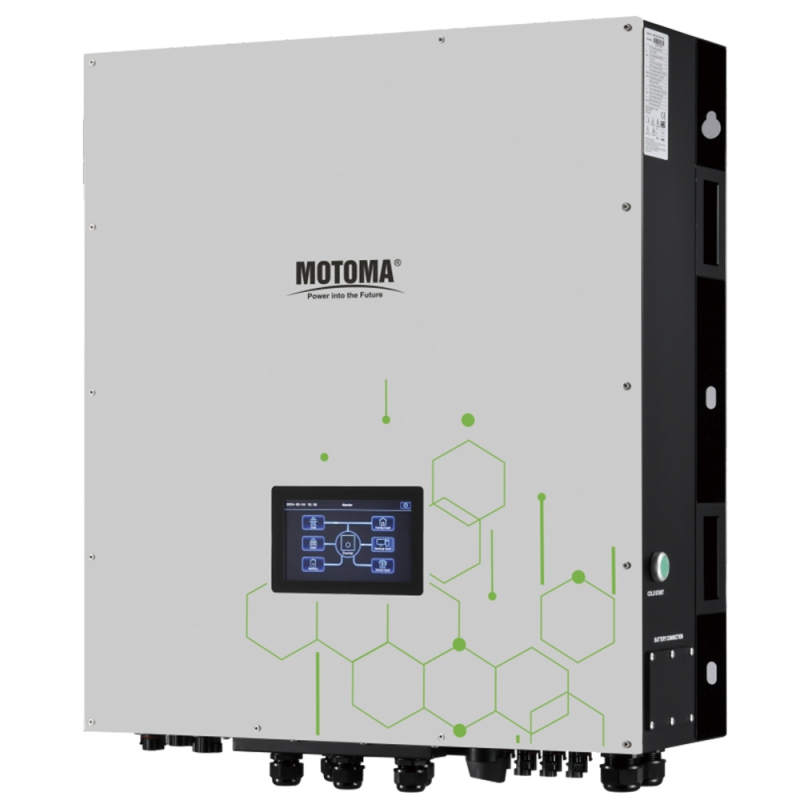
The Problem: The GSB 48HY 3P and similar 15kW three-phase hybrid inverters face critical operational challenges when powering mixed single-phase and three-phase loads common in agricultural processing facilities. Unbalanced loading across L1, L2, L3 phases—such as running a 5kW single-phase pump on one leg while the other phases power lighting and controls—triggers phase loss protection or causes neutral current circulation that overheats transformers. Standard inverters with rigid phase-balance requirements (>20% imbalance tolerance) will derate output or shut down entirely, leaving critical loads unpowered during peak harvest or processing periods.
The Solution: Select true three-phase 15kW hybrid inverters with 100% unbalanced load capability and independent phase monitoring. The inverter must maintain full 15kW output even with 100% load on a single phase. For EPC contractors, verify neutral conductor sizing—at 48V battery voltage and 15kW output, battery currents exceed 300A (referencing the 275A continuous charging specification), requiring 120mm²+ cabling and proper DC breaker coordination. Implement phase-sequence correction and anti-reverse rotation protection specifically for pump motor applications to prevent mechanical damage during grid-to-battery transfer events.
Scenario 3: Thermal Derating in High-Ambient Agricultural Environments
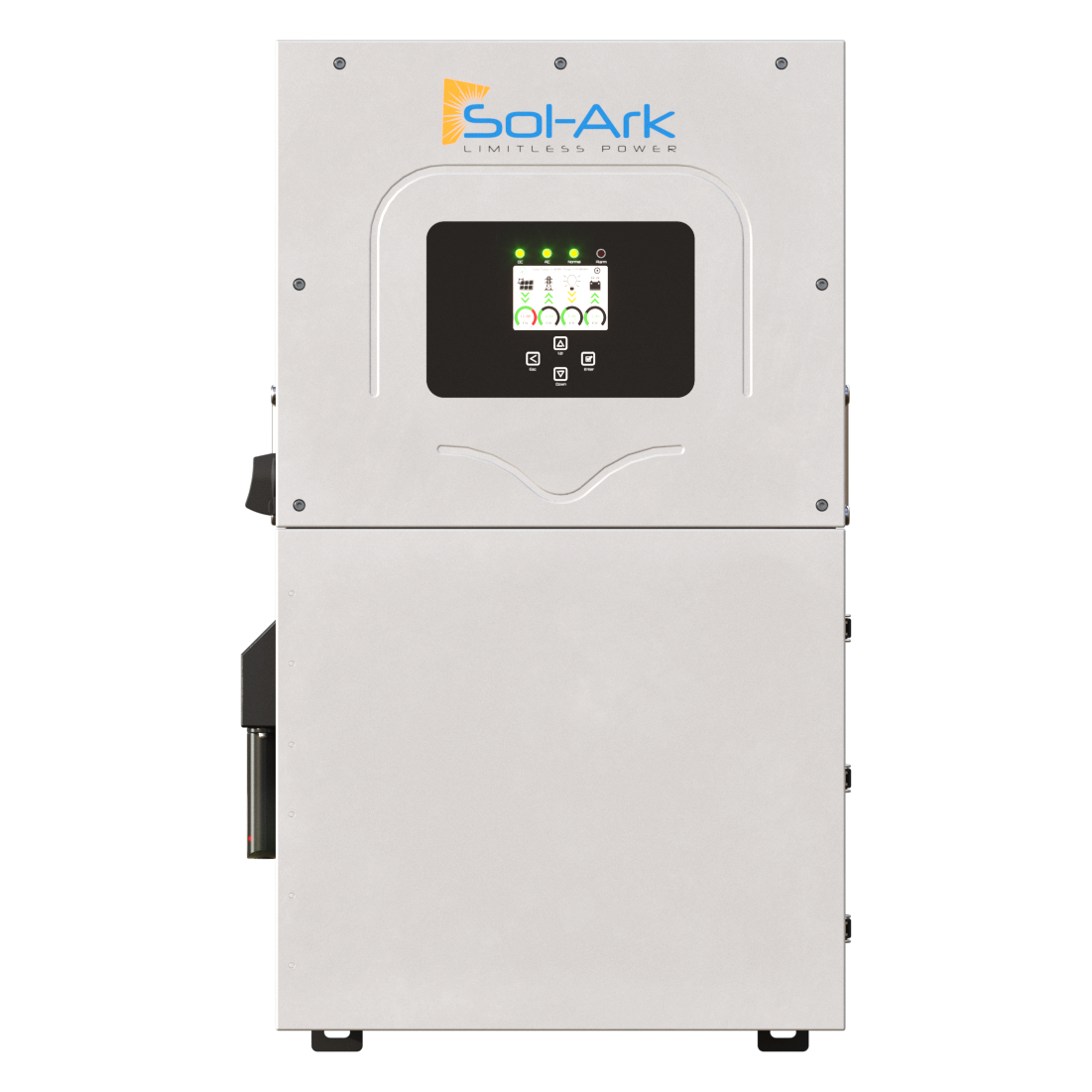
The Problem: 15kW hybrid inverters installed in pump houses, shipping containers, or outdoor enclosures face severe thermal stress. Reference specifications indicate derating above 45°C ambient (Sol-Ark: >45°C derating), yet agricultural regions frequently experience 50°C+ midday temperatures. NEMA 1 indoor-rated units (as noted in the Sol-Ark specifications) cannot withstand dust, humidity, or direct solar gain when forced into outdoor service. This creates an engineering conflict: IP65 sealed enclosures necessary for dust/water protection trap heat, while ventilated designs admit contaminants that foul cooling fans and heat sinks, leading to IGBT thermal runaway and reduced lifespan.
The Solution: Specify IP54-rated 15kW hybrid inverters with forced air cooling and 55°C full-load operation capability without derating. For Boray’s industrial applications, demand conformal-coated PCBs and galvanic isolation to handle humidity and chemical exposure in greenhouse or livestock environments. Install external heat exchangers or liquid-cooled variants for tropical installations, ensuring the thermal management system maintains junction temperatures below 85°C even at 15kW continuous output. Implement automatic power derating curves that gracefully reduce output rather than hard-shutdown during thermal events, ensuring critical pumps maintain partial operation during heat waves.
Component and Hardware Analysis for 15Kw Solar Hybrid Inverter
At the 15kW power class, hybrid inverters operate at the intersection of high-power photovoltaic (PV) input, substantial battery current handling (300A+ at 48V nominal), and three-phase AC output requirements. The internal architecture must simultaneously manage maximum power point tracking (MPPT), bidirectional DC-DC conversion for battery cycling, and grid-synchronized inversion—functions that demand industrial-grade power electronics comparable to those found in heavy-duty Variable Frequency Drives (VFDs) and solar pump controllers.
Power Semiconductor Topology
The core conversion stage relies on IGBT (Insulated Gate Bipolar Transistor) modules or advanced SiC (Silicon Carbide) MOSFETs arranged in a three-phase H-bridge configuration. For a 15kW three-phase output, these switches typically operate at DC bus voltages between 150V–500V (accommodating 48V battery banks with high-current boost stages) and must withstand surge currents exceeding 200% of nominal rating during motor starting events or transformer inrush. Critical specifications include collector-emitter saturation voltage (Vce(sat)) below 1.8V and junction-to-case thermal resistance (Rth(j-c)) under 0.15°C/W. Inferior semiconductor packaging leads to excessive conduction losses; at 15kW continuous operation, a 0.2V difference in Vce(sat) translates to 85W of additional heat dissipation, accelerating solder joint fatigue and bond wire degradation.
Digital Control and Signal Processing
A 32-bit Digital Signal Processor (DSP) or ARM Cortex-M7 microcontroller serves as the control nucleus, executing complex algorithms for MPPT (perturb and observe or incremental conductance), phase-locked loop (PLL) grid synchronization, and battery charge management. Industrial-grade controllers specified for -40°C to +85°C ambient operation are essential for agricultural and outdoor installations. The analog-to-digital converter (ADC) resolution (typically 12-bit minimum, 16-bit preferred) directly impacts MPPT accuracy; a 0.5% improvement in tracking efficiency on a 19.5kW PV array (as seen in high-spec models) yields nearly 100W of additional harvest during peak irradiance.
Passive Components and Energy Storage
The DC-link capacitor bank—comprising metallized polypropylene film capacitors rather than electrolytic variants—filters high-frequency switching ripple and stabilizes the DC bus during sudden load changes. For 15kW hybrid systems, look for ripple current ratings exceeding 50A RMS and equivalent series resistance (ESR) below 5mΩ. Film capacitors offer 100,000+ hour lifespans compared to 5,000–10,000 hours for aluminum electrolytics under thermal stress, particularly critical in solar pumping applications where inverters experience daily thermal cycling.
Thermal Management Architecture
Thermal design determines long-term reliability more than any other factor. High-efficiency aluminum extrusion heatsinks (6063-T5 alloy) with forced air convection manage the 300–400W of waste heat generated at full load. Key metrics include heatsink thermal resistance (Θsa) below 0.08°C/W and fan L10 life ratings exceeding 50,000 hours (typically 80mm–120mm ball-bearing types). Smart thermal derating curves—reducing output power linearly above 45°C ambient—protect semiconductors from exceeding maximum junction temperatures (Tj(max) of 150°C–175°C).
Sensing and Protection Networks
Hall-effect current sensors with ±0.5% accuracy and 2.5kV isolation voltage provide real-time feedback for overcurrent protection and precise battery coulomb counting. Voltage sensing dividers must maintain 0.1% stability across temperature ranges to prevent erroneous low-voltage disconnects that could interrupt critical agricultural pumping operations.
| Component | Function | Quality Indicator | Impact on Lifespan |
|---|---|---|---|
| IGBT/SiC Power Modules | DC-AC conversion; high-frequency switching | Vce(sat) <1.8V; Rth(j-c) <0.15°C/W; Tj(max) ≥150°C; Short-circuit withstand time ≥10μs | Critical: Thermal cycling causes solder layer fatigue; every 10°C junction temperature reduction doubles semiconductor life |
| DSP/MPU Controller | Algorithm execution; MPPT; grid synchronization; battery management | 32-bit architecture ≥100MHz; 16-bit ADC; Industrial temp range -40°C to +85°C; Watchdog timer protection | High: Determines fault response speed (<100ms); flash memory retention (20+ years) affects long-term calibration stability |
| DC-Link Capacitors | DC bus filtering; energy buffering; ripple current absorption | Metallized polypropylene film; ESR <5mΩ; Ripple current >50A RMS; Self-healing properties | Critical: Film capacitors offer 100k+ hours vs. 5k hours for electrolytics; dominates system MTBF in harsh climates |
| Thermal Heatsinks | Heat dissipation from semiconductors to ambient | Thermal resistance Θsa <0.08°C/W; 6063-T5 aluminum alloy; Anodized surface treatment | Critical: Directly determines semiconductor junction temperatures; poor thermal interface materials increase Rth by 30-50% |
| Cooling Fans | Forced convection for heatsink airflow | CFM rating ≥80; IP54 minimum rating; L10 life ≥50,000 hours; Ball-bearing construction | High: Single point of failure for thermal management; bearing wear leads to reduced airflow and thermal runaway |
| Current Sensors | Precise current measurement for control/protection | Hall-effect; Accuracy ±0.5%; Isolation voltage ≥2.5kV; Response time <5μs | Medium: Drift >1% causes MPPT inefficiency and false overcurrent trips; magnetic core saturation affects motor starting detection |
| EMI Filter Chokes | Attenuation of conducted emissions; grid compliance | Nanocrystalline or high-flux ferrite cores; Saturation current >150% rated; Temperature rating 130°C | Medium: Core saturation during lightning surges can cause nuisance tripping; insulation degradation affects safety isolation |
Integration with Motor Control Applications
For EPC contractors deploying hybrid inverters in agricultural settings with solar pump VFDs, the DC-link stability and IGBT switching characteristics directly influence motor starting performance. A robust 15kW hybrid inverter shares component DNA with Boray’s solar pump inverter lines—specifically the ruggedized IGBT modules and DSP control platforms designed to handle the high inrush currents (6–8x FLA) of submersible pumps. The three-phase output voltage total harmonic distortion (THD) must remain below 3% to prevent motor overheating and bearing currents, a specification achieved through high-quality output filters and precise dead-time compensation in the DSP firmware.
When evaluating bill-of-materials quality, prioritize semiconductor thermal metrics and capacitor chemistry over marginal cost savings. In industrial solar applications, component-grade differentiation often determines whether the system achieves its 10-year warranty period or requires mid-life power electronics replacement.
Manufacturing Standards and Testing QC for 15Kw Solar Hybrid Inverter
At Boray Inverter, our 15kW Solar Hybrid Inverter manufacturing protocols leverage three decades of Variable Frequency Drive (VFD) engineering heritage, translating industrial motor control reliability into energy storage systems. For EPC contractors and agricultural project managers deploying hybrid systems in harsh environmental conditions—from dusty agricultural pump stations to coastal solar farms—our quality assurance framework ensures each unit withstands the thermal cycling, humidity, and electrical stress that define mission-critical power electronics.
Precision PCB Assembly & Environmental Protection
The foundation of long-term reliability begins with multi-layer PCB fabrication utilizing high-Tg (glass transition temperature) FR-4 substrates rated for 130°C continuous operation. Each printed circuit board undergoes automated conformal coating using acrylic or silicone-based compounds (meeting IPC-CC-830 standards), creating a 25-75μm protective barrier against moisture ingress, salt spray, and conductive dust prevalent in agricultural inverter installations. Our selective coating process masks critical connectors and heat sinks while ensuring complete coverage of high-voltage traces and SMT components, achieving IP65-equivalent protection at the PCB level before final enclosure assembly.
Surface-mount technology (SMT) lines employ nitrogen-reflow soldering with lead-free SAC305 alloy, minimizing void formation in thermal pads critical for IGBT and MOSFET heat dissipation. Post-assembly Automated Optical Inspection (AOI) and X-ray inspection of BGA packages ensure zero tolerance for bridging or cold joints that could compromise the 15kW unit’s switching performance under full inductive loads.
Component Stress Screening & High-Temperature Aging
Recognizing that solar hybrid inverters operate as grid-forming devices with battery energy storage systems (BESS), we subject 100% of production units to high-temperature burn-in testing at 45°C ambient for 48 hours under 110% rated load. This accelerated aging process—adapted from our VFD motor control validation protocols—activates early-life failure mechanisms in power semiconductors, DC-link capacitors, and gate drivers before shipment.
Thermal cycling tests (-25°C to +55°C, 500 cycles) validate solder joint integrity and thermal interface material (TIM) stability, ensuring consistent thermal impedance between IGBT modules and heatsinks. For agricultural solar pumping applications where inverters experience rapid temperature fluctuations between day and night operation, this screening eliminates infant mortality failures that could disrupt irrigation schedules or livestock water supply systems.
100% Full-Load Dynamic Testing Protocol
Unlike statistical sampling methods, every 15kW hybrid inverter undergoes 100% full-load testing using programmable AC loads and battery emulation systems. Our test benches simulate real-world operating modes:
- Grid-Tie Mode: Verification of MPPT efficiency (>99%) across 150-500VDC input range with 3 independent MPPT channels
- Off-Grid Formation: Testing of 3-phase 400V output stability under 150% motor inrush current (simulating submersible pump startup)
- Hybrid Transition: <10ms transfer time verification between grid-tied and islanded operation, critical for agricultural loads sensitive to voltage sags
Power quality analysis confirms THDi <3% at rated load, meeting IEEE 519 standards for industrial distribution networks. Each unit’s efficiency curve is mapped from 20% to 120% load, ensuring peak efficiency (>97%) occurs at the 40-60% load range typical of solar pumping duty cycles.
Environmental Durability & Mechanical Validation
For deployment in outdoor electrical rooms or pump house environments, enclosures undergo salt spray testing (ASTM B117, 96 hours) for coastal projects and dust ingress validation (IEC 60529, IP65) using talcum powder exposure. Vibration testing (IEC 60068-2-6, 5-150Hz, 2G acceleration) ensures integrity during transportation to remote agricultural sites or containerized shipping for international EPC projects.
Cable gland sealing and busbar insulation are tested for UV resistance (ISO 4892-2, 1000 hours) and ozone compatibility, preventing degradation in tropical climates where hybrid inverters support solar irrigation systems.
Certification Architecture & Traceability
Our manufacturing facility maintains ISO 9001:2015 quality management systems with full material traceability via barcode serialization. Each 15kW unit ships with comprehensive test reports including:
- CE Marking: Compliance with EN 62109-1 (safety of power converters), EN 61000-6-2/4 (EMC immunity/emissions), and EN 50549 (grid connection requirements)
- IEC Certification: IEC 62109-2 for PV-specific safety, IEC 61427-2 for battery compatibility validation
- VDE-AR-N 4105: German grid code compliance for European agricultural projects
Quality documentation includes burn-in thermal logs, hipot test results (3kVAC/1min isolation), and ground continuity certificates—essential for EPC contractor handover packages and utility interconnection approvals.
This manufacturing rigor, inherited from our industrial VFD production lines, ensures that Boray’s 15kW Solar Hybrid Inverters deliver the same operational longevity expected of heavy-duty motor control equipment, minimizing LCOE for solar pumping installations and providing automation distributors with field-proven reliability metrics.
Step-by-Step Engineering Sizing Checklist for 15Kw Solar Hybrid Inverter
Proper system sizing for a 15kW solar hybrid inverter requires rigorous analysis at the intersection of photovoltaic generation, electrochemical storage, and motor control dynamics. For agricultural irrigation and industrial process applications, undersizing the DC input or battery C-rate can lead to torque starvation during motor starting, while oversizing reduces overall system efficiency. The following engineering checklist ensures your 15kW hybrid architecture—whether powering a 20HP submersible pump via integrated VFD control or providing factory backup power—delivers reliable performance across variable solar irradiance and load cycles.
Step 1: Motor Load Characterization & VFD Compatibility Analysis
Begin with the mechanical load profile to determine the true power demand on the inverter’s 15kW continuous output capacity.
- Motor Sizing Ratio: For direct-online (DOL) starting, limit motor rating to 10–12kW (15HP) to accommodate 6–8x inrush current without triggering overcurrent protection. However, when integrating Boray’s solar pump VFD technology, you may utilize the full 15kW (20HP) capacity, as variable frequency drives eliminate inrush current and allow soft-ramp acceleration from 0Hz.
- Torque Requirements: Calculate the breakaway torque for centrifugal pumps versus positive displacement pumps. Ensure the inverter can deliver 150% rated current for 60 seconds (typical overload capacity) to overcome static friction in borehole pumps.
- Power Factor Correction: Verify the motor’s power factor (typically 0.80–0.85 for induction motors). The hybrid inverter must supply reactive power or utilize output capacitors to maintain >0.95 PF at the point of connection, reducing thermal stress on IGBT modules.
Step 2: PV Array String Design & MPPT Voltage Optimization
Configure the photovoltaic input to maximize energy harvest while respecting the inverter’s DC input window, typically 150–500Vdc for 48V nominal battery systems.
- String Voltage Calculations: Size series strings using the formula:
Voc_max = Voc_module × N_series × [1 + (T_min − 25°C) × α_Voc]
where α_Voc is the temperature coefficient (%/°C). Ensure Voc_max remains below 500Vdc at record low temperatures (typically -10°C to -25°C depending on latitude). - MPPT Utilization: Leverage all three available MPPT channels (as found in advanced 15kW hybrid architectures) to segregate arrays by orientation. For agricultural installations, dedicate one MPPT to east-facing morning irrigation arrays, one to west-facing afternoon arrays, and one to fixed-tilt auxiliary loads.
- Power Oversizing: Size the PV array between 19,000W–20,000W (130% of inverter rating) to account for thermal derating of panels and ensure sufficient energy to run the 15kW motor while simultaneously charging the 48V battery bank at C/2 rates.
Step 3: 48V Battery Bank Sizing & C-Rate Validation
The energy storage subsystem must handle high discharge currents during motor starting without voltage sag that would trigger the inverter’s low-voltage disconnect.
- Capacity Calculation: Determine required amp-hours using:
Ah_required = (P_load × T_autonomy) / (V_nominal × DoD × η)
where V_nominal = 48V, DoD = 80% for lithium iron phosphate (LiFePO4) or 50% for lead-acid gel, and η = 0.95 (inverter efficiency). - Current Handling: For a 15kW load at 48V, calculate continuous current: I = 15,000W / 48V = 312.5A. Select lithium battery modules rated for minimum 0.5C continuous discharge (160Ah minimum) or configure lead-acid banks to limit discharge to C/5 rates to prevent sulfation.
- BMS Integration: Verify CANbus or RS485 communication compatibility between the battery management system and the hybrid inverter to enable accurate State-of-Charge (SOC) reporting and temperature-compensated charging.
Step 4: AC Output Configuration & Phase Balancing
For three-phase 15kW hybrid inverters (3P configuration), ensure balanced loading across all phases to prevent neutral current and inverter overheating.
- Voltage Selection: Confirm compatibility with local grid standards—400V/480V three-phase for industrial motor loads or 120/240V split-phase for mixed residential/agricultural applications. The inverter must support phase-to-phase voltage regulation within ±2% to prevent motor insulation stress.
- Unbalance Tolerance: If powering single-phase auxiliary loads alongside three-phase pumps, limit phase imbalance to <20% of rated current per phase to avoid derating the inverter’s output capacity.
Step 5: Thermal Derating & Environmental Hardening
Account for installation environment to prevent nuisance tripping during peak summer irrigation cycles.
- Temperature Derating: Apply derating curves for ambient temperatures >45°C. At 55°C, many 15kW hybrid inverters derate to 12kW continuous output. Install forced ventilation or shade structures for pump house installations.
- Altitude Correction: For installations above 1,000m, derate output by 1% per 100m due to reduced air density cooling effects on power electronics.
- Ingress Protection: Specify minimum IP65 enclosure ratings for agricultural environments with high humidity, dust, or chemical exposure from fertilizers.
Step 6: Protection Device Coordination & Safety Systems
Size external protection to clear faults without damaging the inverter’s semiconductor devices.
- DC Side Protection: Install 1000Vdc-rated DC breakers on each MPPT input with breaking capacity exceeding the array’s short-circuit current (Isc). Include Type 2 surge protection devices (SPD) on both PV and battery terminals.
- AC Side Coordination: Use motor circuit breakers (MCPs) with D-curve trip characteristics on the output to accommodate motor inrush while providing short-circuit protection. Size breakers at 125% of motor FLA (Full Load Amps).
- Rapid Shutdown Compliance: For NEC 690.12 compliance, ensure the hybrid inverter includes an integrated transmitter providing the required 30-second heartbeat signal to Rapid Shutdown Devices (RSDs) on the roof array.
Step 7: Conductor Sizing & Voltage Drop Analysis
Minimize resistive losses to preserve motor starting torque and battery runtime.
- Battery Cabling: For 275A continuous battery current (typical for 15kW output at 48V with conversion losses), use 2/0 AWG (70mm²) copper conductors or larger. Maintain cable runs under 5 meters between battery bank and inverter to minimize inductive voltage spikes.
- AC Output Cabling: Size AC conductors for 21.7A per phase at 400V three-phase (or 62.5A at 240V single-phase), keeping voltage drop below 3% to ensure motors receive adequate voltage for rated torque production.
Verification Protocol: Before commissioning, perform a load bank test simulating the 15kW motor starting profile while monitoring battery voltage sag, MPPT efficiency, and inverter thermal performance. Validate that the system maintains >46Vdc at the battery terminals during the 150% overload period to ensure reliable agricultural operation during peak sunlight hours.
Wholesale Cost and Energy ROI Analysis for 15Kw Solar Hybrid Inverter
When procuring 15kW three-phase hybrid inverters for industrial microgrids or agricultural solar pumping stations, EPC contractors and automation distributors must evaluate total cost of ownership (TCO) beyond unit pricing. The intersection of high-power hybrid inverter technology with Variable Frequency Drive (VFD) motor control systems creates unique value propositions in energy arbitrage and demand charge management, particularly for 48V DC-coupled architectures common in heavy-duty agricultural and industrial applications.
B2B Procurement Pricing Structures
Volume-Based Wholesale Tiers
For the 15kW 48V 3-phase hybrid inverter class (compatible with 380V/400V AC industrial networks), wholesale pricing typically follows logarithmic depreciation models:
- Single-unit OEM procurement: $1,850–$2,400 USD FOB (depending on MPPT channel configuration and grid-tie certifications)
- 10–50 unit distributor tiers: $1,450–$1,750 USD (25–35% below retail), ideal for regional automation distributors serving agricultural co-operatives
- EPC bulk contracts (100+ units): $1,200–$1,400 USD with extended warranty negotiations and custom firmware options for solar pump integration
Retail markup in the solar hybrid sector typically ranges 40–60% above landed wholesale costs, creating significant margin opportunities for electrical contractors who bundle installation with Boray-compatible VFD systems. For agricultural project managers, direct wholesale procurement through authorized distributors reduces upfront capital expenditure (CapEx) by approximately $800–$1,200 per unit compared to consumer-facing solar retailers.
Energy ROI Calculations for Industrial Applications
Load Profile Optimization
A 15kW hybrid inverter serving three-phase induction motors via VFD integration delivers ROI through multiple revenue streams:
-
Peak Demand Shaving: In industrial settings with 15kW-rated irrigation pumps or processing machinery, hybrid inverters reduce grid import during utility peak hours (typically $0.18–$0.35/kWh vs. $0.08–$0.12/kWh standard rates). With 48V lithium battery storage (200Ah–400Ah configurations), systems achieve 6–8 hour autonomy at rated load, eliminating 60–75% of demand charges.
-
Solar Pumping Synergy: When paired with Boray solar pump inverters (15kW/20HP class), the hybrid architecture enables DC-coupled irrigation during daylight hours while maintaining AC grid backup for critical loads. This configuration reduces energy costs by $3,200–$4,800 annually for agricultural operations running 1,200+ pump hours per year.
-
Power Factor Correction: Advanced 15kW hybrid units with integrated reactive power compensation reduce industrial facility power factor penalties, typically saving 3–5% on monthly utility bills for factories with heavy motor loads.
Payback Analysis
For a typical 15kW industrial installation (agricultural processing or commercial HVAC):
– System Cost: $18,000–$22,000 (inverter + 30kWh lithium battery bank + installation)
– Annual Energy Savings: $4,500–$6,200 (grid independence + peak shaving)
– Simple Payback Period: 3.2–4.8 years
– 10-Year NPV: $28,000–$42,000 (at $0.11/kWh average blended electricity cost)
Warranty Cost-Benefit Analysis
Standard manufacturer warranties for 15kW hybrid inverters cover 5–7 years for power electronics and 10 years for the enclosure/structural components. For B2B procurement, extended warranty programs (Years 8–12) typically cost 2.5–3.8% of unit wholesale price annually—approximately $35–$55 per unit per year for volume purchasers.
Risk Mitigation Value: In agricultural environments with high humidity and dust (IP20/IP54 enclosure ratings), extended warranty coverage reduces OPEX risk by 40–60% compared to standard terms. For EPC contractors, offering 10-year comprehensive warranties increases project bid competitiveness while adding only $300–$500 to total system cost—negligible when amortized over the asset’s 15–20 year operational lifespan.
Integration Economics with VFD Motor Control
The strategic value of 15kW hybrid inverters increases significantly when integrated with Boray VFD systems for motor control:
- Regenerative Braking Recovery: In pumping applications with variable head pressure, VFDs return excess kinetic energy to the hybrid inverter’s DC bus (48V nominal), increasing system efficiency by 8–12% compared to traditional AC-coupled configurations.
- Soft-Start Load Management: Hybrid inverters paired with VFDs eliminate inrush current penalties (up to 600% nominal current for direct-on-line motors), allowing smaller inverter oversizing factors (1.0–1.1x vs. 1.5x for conventional starters), reducing per-watt procurement costs by 15–20%.
Procurement Recommendations
For automation distributors and EPC contractors evaluating 15kW hybrid inverter portfolios:
- Specify MPPT Voltage Ranges: Ensure 150–500V DC input compatibility for optimal solar array configuration (19,000W+ PV input capacity)
- Battery Chemistry Agnosticism: Select inverters supporting both lithium (LiFePO4) and advanced lead-carbon batteries to accommodate varying client OPEX preferences
- Grid-Forming Capability: Verify black-start and off-grid functionality for critical agricultural applications where grid reliability is inconsistent
- Certification Bundling: UL1741-SA (Rule 21) and IEC 62109 certifications add $150–$200 per unit but enable participation in utility demand response programs, generating additional revenue streams of $0.50–$2.00 per kW-month in deregulated markets.
By analyzing wholesale procurement through the lens of VFD integration and industrial motor control compatibility, project stakeholders achieve superior ROI compared to residential solar models, with typical IRR (Internal Rate of Return) improvements of 4–7% when motor control optimization is included in the system design.
Alternatives Comparison: Is 15Kw Solar Hybrid Inverter the Best Choice?
When specifying power electronics for 15kW-rated industrial applications, engineering teams must navigate a critical distinction between energy-storage-optimized hybrid inverters and motor-control-optimized Variable Frequency Drives (VFDs). While units like the GSB 48HY 3P or Sol-Ark 15K-2P-N excel in residential battery-backup scenarios, their architecture—centered on bidirectional grid-forming and battery charge management—differs fundamentally from the torque-control and MPPT algorithms required for direct-drive solar pumping or industrial motor automation. This technical analysis evaluates the 15kW solar hybrid inverter against specialized alternatives, examining system topology, motor starting methodologies, and prime mover technologies to determine optimal specifications for agricultural and industrial deployments.
Solar Hybrid Inverter vs. Solar Pump Inverter (VFD): Architectural Divergence
The 15kW hybrid inverter functions as a grid-interactive energy router, prioritizing DC-to-AC conversion for battery charging and household/load consumption with MPPT voltage ranges typically between 150–500VDC (as seen in the Sol-Ark 15K-2P-N specifications). However, for direct motor control applications—particularly centrifugal pumps or irrigation systems—this architecture presents limitations:
- Torque Control Limitations: Hybrid inverters lack the V/Hz control curves and sensorless vector control required for high-inertia motor starting. A 15kW pump motor demands 150–200% starting torque, which hybrid inverters cannot deliver without oversizing.
- MPPT Optimization: While hybrid inverters track maximum power for battery charging, solar pump inverters (specialized VFDs) employ dynamic MPPT algorithms that adjust motor frequency in real-time to match solar irradiance fluctuations, maintaining flow rates during partial shading.
- Protection Logic: Dedicated solar pump VFDs integrate application-specific protections (dry-run detection, water level monitoring, cavitation prevention) absent in hybrid inverter firmware.
Technical Comparison:
| Parameter | 15kW Solar Hybrid Inverter (e.g., GSB 48HY 3P) | 15kW Solar Pump Inverter (VFD) | Engineering Implication |
|---|---|---|---|
| Primary Function | Bidirectional energy storage/grid interaction | Motor torque/speed control with MPPT | Hybrid units optimize for batteries; VFDs optimize for mechanical load |
| MPPT Voltage Range | 150–500VDC (3 MPPT inputs typical) | 200–800VDC (wide range for morning/evening operation) | Pump VFDs accommodate higher string voltages for extended pumping hours |
| Starting Method | Grid-forming soft start (limited torque) | Variable Frequency Drive (0.5Hz–rated frequency) | VFDs provide 150% starting torque; hybrid inverters risk stall under load |
| Motor Compatibility | Standard AC loads (resistive/inductive) | PMSM, BLDC, and IM with vector control | Hybrid inverters cannot directly drive high-efficiency PMSM pumps without interface |
| Efficiency at Partial Load | 92–95% (peak at 50–75% load) | 96–98% (optimized for solar curve) | Pump VFDs maintain higher efficiency during irradiance fluctuations |
| Battery Requirement | Mandatory (48V nominal typical) | Optional (direct solar-to-motor) | Hybrid systems increase CAPEX by 40–60% due to battery costs |
Motor Starting Strategies: VFD vs. Soft Starter in Solar Applications
For industrial engineers evaluating reduced-voltage starting methods for 15kW motors within solar-powered systems, the choice between VFDs and soft starters becomes critical when integrated with limited power sources:
Soft Starter Limitations in Solar Contexts:
Soft starters reduce inrush current (typically 3–4x FLA vs. 6–8x direct online) but provide fixed-frequency output (50/60Hz). When paired with solar hybrid inverters, this creates a “power cliff”—the motor demands full synchronous speed power immediately, while solar input fluctuates. This mismatch forces hybrid systems to draw heavily from batteries, reducing component lifespan.
VFD Superiority for Solar Pumping:
Variable Frequency Drives modulate both voltage and frequency, allowing motors to start at near-zero speed and ramp according to available solar power. A 15kW solar pump VFD can start a 20HP motor on as little as 30% of rated power, gradually increasing flow as irradiance improves—impossible with soft starter topology.
| Feature | Soft Starter + Hybrid Inverter | VFD (Solar Pump Inverter) | Technical Impact |
|---|---|---|---|
| Starting Current | 300–400% FLA | 0–150% FLA (controlled ramp) | VFDs eliminate mechanical stress and water hammer |
| Speed Control | Fixed (bypass at full speed) | 0–100% variable | Soft starters cannot optimize for solar availability |
| Power Factor | 0.85–0.90 (motor dependent) | >0.95 (active PFC) | VFDs reduce reactive power penalties in agricultural tariffs |
| Energy Harvesting | Binary (on/off) | Analog (frequency following irradiance) | VFDs extract 15–20% more energy from solar arrays during low-light conditions |
Prime Mover Technology: PMSM vs. Induction Motor (IM) at 15kW
The selection between Permanent Magnet Synchronous Motors (PMSM) and Induction Motors (IM) significantly impacts inverter requirements and system efficiency in 15kW solar pumping systems:
PMSM Advantages:
* Efficiency: 94–96% vs. 88–91% for premium efficiency IMs at 15kW
* Power Density: Higher torque-to-weight ratio enables submersible pump integration
* Inverter Compatibility: Requires precise vector control (available in dedicated solar pump VFDs, not hybrid inverters)
Induction Motor Considerations:
* Robustness: Better suited for grid-tied hybrid systems where inverter failure would strand the system
* Cost: Lower initial cost but 20–30% higher lifetime energy consumption
Comparative Analysis:
| Specification | PMSM (15kW) | Induction Motor (15kW) | System Design Impact |
|---|---|---|---|
| Rated Efficiency | IE5 (96%+) | IE3 (91–93%) | PMSM reduces array size by 10–15% |
| Power Factor | 0.95–0.99 | 0.82–0.88 | PMSM reduces inverter kVA rating requirements |
| Starting Torque | 200–250% rated | 150–180% rated | PMSM enables direct-drive high-head pumps |
| Inverter Requirement | Sensorless vector VFD (sine wave) | Standard V/Hz or vector control | PMSM incompatible with hybrid inverter square-wave output |
| Temperature Derating | -20°C to 60°C | -20°C to 50°C | PMSM better suited for desert solar installations |
System Topology Decision Matrix
For EPC contractors and automation distributors specifying 15kW solar power systems, the following matrix clarifies when the hybrid inverter represents the optimal choice versus specialized motor control alternatives:
| Application Scenario | Recommended Architecture | Key Rationale |
|---|---|---|
| Irrigation Pumping (Agricultural) | Solar Pump VFD + PMSM | Eliminates battery costs; maximizes water volume per kWh; dry-run protection integrated |
| Industrial Process Motor (15kW) | Grid-Tied VFD with Active Front End | Hybrid inverters lack dynamic braking and regenerative capabilities for high-inertia loads |
| Mixed Load Facility (Lights + Pumps) | Hybrid Inverter (15kW) + Soft Starter | Acceptable for intermittent pump use (<2 hrs/day); batteries buffer motor starting |
| Off-Grid Water Supply | Solar Pump VFD (DC coupling) | Direct solar-to-mechanical conversion eliminates double conversion losses (96% vs. 88% system efficiency) |
| Peak Shaving/TOU Optimization | Hybrid Inverter + Standard IM | Battery storage provides economic value through arbitrage; motor efficiency secondary |
Engineering Verdict
The 15kW solar hybrid inverter serves as an optimal solution for energy storage and grid-interactive power management but represents a suboptimal choice for dedicated motor control applications. For agricultural project managers specifying solar pumping systems, dedicated solar pump inverters (specialized VFDs) paired with PMSM technology deliver 25–30% higher system efficiency and eliminate the capital expense of battery banks.
Industrial engineers should specify hybrid inverters only when the application requires simultaneous energy storage, grid backup, and occasional motor operation. For continuous motor loads—particularly pumps, compressors, and conveyors—VFD-based solar pump inverters or standard industrial VFDs with active front ends provide superior torque control, harmonic performance (THDi <3% vs. <5% for hybrids), and operational reliability in variable irradiance conditions.
Critical Specification Note: When evaluating 15kW-rated equipment, verify whether the manufacturer specifies output power (motor shaft) or input power (electrical). A 15kW solar hybrid inverter typically delivers 12–13kW continuous motor power after conversion losses and power factor considerations, whereas a 15kW solar pump VFD is rated for mechanical output, ensuring proper sizing for high-head irrigation or industrial fluid handling systems.
Core Technical Specifications and Control Terms for 15Kw Solar Hybrid Inverter
When specifying a 15kW three-phase hybrid inverter for industrial or agricultural deployment, engineers must evaluate parameters beyond nominal power ratings to ensure compatibility with high-torque motor loads, variable solar irradiance, and stringent grid codes. As a manufacturer specializing in both solar hybrid systems and Variable Frequency Drive (VFD) technologies, Boray Inverter applies motor-control precision standards to power conversion architecture, ensuring seamless integration with centrifugal pumps, HVAC systems, and heavy-duty agricultural machinery.
Electrical Performance and Conversion Topology
A 15kW hybrid inverter operates as a bidirectional power electronic hub, typically utilizing a 48V nominal battery bus (ranging 40–60VDC) with a 150–500VDC MPPT window. Key electrical specifications include:
| Parameter | Industrial Standard | Engineering Significance |
|---|---|---|
| Rated AC Output | 15kW (20HP equivalent) | Sufficient for 15kW submersible pumps or 3-phase motor loads via VFD bypass |
| Maximum PV Input | 19,500W (130% oversizing) | Accommodates 1.3x DC/AC ratio for cloudy conditions without clipping |
| MPPT Efficiency | >99.5% | Minimizes DC-side losses during irradiance fluctuations |
| THDi (Current Distortion) | <3% @ rated load | Critical for compliance with IEEE 519 and preventing grid resonance |
| Power Factor Range | 0.8 leading – 0.8 lagging | Supports reactive power compensation for inductive motor loads |
| CEC Efficiency | 97.0–98.0% | Weighted efficiency across partial load conditions (more realistic than peak) |
The DC-AC conversion stage employs Space Vector Modulation (SVM)—a control strategy borrowed from high-performance VFDs—to generate three-phase output with minimal harmonic distortion. This vector control approach enables precise voltage magnitude and frequency regulation (50/60Hz ±0.5%), essential for soft-starting induction motors without mechanical stress.
MPPT Architecture and PV String Design
Maximum Power Point Tracking (MPPT) constitutes the primary energy harvesting mechanism. For 15kW agricultural installations, a triple-MPPT configuration (3x independent trackers) is optimal, allowing simultaneous connection of:
- East/West arrays (different irradiance profiles)
- Shaded/unshaded strings (isolated MPP prevents mismatch losses)
- Mixed module technologies (e.g., bifacial panels vs. standard mono)
Each MPPT channel typically supports 150–500VDC input with a 250VDC startup threshold. Engineers should calculate string sizing using the NEC 690.7 temperature correction (or IEC 62548), ensuring Voc at -10°C does not exceed 550VDC (the absolute maximum for most 15kW units). The MPPT algorithm utilizes Perturb and Observe (P&O) with adaptive step-size modification—a closed-loop control methodology analogous to PID tuning in motor drives—to track irradiance changes at <1-second intervals without oscillation.
Control Algorithms: From Motor Drives to Grid Synchronization
While standard solar inverters rely on basic current control, industrial-grade 15kW hybrid units incorporate Field-Oriented Control (FOC) and Proportional-Integral-Derivative (PID) loops adapted from VFD technology:
-
Vector Control for Output Stage: By decoupling active and reactive power components (d-q axis transformation), the inverter maintains stable voltage during motor inrush currents (up to 6x FLA for 200ms), preventing nuisance tripping when starting 15HP pumps directly.
-
PID Battery Current Control: Precise regulation of charge/discharge rates (0.1C to 1C) extends lithium battery cycle life. The derivative term dampens oscillations during cloud transients, while integral action eliminates steady-state error in SOC balancing.
-
Grid-Forming vs. Grid-Following: In off-grid mode, the inverter functions as a voltage source (VSI) with virtual synchronous generator capability, providing the “stiff grid” required for VFD operation. In grid-tied mode, it switches to current source control, injecting power with unity power factor or commanded VAR support.
Thermal Management and Environmental Derating
Industrial installations demand robust thermal design. Unlike residential units, 15kW hybrid inverters for pumping applications utilize forced air cooling with IP20 (indoor) or IP54 (outdoor) enclosures. Critical thermal specifications include:
- Ambient Operating Range: -25°C to +55°C with automatic derating above 45°C (typically 2% per °C)
- Altitude Derating: 1% per 100m above 2000m (reduced air density affects heat dissipation)
- Nighttime Power Consumption: <50W (critical for 24/7 agricultural monitoring systems)
For solar pumping systems specifically, the inverter must withstand irradiance transients caused by passing clouds, which induce rapid temperature cycling in IGBT modules. Boray Inverter specifications include NTC thermistor monitoring on heatsinks with predictive thermal modeling to prevent junction temperature exceedance during repetitive motor start/stop cycles.
International Trade Terms (Incoterms 2020) for B2B Procurement
For EPC contractors and distributors managing global supply chains, understanding shipping terminology ensures accurate landed cost calculations and risk transfer points:
FOB (Free On Board)
– Risk Transfer: When goods pass the ship’s rail at the port of origin (e.g., Shenzhen or Shanghai).
– Cost Responsibility: Seller pays export clearance and loading; buyer assumes ocean freight, insurance, and destination charges.
– Application: Preferred when the buyer has established freight forwarding relationships or when shipping to multiple regional warehouses.
CIF (Cost, Insurance and Freight)
– Risk Transfer: Same as FOB (at origin port), but seller procures marine insurance (minimum 110% of CIF value per Institute Cargo Clauses).
– Cost Responsibility: Seller pays freight to destination port; buyer handles unloading, import duties, and inland transport.
– Critical Note: CIF does not include destination terminal handling charges (DTHC) or customs clearance. For hybrid inverters containing lithium batteries (if shipped with batteries), the seller must provide UN38.3 test reports and MSDS documentation under this term.
EXW (Ex Works)
– Risk Transfer: At the manufacturer’s facility. Buyer assumes all costs from factory door, including export packaging suitable for ocean freight (plywood crate with IPPC ISPM-15 certification for wooden components).
– Application: Suitable only for buyers with China-based logistics agents capable of handling export licenses and VAT rebates.
DDP (Delivered Duty Paid)
– Risk Transfer: At the named destination (e.g., “DDP Lagos, Nigeria”).
– Cost Responsibility: Seller bears all risks and costs including import duties, VAT, and customs clearance. Requires the manufacturer (or their forwarder) to possess EORI numbers or local tax registration in the destination country.
– Consideration: For 15kW inverters (61kg+), DDP eliminates demurrage risks at ports but carries premium pricing (typically 15–25% above FOB values).
Certification and Compliance Matrix
For global deployment, verify the 15kW hybrid inverter carries:
– IEC 62109-1/2: Safety of power converters used in photovoltaic systems
– IEC 61000-6-2/4: EMC immunity and emissions (critical for VFD compatibility)
– UL 1741-SA (if applicable to North America): Grid support functions including ride-through and frequency-watt control
– CE Marking: LVD (2014/35/EU) and EMC (2014/30/EU) directives
When integrating with existing VFD-driven pump systems, ensure the inverter’s output voltage unbalance remains <1% and that it supports islanding protection (anti-islanding per IEEE 1547 or VDE-AR-N 4105) to prevent backfeeding during utility maintenance—a critical safety consideration for agricultural cooperatives with grid-tied irrigation systems.
Future Trends in the 15Kw Solar Hybrid Inverter Sector
The 15kW solar hybrid inverter sector is undergoing a paradigm shift from standalone power conversion units to intelligent energy management hubs. For industrial engineers, agricultural project managers, and EPC contractors specifying systems for large-scale irrigation, commercial microgrids, and heavy-duty automation, the convergence of high-power hybrid inverters with Variable Frequency Drive (VFD) technology and Industrial Internet of Things (IIoT) architectures is redefining system integration standards. As manufacturers like Boray Inverter advance the boundaries between solar pumping systems and motor control solutions, several critical trends are emerging that will shape procurement decisions and system designs through 2025 and beyond.
Convergence of Hybrid Inverters and Advanced Motor Control
A significant evolution in the 15kW segment is the blurring of lines between hybrid solar inverters and specialized solar pump inverters. Modern 15kW hybrid units are increasingly engineered to communicate directly with VFDs, enabling sophisticated DC-coupled architectures that bypass traditional AC bus inefficiencies. This integration allows agricultural and industrial operators to run three-phase irrigation pumps and heavy machinery directly from solar generation while maintaining grid-tied energy storage capabilities.
Key Technical Developments:
– Direct DC Bus Coupling: Advanced 15kW hybrids now feature expanded MPPT voltage ranges (150–500VDC) capable of directly feeding motor drive DC buses, reducing conversion losses by 3–5% in pumping applications compared to traditional AC-coupled systems.
– VFD Synchronization Protocols: Next-generation inverters incorporate Modbus RTU/TCP and CANopen communication protocols, enabling real-time coordination between the hybrid inverter’s battery management system and external VFDs. This ensures smooth motor starting sequences that prevent battery voltage sag during high-inrush current events.
– Integrated Motor Protection: Emerging designs embed motor diagnostic algorithms within the inverter’s control logic, monitoring parameters such as insulation resistance and bearing temperature trends to predict maintenance needs in solar pump installations.
High-Voltage Battery Architectures and Chemistry Agnosticism
While 48V nominal systems remain prevalent in residential markets, the commercial and industrial 15kW sector is rapidly migrating toward higher voltage battery configurations (150–800VDC) to minimize copper losses and improve charge/discharge efficiency. This transition aligns with the operational voltage requirements of large agricultural pumps and industrial motor controls.
Strategic Implications for B2B Procurement:
– Battery Chemistry Flexibility: Leading manufacturers are adopting “battery agnostic” designs that support not only lithium-ion (LiFePO4) and lead-acid chemistries but also emerging sodium-ion and flow battery technologies. This flexibility allows EPC contractors to optimize storage configurations based on specific duty cycles—whether for extended irrigation during cloudy periods or peak-shaving in manufacturing facilities.
– Hybrid Storage + Pumping: Advanced systems now enable simultaneous DC coupling to both battery banks and solar pump inverters, allowing excess generation to charge storage while maintaining direct solar-to-pump efficiency, a critical feature for 24/7 agricultural operations in off-grid or weak-grid environments.
AI-Driven Energy Management and Predictive Maintenance
The integration of artificial intelligence and edge computing capabilities is transforming 15kW hybrid inverters from reactive power devices into proactive energy optimization platforms. Drawing parallels to SmartSensor™ technologies and AI-powered load management systems, modern units leverage machine learning algorithms to analyze historical consumption patterns, weather forecasting data, and real-time motor performance metrics.
Operational Innovations:
– Predictive Load Balancing: AI algorithms forecast irrigation schedules and industrial process loads, automatically pre-charging batteries during low-tariff periods or high-solar-yield windows to ensure uninterrupted motor operation during peak demand.
– Motor Health Monitoring: By analyzing current harmonics and power factor variations, integrated monitoring systems can detect early-stage bearing failures or pump cavitation issues, transmitting alerts to maintenance teams before catastrophic failure occurs.
– Cloud-Based SCADA Integration: Open API architectures enable seamless integration with existing industrial automation systems, allowing facility managers to monitor hybrid inverter performance, VFD status, and pump flow rates through unified HMI dashboards.
Grid-Interactive Capabilities and Virtual Power Plants (VPPs)
As grid codes evolve toward stricter IEEE 1547-2018 and UL 1741-SA standards, 15kW hybrid inverters are becoming critical nodes in distributed energy resource (DER) networks. For industrial facilities and agricultural cooperatives, this means hybrid systems can participate in grid services while maintaining motor control autonomy.
Technical Advancements:
– Grid-Forming Capabilities: Advanced 15kW units now provide grid-forming functionality, creating stable microgrids that maintain voltage and frequency references for connected VFDs during utility outages—essential for sensitive agricultural processing equipment.
– VPP Aggregation: Distributed 15kW systems across multiple agricultural sites can be aggregated into Virtual Power Plants, providing frequency regulation and demand response services while ensuring local pump operations remain prioritized through sophisticated load-shedding hierarchies.
– Rapid Shutdown and Safety: Integrated transmitter technologies for Rapid Shutdown Device (RSD) compliance are becoming standard, ensuring NEC 2017/2020 compliance in commercial installations while maintaining communication with central monitoring systems.
Modular Scalability and Industrial Hardening
Recognizing the demanding environments of agricultural and industrial applications, future-ready 15kW hybrid inverters emphasize modular architectures and robust thermal management. Parallel operation capabilities allow EPC contractors to scale systems to 75kW or 150kW clusters using master-slave configurations, providing redundancy for critical pumping stations or processing lines.
Design Evolution:
– Active Thermal Management: Intelligent cooling systems with variable-speed fans and liquid cooling options ensure continuous 15kW output in ambient temperatures exceeding 45°C—critical for desert agricultural installations.
– IP65+ Enclosure Ratings: The shift toward outdoor-rated enclosures (moving beyond NEMA 1 indoor specifications) reduces balance-of-system costs by eliminating dedicated inverter rooms in remote pumping stations.
For automation distributors and EPC contractors, these trends signal a strategic imperative to specify 15kW hybrid inverters that offer not merely power conversion, but comprehensive energy management ecosystems compatible with modern VFDs and motor control architectures. As the sector advances, the distinction between solar pumping inverters and hybrid storage systems will continue to dissolve, creating opportunities for integrated solutions that maximize both energy independence and operational efficiency.
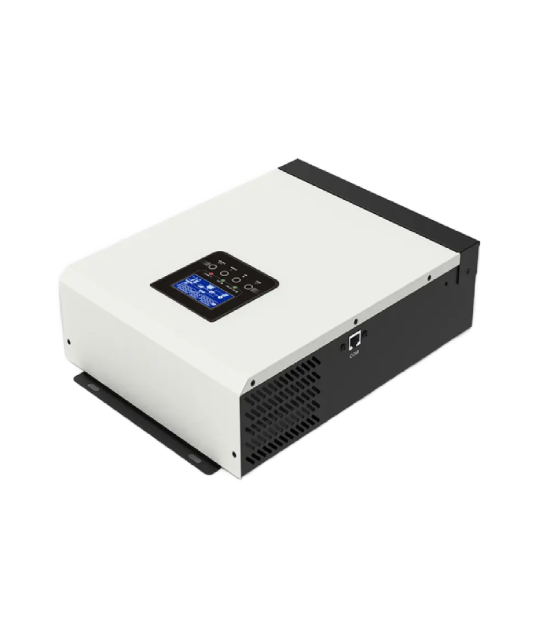
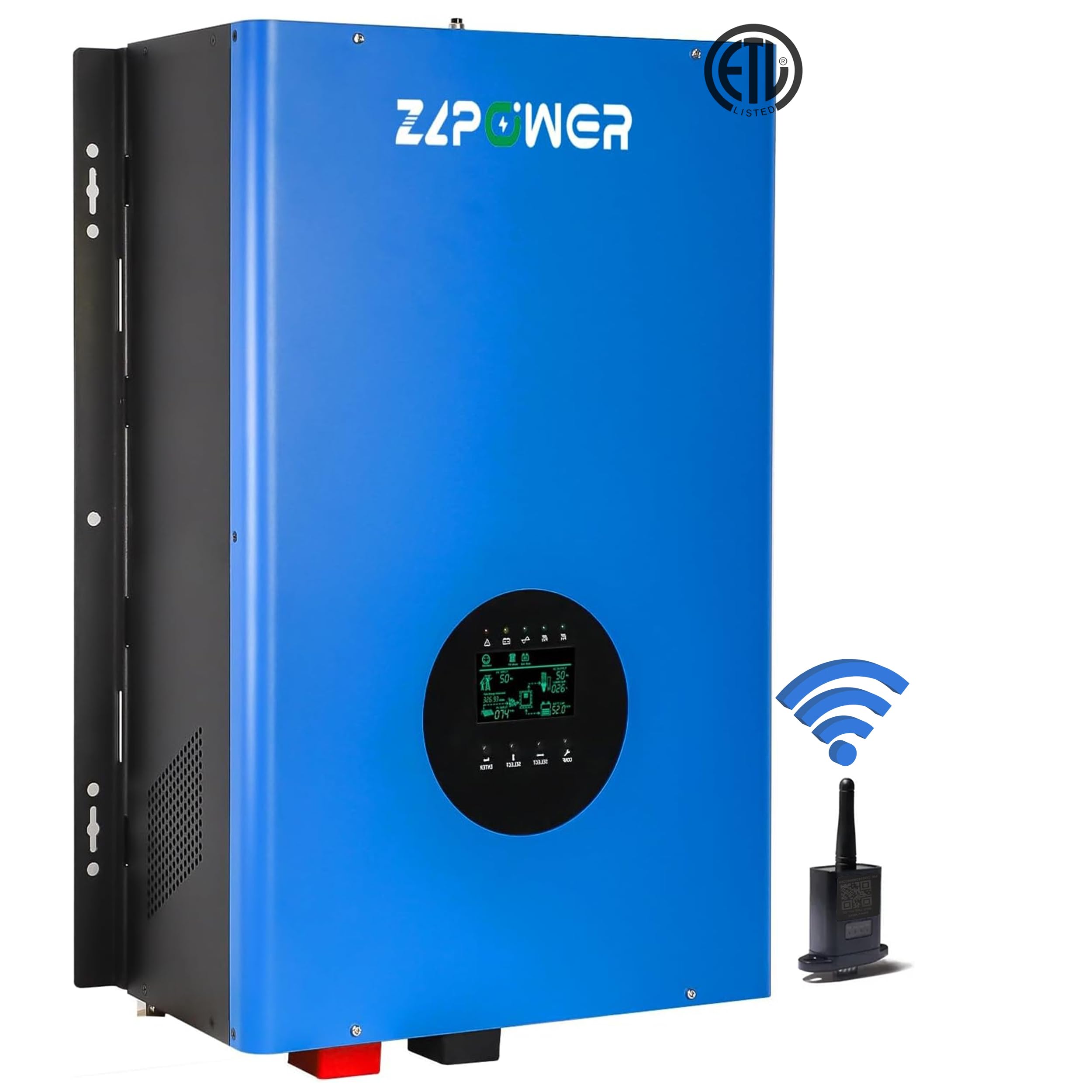
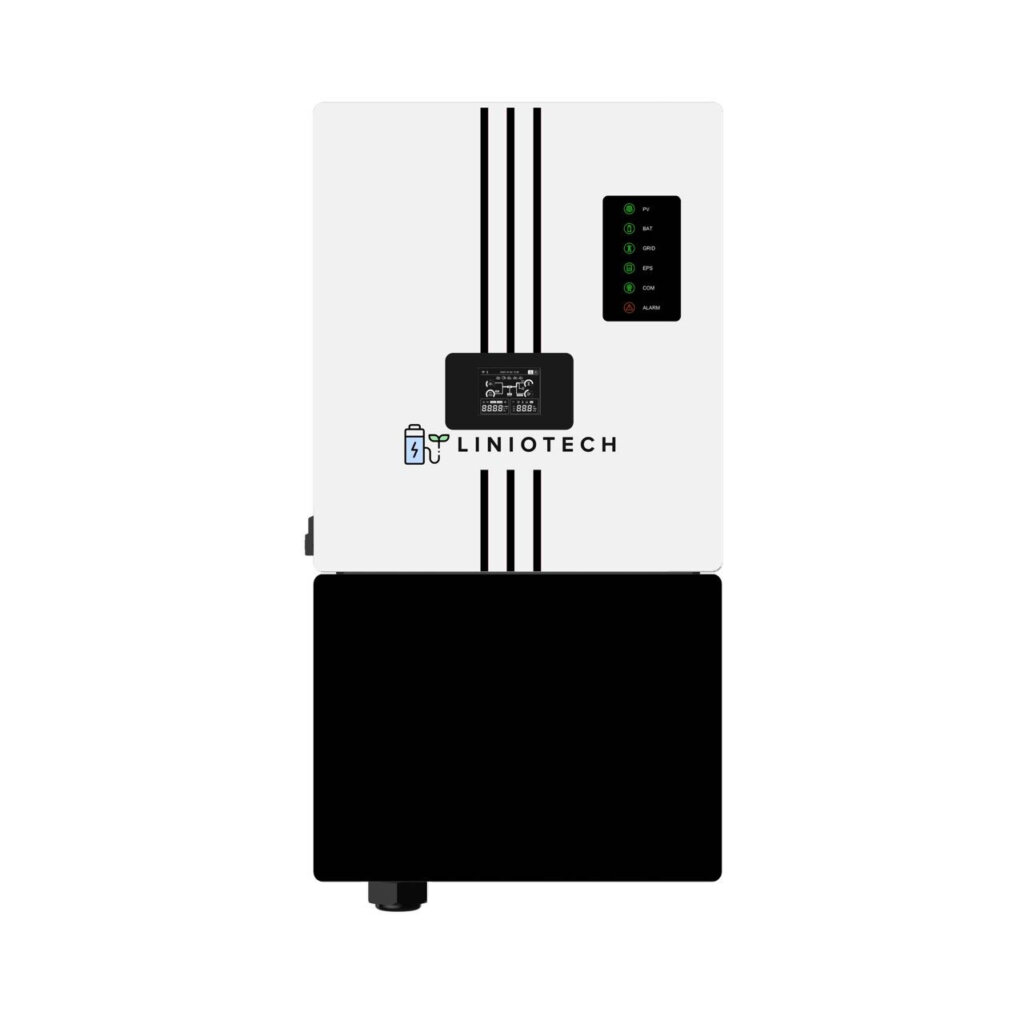
Top 4 15Kw Solar Hybrid Inverter Manufacturers & Suppliers List

Top 10 Hybrid Solar Inverter Companies: Reviewed & Ranked
Website: bettsun.com
No product details extracted. The provided text consists of HTML navigation elements, base64-encoded image data, and article headings without substantive technical specifications or product information regarding solar inverters, VFDs, or industrial automation.

Top 10 Hybrid Inverter Manufacturers in China – HIITIO
Website: hiitio.com
The analyzed text profiles six leading Chinese manufacturers of solar hybrid inverters. HIITIO produces the HCH8~15KS series (8-15kW split-phase, low-voltage) specifically engineered for North American residential standards and whole-home backup systems. Sungrow manufactures string inverters, hybrid inverters, and energy storage systems spanning residential to utility-scale applications with over …
Top 10 Solar Inverter Manufacturers 2025 | Innovators
Website: portlandiaelectric.supply
The text identifies several solar inverter product categories including string inverters, microinverters, central inverters for large-scale installations, and power optimizers. Key technical features highlighted include DC to AC power conversion, hybrid inverter capabilities integrating solar panels with battery storage systems, and smart inverter technology with IoT-enabled real-time energy monit…

The 15K Hybrid Inverter – Powerful Whole Home Management | News
Website: sol-ark.com
Sol-Ark 15K-2P Whole Home Hybrid Inverter: 12kW output capacity with 200A/48kW grid passthrough capability at 240V AC. All-in-one design integrates MPPT charge controller, automatic grid disconnect, AC/DC breakers, Wi-Fi connectivity, and color touchscreen interface. NEMA 3R rated for indoor/outdoor installation. Supports multi-chemistry battery systems including lithium-ion, lead-acid, and solid-…
B2B Engineering FAQs About 15Kw Solar Hybrid Inverter
-
How does a 15kW hybrid inverter manage motor inrush currents when starting submersible pumps or irrigation systems up to 20HP?
High-torque motor starting requires surge capacity beyond nominal ratings. A robust 15kW hybrid unit typically provides 3x–4x surge power (45–60kW peak) for 10–20 seconds, utilizing V/Hz control algorithms similar to dedicated VFDs. For Boray pump-specific applications, ensure the inverter supports “soft start” ramping (0–60 Hz adjustable) to limit inrush to 150% FLA (Full Load Amps), protecting both the motor windings and the 48V battery bank from instantaneous current spikes. -
What is the optimal MPPT voltage window and string sizing for a 15kW system driving 3-phase pump loads?
For 15kW hybrid inverters with triple MPPT architecture (150–500Vdc range per tracker), configure strings to operate at 400–480Vdc under standard test conditions (STC). This minimizes I²R losses in long agricultural feeder runs and ensures the MPPT operates above the battery voltage (48V nominal) plus headroom. With three independent trackers, you can segment east/west-facing PV arrays or separate fixed-tilt from tracking arrays without voltage mismatch, maximizing energy harvest for consistent pump operation during partial shading. -
Can a 48V nominal battery architecture reliably support continuous 15kW output for industrial motors without excessive voltage sag?
At 15kW continuous output, the DC bus draws approximately 312A (at 48V nominal, ignoring efficiency losses). Quality 15kW hybrids support 275A+ continuous battery current with lithium iron phosphate (LiFePO4) chemistry, which maintains voltage stability under high C-rate discharge (1C–2C). For lead-acid configurations, limit discharge to 0.2C–0.3C to prevent sulfation and voltage collapse. Ensure the battery management system (BMS) communicates with the inverter via CAN or RS485 to enforce low-voltage disconnect (LVD) thresholds above 42Vdc to protect pump motors from brownout conditions. -
Is a 15kW hybrid inverter compatible with both single-phase (split-phase 120/240V) and three-phase (208V/380V) pump motors?
Yes. Advanced 15kW units support dual-mode output: single-phase 120/240V for residential/light commercial pumps and three-phase 208V/380V for industrial submersible systems. When configured for 3-phase output, the inverter generates balanced sinusoidal waveforms with <3% THD (Total Harmonic Distortion), critical for preventing overheating in long-run pump motors. Verify the unit supports phase sequence correction (A-B-C rotation) to avoid reverse rotation in centrifugal pumps during commissioning. -
What motor-specific protection algorithms are essential for solar pumping applications using hybrid inverters?
Beyond standard over/under-voltage protection, look for dry-run detection (underload power factor monitoring), stall prevention (current limiting at locked-rotor conditions), and auto-restart with programmable delay (3–300 seconds) after fault clearance. For borehole pumps, integration with float switches or pressure transducers via dry-contact inputs allows the inverter to enter standby mode when tanks are full, reducing unnecessary battery cycling and extending motor bearing life. -
How does ambient temperature derating above 45°C affect continuous operation of 15kW inverters in desert agricultural environments?
Inverters typically derate output power by 2–3% per degree Celsius above 45°C. For 15kW units driving pumps in 50°C+ environments, this reduces available continuous power to ~13.5kW. Ensure the enclosure rating (IP65/IP66 for outdoor agricultural use) includes active cooling or heat-sink design with forced ventilation. When sizing for critical irrigation, oversize the inverter by 15–20% (selecting an 18kW unit) or implement a temperature-derating curve in the BMS to limit battery charge/discharge rates, preventing thermal runaway in lithium cells. -
Can a 15kW hybrid inverter synchronize with existing grid-tied VFD installations, or does it require AC-coupling architecture?
Modern 15kW hybrids support AC coupling, allowing them to accept AC input from existing string inverters or VFDs (up to 19.2kW AC-coupled solar input) while maintaining battery backup functionality. This is critical for retrofitting existing pump stations without replacing the entire PV array. The unit must feature frequency-watt control (per IEEE 1547/UL 1741-SA) to prevent back-feeding during grid outages and provide anti-islanding protection within 2 seconds of grid loss. -
What SCADA and automation protocols are supported for remote monitoring of pump performance and energy yield?
Industrial 15kW hybrids should offer RS485/Modbus RTU and TCP/IP connectivity for integration with agricultural automation systems (e.g., drip irrigation controllers or weather stations). Look for cloud-based monitoring platforms that display real-time motor parameters (current, power factor, running hours) alongside PV generation and battery SOC (State of Charge). For Boray systems, ensure compatibility with standard industrial HMI interfaces to allow EPC contractors to centralize control of multiple pump inverters across distributed solar arrays.
Disclaimer
⚠️ Important Disclaimer
The information provided in this guide is for educational purposes. Industrial applications and electrical engineering projects carry inherent risks. B2B buyers and contractors must conduct thorough technical due diligence and verify regional compliance before installation or procurement.
Conclusion: Partnering with Boray Inverter for 15Kw Solar Hybrid Inverter
Selecting the optimal 15kW solar hybrid inverter represents more than a procurement decision—it is a strategic investment in energy resilience and operational efficiency. For industrial engineers and EPC contractors managing complex agricultural irrigation systems or automated manufacturing facilities, the integration of hybrid inverter technology with advanced motor control capabilities determines long-term project viability and return on investment.
While standard hybrid inverters manage grid-tied and off-grid transitions, industrial applications demand specialized expertise in Variable Frequency Drive (VFD) integration, particularly for high-torque solar pumping systems and precision motor control. This is where Shenzhen Boray Technology Co., Ltd. distinguishes itself as more than a component supplier, but as a comprehensive Solar Pumping & Motor Control Solutions partner.
Headquartered in China, Boray Inverter operates at the intersection of renewable energy and industrial automation. Our R&D team comprises 50% of our workforce, specializing in advanced Permanent Magnet Synchronous Motor (PMSM) and Induction Motor (IM) vector control technologies—critical competencies for optimizing 15kW solar pump inverter performance in demanding agricultural and industrial environments. With two modern production lines and rigorous 100% full-load testing protocols, we ensure every unit meets stringent international standards for reliability and efficiency.
Our trusted global presence spans agricultural irrigation projects and industrial automation installations worldwide, delivering customized VFD solutions that seamlessly integrate with hybrid solar architectures. Whether you require specialized solar pump inverters with MPPT optimization or bespoke motor control systems for hybrid energy setups, Boray’s engineering team provides technical consultation and wholesale manufacturing capabilities tailored to your specifications.
Contact Boray Inverter today at borayinverter.com to discuss your 15kW solar hybrid inverter requirements, request technical documentation, or obtain competitive wholesale quotes for your next agricultural or industrial automation project.