Introduction: Sourcing Hybrid Inverter Solar for Industrial Use
Industrial operations and large-scale agricultural projects face mounting pressure to decouple critical processes from grid instability while optimizing energy economics. As power quality issues and peak demand charges erode operational budgets, the convergence of photovoltaic generation, battery storage, and intelligent power electronics has moved from optional to essential. At the center of this convergence stands the hybrid inverter solar system—a sophisticated energy router that transcends simple DC-to-AC conversion to become the orchestration hub of modern industrial microgrids.
Unlike conventional string inverters that fail when the grid drops, or standalone off-grid systems that waste surplus generation, hybrid inverters integrate Maximum Power Point Tracking (MPPT), bidirectional battery management, and seamless transfer switching within a single industrial-grade chassis. For engineers managing solar pumping stations, irrigation networks, or motor control centers, this technology enables true energy autonomy: storing excess PV output for nighttime irrigation cycles, providing ride-through capability for sensitive VFD-driven processes, and executing peak-shaving strategies that reduce demand charges by 30–50%.
This comprehensive guide examines the industrial procurement landscape for hybrid solar inverters, moving beyond residential specifications to address the rigorous demands of factory floors and agricultural automation. We will dissect system architectures—from AC-coupled to DC-coupled topologies—analyze critical specifications including harmonic distortion limits and motor starting capabilities, and evaluate manufacturing partners capable of supporting EPC contractors through complex integration challenges. Whether you are specifying backup power for a variable frequency drive (VFD) array or engineering a standalone solar pumping microgrid, understanding the nuances of industrial hybrid inverter selection is paramount to project ROI and long-term reliability.
Article Navigation
- Top 2 Hybrid Inverter Solar Manufacturers & Suppliers List
- Introduction: Sourcing Hybrid Inverter Solar for Industrial Use
- Technical Types and Variations of Hybrid Inverter Solar
- Key Industrial Applications for Hybrid Inverter Solar
- Top 3 Engineering Pain Points for Hybrid Inverter Solar
- Component and Hardware Analysis for Hybrid Inverter Solar
- Manufacturing Standards and Testing QC for Hybrid Inverter Solar
- Step-by-Step Engineering Sizing Checklist for Hybrid Inverter Solar
- Wholesale Cost and Energy ROI Analysis for Hybrid Inverter Solar
- Alternatives Comparison: Is Hybrid Inverter Solar the Best Choice?
- Core Technical Specifications and Control Terms for Hybrid Inverter Solar
- Future Trends in the Hybrid Inverter Solar Sector
- B2B Engineering FAQs About Hybrid Inverter Solar
- Disclaimer
- Conclusion: Partnering with Boray Inverter for Hybrid Inverter Solar
Technical Types and Variations of Hybrid Inverter Solar
Hybrid solar inverter architectures vary significantly based on voltage topology, coupling methodology, and integration capabilities with motor control systems. For industrial engineers and EPC contractors specifying equipment for agricultural or manufacturing environments, selecting the appropriate inverter classification is critical for ensuring compatibility with inductive loads, optimizing power conversion efficiency, and maintaining grid compliance. The following technical variations represent the primary configurations deployed in commercial and industrial hybrid solar applications, with specific considerations for integration with Variable Frequency Drives (VFDs) and solar pumping systems.
| Type | Technical Features | Best for (Industry) | Pros & Cons |
|---|---|---|---|
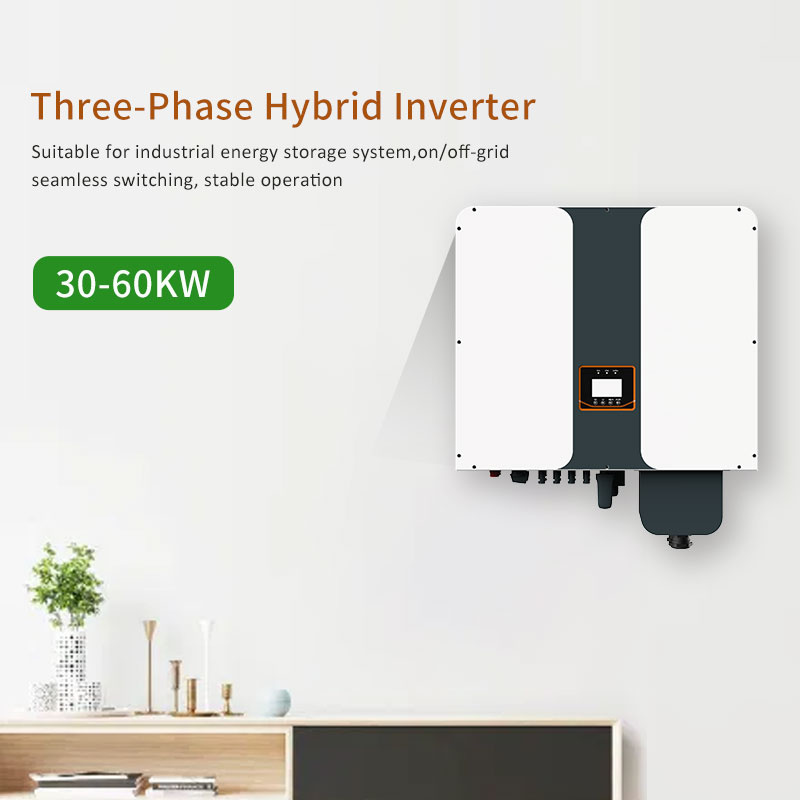
| Three-Phase Industrial Hybrid Inverters | • 380–480V AC 3-phase output (50/60Hz) • IGBT-based conversion topology • High surge capacity (300% rated for 10s) • THD <3% under linear load • 4-quadrant operation for motor regeneration |
Manufacturing facilities, grain processing plants, industrial HVAC, centrifugal pump stations | Pros: Handles high inrush motor currents; balanced phase distribution reduces neutral loading; compatible with standard industrial VFDs without derating Cons: Requires 3-phase grid infrastructure; higher capital cost per kW; complex synchronization with grid during voltage sags |
| Solar Pump Hybrid Inverters with Integrated VFD | • Dual MPPT inputs (98.6% tracking efficiency) • Integrated VFD functionality (0–60Hz variable output) • Vector control or V/Hz control modes • Dry-run protection and cavitation detection • Automatic AC/DC switching for continuous pumping |
Agricultural irrigation systems, livestock water supply, remote borehole pumping, aquaculture aeration | Pros: Eliminates separate motor drive installation; optimized pump curves reduce energy consumption by 20–40%; seamless grid fallback during low irradiance Cons: Application-specific to centrifugal pumps; requires specific motor parameter configuration; limited harmonic filtering for non-pump loads |
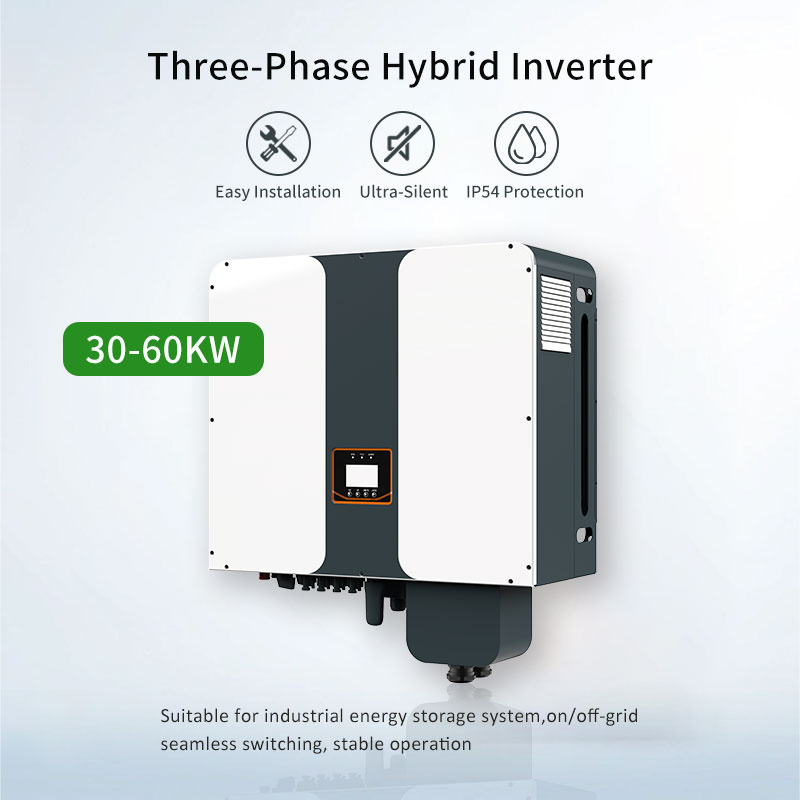
| High-Voltage DC-Coupled Hybrid Systems | • 1000V–1500V DC input capability • Central inverter architecture (100kW–1MW+) • High-voltage battery integration (400V–800V DC) • String-level MPPT optimization • Arc-fault detection and isolation |
Utility-scale solar farms, industrial microgrids, large commercial EPC projects, desalination plants | Pros: Reduced DC cabling losses (I²R minimized); system efficiency >98.5%; scalable to multi-MW configurations Cons: Complex arc-flash safety requirements; limited to high-voltage battery chemistries (LiFePO4, NMC); requires specialized DC switchgear and PPE |
| AC-Coupled Retrofit Hybrid Inverters | • Grid-forming and grid-following capability • AC-side battery integration (230/400V) • Frequency-watt control for legacy system compatibility • Galvanic isolation transformers • Compatible with existing string inverter installations |
Existing solar facility upgrades, distributed generation sites, facilities with established VFD infrastructure, warehouse retrofits | Pros: Retrofit-friendly without PV array reconfiguration; preserves existing inverter warranties; flexible battery addition post-installation Cons: Double conversion energy losses (95–96% round-trip efficiency); complex phase-lock loop synchronization; additional component count increases failure points |
Three-Phase Industrial Hybrid Inverters
For industrial automation environments, three-phase hybrid inverters represent the standard for powering three-phase induction motors and VFD-driven pump systems. These units utilize six-pulse or twelve-pulse IGBT bridges to generate balanced three-phase power with minimal harmonic distortion (<3% THD), critical for preventing motor overheating and bearing currents.
Technical Considerations for Motor Control Integration:
When interfacing with existing VFD installations, these inverters must provide stable voltage and frequency regulation (±1% voltage, ±0.5% frequency) to prevent nuisance tripping of the VFD’s undervoltage or overvoltage protection circuits. The 4-quadrant operation capability allows the inverter to handle regenerative energy from decelerating motor loads, feeding excess power back to batteries or the grid rather than dissipating it in braking resistors. For agricultural projects utilizing submersible pumps, the high surge capacity (typically 3x rated current for 10 seconds) is essential for overcoming the locked-rotor current during pump startup.
Solar Pump Hybrid Inverters with Integrated VFD
This specialized category represents the convergence of Maximum Power Point Tracking (MPPT) technology and motor control electronics—core competencies in advanced solar pumping applications. Unlike standard hybrid inverters that output fixed-frequency AC, these units incorporate full VFD functionality, allowing variable speed operation of pumps to match solar irradiance levels or grid availability.
Engineering Specifications:
The integrated VFD typically supports both sensorless vector control (for high torque applications) and standard V/Hz control. Critical protection features include dry-run detection via current signature analysis and cavitation prevention through minimum frequency thresholds. The hybrid capability enables “daytime solar, nighttime grid” operation without manual switching—essential for agricultural operations requiring 24/7 water supply. From a power quality standpoint, these inverters must maintain a power factor >0.95 across the operating speed range to comply with utility interconnection standards.
System Design Implications:
Electrical engineers must specify these units based on the pump’s torque curve (constant torque vs. variable torque) and verify compatibility with the motor’s insulation class, as the PWM output can generate voltage spikes harmful to older motor windings.
High-Voltage DC-Coupled Hybrid Systems
High-voltage DC-coupled architectures (1000V–1500V DC) are increasingly specified for large-scale industrial microgrids and agricultural processing facilities with high energy density requirements. By maintaining high DC bus voltages between the PV array, battery storage, and inverter, these systems minimize copper losses and reduce cable gauge requirements by up to 75% compared to 48V or 400V systems.
Electrical Safety and Compliance:
The primary engineering challenge involves arc-flash hazard mitigation. At 1500V DC, arc energy is significantly higher than at lower voltages, requiring sophisticated arc-fault circuit interrupters (AFCIs) and rapid shutdown systems. Battery management systems (BMS) must communicate directly with the inverter via CAN bus or RS485 protocols to monitor cell-level voltages and temperatures, preventing thermal runaway in high-voltage battery configurations.
Integration with Industrial Loads:
These systems excel in powering large centrifugal pumps (100kW+) and industrial compressors where the high surge capacity and stable voltage regulation support direct-online starting (DOL) of motors without the voltage sag issues common in lower-capacity inverters.
AC-Coupled Retrofit Hybrid Inverters
AC-coupled systems provide a technically elegant solution for
Key Industrial Applications for Hybrid Inverter Solar
Hybrid solar inverter architectures have evolved beyond residential energy management to become critical infrastructure components in industrial automation. By synthesizing Maximum Power Point Tracking (MPPT) solar harvesting, bidirectional battery management, and grid-interactive power conditioning, these systems provide the voltage stability and ride-through capability essential for sophisticated motor control applications. When integrated with Variable Frequency Drives (VFDs) and solar pumping controllers, hybrid inverters enable precise torque management and operational continuity across sectors where energy reliability directly impacts productivity and safety.
| Sector | Application | Energy Saving Value | Sourcing Considerations |
|---|---|---|---|
| Agricultural Irrigation | Solar Pumping Systems with Hybrid Backup & VFD Integration | 40-60% reduction in diesel/grid dependency; optimized water-energy nexus via MPPT-driven motor control; elimination of irrigation downtime during cloud transients | IP65+ enclosure ratings for outdoor environments; compatibility with submersible pump VFDs (380V-480V three-phase); wide MPPT voltage range (200V-800V DC); anti-islanding protection per IEEE 1547 |
| Water Treatment & Wastewater | 24/7 Pumping Station Operations & Aeration Systems | Peak shaving during high-tariff periods (25-35% utility cost reduction); 100% uptime for biological process critical loads; demand charge mitigation | Seamless transfer time <10ms for PLC/SCADA continuity; total harmonic distortion (THD) <3% for sensor compatibility; redundant AC inputs; MODBUS/RS485 integration for telemetry |
| Industrial HVAC & Climate Control | Chiller, Cooling Tower, and Ventilation Motor Management | 25-35% HVAC energy cost reduction through solar self-consumption and battery load shifting; elimination of demand charges via soft-start motor control | High inrush current handling (300% rated capacity for 60s); power factor correction (>0.95 PF); compatibility with existing BMS protocols (BACnet/IP); dynamic load response <100ms |
| Manufacturing Automation | CNC Machinery, Conveyor Systems, and Precision Servo Drives | Uninterruptible power for motor drives prevents scrap/rework costs; voltage sag ride-through capability eliminates production downtime | Galvanic isolation transformers; pure sine wave output (<2% THD); compatibility with servo drive feedback systems; EtherNet/IP or PROFINET communication for MCC integration |
| Remote Mining & Material Processing | Off-Grid Crushing, Grinding, and Conveying Operations | 70%+ fuel displacement for diesel generators; optimized torque control reduces mechanical wear; peak lopping reduces generator sizing requirements | Wide temperature operation (-25°C to +60°C); IP54 minimum dust ingress protection; robust short-circuit protection (150% for 60s); ability to parallel with existing gensets for hybrid diesel-solar operation |
Agricultural Irrigation: Precision Water-Energy Management
In large-scale agricultural operations, hybrid inverter solar systems function as the central energy management platform for precision irrigation networks. Unlike standard solar pump inverters that cease operation during cloud transients or grid failures, hybrid configurations maintain constant pressure and flow rates by instantaneously switching to battery reserves while simultaneously managing VFD-controlled pump curves. When paired with specialized solar pump VFDs, these systems execute sophisticated energy management algorithms—prioritizing direct DC coupling from solar arrays to pump motors during peak sun, while storing excess generation in lithium-ion phosphate banks for nocturnal irrigation cycles. The integration eliminates water hammer effects common in traditional on/off pumping by utilizing VFD-controlled ramp rates (0.1-60Hz adjustable acceleration), extending submersible motor lifespan by 30-40% while ensuring crops receive optimized hydration regardless of grid stability. Critical engineering considerations include selecting inverters with wide MPPT voltage windows to accommodate morning and evening irradiance variations without disconnecting pump loads.
Water Treatment & Wastewater Management
Municipal and industrial water treatment facilities require 24/7 operational continuity for biological aeration, filtration backwash pumps, and chemical dosing systems—loads that cannot tolerate the power fluctuations typical of pure off-grid solar. Hybrid inverters provide the seamless transfer capability (<10ms) necessary to maintain dissolved oxygen levels and PLC control systems during grid transitions. In this sector, the energy architecture leverages predictive load management: solar energy powers high-consumption centrifugal pumps (typically 75kW-250kW) during daylight hours, while stored energy handles peak evening demand when electricity tariffs surge and biological activity requires sustained aeration. Sourcing considerations emphasize harmonic distortion specifications (<3% THD) to prevent electromagnetic interference with sensitive pH sensors and dissolved oxygen probes, alongside robust surge protection (IEC 61643-11 Class II) given the prevalence of lightning strikes in remote pumping station locations.
Industrial HVAC and Climate Control
Commercial and manufacturing facilities face substantial demand charges from utility providers based on peak power consumption—often triggered by the inrush currents of HVAC compressor motors (6-8x rated current during across-the-line starting). Hybrid solar inverters equipped with VFD integration capabilities mitigate these costs through “soft start” algorithms that limit starting currents to 1.5x rated load, simultaneously reducing mechanical stress on chiller compressors and ventilation fans. The systems leverage predictive energy management, pre-cooling facilities during peak solar generation and utilizing battery reserves to offset afternoon demand charges when cooling loads peak. From a motor control perspective, these installations require hybrid inverters capable of handling high inductive loads with power factor correction (PFC) circuits to maintain >0.95 PF across variable motor loads, ensuring compliance with utility power quality standards while maximizing solar self-consumption rates.
Manufacturing Automation and Process Control
Discrete manufacturing environments rely on CNC machinery, robotic conveyors, and precision servo drives that are exquisitely sensitive to voltage sags (<85% nominal) and harmonic distortion. Hybrid inverter solar installations in this sector function as uninterruptible power supplies (UPS) with solar augmentation, providing galvanic isolation and pure sine wave output (<2% THD) to prevent encoder feedback errors, spindle motor overheating, and position loss in servo systems. The energy architecture enables “island mode” operation during grid outages, allowing production lines to complete critical machining cycles or enter controlled shutdown sequences rather than experiencing catastrophic emergency stops that damage workpieces and tooling. Integration with existing Motor Control Centers (MCCs) requires hybrid inverters with robust industrial communication protocols (Modbus TCP/IP, EtherNet/IP, or PROFINET) for real-time coordination with facility automation systems, enabling centralized monitoring of solar yield, battery state-of-charge, and motor load profiles.
Remote Mining and Material Processing
In extraction industries operating beyond grid infrastructure, hybrid solar inverters manage the complex power requirements of crushing mills, conveyor belts, and slurry pumps—equipment characterized by high inertia loads (up to 10x moment of inertia) and severe starting torque demands (150-200% rated torque). These applications leverage the inverter’s ability to parallel with diesel generators in “diesel-solar hybrid” mode, automatically optimizing the generator’s loading to peak efficiency points (typically 70-80% load) while solar and battery systems handle transient load variations and motor starting surges. The VFD integration proves critical here, enabling torque-controlled starts for jaw and cone crushers that prevent mechanical shock while reducing fuel consumption by 40-60% compared to pure diesel operation. Environmental durability specifications include wide temperature operation (-25°C to +60°C) with derating curves, IP54 minimum ingress protection for dusty atmospheres, and conformal coating on PCBs to resist corrosive sulfide gases common in mining environments.
Top 3 Engineering Pain Points for Hybrid Inverter Solar
Scenario 1: DC Bus Voltage Instability During Rapid Solar Transients
The Problem: In hybrid solar pumping installations, rapid fluctuations in solar irradiance—such as cloud transients passing over large agricultural arrays—cause severe DC bus voltage ripple within the hybrid inverter. When simultaneously managing battery charge states and driving Variable Frequency Drives (VFDs) for high-torque submersible pumps or irrigation motors, this voltage instability propagates to the AC output stage. The result is torque pulsations, motor current harmonics exceeding IEC 61800-3 limits, and premature bearing failure due to electro-erosion. Traditional grid-tied inverters lack the bidirectional power flow algorithms necessary to buffer these transients while maintaining the precise V/Hz control ratio required for constant flow rate in precision agriculture or industrial process water systems.
The Solution: Deploy hybrid inverters featuring three-level NPC (Neutral Point Clamped) topology with active front-end (AFE) rectification and dedicated DC-link voltage regulation algorithms. These systems maintain stable DC bus voltage (±2% tolerance) regardless of solar input variability, while providing sinusoidal output with <3% THD. For critical pumping applications, integrate Battery Energy Storage Systems (BESS) with high C-rate capability to act as virtual inertia—absorbing transient spikes within 10ms and preventing motor control interruption during grid synchronization events. Specify inverters with dual MPPT inputs and advanced vector control algorithms that decouple motor torque and flux control from DC input fluctuations, ensuring consistent pump performance across 0% to 100% solar irradiance variability.
Scenario 2: Electromagnetic Interference in Integrated Solar-Motor Architectures
The Problem: Hybrid inverter installations combine high-voltage DC solar arrays (up to 1500V), battery banks with floating potentials, and AC motor drives within confined pump houses or outdoor electrical enclosures. This creates complex grounding topologies where high-frequency PWM switching (2–16 kHz) generates common-mode voltages that induce shaft currents in motors, leading to bearing fluting and lubricant breakdown. Additionally, the integration of lithium battery management systems (BMS) with motor VFDs often results in conducted emissions exceeding industrial EMC standards, causing interference with remote monitoring SCADA systems, irrigation automation controllers, and adjacent communication networks. The proximity of sensitive battery electronics to high-power motor switching creates unique EMI coupling paths not present in standalone grid-tied or off-grid systems.
The Solution: Implement hybrid inverters with integrated common-mode chokes, sine-wave filters, and dv/dt filters specifically engineered for long motor cable runs (up to 500m typical in large-scale irrigation). Specify equipment with reinforced insulation systems (Class F or H) and specify motors with insulated bearing assemblies or shaft grounding rings to mitigate circulating bearing currents. The inverter architecture should feature galvanic isolation between the DC solar/battery stage and the AC output stage utilizing high-frequency isolation transformers. Ensure full compliance with IEC 62109-1 for safety and IEC 61000-6-2/4 for industrial immunity, with dedicated EMC filters on both DC input terminals and AC motor output terminals. For agricultural environments, select inverters with shielded IGBT power modules and conformal-coated PCBs to prevent moisture ingress from high-humidity irrigation zones.
Scenario 3: Thermal Derating Conflicts with Environmental Sealing in Continuous-Duty Applications
The Problem: Industrial solar pumping applications—such as desalination plants, mining dewatering, or large-scale drip irrigation—require hybrid inverters to operate at 80–100% rated capacity continuously in ambient temperatures exceeding 45°C. Standard IP20 or IP54 enclosures provide insufficient protection against dust, sand, and corrosive atmospheres common in agricultural and desert environments, while sealed IP65 enclosures often suffer from insufficient thermal dissipation for the combined heat generation of solar MPPT stages, battery charging circuits, and motor drive inverters. This results in IGBT junction temperatures exceeding Tj(max), triggering thermal derating that reduces pump flow rates precisely when solar irradiance and irrigation demand are at their peak, or catastrophic thermal shutdown during critical operational windows.
The Solution: Specify hybrid inverters with IP66-rated aluminum die-cast enclosures featuring passive cooling fin geometries optimized for natural convection, or intelligent forced-air cooling with redundant fans, washable air filters, and automatic fan speed control based on IGBT junction temperature monitoring. Select devices utilizing silicon carbide (SiC) MOSFETs or latest-generation IGBTs with Tj = 175°C ratings and lower switching losses (Eon/Eoff) compared to traditional silicon devices, reducing heat generation by 30–40%. Implement thermal management strategies including automatic derating curves that preemptively limit output current based on ambient temperature sensors and real-time thermal modeling, ensuring continuous operation at 50°C ambient without performance degradation. For extreme environments, specify conformal-coated PCBs, stainless steel hardware resistant to fertilizer chemicals, and thermal interface materials with >6W/mK thermal conductivity to ensure reliable motor control in dusty, high-humidity pump stations.
Component and Hardware Analysis for Hybrid Inverter Solar
In industrial solar pumping and motor control applications, the hybrid inverter represents a convergence of grid-tied solar technology and variable frequency drive (VFD) topology. Unlike residential units, industrial-grade hybrid inverters must withstand harsh agricultural environments, extreme temperature cycling, and continuous operation under varying load conditions. The reliability of these systems hinges not merely on firmware algorithms, but on the electromechanical integrity of specific internal components engineered for high-stress power conversion.
Power Semiconductor Architecture
At the heart of every hybrid inverter lies the power switching module, typically comprising Insulated Gate Bipolar Transistors (IGBTs) or advanced Silicon Carbide (SiC) MOSFETs. In solar pumping applications, these devices handle the critical DC-AC conversion while managing bidirectional power flow for battery energy storage systems (BESS). Industrial engineers should specify modules with low Vce(sat) saturation voltages and high short-circuit withstand capability (typically 10μs minimum). For agricultural projects involving submersible pumps, the switching frequency—often between 2-16 kHz—directly impacts motor insulation stress and audible noise, necessitating IGBT modules with optimized switching characteristics to minimize dv/dt spikes that degrade motor winding insulation over time.
Control Systems and Signal Processing
The Digital Signal Processor (DSP) or ARM-based microcontroller serves as the neural center, executing complex Maximum Power Point Tracking (MPPT) algorithms while simultaneously managing motor control vector calculations. In hybrid solar pump inverters, this controller must process multiple feedback loops: solar array voltage/current, battery state-of-charge (SOC), grid synchronization parameters, and motor load characteristics. High-resolution Analog-to-Digital Converters (ADCs) with 12-bit or higher precision are essential for accurate MPPT tracking (targeting >99% efficiency) and preventing pump cavitation through precise frequency ramp control. Boray Inverter’s engineering philosophy emphasizes industrial-grade DSP architectures with redundant watchdog circuits to prevent lock-ups during voltage transients common in remote agricultural installations.
Thermal Management and Mechanical Integrity
Thermal cycling represents the primary failure mechanism in solar inverter hardware. Aluminum heatsink assemblies with anodized finishes and optimized fin density (typically 15-25 fins per inch for forced convection) must dissipate heat generated by IGBT switching losses and copper conduction losses. Critical quality indicators include the thermal interface material (TIM) between semiconductors and heatsinks—high-performance phase-change materials or ceramic-filled silicone pads maintaining <0.5°C-in²/W thermal resistance. For EPC contractors specifying equipment for desert or tropical climates, fan-bearing systems should utilize dual-ball bearing constructions rated for 50,000+ hours MTBF, with IP54 minimum protection against dust and moisture ingress.
Energy Storage and Filtering Components
DC-Link capacitors stabilize the DC bus voltage between the solar array, battery bank, and inverter bridge. In hybrid systems, these components experience high ripple currents and must endure frequent charge/discharge cycles. Metallized polypropylene film capacitors outperform electrolytic alternatives in this application, offering self-healing properties and 100,000-hour lifespan expectations under rated conditions. Equally critical are the EMI filters—common-mode chokes and X2/Y capacitors—that suppress conducted emissions to protect both grid infrastructure and motor bearings from damaging shaft currents and electrical discharge machining (EDM).
Component Quality Matrix
| Component | Function | Quality Indicator | Impact on Lifespan |
|---|---|---|---|
| IGBT Power Module | DC-AC conversion, bidirectional power switching | Vce(sat) < 1.7V, Tj(max) 150°C, short-circuit withstand 10μs | Determines thermal stress; poor quality leads to solder fatigue and thermal runaway after 5-7 years |
| DSP Controller | MPPT algorithm execution, motor vector control, system protection | 32-bit architecture, <1% ADC error, hardware watchdog timer | Firmware corruption protection; ensures continuous operation in grid-fault conditions |
| Cooling Heatsink | Thermal dissipation for semiconductors | Aluminum 6063-T5, anodized coating, thermal resistance <0.8 K/W | Prevents thermal cycling fatigue; critical for maintaining semiconductor junction temperatures below 85°C ambient |
| DC-Link Capacitors | DC bus filtering, ripple current absorption | Metallized polypropylene film, ESR < 5mΩ, self-healing capability | Electrolytic failure modes (venting, drying) eliminated; film capacitors offer 3x lifespan in solar applications |
| Current/Voltage Sensors | Precision feedback for MPPT and protection | Hall-effect with 0.5% accuracy, 50ppm/°C drift, isolation 2.5kV | Accuracy degradation causes MPPT efficiency losses and potential over-current damage to pumps |
| EMI Filter Chokes | Suppression of conducted emissions, motor bearing protection | High-permeability ferrite cores, triple-insulated wire, IP65 enclosure | Prevents premature motor bearing failure via shaft current mitigation; reduces grid harmonic distortion |
| Battery Management Interface | Charge/discharge control, SOC monitoring | Coulomb counting accuracy ±2%, cell balancing current >100mA | Prevents lithium battery thermal runaway; extends cycle life by 40% through precise charge control |
Integration Considerations for Motor Control Applications
For agricultural project managers specifying hybrid inverters for irrigation systems, component selection directly impacts pump longevity and system efficiency. The integration of VFD functionality within the hybrid architecture requires particular attention to IGBT gate driver circuits—isolated drivers with millisecond-level fault detection prevent shoot-through currents that destroy power modules. Additionally, DC bus voltage sensing circuits must maintain accuracy across temperature extremes to prevent over-modulation that induces motor overheating.
Boray Inverter’s industrial designs incorporate conformal coating on all PCBA assemblies (typically acrylic or silicone-based) to protect against humidity and corrosive atmospheres prevalent in agricultural environments. This seemingly minor specification can extend operational lifespan by 30% compared to unprotected consumer-grade electronics.
When evaluating hybrid inverter hardware for EPC contracts, prioritize units utilizing press-fit IGBT technologies rather than soldered modules, as this eliminates thermal fatigue at solder joints—a common failure point in climates with high diurnal temperature swings. Furthermore, insist on dual-redundant cooling systems for installations exceeding 50kW; the marginal cost increase is negligible compared to agricultural production losses during critical irrigation periods.
The convergence of solar generation, energy storage, and motor control within a single enclosure demands component-grade reliability standards typically reserved for industrial automation. By specifying hardware built around extended-temperature components with demonstrated MTBF ratings exceeding 50,000 hours, stakeholders ensure that hybrid solar pumping systems deliver the operational continuity essential for commercial agricultural and industrial process applications.
Manufacturing Standards and Testing QC for Hybrid Inverter Solar
Industrial-grade hybrid solar inverters operate at the intersection of grid-tied power electronics and mission-critical motor control systems. For EPC contractors and agricultural engineers deploying solar pumping systems with energy storage integration, manufacturing rigor determines whether an inverter survives 25 years of thermal cycling, humidity, and full-load operation. At Boray Inverter, our heritage in Variable Frequency Drive (VFD) manufacturing for harsh agricultural environments directly informs the production standards applied to hybrid inverter platforms—ensuring they withstand the same vibration, dust, and thermal stress as our solar pump controllers.
PCB-Level Environmental Protection: Conformal Coating & Encapsulation
The printed circuit board assembly (PCBA) represents the primary failure point in any power electronic system. We manufacture hybrid inverter mainboards and MPPT controller boards to IPC-A-610 Class 3 standards (High Performance/Harsh Environment), implementing automated selective conformal coating processes per IPC-CC-830 qualification.
For agricultural and industrial applications where hybrid inverters interface with solar pump VFDs, we specify polyurethane or silicone-based conformal coatings (100-200μm thickness) rather than standard acrylic formulations. This provides:
– Moisture insulation resistance: >10¹² Ω per MIL-I-46058C, critical for tropical climates and irrigation environments
– Salt spray protection: 96-hour resistance per ASTM B117 for coastal solar farms
– Chemical resistance: Protection against ammonia, fertilizer particulates, and pesticide vapors common in agricultural installations
Power modules receive additional potting compounds (thermally conductive epoxy) to eliminate air gaps around IGBT drivers and capacitor banks—directly transferring heat management techniques from high-frequency VFD manufacturing to hybrid inverter DC/AC conversion stages.
Reliability Engineering: High-Temperature Aging & ESS
To eliminate infant mortality and validate thermal design margins, every hybrid inverter undergoes Environmental Stress Screening (ESS) before final assembly. Our burn-in protocols exceed consumer-grade solar inverter standards:
High-Temperature Aging Chambers: Units operate at 85°C ambient temperature (40°C above standard operating conditions) for 48-72 hours under dynamic load cycling (25%-100%-25% rated power). This accelerates solder joint fatigue and capacitor electrolyte degradation, identifying potential field failures before shipment.
Thermal Shock Cycling: For units destined for extreme climates, we perform -40°C to +85°C thermal shock testing (5°C/min ramp rate, 20 cycles) on sampled units per IEC 60068-2-14. This validates the integrity of conformal coating adhesion and large-component solder joints (inductors, transformers) that experience differential thermal expansion.
Power Cycling Acceleration: Hybrid inverters specifically undergo IGBT power cycling (10,000 on/off cycles at rated current) to simulate the switching stresses inherent in both grid-feeding and motor-drive applications—leveraging our VFD testing infrastructure to ensure compatibility with inductive loads from solar pumps and agricultural machinery.
100% Full-Load Production Testing
Unlike statistical sampling methods, Boray Inverter mandates 100% full-load functional testing for every hybrid unit leaving the facility. Our automated test stations simulate real-world operating conditions:
Resistive Load Bank Testing: Each inverter operates at 110% rated load for 2 hours using programmable AC load banks, verifying:
– Thermal runaway thresholds and cooling system efficacy
– MPPT tracking accuracy (>99.5% efficiency verification across 200-850Vdc input range)
– Grid-tie current harmonic distortion (<3% THDi per IEC 61000-3-2)
– Anti-islanding protection response time (<2 seconds per IEC 62116)
Dynamic Load Transitions: We simulate the erratic power draws typical of hybrid applications—0% to 100% load steps in <100ms—to verify DC bus voltage stability and battery charging/discharging transient response. This is critical for agricultural users where solar pumps cycle on/off based on tank levels while batteries buffer the load.
Grid Failure Simulation: Automated relays disconnect AC grid power during full-load operation to verify <20ms transfer time to off-grid mode, ensuring uninterrupted power supply (UPS) functionality for critical irrigation controls and livestock ventilation systems.
International Standards & Certification Compliance
Our manufacturing quality management system adheres to ISO 9001:2015 with specific focus on solar inverter production controls. All hybrid models carry comprehensive certification packages for global EPC deployment:
Safety Standards:
– IEC 62109-1/-2: Safety of power converters used in photovoltaic power systems (including Class I and Class II insulation requirements)
– IEC 62040-1: Uninterruptible power systems (UPS) safety requirements for battery backup functionality
– UL 1741: Grid support utility-interactive inverters (for North American markets)
Electromagnetic Compatibility:
– IEC 61000-6-2 (Immunity for industrial environments) and IEC 61000-6-4 (Emissions)
– EN 55011 Class A (Industrial, Scientific and Medical Equipment emissions)
– Surge immunity testing to IEC 61000-4-5 Level 4 (4kV line-to-line, 6kV line-to-earth)
Grid Integration:
– IEC 61683: Photovoltaic systems—Power conditioners—Procedure for measuring efficiency
– IEEE 1547 (where applicable): Interconnection and interoperability with electric power systems
Cross-Application Manufacturing Synergy
Manufacturing hybrid inverters alongside solar pump VFDs creates unique quality advantages. Our production lines share automated optical inspection (AOI) and in-circuit testing (ICT) equipment calibrated for high-voltage motor drive topologies, ensuring hybrid inverters meet the same IP65 enclosure standards and cable gland specifications used in submersible pump controllers.
For agricultural project managers, this means the hybrid inverter managing your solar pump battery storage has undergone the same vibration testing (5-200Hz, 2g acceleration) and dust ingress validation (IP6X) as our dedicated pump drives—ensuring compatibility when these systems share enclosures in integrated solar pumping stations.
Every unit ships with a traceability matrix linking serial numbers to component batches, test data logs, and calibration certificates—providing EPC contractors the documentation required for utility-scale project commissioning and long-term asset management.
Step-by-Step Engineering Sizing Checklist for Hybrid Inverter Solar
Proper sizing of a hybrid solar inverter system for industrial motor control and agricultural pumping requires rigorous engineering analysis beyond standard residential calculations. Unlike simple grid-tied installations, hybrid architectures must simultaneously manage variable DC input from photovoltaic arrays, bidirectional battery energy storage, and dynamic AC loads—often involving high-inrush motor starting currents and torque demands. The following technical checklist ensures compatibility between solar generation, energy storage, and motor control requirements while maintaining system stability across grid-connected and islanded operational modes.
1. Motor Load Characterization & Duty Cycle Profiling
– Torque Profile Verification: Confirm pump type (centrifugal vs. positive displacement) and associated torque characteristics. Centrifugal pumps require variable torque (quadratic relationship with speed), while positive displacement pumps demand constant torque. Verify the hybrid inverter or integrated VFD supports the appropriate V/Hz control curve or sensorless vector control.
– Inrush Current Analysis: Document Locked Rotor Amps (LRA) and Full Load Amps (FLA). Size the hybrid inverter’s surge capacity (typically 150–200% of continuous rating for 10–60 seconds) to handle motor starting without triggering fault conditions or switching to grid supplementation prematurely.
– Daily Energy Budget: Calculate total kWh required for pumping operations, accounting for Total Dynamic Head (TDH), flow rate (GPM or m³/h), and pump efficiency. Include ancillary loads (controls, sensors, valves) in the energy audit.
2. Photovoltaic Array Sizing & String Configuration
– MPPT Voltage Window Matching: Verify the hybrid inverter’s MPPT input voltage range (e.g., 200–850 VDC). Calculate maximum open-circuit voltage (Voc_max) at record low temperature using temperature coefficient (α) from panel datasheets:
Voc_max = Voc_STC × [1 + α × (T_min − 25°C)]
Ensure Voc_max remains below inverter maximum DC input voltage with 5% safety margin.
– Minimum Voltage Verification: Calculate minimum Vmp at highest ambient temperature to ensure voltage remains above MPPT minimum start voltage during hot afternoons when irrigation demand typically peaks.
– String Sizing: Determine series string length using:
Modules per String = Floor(Inverter MPPT Max Voltage / Voc_max)
Calculate parallel string quantity based on inverter maximum DC input current and desired DC/AC ratio (typically 1.1–1.3 for pump applications to ensure sufficient torque during low irradiance).
– Irradiance Correction: Size array capacity to provide 120–130% of daily pump energy requirements to account for dust accumulation, temperature derating, and inverter efficiency losses (typically 96–98% for high-frequency transformerless topologies).
3. Energy Storage System (ESS) Sizing for Motor Applications
– Autonomy Period Definition: Determine required backup duration for critical pumping (e.g., 2–4 hours for livestock watering, 24+ hours for greenhouse climate control). Size battery capacity using:
Usable Capacity (kWh) = Critical Load (kW) × Autonomy (h) / (DoD × η_inv × η_bat)
where DoD = Depth of Discharge (typically 0.8 for LiFePO₄), η = efficiency factors.
– C-Rate Compatibility: Verify battery maximum discharge rate (C-rate) can support motor starting currents without excessive voltage sag. For direct-coupled hybrid pump systems, ensure battery internal resistance allows <5% voltage drop during LRA events.
– Charge Current Limits: Confirm solar array maximum output current does not exceed battery manufacturer’s recommended charge rate (typically 0.3C–0.5C for lithium chemistries).
4. Hybrid Inverter/VFD Specification & Compatibility
– Power Rating Selection: Size inverter continuous output at minimum 1.25× motor FLA. For submersible pumps with long cable runs, account for voltage drop compensation capabilities.
– DC Input Architecture: Verify dual MPPT inputs for east/west array configurations or shading mitigation. Check maximum DC short-circuit current (Isc) against inverter input protection limits.
– Grid Interaction Parameters: Configure export limits, power factor settings (typically 0.9 leading to 0.9 lagging), and anti-islanding protection (UL 1741/IEC 62109 compliance) for grid-tied agricultural operations.
– VFD Integration Protocol: If utilizing separate VFD downstream of hybrid inverter, verify voltage and frequency stability (THD <3%) under varying solar irradiance. For integrated solar pump inverters with hybrid capability, confirm automatic switching between solar-only, battery-assist, and grid-tie modes without torque interruption.
5. Protection Coordination & Safety Systems
– Overcurrent Protection: Size DC fuses/breakers per NEC 690.9 or IEC 60364-7-712. AC side protection must coordinate with motor thermal overloads and inverter output capabilities.
– Ground Fault Protection: Specify DC ground fault detection (GFDI) for arrays >80V per NEC requirements. Verify inverter ground fault impedance detection sensitivity (<30kΩ typical).
– Surge Protection: Install Type 1 SPD on DC inputs (40kA+ Iimp) and Type 2 SPD on AC outputs at inverter and motor control panel. Ensure voltage protection level (Up) < equipment withstand voltage.
– Insulation Monitoring: For submersible pump applications, specify insulation resistance monitoring (>1MΩ threshold) integrated with hybrid inverter fault interdiction logic.
6. Cable Sizing & Voltage Drop Analysis
– DC Circuit Calculations: Size PV source circuits to limit voltage drop to <1.5% at STC conditions. Use copper conductors rated for 90°C wet/dry locations with UV resistance.
– AC Output Circuits: Size motor feeders to maintain <3% voltage drop at full load to prevent torque degradation and overheating. Account for harmonic currents if using standard PWM inverters without sine wave filters.
– Battery Interconnects: Size battery cables for maximum discharge current with <1% voltage drop to minimize energy loss and ensure accurate SOC calculations by the battery management system (BMS).
7. Environmental Derating & Installation Factors
– Temperature Derating: Apply inverter output derating curves for ambient temperatures >40°C. Ensure enclosure IP rating (minimum IP54 for dusty agricultural environments, IP65 for direct outdoor mounting) matches installation location.
– Altitude Corrections: For installations >1000m, apply derating factors (typically 1% per 100m above 1000m) for inverter cooling capacity and breaker interrupt ratings.
– Mounting & Cooling: Verify minimum clearance distances (typically 150mm sides, 300mm top) for hybrid inverter heat dissipation. Consider active cooling for battery enclosures in tropical climates.
8. Commissioning Verification Protocol
– MPPT Tracking Verification: Confirm maximum power point tracking efficiency >99% across irradiance levels 200–1000 W/m² using IV curve tracing equipment.
– Transfer Switch Testing: Verify <20ms transfer time between grid and battery modes to prevent motor control relay dropout.
– Harmonic Analysis: Measure THD-V and THD-I at motor terminals under varying solar input to ensure compliance with IEEE 519 limits (<5% THD-V).
This systematic approach ensures the hybrid solar inverter system delivers reliable motor starting torque, maintains grid compliance, and provides resilient backup power for critical agricultural and industrial pumping operations.
Wholesale Cost and Energy ROI Analysis for Hybrid Inverter Solar
For industrial-scale solar deployments, the procurement economics of hybrid inverter systems diverge significantly from residential markets, requiring sophisticated analysis of volume-tiered pricing, integration costs with existing motor control infrastructure, and long-term operational expenditure models. When evaluating hybrid inverter solar solutions for agricultural pumping stations or factory automation environments, decision-makers must account for not only the capital expenditure (CapEx) of the inverter hardware but also the total cost of ownership (TCO) encompassing energy arbitrage savings, VFD compatibility, and warranty risk mitigation.
B2B Pricing Architecture and Volume Procurement Strategies
In the wholesale distribution channel, hybrid inverter pricing follows a logarithmic decay curve relative to procurement volume. For EPC contractors and automation distributors, standard industrial three-phase hybrid inverters (ranging from 30kW to 250kW) typically exhibit the following pricing tiers:
- Pilot/Low Volume (1–9 units): 15–20% below MSRP, suitable for project feasibility demonstrations or retrofit applications requiring single-unit redundancy.
- Project Tier (10–49 units): 25–35% wholesale discounts, applicable for commercial solar pumping installations or factory microgrid deployments. At this tier, manufacturers like Boray Inverter typically offer configurable MPPT voltage ranges and customizable communication protocols (Modbus RTU/TCP, CAN bus) for seamless integration with existing Variable Frequency Drive (VFD) networks.
- OEM/EPC Partnership (50+ units): 40–50% below retail, often inclusive of white-label options, dedicated firmware for solar pump control algorithms, and extended technical support packages.
Component Cost Breakdown: For industrial hybrid inverters, the bill of materials (BOM) cost is dominated by power semiconductor modules (IGBTs or SiC MOSFETs) comprising 35–40% of unit cost, followed by magnetic components (chokes and transformers) at 20–25%, and enclosure/IP-rated housing at 15%. Understanding this breakdown allows procurement teams to negotiate effectively when specifying enhanced thermal management for harsh agricultural environments or marine-grade coatings for coastal industrial applications.
Industrial vs. Residential Economic Models
Unlike consumer-grade hybrid systems where per-watt pricing ($0.50–$0.80/W) focuses on residential peak shaving, industrial B2B procurement evaluates cost per kVA of motor starting capacity and harmonic distortion mitigation. Three-phase hybrid inverters designed for solar pump integration command a 20–30% premium over single-phase equivalents but eliminate the need for separate soft-starters or across-the-line motor starters.
Grid-Forming vs. Grid-Following Economics: For remote agricultural projects lacking stable grid infrastructure, grid-forming hybrid inverters (capable of black-start and voltage regulation) represent a higher initial investment (approximately 12–18% CapEx increase) but eliminate the ancillary costs of diesel generator synchronization equipment. When paired with Boray’s solar pump VFDs, these systems enable direct DC-coupled pumping during daylight hours, bypassing battery round-trip efficiency losses (typically 85–92%) and improving overall system ROI by 8–12%.
ROI Calculation Framework for Solar Pumping and Motor Control
The return on investment for industrial hybrid inverter systems must account for multi-vector value streams beyond simple electricity bill reduction:
1. Diesel Displacement and Fuel Hedge Value
In off-grid or weak-grid agricultural applications, hybrid solar inverters displacing diesel generators deliver payback periods of 2.5–4 years, assuming diesel costs of $1.20–$1.50 per liter. For a 75kW irrigation pump operating 2,000 hours annually, the fuel savings alone justify the hybrid inverter premium within 18 months, excluding carbon credit monetization or renewable energy certificate (REC) revenues.
2. Peak Demand Charge Mitigation
Industrial facilities with high motor inrush currents face utility demand charges based on peak kVA draw. Hybrid inverters with battery buffering capabilities can shave 30–50% of peak demand charges by supplying battery power during motor starting sequences, effectively reducing the facility’s contracted maximum demand. At typical industrial electricity rates ($0.12–$0.25/kWh with demand charges of $15–$30/kW), this translates to annual savings of $8,000–$15,000 per MW of installed hybrid capacity.
3. VFD Integration Synergies
When hybrid inverters are deployed alongside VFDs for pump or conveyor control, the combined system achieves superior energy harvest through coordinated DC bus voltage management. Rather than converting DC solar power to AC and back to DC for the VFD, advanced hybrid architectures allow direct DC coupling or synchronized AC coupling, reducing conversion losses by 3–5% and improving motor efficiency across variable speed ranges.
Warranty Cost Analysis and Lifecycle Considerations
Industrial hybrid inverter warranties represent a significant TCO variable, with standard coverage ranging from 5 to 10 years and extended warranties available up to 20 years for critical infrastructure projects.
Standard Warranty Economics: Manufacturer-backed warranties typically cover power electronics (inverter bridge and MPPT controllers) for 5 years at no additional cost, with battery management system (BMS) integration guaranteed for 3 years. For distributors, the warranty reserve cost—funds set aside for potential replacements—averages 2–3% of wholesale price for years 1–5, escalating to 5–7% for years 6–10 as electrolytic capacitors and cooling fans approach end-of-life.
Extended Protection Strategies: Premium warranty packages (adding 15–25% to unit cost) include advanced replacement services and on-site technical support, critical for remote agricultural installations where downtime costs exceed $500 per hour in lost irrigation windows. EPC contractors should evaluate Mean Time Between Failures (MTBF) data; industrial-grade hybrid inverters utilizing film capacitors rather than electrolytic variants demonstrate MTBF ratings exceeding 100,000 hours, justifying the higher upfront cost through reduced service dispatch frequency.
Battery Replacement Cycle Costs: While inverter hardware may last 15–20 years, lithium iron phosphate (LiFePO4) battery banks typically require replacement every 8–12 years. B2B procurement agreements should structure battery costs as separate line items from inverter hardware, allowing for technology upgrades (e.g., transitioning from LiFePO4 to solid-state batteries) without full system replacement.
Strategic Procurement Recommendations
For automation distributors and agricultural project managers, optimizing hybrid inverter procurement requires:
- Specification Alignment: Ensure hybrid inverter DC voltage ranges (typically 600V–1500V DC for commercial systems) match existing solar pump VFD input specifications to minimize DC/AC conversion stages.
- Regional Tariff Optimization: In markets with time-of-use (TOU) pricing, specify hybrid inverters with programmable time-based control logic to maximize arbitrage between low-cost solar generation and peak-rate grid consumption.
- Service Level Integration: Negotiate preventive maintenance contracts concurrent with hardware procurement, focusing on thermal management system inspection (critical for inverter longevity in agricultural environments with high dust/particulate matter) and firmware updates for evolving grid codes.
By analyzing hybrid inverter solar investments through the lens of industrial motor control integration and agricultural operational continuity, EPC contractors and engineering procurement teams can achieve blended payback periods of 3–5 years while establishing resilient power infrastructure capable of supporting high-torque motor applications and critical pumping operations.
Alternatives Comparison: Is Hybrid Inverter Solar the Best Choice?
For industrial engineers and EPC contractors evaluating distributed energy architectures, selecting a hybrid inverter solar configuration represents a strategic decision that must be weighed against specialized alternatives in motor control and power generation. While hybrid inverters integrate solar generation, battery storage, and grid interaction into a unified power conditioning unit, they are not universally optimal for all industrial automation or agricultural pumping scenarios. The determination hinges on load characteristics—specifically whether the priority is facility-wide energy resilience, high-torque motor starting, or dedicated process control.
Architectural Alternatives: Hybrid vs. Specialized Solar Configurations
In solar pumping and industrial motor applications, three primary architectures compete with the hybrid approach:
1. Grid-Tied Solar Inverters (Without Storage)
These systems prioritize maximum power point tracking (MPPT) efficiency and grid export but offer no backup capability. For irrigation projects with consistent grid availability, they provide lower CAPEX than hybrid systems but leave operations vulnerable to outages. Unlike hybrid inverters, they cannot modulate output to support motor starting inrush currents during grid instability.
2. Dedicated Solar Pump Inverters (DC-to-AC Motor Drives)
Specialized units—such as those engineered by Boray Inverter—optimize DC-to-AC conversion specifically for centrifugal and positive displacement pumps. These systems typically eliminate battery storage entirely, using water reservoirs as the energy storage medium. They feature pump-specific protections (dry-run detection, water hammer mitigation, and flow curve optimization) that hybrid inverters generally lack. For pure pumping applications without critical 24/7 power requirements, dedicated solar pump inverters often deliver superior efficiency-to-cost ratios.
3. Off-Grid Battery Inverters
Unlike hybrid systems that maintain grid synchronization, off-grid inverters operate in island mode permanently. While they provide complete energy independence, they require oversized battery banks and solar arrays to guarantee power during extended low-irradiance periods—making them economically viable only for remote installations where grid extension costs exceed $15,000–$20,000 per kilometer.
Motor Control Integration: VFDs and Soft Starters
When hybrid inverter solar systems power industrial motors, they supply standard AC power but do not inherently provide advanced motor control. This necessitates comparison with traditional motor starting methodologies:
Variable Frequency Drives (VFDs)
Hybrid inverters maintain stable AC output (typically 380V/400V three-phase at 50/60Hz), but they do not offer the variable frequency control, torque ramping, or vector control algorithms essential for precision process control. In applications requiring flow rate modulation or pressure maintenance, a hybrid inverter + separate VFD architecture adds complexity and cost compared to an integrated solar pump inverter with built-in VFD functionality.
Soft Starters
For fixed-speed applications requiring only reduced inrush current (typically 3–7x full load current reduction), soft starters present a lower-cost alternative to VFDs when paired with either grid power or hybrid solar output. However, soft starters lack energy recovery capabilities and cannot optimize motor efficiency under varying load conditions—unlike VFDs or dedicated solar pump inverters with MPPT optimization.
Motor Technology Considerations: PMSM vs. IM
The choice between motor types significantly impacts whether a hybrid inverter solar system is technically suitable:
Induction Motors (IM)
Standard asynchronous motors operate effectively with the fixed-frequency output of hybrid inverters. Their robustness and tolerance for voltage fluctuations make them compatible with hybrid systems’ occasional mode-switching transients (grid-to-battery transitions). However, IMs operate at lower power factors (0.80–0.85) and efficiencies (85–92%) compared to permanent magnet alternatives.
Permanent Magnet Synchronous Motors (PMSM)
PMSMs achieve higher efficiencies (94–96%) and power factors (>0.95), making them ideal for solar pumping where every watt of PV generation counts. However, PMSMs require precise rotor position sensing and vector control algorithms that standard hybrid inverters typically cannot provide without an external VFD. Dedicated solar pump inverters with PMSM control logic offer superior integration for high-efficiency agricultural projects.
Comparative Analysis Matrix
| Parameter | Hybrid Inverter Solar | Grid-Tied Solar + VFD | Dedicated Solar Pump Inverter | Soft Starter + Grid |
|---|---|---|---|---|
| Energy Storage | Integrated Li-ion/Lead-acid (AC-coupled) | None | None (water tank as storage) | None |
| Grid Independence | Seamless backup (0ms–20ms transfer) | None; fails with grid | Partial (daylight only) | Grid-dependent |
| Motor Control | Fixed frequency AC output | Full VFD functionality (vector/scalar) | Optimized for pump curves; VFD integrated | Reduced starting torque only |
| PMSM Compatibility | Requires external VFD | Native with sensorless vector | Native support in advanced models | Not recommended |
| Harmonic Distortion (THDi) | <3% (pure sine wave) | 3–5% (VFD-dependent) | <3% (optimized for pumps) | N/A (line starting) |
| CAPEX (per kW) | $800–$1,200 (incl. batteries) | $300–$500 | $400–$700 | $150–$300 (soft starter only) |
| OPEX/Maintenance | Battery replacement (5–10 years) | Minimal | Minimal (no batteries) | Minimal |
| Best Application | Facilities requiring 24/7 power for mixed loads (lighting, HVAC, small motors) | Process control with grid stability | Large-scale irrigation, remote pumping | Fixed-speed pumps with stable grid |
Strategic Decision Framework
Select Hybrid Inverter Solar when:
– The installation requires uninterrupted power for critical control systems, lighting, and small motor loads (<22kW) during grid outages.
– Net metering policies favor energy arbitrage (storing cheap solar for peak-rate evening use).
– The project involves mixed AC loads where pumping represents <40% of total energy consumption.
Select Dedicated Solar Pump Inverters (Boray Inverter Solutions) when:
– The application is irrigation-focused with water storage tanks providing the energy buffer.
– Motor ratings exceed 30kW and require specialized pump control algorithms (constant pressure, flow monitoring).
– Grid availability is intermittent or non-existent, and battery costs would render the project unfeasible.
Select VFD + Grid or Soft Starter configurations when:
– Existing infrastructure uses large induction motors that require retrofit rather than replacement.
– Process control demands precise speed regulation (conveyors, mixers) that hybrid inverters cannot provide natively.
Conclusion: Hybrid inverter solar systems excel as facility-scale energy managers but represent over-engineering for dedicated pumping applications where specialized solar pump inverters offer superior MPPT algorithms and lower lifecycle costs. For industrial automation requiring both energy resilience and precision motor control, a hybrid system paired with Boray’s VFD technology often provides the optimal balance—leveraging the hybrid inverter for grid stability and battery backup while utilizing dedicated VFDs for process-critical motor management.
Core Technical Specifications and Control Terms for Hybrid Inverter Solar
In industrial solar applications—particularly agricultural pumping and automated processing—hybrid inverters function as the central power conversion and management hub, integrating photovoltaic (PV) generation, battery energy storage systems (BESS), and grid or generator inputs. For EPC contractors and automation engineers specifying these systems, understanding the precise technical specifications and commercial frameworks is essential for ensuring compatibility, reliability, and total cost optimization across the project lifecycle.
Critical Performance Parameters in Hybrid Solar Architecture
Maximum Power Point Tracking (MPPT) Dynamics
Modern hybrid inverters utilize multi-string MPPT algorithms to optimize energy harvest from PV arrays under variable irradiance conditions typical of agricultural environments. Key specifications include:
– Tracking Efficiency: ≥99.5% with scanning cycles under 100ms to detect multiple local maximum power points caused by partial shading from dust or vegetation.
– Voltage Operating Window: Wide DC input ranges (e.g., 200V–1000V) accommodate large string configurations while maintaining conversion efficiency above 97% (CEC weighted efficiency).
– MPPT Channels: Dual or triple independent MPPT inputs allow for distinct array orientations or sub-field management, critical for large-scale irrigation projects with uneven terrain.
Power Conversion Topology
Hybrid units employ three-level T-type or neutral-point clamped (NPC) IGBT topologies to minimize switching losses. This architecture achieves:
– Peak Efficiency: 98.0%–98.6% (Euro efficiency typically 97.5%+)
– Total Harmonic Distortion (THD): <3% at rated power, ensuring compliance with IEEE 519 and IEC 61000-3-6 for sensitive motor loads
– Power Factor Range: 0.8 leading to 0.8 lagging, with dynamic reactive power compensation capabilities for weak grid connections
Advanced Control Methodologies
Field-Oriented Vector Control (FOC)
Leveraging Variable Frequency Drive (VFD) heritage, high-performance hybrid inverters implement sensorless vector control for direct-drive solar pump applications. This methodology:
– Decouples torque and flux components for instantaneous response to hydraulic load changes
– Provides 150%–200% starting torque for submersible pumps without battery assist
– Enables smooth transition between solar-only, hybrid, and grid-tied modes without mechanical stress on motor couplings
PID Closed-Loop Regulation
For constant-pressure irrigation and automated fluid management, integrated PID controllers process feedback from 4–20mA pressure transducers or flow sensors. The control loop:
– Adjusts inverter output frequency (0–60Hz/0–50Hz) to maintain setpoints regardless of solar irradiance fluctuations
– Implements anti-windup algorithms to prevent integral saturation during battery depletion events
– Supports cascade control architectures for multi-stage booster pump stations
Battery Management Integration
CAN bus and RS485 Modbus RTU protocols facilitate communication with external Battery Management Systems (BMS), enabling:
– State-of-Charge (SOC) and State-of-Health (SOH) monitoring
– Adaptive charge curves (CC-CV, multi-stage absorption) for LiFePO₄ and lead-acid chemistries
– Peak shaving algorithms that predict load profiles based on historical pumping schedules
Environmental and Protection Specifications
Ingress Protection (IP) and Thermal Management
Agricultural and industrial deployments demand robust environmental sealing:
– IP65/IP66 Ratings: Dust-tight protection against irrigation spray and corrosive atmospheres (IEC 60529)
– Operating Temperature: -25°C to +60°C with automatic derating above 45°C to protect power semiconductors
– Cooling: Forced air or natural convection designs with conformal-coated PCBs to resist humidity and salt fog (IEC 60068-2-11)
Safety and Grid Compliance
– Anti-Islanding Protection: Active frequency drift or impedance detection (UL 1741/IEC 62116) to prevent energization of de-energized utility lines during maintenance
– Surge Protection: Type II SPD on DC and AC terminals (IEC 61643-31/32) for lightning-prone rural installations
– Ground Fault Detection: Residual current monitoring for floating PV arrays in wet environments
International Commercial Terms (Incoterms) for Project Procurement
For EPC contractors and distributors managing cross-border supply chains, standard Incoterms define the transfer of risk, cost, and logistical responsibility:
EXW (Ex Works)
The supplier makes goods available at their factory. The buyer assumes all transportation costs and risks from collection. Suitable for buyers with established freight forwarding networks purchasing full container loads (FCL) of inverters and pump controllers.
FOB (Free On Board)
Risk transfers when goods pass the ship’s rail at the port of origin. The supplier handles inland transport and export clearance; the buyer manages ocean freight, insurance, and destination charges. Common for Asian-manufactured equipment destined for port-centric distribution hubs.
CIF (Cost, Insurance, and Freight)
The supplier contracts and pays for carriage and minimum insurance to the destination port. Risk transfers to the buyer upon loading at origin, though the seller bears freight costs. Critical consideration: Insurance coverage typically extends only to port arrival; inland transit to agricultural sites requires additional coverage.
DDP (Delivered Duty Paid)
The supplier assumes all costs and risks until goods are cleared for import and delivered to the project site. Ideal for turnkey EPC projects requiring predictable landed costs, though the supplier must possess expertise in destination country customs regulations and VAT/tariff structures for electrical equipment.
Logistical Note for Heavy Equipment: Hybrid inverters for industrial pumps (15kW–75kW+) often ship with external reactors and filtering components. When negotiating CIF or FOB terms, clarify whether heavy-lift charges and port handling fees for overweight containers (>21 tons) are included in the quoted freight rate.
Future Trends in the Hybrid Inverter Solar Sector
The convergence of hybrid solar inverter technology with industrial automation architectures is redefining energy resilience for agricultural and manufacturing sectors. As grid instability and demand charges increasingly impact operational expenditures, the sector is pivoting toward intelligent power conversion systems that seamlessly integrate photovoltaic generation, battery energy storage systems (BESS), and advanced motor control. For EPC contractors and automation distributors, understanding these trajectories is critical to specifying future-proof infrastructure that maximizes return on investment (ROI) while ensuring continuous uptime for critical pumping and processing applications.
Intelligent Automation and Bidirectional Power Architecture
The next generation of hybrid inverters is evolving beyond simple energy storage interfaces into sophisticated grid-forming assets capable of orchestrating complex industrial microgrids. Modern systems now incorporate bidirectional power conversion technologies that enable not only DC-to-AC transformation for solar arrays but also active power factor correction and harmonic compensation for VFD-driven motor loads.
For agricultural project managers, this translates to hybrid solar pump systems that can operate in island mode during grid outages while simultaneously providing voltage support for irrigation networks. Advanced topologies allow the inverter to function as a virtual synchronous generator (VSG), maintaining grid stability when feeding power to multiple Variable Frequency Drives (VFDs) controlling submersible pumps. This capability eliminates the need for separate UPS systems for motor control circuits, reducing capital expenditure by up to 30% in large-scale pumping stations.
Furthermore, integration with industrial automation protocols—specifically Modbus TCP/IP, Profinet, and EtherCAT—enables hybrid inverters to participate in facility-wide energy management systems (EMS). These systems dynamically adjust motor speeds and pumping schedules based on real-time solar availability and battery state of charge (SOC), optimizing energy arbitrage strategies for peak shaving and demand response programs.
DC-Coupled Architectures and Solar Pumping Efficiency
A significant technical shift is occurring in the deployment of DC-coupled hybrid systems for agricultural electrification. Unlike traditional AC-coupled configurations where solar panels feed a grid-tied inverter before battery storage, DC-coupled architectures route high-voltage DC directly from the array to a combined solar charge controller and battery inverter unit.
This topology offers distinct advantages for solar pumping applications:
– Reduced conversion losses: Eliminating the DC-AC-DC conversion steps when charging batteries from solar improves overall system efficiency by 8-12%, critical for remote irrigation projects where every watt-hour counts.
– Enhanced MPPT performance: Dedicated Maximum Power Point Tracking (MPPT) algorithms optimized for pump load profiles can extract maximum energy during low-irradiance conditions, ensuring consistent water flow even during partial shading or cloudy periods.
– VFD compatibility: Modern hybrid solar pump inverters now incorporate direct VFD control logic, allowing soft-starting of high-inertia pumps without grid inrush currents. This integration reduces mechanical stress on pump components and extends motor lifespan by minimizing starting torque spikes.
For industrial engineers, these developments enable the design of hybrid microgrids where solar pumping stations operate autonomously during daylight hours while storing excess energy to power processing equipment during evening shifts, effectively decoupling agricultural operations from diesel generator dependence.
IoT-Enabled Predictive Maintenance and Digital Integration
The proliferation of Industrial Internet of Things (IIoT) connectivity is transforming hybrid inverters from passive power components into data-rich nodes within the smart factory and smart farm ecosystem. Next-generation units feature embedded edge computing capabilities that analyze performance metrics across the entire drive train—from solar array output to pump motor vibration signatures.
Key innovations include:
AI-Driven MPPT Optimization: Machine learning algorithms now adjust tracking parameters based on predictive weather modeling and historical pump load patterns. When integrated with VFDs, these systems can anticipate water demand fluctuations and pre-charge batteries accordingly, ensuring optimal depth of discharge (DoD) management for lithium-ion storage banks.
Digital Twin Integration: Advanced monitoring platforms create virtual replicas of physical inverter-motor systems, allowing EPC contractors to simulate performance under varying irradiance and load conditions before deployment. For distributors, this capability enables remote commissioning and parameter optimization, reducing on-site technical support costs by enabling firmware updates and fault diagnostics via cloud-based dashboards.
Predictive Motor Analytics: By monitoring harmonics and current signatures from connected VFDs, hybrid inverters can detect early-stage bearing failures or cavitation issues in pumping systems. This predictive capability shifts maintenance strategies from reactive to condition-based, preventing catastrophic pump failures during critical irrigation cycles.
Cybersecurity Protocols: As connectivity increases, IEC 62443-compliant security frameworks are becoming standard in industrial hybrid inverters, ensuring encrypted communication channels between the inverter, SCADA systems, and remote monitoring platforms—a crucial consideration for critical infrastructure protection in agricultural and manufacturing environments.
Electrification of Off-Grid Industrial Processes
The maturation of high-voltage battery chemistries (specifically LFP and NMC architectures) is enabling hybrid inverters to support three-phase industrial loads previously requiring grid connection or diesel generation. For remote mining operations and large-scale agricultural processing, hybrid solar pump inverters now offer continuous power ratings exceeding 150kW with surge capacities suitable for starting large induction motors.
This trend supports the 24/7 solar pumping paradigm, where excess daytime generation is stored in high-capacity BESS to power night-time irrigation or secondary processing equipment. When paired with intelligent VFDs featuring regenerative braking capabilities, these systems can even recover kinetic energy from decelerating pump motors, feeding it back into the battery bank rather than dissipating it as heat—further enhancing overall system efficiency.
Strategic Implications for Stakeholders
For automation distributors, the convergence of hybrid inverter technology with motor control solutions represents an opportunity to offer integrated solar pumping packages that include pre-configured VFD parameters, eliminating compatibility issues between power conversion and motor control stages. EPC contractors should prioritize specifying inverters with open communication protocols and robust environmental protection (IP65+ ratings) to ensure longevity in harsh agricultural or industrial environments.
As the sector advances, the distinction between “solar inverter” and “motor drive” will continue to blur, giving rise to unified power conversion platforms that manage energy flow from photon to mechanical work with unprecedented efficiency and intelligence.
Top 2 Hybrid Inverter Solar Manufacturers & Suppliers List
Top 10 Solar hybrid inverter Manufactures
Website: srnesolar.com
SRNE Solar specializes in solar energy solutions with primary product lines including: 1) Residential Hybrid Inverters (HESP series: 3.6-20kW range, covering Single/Split Phase Low Voltage, Three Phase Low Voltage, and Three Phase High Voltage configurations; regional variants for US, EU, Japan, Australia markets); 2) Residential Off-Grid Inverters (ASP series: 4-16kW, AEP 6kW, AFP 5kW, HYP 5kW in…

Solar Inverter Manufacturers from United States
Website: enfsolar.com
Analysis of 68 U.S. solar inverter manufacturers reveals diverse product portfolios across grid-connection types: 35 offer Hybrid inverters, 32 Off-grid, 26 On-grid, and 10 Micro-inverters. Power ranges span residential to utility-scale, from 0.012 kWp (AIMS Power micro-inverters) to 3,600 kWp (Deltron industrial units). Geographic concentration shows California leading with 22 manufacturers, foll…
B2B Engineering FAQs About Hybrid Inverter Solar
-
How does a hybrid solar inverter interface with existing VFDs in solar pumping applications to ensure stable DC bus voltage during rapid irradiance changes?
In industrial solar pumping systems, the hybrid inverter acts as the primary energy router, maintaining a stable DC bus voltage that feeds the VFD’s DC input. Unlike standard solar pump inverters that directly drive the motor, hybrid configurations decouple the PV array from the motor drive. The hybrid inverter’s MPPT algorithm manages solar fluctuations independently, using battery storage as a buffer to maintain constant DC voltage to the VFD. This prevents nuisance tripping during cloud transients and allows the VFD to operate in its optimal V/Hz control curve without torque interruptions. For large agricultural projects, ensure the hybrid inverter features a wide DC voltage range (typically 450V–850V for 380V AC systems) and fast transient response (<100ms) to support the VFD’s DC link capacitance requirements. -
What power quality specifications should engineers verify when selecting hybrid inverters for sensitive motor control networks in hybrid solar-diesel microgrids?
For industrial automation environments, verify Total Harmonic Distortion of current (THDi) <3% and voltage (THDu) <2% at rated load to prevent motor heating and bearing currents. The hybrid inverter must feature active filtering capabilities and output an almost pure sine wave (ideally with PWM carrier frequency >16kHz) to avoid interference with VFD control signals. Additionally, check for compliance with IEEE 519 or IEC 61000-3-6 regarding flicker and voltage unbalance, particularly when the system switches between grid-tied and islanded modes. For pump stations with multiple VFDs, ensure the hybrid inverter provides galvanic isolation to prevent ground leakage currents that can cause nuisance tripping of RCDs and motor insulation damage. -
Can hybrid inverters provide grid-forming capabilities to support islanded operation of remote solar pump stations without grid reference?
Yes, advanced three-phase hybrid inverters designed for industrial applications can operate in grid-forming (voltage source) mode, creating a virtual grid reference for downstream VFDs and soft starters. This is critical for off-grid agricultural projects or peak-shaving scenarios. In grid-forming mode, the inverter establishes voltage and frequency (typically 380V/400V ±2%, 50/60Hz ±0.5%) and can handle the reactive power demands of induction motors during startup. However, engineers must verify the inverter’s short-circuit capacity (typically 1.5–2.0x rated current for 10ms) and virtual synchronous generator (VSG) algorithms to ensure stable operation when large pumps switch on, preventing voltage collapse that could trip motor protection relays. -
What strategies do hybrid inverters employ to manage motor inrush currents when starting large induction motors in hybrid solar-battery systems?
Hybrid inverters for industrial use incorporate soft-start algorithms and battery augmentation strategies to handle the 6–8x inrush current of DOL (Direct-On-Line) motors. Rather than relying solely on inverter oversizing, modern systems use a “hybrid boost” function where the battery instantaneously supplements solar power during motor acceleration (typically for 0.5–10 seconds). For pump applications, configure the inverter to limit ramp rates (e.g., 0.5–2 seconds acceleration time) and utilize V/Hz control profiles that reduce starting torque requirements. Some advanced units offer motor-specific curves that temporarily allow overload capacity (150% for 60 seconds) without tripping, provided the battery SOC (State of Charge) remains above 20% to prevent deep discharge during repetitive starts. -
How do hybrid inverters ensure seamless transition between grid-tied and off-grid modes without disrupting continuous process operations in automated facilities?
Industrial-grade hybrid inverters utilize zero-transfer-time static switches (typically <10ms break-before-make) and advanced phase-locked loop (PLL) synchronization to prevent process interruptions. When grid failure occurs, the inverter transitions to island mode using the battery as the voltage reference while maintaining the DC bus for connected VFDs. For critical pumping applications, specify inverters with “uninterruptible” transfer capability and frequency-watt (f-W) droop control to handle sudden load changes. The system should also feature anti-resonance algorithms to prevent instability when switching between the stiff grid impedance and the softer battery-backed source, ensuring motor contactors do not drop out during the transition (typically requiring <20ms voltage dip). -
What communication protocols and SCADA integration features are essential for monitoring hybrid inverter performance in large-scale EPC solar pumping projects?
For B2B automation integration, the hybrid inverter must support Modbus RTU/TCP, CANopen, or IEC 61850 protocols to interface with existing Building Management Systems (BMS) or agricultural SCADA platforms. Critical data points include real-time MPPT efficiency, battery cycle count, motor load profiles, and fault logs (IGBT temperature, ground fault detection). Look for inverters offering RS-485 ports with galvanic isolation and Ethernet connectivity for remote monitoring via 4G/5G gateways. In multi-pump installations, ensure the inverter supports master-slave communication to coordinate with VFDs for staged pump starting (cascade control), optimizing energy consumption based on flow demand and solar irradiance levels. -
How should engineers calculate the DC/AC ratio and battery capacity when sizing hybrid inverters for variable torque loads like centrifugal pumps in agricultural applications?
For centrifugal pumps (quadratic torque load), size the hybrid inverter’s AC output at 1.1–1.25x the motor FLA (Full Load Amps), but the DC/AC ratio can be aggressive (1.3:1 to 1.5:1) since pumps rarely run at 100% capacity simultaneously with peak sun. Calculate battery capacity based on “critical backup hours” required for irrigation schedules (typically 2–4 hours of pump runtime) plus 20% depth of discharge (DoD) margin. For VFD-driven pumps, account for the inverter’s conversion losses (typically 3–5%) and VFD efficiency (95–97%). Use the formula: Battery Capacity (kWh) = (Pump Power (kW) × Backup Hours × 1.2) / (Inverter Efficiency × DoD Limit). Ensure the hybrid inverter supports wide MPPT voltage windows to accommodate morning/evening pumping when irradiance is suboptimal. -
What protection mechanisms are required for hybrid inverters in medium-voltage agricultural distribution networks with mixed solar, grid, and diesel generator inputs?
Specify hybrid inverters with comprehensive protection suites including: anti-islanding protection (UL 1741/IEC 62116), under/over-frequency ride-through (IEEE 1547), and vector shift protection for generator synchronization. For motor control applications, ensure the inverter features output earth fault protection (30mA–300mA adjustable) and motor stall detection algorithms. In hybrid systems with diesel backup, the inverter must provide reverse power protection to prevent motor backfeeding into generators and active frequency/watt control to prevent “motorboating” (oscillation between power sources). Additionally, verify IP65/IP66 enclosure ratings for outdoor pump station installations and integrated surge protection (Type II SPD) on both DC and AC terminals to protect against lightning-induced transients common in agricultural environments.
Disclaimer
⚠️ Important Disclaimer
The information provided in this guide is for educational purposes. Industrial applications and electrical engineering projects carry inherent risks. B2B buyers and contractors must conduct thorough technical due diligence and verify regional compliance before installation or procurement.
Conclusion: Partnering with Boray Inverter for Hybrid Inverter Solar
Engineering Energy Autonomy: Your Technical Advantage
As industrial and agricultural operations worldwide pivot toward energy independence, the hybrid inverter solar system emerges not merely as an alternative power source, but as the central nervous system of intelligent energy management. The convergence of photovoltaic generation, battery storage, and grid-interactive capabilities demands hardware that transcends basic DC/AC conversion—requiring sophisticated motor control algorithms, robust thermal management, and seamless integration with high-power pumping and automation infrastructure.
In this landscape of technical complexity and mission-critical reliability, Shenzhen Boray Technology Co., Ltd. stands as the definitive manufacturing partner for discerning EPC contractors and system integrators. Operating under borayinverter.com, Boray specializes in Solar Pump Inverters and Variable Frequency Drive (VFD) solutions engineered specifically for hybrid solar applications. The company’s competitive advantage lies in its formidable R&D engine—where 50% of the workforce comprises dedicated electrical engineers mastering advanced PMSM (Permanent Magnet Synchronous Motor) and IM (Induction Motor) vector control technologies. This technical depth ensures that every hybrid solar deployment, from high-head agricultural irrigation systems to precision industrial motor control, operates at optimal efficiency with dynamic MPPT tracking and grid-forming capabilities.
Quality assurance is paramount in Boray’s manufacturing philosophy. Operating two state-of-the-art production lines equipped with automated assembly and 100% full-load testing protocols, the company guarantees that each inverter withstands the harsh realities of field deployment across diverse climates and load profiles. This commitment to excellence has earned Boray Inverter the trust of agricultural project managers and automation distributors globally, powering critical infrastructure from remote solar pumping stations in arid regions to complex industrial automation networks.
For engineers and procurement specialists seeking to deploy hybrid inverter solar systems that deliver uncompromising performance, longevity, and ROI, Boray offers more than standard products—they provide engineered partnerships. Contact the technical team at borayinverter.com today to discuss customized VFD configurations, application-specific motor control solutions, and competitive wholesale quotations tailored to your next renewable energy or industrial automation project.