Introduction: Sourcing Variable Frequency Drives Hvac for Industrial Use
In an era where industrial energy costs account for up to 40% of operational overhead, HVAC systems represent both a critical liability and a strategic optimization opportunity for facility managers and EPC contractors worldwide. Variable Frequency Drives (VFDs) have emerged as the cornerstone of intelligent motor control, transforming static HVAC infrastructure—chillers, cooling towers, and ventilation networks—into adaptive, demand-responsive assets that slash energy consumption by up to 70% while significantly extending mechanical equipment lifespan.
For industrial engineers, agricultural project managers, and automation distributors navigating the complexities of modern building automation, sourcing the right VFD solution requires more than catalog browsing; it demands rigorous technical evaluation. Whether retrofitting legacy centrifugal pumps, optimizing solar pumping integration with hybrid HVAC systems, or specifying drives for harsh industrial environments, the procurement process must balance electrical engineering fundamentals—torque control algorithms, harmonic mitigation, and thermal management—with real-world operational constraints including communication protocols and IP enclosure ratings.
This comprehensive guide examines the strategic sourcing landscape for industrial HVAC VFDs, dissecting critical selection criteria from vector control methodologies to IoT connectivity standards. We explore the distinctions between general-purpose drives and specialized HVAC motor controllers, analyze technical specifications that determine performance in high-temperature, high-humidity applications, and evaluate global manufacturer capabilities—from production scalability and certification compliance to localized technical support networks and customization services. By aligning VFD procurement with both immediate energy efficiency targets and long-term system integration requirements, stakeholders can transform HVAC motor control from a fixed cost center into a dynamic asset supporting sustainable operations and renewable energy compatibility.
Article Navigation
- Top 1 Variable Frequency Drives Hvac Manufacturers & Suppliers List
- Introduction: Sourcing Variable Frequency Drives Hvac for Industrial Use
- Technical Types and Variations of Variable Frequency Drives Hvac
- Key Industrial Applications for Variable Frequency Drives Hvac
- Top 3 Engineering Pain Points for Variable Frequency Drives Hvac
- Component and Hardware Analysis for Variable Frequency Drives Hvac
- Manufacturing Standards and Testing QC for Variable Frequency Drives Hvac
- Step-by-Step Engineering Sizing Checklist for Variable Frequency Drives Hvac
- Wholesale Cost and Energy ROI Analysis for Variable Frequency Drives Hvac
- Alternatives Comparison: Is Variable Frequency Drives Hvac the Best Choice?
- Core Technical Specifications and Control Terms for Variable Frequency Drives Hvac
- Future Trends in the Variable Frequency Drives Hvac Sector
- B2B Engineering FAQs About Variable Frequency Drives Hvac
- Disclaimer
- Conclusion: Partnering with Boray Inverter for Variable Frequency Drives Hvac
Technical Types and Variations of Variable Frequency Drives Hvac
Selecting the appropriate Variable Frequency Drive (VFD) topology for HVAC applications requires careful consideration of input power infrastructure, motor specifications, and operational environment. While all VFDs fundamentally convert fixed-frequency AC power to variable-frequency output for motor speed control, technical variations in voltage class, phase configuration, and power source integration significantly impact system efficiency, installation complexity, and lifecycle costs. Below are the critical technical distinctions that engineers and EPC contractors must evaluate when specifying drives for heating, ventilation, and air conditioning systems.
| Type | Technical Features | Best for (Industry) | Pros & Cons |
|---|---|---|---|
| Single-Phase Input / Three-Phase Output VFDs (220V Class) | • Input: 1-phase 220-240V AC • Output: 3-phase 0-220V/380V (boosted) • Power Range: 0.4kW – 2.2kW (0.5HP–3HP) • Compact IP20/IP21 housing • Built-in EMI filtering & braking chopper |
Residential HVAC retrofits, small commercial fan coil units, agricultural ventilation in rural areas with limited three-phase infrastructure | Pros: Eliminates expensive phase converters; enables soft-start on residential grids preventing voltage sags; cost-effective for fractional HP applications. Cons: Limited to motors under 3kW; higher input current draw (1.73× higher than three-phase equivalent); potential capacitor lifetime degradation under continuous full-load operation. |
| Standard Three-Phase Industrial VFDs (380V-480V Class) | • Input/Output: 3-phase 380-480V AC ±10% • IGBT-based PWM control (2-16kHz carrier) • Power Range: 0.75kW – 500kW+ • Vector control (FVC) or V/F control modes • DC reactor/choke for harmonic mitigation (THDi <5%) |
Commercial building HVAC, chiller plants, large Air Handling Units (AHUs), cooling tower fans, district cooling systems | Pros: Scalable from 1HP to 1000HP+; 95-98% conversion efficiency; compatible with both induction and permanent magnet synchronous motors; extensive communication protocols (Modbus RTU, BACnet MS/TP, Profibus). Cons: Requires robust three-phase infrastructure; generates significant heat (3% loss) requiring dedicated MCC room ventilation; input harmonics require active front-end (AFE) or passive filtering in sensitive installations. |
| Solar-Powered DC-to-AC VFDs (PV Pump Inverters) | • Direct DC Input: 200V-800V DC (solar Vmp) • Integrated MPPT algorithm (99% tracking efficiency) • Dual-mode: DC solar priority with AC grid fallback • IP65/NEMA 4X enclosure for outdoor mounting • Automatic sleep/wake based on irradiance |
Agricultural HVAC/ventilation, off-grid evaporative cooling, solar-powered irrigation with climate control, remote telecom shelter cooling | Pros: Zero grid electricity consumption during daylight hours; MPPT maximizes PV array harvest (20-30% more energy than standard inverters); operates independently during grid failures; eliminates AC-DC-AC conversion losses in hybrid systems. Cons: Output power varies with solar irradiance (requires derating calculations); high-voltage DC safety protocols mandatory; limited to daylight operation without battery storage integration; higher initial CAPEX. |
| HVAC-Dedicated Fan & Pump VFDs (Application-Specific) | • Pre-programmed pump/fan affinity curves (P-Q optimization) • Built-in PID controllers for static pressure/flow control • “Sleep Mode” for zero-flow conditions (pumps) • Fire Mode override (bypass for emergency smoke evacuation) • BACnet/IP & BMS integration ready |
Smart buildings, Variable Air Volume (VAV) systems, chilled water distribution, condenser water pumps, high-rise pressure boosting systems | Pros: Optimized for centrifugal load profiles (energy savings follow cube law of affinity); automatic energy optimization (AEO) algorithms; integrated bypass contactors for fail-safe operation; reduces water hammer through S-curve deceleration. Cons: Premium pricing (15-25% above general-purpose drives); proprietary software parameters require specialized commissioning; over-engineered for simple constant-torque applications. |
Single-Phase Input / Three-Phase Output VFDs
These specialized drives address infrastructure limitations where only single-phase residential or light commercial power is available (220-240V AC). Technically, they employ a voltage-doubling or boost PFC (Power Factor Correction) rectifier stage to generate the necessary DC bus voltage for three-phase motor operation. For HVAC applications, this enables the use of efficient three-phase fan and pump motors in residential settings without installing expensive utility three-phase service upgrades. Engineers must verify the input current rating, as these drives draw approximately 1.73 times the current of their three-phase counterparts at equivalent power, requiring appropriately sized circuit breakers and wiring. Boray Inverter recommends these units for agricultural ventilation fans and small residential heat pump retrofits where motor efficiency upgrades are prioritized over infrastructure costs.
Standard Three-Phase Industrial VFDs (380V-480V)
The backbone of commercial HVAC automation, these drives utilize IGBT-based PWM inverters to deliver precise frequency control (typically 0-400Hz) to large-scale chillers, cooling towers, and air handling units. Critical technical specifications include the DC bus voltage stability (typically 540V DC for 380V AC input), carrier frequency settings (higher frequencies reduce motor noise but increase switching losses), and control methodology—sensorless vector control (SVC) for high-torque applications or V/F control for simple fan loads. For EPC contractors, harmonic mitigation is paramount; drives should include DC chokes or active front-end (AFE) rectifiers to maintain THDi below 5% and prevent distortion of building power quality. These units support regenerative braking options for high-inertia fan applications, returning energy to the grid rather than dissipating it as heat.
Solar-Powered DC-to-AC VFDs (PV Pump Inverters)
Representing the convergence of renewable energy and motor control, these drives—core to Boray Inverter’s product portfolio—accept direct DC input from photovoltaic arrays (200V-800V DC range) without requiring a separate solar inverter. The integrated MPPT (Maximum Power Point Tracking) algorithm continuously adjusts the motor operating frequency to match available solar irradiance, maximizing PV array efficiency even under partial shading conditions. For HVAC applications, this technology enables off-grid cooling for agricultural greenhouses or remote industrial facilities. Hybrid variants automatically switch to AC grid power when solar irradiance is insufficient, ensuring 24/7 climate control. Engineers must conduct thorough irradiance analysis and size PV arrays 1.2-1.5× the motor nameplate power to account for variable solar conditions, particularly for critical cooling loads.
HVAC-Dedicated Fan & Pump VFDs
These application-optimized drives incorporate specific algorithms for centrifugal load characteristics governed by the affinity laws—where power consumption drops cubically with speed reduction. Technical features include dedicated PID loops for maintaining constant duct static pressure in VAV systems or differential pressure in chilled water loops. The “Sleep Mode” function monitors flow demand; when valves close or temperature setpoints are reached, the drive stops the motor completely rather than running at minimum speed, saving 3-5% energy compared to standard VFDs. Fire Mode functionality overrides all control inputs during emergency conditions, forcing fans to maximum speed for smoke evacuation regardless of thermal overloads or fault conditions. Integration with Building Management Systems (BMS) via BACnet/IP allows centralized monitoring of energy consumption, fault diagnostics, and predictive maintenance scheduling—critical for LEED-certified commercial buildings and smart factory implementations.
Selection Criteria for Engineers: When specifying VFDs for HVAC projects, match the drive’s overload capacity (typically 110% for fans, 150% for high-torque compressors) to the load profile. Verify IP ratings—IP54 for MCC rooms versus IP65 for rooftop units (RTUs). For solar-hybrid projects, prioritize drives with dual AC/DC inputs and automatic source switching to ensure continuous operation during weather variability.
Key Industrial Applications for Variable Frequency Drives Hvac
Variable Frequency Drives (VFDs) represent a critical junction between motor control efficiency and sustainable industrial operations. While HVAC systems remain a primary deployment environment, the technology’s capacity for precise torque modulation and demand-responsive speed control extends across diverse sectors—from photovoltaic-powered agricultural irrigation to heavy industrial process automation. For EPC contractors and automation distributors, understanding sector-specific performance metrics and procurement criteria ensures optimal drive selection and integration.
| Sector | Application | Energy Saving Value | Sourcing Considerations |
|---|---|---|---|
| Commercial & Industrial HVAC | Centrifugal chillers, Air Handling Units (AHUs), cooling tower fans, and secondary circulation pumps | 30–70% reduction in motor energy consumption; ROI typically achieved within 12–24 months through partial-load optimization | • IP54/NEMA 12 enclosure ratings for electrical room contaminants • Integrated harmonic mitigation (AC line reactors or DC chokes) to protect sensitive building management systems • BACnet/IP or Modbus RTU/TCP protocols for seamless BMS integration • Soft-start functionality to eliminate inrush current (6–7x FLA) and extend bearing life |
| Agriculture & Solar Pumping | Surface/submersible borehole pumps, drip irrigation systems, and livestock water supply networks | 40–80% reduction vs. Direct-On-Line (DOL) starting; optimized PV array utilization achieving >99% MPPT efficiency in solar pump inverters | • True MPPT (Maximum Power Point Tracking) algorithms for varying solar irradiance • IP65 environmental protection for outdoor mounting • Dry-run protection and water hammer suppression algorithms • Wide DC input voltage range (e.g., 200V–800V) to accommodate fluctuating solar generation |
| Water & Wastewater Treatment | Raw water intake pumps, filtration booster stations, aeration blowers, and sludge handling conveyors | 20–50% energy reduction; precise dissolved oxygen (DO) control in aeration processes reduces blower energy by up to 60% during low-load periods | • Marine-grade conformal coatings for corrosive humidity/chlorine environments • Advanced PID control loops with auto-tuning for constant pressure/flow regulation • Redundant cooling fans and heat sink designs for 24/7 continuous duty cycles • Low-voltage ride-through (LVRT) capabilities for grid stability |
| Cement & Heavy Manufacturing | Kiln induced draft (ID) fans, preheater exhaust fans, raw mill drives, and clinker cooler grates | 15–40% energy savings; significant reduction in mechanical stress on high-inertia fan systems (reducing maintenance by 30–50%) | • High overload capacity (150% rated current for 60 seconds) for high-breakaway torque • Sensorless vector control or closed-loop flux vector control for low-speed high-torque operation • Robust EMI/RFI filtering to prevent interference with plant PLCs and instrumentation • DC injection braking or dynamic braking units for rapid deceleration of heavy rotating masses |
Commercial & Industrial HVAC Systems
In climate control infrastructure, VFDs address the fundamental mismatch between constant-speed motor operation and variable thermal loads. By modulating the frequency and voltage supplied to centrifugal pumps and fan motors, drives enable proportional energy consumption aligned with actual building occupancy and ambient conditions. The rectifier-inverter topology (AC-DC-AC conversion) allows for gradual ramp-up sequences that eliminate the mechanical shock associated with across-the-line starting, thereby reducing belt wear and bearing fatigue in air handling units. For integration into smart building architectures, modern HVAC drives must support open automation protocols and incorporate active front ends (AFE) or harmonic filters to maintain power quality standards (IEEE 519 / EN 61000-3-12).
Agriculture & Solar Pumping Applications
As a manufacturer specializing in solar pump inverters, Boray Inverter emphasizes that agricultural VFD deployments function as the critical interface between photovoltaic arrays and submersible motor systems. Unlike conventional grid-tied pumps that operate at fixed speeds regardless of water demand, solar pump inverters utilize MPPT algorithms to maximize energy harvest from PV panels while adjusting motor speed to match required flow rates. This eliminates the need for energy storage batteries in many irrigation schemes. Key engineering considerations include dry-run protection logic that detects under-load conditions to prevent pump damage, and automatic wake-up/sleep functions that respond to sunrise irradiance levels without manual intervention.
Water & Wastewater Treatment Facilities
Municipal and industrial water management represents a high-opportunity sector for VFD implementation due to the inherent variability in demand profiles and the energy-intensive nature of aeration processes. In wastewater treatment plants, dissolved oxygen (DO) control via variable-speed aeration blowers accounts for the majority of operational electricity costs. VFDs enable precise airflow modulation based on real-time biological oxygen demand (BOD), delivering substantial energy savings during off-peak loading. Sourcing for this sector requires drives with conformal-coated PCBs to withstand corrosive hydrogen sulfide environments and redundant thermal management systems to ensure compliance with environmental discharge permits through uninterrupted operation.
Cement and Heavy Manufacturing
In process industries characterized by high-inertia loads and severe duty cycles, VFDs serve dual functions: energy optimization and mechanical protection. Induced draft (ID) fans in cement kilns require significant starting torque (often 150–200% of rated torque) that can stress mechanical couplings and gearboxes when started direct-on-line. Vector-controlled VFDs provide controlled acceleration curves while maintaining high torque at low speeds, preventing material spillage in conveyor applications and reducing maintenance intervals. Procurement specifications should prioritize drives with robust electromagnetic compatibility (EMC) architectures to ensure reliable communication with distributed control systems (DCS) in electrically noisy industrial environments.
Top 3 Engineering Pain Points for Variable Frequency Drives Hvac
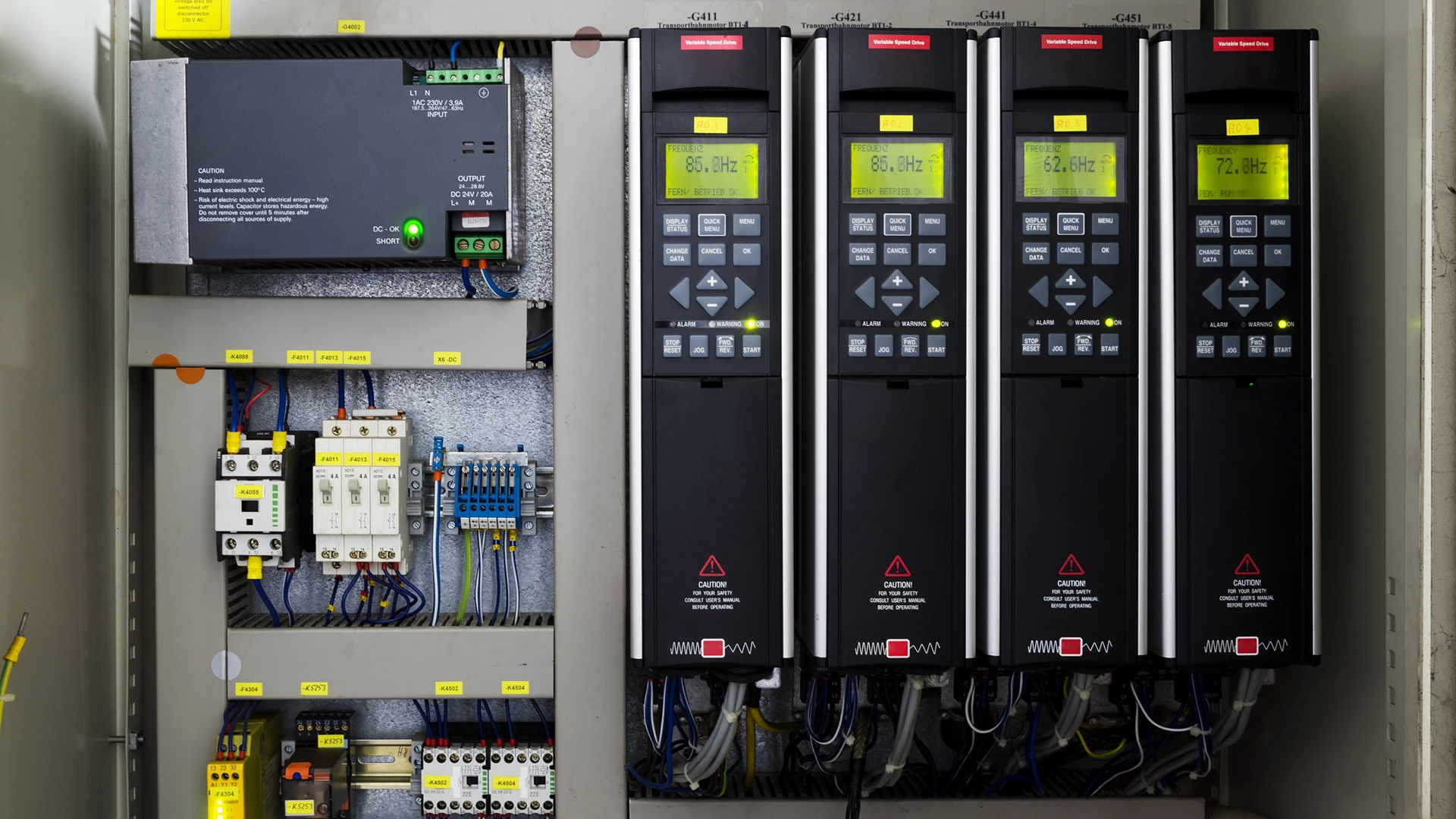
In modern HVAC infrastructure, the integration of Variable Frequency Drives extends far beyond simple energy savings. For EPC contractors and automation engineers, the real engineering challenges lie in maintaining power quality integrity, protecting critical motor assets, and ensuring reliable operation in thermally aggressive environments. Below are the three most critical technical pain points encountered when deploying VFDs in commercial and industrial HVAC systems.
Scenario 1: Harmonic Distortion and Grid Code Compliance Failures
The Problem: Standard 6-pulse VFD rectifiers inject significant harmonic currents (particularly 5th, 7th, and 11th order) back into the facility’s electrical distribution system. In large commercial buildings or solar-hybrid HVAC installations, this harmonic pollution causes transformer overheating, neutral conductor overloading, and voltage distortion that can trip sensitive Building Automation System (BAS) controllers or corrupt communication protocols like BACnet and Modbus. For project managers and EPC contractors, failure to meet IEEE 519 or local utility harmonic standards results in costly commissioning delays, penalty fees, or outright utility interconnection rejection—particularly problematic when integrating with solar pump inverters or microgrids where power quality is paramount.
The Solution: Specify drives with Active Front End (AFE) technology or integrated DC link chokes that limit Total Harmonic Current Distortion (THDi) to less than 5%, eliminating the need for external harmonic filters. During the design phase, conduct harmonic load flow studies to determine if additional line reactors are required for mixed-load panels. For retrofit applications, select VFDs with built-in EMC filters and compliance certification for IEC 61000-3-12, ensuring seamless integration with existing infrastructure while maintaining the precise motor control required for variable-load chiller and pump operations.
Scenario 2: Electrical Discharge Machining (EDM) in Motor Bearings
The Problem: The high-frequency switching of IGBT inverters (typically 2–16 kHz carrier frequency) creates steep voltage wavefronts with high dv/dt, generating common mode voltage that induces circulating currents through motor bearings. In HVAC applications—where centrifugal fans and chilled water pumps operate continuously for thousands of hours annually—this electrical discharge machining causes microscopic pitting and fluting of bearing races, leading to premature lubricant degradation, excessive vibration, and catastrophic motor failure. Standard NEMA Design B motors not rated for inverter duty are particularly vulnerable, resulting in unplanned downtime in critical climate control environments such as data centers, pharmaceutical cleanrooms, or agricultural processing facilities.
The Solution: Specify inverter-duty motors with insulated ceramic bearings or install shaft grounding rings (carbon fiber or copper brush types) to divert shaft currents safely to ground. Additionally, implement output dv/dt filters or sine wave filters to reduce voltage rise time (dv/dt) below 500 V/μs, protecting motor winding insulation and bearings alike. Ensure proper cable management using shielded motor cables with 360-degree EMC cable glands to minimize stray capacitance. For predictive maintenance, utilize VFD-integrated condition monitoring that tracks bearing vibration signatures and load torque oscillations to detect degradation before failure occurs.
Scenario 3: Thermal Derating and Environmental Hardening in Mechanical Rooms
The Problem: HVAC mechanical rooms frequently operate at ambient temperatures exceeding 40°C with high humidity, dust loading, and chemical exposure from refrigerants or cleaning agents. Standard IP20-rated VFDs require aggressive derating curves (often reducing output current capacity by 20–30%) in these conditions, leading to undersized drives, nuisance thermal faults, or premature capacitor failure. Fan-cooled units ingest particulate matter that clogs heatsink fins, causing thermal runaway and automatic shutdowns that compromise critical cooling loops—unacceptable in hospital HVAC systems or solar-powered agricultural climate control where continuous operation is mandatory.
The Solution: Select VFDs with high-temperature ratings (up to 50°C ambient without derating) and IP54/IP66 enclosure integrity to protect against dust ingress and high-pressure washdowns. For severe environments, specify liquid-cooled VFDs that eliminate dependency on ambient air while reducing cabinet footprint by up to 70%. Implement proper thermal management through external heatsink placement, sealed cabinet heat exchangers, or positive-pressure ventilation with filtered air intake. During commissioning, optimize the carrier frequency settings—reducing switching frequency from 8 kHz to 4 kHz decreases internal heat generation by approximately 30% while maintaining adequate motor control precision for most fan and pump applications.
Component and Hardware Analysis for Variable Frequency Drives Hvac
Variable Frequency Drives deployed in HVAC environments operate under unique thermal and electrical stresses—cycling between idle states and peak cooling demands while managing high inrush currents from compressor startups. The internal architecture of these drives determines not only energy efficiency but also operational longevity in continuous-duty applications. For EPC contractors and automation distributors evaluating VFD specifications, understanding the hardware topology beyond the enclosure rating is critical for predicting Mean Time Between Failures (MTBF) and total cost of ownership in commercial and agricultural climate control systems.
Power Semiconductor Architecture: The Inverter Stage
At the core of every HVAC VFD lies the three-phase inverter bridge, typically implemented using Insulated Gate Bipolar Transistors (IGBTs) or Silicon Carbide (SiC) MOSFETs in premium units. These modules perform the high-frequency switching (typically 2–16 kHz) that synthesizes variable-frequency AC waveforms from the DC bus voltage. In HVAC applications—where motors driving centrifugal chillers, cooling tower fans, and booster pumps exhibit quadratic torque loads—the switching device must withstand repetitive thermal cycling without degradation.
High-quality IGBT modules feature integrated NTC thermistors for junction temperature monitoring and direct-bonded copper (DBC) substrates that minimize thermal resistance (Rth(j-c)) between the silicon die and the heatsink interface. For agricultural and commercial HVAC projects subject to voltage fluctuations, selecting drives with 1200V-rated IGBTs (even for 380–480V systems) provides essential voltage headroom against grid transients, significantly extending power module lifespan beyond the standard 50,000-hour benchmark.
Control Processing Units: DSP vs. MCU Topology
The intelligence of modern HVAC VFDs resides in Digital Signal Processors (DSPs) or advanced ARM-based Microcontroller Units (MCUs) executing vector control algorithms. These controllers process feedback from current sensors (typically Hall-effect or shunt resistors) and encoder inputs to maintain precise V/Hz ratios or field-oriented control (FOC) under varying building loads.
Industrial-grade DSP controllers operating at 150+ MHz enable sub-millisecond response to load changes—critical for maintaining static pressure in variable air volume (VAV) systems. Quality indicators include galvanic isolation between the control PCB and power stage (typically 2.5kV isolation barriers), conformal coating (acrylic or silicone-based) protecting against condensation in humid HVAC environments, and EMC immunity to Level 3 standards (IEC 61000-4-4 for electrical fast transients).
Thermal Management Systems
HVAC VFDs generate significant waste heat—approximately 3–5% of throughput power—necessitating robust thermal design. Beyond aluminum extrusion heatsinks with forced air cooling, advanced implementations employ heat-pipe technology or liquid-cooled cold plates for high-power HVAC applications (>75kW). The thermal interface material (TIM) between IGBT baseplates and heatsinks critically affects junction temperatures; phase-change materials or high-conductivity thermal greases (thermal conductivity >3.0 W/m·K) ensure minimal thermal impedance.
DC Link and Rectification Components
The front-end rectifier—comprising three-phase diode bridges or active front-end (AFE) IGBT rectifiers—converts grid AC to DC for the bus capacitors. In HVAC VFDs, the DC link must handle regenerative energy from decelerating high-inertia fan loads. Metallized polypropylene film capacitors (self-healing type) offer superior lifespan compared to electrolytic alternatives, particularly in solar pumping applications where DC bus ripple currents are elevated. Key specifications include voltage ripple tolerance (<5%) and equivalent series resistance (ESR) values below 10mΩ.
Component Analysis Matrix
| Component | Function | Quality Indicator | Impact on Lifespan |
|---|---|---|---|
| IGBT Power Module | High-frequency switching for variable frequency output; converts DC to controlled AC | Junction temperature rating (Tj(max) ≥ 150°C), thermal resistance Rth(j-c) < 0.6 K/W, switching frequency capability (≥4 kHz for HVAC) | Direct correlation with thermal cycling fatigue; high-quality modules extend life to 100,000+ hours |
| DSP/MPU Controller | Executes vector control algorithms, PWM generation, and protection logic | Processing speed (≥100 MHz), galvanic isolation (2.5kV), conformal coating (IPC-CC-830 compliant) | Prevents catastrophic failures from voltage transients; extends operational life by 30–40% |
| DC Bus Capacitors | Energy storage and ripple current filtering; maintains stable DC voltage | Capacitance tolerance (±5%), ESR < 10mΩ, ripple current rating at 85°C, film vs. electrolytic construction | Film capacitors offer 60,000+ hours vs. 20,000 hours for electrolytic in high-temperature HVAC environments |
| Cooling Heatsink | Dissipates switching losses from semiconductors; maintains junction temperatures | Thermal conductivity (>200 W/m·K for aluminum), fin density optimization, corrosion resistance (anodized coating) | Every 10°C reduction in junction temperature doubles semiconductor lifespan |
| EMI Filter | Suppresses conducted emissions back to grid; protects sensitive HVAC controls | Insertion loss (≥60dB at 100MHz), leakage current compliance (IEC 61800-5-1) | Prevents premature aging of insulation systems in connected motors |
| Rectifier Bridge | AC-DC conversion; handles inrush current during startup | Surge current rating (IFSM ≥ 200A for 10ms), reverse recovery time (trr < 50ns) | Reduces thermal stress on power stage during compressor startup cycles |
Integration Considerations for Solar-Hybrid HVAC Systems
For EPC contractors deploying solar pumping inverters in hybrid HVAC applications—such as solar-assisted chillers or agricultural climate control—the hardware robustness of VFD components becomes paramount. Solar irradiance fluctuations create rapid DC bus voltage variations that stress DC link capacitors and require faster DSP sampling rates than grid-tied systems alone. Boray Inverter’s engineering approach emphasizes oversized DC bus capacitance (20% above industry standard) and automotive-grade IGBT modules (AEC-Q
Manufacturing Standards and Testing QC for Variable Frequency Drives Hvac
At Boray Inverter, manufacturing excellence is not merely a production goal but a technical imperative engineered to withstand the rigorous demands of HVAC infrastructure and solar pumping systems. Our quality assurance protocols are architected to ensure that every Variable Frequency Drive (VFD) destined for centrifugal chillers, cooling tower fans, or agricultural solar pumps operates with absolute reliability across extreme thermal cycles, harmonic-rich electrical environments, and continuous duty cycles. Below is a technical exposition of the manufacturing standards and multi-stage QC protocols that define our production methodology.
Precision PCB Assembly and Environmental Protection
The foundation of VFD longevity begins with rigid adherence to IPC-A-610 Class 2 or Class 3 standards for electronic assembly, ensuring solder joint integrity under mechanical stress and thermal expansion. For HVAC applications—where condensing humidity, airborne chemical particulates, and dust infiltration are persistent threats—we implement automated selective conformal coating processes compliant with IPC-CC-830.
- Coating Chemistry: We utilize polyurethane or silicone-based coatings (100–200μm thickness) that provide dielectric isolation and moisture resistance, critical for inverter boards operating in rooftop RTU environments or agricultural solar pump enclosures with high diurnal humidity swings.
- Process Control: Each Printed Circuit Board (PCB) undergoes automated optical inspection (AOI) prior to coating, followed by UV fluorescence inspection post-application to ensure complete coverage of high-voltage traces and component leads, eliminating corrosive electrochemical migration risks.
Accelerated Life Testing (ALT) and Thermal Validation
Unlike statistical sampling methods common in commodity manufacturing, Boray Inverter subjects 100% of production units to full-load burn-in testing. This eliminates infant mortality failures before deployment in critical HVAC chiller or solar irrigation applications.
- High-Temperature Aging (HTA): Units operate at 110% rated load within environmental chambers set to 50°C–60°C ambient for 4–6 hours, simulating worst-case rooftop or desert solar pump conditions. This thermally stresses IGBT modules, DC bus capacitors, and control logic to precipitate latent semiconductor defects.
- Thermal Cycling: Power modules undergo rapid temperature cycling (-40°C to +85°C) to validate solder joint integrity under coefficient of thermal expansion (CTE) mismatches between ceramic substrates and aluminum heatsinks—essential for VFDs cycling between winter heating and summer cooling peaks in HVAC systems.
100% Full-Load Electrical Validation
Every VFD undergoes comprehensive dynamic testing against simulated motor loads using regenerative dynamometer systems:
- Full-Power Burn-In: Units run at nominal voltage (380V/480V AC) with full current output to verify thermal management under maximum switching frequencies (typically 2–16 kHz for HVAC fan/pump applications).
- Harmonic Emission Verification: Pre-compliance testing for IEC 61000-3-12 (harmonic current emissions) ensures that drives deployed in commercial building HVAC systems do not distort local grid quality, preventing penalties under IEEE 519 or EN 50500 standards.
- Bearing Current Mitigation Testing: For HVAC motors with long cable runs, we verify common-mode choke effectiveness and dv/dt filtering to prevent premature bearing fluting—a critical QC step for centrifugal pumps and compressor longevity.
Environmental Stress Screening (ESS) for Harsh Duty
Recognizing that solar pumping VFDs often operate in uncontrolled environments while HVAC drives face condensate exposure, our ESS protocols include:
- Humidity Resistance: 48-hour 85°C/85% RH (Relative Humidity) testing per IEC 60068-2-78 to validate conformal coating integrity and PCB moisture ingress protection.
- Vibration and Shock: Random vibration testing (5–2000 Hz, 20G RMS) simulates transportation logistics and operational vibration from reciprocating compressors or pump cavitation, ensuring structural integrity of electrolytic capacitors and power terminals.
- Dust and Contaminant Sealing: Verification of IP54 to IP66 enclosure ratings (depending on model) using talc-based dust testing per IEC 60529, crucial for agricultural solar pump installations in sandy or pollen-heavy environments.
Compliance Architecture and Certification
Our quality management system operates under ISO 9001:2015 with specific adherence to drive-specific standards:
- CE Marking (European Conformity): Full compliance with EN 61800-5-1 (safety requirements), EN 61800-3 (EMC immunity and emissions for first/second environments), and EN 50581 (RoHS hazardous substance restriction).
- IEC Standards: Design validation against IEC 61800-2 (general low-voltage drive ratings) and IEC 60034-25 (motor/drive interaction), ensuring compatibility with high-efficiency IE3/IE4 motors prevalent in modern HVAC retrofits.
- UL/cUL Certification: For North American HVAC markets, drives undergo evaluation to UL 61800-5-1 for industrial control equipment safety, including fault current withstand testing.
Traceability and Digital Quality Documentation
For EPC contractors and automation distributors managing large-scale solar pumping or commercial HVAC deployments, we provide complete manufacturing traceability:
- Component-Level Serialization: Each IGBT module, capacitor bank, and control PCB carries lot codes traceable to semiconductor foundry batches, enabling rapid failure analysis (FA) should field anomalies occur.
- Digital Test Records: Every unit ships with a unique test certificate documenting full-load current draw, DC bus voltage ripple, thermal imaging results, and insulation resistance (megohm) testing—providing commissioning engineers with baseline performance data for predictive maintenance algorithms.
By integrating these rigorous manufacturing standards—from molecular-level conformal coating to grid-synchronized full-load validation—Boray Inverter ensures that every VFD delivers the precision motor control required for energy-efficient HVAC operations and reliable solar water pumping, minimizing total cost of ownership (TCO) across the asset lifecycle.
Step-by-Step Engineering Sizing Checklist for Variable Frequency Drives Hvac
Proper sizing of Variable Frequency Drives for HVAC applications requires rigorous analysis of motor characteristics, load profiles, and environmental derating factors. Unlike constant-speed motor starters, VFDs must accommodate dynamic thermal loading, harmonic distortion management, and—particularly in hybrid renewable installations—DC bus voltage compatibility. The following engineering checklist provides a systematic methodology for specifying VFDs in commercial HVAC, agricultural climate control, and solar-assisted pumping systems.
1. Motor Nameplate Data Verification & Service Factor Analysis
Before selecting drive capacity, collect comprehensive motor specifications:
– Rated Power (kW/HP): Verify continuous duty rating; do not undersize based on intermittent peak loads
– Full Load Current (FLA): Size VFD output current ≥ 110% of motor FLA for centrifugal HVAC loads; consider 150% for high-starting-torque screw compressors
– Voltage/Frequency Tolerance: Confirm motor insulation rating (typically Class F or H for inverter-duty motors) supports PWM carrier frequencies (2–16 kHz) without dielectric stress
– Service Factor (SF): If motor SF is 1.15, ensure VFD continuous current rating accounts for the 15% overhead to prevent thermal derating during peak cooling demand
– RPM and Pole Count: Verify maximum safe operating speed; centrifugal fans often allow 20% overspeed for emergency ventilation, requiring VFD output capability to 120% base frequency
2. Load Characteristic Classification & Torque Profiling
HVAC applications present distinct load torque requirements that dictate VFD control algorithms:
Centrifugal Loads (Variable Torque)
– Fans and centrifugal pumps follow the Affinity Laws: Power ∝ (Speed)³
– Calculate required torque at minimum speed (typically 15–20% of rated torque at 25% speed)
– Verify VFD has quadratic V/Hz curve optimization to prevent over-fluxing at low speeds
Constant Torque Loads
– Screw compressors, positive displacement pumps, and conveyor systems require full torque across speed range
– Size VFD for 100% current capacity at minimum operating speed; forced external cooling may be required below 30% base speed to prevent motor overheating
High Inertia Loads
– Large centrifugal chillers or cooling tower fans require extended deceleration ramps (30–120 seconds) to prevent pump water hammer or fan stall
– Specify dynamic braking chopper and resistor sizing based on inertia calculations: Wk² × (RPM₂² – RPM₁²) / (3.22 × t × 746)
3. Electrical System Compatibility & Harmonic Mitigation
Input Power Analysis
– Voltage Imbalance: Measure phase-to-phase voltage; if imbalance exceeds 2%, specify input line reactors to prevent rectifier damage and current imbalance
– Short Circuit Current Rating (SCCR): Verify VFD SCCR meets available fault current at installation point (typically 65kA or 100kA for commercial HVAC switchgear)
– Harmonic Distortion: For installations >25kW, calculate THD(i) using IEEE 519 guidelines; install 3% impedance line reactors or active front-end (AFE) drives when THD limits exceed 5%
DC Bus Considerations (Solar-Ready Systems)
For hybrid solar-HVAC applications utilizing Boray Inverter’s solar pump VFD architecture:
– Verify DC input voltage range (typically 200–800VDC) matches solar array Vmp (maximum power voltage) under local temperature conditions
– Calculate string sizing: Vmp_array = Vmp_module × N_series × Temperature Coefficient × Safety Factor (1.25 for cold weather Voc margin)
– Ensure VFD DC bus capacitance supports ride-through during cloud transients (minimum 2 seconds hold-up time for compressor restart sequencing)
4. Environmental Derating & Enclosure Specifications
Thermal Derating
– Ambient Temperature: Standard VFD ratings assume 40°C; apply 1% current derating per degree above 40°C, or specify external cooling fans/heat exchangers
– Altitude Derating: Above 1000m (3300ft), reduce VFD output current by 1% per 100m due to reduced air density and cooling efficiency; at 3000m, drive must be oversized by 20%
Ingress Protection & Installation
– Indoor HVAC Mechanical Rooms: IP20/NEMA 1 sufficient for controlled environments; maintain minimum 100mm clearance for airflow
– Rooftop Units (RTUs): Specify IP54/NEMA 3R enclosures with conformal-coated PCBs to resist humidity and salt air
– Agricultural Applications: IP65/NEMA 4X for greenhouse environments with high humidity and chemical exposure
5. Control Interface & Building Management Integration
Analog & Digital I/O
– Feedback Sensors: 4–20mA inputs for duct static pressure or differential pressure across coils; 0–10V for temperature setpoints
– Safety Interlocks: Hardwired emergency stop (Category 0 or 1 per EN 60204-1); fireman’s override (smoke purge mode at 100% speed bypass)
– Bypass Requirements: For critical HVAC applications, specify three-contactor bypass (automatic or manual) to ensure cooling continuity during VFD maintenance
Communication Protocols
– BACnet/IP or MS/TP: Essential for BMS integration in commercial buildings; verify VFD supports BTL (BACnet Testing Laboratories) certification
– Modbus RTU/TCP: Standard for agricultural automation and remote monitoring
– PID Control: Verify built-in PID functionality for maintaining static pressure in VAV (Variable Air Volume) systems without external controllers
6. Protection Coordination & Safety Systems
Motor Protection
– Overload Class: Select Class 10 for standard HVAC motors; Class 30 for high-inertia fans requiring extended starting time
– Ground Fault Protection: Specify VFDs with output phase-to-ground fault detection (sensitivity <50% of rated current) to protect against motor winding insulation breakdown
– Stall Prevention: Enable during acceleration/deceleration to avoid nuisance tripping during high-demand periods
Grid Stability & Ride-Through
– Undervoltage Tolerance: Programmable undervoltage ride-through (up to 2 seconds) to prevent nuisance trips during utility voltage sags
– Phase Loss Protection: Input phase loss detection with adjustable delay (typically 2–5 seconds) to avoid shutdown during momentary utility disturbances
7. Final Verification & Documentation Package
Before procurement approval:
– Current Capacity Check: Verify VFD rated current ≥ Motor FLA × 1.1 (standard) or × 1.5 (high torque)
– Future Expansion: Size for 20% additional capacity to accommodate HVAC system expansion or filter loading over time
– Efficiency Verification: Confirm VFD efficiency >97% at rated load and meets IE2/IE3 system efficiency requirements when paired with premium efficiency motors
– Solar Compatibility Audit: For DC-coupled systems, verify maximum open-circuit voltage (Voc) of solar array does not exceed VFD maximum DC input rating under record low temperatures
Documentation Requirements
– Single-line diagrams showing VFD, bypass, and motor connections
– Harmonic analysis report (IEEE 519 compliance)
– Thermal calculations for enclosure cooling requirements
– Solar string sizing calculations (if applicable)
This systematic approach ensures specified VFDs deliver the projected 30–70% energy savings in HVAC applications while maintaining reliability across 15–20 year operational lifespans in demanding industrial and agricultural environments.
Wholesale Cost and Energy ROI Analysis for Variable Frequency Drives Hvac
When procuring Variable Frequency Drives for HVAC applications at scale, EPC contractors and industrial automation distributors must evaluate procurement strategies beyond unit sticker prices. The transition from traditional fixed-speed motor controls to intelligent VFD architectures represents not merely a component upgrade, but a fundamental shift in system economics—particularly when integrating solar pumping infrastructures or hybrid renewable HVAC systems.
Manufacturer-Direct Wholesale Structures vs. Traditional Distribution
The HVAC VFD market operates on a tiered pricing architecture that significantly impacts project viability for large-scale installations. Manufacturer-direct wholesale channels—such as those offered by specialized producers like Boray Inverter—typically eliminate the 25-40% markup imposed by multi-tier distribution networks. For agricultural project managers overseeing greenhouse climate control or irrigation-integrated HVAC systems, this pricing differential becomes critical when specifying 50HP+ drives for centrifugal chillers or cooling tower fans.
Volume-based procurement agreements for industrial-grade IP54-rated HVAC drives generally follow logarithmic discount curves: single-unit retail pricing may range from $800-$1,200 for a 15kW unit, whereas wholesale tier commitments (50+ units) reduce per-unit costs to $450-$650, depending on harmonic filter inclusion and EMC compliance ratings. For EPC contractors managing commercial building retrofits, this spread translates to capital expenditure reductions of 30-45% when bypassing traditional electrical supply houses.
Critical procurement considerations include:
– Bill of Materials (BOM) consolidation: Solar pump inverters with VFD-compatible MPPT algorithms can serve dual-purpose applications, reducing SKU complexity for distributors serving mixed agricultural/industrial portfolios
– Firmware customization costs: Wholesale agreements often include complimentary parameter pre-configuration for specific HVAC sequences (e.g., PID control for chilled water loops), eliminating field programming labor
– Harmonic mitigation bundling: Active front-end (AFE) drives or 3% line reactors, essential for HVAC applications with sensitive building management systems, typically carry 15-20% wholesale discounts when specified at procurement stage
Energy ROI Quantification: The Affinity Law Advantage
The return on investment for HVAC VFDs derives from the affinity laws governing centrifugal loads—where power consumption correlates with the cube of rotational speed. A 20% reduction in fan or pump speed yields approximately 50% energy savings, creating non-linear ROI curves that favor early adoption in variable-load environments.
For a typical 75kW commercial chiller motor operating 6,000 hours annually:
– Baseline consumption: 450,000 kWh/year at fixed speed
– With VFD optimization: 180,000-225,000 kWh/year (accounting for part-load efficiency curves and static pressure variations)
– Monetary savings: $27,000-$40,500 annually (at $0.10-$0.15/kWh industrial rates)
Payback periods for wholesale-procured drives in HVAC applications typically range from 8-18 months, compared to 24-36 months for retail-acquired units. When integrated with solar pumping systems—utilizing Boray’s solar pump inverter technology for hybrid HVAC water circulation—payback accelerates further through peak-demand charge avoidance and renewable energy credits.
Critical calculation factors for B2B buyers:
– Part-load efficiency: Modern IGBT-based VFDs maintain >95% efficiency across 40-100% load ranges, but legacy HVAC systems often operate at 60-70% load factors, maximizing VFD value
– Soft-start mechanical savings: Reduced inrush current (typically 6x FLA reduced to 1.5x) extends bearing and coupling life, quantifiable as 15-20% maintenance cost reduction over 10-year TCO analysis
– Power factor correction: Integrated DC bus configurations improve facility power factor to 0.95+, reducing utility kVAR charges in commercial contracts
Solar-HVAC Hybrid Integration Economics
For agricultural and industrial facilities with existing solar pumping infrastructure, hybrid VFD architectures offer unique ROI multiplication. Solar pump inverters configured for HVAC duty cycles can operate in dual-source mode—drawing from PV arrays during daylight cooling peaks while seamlessly switching to grid power during nocturnal heating cycles.
Wholesale procurement of compatible drive families reduces integration costs by ensuring unified communication protocols (Modbus RTU/TCP, BACnet MS/TP) across pumping and climate control systems. This interoperability eliminates gateway hardware expenses ($200-$400 per node) and reduces commissioning time by 60% for EPC contractors.
Total Cost of Ownership: Warranty as a Strategic Variable
Warranty structures in B2B VFD procurement function as risk-transfer mechanisms that impact long-term operational expenditure. Standard HVAC VFD warranties range from 12-24 months, but manufacturer-direct wholesale agreements frequently extend coverage to 36-60 months for critical components (IGBT modules, DC bus capacitors, control boards).
Warranty cost analysis for procurement teams:
– Standard coverage: Typically 2% of unit cost baked into wholesale pricing
– Extended protection: Additional 3-5% premium for 5-year comprehensive coverage, including fan and capacitor replacement—components with 40,000-hour life expectancy in continuous HVAC duty
– Field service integration: Wholesale partnerships often include no-charge advance replacement units for drives >30kW, minimizing downtime costs that can exceed $1,000/hour in pharmaceutical or data center HVAC applications
For distributors maintaining inventory, warranty terms affect carrying costs. Drives with 36-month warranty periods from date of manufacture (rather than installation) require inventory rotation strategies, whereas installation-activated warranties reduce obsolescence risk for slow-moving high-horsepower units.
Strategic Procurement Recommendations
Industrial engineers and automation distributors should prioritize VFD specifications that accommodate future solar integration, even for current grid-only HVAC retrofits. Specifying drives with 600VDC input capability and dual-rating for pump/fan duty ensures compatibility with emerging solar pumping-to-HVAC hybrid architectures.
For agricultural project managers, the convergence of irrigation pumping and climate control creates opportunities for centralized VFD procurement. Solar pump inverters with HVAC-compatible torque curves (variable torque vs. constant torque selectable via parameter) allow inventory standardization across pumping and ventilation systems, maximizing wholesale volume discounts while simplifying spare parts logistics.
When evaluating proposals, demand detailed efficiency curves at 25%, 50%, 75%, and 100% load points rather than nominal ratings. Premium wholesale VFDs maintain >94% efficiency even at 30% load—a critical specification for oversized HVAC systems common in commercial buildings operating below design capacity.
Alternatives Comparison: Is Variable Frequency Drives Hvac the Best Choice?
When specifying motor control strategies for HVAC infrastructure, decision-makers must evaluate the total cost of ownership (TCO) against operational flexibility. While Variable Frequency Drives (VFDs) have become the gold standard for intelligent motor control, alternative approaches—ranging from electromechanical soft starters to traditional throttling methods and emerging solar-direct architectures—each present distinct trade-offs in energy efficiency, capital expenditure, and system complexity. The following technical analysis examines these alternatives through the lens of industrial engineering applications, including considerations for solar pumping integration where DC-bus compatibility and Maximum Power Point Tracking (MPPT) capabilities become critical selection criteria.
VFDs vs. Soft Starters: Beyond Inrush Current Mitigation
Soft starters and VFDs are often conflated because both manage motor acceleration; however, their operational principles diverge significantly after the start-up phase. A soft starter utilizes silicon-controlled rectifiers (SCRs) to temporarily reduce voltage during motor start-up, limiting inrush current to 2-4 times full-load amperage (FLA) rather than the 6-8 times seen across-the-line starting. Once the motor reaches full speed, the soft starter bridges out, leaving the motor to run at fixed synchronous speed.
Critical Distinction: Soft starters provide no variable speed capability. In HVAC applications with fluctuating thermal loads—such as variable air volume (VAV) systems or cooling tower fans—soft starters cannot modulate airflow or head pressure. The motor runs at 100% speed regardless of demand, with flow control relegated to inefficient mechanical throttling. Conversely, VFDs maintain continuous speed control from zero to full RPM, enabling precise matching of motor output to system load curves.
For agricultural projects or commercial buildings with constant-volume requirements and minimal load variation, soft starters offer lower initial cost ($1,500-$3,000 vs. $4,000-$8,000 for comparable HP VFDs). However, for systems experiencing daily load swings exceeding 30%, the energy savings from VFD affinity laws (where power consumption follows the cube of speed reduction) typically deliver ROI within 12-18 months, rendering soft starters economically disadvantageous despite their lower upfront investment.
Mechanical Throttling vs. Variable Speed Control
Traditional HVAC design relies on constant-speed motors coupled with mechanical dampers, inlet guide vanes, or throttling valves to regulate flow. While this approach minimizes electrical component complexity, it violates the fundamental pump and fan affinity laws: reducing flow by 50% via throttling still requires approximately 85% of full-load power, whereas reducing speed by 50% via VFD consumes merely 12.5% of rated power.
Energy Loss Analysis:
– Throttling Control: Converts excess kinetic energy into heat and turbulence, increasing system entropy and cooling loads
– VFD Control: Modulates frequency (typically 0-60 Hz or higher) to match motor speed to actual demand, maintaining high efficiency across the operating envelope
Furthermore, mechanical throttling devices introduce additional failure points—worn linkages, stuck dampers, and corroded valve seats—requiring quarterly maintenance cycles. VFDs eliminate these mechanical wear components while providing diagnostic capabilities through built-in PLCs and Modbus/Profibus communication protocols, essential for Industry 4.0 integration in modern building automation systems.
Solar-Direct VFD Architectures vs. Grid-Powered HVAC
For remote agricultural installations or EPC contractors developing off-grid commercial facilities, solar-powered VFD systems represent a paradigm shift from conventional grid-dependent HVAC. Standard grid-powered HVAC relies on AC mains supply with fixed frequency, whereas solar VFDs (such as Boray Inverter’s solar pump drive series) utilize a DC input stage directly compatible with photovoltaic arrays.
Technical Differentiation:
– Grid Systems: Require AC-DC-AC conversion with limited power factor correction; vulnerable to voltage sags and utility demand charges
– Solar VFD Systems: Feature integrated MPPT algorithms that optimize PV array voltage (typically 200-800VDC) in real-time, maximizing energy harvest even during irradiance fluctuations
Solar VFDs eliminate inverter clipping losses found in traditional solar-plus-storage systems by driving motors directly from DC bus voltage. When paired with Permanent Magnet Synchronous Motors (PMSMs), these systems achieve IE5 efficiency ratings, critical for solar pumping applications where every watt of PV capacity translates directly to water volume pumped. Grid-powered alternatives cannot match this efficiency without substantial battery storage infrastructure, which introduces 15-20% round-trip energy losses and significant maintenance overhead.
Motor Technology Integration: PMSM vs. Induction Machines
The efficacy of VFD implementation depends significantly on coupled motor technology. While standard squirrel-cage induction motors (IMs) remain prevalent, high-efficiency HVAC designs increasingly specify Permanent Magnet Synchronous Motors (PMSMs) controlled by vector-type VFDs.
Performance Matrix:
| Parameter | Induction Motor + VFD | PMSM + VFD | Soft Starter + IM | Fixed Speed + Throttling |
|---|---|---|---|---|
| Peak Efficiency | 92-95% (IE3) | 96-98% (IE5) | 85-90% | 70-85% (load dependent) |
| Speed Control Range | 10:1 (V/Hz), 100:1 (Vector) | 1000:1 (Servo mode) | Fixed only | Fixed only |
| Power Factor | 0.85-0.95 (VFD corrected) | >0.95 (inherent) | 0.70-0.85 | 0.70-0.85 |
| Starting Current | 1.5-2.0x FLA (soft start) | 1.0-1.5x FLA | 2-4x FLA | 6-8x FLA |
| Thermal Management | Moderate (rotor losses) | Superior (no rotor current) | High (fixed speed heat) | High (throttling heat) |
| Capital Cost | $$ | $$$ | $ | $ |
| Maintenance Interval | 2-3 years (bearing check) | 3-5 years | 1-2 years | Quarterly (mechanical) |
Engineering Considerations:
PMSMs require precise rotor position feedback (encoders or sensorless vector algorithms) and are susceptible to demagnetization from excessive heat—making VFD thermal management protocols critical. However, for continuous-duty HVAC applications such as data center cooling or agricultural irrigation where motors operate 6,000+ hours annually, the 3-5% efficiency gain of PMSM-VFD combinations over induction motor alternatives yields substantial energy arbitrage, particularly when powered by solar arrays where system sizing costs are proportional to PV wattage.
Harmonic Distortion and Power Quality Trade-offs
One alternative consideration often overlooked is the use of line reactors or passive filters with fixed-speed motors as a “budget” power conditioning method. While this protects the grid from motor switching transients, it provides no operational benefits. VFDs—particularly those with active front ends (AFE) or DC chokes—introduce harmonic distortion (typically 3-5% THDi with proper filtering), but modern HVAC-specified drives comply with IEEE 519 and EN 61000-3-12 standards. The power quality concerns of VFDs are outweighed by their ability to improve overall facility power factor to near-unity, reducing utility kVAR charges that plague soft starter and fixed-speed installations.
Decision Framework for Specification
Specify VFDs when:
– Load profiles vary by >20% daily (typical in commercial HVAC, solar pumping, and process cooling)
– Energy costs exceed $0.10/kWh or operational hours exceed 2,000 annually
– Precise process control is required (maintaining ±0.5 Hz tolerance on fan speed or constant pressure in pumping systems)
– Solar or battery integration is anticipated (DC bus architecture compatibility)
Consider alternatives when:
– Soft Starters: Motors run fixed-speed with <500 annual operating hours and utility demand charges are the primary concern
– Fixed Speed: Capital constraints are absolute and load is truly constant (rare in modern HVAC)
– PMSM Bypass: Maintenance capabilities are limited, and motor replacement parts availability is prioritized over peak efficiency (induction motors offer field serviceability in remote regions)
For EPC contractors and automation distributors, the convergence of solar PV costs and advanced VFD motor control has rendered traditional throttling methods obsolete for new construction. While soft starters retain niche applications in fixed-speed conveyance or compressor starting, they cannot satisfy the energy efficiency mandates (ASHRAE 90.1, EU Ecodesign) driving modern HVAC specifications. When integrated with high-efficiency PMSMs and solar-direct DC inputs, VFDs represent not merely the best choice, but the only technically viable pathway to net-zero HVAC operation in distributed industrial and agricultural environments.
Core Technical Specifications and Control Terms for Variable Frequency Drives Hvac
When specifying Variable Frequency Drives for Heating, Ventilation, and Air Conditioning applications, engineers and procurement specialists must evaluate both the electromechanical control architectures and the commercial frameworks governing international equipment procurement. The following technical parameters and trade definitions constitute the essential lexicon for B2B decision-making in industrial automation and solar-integrated HVAC projects.
Critical Control Algorithms and Electrical Specifications
Vector Control (Field-Oriented Control / FOC)
For high-performance HVAC applications—particularly those involving compressors with high starting torque requirements or precision airflow management in cleanroom environments—sensorless vector control is paramount. This algorithm decouples the motor’s magnetic flux and torque components through coordinate transformation (Clarke and Park transformations), enabling precise speed regulation down to 0.5 Hz with 150% rated torque availability. Unlike scalar V/Hz control (suitable for standard fan and pump curves), vector control maintains constant air volume (CAV) and variable air volume (VAV) stability despite line voltage fluctuations or load disturbances, critical for maintaining static pressure in ductwork systems.
PID Closed-Loop Process Control
Proportional-Integral-Derivative control loops within modern VFDs eliminate the need for external PLCs in many HVAC subsystems. When configured for pressure transducer feedback (4-20 mA or 0-10V signals), the drive automatically modulates pump or fan speed to maintain setpoints—such as constant differential pressure in chilled water loops or supply air static pressure in Air Handling Units (AHUs). Boray Inverter implementations typically offer auto-tuning PID functions that calculate optimal gain parameters for HVAC’s inherently quadratic torque loads, reducing commissioning time by up to 60% compared to manual parameter setting.
Maximum Power Point Tracking (MPPT) for Solar-Hybrid HVAC
While traditionally associated with solar pumping inverters, MPPT algorithms are increasingly relevant for off-grid and hybrid HVAC installations—particularly in agricultural processing facilities and remote commercial buildings. When integrated into VFD architectures, MPPT ensures the drive extracts maximum available power from photovoltaic arrays (typically 98.5% tracking efficiency or higher) to run ventilation fans or irrigation pumps without grid dependency. For EPC contractors designing solar-powered cooling towers or greenhouse ventilation systems, specifying VFDs with dual-input (AC grid + DC solar) capability and dynamic MPPT switching ensures continuous operation during fluctuating irradiance conditions.
Power Topology and Protection Classes
– Input/Output Specifications: Standard HVAC VFDs operate on three-phase 380-480V AC (±15% voltage fluctuation tolerance) with output frequency ranges of 0-400 Hz. For specialized applications, 690V classes are available for large centrifugal chillers.
– IGBT Switching: Insulated Gate Bipolar Transistors with carrier frequencies adjustable between 2 kHz (for high-torque applications) and 16 kHz (for audible noise reduction in occupied spaces) allow acoustic optimization in commercial buildings.
– Environmental Protection: IP20-rated drives suit electrical enclosure integration, while IP54/IP65 variants are required for rooftop units (RTUs), cooling tower fan decks, or agricultural environments with high humidity and dust exposure. Integrated EMC filters (C2 or C3 category per IEC 61800-3) prevent interference with building automation systems.
Communication Protocols and Integration
Modern HVAC VFDs must seamlessly integrate with Building Management Systems (BMS) via Modbus RTU/ASCII (RS485), Modbus TCP/IP, BACnet MS/TP, or CANopen protocols. For industrial facilities utilizing Profibus-DP or Profinet, gateway compatibility ensures the drive participates in centralized energy management strategies, allowing facility managers to monitor kWh consumption, running hours, and fault diagnostics remotely.
International Commercial Terms for Heavy Electrical Equipment
FOB (Free On Board)
Under FOB terms, Boray Inverter assumes responsibility for all costs and risks until the VFDs are loaded onto the vessel at the designated port of shipment (typically Shanghai or Shenzhen). The buyer assumes liability for ocean freight, insurance, and unloading at the destination port. This term favors buyers with established freight forwarding relationships and is standard for containerized shipments of VFD cabinets under 20 tons.
CIF (Cost, Insurance, and Freight)
CIF arrangements include ocean freight and minimum marine insurance coverage to the destination port, with risk transferring to the buyer upon loading at origin. For EPC contractors managing turnkey HVAC installations, CIF simplifies logistics by consolidating shipping costs into the unit price, though buyers must arrange customs clearance and inland transportation. Note that CIF specifically requires the seller to procure insurance covering 110% of the invoice value under Institute Cargo Clauses (C).
EXW (Ex Works)
EXW represents the minimum obligation for the seller, with the buyer collecting goods directly from Boray’s manufacturing facility. While offering the lowest unit price, this term requires the buyer to manage export clearance, loading, and all transportation logistics—suitable only for distributors with established China-based procurement agents.
DDP (Delivered Duty Paid)
For agricultural project managers and automation distributors seeking turnkey procurement, DDP terms place maximum obligation on the supplier. Boray Inverter manages the entire logistics chain—including import duties, VAT, and inland delivery to the project site warehouse. This term is particularly valuable for complex HVAC retrofits where coordinating multiple trades requires just-in-time delivery schedules to minimize onsite storage costs.
Technical Documentation and Compliance
Regardless of shipping terms, B2B procurement should specify inclusion of technical documentation packages: CE/UL certification reports, harmonic analysis reports (IEEE 519 compliance), and operation manuals in the local language. For solar-integrated HVAC projects, additional documentation verifying MPPT efficiency curves and PV array compatibility voltage ranges (typically 200-800VDC) is essential for system validation.
By aligning advanced motor control specifications—such as vector control precision and solar MPPT integration—with clearly defined Incoterms, stakeholders ensure that HVAC VFD procurement supports both operational efficiency targets and supply chain risk management objectives.
Future Trends in the Variable Frequency Drives Hvac Sector
The HVAC sector is rapidly evolving beyond conventional variable speed control toward intelligent, grid-interactive ecosystems. As building electrification accelerates and energy codes tighten globally, Variable Frequency Drives (VFDs) are transitioning from standalone motor controllers to critical nodes within smart building infrastructure. For industrial engineers and EPC contractors, understanding these converging trends—spanning advanced automation, renewable energy hybridization, and Industrial Internet of Things (IIoT) integration—is essential for specifying next-generation climate control systems that deliver lifecycle value.
Intelligent Automation and High-Efficiency Topologies
The next wave of HVAC automation centers on adaptive control algorithms that transcend traditional PID loops. Modern VFDs are incorporating artificial intelligence (AI) and machine learning capabilities to analyze thermal load patterns, occupancy data, and weather forecasts in real-time. These self-optimizing drives automatically adjust fan, pump, and compressor speeds to match dynamic building loads while minimizing energy consumption—extending the documented 50-70% energy savings potential through predictive rather than reactive control strategies.
From an electrical engineering perspective, the shift toward wide bandgap (WBG) semiconductor technologies—specifically Silicon Carbide (SiC) and Gallium Nitride (GaN)—is revolutionizing VFD topology design. These materials enable higher switching frequencies with lower thermal losses, allowing for more compact drive enclosures and reduced harmonic distortion. For agricultural and commercial projects with stringent power quality requirements, active front-end (AFE) VFDs with regenerative capabilities are becoming standard, feeding braking energy back into the grid rather than dissipating it as heat. This is particularly relevant when integrating with solar pump inverter architectures, where bidirectional power flow and DC bus stability are critical design parameters.
Renewable Energy Integration: From Solar Pumping to Climate Control
The convergence of solar photovoltaic (PV) systems and HVAC infrastructure represents a significant opportunity for EPC contractors familiar with solar pumping applications. DC-coupled HVAC systems are emerging as a high-efficiency solution, where solar arrays connect directly to the VFD’s DC bus—eliminating the rectifier stage and inverter losses associated with traditional AC-coupled configurations. This architecture leverages the same power electronics expertise found in solar pump inverters, utilizing Maximum Power Point Tracking (MPPT) algorithms to optimize energy harvest from PV arrays while driving HVAC motors.
For agricultural project managers, this creates synergistic opportunities between irrigation and climate control systems. Shared DC bus architectures allow solar pump inverters and HVAC VFDs to operate from common battery storage banks, creating resilient microgrids for greenhouse operations and food processing facilities. Advanced VFDs now feature dual-mode operation, seamlessly switching between grid-tied and off-grid solar power while maintaining precise torque control during irradiance fluctuations. This capability is crucial for maintaining compressor lubrication and avoiding motor stall conditions in solar-powered chillers and ventilation systems.
Furthermore, the integration of energy storage systems (ESS) at the VFD DC link is enabling demand response participation. By buffering solar generation and grid power, these systems allow HVAC loads to participate in frequency regulation markets—a revenue stream increasingly relevant for commercial building operators.
IoT-Enabled Predictive Maintenance and Digital Twin Technology
The digitization of motor control systems is accelerating through embedded IIoT connectivity. Modern HVAC VFDs are equipped with edge computing capabilities, processing vibration analysis, thermal imaging data, and electrical signature analysis locally to predict bearing failures, misalignment, or impeller degradation weeks before catastrophic failure occurs. For automation distributors, this represents a shift from component sales to servitization models, offering uptime guarantees rather than just hardware.
Digital twin integration is becoming particularly valuable for large-scale deployments. By creating virtual replicas of physical VFD-motor systems, facility managers can simulate energy scenarios, test control parameter changes, and optimize maintenance schedules without disrupting operations. These virtual environments interface with Building Management Systems (BMS) via BACnet/IP and Modbus TCP protocols, enabling unified control of heterogeneous equipment fleets.
Cybersecurity has emerged as a critical design consideration as VFDs gain network connectivity. Compliance with IEC 62443 standards for industrial automation security is now a procurement requirement for critical infrastructure projects. Manufacturers are implementing secure boot processes, encrypted communication channels, and role-based access controls to protect motor control networks from intrusion—essential for maintaining operational integrity in smart buildings and agricultural automation systems.
Strategic Implications for B2B Procurement
For distributors and contractors, these trends necessitate partnerships with manufacturers capable of delivering hybrid solar-VFD solutions with robust cybersecurity frameworks. The technical overlap between solar pumping and HVAC motor control—particularly regarding DC bus management and MPPT algorithms—positions specialized inverter manufacturers to provide integrated electrification solutions. As HVAC systems evolve into intelligent energy nodes capable of bidirectional power flow and autonomous optimization, the specification of VFD technology will increasingly determine overall building energy performance and grid interactivity.
Top 1 Variable Frequency Drives Hvac Manufacturers & Suppliers List

Analysis of the Top 25 Variable Frequency Drive (VFD) Companies …
Website: finance.yahoo.com
No product details found. The provided text appears to be an error page or website navigation menu (‘Oops, something went wrong’) without substantive article content regarding solar inverters, VFDs, or industrial automation.
B2B Engineering FAQs About Variable Frequency Drives Hvac
-
How do harmonic distortions from HVAC VFDs impact power quality, and what mitigation strategies should EPC contractors specify for commercial building installations?
Variable Frequency Drives inherently generate harmonic currents that can distort the voltage waveform, potentially causing overheating in neutral conductors and interference with sensitive building automation sensors. For commercial HVAC deployments, engineers should specify drives with built-in DC chokes or active front-end (AFE) rectifiers to limit Total Harmonic Distortion (THD) to below 5%, ensuring compliance with IEEE 519. In critical applications, specify 12-pulse or 18-pulse rectifier configurations, or install active harmonic filters on the line side to protect the building’s power distribution network. -
What are the critical differences in VFD sizing methodologies between centrifugal HVAC fan loads and positive-displacement solar pumping applications?
HVAC centrifugal fans and pumps follow the Affinity Laws—where power consumption drops cubically with speed reduction—allowing for Variable Torque (VT) VFDs sized to the motor’s full load amperage (FLA). Conversely, solar pump inverters driving positive-displacement pumps (e.g., screw or diaphragm pumps) require Constant Torque (CT) sizing with a 150% overload capacity for 60 seconds to handle high starting torque and viscosity variations. Always verify the duty cycle: HVAC applications typically demand continuous operation at varying loads, while agricultural solar pumps require intermittent high-torque bursts during peak irradiance. -
Which communication protocols and hardware interfaces are essential for integrating VFDs into modern Building Management Systems (BMS) in industrial HVAC projects?
For seamless BMS integration, specify VFDs supporting BACnet MS/TP or BACnet/IP for building automation, and Modbus RTU/TCP for industrial SCADA connectivity. Critical interfaces include: (1) Analog I/O (4-20mA/0-10V) for pressure and temperature transducer feedback; (2) Digital inputs for safety interlocks (fire stats, freeze stats); and (3) Relay outputs for status indication (running, fault, at-speed). Advanced implementations should utilize embedded Ethernet with MQTT or REST APIs for cloud-based energy management platforms. -
How do ingress protection (IP) ratings and thermal management requirements differ between indoor HVAC VFD installations and outdoor solar pump inverter deployments?
Indoor HVAC VFDs typically require IP20 or IP54 protection within climate-controlled MCCs (Motor Control Centers), relying on forced air cooling with filtered ventilation. In contrast, solar pump inverters installed in agricultural or remote locations demand IP65 or IP66 ratings to withstand dust, irrigation spray, and direct solar radiation. Thermal management for outdoor units requires ambient temperature derating curves (typically 40°C to 50°C), integrated sun shields, and passive cooling or liquid cooling systems to prevent thermal derating of the IGBT output stage. -
Can regenerative braking energy from HVAC fan deceleration be recovered effectively, and how does this compare to the energy harvesting approach in solar pump inverters?
In large HVAC centrifugal applications (e.g., AHUs over 75kW), regenerative VFDs with active front ends can return deceleration energy to the grid, though the intermittent nature of HVAC cycling often limits ROI. A more cost-effective approach for multi-fan arrays is a shared DC bus configuration where decelerating motors feed energy to accelerating motors within the same system. This contrasts with solar pump inverters, which harvest energy via Maximum Power Point Tracking (MPPT) from PV arrays and do not typically require regenerative braking, instead utilizing dynamic braking resistors only for emergency stops. -
What EMC/EMI compliance standards should automation distributors verify when specifying VFDs for sensitive commercial HVAC environments with extensive sensor networks?
Distributors must verify compliance with IEC 61800-3, specifically Category C2 (restricted distribution) for industrial environments or Category C3 for IT-rich commercial buildings. Critical mitigation measures include: shielded power cables with 360-degree EMC cable glands, ferrite cores on control wiring, and strict adherence to “separate and parallel” routing for power and signal cables. The VFD should feature built-in EMC filters (C2 level minimum) to prevent conducted emissions from interfering with BACnet temperature sensors and pressure transducers. -
How does PID control implementation in HVAC hydronic systems differ from agricultural solar pumping applications when maintaining constant pressure or flow?
In HVAC hydronic loops, PID controllers within the VFD modulate pump speed to maintain differential pressure across the furthest coil (APO control), requiring fast response times (0.1-1 second) to handle rapid valve closures. Solar pump inverters for irrigation prioritize dry-run protection and anti-stall algorithms over speed response, utilizing sleep/wake functions when pressure setpoints are met to conserve PV energy. HVAC applications require sophisticated sleep modes that maintain minimum flow for chiller protection, whereas solar pumps utilize “soft fill” algorithms to prevent water hammer in long pipeline networks. -
What protection features are non-negotiable for VFDs operating critical HVAC infrastructure compared to solar pump systems in remote agricultural locations?
For HVAC mission-critical applications (data center cooling, hospital surgery suites), VFDs must include phase-loss protection, automatic restart after power outage (flying start), and undervoltage ride-through to prevent nuisance trips during grid fluctuations. Solar pump inverters prioritize motor insulation monitoring for submersible pumps, dry-run detection via torque sensing, and IP66-rated enclosures for environmental protection. Both applications require IGBT junction temperature monitoring and fault logging with timestamp capabilities, though HVAC systems demand BACnet fault integration for immediate facility management alerts, while solar pumps require SMS/GSM remote monitoring for unmanned agricultural sites.
Disclaimer
⚠️ Important Disclaimer
The information provided in this guide is for educational purposes. Industrial applications and electrical engineering projects carry inherent risks. B2B buyers and contractors must conduct thorough technical due diligence and verify regional compliance before installation or procurement.
Conclusion: Partnering with Boray Inverter for Variable Frequency Drives Hvac
Integrating Variable Frequency Drives into HVAC infrastructure represents a strategic imperative for modern building automation and energy management. By enabling demand-responsive motor control for fans, pumps, and compressors, VFDs deliver measurable reductions in energy consumption—often achieving 30–70% savings while simultaneously mitigating mechanical stress and extending equipment lifecycle. For engineering teams, agricultural project managers, and EPC contractors specifying these systems, the realization of these benefits depends fundamentally on partnering with manufacturers who possess deep expertise in motor control algorithms, robust quality assurance protocols, and scalable production capabilities.
Shenzhen Boray Technology Co., Ltd. stands as the premier solution provider in this specialized domain. As an innovative manufacturer headquartered in China, Boray Inverter has established itself as a global leader in Solar Pumping and Motor Control Solutions, with particular excellence in Variable Frequency Drive technologies engineered for HVAC, agricultural, and industrial applications. The company’s competitive advantage lies in its substantial R&D investment—engineers comprise 50% of the total workforce—enabling mastery of advanced Permanent Magnet Synchronous Motor (PMSM) and Induction Motor (IM) vector control algorithms that ensure precise torque management and optimal efficiency across variable load conditions.
Boray’s manufacturing infrastructure supports this technical excellence with two modern, automated production lines and rigorous 100% full-load testing protocols that guarantee reliability in demanding environments. From large-scale agricultural irrigation projects and solar pumping installations to complex industrial automation systems, Boray Inverters demonstrate proven performance across diverse global markets. Whether you require customized VFD solutions for HVAC retrofit projects, new building automation designs, or seek wholesale partnerships for distribution networks, Boray’s engineering team delivers application-specific configurations meeting exacting electrical engineering standards. Contact Boray Inverter today to discuss your technical requirements and receive competitive wholesale quotations tailored to your project specifications and volume needs.