Introduction: Sourcing Drive Variable Frequency for Industrial Use
In an era where energy efficiency and precision motor control define operational competitiveness, the Variable Frequency Drive (VFD) stands as the critical interface between electrical infrastructure and mechanical output. Whether optimizing HVAC systems in commercial complexes, controlling conveyors in mining operations, or maximizing hydraulic efficiency in off-grid solar irrigation projects, the ability to modulate AC motor speed through frequency variation directly impacts both CapEx longevity and OpEx reduction across industrial and agricultural sectors.
Yet for industrial engineers, agricultural project managers, and EPC contractors navigating fragmented global supply chains, sourcing the optimal drive variable frequency solution presents a multifaceted technical challenge. The market spans from compact low-voltage units for standard induction motors to sophisticated medium-voltage drives for heavy industrial loads, each demanding rigorous evaluation of harmonic mitigation capabilities, enclosure integrity ratings (IP54 to IP65/NEMA 4X), and communication protocol compatibility—from legacy Modbus to industrial Ethernet standards.
This comprehensive guide demystifies the procurement landscape for automation distributors and system integrators. We dissect critical specifications including IGBT converter topology, DC bus configurations, regenerative braking options, and solar-specific MPPT algorithms for pump inverters. Beyond technical parameters, we analyze manufacturing ecosystems—from established tier-1 brands to specialized OEMs—evaluating quality certifications (CE, UL, IEC), localization support, and total cost of ownership across diverse environments.
Whether specifying drives for wastewater treatment facilities or agricultural solar pumping stations, understanding these variables ensures robust motor control architectures that withstand voltage sags, environmental extremes, and the demanding duty cycles of modern industry.
Article Navigation
- Top 1 Drive Variable Frequency Manufacturers & Suppliers List
- Introduction: Sourcing Drive Variable Frequency for Industrial Use
- Technical Types and Variations of Drive Variable Frequency
- Key Industrial Applications for Drive Variable Frequency
- Top 3 Engineering Pain Points for Drive Variable Frequency
- Component and Hardware Analysis for Drive Variable Frequency
- Manufacturing Standards and Testing QC for Drive Variable Frequency
- Step-by-Step Engineering Sizing Checklist for Drive Variable Frequency
- Wholesale Cost and Energy ROI Analysis for Drive Variable Frequency
- Alternatives Comparison: Is Drive Variable Frequency the Best Choice?
- Core Technical Specifications and Control Terms for Drive Variable Frequency
- Future Trends in the Drive Variable Frequency Sector
- B2B Engineering FAQs About Drive Variable Frequency
- Disclaimer
- Conclusion: Partnering with Boray Inverter for Drive Variable Frequency
Technical Types and Variations of Drive Variable Frequency
Variable Frequency Drive (VFD) technologies diverge significantly based on input power characteristics, voltage class, control algorithms, and application-specific optimizations. While all VFDs fundamentally convert fixed-frequency AC to variable-frequency output for motor speed control, selecting the appropriate topology requires understanding these distinct technical variations and their operational constraints.
| Type | Technical Features | Best for (Industry) | Pros & Cons |
|---|---|---|---|
| Solar Pump Inverters (SPVFD) | DC input (200–800VDC range), integrated MPPT algorithm, VFD core with solar-specific protections (dry-run, water level), automatic start/stop based on irradiance | Agriculture irrigation, remote livestock watering, off-grid water systems | Pros: Eliminates grid dependency; no battery storage required; maximizes PV array efficiency. Cons: Output proportional to solar irradiance; requires precise PV array sizing; limited operation during low-light conditions. |
| Low Voltage General Purpose VFDs | 208–600V AC input (6-pulse rectifier topology), IGBT-based inverter section, V/Hz or open-loop vector control, IP20/IP54 enclosure ratings | Manufacturing automation, HVAC systems, material handling, standard industrial pumps | Pros: Cost-effective; mature 6-pulse technology; wide availability; straightforward commissioning. Cons: Limited to <1000V applications; generates harmonic distortion requiring mitigation; not suitable for high-torque zero-speed operation. |
| Medium Voltage VFDs (MV Drives) | 2.3kV–13.8kV class, multi-level topologies (NPC, CHB, or cascaded H-bridge), cell-based modular design, active front end (AFE) options | Oil & gas extraction, mining conveyors, large centrifugal compressors, utility-scale water treatment | Pros: Direct-drive medium voltage motors without step-down transformers; high power density (up to 40MW+); regenerative capability. Cons: Significant capital investment; requires specialized installation expertise; complex maintenance protocols. |
| Vector Control VFDs (FOC) | Sensorless or closed-loop (encoder) flux vector control, 200% rated torque at 0Hz, precise speed/position control (<0.01% accuracy), auto-tuning for motor parameters | CNC machinery, elevator systems, winder/unwinder applications, high-precision pump stations | Pros: Superior dynamic response; full starting torque at zero speed; accurate torque control independent of speed. Cons: 20–40% cost premium over V/Hz drives; requires detailed motor nameplate data; complex parameter configuration. |
| Single-Phase Input VFDs | 1-phase 220V/230V input with 3-phase output (220V or 380V via internal boost), 30–50% current derating standard, compact footprint | Rural agricultural processing, residential HVAC retrofits, small workshops without 3-phase infrastructure | Pros: Enables 3-phase motor operation on single-phase grids; eliminates phase converter need; ideal for retrofit projects. Cons: Limited to typically <3kW power range; input current harmonics higher than 3-phase equivalents; requires upsizing for continuous duty. |
Solar Pump Inverters (SPVFD)
Solar Pump Inverters represent a specialized DC-to-AC variation optimized for photovoltaic water pumping systems. Unlike standard grid-tied VFDs, these units accept direct DC input from PV arrays (typically 200–800VDC) and incorporate Maximum Power Point Tracking (MPPT) algorithms to maintain optimal array voltage as irradiance changes. From a technical standpoint, the inverter section utilizes the same IGBT-based topology as conventional VFDs, but the control firmware prioritizes solar-specific protections such as dry-run detection (cavitation prevention), water tank level management, and automatic wake/sleep functions based on available solar power. For EPC contractors, the critical specification is the DC voltage input range—must accommodate open-circuit voltage (Voc) of the PV string while maintaining operation during low-irradiance conditions. These systems eliminate the need for batteries or grid connections, making them ideal for remote agricultural applications where running AC power is cost-prohibitive.
Low Voltage General Purpose VFDs
The most common industrial topology, Low Voltage VFDs (LV drives) operate below 1000V and utilize the standard 6-pulse converter design referenced in fundamental VFD architecture. These drives convert incoming AC to DC via a diode bridge rectifier (six diodes for three-phase systems), filter it through a DC bus with capacitors, then invert it back to variable-frequency AC using pulse-width modulation (PWM). For industrial engineers, the key differentiator is the control methodology: basic models use Volts-per-Hertz (V/Hz) control for general-purpose fan and pump applications, while advanced versions offer sensorless vector control for moderate torque demands. When specifying for manufacturing environments, consider the IP rating (IP20 for controlled environments vs. IP54/NEMA 12 for dusty/wet conditions) and whether the application requires dynamic braking (for high-inertia loads) or EMC filters to mitigate the harmonic distortion inherent in 6-pulse rectifier circuits.
Medium Voltage VFDs (MV Drives)
For applications exceeding 1000V (typically 2.3kV to 13.8kV), Medium Voltage VFDs employ sophisticated multi-level topologies—such as Neutral Point Clamped (NPC) or Cascaded H-Bridge (CHB) configurations—to manage the higher voltage stresses. These designs utilize series-connected power cells or modules to achieve the required output voltage without requiring output transformers. Technical advantages include sinusoidal output waveforms that reduce motor insulation stress and regenerative capabilities for applications with frequent deceleration (cranes, downhill conveyors). However, procurement teams must account for input isolation transformers (for phase-shifting and harmonic mitigation) and significantly higher installation footprints. MV drives are essential for large-scale water utility projects, mining operations, and petrochemical processes where motors exceed 500HP and low-voltage solutions become impractical due to current limitations.
Vector Control VFDs (Field Oriented Control)
Vector Control represents a software/firmware variation rather than a hardware topology, though it often requires encoder feedback hardware for closed-loop applications. Using Field Oriented Control (FOC) algorithms, these drives decouple motor flux and torque components, enabling independent control of each—similar to DC motor control but applied to AC induction or permanent magnet motors. The critical technical specification is torque response time (typically <5ms vs. >100ms for V/Hz drives) and the ability to maintain 200% rated torque at zero speed (0Hz). For automation distributors, this variation is essential for positioning applications (elevators, hoists) and high-performance pump systems requiring precise flow control. Sensorless vector variants eliminate encoder wiring but require auto-tuning sequences to identify motor stator resistance and inductance values accurately.
Single-Phase Input VFDs
In regions lacking three-phase infrastructure, Single-Phase Input VFDs provide a technical bridge by accepting 220V/230V single-phase input while outputting three-phase power to standard induction motors. The internal topology modifies the rectifier section to handle single-phase input (typically with increased DC bus capacitance to manage ripple) and derates the output current by 30–50% to compensate for higher input current draw and reduced DC bus stability. For agricultural project managers in rural areas, these units enable the use of efficient three-phase pump motors on single-phase grids, but require careful thermal management consideration—the higher input current generates additional heat in the rectifier diodes, necessitating either lower switching frequencies or forced ventilation. When specifying, verify whether the drive provides voltage boost capability (step-up from 220V input to 380V output) for standard IEC motor compatibility.
Key Industrial Applications for Drive Variable Frequency
Variable frequency drives (VFDs) serve as the backbone of modern motor control strategies across diverse industrial verticals. By modulating AC frequency and voltage to match real-time load demands, drive variable frequency technology eliminates the energy waste inherent in throttling mechanisms and fixed-speed operation. The following matrix outlines high-impact deployment scenarios for system integrators, EPC contractors, and agricultural project managers, with specific emphasis on solar pumping integration and harsh-environment reliability.
| Sector | Application | Energy Saving Value | Sourcing Considerations |
|---|---|---|---|
| Agriculture & Solar Pumping | Submersible borehole pumps, surface irrigation, drip feed systems | 30–50% reduction in water pumping costs; elimination of diesel generator dependency via DC-to-AC solar conversion | IP65/NEMA 4X enclosures for outdoor exposure; MPPT algorithm efficiency (>99%); wide DC input voltage range (200V–800V) for solar array compatibility; dry-run and water-level sensor inputs |
| Water & Wastewater Treatment | Centrifugal pumps, aeration blowers, filter backwash systems | 20–40% energy recovery via affinity laws (pump speed ∝ flow rate³); reduced mechanical wear on seals and impellers | Harmonic mitigation (AC line reactors or active front ends); corrosion-resistant conformal coatings; integration with SCADA/Modbus RTU protocols; redundant cooling fans for 24/7 operation |
| HVAC & Building Automation | Chilled water pumps, cooling tower fans, air handling units (AHUs) | 30–60% savings on fan/pump energy; precise BTU delivery matching thermal load profiles; reduced acoustic noise in commercial spaces | BACnet/IP or LonWorks communication stacks; low-voltage ride-through capability; EMC compliance (IEC 61800-3) for sensitive building management systems; automatic fan speed curves |
| Cement & Heavy Industry | Kiln preheater fans, conveyor belts, crusher mills, ball mills | 15–25% reduction in peak demand charges; soft-start capability reducing mechanical stress on gearboxes; kinetic energy recovery on downhill conveyors | Heavy-duty overload capacity (150% for 60s); regenerative braking modules; dust-tight enclosures (IP54 minimum) with positive pressure; flux vector control for high starting torque |
Agriculture & Solar Pumping Systems
In off-grid and grid-tied irrigation projects, solar pump inverters (a specialized VFD topology) convert DC photovoltaic output into variable-frequency AC to drive submersible motors. Unlike conventional diesel pumps, these systems leverage Maximum Power Point Tracking (MPPT) to maintain optimal array voltage as irradiance fluctuates. For EPC contractors specifying equipment in arid climates, prioritize drives with automatic dry-run protection and flow-tank level detection—features that prevent cavitation damage when borehole levels drop. The energy economics are compelling: a 22kW solar pumping system replacing a diesel equivalent can recover capital costs within 18–24 months through fuel savings alone, while providing consistent pressure regulation for precision drip irrigation via PID control loops.
Water & Wastewater Treatment Infrastructure
Municipal pumping stations and aeration basins represent ideal variable torque applications where the affinity laws govern energy consumption. Reducing pump speed by 20% yields approximately 50% energy savings, making VFDs critical for utilities facing demand-charge penalties. However, municipal grids are sensitive to harmonic distortion generated by six-pulse converters. Specifying drives with built-in DC chokes or active front ends (AFE) ensures compliance with IEEE 519 harmonic limits. Additionally, wastewater environments require drives with conformal-coated PCBs to withstand corrosive hydrogen sulfide atmospheres, and Modbus RTU integration to feed operational data into centralized SCADA systems for predictive maintenance scheduling.
HVAC & Building Automation
Commercial buildings utilize drive variable frequency technology to decouple pump and fan speeds from fixed 60Hz/50Hz mains supply, enabling part-load efficiency that matches thermal demand curves. In chilled water systems, VFDs prevent the “low delta-T syndrome” by optimizing pump speed based on return-line temperature sensors. For building automation distributors, key differentiators include native BACnet/IP protocol support for seamless integration with Building Management Systems (BMS), and electromagnetic compatibility (EMC) filters to prevent interference with sensitive fire-safety and communication networks. The soft-start functionality also eliminates water hammer in large distribution loops, extending mechanical seal life by reducing pressure spikes during startup sequences.
Cement, Mining & Heavy Industry
These sectors demand constant-torque VFDs capable of handling high-inertia loads and severe duty cycles. In cement kiln operations, preheater fans require precise draft control to optimize clinker quality while minimizing ID fan energy. The sourcing priority here shifts to mechanical robustness: drives must offer 150% overload capacity for 60 seconds to handle surge currents during mill choking events, and IP54 or higher ingress protection against cement dust. For downhill conveyor applications, regenerative braking modules convert gravitational potential energy back into the grid or shared DC bus, rather than dissipating it as heat through braking resistors. Flux vector control (FVC) algorithms are essential for maintaining torque at near-zero speeds during crusher jam-clearing operations.
When specifying drive variable frequency solutions across these sectors, EPC contractors should verify that manufacturers provide comprehensive application engineering support—including motor-cable sizing calculations, harmonic analysis, and solar array sizing for pumping applications—to ensure system interoperability and long-term reliability in harsh industrial environments.
Top 3 Engineering Pain Points for Drive Variable Frequency
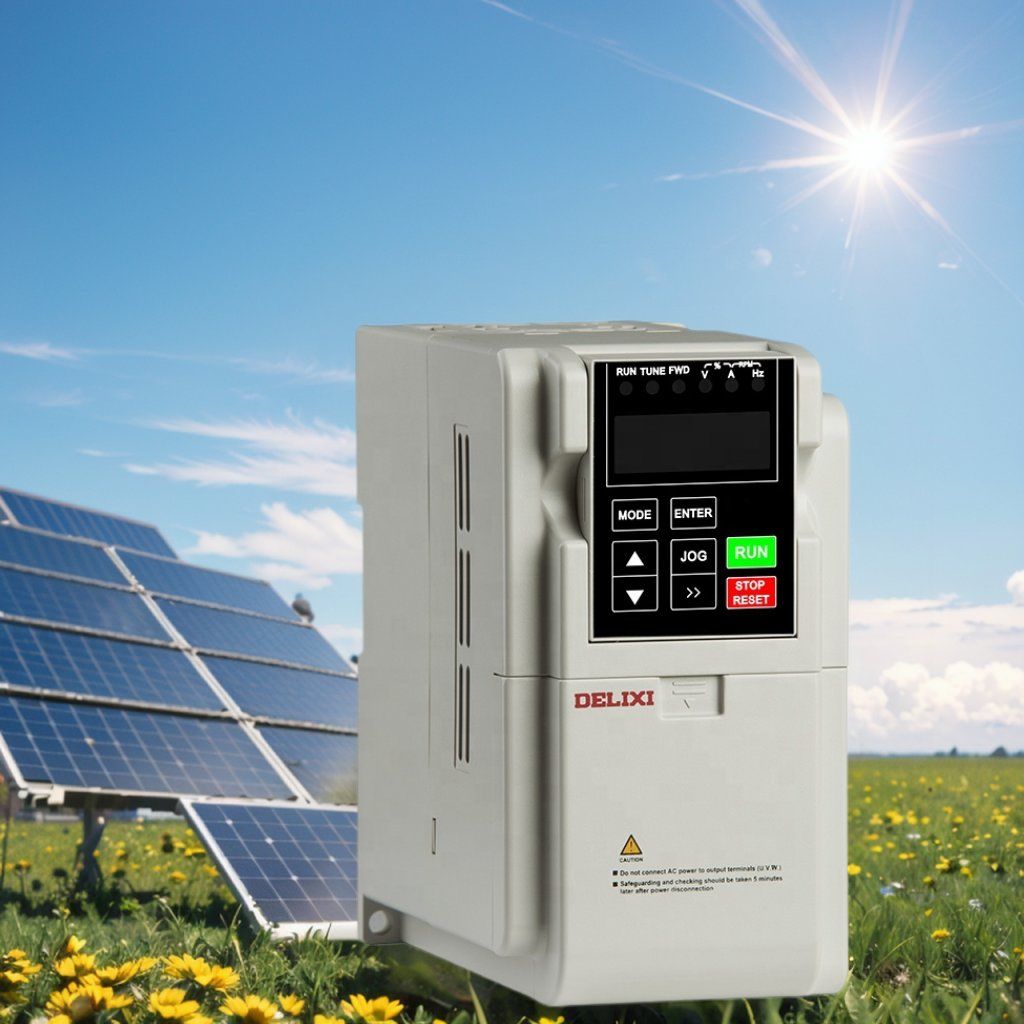
Scenario 1: Solar PV Array Voltage Fluctuations and DC Bus Instability
The Problem:
In solar pumping applications, the DC bus section of the VFD faces severe voltage instability due to intermittent solar irradiance and temperature coefficients of PV arrays. Unlike stable grid-tied systems where the converter section receives consistent AC sine waves, solar arrays deliver fluctuating DC voltage that can collapse below the motor’s minimum operating threshold during cloud transients or spike above the DC bus capacitance rating during peak irradiance with low ambient temperatures. This results in under-voltage faults that halt critical irrigation cycles or over-voltage trips that stress the DC link capacitors. Furthermore, the six-pulse rectifier topology common in standard VFDs struggles with the non-linear impedance characteristics of solar generators, leading to excessive ripple current on the DC bus—manifesting as AC ripple superimposed on the nominal 580V-680V DC level—that degrades electrolytic capacitors and compromises motor control precision through torque pulsations.
The Solution:
Deploy specialized solar pump inverters featuring ultra-wide DC input voltage ranges (e.g., 150VDC-800VDC) and integrated Maximum Power Point Tracking (MPPT) algorithms that actively stabilize the DC bus voltage despite irradiance fluctuations. Advanced topologies utilize boost converter front-ends or active power factor correction (PFC) stages to maintain consistent DC bus levels independent of PV output variations. For existing VFD retrofits, external MPPT controllers with DC link chokes (inductors) filter ripple currents, protecting the DC bus capacitors while ensuring continuous motor operation. Specifying drives with automatic voltage regulation (AVR) functionality also ensures stable V/Hz output to the motor even when the DC input fluctuates by ±30%.
Scenario 2: Electromagnetic Interference and Grid Harmonic Distortion
The Problem:
Standard six-pulse VFDs generate significant characteristic harmonics (5th, 7th, 11th, 13th) that distort the grid waveform and create conducted electromagnetic interference (EMI). In industrial facilities with multiple drives or weak grid infrastructure common in remote agricultural installations, cumulative total harmonic distortion (THD) can exceed IEEE 519 or IEC 61000-3-6 limits. This causes transformer overheating, neutral conductor overloading (triplen harmonics), and nuisance tripping of protective devices. The fast-switching IGBTs in the inverter section produce high dv/dt transients (typically >5,000 V/μs) that generate radiated emissions, interfering with wireless communication systems, PLC controls, and sensor networks essential for automated process monitoring.
The Solution:
Implement line-side harmonic mitigation through 3% to 5% impedance AC line reactors or DC bus chokes that smooth the current pulses drawn by the converter section’s diode bridge. For compliance with strict utility grid codes or high-power applications (>50kW), specify active front-end (AFE) regenerative drives or dedicate active harmonic filters that inject cancelling currents to achieve <5% THD. Additionally, install EMI/RFI filters at the VFD input and output terminals, utilize shielded motor cables with 360-degree grounding clamps at both ends, and maintain separation between power and control wiring (minimum 300mm) to prevent inductive coupling. Selecting drives with randomized PWM or carrier frequency optimization algorithms further reduces acoustic noise and radiated interference without compromising torque control.
Scenario 3: Motor Bearing Currents and Insulation Stress in Long Cable Applications
The Problem:
The PWM output waveform from VFDs creates steep-fronted voltage pulses that reflect at impedance mismatches, particularly problematic in solar pumping and industrial applications requiring long cable runs between the drive and motor (often 50-300 meters). These reflected waves superimpose at the motor terminals, creating voltage overshoots reaching 1,200V-1,600V—far exceeding the 600V or 1,000V insulation ratings of standard motors and accelerating insulation degradation in windings. Simultaneously, the high-frequency switching induces common-mode voltages that capacitively couple from the stator to the rotor, creating shaft voltages that discharge through the bearings as electrical pitting (fluting) or frosting. In agricultural environments where submersible pumps are difficult to access for maintenance, bearing failure from EDM (electrical discharge machining) currents results in costly downtime and irrigation disruption.
The Solution:
Install output dv/dt filters or motor protection reactors at the VFD terminals to limit voltage rise times to <500 V/μs and reduce peak voltages at the motor to <1,000V. For cable runs exceeding 100 meters or retrofit applications with standard NEMA motors, specify sinusoidal output filters (sine wave filters) that reconstruct the PWM output into a near-perfect sine wave, eliminating reflection issues entirely. Specify inverter-duty motors with Class F or H insulation systems utilizing inverter-grade magnet wire and ceramic (silicon nitride) bearings or insulated bearing races to break the circulating current path. Implement proper cable management using three-conductor continuous corrugated armored cables with the armor bonded to ground at both the drive and motor enclosures, minimizing common-mode noise and ensuring reliable motor lifespan in harsh, remote environments.
Component and Hardware Analysis for Drive Variable Frequency
The operational reliability and efficiency of modern Variable Frequency Drives (VFDs)—particularly in demanding solar pumping and heavy-duty industrial applications—are fundamentally determined by the quality, integration, and thermal management of their internal hardware architecture. While the topological structure (converter, DC bus, inverter) remains consistent across manufacturers, the selection of specific semiconductor technologies, passive components, and thermal interface materials creates significant differentiation in Mean Time Between Failures (MTBF), power density, and performance under harsh environmental conditions.
Power Semiconductor Stack: The Inverter Heart
At the core of the drive variable frequency system lies the Intelligent Power Module (IPM) or discrete IGBT (Insulated Gate Bipolar Transistor) array. In solar pump inverters, these modules must handle wide input voltage fluctuations (from 200V to 800V+ in MPPT tracking ranges) while maintaining high switching frequencies (4–16 kHz) to achieve sinusoidal current output with minimal motor heating.
High-quality drives utilize Trench-Stop Field Stop (TSFS) IGBT technology (6th or 7th generation), characterized by low Vce(sat) saturation voltage and positive temperature coefficients. This reduces conduction losses—critical for solar applications where every watt of efficiency impacts pump yield. The rectifier section typically employs a six-pulse diode bridge, though active front-end (AFE) configurations using IGBT-based rectifiers are increasingly specified for regenerative energy handling in industrial automation.
DC Link Energy Storage and Filtering
The DC bus section represents a critical reliability bottleneck. Standard drives use electrolytic capacitors, but premium solar pump inverters increasingly adopt metallized polypropylene film capacitors. Unlike electrolytic types, film capacitors withstand higher ripple currents (essential for MPPT algorithm stability), offer longer operational life (100,000+ hours vs. 20,000 hours), and maintain capacitance in high-temperature ambient environments common in agricultural installations.
A DC link choke (reactor) is often integrated to reduce current ripple by 30–40%, protecting the capacitor bank and reducing harmonic distortion reflected to the solar array. For EPC contractors, specifying drives with DC reactors significantly reduces premature DC bus failures in remote pumping stations.
Control Intelligence and Signal Isolation
The Digital Signal Processor (DSP) or ARM-based microcontroller executes complex algorithms including Maximum Power Point Tracking (MPPT), V/Hz control, and sensorless vector control. In solar pumping contexts, the DSP must process analog-to-digital conversions (ADC) with 12-bit or higher resolution to precisely track the solar array’s P-V curve under rapidly changing irradiance.
Critical to longevity is the gate driver circuitry. Modern high-quality VFDs employ digital isolators (magnetic or capacitive coupling) rather than traditional optocouplers, offering superior Common Mode Transient Immunity (CMTI > 50 kV/μs). This prevents latch-up failures caused by high dv/dt switching transients in long motor cable runs common in agricultural borehole applications.
Thermal Management Architecture
Thermal design directly correlates with hardware lifespan. The heatsink assembly—typically extruded aluminum 6063-T5 with anodized finish—must maintain thermal resistance (Rth) below 0.5 K/W for the IGBT modules. In solar pump inverters, convection-cooled (fanless) designs are preferred for outdoor IP65 installations, eliminating fan bearing failures (typically the first point of mechanical failure with MTBF of 40,000–60,000 hours).
Thermal Interface Materials (TIMs) between the IGBT baseplate and heatsink require high thermal conductivity (>3 W/mK) and dielectric strength to prevent thermal runaway. Phase-change materials are superior to silicone pads for long-term stability.
Component Quality Matrix
The following table outlines the critical hardware elements, their functional roles, and the quality indicators that determine operational lifespan in industrial and solar pumping environments:
| Component | Function | Quality Indicator | Impact on Lifespan |
|---|---|---|---|
| IGBT Power Module | DC-to-AC inversion via PWM switching; motor speed control | Low Vce(sat) (<1.7V); Tj(max) = 175°C; dv/dt ruggedness > 5kV/μs | Thermal cycling causes bond-wire lift-off; 10°C junction temp reduction doubles life (Arrhenius equation) |
| DC Link Capacitor | Filters rectified voltage; absorbs regenerative energy; stabilizes DC bus | Ripple current capacity @ 105°C; ESR < 10mΩ; L10 rating > 100,000 hrs (film) | Electrolyte evaporation in electrolytic types leads to ESR increase and thermal runaway; film capacitors offer 5x lifecycle |
| DSP Controller | Algorithm execution (MPPT, VFD control); PWM generation | Clock speed >100MHz; 16-bit ADC; Operating range -40°C to +85°C | Electromigration at high temps; latch-up from voltage transients causes catastrophic failure |
| Thermal Management System | Maintains semiconductor junction temperatures within specification | Heatsink Rth(j-a) < 0.8 K/W; Fan MTBF (L10) > 60,000h @ 60°C; TIM thermal conductivity >3 W/mK | Every 10°C exceedance above rated Tj reduces IGBT life by 50%; fan bearing wear is primary failure mode |
| Current Sensors | Phase current feedback for vector control and overcurrent protection | Accuracy ±0.5%; Bandwidth >100kHz; Isolation voltage 2.5kVrms | Hall effect sensor drift over time; magnetic core saturation causes control instability |
| Gate Driver IC | Isolated amplification of logic-level PWM to IGBT gate drive | CMTI > 50kV/μs; Propagation delay <200ns; UVLO protection | Optocoupler LED degradation (if used) reduces switching speed, increasing switching losses |
| Input/EMI Filter | Suppresses conducted emissions; protects against grid/surge transients | Insertion loss >60dB @ 150kHz; X2/Y2 safety capacitor ratings | Capacitor dielectric degradation; moisture ingress in toroidal chokes reduces inductance |
Procurement and Specification Guidance
For EPC contractors and automation distributors, hardware analysis should extend beyond datasheets to derating curves and conformal coating standards (IPC-CC-830). In solar pumping projects, specify drives with film capacitor DC links and conformal-coated PCBs (Class 3 protection) to resist humidity and sulfurous atmospheres common in agricultural regions. Verify that IGBT modules carry UL recognition and that thermal designs are validated via Computational Fluid Dynamics (CFD) modeling for the target IP rating (IP54 for indoor, IP65 for outdoor solar pumps).
Boray Inverter’s engineering protocols emphasize component-level derating—operating semiconductors at ≤80% of maximum voltage and current ratings—to ensure 20-year operational lifespans in off-grid solar pumping installations where maintenance access is limited and reliability is paramount.
Manufacturing Standards and Testing QC for Drive Variable Frequency
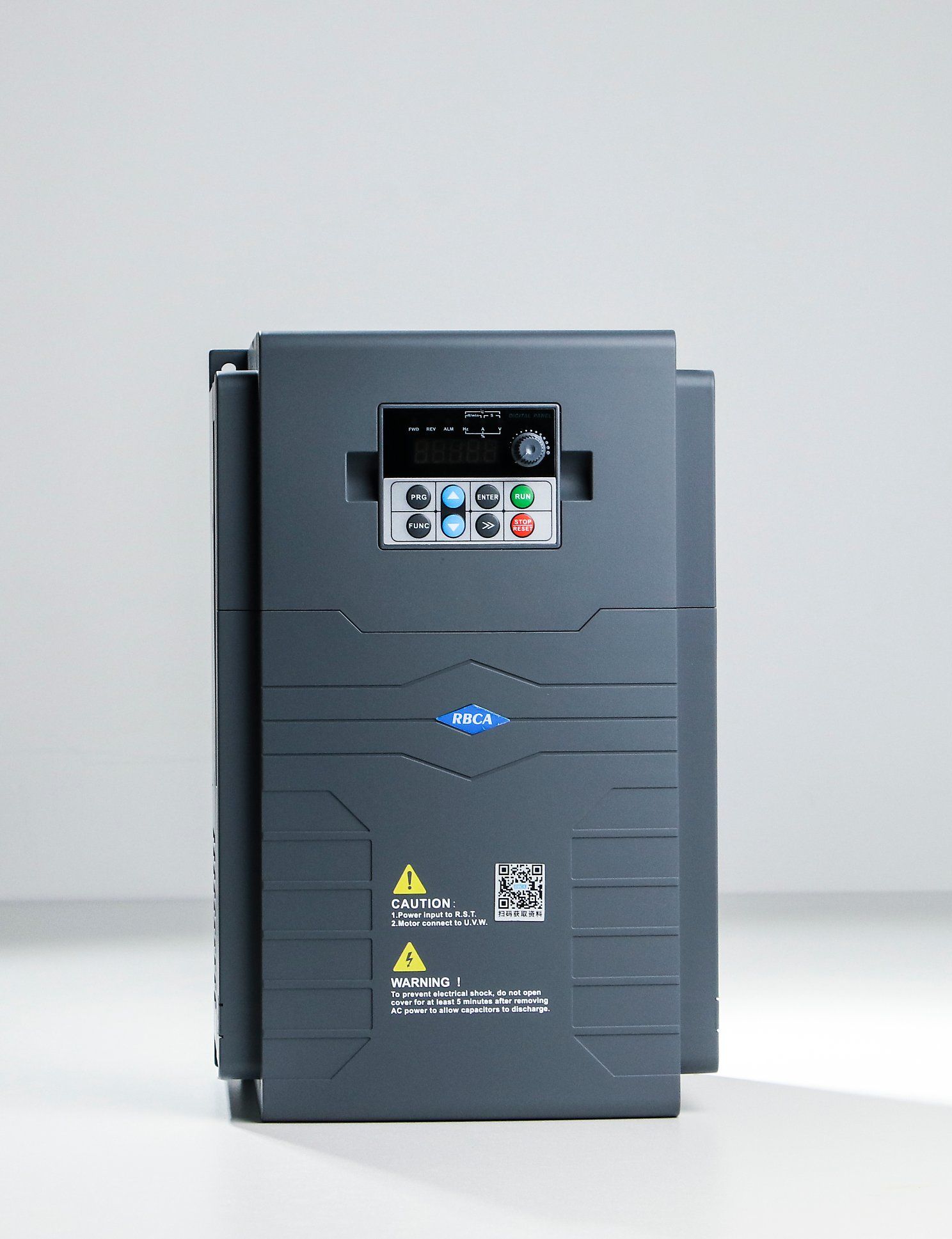
At Boray Inverter, manufacturing excellence for drive variable frequency systems extends beyond assembly—it encompasses a rigorous validation architecture designed to ensure survivability in harsh agricultural, desert solar, and heavy industrial environments. Our quality control protocols address the unique stressors of solar pumping applications, including extreme diurnal temperature swings, high humidity, abrasive dust, and continuous full-load operation in remote locations where service access is limited.
Component-Level Reliability and PCB Protection
The foundation of VFD durability begins at the circuit board level. All drive variable frequency units utilize IPC-A-610 Class 3 high-reliability printed circuit board assemblies, featuring automated optical inspection (AOI) and in-circuit testing (ICT) to eliminate soldering defects before power is ever applied. For solar pump inverters specifically, we implement automated selective conformal coating (acrylic or polyurethane-based, per IPC-CC-830) across 100% of PCB surfaces. This creates a moisture barrier against condensation and chemical contaminants prevalent in agricultural irrigation systems, while ensuring thermal conductivity is maintained for power component heat dissipation. Critical IGBT modules and capacitor banks undergo incoming material inspection including X-ray fluorescence (XRF) analysis to verify metallurgical composition and thermal impedance specifications.
Environmental Stress Screening and Thermal Validation
To simulate decade-long operational stress in accelerated timeframes, every drive variable frequency unit undergoes high-temperature aging (burn-in) at elevated ambient temperatures (typically +45°C to +55°C) for a minimum of 48 hours under dynamic load conditions. This process—combined with rapid thermal cycling between -40°C and +85°C—identifies infant mortality failures in power semiconductors, solder joints, and electrolytic capacitors before shipment. For solar applications, we additionally execute maximum power point tracking (MPPT) efficiency validation across the full irradiance spectrum (200W/m² to 1000W/m²), ensuring DC bus stability and inverter synchronization under fluctuating photovoltaic input conditions.
100% Full-Load Functional Testing
Unlike statistical sampling methods employed by commodity manufacturers, Boray Inverter mandates 100% full-load testing for every variable frequency drive. Each unit undergoes:
– Full-power heat run testing at rated current (100% to 150% overload for 60 seconds) to verify thermal management design and fan/heat sink performance
– Output waveform analysis using high-bandwidth oscilloscopes to confirm PWM carrier frequency stability and voltage total harmonic distortion (THD) <3%
– Motor control algorithm verification across the full 0-400Hz range, including torque compensation and slip frequency calculations for submersible pump motors
– Protection system validation (overvoltage, undervoltage, phase loss, ground fault, and thermal overload) under simulated fault conditions
Electromagnetic Compatibility and Safety Certifications
All drive variable frequency products conform to IEC 61800-5-1 (adjustable speed electrical power drive systems safety requirements) and IEC 61000 series standards for electromagnetic compatibility (EMC). Manufacturing compliance includes:
– Conducted and radiated emissions testing to CISPR 11/EN 55011 Class A (industrial) and Class B (residential/light industrial) limits
– Electrostatic discharge (ESD) immunity testing to IEC 61000-4-2 (±8kV contact, ±15kV air discharge)
– Surge immunity testing to IEC 61000-4-5 (±2kV line-to-earth, ±1kV line-to-line) for grid-connected solar pump systems
Quality management systems are certified to ISO 9001:2015, with production facilities maintaining CE marking compliance for European markets and UL 508C recognition for North American industrial control applications.
Mechanical Durability and Ingress Protection
For outdoor solar pumping installations, drive variable frequency enclosures undergo IP54 to IP66 validation testing (per IEC 60529), including pressurized water jet testing and dust penetration analysis. Vibration testing follows IEC 60068-2-6 (sinusoidal) and IEC 60068-2-64 (random vibration) standards to ensure survivability during transportation over unpaved agricultural roads and continuous operation near reciprocating pump machinery.
Traceability and Documentation for EPC Integration
Each drive variable frequency unit carries a unique serial number linked to a digital birth certificate containing component batch data, test results, and calibration certificates. This traceability supports EPC contractor requirements for O&M documentation and warranty management across multi-megawatt solar pumping projects. Final inspection includes packaging validation with desiccant and VCI (vapor corrosion inhibitor) films for sea freight shipments to tropical or coastal environments.
By implementing these manufacturing standards and QC protocols, Boray Inverter ensures that every variable frequency drive delivers the reliability necessary for continuous agricultural irrigation and industrial automation applications, minimizing total cost of ownership through extended MTBF (Mean Time Between Failures) ratings exceeding 50,000 hours under full-load conditions.
Step-by-Step Engineering Sizing Checklist for Drive Variable Frequency
Proper sizing of a drive variable frequency system requires rigorous analysis beyond simple horsepower matching. Whether configuring a standard AC drive for industrial process control or a solar pump inverter for off-grid irrigation, engineers must reconcile electrical characteristics, mechanical load profiles, and environmental constraints. The following checklist provides a systematic framework to ensure optimal compatibility, efficiency, and longevity across the entire motor-drive-power source ecosystem.
Step 1: Motor Nameplate Decoding & Load Profile Classification
Begin by extracting precise data from the motor nameplate:
– Rated Voltage (V) and Frequency (Hz): Verify compatibility with local grid standards or solar array output ranges.
– Full Load Amps (FLA): Record at the intended operating voltage; note that FLA increases if the motor will operate at altitude (>1000m) or elevated ambient temperatures.
– Service Factor (SF): If SF > 1.0, size the drive variable frequency unit for the service factor current, not the nominal FLA.
– Insulation Class (F or H): Critical for solar pump applications where wide temperature swings occur; Class H insulation is preferred for inverter-duty motors exposed to high dv/dt stresses.
Classify the load type to determine overload capacity requirements:
– Variable Torque (VT): Fans, centrifugal pumps (proportional to speed squared). Size drive at 100-110% of motor FLA.
– Constant Torque (CT): Conveyors, positive displacement pumps, compressors. Size drive at 150% of motor FLA for 60 seconds to handle startup inrush.
– Constant Power: Winding/unwinding applications. Requires careful review of base speed and field weakening regions.
Step 2: Drive Variable Frequency Current Sizing & Overload Capacity
Select the drive based on continuous output current, not kW rating:
– Standard Applications: Drive rated current ≥ 1.1 × Motor FLA.
– High Inertia/Heavy Starting: Drive rated current ≥ 1.5 × Motor FLA or utilize “Heavy Duty” (HD) vs “Normal Duty” (ND) ratings if available.
– Solar Pump Inverters: Verify the DC input current rating exceeds the solar array’s maximum power point current (Imp) by 25% to account for irradiance spikes and edge-of-cloud effects.
Verify the drive’s overload capability:
– VT Loads: 110% for 60 seconds typically sufficient.
– CT Loads: 150% for 60 seconds mandatory; 200% for 2 seconds desirable for impact loads.
Step 3: Voltage Compatibility & Input Power Topology
For Grid-Connected VFDs:
– Input voltage must match the facility’s nominal voltage (380V, 480V, 690V) with ±10% tolerance.
– Check for phase imbalance: <3% voltage imbalance between phases to prevent premature DC bus capacitor failure.
For Solar Pump Inverters (DC Input):
– Determine the Maximum Power Point Tracking (MPPT) voltage window of the inverter (e.g., 250V–800V DC).
– Calculate the Open Circuit Voltage (Voc) of the proposed string at record low temperatures (using temperature coefficient -0.3%/°C to -0.5%/°C for crystalline silicon).
– Calculate the Voltage at Maximum Power (Vmp) at record high temperatures (cell temperature = ambient + 25°C–35°C depending on mounting).
– Critical Constraint: Voc must never exceed the inverter’s maximum DC input voltage (typically 1000V or 1500V). Vmp must remain within the MPPT window across all operating temperatures.
Step 4: Solar Array String Sizing Calculations (If Applicable)
For photovoltaic-powered drive systems:
1. String Sizing Formula:
$N_{max} = \frac{V_{dc,max,inverter}}{V_{oc,STC} \times [1 + (T_{min} – 25) \times \frac{\%}{^{\circ}C}]}$
Where $T_{min}$ is the lowest expected ambient temperature in °C.
-
Minimum String Voltage:
$N_{min} = \frac{V_{mppt,min}}{V_{mp,STC} \times [1 + (T_{max} – 25) \times \frac{\%}{^{\circ}C}]}$ -
Power Matching: Total array power (kWp) should be 1.25–1.4 × motor rated power (kW) to account for:
- Irradiance variability (typically 800W/m² practical vs. 1000W/m² STC)
- Dust accumulation (soiling losses: 5-20%)
- Temperature derating
- Inverter efficiency (96–98%)
Step 5: Environmental Derating & Thermal Management
Apply correction factors for installation conditions:
– Altitude: Derate drive output current by 1% per 100m above 1000m altitude (reduced air density impairs cooling).
– Ambient Temperature: If the drive will operate above 40°C (or 50°C for some models), derate current by 2.5% per °C or specify external cooling/heat exchangers.
– Enclosure Integrity: IP55 or IP66 ratings required for agricultural/dusty environments; ensure adequate heat sink clearance (minimum 100mm vertical spacing for natural convection).
Step 6: Cable Sizing & dv/dt Mitigation
AC Output Cabling:
– Size cables for 125% of drive rated output current per NEC or IEC 60364-5-52.
– Critical for Long Leads: If motor cable length exceeds 50m (or 100m with specific filters), calculate reflected wave voltage stress. Peak voltage at motor terminals can reach 2×DC bus voltage (≈ 1.414 × RMS line voltage), potentially stressing insulation.
– Mitigation: Specify inverter-duty motors with enhanced insulation (1600V peak capability) or install dV/dt filters/reactors at the drive output.
DC Input Cabling (Solar):
– Size for 156% of Isc (short circuit current) per NEC 690.8.
– Maintain voltage drop <3% from array to inverter terminals.
Step 7: Harmonic Distortion & Power Quality Assessment
- Calculate Total Harmonic Current Distortion (THDi): Standard 6-pulse drives produce 80–100% THDi; active front end (AFE) or harmonic filters required if utility THD limits <5%.
- For solar pump inverters, verify DC ripple current specifications; excessive ripple reduces MPPT efficiency and capacitor lifespan.
Step 8: Protection Coordination & Safety Margins
- Input Protection: Size circuit breakers or fuses at 1.25–1.5× drive input current rating; verify breaking capacity exceeds prospective short-circuit current.
- DC Side Protection: Utilize PV-rated fuses (gPV type) with 1000VDC or 1500VDC rating between strings and combiner box.
- Ground Fault Protection: For solar applications, ensure residual current monitoring (RCM) sensitivity <300mA for fire protection and <30mA for personnel protection where required.
Step 9: Control Interface & Communication Protocols
- Verify analog input resolution (0–10V, 4–20mA) matches process control requirements.
- For agricultural/EPC projects, confirm compatibility with remote monitoring: RS485 (Modbus RTU), CANopen, or Ethernet/IP depending on SCADA architecture.
- Solar pump inverters: Verify dry-run protection sensors (float switches, pressure transducers) interface compatibility (typically digital inputs or 4–20mA).
Step 10: Documentation & Compliance Verification
- Verify drive certifications: CE, UL 61800-5-1 (safety), IEC 61800-3 (EMC), and for solar applications, IEC 62109 (safety of power converters used in photovoltaic systems).
- Prepare string calculation reports showing Voc, Vmp, and Isc across temperature extremes.
- Confirm warranty terms: Standard drives typically offer 2 years; solar pump inverters in harsh environments should specify 5-year minimum warranty with IP65+ rating.
Final Verification Check: Before procurement, cross-reference the selected drive variable frequency model’s derating curves against the specific combination of ambient temperature, switching frequency (higher frequencies reduce audible noise but increase thermal losses), and carrier frequency settings to ensure continuous operation margins exceed 15% under worst-case conditions.
Wholesale Cost and Energy ROI Analysis for Drive Variable Frequency
When procuring variable frequency drives (VFDs) for industrial automation or solar pumping infrastructure, the initial capital expenditure represents only 15–25% of the total lifecycle cost. For EPC contractors and agricultural project managers evaluating drive variable frequency systems, understanding the delta between wholesale acquisition costs and long-term energy ROI requires a granular analysis of topology efficiency, harmonic mitigation requirements, and warranty-backed reliability metrics.
B2B Procurement Economics: Volume Tiering and Channel Strategy
In the industrial automation supply chain, VFD pricing follows a logarithmic volume curve rather than linear depreciation. OEMs and tier-1 distributors typically access pricing 35–45% below retail list prices at volumes exceeding 50 units annually, with additional 8–12% reductions for committed forecast agreements. For solar pump inverters specifically—where projects often require 20–200 units depending on agricultural scale—direct manufacturer engagement eliminates distributor markups (typically 18–25%) while enabling customization of DC input voltage ranges and MPPT algorithms.
The wholesale cost structure for modern IGBT-based drives (0.75kW–75kW range) varies significantly by topology:
– Two-level voltage source inverters: $85–$140 per kW (wholesale) for standard IP20 enclosures
– Three-level NPC (Neutral Point Clamped): $120–$190 per kW, offering reduced common-mode voltage stress for long motor cable runs in solar pumping applications
– Solar-specific DC-AC pump inverters: $95–$160 per kW, inclusive of MPPT controllers and anti-islanding protection
These figures exclude harmonic filters, which add $15–$30 per kW but reduce utility penalty charges by 40–60% in grid-tied installations.
Total Cost of Ownership: Beyond the Bill of Materials
The TCO calculation for drive variable frequency systems must account for hidden cost vectors often absent from initial RFQs:
Energy Conversion Efficiency Delta: Premium VFDs with active front ends (AFE) or regenerative capabilities achieve 97–98% efficiency versus 94–96% for standard six-pulse converters. In a 22kW irrigation pump operating 2,400 hours annually, this 2% efficiency gain translates to 1,056 kWh savings—approximately $127/year at industrial electricity rates, or $1,900 over a 15-year lifecycle.
Power Factor Correction: VFDs inherently present near-unity power factor (0.95–0.99) to the line side, eliminating capacitor bank requirements ($800–$2,500 installation cost) and kVAR penalty charges common in agricultural co-op tariffs.
Mechanical Stress Mitigation: Soft-start functionality reduces inrush current by 60–70%, extending motor bearing life by 30–50% and reducing coupling maintenance intervals from quarterly to bi-annual service cycles—a $400–$800 annual savings per pump station.
Energy ROI Quantification Methodology
For project finance teams modeling solar pumping installations, the ROI calculation must integrate insolation variability with VFD efficiency curves:
Baseline Formula:
Annual Savings = (P_fixed - P_variable) × Operating Hours × Energy Cost
Where P_fixed = Motor rated power × Load factor (typically 0.7–0.85)
And P_variable = P_fixed × (VFD Efficiency × System Efficiency)
In solar pumping applications where Boray Inverter’s MPPT-enabled drives optimize DC-to-AC conversion, additional gains emerge:
– MPPT Efficiency Premium: 98.5% tracking efficiency versus 94% in standard inverters adds 4–6% daily water yield in low-light conditions
– Grid Independence Value: Off-grid installations eliminate transmission losses (typically 8–12%) and demand charges ($15–$45/kW monthly)
Payback Scenarios:
– Retrofit Applications: Replacing across-the-line starters with VFDs in 30kW HVAC or irrigation systems typically achieves 18–24 month payback at $0.12/kWh
– Greenfield Solar Pumping: Higher upfront costs ($/kW) are offset by zero fuel costs, achieving 3.5–5 year payback versus diesel pump sets, with 20-year NPV advantages exceeding $18,000 per installation
Warranty Cost Analysis and Risk Mitigation
Warranty structures in the VFD market function as proxy indicators for MTBF (Mean Time Between Failures) confidence. Standard industry coverage spans 12–18 months, while tier-1 manufacturers offer 24–36 month warranties with advanced replacement clauses. The critical distinction lies in capacitor coverage—DC bus capacitors degrade at 2–3% annually under 40°C ambient conditions, representing 40% of drive failure modes.
Warranty Cost Modeling:
– Standard 12-month warranty: Implicit cost of $85–$120/unit for replacement reserves
– Extended 5-year warranty: Adds 8–12% to acquisition cost but eliminates CapEx risk for critical path equipment
– Solar pump inverter specific: IP65-rated enclosures command 15–20% premium but reduce warranty claims by 60% in agricultural environments versus IP20 units exposed to humidity/dust
For EPC contractors, negotiating warranty terms that include on-site technical support and firmware update provisions reduces TCO by eliminating third-party service contracts ($150–$300/hour for certified technicians).
Strategic Procurement Recommendations
When evaluating drive variable frequency proposals, engineering teams should require:
- Harmonic distortion guarantees: IEEE 519 compliance (<5% THDi) without external filters, verified through factory witness testing
- Efficiency certification: IE2 or IE3 efficiency class verification per IEC 61800-9-2 for partial load conditions (25%, 50%, 75%, 100%)
- Solar compatibility: For PV-powered systems, confirmation of 200–800VDC input range tolerance and anti-islanding protection per UL 1741
The optimal procurement strategy balances wholesale volume discounts against localized service capabilities. For projects exceeding 100kW aggregate capacity, direct manufacturer relationships—such as those offered by specialized solar pump inverter OEMs—typically yield 20–30% cost reductions compared to distribution channels while providing application-specific programming for centrifugal versus positive displacement pump curves.
Ultimately, the most cost-effective VFD implementation prioritizes energy conversion efficiency and environmental protection ratings over initial unit cost, ensuring that the 20-year operational savings—often 8–12x the initial hardware investment—remain protected against premature component failure.
Alternatives Comparison: Is Drive Variable Frequency the Best Choice?
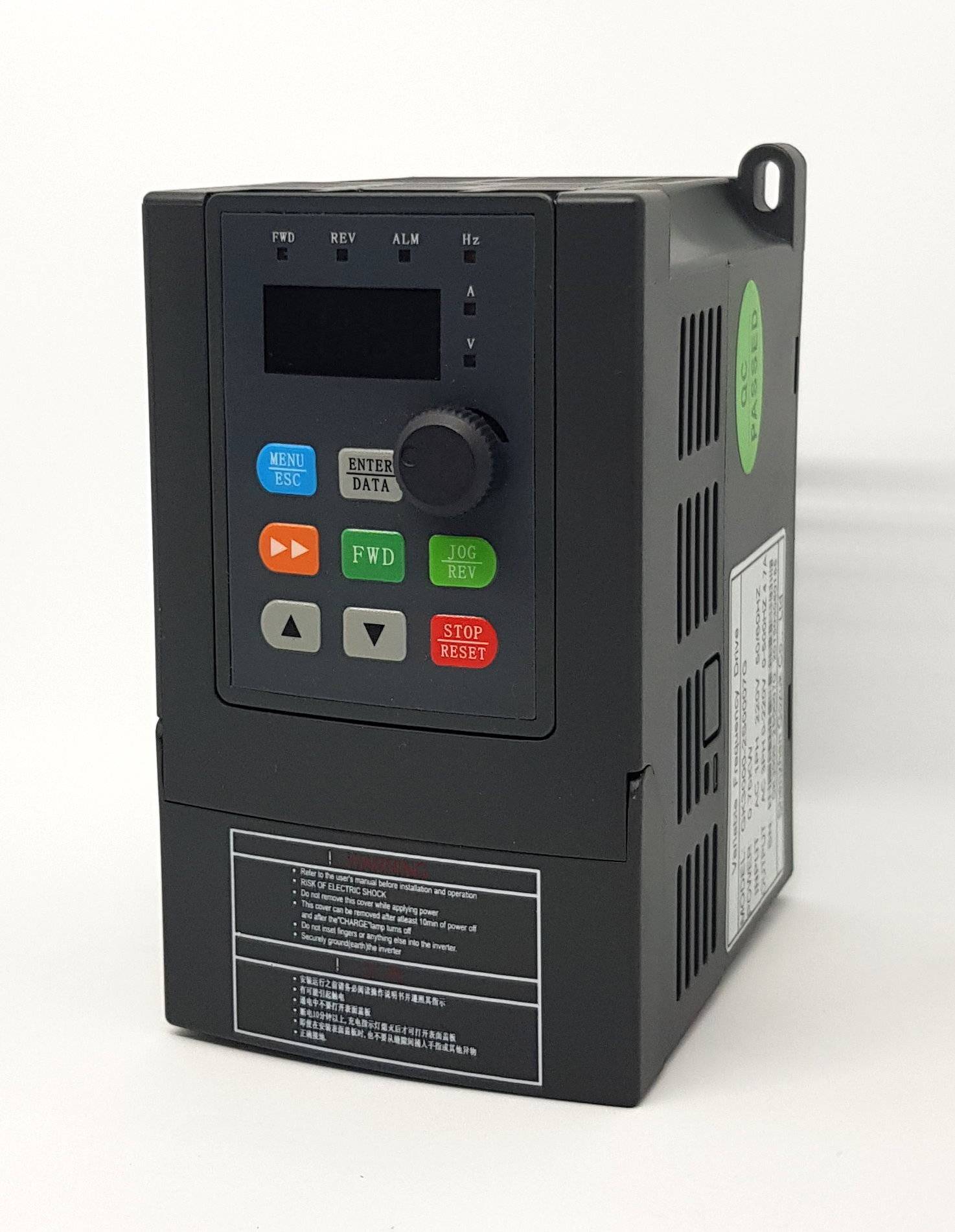
When specifying motor control systems for industrial or agricultural projects, engineers and EPC contractors must evaluate the total cost of ownership (TCO) against performance requirements. While variable frequency drive (VFD) technology—also known as adjustable speed drives (ASD) or inverters—represents the gold standard for precision control and energy efficiency, alternative approaches may offer compelling advantages in specific scenarios. Below, we analyze the three critical decision points facing automation distributors and project managers: motor starting methodology, power source architecture, and motor electromechanical topology.
Motor Control Methodology: VFD vs. Soft Starter vs. Direct Online (DOL)
For fixed-speed applications, Soft Starters and Direct Online (DOL) starting remain common alternatives to VFDs.
Soft Starters utilize thyristor-based phase control to ramp voltage during motor acceleration, limiting inrush current (typically 3-5x full load current versus 6-8x for DOL). This reduces mechanical stress and network voltage dips but offers no operational energy savings once the motor reaches full speed. They occupy a middle ground in cost—higher than DOL contactors but significantly lower than VFDs.
VFDs, by contrast, provide full variable speed control through IGBT-based frequency conversion (rectifier-DC bus-inverter topology). Beyond soft starting capabilities (limiting current to 1.5x nominal), they enable precise process control, power factor correction near unity, and substantial energy savings (30-50% in centrifugal pump/fan applications via affinity laws).
Decision Factor: Specify soft starters only when the motor will run at fixed speed 100% of the time and the sole concern is mechanical stress reduction. For any application requiring flow/pressure modulation or part-load operation, VFDs deliver ROI within 12-18 months through energy recovery alone.
Power Architecture: Solar DC-Coupled VFDs vs. Grid-AC Systems
In agricultural and remote industrial pumping, Solar Pump Inverters (specialized VFDs with integrated MPPT controllers) compete against traditional grid-AC VFDs and diesel generator sets.
Grid-AC VFDs offer unlimited runtime and consistent power availability but incur ongoing electricity costs and grid infrastructure dependency. In regions with unreliable grids or high electricity tariffs, operational costs escalate rapidly.
Solar VFD Systems (such as Boray’s solar pump inverter series) eliminate grid dependency by converting DC photovoltaic output directly to variable frequency AC. Advanced MPPT algorithms ensure maximum energy harvest (98% tracking efficiency) even under fluctuating irradiance. Unlike battery-backed solar systems, modern solar VFDs enable direct PV-to-motor coupling, drastically reducing CAPEX by eliminating batteries, charge controllers, and inverters.
Hybrid Considerations: Some installations benefit from hybrid architectures—solar VFDs with grid/diesel backup inputs—ensuring 24/7 operation while maximizing solar utilization during daylight hours.
Motor Technology Integration: PMSM vs. Induction Motor (IM)
When pairing drives with motors, the choice between Permanent Magnet Synchronous Motors (PMSM) and Induction Motors (IM) significantly impacts system efficiency.
Induction Motors (squirrel cage) are robust, fault-tolerant, and can operate in bypass mode (across-the-line) if the VFD fails. However, they exhibit lower efficiency (IE2/IE3) and power factor, especially under partial loads.
PMSMs require VFD operation (cannot run DOL) but deliver IE5 efficiency levels and maintain high power factor across the speed range. For solar pumping applications where every watt of PV capacity matters, PMSM-VFD combinations extract 15-20% more water per solar kilowatt than IM systems. The trade-off is higher motor cost and sensitivity to high-temperature demagnetization—requiring drives with advanced thermal management algorithms.
Comparative Analysis Matrix
| Parameter | VFD (Variable Frequency Drive) | Soft Starter | Solar Pump Inverter | Grid-AC VFD | PMSM + VFD | Induction Motor + VFD |
|---|---|---|---|---|---|---|
| Speed Control | 0-100% continuous variable | Fixed (full speed only) | 0-100% (solar limited) | 0-100% continuous | 0-100% synchronous | 0-100% (slip dependent) |
| Starting Current | 1.0-1.5x FLC | 3-5x FLC | Soft start capability | 1.0-1.5x FLC | 1.0-1.5x FLC | 1.0-1.5x FLC |
| Energy Efficiency | High (30-50% savings potential) | None (fixed speed losses) | Very High (zero fuel cost) | Moderate (grid losses) | Very High (IE5, >95%) | Moderate-High (IE3/IE4) |
| Power Factor | >0.95 (unity) | 0.6-0.8 (motor dependent) | >0.95 | >0.95 | >0.95 | 0.7-0.9 (load dependent) |
| CAPEX | High | Low | Medium-High (no batteries) | Medium | High (motor + drive) | Medium |
| OPEX | Low | High (no energy optimization) | Very Low (maintenance only) | Medium-High (electricity) | Very Low | Low-Medium |
| Grid Dependency | Required (unless hybrid) | Required | None (off-grid capable) | Required | Required (unless solar VFD) | Required (unless solar VFD) |
| Process Control | Excellent (PID, multi-pump) | None | Good (flow/pressure control) | Excellent | Excellent | Good |
| Harmonic Distortion | Low (with active front end) | High (phase control) | Low (DC coupling) | Low | Low | Low |
| Best Application | HVAC, industrial automation, water treatment | High-inertia fans, compressors (fixed speed) | Remote irrigation, livestock watering, off-grid villages | Factory automation, municipal pumping | High-efficiency solar pumping, precision servo | General purpose pumping, cost-sensitive projects |
Strategic Selection Framework for EPC Contractors
Choose VFD Technology When:
– The load profile varies (pumps, fans, compressors with changing demand)
– Energy recovery justifies higher upfront investment (payback < 2 years)
– Precise process control is mandatory (±0.5% speed accuracy)
– Power factor correction is needed to avoid utility penalties
Choose Soft Starters When:
– The motor runs at fixed speed with rare stops/starts
– Budget constraints prohibit VFD investment
– The application involves high-inertia starting where current limitation is the only requirement
Choose Solar Pump Inverters (Specialized VFDs) When:
– Grid extension costs exceed $15,000/km
– Diesel generator OPEX exceeds $0.30/kWh equivalent
– Irrigation sites have consistent solar irradiance (4+ peak sun hours)
– Environmental mandates require carbon footprint reduction
Motor Selection Guidance:
– Induction Motors: Optimal for grid-connected systems requiring bypass capability for critical uptime (redundancy)
– PMSMs: Specify for solar pumping projects where maximizing flow per watt is paramount, and where the VFD offers robust rotor position detection (sensorless vector control)
Conclusion
For the majority of modern industrial and agricultural automation projects, drive variable frequency technology represents the optimal balance of efficiency, control, and lifecycle cost. While soft starters and fixed-speed solutions retain niche applications, only VFDs deliver the operational flexibility required for Industry 4.0 integration and sustainable energy management.
Boray Inverter’s portfolio addresses the complete spectrum—from standard industrial VFDs for grid applications to specialized solar pump inverters with integrated MPPT and PMSM control algorithms. For EPC contractors evaluating alternatives, the critical question is no longer whether to specify variable frequency drives, but rather which topology (AC grid, DC solar, or hybrid) and motor integration (IM or PMSM) best aligns with the project’s specific energy architecture and performance KPIs.
Core Technical Specifications and Control Terms for Drive Variable Frequency
When specifying variable frequency drives for industrial automation or solar pumping applications, engineers must evaluate both the electromechanical control architecture and the commercial frameworks governing international procurement. The following technical parameters and trade definitions establish the baseline for system compatibility, performance optimization, and supply chain risk management.
Electrical Performance and Topology Specifications
Input/Output Characteristics
Modern VFDs, including solar pump inverters, operate across wide voltage tolerances to accommodate global grid variations (380–480V ±15% for three-phase industrial units; 200–240V for residential/agricultural single-phase inputs). Critical specifications include:
- PWM Carrier Frequency: Typically 2–16 kHz, adjustable to balance acoustic noise reduction against switching losses. Higher frequencies (>4 kHz) minimize motor whine but increase thermal stress on IGBT modules.
- Output Frequency Range: 0–400 Hz standard; agricultural solar pumps often require 0–50/60 Hz with V/Hz control or 0–300 Hz for specialized high-speed centrifugal applications.
- Overload Capacity: Industrial drives specify 150% rated current for 60 seconds (heavy duty) or 120% for 60 seconds (normal duty). Solar pump inverters require 200% instantaneous torque capability for pump starting against static head.
- THDi (Total Harmonic Current Distortion): <5% with active front-end (AFE) rectifiers; <35% for standard 6-pulse diode bridges, necessitating external DC chokes or line reactors.
DC Bus Architecture
The intermediate DC link voltage (typically 1.35 × AC input voltage for three-phase units) determines braking transistor sizing and regenerative capability. For solar applications, the DC bus accepts direct PV array input (200–800VDC range), eliminating the traditional converter stage while requiring MPPT algorithms to maintain bus stability.
Control Algorithms and Motor Management
V/Hz Control (Scalar Control)
The fundamental method for variable torque applications (centrifugal pumps, fans), maintaining constant flux by keeping voltage-to-frequency ratio fixed. Suitable for multi-motor parallel operation but provides limited low-speed torque (<10% rated speed).
Sensorless Vector Control (SVC)
Utilizes current feedback and motor modeling algorithms to estimate rotor position without physical encoders. Provides ±0.5% speed accuracy and 150% starting torque at 0.5 Hz—critical for positive displacement pumps in agricultural irrigation where starting against high back-pressure is required.
Closed-Loop Vector Control (FOC)
Requires encoder feedback (incremental or absolute) to achieve ±0.01% speed regulation and full torque at zero speed. Essential for precision positioning in industrial automation, though rarely necessary for standard solar pumping unless using synchronous reluctance motors.
PID Process Control
Integrated proportional-integral-derivative loops enable direct sensor feedback (4–20mA pressure transducers, flow meters) without external PLCs. Configuration parameters include:
– Sampling Time: 1–10 ms for pump control
– Sleep/Wake Functionality: Critical for solar pumps to prevent dry-running when irradiance drops below threshold (typically <30% rated power)
– Boost Function: Temporary frequency elevation to clear pipeline airlocks
Solar-Specific Technical Parameters
Maximum Power Point Tracking (MPPT)
In photovoltaic pumping systems, MPPT algorithms continuously adjust the effective load impedance seen by the PV array to extract maximum available power (typically 98.5–99% tracking efficiency). Key variants include:
– Perturb and Observe (P&O): Standard for stable irradiance; 0.5–1% power oscillation
– Incremental Conductance: Superior for rapidly changing cloud conditions
– MPPT Voltage Range: 200V–800VDC for 380V AC pumps; must accommodate open-circuit voltage (Voc) of 1.25× nominal array voltage
VFD Bypass and Redundancy
Agricultural specifications often require manual or automatic bypass contactors (3-contactor or 2-contactor schemes) allowing direct grid connection during inverter maintenance. Smart bypass systems synchronize phase rotation before transfer to prevent hydraulic shock.
Dry-Run and Water-Level Protection
Dedicated inputs for float switches or conductivity sensors, with configurable response delays (0–60 seconds) to account for turbulent water surfaces in borehole applications.
Environmental and Mechanical Specifications
Ingress Protection (IP) Ratings
– IP20: Cabinet-mounted industrial drives requiring controlled environments
– IP54: Dust-protected, splash-resistant for agricultural pump houses
– IP65: Totally dust-tight, hose-down capable for outdoor solar pump installations without enclosures
Thermal Management
Operating temperature ranges from -10°C to +50°C (derating above 40°C). Heat dissipation calculations must account for switching losses (typically 3–5% of rated power) and enclosure ventilation requirements (minimum 200mm clearance for natural convection; forced air for >7.5kW units).
EMC Compliance
– C2 Category: Industrial environments with dedicated transformers
– C3 Category: Public grid connections requiring integrated EMC filters
– C4 Category: Heavy industrial with external filters and screened cables
Commercial Terms for International Procurement
FOB (Free On Board)
The seller (manufacturer) delivers goods cleared for export onto the vessel at the named port of shipment. Risk transfers when goods pass the ship’s rail; buyer assumes ocean freight, insurance, and destination charges. Typical for containerized VFD shipments from Chinese manufacturing hubs (Shanghai, Shenzhen, Ningbo).
CIF (Cost, Insurance, and Freight)
Seller contracts for carriage and insurance to the named destination port, but risk transfers at origin port (identical to FOB point). Critical distinction: CIF requires seller to procure minimum marine insurance (110% of CIF value under Incoterms® 2020), though buyers often negotiate “All Risks” coverage.
EXW (Ex Works)
Minimum obligation for seller; buyer collects from factory and handles all export clearance, freight, and insurance. Suitable only for buyers with established China-based logistics agents.
DDP (Delivered Duty Paid)
Seller assumes all costs and risks to named destination, including import duties and VAT. High-risk for VFD suppliers due to import tariff variability (typically 2.5–6.5% for drives classified under HS Code 8504.40 in most jurisdictions).
Technical Warranty and Support Terms
– Standard Warranty: 18–24 months from Bill of Lading date or 12 months from commissioning (whichever occurs first)
– Extended Warranty: Available for solar pump inverters covering IGBT modules for 5 years
– OEM/ODM MOQ: 50–100 units for customized firmware (private-label startup screens, specialized pump curves) or enclosure modifications
Lead Time and Payment Structures
– Standard VFDs: 15–30 days ex-factory for <100kW units
– Solar Pump Inverters: 25–45 days due to additional DC input certification (IEC 62109)
– Payment Terms: 30% T/T deposit, 70% against B/L copy for new customers; L/C at sight for orders >$100,000 USD
When evaluating proposals, EPC contractors should verify that technical specifications (particularly MPPT efficiency and vector control response times) take precedence over unit cost, as compatibility failures in solar pumping installations often generate costs exceeding the original equipment value within the first operational season.
Future Trends in the Drive Variable Frequency Sector
The variable frequency drive (VFD) sector is undergoing a paradigm shift from standalone motor control devices to intelligent, interconnected energy management hubs. As Industry 4.0 architectures mature and renewable energy penetration accelerates, modern drive systems—particularly in solar pumping and precision motor control applications—are evolving to meet demands for higher efficiency, autonomous operation, and seamless grid integration. For industrial engineers, EPC contractors, and agricultural project managers, understanding these trajectories is critical for specifying future-proof automation infrastructure.
AI-Driven Automation and Predictive Control
The next generation of VFDs is moving beyond simple V/Hz control toward adaptive, AI-enhanced motor management. Machine learning algorithms embedded at the drive level—often referred to as edge AI—are enabling real-time parameter optimization based on load profiles, ambient conditions, and historical performance data. In agricultural solar pumping systems, for instance, drives can now autonomously adjust pump curves to match dynamic solar irradiance while predicting cavitation events or pipe blockages through vibration signature analysis. This shift toward predictive maintenance reduces unplanned downtime by up to 40% in remote installations, a crucial advantage for EPC contractors managing widely distributed solar irrigation networks.
Furthermore, advanced automation protocols are integrating VFDs directly into digital twin ecosystems. By creating virtual replicas of motor-drive systems, engineers can simulate energy consumption scenarios, test control logic offline, and optimize MPPT (Maximum Power Point Tracking) algorithms for solar pump inverters before physical deployment. These digital twin integrations leverage OPC UA and MQTT protocols to ensure interoperability between heterogeneous equipment brands, addressing a long-standing pain point in multi-vendor industrial environments.
Renewable Energy Integration and DC Microgrids
The convergence of solar photovoltaic (PV) systems and motor control technology represents one of the most significant market disruptors. Traditional AC-coupled solar pumping architectures are increasingly giving way to DC-coupled solutions, where solar pump inverters operate directly from high-voltage DC busses without intermediate conversion stages. This topology reduces conversion losses by 15-20% and simplifies system architecture for agricultural projects in off-grid regions.
Emerging trends include hybrid AC/DC drive systems capable of seamless switching between grid power, solar arrays, and battery energy storage systems (BESS). For industrial applications, this means VFDs that can function as grid-forming inverters when islanded, maintaining voltage and frequency stability during utility outages while prioritizing critical motor loads. Modern drives are also incorporating bidirectional power flow capabilities, allowing regenerative energy from decelerating motors to charge storage systems or feed back into microgrids—an essential feature for sustainable manufacturing and large-scale irrigation projects targeting net-zero energy consumption.
Industrial IoT and Cyber-Resilient Monitoring
The proliferation of Industrial Internet of Things (IIoT) sensors has transformed VFDs from control endpoints into data-rich nodes within comprehensive energy management platforms. Cloud-native monitoring solutions now provide real-time visibility into drive parameters—torque, current signature, thermal loading, and harmonic distortion—across geographically dispersed installations. For automation distributors, this creates new value-added service opportunities, offering subscription-based condition monitoring rather than merely hardware sales.
However, increased connectivity necessitates robust cybersecurity frameworks. Future-ready drive systems are adopting IEC 62443-compliant security architectures, featuring encrypted communication channels, secure boot mechanisms, and role-based access controls. Over-the-air (OTA) firmware updates, once considered risky for critical motor control applications, are becoming standard through blockchain-verified update protocols, ensuring solar pump installations in remote locations receive security patches and feature enhancements without site visits.
Mobile HMI (Human-Machine Interface) integration represents another frontier, with NFC and Bluetooth Low Energy (BLE) enabling field technicians to diagnose drive faults using smartphones, even in offline scenarios. This capability proves invaluable for agricultural project managers overseeing vast irrigation networks where cellular connectivity may be intermittent.
Strategic Implications for B2B Procurement
As these technologies mature, procurement criteria are shifting from kilowatt-per-dollar metrics to total cost of ownership (TCO) calculations that factor in predictive analytics capabilities, cybersecurity certifications, and renewable integration flexibility. Forward-thinking EPC contractors are now specifying VFDs with open API architectures, ensuring compatibility with emerging energy management platforms and future grid codes. For the solar pumping sector specifically, the ability to support wide DC voltage ranges (150VDC to 800VDC+) and intelligent wake-up sequences for low-light operation is becoming as critical as traditional efficiency ratings.
The trajectory is clear: drive variable frequency technology is evolving into a cornerstone of intelligent electrification, bridging the gap between renewable generation, automated machinery, and data-driven operational excellence. Organizations that align their specifications with these trends today will realize substantial competitive advantages in energy efficiency, operational resilience, and system scalability tomorrow.
Top 1 Drive Variable Frequency Manufacturers & Suppliers List

Analysis of the Top 25 Variable Frequency Drive (VFD) Companies …
Website: finance.yahoo.com
No product details found in the provided text. The content appears to be a Yahoo error page (‘Oops, something went wrong’) containing only navigation menus and site structure elements, with no actual article content about Variable Frequency Drives, solar inverters, or industrial automation.
B2B Engineering FAQs About Drive Variable Frequency
-
How does the 6-pulse converter topology in a standard VFD impact DC bus voltage ripple, and what are the implications for motor cable lengths in agricultural pumping installations?
In a standard six-pulse VFD, the diode bridge rectifier produces six current pulses per cycle, resulting in a DC bus voltage with inherent ripple (typically 580V–680V on a 480V system). This ripple, combined with the inverter section’s IGBT switching, creates high dV/dt transients. For submersible pumps or remote borehole motors with cable runs exceeding 50 meters, these voltage spikes can exceed motor insulation ratings (especially in older Class B or F insulation systems). Boray Inverter recommends installing output reactors or dV/dt filters at the VFD terminals to limit peak voltages at the motor terminals to <1,000 V/μs, thereby preventing insulation degradation and bearing currents in long-lead agricultural applications.
-
What is the distinction between V/Hz control and sensorless vector control in variable frequency drives, and which mode is optimal for centrifugal pumps in solar irrigation systems?
V/Hz control maintains a constant voltage-to-frequency ratio, providing simple speed regulation but limited torque accuracy at low speeds (below 10 Hz). Sensorless vector control uses motor current feedback and mathematical modeling to decouple flux and torque components, delivering precise torque control (±5% accuracy) even at near-zero speeds. For solar-powered centrifugal pumps, sensorless vector control is preferred because it maintains constant pressure during fluctuating irradiance conditions and provides higher starting torque (up to 150% rated torque) for deep-well submersible pumps without requiring encoder feedback, maximizing water yield during low-light morning and evening periods.
-
When designing a solar pumping system, how does the VFD’s DC input voltage range and Maximum Power Point Tracking (MPPT) algorithm efficiency affect overall system performance?
Solar pump inverters must accommodate wide DC input voltage variations (typically 200V–800V DC for 380V AC pumps) as irradiance changes. The VFD’s MPPT algorithm should scan the PV array’s I-V curve with <1% voltage tracking error and response times under 500ms to maintain operation at the maximum power point. Boray Inverter’s solar pump drives utilize adaptive MPPT with 99% tracking efficiency, ensuring the DC bus remains stable even during rapid cloud transients. This prevents the VFD from tripping on undervoltage (UV) faults while optimizing energy harvest—critical for EPC contractors sizing systems for remote irrigation projects without grid backup.
-
What harmonic mitigation strategies should be implemented when deploying multiple VFDs in industrial pumping stations to comply with IEEE 519 and IEC 61000-3-6?
Standard six-pulse VFDs generate characteristic harmonics (5th, 7th, 11th, 13th) that can distort voltage THD beyond the 5% limit specified in IEEE 519. For multi-pump installations (common in agricultural distribution networks), specify line reactors (3% impedance minimum) or DC link chokes on each drive to reduce current THD by 40–50%. For larger installations (>500kVA total VFD load), consider 12-pulse or active front end (AFE) configurations, or install active harmonic filters on the main bus. Boray Inverter’s industrial VFDs include built-in DC reactors as standard, reducing the need for external filtering and ensuring compliance with utility interconnection standards for agricultural co-ops.
-
How do IGBT switching frequencies influence motor bearing currents and EMI in harsh agricultural environments, and what protection measures are recommended?
Higher switching frequencies (8–16 kHz) reduce motor audible noise but increase common-mode voltage and capacitive coupling between rotor and stator, inducing shaft currents that pit bearings through electrical discharge machining (EDM). In dusty, high-humidity pump houses, this accelerates bearing failure. Mitigation requires: (1) setting switching frequency ≤4 kHz for pumps >15kW to reduce dV/dt stress; (2) installing shaft grounding rings or insulated ceramic bearings on motors >75kW; and (3) using shielded motor cables with 360° bonding at both VFD and motor enclosures. Boray Inverter drives feature adjustable carrier frequency and built-in EMC filters (C2/C3 category) to minimize conducted emissions in metal-clad pump stations.
-
What are the critical VFD parameter settings for commissioning submersible pumps in deep borehole applications to prevent stall conditions and thermal overload?
Deep-well submersible pumps require specific torque curves and stall prevention. Key settings include: (1) Torque Boost: Set to 5–10% to overcome static head during startup without causing saturation; (2) Stall Prevention Level: Adjust to 120% rated current with a 10-second delay to allow for sand-lock conditions without nuisance tripping; (3) Carrier Frequency: Reduce to 2–4 kHz to minimize heating in long motor leads; (4) Skip Frequencies: Program to avoid mechanical resonance bands (typically 45–55% of rated speed); and (5) Underload Protection: Enable to detect dry-run conditions (broken suction) by monitoring current drop below 30% rated load for >10 seconds, protecting the pump from cavitation damage.
-
In hybrid solar-grid pumping systems, how should the VFD’s automatic transfer function be configured to manage grid fallback without causing water hammer or mechanical stress?
Hybrid systems require seamless transfer logic when solar irradiance drops below the threshold required to maintain DC bus voltage (>Vmin). Configure the VFD with: (1) Ramp Rate Control: Set deceleration ramps to 10–20 seconds (not instantaneous) to prevent water hammer when switching from solar to grid; (2) DC Bus Hysteresis: Implement a 20VDC deadband between solar minimum operating voltage and grid transfer threshold to avoid chattering; (3) Flying Start: Enable speed search functionality to catch the spinning pump load (coasting down) when grid power returns, avoiding high inrush currents; and (4) Sequence Logic: Use the VFD’s relay output to control a mechanical or static bypass contactor with interlock timing to ensure break-before-make switching, preventing backfeed into the PV array.
-
What environmental protection ratings and conformal coating specifications are required for VFDs installed in outdoor agricultural pump stations with high humidity and chemical exposure?
Agricultural environments require IP65 or IP66 enclosures to protect against dust ingress and high-pressure water jets from irrigation systems. For tropical or coastal climates with >80% relative humidity, specify VFDs with Class 3C2 or 3C3 conformal coating (per IEC 60721-3-3) on all PCBs to resist hydrogen sulfide, ammonia (from fertilizers), and salt mist. Additionally, specify tropicalized capacitors (105°C rating) and stainless steel heat sinks to prevent corrosion. Boray Inverter’s solar pump VFDs utilize dual-layer conformal coating and IP66-rated die-cast aluminum enclosures, ensuring Mean Time Between Failures (MTBF) >50,000 hours in harsh field conditions without climate-controlled enclosures.
Disclaimer
⚠️ Important Disclaimer
The information provided in this guide is for educational purposes. Industrial applications and electrical engineering projects carry inherent risks. B2B buyers and contractors must conduct thorough technical due diligence and verify regional compliance before installation or procurement.
Conclusion: Partnering with Boray Inverter for Drive Variable Frequency
As industrial automation and agricultural irrigation systems continue to demand higher energy efficiency and precise motor control, the selection of drive variable frequency technology becomes not merely a technical decision, but a strategic investment in operational longevity. The complexity of modern AC motor applications—from centrifugal pumps in solar irrigation to conveyor systems in manufacturing—requires VFD solutions that transcend basic speed regulation, demanding sophisticated vector control algorithms and robust power conversion architectures that can withstand harsh environmental conditions while delivering consistent performance.
This is where partnering with a specialized manufacturer becomes critical. Shenzhen Boray Technology Co., Ltd., operating under Boray Inverter, stands at the forefront of motor control innovation as a dedicated manufacturer of Solar Pump Inverters and Variable Frequency Drive solutions. With an R&D team comprising 50% of its workforce, Boray has mastered advanced Permanent Magnet Synchronous Motor (PMSM) and Induction Motor (IM) vector control technologies, ensuring optimal torque response and energy efficiency across diverse load profiles.
Boray’s commitment to quality is evident in its manufacturing infrastructure: two modern production lines equipped with 100% full-load testing protocols guarantee that every unit meets stringent international standards before deployment. This rigorous quality assurance, combined with deep expertise in solar pumping applications and industrial automation, has established Boray as a trusted partner for EPC contractors, agricultural project managers, and automation distributors worldwide.
Whether you are engineering a large-scale irrigation project requiring MPPT-enabled solar pump inverters or seeking reliable VFDs for industrial motor control, Boray Inverter delivers customized solutions tailored to your specific voltage, power, and environmental requirements. Contact the Boray team today to discuss your project specifications and request wholesale quotes for high-performance drive variable frequency systems that optimize energy consumption while maximizing system reliability.