Introduction: Sourcing Ac Variable Frequency Drives for Industrial Use
In an era where energy costs and operational precision define competitive advantage, the AC Variable Frequency Drive (VFD) has evolved from a simple motor controller to the central nervous system of modern industrial automation and solar pumping infrastructure. Whether optimizing conveyor belts in mining operations, regulating centrifugal pumps in agricultural irrigation, or maximizing MPPT efficiency in solar-powered water systems, VFDs deliver the dynamic speed control and torque management that static motor starters cannot match.
This comprehensive guide addresses the critical sourcing decisions facing industrial engineers, EPC contractors, and automation distributors navigating the complex landscape of AC drive procurement. We examine the full spectrum of VFD technologies—from sub-micro drives for 1HP fan applications to robust 600V-class industrial units handling 75HP+ extruders—while dissecting the essential specifications that determine field reliability: voltage compatibility (200V/400V/600V classes), Full Load Amp (FLA) sizing methodologies, inverter-rated motor requirements, and environmental protection ratings from IP20 to NEMA 4X.
Beyond technical specifications, we analyze the global manufacturer ecosystem, comparing tier-1 OEM offerings against specialized providers like Boray Inverter, whose solar pump VFDs integrate advanced MPPT algorithms with rugged IP65 enclosures for harsh agricultural environments. Whether you’re specifying drives for cement plant material handling or sourcing variable speed solutions for oil and gas processing, this guide provides the engineering rigor and procurement intelligence necessary to match drive capabilities with operational demands—ensuring optimal ROI across the asset lifecycle.
Article Navigation
- Top 3 Ac Variable Frequency Drives Manufacturers & Suppliers List
- Introduction: Sourcing Ac Variable Frequency Drives for Industrial Use
- Technical Types and Variations of Ac Variable Frequency Drives
- Key Industrial Applications for Ac Variable Frequency Drives
- Top 3 Engineering Pain Points for Ac Variable Frequency Drives
- Component and Hardware Analysis for Ac Variable Frequency Drives
- Manufacturing Standards and Testing QC for Ac Variable Frequency Drives
- Step-by-Step Engineering Sizing Checklist for Ac Variable Frequency Drives
- Wholesale Cost and Energy ROI Analysis for Ac Variable Frequency Drives
- Alternatives Comparison: Is Ac Variable Frequency Drives the Best Choice?
- Core Technical Specifications and Control Terms for Ac Variable Frequency Drives
- Future Trends in the Ac Variable Frequency Drives Sector
- B2B Engineering FAQs About Ac Variable Frequency Drives
- Disclaimer
- Conclusion: Partnering with Boray Inverter for Ac Variable Frequency Drives
Technical Types and Variations of Ac Variable Frequency Drives
AC Variable Frequency Drives are not monolithic; they vary significantly by input power topology, voltage class, and control methodology. For industrial engineers, agricultural project managers, and EPC contractors specifying motor control solutions, understanding these technical distinctions is critical for matching drive capabilities to load characteristics—whether grid-tied industrial automation or off-grid solar irrigation systems.
| Type | Technical Features | Best for (Industry) | Pros & Cons |
|---|---|---|---|
| Solar Pump Inverters (SPVFD) | • DC input (200V–800V) with MPPT algorithm • AC output (3-phase 220V/380V) • IP65 enclosure rating standard • Dry-run, water level, and cavitation protection |
Agriculture, Remote Water Supply, Livestock Irrigation | Pros: Off-grid capability, zero fuel cost, automatic MPPT optimization Cons: Weather dependent, requires PV array sizing expertise, limited continuous operation without battery/storage |
| Low Voltage General Purpose VFDs (LV-VFD) | • Input: 1-phase 220V or 3-phase 380V/480V • Output: 0–400Hz PWM control • V/Hz or Sensorless Vector control • Built-in EMC filter (C3/C2 category) |
Manufacturing, HVAC, Material Handling, Food & Beverage | Pros: Cost-effective, wide power range (0.4kW–1MW), easy integration Cons: Input harmonics (THDi) require line reactors, limited torque response for high-inertia loads |
| Medium Voltage VFDs (MV-VFD) | • Input: 2.3kV–13.8kV (multi-level topology) • Cell-based cascaded H-bridge or NPC/I-NPC design • Sine-wave output filter optional • Regenerative braking capability |
Mining, Oil & Gas, Power Generation, Cement | Pros: Direct motor connection (no step-down transformer), high efficiency (>97%), reduced cable stress (dv/dt control) Cons: High capital cost, significant footprint, requires specialized commissioning |
| Single-Phase to Three-Phase Converters | • Input: 1-phase 220V/230V (±15% tolerance) • Output: 3-phase 220V (balanced) • Dual-rating: light-duty/normal-duty • Boost function for low-voltage ride-through |
Rural Agriculture, Small Workshops, Retrofit Applications | Pros: Enables 3-phase motor operation where only single-phase grid exists, compact footprint Cons: Limited to ~3HP–7.5HP (2.2kW–5.5kW) without derating, higher input current stress |
| High-Performance Vector Control VFDs | • Closed-loop flux vector control (FOC) • 0Hz/200% torque capability • Encoder feedback interface (TTL/HTL) • Positioning and synchronization functions |
Elevators, Cranes, Winding Machines, Precision Mixing | Pros: Precise speed regulation (±0.01%), full torque at zero speed, fast dynamic response (<50ms) Cons: Higher cost, requires motor parameter auto-tuning, encoder wiring complexity |
Solar Pump Inverters (SPVFD)
Solar Pump Inverters represent a specialized subset of VFDs designed specifically for photovoltaic (PV) powered water pumping systems. Unlike conventional grid-tied drives, these units accept high-voltage DC input (typically 200V–800V depending on PV array configuration) and utilize Maximum Power Point Tracking (MPPT) algorithms to optimize the V-I curve of the solar array in real-time.
Technical Considerations for Engineers:
– MPPT Efficiency: Look for >99% tracking efficiency to ensure maximum energy harvest during variable irradiance conditions.
– Motor Compatibility: Designed for permanent magnet synchronous motors (PMSM) or AC induction motors; some advanced models support both with automatic motor type detection.
– Protection Logic: Agricultural environments demand robust protection features including dry-run detection (using current signature analysis), water level sensors, and automatic restart after fault clearance.
– Environmental Hardening: IP65 or NEMA 4X enclosures are standard to withstand outdoor installation, UV exposure, and dust common in agricultural settings.
For EPC contractors, these systems eliminate the need for battery storage in pure pumping applications, reducing CAPEX by 30–40% compared to hybrid solar systems.
Low Voltage General Purpose VFDs (LV-VFD)
The workhorse of industrial automation, LV-VFDs (200V–600V class) utilize IGBT-based PWM technology to control standard AC induction motors. These drives are categorized by their control methodology: Volts-per-Hertz (V/Hz) for variable torque applications (fans, pumps) and Sensorless Vector Control for constant torque demands (conveyors, extruders).
Key Engineering Specifications:
– Harmonic Mitigation: 6-pulse diode bridges generate 5th and 7th harmonics; specify DC chokes or active front ends (AFE) when THDi must be <5% per IEEE 519.
– Braking Options: Dynamic braking resistors dissipate regenerative energy during deceleration; common braking units handle 10–20% duty cycles.
– EMC Compliance: Verify C2 (industrial) or C3 (restricted distribution) emission classes based on installation environment to prevent interference with PLCs and sensors.
Medium Voltage VFDs (MV-VFD)
For motors exceeding 500HP (375kW) or applications above 600V, Medium Voltage VFDs (2.3kV–13.8kV) provide an alternative to step-down transformers coupled with low-voltage drives. Modern MV drives employ multi-level topologies (cascaded H-bridge or Neutral Point Clamped) to synthesize near-sinusoidal output waveforms, eliminating the need for output filters in most applications.
Critical Design Factors:
– Cell Bypass Technology: In cascaded designs, redundant power cells allow continued operation (derated) upon cell failure, crucial for continuous process industries.
– dv/dt Control: MV drives inherently manage voltage rise times (<1,000V/μs), protecting motor insulation from stress compared to LV drives with long cable runs.
– Regeneration: Active front-end MV drives return energy to the grid during braking, ideal for downhill conveyors in mining or test stands in manufacturing.
Single-Phase to Three-Phase Converters
In rural electrification and agricultural retrofit projects where three-phase infrastructure is unavailable, these specialized VFDs convert single-phase utility power to balanced three-phase output. They effectively function as solid-state phase converters while providing variable speed control.
Technical Constraints:
– Derating Requirements: When operating from single-phase input, the drive must be oversized by approximately 30–50% to handle increased DC bus ripple current.
– Capacitor Sizing: Enhanced DC bus capacitance is required to maintain voltage stability during the missing AC line phases.
– Power Limitations: Practical upper limit is approximately 5.5kW (7.5HP) for 230V single-phase input due to current limitations of residential/agricultural service panels.
High-Performance Vector Control VFDs
For applications requiring precise torque and speed control independent of motor slip, Field-Oriented Control (FOC) or Flux Vector Control VFDs provide servo-like performance from standard AC induction motors. These drives decompose motor current into flux and torque components, enabling full torque production at zero speed.
Engineering Implementation:
– Encoder Feedback: While sensorless vector achieves 0.5% speed accuracy, closed-loop systems with incremental encoders deliver ±0.01% precision and torque control within ±3%.
– Positioning Capabilities: Some variants include homing routines, electronic gearing, and simple positioning (QEP inputs), bridging the gap between general VFDs and full servo systems.
– Heavy Duty Rating: Specify HD (Heavy Duty) ratings for cranes and hoists, ensuring 150% overload capacity for 60 seconds during lifting operations.
Selection Guidance: When specifying for solar pumping projects, prioritize SPVFDs with wide MPPT voltage ranges to accommodate seasonal irradiance variations. For industrial process control, match the drive’s control mode to the load torque profile—V/Hz for centrifugal pumps, Vector Control for positive displacement pumps and extruders. Always verify the drive’s ambient temperature rating (typically 40°C–50°C without derating) against installation conditions, particularly for outdoor agricultural or desert industrial applications.
Key Industrial Applications for Ac Variable Frequency Drives
Variable Frequency Drives (VFDs) serve as the backbone of modern motor control across diverse industrial landscapes, delivering precise speed regulation, torque control, and substantial energy optimization. By modulating both voltage and frequency supplied to three-phase AC induction motors, these solid-state devices transform fixed-speed operations into dynamic, demand-responsive systems. The following analysis examines critical deployment scenarios where VFD technology generates measurable ROI through reduced mechanical stress, optimized power consumption, and enhanced process control.
| Sector | Application | Energy Saving Value | Sourcing Considerations |
|---|---|---|---|
| Agriculture & Irrigation | Solar-powered surface/submersible pumps, center-pivot systems, drip irrigation | 40–70% reduction vs. diesel pumps; 30–50% vs. direct grid connection; elimination of battery storage costs via direct DC-to-AC conversion | IP65/NEMA 4X enclosures for outdoor exposure; MPPT (Maximum Power Point Tracking) compatibility for solar arrays; wide voltage input range (200V–800V DC); anti-islanding protection |
| Water Treatment & Distribution | Centrifugal lift stations, aeration blowers, filter backwash pumps, chemical dosing | 30–50% reduction in pumping energy; softened mechanical starts reduce pipe hammer and extend seal life | NEMA 4/4X stainless steel chassis for corrosive environments; PID control functionality for constant pressure/flow; input line reactors to mitigate harmonics on sensitive instrumentation |
| HVAC & Building Automation | Air handling units (AHUs), cooling tower fans, chilled water pumps, exhaust systems | 20–40% of total HVAC energy savings; payback typically 12–24 months via variable torque optimization | Low-harmonic drives (IEEE 519 compliance); BACnet or Modbus RTU integration for BMS connectivity; braking resistors for high-inertia fan applications |
| Mining & Cement | Conveyor belts, crushers, ball mills, rotary kilns, ventilation fans | 15–30% energy reduction plus critical soft-starting benefits (reducing inrush current by 60–80%); regenerative power capture in downhill conveying | Heavy-duty chassis (IP54 minimum); constant torque control capability; dynamic braking units for high-inertia loads; conformal coating for dust/contaminant protection |
| Food & Beverage Processing | Mixers, extruders, positive displacement pumps, packaging line conveyors, rotary ovens | 25–35% energy savings plus precise process control (±0.1% speed accuracy) reducing product waste | Stainless steel enclosures (304/316 grade) for washdown environments; FDA-compliant materials; sensorless vector control for high starting torque at low speeds |
Agriculture & Irrigation
In agricultural operations, VFDs—particularly solar pump inverters—enable off-grid irrigation by converting DC photovoltaic output directly into variable-frequency AC power for submersible and surface pumps. Unlike traditional diesel generators or fixed-speed grid pumps, solar VFDs utilize MPPT algorithms to maintain optimal power harvest as irradiance fluctuates, eliminating the need for costly battery storage while providing 24/7 operational capability when paired with grid hybrid or storage systems. Engineers should specify drives with automatic dry-run protection, water level sensors, and wide MPP voltage ranges (typically 250V–750V DC for 380V AC pumps) to accommodate varying solar array configurations. The elimination of diesel fuel costs and reduction in carbon footprint make solar VFDs particularly attractive for EPC contractors developing sustainable agricultural projects in remote locations.
Water Treatment & Wastewater
Municipal and industrial water facilities represent ideal candidates for VFD implementation due to the affinity laws governing centrifugal pumps—where a 20% reduction in speed yields a 50% reduction in power consumption. Modern VFDs equipped with embedded PID controllers maintain constant pressure or flow rates without external PLCs, automatically adjusting pump speed based on real-time demand rather than throttling valves. For wastewater applications, sourcing considerations must prioritize corrosion-resistant enclosures (NEMA 4X or IP66) and proper thermal management to prevent hydrogen sulfide gas infiltration. Additionally, input line reactors become essential in these installations to protect sensitive SCADA and water quality monitoring equipment from harmonic distortion generated by the drive’s rectifier section.
HVAC & Building Automation
Heating, ventilation, and air conditioning systems traditionally operate at fixed speeds, cycling on and off to maintain setpoints—a methodology that wastes energy during partial-load conditions and creates mechanical stress. VFDs applied to variable torque loads (fans and pumps) optimize the cube-law relationship between speed and power consumption. When specifying drives for HVAC, engineers must verify compatibility with building management systems via standard industrial protocols (BACnet MS/TP, Modbus RTU, or EtherNet/IP). For high-inertia fan applications, dynamic braking resistors prevent overvoltage faults during deceleration, while low-harmonic drives (active front-end or 12/18-pulse configurations) ensure compliance with IEEE 519 standards when installed in facilities with strict power quality requirements.
Mining & Cement
The harsh operational environments of mining and cement production demand ruggedized VFD solutions capable of withstanding extreme temperatures, dust, and vibration. In these sectors, VFDs serve dual purposes: energy optimization and mechanical protection. Conveyor systems benefit from soft-start functionality that eliminates belt slippage and mechanical shock, while downhill regenerative applications can return energy to the grid or share DC bus power across multiple drives. Constant torque applications such as crushers and mills require drives with 150% overload capacity for 60 seconds and sensorless vector control to maintain torque at near-zero speeds. Sourcing teams should prioritize drives with conformal-coated PCBs, sealed enclosures (IP54 or higher), and integrated DC chokes to withstand voltage spikes common in remote substations.
Food & Beverage Processing
Precision and hygiene dominate the food and beverage sector’s VFD requirements. In mixing and extrusion applications, precise speed control ensures consistent product texture and reduces waste from over-processing. VFDs enable gentle starting of positive displacement pumps, preventing cavitation and pipeline stress. Hygienic design considerations mandate 304 or 316 stainless steel enclosures with smooth surfaces to prevent bacterial harborage, along with protection ratings of IP66 or IP69K to withstand high-pressure washdown procedures. For applications involving sticky or viscous materials, drives with torque control modes and stall prevention algorithms ensure continuous operation without motor overheating, while maintaining the energy efficiency critical to thin-margin food processing operations.
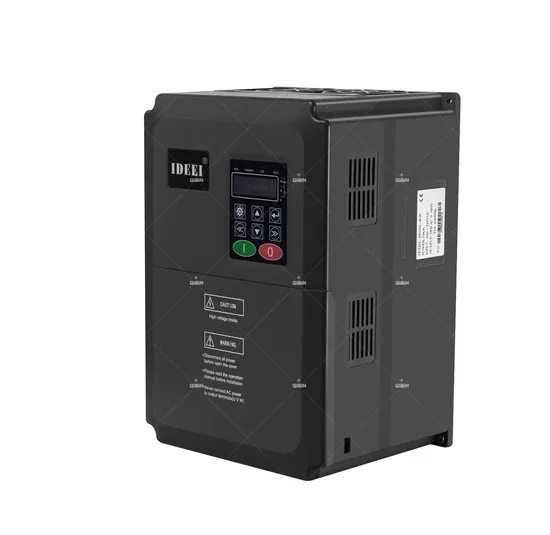
Top 3 Engineering Pain Points for Ac Variable Frequency Drives
Scenario 1: Voltage Instability and Phase Imbalance in Weak Grid or Solar-Powered Installations
The Problem: Remote agricultural pumping stations and industrial edge deployments frequently suffer from poor power quality characterized by severe voltage sags (exceeding -30% nominal), phase imbalance, or highly fluctuating DC input in solar-direct pumping systems. Conventional VFDs lack sufficient ride-through capability, triggering undervoltage faults (UV) or phase-loss protection (PHL) that halt critical irrigation or process operations. In solar applications, rapid irradiance transients cause DC bus voltage oscillations that standard drives cannot track, resulting in frequent tripping and inability to maintain constant flow/pressure during cloud passage, ultimately compromising crop yield or process continuity.
The Solution: Specify VFDs with extended voltage tolerance ranges (e.g., 380-480V ±20% or wider) and automatic voltage regulation (AVR) functions that maintain constant V/Hz output despite input fluctuations. For solar pump applications, select drives with dedicated Maximum Power Point Tracking (MPPT) algorithms and weak-grid adaptation technology capable of stable operation even with input voltage drops to 280V AC or variable DC bus conditions. Advanced models with “flying start” capabilities can catch spinning loads after momentary power interruptions without mechanical shock, ensuring continuous operation in unstable electrical environments.
Scenario 2: Environmental Harshness and Inadequate Ingress Protection Leading to Premature Failure
The Problem: VFDs deployed in mining, cement processing, or outdoor agricultural environments face exposure to conductive dust (IP5X/IP6X), chemical vapors, high humidity (>95% RH), and extreme diurnal temperature differentials. Standard IP20 or NEMA 1 enclosures allow particulate ingress that causes PCB corrosion, cooling fan blockage, and heat sink clogging, leading to thermal runaway and IGBT module failure. In solar pumping installations, UV degradation of plastic components and condensation during temperature cycling further compromise drive longevity, resulting in Mean Time Between Failures (MTBF) significantly below design specifications and unplanned maintenance costs in remote locations.
The Solution: Implement drives with appropriate environmental hardening: IP65 or NEMA 4X ratings for outdoor/direct weather exposure, conformal-coated circuit boards (acrylic/urethane) for corrosive atmospheres, and fan-less/passive cooling designs or sealed heatsinks in dusty environments. Specify wide operating temperature ranges (-10°C to +60°C) with automatic derating curves. For agricultural applications, select drives with built-in anti-condensation heaters or conformal coatings that prevent moisture-induced tracking failures during high-humidity nights following hot days, ensuring reliability in harsh field conditions.
Scenario 3: Mechanical Stress and Hydraulic Instability in Pump and High-Inertia Applications
The Problem: Aggressive acceleration profiles in centrifugal pump systems generate water hammer and pipeline pressure spikes exceeding 1.5x nominal operating pressure, causing mechanical seal failure, pipe fatigue, and coupling damage. In multi-pump booster systems, lack of precise torque control during low-flow conditions leads to pump cavitation and motor overheating. Fixed-speed bypass operations create mechanical shock during switching, while inadequate deceleration control causes column separation and reverse rotation in deep-well submersible applications, risking catastrophic pump damage and costly system downtime.
The Solution: Deploy VFDs with application-specific pump control software including programmable S-curve acceleration ramps (0.1-3600s adjustable), pipe-fill modes for dry-start protection, and sleep/wake functionality to prevent zero-flow overheating. Advanced vector control or sensorless vector control modes provide precise torque management (±0.5% speed accuracy) to avoid cavitation at low speeds. Implement drives with pipe-burst detection algorithms that monitor pressure feedback and automatic torque limiting to prevent mechanical overload. For solar pumping, stall prevention and dry-run protection functions automatically reduce output frequency when torque demands exceed normal operating curves, protecting submersible pumps in variable water table conditions while optimizing energy harvest.
Component and Hardware Analysis for Ac Variable Frequency Drives
The internal architecture of an AC Variable Frequency Drive (VFD) determines not only its immediate performance characteristics—such as speed regulation accuracy and torque response—but its long-term Total Cost of Ownership (TCO) in demanding applications like solar-powered irrigation and industrial motor control. For EPC contractors and automation distributors specifying equipment for harsh environments, understanding the material science and engineering specifications behind the enclosure is as critical as evaluating the control algorithm.
Power Semiconductor and Switching Technology
At the heart of every VFD lies the power module, typically utilizing Insulated Gate Bipolar Transistors (IGBTs) or Intelligent Power Modules (IPMs). These components perform the high-frequency switching (PWM) that synthesizes variable frequency output from a DC bus.
Critical Specifications for Solar and Industrial Applications:
* Trench-Stop vs. Planar Technology: Modern drives utilize Trench-Stop IGBTs, which offer lower Vce(sat) (saturation voltage) and faster switching speeds, reducing switching losses by 15–25% compared to older planar designs. This efficiency gain is crucial for solar pump inverters operating at variable irradiance levels where every watt of DC input counts.
* Short-Circuit Withstand Time (SCWT): High-quality modules offer ≥10μs SCWT, providing sufficient time for protection circuits to react during motor terminal short circuits or cable faults common in agricultural installations.
* Thermal Impedance (Rth(j-c)): Look for values below 0.6 K/W. Lower thermal resistance allows higher current throughput without exceeding junction temperatures, directly enabling higher ambient temperature operation (up to 50°C or 60°C) without derating.
Energy Storage and DC Link Capacitors
The DC bus capacitor bank functions as the energy reservoir and ripple current filter between the rectifier and inverter stages. In solar pumping applications, these components must handle significant voltage fluctuations and high ripple currents from PV arrays.
Electrolytic vs. Film Capacitors:
While aluminum electrolytic capacitors offer high capacitance density, they remain the primary failure point in conventional VFDs due to electrolyte evaporation. Premium solar pump inverters increasingly employ DC-Link Film Capacitors (polypropylene metallized film), which offer:
* ESR (Equivalent Series Resistance): <5mΩ vs. 20–50mΩ for electrolytics, resulting in 60–70% less heat generation under ripple current.
* Temperature Stability: Film capacitors operate reliably from -40°C to +105°C without derating, whereas electrolytic life halves for every 10°C above rated temperature (Arrhenius equation).
* Expected Lifespan: 100,000 hours vs. 20,000 hours for standard electrolytics.
Control Architecture and Processing Units
The Digital Signal Processor (DSP) or Microprocessor Unit (MPU) executes the motor control algorithm—whether Volts-per-Hertz (V/Hz), Sensorless Vector Control (SVC), or Maximum Power Point Tracking (MPPT) for solar applications.
Quality Indicators:
* ADC Resolution: 12-bit minimum for current sensing; 14-bit preferred for high-precision solar MPPT algorithms that must track rapid irradiance changes.
* Clock Speed: ≥60MHz ensures sufficient processing headroom for complex vector calculations and simultaneous multi-pump control in agricultural projects.
* Industrial Temperature Grade: Components rated for -40°C to +85°C (industrial grade) rather than commercial 0°C to +70°C are essential for outdoor solar installations experiencing diurnal thermal cycling.
Thermal Management and Mechanical Integrity
Thermal design determines the real-world operating envelope more than any electrical specification. In solar pumping, where drives are often installed in unshaded enclosures with ambient temperatures exceeding 45°C, thermal management separates premium hardware from commodity drives.
Heatsink Engineering:
* Material: Extruded aluminum 6063-T5 with anodized finish offers optimal thermal conductivity (201 W/m·K) and corrosion resistance in humid, saline, or agricultural chemical environments.
* Thermal Interface Material (TIM): Phase-change materials with thermal conductivity >3.0 W/m·K ensure minimal thermal resistance between IGBT modules and the heatsink base.
* Forced Air Cooling: For drives >7.5kW, fan selection should specify L10 life ratings (≥50,000 hours at 40°C) and dual-ball bearing construction. Passive cooling (convection) is preferred for <5kW solar pump inverters in dusty environments to eliminate fan failure modes.
Component Quality Matrix
| Component | Function | Quality Indicator | Impact on Lifespan |
|---|---|---|---|
| IGBT Power Module | High-frequency switching; DC-to-AC inversion | Trench-Stop technology; Rth(j-c) <0.6 K/W; SCWT ≥10μs | High. Thermal cycling causes solder fatigue; quality modules extend MTBF to 200,000+ hours |
| DC Bus Capacitor | Energy storage; ripple current filtering; voltage stabilization | Film construction preferred; ESR <5mΩ; 105°C rated; 100,000 hr life rating | Critical. Electrolytic failure accounts for 60% of VFD field failures; film capacitors offer 5x lifespan |
| DSP/Controller | PWM generation; MPPT algorithms; protection logic | 32-bit architecture; 12-bit+ ADC; Industrial temp range (-40°C to +85°C) | Moderate. Voltage transients and thermal drift cause logic errors; industrial-grade components prevent erratic behavior |
| Thermal Management System | Heat dissipation from semiconductors; maintaining Tj <125°C | Heatsink thermal resistance <0.5°C/W; Fan L10 ≥50,000 hrs; Phase-change TIM | Very High. Every 10°C reduction in junction temperature doubles semiconductor lifespan |
| Current Transducers | Motor current feedback for vector control and overcurrent protection | Hall-effect with <1% linearity error; Bandwidth >50kHz; Isolation voltage 2.5kV | Moderate. Sensor drift causes current imbalance and premature motor bearing failure |
| Line/Load Reactors | Limit di/dt; reduce harmonics; protect against voltage spikes | 3% impedance; Class H insulation (180°C); Copper windings (not aluminum) | High. Prevents IGBT avalanche failure from reflected voltage waves in long cable runs (>50m) |
| Control Power Supply | Isolated low-voltage supply for logic circuits and fans | Universal input 85-264VAC; Hold-up time >20ms; Overvoltage category III | High. Supply instability causes nuisance tripping and control board damage from grid transients |
| Enclosure & Sealing | Environmental protection; EMI shielding; thermal convection path | Die-cast aluminum ADC12; IP65/IP66 rating; Silicone gaskets (UV resistant); Conformal coating on PCBs | Critical for solar/agricultural apps. Prevents moisture ingress and dust contamination causing tracking faults |
Application-Specific Considerations for Solar Pumping
For agricultural project managers specifying VFDs for PV-powered irrigation, component selection must address wide MPPT voltage windows (typically 200VDC–800VDC) and island operation (no grid reference).
- DC Input Protection: High-quality solar pump inverters incorporate DC-rated fuses and surge protection devices (SPDs) rated for Type 2 (8/20μs) surges up to 40kA, protecting the DC bus capacitors from lightning-induced transients common in open-field installations.
- Conformal Coating: All control PCBs should feature acrylic or polyurethane conformal coating (IPC-CC-830 Class 3) to prevent corrosion from humidity, fertilizer dust, and insect ingress in outdoor pump houses.
- EMC Filters: Solar installations often utilize long DC cabling from array to inverter. Quality drives include DC chokes and common-mode filters to prevent leakage currents and bearing currents that cause premature motor failure in submersible pumps.
When evaluating hardware for B2B procurement, insist on component-level MTBF data and accelerated life testing (ALT) reports. The integration of film capacitors, industrial-grade DSPs, and IP65-rated thermal management systems may increase initial CapEx by 8–12%, but typically reduces OpEx and unplanned downtime by 40–60% over a 10-year operational life in solar pumping applications.
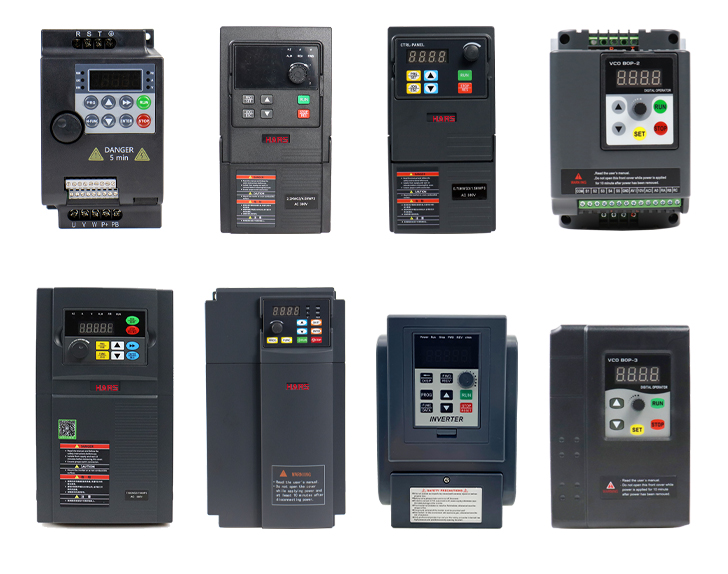
Manufacturing Standards and Testing QC for Ac Variable Frequency Drives
At Boray Inverter, manufacturing excellence is not merely a production goal but the foundational architecture ensuring long-term reliability in harsh industrial and agricultural environments. Our AC Variable Frequency Drives (VFDs) and Solar Pump Inverters undergo rigorous quality control protocols that exceed standard IEC 61800-3 requirements, specifically engineered to withstand the thermal cycling, voltage fluctuations, and particulate contamination inherent to solar pumping stations and heavy-duty motor control applications.
Component-Level Reliability Engineering
PCB Conformal Coating and Environmental Protection
All printed circuit boards (PCBs) receive automated conformal coating application using polyurethane or silicone-based compounds (meeting IPC-CC-830 standards) prior to final assembly. This protective layer creates a dielectric barrier against moisture ingress, salt fog, and conductive dust—critical for solar pump installations in coastal or desert agricultural regions. For drives designated for outdoor NEMA 4X/IP65 enclosures, we implement vacuum-impregnated potting compounds around high-voltage IGBT modules and capacitor banks, eliminating air gaps that could facilitate corona discharge or thermal hot spots.
Thermal Management Validation
Manufacturing tolerances for heatsink flatness are maintained within 0.05mm to ensure optimal thermal interface material (TIM) compression. Each power module undergoes thermal imaging verification during the assembly phase, confirming uniform heat dissipation across IGBT junctions before enclosure sealing.
Production Process Control and Traceability
Our facilities operate under ISO 9001:2015 and ISO 14001:2016 certified quality management systems, with full component traceability via barcode serialization from raw material receipt through final burn-in. Key production standards include:
- Automated Optical Inspection (AOI): 100% inspection of SMT solder joints and component placement to IPC-A-610 Class 3 standards
- Selective Soldering: Lead-free soldering processes for through-hole components in power sections, ensuring consistent fillet formation on high-current carrying traces
- Torque-Controlled Assembly: Precision torque wrenches calibrated to NIST standards for busbar and terminal connections, preventing mechanical loosening under vibration
Comprehensive Electrical Testing Protocols
100% Full-Load Burn-In Testing
Unlike statistical sampling methods, every VFD manufactured undergoes mandatory full-load aging for a minimum of 120 minutes at 45°C ambient temperature. This burn-in process cycles the drive through 0-100% load profiles while monitoring DC bus voltage stability, output current symmetry, and thermal runaway indicators. For solar pump inverters, we additionally simulate photovoltaic array characteristics, testing MPPT algorithm response to rapid irradiance changes (0-1000 W/m² transitions) and open-circuit voltage spikes up to 800VDC.
High-Temperature Aging and Thermal Cycling
Units designated for extreme climate deployment undergo accelerated life testing via thermal shock chambers, cycling between -40°C and +70°C for 72 cycles (IEC 60068-2-14). This validates solder joint integrity and capacitor electrolyte stability under the expansion/contraction stresses typical of desert solar installations or uncontrolled industrial environments.
Insulation and Dielectric Testing
Each drive receives:
– Hi-Pot Testing: 2kV AC for 60 seconds (or 2.5kV DC for 1 second) between mains and earth
– Insulation Resistance: >100 MΩ at 500VDC per IEC 61800-5-1
– Partial Discharge Testing: For medium voltage components (>1kV), ensuring <10pC discharge levels to prevent long-term insulation degradation
EMC and Power Quality Validation
Electromagnetic compatibility testing adheres to IEC 61800-3 Category C2 (restricted distribution) and C3 (industrial) standards, with conducted emissions tested from 150kHz to 30MHz and radiated emissions from 30MHz to 1GHz. For agricultural applications involving long motor cable runs (typical in solar irrigation), we perform dV/dt testing to ensure peak voltage transients remain within NEMA MG1 Part 31 limits, protecting motor winding insulation from reflected wave phenomena.
Grid Integration Testing
Solar pump VFDs undergo anti-islanding protection validation per IEEE 1547 and voltage ride-through testing (LVRT) to ensure continued operation during grid voltage sags—a critical requirement for EPC contractors integrating agricultural pumping into weak rural grids.
Certification and Compliance Matrix
Our manufacturing standards ensure compliance with global market requirements:
– CE Marking: Full conformity with Low Voltage Directive (LVD) 2014/35/EU, EMC Directive 2014/30/EU, and RoHS 3 (2015/863)
– UL/cUL Listings: UL 61800-5-1 for adjustable speed electrical power drive systems
– IEC Standards: IEC 61800-2 (General requirements), IEC 61800-4 (Harmonics), and IEC 61000-4-x (Immunity)
– Environmental: REACH compliance and IP rating validation per IEC 60529 (IP20 through IP66 depending on chassis configuration)
Reliability Metrics and Field Validation
Quality control extends beyond factory gates through Mean Time Between Failures (MTBF) tracking using MIL-HDBK-217F calculations, with current production achieving >100,000 hours MTBF at 40°C ambient. Each production batch retains sample units for long-term shelf-life testing of electrolytic capacitors and fan bearing lubricants, ensuring that agricultural projects operating on seasonal cycles maintain startup reliability after extended idle periods.
For EPC contractors and automation distributors, these manufacturing standards translate to reduced commissioning failures, extended warranty periods (up to 24 months standard with 5-year extensions available), and compatibility with Industry 4.0 predictive maintenance protocols through built-in condition monitoring sensors validated during the QC process.
Step-by-Step Engineering Sizing Checklist for Ac Variable Frequency Drives
Proper sizing of AC Variable Frequency Drives (VFDs) is critical to prevent premature insulation failure, thermal runaway, and system inefficiencies. Whether specifying equipment for grid-tied industrial automation or off-grid solar pumping applications, engineers must verify electrical, thermal, and mechanical compatibility across the entire drive-motor-power source triangle. The following technical checklist provides a systematic framework for specifying Boray Inverter solutions or comparable industrial-grade drives.
1. Motor Nameplate Verification and Insulation Integrity
Before selecting any drive, validate that the motor is inverter-rated (NEMA MG1 Part 31) with Class F or H insulation systems capable of withstanding voltage spikes up to 1,600V peak (rise times <0.1µs). Standard motors without inverter-grade insulation will experience bearing currents and winding degradation under PWM switching frequencies.
- Extract Full Load Amps (FLA): Record the motor’s FLA at rated voltage and frequency. Size the VFD continuous output current rating at minimum 110% of motor FLA for variable torque loads (fans/pumps) and 125% for constant torque applications (conveyors, extruders).
- Service Factor (SF): If the motor has a 1.15 service factor, ensure the drive’s overload capacity (typically 150% for 60 seconds) can support the elevated current without nuisance tripping.
- Speed Range: For operations below 6:1 speed ratio (e.g., 10–60 Hz), standard inverter-duty motors suffice. For 100:1 or zero-speed holding, specify vector control drives with encoder feedback and forced ventilation or separate cooling fans.
2. Voltage Class and Input Power Architecture
Match the drive’s voltage class to both the motor requirements and the available power source. Misalignment here results in immediate catastrophic failure.
| Voltage Class | Motor Voltage | Typical Input Supply | Boray Application Context |
|---|---|---|---|
| 200V Class | 200–240V AC | 1Ø or 3Ø 208/230V | Small agricultural pumps, light industrial |
| 400V Class | 380–480V AC | 3Ø 380–480V | Standard industrial, commercial solar pumping |
| 600V Class | 575–690V AC | 3Ø 575–600V | Heavy mining, large HVAC |
- Single-Phase Derating: When supplying a 3-phase VFD from single-phase input (common in rural solar pumping), apply a 50% current derating or select a drive specifically rated for single-phase input to prevent rectifier bridge overload.
- DC Bus Considerations (Solar): For solar pump inverters, verify the Maximum Open Circuit Voltage (Voc) of the PV array does not exceed the drive’s maximum DC input voltage (typically 800V DC for 400V class drives). Size strings so that Vmp (Voltage at Maximum Power) falls within the drive’s MPPT tracking window (e.g., 250–750V DC) across the full temperature range.
3. Solar Array String Calculations (PV-Powered Systems)
When specifying Boray solar pump inverters or similar DC-input VFDs, string sizing requires temperature coefficient analysis to prevent over-voltage tripping during cold mornings and under-voltage faults during hot afternoons.
- Maximum String Voltage: Calculate Voc at record low temperature (typically -10°C to -20°C depending on region):
$$V_{oc_max} = V_{oc_STC} \times N_{series} \times [1 + (T_{min} – 25) \times \frac{\%V_{oc}}{100}]$$
Ensure $V_{oc_max}$ < VFD maximum DC voltage rating by a 10% safety margin. - Minimum Operating Voltage: Calculate Vmp at record high temperature (e.g., 60°C ambient + 20°C cell rise):
$$V_{mp_min} = V_{mp_STC} \times N_{series} \times [1 + (T_{max} – 25) \times \frac{\%V_{mp}}{100}]$$
Verify $V_{mp_min}$ remains above the drive’s minimum MPPT voltage to maintain pump operation during peak irradiance. - Current Sizing: Size the PV array short-circuit current ($I_{sc}$) to be ≤ 80% of the drive’s maximum DC input current to account for irradiance spikes and cloud-edge effects.
4. Load Profile and Torque Characteristics
Analyze the torque-speed curve of the driven equipment to determine overload requirements:
- Variable Torque (Centrifugal Pumps/Fans): Torque varies with the square of speed. Select drives with Variable Torque (VT) ratings; no additional oversizing required beyond the 110% FLA margin.
- Constant Torque (Positive Displacement Pumps, Conveyors): Requires full torque at zero speed. Specify Heavy Duty (HD) rated drives with 150% overload for 60 seconds and 200% for 3 seconds. Verify the drive can provide rated current at the lowest operating frequency without thermal derating.
- Starting Torque: For high-breakaway torque applications (deep well pumps with check valves), ensure the drive can provide ≥150% starting torque at low frequencies (0.5–1 Hz).
5. Environmental and Enclosure Specifications
Industrial and agricultural environments demand protection against conductive dust, humidity, and chemical corrosion.
- Ingress Protection (IP):
- IP20/NEMA 1: Clean, climate-controlled electrical rooms only.
- IP54/NEMA 12: Dust-protected for mills and cement plants.
- IP66/NEMA 4X: Required for outdoor solar pumping installations, washdown areas, and corrosive atmospheres (stainless steel enclosures for coastal or chemical zones).
- Temperature Derating: Standard VFDs operate at full rating up to 40°C ambient. For every 1°C above 40°C, derate output current by 2–2.5%, or specify drives with enhanced cooling (external heatsink separation, liquid cooling).
- Altitude Correction: Above 1,000m (3,300 ft), derate current by 1% per 100m due to reduced air density and cooling efficiency, or specify high-altitude rated drives with reinforced insulation.
6. Power Quality and Harmonic Mitigation
- Line Reactors: Specify 3% input line reactors when supply transformer kVA exceeds 10× the drive kVA, or when multiple drives share a bus. This reduces line notching and protects the diode bridge.
- DC Chokes: For drives >50HP, verify integrated DC link chokes to reduce THD(i) to <35% and improve power factor.
- Output Filtering: For motor cable runs >50m (164 ft), specify dv/dt filters or sine wave filters to mitigate reflected wave phenomena that damage motor insulation. Calculate cable capacitance ($C = C_{spec} \times Length$) to ensure charging current does not exceed drive switching capacity.
7. Dynamic Braking and Regenerative Energy
For high-inertia loads (centrifuges, large fans), calculate regenerative energy during deceleration:
$$E_{regen} = 0.5 \times J \times \omega^2$$
If deceleration time is shorter than the mechanical time constant, specify dynamic braking resistors with appropriate ohmic value and wattage (typically 10–20% of motor HP in kW), or specify regenerative front-end drives for continuous braking duty.
8. Control Interface and Communication Protocols
- I/O Verification: Confirm sufficient digital inputs (DI) for start/stop, fault reset, and multi-speed selection; analog inputs (AI) for 4–20mA pressure/flow sensors; and relay outputs for fault indication.
- Fieldbus Compatibility: For SCADA integration in solar farms or water management systems, verify support for Modbus RTU/TCP, CANopen, or Ethernet/IP depending on the automation architecture.
- Remote Monitoring: Specify drives with integrated data logging and fault history (minimum 10 fault records) for predictive maintenance in remote agricultural installations.
Final Verification Checklist
Before releasing specifications to procurement:
– [ ] Drive output current ≥ 110% motor FLA (VT) or 125% (CT)
– [ ] Motor insulation rated for inverter duty (1600V peak withstand)
– [ ] Input voltage matches supply (AC) or PV array Voc/Vmp within 10% safety margins (Solar)
– [ ] Enclosure IP rating matches installation environment (minimum IP66 for outdoor solar)
– [ ] Ambient temperature derating applied if >40°C
– [ ] Cable length <50m or output filter specified
– [ ] Braking resistor calculated for high-inertia deceleration profiles
This systematic approach ensures compatibility between the Boray Inverter (or specified VFD), the motor, and the power source—whether grid-synchronized or solar-powered—delivering 20+ years of reliable service in demanding industrial and agricultural environments.
Wholesale Cost and Energy ROI Analysis for Ac Variable Frequency Drives
Procurement professionals and project engineers evaluating AC variable frequency drives (VFDs) for industrial automation and solar pumping infrastructure must balance upfront capital expenditure against long-term operational savings. In the B2B electrical equipment market, understanding the delta between wholesale acquisition costs and retail pricing—typically ranging from 30% to 60% depending on volume tiers—directly impacts project IRR calculations. For EPC contractors managing multi-site agricultural deployments or industrial motor control retrofits, the economics extend beyond hardware procurement to encompass energy recovery timelines, warranty risk allocation, and total cost of ownership (TCO) over the equipment’s 15–20 year operational lifespan.
Volume-Based Pricing Architecture and Channel Economics
In the global VFD supply chain, pricing structures follow distinct B2B hierarchies. Factory-direct wholesale pricing for standard 200V–600V class drives—such as those powering 3-phase induction motors from 1HP to 75HP—typically operates on logarithmic volume curves. Single-unit procurement through distribution channels often reflects list pricing with 15–25% markup, whereas bulk orders exceeding 50 units for agricultural solar pumping stations or cement processing facilities unlock tiered discounts that position landed costs at 40–60% below retail.
For solar pump inverters specifically—a specialized VFD variant integrating Maximum Power Point Tracking (MPPT)—wholesale cost structures incorporate additional complexity. These units must accommodate variable DC input from photovoltaic arrays while delivering precise AC waveform control to submersible pumps. Volume commitments for 480V three-phase systems (up to 40HP/49 FLA per WEG CFW series specifications or 75HP/145 FLA in FMX TD400 configurations) enable project developers to negotiate firmware customization and extended warranty terms within the unit economics, effectively amortizing engineering costs across the production run.
Energy Economics and the Affinity Law Advantage
The financial justification for VFD deployment in motor control applications derives primarily from the affinity laws governing centrifugal loads. In pumping and ventilation systems—where VFDs control speed by varying frequency and voltage—energy consumption correlates with the cube of rotational speed. Reducing pump speed by 20% yields energy savings of approximately 49%, while a 30% reduction delivers roughly 65% power reduction. For a 50HP industrial pump operating 8,000 hours annually at $0.12/kWh, this translates to operational savings exceeding $18,000 per year against a wholesale hardware investment of $2,800–$4,500.
When analyzing ROI for agricultural solar pumping installations, the calculation incorporates dual variables: displaced grid electricity costs and diesel generator fuel savings. A 10HP submersible pump retrofitted with a solar pump inverter (specialized VFD with DC bus capability) eliminates fuel logistics costs while leveraging the same affinity law efficiencies. EPC contractors report payback periods of 18–36 months for off-grid installations, with wholesale procurement reducing the critical cost-per-kW-installed threshold that determines project bankability.
Warranty Cost Allocation and TCO Analysis
Warranty structures represent a significant but often underestimated component of VFD lifecycle economics. Standard manufacturer warranties typically cover 12–24 months for IP20/NEMA 1 indoor-rated units, while NEMA 4X outdoor-rated drives command premium pricing with extended coverage. From a TCO perspective, allocating 8–12% of wholesale hardware costs toward extended 5-year warranties proves economically rational for remote solar pumping installations where service dispatch costs exceed $500 per incident.
Industrial engineers must evaluate warranty terms against environmental protection ratings. IP20 enclosures—offering finger-safe protection against solids exceeding 12.5mm but no liquid ingress protection—require ancillary cabinet costs of $200–$400 per unit in harsh agricultural or mining environments. Wholesale procurement of NEMA 4X-rated drives (dust-tight and weather-resistant) eliminates these ancillary expenses while reducing failure rates by 60–70% in cement processing or outdoor solar applications, effectively compressing the total ownership cost despite 25–35% higher unit pricing.
Strategic Procurement for Solar and Industrial Applications
For automation distributors and project managers optimizing capital deployment, hybrid procurement strategies yield optimal ROI. Specifying inverter-rated 3-phase motors (compatible with 200V, 400V, or 600V drive classes) alongside wholesale VFD acquisition prevents insulation system failures that void warranty coverage. Additionally, procuring dynamic braking resistors and line reactors at wholesale volumes—typically 15–20% below individual component pricing—ensures system integrity while maintaining energy recovery efficiency.
In solar pumping projects specifically, selecting VFDs with dual AC/DC input capability allows seamless grid fallback during low-irradiance periods, maximizing asset utilization. Wholesale cost analysis must factor in firmware customization for MPPT algorithms, which adds $150–$300 per unit at volume but increases system efficiency by 15–25% compared to standard VFDs retrofitted with external controllers.
Bottom Line: At wholesale volumes, quality VFDs for 10HP–50HP applications typically range from $180–$450 per HP depending on voltage class and environmental rating. When deployed in variable-torque pumping applications, these units deliver energy ROI within 12–24 months while reducing mechanical stress on motors and downstream piping—creating a compounding return that extends well beyond the warranty period into decades of operational efficiency.
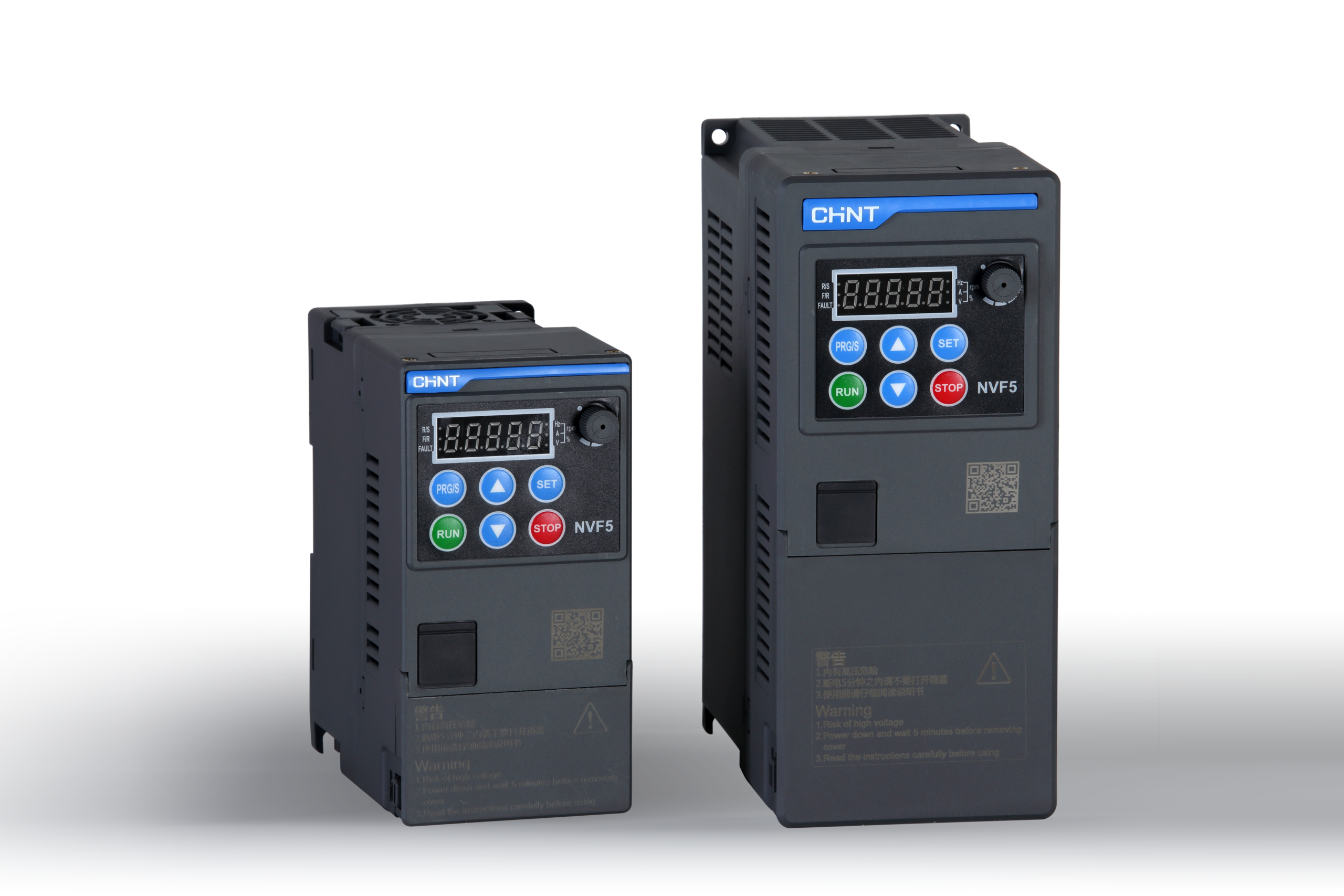
Alternatives Comparison: Is Ac Variable Frequency Drives the Best Choice?
Selecting the optimal motor control and power delivery architecture requires balancing initial capital expenditure against lifecycle operational costs, energy efficiency targets, and application-specific performance requirements. While AC Variable Frequency Drives (VFDs) have become the de facto standard for dynamic speed control in industrial automation and solar pumping systems, alternative technologies—including soft starters, direct-on-line (DOL) configurations, DC solar pumping systems, and advanced permanent magnet motor solutions—each occupy distinct niches in the agricultural and industrial landscape. This technical analysis provides EPC contractors, automation distributors, and project engineers with the criteria to determine when a VFD-based solution delivers superior ROI versus scenarios where alternative approaches may suffice.
1. VFD vs. Soft Starter: Dynamic Control vs. Mechanical Protection
Soft starters utilize thyristor-based phase-angle control to ramp voltage during motor startup, effectively reducing inrush current (typically limiting to 2-3x FLA versus 6-8x for DOL) and mitigating mechanical shock on couplings and gearboxes. However, once the motor reaches full speed, soft starters operate at fixed line frequency (50/60Hz), offering no capability for flow or pressure modulation.
VFDs provide full variable frequency control (0-400+ Hz) with constant V/Hz ratio management or advanced vector control. For centrifugal pumps and fans—where affinity laws dictate that power consumption drops with the cube of speed reduction—VFDs offer 30-60% energy savings that soft starters cannot achieve. Soft starters suit high-inertia, fixed-speed applications (e.g., crushers, conveyor belts) where limiting start-up torque is the primary concern, whereas VFDs are mandatory for any process requiring variable flow, multi-pump staging, or pressure regulation in irrigation networks.
2. Solar-Powered VFD Systems vs. Grid-Connected Infrastructure
In agricultural and remote industrial applications, the choice between solar pump inverters (specialized VFDs with integrated Maximum Power Point Tracking) and traditional grid-powered motor control represents a strategic infrastructure decision with long-term operational implications.
Grid-connected VFDs offer consistent power availability and lower upfront hardware costs (excluding trenching and grid extension fees), but incur ongoing energy costs and vulnerability to utility instability or remote location unavailability. Solar VFDs—such as Boray Inverter’s solar pump drive series—eliminate grid dependency by converting DC photovoltaic output directly to variable-frequency AC, continuously tracking maximum power points to maintain operation even during irradiance fluctuations. While solar VFDs require higher initial PV array investment, they eliminate electricity tariffs and diesel generator dependencies, typically achieving payback periods of 2-4 years in high-insolation regions for agricultural pumping applications.
3. Motor Technology Synergy: Induction Motors (IM) vs. Permanent Magnet Synchronous Motors (PMSM)
The efficacy of a VFD system depends significantly on motor pairing strategy. Standard Squirrel Cage Induction Motors (IM) operate with V/Hz open-loop control, offering robustness, minimal maintenance, and global availability, but are typically capped at IE3 efficiency classes with power factors requiring compensation.
PMSM solutions, when paired with vector-controlled VFDs (sensorless or encoder-based), achieve IE4/IE5 efficiency levels and 20-30% higher power density, critical for solar applications where every watt of PV capacity counts. However, PMSM requires drives with specific motor control algorithms (e.g., Boray’s specialized PMSM control mode) and demagnetization protection circuits. For retrofit projects with existing IM assets, standard VFDs provide immediate efficiency gains without motor replacement; for new solar pumping installations, PMSM-VFD combinations maximize water output per installed kilowatt of solar capacity.
4. DC Solar Pumps vs. AC VFD-Driven Systems
Off-grid pumping historically utilized DC brushless or brushed motors for direct PV coupling without inverter conversion. While DC systems eliminate inverter switching losses (typically 3-5%), they suffer from limited power ranges (typically <5kW), specialized motor availability, and maintenance issues with brushed designs or complex electronic commutation.
Modern AC solar pump inverters enable the use of standard, mass-produced three-phase induction motors or PMSMs, offering power ranges from 0.5kW to 100kW+, superior motor longevity, and global spare parts availability through existing industrial supply chains. The VFD’s ability to implement S-curve acceleration profiles also reduces water hammer and mechanical stress on pump components compared to the abrupt switching characteristics of DC controllers.
Comparative Analysis Matrix
| Parameter | AC VFD (Grid-Tied) | AC Solar Pump Inverter | Soft Starter | Direct Online (DOL) | DC Solar Pump System |
|---|---|---|---|---|---|
| Speed Control Range | 0-100% continuous | 0-100% (sun-dependent) | Fixed (full speed only) | Fixed | Limited (PWM duty cycle) |
| Energy Efficiency | High (30-60% savings on variable torque loads) | Very High (eliminates grid transmission losses) | Moderate (reduces starting losses only) | Low (constant full power draw) | High (no AC conversion losses) |
| Starting Current | 1.0x FLA (controlled ramp) | 1.0x FLA (soft start capability) | 2-3x FLA | 6-8x FLA | 1.5-2x FLA (inrush to capacitors) |
| Motor Compatibility | IM, PMSM, SynRM | IM, PMSM (with MPPT optimization) | IM only | IM only | Brushed DC, BLDC only |
| Initial Cost (System) | Medium | High (includes PV array) | Low | Lowest | Low-Medium |
| Maintenance Requirements | Low (electronic only) | Very Low (no brushes, no grid fees) | Very Low | Low | High (brush/commutator wear) |
| Optimal Application | Process control, HVAC, industrial automation | Remote irrigation, livestock watering, off-grid dewatering | Crushers, conveyors, high-inertia fixed-speed equipment | Simple pumps/fans with no control requirements | Small-scale domestic water (<2kW) |
| Power Range | 0.5kW – 10MW+ | 0.5kW – 100kW+ (standard solar) | 1kW – 10MW+ | All ranges | Typically <5kW |
Strategic Recommendation
AC Variable Frequency Drives represent the optimal solution when operational requirements include variable flow rates, energy optimization through affinity law exploitation, or integration with renewable energy sources. For EPC contractors designing solar pumping stations, VFDs with integrated MPPT functionality eliminate the efficiency penalties and maintenance headaches of battery storage while providing grid-quality motor control and standard AC motor compatibility.
Soft starters remain viable only in fixed-speed applications where limiting mechanical shock is the sole priority and energy costs are negligible. Ultimately, the “best choice” determination hinges on duty cycle analysis: applications operating at varying loads for greater than 20% of runtime will realize rapid ROI through VFD energy savings and reduced mechanical wear, while constant-duty, grid-connected fixed-speed pumps may justify simpler soft-start configurations solely for motor protection purposes. For agricultural project managers evaluating solar options, AC VFD-driven systems offer superior scalability and motor availability compared to DC alternatives, particularly for irrigation requirements exceeding 3kW.
Core Technical Specifications and Control Terms for Ac Variable Frequency Drives
When specifying AC Variable Frequency Drives for industrial automation or solar pumping applications, engineers must evaluate a matrix of electrical, control, and logistical parameters that determine operational efficiency, system compatibility, and project economics. Whether configuring a vector-controlled drive for a conveyor system or a Maximum Power Point Tracking (MPPT) enabled inverter for agricultural irrigation, understanding these specifications ensures optimal motor performance and supply chain clarity.
Electrical Ratings and Input/Output Characteristics
Voltage Classification and Phase Configuration
VFDs are categorized by their input voltage class and phase compatibility, directly dictating motor compatibility and grid connection requirements:
- 200V Class: Typically accommodates 208V–240V input, available in single-phase (1φ) input to three-phase (3φ) output configurations for fractional HP motors up to 3HP, or three-phase input for higher power ranges up to 40HP.
- 400V Class: The industrial standard for 380V–480V three-phase systems, supporting motors from 0.5HP to 500HP+.
- 600V/690V Class: Heavy-duty applications in mining, oil and gas, and large-scale water treatment requiring medium-voltage motor control.
Full Load Amps (FLA) Sizing
The drive’s continuous current rating must meet or exceed the motor’s FLA—the current drawn at rated load and voltage. Engineers must apply derating factors for:
* High ambient temperatures (>40°C)
* Altitude (>1000m above sea level)
* Switching frequency adjustments (higher PWM frequencies reduce available current)
Frequency Resolution
Standard VFDs provide 0–400Hz output, with 0.01Hz resolution for precision applications. Solar pump inverters typically operate within 0–60Hz/50Hz but require extended DC input voltage windows (e.g., 200V–800VDC) to accommodate varying photovoltaic (PV) array outputs.
Motor Control Methodologies
Volts per Hertz (V/F) Control
The fundamental scalar control method maintaining constant V/F ratio below base speed. Suitable for centrifugal pumps, fans, and conveyors where precise torque control is not critical. This mode minimizes energy consumption in variable torque applications.
Sensorless Vector Control (SVC) / Field Oriented Control (FOC)
Advanced algorithms that decouple torque and flux components, enabling:
* 150%–200% starting torque at 0.5Hz
* Precise speed regulation (±0.5% without encoder feedback)
* Rapid dynamic response to load changes
Critical for extruders, hoists, and winding machines where torque precision prevents material deformation or mechanical stress.
Permanent Magnet (PM) Motor Control
Specialized control modes for Interior Permanent Magnet (IPM) and Surface Permanent Magnet (SPM) motors, offering higher efficiency than induction motors. Requires drives with specific PM motor parameter libraries and rotor position estimation capabilities.
Solar-Specific Technical Parameters
Maximum Power Point Tracking (MPPT)
In photovoltaic pumping systems, MPPT algorithms continuously adjust the DC bus voltage to extract maximum available power from solar arrays (typically >99% tracking efficiency). Key specifications include:
* MPPT Voltage Range: The DC input window where optimization occurs (e.g., 250V–750VDC)
* Tracking Speed: Response time to irradiance changes (milliseconds to seconds)
* Multi-peak Scanning: Capability to identify global maximum power points in partially shaded conditions
DC Injection Braking
Solar pump inverters utilize DC injection to the motor windings for rapid stopping when irradiance drops below threshold levels, preventing backspin in deep-well applications.
Process Control and Automation Integration
PID Control Loops
Proportional-Integral-Derivative controllers integrated within the VFD firmware enable closed-loop process control without external PLCs. Common implementations include:
* Constant Pressure: Pressure transducer (4–20mA) feedback maintaining setpoint via pump speed modulation
* Flow Control: Integration with flow meters for dosing and irrigation systems
* Temperature Regulation: HVAC and cooling tower applications
Multi-Pump Control (Cascading)
Master-slave configurations allowing one drive to control multiple contactor-switched pumps, staging fixed-speed pumps as demand increases while maintaining variable speed on the lead pump for fine-tuning.
Communication Protocols
* RS485/Modbus RTU: Standard for industrial monitoring
* CANopen: Preferred in mobile equipment and automotive test stands
* Profibus-DP/Profinet: Factory automation integration
* GPRS/4G Modules: Remote monitoring for solar pumping installations in remote agricultural zones
Environmental and Mechanical Specifications
Ingress Protection (IP) and NEMA Ratings
* IP20/NEMA 1: Indoor, clean environment installations with finger-safe protection against solids >12.5mm; no liquid protection.
* IP54/NEMA 3R: Dust-protected and splash-resistant; suitable for outdoor pump houses with weather protection.
* IP65/NEMA 4X: Washdown-duty stainless steel enclosures for food processing, chemical plants, and harsh agricultural environments.
Thermal Management
* Forced Air Cooling: Standard for IP20 drives; requires clearance for airflow (typically 100mm minimum)
* Natural Convection: Fan-less designs for dusty environments (mining, cement) eliminating filter maintenance
* Liquid Cooling: High-power drives (>200kW) utilizing heat exchangers
Power Quality and Protection Accessories
Total Harmonic Distortion (THD)
Standard 6-pulse drives generate 30%–40% current THD. Specifications to mitigate this include:
* Line Reactors: 3%–5% impedance input chokes reducing voltage notching and THD
* DC Link Chokes: Alternative to AC reactors for harmonic reduction
* Active Front End (AFE): Regenerative drives with <5% THD for sensitive grid connections
Dynamic Braking
* Braking Resistors: Dissipative elements for high-inertia loads (centrifuges, fans) converting regenerative energy to heat
* Braking Units: Transistor modules controlling resistor engagement during deceleration
* Common DC Bus: Shared DC link configurations allowing energy transfer between motoring and regenerating drives
EMC Compliance
* Class A (Industrial): Suitable for industrial environments with dedicated transformers
* Class B (Residential): Required for installations near sensitive equipment; necessitates shielded cables and EMC filters
International Commercial Terms (Incoterms)
When procuring VFDs for global projects, specifying delivery terms prevents logistical ambiguity:
EXW (Ex Works)
The seller makes goods available at their factory. The buyer assumes all costs and risks from the point of collection, including export clearance and international freight. Suitable for buyers with established freight forwarding networks.
FOB (Free On Board)
The seller delivers goods cleared for export onto the vessel at the named port of shipment. Risk transfers when goods pass the ship’s rail. The buyer pays ocean freight, insurance, and destination port charges. Common for containerized VFD shipments from Chinese manufacturing hubs.
CIF (Cost, Insurance, and Freight)
The seller contracts for carriage and insurance to the named destination port, paying minimum insurance coverage (typically Institute Cargo Clauses C). Risk transfers to buyer upon loading at origin port, though seller bears freight costs. Critical for EPC contractors requiring cost certainty for budget forecasting.
DDP (Delivered Duty Paid)
Seller assumes all costs and risks to the named destination, including import duties and customs clearance. Preferred for agricultural project managers lacking import expertise but results in higher unit costs.
Technical Documentation Requirements
Regardless of Incoterm, specify provision of:
* IEC 61800-5-1 test certificates
* CE marking documentation (EU compliance)
* UL/cUL listings (North American markets)
* Material composition reports (RoHS/REACH compliance)
Understanding these specifications enables precise matching of drive capabilities to application demands—from scalar-controlled fans in cement plants to MPPT-enabled solar pumps in remote agricultural installations—while ensuring transparent commercial terms for global supply chain management.
Future Trends in the Ac Variable Frequency Drives Sector
The AC Variable Frequency Drive (VFD) sector is undergoing a paradigm shift from simple motor speed regulation to intelligent energy management ecosystems. As industrial facilities and agricultural operations face mounting pressure to decarbonize while maintaining operational uptime, next-generation drive technologies are converging with renewable energy architectures and Industrial Internet of Things (IIoT) infrastructures. For EPC contractors and automation distributors, understanding these trajectories is critical for specifying future-proof motor control solutions that deliver lifecycle value beyond traditional ROI metrics.
Intelligent Automation and Edge Analytics
The integration of artificial intelligence (AI) and machine learning (ML) algorithms directly into VFD firmware represents a significant leap from static V/Hz control methods. Modern drives are evolving into edge computing nodes capable of real-time load profiling and autonomous parameter optimization. By analyzing motor current signatures, vibration patterns, and thermal data through embedded neural networks, these systems can predict mechanical failures—such as bearing degradation in centrifugal pumps or conveyor misalignment—weeks before catastrophic downtime occurs.
For agricultural project managers overseeing large-scale irrigation networks, this translates to adaptive pumping strategies where VFDs automatically adjust flow rates based on soil moisture telemetry and weather forecasting APIs. Industrial engineers benefit from “self-tuning” drives that eliminate manual PID calibration, reducing commissioning time by up to 60% in complex material handling applications. Furthermore, the migration toward decentralized automation architectures sees VFDs incorporating integrated PLC functionality and safety I/O, reducing panel complexity and wiring costs for OEMs building granulators, extruders, and rotary filter systems.
Renewable Energy Integration and Solar Pumping Architectures
Perhaps the most transformative trend is the seamless integration of VFDs with photovoltaic (PV) arrays and energy storage systems. Traditional AC drives are evolving into hybrid power converters capable of accepting both grid AC and high-voltage DC inputs directly from solar strings. This DC-coupled architecture eliminates the inefficiencies of separate solar inverters, allowing agricultural and industrial motors to operate entirely off-grid during peak sunlight hours while maintaining grid fallback capabilities.
Solar pump inverters—specialized VFDs optimized for submersible and surface pumps—are now incorporating Maximum Power Point Tracking (MPPT) algorithms with dynamic head compensation, ensuring optimal water flow regardless of fluctuating irradiance levels. Advanced models feature dual-mode operation, automatically switching between solar DC input and single-phase or three-phase AC grid power without manual intervention. For EPC contractors designing remote pumping stations, regenerative VFD technologies are becoming standard, capturing braking energy from downhill conveyors or decelerating centrifugal loads and feeding it back into battery storage systems or the facility’s DC bus.
The emergence of wide bandgap semiconductors (Silicon Carbide and Gallium Nitride) is enabling higher switching frequencies and reduced heat dissipation, allowing for IP66-rated outdoor drives that withstand harsh mining or agricultural environments without extensive cooling infrastructure. These developments support the global transition toward net-zero industrial operations, where motor control systems actively participate in demand response programs and microgrid stabilization.
IoT Connectivity and Cyber-Resilient Monitoring
The proliferation of cloud-native VFD platforms is revolutionizing maintenance protocols across distributed asset networks. Modern drives feature embedded LTE/5G or LoRaWAN connectivity, transmitting operational data—voltage, current, torque, and thermal margins—to centralized SCADA or digital twin environments. For automation distributors, this creates recurring revenue opportunities through predictive maintenance subscriptions rather than transactional hardware sales.
However, with increased connectivity comes heightened cybersecurity imperatives. Next-generation VFDs are adopting IEC 62443 compliance frameworks, implementing encrypted communication tunnels, role-based access controls, and secure boot mechanisms to protect critical infrastructure from ransomware attacks. Agricultural project managers managing geographically dispersed solar pumping stations can now utilize mobile applications to receive push notifications regarding filter clogging detection or dry-run protection events, enabling immediate remote intervention without site visits.
Digital twin integration allows engineers to simulate motor-drive interactions before physical deployment, optimizing energy consumption profiles for specific duty cycles in cement, oil and gas, or food and beverage applications. Additionally, augmented reality (AR) maintenance overlays—accessed via technician smartphones—are being integrated with VFD diagnostic systems, providing step-by-step wiring guidance and fault clearance procedures that reduce mean time to repair (MTTR) in the field.
Convergence of Hardware and Energy Management
Looking ahead, the distinction between motor starters, drives, and energy management systems will continue to blur. Integrated drive-motor systems (IDMs) combining permanent magnet synchronous motors (PMSM) with high-performance VFDs in single enclosures are gaining traction in HVAC and pumping applications, delivering IE5 efficiency classifications. For industrial engineers specifying equipment in the 1HP to 75HP range—the sweet spot for sub-micro and compact drives—future procurement decisions will prioritize units with built-in power quality monitoring, harmonic mitigation (active front ends), and compatibility with emerging 600V class industrial microgrids.
As the sector advances, successful implementations will depend on selecting VFD platforms that offer not just variable speed control, but comprehensive energy orchestration capabilities—bridging the gap between rotating machinery, renewable generation, and intelligent automation networks.
Top 3 Ac Variable Frequency Drives Manufacturers & Suppliers List
Top Manufacturers & Suppliers of Variable Frequency Drives
Website: darwinmotion.com
Darwin Motion manufactures Matrix series VFDs including Matrix-900, Matrix-350, Matrix-500, Matrix-680, and Matrix-880 models designed for low, medium, and high voltage applications with emphasis on energy efficiency and process optimization. Other listed manufacturers and product lines: Siemens Sinamics series, Schneider Electric Altivar series, Yaskawa V1000/A1000 series, Rockwell Automation All…

Analysis of the Top 25 Variable Frequency Drive (VFD) Companies …
Website: finance.yahoo.com
No product details available. The provided text appears to be a Yahoo error page or navigation menu without the article content regarding variable frequency drives, solar inverters, or industrial automation.
Top 10 Variable Frequency Drive (VFD) Manufacturers
Website: hars-vfd.com
HARS VFD manufactures multiple Variable Frequency Drive series including VFD-HS320, VFD-HS320Pro, VFD-HS720, VFD-HS720H, VFD-HS310, VFD-HS290, and VFD-HS800. They offer specialized Solar Pump VFDs and Hybrid Inverters (HE200 and HE300 Series). Product accessories include Braking Resistor Units, DC Braking Units, Filters, Power Resistor Units, Reactors, and Wire Wound Resistors. Industrial automati…
B2B Engineering FAQs About Ac Variable Frequency Drives
-
How do I properly size a VFD for a submersible pump in a solar irrigation application when dealing with variable DC input?
When sizing for solar pump inverters, you must verify that the VFD’s DC input voltage range (typically 200V–800V DC for standard models, or up to 1000V DC for high-voltage arrays) encompasses your PV array’s maximum power point voltage (Vmp) at operating temperature. Size the drive’s output current rating to be ≥115% of the motor’s Full Load Amps (FLA) to account for service factors and high-temperature derating in outdoor enclosures. For submersible pumps, ensure the drive features Maximum Power Point Tracking (MPPT) algorithms optimized for centrifugal pump curves, which automatically adjust motor frequency to maintain optimal PV array voltage as irradiance changes, rather than simply running at fixed frequency until low-voltage fault. -
What is the difference between a standard motor and an inverter-rated motor, and why does it matter for VFD operation below 30 Hz?
Inverter-rated motors feature enhanced insulation systems (typically Class F or H with phase-to-phase and phase-to-ground ratings ≥1600V) to withstand the high dv/dt (voltage rise time) stress from IGBT switching in modern VFDs. Standard motors using Class B insulation (130°C) may experience premature winding failure due to partial discharge from reflected wave phenomena. Additionally, inverter-rated motors often include insulated bearings or shaft grounding rings to prevent Electrical Discharge Machining (EDM) bearing currents. For operation below 30 Hz, inverter-rated motors utilize independent cooling fans (force-ventilated) rather than shaft-mounted fans, preventing overheating when shaft RPM is insufficient for self-cooling. -
When is dynamic braking necessary, and how do I calculate the required braking resistor specifications for high-inertia centrifugal loads?
Dynamic braking is required when the load’s moment of inertia and deceleration rate cause regenerative energy to exceed the VFD’s DC bus absorption capacity (typically >750V DC on 480V systems), triggering overvoltage faults. This occurs in high-inertia applications like large flywheels, centrifuges, or downhill conveyors. Calculate braking torque: T_brake = (J × Δn) / (9.55 × t), where J is total inertia (kg·m²), Δn is speed change (RPM), and t is deceleration time (s). Select resistor ohms based on VFD specifications (typically R = V_dc² / P_brake), ensuring wattage accounts for duty cycle (ED%)—for centrifugal pumps, use 10–20% duty cycle; for crane hoists, use 40–60%. -
How do IP ratings and NEMA enclosure types impact VFD selection for outdoor agricultural or dusty cement plant environments?
For outdoor solar pumping or agricultural applications, specify IP65 or NEMA 4X enclosures to protect against dust ingress and high-pressure water jets (critical for irrigation equipment washdown). These ratings require conformal-coated PCBs to resist humidity and corrosive gases. In cement or mining environments, specify IP54 minimum with additional dust filters and positive-pressure ventilation. For indoor MCC installations, IP20 or NEMA 1 suffices but requires ambient temperatures below 40°C. Always derate VFD current capacity by 2.5% for every 1°C above 40°C, and ensure solar pump inverters installed in direct sunlight include sun shields or active cooling to prevent thermal shutdown. -
What are the specific power quality concerns when deploying multiple VFDs in a facility, and when are line reactors mandatory versus optional?
VFDs introduce harmonic distortion (typically 5th, 7th, 11th, 13th orders) and can create voltage notching. Per IEEE 519, when the short-circuit current to load current ratio (I_sc/I_L) is <20, harmonic mitigation is required. Install 3% impedance input line reactors when: (a) supply transformer kVA exceeds VFD kVA by >10:1, (b) multiple drives share a bus, or (c) phase-to-phase voltage imbalance exceeds 2%. Output reactors (dv/dt filters) become mandatory for motor leads >50 meters to prevent reflected wave voltage doubling at the motor terminals, which can exceed 1200V peak on 480V systems and destroy standard motor insulation. -
Can a single VFD control multiple motors in a pump staging application, and what protection considerations apply?
Yes, using V/Hz control mode (not vector control), a single VFD can power multiple motors in pump staging or booster systems. However, you must: (a) Size the VFD for the sum of all motor FLAs plus 10% margin, (b) Install individual thermal overload relays or electronic motor protection for each motor (since the VFD’s internal I²t protection only sees total current), and (c) Ensure all motors have identical voltage and speed ratings. Use a contactors-based staging scheme where auxiliary pumps are brought online via bypass contactors only after the VFD reaches line frequency (50/60 Hz), preventing inrush current during acceleration. Never open contactors between VFD and motor while the drive is running—this causes overvoltage flashover. -
How does a solar pump inverter optimize energy harvest from PV arrays compared to standard grid-tie VFDs with rectifier front-ends?
Solar pump inverters utilize true MPPT algorithms that sweep the PV array’s I-V curve every few seconds to find the maximum power point (typically 70–80% of open-circuit voltage), achieving >99% tracking efficiency. Unlike standard VFDs with passive rectifiers that simply accept whatever DC voltage is present, solar pump VFDs actively manage the DC bus to prevent collapse under cloud transients. They feature weak sunlight wake-up functions that slowly build DC bus voltage to start pumps in low irradiance (as low as 20% standard irradiance), whereas standard VFDs would fault on undervoltage. Additionally, solar-specific drives include water level sensors and dry-run protection to shut down when well levels are insufficient, preventing pump damage. -
What industrial communication protocols should I specify for integrating VFDs into SCADA systems, and how do they differ for process control versus building automation?
For industrial process control (oil & gas, water treatment), specify Modbus RTU (RS-485) for basic monitoring or Modbus TCP/EtherNet-IP/Profinet for high-speed process control requiring <100ms update rates. These protocols provide real-time access to torque, current, DC bus voltage, and fault registers. For Building Management Systems (BMS) in HVAC applications, BACnet MS/TP or BACnet/IP is standard, allowing integration with automated logic controllers for energy optimization. Solar pump applications often utilize RS-485 with proprietary solar protocols or GPRS/4G modules for remote monitoring via cloud platforms. Always verify that the VFD supports embedded Ethernet switches (daisy-chain capability) to reduce wiring costs in multi-pump installations.
Disclaimer
⚠️ Important Disclaimer
The information provided in this guide is for educational purposes. Industrial applications and electrical engineering projects carry inherent risks. B2B buyers and contractors must conduct thorough technical due diligence and verify regional compliance before installation or procurement.
Conclusion: Partnering with Boray Inverter for Ac Variable Frequency Drives
As the industrial and agricultural sectors continue to prioritize energy efficiency and precision motor control, selecting the right AC Variable Frequency Drive becomes not merely a technical decision, but a strategic investment in operational longevity. From ensuring voltage class compatibility and Full Load Amp ratings to specifying IP/NEMA environmental protections, the complexities of VFD deployment demand partners who understand both the theoretical frameworks and harsh realities of field application.
This is where Shenzhen Boray Technology Co., Ltd. distinguishes itself as more than a manufacturer—we are your engineering partner in motor control innovation. Operating under the Boray Inverter brand (borayinverter.com), we specialize in Solar Pumping & Motor Control Solutions, combining deep technical expertise with robust manufacturing capabilities to deliver VFDs that exceed industry standards. Our R&D team comprises 50% of our workforce, driving continuous advancement in PMSM (Permanent Magnet Synchronous Motor) and IM (Induction Motor) vector control technologies—ensuring optimal torque response and energy efficiency across variable load conditions.
Quality assurance is embedded in our production DNA. With two modern, automated production lines and rigorous 100% full-load testing protocols, every Boray VFD leaving our facility is validated for performance under real-world stress conditions. This commitment to excellence has established our trusted global presence across agricultural irrigation systems, industrial automation projects, and solar pumping installations worldwide.
Whether you are an EPC contractor engineering large-scale irrigation infrastructure, an industrial integrator optimizing conveyor systems, or a distributor seeking reliable inventory partners, Boray Inverter offers customized VFD solutions tailored to your specific voltage, environmental, and performance requirements. We invite you to leverage our technical expertise and manufacturing scale for your next project.
Contact the Boray Inverter team today to discuss your application specifications and request wholesale quotations. Let us transform your motor control challenges into efficient, sustainable solutions.