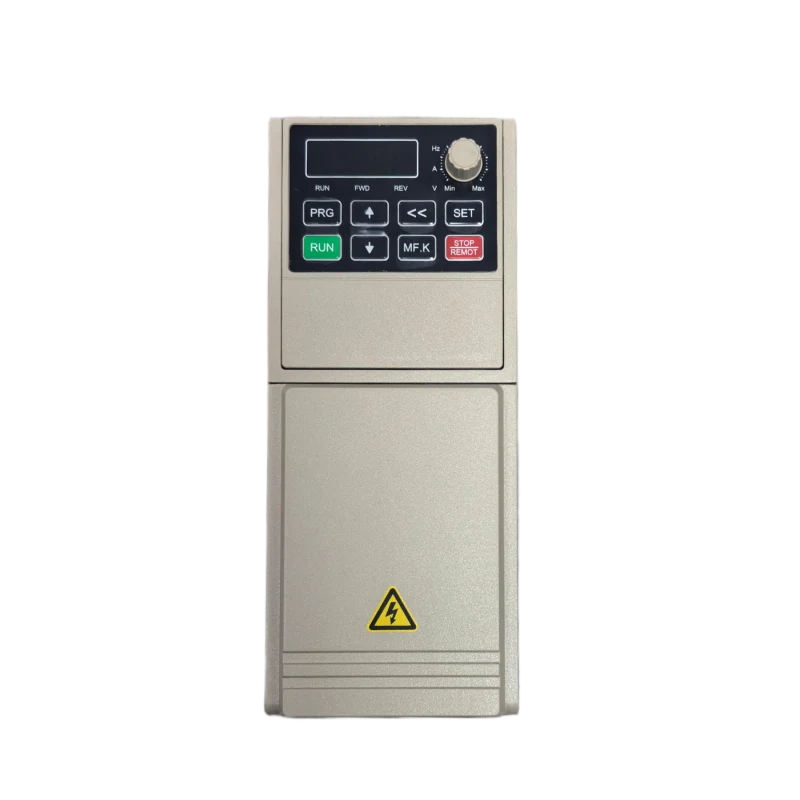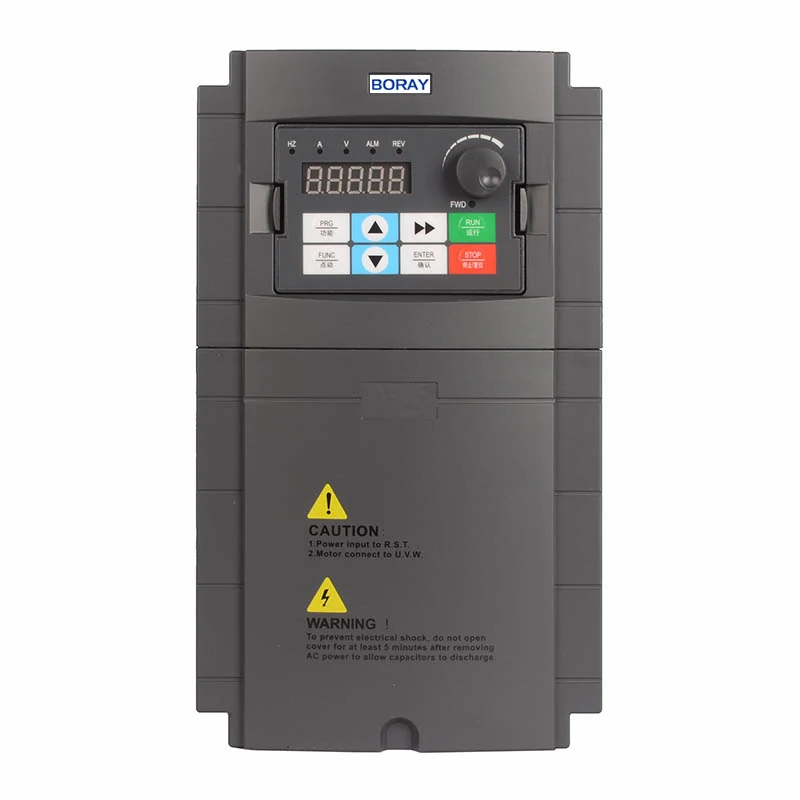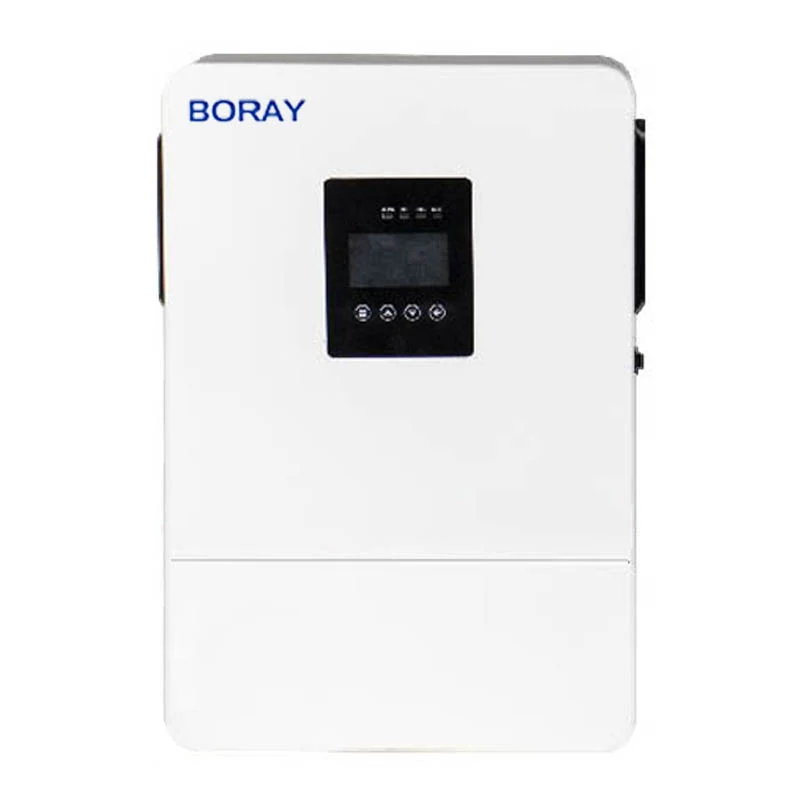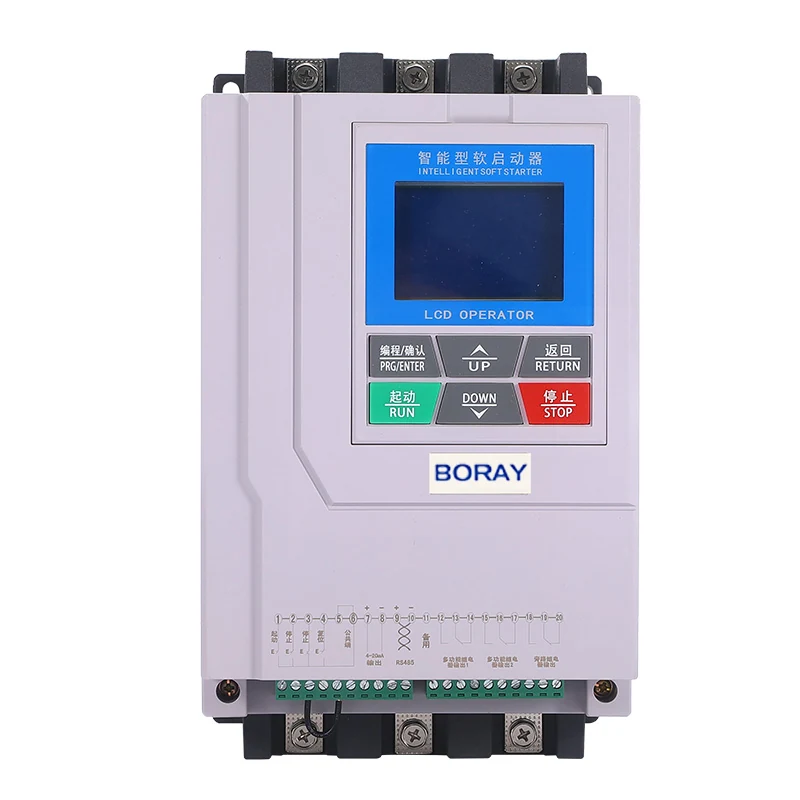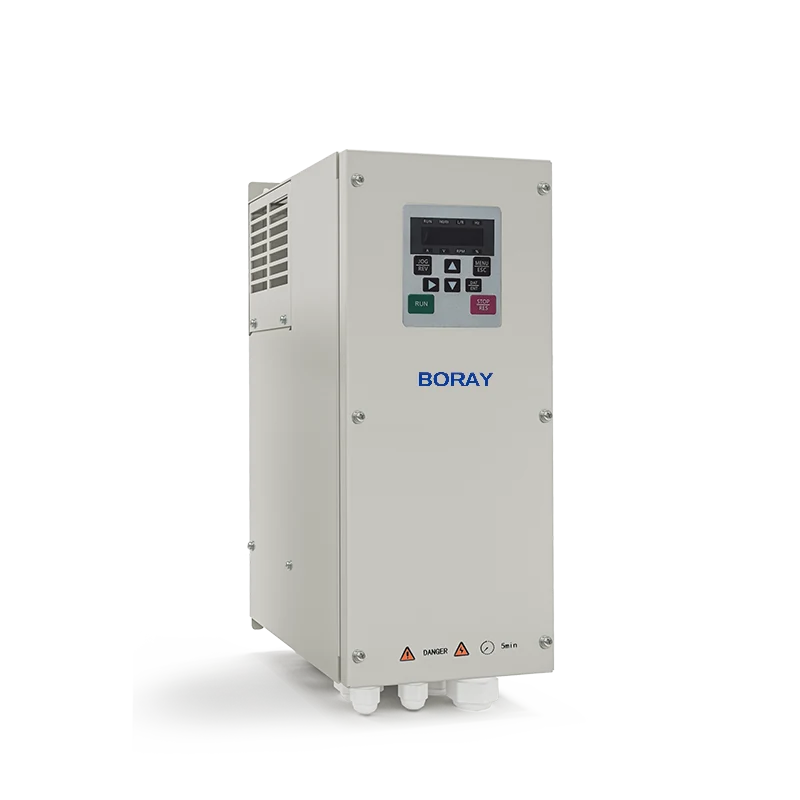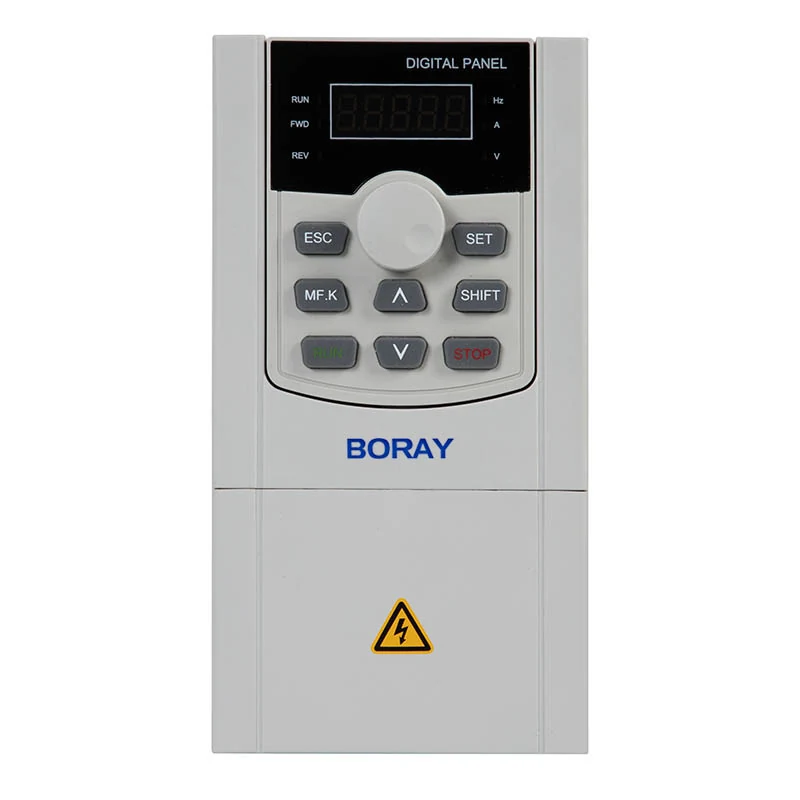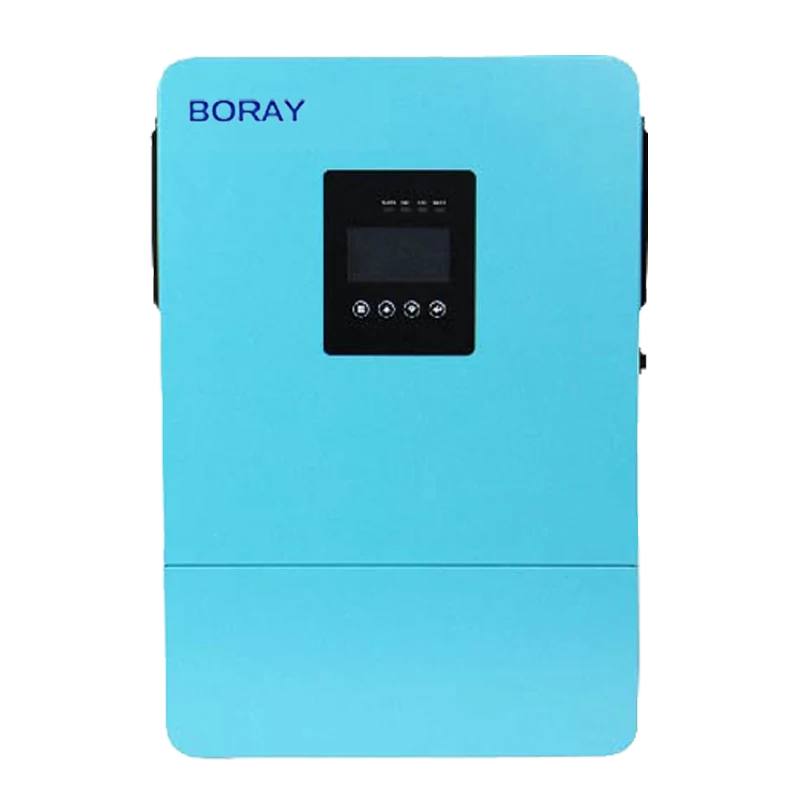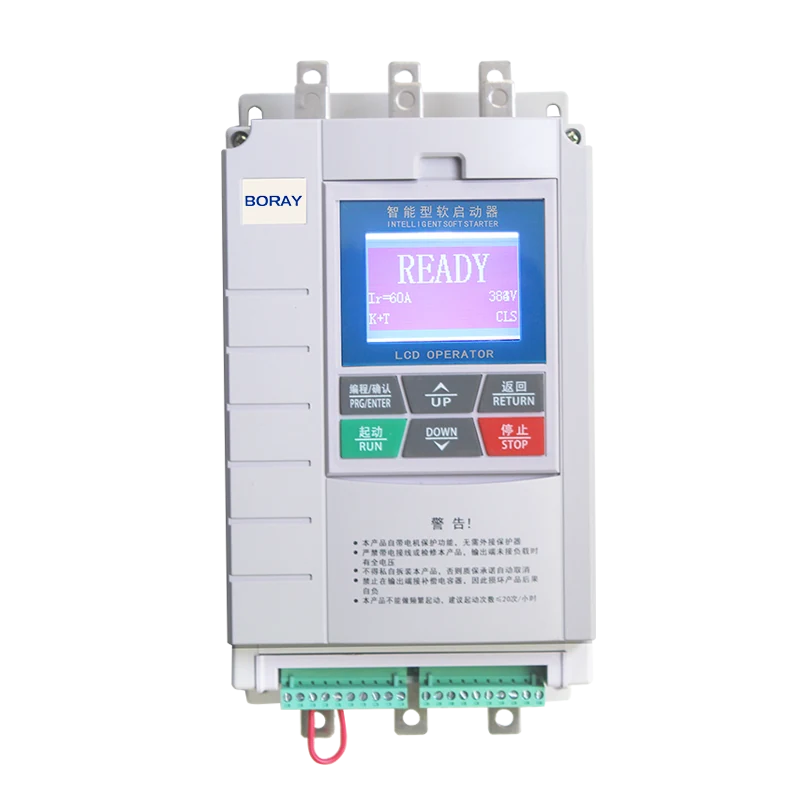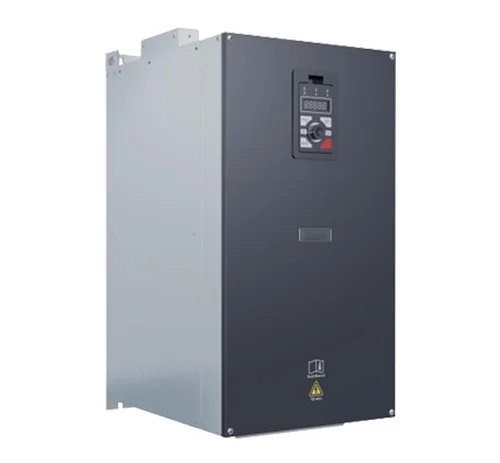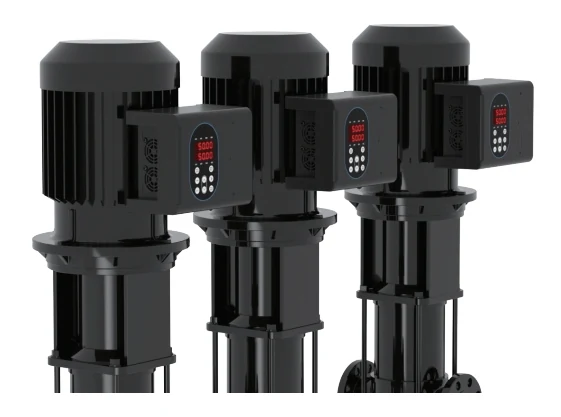

Introduction: Sourcing 5 Hp Variable Frequency Drive for Industrial Use
In the intersection of industrial automation and renewable energy infrastructure, the 5 HP (3.7–4 kW) variable frequency drive serves as the backbone of precision motor control for applications ranging from solar-powered irrigation systems to heavy-duty manufacturing equipment. For EPC contractors and automation distributors, selecting the optimal VFD in this power class requires navigating a complex matrix of electrical configurations—from single-phase 220V input units suitable for rural agricultural deployments to three-phase 480V industrial drives designed for continuous-duty factory automation.
The technical procurement landscape extends beyond simple voltage matching. Modern 5 HP VFDs must accommodate diverse operational paradigms, including phase conversion capabilities that transform single-phase residential supply into three-phase motor power, critical for retrofitting legacy equipment. Key performance differentiators include overload capacity (typically 150% rated current for 60 seconds), advanced vector control algorithms (V/F and sensorless vector control), and robust communication interfaces such as Modbus-RTU over RS485 for SCADA integration.
This guide provides a comprehensive technical framework for sourcing 5 HP variable frequency drives, examining the complete spectrum of available topologies—single-phase input/output, 1-phase to 3-phase converters, and standard three-phase configurations. We analyze critical specifications including rated current ranges (17–25A), environmental derating factors for high-altitude installations, and harmonic mitigation strategies essential for solar pump inverters. Whether specifying drives for centrifugal pump control or conveyor system optimization, this resource equips industrial engineers and project managers with the technical insights necessary to evaluate manufacturer offerings and ensure long-term operational reliability in demanding electrical environments.
Article Navigation
- Top 4 5 Hp Variable Frequency Drive Manufacturers & Suppliers List
- Introduction: Sourcing 5 Hp Variable Frequency Drive for Industrial Use
- Technical Types and Variations of 5 Hp Variable Frequency Drive
- Key Industrial Applications for 5 Hp Variable Frequency Drive
- Top 3 Engineering Pain Points for 5 Hp Variable Frequency Drive
- Component and Hardware Analysis for 5 Hp Variable Frequency Drive
- Manufacturing Standards and Testing QC for 5 Hp Variable Frequency Drive
- Step-by-Step Engineering Sizing Checklist for 5 Hp Variable Frequency Drive
- Wholesale Cost and Energy ROI Analysis for 5 Hp Variable Frequency Drive
- Alternatives Comparison: Is 5 Hp Variable Frequency Drive the Best Choice?
- Core Technical Specifications and Control Terms for 5 Hp Variable Frequency Drive
- Future Trends in the 5 Hp Variable Frequency Drive Sector
- B2B Engineering FAQs About 5 Hp Variable Frequency Drive
- Disclaimer
- Conclusion: Partnering with Boray Inverter for 5 Hp Variable Frequency Drive
Technical Types and Variations of 5 Hp Variable Frequency Drive
Selecting the appropriate 5 HP (3.7–4 kW) Variable Frequency Drive requires understanding the distinct technical architectures available for different power infrastructures and application requirements. While the power rating remains constant, the input configuration, control topology, and environmental constraints dictate the specific VFD variant required for optimal motor control and energy efficiency.
| Type | Technical Features | Best for (Industry) | Pros & Cons |
|---|---|---|---|
| Three-Phase I/O (380V–480V Class) | • Input: 3-phase 380–480V AC ±15%, 50/60Hz • Output: 3-phase 0–input voltage, 0–400Hz/1000Hz • Control: V/F, Sensorless Vector Control (SVC), Flux Vector Control (FVC) • Current: ~7.6A (480V) to ~9A (380V) rated • Overload: 150% for 60s, 180% for 10s • Protection: IP20 standard, IP54/NEMA 4X optional |
Manufacturing, HVAC, Water/Wastewater, Industrial Automation | Pros: Full rated power utilization, high starting torque (180%), low harmonic distortion, regenerative braking capability Cons: Requires 3-phase infrastructure, higher installation complexity, significant EMI/RFI considerations requiring proper shielding |
| Single-Phase I/O (220V–240V Class) | • Input: 1-phase 220–240V AC ±15% • Output: 1-phase 0–rated voltage (PWM modulated) • Current: ~22–25A rated (high input current draw) • Motor Compatibility: Permanent Split Capacitor (PSC) or Capacitor-Start motors • Wiring Modes: Capacitor-retention or capacitor-bypass configurations • Control: V/F primary, limited SVC |
Residential, Light Commercial, Small Machine Shops, Garage Equipment | Pros: Operates on standard household/commercial single-phase supply, cost-effective for retrofitting existing single-phase motors Cons: 30–40% higher input current than 3-phase equivalents, limited to single-phase motor types, reduced efficiency (85–88% typical), potential overheating with prolonged low-speed operation |
| Phase Converter VFD (1-phase to 3-phase) | • Input: 1-phase 220–240V AC • Output: 3-phase 0–input voltage (synthetic 3-phase) • Topology: Active rectifier with phase-shifted output stages • Current: ~17–20A input, balanced 3-phase output at ~6–7A per phase • Derating: Often requires 20% derating for continuous duty cycle • Control: V/F standard, SVC optional |
Agricultural Retrofit, Rural Workshops, Remote Industrial Sites, Legacy Equipment Upgrades | Pros: Eliminates need for rotary phase converters or utility 3-phase service, enables VFD control on existing single-phase infrastructure, cost-effective for isolated 3-phase motor applications Cons: Input current imbalance (high THD on single-phase line), limited to voltage-matched motors (cannot boost 220V to 480V), requires oversized input conductors, reduced lifespan under continuous full-load conditions |
| Solar Pump Inverter (DC-to-AC VFD) | • Input: DC 150V–800V (PV array voltage) • MPPT: 99% efficiency tracking, 200V–600V optimal range • Output: 3-phase AC 220V/380V auto-switching • Protection: Dry-run detection, water level sensors, PV reverse polarity, lightning protection • Hybrid Option: AC grid/diesel generator auto-switchover • Control: Specialized pump curves, sleep/wake functionality |
Solar Irrigation, Remote Livestock Watering, EPC Solar Projects, Off-Grid Pumping | Pros: Zero electricity operating cost, MPPT optimization maximizes PV array output, built-in pump protection algorithms, no battery storage required (direct drive) Cons: Weather-dependent output (requires irradiance planning), complex PV array sizing calculations, higher upfront capital cost, limited to pumping applications (specialized firmware) |
Three-Phase I/O Industrial VFDs
The 380V–480V three-phase configuration represents the industrial standard for 5 HP applications, offering the highest power density and control precision. These units utilize Insulated Gate Bipolar Transistor (IGBT) bridges with carrier frequencies adjustable between 1–16 kHz to balance acoustic noise against thermal losses. For high-inertia loads such as centrifugal pumps and compressors, Sensorless Vector Control (SVC) provides dynamic torque response (typically <100ms) without requiring encoder feedback. Engineers should specify drives with built-in DC link chokes or active front ends (AFE) when Total Harmonic Distortion (THD) must remain below 5% to comply with IEEE 519 standards. The compact footprint (typically 200mm × 330mm × 180mm) allows DIN-rail or panel mounting in crowded MCC enclosures.
Single-Phase I/O Limitations and Applications
Single-phase input/output VFDs serve niche applications where three-phase infrastructure is unavailable, but they introduce specific engineering constraints. The high input current (approximately 25A at 230V for 5 HP) necessitates dedicated 30A circuit breakers and 10 AWG or larger supply conductors. Critical for agricultural project managers: these drives cannot power standard three-phase submersible pumps; they are restricted to single-phase PSC motors common in residential pressure booster systems. When wiring, engineers must determine whether to remove the motor’s start capacitor (preferred for continuous operation) or retain it (for high-starting-torque applications), as incorrect configuration leads to capacitor failure or drive overcurrent faults within 500 operating hours.
Phase Converter VFDs: Bridging Infrastructure Gaps
The single-phase to three-phase VFD functions as an electronic phase converter, utilizing a voltage-doubling rectifier circuit and intelligent output stage to synthesize three-phase power from a single-phase source. This topology is invaluable for EPC contractors retrofitting irrigation systems in rural areas where utility three-phase service installation costs exceed $15,000. However, electrical engineers must account for the input current imbalance: the single-phase input draws 1.73 times the current of a balanced three-phase system, generating significant neutral current that may require upsized neutral conductors in the supply panel. These drives typically require derating to 3.7–4 kW maximum continuous output when fed from 220V single-phase to prevent DC bus ripple from triggering undervoltage faults during motor acceleration.
Solar Pump Inverter Technical Considerations
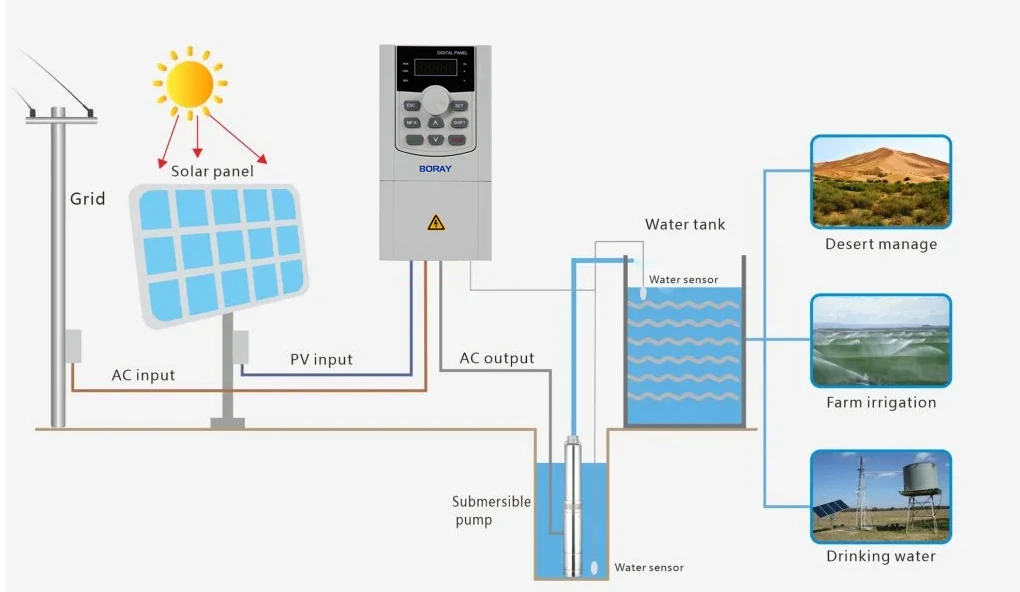
Solar pump inverters (specialized VFDs with DC input stages) diverge significantly from grid-tied designs. Rather than fixed voltage input, these units incorporate Maximum Power Point Tracking (MPPT) algorithms that continuously adjust the motor frequency (and thus pump speed) to match available PV irradiance. For a 5 HP pump, Boray Inverter recommends PV array configurations between 4.5–6 kWp (depending on head requirements) with open-circuit voltages between 350–600V DC. Critical technical features include dry-run protection (detecting no-load conditions via current ripple analysis) and water level monitoring via 4–20mA sensor inputs. Unlike standard VFDs, solar variants often include “sleep” modes that restart the pump automatically when irradiance returns, eliminating the need for remote monitoring in unmanned agricultural installations. When specifying for EPC projects, ensure the drive includes AC grid backup terminals to maintain operation
Key Industrial Applications for 5 Hp Variable Frequency Drive
The 5 HP (3.7 kW) variable frequency drive represents a critical power node in industrial automation, bridging the gap between light commercial machinery and heavy-duty process equipment. At this rating, VFDs frequently serve dual functions as both motor speed controllers and phase converters (single-phase 220V input to three-phase output), solving infrastructure constraints in rural and legacy industrial settings. Below are the primary deployment scenarios where this drive capacity delivers measurable ROI through precision motor control and energy optimization.
| Sector | Application | Energy Saving Value | Sourcing Considerations |
|---|---|---|---|
| Agriculture & Solar Pumping | Submersible borehole pumps, drip irrigation booster systems, livestock water supply | 30–50% reduction in grid energy consumption; elimination of water hammer via soft-start; optimized MPPT efficiency when integrated with PV arrays | IP65 enclosure rating for outdoor UV/moisture exposure; single-phase 220V input compatibility for rural grids without 3-phase infrastructure; built-in PID control for constant pressure/flow regulation |
| HVAC & Building Automation | Chilled water circulation pumps, cooling tower fans, air handling units (AHUs), compressor load management | 20–40% energy savings via affinity laws (cubic power reduction with speed); reduced mechanical wear on belts and bearings; demand-based ventilation control | Low harmonic distortion (<5% THDi) to protect building power quality; BACnet or Modbus RTU communication protocols for BMS integration; EMC compliance (EN 61800-3) for sensitive medical/commercial buildings |
| Water Treatment & Distribution | Booster pump stations, filtration backwash pumps, chemical dosing mixers, wastewater aeration blowers | 25–35% power reduction versus throttling valves; precise flow control for membrane processes; automatic voltage regulation (AVR) for fluctuating rural grids | NEMA 4X/UL Type 4X corrosion-resistant enclosures for chemical environments; phase conversion capability (1-phase to 3-phase) for remote lift stations; dual-rated current capacity for pump overload conditions |
| Industrial Manufacturing | Conveyor systems, mixing vessels, grinding mills, machine tool spindles, packaging lines | 15–30% energy recovery potential via regenerative braking units; elimination of mechanical shock through controlled acceleration curves; precise torque control for constant tension winding | Sensorless vector control (SVC) or flux vector control (FVC) for 150% starting torque at low speeds; Safe Torque Off (STO) SIL 3 safety certification; robust DC bus architecture for common-bus multi-drive configurations |
Detailed Application Analysis
Agriculture & Solar Pumping Systems
In off-grid and grid-tie irrigation projects, the 5 HP VFD functions as the central power conversion hub for submersible pumps requiring three-phase supply where only single-phase 220V rural distribution exists. When configured as a solar pump inverter (hybrid VFD topology), the drive accepts DC input from photovoltaic arrays while maintaining AC grid fallback capability. The built-in PID algorithm maintains constant water pressure across varying solar irradiance conditions, automatically adjusting pump speed to match insolation levels rather than cycling on/off. For EPC contractors, specifying units with IP65-rated aluminum enclosures prevents dust ingress during dry-season operation, while the 1-phase to 3-phase conversion capability eliminates the cost of utility infrastructure upgrades for remote agricultural zones.
HVAC and Building Automation
Commercial buildings utilize 5 HP drives primarily for secondary chilled water pumps and cooling tower fans where load profiles vary significantly between day and night cycles. The critical specification here is harmonic mitigation—drives with active front ends (AFE) or DC chokes prevent distortion of the building’s power factor, ensuring compliance with IEEE 519. Integration with building management systems via RS485 Modbus allows centralized monitoring of energy consumption per fan coil unit. Engineers should verify that the VFD supports flying start capabilities to catch spinning fans during power restoration, preventing mechanical resonance in large air handling units.
Water Treatment Infrastructure
Municipal and industrial water treatment facilities deploy 5 HP VFDs for chemical feed pumps and membrane filtration systems requiring precise flow control. In booster station applications, the phase conversion feature enables the use of efficient three-phase pumps at remote sites served only by single-phase power. The drive’s automatic voltage regulation (AVR) function compensates for voltage sags common in rural water districts, maintaining constant flow rates despite grid instability. Sourcing priorities include conformal-coated PCBs for corrosive atmospheres (chlorine/hydrogen sulfide environments) and dual-rated overload capacity (150% for 60 seconds) to handle the high starting torque of progressive cavity pumps.
Industrial Manufacturing & Material Handling
Manufacturing environments leverage 5 HP drives for conveyor networks and mixing equipment where variable batch sizes demand adjustable speed operation. The vector control modes (SVC/FVC) provide sufficient starting torque (180% rated current for 10 seconds) to overcome the breakaway friction of heavily loaded conveyors without oversizing the motor. For facilities implementing regenerative energy recovery, selecting VFDs with common DC bus terminals allows braking energy from decelerating loads to be shared across multiple drives or fed back to the grid, significantly reducing heat generation compared to traditional braking resistor methods. Safety integration requires STO (Safe Torque Off) circuitry to meet Category 3 PLd safety standards for machinery with frequent operator interaction.
Top 3 Engineering Pain Points for 5 Hp Variable Frequency Drive
Scenario 1: Single-Phase Input Constraints in Three-Phase Motor Applications
The Problem:
In agricultural and remote industrial deployments, 5 HP (3.7 kW–4 kW) systems frequently face a fundamental infrastructure mismatch: only single-phase 220V/240V grid power is available, yet three-phase induction motors are required for pump efficiency and reliability. Standard VFDs struggle with the high inrush current demands (up to 25A) when converting single-phase input to three-phase output, leading to voltage imbalance, excessive DC bus ripple, and premature failure of input rectifiers. Additionally, grid instability (±15% voltage fluctuation) in rural areas causes frequent undervoltage faults and erratic torque output, compromising irrigation schedules and process continuity.
The Solution:
Deploy 5 HP VFDs engineered with active front-end (AFE) rectification and heavy-duty overload capacity (150% rated current for 60s, 200% for 3s) specifically designed for single-phase to three-phase conversion. Advanced vector control algorithms (SVC/FVC) compensate for input voltage irregularities, maintaining stable flux and torque output even during grid sags. Integrated DC choke filtering minimizes harmonic distortion on the single-phase line, while automatic voltage regulation (AVR) ensures consistent three-phase output voltage to protect motor insulation integrity over long cable runs typical in borehole pump installations.
Scenario 2: Environmental Ingress and Thermal Derating in Uncontrolled Environments
The Problem:
At the 5 HP threshold, VFDs generate significant thermal load (8–10 kg chassis with high switching frequencies) yet are often installed in pump houses, solar field combiner boxes, or outdoor kiosks without climate control. Exposure to -10°C to 50°C ambient temperatures, 90%+ humidity, dust ingress, and direct solar radiation exceeds standard IP20 ratings, leading to condensation on control boards, electrolytic capacitor degradation, and cooling fan failure. High-altitude installations (>1000m) further complicate thermal management, requiring traditional derating that compromises the drive’s ability to deliver full 17A–25A output current for deep-well pump starting torque.
The Solution:
Specify IP65/NEMA 4X enclosed VFD variants with conformal-coated PCBs and wide-temperature electrolytic capacitors (-20°C to 60°C storage). Intelligent thermal management systems automatically adjust carrier frequency (1.0–16.0 kHz) based on real-time heatsink temperature and load characteristics, maintaining rated current output without manual derating up to 1500m altitude. Forced air cooling with replaceable dust filters and isolated cooling duct design prevents conductive particle ingress while managing junction temperatures during peak solar irradiance periods in agricultural PV pumping applications.
Scenario 3: Precision Torque Control for High-Static-Head Pump Loads
The Problem:
5 HP submersible pumps in deep-well irrigation and pressure-boosting systems face extreme static head pressure requiring high breakaway torque, yet conventional V/F control creates mechanical stress through abrupt starting profiles. Direct-online starting generates water hammer, pipe fatigue, and mechanical seal failure, while simple VFD implementations lack the dynamic response to maintain constant pressure during rapid flow changes or fluctuating solar irradiance (in DC-coupled solar pumping). Standard drives often trip on overcurrent during high-demand periods or fail to provide adequate torque at low speeds (below 20 Hz), leading to pump cavitation and reduced motor lifespan.
The Solution:
Implement sensorless vector control (SVC) with 1:50 speed regulation range and automatic torque boost (0.1%–30.0% configurable) to deliver high starting torque without mechanical shock. Utilize the built-in PID controller with 0.01Hz frequency resolution for closed-loop pressure regulation, eliminating external PLC complexity. Programmable S-curve acceleration/deceleration profiles (0.1s–3600.0s range) and “Rooter” torque limiting functions prevent overcurrent trips during slurry pumping or high-viscosity fluid handling while protecting pump impellers and pipeline infrastructure from pressure spikes. Multi-step speed operation (up to 16 segments) enables automated daily irrigation scheduling without external automation controllers.
Component and Hardware Analysis for 5 Hp Variable Frequency Drive
At the 5 HP (3.7–4 kW) power node, Variable Frequency Drives occupy a critical junction between residential/light commercial and heavy industrial applications. Whether deployed in agricultural solar pumping systems, HVAC fan arrays, or conveyor drives, the internal hardware architecture must balance compact thermal management with robust power handling. Below is a technical dissection of the core sub-assemblies that define reliability and performance in this specific power class.
Power Semiconductor Stage (IGBT Modules & Rectifier Bridge)
The heart of any 5 HP VFD lies in its three-phase inverter bridge, typically implemented using Insulated Gate Bipolar Transistors (IGBTs). For a 480 VAC class drive (as referenced in industrial SKUs), modules rated for 600V–1200V DC blocking voltage are standard, while 240V class units utilize 600V devices. At the 17–25A nominal current range (depending on single-phase or three-phase input configuration), discrete IGBTs or intelligent power modules (IPMs) from manufacturers like Infineon, Mitsubishi, or ST Microelectronics are common.
The input rectifier—often a three-phase bridge or single-phase full-wave configuration for 1-phase input models—converts AC to DC. In solar pump inverter variants, this stage may be replaced or supplemented by a DC/DC boost converter to interface directly with photovoltaic arrays. Critical quality differentiators include the IGBT’s VCE(sat) (saturation voltage) and thermal resistance (Rth(j-c)), which directly influence switching losses. Lower saturation voltages (typically <2.0V at rated current) reduce conduction losses, critical for maintaining efficiency above 95% in 5 HP continuous duty cycles.
DC Link Capacitors & Bus Architecture
Following rectification, the DC bus capacitors stabilize the voltage ripple created by the PWM switching action. For 5 HP drives, electrolytic aluminum capacitors or film capacitors (in higher-end models) with capacitance values typically ranging from 470µF to 2200µF (depending on bus voltage) serve this function. The Equivalent Series Resistance (ESR) and ripple current rating are paramount; high ESR generates internal heating, accelerating electrolyte evaporation. Premium drives utilize capacitors rated for 105°C operation with predicted lifespans exceeding 10,000 hours at rated temperature, often employing series-parallel configurations to share current stress.
Control Platform: DSP and Gate Drivers
The computational core utilizes a Digital Signal Processor (DSP) or advanced ARM-based microcontroller running motor control algorithms. For 5 HP units supporting Sensorless Vector Control (SVC) or Field-Oriented Control (FVC)—as specified in modern drives like the GK3000 series—the DSP must execute complex Clarke and Park transformations in real-time. Key specifications include ADC resolution (typically 12-bit minimum for current sensing) and PWM carrier frequency flexibility (1.0–16.0 kHz).
Isolation between the low-voltage control logic and high-voltage power stage is achieved through optocouplers or digital isolators in the gate driver circuits. These components must provide sufficient common-mode transient immunity (CMTI >25 kV/µs) to prevent shoot-through faults during rapid IGBT switching.
Thermal Management Systems
At 4 kW continuous output, thermal management transitions from passive to active strategies. Aluminum extrusion heatsinks with anodized surfaces and forced-air cooling (via thermostatically controlled DC fans) are standard. The thermal interface material (TIM) between IGBT modules and the heatsink—often ceramic-filled silicone or phase-change materials—must maintain thermal conductivity >1.5 W/m·K.
Advanced 5 HP VFDs incorporate intelligent thermal derating algorithms that automatically reduce carrier frequency or output current when heatsink temperatures exceed 70°C, protecting semiconductor junctions from exceeding Tj(max) (typically 150°C). For solar pumping applications in ambient temperatures up to 50°C, this derating capability (typically 4% per degree above 40°C) is critical for preventing thermal runaway in dusty agricultural environments.
Protection and Sensing Circuitry
Hall-effect current sensors monitor line currents with ±1% accuracy to provide over-current protection (typically 150% for 60 seconds, 200% for 3 seconds as per industrial standards). DC bus voltage sensing circuits utilize high-impedance resistor dividers with isolation amplifiers to detect over-voltage conditions (>110% of rated bus voltage) caused by regenerative loads or rapid deceleration.
Component Specification & Reliability Matrix
| Component | Function | Quality Indicator | Impact on Lifespan |
|---|---|---|---|
| IGBT Power Module | High-speed switching of DC bus to create variable frequency AC output; handles 17–25A continuous | Voltage rating margin ≥1.5× nominal bus voltage; Rth(j-c) <0.8 K/W; VCE(sat) <2.0V @ 25°C | Thermal cycling causes bond-wire fatigue; 10°C reduction in Tj doubles cycle life |
| DC Bus Capacitor | Filters rectified DC ripple; provides ride-through during voltage sags | ESR <20mΩ at 100kHz; 105°C rated life >10,000 hrs; ripple current capacity ≥1.3× calculated load | Electrolyte evaporation accelerates above rated temp; primary failure mode in VFDs >5 years |
| DSP Controller | Executes PWM algorithms, vector control, and communication protocols | Clock speed ≥40MHz; 12-bit ADC minimum; PWM resolution <0.01Hz | Electromigration in silicon at high temps; robust thermal design prevents logic errors |
| Cooling Heatsink | Dissipates conduction and switching losses from semiconductors | Thermal resistance Rth(sa) <0.5 K/W; anodized aluminum 6063-T5; fan MTBF >50,000 hrs | Dust accumulation increases thermal resistance by 30–50%; requires maintenance in agricultural settings |
| Current Sensors | Closed-loop feedback for vector control and over-current protection | Linearity error <0.5%; bandwidth >50kHz; isolation voltage 2.5kV | Drift in magnetic core properties causes control instability; Hall elements degrade at >85°C |
| EMI Filter | Suppresses conducted emissions to meet IEC 61800-3 | Insertion loss >40dB at 150kHz; Y-capacitors rated for 250V AC | Capacitor dielectric degradation; moisture ingress in agricultural environments |
Integration Considerations for Solar Pumping Applications
In photovoltaic water pumping systems, the 5 HP VFD hardware must accommodate additional stressors: wide DC input voltage swings (200V–400V for single-phase units, up to 800V for three-phase), and intermittent irradiance causing frequent start-stop cycles. The DC bus capacitors must be sized to handle higher ripple currents from single-phase inverters, while the IGBT modules require enhanced dv/dt ruggedness to withstand the capacitive charging currents of long motor cables typical in borehole pump installations.
For EPC contractors and agricultural project managers, specifying VFDs with conformal-coated PCBs and IP54-rated enclosures (minimum) ensures that the underlying component hardware—particularly the DSP and gate drivers—remains protected from humidity and dust ingress, extending the operational lifespan beyond the typical 5–7 year replacement cycle seen in unprotected installations.
Manufacturing Standards and Testing QC for 5 Hp Variable Frequency Drive
At Boray Inverter, the manufacturing of 5 HP (3.7 kW–4 kW) Variable Frequency Drives undergoes rigorous production protocols designed specifically for the demands of solar pumping systems and harsh industrial environments. Our quality assurance framework ensures that every unit destined for agricultural irrigation, HVAC systems, or material handling applications delivers consistent performance across fluctuating grid conditions and extreme ambient temperatures.
PCB-Level Environmental Protection & Conformal Coating
The foundation of VFD reliability begins with the printed circuit board assembly. For 5 HP drives handling 17 A–25 A output currents, we implement automated selective conformal coating using polyurethane or acrylic compounds (UL 94 V-0 rated) across all power and control PCBs. This process creates a 25–75 micron protective barrier against moisture ingress, agricultural chemical vapors, and conductive dust—critical for solar pump installations in outdoor, high-humidity environments. Prior to coating, PCBs undergo plasma cleaning and ionic contamination testing (per IPC-TM-650 2.3.25) to ensure surface insulation resistance exceeds 500 MΩ, preventing dendritic growth that could cause short circuits in 480V three-phase or 220V single-phase configurations.
Component Screening & Thermal Management Validation
For the 5 HP power stage, we exclusively utilize Grade A IGBT modules and DC-link film capacitors rated for 105°C ambient operation with 100,000-hour lifespan projections. Each component lot undergoes incoming inspection including:
– X-ray inspection of solder joints on surface-mount devices
– Capacitance and ESR (Equivalent Series Resistance) verification at 25°C and 85°C
– IGBT Vce(sat) characterization under pulsed load conditions
During final assembly, thermal interface materials (TIMs) are robotically dispensed between IGBT modules and heatsinks, followed by torque-controlled mounting to ensure <0.1°C/W thermal resistance. This guarantees adequate heat dissipation when drives operate at 150% overload capacity for 60 seconds—a standard requirement for motor starting torque in deep-well solar pumping applications.
100% Full-Load Production Testing Protocol
Unlike statistical sampling methods, every 5 HP VFD undergoes 100% full-load burn-in testing before shipment. Our automated test stations subject each unit to:
– Two-hour full-load run at 40°C ambient (simulating enclosed cabinet conditions)
– Thermal cycling between -10°C and +50°C to validate solder joint integrity and thermal compensation algorithms
– Input voltage fluctuation tests: ±15% variation for single-phase 220V models; ±20% for three-phase 480V units, ensuring automatic voltage regulation (AVR) functions maintain constant output during grid instability common in rural solar installations
– Full-load switching tests at carrier frequencies of 1 kHz–16 kHz to verify EMI/EMC compliance without excessive heating
High-temperature aging (HTA) chambers operate at 85°C for 48 hours to accelerate early-life failure mechanisms (burn-in), eliminating infant mortality in power semiconductors and electrolytic capacitors.
Protection Function Verification & Safety Testing
Given the 5 HP rating’s prevalence in agricultural and industrial automation, we validate all 30+ fault protection functions including:
– Over-current protection: Verification of 200% instantaneous trip and 150% sustained overload (60s) capability
– Phase-loss detection: Simulation of single-phase operation in three-phase units to ensure safe shutdown rather than catastrophic failure
– DC bus pre-charge circuit testing: Ensuring soft-start functionality prevents inrush current damage when connecting to solar array DC inputs or high-capacitance power grids
– Ground fault detection: <30mA sensitivity for personnel protection in wet agricultural environments
Insulation resistance testing (1000V DC megger) confirms >100 MΩ between power terminals and chassis, while hipot testing (2 kV AC for 60 seconds) validates isolation transformer and EMI filter integrity.
Certification Standards & Compliance Documentation
Our 5 HP VFD manufacturing adheres to international standards ensuring global market acceptance:
– IEC 61800-2 & IEC 61800-3: Adjustable speed electrical power drive systems compliance, including EMC immunity for industrial environments
– CE Marking: Full technical construction file documentation including LVD (Low Voltage Directive 2014/35/EU) and EMC Directive compliance
– ISO 9001:2015: Quality management systems governing supplier qualification, production traceability, and corrective action protocols
– RoHS & REACH: Restriction of hazardous substances in solder and component finishes, critical for EU and North American distribution
– UL/cUL 508C (where applicable): Power conversion equipment safety for open-loop variable frequency drives
Each unit ships with a unique serial number traceability record linking to component batch codes, test data logs, and calibration certificates—essential documentation for EPC contractors managing warranty claims and preventive maintenance schedules across multi-site solar pumping projects.
Solar-Specific Quality Controls
For solar pump inverter variants (DC-input capable 5 HP drives), additional QC measures include:
– MPPT algorithm validation at various irradiance levels (200 W/m² to 1000 W/m² simulation)
– DC input voltage range testing: 200V–400V DC for single-phase units; 300V–800V DC for three-phase systems
– Dry-run protection testing: Simulation of water loss scenarios to ensure automatic restart functionality without manual reset
This comprehensive manufacturing and testing ecosystem ensures that every 5 HP VFD leaving our facility meets the reliability standards required for 24/7 operation in remote solar pumping stations and critical industrial automation processes.
Step-by-Step Engineering Sizing Checklist for 5 Hp Variable Frequency Drive
Before committing to a 5 HP VFD specification, engineers must validate compatibility across electrical, thermal, and environmental domains. The following systematic validation framework ensures optimal matching between the variable frequency drive, motor characteristics, and power source—whether grid-tied or solar PV—while preventing costly derating errors or nuisance tripping in industrial and agricultural deployments.
Step 1: Motor Nameplate Data Verification & Service Factor Analysis
Begin by transcribing the motor nameplate data to ensure the VFD capacity exceeds the motor’s apparent power requirements under worst-case loading. For a 5 HP (3.7 kW to 4 kW) motor:
– Mechanical Power: Confirm continuous duty rating of 5 HP (3.7 kW) at service factor 1.0, or up to 5.75 HP (4.3 kW) if the motor service factor is 1.15. The VFD must be sized for the service factor amperage, not just the base HP rating.
– Full Load Amperage (FLA): Cross-reference the motor FLA against the VFD rated current. A 5 HP single-phase 220V–240V motor typically draws approximately 25A (Source 2), while phase-converter configurations (1-phase to 3-phase) may require 17A–19.2A (Source 3). Size the VFD at minimum 110% of motor FLA, or 125% for submersible pump applications with high starting torque.
– Insulation Class: Verify the motor insulation class (F or H) is rated for inverter-duty service, particularly when the VFD carrier frequency exceeds 4 kHz or when long motor leads (>50m) create reflected wave issues.
Step 2: Input Power Topology Selection (AC vs. DC)
Determine whether the application requires direct AC grid connection or solar DC input:
– Grid-Tied AC: For 480V three-phase industrial networks, specify a three-phase input VFD (Source 1). For rural agricultural sites with single-phase 220V–240V service, use either a single-phase input/single-phase output VFD (Source 2) for capacitor-start motors, or a 1-phase to 3-phase VFD (Source 3) to power three-phase submersible pumps from single-phase utility service.
– Solar Pumping (DC Input): If deploying Boray Inverter’s solar pump VFD series, calculate the DC input voltage window. Ensure the VFD’s maximum DC voltage rating exceeds the array’s open-circuit voltage (Voc) at the lowest recorded ambient temperature (accounting for temperature coefficient), and that the MPPT voltage range encompasses the array’s maximum power point voltage (Vmp) under nominal irradiance.
Step 3: Current Capacity & Overload Coordination
Account for starting torque, mechanical resonance, and transient load profiles:
– Continuous Current: The VFD rated current must equal or exceed 100% of the motor’s full load current under worst-case ambient conditions (typically 40°C).
– Overload Capacity: Verify the drive’s overload profile supports 150% of rated current for 60 seconds and 180% for 10 seconds (Source 2) to handle pump starting inrush, water hammer events, or mechanical jam conditions without nuisance tripping. For high-inertia loads, confirm 200% capacity for 3 seconds is available.
– Thermal Derating: Apply derating factors for carrier frequency settings above 4 kHz (increases switching losses) or ambient temperatures exceeding 40°C. Standard derating is 4% per °C up to 50°C (Source 2), with additional derating required for altitudes >1000m (1% per 100m).
Step 4: Phase Configuration & Wiring Methodology
– Single-Phase Motors: When controlling single-phase capacitor-start motors (Source 2), determine whether the wiring configuration requires capacitor removal (for vector control modes) or retention (for simple V/F control) based on the VFD’s control algorithm and the motor’s auxiliary winding characteristics.
– Three-Phase Motors on Single-Phase Supply: For 1-phase to 3-phase VFDs (Source 3), ensure the drive’s input rectifier bridge and DC bus capacitance are rated for single-phase input current pulsation (higher ripple current than three-phase input). Verify the output delivers balanced three-phase voltage with <3% voltage unbalance to prevent motor overheating.
Step 5: Voltage Compatibility & Power Quality
– Input Voltage Fluctuation: Specify drives with automatic voltage regulation (AVR) to maintain constant output voltage during ±15% input fluctuations common in rural distribution networks (Source 2).
– Harmonic Distortion: For 5 HP installations on single-phase rural grids, calculate total harmonic current distortion (THDi). If THDi exceeds 8%, specify DC bus chokes or external 3% AC line reactors to prevent transformer overheating, voltage notching, and premature capacitor failure in power factor correction banks.
Step 6: Environmental & Enclosure Integrity
– Ingress Protection: For agricultural or outdoor installations, specify IP65-rated enclosures to withstand dust, irrigation spray, and humidity (90% RH non-condensing per Source 2).
– Temperature Extremes: Confirm operating range of -10°C to 40°C standard, with cold-weather packages (heating resistors) for sub-zero startup and enhanced derating curves for tropical climates >40°C.
Step 7: Solar Array String Sizing (PV Applications)
For solar pump VFD configurations, perform these DC-side calculations:
– String Voltage: Calculate maximum Voc = Module Voc × Number of modules in series × [1 + (Temp Coefficient × (T_min – 25°C))]. Verify this remains below the VFD’s maximum DC input voltage with 10% safety margin.
– MPPT Range: Ensure the array’s Vmp at standard test conditions (STC) falls within the VFD’s MPPT voltage window (typically 200V–400V DC for 220V AC output drives, or 400V–800V DC for 480V systems).
– Power Sizing: Size the PV array at 1.25–1.4 times the motor shaft power (5 HP = 3.7 kW, therefore 4.6–5.2 kW array) to account for irradiance variability, dust accumulation, and pump efficiency curves without requiring battery storage.
Step 8: Control Interface & I/O Validation
– Analog Inputs: Verify 0–10V or 4–20mA input availability for pressure transducers, flow sensors, or level transmitters (Source 2). Check input impedance (typically 250Ω for current inputs) to prevent signal loading errors.
– Digital I/O: Confirm sufficient programmable digital inputs (minimum 7 DI per Source 2) for multi-step speed operation, dry-run protection (low water level), and external emergency stop integration.
– Communication: For SCADA or remote monitoring, ensure RS485 Modbus-RTU availability (Source 2) or optional CANopen/Ethernet IP for integration with building management systems or agricultural IoT platforms.
Step 9: Protection Coordination & Safety
– Motor Thermal Protection: Set electronic motor overload (Class 10/20/30) based on motor thermal time constants. For submersible pumps, enable stall prevention and underload detection (dry-run protection) to detect broken couplings or empty wells.
– Ground Fault Protection: Specify drives with built-in ground fault detection (sensitivity 30mA or higher) for submersible pump applications where cable insulation degradation is a risk.
– Input Protection: Size branch circuit breakers or fuses at 1.5–2.5 times VFD rated input current, with Type 2 coordination (no damage under short circuit conditions) per IEC 60947-4-2.
Step 10: Compliance & Certification Verification
– Verify CE marking (LVD and EMC directives) for European projects, UL 61800-5-1 for North American installations, and IEC 61000-4-x EMC compliance for immunity in agricultural environments with welding equipment or radio transmitters. For solar applications, ensure compliance with local grid-interconnection standards (e.g., IEEE 1547, VDE-AR-N 4105).
Wholesale Cost and Energy ROI Analysis for 5 Hp Variable Frequency Drive
Strategic procurement of 5 HP (3.7–4 kW) variable frequency drives requires understanding the intersection of capital expenditure, operational energy recovery, and total cost of ownership (TCO). For industrial engineers and EPC contractors specifying equipment for agricultural irrigation or process automation, this power category represents a critical sweet spot—sufficient capacity for substantial loads (deep-well pumps, HVAC compressors, material conveyors) while maintaining the economies of scale that make volume purchasing advantageous. Analysis of current market data reveals significant differentiation between retail procurement channels and legitimate B2B wholesale arrangements, directly impacting project IRR calculations.
B2B Procurement Tiers and Volume Pricing Dynamics
The 5 HP VFD market bifurcates sharply between retail consumer channels and industrial wholesale procurement. Single-unit retail pricing for basic 5 HP units (whether single-phase input like the GK3000-1S0037 or phase-converter configurations such as the GK3000-2S0037) typically ranges from $280–$450 USD through e-commerce marketplaces. However, authorized distributors and EPC contractors accessing OEM-direct wholesale channels observe fundamentally different economics:
- Volume Thresholds: Tier-1 wholesale pricing typically activates at 10-unit MOQs (Minimum Order Quantities), with incremental breaks at 50 and 100+ units for agricultural pump station deployments.
- Configuration Premiums: Single-phase to three-phase converters (17A rated output) command approximately 15–20% premiums over standard three-phase input models (25A rated) due to input rectifier complexity and capacitor bank requirements.
- Specification Differentiation: Industrial-grade units featuring 150% overload capacity for 60 seconds (critical for pump starting torque) and integrated EMC filters trade at 25–35% above commercial-grade equivalents, though this delta narrows at wholesale volumes exceeding 25 units.
For solar pumping integrators, DC-input capable VFDs with common DC bus architecture (supporting direct PV array coupling without external charge controllers) represent a specialized wholesale tier. These units, while 10–15% higher in initial capital cost, eliminate the $80–$120 expense of external MPPT hardware, improving system-level BOM costs.
Energy ROI and Payback Analysis
The financial justification for 5 HP VFD deployment hinges on duty cycle analysis and local utility tariffs. For a typical agricultural irrigation pump operating 2,000 hours annually:
Baseline Energy Consumption:
A 5 HP (3.7 kW) motor operating across direct-on-line (DOL) starting consumes approximately 4.4 kW electrical input (accounting for 85% motor efficiency and 0.85 power factor). Annual consumption: 8,800 kWh.
VFD Energy Recovery:
Variable torque applications (centrifugal pumps, fans) realize 20–40% energy reduction through affinity laws—where a 20% speed reduction yields 49% power savings. Conservative modeling assumes 30% average load reduction through pressure-sensing PID control (utilizing the VFD’s built-in 16-segment PLC functionality):
- Annual savings: 2,640 kWh
- At $0.12/kWh industrial rate: $316.80/year
- At $0.18/kWh peak agricultural tariff: $475.20/year
Capital Recovery Timeline:
With wholesale acquisition costs of $220–$280 per unit (excluding installation), simple payback ranges from 7–11 months for high-duty irrigation applications. For intermittent-use industrial conveyors (500 hours/year), payback extends to 24–30 months, still well within typical 5-year project financing horizons.
Solar pumping applications demonstrate accelerated ROI when VFDs function as solar pump inverters. Eliminating grid electricity entirely ($0.18–$0.25/kWh equivalent diesel generation costs) reduces payback to 4–6 months for off-grid agricultural installations, particularly when leveraging the VFD’s automatic voltage regulation (AVR) to maintain constant flow despite irradiance fluctuations.
Warranty Economics and TCO Implications
Warranty structures significantly impact lifecycle costing for distributed automation projects. Standard 5 HP VFDs carry 12–18 month limited warranties covering manufacturing defects, while industrial-tier products offer 24–36 month coverage on power modules and capacitors.
Extended Warranty Valuation:
Wholesale procurement allows negotiation of extended warranty packages at 4–7% of unit cost (approximately $12–$20 per unit for 5-year coverage), compared to 15–20% premiums through retail channels. For EPC contractors managing 50+ pump stations, this differential represents $400–$900 in retained margin per project.
Failure Rate Considerations:
Field data indicates annual failure rates of 1.2–2.5% for properly specified 5 HP VFDs in agricultural environments (40°C ambient, 90% humidity). When specifying units for solar pumping applications, prioritize models with conformal-coated PCBs and operating temperature ranges of -10°C to +50°C (with 4% derating per degree above 40°C). The marginal cost of industrial-grade environmental protection ($30–$50/unit wholesale) typically prevents $200+ service dispatch costs and irrigation downtime losses.
Maintenance Cost Avoidance:
Beyond energy savings, VFDs eliminate mechanical starter contactor replacement ($45 every 18 months) and reduce motor bearing stress through soft-start ramp profiles (0.1–3600s adjustable acceleration). For submersible pump applications, this extends motor seal life by 30–40%, deferring $800+ pump extraction and rebuild costs.
Specification Optimization for Solar Integration
When specifying 5 HP VFDs for hybrid solar/grid pumping systems, verify compatibility with common DC bus configurations (referenced in advanced control features). This allows seamless integration of PV arrays (300–400Vdc) alongside AC grid backup without dual-inverter architectures. Units supporting RS485 Modbus-RTU communication enable centralized monitoring of pump efficiency and fault diagnostics across distributed agricultural networks—critical for EPC contractors managing O&M contracts.
For phase-conversion applications (single-phase 220V input to three-phase 400V output), ensure the VFD maintains full 17A output capacity across the 0–400Hz range, with torque boost functionality (0.1–30% manually adjustable) to overcome starting inertia in deep-well pumps. The ability to program multi-step speed operation (16-segment PLC functionality) allows implementation of pressure-based staging without external controllers, reducing panel complexity and points of failure.
Bottom Line: At wholesale volumes, 5 HP VFDs deliver sub-12-month payback periods in pumping applications while providing 10–15 year service life. Procurement strategies should prioritize industrial-grade environmental specifications and extended warranty coverage over lowest initial unit cost, particularly for solar pumping installations where service access costs exceed equipment replacement values.
Alternatives Comparison: Is 5 Hp Variable Frequency Drive the Best Choice?
Selecting the optimal drive technology for a 5 HP (3.7–4 kW) motor application requires evaluating not only the initial component cost but the total cost of ownership (TCO), energy architecture, and operational flexibility. At this power threshold—common in agricultural irrigation, light industrial conveyors, and HVAC systems—engineers must decide between motor starting methods, motor technologies, and power supply strategies. Below is a technical analysis of the primary alternatives to the standard grid-tied Variable Frequency Drive (VFD), culminating in a strategic selection matrix to guide specification.
VFD vs. Soft Starter: Control Philosophy and Lifecycle Cost
For fixed-speed applications, the Soft Starter represents the primary alternative to a VFD. Using thyristor-based voltage ramping, a soft starter limits inrush current to 3–5 times the rated current (versus 6–8x for Direct Online starting) and reduces mechanical shock during startup. However, it offers no operational speed control.
For a 5 HP pump or fan, the energy economics are decisive. A Soft Starter is appropriate only if the motor runs at full speed 100% of the time and cycling is infrequent. In contrast, a VFD enables variable flow control via the affinity laws (where a 20% reduction in pump speed yields a 50% energy savings) and provides precise process control. While a Soft Starter has lower CAPEX (typically 30–40% less than a VFD), the energy savings from a VFD in variable-torque applications often yield an ROI within 12–18 months of operation. Furthermore, VFDs integrate advanced protections (phase loss, overvoltage stall control) that soft starters lack, reducing maintenance downtime in critical 5 HP applications.
Motor Technology Pairing: AC Induction (IM) vs. Permanent Magnet Synchronous (PMSM)
The choice of motor technology fundamentally changes the VFD’s value proposition.
AC Induction Motor (IM): The industry standard squirrel-cage IM is robust, fault-tolerant, and can operate Direct Online (DOL) if the VFD fails. When paired with a VFD, standard IMs achieve IE3 efficiency levels. However, they suffer from lower power factor at partial loads and higher rotor losses.
Permanent Magnet Synchronous Motor (PMSM): PMSMs require a VFD for operation (as they cannot start across-the-line) but deliver IE4 or IE5 efficiency standards and maintain high power factor (>0.95) across the speed range. For a 5 HP solar pumping system, pairing a PMSM with a Solar Pump Inverter (a specialized VFD with MPPT) can reduce the required PV array capacity by 15–20% compared to an IM, directly lowering project CAPEX. The trade-off is higher motor cost and sensitivity to high-temperature demagnetization, though modern rare-earth magnets have largely mitigated this risk for 5 HP class motors.
Power Supply Architecture: Grid-Tied VFD vs. Solar Pump Inverter
For agricultural and off-grid industrial projects, the power source architecture is as critical as the drive itself.
Grid-Tied VFD: Standard 380V–480V three-phase input VFDs (such as the 480V class units common in North American industrial settings) provide continuous, stable operation dependent on grid availability. They are ideal for 24/7 processing lines or municipal water systems.
Solar Pump Inverter (DC-Powered VFD): This specialized VFD topology accepts high-voltage DC input directly from PV arrays (typically 200V–800V DC) and incorporates Maximum Power Point Tracking (MPPT) to maximize solar harvest. Unlike standard VFDs retrofitted with solar, these inverters optimize the V/f curve for photovoltaic generation, eliminating the need for batteries (water storage acts as the energy buffer). For EPC contractors designing 5 HP irrigation projects in regions with unreliable grids, this architecture eliminates trenching costs for LV AC distribution and provides energy independence.
Input Supply Configuration: Single-Phase vs. Three-Phase VFDs
A critical specification detail for 5 HP systems is the input phase configuration, particularly in rural or residential-adjacent industrial zones lacking three-phase infrastructure.
Single-Phase Input VFDs: Units such as the ATO GK3000-1S0037 (220V–240V, 25A input) allow a 5 HP three-phase motor to be powered from a single-phase residential supply. This functions as an electronic phase converter. However, engineers must account for significant input current draw (nearly 25A at full load) and potential derating requirements above 40°C ambient. These units are best suited for retrofitting existing single-phase sites where upgrading to three-phase utility service is cost-prohibitive.
Three-Phase Input VFDs: The industrial standard (e.g., 380V/480V) provides balanced line currents, lower per-phase current (approximately 7–8A for 5 HP at 480V), and higher reliability. For new installations, three-phase supply is always preferred if available.
Strategic Selection Matrix
| Configuration | Initial Cost | Energy Efficiency | Speed Control | Best Application |
|---|---|---|---|---|
| Soft Starter + IM | Low | Low (Fixed Speed) | None | Fixed-speed pumps/fans with infrequent starts; budget-constrained projects with no variable flow requirement. |
| Grid VFD + IM | Medium | Medium (IE3) | 0–100% | Standard industrial automation; HVAC; conveyors with variable load profiles. |
| Grid VFD + PMSM | High | High (IE4/IE5) | 0–100% | High-duty-cycle applications where energy recovery is paramount; precision motion control. |
| Solar Pump Inverter + PMSM | High* | Very High | 0–Max Freq | Off-grid irrigation; remote livestock watering; EPC solar projects seeking to minimize PV array size. |
| Single-Phase Input VFD + IM | Medium | Medium | 0–100% | Rural retrofits; agricultural sites with only 220V single-phase service; temporary installations. |
*Note: High initial cost for Solar Pump systems is offset by elimination of grid infrastructure and operational energy costs.
Conclusion: For a 5 HP application, the VFD is superior to the Soft Starter in all but the most basic fixed-speed scenarios. The decision matrix narrows further based on energy source: choose a Solar Pump Inverter with PMSM for off-grid agricultural sustainability, and a standard three-phase Grid VFD with IM for reliable industrial process control. Single-phase input VFDs serve as a viable bridge technology for legacy infrastructure upgrades but should be viewed as a compromise solution due to electrical imbalance and thermal constraints.
Core Technical Specifications and Control Terms for 5 Hp Variable Frequency Drive
When specifying a 5 HP (3.7 kW–4 kW) Variable Frequency Drive for industrial or solar pumping applications, engineers must evaluate both the electromechanical performance envelope and the commercial frameworks governing international procurement. Below is a technical breakdown of critical specifications and Incoterms essential for B2B decision-making in automation and renewable energy projects.
Electrical Performance and Thermal Characteristics
A 5 HP VFD—whether deployed in a 480 V three-phase industrial plant or as a single-phase 220 V phase converter for agricultural pumps—must accommodate specific load profiles:
- Power Topology: Units rated for 3.7 kW (heavy-duty) to 4 kW (light-duty) with input configurations spanning single-phase 220–240 V AC (±15%) or three-phase 380–480 V AC. Output typically provides 0 to rated input voltage with frequency ranges of 0–400 Hz (standard) or up to 1,000 Hz for specialized high-speed motors.
- Current Ratings: Expect rated output currents between 17 A (three-phase input) and 25 A (single-phase input), with overload capacities of 150% for 60 seconds, 180% for 10 seconds, and 200% for 3 seconds to handle motor inrush and pump cavitation events.
- Thermal Management: Operating ambient temperatures of -10°C to 40°C without derating; above 40°C, output current derates by 4% per degree Celsius. Altitude derating applies above 1,000 meters (3,300 ft), requiring current reduction to maintain insulation integrity and cooling efficiency.
Control Methodologies: From Scalar to Vector Domains
Modern 5 HP drives offer multi-mode control strategies selectable based on application dynamics:
- V/F (Volts per Hertz) Control: Scalar control suitable for centrifugal pumps and fans where precise torque control is secondary to energy savings. Configurable curves include linear, multi-point, and square-law (1.2 to 2.0 power) to match pump affinity laws.
- Sensorless Vector Control (SVC): Open-loop flux vector control providing dynamic torque response (typically 1:50 speed range) without encoder feedback. Ideal for borehole pumps with varying head pressure.
- Closed-Loop Vector Control (FVC): Field-oriented control utilizing encoder feedback for 1:1,000 speed range and precise torque limiting—critical for traction drives or precision conveyor systems.
- MPPT (Maximum Power Point Tracking): In solar pumping configurations, the VFD functions as a PV inverter, automatically adjusting the operating voltage to extract maximum power from photovoltaic arrays (typically 200 V–800 V DC input range) while converting DC to variable-frequency AC for the motor.
Process Control and Automation Integration
For integrated water management or process control:
- PID Control: Built-in Proportional-Integral-Derivative loops enable closed-loop regulation of pressure, flow, or temperature without external PLCs. The drive accepts 4–20 mA or 0–10 V feedback signals from transducers to modulate pump speed automatically.
- Multi-Step PLC Logic: Programmable logic allowing up to 16 preset speeds and automated sequencing (e.g., priming cycles, dry-run protection, or scheduled irrigation windows).
- I/O Configurability: Standard interfaces include 7 programmable digital inputs, 2 analog inputs (AI1/AI2: 0–10 V or 4–20 mA), 2 relay outputs, and 1 analog output for remote monitoring. High-speed pulse inputs (up to 100 kHz) support precision speed reference from flow meters.
Communication Protocols and Protection
- Fieldbus Integration: RS485 serial communication with Modbus-RTU protocol is standard; optional cards support Profibus-DP, CANopen, or Ethernet/IP for SCADA integration in smart factory or smart agriculture deployments.
- Protection Suite: Comprehensive fault diagnostics including over-current (OC), over-voltage (OV), under-voltage (UV), phase loss, motor overload (OL), and short-circuit protection. Advanced models include “stall prevention” algorithms that automatically adjust acceleration ramps during voltage sags or load spikes.
Commercial Terms and Logistics Frameworks
When procuring 5 HP VFDs for international projects, understanding Incoterms 2020 ensures clear risk and cost allocation:
- EXW (Ex Works): Buyer assumes all costs and risks from the factory door. Suitable for buyers with established freight forwarding networks but requires careful handling of export clearance.
- FOB (Free On Board): Seller delivers goods cleared for export onto the vessel at the port of shipment. Risk transfers when goods pass the ship’s rail; buyer pays ocean freight and insurance. Common for containerized shipments from Chinese manufacturing hubs.
- CIF (Cost, Insurance, and Freight): Seller contracts for carriage and insurance to the destination port. While the seller bears transit risk, the buyer assumes responsibility upon unloading. Note that CIF requires the seller to procure minimum insurance coverage (Clause C), so high-value shipments may necessitate additional coverage.
- DDP (Delivered Duty Paid): Seller assumes maximum obligation, delivering cleared goods to the named destination, paying all duties and taxes. Preferred for turnkey EPC contracts but requires the seller to possess import licenses and tax registration in the destination country.
- MOQ and Lead Time: Standard Minimum Order Quantities for 5 HP units typically range from 1 unit (sample) to 50 units (batch production), with lead times of 15–30 days for standard models and 45–60 days for OEM-branded units with customized firmware or enclosure modifications (IP54/IP65 washdown ratings).
Specification Checklist for Procurement: When requesting quotations, specify input voltage configuration (1-phase vs. 3-phase), required control mode (V/F vs. Vector), environmental IP rating, communication protocol, and target Incoterm to ensure alignment between technical capability and commercial logistics.
Future Trends in the 5 Hp Variable Frequency Drive Sector
The 5 HP variable frequency drive (VFD) sector is undergoing a paradigm shift from standalone motor control devices to intelligent energy management nodes. As industrial automation accelerates toward Industry 4.0 and agricultural operations increasingly adopt decentralized renewable energy architectures, the mid-power 5 HP category—serving critical roles in irrigation pump systems, HVAC applications, and light industrial machinery—has emerged as a focal point for innovation in efficiency, connectivity, and hybrid energy compatibility.
Intelligent Automation Architectures and Edge Computing
Modern 5 HP VFDs are evolving beyond basic V/F control to incorporate sophisticated motion control algorithms, including Sensorless Vector Control (SVC) and Flux Vector Control (FVC), enabling precise torque management for demanding pump and fan applications. The integration of built-in PLC functionality—supporting up to 16-segment multi-step speed operation and programmable logic sequences—allows these drives to operate as autonomous edge computing devices rather than simple motor starters.
For EPC contractors and system integrators, this shift reduces panel complexity and wiring costs. Advanced models now feature programmable digital inputs (7+ channels) and analog I/O (0-10V/4-20mA) with RS485 Modbus-RTU communication as standard, while progressively adopting EtherNet/IP, Profinet, and CANopen protocols for seamless integration with existing SCADA infrastructures. The trend toward “drive-as-a-sensor” architectures leverages the VFD’s inherent monitoring capabilities—tracking current signatures, vibration harmonics, and thermal profiles—to provide real-time operational intelligence without requiring separate condition monitoring hardware.
Renewable Energy Integration and Solar Pumping Convergence
A significant trend reshaping the 5 HP market is the convergence of traditional VFD technology with solar pump inverter capabilities. Agricultural project managers are increasingly deploying hybrid systems that utilize common DC bus configurations, allowing drives to accept power from both AC grid sources and DC photovoltaic arrays simultaneously. This architecture enables true hybrid operation where solar energy directly feeds the DC bus during daylight hours, with seamless grid supplementation during low-irradiance periods.
The proliferation of single-phase to three-phase conversion capabilities (1-phase 220V input to 3-phase output) addresses critical infrastructure limitations in rural electrification projects, allowing farmers to utilize standard three-phase induction motors in areas with only single-phase grid availability. Advanced 5 HP units now incorporate Maximum Power Point Tracking (MPPT) algorithms and automatic voltage regulation (AVR) functions that maintain constant output voltage despite input fluctuations—essential for protecting submersible pumps in off-grid solar installations.
Furthermore, the integration of regenerative braking capabilities and active front-end (AFE) technology in mid-power drives facilitates energy recovery in pumping applications, particularly in systems with high inertia loads or frequent start-stop cycles. This aligns with global sustainability mandates driving procurement decisions among industrial engineers and facility managers.
IoT-Enabled Predictive Maintenance and Digital Twin Integration
The commoditization of cellular and LoRaWAN connectivity modules is transforming 5 HP VFDs into networked industrial IoT endpoints. Cloud-connected drives now offer remote parameterization, firmware updates, and real-time performance dashboards accessible via mobile applications—critical for agricultural operations spanning multiple geographically distributed sites. Built-in PID controllers for process variables (pressure, flow, temperature) can now feed data directly to cloud-based analytics platforms, enabling closed-loop optimization of entire pumping networks.
Predictive maintenance algorithms leveraging machine learning are being embedded at the drive level, analyzing historical current signatures and thermal data to predict bearing failures, cavitation events, or pipe blockages before catastrophic failure occurs. This capability is particularly valuable for EPC contractors offering Performance-Based Maintenance Contracts, as it shifts service models from reactive to predictive interventions.
Digital twin technology represents the next frontier, where virtual replicas of physical drive-motor systems simulate operational scenarios, optimize energy consumption profiles, and validate control logic prior to physical deployment. For automation distributors, this trend necessitates inventory strategies that prioritize drives with open communication architectures and cybersecurity certifications (IEC 62443), as connected infrastructure becomes vulnerable to industrial cyber threats.
Strategic Implications for B2B Procurement
As these trends converge, procurement specifications for 5 HP VFDs are increasingly emphasizing total cost of ownership (TCO) over initial capital expenditure. System integrators should prioritize drives offering flexible control modes (V/F, SVC, FVC), expandable I/O, and compatibility with both traditional AC supplies and DC solar inputs. The ability to operate in harsh environments—withstanding ambient temperatures up to 50°C with automatic derating, and humidity levels to 90% RH—remains critical for agricultural and industrial applications.
For distributors and contractors, the differentiation between commodity drives and premium solutions now lies in software capabilities: multi-language LCD interfaces, energy consumption logging, and compatibility with Industry 4.0 middleware platforms. The 5 HP category, positioned at the intersection of industrial automation and renewable energy integration, represents a strategic sweet spot for manufacturers investing in intelligent, connected motor control solutions.
Top 4 5 Hp Variable Frequency Drive Manufacturers & Suppliers List

Top Manufacturers & Suppliers of Variable Frequency Drives
Website: darwinmotion.com
Siemens Sinamics series VFDs offer efficiency and versatility for applications ranging from simple pumps to complex machinery. Schneider Electric Altivar series provides energy savings and high performance for industries from HVAC to manufacturing with easy-to-use interfaces. Darwin Motion Matrix series includes Matrix-900, Matrix 350, Matrix 500, Matrix 680 and Matrix 880 drives designed for low,…

Best Variable Frequency Drive Brands Manufacturers and Suppliers …
Website: thefrequencyinverters.com
SHENZHEN K-EASY AUTOMATION CO., LTD. manufactures Variable Frequency Drives (VFDs) and industrial automation equipment under the K-DRIVE brand. Key VFD product lines include: KD600 Series Vector Inverters (general purpose), KD600E (elevator/lift specific), KD600M (high-performance vector), KD600/IP65 (IP54/IP65 waterproof rated), KD700 Series (book type high-performance vector), and KD100 Series (…

Analysis of the Top 25 Variable Frequency Drive (VFD) Companies …
Website: finance.yahoo.com
No product details found. The provided text appears to be an error page or website navigation menu (‘Oops, something went wrong’) without substantive article content regarding solar inverters, VFDs, or industrial automation.

Top 10 Variable Frequency Drive Manufacturers in China 2026
Website: canroon.com
The analyzed text covers Top 10 Variable Frequency Drive (VFD) Manufacturers in China for 2026, with key product details including: **Canroon** offers low-voltage VFDs with advanced vector control algorithms, energy-saving logic optimized for pumps/fans, compact structural design for panel integration, and strong EMC performance for textile/HVAC applications. **Hiconics** specializes in high/mediu…
B2B Engineering FAQs About 5 Hp Variable Frequency Drive
-
What is the input current difference between a single-phase 220V and three-phase 480V configuration for a 5 HP VFD, and how does this affect conductor sizing?
A 5 HP (3.7–4 kW) motor draws approximately 17A RMS at 220V single-phase input versus roughly 7.6A at 480V three-phase input. For single-phase applications, you must size input conductors and protection devices for the higher current draw (typically 25A rated capacity for the drive to handle inrush), adhering to NEC Article 430 or local electrical codes. Three-phase configurations allow for smaller gauge wiring and reduced I²R losses over long cable runs, making them preferable for agricultural solar pumping stations where cable distances often exceed 100 meters. -
Can a standard 5 HP VFD operate as a phase converter to run a three-phase pump motor from a single-phase residential or rural grid supply?
Yes. A 5 HP VFD with single-phase 220–240V input and three-phase output (such as the Boray GK3000-2S series) functions as an active phase converter. The drive rectifies the single-phase AC to DC, then inverts it to three-phase variable frequency output. Critical considerations include: derating the drive by approximately 30% if the motor lacks independent cooling (since single-phase input creates higher ripple current on the DC bus), and ensuring the input current capacity (typically 19–25A) matches your service panel capacity. -
Which control mode—V/F or Sensorless Vector Control (SVC)—is optimal for solar-powered irrigation pumps using 5 HP VFDs?
For centrifugal pumps with variable torque loads, V/F control with a quadratic curve (1.4–1.8 power) is energy-efficient and sufficient. However, for positive displacement pumps, deep-well submersible pumps, or systems requiring high starting torque (150% rated torque at 0.5 Hz), Sensorless Vector Control (SVC) is recommended. SVC automatically adjusts voltage and current vectors to maintain constant torque regardless of speed fluctuations caused by varying solar irradiance, preventing cavitation and dry-run conditions in borehole applications. -
How does altitude and ambient temperature affect the continuous output current rating of a 5 HP VFD in outdoor solar installations?
Standard 5 HP VFDs are rated for 100% output power up to 1,000 meters altitude and 40°C ambient temperature. Above 1,000m, derate output current by 1% per 100 meters due to reduced air density and cooling efficiency. For temperatures between 40°C and 50°C, derate by 4% per 1°C increase. In desert agricultural environments, specify drives with IP54 or higher enclosure ratings and external heatsink cooling to maintain the 17A (three-phase output) continuous current rating without thermal shutdown. -
What communication protocols are essential for integrating a 5 HP VFD into a SCADA-based solar pumping system, and what parameters should be monitored remotely?
Boray 5 HP VFDs equipped with RS485 Modbus-RTU interfaces allow integration with PLC and SCADA systems. Essential monitored parameters include: DC bus voltage (for solar array health), output current/torque (for pump load profiling), fault codes (Over-voltage, Under-voltage, Phase Loss), and PID feedback values when using the built-in constant pressure/flow controller. For multi-pump installations, utilize the Common DC Bus feature to share energy between drives, reducing battery bank requirements in hybrid solar-grid systems. -
What are the specific overload protection settings required for submersible pump applications versus surface centrifugal pumps when configuring a 5 HP VFD?
Configure 150% rated current for 60 seconds (standard overload) for surface centrifugal pumps with low inertia. For deep-well submersible pumps with high starting inertia and potential sand-lock conditions, utilize the “Rooter” torque limit function and set overload to 180% for 10 seconds during startup, then limit to 110% continuous. Enable Over-voltage stall control to prevent DC bus tripping during rapid pump deceleration in high-head applications, and set a minimum frequency limit (typically 25–30 Hz) to avoid dead-heading in centrifugal systems. -
How do harmonic emissions from a 5 HP VFD impact the power quality of a weak rural grid or off-grid solar generator, and what mitigation is required?
A 5 HP VFD without input chokes can produce THDi (Total Harmonic Current Distortion) of 80–120%, causing voltage distortion on weak grids or generator instability. For solar pumping systems using diesel generators as backup, install 3% AC line reactors or DC bus chokes to reduce THDi to <35%. If the drive feeds from a solar inverter (DC bus coupling), ensure the VFD’s Automatic Voltage Regulation (AVR) is enabled to compensate for input voltage sags below 220V, maintaining constant flux to the motor during cloud transients. -
What is the maximum safe cable distance between a 5 HP VFD and the motor in agricultural installations, and how does carrier frequency affect this?
For 5 HP drives, the maximum motor cable length is 50 meters (164 feet) at 4 kHz carrier frequency without output reactors. Beyond this distance, voltage reflection (dV/dt) can exceed motor insulation ratings (1,600V peak). For distances up to 150 meters, install sine wave filters or reduce carrier frequency to 1–2 kHz (noting this increases motor audible noise). In solar pumping applications where the inverter is ground-mounted and the pump is submerged, use shielded submersible pump cable with the shield grounded at the VFD end only to prevent bearing currents and EMC interference with solar monitoring equipment.
Disclaimer
⚠️ Important Disclaimer
The information provided in this guide is for educational purposes. Industrial applications and electrical engineering projects carry inherent risks. B2B buyers and contractors must conduct thorough technical due diligence and verify regional compliance before installation or procurement.
Conclusion: Partnering with Boray Inverter for 5 Hp Variable Frequency Drive
Selecting the optimal 5 HP Variable Frequency Drive extends beyond basic horsepower matching—it demands precise alignment with motor characteristics, load profiles, and operational environments. Whether deploying single-phase input solutions for rural agricultural pumps or three-phase industrial motor control systems, engineers must prioritize vector control precision, thermal management, and communication flexibility to ensure long-term reliability. The integration of advanced features such as sensorless vector control (SVC), automatic voltage regulation, and PLC-compatible multi-step speed operation transforms a standard VFD into a sophisticated energy management platform capable of reducing operational costs by up to 30% while extending motor lifespan.
For organizations seeking manufacturing excellence and technical innovation, Shenzhen Boray Technology Co., Ltd. stands as the definitive partner in solar pumping and motor control solutions. As a China-based industry leader, Boray Inverter distinguishes itself through an R&D team comprising 50% of its total workforce—engineers who have mastered both Permanent Magnet Synchronous Motor (PMSM) and Induction Motor (IM) vector control technologies. This deep technical expertise translates into robust product architectures optimized for the demanding requirements of agricultural irrigation, industrial automation, and renewable energy applications.
Operating two state-of-the-art production lines with rigorous 100% full-load testing protocols, Boray ensures that every 5 HP VFD meets stringent international standards for reliability and performance. With a trusted global presence spanning EPC contractors, system integrators, and agricultural project managers across diverse markets, Boray Inverter delivers customized VFD solutions engineered for specific application challenges—from solar-powered water pumping stations to precision industrial conveyance systems.
Contact Boray Inverter today to discuss your project specifications and request wholesale quotations for high-performance 5 HP variable frequency drives tailored to your operational requirements.