Introduction: Sourcing 30 Hp Variable Frequency Drive for Industrial Use
In modern industrial automation and renewable energy infrastructure, the 30 HP (22 kW) Variable Frequency Drive (VFD) represents a critical power node where energy efficiency meets precision motor control. Whether driving high-flow centrifugal pumps in large-scale agricultural irrigation, managing complex HVAC loads in commercial facilities, or converting limited single-phase utility access to robust three-phase motor operation in remote industrial sites, this power class demands engineering-grade reliability without compromising operational flexibility or long-term durability.
For procurement teams, EPC contractors, and agricultural project managers navigating global supply chains, sourcing the optimal 30 HP drive extends far beyond basic catalog specifications. The decision matrix encompasses complex input voltage topologies—from standard 480V three-phase industrial networks to innovative single-phase boost conversion solutions and DC-coupled solar pump inverters—alongside dynamic response characteristics, regenerative braking requirements, and IP65+ environmental protection ratings essential for harsh outdoor deployments and dusty agricultural environments.
This comprehensive guide examines the complete technical landscape of 30 HP VFD procurement, dissecting drive architectures from general-purpose AC drives to specialized photovoltaic pumping systems with MPPT optimization. We analyze critical selection parameters including continuous current ratings, switching frequency optimization for motor noise reduction, and Modbus/EtherNet-IP communication compatibility, while evaluating global manufacturer ecosystems from premium Japanese and European OEMs to high-value Chinese industrial automation specialists. Whether specifying equipment for municipal water treatment facilities, off-grid solar pumping stations, or heavy-duty manufacturing line retrofits, this resource delivers the engineering intelligence necessary to balance stringent performance benchmarks with total cost of ownership in mission-critical motor control applications.
Article Navigation
- Top 5 30 Hp Variable Frequency Drive Manufacturers & Suppliers List
- Introduction: Sourcing 30 Hp Variable Frequency Drive for Industrial Use
- Technical Types and Variations of 30 Hp Variable Frequency Drive
- Key Industrial Applications for 30 Hp Variable Frequency Drive
- Top 3 Engineering Pain Points for 30 Hp Variable Frequency Drive
- Component and Hardware Analysis for 30 Hp Variable Frequency Drive
- Manufacturing Standards and Testing QC for 30 Hp Variable Frequency Drive
- Step-by-Step Engineering Sizing Checklist for 30 Hp Variable Frequency Drive
- Wholesale Cost and Energy ROI Analysis for 30 Hp Variable Frequency Drive
- Alternatives Comparison: Is 30 Hp Variable Frequency Drive the Best Choice?
- Core Technical Specifications and Control Terms for 30 Hp Variable Frequency Drive
- Future Trends in the 30 Hp Variable Frequency Drive Sector
- B2B Engineering FAQs About 30 Hp Variable Frequency Drive
- Disclaimer
- Conclusion: Partnering with Boray Inverter for 30 Hp Variable Frequency Drive
Technical Types and Variations of 30 Hp Variable Frequency Drive
Selecting the appropriate 30 HP Variable Frequency Drive requires understanding the electrical infrastructure, load characteristics, and operational environment of your specific application. While the 22 kW (30 HP) power rating remains constant, the architectural approach varies significantly between grid-tied industrial systems, phase-conversion solutions for rural installations, and renewable energy-powered pumping systems.
| Type | Technical Features | Best for (Industry) | Pros & Cons |
|---|---|---|---|
| Three-Phase 480V/400V Standard VFD | • 3-phase AC input (380–480V ±15%) • V/Hz or open-loop vector control • IP20/IP54 enclosure options • 0–400 Hz output frequency range • Built-in EMC filter and DC choke |
Manufacturing plants, HVAC systems, municipal water treatment, industrial automation | Pros: High efficiency (97%+), robust overload capacity (150% for 60s), seamless integration with existing 3-phase infrastructure Cons: Requires stable 3-phase grid access; higher installation complexity in remote single-phase regions |
| Single-Phase to Three-Phase VFD | • 220V/230V single-phase input • Active phase conversion with voltage doubler circuit • Derated current capacity (typically 70% of 3-phase rating) • Sinusoidal PWM output waveform • Compact footprint for panel mounting |
Agricultural processing, rural workshops, retrofit projects, remote facilities lacking 3-phase infrastructure | Pros: Eliminates expensive rotary phase converters; enables 3-phase motor operation from residential/grid supply; cost-effective for distributed pumping Cons: Input current harmonics require mitigation; limited motor cable length due to capacitive effects; reduced continuous duty cycle compared to 3-phase input |
| Solar Pump Inverter (DC-AC VFD) | • Wide DC input voltage range (300–800VDC typical) • Integrated MPPT algorithm (99% tracking efficiency) • AC/DC dual input capability with auto-switching • Dry-run protection and water level sensors • Battery-free direct PV-to-motor operation |
Agricultural irrigation, remote water supply, livestock watering, EPC solar pumping projects | Pros: Grid independence eliminates electricity costs; MPPT maximizes PV array output; automatic sleep/wake based on solar irradiance Cons: Weather-dependent output requires proper array sizing; no operation during low-light conditions without battery backup; requires specialized lightning protection |
| Vector Control Heavy-Duty VFD | • Sensorless vector control (0.5 Hz/150% torque) • Closed-loop encoder feedback option • Dynamic braking chopper and resistor • Advanced PID control for process loops • STO (Safe Torque Off) safety function |
Mining conveyors, material handling, injection molding, precision manufacturing, high-inertia loads | Pros: Superior torque control for heavy starting loads; precise speed regulation (±0.5%); regenerative braking capability Cons: 20–40% higher cost than general-purpose drives; complex parameter configuration requiring commissioning expertise; encoder wiring adds installation complexity |
Three-Phase 480V/400V Standard VFD
This represents the industrial baseline for 30 HP applications, utilizing IGBT-based power modules to convert fixed-frequency 3-phase input to variable frequency output. These drives typically feature built-in DC link reactors to mitigate harmonic distortion and support Modbus RTU or CANopen communication protocols for SCADA integration. For EPC contractors, the critical specification lies in the overload curve—general-purpose drives offer 110% continuous and 150% for 60 seconds, while true heavy-duty models provide 150% for 60 seconds and 200% for 3 seconds, essential for high-torque starting of centrifugal pumps and compressors.
Single-Phase to Three-Phase VFD
Engineered for agricultural and rural industrial sites where 3-phase infrastructure is unavailable, these drives employ a voltage doubler circuit to achieve the necessary DC bus voltage from 220V single-phase input. When specifying for 30 HP (22 kW) motors, engineers must account for current derating—typically requiring a 37 kW (50 HP) rated drive to handle the single-phase input current inrush. The technology eliminates the mechanical complexity of rotary phase converters while providing soft-start functionality, though input current draw approaches 100A at full load, necessitating dedicated circuit breakers and harmonic filters to prevent grid disturbance.
Solar Pump Inverter (DC-AC VFD)
As a specialized subset of VFD technology, solar pump inverters integrate Maximum Power Point Tracking (MPPT) directly into the drive firmware, continuously adjusting motor frequency to match available PV power rather than forcing constant speed operation. For 30 HP agricultural applications, these systems typically operate with 300V–600V DC input from 10–15 kW PV arrays, eliminating the need for batteries through direct-coupled architecture. Critical technical features include dry-run protection (automatic shutdown when water source depletes) and auto-restart functionality that resumes operation when solar irradiance returns after cloud cover. Boray Inverter’s solar pump solutions in this category often include AC auxiliary input capability, allowing seamless switching to grid power during extended cloudy periods.
Vector Control Heavy-Duty VFD
Distinguished from standard V/Hz control, vector control drives for 30 HP applications utilize motor parameter auto-tuning to decouple flux and torque control, enabling full rated torque at zero speed. This architecture proves essential for mining conveyors, crane hoists, and positive displacement pumps where starting torque requirements exceed 150% of rated load. The drives incorporate sophisticated braking algorithms—either dynamic braking (dissipating energy through resistors) or regenerative braking (returning energy to the grid)—critical for high-inertia loads. For automation distributors, the value proposition centers on process control accuracy, with these drives maintaining ±0.01% speed accuracy compared to ±2% for general-purpose models, justifying the premium in precision manufacturing environments.
Key Industrial Applications for 30 Hp Variable Frequency Drive
At the 22 kW (30 HP) power tier, Variable Frequency Drives (VFDs) represent a critical inflection point where motor control transitions from light commercial duty to robust industrial applications. This rating is particularly prevalent in medium-scale solar pumping installations, municipal infrastructure, and process manufacturing—sectors where the balance between energy density and control precision directly impacts operational expenditure (OPEX) and system longevity. Below is a technical breakdown of primary deployment scenarios, followed by detailed engineering considerations for specification and procurement.
| Sector | Application | Energy Saving Value | Sourcing Considerations |
|---|---|---|---|
| Agriculture & Solar Pumping | Large-scale center-pivot irrigation, deep-well submersible pumps (solar/grid hybrid), and drip filtration systems | 30–50% reduction in pumping energy costs; elimination of diesel dependency in off-grid deployments; soft-start elimination of water hammer extending pipeline life by 3–5x | IP65/NEMA 4X enclosure for outdoor UV/weather exposure; MPPT solar compatibility for 400V–800V DC input ranges; anti-islanding protection (UL 1741-SA); multi-pump cascade control logic |
| Water & Wastewater Treatment | Municipal lift stations, aeration blowers (diffused air systems), and backwash pumps for filtration skids | 20–35% energy savings via affinity laws (cube-law relationship for centrifugal loads); 40–60% reduction in mechanical seal wear through controlled ramp rates | Integrated PID for constant pressure/flow control; harmonic mitigation (DC choke or 3% AC line reactor mandatory for IEEE 519 compliance); conformal coating on PCBs for H₂S/chlorine corrosion resistance |
| HVAC & Building Automation | Chilled water primary/secondary loops, cooling tower variable-flow fans, and large air handling units (AHUs) | 15–30% HVAC plant energy reduction; demand response capability enabling peak shaving (kW reduction) for utility rebate programs; ±0.5°C temperature stability | BACnet MS/TP or Modbus RTU integration for BMS connectivity; EMC Class C2 (IEC 61800-3) compliance to prevent interference with building automation sensors; fire mode override (bypass) functionality |
| Manufacturing & Materials Handling | Belt conveyor systems (bulk aggregate), industrial mixers (high-viscosity fluids), and rotary screw air compressors | 25–40% savings via load-sharing algorithms; regenerative braking energy recovery potential in high-cyclic elevator/conveyor applications | STO (Safe Torque Off) SIL 3/PLe safety integrated; heavy-duty overload capacity (150% rated current for 60 seconds); vibration suppression algorithms for high-inertia loads; compatibility with both induction motors (IM) and permanent magnet (PM) synchronous motors |
Detailed Application Analysis
Agriculture & Solar Pumping
For EPC contractors deploying solar irrigation projects, the 30 HP VFD serves as the power conversion bridge between photovoltaic arrays and three-phase submersible pumps. In this application, the drive must handle wide DC input voltage fluctuations (200V–800V) while maintaining maximum power point tracking (MPPT) efficiency above 98%. Critical for agricultural project managers is the anti-islanding protection and automatic grid fallback capability, ensuring continuous irrigation during low-irradiance periods without manual intervention. The drive’s ability to perform “soft pipe filling”—gradually accelerating from 0 Hz to operating speed over 10–30 seconds—prevents water hammer that typically fractures PVC infrastructure in large-scale pivot systems.
Water & Wastewater Treatment
Municipal engineers specify 30 HP drives for aeration blowers in activated sludge processes, where dissolved oxygen (DO) levels must fluctuate based on biological load. Here, the VFD operates under closed-loop PID control referencing DO sensors, modulating blower speed to maintain 2.0–4.0 mg/L oxygen saturation rather than throttling air valves. This eliminates the “energy penalty” of constant-speed blowers. Sourcing considerations must prioritize conformal-coated circuit boards to withstand corrosive hydrogen sulfide environments common in wet wells, and drives should include automatic cleaning cycles (fan reversal or DC bus pre-heating) to prevent condensation in humid climates.
HVAC & Building Automation
In commercial building retrofits, 30 HP VFDs retrofit onto existing chilled water pumps to enable variable primary flow (VPF) architecture. The energy savings extend beyond motor efficiency; by matching pumping capacity to actual cooling load, the system reduces “over-pumping” that degrades chiller efficiency through low delta-T syndrome. For automation distributors, key differentiators include BACnet integration for seamless BMS communication and “fire mode” logic that overrides all faults and commands to maintain smoke evacuation or sprinkler pressurization during emergency conditions. Electromagnetic compatibility (EMC) is paramount in buildings with sensitive medical imaging or data center equipment.
Manufacturing & Materials Handling
Industrial engineers utilize 30 HP drives for high-inertia applications such as cement mixers or aggregate conveyors where breakaway torque requirements can reach 150–180% of nominal. Modern VFDs for this sector must offer sensorless vector control or flux vector control to maintain ±0.5% speed accuracy under varying load conditions without encoder feedback. Safety functionality is non-negotiable: Safe Torque Off (STO) circuits allow immediate removal of motor torque via hardware safety relays, complying with ISO 13849-1 for machinery safety. Additionally, drives supporting PM motor control provide higher efficiency (IE4/IE5) for new installations, while V/Hz mode compatibility ensures retrofit capability with existing IE2/IE3 induction motors.
Technical Specification Note for 30 HP Class
At this power level (22 kW), input configurations typically require three-phase 380V–480V AC (±10%) for industrial models, though specialized single-phase to three-phase VFDs exist for rural agricultural deployments with limited grid infrastructure. Heat dissipation becomes significant—specify drives with aluminum heatsinks rated for 50°C ambient operation and external heatsink mounting options to isolate electronics from dusty environments. For solar pumping applications, verify the DC voltage window aligns with the PV array’s open-circuit voltage (Voc) at minimum temperature to prevent overvoltage trips during cold mornings.
Top 3 Engineering Pain Points for 30 Hp Variable Frequency Drive
Scenario 1: Single-Phase Grid Constraints in Remote Agricultural Installations
The Problem:
Many rural irrigation and solar pumping sites, particularly in emerging markets, lack three-phase infrastructure but operate 30 HP submersible or surface pumps that inherently require three-phase power. Engineers face the challenge of deploying heavy rotary phase converters—which are inefficient, maintenance-intensive, and provide no motor protection—or attempting to run three-phase motors on single-phase supply with capacitors, resulting in severe torque derating (typically 50-60%) and premature motor failure due to uneven winding heating. Additionally, weak grid conditions with voltage sags (±20% fluctuations) common in agricultural networks cause traditional VFDs to trip on undervoltage faults, disrupting critical irrigation schedules and crop watering cycles.
The Solution:
Modern 30 HP VFDs with active single-phase to three-phase conversion capabilities eliminate the need for external phase converters. These drives utilize doubled DC bus capacitance and specialized input rectifier configurations to maintain stable three-phase output from single-phase 220V/230V inputs, delivering full rated torque without motor derating. Look for units with built-in automatic voltage regulation (AVR) and ride-through functionality that can sustain output during 15-20% voltage sags, ensuring continuous operation during grid instability. For solar hybrid applications, dual-input AC/DC terminals allow seamless switching between grid and PV array power without additional transfer hardware, maximizing pumping hours in off-grid scenarios.
Scenario 2: Water Hammer and Mechanical Stress in High-Head Pumping Systems
The Problem:
Direct-on-line (DOL) starting of 30 HP pumps generates inrush currents 6-7 times the rated current, creating immediate torque shocks that propagate through piping systems as water hammer. In high-head irrigation or deep borehole applications, this mechanical stress fractures PVC piping, damages pump impellers, and loosens mechanical couplings within weeks of operation. Furthermore, uncontrolled acceleration causes pump cavitation when the motor reaches critical speed before sufficient NPSH (Net Positive Suction Head) is established, eroding impeller vanes and reducing pump efficiency by 15-30%. Traditional across-the-line starters offer no flow control, forcing operators to use inefficient throttling valves that waste energy and increase system backpressure, significantly reducing the motor and pump lifespan.
The Solution:
Variable frequency drives with pump-specific software algorithms provide S-curve acceleration profiles that eliminate water hammer by gradually ramping motor speed over 10-60 seconds, reducing mechanical stress on couplings and piping infrastructure. Advanced 30 HP VFDs incorporate anti-cavitation detection algorithms that monitor current signatures and power factor to automatically reduce speed when cavitation conditions are detected, protecting impeller integrity. PID control functionality enables constant pressure/flow operation by modulating pump speed based on pressure transducer feedback, eliminating the need for throttling valves and reducing energy consumption by 30-50% compared to valve control methods. For deep well applications, torque boost functions at low frequencies (0.5 Hz) ensure sufficient starting torque against high static head without overcurrent trips.
Scenario 3: Environmental Exposure and Thermal Derating in Outdoor Solar Pumping
The Problem:
EPC contractors deploying 30 HP solar pump systems face extreme environmental challenges: desert installations with ambient temperatures exceeding 50°C, high humidity in tropical regions, and dust infiltration that clogs cooling fans and insulates heat sinks. Standard IP20-rated drives designed for climate-controlled MCC rooms fail rapidly when mounted in outdoor pump sheds or direct sunlight, suffering from thermal runaway as 30 HP continuous operation generates significant IGBT heat (approximately 800-1200W of losses). Additionally, UV degradation of plastic enclosures and condensation during temperature swings cause PCB corrosion and short circuits, leading to field failures that require expensive technician dispatches to remote sites, often costing more than the drive itself.
The Solution:
Specify 30 HP VFDs with IP65 or IP66-rated die-cast aluminum enclosures that provide complete dust protection and resistance to high-pressure water jets, eliminating the need for external NEMA panels in outdoor installations. For thermal management, seek drives with oversized heat sinks, natural convection cooling (fan-less designs) for dusty environments, or intelligent fan control with removable filters that only operate when necessary. Conformal-coated PCBs protect against humidity and corrosive atmospheres. Critical for solar applications is the ability to operate in ambient temperatures up to 60°C without derating, achieved through high-grade IGBT modules (IGBT7 or SiC technology) and thermal design that maintains junction temperatures below critical thresholds even at full 30 HP load and 50°C ambient, ensuring 20-year service life in harsh field conditions.
Component and Hardware Analysis for 30 Hp Variable Frequency Drive
At the 22 kW (30 HP) power node, the internal architecture of a Variable Frequency Drive transitions from standard industrial components to industrial-grade power electronics engineered for high thermal cycling and sustained switching loads. For solar pumping applications and heavy-duty motor control, component selection directly determines Mean Time Between Failures (MTBF) and operational efficiency under varying load profiles—from centrifugal pumps in agricultural irrigation to constant torque demands in conveyor systems.
Power Semiconductor Architecture
The Insulated Gate Bipolar Transistor (IGBT) module serves as the primary power conversion engine, executing the AC-DC-AC transformation through high-frequency pulse-width modulation (PWM). In a 30 HP drive, these modules typically operate at carrier frequencies between 2–16 kHz, requiring silicon dies with low thermal resistance (Rth(j-c) < 0.45 K/W) and robust short-circuit withstand capability (≥10 µs). Advanced drives utilize sixth-generation trench-gate IGBTs or silicon carbide (SiC) hybrid modules to minimize switching losses—critical for solar pump inverters where DC bus voltage fluctuates with irradiance levels.
The Intelligent Power Module (IPM) integration incorporates gate drivers with desaturation detection and active Miller clamping, providing nanosecond-level fault protection essential for protecting agricultural pump motors against phase loss or stall conditions.
Control and Processing Core
The Digital Signal Processor (DSP) or ARM-based Microprocessor Unit (MPU) executes complex vector control algorithms (Field-Oriented Control or Direct Torque Control) with cycle times under 250 µs. For solar pumping applications, the controller must simultaneously manage Maximum Power Point Tracking (MPPT) algorithms while maintaining motor flux optimization. Quality indicators include:
– Processing throughput: ≥150 MIPS for real-time current vector calculation
– ADC resolution: 12-bit minimum for precise current sensing
– Temperature rating: Industrial grade (-40°C to +85°C ambient operation)
Thermal Management Systems
Thermal design becomes critical at 30 HP continuous output. The heatsink assembly typically utilizes extruded aluminum alloy 6063-T5 with anodized surfaces to achieve thermal resistance below 0.8°C/W. For IP54-rated agricultural enclosures, forced air cooling with ball-bearing fans (L10 life ≥50,000 hours at 40°C) supplements natural convection. Thermal interface materials (TIMs) between IGBT bases and heatsinks require phase-change compounds with thermal conductivity >3.0 W/mK to prevent hotspot formation during peak solar irradiance periods.
Energy Storage and Filtering
DC link capacitors stabilize the rectified voltage and absorb regenerative energy from decelerating loads. Film capacitors (polypropylene metallized film) are increasingly preferred over electrolytic variants in solar pump inverters due to:
– Higher ripple current handling (≥20 Arms)
– Extended lifespan in high-temperature environments (105°C rated)
– Self-healing properties against voltage transients
EMI filters utilize nanocrystalline core common-mode chokes to suppress conducted emissions in the 150 kHz–30 MHz range, ensuring compliance with IEC 61800-3 Category C2 (industrial) or C3 (heavy industrial) standards.
Component Quality Analysis Table
| Component | Function | Quality Indicator | Impact on Lifespan |
|---|---|---|---|
| IGBT Power Module | AC-DC-AC conversion via PWM switching; handles 45–60A continuous collector current | Switching frequency capability (fsw), thermal resistance Rth(j-c) < 0.45 K/W, short-circuit withstand time ≥10 µs, VCE(sat) < 2.0V | Critical: Thermal cycling fatigue and switching losses dominate failure modes; determines 60–70% of drive reliability |
| DSP/MPU Controller | Real-time motor control, PWM generation, protection logic execution | Processing speed ≥150 MIPS, 12-bit ADC resolution, temperature range -40°C to +85°C, EMI immunity to IEC 61000-4-4 | High: Control instability causes catastrophic failures; determines protection response time (<2 µs for overcurrent) |
| DC Link Capacitors | Energy storage, ripple current absorption, voltage stabilization | ESR < 10 mΩ, ripple current rating ≥20 Arms, temperature rating 105°C, film dielectric (polypropylene) vs. electrolytic | Critical: Electrolyte drying or film degradation limits operational life to 50,000–100,000 hours |
| Cooling Heatsink Assembly | Thermal dissipation for semiconductors; maintains junction temperature <125°C | Thermal resistance < 0.8°C/W, aluminum alloy 6063-T5, anodized surface, fin density ≥12 fins/inch | Critical: Thermal runaway protection depends on efficient heat transfer; fan bearing failure (L10 life) determines maintenance intervals |
| EMI Filter Chokes | Suppress conducted emissions; protect against grid transients | Nanocrystalline core material (permeability >80,000), inductance stability ±10% over temperature, rated current ≥1.5× nominal | Medium: Insulation degradation and core saturation over 10+ years; affects compliance and motor bearing currents |
| Current Sensors (Hall Effect) | Isolated current feedback for vector control | Linearity < 0.5%, response time < 1 µs, isolation voltage ≥2.5 kV, temperature drift < 50 ppm/°C | High: Drift causes torque ripple and protection misalignment; critical for solar pump dry-run protection |
| PCB and Interconnects | Signal integrity and power distribution | FR-4 with high Tg (>170°C), conformal coating (acrylic/urethane), plated through-holes ≥25 µm copper | Medium: Corrosion in humid agricultural environments; determines field failure rates in tropical climates |
Solar Pumping Specific Considerations
For photovoltaic-powered irrigation systems, the DC bus architecture requires enhanced voltage ripple tolerance (up to 15% fluctuation) and input surge protection (MOV varistors rated ≥40 kA). The IGBT modules must accommodate wide voltage swings (200–800 VDC) without derating, while the control firmware integrates MPPT algorithms that adjust switching patterns to maintain optimal V/F ratios despite irradiance variations.
Enclosure integrity (IP55 minimum for outdoor agricultural deployment) relies on gasket materials resistant to UV degradation and agricultural chemicals (fertilizers, pesticides), ensuring that dust and moisture do not compromise the heatsink efficiency or corrode power terminals over the 15–20 year expected service life of solar pumping infrastructure.
Boray Inverter integrates these industrial-grade components with application-specific firmware optimizations for agricultural and industrial automation, ensuring that 30 HP drives deliver consistent performance across grid-tied and off-grid solar pumping installations.
Manufacturing Standards and Testing QC for 30 Hp Variable Frequency Drive
For industrial deployments ranging from solar-powered irrigation systems to heavy-duty manufacturing lines, the 30 HP (22 kW) variable frequency drive represents a critical junction between energy efficiency and operational reliability. At this power tier, manufacturing precision and rigorous quality control protocols distinguish professional-grade drives from commodity alternatives. Below is a technical examination of the production standards, environmental hardening processes, and validation testing that ensure long-term performance in demanding B2B applications.
Component-Level Manufacturing Standards
PCB Conformal Coating and Environmental Protection
Given that 30 HP VFDs frequently operate in agricultural solar installations and industrial environments with high humidity or conductive dust, printed circuit board (PCB) protection is non-negotiable. Manufacturing facilities employ automated selective coating systems applying 25–75 μm of acrylic, polyurethane, or silicone conformal coating (per IPC-CC-830 standards) to all power and control boards. This creates a moisture barrier against condensation common in outdoor pump houses while preventing dendritic growth between high-voltage traces. For solar pump inverter variants, additional potting compounds may encapsulate the DC bus capacitors to withstand thermal cycling between -20°C desert nights and 50°C midday operation.
IGBT and Power Semiconductor Validation
The 30 HP rating typically utilizes 600V or 1200V IGBT modules (depending on input voltage class). Manufacturing protocols require 100% wafer-level testing of switching characteristics, including VCE(sat) measurements and thermal impedance verification. Modules are sourced with UL-recognized encapsulation materials rated for 175°C junction temperatures, ensuring sufficient headroom for the 150% overload capacity typically required in pump start-up scenarios.
Production Process Controls
Automated Assembly and Inspection
Surface Mount Technology (SMT) lines for VFD production operate under ISO 14644-1 Class 8 cleanroom standards to prevent particulate contamination on high-impedance control circuits. Critical quality gates include:
– Automated Optical Inspection (AOI): Verifies solder joint integrity on DSP control boards and gate driver circuits
– X-Ray Inspection: Validates void-free solder connections on thermal pads beneath IGBT modules (target <25% void ratio per IPC-A-610)
– Torque-Controlled Assembly: Busbar connections and DC link capacitors are secured using calibrated torque wrenches with SPC (Statistical Process Control) monitoring to prevent loose connections that generate hot spots under 44A continuous load conditions
Thermal Interface Management
During chassis assembly, thermal paste application is robotically controlled to ensure 0.1–0.2 mm bond line thickness between IGBT modules and heatsinks. This precise tolerance management is critical for 30 HP drives, as thermal resistance increases of just 0.1°C/W can reduce continuous output capacity by 15% in 40°C ambient conditions.
Environmental Stress Screening (ESS)
High-Temperature Burn-In and Aging
Unlike consumer-grade drives, industrial 30 HP VFDs undergo 100% burn-in testing at elevated temperatures (typically 45–50°C ambient) for 4–8 hours under 110–120% rated load. This accelerated aging process identifies infant mortality failures in electrolytic capacitors and isolates thermal runaway risks before shipment. For solar pump inverter configurations, additional testing includes rapid temperature cycling (-10°C to +60°C) to simulate daily thermal shock in exposed installations.
Humidity and Corrosion Resistance
Agricultural applications demand resistance to fertilizer vapors and high humidity. Manufacturing QC includes 85/85 testing (85°C/85% relative humidity for 1000 hours) on sampled units, validating that conformal coating and encapsulation prevent leakage current paths that could trigger ground fault errors in 480V three-phase systems.
Electrical Performance Validation
100% Full-Load Testing Protocol
Rather than statistical sampling, each 30 HP drive undergoes full-load testing using regenerative dynamometer systems or resistive load banks. Validation includes:
– Input Characteristics: Verification of active front-end (AFE) harmonic distortion levels (<5% THDi for IEEE 519 compliance)
– Output Performance: Confirmation of 0–400Hz frequency range with ±0.5% speed accuracy under V/Hz and sensorless vector control modes
– Protection Functionality: Validation of instantaneous overcurrent (150–200% trip points), DC bus undervoltage (sag ride-through for solar applications), and phase-loss detection
– Braking Chopper Testing: For drives with dynamic braking, verification of chopper duty cycle at 110% motor deceleration torque
EMC Compliance Verification
All units are tested for conducted and radiated emissions per EN 61800-3 (Adjustable Speed Electrical Power Drive Systems) Category C2 or C3, depending on intended environment. This includes verification of proper shielding termination for motor cables and compliance with IEC 61000-4-4 (fast transient burst) and IEC 61000-4-5 (surge immunity) at Level 3 or 4, critical for installations near solar inverters with high dv/dt switching.
Certification and Traceability
International Standards Compliance
Manufacturing facilities maintain ISO 9001:2015 quality management systems with specific adherence to:
– IEC 61800-5-1: Safety requirements for electrical, thermal, and energy hazards
– UL 61800-5-1: North American safety standards for adjustable speed drives
– CE Marking: Including Low Voltage Directive (LVD) 2014/35/EU and EMC Directive 2014/30/EU
– RoHS 3 and REACH: Ensuring hazardous substance compliance for European and North American markets
Lot Traceability and Documentation
Each 30 HP drive maintains full material traceability, including batch codes for IGBT modules, DC link film capacitors, and control PCBs. This enables root cause analysis in the unlikely event of field failures and supports warranty claims for EPC contractors managing large-scale solar pumping projects.
Solar-Specific Manufacturing Considerations
For photovoltaic water pumping applications, additional QC measures address the unique stresses of DC-to-AC conversion:
– MPPT Circuit Validation: Testing of maximum power point tracking algorithms across 200–800VDC input ranges (for 480V class drives) with <1% tracking error
– DC Arc Fault Protection: Verification of arc detection circuitry sensitivity per UL 1699B for solar applications
– Voltage Fluctuation Immunity: Testing sustained operation during voltage sags to 65% of nominal, simulating cloud transient effects on solar arrays
This comprehensive manufacturing and testing regime ensures that 30 HP VFDs deliver the MTBF (Mean Time Between Failures) ratings exceeding 100,000 hours required by industrial automation and agricultural solar projects, minimizing downtime risks for distributors and end-users managing critical infrastructure.
Step-by-Step Engineering Sizing Checklist for 30 Hp Variable Frequency Drive
Proper sizing of a 30 HP (22 kW) variable frequency drive requires rigorous analysis beyond simple horsepower matching. At this power tier—common in agricultural irrigation, HVAC systems, and light industrial automation—mismatches between motor characteristics, load profiles, and supply topology can lead to premature drive failure or inefficient energy conversion. The following engineering checklist ensures optimal pairing between your 30 HP motor, the VFD, and the power supply infrastructure, whether sourced from three-phase grid, single-phase conversion, or photovoltaic arrays.
Step 1: Motor Nameplate Verification and Service Factor Analysis
Begin by transcribing exact parameters from the motor nameplate. A 30 HP motor typically draws 40A at 460V or 54A at 380V, but verify the Full Load Amps (FLA) specifically. Confirm the Service Factor (SF)—if the motor operates above 1.0 SF under peak loads, size the VFD for the actual mechanical load (e.g., 33 HP equivalent) rather than nominal rating. Check insulation class; inverter-duty motors (Class F or H) tolerate higher switching frequencies, but if retrofitting a standard Class B motor, plan for dV/dt filtering.
Step 2: Load Profile Classification and Torque Requirements
Classify the application torque curve to determine overload capacity:
– Variable Torque (VT): Centrifugal pumps and fans require 110% overload capacity for 60 seconds. For 30 HP VT applications, select a drive rated minimum 33 HP (24 kW) with continuous current ≥44A (460V).
– Constant Torque (CT): Conveyors, compressors, and positive displacement pumps demand 150% overload for 60 seconds. Size the VFD at minimum 37-40 HP (30 kW) to handle starting torque without tripping.
– High Starting Torque: For submersible pumps or screw compressors, verify the VFD can deliver 200% starting current momentarily.
Step 3: Input Supply Topology and Phase Configuration
Define your power source topology, as this dictates derating requirements:
– Three-Phase Grid (380-480V): Standard configuration. Verify input voltage tolerance (-15% to +10%) and phase imbalance (<3%).
– Single-Phase to Three-Phase Conversion: When only 220V or 240V single-phase is available (common in rural agricultural deployments), the VFD must be derated by approximately 50%. For a 30 HP motor, specify a 60 HP (45 kW) rated drive to handle input current limitations and DC bus ripple.
– DC Solar Input (Solar Pump Applications): For Boray solar pump inverters, calculate the Maximum Power Point (MPP) voltage range. A 30 HP solar pump typically requires array Voc (Open Circuit Voltage) between 600-800VDC, with Vmp (Maximum Power Voltage) falling within the inverter’s MPPT window (commonly 400-700VDC).
Step 4: Solar Array String Sizing (Photovoltaic Applications)
If deploying as a solar pumping system:
– Power Sizing: Size the PV array at 1.3 times the motor rated power to account for inverter efficiency (95-98%) and irradiance variability. For 30 HP (22 kW), specify 28-30 kWp total array capacity.
– String Calculation: Configure series strings so that Vmp (at operating temperature) exceeds the minimum DC bus voltage required for 30 HP output (typically 350VDC), while Voc (at lowest temperature) remains below the VFD’s maximum DC input rating (typically 800-900VDC).
– Current Verification: Ensure array short-circuit current (Isc) does not exceed the VFD’s maximum input current rating when strings are paralleled.
Step 5: Current Capacity Verification and Derating
Select the VFD based on continuous output current, not just kW rating:
– Standard Duty: 44A continuous (460V) / 60A (380V) for 30 HP VT loads.
– Heavy Duty: 52A continuous (460V) / 72A (380V) for CT loads or high inertia.
Apply environmental derating factors:
– Altitude: Above 1,000m (3,300 ft), derate 1% per 100m or specify high-altitude kits.
– Temperature: Ambient >40°C (104°F) requires 2.2% current reduction per °C or forced ventilation.
– Switching Frequency: Operating above 4 kHz PWM requires current derating (typically 10-15% reduction at 8-16 kHz).
Step 6: Voltage Compatibility and Harmonic Analysis
Verify input voltage stability. For 30 HP drives, voltage sag below -15% may cause undervoltage faults during high-torque events. If the site has weak grid infrastructure (high impedance), specify an input AC reactor (3% impedance) to reduce harmonic distortion (THDi) below 5% and protect against voltage notching. For installations with generator backup, ensure the genset capacity is 2.5 times the VFD input kVA to handle harmonic loading.
Step 7: Cable Sizing and Voltage Drop Calculations
Size output cables for 125% of the VFD rated current (55A for 30 HP at 460V). Calculate voltage drop:
– Maximum 3% drop at motor terminals.
– For distances >50m (164 ft) between VFD and motor, install output reactors or dV/dt filters to mitigate reflected wave phenomena that damage motor insulation.
– Shielded cables mandatory for EMC compliance; maintain 360-degree shield bonding at both VFD and motor enclosures.
Step 8: Braking and Dynamic Performance Specification
Calculate regenerative energy for high-inertia loads:
– Deceleration Time: If stopping a 30 HP fan or pump mass in <5 seconds, specify dynamic braking resistors.
– Braking Resistor Sizing: For 30 HP, typical values range 20-40 ohms with 2-5 kW continuous dissipation capacity, depending on duty cycle (10% ED standard).
– Verify the VFD’s braking chopper duty cycle matches your stopping frequency.
Step 9: Protection Coordination and Accessory Selection
Specify upstream protection:
– Circuit Breaker: Type D or K curve, rated 1.5-2.5 times VFD input current (typically 80-100A for 30 HP).
– Input/Output Reactors: Mandatory for line-side protection when multiple drives share a bus or when input THDi must meet IEEE 519.
– EMC Filters: Class C2 (industrial) or C1 (residential/light industrial) depending on installation environment.
Step 10: Compliance and Documentation Verification
Confirm certifications relevant to your project jurisdiction:
– IEC 61800-5-1: Safety requirements for adjustable speed electrical power drive systems.
– CE Marking: EMC Directive 2014/30/EU and Low Voltage Directive 2014/35/EU.
– UL 61800-5-1: For North American installations.
– IP Rating: IP54 minimum for dusty agricultural environments; IP65 for outdoor solar pump installations without enclosure.
Final Sizing Verification:
Before procurement, complete the power balance equation:
P_array × η_inverter ≥ P_motor × Load Factor / (SF × cos φ)
For solar applications, ensure the 30 HP motor never operates below 30% load to maintain efficiency and thermal stability. Maintain a 20% spare capacity margin on the VFD for future expansion or filter degradation over the 15-20 year system lifecycle.
Wholesale Cost and Energy ROI Analysis for 30 Hp Variable Frequency Drive
When specifying a 22 kW (30 HP) variable frequency drive for industrial pumps, HVAC systems, or solar irrigation projects, procurement decisions must extend beyond unit acquisition costs to encompass total cost of ownership (TCO), energy recovery timelines, and warranty risk exposure. For EPC contractors and automation distributors managing multi-site deployments, understanding the wholesale pricing architecture and quantifiable ROI from energy optimization is critical to competitive bidding and margin protection.
Global B2B Pricing Architecture: Wholesale vs. Retail Margins
The 30 HP VFD market exhibits significant price stratification based on manufacturing origin, certification tiers, and channel positioning. For a 480V three-phase input unit (or 380V/400V IEC equivalent), typical B2B pricing structures break down as follows:
Tier 1 Industrial Brands (Yaskawa, ABB, Danfoss):
– Retail End-User Pricing: $1,800 – $2,800 USD
– Authorized Distributor Wholesale: $1,100 – $1,700 USD (40-45% margin)
– EPC Volume Pricing (50+ units): $950 – $1,400 USD
Tier 2 OEM/Chinese Manufacturers (Boray Inverter, INVT, STEP):
– Retail End-User Pricing: $650 – $1,100 USD
– Distributor/OEM Wholesale: $380 – $650 USD
– Container-Level Procurement (100+ units): $320 – $520 USD
Single-Phase to Three-Phase Conversion Units:
For agricultural applications lacking three-phase infrastructure, 30 HP single-phase input VFDs command a 15-20% premium due to active power factor correction (PFC) circuitry and doubled IGBT capacity requirements. Wholesale pricing typically ranges $750 – $950 USD for IP20 enclosures, with IP54/NEMA 4X outdoor-rated variants adding $120 – $180 per unit.
Energy ROI Modeling: Quantifying the 22kW Efficiency Gain
The economic justification for VFD deployment in 30 HP applications centers on the affinity laws for centrifugal pumps and fans, where power consumption correlates with the cube of speed reduction. For solar pumping and industrial process control, ROI calculations must account for duty cycle variability:
Baseline Energy Consumption (Fixed Speed):
A 30 HP motor operating at 75% mechanical load consumes approximately:
– Input Power: 22 kW × 0.75 (load) ÷ 0.92 (motor efficiency) = 17.9 kW
– Annual Consumption (6,000 hrs): 107,400 kWh
VFD-Optimized Scenario (Variable Torque):
Implementing pressure transducer feedback or MPPT solar control reduces average operating speed to 65% of maximum:
– Power Reduction: (0.65)³ = 0.275 (27.5% of full load power)
– Actual Consumption: 17.9 kW × 0.275 = 4.9 kW average
– Annual Savings: 78,000 kWh
Financial Recovery Timeline:
At an average industrial electricity rate of $0.12/kWh (or €0.11/kWh in EU markets), annual savings exceed $9,360 per pump. With wholesale acquisition costs of $450–$650 for a Chinese-manufactured 30 HP solar pump inverter or standard VFD, the payback period ranges from 2.9 to 6.9 months. For Tier 1 brands, payback extends to 12–18 months, though extended warranty terms may justify the premium in critical infrastructure applications.
Solar Pumping Economic Advantages
For agricultural project managers evaluating DC-coupled solar pumping systems, the 30 HP VFD serves as the power conversion core, eliminating the need for separate MPPT charge controllers and battery banks:
- Direct Solar Input: Modern solar pump inverters accept 350V–800V DC input directly, improving system efficiency by 8–12% compared to battery-buffered AC systems.
- Soft-Start Elimination: VFD-controlled motors eliminate inrush currents (typically 6–8x FLA for DOL starters), reducing cable sizing requirements and upstream protection costs by 20–30%.
- Grid Independence Value: In remote irrigation projects, avoided grid extension costs ($15,000–$50,000 per kilometer) render the VFD investment negligible within the broader project CAPEX.
Warranty Cost Analysis and Risk Mitigation
Warranty terms significantly impact long-term procurement economics. The 30 HP drive segment typically offers:
Standard Warranty Structures:
– Budget/OEM Tier: 12–18 months parts-only, MTBF ~50,000 hours
– Industrial Tier: 24–36 months parts and labor, MTBF ~100,000 hours
– Extended Coverage: Additional 2-year warranties cost 8–12% of unit wholesale price
Failure Mode Economics:
The most common failure points—DC bus capacitors and IGBT modules—represent 60% of replacement costs. For wholesale purchasers, negotiating component-level warranty rather than unit replacement can reduce risk exposure by 40%, particularly in high-temperature agricultural environments where ambient temperatures exceed 45°C.
Harmonic Mitigation Costs:
Unfiltered 30 HP VFDs generate THDi (Total Harmonic Current Distortion) of 35–45%, potentially necessitating $300–$600 in external line reactors or DC chokes. Specifying drives with built-in DC reactors (standard in Boray and modern Chinese designs) or active front ends (AFE) eliminates this hidden cost, improving true ROI by 15–20%.
Strategic Sourcing Recommendations for Distributors
For automation distributors and EPCs managing 30 HP VFD inventories:
- Voltage Standardization: Standardize on 380V–480V universal input models to reduce SKU duplication across North American and EU project portfolios.
- IP Rating Optimization: Specify IP54 as the baseline for agricultural solar pumping; the $150 wholesale premium over IP20 eliminates field-installed enclosure costs exceeding $400.
- Communication Protocols: Ensure Modbus RTU/TCP and optional CANopen compatibility to integrate with existing SCADA without $200+ communication cards.
By leveraging Chinese OEM wholesale pricing ($0.015–$0.025 per watt of controlled power) against verified efficiency gains of 30–50% in variable-load applications, 30 HP VFD deployments deliver sub-12-month payback periods while providing 10+ year operational lifespans under proper thermal management.
Alternatives Comparison: Is 30 Hp Variable Frequency Drive the Best Choice?
Selecting the optimal motor control architecture for 30 HP (22 kW) applications requires balancing capital expenditure, operational efficiency, and application-specific demands. At this power threshold—common for agricultural irrigation pumps, HVAC chillers, and material handling conveyors—the choice between variable frequency drives and alternative technologies significantly impacts total cost of ownership (TCO) and system performance.
VFD vs. Soft Starter: Beyond Basic Motor Starting
While both technologies mitigate inrush current, their operational philosophies diverge critically. A soft starter limits starting current (typically 3-5x FLA) and mechanical torque shock through phase-angle control, but operates the motor at fixed speed once started. For 30 HP centrifugal pumps or fans, this means throttling via valves or dampers—an energy-inefficient approach that wastes 20-40% of input power at partial loads.
Conversely, a 30 HP VFD implements variable speed control through PWM (Pulse Width Modulation), enabling precise flow/pressure matching via the affinity laws. In pump applications, reducing speed by 20% decreases power consumption by approximately 50%. Additionally, modern vector-control VFDs provide regenerative braking capabilities and power factor correction (typically >0.95), eliminating the need for external capacitor banks that soft starter installations often require.
Critical Decision Point: Specify soft starters only for high-inertia loads requiring minimal starts per hour (e.g., crushers, mills) where speed variation provides no process benefit. For variable torque applications—particularly solar pumping systems where irradiance fluctuates—VFDs are non-negotiable for MPPT (Maximum Power Point Tracking) integration.
Solar PV vs. Grid-Powered Drive Architectures
For 30 HP systems in remote agricultural or industrial sites, the energy source selection dictates inverter topology:
Grid-Tied Standard VFDs (480V 3-Phase Class) utilize rectifier-front-end designs optimized for stable AC grid input. These units, such as the Yaskawa GA500 series or Boray’s industrial VFD lines, offer sophisticated network communication (Modbus/EtherCAT) and harmonic filtering (THDi <5%), but require stable three-phase infrastructure.
Solar Pump Inverters (DC-to-AC VFDs) accept direct PV array input (400-800VDC) without battery storage, utilizing specialized MPPT algorithms to maximize water delivery during daylight hours. These drives sacrifice some advanced vector control features for photovoltaic optimization, often including dry-run protection and water tank level control logic.
Hybrid Configurations emerging in the market allow AC/DC dual input, enabling daytime solar operation with automatic grid fallback—ideal for 30 HP irrigation projects requiring 24/7 reliability without battery costs.
Motor Technology Pairing: PMSM vs. Induction Motors
The 30 HP VFD selection must account for paired motor technology:
Induction Motors (IM) with VFDs represent the conservative choice. Standard NEMA Premium (IE3) efficiency motors operate satisfactorily with V/Hz control, though sensorless vector control improves low-speed torque stability. Cost-effective and field-serviceable, IMs suit general-purpose applications with moderate duty cycles.
Permanent Magnet Synchronous Motors (PMSM) require VFDs with specific PM motor control algorithms but deliver IE4/IE5 efficiency (95-98%) and higher power density. For solar pumping, PMSM-VFD combinations extract maximum energy from limited PV capacity, often delivering 15-20% more water per watt-hour than IM systems. However, PMSMs demand drives with rotor position estimation capabilities and pose demagnetization risks in high-temperature environments (>80°C ambient).
Comparative Analysis Matrix
| Technology Combination | Initial Cost Index | Energy Efficiency | Speed Control Range | Maintenance Complexity | Optimal Application |
|---|---|---|---|---|---|
| 30 HP VFD + PMSM | High (120-150%) | Excellent (IE4) | 1:100 (Vector) | Medium (bearing only) | Solar pumping, precision HVAC |
| 30 HP VFD + IM (IE3) | Moderate (100%) | Good (IE3) | 1:50 (V/Hz) | Low (standard) | General industrial, booster pumps |
| Soft Starter + IM | Low (60-70%) | Poor (fixed speed) | N/A (On/Off) | Low | High-inertia starts, crushers |
| DOL Starter + IM | Lowest (40%) | Poor | None | Low | Constant load, minimal starts |
| Solar Pump Inverter + PMSM | High (130%) | Superior | 1:30 (MPPT limited) | Medium | Off-grid irrigation |
Strategic Selection Framework
Specify 30 HP VFDs when:
– Load profiles vary seasonally or diurnally (irrigation, HVAC)
– Energy recovery justifies CapEx within 18-24 months
– Process control requires precise torque/speed regulation (extruders, mixers)
– Integration with Building Management Systems (BMS) or SCADA is required
Consider alternatives when:
– Soft Starters: The application involves high-inertia machinery with fixed-speed operation and <6 starts per hour
– Direct Online: Emergency backup systems where simplicity trumps efficiency
– Servo Drives: Positioning applications requiring <0.1% speed accuracy (typically >30 HP servo systems become cost-prohibitive)
For EPC contractors evaluating solar irrigation projects, the 30 HP solar pump inverter paired with high-efficiency PMSM represents the optimal long-term value, despite 30-40% higher upfront costs compared to grid-tied soft starter systems. The elimination of energy costs and demand charges typically yields 3-5 year payback periods in high-insolation regions.
Engineering Note: When retrofitting existing 30 HP motors with VFDs, verify insulation integrity for motors manufactured pre-1995. Older windings may require inverter-duty rated rewinding to withstand dv/dt stresses from IGBT switching frequencies (>4 kHz).
Core Technical Specifications and Control Terms for 30 Hp Variable Frequency Drive
When specifying a 30 HP (22 kW) variable frequency drive for industrial or agricultural solar pumping applications, engineers must evaluate both the electrical interface parameters and the control topology to ensure compatibility with induction or permanent magnet motors. Below is a technical breakdown of the critical specifications and commercial terms governing procurement and system integration.
Electrical Ratings and Thermal Architecture
A 30 HP VFD typically supports a three-phase 380–480 VAC input (±15% tolerance) with a corresponding output current rating of approximately 42–46 A at 380V, depending on the carrier frequency setting (2–16 kHz). For solar pump inverters, the DC input voltage range is equally critical; Boray Inverter units, for example, accommodate a wide MPPT voltage window of 250–750 VDC, allowing direct connection to PV arrays without battery storage. Thermal management requires a heat dissipation calculation of roughly 800–1000 W at rated load, necessitating either forced air cooling (IP20 enclosure) for controlled environments or natural convection with IP54/IP65 sealing for outdoor agricultural installations.
Motor Control Methodologies
V/F (Volts per Hertz) Control remains the standard for centrifugal pumps and fans, providing a linear voltage-to-frequency ratio (380V/50Hz or 460V/60Hz) to maintain constant flux. However, for applications requiring high starting torque—such as positive displacement pumps or deep-well submersible motors—Sensorless Vector Control (SVC) is essential. SVC algorithms model motor flux and torque currents in real-time, delivering 150% rated torque at 0.5 Hz without encoder feedback. For precision irrigation systems, Closed-Loop Vector Control with encoder feedback offers torque accuracy within ±5% and speed regulation of ±0.01%, critical for maintaining constant pressure in multi-zone drip irrigation.
PID Process Control integration allows the drive to function as a standalone pressure or flow controller. By configuring analog inputs (4–20 mA or 0–10 V) from pressure transducers, the VFD automatically adjusts motor speed to maintain setpoints, eliminating the need for external PLCs in remote solar pumping stations.
Solar-Specific Control Parameters
In photovoltaic pumping systems, the Maximum Power Point Tracking (MPPT) algorithm ensures the PV array operates at its optimal voltage-current curve, typically achieving 99% tracking efficiency under varying irradiance. Advanced 30 HP solar pump inverters feature AC/DC dual-input logic, automatically switching between grid power and solar generation based on irradiance levels or time-of-use schedules. Critical protection parameters include dry-run detection (monitoring current signatures to identify cavitation), water level sensor inputs (float switch or 4–20 mA probe compatibility), and stator resistance braking for rapid deceleration of high-inertia pumps.
Communication and I/O Configuration
Standard interfaces include RS485 with Modbus RTU protocol for SCADA integration, allowing remote monitoring of DC voltage, AC output current, and cumulative energy yield. Discrete I/O typically comprises 4–6 digital inputs (start/stop, multi-speed selection, fault reset) and 2 relay outputs (fault indication, running status). Analog I/O channels support 2 analog inputs (for pressure/flow sensors) and 1 analog output (for motor speed feedback to external controllers). Optional communication cards may provide CANopen, Profibus-DP, or Ethernet/IP for integration into larger industrial automation networks.
Protection Classes and Environmental Derating
For harsh agricultural environments, verify IP65 ingress protection against dust and water jets, along with conformal coating on PCBs to resist humidity and chemical corrosion. Operating temperature ranges should span -10°C to +50°C, with automatic derating above 40°C or altitudes exceeding 1000 meters. Electromagnetic compatibility (EMC) must meet IEC 61800-3 standards for Category C2 (industrial) or C3 (heavy industrial) environments to prevent interference with remote monitoring equipment.
International Commercial Terms (Incoterms)
When procuring VFDs from Chinese manufacturers like Boray Inverter, understanding logistics terminology ensures accurate landed cost calculations:
-
FOB (Free On Board): The seller delivers goods to the port of shipment (e.g., Shenzhen or Shanghai) and loads them onto the vessel. Risk transfers to the buyer once the goods pass the ship’s rail. The buyer assumes responsibility for ocean freight, marine insurance, and destination port charges. This term is preferred by buyers with established freight forwarders.
-
CIF (Cost, Insurance, and Freight): The seller contracts and pays for carriage to the destination port, including marine insurance (typically minimum cover). Risk still transfers at the loading port, but the seller bears freight costs until arrival. CIF simplifies procurement for EPC contractors managing turnkey projects but requires verification that insurance coverage matches project requirements (e.g., 110% of CIF value).
-
EXW (Ex Works): The buyer collects goods directly from the factory, assuming all export clearance and transportation costs. Suitable only for buyers with import experience in China.
-
DDP (Delivered Duty Paid): The seller delivers to the named destination, paying all duties and taxes. While convenient, this requires the seller to possess import licenses in the destination country, which is uncommon for Chinese VFD manufacturers unless they maintain regional distribution centers.
For solar pumping projects, CIF to nearest port is typically recommended, as it consolidates shipping costs while allowing the buyer to manage customs clearance and inland transportation to remote agricultural sites. Always verify that technical documentation (CE certificates, test reports) is included in the shipping documents to prevent customs delays.
Future Trends in the 30 Hp Variable Frequency Drive Sector
The 30 HP (22 kW) variable frequency drive (VFD) segment—positioned at the critical intersection of light industrial automation and commercial-scale solar pumping—is undergoing rapid technological convergence. As EPC contractors and agricultural project managers face mounting pressure to optimize energy efficiency while ensuring grid independence, the next generation of 30 HP drives is evolving from simple motor controllers to intelligent power conversion nodes. This transformation is reshaping procurement criteria for automation distributors and redefining system architecture for industrial engineers worldwide.
Intelligent Automation and Adaptive Motor Control
The automation market is witnessing a decisive shift toward self-optimizing VFD architectures that transcend traditional V/Hz control. For the 30 HP class—commonly deployed in HVAC systems, irrigation pumps, and conveyor applications—next-generation drives now incorporate real-time motor parameter identification algorithms that automatically tune themselves to induction, permanent magnet, and synchronous reluctance motors without manual commissioning.
This advancement is particularly critical for agricultural project managers deploying solar pumping systems in remote locations. Modern 30 HP VFDs, such as those engineered for phase-conversion applications (single-phase input to three-phase output), now feature adaptive load-sensing capabilities that detect pump cavitation, dry-running conditions, and pipe burst scenarios through motor current signature analysis (MCSA). By integrating these protective functions directly into the drive firmware—rather than relying on external sensors—system integrators reduce installation complexity while improving mean time between failures (MTBF) in off-grid solar installations.
Furthermore, the integration of AI-driven predictive maintenance algorithms is transforming how industrial engineers approach asset management. Advanced drives in this power range now continuously monitor bearing health, insulation degradation, and load profile anomalies, transmitting actionable intelligence to SCADA systems before mechanical failures occur. This shift from reactive to predictive maintenance models is reducing operational expenditure (OPEX) by up to 30% in continuous-duty applications such as wastewater treatment and agricultural irrigation.
Renewable Energy Hybridization and DC-Coupled Architectures
The convergence of solar photovoltaic (PV) systems with industrial motor control represents the most significant architectural shift in the 30 HP VFD sector. Traditional AC-coupled solar pumping systems are giving way to DC-coupled topologies where PV arrays connect directly to the VFD’s DC bus, eliminating inverter-stage energy losses and improving system efficiency by 15-20%.
For EPC contractors specializing in agricultural electrification, this evolution enables sophisticated energy management strategies. Modern 30 HP solar pump inverters now support dual-input configurations, seamlessly blending grid power with solar generation while maintaining optimal motor performance. Advanced maximum power point tracking (MPPT) algorithms, specifically calibrated for centrifugal pump load curves, ensure that irrigation systems operate at peak efficiency even during fluctuating irradiance conditions.
The trend toward hybridization extends beyond solar. Energy storage integration at the DC bus level is becoming standard in premium 30 HP drives, allowing for kinetic energy buffering during transient load changes. This capability is particularly valuable in weak-grid scenarios common in rural agricultural projects, where voltage sags and frequency fluctuations can disrupt critical pumping operations. By incorporating active front-end (AFE) rectifier technology, these drives not only protect downstream equipment but also regenerate braking energy back to the grid or storage systems, creating net-positive energy profiles for industrial facilities.
IoT-Enabled Condition Monitoring and Edge Intelligence
The proliferation of Industrial Internet of Things (IIoT) connectivity is redefining the value proposition of mid-range VFDs. Contemporary 30 HP drives are evolving into edge computing devices, equipped with embedded Ethernet/IP, Modbus TCP, and MQTT protocols that enable direct cloud connectivity without intermediary gateways. This architectural simplification allows automation distributors to offer plug-and-play remote monitoring solutions to end-users who lack sophisticated IT infrastructure.
For solar pumping applications, cellular-enabled VFDs now provide real-time visibility into water flow rates, energy yield per cubic meter, and system availability metrics through mobile dashboards. Agricultural project managers can remotely adjust pump speed profiles based on soil moisture sensor data, implementing precision irrigation strategies that maximize crop yield while minimizing energy consumption. The integration of GPS synchronization further enables fleet management capabilities, allowing EPC contractors to monitor dispersed pumping stations across vast geographical areas from centralized control centers.
However, this connectivity revolution brings heightened cybersecurity imperatives. Leading manufacturers are implementing defense-in-depth strategies, including secure boot mechanisms, encrypted communication channels, and role-based access controls (RBAC) to protect critical infrastructure from unauthorized access. As 30 HP drives become network endpoints, compliance with IEC 62443 industrial cybersecurity standards is becoming a non-negotiable specification for municipal water projects and commercial building automation.
Market Trajectory and Technical Evolution
Looking forward, the 30 HP VFD sector is poised for further miniaturization and thermal management innovations. Wide bandgap (WBG) semiconductor technologies—specifically silicon carbide (SiC) and gallium nitride (GaN)—are beginning to penetrate this power class, enabling higher switching frequencies that reduce motor noise and improve system efficiency beyond 98%. These advancements will facilitate more compact drive enclosures suitable for outdoor solar pumping installations where space constraints and environmental protection (IP65/66 ratings) are paramount.
Additionally, the standardization of digital twin interfaces is enabling virtual commissioning workflows that reduce startup time by 40-50%. By simulating motor and drive interactions in cloud-based environments before physical deployment, industrial engineers can optimize control parameters for specific pump curves and piping configurations, ensuring that renewable energy integration projects achieve performance guarantees from day one.
As the boundaries between motor control, energy generation, and data analytics continue to blur, the 30 HP VFD is cementing its role as the intelligent backbone of sustainable industrial automation and agricultural modernization.
Top 5 30 Hp Variable Frequency Drive Manufacturers & Suppliers List
Variable Frequency Drives Manufacturers – VFDs. …
Website: vfds.org
Technical Analysis of Shenzhen Gozuk VFD Product Line (vfds.org):
**Manufacturer:** Shenzhen Gozuk Co., Ltd., China
**Product Range & Power Ratings:**
– Low Power: 2.2kW (3HP, 5A), 5.5kW (7.5HP)
– Mid Range: 7.5kW (10HP, 6.5kg, 290×200×187mm), 15kW (20HP, 33A), 22kW (30HP, 45A)
– High Power: 30kW (40HP, 60A), 55kW (75HP, 112A) for heavy-duty air compressor applications
**Electrical Specificatio…
Top Manufacturers & Suppliers of Variable Frequency Drives
Website: darwinmotion.com
Siemens Sinamics series VFDs offer efficiency and versatility for applications ranging from simple pumps to complex machinery. Schneider Electric Altivar series provides energy savings and high performance for industries from HVAC to manufacturing with easy-to-use interfaces. Darwin Motion Matrix series includes Matrix-900, Matrix 350, Matrix 500, Matrix 680 and Matrix 880 drives designed for low,…
Top 10 Variable Frequency Drive (VFD) Manufacturers
Website: hars-vfd.com
HARS VFD offers multiple Variable Frequency Drive series including VFD-HS320, VFD-HS320Pro, VFD-HS720, VFD-HS720H, VFD-HS310, VFD-HS290, and VFD-HS800, plus a dedicated Solar Pump VFD line. They manufacture hybrid inverters (HE200 Series and HE300 Series) and comprehensive accessories including Braking Resistor Units, DC Braking Units, Filters, Power Resistor Units, Reactors, and Wire Wound Resist…

26 Leading Variable Frequency Drive Companies Shaping …
Website: researchandmarkets.com
Key product details extracted from the Variable Frequency Drive market analysis include: **Solar & Renewable Energy Applications**: Delta Electronics offers VFDs with superior energy-saving algorithms specifically designed for renewable energy sectors and smart grid integration, while Nidec Corporation specializes in high-efficiency VFDs targeting renewable energy systems and electric vehicle char…
Variable Frequency Drive Inverter Manufacturers in Mumbai
Website: dir.indiamart.com
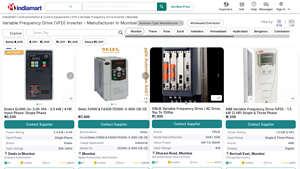
The IndiaMART Mumbai directory lists Variable Frequency Drive (VFD) inverters and motor control solutions from multiple manufacturers including Endox, TOSHIBA, ABB, Parker, Lenze, Delta, and XD1000 Series. Key specifications include power ratings ranging from 1.5 kW (2 HP) to 5.5 kW, with input phase options covering both Single Phase and Three Phase configurations. Specific models include Endox E…
B2B Engineering FAQs About 30 Hp Variable Frequency Drive
-
Can a 30 HP VFD operate from single-phase input power for remote agricultural sites lacking three-phase infrastructure?
Yes, specialized 30 HP VFDs with active rectifier front-ends can convert single-phase 220V/230V input to three-phase 380V/460V output. However, input current derating is required—typically 1.73 times the three-phase current rating—to prevent DC bus ripple and capacitor stress. For solar pumping applications, Boray Inverter recommends utilizing the DC bus directly from PV arrays (350V–750V) via a solar pump inverter configuration, eliminating the need for single-phase to three-phase conversion and grid dependency entirely. -
What motor insulation class and bearing protection are required when retrofitting a 30 HP VFD to an existing standard induction motor?
Legacy 30 HP motors designed for DOL (Direct Online) starting often utilize Class F insulation (155°C) with Class B temperature rise (80K). When applying VFD control, verify the winding insulation withstands 1,600V peak with <50 nsec rise time (dV/dt). For cable runs exceeding 50 meters between drive and motor, install output reactors or sine-wave filters to mitigate reflected wave phenomena. Additionally, specify insulated bearing cartridges or shaft grounding rings to prevent EDM (Electrical Discharge Machining) bearing currents common in 30 HP ranges operating above 6 kHz carrier frequencies. -
How does MPPT functionality in a 30 HP solar pump inverter manage rapid irradiance fluctuations without cavitation?
Advanced 30 HP solar pump inverters employ two-stage MPPT algorithms that maintain the DC bus voltage within 350V–750V while adjusting V/Hz curves in real-time. When irradiance drops below the VFD’s wake-up threshold (typically 30% of rated power), the system enters sleep mode; upon recovery, soft-start ramps (0–60 seconds configurable) prevent water hammer. Dry-run protection via sensorless flow detection monitors load torque signatures—if torque drops below 25% of rated 30 HP load for >10 seconds, the drive triggers a fault to protect pump seals. -
What harmonic mitigation is necessary for 30 HP VFD installations to comply with IEEE 519 and IEC 61000-3-6?
A standard 6-pulse 30 HP VFD generates approximately 30% current THD, primarily 5th and 7th harmonics. To meet IEEE 519 limits at the PCC (Point of Common Coupling), implement 3% impedance AC line reactors on the input side, reducing THD to <8%. For sensitive industrial networks or multiple 30 HP drives, specify active front-end (AFE) regenerative drives or passive harmonic filters. In solar pumping applications, the DC input stage inherently eliminates grid-side harmonics, though PV array grounding and DC choke integration remain critical for EMI suppression. -
What environmental derating factors apply to 30 HP VFDs installed in NEMA 3R/IP54 enclosures for outdoor agricultural environments?
Standard 30 HP VFDs are rated for 40°C ambient with 1,000m altitude. Above 40°C, derate output current by 2.5% per °C, or specify heat sinks with forced ventilation (IP54 filters). Altitude derating requires 1% current reduction per 100m above 1,000m due to reduced air density and cooling efficiency. For desert solar pumping installations, ensure conformal coating on PCBs (Class 3 protection against dust and moisture) and UV-resistant enclosure materials to prevent degradation of polycarbonate viewing windows and gasket seals. -
Which communication protocols enable centralized monitoring of multiple 30 HP VFDs in EPC-scale irrigation projects?
Industrial 30 HP VFDs support Modbus RTU/ASCII via RS-485, Modbus TCP/IP, and CANopen for peer-to-peer multi-pump control systems. For SCADA integration in large agricultural projects, specify Ethernet/IP or Profibus DP gateways. Advanced solar pump inverters offer GPRS/4G modules for cloud-based monitoring of flow rates, PV voltage, and fault codes (OC1, OV3, phase loss) across distributed 30 HP pump stations, enabling predictive maintenance algorithms and remote parameter adjustment. -
What braking resistor specifications are required for high-inertia centrifugal loads controlled by 30 HP VFDs?
For 30 HP applications with high-inertia loads (large flywheels or deep-well turbine pumps), calculate braking resistor ohms using: R = Vdc² / (Pbrake × 10), where Vdc is the DC bus voltage (typically 540V for 380V systems) and Pbrake is 20–50% of motor rated power (22–37 kW). Duty cycle determines wattage—standard 10% ED (Equivalent Duty) suffices for pump deceleration, but continuous regeneration applications require dynamic braking units or shared DC bus configurations with other drives. -
How do you calculate the energy ROI when replacing across-the-line starters with 30 HP VFDs in variable-flow irrigation systems?
Applying the Affinity Laws: Power varies with the cube of speed (P ∝ N³). Reducing pump speed by 20% (from 60 Hz to 48 Hz) yields 49% energy savings. For a 30 HP (22 kW) pump operating 2,000 hours annually at $0.12/kWh, savings approximate $2,640/year. Additionally, VFDs improve power factor from 0.85 to >0.95, reducing utility demand charges. In solar pumping configurations, soft-start functionality eliminates inrush currents (6–8× FLA), allowing smaller PV array sizing and reduced BOS (Balance of System) costs.
Disclaimer
⚠️ Important Disclaimer
The information provided in this guide is for educational purposes. Industrial applications and electrical engineering projects carry inherent risks. B2B buyers and contractors must conduct thorough technical due diligence and verify regional compliance before installation or procurement.
Conclusion: Partnering with Boray Inverter for 30 Hp Variable Frequency Drive
Selecting the optimal 30 HP Variable Frequency Drive represents a critical investment in operational efficiency, energy management, and long-term system reliability. Whether powering heavy-duty industrial machinery, precision agricultural irrigation pumps, or off-grid solar water systems, the right VFD solution must deliver precise motor control, robust protection mechanisms, and seamless integration with existing electrical infrastructure. As global industries accelerate their transition toward intelligent automation and sustainable energy practices, the importance of partnering with a manufacturer that combines deep technical expertise with rigorous manufacturing standards cannot be overstated.
Shenzhen Boray Technology Co., Ltd. emerges as the definitive strategic partner in this landscape, positioning itself as a leading innovator in Solar Pumping and Motor Control Solutions from China. With an elite R&D team constituting 50% of its total workforce, Boray Inverter has achieved mastery over advanced Permanent Magnet Synchronous Motor (PMSM) and Induction Motor (IM) vector control technologies, enabling exceptional dynamic torque response and industry-leading energy efficiency across variable load conditions. This technical prowess is complemented by state-of-the-art manufacturing capabilities, featuring two modern production lines equipped with comprehensive 100% full-load testing protocols that ensure every 30 HP VFD unit meets stringent international quality and reliability standards prior to global shipment.
Trusted by EPC contractors, agricultural project managers, and industrial automation distributors across diverse international markets, Boray Inverter has demonstrated proven expertise in demanding applications ranging from large-scale irrigation projects to complex industrial automation systems. For organizations seeking customized VFD solutions engineered to specific operational parameters, competitive wholesale quotations, or dedicated technical support for complex motor control challenges, Boray Inverter offers end-to-end consultation and application engineering services. We invite you to connect with our technical team at borayinverter.com to discuss your specific 30 HP VFD requirements, request detailed product specifications, or obtain wholesale pricing for your upcoming projects.