Introduction: Sourcing 100 Hp Variable Frequency Drive for Industrial Use
In heavy industrial and agricultural automation, controlling the speed and torque of 100 horsepower motors demands more than simple on/off switching—it requires intelligent power conversion that maximizes efficiency while protecting critical infrastructure. Whether driving centrifugal pumps in water treatment facilities, managing HVAC systems in commercial buildings, or powering solar irrigation pumps across vast agricultural estates where three-phase infrastructure may be limited, the 100 HP Variable Frequency Drive (VFD) serves as the critical interface between grid power and precision motor performance.
This comprehensive guide addresses the complex sourcing decisions facing electrical engineers, EPC contractors, and automation distributors when specifying 75 kW-rated drive systems. We examine the full spectrum of 100 HP VFD configurations—from standard three-phase industrial units to specialized single-phase-to-three-phase converters that enable rural solar pumping installations. Throughout the following sections, we analyze essential technical specifications including input/output voltage compatibility (220V/380V), current ratings approaching 150A, IP protection classes for harsh environments, and communication protocols like RS485 for SCADA integration. We evaluate procurement strategies comparing rental solutions for temporary projects against capital purchases for permanent installations, while assessing manufacturer capabilities from CE-certified providers to specialized solar pump inverter producers. By understanding torque characteristics, overload capacities (typically 150% for 60–120 seconds), and vector control methodologies, procurement professionals can ensure their selected VFD delivers precise motor control, energy optimization, and long-term reliability across industrial and renewable energy applications.
Article Navigation
- Top 2 100 Hp Variable Frequency Drive Manufacturers & Suppliers List
- Introduction: Sourcing 100 Hp Variable Frequency Drive for Industrial Use
- Technical Types and Variations of 100 Hp Variable Frequency Drive
- Key Industrial Applications for 100 Hp Variable Frequency Drive
- Top 3 Engineering Pain Points for 100 Hp Variable Frequency Drive
- Component and Hardware Analysis for 100 Hp Variable Frequency Drive
- Manufacturing Standards and Testing QC for 100 Hp Variable Frequency Drive
- Step-by-Step Engineering Sizing Checklist for 100 Hp Variable Frequency Drive
- Wholesale Cost and Energy ROI Analysis for 100 Hp Variable Frequency Drive
- Alternatives Comparison: Is 100 Hp Variable Frequency Drive the Best Choice?
- Core Technical Specifications and Control Terms for 100 Hp Variable Frequency Drive
- Future Trends in the 100 Hp Variable Frequency Drive Sector
- B2B Engineering FAQs About 100 Hp Variable Frequency Drive
- Disclaimer
- Conclusion: Partnering with Boray Inverter for 100 Hp Variable Frequency Drive
Technical Types and Variations of 100 Hp Variable Frequency Drive
At the 100 HP (75 kW) power threshold, drive topology and input power architecture become critical design constraints that directly impact grid compatibility, energy efficiency, and motor control precision. Unlike lower horsepower classes, 100 HP VFDs must manage significant current demands—often exceeding 150A output and 480A input in single-phase configurations—while maintaining thermal stability and harmonic compliance. The following classifications represent the primary technical variations deployed across industrial automation, agricultural irrigation, and solar pumping applications.
| Type | Technical Features | Best for (Industry) | Pros & Cons |
|---|---|---|---|
| Single-Phase Input Step-Up VFD | • 220V±10% single-phase input / 380-440V three-phase output • Phase conversion via active IGBT rectifier bridge • High input current capacity (>480A @ 100HP) • Robust DC bus design (>50µF/A capacitance) • IP20 enclosure standard |
Agriculture, Rural Water Systems, Remote Industrial Retrofits | Pros: Eliminates 3-phase infrastructure requirements; compatible with standard AC induction motors; ideal for split-phase rural grids. Cons: Input current 3× higher than 3-phase equivalents; requires heavy-gauge input wiring (≥185mm²); limited to ~100HP practical ceiling due to single-phase current imbalance stress. |
| Solar DC-to-AC Pump Inverter | • Direct 300-800VDC input from PV arrays (no battery required) • Integrated MPPT algorithm (99% tracking efficiency) • Automatic power derating based on irradiance • Dry-run protection and water level sensor inputs • IP65/NEMA 4X outdoor rating |
Solar Irrigation, Off-Grid Water Supply, Agricultural EPC Projects | Pros: Grid independence; maximum energy harvesting via MPPT; designed for pump affinity curves (variable torque). Cons: Weather-dependent output; requires 25-30% PV array oversizing for cloudy conditions; limited to daylight operation without battery integration. |
| Standard Three-Phase Vector Control VFD | • 380-480V three-phase I/O (50/60Hz) • Control modes: V/f, Sensorless Vector Control (SVC), optional Closed-Loop Vector (FVC with PG card) • 150% overload capacity for 60s, 200% for 1s • RS485/Modbus-RTU standard; removable keypad |
Manufacturing, HVAC, Industrial Process Control | Pros: Mature technology with broad OEM support; precise speed regulation (±0.5% SVC); extensive communication options. Cons: Requires 3-phase grid infrastructure; standard diode bridge generates heat; no energy regeneration capability (braking resistor required). |
| Active Front End (AFE) Regenerative VFD | • IGBT-based active rectifier (not diode bridge) • Bi-directional power flow for regenerative braking • Unity power factor (>0.98) and low THDi (<5%) • Common DC bus capability for multi-drive systems |
Centrifuges, Test Stands, High-Inertia Loads, Precision Manufacturing | Pros: Recovers braking energy to grid; eliminates braking resistors; clean power with minimal harmonic distortion. Cons: 40-60% cost premium over standard VFD; complex commissioning requiring line reactors; sensitive to grid voltage fluctuations. |
Single-Phase to Three-Phase Conversion VFDs
This topology addresses a critical infrastructure gap in agricultural and remote industrial settings where only single-phase 220V service is available. At 100 HP, these drives utilize a boosted DC bus architecture to convert high-current single-phase input (typically 481A) into balanced three-phase output (approximately 150A). The technical challenge lies in managing the pulsating DC bus ripple inherent to single-phase rectification, which requires oversized DC link capacitors (>50µF per ampere) and reinforced IGBT modules rated for 2× output current. Engineers must specify input conductors sized for the high single-phase current draw—often requiring 3/0 AWG (85mm²) or larger cabling—while ensuring the motor is standard three-phase, avoiding the cost of single-phase motor replacement. These units typically employ open-loop vector control (SVC) to maintain torque stability despite input voltage fluctuations common in rural grids.
Solar DC-to-AC Pump Inverters
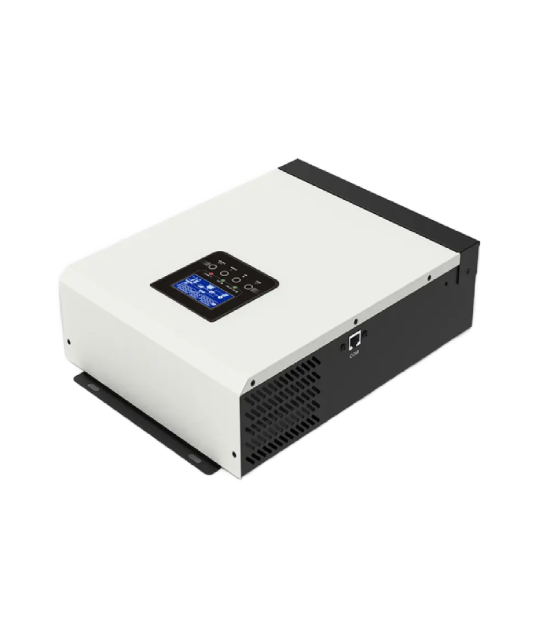
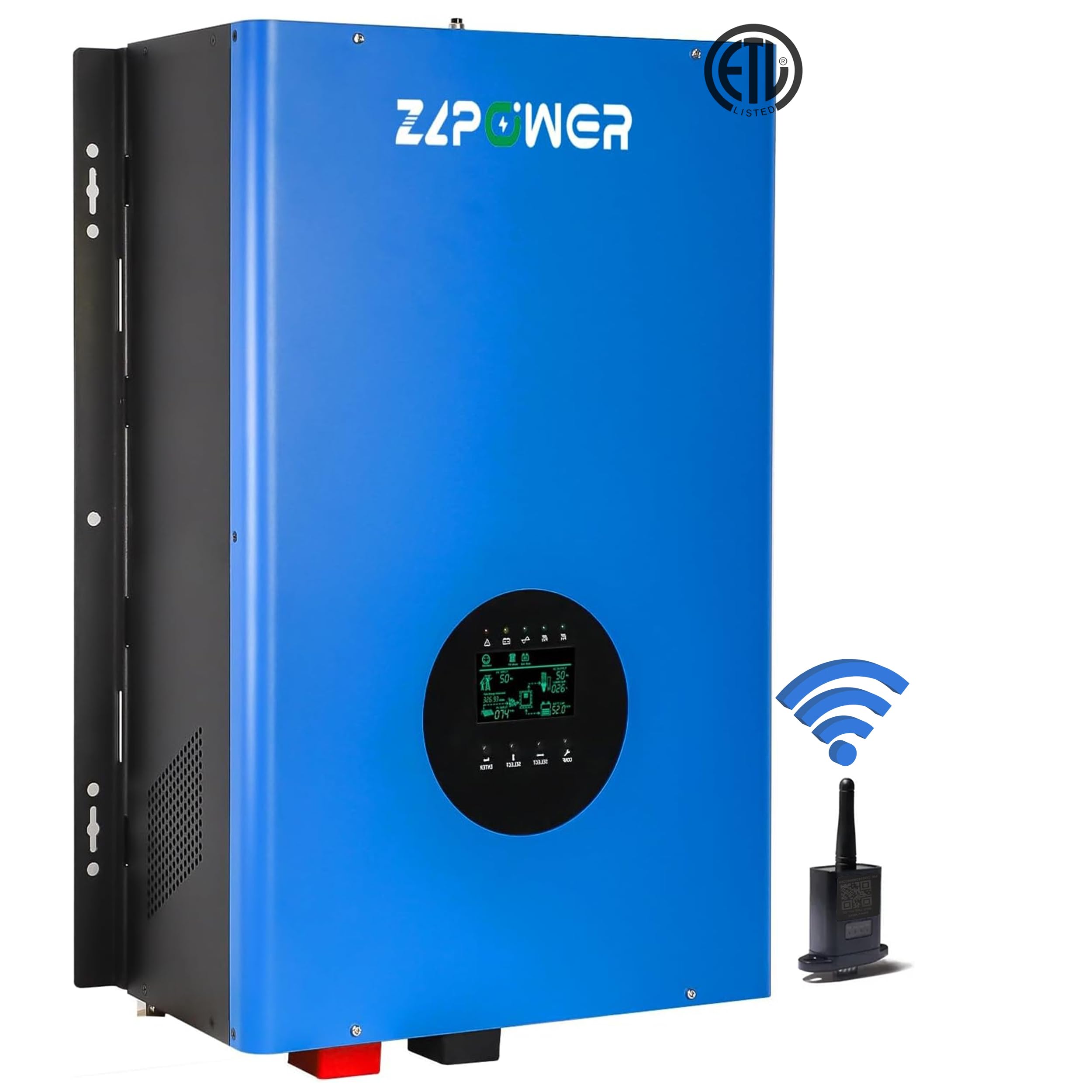
As a specialized subset of VFD technology, solar pump inverters (such as those manufactured by Boray Inverter) bypass the AC grid entirely, accepting direct DC input from photovoltaic arrays. At the 100 HP level, these drives integrate Maximum Power Point Tracking (MPPT) algorithms that continuously adjust the DC bus voltage to extract peak power from solar panels as irradiance changes. Unlike standard VFDs, solar variants include specialized pump protection logic—dry-run detection, water level monitoring, and automatic wake/sleep functions based on sunlight availability. The drives output 380-480V three-phase power optimized for centrifugal pump curves, automatically reducing frequency when solar power diminishes rather than stopping entirely, thereby maximizing daily water yield. For EPC contractors, these systems eliminate trenching costs for grid extensions and qualify for renewable energy incentives, though they require careful PV array sizing (typically 1.3× the motor kW rating) to ensure sufficient starting torque.
Standard Three-Phase Vector Control VFDs
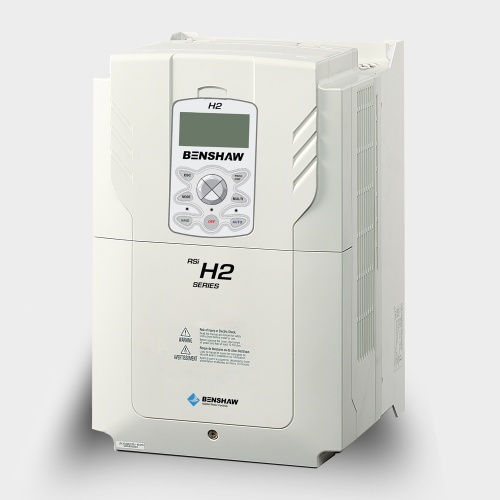
The industrial workhorse for 100 HP applications, these drives accept 380-480V three-phase input and provide precise frequency control via Pulse Width Modulation (PWM). Modern units offer three control tiers: basic V/f for fan/pump applications, Sensorless Vector Control (SVC) for 150% starting torque at 1Hz, and Flux Vector Control (FVC) with encoder feedback for zero-speed holding torque (180% at 0Hz). Key specifications include RS485 communication for SCADA integration, removable keypads for remote mounting in harsh environments, and overload ratings of 150% for 60 seconds—critical for high-inertia starting. The Fuji MD100-class architecture referenced in industrial rental fleets represents this category, offering IP20 enclosures suitable for MCC installations with external cooling considerations.
Active Front End (AFE) and Regenerative Systems
For applications involving high-inertia loads—such as large centrifuges, cranes, or test stands—standard braking resistors waste significant energy as heat. AFE drives replace the diode rectifier with an active IGBT bridge, allowing bi-directional power flow. During deceleration, the drive regenerates excess energy back to the grid rather than dissipating it, achieving near-unity power factor and <5% Total Harmonic Current Distortion (THDi). At 100 HP, this technology is particularly valuable in continuous-duty cycles with frequent stopping, though it requires line reactors and careful grid impedance analysis to prevent resonance. The complexity and cost (typically 1.5× standard VFD pricing) limit deployment to energy-intensive processes where regeneration economics justify the investment within 18-24 months.
Selection Guidance: For agricultural projects lacking 3-phase infrastructure, specify single-phase step-up VFDs with adequate input current der
Key Industrial Applications for 100 Hp Variable Frequency Drive
Across industrial infrastructure, the 100 HP (75 kW) variable frequency drive represents a critical power node where energy efficiency meets process control. For EPC contractors and automation engineers specifying medium-to-heavy motor loads, this drive rating addresses the most common high-power applications while delivering measurable ROI through precise speed regulation and soft-start capabilities. The following deployment scenarios illustrate how 100 HP VFDs optimize motor performance across diverse sectors, from solar-powered agricultural systems to continuous-duty mining operations.
| Sector | Application | Energy Saving Value | Sourcing Considerations |
|---|---|---|---|
| Agriculture & Solar Pumping | Large-scale center-pivot irrigation and deep-well submersible pumps | 30–50% reduction vs. DOL starting; up to 70% when paired with PV arrays | IP65/NEMA 4X enclosure for outdoor exposure; built-in MPPT and anti-islanding protection for solar hybrid operation; single-phase to three-phase conversion capability for rural grids |
| Water & Wastewater Treatment | Municipal lift stations, aeration blowers, and filtration pumps | 20–40% on pumping cycles; 30–60% on aeration energy through dissolved oxygen (DO) control | Integrated PID control for constant pressure/flow; redundant cooling fans; harmonic mitigation (AC line reactors) to protect sensitive PLC networks |
| HVAC & Building Infrastructure | Chilled water pumps, cooling tower fans, and air handling units (AHUs) | 30–50% of HVAC motor energy (representing 15–25% of total building consumption) | BACnet/Modbus RTU integration; automatic bypass contactor for critical uptime; low-RFI emission for building management systems |
| Mining & Cement Processing | Primary crushers, conveyor belts (over 500m), and pre-heater kiln fans | 15–25% energy recovery via regenerative braking; significant mechanical wear reduction | 150–200% overload capacity for 60s (heavy-duty rating); DC injection braking; conformal-coated PCBs for dust/moisture resistance; vibration-resistant chassis mounting |
Agriculture & Solar Pumping
In modern irrigation projects, the 100 HP VFD serves as the central controller for high-flow submersible pumps and surface irrigation systems. When deployed with Boray’s solar pump inverter technology, these drives enable direct PV array coupling without battery storage, utilizing Maximum Power Point Tracking (MPPT) algorithms to maintain optimal flow rates during variable irradiance. The single-phase to three-phase conversion capability (220V input to 380V output) is particularly critical for rural installations where three-phase grid infrastructure is unavailable. Engineers should specify drives with automatic torque boost (0.1–30% manual adjustment) to handle high-starting-torque requirements of deep-well pumps, while ensuring IP65 ingress protection against irrigation spray and agricultural chemicals.
Water & Wastewater Treatment
Municipal EPC contractors utilize 100 HP drives in constant-torque applications such as screw pumps and centrifugal aeration blowers. The integration of built-in PID controllers allows the drive to maintain precise pressure setpoints or dissolved oxygen levels without external PLCs, reducing system complexity. For 24/7 operational continuity, specify units with 100% PCB aging tests at 50°C and finished product burn-in testing, ensuring reliability in humid pump station environments. RS485 Modbus connectivity enables centralized SCADA monitoring of multiple lift stations, while stall prevention levels (adjustable 20–200% of rated current) protect against pump blockages during stormwater influx events.
HVAC & Building Infrastructure
In commercial building automation, 100 HP VFDs regulate the variable flow of chilled water and condenser water systems, replacing inefficient throttling valves and damper controls. The drives’ ability to provide 0.1Hz frequency resolution ensures stable pressure maintenance in high-rise distribution networks. When sourcing for HVAC, prioritize units with S-curve acceleration profiles to minimize water hammer in piping systems, and automatic voltage regulation (AVR) to compensate for grid fluctuations during peak demand periods. Integration with Building Management Systems (BMS) requires standard communication protocols; verify that the drive supports BACnet MS/TP or Modbus RTU for seamless interoperability with existing automation architectures.
Mining & Cement Processing
Heavy industrial applications demand drives capable of withstanding 150% overload for 120 seconds during crusher jam-clearing or conveyor startup sequences. The 100 HP rating is ideal for medium-duty crushers and long-distance belt conveyors where regenerative braking options can return kinetic energy to the grid or dissipate it through braking resistors. Sourcing considerations must include robust IGBT modules rated at >2x the inverter output current, as specified in heavy-duty VFD designs, and conformal coating on circuit boards to protect against cement dust and corrosive atmospheres. For safety-critical installations, specify drives with DC injection braking and integrated EMC filters to prevent interference with proximity sensors and automation controls in electrically noisy environments.
Top 3 Engineering Pain Points for 100 Hp Variable Frequency Drive
Scenario 1: Single-Phase Infrastructure Constraints in Remote Agricultural and Industrial Deployment
The Problem:
Deploying 100 HP (75 kW) motor systems in remote solar pumping stations, legacy industrial facilities, or temporary rental applications frequently encounters a critical infrastructure limitation: the absence of three-phase power distribution. While 100 HP motors inherently require robust three-phase supply (380V–440V), many rural agricultural sites and aging industrial plants only offer single-phase 220V input. This disparity forces expensive utility upgrades or operational compromises. Furthermore, attempting direct-online starting of 100 HP motors on single-phase infrastructure creates severe voltage sag (with input currents reaching 481A), risking grid instability, utility penalty charges, and potential damage to downstream equipment.
The Solution:
Advanced 100 HP VFDs equipped with active phase-conversion technology bridge this gap by converting single-phase 220V input to three-phase 380V/440V output, eliminating the need for costly three-phase line installation. By utilizing robust IGBT modules rated at greater than 2x the inverter output current and high-capacity DC bus capacitors (>50µF/A), these drives manage high input current demands while delivering consistent 150A three-phase output. Integrated soft-start functionality reduces inrush current by up to 70%, protecting weak grid infrastructure while providing the full rated capacity required for heavy-duty motor operation in off-grid or single-phase limited environments.
Scenario 2: Thermal Derating and Environmental Protection in Harsh Operating Conditions
The Problem:
Standard 100 HP VFDs typically feature IP20 protection ratings, suitable only for clean, climate-controlled electrical rooms. However, agricultural irrigation sites, mining operations, and outdoor EPC projects expose equipment to dust ingress, humidity, and ambient temperatures exceeding 40°C. At 100 HP power levels, insufficient thermal management leads to rapid derating—particularly critical when drives must sustain 150% overload capacity for 120 seconds during pump priming or high-torque acceleration. Without adequate environmental protection, PCB contamination from dust and moisture, combined with thermal stress from 75 kW power conversion, results in premature failure and costly downtime.
The Solution:
Engineered reliability begins with rigorous thermal validation, including 100% PCB aging testing at 50°C for 12 hours and finished product burn-in at 50°C for 24 hours, ensuring performance under extreme thermal stress. For field deployment, specify VFDs with conformal-coated PCBs and upgraded NEMA 3R/IP54 enclosures (transitioning from standard IP20) to resist dust and moisture ingress in agricultural and industrial environments. Advanced thermal designs utilizing oversized heat sinks, temperature-controlled cooling fans, and high-grade IGBT modules provide the thermal headroom necessary to maintain continuous 100 HP output without derating in ambient temperatures up to 50°C—essential for solar pumping installations in arid climates and enclosed industrial spaces.
Scenario 3: Precision Control and Dynamic Load Management for High-Inertia Systems
The Problem:
100 HP motors driving large centrifugal pumps, irrigation systems, or industrial fans present significant inertial loads that standard V/f control cannot manage effectively. In solar pumping applications, rapid fluctuations in solar irradiance cause unpredictable load changes, while pipe filling operations create water hammer risks if acceleration isn’t precisely controlled. Conventional control methods result in excessive mechanical stress, pump cavitation, and potential motor stall during high-demand periods. Additionally, maintaining precise process parameters (pressure, flow, or temperature) typically requires external PID controllers, adding system complexity and points of failure for EPC contractors and system integrators.
The Solution:
Implement Sensorless Vector Control (SVC) or Flux Vector Control (FVC) with optional PG card feedback to achieve 0 Hz/180% starting torque and precise speed regulation (0.1Hz resolution), ensuring stable operation across the entire speed range. Leverage built-in PID control functionality to enable direct closed-loop management of process variables without external PLCs, automatically adjusting motor speed to match solar availability or demand fluctuations. Configure S-curve acceleration/deceleration profiles (adjustable from 0.1–65000s) to eliminate mechanical shock and water hammer during pump cycling, while utilizing programmable stall prevention (20–200% rated current) and automatic torque boost features to protect against pump blockages, dry-running conditions, or sudden load changes in demanding agricultural and industrial workflows.
Component and Hardware Analysis for 100 Hp Variable Frequency Drive
At the 100 HP (75 kW) power node, the internal component architecture of a Variable Frequency Drive (VFD) determines not only operational efficiency but also the system’s Mean Time Between Failures (MTBF) in demanding industrial and agricultural environments. For EPC contractors and automation engineers specifying drives for heavy-duty motor control or solar pumping applications, understanding the hardware margins and quality benchmarks is critical for ensuring 15–20 year asset lifecycles.
Power Semiconductor Stage (IGBT Modules)
The Insulated Gate Bipolar Transistor (IGBT) module serves as the primary switching element for DC-to-AC inversion. In a 100 HP drive handling approximately 150A output current (380V class), industrial-grade units utilize 600V or 690V IGBT modules with substantial derating margins. Quality manufacturers specify IGBT current ratings exceeding 2 times the inverter’s rated output current—a robust design practice that minimizes conduction losses and provides headroom for transient overloads (150% for 120s, 180% for 10s) common in pump startup scenarios. Thermal management is equally critical; junction temperatures must be maintained below 125°C through direct-bonded copper (DBC) substrates and low-thermal-resistance packaging to prevent thermal runaway and bond-wire fatigue.
DC-Link Capacitor Bank
The DC bus capacitors stabilize the rectified voltage and absorb ripple current from the switching semiconductors. For 100 HP applications, high-quality drives employ DC-link capacitance exceeding 50µF per ampere of rated current (e.g., >7,500µF for 150A systems), utilizing either high-grade aluminum electrolytic capacitors with 105°C ratings or film capacitors for extended lifecycles. Equivalent Series Resistance (ESR) and ripple current capability are key quality differentiators; agricultural solar pump inverters, in particular, require capacitors rated for continuous operation at 50°C ambient with minimal capacitance fade over 50,000 hours.
Control and Signal Processing Architecture
The drive’s intelligence relies on 32-bit Digital Signal Processors (DSPs) or ARM-based microcontrollers executing Vector Control algorithms (V/f, Sensorless Vector Control [SVC], or Flux Vector Control [FVC]). For precision motor control in irrigation systems, the controller must offer sub-0.1Hz frequency resolution and handle multi-functional I/O (6 digital inputs, 3 analog inputs 0–10V/4–20mA) with built-in PID for pressure/flow loops. Quality assurance protocols include 100% PCB aging tests at 50°C for 12 hours and finished product burn-in at 50°C for 24 hours to eliminate infant mortality failures and ensure stability under tropical operating conditions.
Thermal Management Infrastructure
Dissipating approximately 2–3% of rated power as heat (1.5–2.2 kW for 100 HP), the thermal system combines anodized aluminum heatsinks (typically 6063-T5 alloy) with forced-air cooling. Thermal resistance specifications below 0.1°C/W and the use of phase-change thermal interface materials (TIMs) between IGBT modules and heatsinks ensure junction temperatures remain within safe operating areas. For solar pump applications in dusty agricultural environments, IP54 or IP55 enclosure ratings with filtered cooling channels are preferred over standard IP20 designs to prevent dust accumulation on heatsink fins.
Electromagnetic Compatibility (EMC) Components
Input line reactors (3% impedance minimum) and output dv/dt filters protect the drive and motor from voltage transients and reflected wave phenomena, particularly when driving submersible pumps with long cable runs. High-permeability iron-core reactors with Class H (180°C) insulation prevent saturation during line voltage imbalances, while EMI filters achieve >60dB attenuation at the switching carrier frequency to prevent interference with nearby automation equipment.
Component Quality Matrix
| Component | Function | Quality Indicator | Impact on Lifespan |
|---|---|---|---|
| IGBT Power Module | DC-to-AC power inversion; PWM generation | Current derating >2× rated output; Tj(max) <125°C; Switching losses <2% | Primary failure mode; thermal cycling causes solder fatigue and bond wire lift-off after 10–15 years |
| DC-Link Capacitors | Energy storage; Ripple current absorption; Voltage stabilization | Capacitance >50µF/A; ESR <10mΩ; 105°C rated; Film or high-ripple electrolytic | Electrolyte dry-out leads to capacity fade; ESR increase causes overheating and catastrophic failure |
| DSP/Control Board | Vector algorithm execution; Protection logic; Communication protocols | 32-bit architecture; 100% PCB aging test (50°C/12hrs); Conformal coating (UV/urethane) | Control drift; Nuisance tripping; Communication errors in high-humidity environments |
| Cooling Heatsink | Thermal dissipation for semiconductors | Aluminum 6063-T5; Thermal resistance <0.1°C/W; Anodized finish; Fan MTBF >50,000hrs | Overheating triggers thermal derating or IGBT failure; fan bearing wear reduces airflow |
| Input/Output Reactors | Harmonic mitigation; dv/dt limitation; Motor protection | 3% impedance; Linear inductance; Class H insulation (180°C); Copper windings | Insulation degradation; Core saturation under voltage imbalance reduces protection effectiveness |
| Enclosure & Busbars | Environmental protection; Power distribution | IP20 minimum (IP55 for outdoor solar); Tin-plated copper busbars; Anti-corrosion coating | Corrosion in humid climates; dust ingress causes short circuits and cooling degradation |
For solar pumping integration, these hardware specifications take on additional significance. The DC bus must accommodate wide voltage swings from PV arrays (typically 200VDC–800VDC), requiring IGBT modules and capacitors rated for elevated DC voltages. Furthermore, the control algorithm must seamlessly transition between MPPT (Maximum Power Point Tracking) modes and grid-tie operation, demanding DSP processing power and firmware robustness that meets the same rigorous aging standards as the power hardware. When specifying a 100 HP VFD for agricultural or industrial projects, verifying these component-level specifications ensures compatibility with both the mechanical load and the environmental operating envelope.
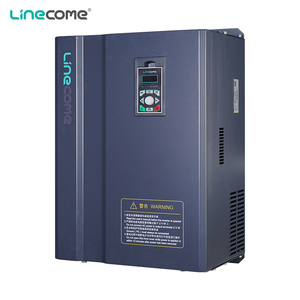
Manufacturing Standards and Testing QC for 100 Hp Variable Frequency Drive
At the 75 kW (100 HP) power class, variable frequency drives operate at the intersection of significant energy throughput and critical process reliability. For solar pumping stations, HVAC systems, and heavy industrial conveyors, a single VFD failure can result in substantial downtime costs and crop loss. Consequently, manufacturing rigor must extend beyond basic assembly to encompass component-level derating, environmental hardening, and exhaustive thermal validation.
Component Derating and Robust Design Architecture
High-reliability 100 HP VFDs begin with aggressive component derating strategies to ensure longevity in 50°C ambient conditions. Premium manufacturers specify IGBT modules rated for continuous current exceeding 2× the inverter’s nominal output current (e.g., >300A devices for 150A rated output), providing headroom for harmonic stress and transient overloads. DC bus capacitors are selected with >50 µF/A capacity ratios, utilizing film or high-grade electrolytic technologies to minimize equivalent series resistance (ESR) and thermal runaway risks under cyclic loading.
PCB layouts for the power stage utilize heavy copper (≥3 oz) traces with reinforced solder mask definitions to handle 481A input surge currents common in single-phase to three-phase conversion applications. Critical signal paths are isolated via optocouplers and magnetic isolators to prevent ground loop interference in agricultural environments with significant electromagnetic noise.
PCB Protection and Conformal Coating Protocols
Given the ingress of humidity, dust, and corrosive gases in solar pumping installations, bare printed circuit boards undergo 100% conformal coating processing prior to final assembly. Acrylic or polyurethane coatings (25–75 µm thickness) are applied via selective robotic spraying to cover solder joints, traces, and component leads while keeping heat sink mounting surfaces and connector contacts mask-free. This treatment meets IPC-A-610 Class 3 standards for high-performance/high-reliability electronics, preventing dendritic growth and leakage currents between high-potential traces.
Power terminals and bus bars receive nickel or tin plating with anti-oxidation treatments to withstand the elevated thermal cycling inherent in 100 HP motor control, where connection resistance increases of even 0.1 mΩ can generate significant localized heating at 150A continuous draw.
Thermal Aging and Burn-In Testing
Every unit undergoes multi-stage thermal stress testing to precipitate early-life failures (infant mortality) before shipment:
PCB-Level Aging: Assembled control boards are subjected to 100% burn-in at 50°C for 12 hours under dynamic signal loading, verifying the stability of gate drivers, current sensing circuits, and communication interfaces (RS485/Modbus-RTU) prior to integration with the power stack.
Finished Product Validation: Complete VFD assemblies are placed in thermal chambers for 24-hour continuous operation at 50°C ambient, cycling through full-load, overload (150% for 120 seconds), and regenerative braking modes. This protocol validates thermal management design, confirming that heat sink temperatures remain within IGBT junction limits (typically Tj < 125°C) and that cooling fans maintain rated airflow under dust-laden conditions.
Full-Load Electrical Testing: Each drive is connected to a dynamometer or resistive load bank and tested at 100% rated current (150A for 380V class) to verify output waveform purity (THDi < 5%), current sharing between parallel IGBTs (if applicable), and the accuracy of vector control algorithms. Input current draw, DC bus ripple, and braking chopper functionality are recorded against serial numbers for traceability.
Compliance with International Safety and EMC Standards
Manufacturing facilities producing 100 HP VFDs for global distribution must maintain ISO 9001:2015 quality management systems with specific adherence to:
- IEC 61800-5-1: Safety requirements for electrical, thermal, and energy hazards, including creepage and clearance distances for 690V solar pumping systems.
- IEC 61800-3: Electromagnetic compatibility (EMC) for adjustable speed electrical power drive systems, ensuring conducted emissions remain below Class A limits for industrial environments.
- CE Marking: Compliance with the Low Voltage Directive (LVD) 2014/35/EU and EMC Directive 2014/30/EU, verified through third-party testing of immunity to surge (IEC 61000-4-5) and voltage dips (IEC 61000-4-11).
High-potential (hipot) testing at 2 kV AC for 60 seconds verifies isolation between power circuits and control electronics, while ground bond testing ensures protective earth continuity can handle fault currents exceeding 200% of rated capacity for 1 second without impedance rise.
Solar Pumping Specific Quality Controls
For photovoltaic water pumping applications, additional QC checkpoints address DC input handling and environmental resilience:
- MPPT Compatibility Verification: Testing with simulated solar array inputs (Voc up to 800V DC) to confirm stable operation at maximum power point tracking thresholds without nuisance tripping.
- IP Rating Validation: While IP20 enclosures suffice for controlled electrical rooms, units destined for outdoor agricultural deployment undergo seal testing for IP54 or IP65 ratings, verifying gasket integrity and cable gland torque specifications.
- Communication Robustness: Extended RS485 bus testing (1200m cable lengths) with termination resistor validation to ensure reliable telemetry in remote solar farms where PLC or SCADA integration is critical.
Traceability and Documentation
Each 100 HP VFD receives a unique serial number linking to a manufacturing data packet containing component batch codes (IGBTs, capacitors), thermal test curves, and hipot certificates. This documentation supports warranty claims and predictive maintenance programs, allowing EPC contractors to verify that installed drives meet the specified 12-month (or extended) warranty terms through authenticated test records rather than generic compliance statements.
By implementing these manufacturing standards—from aggressive semiconductor derating to 24-hour thermal burn-in—suppliers ensure that 100 HP drives deliver the 15–20 year service life expected in solar irrigation and industrial automation infrastructure, minimizing total cost of ownership for project developers and end-users alike.
Step-by-Step Engineering Sizing Checklist for 100 Hp Variable Frequency Drive
When specifying a 100 HP (75 kW) variable frequency drive for industrial pumping or motor control applications, improper sizing accounts for the majority of field failures and efficiency losses. Whether integrating into an existing plant bus or designing a standalone solar pumping station for agricultural EPC projects, the following engineering protocol ensures thermal stability, MPPT optimization, and long-term reliability.
1. Motor Nameplate & Load Characteristic Verification
Critical Data Points:
– Power Conversion: Confirm the motor rating translates to 75 kW (100 HP) at the service factor (typically 1.0 or 1.15). Size the VFD for the motor’s FLA (Full Load Amperes), not just the nominal HP.
– Current Matching: For a 380V three-phase output, expect approximately 150A continuous output current. Verify the VFD’s overload curve (e.g., 150% for 60s, 180% for 10s) accommodates high-inertia pump starts or agricultural auger loads.
– Insulation Class: Ensure motor winding insulation is rated for inverter-duty service (Class F or H) to withstand PWM voltage spikes from IGBT switching.
– Torque Profile: Identify if the application requires:
– Variable Torque (VT): Centrifugal pumps/fans (quadratic load curve)
– Constant Torque (CT): Positive displacement pumps, compressors, conveyors
– High Starting Torque: 150% at 0.5 Hz (V/f control) or 180% at 0 Hz (Closed-loop vector) for deep-well solar pumps
2. Input Supply Topology & Voltage Window
Grid-Connected Systems:
– Three-Phase Input: Standard 380V–480V AC ±10%. Verify line reactor requirements if the supply transformer kVA is >10x the drive kVA to mitigate harmonic distortion.
– Single-Phase Derating: If utilizing single-phase 220V input (common in remote agricultural sites), confirm the VFD supports phase-conversion topology. Note that input current spikes to approximately 481A at full load, requiring oversized input conductors and dedicated circuit protection.
Solar Pump Integration (DC Input):
– Array Voltage Window: Calculate open-circuit voltage (Voc) at record low temperatures to ensure it never exceeds the VFD’s maximum DC input (typically 800V–1000V). For a 100 HP solar pump inverter:
– Target Vmppt range: 550V–750V DC for optimal efficiency
– Maximum Voc (at -10°C): Must be < VFD DC bus rating
– String Sizing Formula:
Max Strings = Floor(VFD_DC_Max / (Voc_per_panel × 1.15))

  Min Strings = Ceiling(VFD_MPPT_Min / (Vmp_per_panel × 0.85))
– Current Sizing: Solar array Imp (maximum power current) must exceed the VFD’s DC input current requirement by 20% to prevent MPPT tracking losses during cloud transients.
3. Environmental & Enclosure Derating
- Thermal Management: At altitudes >1000m or ambient temperatures >40°C, apply derating curves (typically 1% per 100m above 1000m). For desert agricultural installations, specify IP54 or IP65 enclosures versus standard IP20.
- Cooling Clearance: Maintain minimum 150mm vertical clearance above and below the 100 HP drive chassis; horizontal spacing of 50mm between drives in multi-drive panels.
4. Harmonic Mitigation & Power Quality
- THDi Limits: For 100 HP installations on weak grids, specify DC chokes or active front ends (AFE) if total harmonic current distortion must remain <5% per IEEE 519.
- Braking Requirements: Calculate regenerative energy for high-inertia loads. If deceleration time <10 seconds for a 100 HP centrifugal pump, specify dynamic braking resistors rated for 75 kW peak (20% duty cycle).
5. Control Interface & I/O Specification
- Analog Inputs: Verify 4–20mA or 0–10V compatibility for pressure transducers (pumping) or flow sensors. Resolution should be ≥10-bit for precision agricultural irrigation.
- Communication: Confirm RS485 Modbus-RTU standard; optional Profibus-DP or CANopen for SCADA integration in industrial automation.
- PID Control: For constant pressure systems, ensure the VFD has built-in PID with sleep/wake functionality to prevent pump cycling when demand drops below 30% of 100 HP capacity.
6. Protection Coordination & Cable Sizing
- Input Protection: Size circuit breakers at 1.5–2.0x the VFD’s rated input current (not motor FLA). For the 481A single-phase scenario, use 700A frame breakers with adjustable thermal trips.
- Output Cabling: Use shielded VFD-rated cable (XLPE insulation) sized for 150A continuous, with ground bonding at both motor and drive enclosures to mitigate bearing currents.
- Safety Interlocks: Verify Safe Torque Off (STO) SIL 2/3 compliance for emergency stop circuits in industrial environments.
7. Pre-Commissioning Validation Checklist
Before energizing the 75 kW system:
– [ ] Verify DC bus voltage (if solar) matches calculated Voc under local temperature conditions
– [ ] Confirm motor parameter auto-tuning (motor nameplate data entered: Voltage, Current, Frequency, Speed, Power)
– [ ] Set carrier frequency ≤4 kHz for long cable runs (>50m) to prevent reflected wave issues
– [ ] Program acceleration ramps: 10–30 seconds for centrifugal pumps; 3–5 seconds for screw pumps
– [ ] Test emergency stop response time (<1 second torque removal)
Final Specification Note: When sourcing from Boray Inverter or equivalent Tier-1 manufacturers, request the FC280-75G/90P or equivalent heavy-duty frame size, ensuring IGBT current rating exceeds 2x the nominal 150A output for 100 HP reliability margins.
Wholesale Cost and Energy ROI Analysis for 100 Hp Variable Frequency Drive
For industrial-scale motor control, the 100 HP (75 kW) variable frequency drive represents a critical inflection point where procurement strategy directly impacts project IRR. At this power tier, the delta between factory-direct wholesale acquisition and retail channel markup can exceed 35-40%, while energy optimization capabilities deliver measurable ROI within 12-18 months of commissioning. Below is a comprehensive analysis of B2B pricing architectures, lifecycle energy economics, and warranty risk mitigation specific to 100 HP VFD deployments in heavy industrial and solar pumping applications.
Factory-Direct vs. Channel Pricing Architectures
Procurement cost structures for 100 HP VFDs vary significantly based on supply chain positioning and volume commitments. As a baseline, factory-direct sourcing from specialized manufacturers such as Boray Inverter typically positions the unit cost between $2,800–$4,200 USD per unit at MOQ (Minimum Order Quantity) thresholds of 10+ units, depending on feature configuration (IP20 enclosure vs. IP54, integrated DC reactor, and communication protocols like RS485 Modbus-RTU).
In contrast, retail and rental channels—exemplified by industrial equipment rental platforms—often price equivalent 100 HP units at $400–$600 per week for short-term deployments, or $12,000–$18,000 for outright purchase through distribution networks. This pricing spread reflects:
– Distributor markup tiers: 25-35% for authorized distributors, 45-60% for value-added resellers providing integration services
– Regional logistics premiums: North American and European procurement typically carries 15-20% additional freight and customs burden compared to direct Asia-Pacific sourcing
– Specification premiums: Units supporting single-phase 220V input to three-phase 380V output conversion (as required in rural agricultural deployments) command 8-12% cost premiums over standard three-phase input models
For EPC contractors and agricultural project managers, negotiating direct OEM relationships eliminates intermediary margins while enabling customization of input/output voltage parameters—critical for solar pumping installations where 220V single-phase PV array configurations must interface with 380V three-phase submersible pumps.
Energy ROI Modeling: The 100 HP Advantage
The economic justification for VFD deployment at the 100 HP threshold relies on the affinity laws governing centrifugal loads (pumps and fans), where a 20% reduction in motor speed yields a 49% reduction in energy consumption. For a 75 kW motor operating 6,000 hours annually at 85% load factor, baseline energy consumption without VFD control approximates 382,500 kWh/year.
Quantified Savings Scenario:
– Variable speed operation: Reducing average operating speed to 80% of maximum (typical for irrigation or HVAC applications) cuts power consumption by approximately 48.8%
– Annual energy savings: ~186,660 kWh at $0.12/kWh (global industrial average) = $22,399/year
– Soft-start mechanical savings: Elimination of inrush currents (600-800% FLA during DOL starting) extends motor bearing and coupling life by 30-40%, reducing maintenance CAPEX by $3,000–$5,000 annually
– Demand charge mitigation: Reduced peak current draw (150A rated output vs. 900A+ inrush) lowers utility demand charges by 15-25%
Payback Analysis:
With a factory-direct acquisition cost of $3,500 and installation/integration costs of $1,500 (total $5,000), the simple payback period calculates at 2.7 months for continuous operation scenarios. Even for intermittent agricultural pumping (2,000 hours/year), payback extends to only 8-9 months—substantially faster than smaller HP categories where fixed costs dominate the equation.
Warranty Structures and TCO Implications
Standard warranty offerings in the 100 HP segment typically range from 12 months (basic commercial terms) to 36 months (industrial premium tiers). However, the true cost of warranty lies in coverage scope:
- Component-level coverage: IGBT module replacement (the most common failure point in 100 HP drives handling 150A+ continuous current) can represent 40% of unit replacement cost if not covered under comprehensive warranty
- Environmental exclusions: IP20-rated units (common in cost-optimized models) carry warranty void clauses for dust ingress or humidity >85% RH—critical considerations for agricultural and desert solar installations
- Extended warranty economics: Purchasing 5-year comprehensive coverage at 8-12% of unit cost ($280–$420) typically yields positive ROI if the application experiences voltage fluctuation >±10% or frequent switching cycles (>20 starts/hour)
For solar pumping specifically, verify that warranty terms cover DC bus operation and MPPT (Maximum Power Point Tracking) functionality, as standard industrial VFD warranties often exclude photovoltaic input configurations.
Solar Pumping: Enhanced ROI Scenarios
When deployed in PV-powered irrigation systems, the 100 HP VFD delivers compound economic benefits beyond standard energy savings:
- Elimination of battery storage: Direct DC-to-AC conversion with MPPT optimization allows 100 HP pumps to operate during daylight hours without battery banks, reducing system CAPEX by $15,000–$25,000 compared to traditional AC pump + inverter + battery configurations
- Water hammer elimination: Controlled acceleration/deceleration (0.1–6500s programmable ramp times) prevents pipeline stress in large-diameter agricultural distribution systems, avoiding catastrophic failure risks associated with direct-online starting of high-head pumps
- Grid independence premium: In regions with unreliable grid infrastructure (Africa, Southeast Asia, rural Latin America), the ability to switch between solar DC input and single-phase AC grid backup (220V) without additional hardware provides operational continuity valued at $5,000–$8,000 per season in prevented crop loss
Procurement Recommendation for Distributors:
Stocking 100 HP units with single-phase to three-phase conversion capability and RS485 remote monitoring addresses the highest-margin segments of agricultural automation and industrial process control. These specifications support integration with SCADA systems while enabling rural installations where three-phase infrastructure is unavailable—capturing markets where standard industrial VFDs cannot deploy.
For EPC contractors bidding solar pumping projects, specifying factory-direct VFD procurement with 24-month warranty coverage and IP54 enclosure upgrades typically delivers client-facing pricing 20% below retail channel alternatives while maintaining 35%+ gross margins on the motor control subsystem.
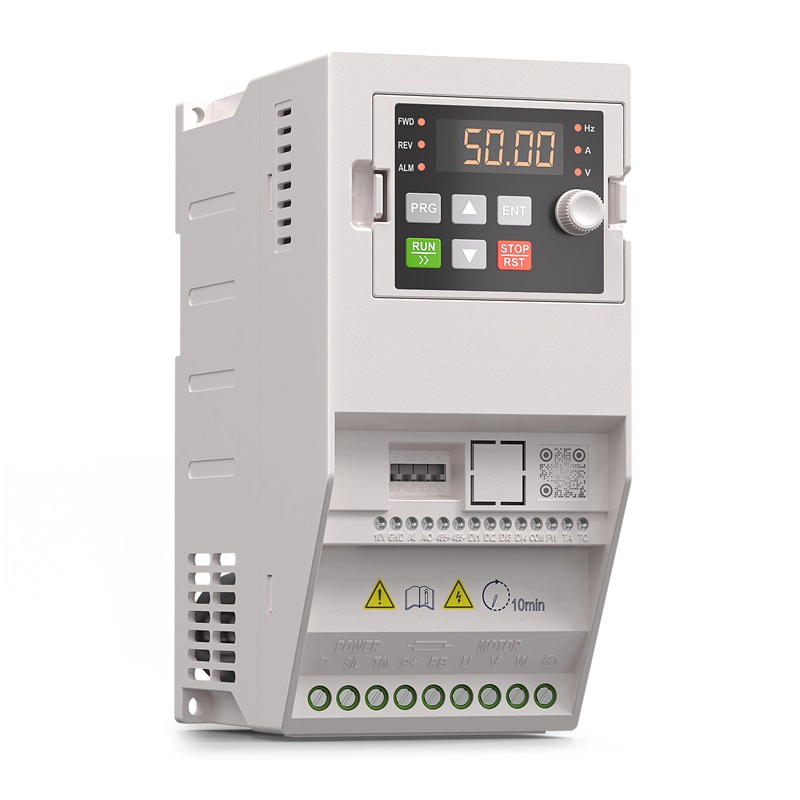
Alternatives Comparison: Is 100 Hp Variable Frequency Drive the Best Choice?
Selecting the optimal motor control strategy for 100 HP (75 kW) applications requires evaluating not just the drive itself, but the entire ecosystem of power supply, motor technology, and operational architecture. While a standalone 100 HP Variable Frequency Drive offers precise speed control and energy optimization, alternatives such as soft starters, solar pump inverters, or distributed smaller drives may better suit specific project constraints. Below is a technical analysis of critical decision points for industrial engineers and EPC contractors.
VFD vs. Soft Starter: Control Philosophy and ROI
For fixed-speed applications requiring only reduced starting current, soft starters present a lower capital expenditure alternative. However, the operational limitations become significant at the 100 HP threshold.
| Parameter | 100 HP VFD (Vector Control) | Soft Starter (SS) | Technical Implication |
|---|---|---|---|
| Starting Current | 100-150% rated current (adjustable) | 300-400% rated current (limited) | VFDs eliminate inrush current stress on grid infrastructure |
| Speed Control Range | 1:100 (V/f) to 1:1000 (Closed-loop vector) | Fixed speed only (bypass at full speed) | VFDs enable flow/pressure optimization in pumping |
| Energy Savings | 30-60% in variable torque loads | 0% (fixed speed operation) | Critical for agricultural irrigation with changing head conditions |
| Power Factor | Near unity (>0.95) throughout range | 0.3-0.5 during start, 0.85 at run | VFDs reduce utility penalties and kVA demand |
| Overload Capacity | 150% for 120s, 180% for 10s (per Source 2 specs) | 500% for 5-10s (motor thermal limit) | VFDs provide sustained high torque; soft starters for high inertia only |
| Initial Cost | High ($8,000-$15,000 for 100 HP) | Low ($3,000-$5,000) | Soft starters suit budget-constrained fixed-speed fans/pumps |
Engineering Verdict: Specify a 100 HP VFD when the duty cycle involves variable flow requirements, energy recovery mandates, or weak grid conditions where starting current must be minimized. Soft starters remain viable only for high-inertia, fixed-speed centrifugal loads with infrequent starts.
Solar Pump Inverter vs. Grid-Tied VFD: Power Supply Architecture
For agricultural and remote industrial applications, the choice between solar-dedicated inverters and standard grid-tied VFDs with rectifier inputs determines system availability and OPEX.
| Feature | Solar Pump Inverter (100 HP) | Standard Grid VFD with Solar Interface | Hybrid VFD (Solar/Grid) |
|---|---|---|---|
| MPPT Efficiency | Built-in 99% MPPT algorithm | Requires external MPPT controller | Dual MPPT + grid rectifier |
| Input Voltage Range | 300-800V DC (PV direct) | 380-480V AC ±10% | Auto-switching DC/AC |
| Grid Dependency | Zero (daylight operation only) | 100% | Seamless transfer |
| Motor Compatibility | Optimized for PMSM and IM | IM standard, PMSM with encoder | All motor types |
| Protection Features | Dry-run detection, water level control | Standard stall prevention, overvoltage | Combined feature set |
| CAPEX Impact | Eliminates inverter/rectifier stage | Requires AC coupling infrastructure | Higher upfront, lower lifecycle cost |
Critical Consideration: Solar pump inverters (like Boray’s solar VFD series) eliminate the need for batteries in pumping applications by utilizing the 100 HP motor’s inertia as energy storage. For EPC contractors, this reduces BOS costs by 40% compared to AC-coupled systems, though water storage tanks become necessary for 24/7 operational requirements.
Motor Technology Pairing: PMSM vs. Induction Motor (IM)
The 100 HP VFD specification must account for the motor type, as control algorithms and efficiency profiles differ significantly.
| Characteristic | Induction Motor (IM) + VFD | PMSM + VFD | System Impact |
|---|---|---|---|
| Efficiency at 100 HP | IE3: 95.4%, IE4: 96% | IE4: 96.5%, IE5: 98% | PMSM saves 2,000-3,000 kWh/year at full load |
| VFD Control Mode | V/f or Sensorless Vector Control (SVC) | Requires SVC or FVC (Field Oriented Control) | PMSM needs higher-grade VFD with auto-tuning |
| Starting Torque | 150% at 0.5 Hz (V/f per Source 2) | 200% at 0 Hz | PMSM superior for positive displacement pumps |
| Cooling Requirements | Forced ventilation at low speeds | Independent cooling (often IP65) | IM requires auxiliary cooling below 30% speed |
| Cost Premium | Baseline | +15-25% motor cost | PMSM ROI < 2 years in continuous duty |
Recommendation: For solar pumping applications at 100 HP, PMSM systems paired with high-performance VFDs (featuring 0 Hz/180% torque capability as noted in Source 2 specifications) deliver superior partial-load efficiency, critical when PV irradiance fluctuates throughout the day.
Single 100 HP Drive vs. Distributed Architecture
Project managers must evaluate whether to deploy one centralized 100 HP VFD or multiple smaller drives (e.g., 4x 25 HP) in staged pumping configurations.
| Metric | Single 100 HP VFD | 4x 25 HP Distributed Drives | Analysis |
|---|---|---|---|
| Redundancy | Single point of failure | 75% capacity maintained if one fails | Critical for municipal water supply |
| Part Load Efficiency | 85-90% at 25% load | 95%+ (cascade control) | Distributed systems win at low demand |
| Harmonic Distortion | 3-5% THDi (with DC choke) | 12-20% THDi (cumulative) | Single large drive easier to filter |
| Maintenance | Single unit, higher complexity | Standardized spares, lower skill required | Distributed favors remote sites |
| Capital Cost | Lower ($/HP decreases with size) | Higher (+30% total) | Single drive better for continuous full-load |
Decision Matrix: When to Specify the 100 HP VFD
| Application Scenario | Recommended Solution | Rationale |
|---|---|---|
| Variable flow HVAC (100 HP fan) | Single 100 HP VFD with bypass | Energy savings justify cost; soft starter insufficient for modulation |
| Solar irrigation (remote) | 100 HP Solar Pump Inverter + PMSM | Eliminates grid infrastructure; MPPT maximizes water output |
| Municipal booster station | Distributed 4x 25 HP VFDs | N+1 redundancy required; demand varies seasonally |
| Temporary construction dewatering | Rental 100 HP VFD (per Source 1) | EquipmentShare model validates short-term VFD rental viability vs. purchase |
| Single-phase rural supply | 100 HP Single-to-Three Phase VFD (Source 2) | Phase conversion capability eliminates rotary converter costs |
Final Technical Assessment
The 100 HP VFD represents the optimal choice when three conditions converge: (1) the load profile exhibits significant variability (pumps, fans, compressors), (2) the electrical infrastructure requires power factor correction or current limiting, and (3) the operational lifespan exceeds 5,000 hours annually.
For solar-specific applications, ensure the selected 100 HP drive includes built-in MPPT, dry-run protection, and auto-de-rating functions to handle fluctuating irradiance without tripping. When grid reliability is suspect, hybrid architectures combining solar input with grid-tied rectifiers provide the resilience industrial processes demand, albeit at 20-30% higher initial cost than standalone units.
Note: Specifications referenced from commercial 100 HP VFDs indicate overload capacities of 150% for 120 seconds and vector control capabilities down to 0.5 Hz, sufficient for positive displacement and centrifugal pumping applications up to 100 HP.
Core Technical Specifications and Control Terms for 100 Hp Variable Frequency Drive
When specifying a 100 HP (75 kW) variable frequency drive for heavy-duty industrial or solar pumping applications, engineers must evaluate both the electrical architecture and the control topology to ensure compatibility with grid conditions, motor characteristics, and process dynamics. Below is a comprehensive technical reference framework designed for EPC contractors, automation distributors, and project engineers evaluating high-power VFD solutions.
Electrical Specifications and Thermal Ratings
A 100 HP drive typically corresponds to a 75 kW rated capacity, with input/output configurations varying by regional grid standards and application requirements:
Power Configuration Options:
– Input Voltage: Three-phase 380V–480V ±10% (standard industrial) or single-phase 220V ±10% (rural/agricultural retrofit scenarios)
– Output Voltage: Three-phase 0–input voltage (vector-controlled) or stepped-up 380V/440V from 220V single-phase input
– Rated Current: Approximately 150A output at 380V; input current varies significantly by topology (≈481A for single-phase 220V input vs. significantly lower for three-phase input)
– Frequency Range: 0.1–3200 Hz (standard), with 0.1 Hz resolution for precision control
Overload Capacity: Industrial-grade drives must withstand aggressive load profiles. Standard heavy-duty specifications include:
– 150% rated current for 120 seconds
– 180% rated current for 10 seconds
– 200% rated current for 1 second (burst capacity for starting high-inertia loads)
Protection Ratings: IP20 enclosures are standard for cabinet-mounted installations, though IP54/IP65 variants are required for outdoor solar pumping applications or dusty agricultural environments.
Control Methodologies: From V/f to Vector Control
The control algorithm determines the drive’s responsiveness, torque precision, and suitability for specific loads:
1. V/f (Volts per Hertz) Control
The fundamental method for variable torque applications (pumps, fans). Maintains constant flux by varying voltage proportionally with frequency. Suitable for centrifugal pumps where precise speed control is secondary to energy savings.
2. Open Loop Sensorless Vector Control (SVC)
Utilizes current sensors and motor modeling algorithms to estimate rotor position without physical encoders. Delivers:
– Starting torque of 150% at 1 Hz
– Dynamic response for load fluctuations
– Cost-effective solution for most solar pumping and conveyor applications
3. Closed Loop Flux Vector Control (FVC)
Requires a PG (Pulse Generator) encoder card for rotor position feedback. Provides:
– 180% starting torque at 0 Hz (full torque at standstill)
– Precise speed regulation (±0.01%)
– Essential for crane/hoist applications or high-precision irrigation systems with varying head pressure
4. Maximum Power Point Tracking (MPPT)
Critical for solar pump inverter applications, MPPT algorithms continuously adjust the VFD’s input impedance to extract maximum power from photovoltaic arrays despite irradiance fluctuations. Advanced implementations include:
– Dual MPPT channels for split-array configurations
– Dry-run protection and water level detection integration
– Automatic switching between AC grid and DC solar input (hybrid capability)
Process Control: PID and Closed Loop Automation
Modern 100 HP VFDs incorporate built-in PID (Proportional-Integral-Derivative) controllers, eliminating the need for external PLCs in many pumping applications:
PID Functionality:
– Setpoint Sources: Keypad, analog input (4–20 mA), or RS485 communication
– Feedback Channels: Pressure transducers, flow meters, or temperature sensors (0–10V or 4–20 mA)
– Control Output: Automatically adjusts motor frequency to maintain constant pressure in multi-story irrigation systems or stable flow in industrial process loops
I/O Configuration for Integration:
– Analog Inputs: 3 channels (AI1–AI3) configurable for 0–10V or 4–20 mA (pressure sensors, temperature probes)
– Digital Inputs: 6 multifunctional terminals (start/stop, forward/reverse, preset speeds, fault reset)
– Outputs: 2 relay outputs (fault indication, running status), 1 open collector output, 2 analog outputs for remote monitoring
Communication Protocols:
– Standard RS485 interface with Modbus-RTU protocol
– Optional Profibus, CANopen, or Ethernet/IP for SCADA integration in industrial automation networks
Mechanical Design and Reliability Standards
Robust Power Stage Design:
– IGBT current rating >2× inverter output current for semiconductor longevity
– DC bus capacitance >50 µF/A for voltage ripple absorption
– 100% PCB aging test at 50°C for 12 hours; 100% finished product burn-in at 50°C for 24 hours
Thermal Management:
– Forced air cooling with automatic fan control based on heatsink temperature
– Stall prevention levels programmable from 20–200% of rated current to protect against mechanical jams
International Procurement and Logistics Terms
For global EPC contractors and distributors sourcing 100 HP VFDs from manufacturers like Boray Inverter, understanding Incoterms 2020 is essential for risk management and cost calculation:
FOB (Free On Board)
The seller delivers goods cleared for export onto the vessel at the named port of shipment (e.g., FOB Shanghai). Risk transfers when goods pass the ship’s rail. Buyer assumes ocean freight, insurance, and destination port charges. Optimal for buyers with established freight forwarding relationships.
CIF (Cost, Insurance, and Freight)
Seller pays costs, insurance, and freight to bring goods to the destination port. Risk transfers to buyer once goods are loaded on the vessel, despite seller paying freight. Insurance coverage is typically minimum (CIF value +10%), requiring buyers to arrange additional coverage for high-value automation equipment.
Additional Terms for Industrial Equipment:
– EXW (Ex Works): Buyer assumes all transportation costs and risks from the factory. Suitable only for buyers with logistics infrastructure in China.
– DDP (Delivered Duty Paid): Seller assumes all costs and risks including import duties and local delivery to the project site. Preferred by agricultural project managers requiring turnkey delivery but commands premium pricing.
– CPT (Carriage Paid To): Seller pays freight to destination, but risk transfers at first carrier—often preferable to CIF for multimodal container shipments.
Technical Selection Matrix for Project Engineers
| Application Requirement | Recommended Specification |
|---|---|
| Solar Irrigation | MPPT-enabled, 150% overload, IP65 enclosure, PID for constant pressure |
| HVAC Fan Control | V/f control, 110% light duty rating, BACnet communication option |
| Industrial Compressor | Closed loop vector control, 180% starting torque, dynamic braking unit |
| Rural Retrofit (Single-phase grid) | Single-phase 220V input to 3-phase 380V output, boost PFC circuit |
When evaluating 100 HP VFD proposals, verify that the manufacturer provides CE-certified products with comprehensive thermal testing documentation and supports the specific control mode required for your motor type—whether standard induction motors for pumps or permanent magnet synchronous motors for high-efficiency solar applications.
Future Trends in the 100 Hp Variable Frequency Drive Sector
The 100 HP (75 kW) variable frequency drive segment stands at a critical inflection point, evolving from standalone motor control devices to intelligent power conversion nodes within interconnected industrial ecosystems. As agricultural irrigation scales toward megawatt-class solar installations and manufacturing facilities pursue carbon neutrality targets, medium-heavy duty VFDs in this power class are increasingly required to bridge legacy three-phase infrastructure with modern renewable generation and data-driven automation architectures.
Industry 4.0 Integration and Adaptive Motor Control
The next generation of 100 HP VFDs is transitioning from traditional V/Hz control to sophisticated sensorless vector and flux vector control algorithms capable of handling dynamic load profiles in hybrid manufacturing environments. Modern drives now embed edge computing capabilities that enable real-time torque compensation, auto-slip adjustment, and adaptive acceleration curves—features critical for precision pumping in large-scale agricultural projects and HVAC systems in commercial facilities.
Integration with upper-level automation systems has moved beyond standard RS485 Modbus-RTU protocols (common in current rental and legacy units) to native Ethernet/IP, Profinet, and EtherCAT connectivity. This shift allows 100 HP drives to participate in unified plant-wide SCADA architectures, enabling synchronized control across multiple motor centers while maintaining the robust overload endurance (150% for 120 seconds, 200% for 1 second) required for heavy-duty industrial starting characteristics.
Renewable Energy Hybridization and Solar Pumping Architectures
Perhaps the most significant disruption in the 100 HP sector involves the convergence of grid-tied industrial drives with decentralized solar generation. Advanced solar pump inverters in this power class now feature dual-mode operation, seamlessly transitioning between AC grid power and DC photovoltaic input through integrated Maximum Power Point Tracking (MPPT) algorithms. This capability eliminates the need for separate solar inverters and VFDs, reducing system complexity for EPC contractors deploying large-scale irrigation projects.
The emergence of single-phase to three-phase conversion technologies within 100 HP drives addresses critical infrastructure gaps in rural electrification projects. By accepting 220V single-phase or split-phase input and outputting 380V three-phase power (as seen in specialized agricultural VFD configurations), these units enable high-power pump operation in regions lacking three-phase grid infrastructure—directly coupling with solar arrays or battery storage systems through wide DC voltage acceptance ranges.
Furthermore, DC bus commoning architectures are enabling hybrid energy strategies where 100 HP drives can simultaneously draw from grid connections, solar arrays, and battery storage systems. This “grid-forming” capability allows drives to maintain stable motor operation during grid fluctuations while maximizing renewable energy utilization—essential for agricultural operations seeking energy independence and manufacturing facilities pursuing Scope 2 emissions reductions.
IoT-Enabled Asset Management and Predictive Maintenance
The transformation of 100 HP VFDs from capital equipment to connected service platforms represents a fundamental shift in how industrial assets are managed. Modern drives incorporate comprehensive IoT telemetry beyond basic fault indication, capturing granular data on bearing wear signatures, insulation resistance trends, and thermal cycling patterns. When aggregated through cloud-based analytics platforms, this data enables predictive maintenance models that reduce unplanned downtime in critical pumping and ventilation applications.
Remote monitoring capabilities now extend to parameter optimization, allowing OEMs and system integrators to adjust PID control loops, acceleration profiles, and energy recovery settings across geographically distributed installations. For rental fleet operators and equipment sharing platforms, embedded telematics provide real-time utilization tracking, geofencing, and automated maintenance scheduling based on actual operating hours rather than calendar intervals.
Advanced human-machine interface (HMI) evolution includes mobile application integration and augmented reality (AR) maintenance guidance, reducing the technical expertise required for field commissioning. Removable keypad designs (standard in current industrial offerings) are evolving toward NFC and Bluetooth commissioning tools, enabling safe parameter configuration without direct panel access in harsh agricultural or industrial environments.
Hardware Evolution and Servitization Models
The physical architecture of 100 HP drives is adapting to accommodate flexible deployment models, including the growing equipment-as-a-service (EaaS) sector. Modular power stack designs with hot-swappable fan assemblies and plug-in control boards minimize mean time to repair (MTTR)—critical for rental fleets and mission-critical agricultural operations where downtime costs escalate rapidly.
Thermal management innovations include adaptive cooling algorithms that adjust fan speed based on IGBT junction temperature monitoring rather than simple ambient sensing, extending capacitor lifespan in high-temperature agricultural environments. Robust design specifications featuring IGBT current ratings exceeding twice the nominal output current and extended temperature aging protocols (50°C for 24 hours) are becoming baseline requirements rather than premium options.
Strategic Implications for System Integrators
For EPC contractors and automation distributors, these trends necessitate a shift toward specifying VFDs not merely as motor starters, but as energy management gateways. The 100 HP class—positioned at the threshold between standard industrial and heavy commercial applications—serves as the proving ground for technologies that will eventually cascade to both smaller agricultural pumps and larger megawatt-class processing equipment.
As efficiency standards tighten globally, with IE4 and IE5 motor compatibility becoming mandatory in many jurisdictions, 100 HP drives must advance their switching algorithms to minimize harmonic distortion while maintaining compatibility with existing motor installations. The integration of active front-end (AFE) regeneration capabilities will further distinguish premium drives in this segment, allowing energy recovery from decelerating high-inertia loads rather than dissipation through braking resistors.
The convergence of solar pumping expertise, industrial automation protocols, and IoT connectivity positions the 100 HP VFD as a cornerstone technology for decarbonizing both agricultural water management and manufacturing processes—transforming what was once a simple speed controller into a sophisticated energy router for the distributed industrial grid.
Top 2 100 Hp Variable Frequency Drive Manufacturers & Suppliers List
VFD Company List: Top Manufacturers & Suppliers of Variable Frequency Drives-Darwin Motion
Website: darwinmotion.com
Siemens Sinamics series VFDs for pumps to complex machinery; Schneider Electric Altivar series for HVAC/manufacturing with energy savings; Darwin Motion Matrix series (900, 350, 500, 680, 880) covering low/medium/high voltage applications; Yaskawa V1000 and A1000 series for precision industrial automation; Rockwell Automation Allen-Bradley PowerFlex drives for industrial integration; Mitsubishi El…
Top 10 Variable Frequency Drive (VFD) Manufacturers
Website: hars-vfd.com
HARS VFD (hars-vfd.com) manufactures a comprehensive range of Variable Frequency Drives (VFDs) including the VFD-HS320 Series, VFD-HS320Pro, VFD-HS720 Series, VFD-HS720H Series, VFD-HS310 Series, VFD-HS290 Series, and VFD-HS800 Series. The company specializes in solar pump VFDs and hybrid inverter solutions (HE200 Series and HE300 Series). Their product ecosystem includes essential accessories suc…
B2B Engineering FAQs About 100 Hp Variable Frequency Drive
1. Can a 100 HP (75 kW) VFD operate from single-phase input, and what are the electrical infrastructure requirements?
Yes, specialized 100 HP VFDs can convert single-phase 220V input to three-phase 380V/440V output, though this requires significant input current capacity—typically 480A or higher at 220V single-phase to deliver the rated 150A three-phase output current. For industrial installations, three-phase 380V/480V input is strongly recommended to reduce conductor sizing and minimize voltage drop. When single-phase operation is unavoidable (common in rural agricultural applications), ensure the input wiring and protection devices are sized for approximately 3.2x the normal three-phase input current, and verify the VFD manufacturer supports true single-to-three-phase conversion without output derating.
2. What motor control algorithms should be specified for a 100 HP VFD handling variable torque vs. constant torque loads?
For centrifugal pumps and fans (variable torque), standard V/f control with automatic energy optimization is sufficient. However, for screw compressors, conveyors, or positive displacement pumps (constant torque), specify Sensorless Vector Control (SVC) or Flux Vector Control (FVC). Advanced 100 HP drives offer 0.5 Hz/150% starting torque under V/f control, upgrading to 0 Hz/180% with closed-loop vector control using a PG card. For solar pumping applications, SVC is preferred to maintain torque during fluctuating PV input voltage without encoder feedback.
3. How do overload ratings impact VFD sizing for heavy-duty cyclic applications?
Standard 100 HP VFDs provide overload endurance of 150% for 120 seconds, 160% for 60 seconds, and 200% for 1 second. For applications with high inertia starts or cyclic heavy loading (crushers, ball mills), verify the drive’s “Heavy Duty” rating rather than “Normal Duty.” If the application requires 150% torque continuously, size up to a 125 HP (90 kW) drive frame to prevent thermal shutdown. Always coordinate the VFD’s electronic thermal overload curve with the motor’s actual service factor (typically 1.15).
4. What harmonic mitigation is required when installing a 100 HP VFD on a weak grid or generator set?
A 100 HP VFD without mitigation typically produces 80-120% Total Harmonic Current Distortion (THDi), which can cause generator instability and transformer overheating. Specify DC link chokes (standard) or AC line reactors (3% impedance) to reduce THDi to 35-45%. For compliance with IEEE 519 or strict utility requirements, active front end (AFE) drives or external active harmonic filters are necessary. In solar hybrid systems, ensure the VFD’s DC bus can accept direct PV connection with MPPT to bypass AC-side harmonics entirely during solar operation.
5. What IP rating and cooling considerations are critical for 100 HP VFD installation in harsh environments?
While IP20 enclosures suffice for clean electrical rooms, agricultural and outdoor industrial applications require IP54 or IP66-rated enclosures with isolated cooling channels. A 100 HP VFD generates approximately 2.5-3 kW of heat loss; ambient temperatures above 40°C require derating by 2% per degree, or forced ventilation with filtered air. For dusty environments (grain processing, mining), specify drives with conformal-coated PCBs and sealed heatsinks. Altitude derating (1% per 100m above 1000m) is also critical for high-elevation solar pumping stations.
6. How should the VFD’s built-in PID controller be configured for multi-pump solar irrigation systems?
For constant pressure irrigation, configure the VFD’s internal PID to accept a 4-20mA pressure transducer feedback, with output frequency limiting based on solar irradiance (DC bus voltage monitoring). Set the sleep frequency threshold (typically 20-25 Hz) to prevent pump overheating at low flow, and program wake-up triggers based on pressure drop. Advanced 100 HP solar pump inverters include automatic MPPT tracking and dry-run protection, eliminating the need for external PLCs in standalone agricultural installations.
7. What communication protocols ensure seamless integration of a 100 HP VFD into industrial automation networks?
Standard RS485 with Modbus-RTU protocol is essential for basic SCADA connectivity, allowing remote monitoring of output current, DC bus voltage, and fault codes. For modern industrial plants, specify additional Ethernet/IP, Profinet, or BACnet options for integration with Building Management Systems (BMS). Ensure the VFD supports FDT/DTM technology for remote parameterization via asset management software—a critical feature for EPC contractors managing distributed pumping stations.
8. What torque boost and stall prevention settings optimize 100 HP motor starting in deep-well pumping applications?
For deep-well submersible pumps with high static head, configure automatic torque boost (0.1-30% manually adjustable) and enable stall prevention at 120-150% of rated current. Set the acceleration ramp to 5-10 seconds to prevent water hammer while ensuring the drive reaches breakaway torque (typically 150% at 1 Hz) before the motor stalls. For solar pumps, utilize the VFD’s S-curve acceleration profile to smooth mechanical stress during morning startup when PV voltage is ramping up.
Disclaimer
⚠️ Important Disclaimer
The information provided in this guide is for educational purposes. Industrial applications and electrical engineering projects carry inherent risks. B2B buyers and contractors must conduct thorough technical due diligence and verify regional compliance before installation or procurement.
Conclusion: Partnering with Boray Inverter for 100 Hp Variable Frequency Drive
Selecting the right 100 HP variable frequency drive represents a critical investment in operational efficiency and long-term reliability for demanding industrial and agricultural applications. Whether optimizing pump stations in large-scale irrigation projects, controlling HVAC systems in commercial facilities, or managing heavy-duty manufacturing processes, the VFD you choose must deliver precise vector control, robust thermal management, and seamless integration with existing automation architectures. While rental solutions and basic phase-conversion units serve temporary needs, permanent installations require purpose-built drives engineered for continuous duty cycles and harsh environmental conditions.
This is where Shenzhen Boray Technology Co., Ltd. distinguishes itself as your strategic manufacturing partner. As a specialized innovator in Solar Pumping and Motor Control Solutions, Boray Inverter combines deep application expertise with cutting-edge R&D capabilities—our engineering team comprises 50% of the total workforce and maintains mastery over both Permanent Magnet Synchronous Motor (PMSM) and Induction Motor (IM) vector control technologies. Our dual modern production lines ensure scalable manufacturing capacity, while rigorous 100% full-load testing protocols guarantee that every 100 HP unit meets the highest standards of reliability and performance before deployment.
With a proven track record across global agricultural irrigation networks, industrial automation projects, and renewable energy installations, Boray delivers more than standard drives; we provide customized VFD solutions tailored to your specific torque requirements, environmental constraints, and communication protocol needs. For EPC contractors seeking dependable supply chains, distributors requiring competitive wholesale pricing, and project engineers demanding technical precision, Boray Inverter stands ready to power your next installation. Contact our technical sales team today to discuss your 100 HP VFD specifications and receive a comprehensive wholesale quote engineered for your success.