Introduction: Sourcing Ac Variable Frequency Drive for Industrial Use
In an era where energy efficiency and operational precision define competitive advantage, the AC Variable Frequency Drive (VFD) stands as the critical interface between raw electrical power and intelligent motor control. For industrial engineers optimizing conveyor systems, agricultural project managers deploying solar pumping infrastructure, and EPC contractors balancing performance with procurement costs, sourcing the right VFD transcends simple speed regulation—it determines system longevity, energy recovery potential, and grid independence.
Modern VFDs function as solid-state motor controllers that manipulate both voltage and frequency to precisely manage 3-phase AC induction motors, from sub-micro drives handling fractional horsepower to robust units powering 75HP+ industrial loads. Yet specification complexity intensifies with application diversity: matching voltage classes (200V, 400V, or 600V), calculating Full Load Amps (FLA) requirements, ensuring inverter-rated motor compatibility, and selecting appropriate environmental protections—from IP20 indoor enclosures to NEMA 4X-rated chassis capable of withstanding dust, moisture, and extreme temperatures in remote solar installations.
This comprehensive guide examines the technical landscape of industrial VFD sourcing, dissecting drive topologies for material handling, oil and gas, and renewable energy applications. We analyze critical selection parameters including input phase configurations, dynamic braking requirements, and line reactor integration, while evaluating manufacturer capabilities across global supply chains. Whether you’re specifying standard AC drives for factory automation or specialized solar pump inverters for off-grid irrigation, this resource provides the engineering rigor necessary to specify drives that optimize motor performance, reduce mechanical stress, and deliver measurable ROI in demanding industrial environments.
Article Navigation
- Top 4 Ac Variable Frequency Drive Manufacturers & Suppliers List
- Introduction: Sourcing Ac Variable Frequency Drive for Industrial Use
- Technical Types and Variations of Ac Variable Frequency Drive
- Key Industrial Applications for Ac Variable Frequency Drive
- Top 3 Engineering Pain Points for Ac Variable Frequency Drive
- Component and Hardware Analysis for Ac Variable Frequency Drive
- Manufacturing Standards and Testing QC for Ac Variable Frequency Drive
- Step-by-Step Engineering Sizing Checklist for Ac Variable Frequency Drive
- Wholesale Cost and Energy ROI Analysis for Ac Variable Frequency Drive
- Alternatives Comparison: Is Ac Variable Frequency Drive the Best Choice?
- Core Technical Specifications and Control Terms for Ac Variable Frequency Drive
- Future Trends in the Ac Variable Frequency Drive Sector
- B2B Engineering FAQs About Ac Variable Frequency Drive
- Disclaimer
- Conclusion: Partnering with Boray Inverter for Ac Variable Frequency Drive
Technical Types and Variations of Ac Variable Frequency Drive
AC Variable Frequency Drives (VFDs) are categorized primarily by their input power architecture, voltage class, and application-specific control topology. While the fundamental principle—converting fixed-frequency AC to variable-frequency AC via IGBT-based PWM—remains constant, the hardware configuration and firmware optimization differ significantly between a sub-horsepower agricultural pump controller and a multi-megawatt medium voltage drive. For EPC contractors and automation engineers, selecting the correct technical variation ensures compatibility with grid infrastructure, motor insulation systems, and environmental operating conditions.
| Type | Technical Features | Best for (Industry) | Pros & Cons |
|---|---|---|---|
| Single-Phase Input VFDs | • 120V/230V single-phase input • 3-phase output (200V/400V class) • 0.25–3 HP standard range • V/Hz scalar control • High input current ripple |
Agriculture (remote boreholes), Small machine shops, Commercial HVAC retrofits | Pros: Enables 3-phase motor operation on single-phase grids; eliminates rotary phase converters; lower infrastructure cost. Cons: Limited to ~3HP (higher requires derating); elevated input current harmonics; requires input line reactors to prevent DC bus sag. |
| Three-Phase Input / Industrial VFDs | • 208V–690V 3-phase input • PWM IGBT output (2-level or 3-level) • Vector Control (FOC) or V/Hz modes • Dynamic braking chopper integration • 1 HP–1,000+ HP range |
Water/Wastewater treatment, Oil & Gas, Mining conveyors, Food & Beverage processing | Pros: Full power spectrum availability; regenerative braking options; extensive network integration (Modbus, Profibus, EtherNet/IP). Cons: Requires balanced 3-phase infrastructure; generates reflected wave phenomena requiring motor load reactors on long cable runs. |
| Solar Pump Inverters (DC-AC VFDs) | • 200V–800V DC input (PV array direct) • Integrated MPPT algorithm (99% tracking efficiency) • IP65/NEMA 4X enclosure standard • Battery-less DC bus design • Dry-run and tank-level protection logic |
Agricultural irrigation, Remote livestock water supply, Off-grid village water systems | Pros: Zero operational energy cost; automatic power derating based on irradiance; eliminates grid dependency in remote locations. Cons: Weather-dependent output requires hydraulic storage sizing; higher initial capital than grid-tied systems; requires PV array voltage matching. |
| Medium Voltage (MV) Multi-Level VFDs | • 2.3kV–13.8kV direct input (no transformer) • NPC (Neutral Point Clamped) or Cascaded H-Bridge topology • Active Front End (AFE) for <5% THD • Sine-wave output filters • >500 HP applications |
Heavy industrial centrifugal pumps, Power generation cooling, Large-scale desalination, Mine hoists | Pros: Direct MV motor control eliminates step-down transformers; near-sinusoidal output reduces motor insulation stress; high efficiency (>97%). Cons: Significant capital investment; requires specialized MV installation expertise; large physical footprint; limited to 3-phase input only. |
Single-Phase Input VFDs (Phase Conversion Drives)
These drives serve as solid-state replacements for rotary phase converters in locations with only single-phase utility service. Technically, they employ a full-wave rectifier bridge with enhanced DC bus capacitance to buffer the 120Hz ripple inherent to single-phase rectification. The inverter stage then synthesizes three-phase PWM output. Critical engineering considerations include the 30–50% output current derating required compared to three-phase input models of equivalent frame size, and the mandatory use of input line reactors to prevent excessive peak currents that can trip protection or damage rectifier diodes. They are optimal for small-scale agricultural projects and rural pumping stations where three-phase grid extension is economically prohibitive.
Three-Phase Input Industrial VFDs
Representing the standard for industrial motor control, these drives accept balanced three-phase power and utilize Insulated Gate Bipolar Transistor (IGBT) technology to generate variable frequency output. Modern units offer selectable control modes: Volts-per-Hertz (V/Hz) for variable torque applications (centrifugal pumps, fans) where precise speed regulation is secondary to energy savings, and Sensorless Vector Control (Field-Oriented Control) for constant torque applications (conveyors, extruders) requiring high starting torque and dynamic response. Engineers must specify these based on voltage class (200V, 400V, or 600V) and Full Load Amp (FLA) rating, ensuring the drive’s output current meets or exceeds the motor’s FLA while accounting for ambient temperature derating curves.
Solar Pump Inverters (Photovoltaic Motor Drives)
Distinct from standard AC drives, solar pump inverters are optimized for DC input from photovoltaic arrays. Their primary technical distinction is the integration of Maximum Power Point Tracking (MPPT), which continuously adjusts the effective load impedance seen by the PV array to maintain operation at the voltage-current curve’s maximum power point (typically 70-80% of open-circuit voltage). These drives often incorporate specialized pump-oriented protections, including dry-run detection (monitoring current signatures
Key Industrial Applications for Ac Variable Frequency Drive
AC Variable Frequency Drives (VFDs) serve as the critical interface between power supply systems and electromechanical loads, enabling precise kinetic control across diverse industrial ecosystems. For EPC contractors and automation engineers, selecting the appropriate drive topology—whether for solar-powered irrigation in remote agricultural sites or heavy-duty conveyors in mining operations—requires understanding sector-specific load profiles, environmental stressors, and energy recovery potential. The following matrix outlines high-impact deployment scenarios where modern VFD technology, particularly solar-compatible and vector-control variants, delivers quantifiable operational advantages.
| Sector | Application | Energy Saving Value | Sourcing Considerations |
|---|---|---|---|
| Agriculture & Solar Pumping | Submersible borehole pumps, surface irrigation systems, livestock water supply | 30–50% reduction vs. grid AC; up to 70% vs. diesel via MPPT optimization; zero fuel costs for off-grid PV installations | Wide DC input range (200V–800V) for solar array compatibility; IP65/NEMA 4X enclosure for outdoor exposure; built-in MPPT and dry-run protection; anti-islanding safety compliance |
| Water & Wastewater Treatment | Centrifugal lift stations, aeration blowers, membrane bioreactors, chemical dosing | 20–40% pump savings via affinity laws (energy ∝ speed³); 50–60% blower reduction via dissolved oxygen (DO) feedback control | Corrosion-resistant conformal coating (C3/C4 environment); harmonic mitigation (THDi <5%); PID control for constant pressure/flow; redundant cooling for 24/7 operation |
| HVAC & Building Automation | Chilled water circulation pumps, cooling tower fans, VAV air handling units (AHUs) | 30–60% fan energy reduction; 20–35% pump savings; <18-month payback in commercial installations | BACnet/IP or Modbus RTU integration for BMS; sleep/wake function for low-flow detection; low audible noise (<62 dB); EMC compliance (C2 category) |
| Mining & Cement Processing | Long-distance conveyors, crusher mills, rotary kilns, mill ventilation fans | 15–30% energy recovery via regenerative braking; 20–30% demand reduction via controlled soft-start; 2–3x mechanical component lifespan extension | Heavy-duty overload capacity (150–200% for 60s); DC injection braking for high-inertia loads; vibration resistance (IEC 60068-2-6); altitude derating capability (>1000m) |
Agriculture & Solar Pumping Applications
In off-grid and grid-tied irrigation systems, solar pump inverters (a specialized VFD topology) convert DC photovoltaic output to variable-frequency AC to drive submersible and surface pumps. Unlike conventional AC drives, these units incorporate Maximum Power Point Tracking (MPPT) algorithms to maintain optimal PV array voltage regardless of irradiance fluctuations, maximizing water volume per watt-hour. For project managers specifying borehole installations, critical parameters include the VFD’s DC input voltage window and integrated protection against dry-running conditions and tank overflow. The elimination of energy storage batteries through direct PV-to-motor coupling reduces CapEx by 40–60% while delivering flow rates proportional to solar intensity, aligning water production with crop evapotranspiration cycles.
Water & Wastewater Treatment Infrastructure
Municipal lift stations and aeration basins present cyclical load profiles ideal for VFD optimization. Centrifugal pumps governed by the affinity laws achieve substantial efficiency gains through modest speed reductions; reducing pump speed by 20% yields approximately 50% energy savings. In aeration blowers, closed-loop DO feedback enables precise blower speed modulation, preventing energy waste from over-aeration while maintaining biological process stability. Sourcing considerations for this sector emphasize harmonic mitigation—essential for protecting sensitive PLC and SCADA networks—and conformal-coated PCBs resistant to hydrogen sulfide and chlorine gas corrosion common in treatment facilities.
HVAC & Commercial Building Automation
Variable Air Volume (VAV) systems and chilled water circuits represent the intersection of comfort engineering and energy economics. Modern HVAC VFDs utilize PID control algorithms to maintain static pressure setpoints while modulating fan and pump speeds to match real-time thermal loads derived from building management system (BMS) inputs. Advanced units feature “sleep” and “wake” functions that de-energize motors during low-demand periods—such as nighttime cooling or partial occupancy—while maintaining system readiness for rapid restart. Integration requires drives with embedded BACnet/IP or Modbus RTU protocols to facilitate seamless data exchange for predictive maintenance scheduling and energy analytics dashboards.
Mining, Cement & Heavy Material Processing
High-inertia applications such as crusher mills and long-distance conveyors demand VFDs with robust torque control and regenerative capabilities. In downhill conveying scenarios, regenerative drives return braking energy to the grid or a shared DC bus, converting the potential energy of descending loads into usable power rather than dissipating it as heat. For cement kiln drives, sensorless vector control VFDs provide the high starting torque (150–200% rated) necessary to overcome initial rotational resistance while minimizing mechanical shock to gearboxes and couplings. Specifiers should prioritize units with IEC 60068-2-6 vibration certification and C4 corrosion resistance ratings to withstand particulate-laden atmospheres, wide temperature cycling, and voltage fluctuations common in remote industrial sites.
Top 3 Engineering Pain Points for Ac Variable Frequency Drive
Scenario 1: Grid Instability and Voltage Fluctuations in Remote Installations
The Problem:
Industrial facilities and agricultural pumping stations in remote locations often suffer from weak grid infrastructure or highly variable DC input in solar-powered systems. Voltage sags, swells, and harmonic distortion can trigger nuisance trips, reduce DC bus capacitor lifespan, and compromise motor control precision. In solar pumping applications, fluctuating irradiance creates rapid DC voltage variations that challenge traditional VFDs’ ability to maintain stable V/Hz ratios, leading to pump cavitation, water hammer, or complete system lockouts during critical irrigation cycles.
The Solution:
Deploy VFDs with wide input voltage tolerance (e.g., 380V-440V AC range or 200V-400V DC solar input range) and advanced ride-through capabilities that maintain operation during momentary power interruptions. Look for drives featuring DC link chokes or active front ends (AFE) to mitigate harmonic content and stabilize the DC bus voltage during transient conditions. For solar-specific applications, utilize Maximum Power Point Tracking (MPPT) algorithms integrated into the inverter architecture to optimize PV array output while maintaining consistent motor torque and flow rates despite rapid irradiance fluctuations.
Scenario 2: Motor Insulation Failure and Bearing Currents in Long Cable Runs
The Problem:
When VFDs power motors located significant distances from the control panel—common in distributed irrigation systems and bulk material handling operations—the rapid switching of IGBTs creates high dV/dt transients and reflected wave phenomena. These voltage spikes (often 2-3x nominal voltage) stress motor insulation systems, particularly in older motors not rated for inverter duty. Additionally, common-mode voltage induces shaft currents that cause electrical discharge machining (EDM) in bearings, leading to premature mechanical failure, unplanned downtime, and costly replacement of critical pump or conveyor drive systems.
The Solution:
Specify inverter-rated motors with Class F or H insulation systems and reinforced bearing insulation for all VFD applications. For existing motor installations or cable runs exceeding 50 meters, implement output line reactors or dV/dt filters to limit voltage rise times and reduce reflected wave amplitude. In high-capacity agricultural or mining applications, consider sine wave filters to provide near-sinusoidal output waveforms. Additionally, ensure proper grounding practices using shielded cables with low-impedance ground connections at both ends to dissipate high-frequency common-mode currents and protect bearing assemblies from pitting.
Scenario 3: Environmental Ingress and Thermal Management in Harsh Conditions
The Problem:
Standard IP20 or NEMA 1 rated drives installed in agricultural, mining, or wastewater treatment environments face contamination from conductive dust, chemical vapors, and high humidity. These conditions cause corrosion of PCB traces, shorting of power components, and blockage of cooling vents, leading to thermal runaway. Furthermore, inadequate thermal management—whether from high ambient temperatures in desert solar installations or poor ventilation in enclosed Motor Control Centers (MCCs)—causes capacitor electrolyte drying, derated performance, and significantly reduced Mean Time Between Failures (MTBF), particularly in continuous-duty pumping applications.
The Solution:
Select VFDs with appropriate ingress protection ratings for the installation environment—IP55 or IP65 for dusty agricultural settings, and NEMA 4X (IP66) for outdoor or washdown applications. Ensure drives feature conformal-coated circuit boards to resist moisture and chemical corrosion. Implement proper thermal management through external heat sinks, forced ventilation with filtered air intakes, or liquid cooling systems for high-power applications in enclosed spaces. Always derate drive capacity according to manufacturer specifications when operating above 40°C ambient temperature or at altitudes exceeding 1,000 meters to prevent overheating and ensure continuous operation in demanding industrial conditions.
Component and Hardware Analysis for Ac Variable Frequency Drive
The internal architecture of an AC Variable Frequency Drive (VFD) represents a sophisticated integration of power electronics, digital signal processing, and thermal management engineering. For industrial engineers and EPC contractors specifying equipment for solar pumping systems or heavy-duty motor control applications, understanding the discrete hardware components is critical for predicting long-term reliability, efficiency, and maintenance intervals. A VFD is not merely a “black box” speed controller; it is a precision power conversion system where the quality of individual semiconductor devices, capacitive elements, and thermal interfaces directly correlates with Mean Time Between Failures (MTBF) in harsh agricultural or industrial environments.
Power Semiconductor Core: Rectification and Inversion
At the heart of every VFD lies the power conversion stage, typically comprising a three-phase bridge rectifier and an Insulated Gate Bipolar Transistor (IGBT) inverter module. The rectifier converts incoming AC line voltage (or DC from solar arrays in PV pumping applications) into DC bus voltage. In solar-specific VFDs, this stage must handle wide DC input voltage fluctuations (typically 200VDC to 800VDC or higher) while maintaining stable DC bus levels.
The IGBT module serves as the primary switching element, generating the Pulse Width Modulation (PWM) waveform that drives the motor. Modern drives utilize intelligent power modules (IPMs) that integrate IGBTs with gate drivers and protection circuitry. For solar pumping applications, the switching frequency (typically 2-16 kHz) must be optimized to minimize motor bearing currents while maximizing MPPT (Maximum Power Point Tracking) efficiency. High-grade IGBTs feature trench-gate field-stop technology, offering lower Vce(sat) saturation voltages and reduced switching losses—critical for reducing heatsink thermal load in outdoor cabinet installations.
DC Link Energy Storage
The DC bus capacitors stabilize the rectified voltage and provide energy buffering during load transients. Electrolytic capacitors are standard, though film capacitors are increasingly preferred in premium solar inverters due to their longer lifespan and tolerance for voltage ripple. In agricultural pumping systems where ambient temperatures can exceed 50°C, capacitor temperature ratings (105°C vs. 85°C) become a primary determinant of drive longevity. The capacitance value must be sufficient to handle the ripple current generated by the inverter switching without excessive heating.
Control and Processing Architecture
The computational core of a modern VFD utilizes Digital Signal Processors (DSPs) or 32-bit ARM-based microcontrollers running real-time operating systems. These controllers execute complex vector control algorithms (Field-Oriented Control or FOC) that decouple motor flux and torque components, enabling precise speed control even at low frequencies—essential for borehole pump starting and flow regulation.
For solar pumping integration, the DSP manages the MPPT algorithm, continuously adjusting the DC bus reference to extract maximum power from PV arrays as irradiance conditions change. The control board also interfaces with analog-to-digital converters (ADCs) monitoring phase currents, DC bus voltage, and heatsink temperatures. High-resolution current sensors (Hall-effect or shunt-based) with fast response times (<1μs) are crucial for overcurrent protection and preventing IGBT shoot-through failures.
Thermal Management Systems
Thermal design separates industrial-grade VFDs from consumer-grade motor drives. The IGBT modules mount directly onto aluminum heatsinks with thermal interface materials (TIM) featuring phase-change properties to minimize thermal resistance (Rth). In solar pumping applications where drives often operate in NEMA 3R/4X enclosures exposed to direct sunlight, heatsink design must account for derating factors—often requiring 30-40% additional thermal capacity compared to indoor installations.
Active cooling via DC brushless fans with ball-bearing construction (rated for 50,000+ hours) is standard, though convection-cooled designs eliminate fan failure points in remote agricultural locations. Thermal modeling must account for dust accumulation on heatsink fins, which can increase thermal resistance by 20-30% in desert or agricultural environments.
Protection and EMI Mitigation
Input line reactors and DC chokes mitigate harmonic distortion and limit inrush current, protecting the rectifier diodes during startup. Output dv/dt filters or sine-wave filters are essential when driving long motor cables (>50 meters) typical in deep-well solar pumping installations, preventing reflected wave phenomena that damage motor insulation.
Electromagnetic Interference (EMI) filters on both input and output sides ensure compliance with IEC 61800-3 standards, preventing conducted emissions from interfering with remote monitoring systems or PLC networks common in automated irrigation projects.
Component Quality Analysis Table
| Component | Function | Quality Indicator | Impact on Lifespan |
|---|---|---|---|
| IGBT Power Module | Converts DC to variable frequency AC via PWM switching; handles motor load currents | Trench-gate technology, Vce(sat) < 1.7V, short-circuit withstand time >10μs, thermal resistance (Rth(j-c)) < 0.65 K/W | Primary failure point under thermal stress; high-quality modules extend life 15-20 years vs. 5-8 years for economy grades |
| DC Link Capacitors | Filters rectified DC voltage; supplies ripple current; buffers energy during deceleration | 105°C rated electrolytic or metallized polypropylene film; low ESR (<10mΩ); capacitance tolerance ±5% | Electrolytic capacitors are typically the first component to fail; film capacitors offer 100,000+ hour life |
| DSP/Controller | Executes vector control algorithms; manages MPPT (solar); processes protection logic | 32-bit architecture, >100 MIPS processing, hardware floating-point unit, industrial temp range (-40°C to +85°C) | Determines control stability; high-grade processors prevent erratic behavior in high-EMI agricultural environments |
| Heatsink Assembly | Dissipates switching losses from IGBTs; maintains junction temperature below Tj(max) | Aluminum 6063-T5 alloy, anodized finish, thermal resistance <0.5 K/W, optimized fin density for dust shedding | Critical for preventing thermal runaway; inadequate heatsinking reduces IGBT life by 50% per 10°C rise |
| Current Sensors | Provides real-time phase current feedback for vector control and overcurrent protection | Hall-effect with <1% linearity error, 2μs response time, isolation voltage >2.5kV | Fast, accurate sensors prevent catastrophic IGBT failure during motor stall or phase-to-phase shorts |
| Pre-charge Circuit | Limits inrush current to DC bus capacitors during startup; prevents rectifier diode damage | NTC thermistors or resistive bypass relays rated for >100k cycles, soft-start time 2-5 seconds | Prevents repetitive stress on capacitors and rectifier; critical for solar systems with high-capacitance DC buses |
| EMI Filter | Attenuates high-frequency noise from switching; prevents interference with control electronics | Common-mode and differential-mode chokes; Y-capacitors rated for 250VAC+; compliance with CISPR 11/EN 55011 | Poor filtering leads to control board malfunction and erratic motor behavior in sensitive agricultural sensors |
| Thermal Interface Material | Ensures efficient heat transfer between IGBT baseplate and heatsink | Phase-change material with thermal conductivity >3.0 W/m-K, breakdown voltage >3kV/mm | Dry-out or pump-out of TIM increases thermal resistance, leading to accelerated IGBT degradation |
Integration Considerations for Solar Pumping
In photovoltaic water pumping systems, component selection must prioritize wide DC input voltage ranges and robust environmental sealing. The rectifier stage must handle open-circuit PV voltages up to 800VDC or 1000VDC, requiring higher voltage ratings on DC bus capacitors (typically 1100VDC working voltage). IGBT modules must exhibit low switching losses to maximize efficiency when operating from limited solar irradiance.
For EPC contractors, specifying drives with conformal-coated control boards (IPC-A-610 Class 3 standard) and sealed enclosures (IP65 minimum) ensures survival in high-humidity, high-dust agricultural environments. The integration of DC fusing and surge protection devices (Type 2 SPD) within the drive chassis reduces external component count and installation complexity for remote solar pumping stations.
Understanding these hardware distinctions enables procurement teams to evaluate VFD offerings beyond superficial specifications, ensuring selected equipment delivers the 10-15 year operational lifespan required for solar irrigation infrastructure investments.
Manufacturing Standards and Testing QC for Ac Variable Frequency Drive
At Boray Inverter, our manufacturing philosophy centers on zero-defect reliability for mission-critical applications—from agricultural solar pumping stations in arid climates to continuous-duty industrial process control. Our AC Variable Frequency Drive production lines integrate automotive-grade quality systems with renewable-energy-specific validation protocols, ensuring every unit withstands the voltage fluctuations, thermal cycling, and environmental contaminants inherent to solar PV and motor control applications.
PCB Protection & Environmental Hardening
The foundation of VFD longevity begins at the circuit board level. We employ automated selective conformal coating (acrylic-urethane hybrid) on all PCBs, providing a dielectric barrier against moisture ingress, dust accumulation, and corrosive gases—critical for solar pump inverters installed in humid climates or agricultural environments with chemical fertilizer exposure. Our coating process follows IPC-A-610 Class 3 standards, with 100% automated optical inspection (AOI) verifying coating thickness (25–75μm) and coverage integrity, particularly around high-voltage IGBT gate drivers and microprocessor pins, before power module integration proceeds.
High-Temperature Aging & Burn-In Protocols
To eliminate early-life failures (infant mortality), every drive undergoes extended high-temperature aging in computer-controlled burn-in chambers. Units are subjected to 85°C ambient temperatures for 4–6 hours while operating at 110% rated load, simulating worst-case thermal conditions and activating any latent solder joint defects or semiconductor thermal runaway risks. For solar pump inverter variants, we add rapid thermal shock cycling (-20°C to +70°C, 5°C/minute ramp rate) to validate performance across diurnal temperature swings common in off-grid installations, ensuring capacitor ESR stability and control signal integrity across the full thermal envelope.
100% Full-Load Functional Testing
Unlike statistical sampling methods used by commodity drive manufacturers, Boray Inverter mandates 100% full-load testing across the complete V/Hz curve before shipment. Each drive is coupled to a regenerative dynamometer, executing:
– Full-speed range validation (0–400Hz) with encoder feedback verification
– Torque response testing under sudden 150% load impacts (simulating pump cavitation and dry-run events)
– DC bus ripple analysis under simulated MPPT tracking conditions (for solar pump models with integrated PV inputs)
– Brake chopper functionality and thermal protection trigger point calibration
This ensures actual output current, voltage waveform purity (THD <3%), and thermal management performance match design specifications—not theoretical calculations—eliminating field failures during critical irrigation cycles or industrial processes.
Compliance & Certification Framework
Our quality management system adheres to ISO 9001:2015 and ISO 14001 environmental standards, with production facilities certified for CE marking (EN 61800-5-1 for safety, EN 61800-3 for EMC), IEC 61800 series compliance, and UL 508C recognition for North American markets. Solar-specific variants undergo additional testing for IEC 62109 (safety of power converters used in photovoltaic systems) and NB/T 32004 (China solar inverter standards), ensuring compatibility with high-voltage PV arrays up to 800VDC and grid-code compliance for distributed generation projects.
Component Traceability & Supply Chain Governance
For EPC contractors and automation distributors requiring project-level accountability, we maintain full component traceability through integrated MES (Manufacturing Execution Systems). IGBT modules, DC link film capacitors, and control DSPs are lot-coded and tracked from wafer to finished goods, enabling rapid failure analysis and field-level retrofits if necessary. Critical semiconductors are sourced exclusively from Tier-1 suppliers (Infineon, Mitsubishi Electric, Fuji Electric) with AEC-Q101 automotive qualification, ensuring 100,000-hour MTBF targets even in 24/7 solar pumping operations.
Solar-Specific Manufacturing Adaptations
Recognizing that solar pump VFDs operate in uncontrolled outdoor environments without climate-controlled electrical rooms, our QC protocols include:
– IP65/NEMA 4X enclosure integrity testing (dust jet and high-pressure water spray verification)
– UV resistance validation for external housings, cable glands, and LCD display coatings
– DC arc fault protection calibration (for models with integrated PV inputs)
– Dry-run protection algorithm verification simulating well-depletion scenarios and automatic restart sequences
These manufacturing standards ensure that whether deployed in sub-Saharan irrigation projects, desert solar farms, or industrial process control, Boray VFDs deliver consistent motor control performance without the field failure rates that plague lower-tier manufacturers who rely on spot-checking rather than comprehensive 100% load validation.
Step-by-Step Engineering Sizing Checklist for Ac Variable Frequency Drive
Proper sizing of an AC Variable Frequency Drive (VFD) or Solar Pump Inverter is critical to ensure motor longevity, system efficiency, and protection against thermal stress. Undersizing leads to nuisance tripping and insulation failure, while oversizing reduces power factor and control precision. Use this systematic checklist to validate specifications before procurement and installation.
1. Motor Nameplate Data Verification
Begin by extracting baseline data from the motor nameplate and winding insulation tests:
– Full Load Amps (FLA): Record the motor’s rated current at service factor 1.0. The VFD’s continuous output current rating must be ≥ 110% of motor FLA to accommodate harmonic heating and voltage imbalance.
– Voltage Class: Confirm the motor’s rated voltage (e.g., 230V, 460V, 575V, or 690V). Match this exactly to the VFD’s output voltage class (200V, 400V, or 600V class).
– Insulation System: Verify the motor is inverter-rated (Class F or H insulation with phase-to-phase voltage spike withstand ≥ 1,600V for 480V systems). Non-inverter-duty motors require output dv/dt filters or sine-wave filters.
– Service Factor (SF): If SF > 1.0, size the drive based on the current at SF load, not nominal HP.
– Speed and Poles: Note the base frequency (typically 50/60Hz) and pole count to determine the required constant torque (CT) or variable torque (VT) control profile.
2. Load Characteristic and Torque Profiling
Analyze the mechanical load to determine the control algorithm and overload capacity:
– Torque Type:
– Variable Torque (VT): For centrifugal pumps and fans where torque varies with the square of speed. Standard VFDs are suitable.
– Constant Torque (CT): For conveyors, positive displacement pumps, and mixers requiring full torque at zero speed. Select heavy-duty drives with 150-160% overload capacity for 60 seconds.
– Starting Torque: Calculate the breakaway torque. If > 150% of rated, verify the VFD’s torque boost capability or consider a larger frame size.
– Inertia Ratio: For high-inertia loads (centrifuges, flywheels), calculate the deceleration torque. If regenerative energy exceeds the VFD’s DC bus capacity, size external braking resistors (calculate wattage: (W = \frac{0.0055 \times J \times (N_1^2 – N_2^2)}{t} \times Duty Cycle)) or specify regenerative units.
3. Input Power Supply Analysis
Match the VFD input specifications to site infrastructure:
– Input Voltage and Phase:
– Standard industrial: 3-phase, 380-480V ±10%.
– Rural/Agricultural: Single-phase 220-240V input capability (drive must support phase conversion to 3-phase output).
– Solar Pumping: DC input voltage range from PV array (typically 200-800VDC). Verify the VFD’s MPPT voltage window encompasses the array’s maximum power point voltage (Vmp) at standard test conditions (STC).
– Short Circuit Current Rating (SCCR): Ensure the VFD’s SCCR exceeds the available fault current at the installation point.
– Harmonic Mitigation: For installations > 50kVA, calculate Total Harmonic Current Distortion (THDi). If THDi > 5%, specify 3% input line reactors or active front-end (AFE) drives to prevent transformer overheating and capacitor bank resonance.
4. Solar Array Sizing (for PV-Powered VFDs)
When sourcing a Solar Pump Inverter, the PV array must be sized for both voltage and current windows:
– String Voltage Calculation:
– (V_{oc_max} = V_{oc_STC} \times N_{series} \times 1.25) (temperature coefficient correction for record low ambient).
– Verify (V_{oc_max}) < VFD maximum DC input voltage (typically 800V or 1000V).
– Verify (V_{mp}) at high temperature (60°C cell) remains above the VFD’s minimum MPPT voltage to avoid stalling.
– Current Sizing: Array short-circuit current (Isc) should not exceed the VFD’s DC input current rating.
– Power Oversizing: Size the PV array at 1.25–1.4 times the motor kW to compensate for irradiance variability, dust losses, and temperature derating. Ensure the VFD’s MPPT algorithm supports wide voltage tracking for morning/afternoon low-light conditions.
5. Environmental and Derating Factors
Adjust ratings for non-ideal conditions:
– Temperature: Standard VFDs are rated for 40°C ambient. For every 1°C above 40°C, derate output current by 2%, or specify high-temperature drives (50-60°C capability).
– Altitude: Derate 1% per 100m above 1,000m due to reduced air density and cooling efficiency. Above 2,000m, use external forced ventilation or specify conformal-coated boards for UV/ozone protection.
– Enclosure Integrity:
– Indoor/Clean: IP20 or NEMA 1.
– Outdoor/Dusty: NEMA 4X (IP66) with UV-resistant enclosure for agricultural or desert solar installations.
– Corrosive: Stainless steel NEMA 4X for chemical processing or coastal environments.
6. Peripheral Component Specification
Size mandatory accessories to protect the drive and motor:
– Input Line Reactors: Specify 3% impedance reactors when line voltage imbalance exceeds 3% or when the supply transformer kVA exceeds 10× the drive kVA.
– Output Filters: Use dv/dt filters when motor cable length exceeds 50m (164 ft) to prevent reflected wave voltage spikes. Use sine filters for submersible pump retrofits > 100m cable runs.
– EMC Filters: Specify C2 or C3 category filters for industrial environments to comply with IEC 61800-3 and prevent interference with PLCs and sensors.
– DC Bus Chokes: For drives > 30kW without internal DC reactors, specify external chokes to improve power factor and reduce THDi by 40%.
7. Cable Sizing and Protection Coordination
- Motor Cables: Size cables based on the VFD’s carrier frequency (typically 2-4kHz). Use symmetrical shielded cables (XLPE insulation) with the shield bonded at both ends to reduce bearing currents.
- Circuit Protection: Use semiconductor fuses (Class J or R) or circuit breakers with Type 2 coordination (IEC 60947-4-2) to protect the VFD’s input rectifier without nuisance tripping during inrush.
- Grounding: Ensure dedicated PE conductor sized per NEC 250.122 (or local equivalent), separate from shield grounds to prevent ground loops.
8. Final Validation Checklist
Before releasing purchase orders, verify:
– [ ] Drive continuous current ≥ 1.1 × Motor FLA at worst-case ambient temperature
– [ ] Output voltage matches motor nameplate within ±5%
– [ ] For solar: Vmp (min) > VFD MPPT min; Voc (max) < VFD DC max
– [ ] IP/NEMA rating suitable for installation environment
– [ ] Braking resistor calculated and specified if deceleration time < natural coast-down time
– [ ] Line reactors specified if source impedance is low or THDi limits are mandated
– [ ] Motor is inverter-rated or output filter is included
– [ ] Spare I/O capacity ≥ 20% for future sensors or automation integration
Pro Tip for EPC Contractors: When integrating solar pump systems, always verify the VFD’s “Sleep” and “Wake” thresholds against the well’s static head and pump curve to prevent dry-running during low irradiance periods. Boray Inverter’s solar pump VFDs feature adaptive MPPT tracking that maintains minimum flow rates even at 20% rated irradiance, eliminating the need for oversized arrays in marginal sunlight conditions.
Wholesale Cost and Energy ROI Analysis for Ac Variable Frequency Drive
When evaluating AC Variable Frequency Drive (VFD) procurement for industrial or solar pumping installations, discerning buyers must look beyond the unit purchase price to the total cost of ownership (TCO) and energy return on investment (EROI). For EPC contractors managing multi-site agricultural projects or automation distributors building inventory across voltage classes—from 200V sub-micro drives to 600V heavy-duty industrial units—the financial analysis requires balancing wholesale acquisition costs against long-term operational savings and warranty risk mitigation.
Wholesale Pricing Tiers and Volume Procurement Strategies
B2B VFD pricing operates on a tiered volume structure that significantly impacts project viability. Standard industrial drives in the 1HP to 75HP range (covering 120V single-phase input up to 480V three-phase systems) typically follow a logarithmic discount curve:
- Single-unit/MRP Pricing: 100% baseline, applicable for replacement units or pilot installations
- Project Volume (10–50 units): 15–25% reduction, common for EPC contractors standardizing on specific series like IP20 chassis drives for indoor pump stations or NEMA 4X rated units for outdoor agricultural environments
- OEM/Distributor Bulk (100+ units): 35–45% below retail, requiring committed quarterly volumes and often inclusive of co-branded technical documentation
For solar pump inverter applications specifically, the cost delta between standard industrial VFDs and dedicated solar pump drives (with integrated MPPT and DC input capabilities) narrows at volume. While solar-specific units command a 20–30% premium at retail, wholesale agreements for agricultural irrigation projects often achieve parity when bundled with dynamic braking resistors and line reactors—accessories critical for centrifugal pump control in borehole applications.
Energy ROI Calculation: The Affinity Law Advantage
The primary financial justification for VFD deployment lies in the cubic relationship between motor speed and power consumption. In pumping and HVAC applications—where torque requirements drop dramatically with reduced flow—the energy savings generate ROI that typically outpaces the equipment amortization within 6 to 24 months.
Consider a 40HP (30kW) centrifugal irrigation pump operating 6,000 hours annually:
* Fixed-speed operation: Continuous full-load consumption ≈ 180,000 kWh/year
* VFD-controlled variable speed (averaging 70% flow/80% speed): Power consumption drops to approximately 51% of full load (0.8³ relationship), yielding 88,200 kWh/year savings
* At $0.12/kWh industrial tariff: Annual savings of $10,584
* Wholesale acquisition cost (400V class, IP54, with line reactor): ~$2,800–$3,400
* Net ROI: 3.1–3.8 months payback, excluding utility rebates
For solar pumping systems, the calculus shifts to diesel displacement or grid independence. A 10HP solar pump inverter system replacing a diesel generator eliminates fuel logistics and maintenance costs averaging $0.35–$0.50 per kWh equivalent, achieving payback in 18–30 months depending on insolation levels and wholesale equipment pricing.
Warranty Cost Analysis and Risk Mitigation
Warranty structures represent a significant but often underestimated component of TCO. Standard VFD warranties range from 18 to 36 months, with premium manufacturers offering 5-year coverage on IGBT modules and capacitors. For B2B buyers, the critical metric is not warranty duration but Mean Time Between Failures (MTBF) and the cost of unplanned downtime:
- Standard Warranty (2 years): Included in wholesale pricing; covers manufacturing defects but excludes environmental damage from inadequate IP rating selection (e.g., installing IP20 drives in NEMA 4-required washdown environments)
- Extended Warranty (5 years): Adds 8–12% to unit cost but reduces TCO risk in continuous-duty applications like mining conveyors or oil/gas extruders
- Advanced Replacement Programs: Critical for agricultural EPCs managing remote installations; adds 3–5% premium but eliminates waiting periods for faulted drives in solar pumping arrays
The true warranty cost manifests in specification errors. Selecting a 200V-class drive for a 480V motor application, or failing to account for Full Load Amps (FLA) derating in high-temperature environments (above 40°C), voids coverage and necessitates premature replacement—effectively doubling the equipment cost.
Total Cost of Ownership Framework
Comprehensive VFD procurement analysis must account for ancillary components often excluded from initial quotes:
- Input/Output Line Reactors: Essential for mitigating harmonic distortion in weak grid or solar hybrid systems; add $150–$400 per drive but prevent premature failure of both the VFD and upstream transformers
- Dynamic Braking: Required for high-inertia loads (winding machines, rotary filters); braking resistors and units add 10–15% to system cost but prevent overvoltage faults during deceleration
- Environmental Hardening: Upgrading from IP20 to NEMA 4/4X enclosures for outdoor agricultural or mining applications increases unit cost by 25–40% but eliminates enclosure fabrication expenses and corrosion-related failures
For distributors and large-scale EPCs, standardizing on modular platforms—such as drives accepting both single-phase and three-phase input across 240V and 480V classes—reduces inventory carrying costs by 30% while ensuring rapid deployment flexibility across diverse project sites.
Strategic Recommendation: Negotiate wholesale agreements that bundle five-year warranty coverage with volume pricing on complementary line reactors. In solar pumping applications, prioritize drives with integrated DC bus management and automatic MPPT switching to minimize external component costs and maximize energy harvest ROI across variable insolation conditions.
Alternatives Comparison: Is Ac Variable Frequency Drive the Best Choice?
Selecting the optimal motor control architecture requires a rigorous evaluation of operational demands, energy infrastructure, and total cost of ownership (TCO). While AC Variable Frequency Drives (VFDs) provide superior speed regulation and energy efficiency, fixed-speed alternatives or specialized solar controllers may offer better ROI in specific scenarios. For agricultural and industrial engineers evaluating motor starting methods, power source integration, and motor technologies, understanding these distinctions is critical for specification accuracy.
VFD vs. Soft Starter vs. Direct Online (DOL)
For applications requiring motor starting and basic protection, three primary starting methods dominate industrial specifications:
Direct Online (DOL) Starting represents the most basic method, applying full voltage immediately to the motor. While the lowest cost option, DOL produces inrush currents of 6-8 times Full Load Amps (FLA), causing significant mechanical stress and voltage dips that can disrupt sensitive equipment. This method offers no speed control and is generally unsuitable for applications requiring frequent starts or high inertia loads.
Soft Starters provide an intermediate solution by temporarily reducing voltage during startup, limiting inrush current to 3-4x FLA. This reduces mechanical wear on belts, gears, and couplings. However, soft starters cannot vary operating speed; once started, the motor runs at fixed speed (typically 60Hz in North American systems or 50Hz in others). They are ideal for high-inertia applications like centrifugal fans or crushers where full-speed operation is constant, but energy savings are minimal compared to VFDs.
Variable Frequency Drives eliminate inrush current issues through controlled acceleration ramps (typically 1.5-2.5x FLA) while providing continuous 0-100% speed control. By varying both voltage and frequency, VFDs enable precise process control and significant energy savings—particularly in variable torque applications like centrifugal pumps and fans where power consumption drops cubically with speed reduction.
Solar Pump Inverter vs. Standard Grid-Connected VFD
For agricultural project managers and EPC contractors designing off-grid or hybrid pumping systems, the distinction between standard industrial VFDs and specialized Solar Pump Inverters (a subset of VFD technology) is crucial:
Standard Grid-Tied VFDs (200V, 400V, or 600V class) require stable AC input and convert AC to DC and back to variable-frequency AC. They excel in industrial environments with reliable grid power but cannot accept direct DC input from photovoltaic (PV) arrays without external charge controllers and battery storage, significantly reducing system efficiency.
Solar Pump Inverters integrate Maximum Power Point Tracking (MPPT) algorithms and DC input stages specifically designed for PV arrays. These drives optimize solar harvest in real-time, eliminating the need for batteries by converting DC solar power directly to variable-frequency AC for the pump motor. Unlike standard VFDs, solar pump inverters include specialized features like dry-run protection, water level monitoring, and automatic restart sequences essential for remote agricultural installations.
Motor Technology Considerations: PMSM vs. Induction Motor (IM) Control
The choice of motor technology fundamentally impacts VFD specification and performance:
AC Induction Motors (IM) remain the industry standard due to rugged construction and lower initial cost. When paired with VFDs, they require inverter-rated insulation systems (typically Class F or H) to withstand the voltage spikes and dv/dt stresses caused by PWM switching. Standard V/Hz control algorithms suffice for most IM applications, though Sensorless Vector Control improves torque response for high-starting-torque loads.
Permanent Magnet Synchronous Motors (PMSM) offer 15-20% higher efficiency and superior power density compared to IMs, making them increasingly popular in solar pumping where every watt of PV capacity matters. However, PMSMs require VFDs with closed-loop vector control or permanent magnet motor control modes, utilizing rotor position feedback (encoders or sensorless algorithms) to prevent demagnetization and ensure synchronous operation. While the initial investment is higher, the combination of PMSM and specialized VFD reduces energy consumption by 30-50% in partial-load conditions common in agricultural irrigation.
Comparative Technical Analysis
| Parameter | Soft Starter | Standard Grid VFD | Solar Pump Inverter | DOL Starter |
|---|---|---|---|---|
| Speed Control Range | Fixed (100% only) | 0-100% continuous | 0-100% with MPPT optimization | Fixed (100% only) |
| Starting Current | 3-4x FLA | 1.5-2.5x FLA | Soft ramp, DC current limited | 6-8x FLA |
| Energy Efficiency | Minimal savings | 30-50% savings in variable torque | 60-80% vs. grid (solar offset) | None |
| Input Power Flexibility | AC only (200V/400V/600V) | AC only (200V/400V/600V) | DC (PV) or AC (hybrid) | AC only |
| Motor Compatibility | 3-phase IM only | 3-phase IM, some PMSM (e.g., FMX TD400) | IM, PMSM, BLDC | 3-phase IM only |
| Environmental Rating | IP20/NEMA 1 typical | IP20 to NEMA 4 | IP65/NEMA 4X (outdoor rated) | IP20/NEMA 1 |
| Control Complexity | Low (ramp time only) | High (PID, multi-speed, network) | Medium (MPPT, water level logic) | Very Low (on/off) |
| Initial Investment | $ | $$ | $$$ (includes PV integration) | $ |
| Maintenance Requirements | Minimal | Moderate (cooling, filtering) | Low (no batteries, sealed enclosures) | Minimal |
Specification Decision Matrix
Specify a Standard VFD when:
– Grid power is stable and available
– Process requires variable flow/pressure (HVAC, industrial dosing, conveyor control)
– Motor loads exceed 20HP and operate below full speed >30% of runtime
– NEMA 4/IP20 indoor protection is sufficient
Specify a Solar Pump Inverter when:
– Grid extension is cost-prohibitive (remote agricultural sites)
– Daytime pumping aligns with solar generation curves
– System requires MPPT optimization rather than battery storage
– Outdoor installation requires NEMA 4X/IP65 protection against dust and moisture
Specify a Soft Starter when:
– Application requires fixed speed but suffers from high starting torque mechanical stress
– Budget constraints prohibit VFD investment
– Simple fan or pump systems operate at full capacity continuously
Specify PMSM + Vector Control VFD when:
– Energy efficiency is paramount (solar-powered systems with limited PV capacity)
– High power density is required (deep well submersible pumps)
– Precise speed holding is necessary despite load variations
For most modern industrial automation and solar pumping projects, the AC Variable Frequency Drive—particularly specialized solar variants with MPPT capabilities—delivers superior lifecycle value despite higher upfront costs. However, successful implementation requires matching the drive’s voltage class (200V/400V/600V), environmental rating (IP20 vs. NEMA 4), and control algorithm (V/Hz vs. Vector) to the specific motor technology and application environment.
Core Technical Specifications and Control Terms for Ac Variable Frequency Drive
When specifying AC Variable Frequency Drives (VFDs) for industrial automation or solar pumping applications, engineers and procurement stakeholders must evaluate both electrical performance parameters and commercial delivery frameworks. The following technical specifications and trade terminology form the foundation of successful system integration and international logistics for motor control solutions.
Electrical Performance & Power Ratings
Voltage Classification and Input Configurations
VFDs are categorized by their input voltage compatibility to match global grid standards and motor requirements:
– 200V Class: Typically accepts 200-240V single-phase or three-phase input, suitable for residential agricultural pumping or light industrial loads up to 3HP.
– 400V Class: Designed for 380-480V three-phase industrial networks, covering applications from 0.75kW to 500kW+.
– 600V Class: Handles 575V-690V inputs common in heavy industrial and mining sectors.
Critical to specification is the Full Load Amps (FLA) rating—the current drawn by the motor at rated load and voltage. The selected VFD must meet or exceed the motor’s FLA, with additional derating factors for high ambient temperatures or altitude installations above 1,000 meters.
Overload Capacity and Thermal Management
Industrial-grade drives typically offer 150% overload capacity for 60 seconds and 200% for instantaneous peak torque demands. This capability is essential for overcoming starting friction in deep-well solar pumps or high-inertia conveyor systems. Thermal protection through forced air cooling (with IP54-rated fans) or natural convection (for IP20 chassis installations) ensures continuous operation within -10°C to +50°C ambient ranges.
Advanced Control Algorithms
Vector Control vs. V/Hz Control
Modern VFDs employ distinct motor control strategies:
– V/Hz (Scalar) Control: Maintains constant voltage-to-frequency ratio, suitable for variable torque applications like centrifugal pumps and fans where precise speed regulation is secondary to energy savings.
– Sensorless Vector Control (SVC): Utilizes advanced algorithms to estimate motor flux and torque current without encoder feedback. This provides 150% starting torque at 0.5Hz, critical for positive displacement pumps and agricultural irrigation systems requiring high breakout torque.
– Closed-Loop Vector Control: Incorporates encoder feedback for ±0.01% speed accuracy, necessary for synchronized multi-motor operations in process lines.
Maximum Power Point Tracking (MPPT)
In solar pumping applications, the VFD functions as the central power conversion unit between photovoltaic arrays and the motor. MPPT algorithms continuously adjust the operating voltage to extract maximum available power from solar panels (typically maintaining 99% tracking efficiency). This technology enables direct DC-to-AC conversion without battery storage, optimizing water yield during variable irradiance conditions from dawn to peak sun hours.
Process Control: PID Functionality
Integrated Proportional-Integral-Derivative (PID) controllers enable closed-loop process automation without external PLCs. By comparing feedback signals (4-20mA or 0-10V) from pressure transducers or flow sensors against setpoints, the VFD automatically adjusts motor speed to maintain constant water pressure in booster stations or precise flow rates in chemical dosing applications.
Advanced implementations include sleep/wake functions—where the drive enters standby mode when demand drops below minimum thresholds (preventing pump cavitation and saving energy), then automatically restarts when system pressure decays. For multi-pump installations, master-slave PID configurations allow cascade control across multiple VFDs, alternating duty cycles to equalize equipment wear.
Environmental Protection and Mechanical Specifications
Ingress Protection (IP) Ratings
Selection of chassis protection directly impacts installation location and maintenance schedules:
– IP20/NEMA 1: Indoor panel mounting with finger-safe protection; requires clean, climate-controlled electrical rooms.
– IP54/NEMA 12: Dust-protected and oil-resistant, suitable for factory floors and agricultural pump houses.
– IP65/NEMA 4X: Watertight and corrosion-resistant stainless steel enclosures for outdoor solar installations exposed to monsoon conditions or irrigation spray.
Electromagnetic Compatibility (EMC)
Integrated Class A or Class B EMC filters prevent conducted emissions from interfering with precision sensors or communication networks. For installations near radio equipment or medical facilities, external line reactors and shielded cables provide additional harmonic mitigation.
International Trade Terms (Incoterms 2020)
For EPC contractors and distributors managing cross-border procurement of VFDs and solar pumping systems, precise Incoterms definition prevents logistical disputes:
FOB (Free On Board)
The seller delivers goods cleared for export onto the vessel designated by the buyer at the named port of shipment (e.g., FOB Shanghai). Risk transfers when goods pass the ship’s rail, making the buyer responsible for ocean freight, marine insurance, and import clearance. This term favors buyers with established freight forwarding relationships and is common for containerized shipments of 20-40 units.
CIF (Cost, Insurance, and Freight)
The seller contracts for carriage and insurance to the named destination port, paying minimum cover (Clause C) against transport risks. While risk still transfers at the loading port (unlike DDP), the seller bears freight costs and insurance procurement. This simplifies procurement for agricultural project managers lacking import logistics expertise, though buyers should verify that insurance coverage matches equipment replacement values.
EXW (Ex Works)
The seller makes goods available at their factory (e.g., Boray Inverter manufacturing facility). The buyer assumes all transportation costs and export formalities. This offers maximum price transparency but requires the buyer to manage Chinese export licenses and inland freight.
DDP (Delivered Duty Paid)
The seller bears all costs and risks until goods are ready for unloading at the named destination, including import duties and VAT. This “door-to-door” approach minimizes administrative burden for remote agricultural projects but requires the seller to maintain customs brokerage capabilities in the destination country.
Specification Checklist for B2B Procurement
When evaluating VFDs for industrial or solar applications, verify:
– [ ] Input voltage tolerance (typically ±15% of nominal) for grid stability in rural installations
– [ ] Built-in DC choke or AC reactor to mitigate harmonic distortion on generator-powered sites
– [ ] Modbus RTU/RS485 standard with optional CANopen for integration into SCADA systems
– [ ] Dynamic braking chopper availability for high-inertia loads (centrifuges, large fans)
– [ ] Compliance with IEC 61800-5-1 safety standards and CE/UL markings for target markets
Understanding these technical parameters and commercial frameworks ensures that specified equipment meets both the rigorous demands of motor control applications and the logistical realities of international project execution.
Future Trends in the Ac Variable Frequency Drive Sector
The AC Variable Frequency Drive (VFD) sector is undergoing a paradigm shift from standalone motor control devices to intelligent, interconnected energy management hubs. As industrial engineers, agricultural project managers, and EPC contractors face mounting pressures for decarbonization, operational transparency, and grid independence, next-generation VFD architectures are evolving to address these complex demands through three critical vectors: autonomous automation, renewable energy hybridization, and predictive IoT ecosystems.
Intelligent Automation and Edge-Native Control
The convergence of Industry 4.0 and edge computing is redefining VFD functionality beyond traditional V/Hz control. Modern drives are increasingly deployed as decentralized intelligence nodes capable of executing real-time adaptive algorithms without latency-heavy cloud dependencies. For high-throughput applications—such as extrusion lines and material handling systems—this enables microsecond-level torque adjustments based on load-sensing feedback loops, significantly reducing mechanical stress and energy consumption.
Crucially, the integration of Artificial Intelligence (AI) directly into drive firmware is gaining traction among automation distributors and system integrators. Machine learning models trained on motor signature analysis can now autonomously optimize switching frequencies and flux vectors, compensating for voltage sags or load imbalances before they impact production quality. This shift toward “self-tuning” VFDs reduces commissioning complexity for EPC contractors while ensuring IE5 ultra-premium motor compatibility—a growing requirement as global efficiency mandates tighten.
Renewable Energy Integration and Solar Pumping Architectures
Perhaps the most significant disruption in the VFD landscape is the seamless integration of photovoltaic (PV) power sources, particularly within agricultural and remote industrial applications. Traditional AC motor systems required separate solar inverters and battery storage interfaces, but emerging solar pump inverter technologies—exemplified by advanced MPPT (Maximum Power Point Tracking) VFD architectures—now enable direct DC-to-AC conversion from solar arrays to submersible pumps and surface motors.
For agricultural project managers and solar EPCs, this eliminates the need for separate charge controllers and reduces Balance of System (BOS) costs. Modern hybrid VFDs support dual-input topologies, automatically switching between grid AC and solar DC sources while maintaining continuous motor operation during irradiance fluctuations. Furthermore, regenerative VFD capabilities are evolving to feed excess solar energy back into microgrids or storage systems, transforming motor control centers from energy consumers into distributed energy resources (DERs).
The technical trajectory points toward grid-forming VFDs capable of black-start operations and voltage/frequency regulation in islanded microgrids—essential for mining operations and off-grid agricultural installations where grid reliability is problematic.
IoT-Enabled Predictive Maintenance and Digital Twin Integration
The proliferation of Industrial Internet of Things (IIoT) sensors is catalyzing a shift from reactive maintenance to predictive reliability strategies. Advanced VFDs now incorporate embedded vibration analysis, bearing temperature monitoring, and insulation resistance tracking, transmitting encrypted data via MQTT or OPC UA protocols to centralized SCADA or cloud-based analytics platforms.
For maintenance engineers, this capability enables digital twin simulations where virtual drive-motor systems model wear patterns and predict bearing failures or winding degradation weeks in advance. Such prognostic capabilities minimize unplanned downtime in critical applications like centrifugal pumps and conveyor systems, directly impacting OPEX calculations for facility managers.
However, this connectivity introduces cybersecurity imperatives. Next-generation VFD firmware now includes TLS 1.3 encryption, secure boot mechanisms, and role-based access controls (RBAC) to protect against OT (Operational Technology) network intrusions—a critical consideration for power generation and oil & gas infrastructure operators.
Wide Bandgap Semiconductors and Thermal Management
Underlying these software innovations are hardware advancements in silicon carbide (SiC) and gallium nitride (GaN) power modules. These wide bandgap (WBG) devices enable higher switching frequencies with reduced thermal losses, allowing for more compact drive enclosures without forced air cooling—ideal for NEMA 4X outdoor installations in harsh agricultural or mining environments. The resulting efficiency gains (often 2-5% over traditional IGBT drives) compound significantly in solar pumping applications where every watt of PV generation is economically critical.
Strategic Implications for Stakeholders
For automation distributors, the future VFD portfolio must prioritize modular architectures that support field-upgradable communication cards (EtherCAT, Profinet, Modbus TCP) and IoT gateways. EPC contractors should specify drives with native solar DC input capabilities and cyber-secure remote monitoring to future-proof infrastructure investments. As the sector moves toward 2025 and beyond, the VFD is transitioning from a motor speed controller to a comprehensive energy optimization platform—bridging the gap between renewable generation, intelligent automation, and predictive asset management.
Top 4 Ac Variable Frequency Drive Manufacturers & Suppliers List
Top Manufacturers & Suppliers of Variable Frequency Drives
Website: darwinmotion.com
Siemens Sinamics series VFDs for pumps to complex machinery; Schneider Electric Altivar series for HVAC/manufacturing with energy savings; Darwin Motion Matrix series (900, 350, 500, 680, 880) covering low/medium/high voltage applications; Yaskawa V1000 and A1000 series for precision industrial automation; Rockwell Automation Allen-Bradley PowerFlex drives for industrial integration; Mitsubishi El…

Analysis of the Top 25 Variable Frequency Drive (VFD) Companies …
Website: finance.yahoo.com
No product details found. The provided text appears to be an error page or website navigation menu (‘Oops, something went wrong’) without substantive article content regarding solar inverters, VFDs, or industrial automation.
Top 10 Variable Frequency Drive (VFD) Manufacturers
Website: hars-vfd.com
HARS VFD (hars-vfd.com) manufactures a comprehensive range of Variable Frequency Drives (VFDs) including the VFD-HS320 Series, VFD-HS320Pro, VFD-HS720 Series, VFD-HS720H Series, VFD-HS310 Series, VFD-HS290 Series, and VFD-HS800 Series. The company specializes in solar pump VFDs and hybrid inverter solutions (HE200 Series and HE300 Series). Their product ecosystem includes essential accessories suc…
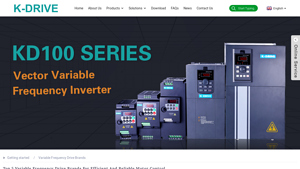
Best Variable Frequency Drive Brands Manufacturers and Suppliers …
Website: thefrequencyinverters.com
SHENZHEN K-EASY AUTOMATION CO., LTD. is a China-based manufacturer specializing in Variable Frequency Drives (VFDs) and industrial automation solutions. Key VFD product lines include: KD600E elevator lift frequency inverter for vertical transportation applications; KD100 Series Mini Vector Frequency Inverter for compact installations; KD700 Series Book Type High-Performance Vector Inverter featuri…
B2B Engineering FAQs About Ac Variable Frequency Drive
Q: How do I verify motor compatibility with a VFD, and what are the consequences of using a non-inverter-duty motor in variable speed applications?
A: Verify that your 3-phase AC motor is explicitly rated as “inverter-duty” with Class F or H insulation systems capable of withstanding voltage spikes from IGBT switching (typically 1,600V peak for 480V systems). Non-inverter-duty motors utilize Class B insulation (130°C) that degrades rapidly under the high dv/dt stress and harmonic content generated by PWM drives, leading to premature bearing failure and insulation breakdown. For retrofit projects, specify motors with reinforced winding insulation or install output reactors/dV/dT filters to mitigate reflected wave phenomena, particularly when cable runs exceed 50 meters.
Q: When sizing a VFD for centrifugal pump or fan applications, should I base selection on motor FLA or the specific load curve, and how does variable torque impact drive rating?
A: While the VFD’s Full Load Amp (FLA) rating must always meet or exceed the motor nameplate FLA for protection coordination, centrifugal pumps and fans follow variable torque (VT) load curves where power requirements decrease cubically with speed reduction. For VT applications, you may select a drive rated for the application’s maximum operating current rather than oversizing for motor inrush, provided the drive supports VT overload characteristics (typically 110% for 1 minute). However, for constant torque loads (conveyors, positive displacement pumps) or high-starting-torque scenarios, size the drive for 150% overload capacity for 60 seconds to ensure reliable acceleration without nuisance tripping.
Q: What distinguishes a Solar Pump Inverter (SPV drive) from a standard AC VFD, and can conventional VFDs accept direct DC input from photovoltaic arrays?
A: Solar pump inverters incorporate Maximum Power Point Tracking (MPPT) algorithms and DC input stages specifically designed to interface directly with PV arrays (typically 200V-800VDC), whereas standard grid-tied VFDs require stable AC input (200V-600V class) and lack MPPT functionality. While some standard VFDs can be modified to accept DC bus injection, they cannot optimize PV array voltage to extract maximum power across varying irradiance conditions. For off-grid agricultural irrigation, specify dedicated SPV drives with dry-run protection, water level monitoring, and automatic restart capabilities that standard industrial VFDs lack.
Q: How do input and output line reactors protect VFD systems, and under what conditions are they mandatory versus recommended?
A: Input line reactors (AC chokes) mitigate harmonic current distortion (reducing THDi from 80% to approximately 35%) and protect against voltage spikes and phase imbalance from utility supply, becoming mandatory when the source transformer kVA exceeds 10 times the drive kVA or when multiple drives share a bus. Output reactors (load reactors) limit dV/dt to <500V/μs to protect motor insulation and reduce bearing currents caused by capacitive coupling in long cable runs (>50m for standard PWM, >100m with filtered drives). For installations near generator sets or in weak grid conditions, specify 3-5% impedance input reactors; for submersible pumps or high-altitude solar installations, output reactors are essential to prevent reflected wave damage.
Q: For pump and irrigation applications, what are the operational differences between V/f (Volts-per-Hertz) control and Sensorless Vector Control, and which offers better energy efficiency?
A: V/f control maintains a constant V/Hz ratio for simple speed regulation but provides limited torque response at low speeds (below 10Hz), making it suitable for centrifugal pumps with minimal static head requirements. Sensorless Vector Control (SVC) dynamically adjusts voltage and current vectors based on motor model parameters, delivering 150% starting torque at 0.5Hz and precise flow control for multi-pump systems or varying well depths. While V/f offers simplicity and lower cost for basic irrigation, SVC reduces energy consumption by 3-8% through optimized flux control and eliminates the need for flow control valves in pressure-regulated systems.
Q: How do IP ratings and NEMA enclosure standards impact VFD installation in outdoor agricultural environments versus indoor industrial settings?
A: Indoor industrial installations typically utilize IP20 (finger-safe) or NEMA 1 (dust-protected) enclosures with external cooling and clean power rooms, while outdoor agricultural or desert solar pumping applications require NEMA 4X (IP66) stainless steel enclosures to withstand dust, direct solar radiation, and high-pressure water jets. Critical considerations include derating drives for ambient temperatures above 40°C (typically 1% per degree) and ensuring conformal coating on PCBs for corrosive atmospheres (fertilizer vapors, salt air). For solar pump installations, specify drives with built-in DC grounding protection and UV-resistant enclosures to prevent polymer degradation.
Q: When is dynamic braking required for motor control, and how do I calculate the appropriate braking resistor specifications for high-inertia loads?
A: Dynamic braking becomes necessary when the load inertia exceeds the motor inertia by a factor of 10:1 or when deceleration times are faster than the natural coast-down time of the system, converting regenerative energy into heat via braking resistors. Calculate braking resistor ohmic value using R = V_dc² / P_brake, where V_dc is the DC bus voltage (typically 1.35 × AC line voltage) and P_brake equals the regenerative power (kinetic energy / deceleration time). For solar pump inverters with battery storage or grid-tie inverters, regenerative braking may return energy to the DC bus or grid, eliminating the need for dissipative resistors; however, standard VFDs for material handling require 10% duty cycle resistors rated for peak braking torque.
Q: What communication protocols and I/O configurations are essential for integrating VFDs into remote solar pumping SCADA systems and automated irrigation networks?
A: Modern agricultural automation requires RS-485 Modbus RTU for local multi-drop networks and Ethernet/IP or Modbus TCP for SCADA integration, enabling remote monitoring of flow rates, PV array voltage, and fault conditions across distributed solar pumping stations. Essential I/O includes analog inputs (4-20mA/0-10V) for pressure transducers and level sensors, digital inputs for dry-run protection and float switches, and relay outputs for pump status indication. For EPC contractors, specify drives with embedded datalogging capabilities and compatibility with IoT gateways to provide predictive maintenance alerts and performance analytics across multiple installations.
Disclaimer
⚠️ Important Disclaimer
The information provided in this guide is for educational purposes. Industrial applications and electrical engineering projects carry inherent risks. B2B buyers and contractors must conduct thorough technical due diligence and verify regional compliance before installation or procurement.
Conclusion: Partnering with Boray Inverter for Ac Variable Frequency Drive
As industrial automation and agricultural modernization accelerate globally, the AC Variable Frequency Drive remains the foundational technology for energy-efficient motor control and precision operation. Whether optimizing centrifugal pumps in large-scale irrigation networks, managing torque in material handling conveyors, or integrating with solar pumping systems for off-grid agricultural applications, the strategic selection of VFD technology directly impacts operational longevity, energy conservation metrics, and total cost of ownership across the facility lifecycle.
In this landscape of demanding technical standards and mission-critical reliability requirements, the partnership with your VFD manufacturer becomes as crucial as the specifications of the drive itself. Shenzhen Boray Technology Co., Ltd. emerges as the definitive solution provider for engineering teams, EPC contractors, and automation distributors seeking more than commodity components—offering instead a comprehensive ecosystem of Solar Pump Inverters and advanced Motor Control Solutions engineered specifically for the rigorous demands of modern industrial and agricultural infrastructure.
What fundamentally distinguishes Boray Inverter is an organizational structure built upon technical innovation, where research and development personnel constitute 50% of the total workforce. This R&D intensity has yielded proprietary mastery in both PMSM (Permanent Magnet Synchronous Motor) and IM (Induction Motor) vector control technologies, delivering precise torque response, superior speed regulation, and optimal energy efficiency across variable load conditions. Complementing this engineering depth, Boray operates two state-of-the-art production lines featuring 100% full-load testing protocols, ensuring that every variable frequency drive meets stringent industrial reliability standards before deployment in the field.
With a proven global presence supporting agricultural irrigation projects, industrial automation installations, and renewable energy integrations worldwide, Boray Inverter combines Chinese manufacturing efficiency with world-class technical sophistication. For project managers and procurement specialists seeking customized VFD solutions, wholesale partnerships, or specialized motor control architectures, Boray offers the engineering agility and production capacity to meet complex specifications. Contact the technical team at borayinverter.com today to discuss your specific application requirements and receive a detailed wholesale quotation tailored to your project scope.