Introduction: Sourcing 3 Hp Variable Frequency Drive for Industrial Use
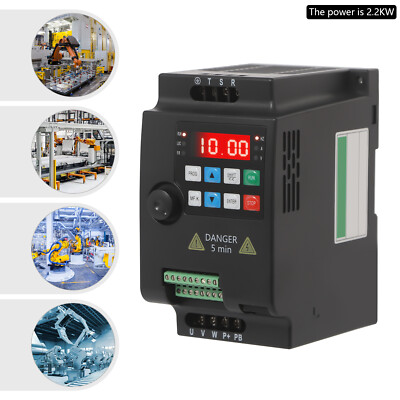
In modern industrial automation and renewable energy infrastructure, the 3 HP (2.2 kW) Variable Frequency Drive (VFD) represents a critical nexus between energy efficiency and precision motor control. Whether optimizing centrifugal pumps in agricultural irrigation systems or fine-tuning conveyor belts in manufacturing facilities, this compact power range delivers disproportionate ROI through intelligent speed regulation and adaptive torque management.
Yet sourcing the optimal unit presents distinct procurement challenges for EPC contractors and automation distributors. The market bifurcates between single-phase input/output configurations—essential for rural solar pumping installations with limited grid access—and sophisticated three-phase vector control drives demanding advanced sensorless flux optimization. Specification mismatches regarding ingress protection, overload capacity (typically 150% rated current for 60 seconds), and communication protocols (Modbus-RTU/RS485) can compromise system reliability and void projected efficiency gains across variable load cycles.
This comprehensive guide examines the complete technical landscape for industrial-grade 3 HP VFDs. We dissect control architectures from basic V/F curves to high-performance sensorless vector systems, analyze single-phase versus phase-conversion topologies for diverse electrical infrastructures, and evaluate manufacturer selection criteria including OEM customization capabilities and global certification compliance. For agricultural project managers and industrial engineers alike, we provide actionable frameworks for matching drive specifications—such as 17A rated current capacity, 0-1000Hz output ranges, and built-in PID functionality—to specific load characteristics including centrifugal pumps and constant-torque applications, ensuring your motor control infrastructure delivers both operational resilience and measurable energy savings.
Article Navigation
- Top 3 3 Hp Variable Frequency Drive Manufacturers & Suppliers List
- Introduction: Sourcing 3 Hp Variable Frequency Drive for Industrial Use
- Technical Types and Variations of 3 Hp Variable Frequency Drive
- Key Industrial Applications for 3 Hp Variable Frequency Drive
- Top 3 Engineering Pain Points for 3 Hp Variable Frequency Drive
- Component and Hardware Analysis for 3 Hp Variable Frequency Drive
- Manufacturing Standards and Testing QC for 3 Hp Variable Frequency Drive
- Step-by-Step Engineering Sizing Checklist for 3 Hp Variable Frequency Drive
- Wholesale Cost and Energy ROI Analysis for 3 Hp Variable Frequency Drive
- Alternatives Comparison: Is 3 Hp Variable Frequency Drive the Best Choice?
- Core Technical Specifications and Control Terms for 3 Hp Variable Frequency Drive
- Future Trends in the 3 Hp Variable Frequency Drive Sector
- B2B Engineering FAQs About 3 Hp Variable Frequency Drive
- Disclaimer
- Conclusion: Partnering with Boray Inverter for 3 Hp Variable Frequency Drive
Technical Types and Variations of 3 Hp Variable Frequency Drive
Selecting the optimal 3 HP (2.2 kW) Variable Frequency Drive requires analysis beyond nominal power ratings. The specific electrical infrastructure—whether single-phase rural grids, three-phase industrial networks, or direct-current solar arrays—dictates the VFD topology, derating requirements, and control algorithms. Additionally, the distinction between general-purpose V/F control and high-performance vector control determines suitability for high-torque or precision applications. Below are the five critical technical configurations that define 3 HP VFD implementations across industrial automation and agricultural sectors.
| Type | Technical Features | Best for (Industry) | Pros & Cons |
|---|---|---|---|
| Single-Phase Input / Three-Phase Output | Input: 220-240V AC ±15%, 1-phase; Output: 0–rated input voltage, 3-phase; Mandatory 100% power derating (specify 4.0–5.5kW unit for 3 HP load); IGBT-based phase conversion; 17A rated output current; built-in AVR (Automatic Voltage Regulation) | Agricultural irrigation, rural machine shops, poultry ventilation systems | Pros: Converts single-phase utility to three-phase motor power; eliminates rotary phase converters; soft-start capability reduces mechanical |
Key Industrial Applications for 3 Hp Variable Frequency Drive
The 3 hp (2.2 kW) variable frequency drive represents a critical power node for industrial electrification, bridging the gap between residential light-duty applications and heavy infrastructure. At this capacity, VFDs deliver sophisticated control algorithms—including Sensorless Vector Control (SVC) and built-in PID regulation—while maintaining compatibility with single-phase rural grids and solar DC bus architectures. Below is a strategic breakdown of high-ROI deployment scenarios, followed by technical implementation details for specification engineers and procurement teams.
| Sector | Application | Energy Saving Value | Sourcing Considerations |
|---|---|---|---|
| Agriculture & Solar Irrigation | Solar-powered submersible pumps, surface pumps for drip irrigation, and livestock water systems | 30–60% reduction in energy costs; elimination of diesel generator dependency; optimized PV utilization via MPPT algorithms. For centrifugal pumps, reducing operating speed to 80% drops power consumption to 51.2% of rated value (affinity laws). | IP65/NEMA 4X enclosure for outdoor deployment; single-phase 220V input compatibility for rural grids; built-in PID for constant pressure/flow control; Common DC bus capability for multi-pump solar arrays; automatic voltage regulation (AVR) for grid fluctuation compensation. |
| HVAC & Building Automation | Centrifugal chillers, cooling tower fans, air handling units (AHUs), and secondary hot water circulation pumps | 40–70% energy reduction via fan/pump affinity laws; typical ROI within 12–18 months in commercial buildings. | Low harmonic distortion (<5% THDi) to comply with IEEE 519; RS485 Modbus-RTU for BMS integration; automatic carrier frequency adjustment (1.0–16.0 kHz) to reduce motor acoustic noise; sleep/wake function for part-load conditions. |
| Water Treatment & Distribution | Booster pump stations, filtration backwash systems, chemical dosing pumps, and wastewater aeration blowers | 25–45% pump energy savings; extended mechanical seal life through soft-start ramp control; precise chemical metering enabled by 0.01Hz frequency resolution. | Multi-pump cascade control logic via built-in PLC (supporting up to 16 segments); 150% overload capacity for 60s to handle high-viscosity fluid starts or sludge loading; corrosion-resistant conformal coating; over-voltage/over-current stall control to prevent tripping during hydraulic transients. |
| Food, Beverage & Packaging | Conveyor belts, mixing kettles, rotary fillers, and packaging machinery | 20–35% energy savings; reduced mechanical wear on gearboxes; improved product consistency through precise torque control. | Sensorless Vector Control (SVC) for 150% starting torque without encoder feedback; stainless steel housing options for washdown environments; high-speed pulse I/O for synchronization with upstream/downstream equipment; wobble frequency control for specialized textile or fiber handling applications. |
Application Deep Dive and Technical Specifications
Agriculture & Solar Pumping Systems
In off-grid and weak-grid agricultural environments, the 3 hp VFD serves as the central power converter for solar pumping solutions. When sourcing drives for solar irrigation, prioritize units with single-phase 220V AC input capability (220V±15%) to accommodate rural single-phase infrastructure, alongside a Common DC bus architecture that allows multiple drives to share energy from a centralized PV array. For centrifugal irrigation pumps, configure the VFD for variable torque (V/F quadratic curve) operation; this leverages the cubic relationship between speed and power, where a 20% reduction in pump speed yields nearly 50% energy savings. The built-in PID controller maintains constant pressure in drip irrigation networks by dynamically adjusting motor frequency in response to flow transducers, eliminating the need for external PLCs.
HVAC and Building Automation
For centrifugal fans and chilled water pumps, specify drives with automatic carrier frequency adjustment (1.0–16.0 kHz) to minimize acoustic emissions in occupied spaces. The integration of RS485 Modbus-RTU terminals is critical for seamless communication with Building Management Systems (BMS), enabling centralized monitoring of run status, fault codes, and energy consumption. Given the prevalence of partial-load operation in HVAC, verify that the VFD includes intelligent sleep mode functionality—automatically entering a low-power state when demand drops below a threshold (e.g., 20% of rated flow) and restarting upon system pressure decay.
Water Treatment and Distribution
Municipal booster stations and filtration systems benefit from the VFD’s multi-pump control logic, which stages pumps on and off based on demand curves without external controllers. When specifying for wastewater applications, ensure the drive provides 150% overload capacity for 60 seconds (and 180% for 10 seconds) to overcome the high breakaway torque of sludge-laden fluids or clogged impellers. The over-voltage stall control feature is essential in water hammer scenarios, automatically adjusting deceleration ramps to prevent DC bus over-voltage trips when valves close abruptly.
Food Processing and Packaging Machinery
In constant-torque applications such as mixers and conveyors, configure the drive for Sensorless Vector Control (SVC) rather than standard V/F mode. SVC maintains stable torque output across the 1:50 speed adjustment range, preventing stalling during high-viscosity mixing operations. For packaging lines requiring precise synchronization, utilize the high-speed pulse input/output terminals (supporting pulse frequency setting) to maintain phase alignment with upstream labeling or filling equipment. In hygienic processing environments, specify drives with IP66/NEMA 4X ratings and conformal-coated PCBs to withstand caustic washdown chemicals.
Load Characterization for Optimal Configuration
When deploying 3 hp VFDs, distinguish between load torque profiles to maximize efficiency:
* Variable Torque (Centrifugal): Fans and pumps where torque varies with the square of speed. Configure with quadratic V/f curves for maximum energy harvest.
* Constant Torque: Conveyors and positive displacement pumps requiring full torque at low speeds. Utilize SVC mode and verify the drive’s torque boost functionality (0.1%–30.0% manually adjustable).
* **
Top 3 Engineering Pain Points for 3 Hp Variable Frequency Drive
Scenario 1: Single-Phase Grid Instability in Remote Agricultural Pumping
The Problem: Agricultural and rural industrial sites frequently rely on single-phase 220V–240V supply with poor grid regulation, experiencing voltage fluctuations beyond ±15%. Direct-start 3 HP (2.2 kW) motors create severe inrush currents (up to 6-8× rated current) that exacerbate voltage sags, causing nuisance tripping and motor insulation damage. Additionally, solar pumping systems face DC bus instability when PV array voltage fluctuates with changing irradiance, risking under-voltage faults or insufficient torque for pump priming.
The Solution: Implement 3 HP VFDs featuring Automatic Voltage Regulation (AVR) to maintain constant output voltage despite input fluctuations within the 220V ±15% tolerance range. Utilize the soft-start functionality to limit inrush to 150–200% of the rated 17A current for controlled acceleration periods (0.1s–3600s), eliminating mechanical shock and grid disturbance. For hybrid solar applications, select drives with built-in MPPT and DC bus voltage management, ensuring stable operation across varying irradiance while leveraging Sensorless Vector Control (SVC) to maintain precise speed control (1:50 range) even at low frequencies (0.40Hz start frequency).
Scenario 2: Thermal Derating and Environmental Stress in Harsh Installations
The Problem: 3 HP VFDs deployed in outdoor solar pumping stations, dusty agricultural facilities, or high-altitude mining operations face thermal management challenges. Ambient temperatures exceeding 40°C require derating of 4% per degree Celsius, potentially reducing the effective 2.2 kW capacity below operational requirements. Altitudes above 1,000 meters further reduce cooling efficiency and output power, while humidity levels up to 90% RH risk condensation and PCB corrosion in inadequately protected enclosures.
The Solution: Engineer systems with proper environmental derating calculations: apply 4% power reduction for every 1°C above 40°C (up to 50°C) and derate output for altitudes >1000M as specified. Specify VFDs with intelligent thermal management, including automatic carrier frequency adjustment (1.0-16.0 kHz) that reduces switching losses based on real-time temperature and load characteristics. Install drives in IP54-rated enclosures with isolated cooling channels or external heatsink mounting to maintain the full 17A rated current capacity while protecting against dust and moisture ingress in -10°C to 40°C standard operating ranges.
Scenario 3: Suboptimal Energy Efficiency Through Misapplied Load Profiles
The Problem: Engineers frequently apply 3 HP VFDs without analyzing load characteristics, leading to missed energy savings or control instability. Centrifugal pumps and fans (variable torque) require square-law V/f curves to achieve cubic energy savings (power ∝ speed³), while constant torque loads like positive displacement pumps or conveyors demand linear torque characteristics. Without proper configuration, systems operate with manual throttling or fixed-speed bypass, wasting energy and subjecting motors to unnecessary thermal stress through improper torque boost settings (0.1%–30.0% range).
The Solution: Configure the VFD with application-specific control algorithms: select square-type V/f curves (1.2 to 2.0 power) for centrifugal loads to maximize energy savings, or utilize Sensorless Vector Control (SVC) for high-precision torque management in constant torque applications. Implement the built-in PID controller to create closed-loop systems for pressure, flow, or temperature regulation, eliminating mechanical bypass valves and maintaining optimal efficiency. Leverage the multi-step speed function (up to 16 segments via built-in PLC) and RS485 Modbus-RTU communication to coordinate multi-pump staging, ensuring the 3 HP unit operates within its optimal load band while utilizing automatic torque limiting to prevent over-current trips during demand spikes.
Component and Hardware Analysis for 3 Hp Variable Frequency Drive
For a 3 hp (2.2 kW) variable frequency drive operating in demanding industrial or off-grid solar pumping environments, hardware integrity determines not only performance metrics but the total cost of ownership over a 15–20 year service life. At this power class—typically handling 17 A continuous current with 150% overload capacity for 60 seconds as specified in the GK3000 series—the thermal and electrical stresses on internal semiconductors are significant. Below is a technical decomposition of the critical hardware subsystems that govern reliability, efficiency, and field longevity in single-phase input to three-phase output configurations common in agricultural and light industrial automation.
Power Semiconductor Stage (IGBT Modules)
The Insulated Gate Bipolar Transistor (IGBT) module serves as the primary power switching device, converting the rectified DC bus voltage into variable frequency, variable voltage three-phase output. In a 3 hp VFD, this typically comprises a six-pack or discrete module rated for 600V–1200V with continuous collector currents exceeding 25 A to handle the 17 A rated output plus harmonic content.
Critical Design Considerations:
– Thermal Impedance (Rth(j-c)): High-quality modules exhibit thermal resistance below 0.5 K/W, ensuring junction temperatures remain below 125°C even during 180% overload events (10s duration).
– Switching Characteristics: Low VCE(sat) (saturation voltage) and fast switching times (<200 ns) minimize conduction and switching losses, directly impacting the drive’s ability to maintain the 0–1000 Hz output range without thermal derating.
– Package Integrity: Direct Bonded Copper (DBC) substrates with Al₂O₃ or AlN ceramic bases provide superior thermal cycling resistance compared to traditional insulated metal substrates (IMS), preventing solder fatigue during the repetitive thermal expansion cycles inherent in solar pumping applications with intermittent cloud cover.
DC-Link Capacitor Bank
Following the single-phase bridge rectifier, the DC-link capacitors stabilize the bus voltage and absorb ripple current generated by the IGBT switching. For 2.2 kW single-phase input drives, this bank typically utilizes high-grade electrolytic capacitors or film capacitors depending on the manufacturer’s target lifespan.
Engineering Parameters:
– Ripple Current Rating: Must accommodate the 2nd harmonic (100 Hz/120 Hz) from single-phase rectification plus high-frequency switching components. Premium capacitors specify ripple current ratings above 5 A rms at 105°C.
– Equivalent Series Resistance (ESR): Lower ESR (<20 mΩ) reduces internal heating, mitigating electrolyte evaporation—the primary failure mechanism in electrolytic capacitors.
– Expected Life: Quality indicators follow the Arrhenius equation; a 10°C reduction in core temperature doubles lifespan. Capacitors rated for 10,000 hours at 105°C can achieve 60,000+ hours in drives with adequate thermal management (ambient ≤40°C).
Digital Signal Processor (DSP) and Control Logic
The control board executes the V/F control, Sensorless Vector Control (SVC), or Field-Oriented Control (FVC) algorithms that enable the 1:50 speed adjustment range and precise torque boost functions. For solar pumping integration, this subsystem must handle maximum power point tracking (MPPT) logic and PID pressure/flow control loops.
Hardware Specifications:
– Processor Architecture: 32-bit DSPs (e.g., TI C2000 series or equivalent) operating at 60–150 MHz provide the computational bandwidth for real-time current vector calculations and carrier frequency adjustments (1.0–16.0 kHz).
– ADC Resolution: 12-bit or higher analog-to-digital converters ensure accurate current sensing (±0.5% accuracy) for the over-current stall control and torque limiting functions.
– Environmental Protection: Conformal coating (acrylic or silicone) on the PCB assembly is essential for humidity resistance (≤90% RH non-condensing) and protection against corrosive gases in agricultural environments.
Thermal Management Infrastructure
Given the compact dimensions typical of 3 hp drives (approx. 230×118×163 mm), heat dissipation represents the primary engineering constraint. The thermal system must maintain internal ambient temperatures below 50°C while dissipating approximately 80–100W of waste heat at full load.
Component Analysis:
– Heatsink Design: Extruded aluminum with anodized surfaces and optimized fin geometry (fin density 4–6 fins per inch) provides the thermal mass and surface area necessary for natural convection or forced-air cooling.
– Thermal Interface Materials (TIM): Phase-change materials or high-conductivity silicone pads (thermal conductivity >3 W/m·K) between the IGBT baseplate and heatsink minimize contact thermal resistance.
– Thermal Derating: As specified in environmental ratings, drives must derate output by 4% per degree above 40°C; therefore, heatsink thermal resistance must be calculated to ensure junction temperatures remain within safe operating areas (SOA) up to 50°C ambient.
EMI Suppression and Protection Circuitry
Input EMI filters and output dv/dt chokes protect both the drive and the motor. For single-phase 220V systems, the filter must attenuate conducted emissions in the 150 kHz–30 MHz range to comply with IEC 61800-3 standards.
Key Components:
– Common Mode Chokes: High-permeability ferrite cores with bifilar winding reduce common-mode noise without saturating under the 17 A rated current.
– Surge Protection: Metal Oxide Varistors (MOVs) on the input side protect against the ±15% voltage fluctuation tolerance and grid transients.
– Output Reactor: When cable runs exceed 50 meters (common in solar pumping installations), an output reactor or sine wave filter mitigates voltage reflection phenomena that damage motor insulation.
Component Specification and Longevity Matrix
| Component | Function | Quality Indicator | Impact on Lifespan |
|---|---|---|---|
| IGBT Power Module | DC-to-AC inversion; PWM generation for motor control | Thermal resistance Rth(j-c) <0.5 K/W; VCE(sat) <2.0V; Tj(max) 150°C; DBC ceramic substrate | Thermal cycling causes bond wire lift-off and solder fatigue; high-quality modules extend MTBF to >100,000 hours |
| DC-Link Capacitor | Energy storage; ripple current absorption; voltage stabilization | ESR <20 mΩ; Ripple current rating >5 A @ 105°C; 10,000+ hours @ rated temp | Electrolyte evaporation leads to capacitance loss (20% reduction triggers failure); determines 10–15 year service life |
| DSP Controller | Algorithm execution (V/F, SVC, FVC); PWM timing; communication protocols | 32-bit architecture; Clock stability ±50 ppm; Operating temp -40°C to +85°C; Conformal coating IPC-CC-830 | Logic errors from voltage transients; corrosion in humid environments; quality coating prevents dendritic growth |
| Cooling Heatsink | Thermal dissipation from semiconductors to ambient | Aluminum alloy 6063-T5; Thermal conductivity >200 W/m·K; Anodized surface; Fin efficiency >70% | Insufficient cooling causes thermal runaway; 10°C excess reduces semiconductor life by 50% |
| Current Sensors | Phase current feedback for vector control and overcurrent protection | Hall-effect sensors with <1% linearity error; Bandwidth >50 kHz; Isolation voltage 2.5 kV | Drift in accuracy causes torque ripple and false tripping; critical for stall prevention during pump dry-run conditions |
| EMI Input Filter | Attenuation of conducted emissions; protection against grid transients | Insertion loss >40 dB @ 1 MHz; Leakage current <3.5 mA; X2/Y2 safety capacitors | Degraded filters cause interference with PLC communication; capacitor failure can create ground fault hazards |
| Thermal Interface Material | Heat transfer between IGBT and heatsink; electrical isolation | Thermal conductivity >3 W/m·K; Dielectric strength >3 kV/mm; Phase-change stability >10 years | Dry-out or pump-out increases thermal resistance by 200–300%, accelerating IGBT junction degradation |
Procurement and Integration Guidelines for Solar Pumping
When specifying a 3 hp VFD for solar-powered irrigation systems, EPC contractors should prioritize drives utilizing film capacitors (polypropylene metallized film) over electrolytic solutions, as they offer 100,000+ hour lifespans and superior performance in high-altitude, high-UV environments (altitude derating >1000m). Additionally, verify that the IGBT module specifications include active short-circuit withstand ratings (>10 µs) to survive the inductive kickback from submersible pump cable capacitance. The integration of a common DC bus terminal, as noted in advanced control features, allows for direct PV array connection in solar pumping topologies, eliminating the need for separate MPPT controllers and reducing component count in the field.
Manufacturing Standards and Testing QC for 3 Hp Variable Frequency Drive
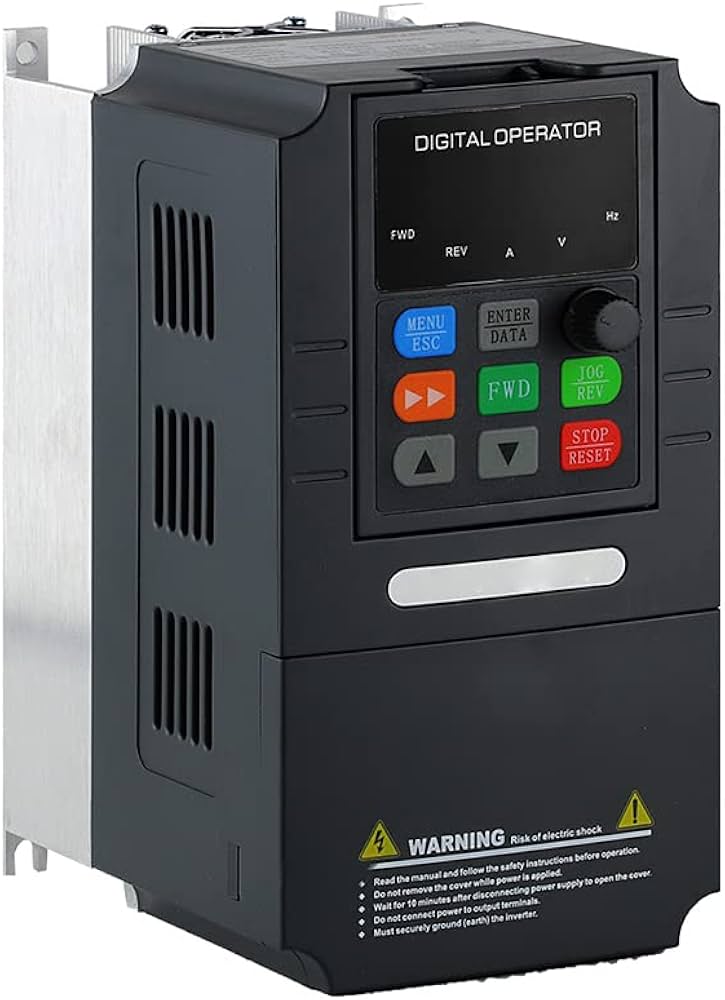
At Boray Inverter, the manufacturing of 3 hp (2.2 kW) variable frequency drives adheres to IEC 61800 series standards and ISO 9001:2015 quality management protocols, ensuring each unit withstands the rigorous demands of industrial automation, agricultural irrigation, and solar pumping applications. Our vertically integrated production facility combines automated SMT assembly with rigorous environmental stress screening, specifically calibrated for the 17 A rated current and 150% overload capacity (60s) characteristic of this power class.
PCB-Level Environmental Protection
All control and power PCBs undergo triple-path conformal coating using high-grade acrylic or polyurethane compounds, achieving IPC-A-610 Class 3 standards for moisture and dust resistance. This tropicalization process is critical for agricultural deployments where humidity reaches 90% RH (non-condensing) and airborne contaminants threaten unprotected electronics. For solar pump inverter variants, selective silicone potting of the DC bus capacitors and IGBT driver circuits provides additional thermal conductivity and vibration dampening, essential for installations in remote, high-altitude locations exceeding 1000m where output derating must be carefully managed.
Burn-in and Thermal Aging Protocols
Prior to final assembly, every 3 hp VFD undergoes 72-hour high-temperature aging (HTA) at 50°C ambient—10°C above standard operating limits. This process activates latent defects in semiconductor junctions and electrolytic capacitors, ensuring the carrier frequency (1.0–16.0 kHz) auto-adjustment algorithms function reliably under thermal stress. Units are subsequently subjected to 20-cycle thermal shock testing (-10°C to +60°C) to validate solder joint integrity and conformal coating adhesion, simulating the storage temperature extremes encountered during global logistics.
100% Full-Load Functional Verification
Unlike statistical sampling methods, Boray implements 100% full-load testing for every GK3000-series 3 hp drive. Each unit runs through:
– Rated Load Validation: Continuous operation at 17 A output current with V/F and sensorless vector control (SVC) modes to verify the 1:50 speed adjustment range
– Overload Stress Testing: Verification of 150% rated current for 60 seconds, 180% for 10 seconds, and 200% for 3 seconds to confirm protection circuit responsiveness
– Input Voltage Fluctuation Simulation: ±15% variation on single-phase 220V–240V inputs to test automatic voltage regulation (AVR) functionality
– EMC Pre-compliance: Radiated and conducted emissions screening against EN 61800-3 Category C2 limits for industrial environments
Component Traceability and Standards Compliance
Manufacturing traceability extends from raw material certificates (RoHS-compliant FR4 substrates, industrial-grade film capacitors) to final serial number engraving. Key certifications include:
– CE Marking: Full compliance with Low Voltage Directive (2014/35/EU) and EMC Directive (2014/30/EU), including EN 61800-5-1 safety requirements for adjustable speed power drive systems
– IEC 62109-1/2: Specific to solar pump inverter configurations, ensuring protection against electric shock, energy hazards, and fire risks in photovoltaic applications
– ISO 9001:2015: Documented quality management systems governing everything from IGBT module soldering to final packaging
Environmental and Mechanical Durability
Final QC includes IP rating verification (IP20 standard, with IP54/IP65 optional for agricultural enclosures), vibration testing (5–500 Hz, 2G acceleration) simulating transport in EPC contractor logistics chains, and insulation resistance testing (>100 MΩ at 500VDC). For solar pumping applications, specialized testing validates MPPT algorithm efficiency and common DC bus functionality for multi-pump energy balancing systems.
This multi-layered QC architecture ensures that whether deployed in factory automation, HVAC retrofits, or off-grid solar irrigation, each 3 hp VFD delivers the torque boost precision (0.1%–30.0% manual adjustment) and fault protection (30+ fault codes including over-current, under-voltage, and phase loss) required for 24/7 industrial reliability.
Step-by-Step Engineering Sizing Checklist for 3 Hp Variable Frequency Drive
Proper sizing of a 3 HP (2.2 kW) variable frequency drive requires rigorous validation beyond simple nameplate matching. For EPC contractors and automation engineers deploying motor control in agricultural or industrial environments, the following protocol ensures compatibility with both grid-tied and solar-powered architectures, while accounting for thermal derating and dynamic load characteristics inherent to pump and fan applications.
1. Motor Nameplate Verification & Service Factor Analysis
Begin by confirming the motor’s actual continuous duty rating. A “3 HP” designation typically equates to 2.2 kW (metric), but verify the NEMA Design Code (B or C) or IEC equivalent.
* Service Factor (SF): If the motor carries a 1.15 SF, the VFD must support 150% overload capacity for 60 seconds (and 180% for 10s) to handle starting inrush without nuisance tripping. For submersible pumps or high-slip motors, verify the VFD’s torque boost capability (0.1%–30.0% manually adjustable).
* Insulation Class: Ensure Class F or H insulation for inverter-duty motors to withstand PWM carrier frequencies (1.0–16.0 kHz). Non-inverter-duty motors require output reactors or sine-wave filters to prevent winding degradation.
2. Input Supply Topology & Voltage Window Validation
Determine whether the application utilizes single-phase rural grids, three-phase industrial supply, or direct PV coupling:
* Single-Phase Configuration: For 220V–240V single-phase input (as specified in the GK3000-1S0022 reference), verify the rated input current of 17 A against your supply capacity. Confirm the VFD’s input voltage tolerance of ±15% to accommodate rural grid fluctuations.
* Three-Phase Configuration: If converting single-phase to three-phase output for a 3 HP motor, ensure the VFD’s output derating does not exceed the motor’s FLA (Full Load Amperage).
* Frequency Stability: Verify input frequency range (47–63 Hz) matches local grid standards or generator set output stability.
3. Current Sizing & Thermal Headroom Calculation
Calculate the required continuous output current using the formula:
I = P / (V × η × PF)
Where P = 2,200 W, η = motor efficiency (~0.85), PF = power factor (~0.95).
* Continuous Rating: A 3 HP single-phase application typically draws approximately 11–12 A under steady state, but select a VFD rated for 17 A to provide thermal headroom.
* Overload Verification: Confirm the drive’s overload curve supports 200% for 3 seconds for locked-rotor conditions during pump cavitation or debris jams.
4. Environmental Derating Protocols
Boray Inverter specifications require mandatory derating for non-standard installation environments:
* Altitude Derating: For installations above 1,000 meters, reduce output current by 1% per 100 meters to compensate for reduced air cooling efficiency.
* Temperature Derating: Above 40°C ambient, derate output capacity by 4% per degree Celsius. In solar pump applications where drives are housed in NEMA 3R enclosures exposed to direct sunlight, ensure internal cabinet temperatures do not exceed 50°C without forced ventilation.
5. Solar Array String Sizing (for PV-Fed VFDs)
When deploying the 3 HP VFD in a solar pumping system (Boray’s specialty), DC input sizing is critical:
* Open Circuit Voltage (Voc): Calculate maximum Voc at record low temperatures using the temperature coefficient (typically -0.3%/°C). Ensure Voc_max < VFD maximum DC input voltage (typically 400V or 800V depending on model series).
* Maximum Power Point (Vmp): Size strings such that the array’s Vmp at 60°C cell temperature remains within the VFD’s MPPT tracking window. For a 3 HP pump, typical configurations require 3–4 kWp of PV modules (oversized by 30% to account for irradiance variability).
* Current Matching: Array short-circuit current (Isc) should not exceed the VFD’s DC input current rating, factoring in 1.25 safety margin per IEC 62548.
6. Load Characteristic & Torque Curve Alignment
Match the VFD’s control algorithm to the load profile:
* Variable Torque (Centrifugal Pumps/Fans): Utilize the square-law V/f curve (1.2–2.0 power settings). Energy savings follow the cube law: reducing speed to 80% yields a 51.2% power reduction. Enable automatic torque boost for low-speed operation.
* Constant Torque (Positive Displacement Pumps/Compressors): Select Sensorless Vector Control (SVC) mode. Verify the VFD can deliver 100% torque at low frequencies (0.4 Hz start frequency capability).
7. Control Interface & I/O Mapping
Verify integration with existing automation architectures:
* Digital Inputs: Confirm availability of 7 programmable DI terminals for multi-step speed control, external fault inputs, and pump dry-run sensors.
* Analog Signals: Map 0–10V or 4–20mA pressure transducer signals to AI1/AI2 for closed-loop PID control (essential for constant pressure water systems).
* Communication: Ensure RS485 Modbus-RTU compatibility for SCADA integration in remote agricultural monitoring systems.
8. Protection Coordination & Cable Sizing
- Input Protection: Size circuit breakers or fuses at 1.5× rated input current (approx. 25A for single-phase) with Type D trip curves to avoid nuisance tripping during capacitor charging inrush.
- Output Cabling: Use shielded VFD-rated cables (XLPE insulation) sized for the 17A continuous rating, with separate ground runs to minimize EMI. For cable runs exceeding 50 meters, install output reactors to protect against reflected wave phenomena.
- DC Bus Linking: If using a common DC bus for multiple 3 HP drives (energy balancing configuration), verify the busbar rating exceeds the sum of individual drive regeneration capacities.
9. Harmonic Mitigation & EMC Compliance
For single-phase 3 HP installations, total harmonic distortion (THD) can exceed 65% without mitigation:
* Install DC chokes or 3% AC line reactors to reduce THD to <35% and improve true power factor.
* Ensure compliance with IEC 61000-3-2 (Class A) for industrial environments or IEEE 519 for utility interconnection points.
10. Commissioning Verification Checklist
Before energizing:
* Set carrier frequency to 4 kHz minimum for audible noise reduction, or up to 16 kHz for quiet operation (with derating).
* Program acceleration/deceleration ramps (0.1–3600s range) to match pump inertia—typically 5–10 seconds for centrifugal pumps to avoid water hammer.
* Verify automatic voltage regulation (AVR) is enabled to maintain constant motor voltage despite ±15% input fluctuations common in rural agricultural grids.
Critical Sourcing Note: When procuring for international projects, confirm the 3 HP VFD carries CE marking (LVD 2014/35/EU, EMC 2014/30/EU) and IP54 minimum enclosure ratings for outdoor agricultural deployment. For solar-specific applications, prioritize models with integrated MPPT controllers to eliminate separate charge controller costs and points of failure.
Wholesale Cost and Energy ROI Analysis for 3 Hp Variable Frequency Drive
For industrial procurement teams and EPC contractors evaluating motor control investments, the 3 hp (2.2 kW) variable frequency drive represents a critical inflection point between residential-scale simplicity and industrial-grade functionality. As a power rating commonly deployed in agricultural irrigation submersible pumps, HVAC centrifugal systems, and light industrial conveyance, understanding the wholesale economics and energy recovery timelines specific to this capacity enables data-driven capital allocation.
Global Wholesale Pricing Structures and Volume Tiers
The B2B procurement landscape for 2.2 kW VFDs stratifies across three distinct volume categories. Single-unit wholesale pricing for IP20-rated, single-phase input/single-phase output (1P-1P) configurations typically ranges from $180–$240 USD FOB major Chinese manufacturing hubs, while IP54-rated outdoor variants suitable for solar pumping applications command premiums of 15–22% due to enhanced thermal management and conformal coating processes.
Volume breakpoints reveal significant economies of scale critical for distributor inventory planning:
- Pilot/Low Volume (1–9 units): Baseline wholesale pricing with limited customization; suitable for retrofit projects requiring mixed I/O specifications (7 digital inputs, 2 analog inputs as standard per the GK3000 series architecture)
- Project Tier (10–49 units): 12–18% volume discounts with standardized control modes (V/F, Sensorless Vector Control, and Speed Sensor Vector Control) and consolidated freight options
- OEM/EPC Tier (50+ units): 25–35% below retail with firmware customization for specific pump curves, extended temperature range specifications (-10°C to +50°C with 4% derating per degree above 40°C), and white-label documentation capabilities
Distributor margin analysis indicates that automation resellers typically apply 40–60% markups on 3 hp VFDs when bundling with installation services, while pure hardware distributors operate on 25–35% margins. For agricultural project managers, direct procurement from manufacturers like Boray Inverter—bypassing tiered distribution—can reduce per-unit costs by $45–$75 while ensuring compatibility with solar pump inverters through integrated DC bus architectures that support automatic energy balancing across multiple drives.
Energy ROI Calculations: The Cube Law Advantage
The economic justification for 3 hp VFD deployment hinges on load-specific energy recovery mathematics. For centrifugal pump applications—representing 68% of 2.2 kW VFD installations in agricultural sectors—the affinity laws dictate that power consumption scales with the cube of rotational speed (P ∝ N³).
Consider a typical irrigation scenario: A 3 hp submersible pump operating 2,400 hours annually (8 hours/day × 300 days) at full throttle consumes approximately 5,280 kWh/year (2.2 kW × 2,400 hours × 0.95 motor efficiency factor). Implementing VFD control to maintain 80% flow rate (requiring 80% speed) reduces power consumption to 51.2% of nominal (0.8³), yielding 2,585 kWh annual savings.
At global industrial electricity rates averaging $0.12/kWh, annual savings reach $310 per unit. With wholesale acquisition costs of $200–$280 depending on enclosure ratings, simple payback periods range from 8 to 11 months for high-duty-cycle agricultural applications. For constant torque loads (Roots blowers, positive displacement pumps) where power reduces linearly with speed, payback extends to 24–36 months, though the benefit of reduced mechanical stress and extended bearing life often justifies the investment through maintenance cost avoidance.
Total Cost of Ownership: Warranty and Reliability Economics
The TCO analysis for 2.2 kW drives must account for thermal stress in outdoor installations. Standard manufacturer warranties span 18–24 months for IP20 indoor units, while solar-specific IP65-rated drives typically carry 36-month coverage with extended humidity protection (90% RH non-condensing).
Critical warranty cost factors include:
- Capacitor Lifecycle: DC bus capacitors in 3 hp drives typically require replacement at 50,000–60,000 operating hours (6–7 years continuous use). Manufacturers utilizing 105°C-rated electrolytic capacitors versus 85°C variants increase replacement intervals by 40%, reducing 10-year maintenance costs by $80–$120 per unit.
- IGBT Module Reliability: Modern single-phase to three-phase VFDs employing intelligent power modules (IPMs) with built-in over-current/over-voltage stall control reduce field failure rates to <0.8% annually, compared to 2.1% for discrete IGBT implementations. This translates to warranty service costs below $15/unit/year for quality-manufactured drives.
- Carrier Frequency Optimization: Automatic thermal adjustment of carrier frequency (1.0–16.0 kHz range) reduces switching losses by 12–15% during high-ambient conditions, extending power electronics lifespan in solar pumping installations where enclosure temperatures frequently exceed 45°C.
For distributors managing inventory, the compact form factor (approximately 230×118×163 mm and 3 kg shipping weight for single-phase units) enables palletized shipments of 80–100 units per standard crate. This logistics efficiency supports just-in-time delivery models for agricultural contractors facing seasonal installation windows, reducing warehousing carrying costs to <2% of inventory value monthly.
Solar Integration and Hybrid ROI Models
When deployed in solar pumping configurations, the 3 hp VFD serves dual functions as motor controller and maximum power point tracker (MPPT). Advanced solar pump inverters integrate 450VDC maximum input capability with automatic switching between AC grid and PV array inputs. This hybrid functionality eliminates the need for separate solar inverters, reducing system capital costs by $150–$220 per installation while maintaining 98% maximum conversion efficiency.
For EPC contractors, the integration of VFDs with common DC bus capability allows multiple 3 hp pumps to share energy storage and solar arrays, reducing per-pump infrastructure costs by 30% in multi-well agricultural projects. The built-in PID control functionality—standard in modern 2.2 kW drives—enables closed-loop pressure management that reduces pumping hours by 15–25% through elimination of over-irrigation, compounding energy savings beyond the base cube-law efficiency gains.
Procurement Strategy by Stakeholder
- EPC Contractors: Specify units with RS485 Modbus RTU communication and programmable relay outputs (2-channel standard) for SCADA integration. Negotiate project-tier pricing with 5-year extended warranty options covering capacitor replacement for solar installations.
- Agricultural Managers: Prioritize single-phase input/three-phase output (1P-3P) configurations to bridge legacy single-phase rural infrastructure with modern three-phase motor efficiencies. Calculate ROI based on seasonal duty cycles (typically 1,800–2,200 hours/year) rather than continuous operation assumptions.
- Distributors: Stock IP65-rated variants with automatic voltage regulation (AVR) to capture the outdoor solar pumping retrofit market, maintaining 35–40% margins while offering value-added commissioning services for the 0.40Hz–20.00Hz start frequency programming required for deep-well submersible applications.
The 3 hp VFD category offers one of the fastest payback periods in industrial automation when matched to appropriate centrifugal loads, with wholesale procurement strategies and solar integration capabilities further compressing ROI timelines to sub-12-month intervals for high-utilization pumping applications.
Alternatives Comparison: Is 3 Hp Variable Frequency Drive the Best Choice?
Selecting the optimal motor control architecture for 2.2 kW (3 HP) applications requires evaluating not just the drive itself, but the entire electromechanical ecosystem. At this power threshold—common for agricultural irrigation, small HVAC systems, and light industrial machinery—the choice between control methodologies, power sources, and motor technologies significantly impacts total cost of ownership (TCO) and operational flexibility.
VFD vs. Soft Starter: Control Philosophy Divergence
For 3 HP motors driving centrifugal pumps or fans, the decision between a variable frequency drive and a soft starter hinges on operational variability. Soft starters provide phase-angle control to limit inrush current (typically 3-5x FLA reduction) and mechanical shock during fixed-speed acceleration, but they cannot modulate flow or pressure.
A 3 HP VFD, by contrast, enables affinity law energy savings—reducing power consumption by the cube of the speed reduction. As noted in pump load characteristics, when operating at 80% rated speed, power draw drops to approximately 51.2% of nominal consumption, a feat impossible with soft starters. Furthermore, modern 3 HP drives featuring Sensorless Vector Control (SVC) or Speed Sensor Vector Control (FVC) maintain torque stability across 1:50 speed ranges, critical for precision processes.
Selection Criterion: Choose soft starters only for fixed-speed applications with high start frequency concerns. For any load requiring flow modulation or energy recovery, the VFD’s higher initial cost (typically 2-3x that of a soft starter) pays back within 12-18 months through electricity savings.
Solar vs. Grid Power: Energy Architecture Implications
The 3 HP rating represents a sweet spot for solar pumping applications, sitting at the intersection of affordable PV array sizing and meaningful water delivery volumes (typically 5-15 m³/hour depending on head).
Grid-Tied VFD Configuration:
– Input: Single-phase 220-240V AC (±15%) or three-phase 380V
– Continuous operation regardless of irradiance
– Standard V/F or vector control algorithms
Solar Pump Inverter Configuration:
– Input: 200-400V DC from PV array (no battery required)
– Integrated Maximum Power Point Tracking (MPPT) to maximize PV efficiency
– Requires 150% overload capacity for 60s (as specified in industrial drive standards) to handle morning viscosity and priming demands
– Automatic sleep/wake functions based on solar irradiance
For remote agricultural projects lacking grid infrastructure, solar 3 HP pump inverters eliminate trenching costs and diesel generator dependencies. However, grid-tied VFDs with battery storage offer 24/7 reliability for critical processes.
Motor Technology Pairing: PMSM vs. Induction Motor (IM)
The 3 HP VFD’s control capabilities expand significantly when paired with Permanent Magnet Synchronous Motors (PMSMs) versus standard Induction Motors (IMs).
Induction Motor (IM) Integration:
– Control Mode: V/F or SVC sufficient
– Efficiency: Typically 84-87% at rated load; poor partial-load efficiency
– Cost: Lower capital expenditure; high availability
– Robustness: Tolerant of voltage sags and rough environments
PMSM Integration:
– Control Mode: Requires SVC or FVC (Field-Oriented Control) for stable operation; cannot run DOL
– Efficiency: 92-95% across wide load range; maintains efficiency at partial loads
– Torque Density: Higher torque per ampere, reducing thermal stress on the 3 HP drive
– Application: Ideal for solar pumping where every watt of PV generation counts
For solar applications, pairing a 3 HP solar pump inverter with a PMSM yields 20-30% more water per solar day compared to IM configurations, justifying the motor premium through reduced PV array sizing requirements.
Comparative Analysis Matrix
| Technology Approach | Initial Cost Index | Energy Efficiency | Speed Control Range | Overload Capability | Optimal Use Case |
|---|---|---|---|---|---|
| 3 HP VFD + IM | 100% (Baseline) | 85-87% (full load) | 1:50 (with SVC) | 150% / 60s | Variable torque loads; grid-tied pumps with flow modulation needs |
| 3 HP VFD + PMSM | 130-150% | 92-95% (wide range) | 1:100 (with FVC) | 180% / 10s | Solar pumping; high-efficiency HVAC; precision positioning |
| Soft Starter + IM | 40-50% | 85-87% (fixed speed) | N/A (fixed speed) | 400% starting current | Fixed-speed conveyors; crushers; high-inertia starts with no speed variation |
| DOL (Direct Online) | 20-30% | 85-87% | N/A | 600-800% inrush | Intermittent duty; low-start-frequency applications where mechanical stress is irrelevant |
| Solar Pump Inverter + PMSM | 140-160% | 90-93% (system level) | 1:50 | 150% / 60s | Off-grid irrigation; remote livestock watering; areas with >4 kWh/m²/day solar resource |
Strategic Decision Framework
Choose the 3 HP VFD when:
– The load presents variable torque characteristics (centrifugal pumps, fans)
– Energy recovery through speed reduction exceeds 15% annually
– Process control requires precise pressure/flow maintenance (PID functionality built into modern drives)
– Starting current limitations exist (soft start functionality via V/F control)
Consider alternatives when:
– Soft Starter: The application requires only mechanical stress reduction on startup, with absolutely no speed variation during operation (e.g., constant-volume air compressors with unloaders).
– Direct Online: Capital constraints are severe, and the motor operates <100 hours annually with no efficiency incentives.
– Solar Direct: Grid power is unavailable, and water storage (tanks) can buffer against solar intermittency better than battery storage would allow.
For EPC contractors and agricultural project managers, the 3 HP VFD—particularly when configured as a solar pump inverter with vector control capabilities—represents the most versatile long-term investment, offering compatibility with both grid and renewable sources while accommodating future motor upgrades from IM to PMSM without hardware replacement.
Core Technical Specifications and Control Terms for 3 Hp Variable Frequency Drive
When specifying a 3 HP (2.2 kW) Variable Frequency Drive for industrial or agricultural deployment, engineers must evaluate both the electrical interface parameters and the control topology to ensure compatibility with motor characteristics and application dynamics. Below is a technical breakdown of critical specifications and commercial terminology essential for B2B procurement and system integration.
Electrical Interface and Thermal Specifications
A 3 HP VFD typically accommodates single-phase 220V–240V AC input (±15% tolerance) with a rated output current around 17A, though three-phase variants are standard for industrial loads. The input frequency range of 47–63Hz ensures stability across grid fluctuations, while the output frequency spectrum (0–1000Hz) provides operational flexibility for specialized high-speed motors or specialized pumping applications.
Overload capacity represents a critical derating factor: quality drives support 150% rated current for 60 seconds, 180% for 10 seconds, and 200% for 3 seconds—essential for handling pump inrush currents or conveyor startup torque. Thermal management requires attention to the carrier frequency (typically 1.0–16.0 kHz), which automatically adjusts based on heatsink temperature and load characteristics to prevent IGBT junction overheating. Environmental specifications generally mandate operation from -10°C to +40°C with 4% derating per degree above 40°C, and altitude derating above 1000m due to reduced air density cooling efficiency.
Control Methodologies and Algorithmic Functions
V/F (Volts per Hertz) Control
The fundamental open-loop control method maintains constant flux by varying voltage proportionally with frequency. Suitable for centrifugal pumps and fans with quadratic torque loads, V/F curves can be configured as linear, multi-point, or square-law (1.2 to 2.0 power) to optimize energy consumption based on pump affinity laws.
Sensorless Vector Control (SVC)
For applications requiring higher dynamic response without encoder feedback—such as agricultural irrigation systems with varying water levels—SVC algorithms estimate rotor flux and torque current through motor modeling. This achieves a speed regulation range of 1:50 and enables accurate torque production at low frequencies (starting from 0.40Hz), critical for borehole pumps with high static head pressure.
Closed-Loop Vector Control (FVC)
When equipped with encoder feedback (PG), Flux Vector Control provides precise speed and torque regulation (±0.05% accuracy), necessary for synchronized multi-pump installations or process control requiring exact flow rates.
PID Process Control
Modern 3 HP VFDs incorporate built-in PID controllers that accept feedback from pressure transducers, flow meters, or temperature sensors via analog inputs (0–10V or 4–20mA). This enables automatic constant-pressure water supply systems without external PLCs, directly adjusting motor speed to maintain setpoints while eliminating hydraulic shock from on/off cycling.
Maximum Power Point Tracking (MPPT)
In solar pumping applications, the VFD functions as the photovoltaic array interface through integrated MPPT algorithms. The drive continuously scans the PV voltage-current curve to operate at the maximum power point (typically 300V–800V DC input range), ensuring optimal energy harvest from solar arrays even during irradiance fluctuations. This eliminates the need for separate charge controllers, reducing system complexity and BoS (Balance of System) costs.
I/O Configuration and Communication Protocols
Integration flexibility requires examination of terminal configurations:
– Digital Inputs: 7 programmable DI terminals plus 1 high-speed pulse input for encoder feedback or flow metering
– Analog Inputs: 2 channels (AI1/AI2) configurable for 0–10V or 4–20mA signals from sensors or remote setpoint devices
– Output Terminals: 1 open-collector output, 2 relay outputs (typically rated 250VAC/3A), and 2 analog outputs for external monitoring of frequency, current, or DC bus voltage
– Communication: RS485 interface supporting MODBUS-RTU protocol, enabling SCADA integration, remote parameter adjustment, and multi-drive synchronization via master-slave configurations
Commercial Terms and Logistics Considerations
FOB (Free On Board)
Under FOB terms, the manufacturer (Boray Inverter) delivers the VFD to the port of shipment and clears export customs. Risk and cost transfer to the buyer once goods pass the ship’s rail. This suits buyers with established freight forwarding relationships and import clearance capabilities, offering transparency in international shipping cost control.
CIF (Cost, Insurance, and Freight)
CIF pricing includes ocean freight and marine insurance to the destination port. While the seller bears transit risks, the buyer assumes responsibility upon arrival for unloading, import duties, and inland transportation. For EPC contractors managing solar pumping projects in remote regions, CIF provides cost predictability and simplifies procurement budgeting, though Incoterms® 2020 stipulations should specify the exact destination port and insurance coverage limits (typically 110% of CIF value).
Technical Compliance Documentation
B2B procurement should verify inclusion of CE certification (EN 61800-3 for EMC and EN 61800-5-1 for safety), IP20 or IP54 enclosure ratings depending on installation environment (outdoor agricultural vs. indoor MCC), and multilingual technical manuals essential for international project deployment.
When integrating these specifications, ensure the VFD’s DC bus commoning capability is evaluated for multi-drive energy-sharing configurations, and verify that automatic voltage regulation (AVR) functions maintain constant output voltage despite input fluctuations—critical for protecting submersible pump motors in regions with unstable grid infrastructure.
Future Trends in the 3 Hp Variable Frequency Drive Sector
The 3 HP (2.2 kW) variable frequency drive is evolving from a discrete motor control component into an intelligent energy management node. As industrial automation demands higher precision and agricultural operations increasingly require off-grid compatibility, the sector is witnessing a convergence of advanced power electronics, renewable integration, and edge intelligence. Modern units—exemplified by compact architectures measuring merely 230×118×163 mm—now embed multi-protocol communication capabilities and sophisticated control algorithms that redefine operational efficiency for electrical engineers and EPC contractors alike.
Advanced Control Architectures and Edge Intelligence
The transition from basic V/F control to high-performance sensorless vector control (SVC) and flux vector control (FVC) represents a fundamental shift in 3 HP drive technology. Next-generation drives are incorporating AI-enhanced algorithms capable of real-time load identification and automatic torque boost optimization (0.1%~30.0%), eliminating the need for external encoders while maintaining 1:50 speed adjustment ranges. For automation engineers, this enables precise torque limiting—described in technical specifications as “Rooter” characteristics—that prevents over-current tripping in dynamic load conditions without sacrificing responsiveness.
Furthermore, integrated programmable logic capabilities are expanding beyond simple multi-step speed operation (supporting up to 16 segments) to function as standalone edge controllers. By embedding timing, length, and counting control functions directly within the drive, manufacturers are reducing dependency on external PLCs in space-constrained agricultural and textile applications, while maintaining compatibility with complex acceleration/deceleration curves (0.1s~3600.0s) and S-curve profiles for mechanical stress mitigation.
Solar-DC Hybridization and Renewable Energy Integration
The agricultural sector’s migration toward solar pumping has catalyzed innovations in common DC bus architectures. Modern 3 HP VFDs now support direct PV array coupling through shared DC bus configurations, allowing multiple drives to balance energy automatically across the system without separate solar inverters. This topology is particularly advantageous for single-phase to three-phase conversion applications, where rural installations with 220V-240V single-phase grids or single-phase PV arrays can now power three-phase induction motors efficiently.
Critical to this integration is enhanced automatic voltage regulation (AVR) technology, which maintains constant output voltage despite input fluctuations from ±15% grid variance or solar intermittency. When paired with intelligent PID control for closed-loop pressure and flow management, these drives optimize the cubic power-speed relationship inherent in centrifugal pumps—delivering energy savings of up to 48.8% when operating at 80% rated speed, compared to traditional valve control methods.
Industrial IoT and Predictive Maintenance Ecosystems
The RS485 Modbus-RTU communication standard—ubiquitous in current 3 HP specifications—is evolving toward seamless cloud connectivity and OPC UA integration. Future-ready drives are incorporating embedded IoT gateways that transform local operational parameters (output frequency, current, voltage, and thermal status) into actionable analytics for predictive maintenance. By monitoring carrier frequency adjustments (1.0-16.0kHz) and temperature derating curves (4% per °C above 40°C), these systems can predict bearing failures or insulation degradation before catastrophic fault conditions trigger the 30+ built-in protection protocols.
For EPC contractors and distributors, this connectivity enables remote commissioning and firmware updates across geographically dispersed agricultural projects, while agricultural project managers benefit from real-time monitoring of wobble frequency controls for specialized applications such as precision spraying or textile processing, all accessible through multifunction HMI interfaces.
Strategic Implications for Stakeholders
For automation distributors, the trend toward universal input compatibility (47-63Hz frequency ranges, single/three-phase flexibility) reduces inventory complexity while meeting global voltage standards. Agricultural project managers must evaluate drives not merely on horsepower ratings, but on their capability to function as decentralized energy nodes—integrating 0.01Hz precision control with renewable energy inputs and IoT telemetry. Meanwhile, industrial engineers should prioritize units offering programmable I/O expansion (7 digital inputs, 2 analog inputs) and robust fault recording capabilities to support Industry 4.0 digital twin implementations.
As these trends converge, the 3 HP VFD is positioned to serve as the critical bridge between legacy motor infrastructure and sustainable, data-driven automation ecosystems.
Top 3 3 Hp Variable Frequency Drive Manufacturers & Suppliers List
Top Manufacturers & Suppliers of Variable Frequency Drives
Website: darwinmotion.com
Siemens Sinamics series VFDs for pumps to complex machinery; Schneider Electric Altivar series for HVAC/manufacturing with energy savings; Darwin Motion Matrix series (900, 350, 500, 680, 880) covering low/medium/high voltage applications; Yaskawa V1000 and A1000 series for precision industrial automation; Rockwell Automation Allen-Bradley PowerFlex drives for industrial integration; Mitsubishi El…
Top 10 Variable Frequency Drive (VFD) Manufacturers
Website: hars-vfd.com
HARS VFD (hars-vfd.com) manufactures a comprehensive range of Variable Frequency Drives (VFDs) including the VFD-HS320 Series, VFD-HS320Pro, VFD-HS720 Series, VFD-HS720H Series, VFD-HS310 Series, VFD-HS290 Series, and VFD-HS800 Series. The company specializes in solar pump VFDs and hybrid inverter solutions (HE200 Series and HE300 Series). Their product ecosystem includes essential accessories suc…

Best Variable Frequency Drives and Essential Accessories for …
Website: canroon.com
Canroon manufactures several VFD and solar inverter product lines including: CV900S Series Solar Pump Inverter specifically designed for solar PV pumping applications; CV800D Series Compact Multi-Function VFD optimized for pumps, conveyors, material handling, and automated warehouses; CV900N Series High Performance Vector Drive; CV900G Series General Purpose Vector Inverter; CV900A Series PMSM Dri…
B2B Engineering FAQs About 3 Hp Variable Frequency Drive
-
What input power configurations are available for a 3 HP (2.2 kW) VFD, and when should I specify single-phase versus three-phase input?
For a 3 HP rating, VFDs are available in both single-phase 220V–240V input (1P220V) and three-phase 380V–480V input (3P380V) configurations. Single-phase input models, such as those rated for 17 A input current, are ideal for rural agricultural sites or retrofit projects where only residential/single-phase grid power is available. However, for industrial EPC projects or solar pumping systems with three-phase AC pumps, a three-phase input VFD is preferred to minimize input current draw (approximately 10 A per phase at 380V vs. 17 A on single-phase) and reduce line voltage imbalance. When using single-phase input, ensure the supply breaker and wiring are sized for the higher per-phase current and that the VFD features automatic voltage regulation (AVR) to maintain stable output voltage during grid fluctuations of ±15%. -
How do I select between V/F control and Sensorless Vector Control (SVC) for a 3 HP motor in a solar pumping application?
For standard centrifugal pumps with quadratic torque loads (where torque ∝ speed²), V/F control is sufficient and energy-efficient. However, for agricultural applications requiring high starting torque—such as positive displacement pumps, borehole pumps with high static heads, or systems with varying irradiance—Sensorless Vector Control (SVC) is recommended. SVC provides automatic torque boost (0.1%–30.0%) and maintains a 1:50 speed adjustment range with better dynamic response to load changes. In solar pumping systems, SVC ensures the motor maintains stable operation during rapid MPPT fluctuations, whereas V/F mode may experience speed droop under sudden torque demands. -
What are the critical protection settings for coordinating a 3 HP VFD with motor thermal limits in continuous-duty irrigation systems?
A 3 HP VFD typically provides overload capacity of 150% rated current for 60 seconds and 200% for 3 seconds. When configuring thermal protection, set the motor rated current to match the nameplate FLA (Full Load Amps), usually around 9–10 A for a 3 HP, 4-pole, 380V motor. Enable the “Rooter” torque limit function to prevent frequent over-current tripping during pump cavitation or sand-lock events common in agricultural wells. Additionally, configure the stall prevention level to 150% during acceleration and 180% during running, ensuring the VFD automatically limits current before the motor’s thermal overload curve is breached. -
Can a single-phase input 3 HP VFD safely operate a three-phase motor, and what derating considerations apply?
Yes, a single-phase 220V input VFD can power a three-phase 220V motor by generating the third phase internally through the DC bus and IGBT switching. However, the output current must be derated by approximately 15–20% compared to the VFD’s rated 17 A capacity, limiting practical continuous operation to approximately 13–14 A (2.0–2.2 kW). For altitude installations above 1,000 meters, apply an additional 4% derating per 1°C above 40°C ambient temperature. In solar pumping applications using single-phase input, ensure the photovoltaic array and boost converter can sustain the higher input current (17 A at 220V ≈ 3.7 kW input power accounting for conversion losses) during peak insolation. -
How does the built-in PID controller optimize energy consumption in 3 HP constant-pressure water supply systems?
The built-in PID function modulates the VFD output frequency (0–1000 Hz range) based on a 4–20 mA or 0–10 V feedback signal from a pressure transducer. For a 3 HP centrifugal pump, configure the PID to maintain setpoint pressure while the VFD automatically adjusts speed to follow the system curve (Power ∝ Speed³). This yields significant energy savings: reducing pump speed to 80% cuts power consumption to 51.2% of rated power, compared to throttling with valves which maintains near-full power draw. Set the PID sampling rate to 100 ms or faster for stable pressure control in multi-story irrigation or industrial process water loops. -
What communication protocols are essential for integrating a 3 HP VFD into a SCADA-based agricultural automation network?
Modern 3 HP VFDs include an RS485 interface supporting Modbus-RTU protocol, which is essential for centralized monitoring in solar pump stations or industrial plants. Key parameters to map via Modbus include: output frequency (Hz), output current (A), DC bus voltage (V), and fault status codes (over-current, under-voltage, phase loss). For EPC contractors, ensure the VFD supports multi-drop networking (up to 32 nodes) and that the control system can read the 30+ fault protection registers to implement predictive maintenance algorithms, particularly for remote agricultural sites where phase imbalance or grid undervoltage are common issues. -
How do I calculate the energy savings potential when retrofitting a 3 HP direct-on-line (DOL) pump with a VFD, considering different load profiles?
Energy savings depend strictly on the load’s speed-torque characteristics. For centrifugal pumps (variable torque), the power reduction follows the cube law: at 80% flow, power drops to 51.2%. For a 3 HP pump running 8,000 hours/year at 75% average load, annual savings approximate 6,000–7,000 kWh versus throttling. However, for constant torque loads (positive displacement pumps, conveyors), power reduces linearly with speed (80% speed = 80% power), yielding marginal savings unless the system previously used mechanical braking or recirculation. Always conduct a load audit using the VFD’s built-in energy monitoring function (kWh counter) over a 7-day operational cycle to verify ROI calculations for agricultural project financing. -
What EMI mitigation measures are required when installing a 3 HP VFD near sensitive control equipment or solar MPPT controllers?
A 3 HP VFD with a carrier frequency of 1.0–16.0 kHz generates conducted and radiated EMI that can interfere with solar MPPT tracking accuracy or PLC communication. Install the VFD in a grounded metal enclosure with class A or B EMI filters on the input side. Use shielded motor cables (VFD-rated) with the shield bonded 360° at both the VFD output and motor junction box to contain high-frequency common-mode currents. Maintain a minimum 30 cm separation between VFD power wiring and low-voltage control/sensor cables (RS485, 4–20 mA). If the VFD shares a DC bus with solar charge controllers, install DC chokes to prevent switching noise from propagating back to the photovoltaic array.
Disclaimer
⚠️ Important Disclaimer
The information provided in this guide is for educational purposes. Industrial applications and electrical engineering projects carry inherent risks. B2B buyers and contractors must conduct thorough technical due diligence and verify regional compliance before installation or procurement.
Conclusion: Partnering with Boray Inverter for 3 Hp Variable Frequency Drive
Selecting the optimal 3 hp (2.2 kW) variable frequency drive represents a critical inflection point for engineers and project managers seeking to harmonize operational efficiency with long-term system reliability. Whether deploying single-phase input solutions for remote agricultural installations, implementing sensorless vector control (SVC) for precision industrial automation, or optimizing solar pumping systems for maximum MPPT efficiency, this power category delivers the precise torque envelope and dynamic response required for centrifugal pumps, HVAC systems, and material handling equipment. The strategic integration of configurable V/F curves, multi-step PLC functionality, and robust overload protection—capable of handling 150% rated current for 60 seconds—ensures these drives deliver measurable ROI through reduced mechanical wear and optimized energy consumption across variable load profiles.
Yet technical specifications represent only half the equation; manufacturing excellence and application-specific expertise ultimately determine field performance and lifecycle value. Shenzhen Boray Technology Co., Ltd. emerges as the definitive partner in this landscape, standing at the forefront of Solar Pumping and motor control innovation from its headquarters in China. With an R&D engineering team comprising 50% of the total workforce, Boray Inverter has achieved mastery over advanced PMSM and IM vector control technologies, enabling precise flux vector management and maximum efficiency across both permanent magnet synchronous motors and standard induction motor applications.
The company’s manufacturing commitment is exemplified by two state-of-the-art production lines and uncompromising 100% full-load testing protocols, ensuring every 3 hp VFD unit withstands rigorous validation before global shipment. Trusted by EPC contractors, irrigation specialists, and automation distributors across diverse agricultural and industrial sectors worldwide, Boray Inverter combines deep technical sophistication with scalable production capacity to meet demanding project timelines.
For customized VFD configurations tailored to your specific voltage, environmental, and control requirements, competitive wholesale quotations, and comprehensive technical support, contact the engineering specialists at borayinverter.com. Partner with Boray to transform your motor control challenges into optimized, energy-efficient, and reliably engineered solutions.