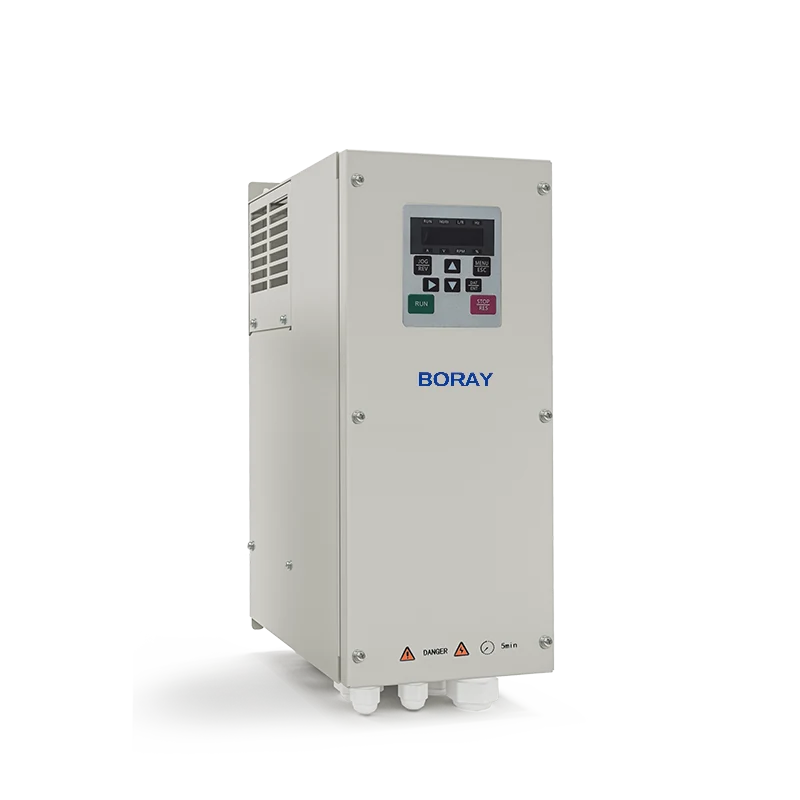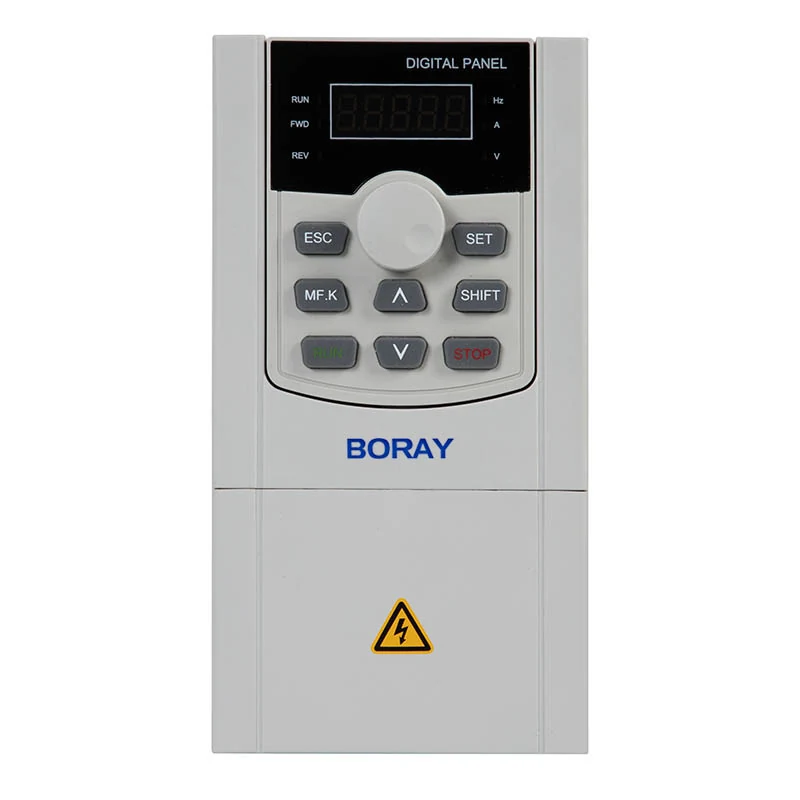

Introduction: Sourcing Variable Frequency Drive Single Phase To 3 Phase for Industrial Use
In remote agricultural installations and legacy industrial facilities worldwide, the limitation of single-phase grid infrastructure often conflicts with the operational demands of high-efficiency three-phase motors. Whether powering deep-well solar pumps in off-grid regions or retrofitting manufacturing lines where three-phase utility supply is economically unfeasible, Variable Frequency Drives (VFDs) configured for single-phase input to three-phase output have emerged as critical infrastructure bridges. These specialized drives deliver stable 380V-460V three-phase power from available 220V-240V single-phase sources while enabling advanced vector control, soft-start capabilities, and documented 15-30% energy savings compared to direct-online starting methods.
This comprehensive technical guide addresses the strategic sourcing and specification of single-phase to three-phase VFDs for industrial engineers, EPC contractors, and agricultural project managers navigating complex power conversion challenges. We examine drive architectures ranging from compact 2HP units for residential solar pumping systems to industrial-grade 30HP+ solutions designed for constant torque applications, analyzing critical procurement parameters including input current derating requirements (typically 200% of three-phase input models), DC bus stability under fluctuating single-phase supply, and carrier frequency optimization for long-cable pump installations.
Beyond fundamental conversion topology, we evaluate global manufacturer capabilities, IEC/UL certification standards, and integration protocols specific to solar pumping inverters and industrial automation environments. Whether specifying equipment for submersible borehole retrofits or conveyor system upgrades, understanding closed-loop vector control algorithms, regenerative braking limitations, and EMI filtering requirements ensures reliable phase conversion without compromising motor longevity or system-wide operational efficiency.
Article Navigation
- Top 4 Variable Frequency Drive Single Phase To 3 Phase Manufacturers & Suppliers List
- Introduction: Sourcing Variable Frequency Drive Single Phase To 3 Phase for Industrial Use
- Technical Types and Variations of Variable Frequency Drive Single Phase To 3 Phase
- Key Industrial Applications for Variable Frequency Drive Single Phase To 3 Phase
- Top 3 Engineering Pain Points for Variable Frequency Drive Single Phase To 3 Phase
- Component and Hardware Analysis for Variable Frequency Drive Single Phase To 3 Phase
- Manufacturing Standards and Testing QC for Variable Frequency Drive Single Phase To 3 Phase
- Step-by-Step Engineering Sizing Checklist for Variable Frequency Drive Single Phase To 3 Phase
- Wholesale Cost and Energy ROI Analysis for Variable Frequency Drive Single Phase To 3 Phase
- Alternatives Comparison: Is Variable Frequency Drive Single Phase To 3 Phase the Best Choice?
- Core Technical Specifications and Control Terms for Variable Frequency Drive Single Phase To 3 Phase
- Future Trends in the Variable Frequency Drive Single Phase To 3 Phase Sector
- B2B Engineering FAQs About Variable Frequency Drive Single Phase To 3 Phase
- Disclaimer
- Conclusion: Partnering with Boray Inverter for Variable Frequency Drive Single Phase To 3 Phase
Technical Types and Variations of Variable Frequency Drive Single Phase To 3 Phase
Single-phase to three-phase VFDs function by rectifying AC input into a DC bus voltage, then inverting this through an IGBT bridge to synthesize three-phase PWM output. However, the technical implementation varies significantly based on input voltage architecture, boost requirements, and application-specific control strategies. Below are the critical variations encountered in industrial and agricultural deployments.
| Type | Technical Features | Best for (Industry) | Pros & Cons |
|---|---|---|---|
| Active Boost 1P-3P VFD | • Input: 220–240V AC Single Phase (L-N) • Output: 380–460V AC Three Phase • Integrated DC-DC boost stage (540VDC bus) • 2× DC link capacitance vs. standard 3P drives • Input current: 1.73× output current (theoretical) |
Rural irrigation, Small machine shops, Material handling (up to 30HP) | Pros: Direct 380V motor compatibility; Eliminates external phase converters; Soft-start functionality Cons: Requires 50% derating (e.g., 22kW rated drive for 11kW motor); High input current (100A+ at 240V/30HP); Increased thermal stress on rectifier diodes |
| Solar/Grid Hybrid DC-AC VFD | • Dual-mode input: 200–800VDC (PV array) OR 220V AC Single Phase • Integrated MPPT algorithm (99% tracking efficiency) • Automatic AC/DC priority switching • IP65/NEMA 4X enclosure standards |
Solar pumping systems, Off-grid agriculture, Remote telemetry stations | Pros: Grid independence during daylight; Seamless backup transition; Optimized for centrifugal pump curves Cons: 30–40% higher CAPEX than grid-only units; Requires PV array oversizing for morning/low-light torque demands; Battery storage not standard |
| Split-Phase Input VFD (240V L-L) | • Input: 120/240V Split Phase (North American L1-L2) • Output: 230V or 460V Three Phase (configurable) • Neutral terminal isolation (L1-L2 only) • UL 61800-5-1 / cUL listed |
North American light industrial, Commercial HVAC retrofits, Food processing | Pros: Utilizes existing 240V residential/commercial service; No utility 3-phase upgrade required Cons: Limited to ~7.5HP (5.5kW) on standard 50A circuits; Output voltage limited to 230V unless step-up transformer used; Sensitive to L1-L2 imbalance |
| Sensorless Vector Control (SVC) 1P-3P | • Open-loop vector control (0.5Hz/150% torque) • Auto-tuning for stator resistance/inductance • Current vector decomposition (Id/Iq control) • 4-quadrant operation capability |
Constant torque loads (conveyors, compressors), Machine tools, High-inertia fans | Pros: Precise torque control independent of line voltage sags; Dynamic speed response (±0.5% accuracy) Cons: Complex parameterization requiring motor nameplate data; DC bus ripple from single-phase input can disrupt flux estimation at low speeds (<5Hz) |
Active Boost Single-to-Three Phase VFDs
These drives represent the most common solution for converting standard residential or rural single-phase power (220–240V) to industrial three-phase (380–460V). The critical technical challenge lies in the voltage differential: single-phase 220V rectifies to approximately 310VDC, insufficient for driving a 380V three-phase motor which requires a ~540VDC bus. Therefore, these VFDs incorporate an active boost converter or utilize the IGBT switching stage to pump the DC link voltage to the required level.
Engineers must account for significant derating when specifying these units. Because single-phase input draws current only during voltage peaks (120Hz ripple), the effective DC bus capacitance must be doubled, and the input current rating is approximately 1.73 times higher than an equivalent three-phase input drive. For a 30HP (22kW) application, the input current approaches 176A at 220V, necessitating heavy-gauge wiring (4/0 AWG or 95mm²) and dedicated circuit protection. Boray Inverter’s PEACO-FC110 series addresses this through reinforced rectifier bridges and oversized DC link capacitors specifically rated for single-phase input duty cycles.
Solar Hybrid DC-to-Three Phase VFDs
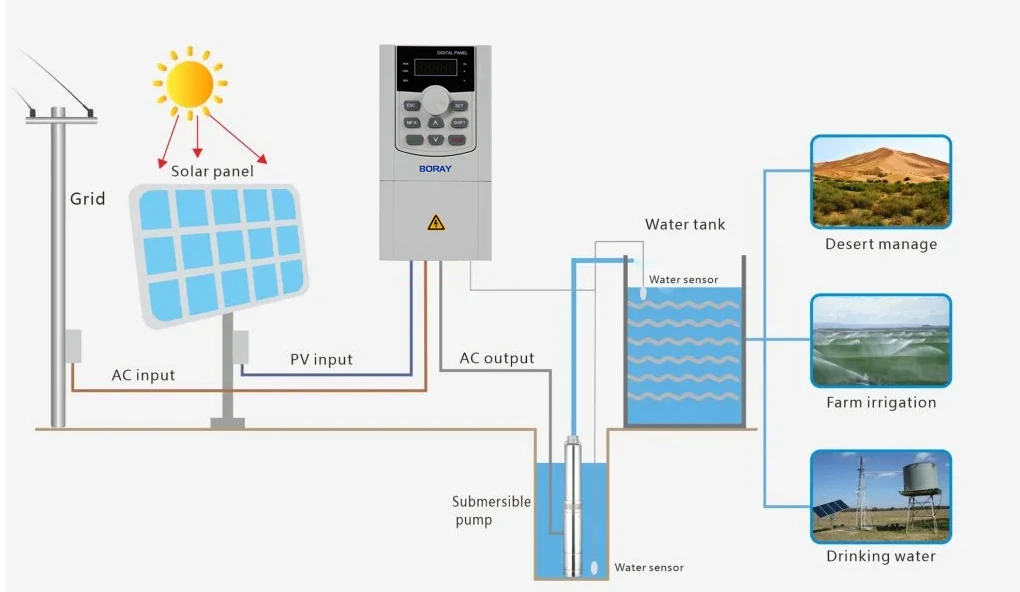
Technically classified as solar pump inverters with AC backup capability, these units bridge photovoltaic DC generation with single-phase grid redundancy. The topology includes a dual-input rectifier stage capable of handling both high-voltage DC (200–800VDC from PV strings) and AC single-phase input through separate EMI filters. When operating in solar mode, the MPPT algorithm adjusts the DC bus voltage to maximize power extraction, while the VFD modulates output frequency based on insolation levels—often implementing “sleep” modes when sunlight is insufficient and “wake” triggers when irradiance returns.
For agricultural EPC contractors, the critical specification is the day/night operation mode: during daylight, the drive runs solely on PV power (frequency varies 20–50Hz based on available power); at night or during low light, an automatic contactor switches to single-phase AC input, maintaining constant 50/60Hz operation. This requires sophisticated anti-islanding protection and DC injection monitoring to prevent back-feeding into the grid. These drives are optimized for centrifugal pump loads (P-type torque curves) rather than constant torque applications.
Split-Phase Input Configurations
Distinct from European single-phase systems, North American split-phase power provides 240V between two hot legs (L1 and L2) derived from a center-tapped transformer. Split-phase input VFDs are engineered to utilize this L1-L2 voltage (ignoring the neutral) while maintaining isolation from ground. The output voltage is typically configurable: 230V three-phase for standard NEMA motors, or 460V when paired with an internal step-up transformer or boost module.
The technical limitation is current capacity. A standard 240V/30A residential service can theoretically support only ~5.5kW (7.5HP) continuous operation, making these units suitable for light industrial applications such as small lathes, drill presses, or HVAC fan retrofits. Engineers must verify the drive’s input voltage imbalance tolerance, as split-phase systems often exhibit 3–5% voltage asymmetry between L1 and L2, which can cause DC bus ripple and premature capacitor failure in non-optimized designs.
Sensorless Vector Control (SVC) Variants
While V/F (Volts/Hz) control suffices for pumps and fans, industrial automation often requires precise torque control for conveyors, hoists, or compressors. Single-phase input VFDs with SVC capability use current sensors and motor parameter estimation algorithms to decompose output current into flux-producing (Id) and torque-producing (Iq) components.
However, the single-phase input introduces 100Hz/120Hz ripple on the DC bus (twice the input frequency), which complicates flux estimation at low speeds (<5Hz). High-quality SVC single-phase drives implement ripple compensation algorithms that sample the DC bus voltage at high frequency (kHz range) and adjust the PWM duty cycle in real-time to maintain consistent current vectors. For constant torque applications (G-type loads), specify drives with at least 150% overload capacity for 60 seconds to handle the inrush currents typical of single-phase input limitations.
Key Industrial Applications for Variable Frequency Drive Single Phase To 3 Phase
In industrial environments where three-phase infrastructure is unavailable or cost-prohibitive to install, single-phase to three-phase VFDs serve as critical power conversion bridges. These drives enable the operation of high-efficiency three-phase motors—essential for modern automation—using existing single-phase grid supplies or hybrid solar-diesel inputs. By leveraging advanced DC bus voltage management and active rectification, these VFDs overcome the inherent power limitations of single-phase sources (typically 220V–240V) while delivering balanced 380V–460V three-phase output with vector-controlled precision.
Below is a strategic breakdown of high-impact sectors where this conversion technology delivers measurable ROI, followed by detailed implementation guidance for engineering procurement.
| Sector | Application | Energy Saving Value | Sourcing Considerations |
|---|---|---|---|
| Agriculture & Solar Pumping | Deep-well submersible pumps, center-pivot irrigation, livestock watering systems | 25–40% reduction in energy costs; optimized PV array utilization via integrated MPPT; elimination of water hammer | IP65/NEMA 4X enclosure for outdoor exposure; dual AC/DC input terminals for solar hybrid operation; heavy-duty derating (150% overload capacity for 60s) to handle pump inrush |
| Water Treatment & Distribution | Municipal booster stations, filtration backwash pumps, chemical dosing agitators | 15–30% reduction in pumping energy; soft-start functionality eliminates pressure transients | Built-in PID control for constant pressure/flow; P-type pump duty rating vs. G-type constant torque selection; phase-loss protection and automatic voltage regulation (AVR) |
| HVAC & Building Automation | Chilled water circulation pumps, rooftop unit fans, cooling tower motors | 20–35% HVAC energy savings via variable air/water volume; power factor correction to >0.95 | Low harmonic distortion input (<5% THDi) to prevent grid pollution; sleep/wake function for low-load conditions; EMC compliance for sensitive building management systems |
| Rural Industrial Processing | Grain conveyors, sawmills, small-scale crushers, packaging machinery | 10–20% operational cost reduction; reduced mechanical stress extends motor bearing life | Open-loop vector control (SVC) for 150% starting torque at 0.5Hz; input current capacity verification (e.g., 176A input for 22kW output); terminal block compatibility for split-phase wiring |
Agricultural Irrigation & Solar Pumping Systems
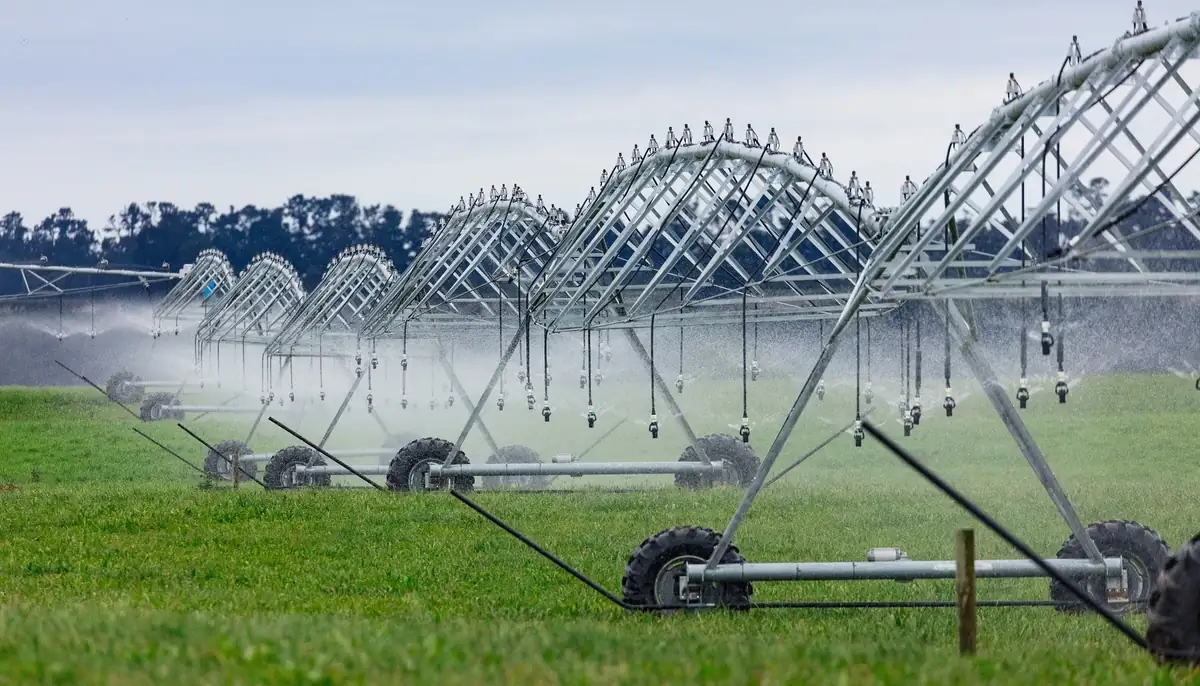
In remote agricultural zones, grid infrastructure often terminates at single-phase distribution, yet modern irrigation demands high-efficiency three-phase submersible pumps. Single-phase to three-phase VFDs resolve this mismatch by converting 220V–240V single-phase input into balanced three-phase power while integrating Maximum Power Point Tracking (MPPT) for direct PV array connection.
Engineering Implementation: When sourcing drives for deep-well applications (typically 100–300m depth), prioritize units with closed-loop vector control (FVC) or high-performance open-loop vector control (SVC) to maintain ±0.5% speed accuracy under varying torque loads. The drive must accommodate high input currents—single-phase units draw approximately 1.73 times the current of three-phase equivalents for the same power output—requiring proper sizing of upstream breakers and wiring. For solar hybrid projects, specify drives with dual-rated input terminals accepting both AC single-phase and 400V–800V DC solar direct-coupling, eliminating the need for separate solar inverters.
Water Treatment & Distribution Infrastructure
Municipal booster stations and filtration plants in rural or developing regions frequently face three-phase power availability constraints. Deploying single-phase input VFDs allows these facilities to utilize standard three-phase pump motors while gaining precise flow control and energy recovery through the affinity laws (where a 20% reduction in pump speed yields 50% energy savings).
Critical Specifications: Specify P-type (pump duty) VFDs optimized for variable torque loads, featuring automatic energy-saving modes that detect light-load conditions and reduce voltage accordingly. The drive should include built-in PID controllers with feedback from pressure transducers to maintain constant discharge pressure regardless of demand fluctuations. Additionally, verify DC braking capabilities (0.00Hz to max frequency range) to prevent backspin in vertical turbine pumps during emergency stops.
HVAC & Commercial Building Automation
Retrofitting legacy HVAC systems in commercial buildings often reveals that while three-phase motors are desired for efficiency, only single-phase power is accessible (particularly in older urban districts or remote resort facilities). Single-phase to three-phase VFDs enable the installation of high-efficiency brushless motors and modern compressors without costly electrical infrastructure upgrades.
Technical Requirements: Select drives with automatic carrier frequency adjustment (0.5–16kHz) to reduce motor noise in occupied spaces, and sleep/wake functions that shut down the motor during low-demand periods while maintaining system readiness. Given the sensitive electronics in building automation systems, electromagnetic compatibility (EMC) filters are non-negotiable to prevent conducted emissions from disrupting BACnet or Modbus communication networks. Input current total harmonic distortion (THDi) should remain below 5% to comply with IEEE 519 standards and avoid utility penalties.
Rural Industrial Machinery & Processing
Small-to-medium enterprises (SMEs) in mining, forestry, and food processing often operate in zones with limited three-phase infrastructure. Single-phase input VFDs power essential equipment—such as conveyor belts, hammer mills, and refrigeration compressors—while providing soft-start capabilities that reduce mechanical shock and peak demand charges.
Procurement Guidelines: For constant torque applications (crushers, conveyors), specify G-type (general duty) drives with 150% overload capacity for 60 seconds and 180% for 3 seconds to handle startup inertia. Verify the drive’s input current rating matches your available single-phase supply; for example, a 30HP (22kW) application may require 176A input capacity at 220V, necessitating robust terminal blocks and heat dissipation management. Ensure the unit supports RS485 communication for integration with SCADA systems, allowing remote monitoring of voltage, current, and fault codes across distributed rural sites.
Top 3 Engineering Pain Points for Variable Frequency Drive Single Phase To 3 Phase
Scenario 1: Grid Capacity Constraints and Harmonic Distortion in Rural Electrification
The Problem:
Single-phase input VFDs draw approximately 1.73 times the RMS current of three-phase equivalents to deliver equivalent shaft power, generating significant 5th and 7th harmonic currents that distort the voltage waveform on weak rural grids. For EPC contractors and agricultural project managers deploying solar pump systems or irrigation infrastructure, this asymmetrical current load creates neutral conductor overheating, transformer saturation, and nuisance tripping of upstream protection devices. The resulting voltage sag (often exceeding 10% nominal) compromises the performance of adjacent single-phase equipment and violates IEEE 519 harmonic standards, particularly problematic in mixed-use microgrids where residential and industrial loads share distribution transformers.
The Solution:
Specify VFDs equipped with built-in DC bus chokes or active front-end (AFE) rectifier technology to reduce total harmonic distortion (THDi) below 5%, thereby minimizing grid impact. Boray Inverter’s single-phase to three-phase VFDs incorporate intelligent power factor correction (PFC) and automatic voltage regulation (AVR) to stabilize input current draw across varying load conditions. When sizing the system, apply a minimum 50% derating factor to the VFD’s three-phase current rating to accommodate single-phase input limitations, and select drives with 150% overload capacity for 60 seconds to handle pump inrush currents without requiring grid infrastructure upgrades. For solar hybrid applications, integrate maximum power point tracking (MPPT) algorithms to buffer grid demand during peak irradiance.
Scenario 2: Starting Torque Deficiency in High-Inertia Pump Applications
The Problem:
When converting single-phase 220-240V input to drive three-phase 380-460V motors for deep-well submersible pumps or positive displacement irrigation systems, engineers encounter critical torque deficits during startup. The inherent power limitation of single-phase supplies restricts the DC bus voltage stability, causing “sag” conditions that reduce available starting torque below the 150-180% threshold required to overcome static friction and hydraulic head pressure. This results in extended acceleration periods, motor stall conditions, and repeated overcurrent faults—particularly detrimental in solar pumping applications where irradiance fluctuations compound the power deficit, leading to premature bearing wear and mechanical seal failure due to hunting speed oscillations.
The Solution:
Implement sensorless vector control (SVC) or closed-loop flux vector control (FVC) algorithms that deliver 180% starting torque at 0.5 Hz, even under derated single-phase input conditions. Configure the VFD with oversized DC bus capacitance (minimum 20% higher than standard three-phase equivalents) to buffer voltage ripple during high-torque demands. Utilize Boray Inverter’s heavy-duty series featuring automatic torque boost and S-curve acceleration profiles to eliminate hydraulic shock and cavitation in pipeline systems. For constant torque loads (e.g., borehole pumps or conveyor systems), enable the “stall prevention” function and set carrier frequency auto-adjustment to reduce switching losses while maintaining ±0.5% speed accuracy critical for precision agriculture applications.
Scenario 3: Environmental Degradation and Thermal Management in Remote Installations
The Problem:
Single-phase to three-phase VFD conversions are frequently deployed in agricultural and solar pumping sites where equipment faces ambient temperatures from -20°C to +50°C, conductive dust, and 100% relative humidity condensation. Standard IP20-rated drives suffer thermal runaway due to restricted airflow in dusty environments, exacerbated by the additional heat generation inherent in single-phase rectification (higher ripple currents increase I²R losses in capacitors and bus bars). Furthermore, rural single-phase networks typically exhibit voltage fluctuations of ±20%, stressing DC bus components and cooling systems. This combination reduces mean time between failures (MTBF) by up to 40% compared to climate-controlled industrial environments, creating unplanned downtime during critical irrigation windows.
The Solution:
Specify fully enclosed IP65 or NEMA 4X VFDs with conformal-coated PCBs and passive cooling heat sinks (fanless design) to eliminate dust infiltration and ventilation maintenance requirements. Select drives with wide-range input voltage tolerance (accommodating 320V-460V output despite input fluctuations) and automatic carrier frequency derating based on thermal load, reducing switching losses during high-temperature operation. Boray Inverter’s solar pump VFDs integrate built-in DC reactors to manage input voltage imbalance and temperature-compensated charging circuits to extend electrolytic capacitor life. For extreme environments, implement external braking resistors with thermal protection and configure “sleep mode” functionality to minimize idle power consumption and thermal cycling stress during low-demand periods.
Component and Hardware Analysis for Variable Frequency Drive Single Phase To 3 Phase
The conversion topology for single-phase input to three-phase output imposes unique electrical stresses on VFD hardware, particularly regarding input current harmonics and DC-link voltage ripple. Unlike standard three-phase VFDs that benefit from 300 Hz rectification ripple, single-phase input at 50/60 Hz generates significant 100 Hz pulsation, requiring derated component specifications and enhanced thermal management. For agricultural and solar pumping applications—where grid stability is often variable and ambient temperatures exceed 40°C—hardware resilience determines not only conversion efficiency but operational longevity.
Power Semiconductor Architecture
Input Rectification Stage: Single-phase to three-phase VFDs utilize full-wave bridge rectifiers rated for substantially higher current than their three-phase counterparts. For a 22 kW system (30 HP), input currents can reach 176A (as evidenced in heavy-duty pump applications), necessitating rectifier modules with 1.5x to 2x safety margins and integrated thermal protection. High-grade rectifier bridges employ press-fit or solderable diode technologies with low forward voltage drop (Vf < 1.2V) to minimize conduction losses that compound under continuous high-current operation.
IGBT Inverter Modules: The output stage relies on six-switch IGBT bridges (or intelligent power modules/IPMs) to synthesize three-phase sinusoidal waveforms from the DC bus. Critical specifications include:
– Collector-Emitter Saturation Voltage (Vce(sat)): Lower values (< 1.7V at rated current) reduce switching losses
– Thermal Resistance (Rth(j-c)): Must maintain junction temperatures below 125°C under 150% overload conditions (typical for pump motor starting torque)
– Switching Frequency: Agricultural VFDs typically operate at 2-16 kHz; higher frequencies require IGBTs with fast reverse recovery characteristics to prevent motor bearing currents
DC-Link Capacitor Bank: To mitigate 100 Hz ripple from single-phase rectification, the DC bus requires high-density film capacitors or extended-life electrolytic arrays with elevated ripple current ratings (often 20-30% higher than three-phase equivalents). Metallized polypropylene film capacitors offer superior performance in solar pumping installations due to their self-healing properties and 100,000-hour lifespan ratings at rated temperature.
Control and Protection Systems
Digital Signal Processors (DSP): Modern single-phase to three-phase VFDs employ 32-bit DSPs or ARM Cortex-M4/M7 microcontrollers executing space vector pulse width modulation (SVPWM) algorithms. These controllers must compensate for input voltage fluctuations (common in rural single-phase grids) while maintaining balanced three-phase output with voltage unbalance < 3%. Advanced drives integrate motor parameter auto-tuning for both squirrel-cage induction motors and permanent magnet synchronous motors (PMSM), crucial for solar pump systems utilizing high-efficiency brushless DC pumps.
Current Sensing Networks: Hall-effect sensors or shunt resistors with isolated sigma-delta modulators provide real-time feedback for vector control. In single-phase input configurations, accurate DC bus current monitoring prevents capacitor overloading during low-input-voltage conditions, while output current sensors detect phase imbalances that could indicate motor insulation degradation in deep-well pumping applications.
Thermal Management Infrastructure
Heatsink Assemblies: Given that single-phase input generates higher RMS currents for equivalent power output, thermal design requires aluminum extrusions with optimized fin density (typically 15-25 fins per inch) and forced air convection. For solar pump inverters operating in desert environments, heatsinks undergo anodization (Type II, Class 2) to prevent oxidation, while thermal interface materials (TIMs) with <0.2°C-in²/W thermal resistance ensure efficient heat transfer from IGBT baseplates.
Cooling Systems: High-capacity DC fans with ball-bearing constructions (MTBF > 50,000 hours) or hydrodynamic bearing designs operate on the DC bus voltage, featuring tachometer feedback for fault detection. In critical agricultural applications, redundant fan configurations prevent thermal shutdown during peak solar irradiance periods.
Component Quality Analysis Table
| Component | Function | Quality Indicator | Impact on Lifespan |
|---|---|---|---|
| IGBT Power Module | DC-to-AC inversion via high-speed switching; generates three-phase output from DC bus | Vce(sat) < 1.7V; Rth(j-c) < 0.8°C/kW; switching frequency capability ≥ 16 kHz; short-circuit withstand time > 10μs | Directly determines MTBF; high-quality modules prevent thermal runaway and extend service life to 100,000+ hours under 80% load conditions |
| DC-Link Capacitor | Filters rectified DC ripple; stores energy for motor inrush; stabilizes voltage during single-phase input pulsation | ESR < 20mΩ @ 100Hz; ripple current rating ≥ 1.5x calculated load; operating life ≥ 100,000 hrs @ 105°C; self-healing film construction | Primary failure mode in single-phase VFDs; quality capacitors prevent bus voltage collapse and avoid catastrophic rectifier failure, extending system life from 3 to 10+ years |
| DSP Controller | Executes V/f or vector control algorithms; manages PWM timing; provides protection logic | Processing speed ≥ 40 MIPS; 12-bit ADC resolution; temperature range -40°C to +85°C; hardware fault tolerance | Prevents control lock-ups that cause overcurrent trips; industrial-grade processors ensure 15+ year operational life in harsh agricultural environments |
| Input Reactor/Choke | Limits inrush current; reduces harmonic distortion (THDi); protects rectifier from grid transients | Inductance tolerance ±5%; saturation current > 200% rated; Class H insulation (180°C); copper fill factor > 0.5 | Reduces rectifier diode stress by 30-40%; prevents capacitor overheating from harmonic currents, significantly extending power stage longevity |
| Cooling Heatsink | Dissipates semiconductor heat; maintains junction temperatures within safe operating area | Thermal resistance < 0.5°C/W; aluminum alloy 6063-T5; anodized surface; fin height optimized for CFM rating | Critical for preventing thermal cycling fatigue; proper thermal design maintains IGBT junction temps < 80°C, preventing solder joint degradation and extending inverter life by 5-8 years |
| Pre-Charge Circuit | Limits inrush current to DC capacitors during startup; prevents contactor welding | Power resistor rating ≥ 50W; relay/contact MTBF > 100,000 cycles; temperature coefficient < 200 ppm/°C | Prevents electrolytic capacitor damage from repetitive high-current charging; critical for systems with frequent power cycling (solar irrigation) |
| EMI Filter | Suppresses conducted emissions; prevents motor bearing currents; protects against grid-borne surges | Insertion loss > 40dB @ 150 kHz; leakage current < 3.5mA; Y-capacitors rated for 250V AC continuous | Prevents premature motor bearing fluting and insulation damage; high-quality filters reduce common-mode voltage stress on motor windings |
Procurement Considerations for EPC Contractors
When specifying single-phase to three-phase VFDs for solar pumping projects, verify that IGBT modules utilize trench-gate field-stop technology rather than planar designs, offering 20% lower switching losses. For capacitors, demand metallized polypropylene film over aluminum electrolytic in installations where ambient temperatures exceed 45°C or where maintenance-free operation is required. Additionally, confirm that the DSP firmware includes specific algorithms for single-phase input compensation—standard three-phase VFD firmware ported to single-phase hardware often results in excessive DC bus ripple and reduced capacitor lifespan.
The integration of these high-reliability components ensures that conversion systems can withstand the 1.5x to 2x input current demands inherent to single-phase topology while delivering the precise torque control necessary for deep-well submersible pumps and agricultural irrigation systems.
Manufacturing Standards and Testing QC for Variable Frequency Drive Single Phase To 3 Phase
At Boray Inverter, the manufacturing of single-phase to three-phase Variable Frequency Drives (VFDs) demands a specialized quality assurance protocol that addresses the unique electrical stresses inherent in phase-conversion topology. Unlike standard three-phase input drives, these units manage asymmetric input rectification and elevated DC bus ripple currents, necessitating rigorous component screening and 100% functional validation before deployment in agricultural and industrial environments.
Component-Level Screening and PCB Protection
The foundation of reliability begins with IPC-A-610 Class 2 (or higher) compliant PCB assembly standards. For single-phase input VFDs—particularly those rated for 22kW/30HP applications with input currents exceeding 170A—surface-mount technology undergoes automated optical inspection (AOI) and X-ray verification to eliminate voids in IGBT solder joints and capacitor terminations.
Conformal Coating Protocols:
Given the propensity for agricultural pump installations and solar pumping systems to operate in high-humidity, chemically aggressive environments, all control boards receive a dual-layer conformal coating process:
– Primary Layer: Acrylic-based coating (IPC-CC-830 compliant) providing moisture and fungus resistance
– Secondary Layer: Urethane or silicone overcoat for UV stability and thermal shock protection, critical for outdoor solar pump inverter installations exposed to direct sunlight and temperature differentials exceeding 50°C daily
This coating ensures protection against condensation-induced leakage currents, particularly vital when converting single-phase 220V-240V input to three-phase 380V-460V output in remote locations with limited shelter.
High-Temperature Aging and Burn-in Testing
To simulate the thermal stress of single-phase rectification—where capacitor ripple currents are significantly higher than three-phase equivalents—every drive undergoes a 72-hour high-temperature aging cycle at 45°C ambient with 85% rated load. This process:
– Activates early-life failure mechanisms in electrolytic capacitors (particularly the DC bus capacitors that buffer the pulsating single-phase input)
– Validates thermal management of the rectifier stage, which experiences 100Hz ripple (for 50Hz grids) versus 300Hz in three-phase systems
– Confirms solder joint integrity under thermal cycling conditions mimicking agricultural environments with intermittent shading and full sun exposure
Thermal imaging verification ensures hotspot temperatures on IGBT modules remain below Tj(max) specifications during this burn-in, with particular attention to the input rectifier bridge that handles asymmetric current draw characteristic of single-phase to three-phase conversion.
100% Full-Load Dynamic Testing
Unlike statistical sampling methods, Boray Inverter employs 100% full-load production testing for every single-phase to three-phase VFD. Each unit undergoes:
-
Input Current Harmonics Verification: Ensuring THDi (Total Harmonic Distortion of current) remains below IEC 61000-3-2 limits despite the single-phase input, protecting weak rural grids common in agricultural deployments.
-
Phase Balance Validation: Under 150% overload conditions (as specified for constant torque G-type drives), output voltage imbalance is verified to be <1% between phases—critical for preventing motor overheating in three-phase pumps and elevators.
-
Regeneration and Braking: Testing DC injection braking and over-voltage suppression during deceleration, ensuring the drive can handle pump back-pressure and inertial loads without tripping.
-
Voltage Fluctuation Immunity: Simulating grid voltage variations from -20% to +15% of nominal 220V input to verify AVR (Automatic Voltage Regulation) functionality, essential for solar pump systems experiencing irradiance fluctuations.
Compliance and Certification Standards
Manufacturing adheres to international standards ensuring global deployability for EPC contractors and automation distributors:
- CE Marking: Full compliance with EN 61800-5-1 (adjustable speed electrical power drive systems safety requirements) and EN 61800-3 (EMC requirements and specific test methods), including immunity testing for electrostatic discharge and radiated fields.
- ISO 9001:2015: Quality management systems ensuring traceability from raw material lot numbers through final test reports.
- IEC 61000-4-2/4-4: Electrostatic discharge and electrical fast transient/burst immunity, critical for installations with long motor cable runs in agricultural settings.
- RoHS 2.0 and REACH: Environmental compliance for European and North American markets.
Traceability and Documentation for B2B Integration
For industrial engineers and project managers, each unit ships with a comprehensive Test Report Certificate including:
– Serial number traceability to component batch codes (particularly for IGBTs and capacitors)
– Actual load test data vs. nameplate specifications (input current, output voltage balance, efficiency at rated load)
– Conformal coating thickness measurements (typically 25-75μm per IPC-CC-830)
– Thermal imaging documentation from burn-in testing
This documentation package supports EPC contractor requirements for commissioning solar pumping stations and industrial automation projects, providing the audit trail necessary for warranty claims and predictive maintenance programs.
By implementing these manufacturing standards—from conformal coating protection against agricultural humidity to 100% load verification of phase-conversion efficiency—Boray Inverter ensures that single-phase to three-phase VFDs deliver the 15-30% energy savings and extended motor life expected in demanding industrial and solar pumping applications, while maintaining the reliability standards required for remote, unmanned installations.
Step-by-Step Engineering Sizing Checklist for Variable Frequency Drive Single Phase To 3 Phase
Before initiating procurement or system design, engineers must validate electrical parameters across the single-phase input infrastructure, the three-phase motor load, and the Variable Frequency Drive’s internal power topology. Single-phase to three-phase conversion introduces unique constraints—including elevated input current demands, DC bus ripple considerations, and potential voltage boost requirements—that necessitate rigorous mathematical verification beyond standard three-phase VFD sizing.
Phase 1: Input Power Infrastructure Assessment
1.1 Single-Phase Supply Characterization
– [ ] Measure nominal line voltage (L-N): Confirm stable 220V, 230V, or 240V ±10% at the installation point. Record minimum and maximum voltage fluctuations during peak agricultural or industrial usage periods.
– [ ] Calculate available short-circuit current (Isc): Verify the distribution transformer’s capacity to handle inrush currents. Single-phase VFD inputs draw 1.732× higher current per conductor compared to three-phase equivalents; ensure the supply breaker and wiring can sustain this without nuisance tripping.
– [ ] Assess Total Harmonic Distortion (THD): Single-phase rectifier front-ends generate higher 2nd and 4th harmonic currents. Verify local utility THD limits (<5% IEEE 519) and plan for AC line reactors if THD exceeds 3% at the point of common coupling.
1.2 Input Current Derating Calculation
– [ ] Apply √3 derating factor: For a given motor power (P_motor), calculate required VFD input current capacity:
$$I_{input} = \frac{P_{motor} \times 746}{\eta_{motor} \times V_{input} \times PF_{drive}} \times 1.732$$
where η_motor = motor efficiency (typically 0.85–0.93), PF_drive = drive power factor (0.95 typical), and 1.732 accounts for single-phase current concentration.
– [ ] Verify capacitor ripple current rating: Ensure the VFD’s DC bus capacitors are rated for 1.5×–2× ripple current compared to three-phase operation, as single-phase rectification produces 100Hz ripple (50Hz systems) versus 300Hz in three-phase bridges.
Phase 2: Three-Phase Load & Motor Specifications
2.1 Motor Nameplate Data Extraction
– [ ] Record Full Load Amps (FLA): Size VFD output current ≥ 110% of motor FLA for constant torque applications (agricultural pumps, compressors) or ≥ 100% for variable torque (HVAC fans).
– [ ] Verify insulation class: Confirm Class F or H insulation for motors operating at the elevated switching frequencies (4–16 kHz) typical of modern IGBT-based VFDs.
– [ ] Service Factor (SF) analysis: If motor SF = 1.15, ensure VFD continuous current rating accommodates 115% FLA without thermal derating.
2.2 Load Dynamics & Torque Profiling
– [ ] Determine load type:
– Constant Torque (CT): Positive displacement pumps, conveyors—require 150% overload capacity for 60 seconds.
– Variable Torque (VT): Centrifugal pumps, fans—require 120% overload for 60 seconds.
– [ ] Calculate breakaway torque: For deep-well solar pumps or high-static head systems, verify the VFD can deliver 150–180% starting torque at 0.5 Hz (sensorless vector control) or 0 Hz (closed-loop with encoder).
Phase 3: Voltage Compatibility & Boost Requirements
3.1 Input/Output Voltage Topology
– [ ] Verify voltage boost capability: Standard 220V single-phase input produces ~310V DC bus (220V × √2). To drive a 380V three-phase motor, the VFD must utilize voltage boost algorithms or active PFC stages. Confirm output voltage range covers 320V–460V (as per PEACO-FC110 series specifications).
– [ ] Check V/Hz ratio limits: Ensure the drive maintains constant V/Hz ratio (380V/50Hz = 7.6 V/Hz) across the operating range to prevent motor saturation or flux weakening.
3.2 Solar Array Integration (for Solar Pump VFDs)
– [ ] String Voltage Sizing (Vmp): For Boray solar pump inverters, calculate:
$$V_{mp_array} = V_{mp_panel} \times N_{series}$$
Target Vmp_array within the VFD’s MPPT range (typically 250V–750V DC for hybrid units).
– [ ] Open Circuit Voltage (Voc) Safety: Verify Voc at minimum temperature (-10°C coefficient) does not exceed VFD maximum DC input voltage (typically 800V or 1000V):
$$V_{oc_max} = V_{oc_stc} \times [1 + (T_{min} – 25) \times \alpha] \times N_{series}$$
where α = temperature coefficient (%/°C), typically -0.3%/°C for crystalline silicon.
– [ ] Current matching: Size solar array Isc to exceed motor FLA by 25% to account for irradiance fluctuations and ensure MPPT tracking stability during cloud transients.
Phase 4: Protection & Ancillary Component Sizing
4.1 Input Side Protection
– [ ] Circuit breaker coordination: Select breaker at 1.25×–1.5× VFD rated input current (single-phase), Type C or D trip curve to withstand capacitor charging inrush (up to 3× rated current for 5ms).
– [ ] AC Line Reactor specification: Install 3% impedance reactor if supply transformer kVA > 10× VFD kVA to mitigate current harmonics and protect rectifier bridges from voltage spikes.
4.2 Output Side Considerations
– [ ] Motor cable length derating: For cable runs >50m (agricultural boreholes), calculate voltage drop (<3%) and add output reactors or dv/dt filters to protect motor windings from reflected wave phenomena.
– [ ] Braking resistor calculation: For high-inertia loads (large flywheels), calculate braking power:
$$P_{brake} = \frac{E_{kinetic}}{t_{decel}} = \frac{0.5 \times J \times \omega^2}{t_{decel}}$$
Verify resistor duty cycle and ohmic value match VFD specifications (typically 10%–20% ED).
Phase 5: Environmental & Compliance Validation
5.1 Thermal & Altitude Derating
– [ ] Ambient temperature derating: Apply 1% current reduction per °C above 40°C. For solar pump installations in desert climates (50°C ambient), oversize VFD by 10% minimum.
– [ ] Altitude correction: Derate VFD current 1% per 100m above 1000m altitude due to reduced air cooling capacity and dielectric strength reduction.
5.2 Enclosure & Ingress Protection
– [ ] IP rating selection: Specify IP54 or IP65 for outdoor agricultural installations; verify heat sink fin spacing for dust/debris clearance in desert or pollen-heavy environments.
Final Engineering Verification Matrix
| Parameter | Single-Phase Input Requirement | Three-Phase Output Requirement | Verification Status |
|---|---|---|---|
| Voltage | 220–240V ±10% L-N | 380–460V L-L (boosted) | [ ] |
| Current | ≥1.732× Output Current | ≥110% Motor FLA (CT) | [ ] |
| Power | kVA = (kW × 1.732) / PF | kVA ≥ Motor Nameplate | [ ] |
| Solar Voc | N/A (if grid-tied) or ≤1000V DC | N/A | [ ] |
| Protection | Class C/D Breaker, 3% Reactor | Motor Thermistor, dV/dt Filter | [ ] |
| Environment | Derated for >40°C/1000m | Motor insulation Class F/H | [ ] |
Critical Pre-Commissioning Note: Prior to energization, verify the VFD’s parameter settings for single-phase input mode (disabling phase-loss protection if applicable) and confirm the DC bus voltage ripple remains <5% under full load to ensure longevity of electrolytic capacitors and stable three-phase output waveform symmetry.
Wholesale Cost and Energy ROI Analysis for Variable Frequency Drive Single Phase To 3 Phase
When procuring single-phase to three-phase Variable Frequency Drives (VFDs) for industrial or agricultural deployment, B2B stakeholders must evaluate beyond unit sticker prices to encompass total cost of ownership (TCO), energy recovery timelines, and warranty risk mitigation. For EPC contractors and automation distributors, the economic advantage of these conversion drives—particularly in the 22kW/30hp range—lies in their ability to eliminate costly three-phase infrastructure upgrades while delivering vector-controlled efficiency gains of 15–30% on motor operations.
B2B Pricing Architecture and Volume Tiers
Wholesale procurement of single-phase input VFDs (specifically 2S/4T topology units converting 220V–240V single-phase input to 320V–460V three-phase output) follows distinct volume brackets that significantly impact project margins. Factory gate pricing for 22kW constant torque or pump-duty drives typically stratifies at three levels:
- Container Volume (500+ units): Direct OEM pricing, often 40–45% below retail, suitable for large-scale agricultural irrigation EPCs or national distributor stock.
- Project-Based Wholesale (50–200 units): Tier-one distributor pricing with 25–35% margin retention, ideal for regional solar pumping installations.
- Contractor Bulk (10–50 units): Secondary wholesale tier with 15–20% discount off MSRP, appropriate for smaller automation integrators.
Unlike standard three-phase VFDs, single-phase to three-phase variants command a 15–25% manufacturing premium due to doubled IGBT capacity requirements in the input rectifier stage and enhanced DC bus capacitance needed to maintain stable 380V output from single-phase sources. However, this premium is offset by the elimination of external phase conversion equipment (rotary or static phase converters), which typically cost $800–$2,500 per installation point and introduce 8–12% efficiency losses.
Capital Expenditure vs. Infrastructure Avoidance
For agricultural project managers and rural industrial engineers, the primary ROI driver is infrastructure avoidance. Extending three-phase utility service to remote pumping stations or processing facilities incurs utility connection fees ranging from $5,000 to $15,000 per site, plus trenching and conductor costs. Single-phase to three-phase VFDs leverage existing 220V/240V single-phase rural grids, converting available power to drive three-phase induction motors with vector control precision (±0.5% speed accuracy in open-loop SVC mode).
CAPEX Comparison (22kW/30hp System):
| Cost Component | Traditional Three-Phase Setup | Single-Phase VFD Conversion |
|---|---|---|
| Utility Three-Phase Connection | $8,500–$12,000 | $0 (uses existing service) |
| Phase Converter Hardware | $1,200–$2,800 | $0 (integrated) |
| VFD Unit (Wholesale) | $1,400–$1,800 (standard 3-phase input) | $1,800–$2,400 (single-phase input) |
| Installation Labor | $600–$900 | $400–$600 (simpler wiring) |
| Total Project CAPEX | $11,700–$16,500 | $2,200–$3,000 |
This represents an immediate capital avoidance of $9,500–$13,500 per node, allowing project capital to be redirected toward PV array expansion or motor upgrades.
Quantitative Energy ROI Modeling
Energy return on investment for these VFDs derives from two mechanisms: motor efficiency optimization and demand charge reduction. A 30hp (22kW) motor operating 2,000 hours annually at 85% load consumes approximately 37,400 kWh/year under direct-on-line (DOL) starting. With VFD-controlled variable torque (for pumps) or constant torque applications, energy savings typically range 15–30%, yielding 5,610–11,220 kWh annual reduction.
ROI Calculation Example (Global Industrial Average $0.12/kWh):
- Annual Energy Savings: 9,350 kWh (25% average efficiency gain) × $0.12 = $1,122/year
- Wholesale Unit Cost: $1,800 (volume tier)
- Simple Payback Period: 1.6 years
- 10-Year NPV (at 6% discount): $6,850 per unit
For high-duty cycle applications (4,000+ hours/year) such as continuous irrigation or HVAC systems, payback periods compress to under 10 months. Additionally, soft-start functionality eliminates inrush current penalties (typically 6–8× FLA), reducing utility demand charges by 20–40% during motor starting events.
Solar Pumping and Agricultural Application Economics
In off-grid or hybrid solar pumping applications, single-phase to three-phase VFDs with integrated Maximum Power Point Tracking (MPPT) eliminate the need for separate solar inverters and battery banks, reducing system CAPEX by 40–60%. A 22kW solar pump VFD can directly couple to a PV array (300–400VDC input range), converting DC to variable three-phase AC while maintaining pump affinity laws (flow proportional to frequency, power proportional to frequency cubed).
Agricultural Diesel Displacement ROI:
Replacing diesel generator sets for irrigation pumps yields accelerated returns. With diesel equivalent costs at $0.80–$1.20 per liter and generator fuel consumption of 0.3 liters/kWh, solar-VFD systems achieve payback in 12–18 months in high-irradiance regions (5+ peak sun hours), even when accounting for the 15% premium on single-phase input VFD hardware.
Warranty Structures and Total Cost of Ownership
Wholesale procurement agreements typically include tiered warranty structures that impact long-term TCO:
- Standard Wholesale Warranty: 24–36 months (vs. 12 months retail), covering IGBT module failures and capacitor degradation.
- Extended Coverage: Additional 2–3 years available at 8–12% of unit wholesale cost, recommended for harsh agricultural environments (IP54+ enclosures).
- MTBF Considerations: Quality single-phase to three-phase drives exhibit MTBF ratings of 50,000–60,000 hours under full load, with IGBT replacement costs (post-warranty) averaging $300–$600—significantly lower than full unit replacement.
For EPC contractors, negotiating warranty escrow terms or factory-authorized service depot agreements reduces field service liability, particularly critical in remote solar pumping installations where service calls exceed $500 per dispatch.
Strategic Procurement Recommendations
- Harmonized Tariff Optimization: Import under HS Code 8504.40 (AC motor controllers) to leverage favorable duty rates in most jurisdictions, avoiding misclassification as power supplies (8504.40 vs. 8504.40.95).
- Voltage Standardization: Specify 220V–240V ±15% input tolerance to accommodate rural grid fluctuations without additional line conditioners.
- Container Loading Efficiency: 22kW class drives (compact chassis) achieve densities of 480 units per 40-foot high-cube container, minimizing landed cost per unit for large-scale agricultural electrification projects.
By analyzing wholesale procurement economics alongside energy recovery metrics, B2B buyers can justify the single-phase to three-phase VFD premium through immediate infrastructure avoidance and sustained operational efficiency, particularly within solar pumping and remote industrial automation portfolios.
Alternatives Comparison: Is Variable Frequency Drive Single Phase To 3 Phase the Best Choice?
When evaluating motor control strategies for sites constrained to single-phase infrastructure, technical decision-makers must assess whether a Variable Frequency Drive (VFD) with phase conversion capabilities represents the optimal engineering path or if alternative methodologies better serve specific load characteristics and lifecycle cost targets. The determination hinges on analyzing trade-offs between initial CAPEX, operational flexibility, energy efficiency gains, and maintenance regimes across competing technologies.
Phase Conversion Methodologies: Electronic vs. Electromechanical Approaches
For facilities requiring three-phase motor operation from single-phase supply infrastructure, three primary conversion technologies exist. While VFDs utilize DC bus rectification and IGBT-based three-phase output generation, electromechanical alternatives offer distinct operational profiles.
| Parameter | VFD (Single-to-3-Phase) | Rotary Phase Converter (RPC) | Static Phase Converter |
|---|---|---|---|
| Conversion Principle | AC-DC-AC power electronics with PWM output | Rotary transformer/motor-generator set | Capacitor-based phase shift |
| Output Power Capacity | 100% of motor rated power (derated 30-50% for single-phase input models) | 100% rated power | ~66% rated power (limited starting torque) |
| Speed Control | 0-300Hz variable frequency (Source 2: Vector control to 300Hz) | Fixed frequency (synchronous speed only) | Fixed frequency |
| Starting Torque | 150% at 0.5Hz (SVC), 180% at 0Hz (FVC) per Source 2 specifications | High (requires separate motor starter) | Poor (2/3 winding energization) |
| Energy Efficiency | 95-98% (with 15-30% system energy savings per Source 1) | 80-90% (rotational losses) | 85-90% (capacitive losses) |
| Harmonic Distortion | <5% THD with proper DC chokes | Minimal | High (unbalanced currents) |
| Maintenance Requirements | Low (fan/filter replacement only) | High (bearings, brushes, lubrication) | Medium (capacitor degradation) |
| Relative CAPEX Index | 1.0x (baseline) | 0.6-0.8x | 0.3-0.5x |
Engineering Analysis: Rotary phase converters introduce mechanical complexity and rotational inertia that preclude precise speed modulation, rendering them unsuitable for variable torque pump applications or solar pumping systems where MPPT (Maximum Power Point Tracking) algorithms require dynamic frequency adjustment. Static converters, while economically attractive for light loads, create severe motor heating and torque derating that violate NEMA MG-1 standards for continuous duty cycles above 5HP. The VFD’s ability to provide full torque at zero speed (180% starting torque in FVC mode as specified in Source 2) while maintaining sinusoidal three-phase output makes it the only viable choice for constant torque applications such as positive displacement pumps or conveyor systems.
Motor Starting Technologies: VFD vs. Soft Starter vs. Direct Online (DOL)
Beyond phase conversion, engineers must evaluate whether full variable speed capability is necessary or if reduced-voltage starting suffices.
| Characteristic | VFD (Phase Converting) | Soft Starter | DOL Starter |
|---|---|---|---|
| Inrush Current | 0-150% configurable (soft start) | 200-400% of FLA | 600-800% of FLA |
| Mechanical Stress | Minimal (S-curve acceleration ramps) | Moderate | Severe (instantaneous full torque) |
| Energy Optimization | High (variable speed = cube law savings on pumps) | None (full speed only) | None |
| Power Factor Correction | Unity (0.95-0.99) | 0.3-0.5 lagging during start | 0.3-0.5 lagging |
| Process Control | Closed-loop PID capability (built-in per Source 2) | On/Off only | On/Off only |
| Input Phase Flexibility | Single or three-phase input options | Requires three-phase input | Requires three-phase input |
Strategic Consideration: For agricultural project managers evaluating irrigation upgrades, soft starters provide cost-effective inrush limitation but cannot address system curve inefficiencies. A single-phase-to-three-phase VFD enables pump affinity laws to reduce energy consumption by 15-30% (Source 1 data) through modest speed reductions, whereas soft starters maintain fixed-speed operation at 100% flow regardless of demand. EPC contractors should note that when single-phase supply is the only available infrastructure, soft starters become technically infeasible without upstream phase conversion, effectively mandating VFD adoption for three-phase motor loads exceeding fractional horsepower ratings.
Solar-Powered vs. Grid-Connected VFD Architectures
In remote agricultural or industrial applications, the power source architecture introduces additional decision variables beyond phase conversion topology.
| System Architecture | Solar VFD (DC-AC) | Grid-Tied VFD (Single Phase) | Hybrid VFD System |
|---|---|---|---|
| Input Voltage Range | 200-800VDC (PV array direct) | 220-240VAC ±15% (Source 2 specs) | Auto-switching AC/DC |
| MPPT Integration | Built-in (99% tracking efficiency) | N/A (grid frequency locked) | Dual-mode operation |
| Phase Output Capability | Three-phase 380-460V (Source 2: 320-460V range) | Three-phase 380-460V | Three-phase 380-460V |
| Operational Continuity | Daylight dependent (without battery) | 24/7 (grid dependent) | Seamless transition |
| Initial Infrastructure | High (PV arrays, mounting) | Low (existing single-phase service) | Very High |
| 10-Year TCO | Low (zero fuel cost) | Medium (utility demand charges) | Medium-High |
| Environmental Rating | IP65 typical (outdoor rated) | IP20-IP54 (cabinet mounted) | IP54+ required |
Application Guidance: For automation distributors specifying borehole pumping systems, solar VFDs eliminate the phase conversion question entirely by accepting DC input and synthesizing three-phase output directly. However, when retrofitting existing single-phase agricultural infrastructure where grid power exists but three-phase service extension proves cost-prohibitive (often $10,000-$50,000 USD for rural line extensions), the single-phase-input VFD becomes the economic bridge technology. The critical specification parameter becomes the VFD’s input current rating—Source 2 indicates a 30HP (22kW) unit requires 176A input current at 220V, necessating adequate single-phase service capacity.
Motor Technology Pairing: PMSM vs. Induction Motor (IM) with VFD Control
The final optimization layer involves motor selection when utilizing single-to-three-phase VFDs, particularly relevant for high-efficiency solar pumping mandates.
| Motor Type | Permanent Magnet Synchronous Motor (PMSM) | Squirrel Cage Induction Motor (IM) |
|---|---|---|
| VFD Compatibility | Requires specific PM control algorithms (FVC) | Standard V/F or SVC control (Source 2) |
| Efficiency Class | IE4/IE5 (Premium efficiency) | IE2/IE3 (Standard/Premium) |
| Power Factor | 0.95-0.99 (unity) | 0.85-0.89 (lagging) |
| Torque Density | High (30% smaller frame size) | Standard |
| Temperature Rise | Lower (reduced copper losses) | Higher |
| Cost Premium | 2-3x vs IM | Baseline |
| VFD Complexity | High (requires rotor position feedback for FVC) | Low (open-loop vector sufficient) |
| Maintenance | Risk of demagnetization (rare earth magnets) | Rugged, field-proven |
Technical Recommendation: While Source 2 notes VFDs accommodate both motor types (with specific contact requirements for PM motors), PMSM solutions paired with solar VFDs maximize energy harvest in low-irradiance conditions due to superior partial-load efficiency. However, for general industrial phase conversion applications using existing three-phase induction motors, the standard squirrel cage IM with SVC (Sensorless Vector Control) provides the optimal balance of reliability and performance. The VFD’s automatic voltage regulation (AVR) function—maintaining constant output voltage despite single-phase input fluctuations—protects IM windings from insulation stress that static phase converters often induce.
Decision Matrix: Optimal Deployment Scenarios
Specify Single-Phase-to-Three-Phase VFD When:
– Load requires variable speed control (pumps, fans, conveyors) with 15-30% energy savings potential
– Starting torque requirements exceed 150% of rated load (positive displacement pumps, compressors)
– Only single-phase grid infrastructure exists, and motor HP exceeds static converter practical limits (~3HP)
– Soft starting is required to prevent mechanical damage to coupled equipment
– Power factor correction is needed to avoid utility penalties
Consider Alternatives When:
– Rotary Phase Converter: Budget-constrained fixed-speed applications with available maintenance resources and no speed control requirements
– Soft Starter: Three-phase supply available, fixed-speed operation acceptable, and inrush current reduction is the sole requirement
– Static Converter: Light-duty fractional HP loads (<2HP) with intermittent duty cycles and high cost sensitivity
For solar pumping integrators and agricultural EPCs, the single-phase-input VFD represents the only technology capable of bridging rural electrification infrastructure gaps while delivering the variable speed control necessary for modern water management efficiency standards. The ability to convert single-phase 220-240V input to three-phase 380-460V output (as specified in Source 2) while simultaneously providing vector control precision positions this technology as the superior engineering choice for demanding B2B applications where lifecycle value trumps initial acquisition cost.
Core Technical Specifications and Control Terms for Variable Frequency Drive Single Phase To 3 Phase
When specifying Variable Frequency Drives for single-phase to three-phase conversion in industrial or solar pumping applications, engineers must evaluate both the electrical interface characteristics and the underlying control algorithms that determine system efficiency and motor performance. Below is a comprehensive technical reference framework designed for procurement specialists, EPC contractors, and automation engineers evaluating VFD solutions for agricultural, municipal, or industrial motor control projects.
Input/Output Electrical Characteristics
Power Stage Specifications
Single-phase to three-phase VFDs function as phase converters while simultaneously providing variable frequency output. Critical electrical parameters include:
- Input Configuration: Single-phase 220V–240V AC (±15% tolerance), 50/60Hz universal input. Rated input current typically runs 1.7–2.0 times higher than three-phase equivalents due to single-phase current draw limitations (e.g., 176A input for a 22kW/30HP unit).
- Output Characteristics: Three-phase 380V–460V AC (adjustable 320V–460V range), 0–400Hz (vector control) or 0–3200Hz (V/F control). Output current ratings must account for derating factors when operating in single-phase input mode—typically requiring 1.5× the standard three-phase current capacity to maintain equivalent torque output.
- Voltage Vector Generation: Utilizes IGBT-based PWM (Pulse Width Modulation) with carrier frequencies adjustable between 0.5kHz–16kHz. Higher carrier frequencies reduce motor acoustic noise but increase switching losses; advanced drives feature automatic thermal derating based on heatsink temperature.
Adoptable Motor Types
Compatible with squirrel cage induction motors, asynchronous motors, and permanent magnet synchronous motors (PMSM). For solar pump applications, ensure the VFD supports both surface pumps and submersible borehole pumps with varying inductance characteristics.
Advanced Control Architectures
Vector Control Methodologies
Modern single-phase input VFDs employ sophisticated motor control strategies:
- Open-Loop Vector Control (SVC – Sensorless Vector Control): Provides ±0.5% speed accuracy without encoder feedback. Delivers 150% starting torque at 0.5Hz and 180% torque at 0Hz (via flux vector algorithms), essential for high-inertia loads in agricultural irrigation or industrial conveyors.
- Closed-Loop Vector Control (FVC): Requires encoder feedback but achieves ±0.02% speed accuracy and ±5% torque control precision. Critical for elevator, hoist, or precision positioning applications where speed droop is unacceptable.
- V/F Control (Volts per Hertz): Traditional scalar control suitable for centrifugal pumps and fans. Offers multi-point V/F curve programming to optimize energy consumption in quadratic torque applications.
Maximum Power Point Tracking (MPPT)
For solar pump inverter applications, MPPT algorithms continuously adjust the operating voltage to extract maximum power from photovoltaic arrays. Key specifications include:
* Tracking Efficiency: >99% with scan times <500ms
* Voltage Range: 200V–800VDC (configurable based on PV string configuration)
* Dry-Run Protection: Automatic pump shutoff when well water levels drop, preventing motor damage
Process Control and Protection Parameters
PID Process Control
Built-in PID controllers enable closed-loop process control without external PLCs. Typical applications include:
* Constant Pressure Water Supply: Feedback from 4–20mA pressure transducers automatically adjusts pump speed to maintain setpoint pressure
* Flow Control: Integration with flow meters for precise irrigation management
* Resolution: Digital frequency setting to 0.01Hz; analog setting to 0.025% of maximum frequency
Overload and Thermal Management
VFDs differentiate between load types through derating curves:
- G-Type (General Purpose/Constant Torque): 150% rated current for 60 seconds, 180% for 3 seconds. Suitable for conveyors, compressors, and positive displacement pumps.
- P-Type (Pump/Variable Torque): 120% rated current for 60 seconds, 180% for 3 seconds. Optimized for centrifugal pumps and HVAC applications.
Dynamic Braking Systems
* DC Injection Braking: Programmable from 0.00Hz to maximum frequency with adjustable braking current (0–100%) and duration (0–36 seconds). Critical for stopping high-inertia loads without mechanical brakes.
* Fast Current Limiting: Hardware-based current clamping minimizes overcurrent trips during sudden load changes or phase-to-phase short circuits.
Communication Interface
Standard RS485 Modbus RTU protocol enables integration with SCADA systems, remote monitoring terminals, and multi-pump cascade controllers for booster station applications.
Commercial Terms for Global Procurement
When sourcing single-phase to three-phase VFDs for international projects, understanding Incoterms 2020 ensures clear risk transfer and cost allocation:
- FOB (Free On Board): Seller delivers goods cleared for export onto the vessel at the named port of shipment. Risk transfers when goods pass the ship’s rail. Buyer assumes ocean freight and insurance costs. Preferred when the buyer has established freight forwarding relationships.
- CIF (Cost, Insurance, and Freight): Seller contracts for carriage and insurance to the named port of destination. Risk transfers to buyer upon loading, but seller bears freight and insurance costs to destination. Common for EPC contractors requiring turnkey delivery to project sites.
- EXW (Ex Works): Buyer assumes all transportation costs and risks from the factory. Suitable for distributors with consolidated shipping arrangements.
- DDP (Delivered Duty Paid): Seller assumes all costs and risks including import clearance and duties. Maximum obligation for the seller; ensures price certainty for project budgeting but typically increases unit cost.
Technical Documentation Requirements
B2B procurement should specify provision of:
* CE/UL certification documents
* Harmonic distortion reports (THDi <5% with DC chokes)
* IP rating verification (IP20 standard, IP54/65 for agricultural environments)
* Factory acceptance test (FAT) protocols including load testing at 110% rated current
For solar pumping applications, additional specifications should include dry-run protection algorithms, automatic restart sequences after power outages, and compatibility with floating pump intake systems. When specifying for agricultural projects, ensure the VFD enclosure ratings account for dust, humidity, and temperature extremes typical of remote installation environments.
Future Trends in the Variable Frequency Drive Single Phase To 3 Phase Sector
The single-phase to three-phase VFD sector is undergoing rapid transformation driven by the decentralization of industrial power systems, aggressive rural electrification initiatives, and the proliferation of distributed renewable energy resources. As agricultural automation and remote industrial operations expand into regions with limited three-phase infrastructure, the demand for intelligent phase-conversion technologies that bridge legacy single-phase grids with high-performance three-phase motor loads is accelerating. This evolution is characterized by three converging technological vectors: deep integration with solar and energy storage systems, the embedding of Industry 4.0 automation protocols, and the widespread adoption of cloud-native IoT monitoring architectures.
Deep Integration with Renewable Energy and Solar Pumping Ecosystems
The convergence of single-phase VFD technology with photovoltaic (PV) systems represents a paradigm shift for off-grid agriculture and remote water management. Modern solar pump inverters are increasingly engineered to accept single-phase AC input or direct DC bus connectivity from solar arrays, eliminating the need for costly three-phase grid extensions. Advanced Maximum Power Point Tracking (MPPT) algorithms are now being integrated directly into VFD firmware, allowing these drives to optimize PV array output in real-time while maintaining precise motor control.
Emerging trends include hybrid AC/DC topologies where single-phase to three-phase VFDs operate as the central power conversion hub, managing energy flows between solar generation, battery storage systems, and three-phase motor loads. For EPC contractors, this simplifies system design by reducing component count and installation complexity. Next-generation drives are incorporating bidirectional power flow capabilities, enabling regenerative braking energy from three-phase motors to be fed back into single-phase grids or stored in batteries—a critical feature for sustainable irrigation projects and circular energy systems in isolated microgrids.
Advancements in Industrial Automation and Edge Intelligence
The automation market is witnessing a migration toward decentralized intelligence, where single-phase to three-phase VFDs function as autonomous edge devices rather than simple motor controllers. Advanced vector control algorithms—specifically Sensorless Vector Control (SVC) and Flux Vector Control (FVC)—are being optimized for single-phase input architectures to deliver torque and speed accuracy previously achievable only with three-phase input drives. This enables precise control of pumps, conveyors, and HVAC systems in facilities constrained by single-phase utility service.
Integration with industrial IoT protocols is becoming standard, with modern VFDs featuring embedded RS485, CAN bus, and Ethernet/IP connectivity for seamless PLC integration. For industrial engineers, this facilitates the implementation of distributed control systems where single-phase fed VFDs communicate directly with SCADA systems, receiving torque and speed commands while transmitting operational telemetry. The trend toward “drive as a sensor” is particularly significant, where VFDs analyze current signatures and load characteristics to detect mechanical issues in coupled equipment without additional hardware sensors.
Cloud-Native Monitoring and Predictive Maintenance Architectures
IoT innovations are revolutionizing how single-phase to three-phase VFDs are monitored and maintained, particularly in geographically dispersed agricultural and industrial portfolios. Cloud-connected drives now offer real-time visibility into phase conversion efficiency, DC bus stability, and motor thermal profiles through secure 4G/5G or LoRaWAN gateways. This connectivity enables automation distributors and project managers to implement predictive maintenance strategies, using machine learning algorithms to analyze vibration patterns, current harmonics, and temperature trends to forecast bearing failures or winding insulation degradation before catastrophic downtime occurs.
Digital twin technology is emerging as a critical tool for system integrators, allowing virtual commissioning of single-phase to three-phase conversion systems before physical deployment. By simulating load profiles and grid conditions, engineers can optimize VFD parameter settings for specific agricultural pumping cycles or industrial batch processes. Mobile-enabled HMI interfaces are also gaining traction, allowing agricultural project managers to adjust irrigation schedules and monitor water flow rates remotely, receiving automated alerts when single-phase input voltage sags threaten motor performance.
Wide Bandgap Semiconductors and Thermal Management
Underlying these system-level innovations are fundamental advances in power electronics. The adoption of Silicon Carbide (SiC) and Gallium Nitride (GaN) devices in single-phase input VFDs is enabling higher switching frequencies with reduced losses, resulting in more compact drives capable of delivering cleaner three-phase output waveforms. This is particularly beneficial for agricultural applications where drives must operate in harsh thermal environments with limited ventilation. Higher switching frequencies also reduce audible motor noise—a significant advantage in residential-adjacent pumping stations.
Standardization and Cybersecurity Considerations
As these systems become increasingly connected, cybersecurity standards specific to industrial motor control are evolving. Future single-phase to three-phase VFDs will incorporate hardware-based security modules and encrypted communication protocols to protect critical infrastructure from remote intrusion. Simultaneously, international standards bodies are developing updated certification requirements for phase-conversion equipment used in renewable energy applications, ensuring compatibility with smart grid functionalities and grid code compliance across diverse regional markets.
For stakeholders across the value chain—from component manufacturers like Boray Inverter to EPC contractors and end-users—these trends signal a shift toward intelligent, energy-autonomous phase conversion systems that transcend simple voltage transformation, instead serving as comprehensive energy management and automation nodes within the broader industrial ecosystem.
Top 4 Variable Frequency Drive Single Phase To 3 Phase Manufacturers & Suppliers List

Best Variable Frequency Drive Single Phase To 3 Phase …
Website: thefrequencyinverters.com
SHENZHEN K-EASY AUTOMATION CO., LTD. (China) manufactures K-DRIVE branded industrial automation equipment specializing in phase conversion and motor control. Core VFD offerings include: (1) KD600 Series vector inverters supporting single-phase to three-phase conversion (220V 1P to 380V 3P and 110V 1P to 220V 3P), available in IP65/IP54 waterproof enclosures; (2) KD600E elevator lift frequency inve…

Top 10 Variable Frequency Drive (VFD) Manufacturers
Website: hars-vfd.com
HARS VFD manufactures multiple Variable Frequency Drive series including VFD-HS320 (and HS320Pro variant), VFD-HS720 (and HS720H heavy-duty variant), VFD-HS310, VFD-HS290, and VFD-HS800 for industrial motor control applications. The company specializes in solar pump VFDs and hybrid inverter solutions (HE200 and HE300 series) for renewable energy applications. Their product ecosystem includes compr…

Recommend VFD 12 Hp 3 Ph 240 V from single phase
Website: practicalmachinist.com
Forum discussion regarding VFD selection for 12 HP, 3-phase, 240V motor applications powered from single-phase 240V input. Key product specifications identified: Voltage ranges 200-240V/230V, power ratings 10-25 HP (with single-phase derating considerations), current ratings 30A-80A. Specific VFD models referenced include Hitachi WJ200-075LF (10 HP, 200V), Delta VFD075C23A-21 C2000 Series (10 HP, …

Top 10 Industrial Variable Frequency Drive Manufacturers & Brands
Website: mingchele.com
The text profiles ten industrial VFD manufacturers and their key products. MingCH offers the MV Series VFD featuring modular design, high efficiency, and adaptability for industrial/educational sectors, alongside voltage stabilizers and inverters. Danfoss specializes in the VLT® AQUA Drive for water/wastewater flow control and the VLT® HVAC Drive for building automation. Yaskawa provides the GA800…
B2B Engineering FAQs About Variable Frequency Drive Single Phase To 3 Phase
Q1: What is the required derating factor when operating a 3-phase VFD from a single-phase supply, and how does this affect conductor and protection device sizing?
When converting from three-phase to single-phase 220-240V input, the VFD draws approximately 1.732 (√3) times the current per phase to deliver equivalent power to the motor. For a 22kW system (such as the Boray FC110 series), input current increases from ~32A per phase (three-phase) to approximately 176A (single-phase). This necessitates:
– Input conductors sized for 175A+ continuous duty with appropriate temperature derating for outdoor solar pump installations
– Circuit breakers rated minimum 200A to handle capacitor charging inrush without nuisance tripping
– Verification that internal DC bus capacitors are rated for higher ripple current (100Hz vs. 300Hz rectification frequency)
Q2: How does single-phase rectification affect DC bus voltage stability and motor torque ripple in solar pumping applications?
Single-phase rectification produces 100Hz (50Hz grid) or 120Hz (60Hz grid) ripple on the DC bus versus 300Hz/360Hz in three-phase systems, resulting in:
– Voltage ripple of 5-8% (peak-to-peak) compared to <2% in balanced three-phase systems
– Mechanical torque pulsations at twice the supply frequency, potentially exciting resonant frequencies in long-shaft borehole pumps
– Requirement for 50-100% additional DC link capacitance or active ripple compensation algorithms to maintain stable vector control performance
– For critical agricultural applications, Boray recommends selecting VFDs with enhanced DC bus capacitors or implementing carrier frequency adjustment above 4kHz to mitigate torque ripple effects.
Q3: Can standard 380V/400V three-phase induction motors operate at rated power when fed from a single-phase 220V input VFD, or is external voltage boost required?
Modern single-phase-to-three-phase VFDs employ voltage-doubling rectifier topologies or active PFC front ends to achieve 540-620V DC bus voltage from 220V AC input, enabling direct 380-460V three-phase output without motor derating. However, engineers must verify:
– The VFD input specification explicitly states “1-phase 220V input / 3-phase 380V output” capability (not merely 220V three-phase output)
– Motor insulation is rated for PWM switching stresses (minimum Class F insulation recommended)
– No autotransformers are required between VFD and motor, though sine-wave filters may be necessary for long cable runs (>50m) to prevent reflected wave phenomena
Q4: What are the Total Harmonic Distortion (THDi) implications when deploying single-phase input VFDs on rural agricultural grids or off-grid solar generators?
Single-phase VFDs exhibit significantly higher input current THD (typically 65-85%) compared to three-phase equivalents (35-45%), with dominant 3rd, 5th, and 7th harmonics that do not cancel in the neutral. For EPC contractors designing solar pumping systems:
– Size PV inverters or backup generators 40-50% larger than the VFD’s apparent power rating to prevent waveform distortion and overheating
– Install 3-5% impedance AC line reactors on the input side to reduce THD to <50% and protect upstream circuit breakers from nuisance tripping
– For split-phase (120/240V) rural installations, ensure load balancing across phases to prevent neutral conductor overloading from triplen harmonics
Q5: In sensorless vector control (SVC) applications, does single-phase input power affect speed regulation accuracy or startup torque characteristics for constant torque loads?
While the inverter’s control algorithm remains unchanged, DC bus voltage ripple from single-phase input can introduce current measurement noise, potentially degrading SVC accuracy from ±0.5% to ±1.0% at frequencies below 5Hz. For high-torque applications (positive displacement pumps, conveyors):
– Startup torque of 150% at 0.5Hz remains achievable, but ensure DC bus capacitance ≥2μF/kW to prevent voltage sag during acceleration
– For precision flow control in drip irrigation systems, consider closed-loop vector control (FVC) with encoder feedback to compensate for input voltage fluctuations common in rural single-phase networks
– Adjust carrier frequency to 2-4kHz to balance switching losses against current waveform fidelity when operating from weak single-phase grids
Q6: What parameter modifications are required to the VFD’s protection settings when converting from three-phase to single-phase input operation?
Critical firmware adjustments include:
– Phase Loss Protection: Disable “Input Phase Loss” detection (parameter typically labeled “E-08” or “PHL”) or set to “Single Phase Mode” to prevent immediate fault trips
– Under-Voltage Threshold: Reduce UV trip level from 300VDC (three-phase) to 180-200VDC to accommodate higher voltage sags during single-phase operation under load
– Pre-Charge Circuit: Extend soft-start timing by 20-30% to limit inrush current on the single-phase supply; verify pre-charge resistor wattage adequacy for repeated start cycles in solar pumping applications
– Stall Prevention: Enable automatic torque compensation to prevent overcurrent trips during single-phase voltage dips
Q7: How does regenerative braking performance differ between single-phase and three-phase input VFD configurations in pump control applications?
Single-phase input VFDs have limited regenerative capability compared to active-front-end (AFE) three-phase systems:
– Standard diode-bridge single-phase units cannot return energy to the grid; braking resistors are mandatory for high-inertia loads or rapid deceleration of large pumps
– For solar pumping with single-phase backup, configure deceleration ramps of 20-30 seconds (versus 10s standard) to allow the DC bus capacitors to absorb kinetic energy without overvoltage trips (E-07 faults)
– If downhill pumping or high-inertia systems are required, specify three-phase input VFDs with regenerative capability or install external braking units rated for 20% of the VFD’s continuous power rating
Q8: When specifying VFDs for EPC solar pumping projects with single-phase rural grid backup, what are the critical EMC/EMI considerations for conductor routing and filtering?
Single-phase input VFDs generate asymmetric common-mode currents due to the neutral return path, requiring enhanced mitigation:
– Install Class A (industrial) or Class B (residential) EMI filters on both input and output sides, ensuring the filter current rating matches the higher single-phase input current (not the three-phase motor current)
– Maintain minimum 300mm separation between single-phase input power cables (high harmonic content) and RS485 communication cables used for
Disclaimer
⚠️ Important Disclaimer
The information provided in this guide is for educational purposes. Industrial applications and electrical engineering projects carry inherent risks. B2B buyers and contractors must conduct thorough technical due diligence and verify regional compliance before installation or procurement.
Conclusion: Partnering with Boray Inverter for Variable Frequency Drive Single Phase To 3 Phase
Transitioning from single-phase to three-phase VFD configurations represents a strategic investment in operational efficiency and system longevity for industrial and agricultural operations. By leveraging the superior power density, balanced load distribution, and enhanced motor control capabilities inherent in three-phase systems, organizations can achieve significant energy savings—typically 15-30%—while reducing mechanical stress on critical equipment. The conversion process, while technically demanding, ultimately delivers smoother torque curves, improved speed regulation, and the capacity to drive heavier loads across extended distances, making it indispensable for modern automation and solar pumping applications.
However, the success of such upgrades depends fundamentally on partnering with manufacturers who possess deep expertise in vector control technologies and rigorous quality assurance protocols. Off-the-shelf solutions often fall short when addressing the specific demands of constant torque applications, split-phase input requirements, or harsh environmental conditions prevalent in agricultural irrigation systems.
This is where Shenzhen Boray Technology Co., Ltd. distinguishes itself as the ultimate solution provider. As an innovative manufacturer specializing in Solar Pumping and Motor Control Solutions, Boray Inverter maintains an engineering-centric culture where R&D personnel comprise 50% of the workforce, ensuring continuous advancement in PMSM (Permanent Magnet Synchronous Motor) and IM (Induction Motor) vector control algorithms. Their state-of-the-art facility features two modern production lines equipped with 100% full-load testing protocols, guaranteeing that every VFD—whether for single-phase input conversion or complex three-phase output requirements—meets stringent international standards for reliability and performance.
With a proven track record across global agriculture, irrigation infrastructure, and industrial automation projects, Boray delivers not just components, but engineered solutions tailored to specific voltage, frequency, and environmental specifications. For EPC contractors, system integrators, and distributors seeking high-efficiency VFDs with customized parameter sets and competitive wholesale pricing, Boray Inverter offers the technical partnership necessary to optimize your motor control architecture. Contact the Boray team today at borayinverter.com to discuss your project requirements and request a comprehensive quote for your next single-phase to three-phase conversion deployment.