Introduction: Sourcing Variable Frequency Drive Compressor for Industrial Use
In industrial environments where compressed air systems consume up to 40% of facility energy, the transition from fixed-speed to variable frequency drive (VFD) compression represents a critical efficiency lever for engineers, EPC contractors, and automation distributors managing high-demand operations. Traditional compressors operate at maximum RPM regardless of actual air consumption, wasting energy during partial-load conditions and inflicting mechanical stress through repeated hard starts. By applying precision motor control technology—directly analogous to Boray Inverter’s expertise in solar pumping and industrial VFD applications—modern VFD compressors dynamically modulate frequency to match real-time demand curves, delivering documented energy reductions of 18–40% while eliminating peak-demand penalties and extending bearing and seal life through controlled acceleration profiles.
This technical guide equips procurement professionals with the specifications and selection criteria necessary for sourcing robust compressed air solutions across manufacturing, agriculture, and process industries. We dissect the engineering distinctions between true VFD and broader VSD architectures, evaluate liquid-cooled drive topologies for contaminated environments versus conventional air-cooled systems, and address power quality considerations including harmonic distortion and EMC compliance. Coverage extends to solar-compatible compressor configurations for off-grid irrigation projects, IP rating requirements for harsh industrial floors, and retrofit strategies for existing rotary screw installations. Whether specifying integrated units for pharmaceutical cleanrooms or evaluating OEM partnerships based on drive programming capabilities and global service networks, this resource ensures your compression infrastructure optimizes both immediate operational efficiency and long-term total cost of ownership.
Article Navigation
- Top 1 Variable Frequency Drive Compressor Manufacturers & Suppliers List
- Introduction: Sourcing Variable Frequency Drive Compressor for Industrial Use
- Technical Types and Variations of Variable Frequency Drive Compressor
- Key Industrial Applications for Variable Frequency Drive Compressor
- Top 3 Engineering Pain Points for Variable Frequency Drive Compressor
- Component and Hardware Analysis for Variable Frequency Drive Compressor
- Manufacturing Standards and Testing QC for Variable Frequency Drive Compressor
- Step-by-Step Engineering Sizing Checklist for Variable Frequency Drive Compressor
- Wholesale Cost and Energy ROI Analysis for Variable Frequency Drive Compressor
- Alternatives Comparison: Is Variable Frequency Drive Compressor the Best Choice?
- Core Technical Specifications and Control Terms for Variable Frequency Drive Compressor
- Future Trends in the Variable Frequency Drive Compressor Sector
- B2B Engineering FAQs About Variable Frequency Drive Compressor
- Disclaimer
- Conclusion: Partnering with Boray Inverter for Variable Frequency Drive Compressor
Technical Types and Variations of Variable Frequency Drive Compressor
Variable frequency drive (VFD) compressor technology encompasses several distinct architectural approaches, each engineered to address specific environmental constraints, power infrastructure limitations, and operational load profiles. The selection between these technical variations depends on factors including ambient air quality, grid availability, existing equipment retrofit potential, and thermal management requirements.
| Type | Technical Features | Best for (Industry) | Pros & Cons |
|---|---|---|---|
| Integrated Air-Cooled VFD Compressors | • Built-in IGBT-based drive with air-cooled aluminum heat sinks • IP20 to IP54 enclosure ratings • Scalar (V/Hz) or open-loop vector control • Direct-coupled motor with encoder feedback (optional) |
General manufacturing, automotive assembly, textiles, food & beverage processing | Pros: Compact footprint, factory-optimized motor-drive matching, cost-effective for standard environments. Cons: Heat sink vulnerable to dust/conductive contaminants; limited to ~40°C ambient without derating; restricted to specific OEM motor specifications. |
| Liquid-Cooled VFD Compressors | • Closed-loop cooling circuit (water/glycol or dielectric fluid) • IP65+ drive enclosure capability • Liquid-to-liquid or liquid-to-air heat exchangers • Isolated power electronics from ambient air |
Mining operations, cement plants, metal fabrication (welding), foundries, dusty agricultural processing | Pros: Operates in contaminated/conductive atmospheres; superior thermal stability (lower junction temperatures); reduced HVAC load on compressor room; smaller physical drive footprint. Cons: Higher initial CapEx; requires coolant maintenance and leak monitoring; additional piping infrastructure needed. |
| Solar-Hybrid DC/AC VFD Compressors | • Dual-input capability: DC solar array (200-800VDC) + AC grid • Integrated MPPT (Maximum Power Point Tracking) algorithms • Automatic AC fallback switching • Shared DC bus architecture for battery integration (optional) |
Agricultural irrigation, remote mining camps, off-grid industrial facilities, solar-powered manufacturing | Pros: Energy independence; diesel generator replacement potential; 30-50% reduction in grid electricity consumption; eligible for renewable energy incentives. Cons: Weather-dependent output requiring storage or backup; higher system complexity; requires oversized solar array for peak compressor demands. |
| Retrofit External VFD Systems | • Standalone NEMA/UL-rated drive panels • Programmable for existing fixed-speed screw or piston compressors • Modbus/Profibus/RS-485 communication protocols • Line/load reactors for harmonic mitigation |
Pharmaceutical manufacturing, chemical processing, plastics (retrofit projects), facilities with recent compressor capital investments | Pros: Extends life of existing air-end assets; 18-40% energy reduction without compressor replacement; customizable pressure bands (±1.5 PSIG); eliminates inrush current (6x reduction vs. DOL start). Cons: Integration complexity requiring electrical engineering review; potential space constraints for panel mounting; may void existing compressor warranty if not OEM-approved. |
Detailed Technical Analysis
Integrated Air-Cooled VFD Compressors
These systems represent the standard configuration in modern rotary screw compressor packages. The VFD utilizes forced-air cooling through finned heat sinks and integrated cooling fans, with the drive mounted directly on or adjacent to the compressor motor. From a motor control perspective, these typically employ PWM (Pulse Width Modulation) with switching frequencies between 2-8 kHz to balance acoustic noise and thermal losses. While cost-effective, the architecture is susceptible to airborne contaminants—dust, metal particles from welding, or textile fibers can clog heat sinks, causing thermal derating or IGBT failure. Facilities must maintain ambient temperatures below 40°C and ensure adequate clearance for airflow (typically 150mm minimum around drive enclosures).
Liquid-Cooled VFD Compressors
Engineered for harsh industrial environments, these systems isolate the drive’s power electronics from ambient air through a liquid cooling jacket. The coolant—typically a water-glycol mixture or specialized dielectric fluid—circulates through cold plates attached to IGBT modules, transferring heat to an external heat exchanger. This allows operation in ambient temperatures exceeding 50°C and in atmospheres containing conductive dust or corrosive gases. The thermal efficiency of liquid cooling (higher specific heat capacity than air) enables more compact drive designs and reduces the compressor room’s cooling load. However, these systems require monitoring of coolant flow rates, pH levels, and pump integrity, adding to maintenance protocols.
Solar-Hybrid DC/AC VFD Compressors
Leveraging photovoltaic (PV) array technology, these specialized VFDs accept direct DC input from solar panels while maintaining AC grid connectivity for backup power. The drive’s control algorithm incorporates MPPT to optimize PV voltage-current curves in real-time, maximizing energy harvest during daylight operations. When solar irradiance is insufficient, the system automatically switches to grid power without interrupting compressor operation (zero-transfer time). For agricultural applications—such as irrigation systems where compressed air powers pneumatic valves or pumping stations—these systems eliminate diesel generator dependency. The DC bus architecture allows integration of battery energy storage systems (BESS) to smooth solar intermittency, though this increases system complexity and capital cost.
Retrofit External VFD Systems
Designed for facilities with existing fixed-speed compressors, these standalone drive solutions convert constant-speed rotary screw or reciprocating compressors into variable-speed assets. The external panel houses the VFD, input/output reactors, harmonic filters, and control interface, connecting to the existing motor via conduit. This approach is particularly valuable when the air-end (compression element) has remaining service life but operational data shows significant unload periods or rapid cycling. The retrofit configuration allows precise matching of supply to demand profiles, eliminating the energy penalty of blow-off or load/unload control modes. Critical engineering considerations include motor insulation ratings (inverter-duty vs. standard), bearing current mitigation (shaft grounding rings), and cooling modifications for reduced-speed operation. When properly implemented, retrofits achieve ROI within 6-18 months through demand charge reduction and direct energy savings, without the capital expense of complete compressor replacement.
Key Industrial Applications for Variable Frequency Drive Compressor
Variable frequency drive (VFD) compressors have evolved from simple energy-saving devices to critical components of intelligent motor control ecosystems. By modulating motor speed to match real-time air demand rather than cycling between full load and idle, these systems eliminate the inefficiencies inherent in fixed-speed operation. For industrial engineers and EPC contractors, selecting the appropriate VFD compressor topology requires evaluating not only energy recovery potential but also integration capabilities with existing automation architectures, solar hybrid compatibility, and environmental resilience.
| Sector | Application | Energy Saving Value | Sourcing Considerations |
|---|---|---|---|
| Agriculture & Irrigation | Solar-Hybrid Compressed Air for Pivot Systems & Post-Harvest Processing | 30–50% reduction in grid dependency; 18–24 month ROI when integrated with PV arrays | IP65/NEMA 4X enclosures for outdoor dust/moisture; DC bus compatibility for solar VFD integration; RS485/Modbus RTU protocols for remote SCADA monitoring |
| Water Treatment & Wastewater | Precision Aeration Blowers & Membrane Bioreactors | 20–40% power savings via dissolved oxygen (DO) closed-loop control; maintains ±1.5 PSI pressure band stability | C3/C4 corrosion-resistant coatings; PID auto-tuning for variable flow rates; liquid-cooled drive options for high-humidity environments |
| HVAC & Building Automation | Variable Air Volume (VAV) Systems & Central Plant Air | 25–35% annual energy reduction; elimination of utility peak-demand penalties | Low harmonic distortion (<5% THDi) to protect building power quality; BACnet/Modbus TCP integration; soft-start functionality to extend belt and bearing life |
| Manufacturing & Process Industries | Pneumatic Conveying & Automated Assembly Lines | 35–45% savings in intermittent-duty cycles; elimination of blow-off energy losses | STO (Safe Torque Off) safety Category 3 compliance; vibration-resistant chassis for heavy industrial floors; compatibility with existing VFD control architectures |
Agriculture & Irrigation: Solar Integration & Off-Grid Resilience
In agricultural environments, compressed air powers everything from center-pivot irrigation controls to grain conveying and packaging equipment. VFD compressors paired with solar pump inverter systems create unified renewable energy ecosystems, allowing operations to leverage existing PV infrastructure. Unlike fixed-speed units that draw high in-rush currents (up to 6x operating current) during startup—straining off-grid solar inverters—VFD compressors ramp gradually, maintaining stable DC bus voltage. When sourcing for agricultural deployments, prioritize units with wide-input voltage ranges to accommodate solar irradiance fluctuations and IP65-rated enclosures to withstand dust, pollen, and moisture inherent in farming operations.
Water Treatment & Wastewater: Biological Process Optimization
Municipal and industrial water treatment facilities represent ideal applications for VFD compressor technology due to the highly variable nature of aeration demand. In activated sludge processes, dissolved oxygen (DO) requirements fluctuate based on influent load, time of day, and seasonal variations. VFD compressors integrated with DO sensor feedback loops modulate blower speed precisely, delivering only the required air volume rather than throttling excess flow. This not only reduces energy consumption by 20–40% but also minimizes mechanical stress on intake valves and air/oil separators, extending maintenance intervals. For these applications, specify drives with liquid-cooling capabilities to prevent heat sink clogging in humid environments and ensure compatibility with process control systems via 4-20mA or digital fieldbus interfaces.
HVAC & Building Automation: Demand Response & Power Quality
Commercial buildings face unique challenges regarding power quality and demand charge management. VFD compressors in HVAC applications eliminate the “hard start” current spikes that trigger utility demand penalties, while maintaining tighter pressure bands (±1.5 PSIG) that improve end-use equipment efficiency. When specifying for building automation systems (BAS), engineers should verify harmonic distortion specifications—drives with <5% THDi prevent overheating of neutral conductors and transformers. Additionally, integration with BACnet or Modbus TCP protocols enables centralized monitoring of compressor performance alongside other building systems, facilitating predictive maintenance strategies that align with smart building initiatives.
Manufacturing & Process Industries: Cyclical Load Matching
Manufacturing environments with intermittent production schedules—such as automotive assembly, cement packaging, or textile processing—benefit significantly from VFD compressor deployment. Traditional load/unload control schemes waste energy during idling and blow-off periods, whereas VFD technology matches motor speed to instantaneous demand, eliminating these losses entirely. In pneumatic conveying applications, where material flow rates vary by batch, VFD compressors prevent the rapid cycling that damages motor windings and mechanical contactors. Sourcing considerations for these sectors should include Safe Torque Off (STO) safety functions for emergency stops, robust chassis designs to withstand industrial vibration, and vector control algorithms that maintain torque precision at low speeds without overheating motors.
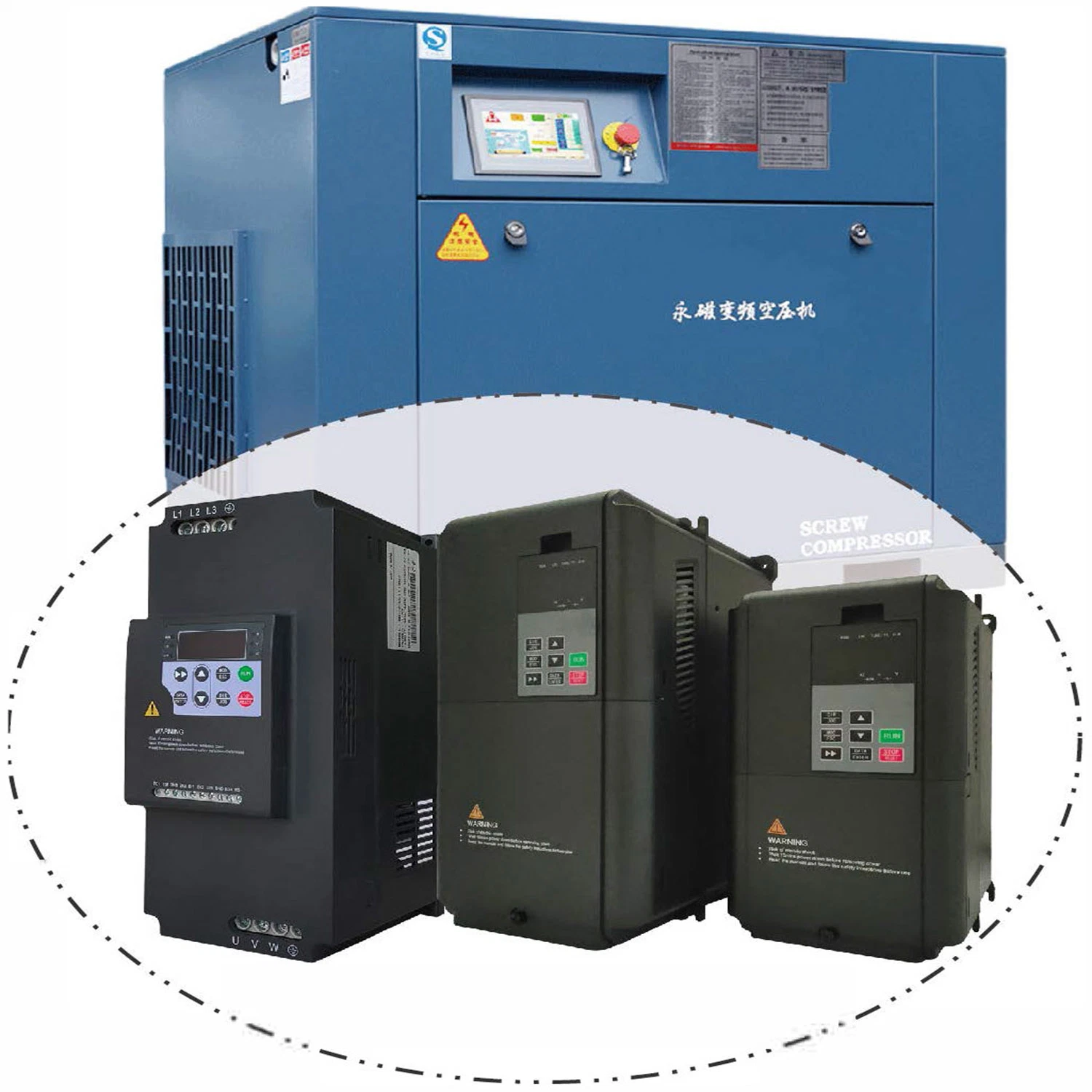
Top 3 Engineering Pain Points for Variable Frequency Drive Compressor
Scenario 1: Thermal Runaway in Contaminated Industrial and Agricultural Environments
The Problem:
Standard air-cooled VFDs deployed in welding facilities, mining operations, or outdoor agricultural settings face catastrophic thermal management failures when airborne contaminants—conductive metal dust, silica particulate, or crop debris—clog heat sinks and cooling fans. This contamination leads to thermal runaway, drive derating, and unexpected failure, particularly problematic in solar pumping installations where drives operate in remote, unmanned locations with minimal maintenance access. The resulting downtime disrupts continuous production schedules and necessitates frequent cleaning or premature drive replacement, significantly increasing total cost of ownership.
The Solution:
Deploy liquid-cooled VFD architectures or IP65-rated enclosed drives that utilize water/glycol heat exchange or sealed passive cooling rather than forced-air convection, eliminating air intake pathways for contaminants. For retrofit projects, remote VSD mounting—positioning the drive in a clean electrical room with shielded motor cable runs—removes the electronics from harsh ambient conditions entirely. Advanced thermal management algorithms that dynamically adjust carrier frequency based on real-time IGBT junction temperatures provide additional protection against overheating in high-duty-cycle compressor applications.
Scenario 2: Grid Instability and Demand Penalties from Fixed-Speed In-Rush Currents
The Problem:
Fixed-speed compressors utilizing direct-on-line (DOL) starting draw in-rush currents up to six times nominal operating amperage, triggering utility demand charges and power quality penalties that inflate operational costs. In solar-hybrid installations where grid stability is critical, these current spikes cause voltage sags that disrupt sensitive control electronics and neighboring equipment. Furthermore, traditional load/unload control cycles waste approximately 85% of total lifecycle energy costs through unloaded running and mechanical inefficiencies, with compressors unable to modulate output to match fluctuating trim loads during shift changes or intermittent production cycles.
The Solution:
Implement VFD-based soft-start functionality with precise PID pressure control to maintain tight system pressure bands (±1.5 PSIG) while ramping motor speed to match real-time air demand. This eliminates high in-rush currents, avoiding peak demand penalties and reducing mechanical stress on motor windings and couplings. For EPC contractors managing distributed energy projects, modern VFDs offer regenerative braking capabilities and power factor correction near unity, stabilizing grid interaction while delivering documented energy savings of 18–37% depending on load profiles, with typical ROI achieved within 6–12 months through utility rebates and reduced operational expenditure.
Scenario 3: Mechanical Fatigue and Process Instability from Rapid Cycling
The Problem:
When compressed air demand fluctuates between base load and trim load, fixed-speed compressors experience rapid cycling—frequent start/stop sequences that generate excessive mechanical stress on motor contactors, intake valves, and air/oil separators. This cycling accelerates wear on bearings and mechanical seals, reducing compressor longevity and increasing maintenance intervals. In precision applications such as pharmaceutical manufacturing, food processing, or automated irrigation systems, pressure instability from cycling compromises process integrity, causing product quality variations or inconsistent water distribution in solar-powered agricultural networks.
The Solution:
Utilize continuous-duty variable speed control that maintains motor operation above minimum speed thresholds, eliminating stop/start cycles entirely while maintaining system pressure within tight tolerances. By modulating frequency rather than cycling power, the compressor ensures constant lubrication circulation and thermal stability, extending oil life by up to 50% and reducing mechanical component wear. Advanced VFD parameterization enables engineers to configure sleep/wake thresholds and minimum run speeds optimized for specific duty cycles, ensuring the system operates within safe mechanical limits while delivering stable, precise pressure critical for sensitive industrial automation and reliable solar pumping operations.
Component and Hardware Analysis for Variable Frequency Drive Compressor
The internal architecture of a Variable Frequency Drive (VFD) compressor determines not only energy efficiency but also operational resilience in demanding environments—from dusty agricultural solar pumping stations to continuous-duty industrial manufacturing floors. For EPC contractors and automation distributors specifying equipment, understanding the hardware hierarchy beneath the enclosure is critical for predicting Mean Time Between Failures (MTBF) and calculating true Total Cost of Ownership (TCO).
At the core of any VFD compressor system lies a sophisticated power electronics assembly designed to convert fixed-frequency grid or DC solar input into variable-frequency, variable-voltage power. This conversion process generates significant thermal and electrical stress, making component selection the primary determinant of system longevity.
Power Semiconductor Architecture: IGBT Modules
The Insulated Gate Bipolar Transistor (IGBT) module serves as the primary switching element, converting DC bus voltage into pulse-width modulated (PWM) AC waveforms to control compressor motor speed. In solar pump inverter applications, these modules must handle wide input voltage fluctuations from PV arrays while maintaining switching efficiencies above 98%. High-quality IGBTs feature low junction-to-case thermal resistance (Rth(j-c)) and trench-gate field-stop technology, which minimizes switching losses during the high-frequency operation (typically 2–16 kHz) required for precise motor control. Inferior modules suffer from bond wire lift-off and solder fatigue under thermal cycling, particularly in agricultural environments with large day-night temperature swings.
Control Intelligence: DSP and MCU Systems
The Digital Signal Processor (DSP) or advanced Microcontroller Unit (MCU) constitutes the brain of the VFD, executing real-time vector control algorithms, MPPT (Maximum Power Point Tracking) logic for solar inputs, and protection routines. Industrial-grade DSPs operating at 100+ MHz with floating-point units enable precise torque control and rapid fault detection (overcurrent, overvoltage, phase loss). The firmware architecture must support derating curves for high-altitude installations and harmonic mitigation—critical for agricultural projects where grid stability is variable.
Thermal Management Infrastructure
Thermal design directly correlates with hardware lifespan. Traditional air-cooled aluminum heatsinks with forced convection remain standard, but in contaminated environments—common in mining, welding operations, or dusty agricultural settings—liquid-cooled cold plates offer superior reliability. Liquid-cooled systems utilizing water-glycol mixtures or dielectric coolants maintain junction temperatures 15–20°C lower than air-cooled equivalents, significantly reducing thermal stress on IGBT junctions and extending electrolytic capacitor life. The heatsink’s thermal resistance (measured in °C/W) and anodization quality (for corrosion resistance) are key quality differentiators.
Passive Components and Protection Circuits
DC bus capacitors (typically film or electrolytic) buffer energy between the rectifier and inverter stages, absorbing ripple current and stabilizing voltage during load transients. In solar pump VFDs, these capacitors must withstand high ripple currents from intermittent PV generation. Pre-charge circuits limit inrush current during startup—preventing rectifier diode damage and avoiding utility penalties for demand spikes. EMI filters suppress conducted emissions, protecting both the drive electronics and sensitive agricultural monitoring equipment.
Component Specification Matrix
| Component | Function | Quality Indicator | Impact on Lifespan |
|---|---|---|---|
| IGBT Module | DC-to-AC power conversion via high-frequency switching | Junction temperature rating (Tj max), thermal resistance Rth(j-c) < 0.15 K/W, switching frequency capability > 4 kHz | Critical: Thermal cycling causes bond wire fatigue and solder layer degradation; accounts for 40% of VFD failures in harsh environments |
| DSP Controller | Real-time PWM generation, motor control algorithms, protection logic | Clock speed > 100 MHz, 12-bit+ ADC resolution, algorithm execution time < 50 µs | Medium: Susceptible to voltage spikes and electrostatic discharge; quality capacitors on control boards extend life to 15+ years |
| DC Bus Capacitors | Energy storage, ripple current filtering, voltage stabilization | ESR < 5 mΩ, ripple current rating at 105°C, film dielectric vs. electrolytic | High: Electrolyte evaporation in high temps reduces capacitance by 20% annually; film capacitors offer 100,000+ hour life |
| Cooling Heatsink | Thermal dissipation for power semiconductors | Thermal resistance < 0.5 °C/W, aluminum purity 6063-T5, anodized coating thickness > 10 µm | Critical: Overheating accelerates semiconductor aging; liquid-cooled systems extend lifespan by 30-50% in dusty conditions |
| Rectifier Bridge | AC-to-DC conversion (or DC input handling for solar) | Forward voltage drop < 1.2V, surge current rating > 500% nominal, thermal cycling resistance | Medium: Diode failure modes include thermal runaway; soft-start circuits mitigate stress |
| EMI Filter | Suppresses conducted emissions, protects grid and control electronics | Insertion loss > 40 dB at 150 kHz, current derating factor > 1.5x nominal | Low-Medium: Capacitor degradation in filter sections; high-temperature rated X2 capacitors prevent premature failure |
Solar-Specific Hardware Considerations
For photovoltaic-powered compressor applications, hardware robustness extends beyond standard industrial VFDs. The DC input stage must accommodate open-circuit voltages up to 800VDC (for large PV arrays) with reinforced insulation. Dual MPPT inputs require isolated gate drivers and Hall-effect current sensors with high common-mode rejection. Boray Inverter’s architecture integrates these agricultural-specific requirements, utilizing automotive-grade IGBTs and conformal-coated PCBs to resist humidity and salt spray in remote installations.
Implications for System Specification
When evaluating VFD compressors for industrial or solar pumping projects, EPC contractors should demand component traceability to Tier-1 semiconductor manufacturers (Infineon, Mitsubishi, Fuji Electric) and verify thermal derating curves for ambient temperatures exceeding 40°C. The shift toward liquid-cooled drives, as evidenced in modern compressor designs, represents a strategic advantage for agricultural deployments where airborne contaminants would otherwise clog air-cooled heat sinks, leading to thermal runaway and catastrophic failure.
Proper component specification ensures that the 18–40% energy savings potential of VFD technology (as demonstrated in retrofit case studies) translates to sustained operational benefits rather than premature capital expenditure on replacement drives.
Manufacturing Standards and Testing QC for Variable Frequency Drive Compressor
Ensuring long-term reliability in variable frequency drive (VFD) compressors requires manufacturing protocols that exceed standard consumer electronics tolerances. Given that 85% of a compressor’s lifecycle cost derives from energy consumption—and that VFD retrofits can reduce this by 18% to 40% depending on load profiles—premature drive failure due to inadequate quality control (QC) directly obliterates projected ROI. For industrial engineers and EPC contractors deploying systems in harsh agricultural or metalworking environments, where airborne contaminants and thermal stress are prevalent, manufacturing standards must specifically address PCB integrity, thermal management validation, and 100% production-load verification.
PCB Environmental Hardening and Conformal Coating
In environments with conductive dust, welding particulates, or high humidity—common in compressor installations—the bare printed circuit board (PCB) represents the primary failure point. Boray Inverter employs IPC-A-610 Class 3 high-reliability standards for all VFD compressor drives, mandating acrylic or polyurethane conformal coating on all power and control circuit boards. This 25–75 μm protective layer provides:
- Dielectric withstand: >1500V insulation resistance against moisture ingress and chemical vapors (oil mist, cleaning solvents)
- Dendritic growth prevention: Elimination of conductive paths between traces under high-humidity condensing conditions
- Thermal cycling resilience: Compatibility with -40°C to +85°C operational swings without cracking or delamination
For liquid-cooled VFD compressors—critical in dusty ambient conditions where air-cooled heat sinks clog—the manufacturing process includes vacuum-sealed potting of critical control electronics, ensuring thermal conductivity while maintaining IP65/NEMA 4X ingress protection ratings.
High-Temperature Aging and Infant Mortality Screening
To eliminate early-life failures (infant mortality) that disrupt continuous production schedules, every VFD compressor drive undergoes high-temperature burn-in testing prior to shipment. This protocol simulates accelerated lifecycle stress:
- Thermal Cycling: Units subjected to 48-hour cycles between -20°C and +70°C ambient to verify solder joint integrity under thermal expansion stress
- Powered Aging: 72-hour continuous operation at 110% rated load and 50°C ambient temperature to stress-test DC bus capacitors, IGBT modules, and gate drivers
- Thermal Runaway Prevention: Verification of thermal protection circuits and NTC sensor calibration accuracy within ±1°C
This screening ensures that components susceptible to electromigration or electrolyte evaporation fail in the factory, not during the critical 6–10 month ROI payback period observed in pharmaceutical and automotive retrofit installations.
100% Full-Load Production Testing
Unlike consumer electronics that rely on statistical sampling, industrial VFD compressors require 100% full-load functional testing to validate energy efficiency claims and mechanical compatibility. Each unit is tested on dynamometer stations that simulate real-world compressor load profiles:
- Load-Unload Cycling: Verification of performance across 70:30 load-unload duty cycles (matching typical industrial demand profiles) to confirm the 33% energy reduction potential cited by CAGI standards
- Inrush Current Limitation: Validation of soft-start ramping (0–60 Hz in configurable 3–10 second ramps) to ensure grid-side current draw remains below 1.5× nominal, avoiding utility demand penalties
- Harmonic Distortion: Measurement of Total Harmonic Current Distortion (THDi) to ensure compliance with IEEE 519 / IEC 61000-3-6, preventing grid contamination that affects adjacent sensitive equipment
- Solar Pumping Compatibility: For hybrid solar-compressor applications, testing includes MPPT efficiency verification at 200–800VDC input ranges and automatic AC grid fallback switching
Compliance Frameworks and Certifications
Manufacturing facilities must maintain certifications that satisfy global EPC contractor requirements and local grid codes:
- ISO 9001:2015: Quality management systems ensuring traceability of all semiconductor components (IGBTs, DSPs) through laser-etched serial numbers for field failure analysis
- CE Marking (EU): Compliance with Low Voltage Directive (2014/35/EU) for insulation coordination and EMC Directive (2014/30/EU) for conducted/radiated emissions in industrial environments
- IEC 61800-5-1: Safety requirements for adjustable speed electrical power drive systems, including safe torque-off (STO) circuits for emergency compressor isolation
- IEC 62109-1/2: Specific to solar pumping inverters, ensuring protection against earth faults, DC arc flash, and islanding conditions when operating from photovoltaic arrays
Component Traceability and Supply Chain Resilience
Given the extended 15-year operational lifespan of industrial compressors, manufacturing QC includes component-grade verification:
- DC-Link Capacitors: Film capacitors rated for 100,000 hours at rated voltage and temperature (105°C), with ESR (Equivalent Series Resistance) testing to predict end-of-life degradation
- IGBT Module Screening: 100% VCE(sat) testing to ensure switching losses remain within specifications that enable the efficiency gains required for sub-12-month ROI projections
- Enclosure Integrity: IP54/IP66 validation via dust ingress (IEC 60529) and salt spray testing (ASTM B117) for agricultural environments with high chemical exposure
By implementing these manufacturing and QC protocols, VFD compressor systems deliver the verified energy savings and operational longevity required for industrial automation and solar pumping projects, ensuring that efficiency gains translate directly to measurable reductions in operational expenditure (OPEX) across the full equipment lifecycle.
Step-by-Step Engineering Sizing Checklist for Variable Frequency Drive Compressor
Proper sizing of a Variable Frequency Drive (VFD) for compressor applications requires rigorous analysis of both the mechanical duty cycle and the electrical infrastructure—particularly when integrating solar PV arrays or hybrid power architectures common in remote industrial and agricultural deployments. Unlike fixed-speed compressors, VFD-driven systems must accommodate dynamic load profiles while managing harmonic distortion, thermal dissipation, and input voltage fluctuations. The following engineering protocol ensures optimal matching of motor capacity, power electronics, and environmental protection, whether retrofitting existing screw compressors or specifying new solar-powered pneumatic systems for off-grid irrigation or mining operations.
Step 1: Characterize Compressed Air Demand Profile & Duty Cycle
Before selecting drive capacity, quantify the application’s base load (minimum continuous demand) and trim load (peak intermittent demand) over a 24-hour cycle.
– Load Profile Analysis: Map CFM (cubic feet per minute) requirements against time. Facilities with significant demand variance between shifts (e.g., pharmaceutical batch processing vs. continuous automotive painting) achieve the highest ROI from VFD implementation, with documented energy reductions of 18–40% depending on load-unload ratios.
– Rapid Cycling Prevention: Verify that the VFD’s minimum run time parameters prevent excessive motor starts. Configure the drive to maintain motor speeds above 20–30% of synchronous speed during low-demand periods to avoid lubrication issues in rotary screw compressors and mechanical wear from short-cycling.
– Pressure Band Specification: Size the system to maintain a tight pressure band of ±1.5 PSIG (0.1 bar) to eliminate artificial demand, ensuring the VFD responds to actual downstream consumption rather than pressure fluctuations caused by upstream storage.
Step 2: Motor Nameplate Verification & VFD Capacity Sizing
Match the VFD to the compressor motor’s electrical characteristics with appropriate service factors.
– Current Rating: Select a VFD with a continuous output current rating of at least 110–115% of the motor’s Full Load Amps (FLA) to accommodate the high starting torque requirements of compressor loads. For retrofit projects, verify the existing motor is inverter-duty rated (Class F insulation with NEMA MG1 Part 31 compliance) to withstand PWM switching stresses.
– Torque Profile: Confirm the VFD supports Constant Torque mode (not just Variable Torque) for rotary screw compressors, as these require maintained torque across the entire speed range.
– Voltage Matching: Ensure the drive’s input voltage range (e.g., 380–480V AC ±10%) aligns with site conditions. For solar-hybrid compressors, verify the VFD’s DC input acceptance range (if DC-coupled) or specify a solar pump inverter with VFD compatibility for direct PV-to-motor control without battery storage.
Step 3: Solar Array String Calculations & MPPT Optimization (Solar-Hybrid Systems)
When powering compressors via solar PV—common in agricultural irrigation or remote mining camps—electrical sizing must account for the VFD’s DC bus requirements.
– Open Circuit Voltage (Voc): Calculate maximum string voltage at record low temperatures (using temperature coefficients) to ensure Voc does not exceed the VFD’s maximum DC input voltage (typically 800V DC for 480V-class drives).
– Maximum Power Point Tracking (MPPT) Window: Configure PV string voltages (Vmp) to fall within the VFD’s MPPT range during peak irradiance. For a 480V compressor motor, target string Vmp between 400–650V DC to maintain optimal efficiency across varying solar insolation.
– Irradiance Derating: Size the solar array at 1.2–1.3 times the compressor motor’s nominal power to compensate for sub-optimal irradiance angles and ensure the VFD can deliver full torque during morning/evening operation or partial cloud cover.
Step 4: Input Power Architecture & Voltage Compatibility
Define the electrical interface between the grid, solar source, and VFD input stage.
– Harmonic Mitigation: Specify line reactors (3% impedance minimum) or active front-end (AFE) drives to limit Total Harmonic Current Distortion (THDi) to <5%, preventing utility penalties and protecting upstream transformers.
– Regenerative Braking: For high-inertia centrifugal compressors, evaluate whether dynamic braking resistors or regenerative units are required to dissipate energy during rapid deceleration, particularly in solar applications where DC bus overvoltage tripping is a risk.
– Phase Imbalance Protection: Configure the VFD to trip on input voltage imbalance >3%, as compressors are sensitive to phase loss that can cause motor overheating at reduced speeds.
Step 5: Thermal Management & Environmental Derating
Ambient conditions significantly impact VFD longevity, especially in dusty agricultural or metalworking environments.
– Cooling Strategy: In contaminated environments (welding shops, mining operations, or desert agriculture), specify liquid-cooled VSDs using water/glycol heat exchangers rather than air-cooled units. This prevents conductive dust from clogging heat sinks and allows operation up to 50°C ambient without derating.
– Altitude Derating: Apply 1% current derating for every 100 meters above 1,000 meters elevation to account for reduced air density and cooling efficiency.
– Enclosure Integrity: Select IP54 or IP66-rated VFD enclosures for outdoor compressor installations, ensuring protection against dust ingress and high-pressure water jets common in agricultural washdown procedures.
Step 6: Cable Sizing, Protection Coordination & EMC Compliance
Ensure safe power transmission and electromagnetic compatibility.
– Motor Cable Sizing: Size output cables for 125% of motor FLA, using shielded cables with proper grounding to mitigate bearing currents and EMI. Keep motor lead lengths <100 meters to prevent voltage reflection issues; for longer runs, specify dV/dt filters or sinusoidal filters.
– Protection Devices: Coordinate upstream circuit breakers (Type D or K curves) with VFD input fuses to allow for inrush currents during VFD pre-charge while providing short-circuit protection.
– Grounding: Implement single-point grounding for the VFD, motor, and compressor frame to prevent ground loops, particularly critical in solar installations where DC grounding systems interact with AC compressor circuits.
Step 7: Control Interface & Communication Integration
Finalize the automation architecture for system monitoring.
– Sensor Integration: Connect 4–20 mA pressure transducers directly to the VFD’s analog input for closed-loop PID control, eliminating the need for external PLCs in standalone compressor stations.
– Communication Protocols: Specify Modbus RTU/TCP or CANopen interfaces for integration with Building Management Systems (BMS) or SCADA platforms, enabling remote monitoring of energy consumption (kWh/CFM) for verification of the projected 33% energy savings typical of VFD compressor retrofits.
– Bypass Configuration: For critical 24/7 operations, specify a manual or automatic bypass contactor arrangement allowing fixed-speed operation during VFD maintenance, ensuring continuous compressed air availability.
Step 8: Commissioning Validation & Baseline Establishment
Verify performance against design specifications.
– Pressure Band Verification: Confirm the VFD maintains the specified ±1.5 PSIG pressure band across the full speed range (30–100% of rated speed).
– Energy Baseline: Record pre-installation power consumption (kWh) at various load points to validate post-installation savings of 18–37%, ensuring ROI targets (typically 6–24 months) are documented for rebate qualification.
– Thermal Imaging: During full-load testing, thermally scan VFD heat sinks, reactor connections, and motor terminals to identify hot spots indicating undersizing or loose terminations before final handover.
Wholesale Cost and Energy ROI Analysis for Variable Frequency Drive Compressor
When evaluating compressed air infrastructure for industrial facilities or large-scale agricultural processing, Total Cost of Ownership (TCO) analysis reveals that the initial capital expenditure represents less than 15% of the 15-year lifecycle investment. For EPC contractors and automation distributors sourcing Variable Frequency Drive (VFD) compressors, understanding the wholesale procurement economics and energy ROI dynamics is critical to project viability and client retention.
B2B Procurement Channels and Pricing Architecture
The VFD compressor market operates on a tiered distribution model that significantly impacts unit economics. Wholesale pricing for industrial-grade rotary screw compressors equipped with VFD modules typically ranges 25-35% below MSRP for authorized distributors purchasing at volume tiers exceeding 10 units annually. However, the critical differentiation lies in the VFD component sourcing:
OEM-Integrated vs. Retrofit Solutions
Factory-integrated VFD compressors command a 15-20% premium over fixed-speed equivalents at the wholesale level, whereas retrofit VFD panels—such as those engineered for existing ELGi or Kaishan fixed-speed units—offer distributors margin opportunities of 18-25% while providing end-users 40% lower capital outlay than full system replacement. For agricultural project managers managing irrigation compression stations, retrofit strategies utilizing Boray Inverter’s VFD technology (adaptable from solar pump control architectures) can reduce entry costs by $3,000-$8,000 per 50HP installation.
Regional Pricing Variations
EPC contractors should note that wholesale VFD compressor pricing varies significantly by cooling methodology. Liquid-cooled VFD drives, essential for dusty metallurgical or mining environments, carry a 12-18% wholesale premium over air-cooled variants but eliminate the $2,500-$4,000 annual maintenance costs associated with heat-sink contamination and thermal derating in harsh environments.
Energy ROI Quantification and Payback Modeling
The financial justification for VFD compressor deployment rests on load-profile optimization. According to Compressed Air & Gas Institute (CAGI) methodologies, facilities with variable demand cycles—specifically those operating at 70% load / 30% unload ratios—achieve energy reductions of approximately 33% when transitioning from fixed-speed to VFD-controlled compression.
ROI Calculation Framework:
For a standard 75kW (100HP) industrial compressor operating 8,000 hours annually at $0.12/kWh:
- Baseline Energy Consumption: Fixed-speed units draw consistent power regardless of demand, typically consuming 600,000 kWh annually
- VFD-Optimized Consumption: Variable speed operation reduces this to approximately 402,000 kWh (33% reduction)
- Annual Savings: $23,760 in direct energy costs
- Implementation Cost: Wholesale acquisition of VFD-equipped compressor or retrofit panel ($18,000-$28,000 premium over fixed-speed)
- Payback Period: 9-14 months for high-variance operations; 24-60 months for steady-load applications
The ASME Energy Resources study validates these figures, documenting average annual savings of $17,208 across industrial sectors, with payback periods compressing to 6-10 months in high-cycling applications such as pharmaceutical packaging or automotive sand-blasting operations where demand fluctuates significantly between shifts.
Solar Integration Synergies
For Boray Inverter’s core market of solar pumping and hybrid industrial systems, VFD compressors offer unique grid-independence capabilities. By utilizing DC-input VFD architectures (derived from solar pump inverter technology), facilities can direct-drive compressors from photovoltaic arrays during peak solar generation, effectively reducing the grid-energy component to zero during daylight operations. This hybrid configuration extends ROI by an additional 18-24% through peak-demand charge avoidance and utility rebate qualification.
Warranty Cost Risk Analysis
VFD integration introduces specific warranty considerations that impact long-term procurement decisions. Standard compressor warranties (5-year airend, 2-year package) often exclude VFD electronics or limit them to 12-18 months when not factory-integrated. Wholesale procurement strategies must account for:
Extended Electronics Coverage: Premium VFD modules utilizing liquid-cooling and conformal-coated PCBs (IP54 minimum) reduce failure rates by 60% in contaminated environments, justifying the 8-12% wholesale cost premium through reduced warranty reserve requirements.
Harmonic Distortion Liability: Poor-quality VFDs introduce THD (Total Harmonic Distortion) above 5%, potentially voiding motor warranties and creating utility penalty exposure. Specifying VFDs with active front-end (AFE) technology or harmonic filters—standard in Boray’s industrial VFD architectures—protects downstream equipment warranties and avoids $0.50-$2.00/kVAR power factor penalties.
Lifecycle Component Savings: Beyond energy, VFD operation reduces mechanical stress on intake valves, air/oil separators, and drive motors by eliminating hard starts (in-rush currents of 600% FLA in fixed-speed units). This extends maintenance intervals from 4,000 to 8,000 hours and reduces airend overhaul costs by approximately $8,000 over a 10-year operational life.
Strategic Procurement Recommendations
For automation distributors and EPC contractors, the optimal VFD compressor procurement strategy involves:
-
Demand Profiling: Conduct 30-day compressed air audits to verify load variance exceeds 30% before specifying VFD solutions—steady-load facilities (<20% variance) rarely achieve sub-24-month payback.
-
Hybrid Solar Sizing: For agricultural and remote industrial applications, specify VFD compressors compatible with DC-bus solar integration, allowing 40-60% of annual energy consumption to be offset by photovoltaic generation without battery storage costs.
-
Warranty Structuring: Negotiate 5-year VFD electronics warranties at the wholesale level by committing to volume purchases of liquid-cooled units, transferring thermal failure risk from the end-user to the manufacturer.
-
Retrofit Economics: In existing installations, specify VFD retrofit panels rather than full compressor replacement when airend hours remain below 20,000—this preserves existing mechanical warranties while achieving 37-40% energy savings documented in recent pharmaceutical and automotive implementations.
By leveraging wholesale VFD compressor procurement alongside solar-hybrid control strategies, industrial engineers and project managers can compress energy ROI timelines from the industry-standard 3-year benchmark to sub-12-month payback periods, while simultaneously hedging against utility rate volatility through demand-responsive motor control architectures.
Alternatives Comparison: Is Variable Frequency Drive Compressor the Best Choice?
Selecting the optimal motor control strategy for compressed air systems requires a rigorous evaluation of operational demands, energy infrastructure, and total cost of ownership. While variable frequency drive (VFD) compressors deliver compelling efficiency gains—particularly in applications with fluctuating demand—they represent one point in a spectrum of drive technologies. For industrial engineers and EPC contractors designing systems for manufacturing floors or agricultural irrigation networks, understanding the trade-offs between VFDs, soft starters, fixed-speed alternatives, and motor technologies is critical to avoiding over-engineering or costly inefficiencies.
VFD vs. Soft Starter: Starting Control vs. Speed Control
A common point of confusion lies in distinguishing between VFDs and soft starters. Both technologies mitigate the mechanical and electrical stress of motor startup, but their operational philosophies diverge significantly.
Soft starters utilize thyristor-based voltage ramping to limit inrush current—typically reducing starting current to 3–5 times nominal rather than the 6–8 times seen in direct-on-line (DOL) starting. This reduces mechanical shock on belts, gears, and bearings. However, once the motor reaches full speed, the soft starter bypasses itself, and the compressor operates at fixed speed, using inefficient load/unload or modulation control to match demand.
VFDs, conversely, vary both voltage and frequency to provide full speed control throughout the operational range. While they also provide soft-start functionality (ramping from zero to operating speed without inrush current spikes), their primary value lies in eliminating the energy waste of unloaded operation. As noted by the Compressed Air & Gas Institute, fixed-speed compressors consume 20–35% of full-load power even when unloaded, whereas VFD compressors modulate motor speed to match exact demand, yielding the documented 33% average energy reduction.
Decision criteria: Deploy soft starters for high-inertia, constant-speed applications where the primary concern is mechanical protection and grid stability. Specify VFDs when demand fluctuates significantly between shifts or processes, and when energy recovery justifies the higher capital investment.
Fixed-Speed Load/Unload vs. Variable Frequency Drive
Traditional fixed-speed compressors rely on load/unload control or inlet modulation. While mechanically simple, these methods create inherent inefficiencies:
- Load/unload cycling: The motor runs at full speed regardless of demand, venting excess air or running unloaded. Frequent cycling (rapid loading/unloading) increases mechanical wear on intake valves and drive motors.
- Pressure band variance: Fixed-speed systems typically maintain pressure within ±10 PSIG bands, whereas VFD systems maintain ±1.5 PSIG, reducing artificial demand caused by over-pressurization.
The economic threshold for VFD adoption becomes clear when analyzing the load profile. If your facility operates with a consistent 24/7 base load exceeding 80% of compressor capacity, a fixed-speed machine with a properly sized receiver tank may offer lower lifecycle costs. However, for agricultural irrigation systems, automotive manufacturing with shift-based production, or pharmaceutical packaging lines with intermittent batch operations—where the ELGi case studies demonstrate 37–40% energy savings—the VFD’s ability to track trim loads rather than cycle on/off provides rapid ROI, often within 6–18 months.
Solar-Powered VFD vs. Grid-Powered Infrastructure
For remote agricultural projects and off-grid industrial applications, the decision matrix expands to include power source architecture. Boray Inverter’s expertise in solar pump VFDs translates directly to compressor applications in remote environments.
Grid-Powered VFD Compressors:
– Stable voltage and frequency inputs allow standard VFD programming
– Eligible for utility demand-response rebates and power factor correction incentives
– Higher available power for large-scale rotary screw systems (75kW+)
– Continuous operation regardless of weather conditions
Solar-Powered VFD Systems:
– Utilize MPPT (Maximum Power Point Tracking) algorithms to optimize photovoltaic array output, matching motor speed to available solar irradiance
– Eliminate diesel generator dependency for remote irrigation or pneumatic controls
– Require oversizing of solar arrays or battery storage to handle compressor startup torque and intermittent cloud cover
– Ideal for decentralized agricultural operations where grid extension costs exceed $15,000–$30,000 per kilometer
Hybrid architectures are increasingly common in EPC projects, where solar VFD compressors handle daytime peak loads while grid power or battery banks provide night-time redundancy.
Motor Technology Integration: PMSM vs. IM with VFD
The marriage of VFD technology with motor selection creates additional optimization opportunities:
Induction Motors (IM) with VFD:
– Standard asynchronous motors offer robustness and lower initial cost
– Efficiency drops significantly at partial loads (typically IE2/IE3)
– Require derating in harsh environments or when operated below 30% speed to prevent overheating from insufficient cooling fan performance
Permanent Magnet Synchronous Motors (PMSM) with VFD:
– Achieve IE5 efficiency standards (Ultra Premium Efficiency)
– Maintain high efficiency (>90%) across 25–100% load range, critical for solar applications where every watt counts
– Require VFD operation (cannot run DOL), but offer 3–8% additional energy savings over VFD-driven induction motors
– Higher capital cost justified in continuous-duty applications or solar-powered systems where inverter capacity is limited
Comparative Analysis Matrix
| Technology | Energy Efficiency (Partial Load) | Starting Current | Power Factor | Initial Investment | Maintenance Complexity | Optimal Application |
|---|---|---|---|---|---|---|
| Direct-On-Line (DOL) | Poor (unloaded: 70–80% full load power) | 6–8× FLC | 0.85–0.89 | Low | Minimal | Emergency backup, <5 HP, constant demand |
| Soft Starter | Poor (same as DOL at speed) | 3–5× FLC | 0.85–0.89 | Low-Medium | Low | High-inertia loads, constant speed, grid stability concerns |
| VFD + Induction Motor | Good (proportional to speed) | 1–1.5× FLC | 0.95–0.99 (unity) | Medium | Medium | Variable demand, industrial plants, frequent cycling |
| VFD + PMSM | Excellent (IE5, >90% @ 25% load) | 1–1.5× FLC | 0.95–0.99 | High | Medium | High-duty cycles, solar applications, energy-critical operations |
| Solar VFD System | Excellent (MPPT optimized) | Soft start only | 0.95+ | High (includes PV) | High | Remote agriculture, off-grid operations, peak shaving |
FLC = Full Load Current; PV = Photovoltaic
Strategic Selection Guidelines
Specify VFD Compressors when:
– Demand fluctuates >30% from peak to trough during operational cycles
– Energy costs exceed $0.10/kWh or operational hours exceed 4,000 annually
– Process requirements demand tight pressure tolerance (±1.5 PSIG)
– Starting current restrictions exist (weak grid infrastructure or generator supply)
Consider Alternatives when:
– Demand is truly constant (base load >90% of rated capacity)—fixed-speed with timed blowdown may suffice
– Capital constraints are severe and payback period must be <12 months with low energy tariffs
– Ambient conditions exceed IP54 ratings without liquid-cooled VSD options (as noted in Kaishan’s industrial environment studies, traditional air-cooled VFDs suffer in dusty/welding environments unless specified with liquid-cooled drives or remote VSD mounting)
For agricultural project managers evaluating solar irrigation systems, the integration of Boray’s solar pump inverter technology with VFD-controlled air compressors offers a unified platform for off-grid fluid and pneumatic power, maximizing ROI through shared MPPT controllers and DC bus architectures. Ultimately, the “best choice” is not universal—it is the technology that aligns motor control precision with your specific load profile, energy infrastructure, and operational environment.
Core Technical Specifications and Control Terms for Variable Frequency Drive Compressor
When specifying Variable Frequency Drive (VFD) compressors for industrial deployment—whether for manufacturing facilities, agricultural processing, or large-scale EPC projects—engineers must evaluate both the embedded control algorithms that govern motor performance and the commercial frameworks that govern cross-border procurement. The transition from fixed-speed to variable-speed compression introduces complex electrical dynamics that demand precise motor control strategies, while global supply chain execution requires clarity on logistics liability.
Motor Control Algorithms and Dynamic Response
Vector Control (Field-Oriented Control – FOC)
For rotary screw and centrifugal compressors experiencing fluctuating demand profiles—characterized by ELGi’s “base load” and “trim load” cycles—sensorless vector control is paramount. Unlike traditional V/Hz control, FOC decouples the motor’s magnetic flux from torque production, enabling instantaneous response to pressure transients. This architecture allows the drive to maintain constant torque at low speeds (critical for startup under residual header pressure) while optimizing the power factor across the operational spectrum. Boray’s VFD implementations utilize high-performance DSPs to calculate rotor position via current sensors, eliminating encoder maintenance while delivering the dynamic stiffness required for ±1.5 PSIG pressure band regulation cited by CAGI standards.
PID Process Control Integration
Precise pressure management relies on closed-loop PID (Proportional-Integral-Derivative) algorithms that modulate motor frequency based on real-time feedback from pressure transducers. In VFD compressor applications, the PID controller eliminates the “rapid cycling” phenomenon—where frequent load/unload cycles degrade mechanical components—by smoothly ramping motor speed to match consumption rather than binary switching. Advanced implementations feature auto-tuning capabilities that adapt to varying pipe network impedances, ensuring stability across different shift demands without manual parameter adjustment.
MPPT for Solar-Hybrid Compressor Stations
While Maximum Power Point Tracking (MPPT) is conventionally associated with solar pumping inverters, its integration into VFD compressor systems enables hybrid energy architectures. For remote agricultural or industrial sites utilizing solar arrays to offset grid consumption, MPPT algorithms optimize the DC bus voltage to extract maximum photovoltaic energy during daylight operations. When solar irradiance fluctuates due to cloud cover, the VFD’s DC input stage seamlessly blends PV power with grid or battery storage, maintaining consistent compressor RPM without mechanical stress. This capability is particularly relevant for EPC contractors designing off-grid compressed air systems where energy storage costs must be minimized.
Thermal Management and Environmental Specifications
Liquid-Cooled vs. Air-Cooled Drive Topologies
In environments with airborne conductive contaminants—such as welding operations or mining applications referenced in industrial case studies—traditional air-cooled VFD heat sinks face clogging risks that trigger thermal derating. Liquid-cooled VFD architectures utilizing water-glycol mixtures or dedicated coolant circuits offer superior heat dissipation (maintaining junction temperatures below 85°C) while achieving IP54/IP66 ingress protection ratings. This topology reduces the compressor room’s HVAC load, as waste heat is captured via heat exchangers rather than dissipated into the ambient environment, directly impacting the facility’s overall energy balance.
Ambient Derating Curves
Technical specifications must address temperature derating above 40°C ambient, particularly for installations in tropical or desert climates. High-grade IGBT modules with enhanced thermal interfaces ensure continuous operation up to 50°C without current derating, while conformal-coated PCBs resist corrosive atmospheres common in chemical processing or coastal agricultural facilities.
Commercial Terms and Logistics Frameworks
For procurement managers and automation distributors managing international projects, understanding Incoterms 2020 classifications ensures alignment on risk transfer and cost allocation:
FOB (Free On Board)
Under FOB terms, Boray Inverter delivers the VFD compressor system to the designated port of shipment, clearing export customs and loading the equipment aboard the vessel. Risk transfers to the buyer once goods pass the ship’s rail, making FOB advantageous for EPC contractors with established freight forwarding relationships who prefer to control ocean freight and marine insurance costs directly.
CIF (Cost, Insurance, and Freight)
CIF arrangements extend seller responsibility to include ocean freight charges and minimum marine insurance coverage to the destination port. This term suits agricultural project managers or industrial engineers requiring turnkey logistics solutions, as it consolidates shipping costs into the equipment procurement budget. However, buyers should note that risk still transfers at the origin port; therefore, comprehensive inspection protocols upon arrival are essential to validate warranty claims for transit damage.
DDP (Delivered Duty Paid) Considerations
For distributors seeking inventory buffer stock or direct-to-site deployment, DDP terms—where the manufacturer assumes all costs and risks including import duties and inland transport—eliminate customs complexity but require precise harmonized system (HS) code classification for VFDs (typically 8504.40) and associated compressor motors.
Integration Checklist for Specification
When drafting technical procurement documents, engineers should verify:
– Control Mode: Sensorless vector control with torque compensation for low-speed operation
– PID Capability: Cascade control loops supporting both pressure and temperature regulation
– Input Voltage Tolerance: ±15% grid fluctuation handling for regions with unstable power infrastructure
– EMC Compliance: Category C2 or C3 filters to prevent interference with agricultural telemetry systems
– Cooling Specification: Liquid-cooled options for environments exceeding 1,000 μg/m³ particulate concentration
By aligning advanced motor control specifications with clear commercial terms, stakeholders ensure that VFD compressor investments deliver the documented 18–40% energy reduction while maintaining operational continuity across diverse industrial ecosystems.
Future Trends in the Variable Frequency Drive Compressor Sector
The variable frequency drive (VFD) compressor sector is undergoing a paradigm shift driven by decarbonization mandates, Industry 4.0 adoption, and the convergence of solar photovoltaic (PV) systems with industrial motor control. As facilities move beyond simple load/unload cycles toward intelligent, energy-adaptive compressed air networks, three distinct trajectories are reshaping how EPC contractors, agricultural project managers, and automation engineers approach system design and retrofit strategies.
Integration of Solar PV and Hybrid Energy Architectures
The most significant disruption in the VFD compressor market is the direct coupling of solar arrays with variable frequency drives, leveraging the same power electronics topology that drives solar pump inverter technology. Modern VFDs—such as those manufactured by Boray Inverter—are increasingly designed with dual-purpose DC bus architectures that accept both grid AC input and direct DC injection from PV arrays. This eliminates the inefficiency of separate solar inverters, allowing compressors to operate directly from solar generation during daylight hours while seamlessly transitioning to grid power or battery storage during low-irradiance periods.
For agricultural applications and remote industrial sites, this hybrid approach transforms compressed air from a grid-dependent utility into a dispatchable resource. Advanced maximum power point tracking (MPPT) algorithms, originally developed for solar pumping systems, are now being adapted to match compressor motor speed with real-time solar irradiance. When combined with VFDs’ inherent ability to reduce energy consumption by up to 33% (per CAGI estimates) and eliminate inrush currents, solar-integrated VFD compressors can achieve payback periods under 24 months, even without government subsidies. Furthermore, DC microgrid compatibility allows these systems to participate in demand response programs, stabilizing local grids while reducing operational expenditure (OPEX) for facility managers.
Intelligent Automation and Edge Analytics
The transition from standalone VFDs to networked, IoT-enabled compressor systems represents a fundamental evolution in automation architecture. Next-generation VFD compressors are embedding edge computing capabilities directly into the drive enclosure, enabling real-time analysis of motor current signatures, bearing health, and thermal performance without reliance on external PLCs. This shift addresses the 85% lifecycle cost burden associated with energy consumption by optimizing not just motor speed, but entire compressed air network dynamics.
For industrial engineers, these innovations translate to predictive maintenance protocols that detect mechanical degradation—such as intake valve wear or air/oil separator fouling—weeks before failure occurs. Liquid-cooled VSD technologies, previously limited to cleanroom environments, are now being deployed in harsh industrial settings (mining, welding operations, cement plants) where airborne contaminants previously precluded VFD adoption. By dissipating heat via water or glycol coolants rather than forced air, these systems eliminate heat-sink clogging while maintaining the precise pressure band control (±1.5 PSIG) necessary for sensitive manufacturing processes.
Moreover, retrofit panels—compatible with both OEM and legacy fixed-speed compressors—are enabling brownfield facilities to achieve 18–40% energy savings (based on ELGi field data) without complete system replacement. These modular VFD solutions integrate with existing SCADA and Building Management Systems (BMS), providing granular visibility into trim load versus base load profiles and preventing rapid cycling damage through algorithmic soft-start sequences.
Sector-Specific Innovations: Agriculture and Distributed Operations
For agricultural project managers, the convergence of solar VFD technology and IoT monitoring is unlocking decentralized compressed air networks for irrigation, precision farming, and post-harvest processing. Solar-powered VFD compressors equipped with cellular or LoRaWAN connectivity allow operators to monitor system performance across distributed farmland without trenching for control cables. These systems leverage the same motor control expertise required for solar pumping applications—specifically, sensorless vector control algorithms that maintain torque stability under varying solar irradiance conditions.
The integration of VFD compressors with smart farming platforms enables automated demand response; for instance, compressors can automatically reduce speed or enter standby mode when irrigation systems reach pressure setpoints, or coordinate with solar generation curves to maximize self-consumption of PV energy. For EPC contractors, this standardization of solar-ready VFD platforms reduces engineering complexity across mixed-use projects, allowing the deployment of unified motor control solutions for both pumping and compressed air applications.
Strategic Implications for Stakeholders
As these trends converge, procurement strategies are shifting from component-based purchasing to ecosystem-level energy management. Automation distributors must now position VFD compressors not merely as motor controllers, but as grid-interactive assets capable of bi-directional communication with energy management systems. The ability to retrofit existing compressor fleets with intelligent VFD panels—achieving ROI in as little as 6–10 months while extending mechanical component longevity—presents a compelling value proposition for CAPEX-constrained facilities.
For Boray Inverter and similar manufacturers, the future lies in developing platform-agnostic VFD architectures that bridge solar pumping expertise with industrial compressed air applications, offering integrated DC input capabilities, advanced thermal management, and cloud-native monitoring as standard features rather than aftermarket additions. As regulatory frameworks increasingly mandate energy efficiency disclosures and carbon footprint reductions, VFD compressors with embedded IoT and renewable energy integration will transition from optional upgrades to baseline requirements for industrial and agricultural infrastructure projects.
Top 1 Variable Frequency Drive Compressor Manufacturers & Suppliers List
Best Variable Frequency Drive Brands Manufacturers and Suppliers …
Website: thefrequencyinverters.com
SHENZHEN K-EASY AUTOMATION CO., LTD. is a China-based manufacturer specializing in Variable Frequency Drives (VFDs) and industrial automation solutions. Key VFD product lines include: KD600E elevator lift frequency inverter for vertical transportation applications; KD100 Series Mini Vector Frequency Inverter for compact installations; KD700 Series Book Type High-Performance Vector Inverter featuri…
B2B Engineering FAQs About Variable Frequency Drive Compressor
-
What is the precise technical distinction between a VFD and a VSD in compressor applications, and why does this terminology matter for motor control specifications?
While often used interchangeably in the compressed air industry, Variable Speed Drive (VSD) is the broader categorical term for any system that modulates motor speed, whereas a Variable Frequency Drive (VFD) is a specific electronic means of achieving that control by varying the frequency and voltage supplied to the motor. Technically, VFDs (and their mining-industry variant, VVVF drives) are subsets of VSDs. For specification purposes, confirming that a “VSD” utilizes true VFD technology—rather than mechanical variators or hydraulic couplings—is critical, as only electronic VFDs provide the precise energy optimization, soft-start capabilities, and pressure band control (±1.5 PSIG) required for modern industrial automation. -
How does a VFD modulate compressor motor speed to match fluctuating demand profiles, and what energy savings can be expected under partial-load conditions?
A VFD utilizes an electronic controller to adjust the output frequency (and corresponding voltage) to the motor, leveraging the principle that motor speed is directly proportional to input frequency. By receiving real-time feedback from pressure transducers, the drive slows the motor during base-load periods and accelerates to meet trim-load spikes. Because power consumption follows the cube of the speed reduction (affinity laws), facilities with significant demand variance can achieve energy reductions of 18% to 40%, with the Compressed Air & Gas Institute (CAGI) citing an average of 33% savings compared to fixed-speed units running unload cycles. -
What harmonic mitigation strategies are required when integrating VFD compressors into existing industrial distribution networks to prevent grid contamination?
The PWM switching of VFDs generates high-frequency harmonics that can distort voltage and cause overheating in upstream transformers and capacitors. For compliance with IEEE 519 or IEC 61000 standards, engineers should specify DC link chokes or 3% line reactors on the input side to reduce Total Harmonic Distortion (THD). In facilities with sensitive equipment or strict utility requirements, Active Front End (AFE) drives or 12-pulse/18-pulse rectifier configurations may be necessary to regenerate clean power back to the grid and eliminate reflected harmonics. -
Are existing fixed-speed compressors candidates for VFD retrofitting, and what motor insulation and bearing protection protocols must be implemented?
Yes, retrofitting is technically feasible and economically viable, with documented cases showing 37–40% energy savings and ROI periods as short as 6–10 months. However, standard induction motors must be evaluated for inverter-duty capability (Class F or H insulation with phase-to-phase insulation strength). Critical retrofit protocols include installing dV/dt filters or sinusoidal output filters to mitigate voltage spikes from fast-switching IGBTs, and implementing shaft grounding rings or insulated bearings to prevent electrical fluting and premature bearing failure caused by circulating currents. -
How do liquid-cooled VFD architectures overcome thermal management limitations in contaminated environments compared to forced-air cooling systems?
Traditional air-cooled VFDs rely on heat sinks and fans that are susceptible to clogging from conductive dust, welding particulates, or agricultural debris, leading to thermal runaway. Liquid-cooled VFDs dissipate heat via water, glycol, or coolant loops, allowing the drive to operate at lower, more stable electronic temperatures while maintaining IP54/IP65 ingress protection. This topology eliminates ambient heat rejection into the compressor room, reduces the cooling load on the compressed air system, and permits installation in harsh environments (e.g., foundries or cement plants) without requiring separate, filtered VSD rooms. -
What is the relationship between VFD carrier frequency, motor cable length, and voltage reflection issues in compressor installations?
The carrier frequency (switching frequency) of the IGBTs determines the pulse width modulation resolution but also influences electromagnetic interference (EMI) and voltage reflection phenomena. Long motor cables (>50–100 meters) between the VFD and compressor motor can create standing waves due to impedance mismatch, resulting in reflected voltage spikes up to twice the DC bus voltage at the motor terminals. Engineers must specify shielded, symmetrical motor cables with low capacitance, and if cable runs exceed manufacturer limits (typically 50m for standard drives, 150m with filters), install sine wave filters or motor termination networks to protect winding insulation. -
In solar-hybrid compressed air systems, how does the VFD manage variable DC bus voltage from PV arrays to maintain stable motor torque and pressure control?
In solar pumping and compressed air applications, advanced VFDs (solar pump inverters) integrate Maximum Power Point Tracking (MPPT) algorithms to optimize the DC input from fluctuating irradiance. The drive maintains a stable output frequency to the compressor motor by dynamically adjusting the DC bus voltage utilization and switching patterns. During low irradiance or transient cloud cover, the system can blend grid power (in hybrid mode) or enter a low-power hibernation state, ensuring continuous pressure maintenance without mechanical stress from frequent start-stop cycles—critical for agricultural irrigation and remote industrial sites. -
Which diagnostic parameters should automation engineers monitor to prevent rapid cycling and optimize the lifecycle cost of VFD compressor systems?
To prevent rapid cycling—a condition that damages intake valves and air-ends through excessive mechanical loading—engineers should monitor pressure band deviation (maintaining tight ±1.5 PSIG bands), VFD switching frequency trends (indicating thermal stress), and motor current harmonics. Additionally, tracking oil temperature and separator differential pressure provides early warning of reduced heat generation benefits from VFD operation. Predictive maintenance via Modbus/RS-485 or Ethernet/IP communication should log these parameters to forecast bearing life and prevent unplanned downtime, leveraging the extended component longevity (particularly for air-oil separators and lubricants) inherent to variable-speed operation.
Disclaimer
⚠️ Important Disclaimer
The information provided in this guide is for educational purposes. Industrial applications and electrical engineering projects carry inherent risks. B2B buyers and contractors must conduct thorough technical due diligence and verify regional compliance before installation or procurement.
Conclusion: Partnering with Boray Inverter for Variable Frequency Drive Compressor
The transition to variable frequency drive compressors represents more than an operational upgrade—it is a strategic imperative for facilities seeking to optimize energy economics and extend equipment lifecycle in demanding industrial and agricultural environments. By precisely matching motor speed to real-time air demand through advanced vector control algorithms, modern VFD systems eliminate the energy waste inherent in fixed-speed operation while mitigating mechanical stress that leads to premature component failure. Whether deployed in dusty manufacturing floors requiring liquid-cooled drives or integrated into solar-powered irrigation infrastructure where energy efficiency is paramount, the technology has proven its capacity to deliver measurable ROI within months while ensuring consistent pressure regulation and grid stability.
However, realizing these benefits depends fundamentally on the quality, customization capabilities, and motor control expertise of your drive technology partner. This is where Shenzhen Boray Technology Co., Ltd. distinguishes itself as an industry-leading innovator in Solar Pumping and Motor Control Solutions. With an R&D engineering team comprising 50% of its workforce, Boray Inverter has mastered advanced PMSM and IM vector control technologies that form the neural center of high-performance VFD compressors. The company’s dual modern production lines, coupled with rigorous 100% full-load testing protocols, ensure that every unit delivered meets the exacting standards of global agricultural, irrigation, and industrial automation markets.
For EPC contractors, system integrators, and project managers seeking to deploy energy-efficient compressed air systems or scalable motor control infrastructure, Boray offers not merely standard products but engineered solutions tailored to specific load profiles and environmental conditions. We invite you to leverage our technical expertise and manufacturing scale for your next project. Contact the Boray Inverter team today to discuss customized VFD configurations, technical specifications, and competitive wholesale quotations that align with your operational requirements and sustainability targets.