Introduction: Sourcing Three Phase Variable Frequency Drive for Industrial Use
In modern industrial automation and large-scale agricultural solar projects, precise motor speed control combined with maximum energy efficiency has transitioned from operational preference to engineering imperative. Traditional fixed-speed systems and mechanical throttling methods not only waste significant energy but accelerate equipment degradation, creating costly maintenance cycles for plant engineers and EPC contractors managing complex motor-driven infrastructures across global markets.
Three Phase Variable Frequency Drives (VFDs) represent the cornerstone technology addressing these challenges, transforming fixed-frequency AC supply into variable frequency outputs that enable seamless speed regulation across standard induction motors. Whether optimizing HVAC systems in commercial facilities, conveyor networks in heavy manufacturing, or submersible solar pumps in remote agricultural installations, proper VFD specification directly determines system reliability, harmonic performance, and total cost of ownership.
This comprehensive guide examines critical sourcing considerations for industrial-grade three-phase VFDs, spanning topology architectures from standard PWM to specialized solar pump inverters, voltage class selections from 220V to 690V, and environmental protection ratings essential for harsh industrial environments. We analyze key technical specifications including IGBT switching technologies, regenerative braking capabilities, and communication protocol compatibility, while evaluating manufacturer qualification criteria and global supply chain reliability to support automation distributors and project managers in making strategic procurement decisions that align with both mechanical requirements and sustainability mandates.
Article Navigation
- Top 3 Three Phase Variable Frequency Drive Manufacturers & Suppliers List
- Introduction: Sourcing Three Phase Variable Frequency Drive for Industrial Use
- Technical Types and Variations of Three Phase Variable Frequency Drive
- Key Industrial Applications for Three Phase Variable Frequency Drive
- Top 3 Engineering Pain Points for Three Phase Variable Frequency Drive
- Component and Hardware Analysis for Three Phase Variable Frequency Drive
- Manufacturing Standards and Testing QC for Three Phase Variable Frequency Drive
- Step-by-Step Engineering Sizing Checklist for Three Phase Variable Frequency Drive
- Wholesale Cost and Energy ROI Analysis for Three Phase Variable Frequency Drive
- Alternatives Comparison: Is Three Phase Variable Frequency Drive the Best Choice?
- Core Technical Specifications and Control Terms for Three Phase Variable Frequency Drive
- Future Trends in the Three Phase Variable Frequency Drive Sector
- B2B Engineering FAQs About Three Phase Variable Frequency Drive
- Disclaimer
- Conclusion: Partnering with Boray Inverter for Three Phase Variable Frequency Drive
Technical Types and Variations of Three Phase Variable Frequency Drive
Three-phase Variable Frequency Drives (VFDs) are not monolithic devices; their internal architectures and input configurations vary significantly based on voltage class, power source topology, and application-specific control requirements. While all VFDs fundamentally convert fixed-frequency AC to variable-frequency AC through a DC intermediate circuit (rectifier-DC link-inverter topology), modern industrial catalogs categorize these drives by their input stage characteristics, DC bus voltage ratings, and output power segmentation. The selection between these variations is critical for EPC contractors and system integrators, as it determines grid compatibility, harmonic footprint, and the ability to interface with renewable energy sources such as photovoltaic arrays.
| Type | Technical Features | Best for (Industry) | Pros & Cons |
|---|---|---|---|
| Standard Low-Voltage AC VFD (380V/480V Class) | • 6-pulse diode bridge rectifier (AC-DC) • IGBT-based PWM inverter (DC-AC) • DC bus voltage: ~1.35× AC RMS input (e.g., 650V DC for 480V AC) • V/Hz or sensorless vector control • Built-in pre-charge circuit (NTC thermistor or resistor bypass) |
General manufacturing, HVAC, water/wastewater (low lift), material handling | Pros: Cost-effective, mature ecosystem, wide availability (1-500 HP), straightforward commissioning. Cons: Input current THDi ~30-40% (requires AC line reactors or passive filters), limited to ~600V input, motor cable length restrictions without output reactors. |
| Solar DC Pump Inverter (PV-Powered VFD) | • Direct DC input stage (400V-800V DC range) • Integrated Maximum Power Point Tracking (MPPT) algorithm • Eliminates traditional rectifier; DC bus directly fed by PV array • Dry-run protection and water level sensor I/O • Battery-less operation with automatic sleep/wake on irradiance |
Agricultural irrigation, remote livestock watering, off-grid village water supply, desert greening projects | Pros: Grid independence, eliminates inverter/rectifier conversion losses (higher system efficiency), automatic MPPT ensures maximum energy harvest from PV modules, low OPEX. Cons: Weather-dependent output (requires 20-30% array oversizing for cloudy conditions), no operation during darkness (without battery storage), limited to pumping applications with centrifugal load profiles. |
| Single-Phase to Three-Phase Conversion VFD | • 2-diode or 4-diode rectifier configuration (half-bridge) • Current derating required: √3 (1.73) × motor FLA rating • Input line reactor mandatory (5% impedance) to limit inrush • Generates balanced three-phase output from single-phase 230V supply • Active front-end (AFE) variants available for regeneration |
Rural workshops, retrofitting legacy single-phase sites, small-scale agricultural processing, remote pump stations with limited grid infrastructure | Pros: Eliminates expensive rotary phase converters, utilizes existing single-phase infrastructure, enables three-phase motor use in areas without three-phase grid availability. Cons: Drive must be oversized by ~2 ratings (e.g., 10 HP drive for 5 HP motor), increased input current stress on rectifier diodes, potential input current imbalance, limited to lower power ranges (typically <15 HP). |
| Medium Voltage Multi-Level VFD (3kV–10kV) | • Cascaded H-bridge (CHB) or Neutral Point Clamped (NPC) topology • Multi-level output (5-level, 7-level, or 9-level) producing near-sinusoidal waveform • Integrated phase-shifting isolation transformer • Cell bypass technology for fault tolerance • IGCT or high-voltage IGBT switching devices |
Large-scale water pumping (municipal lift stations), mining hoists, compressors, power generation auxiliaries, desalination plants | Pros: Direct connection to MV motors (no step-down transformer), reduced motor insulation stress (dv/dt < 500 V/μs), high efficiency (>96%) at MW-scale, long cable runs possible without output filters. Cons: Significant capital expenditure (CAPEX), large physical footprint (requires dedicated electrical room), complex maintenance requiring specialized technicians, longer lead times for cell replacement. |
Detailed Technical Analysis by Variation
Standard Low-Voltage AC VFD (380V/480V Class)
This represents the dominant topology in industrial automation, utilizing a six-pulse diode bridge rectifier to establish a fixed DC bus voltage (approximately 650 V DC for 480 V AC input). The inverter stage employs Insulated Gate Bipolar Transistors (IGBTs) operating under Pulse Width Modulation (PWM) strategies, typically carrier frequencies of 2–16 kHz. For industrial engineers, critical selection criteria include the DC bus capacitance (determining ride-through capability during voltage sags) and the switching frequency (balancing audible motor noise against switching losses). These drives excel in variable torque applications such as centrifugal pumps and fans, where energy savings follow the affinity laws (power varies with the cube of speed). However, EPC contractors must account for harmonic mitigation; the 6-pulse rectifier generates characteristic 5th and 7th harmonics, necessitating 3% or 5% line reactors or active front-end (AFE) alternatives in installations with strict IEEE 519 or IEC 61000-3-6 compliance requirements.
Solar DC Pump Inverter
Distinct from standard AC-fed VFDs, solar pump inverters (such as those specialized by Boray Inverter) eliminate the rectifier stage entirely, accepting direct current from photovoltaic arrays with open-circuit voltages typically ranging from 400 V to 800 V DC. The critical technical differentiator is the MPPT algorithm, which continuously adjusts the DC bus voltage to maintain operation at the PV array’s maximum power point (typically 70-80% of Voc). These drives incorporate specialized protection logic for agricultural environments, including dry-run detection (monitoring current signatures to detect pump cavitation) and staggered start sequences to manage inrush during morning irradiance ramp-up. For agricultural project managers, the key design consideration is array-to-motor power matching; because PV output fluctuates with irradiance (W/m²), the system must be sized for the hydraulic duty point at the lowest expected solar insolation (typically December conditions), often resulting in PV array ratings 1.3–1.5× the motor’s nominal power.
Single-Phase to Three-Phase Conversion VFD
This variation addresses infrastructure limitations where only single-phase utility power (230 V AC) is available, yet three-phase motor operation is required for efficiency and performance. Technically, the drive utilizes a modified rectifier section (two active diodes rather than six) and must be derated by a factor of √3 (1.73) because the input current flows through only two rectifier diodes instead of three, concentrating thermal stress. Manufacturers recommend selecting a drive with current rating approximately 1.73 times the motor’s full-load amperage (FLA), effectively requiring a drive two physical sizes larger than the motor (e.g., a 7.5 HP drive for a 3 HP motor). The inclusion of a 5% input line reactor is mandatory to limit capacitor charging inrush current, which can otherwise exceed 1000% of nominal current during startup, stressing the DC bus capacitors and rectifier diodes. This topology is particularly valuable for rural electrification projects and small-scale agricultural operations where three-phase grid extension is economically unfeasible.
Medium Voltage Multi-Level VFD (3kV–10kV)
For applications exceeding 500 HP (375 k
Key Industrial Applications for Three Phase Variable Frequency Drive
Three-phase Variable Frequency Drives (VFDs) serve as the backbone of modern motor control across diverse industrial verticals. By enabling precise speed regulation and soft-start capabilities, these drives deliver quantifiable energy reductions while extending machinery lifespan. Below is a strategic analysis of high-impact sectors where VFD implementation yields the strongest ROI for engineering procurement and EPC planning.
Cross-Sector Implementation Matrix
| Sector | Primary Application | Energy Saving Value | Sourcing Considerations |
|---|---|---|---|
| Agriculture & Solar Irrigation | Solar submersible pumps, drip/sprinkler irrigation systems, surface water transfer | 30–50% vs. grid-powered DOL starters; 60–80% when integrated with PV arrays (solar pump inverters) | • IP65/NEMA 4X enclosures for outdoor exposure • MPPT algorithm compatibility for DC solar input (200–800V range) • Dry-run protection and auto-restart functions • Wide ambient temperature operation (-10°C to +50°C) |
| Water & Wastewater Treatment | Centrifugal lift pumps, aeration turbo-blowers, filter backwash systems, chemical dosing | 20–40% for pumping (affinity laws: flow ∝ speed, power ∝ speed³); 15–25% for blower aeration | • PID control for constant pressure/flow loops • 5% impedance input reactors for harmonic mitigation • Sleep/wake automation for low-demand periods • Stainless steel or coated heat sinks for corrosive atmospheres |
| HVAC & Building Automation | Chilled water primary/secondary pumps, cooling tower fans, air handling units (AHUs) | 30–50% in variable torque fan applications; 20–30% in hydronic pumping | • BACnet/Modbus RTU integration for BMS connectivity • Adjustable carrier frequency (2–16 kHz) for acoustic noise reduction • Manual bypass contactors for critical redundancy • EMC filters per IEC 61800-3 for residential/commercial environments |
| Mining, Cement & Heavy Industry | Ball mills, rotary kilns, overland conveyors, primary crushers, ID/FD fans | 10–20% in high-inertia applications; primary value in mechanical stress reduction and controlled acceleration | • 150% overload capacity for 60 seconds (heavy-duty rating) • Flux vector or sensorless vector control for 150–200% starting torque • Conformal coating on PCBs for dust/humidity protection • Regenerative braking or DC injection braking options |
| Oil & Gas Midstream | Electric submersible pumps (ESP), progressive cavity pumps (PCP), gas compressors, transfer skids | 15–30% via speed optimization; extended mean time between failures (MTBF) | • ATEX/IECEx explosion-proof enclosures (Zone 2/22) • Isolated cooling paths to prevent gas ingress • Wide ambient range (-20°C to +50°C) without derating • SCADA protocol support (Modbus TCP/IP, PROFIBUS) |
Detailed Sector Analysis
Agriculture & Solar Irrigation
In remote agricultural operations, three-phase VFDs—specifically solar pump inverters—enable off-grid water extraction without battery storage. By utilizing Maximum Power Point Tracking (MPPT), these drives convert DC solar output directly to three-phase AC for submersible motors, maintaining optimal flow rates as irradiance fluctuates. For EPC contractors, sourcing drives with IP65-rated enclosures eliminates the need for additional electrical housing in harsh field conditions, while built-in dry-run protection prevents pump damage in low-water scenarios. The energy economics are compelling: replacing traditional diesel pumps or grid-tied DOL systems with solar-VFD hybrids typically achieves payback within 2–4 years depending on local electricity tariffs and insolation levels.
Water & Wastewater Treatment
Municipal and industrial water facilities represent ideal applications for VFD deployment due to the “cube law” relationship between pump speed and power consumption. Reducing a centrifugal pump’s speed by 20% cuts energy demand by approximately 49%. Modern VFDs for this sector must incorporate advanced PID algorithms to maintain constant pressure in variable demand zones (e.g., residential peak vs. off-peak usage). Sourcing considerations should prioritize drives with integrated harmonic mitigation; 5% line reactors or active front ends (AFE) prevent grid distortion that could disrupt sensitive SCADA systems. Additionally, sleep mode functionality—where the drive enters standby when demand drops below minimum flow thresholds—prevents unnecessary cycling and extends mechanical seal life.
HVAC & Building Automation
Commercial building codes increasingly mandate VFD installation for motors above 1 HP in hydronic and air systems. In cooling tower applications, VFDs modulate fan speed to maintain approach temperatures relative to ambient wet-bulb conditions, delivering superior efficiency compared to cycling fans on/off or using two-speed motors. For procurement teams, specifying drives with BACnet compatibility ensures seamless integration with existing Building Management Systems (BMS), enabling centralized monitoring of power consumption and fault diagnostics. Acoustic considerations are also critical in commercial environments; drives with adjustable switching frequencies allow engineers to eliminate resonant frequencies that cause ductwork vibration or motor whine.
Mining, Cement & Heavy Industry
While energy savings percentages appear modest compared to pump applications, the absolute kWh reduction in heavy industry is substantial due to massive installed motor capacities (often 500 HP–5000 HP). Ball mills and crushers present high-inertia loads requiring VFDs with heavy-duty overload ratings (150% for 60 seconds) and flux vector control to provide high starting torque without excessive current inrush. Sourcing for these environments demands ruggedized construction: conformal-coated circuit boards resist conductive dust, and vibration-resistant mounting hardware prevents terminal loosening under mechanical shock. For regenerative applications (e.g., downhill conveyors), active front-end VFDs or braking chopper circuits must be specified to dissipate or return deceleration energy safely.
Oil & Gas Midstream
In upstream and midstream operations, VFDs control Electric Submersible Pumps (ESPs) and Progressive Cavity Pumps (PCPs) used in crude extraction and pipeline transfer. These applications require drives capable of operating in explosive atmospheres (ATEX Zone 2) with isolated cooling architectures that prevent ignition of surrounding gases. Temperature tolerance is critical—drives must operate in desert conditions (up to 50°C ambient) or arctic environments without derating. Communication protocols must support long-distance SCADA integration, often requiring fiber-optic isolation to prevent ground loops in extensive pipeline networks. When properly specified, VFDs in this sector not only reduce energy costs but also minimize mechanical wear on pump rods and packings, reducing well maintenance intervals.
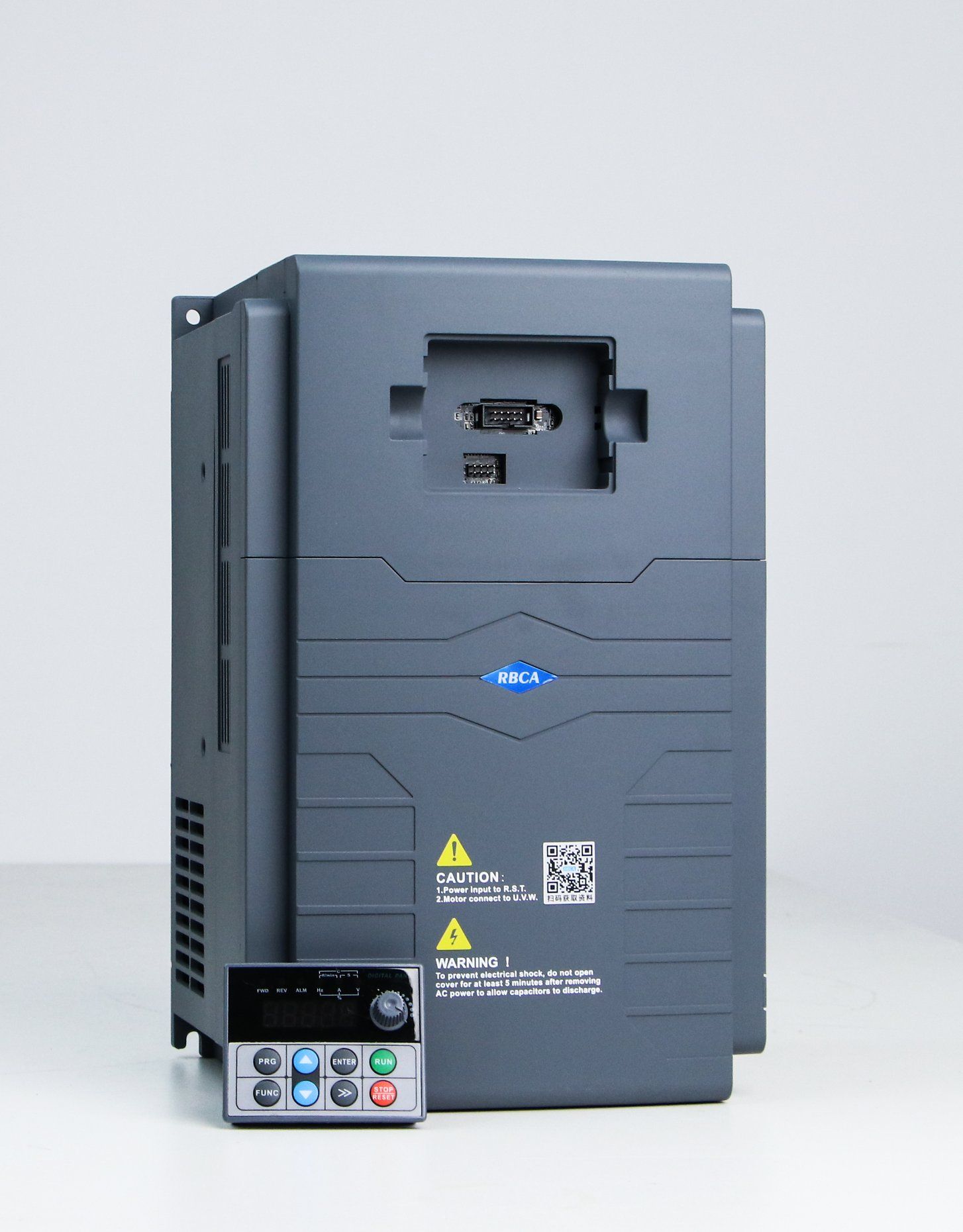
Top 3 Engineering Pain Points for Three Phase Variable Frequency Drive
In industrial automation and agricultural infrastructure projects, three-phase Variable Frequency Drives (VFDs) represent critical capital equipment where specification errors or environmental mismatches result in costly downtime and infrastructure damage. Below are the three most critical engineering challenges facing EPC contractors and system integrators when deploying VFDs in demanding B2B environments.
Scenario 1: Weak Grid Infrastructure and Single-Phase Constraints
The Problem:
Many remote agricultural sites and emerging industrial zones lack robust three-phase distribution infrastructure, presenting only single-phase supply or severely unbalanced three-phase power. When engineers attempt to power three-phase motors (the only viable option for VFD applications) from single-phase sources, the drive’s rectifier stage draws approximately √3 (1.73) times higher current through the two active input lines, creating excessive inrush current stress and DC bus ripple. Without proper derating, this leads to premature rectifier failure, DC link capacitor degradation, and nuisance tripping on under-voltage faults. Additionally, voltage sags and grid instability in weak rural networks cause frequent drive faults, disrupting irrigation schedules and process continuity.
The Solution:
Implement strategic drive oversizing by selecting VFDs with current ratings roughly two size increments larger than the motor’s nominal three-phase current (following the 1.73x derating rule). Install 5% impedance input line reactors to filter harmonic currents, protect the diode bridge from thermal stress, and mitigate voltage transients. For solar pumping applications, specify VFDs with built-in phase conversion capabilities and enhanced pre-charge circuits that manage capacitor inrush current during single-phase startup, ensuring reliable operation on constrained rural grids.
Scenario 2: Hydraulic Transients and Mechanical Stress in Pumping Systems
The Problem:
Direct-on-line (DOL) starting or improperly configured acceleration profiles generate immediate full-torque application, creating destructive water hammer effects, pipe fatigue, and mechanical seal degradation in irrigation and industrial pumping infrastructure. In solar pumping applications, fluctuating irradiance causes erratic DC bus voltage variations that translate to unstable motor speed control, exacerbating mechanical stress on pump bearings and couplings. EPC contractors face significant callback risks and warranty claims when transient pressure spikes damage PVC pipeline networks or cause column pipe separation in deep-well submersible installations.
The Solution:
Deploy VFDs with programmable S-curve acceleration/deceleration ramps (typically 5–30 seconds depending on system inertia) to eliminate hydraulic shock during startup and stopping. Implement closed-loop PID control for constant pressure operation, automatically adjusting motor speed to match demand without mechanical cycling. For photovoltaic-powered systems, utilize dedicated solar pump inverters featuring Maximum Power Point Tracking (MPPT) algorithms and DC voltage regulation that maintain stable output frequency despite irradiance fluctuations, ensuring smooth torque delivery and elimination of water hammer phenomena.
Scenario 3: Environmental Ingress and Thermal Derating in Outdoor Installations
The Problem:
Outdoor agricultural and industrial environments expose VFDs to dust, moisture, UV radiation, and corrosive atmospheres. Standard IP20/NEMA 1 enclosures suffer from cooling fan clogging, PCB condensation during temperature cycling, and thermal derating when ambient temperatures exceed 40°C. In solar pumping installations, enclosure heat buildup combined with high solar gain can trigger thermal protection trips, reducing water delivery during peak irrigation hours. Ingress of conductive dust or agricultural chemicals causes catastrophic short-circuit failures in unprotected drives, resulting in field replacement costs and crop loss due to irrigation delays.
The Solution:
Specify VFDs with IP65 or IP66 ratings and conformal-coated printed circuit boards to resist moisture, dust, and chemical corrosion. Implement proper thermal management by adhering to manufacturer derating curves—typically reducing output current capacity by 2–3% for every degree Celsius above 40°C ambient—and ensuring adequate heat sink clearance for convective cooling. For harsh agricultural environments, select fanless or sealed heatsink designs that eliminate ingress points entirely, with operating temperature ranges spanning -20°C to +60°C to accommodate desert solar installations and freezing conditions without performance degradation.
Component and Hardware Analysis for Three Phase Variable Frequency Drive
The internal architecture of a three-phase Variable Frequency Drive (VFD) represents a convergence of power electronics, thermal engineering, and real-time digital control. For industrial engineers and EPC contractors specifying equipment in solar pumping or heavy-duty motor control applications, understanding the granular component-level specifications is essential for predicting Mean Time Between Failures (MTBF) and ensuring operational continuity in harsh environments.
Power Conversion Stack and Semiconductor Topology
At the heart of every VFD lies a three-stage power conversion train. The input rectifier stage typically employs a six-pulse diode bridge (or active front-end IGBT rectifiers in regenerative models) to convert AC line power into pulsating DC. In solar pump inverter applications—Boray’s core specialization—this rectifier must accommodate wide voltage fluctuations from photovoltaic arrays (200VDC to 800VDC+), requiring diodes with higher reverse voltage margins (VRRM ≥ 1200V) and superior surge current handling (I²t ratings) to withstand intermittent cloud transients.
The DC link circuit serves as the energy reservoir between rectification and inversion. Film capacitors have largely superseded electrolytic variants in high-reliability solar drives due to their immunity to electrolyte dry-out and ability to handle high ripple currents (Irms) at elevated ambient temperatures (up to 105°C). The pre-charge circuit—comprising NTC thermistors or pulse resistors with bypass relays—must be sized for frequent start-stop cycles common in agricultural irrigation, where thermal fatigue of relay contacts is a primary failure mode.
The inverter stage utilizes Insulated Gate Bipolar Transistor (IGBT) modules or Intelligent Power Modules (IPMs) to synthesize variable-frequency, variable-voltage three-phase output via Pulse Width Modulation (PWM). For solar pumping systems operating in remote locations, the selection of IGBT switching frequency (typically 2–16 kHz) involves a trade-off between motor current harmonic distortion (lower noise) and switching losses (thermal stress). Advanced drives employ vector control algorithms requiring high-speed switching, necessitating modules with low thermal resistance (Rth(j-c) < 0.8 K/W) and junction temperatures rated to 150°C.
Control Architecture and Signal Integrity
The Digital Signal Processor (DSP) or ARM-based microcontroller executes complex motor control algorithms (Field-Oriented Control, Direct Torque Control) while managing protection logic. Critical quality factors include Analog-to-Digital Converter (ADC) resolution (12-bit minimum, 16-bit preferred for precision solar MPPT tracking) and temperature drift characteristics. In agricultural environments with high humidity and dust, the control PCB requires conformal coating (acrylic or silicone-based) and isolated communication ports (RS485/CAN) with surge protection to prevent corrosion and EMI-induced latch-ups.
Current sensing is achieved through Hall-effect sensors or shunt resistors, providing real-time feedback for vector control and dry-run protection in submersible pump applications. Sensor bandwidth must exceed the drive’s switching frequency to accurately capture peak currents during transient load changes, while isolation ratings (2.5kV–5kV) ensure safety compliance with IEC 61800-5-1.
Thermal Management and Mechanical Integrity
Thermal design directly correlates with lifespan in outdoor solar installations. Heatsinks fabricated from extruded aluminum (Al 6063-T5) with anodized surfaces (>10μm thickness) provide the primary heat path from IGBT baseplates to ambient air. Thermal interface materials (TIMs) with phase-change properties minimize contact resistance (Rth(c-s)) between modules and heatsinks. For IP55-rated solar pump drives, forced-air cooling via DC brushless fans with ball-bearing constructions (L10 life >50,000 hours at 40°C) is standard, though natural convection designs eliminate fan failure points in dusty agricultural settings.
Component Specification and Reliability Matrix
| Component | Function | Quality Indicator | Impact on Lifespan |
|---|---|---|---|
| IGBT Power Modules | DC-to-AC inversion via PWM; motor speed/torque control | Switching frequency (2–16 kHz), VCES rating (600V/1200V), Tj(max) (150°C), thermal resistance Rth(j-c) (<0.8 K/W) | High switching losses induce thermal cycling fatigue; 10°C junction temperature rise reduces lifespan by 50% (Arrhenius model) |
| DC-Link Film Capacitors | Energy buffering; ripple current absorption; voltage stabilization | Ripple current capacity (Irms), ESR (<5mΩ), operating temperature (-40°C to +105°C), metallized film self-healing capability | Electrolyte evaporation in electrolytic types; film capacitors offer >100,000 hours MTBF in solar applications |
| Rectifier Bridge (6-pulse) | AC-to-DC conversion; input power conditioning | Reverse voltage rating (VRRM ≥ 1.35×VAC), surge current I²t, forward voltage drop (VF) | Thermal stress from inrush currents causes bond wire lift-off; critical for phase-converter applications |
| DSP/Control Board | PWM algorithm execution; vector control; protection logic | Processing speed (≥60 MHz), ADC resolution (12–16 bit), temperature drift (<50 ppm/°C), conformal coating (IPC-CC-830) | Capacitor aging on auxiliary power supplies; corrosion in humid agricultural environments leads to signal drift |
| Cooling Heatsinks | Thermal dissipation from semiconductors; junction temperature management | Thermal resistance Rth(s-a) (<0.5 K/W), material (Al 6063), anodization thickness (>10μm), fin density | Thermal cycling causes mechanical stress at mounting interfaces; dust accumulation in solar farms reduces efficiency by 30%+ |
| Pre-charge Circuit | Limits inrush current to DC bus; prevents diode bridge damage | NTC thermistor R25 value (10–50Ω), relay contact rating (≥1.5×Inominal), charging time constant (<3s) | Relay contact arcing and oxidation; NTC thermal fatigue from frequent solar pumping start-stop cycles |
| Current Sensors (Hall Effect) | Motor phase current feedback; overcurrent protection | Accuracy (±0.5%), bandwidth (>50 kHz), isolation voltage (2.5–5kV), zero-current drift | Magnetic core saturation; Hall element degradation; critical for submersible pump dry-run detection |
| EMI Filters | Conducted noise suppression; grid compliance (IEC 61800-3) | Insertion loss (>40dB at switching freq), current rating, leakage current (<3.5mA for safety) | Capacitor degradation from voltage transients; inductor saturation under high harmonics from long motor cables |
Solar Pumping Integration Considerations
For agricultural project managers specifying solar pump inverters, hardware robustness extends beyond standard industrial VFDs. The DC input stage must accommodate open-circuit voltages from PV arrays that fluctuate with temperature coefficients (-0.3%/°C), requiring capacitors and IGBTs rated for 800VDC–1000VDC operation. Additionally, the control firmware must integrate Maximum Power Point Tracking (MPPT) algorithms that interact with the PWM generation hardware, demanding high-speed ADC sampling (>10 kHz) to track rapid irradiance changes without destabilizing the DC bus.
Enclosure integrity (IP65/IP66) and conformal coating on all PCBs are non-negotiable for outdoor solar installations, where diurnal thermal cycling and condensation accelerate electrolytic capacitor degradation and PCB corrosion. Selecting drives with film capacitor DC links and sealed, fanless heatsink designs mitigates these failure modes, ensuring 20-year operational lifespans in remote pumping stations.
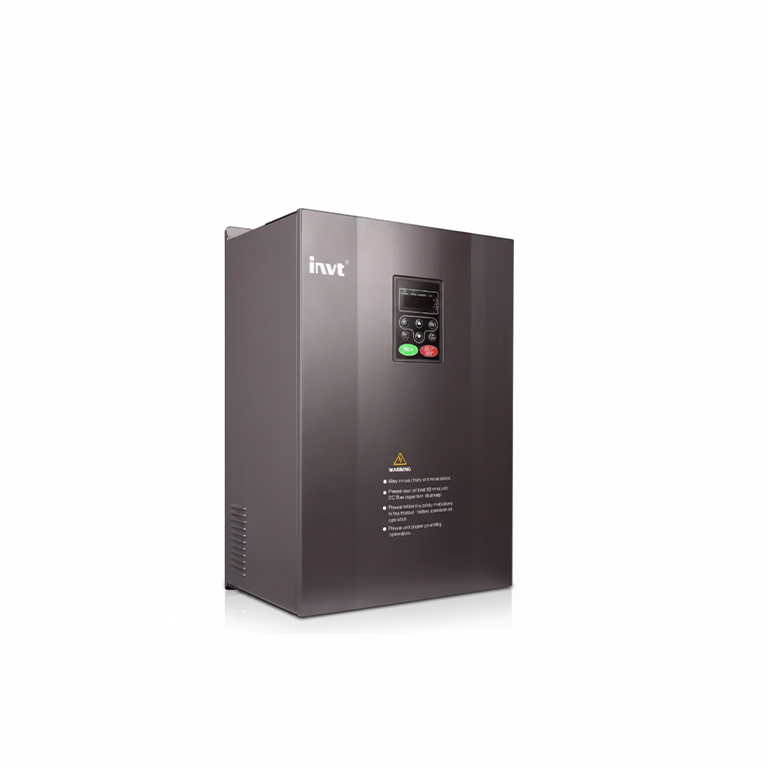
Manufacturing Standards and Testing QC for Three Phase Variable Frequency Drive
At Boray Inverter, manufacturing excellence for three-phase Variable Frequency Drives (VFDs) extends beyond assembly—it encompasses a rigorous validation protocol designed to ensure survivability in harsh agricultural environments, solar pumping stations, and continuous-duty industrial automation. Given that VFDs function as the critical interface between power source and motor—converting fixed-frequency AC to variable-frequency output through sophisticated rectifier-inverter stages—any latent defect in the power stage or control PCB can result in catastrophic motor failure or PV array downtime. Our quality assurance framework addresses these risks through multi-layered environmental protection, 100% dynamic load verification, and adherence to stringent international electrotechnical standards.
PCB Environmental Protection and Conformal Coating Standards
The printed circuit boards (PCBs) within a VFD—housing sensitive gate driver circuits, current sensing feedback loops, and microprocessor controls—are subjected to harsh conditions in solar pumping applications, including high humidity, agricultural chemical vapors, and airborne particulates. To mitigate electrochemical migration and dendritic growth between conductors, all Boray Inverter VFDs undergo automated selective conformal coating following IPC-A-610 Class 2 or Class 3 acceptance criteria.
- Material Specification: We utilize polyurethane or silicone-based coatings (meeting MIL-I-46058C standards) that provide dielectric strength >1500V/mil and moisture insulation resistance >10¹² ohms. This is critical for solar pump inverters installed in outdoor enclosures where condensation occurs during thermal cycling.
- Application Process: Boards receive plasma cleaning prior to coating to ensure adhesion, followed by precision spray or dip-coating to achieve 25-75μm thickness on power components and sensitive SMT devices, while maintaining connector keep-out zones for serviceability.
- Protection Validation: Coated samples undergo salt spray testing per ASTM B117 (96 hours, 5% NaCl) to verify corrosion resistance—essential for coastal solar installations or agricultural regions with high fertilizer concentrations.
High-Temperature Aging and Burn-in Protocols
Infant mortality in power electronics typically manifests within the first 100 hours of thermal cycling. To screen for latent semiconductor defects, capacitor electrolyte integrity, and solder joint reliability, every VFD production batch undergoes High-Temperature Aging (HTA):
- Thermal Stress Parameters: Units operate at 50°C–60°C ambient (exceeding standard 40°C industrial ratings) for 48–72 hours under elevated load conditions, simulating the thermal stress of enclosed solar pump controllers in equatorial climates.
- Power Cycling: Drives undergo rapid thermal cycling between cold-start and full-load operation to stress IGBT module solder layers and DC-link capacitor connections—components that experience significant thermal expansion coefficients during the rectifier-to-inverter energy conversion process.
- Infrared Thermography: FLIR thermal imaging identifies hot spots in the six-pulse diode bridge rectifier or braking chopper circuits that might indicate poor contact resistance or insufficient heat sink interface material application.
100% Full-Load Dynamic Testing
Unlike sample-based quality control, Boray Inverter mandates 100% full-load functional testing for every three-phase VFD prior to shipment. This protocol verifies the drive’s ability to handle the √3 current relationships inherent in three-phase power conversion and ensures compatibility with both standard induction motors and permanent magnet synchronous motors (PMSMs) common in high-efficiency solar pumping systems.
- Dynamic Load Simulation: Each unit drives a calibrated three-phase dynamometer or regenerative load bank through the full frequency spectrum (0–400 Hz or rated maximum), verifying constant V/Hz control, vector control accuracy, and torque response.
- Power Quality Verification: We measure output Total Harmonic Distortion (THD) to ensure compliance with IEEE 519 limits, critical for preventing motor overheating in long-cable agricultural pump installations.
- Solar Pump Specific Validation: For solar pump inverters, testing includes Maximum Power Point Tracking (MPPT) algorithm verification across simulated irradiance curves (200V–800V DC input range), ensuring efficient energy harvest from PV arrays under partial shading conditions.
- Protection Functionality: Comprehensive testing of overvoltage, undervoltage, phase loss, ground fault, and thermal overload protections—simulating grid instability common in rural electrification projects.
International Compliance and Certification Framework
Manufacturing processes adhere to globally recognized standards ensuring interoperability, safety, and electromagnetic compatibility (EMC) in diverse electrical infrastructures:
- ISO 9001:2015: Quality management systems governing supplier qualification, traceability documentation, and continuous improvement protocols for IGBT module procurement and capacitor sourcing.
- CE Certification (European Conformity):
- EN 61800-5-1: Safety requirements for electrical, thermal, and energy hazards, including safe torque-off (STO) circuitry verification.
- EN 61800-3: EMC requirements for the first environment (residential/commercial) and second environment (industrial), ensuring drives do not interfere with precision agricultural sensors or SCADA systems.
- IEC 61800 Series: Compliance with international standards for adjustable speed electrical power drive systems, including derating guidelines for single-phase input applications (where drives must handle 1.73× current stress on input rectifiers).
- RoHS and REACH: Restriction of hazardous substances in solder alloys and plastic housings, ensuring environmental compliance for European and North American EPC contractors.
Component Traceability and Incoming Material Inspection
Quality assurance begins at the component level. Critical power stage elements—including the DC-link electrolytic capacitors (responsible for smoothing the 1.35×√2 rectified bus voltage) and intelligent power modules (IPMs)—undergo 100% incoming inspection. We maintain lot traceability for all semiconductor devices to enable rapid failure mode analysis (FMA) should field issues arise in remote solar pumping installations.
Environmental Stress Screening (ESS) for Solar Applications
Recognizing that solar pump VFDs often operate in outdoor enclosures exposed to vibration from pump motors and thermal expansion from diurnal temperature swings, additional ESS protocols include:
- Vibration Testing: Per IEC 60068-2-6 (operational) and ISTA 3E (transportation), ensuring integrity of heavy components like DC chokes and EMC filters during shipping to project sites.
- IP Rating Verification: Ingress protection testing to IP54 or IP65 standards for dust and water jet resistance, validating enclosure integrity for monsoon-season agricultural operations.
By implementing these manufacturing standards and QC protocols, Boray Inverter ensures that each three-phase VFD delivers the 96% operational efficiency expected in modern industrial motor control while maintaining the rugged reliability required for off-grid solar pumping and continuous-process automation. For EPC contractors and automation distributors, this translates to reduced field failure rates, validated interoperability with existing motor infrastructure, and compliance with international procurement specifications.
Step-by-Step Engineering Sizing Checklist for Three Phase Variable Frequency Drive
Proper sizing of a three-phase Variable Frequency Drive (VFD) requires rigorous cross-validation between motor characteristics, electrical infrastructure constraints, and—specifically for solar pumping applications—photovoltaic (PV) array parameters. An undersized drive risks nuisance tripping and premature failure, while oversizing reduces power factor and efficiency. The following engineering protocol ensures compatibility across grid-tied and off-grid solar pumping systems, with specific attention to Boray Inverter’s solar pump VFD topology and industrial drive standards.
Step 1: Motor Nameplate Data Extraction & Load Profiling
Before selecting any drive hardware, verify the absolute minimum parameters from the motor nameplate and operational context:
– [ ] Rated Power (kW/HP): Record continuous duty rating, not peak.
– [ ] Full Load Amperage (FLA): Critical for VFD sizing; note if service factor (SF) > 1.0.
– [ ] Nominal Voltage & Frequency: Verify 380V/400V/460V/480V compatibility and 50/60Hz base.
– [ ] Insulation Class: Must be Class F or H for inverter duty; if Class B, specify inverter-duty motor or add sine-wave filter.
– [ ] Load Torque Profile: Categorize as Variable Torque (VT) (centrifugal pumps, fans) or Constant Torque (CT) (positive displacement pumps, conveyors). Solar pumping typically requires VT profiling with torque proportional to speed squared.
Step 2: VFD Current Sizing & Input Configuration
Size the drive based on current, not horsepower, accounting for input phase configuration:
For Three-Phase Input:
– [ ] Continuous Current Rating: Select VFD with rated output current ≥ 110% of motor FLA for VT applications, or ≥ 150% for 60 seconds for CT applications requiring high starting torque.
– [ ] Overload Capacity: Verify drive can deliver 150% rated current for 1 minute (standard) or 200% for solar pump inverters handling peak irradiance surges.
For Single-Phase to Three-Phase Conversion (Common in agricultural retrofit projects):
– [ ] Derating Factor: Multiply motor FLA by √3 (1.73). Select a drive with input current rating ≥ 1.73 × motor FLA, or select a drive two physical sizes larger than the motor kW rating.
– [ ] Input Line Reactor: Install 5% impedance AC line reactor on single-phase inputs to limit inrush current and protect the rectifier bridge from thermal stress during DC bus charging.
Step 3: Voltage Topology & DC Bus Validation
Validate the internal DC bus voltage against both grid and solar input constraints:
– [ ] DC Bus Calculation: For AC input, verify VDC_bus ≈ 1.35 × VAC_RMS (e.g., 480V AC yields ~650V DC; 230V AC yields ~310V DC).
– [ ] Solar Pump Inverter Compatibility: For PV-fed VFDs, ensure the array’s Maximum Power Point Voltage (VMP) falls within the drive’s MPPT window (typically 200V–800V DC for medium-power solar pumps).
– [ ] Open Circuit Voltage (VOC) Safety Margin: Calculate maximum VOC at lowest ambient temperature using:
VOC_max = VOC_stc × [1 + (TC_VOC × (T_min - 25°C))]
where TC_VOC is the temperature coefficient (%/°C). VOC_max must be < VFD maximum DC input voltage (typically 850V or 1000V) with 10% safety margin.
Step 4: Solar Array String Engineering (For Solar Pump Applications)
When sourcing PV arrays for Boray solar pump inverters:
– [ ] String Sizing: Configure series strings so that VMP (at operating temperature 60–70°C) remains above the drive’s minimum MPPT voltage.
– [ ] Current Capacity: Total array ISC (short-circuit current) must not exceed drive DC input current rating; parallel strings require fusing.
– [ ] Grounding Topology: Verify PV array grounding (TN-S, TT, or floating) matches VFD DC input isolation specifications.
Step 5: Harmonic Mitigation & Power Quality
- [ ] Input Reactors: For drives >5kW or with >50m cable runs to transformer, specify 3%–5% input reactors to reduce THDi (Total Harmonic Current Distortion).
- [ ] DC Link Chokes: Verify inclusion of DC bus chokes (inductors) for drives >10kW to smooth ripple current and extend capacitor life.
- [ ] EMC Filters: For agricultural installations near communication equipment, specify C2 or C3 category EMC filters per IEC 61800-3.
Step 6: Environmental Derating & Enclosure Specifications
- [ ] Altitude Derating: Above 1000m (3300ft), derate VFD current capacity by 1% per 100m or specify high-altitude firmware variants.
- [ ] Temperature Derating: For ambient >40°C (104°F), derate output current by 2% per °C or force ventilation/IP54 enclosure upgrade.
- [ ] Ingress Protection: Agricultural/dusty environments require minimum IP54; submersible pump controllers require IP65 or higher.
Step 7: Protection Coordination & Cabling
- [ ] Input Protection: Size fuses or circuit breakers at 1.5× to 2.5× drive input current rating (Class J fuses or Type 2 coordination MCCBs).
- [ ] Output Cable Sizing: Size motor cables based on drive carrier frequency (2kHz–16kHz); higher frequencies reduce audible noise but increase capacitive leakage—use shielded cables for runs >50m.
- [ ] Output Reactors: For motor cable lengths >100m (330ft), install dv/dt filters or sine-wave filters to protect motor insulation from reflected wave phenomena.
Step 8: Control Interface & Communication Validation
- [ ] I/O Matching: Verify analog input resolution (0–10V or 4–20mA) matches sensor outputs (pressure transducers, flow meters).
- [ ] Dry-Run Protection: For solar pumps, ensure VFD includes dry-run detection via current sensing or external float switches.
- [ ] Communication Protocol: Confirm RS485/Modbus RTU or CANopen compatibility with SCADA or remote monitoring systems (critical for EPC handover documentation).
Final Verification Checklist:
– [ ] Motor FLA ≤ VFD rated current (after all derating factors)
– [ ] VOC_max (winter morning) < VFD VDC_max
– [ ] VMP_min (summer noon) > VFD MPPT_min
– [ ] Single-phase input (if used) has 5% line reactor and 1.73× current derating
– [ ] Enclosure IP rating matches installation environment
– [ ] All protection devices coordinated for Type 2 (no damage) protection per IEC 60947-4-2
This systematic approach ensures that whether deploying a standard industrial VFD for a three-phase motor or configuring a solar pump inverter for off-grid irrigation, the system operates within thermal, electrical, and environmental design limits, maximizing operational lifespan and ROI for industrial and agricultural stakeholders.
Wholesale Cost and Energy ROI Analysis for Three Phase Variable Frequency Drive
When procuring three-phase Variable Frequency Drives (VFDs) for industrial or agricultural deployments, discerning buyers evaluate procurement economics through the lens of Total Life Cycle Cost (TLCC) rather than unit acquisition price. For EPC contractors managing solar pumping installations or automation distributors serving manufacturing clusters, understanding the delta between wholesale volume pricing and retail channel costs—coupled with quantifiable energy ROI—determines project viability and competitive positioning.
Wholesale Procurement Architecture vs. Channel Markups
In the B2B electrical equipment sector, three-phase VFD pricing operates on a tiered volume structure distinct from retail MRO (Maintenance, Repair, and Operations) channels. Wholesale acquisition typically begins at pallet-level quantities (20–50 units) for standard 380V/460V class drives, escalating to container-level pricing (200+ units) for specialized solar pump inverters or medium-voltage drives.
Volume-Based Cost Structures:
– Distributor/OEM Tier (50–200 units): Approximately 35–45% below retail list pricing, inclusive of technical documentation and baseline commissioning support
– EPC Project Tier (Container quantities): Negotiated BOM (Bill of Materials) pricing incorporating ancillary components—input line reactors (5% impedance), EMI filters, and braking resistors—often bundled at 15–20% component cost reduction
– Strategic Partnership Tier: Long-term supply agreements for agricultural irrigation integrators or industrial automation houses, featuring locked pricing for 12–18 month horizons against raw material volatility (IGBT modules, aluminum enclosures)
Critical to wholesale valuation is the derating cost factor when deploying standard three-phase VFDs in single-phase input scenarios (common in remote agricultural pumping). As technical specifications require sizing the drive at 1.73× (√3) the motor’s three-phase current rating, wholesale procurement must account for the jump to higher frame sizes. A 7.5kW motor requiring single-phase input necessitates a 15kW-rated VFD chassis, effectively doubling the semiconductor cost (IGBT bridge and rectifier capacity) despite serving the same mechanical load.
Total Cost of Ownership: Beyond Unit Pricing
Sophisticated procurement analysis distinguishes between CAPEX (Capital Expenditure) and OPEX (Operational Expenditure) impacts. While wholesale VFD acquisition costs range from $85–$150 per kW for standard industrial drives (IP20 enclosures) to $180–$320 per kW for solar pump inverters with MPPT (Maximum Power Point Tracking) functionality, the economic analysis must integrate:
Installation Ancillaries: Input line reactors, essential for single-phase applications or networks with >3% voltage imbalance, add 8–12% to hardware costs but prevent rectifier stress failures that void warranty coverage. DC bus pre-charge circuits and braking units for high-inertia centrifugal pumps contribute additional 5–8% BOM cost.
Harmonic Mitigation: Three-phase VFDs without active front ends (AFE) or DC chokes introduce harmonic distortion (THDi) of 3–5%, potentially necessitating external filtering. Wholesale procurement of drives with built-in DC reactors versus external active filters yields 40–60% savings on power quality compliance costs.
Energy ROI Modeling and Payback Analysis
The primary value proposition of three-phase VFD deployment lies in energy arbitrage. Induction motors operating across variable torque curves (pumps, fans, compressors) demonstrate power consumption proportional to the cube of speed (Affinity Laws). Implementing VFD control on a 30kW centrifugal pump operating at 80% flow capacity yields:
Quantified Savings:
– Direct Energy Reduction: 48–52% kWh consumption decrease versus throttling valve control
– Power Factor Correction: VFDs maintain near-unity power factor (0.98–1.0), eliminating utility penalty charges common across industrial three-phase networks
– Demand Charge Mitigation: Soft-start functionality reduces inrush current (typically 6–8× FLA for DOL starting) to 1.5× FLA, lowering peak demand billing ratchets
ROI Calculation Framework:
For a 75kW irrigation pump operating 2,400 hours annually at $0.12/kWh:
– Baseline annual energy cost (fixed speed): ~$21,600
– VFD-controlled consumption (70% average load): ~$10,368
– Annual savings: $11,232
– Wholesale VFD + installation cost (IP54, solar-ready): ~$4,200
– Simple payback: 4.5 months
In solar pumping applications, the ROI accelerates when displacing diesel generation. A 22kW solar pump inverter (VFD with integrated MPPT) replacing a diesel pump set eliminates fuel costs averaging $0.35–$0.50 per kWh equivalent, achieving payback periods of 18–24 months even after accounting for PV array costs.
Warranty Cost Integration and Risk Mitigation
Wholesale procurement agreements must explicitly define warranty cost allocation. Standard industrial VFD warranties span 18–24 months, while premium solar pump inverters often extend to 36 months given harsh environmental exposure (ambient temperatures >45°C, humidity >95%).
Warranty Economics:
– Extended Warranty Premiums: 3–5% of hardware cost per additional year, typically capped at 5 years total coverage
– Failure Cost Analysis: Drive replacement in remote agricultural sites incurs logistics costs exceeding the hardware value. Wholesale agreements should include advance replacement clauses (cross-ship RMA) to minimize irrigation downtime during critical growing seasons
– Environmental Derating: Operating VFDs above 40°C ambient without derating (typically 1% current reduction per degree above 40°C) voids most warranties. Procurement specifications must clarify thermal management costs (enclosure cooling, heat sinks) versus drive oversizing
Strategic Procurement Recommendations
For EPC contractors bidding solar pumping projects, negotiate wholesale VFD procurement that includes:
1. Modular scalability: Master-slave configurations allowing parallel operation of multiple pumps under single control architecture
2. Communication protocol compatibility: Integrated RS485/Modbus RTU and optional Ethernet/IP to eliminate external gateway costs
3. Field service training: Wholesale pricing should incorporate commissioning engineer certification to reduce third-party startup costs
Distributors should prioritize VFDs with universal input voltage ranges (380–480V ±15%) and single-phase derating compatibility to minimize SKU proliferation while covering diverse agricultural and light industrial applications.
By analyzing wholesale acquisition through the prism of energy ROI, harmonic compliance costs, and warranty risk allocation, procurement professionals transform VFD procurement from a commodity purchase into a strategic energy infrastructure investment with demonstrable 18–36 month payback cycles.
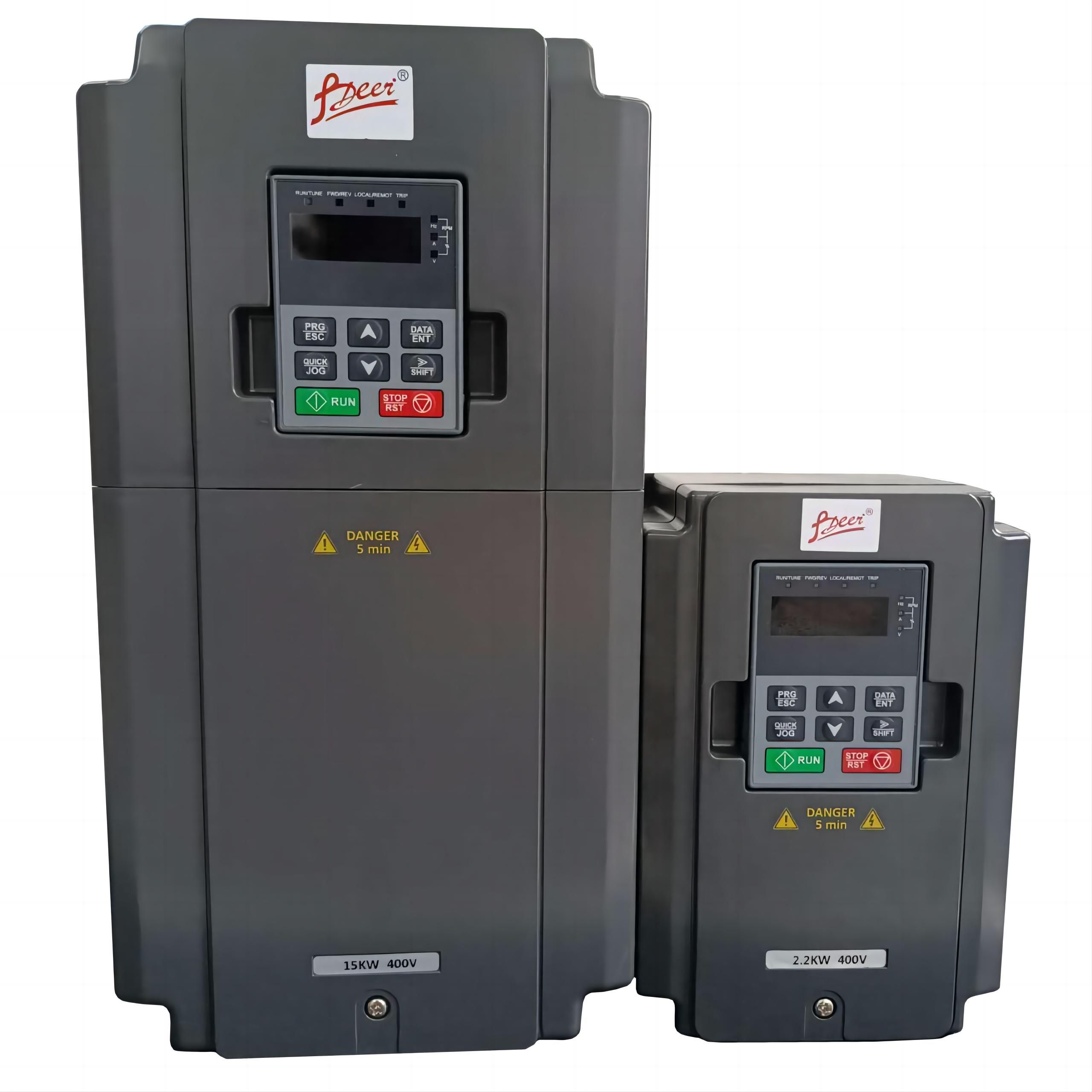
Alternatives Comparison: Is Three Phase Variable Frequency Drive the Best Choice?
Selecting the optimal motor control and power delivery architecture requires rigorous evaluation of operational demands, lifecycle costs, and energy efficiency targets. While three-phase Variable Frequency Drives (VFDs) represent the state-of-the-art for adjustable speed applications, alternative technologies—ranging from electromechanical soft starters to permanent magnet motor systems—offer distinct advantages in specific scenarios. For industrial engineers and EPC contractors designing pumping stations or automation systems, understanding these trade-offs ensures capital expenditure aligns with long-term operational value.
VFD vs. Soft Starter: Control Philosophy and Efficiency
The most common alternative to a VFD in motor starting applications is the Soft Starter, which uses silicon-controlled rectifiers (SCRs) to ramp voltage during start and stop sequences. While both technologies mitigate inrush current (typically 6-8x full load current during direct-on-line starting), their operational principles diverge significantly:
Control Methodology: A soft starter modulates the firing angle of SCRs to reduce voltage, thereby limiting torque and current during acceleration. However, once the motor reaches full speed, the soft starter bypasses to line voltage, offering no speed control. In contrast, a VFD rectifies incoming AC to DC and inverts it back to variable-frequency AC, enabling continuous speed regulation from 0 to 200% of base speed (depending on motor thermal limits).
Energy Economics: Soft starters provide minimal energy savings beyond reducing start-up stress. They cannot optimize energy consumption at partial loads—a critical disadvantage for centrifugal pumps and fans where affinity laws dictate that reducing speed by 20% decreases power consumption by approximately 49%. VFDs maintain high efficiency across the operating envelope through dynamic V/Hz control or vector control algorithms.
System Complexity and Cost: Soft starters offer lower initial capital expenditure (typically 30-50% less than comparable VFDs) and generate less harmonic distortion since they switch at line frequency. However, for applications requiring flow or pressure modulation—common in agricultural irrigation and industrial process control—the inability to vary speed often necessitates mechanical throttling valves or damper systems, introducing parasitic losses that negate the soft starter’s upfront savings within 12-18 months of operation.
Solar DC vs. Grid AC Power Architectures
In remote pumping applications, the decision between solar-powered VFD systems and traditional grid-connected motor controls involves technical and economic variables beyond simple energy availability:
Power Quality and Availability: Grid-connected three-phase VFDs assume stable voltage and frequency parameters (±10% tolerance typically). Solar pump inverters, such as those manufactured by Boray, incorporate Maximum Power Point Tracking (MPPT) algorithms to extract optimal energy from photovoltaic arrays despite irradiance fluctuations. These specialized VFDs maintain DC bus stability while converting variable DC input to three-phase AC output, eliminating the need for battery storage in most pumping applications.
Lifecycle Cost Analysis: While solar VFD systems require higher initial capital investment (PV modules + inverter vs. grid connection fees), operational expenditure approaches zero post-installation. For agricultural projects in regions with unreliable grid infrastructure or high electricity tariffs, solar pumping VFDs offer payback periods of 2-4 years depending on insolation levels and pumping head requirements.
Hybrid Considerations: Advanced three-phase VFDs now support AC/DC hybrid inputs, allowing seamless switching between solar and grid power. This architecture ensures 24/7 operational continuity while maximizing renewable energy utilization—critical for irrigation projects where crop water requirements cannot tolerate downtime during cloudy periods.
Motor Technology: PMSM vs. Induction Motor (IM)
When pairing with three-phase VFDs, the choice between Permanent Magnet Synchronous Motors (PMSM) and standard Induction Motors (IM) significantly impacts system efficiency and control complexity:
Efficiency and Power Factor: PMSMs eliminate rotor copper losses through rare-earth magnet excitation, achieving IE5 efficiency levels (≥95%) compared to IE3/IE4 induction motors (90-93%). They maintain unity power factor across the speed range, reducing VFD input current requirements and associated cable sizing costs. Induction motors, conversely, exhibit lagging power factor (0.85-0.90 at full load) that deteriorates at partial loads.
Control Requirements: PMSMs require precise rotor position feedback (encoder or sensorless vector control) for stable operation, increasing VFD complexity and cost. Induction motors operate reliably with simpler V/Hz control schemes, making them preferable for general-purpose applications where ultimate efficiency is secondary to robustness and maintenance simplicity.
Thermal and Mechanical Constraints: Induction motors tolerate higher ambient temperatures and overload conditions due to their rugged squirrel-cage construction. PMSMs risk demagnetization at excessive temperatures (>150°C magnet grade) and require derating in high-temperature environments, though their higher efficiency generally results in lower operating temperatures under nominal conditions.
Comparative Analysis Summary
| Parameter | Three-Phase VFD + IM | Soft Starter + IM | Three-Phase VFD + PMSM | Solar Pump VFD (DC Input) |
|---|---|---|---|---|
| Speed Control Range | 10:1 (V/Hz) to 1000:1 (Vector) | Fixed speed only | 100:1 or greater | 5:1 typical (solar irradiance dependent) |
| Starting Current | 100-150% FLC (adjustable) | 200-400% FLC | 100-150% FLC | Soft start capability inherent |
| Full Load Efficiency | 90-93% (motor) + 97% (drive) | 90-93% (motor only) | 95-97% (motor) + 97% (drive) | 95-97% (system including MPPT) |
| Energy Savings at 50% Load | 60-70% vs. fixed speed | 0% | 65-75% vs. fixed speed | 100% renewable (zero grid draw) |
| Power Factor | 0.95-1.0 (drive input) | 0.85-0.90 (motor dependent) | 0.95-1.0 | 0.95-1.0 |
| Harmonic Distortion (THDi) | 3-5% (with DC choke) | <5% (line frequency switching) | 3-5% | <3% (optimized for solar) |
| Initial Cost Index | 1.0 (baseline) | 0.4-0.6 | 1.3-1.6 | 1.8-2.2 (including PV array) |
| Maintenance Requirements | Fan/filter replacement (5-7 years) | Minimal (bypass contactor wear) | Magnet integrity checks | Panel cleaning, DC bus cap check |
| Optimal Applications | Variable torque (HVAC, pumps), precise process control | High-inertia starts, constant speed applications | High-performance servo, energy-critical solar pumping | Remote irrigation, off-grid water supply |
When is the Three-Phase VFD the Optimal Choice?
For industrial automation and solar pumping applications, the three-phase VFD emerges as the superior solution under the following conditions:
-
Variable Flow Requirements: Any system where demand fluctuates—whether due to seasonal irrigation needs or process modulation—benefits from the VFD’s ability to match motor speed to load, eliminating the “throttle loss” inherent in damper-controlled or valve-controlled systems.
-
Energy Recovery Scenarios: Regenerative VFDs can return braking energy to the grid or DC bus, particularly valuable in downhill pumping applications or high-inertia centrifuges.
-
Power Quality Constraints: When operating from weak grid infrastructure or generator sets, the VFD’s active front end (AFE) or DC choke options provide superior input current THD performance compared to soft starters, which can cause voltage flicker during start sequences.
-
Solar Integration: Modern solar pump inverters (specialized three-phase VFDs) offer the only viable method for direct DC-to-AC conversion without battery storage, utilizing MPPT algorithms to maximize PV array yield while providing motor protection features impossible with simple DC-AC inverters.
Conclusion: While soft starters suffice for fixed-speed applications requiring only mechanical stress reduction, and while grid power remains practical for urban installations, the three-phase VFD—particularly when paired with high-efficiency PMSMs in solar configurations—delivers unmatched operational flexibility and lifecycle value. For EPC contractors and agricultural project managers prioritizing decarbonization and operational expenditure reduction, specifying a robust three-phase VFD with MPPT capability represents not merely a technical choice, but a strategic business imperative.
Core Technical Specifications and Control Terms for Three Phase Variable Frequency Drive
When specifying three-phase Variable Frequency Drives (VFDs) for industrial automation or solar pumping infrastructure, engineers and procurement managers must evaluate both electrical performance parameters and commercial logistics frameworks. The following technical and trade specifications represent critical decision criteria for ensuring system compatibility, operational efficiency, and seamless international procurement.
Electrical Performance & Thermal Specifications
Input/Output Characteristics
Standard industrial VFDs accommodate three-phase input voltages of 380V–480V AC (±15% tolerance) with a frequency range of 50/60Hz ±5%. Output specifications typically span 0–400Hz (configurable up to 600Hz for specialized applications), with voltage/frequency following the V/F curve or maintaining constant torque via vector algorithms. Carrier frequency settings (2kHz–16kHz) require careful selection—higher frequencies reduce motor acoustic noise but increase IGBT switching losses, necessitating derating above 4kHz ambient temperatures.
Overload Capacity & Duty Ratings
Heavy-duty (HD) versus normal-duty (ND) classifications determine thermal headroom. For centrifugal pumps and conveyors, specify drives with 150% rated current for 60 seconds and 180% for 10 seconds (IEC 61800-5-1 compliant). Agricultural solar pumping applications demand additional surge capacity to overcome static friction in deep-well submersible pumps during startup.
Protection Classes & Environmental Hardening
IP20 enclosures suffice for controlled electrical rooms, whereas outdoor solar pump installations require IP54 or IP65 ratings with conformal-coated PCBs to resist humidity, dust, and corrosive atmospheres. Operating temperature ranges of -10°C to +50°C (with derating above 40°C) ensure reliability in extreme climates.
Advanced Motor Control Methodologies
Sensorless Vector Control (SVC) / Field Oriented Control (FOC)
Modern VFDs employ high-performance current vector control algorithms that decompose motor current into flux and torque components. This enables precise speed regulation (±0.5% accuracy without encoder feedback) and 150% starting torque at 0.5Hz—critical for maintaining constant pressure in multi-story irrigation systems or industrial conveyor belts under variable load conditions. Closed-loop vector control (utilizing encoder feedback) achieves ±0.01% speed accuracy for synchronization-sensitive applications.
PID Process Control
Integrated Proportional-Integral-Derivative controllers allow the VFD to maintain process variables (pressure, flow, temperature) without external PLCs. In solar pumping systems, the drive receives 4–20mA or 0–10V feedback from pressure transducers, automatically adjusting motor speed to maintain setpoints while minimizing energy consumption. Sleep/wake functionality pauses operation when demand drops below minimum thresholds, preventing pump cavitation and dry-running.
Maximum Power Point Tracking (MPPT) – Solar Applications
For photovoltaic-powered pumps, specialized solar pump inverters (a subset of VFDs) incorporate MPPT algorithms that continuously scan the PV array’s voltage-current curve to operate at the maximum power point (typically 99% tracking efficiency). Key parameters include:
– MPPT Voltage Range: Wide DC input windows (e.g., 200V–800VDC) accommodating varying solar irradiance
– Startup Voltage: Low-voltage startup capabilities (as low as 150VDC) for early morning/late afternoon operation
– Dry Run Protection: Automatic shutdown when water levels drop below sensor thresholds, preventing mechanical seal damage
Communication & Integration Protocols
Modern three-phase VFDs support Modbus RTU/ASCII as standard, with optional PROFINET, EtherNet/IP, or CANopen modules for Industry 4.0 integration. For agricultural SCADA systems, RS485 connectivity enables centralized monitoring of multiple pump stations, fault logging, and remote parameter adjustment.
International Commercial Terms (Incoterms 2020)
When procuring VFDs and solar pump controllers from Chinese manufacturers like Boray Inverter, understanding Incoterms prevents logistical disputes and clarifies cost responsibilities:
EXW (Ex Works)
The seller makes goods available at their factory. The buyer assumes all costs and risks from the point of collection, including export clearance, ocean freight, and insurance. Suitable only for buyers with established freight forwarding networks in China.
FOB (Free On Board)
The seller delivers goods onto the vessel at the named port of shipment (e.g., FOB Shanghai). Risk transfers when goods pass the ship’s rail, though the seller handles export customs clearance. This term balances control and cost, allowing buyers to manage ocean freight and marine insurance while leveraging the manufacturer’s local logistics expertise for container loading and export documentation.
CIF (Cost, Insurance, and Freight)
The seller contracts for carriage and pays freight costs to the destination port, plus procures minimum marine insurance coverage. Risk transfers to the buyer upon loading at origin, but the seller bears freight costs until the destination port. Critical for EPC contractors requiring predictable landed costs, though buyers must verify insurance coverage adequacy for high-value electrical equipment.
DDP (Delivered Duty Paid)
The seller assumes all costs and risks until goods reach the named destination, including import duties and customs clearance. Rare for heavy electrical equipment due to complex import regulations, but advantageous for agricultural project managers requiring turnkey delivery to remote sites.
Packaging Considerations for Ocean Freight
Regardless of Incoterm, specify seaworthy packaging: plywood crates with vapor barrier bags and desiccants to prevent moisture ingress during transit, shock indicators to detect mishandling, and lifting points rated for drive weight (typically 1.5–5kg per kW for IP20 units, higher for IP54/65 enclosed drives).
By aligning technical specifications—such as vector control precision for torque-demanding pumps or MPPT efficiency for solar arrays—with appropriate commercial terms, stakeholders ensure both operational performance and supply chain predictability in global industrial automation deployments.
Future Trends in the Three Phase Variable Frequency Drive Sector
The three-phase Variable Frequency Drive (VFD) sector is undergoing a paradigm shift driven by the convergence of electrification, digitalization, and decarbonization mandates. As industrial facilities and agricultural operations worldwide transition toward net-zero targets, the role of the VFD has evolved from simple motor speed regulation to intelligent energy management hub. For EPC contractors and automation distributors, understanding these trajectories is critical to specifying future-proof systems that align with both operational efficiency goals and stringent environmental regulations.
Intelligent Automation and AI-Driven Control Architectures
The next generation of three-phase VFDs is moving beyond static V/Hz control curves toward adaptive, self-optimizing systems. Machine learning algorithms embedded in drive firmware now enable real-time load profiling and automatic parameter tuning, eliminating the manual commissioning traditionally required for complex multi-motor applications. In agricultural irrigation and industrial process control, these intelligent drives analyze torque signatures to detect pump cavitation, pipe blockages, or conveyor belt slippage before they cause mechanical failure.
Furthermore, edge computing capabilities within modern drives facilitate decentralized decision-making. Rather than relying solely on centralized PLCs, advanced VFDs equipped with onboard analytics can execute predictive control strategies—adjusting motor speeds based on immediate sensor data from flow meters, pressure transducers, or solar irradiance sensors. This shift reduces latency in critical applications such as solar pumping systems, where sub-second responses to changing PV output conditions maximize water yield during peak sunlight hours.
Deep Integration with Renewable Energy and DC Microgrids
As solar electrification accelerates across remote industrial and agricultural sectors, three-phase VFDs are increasingly engineered as hybrid AC/DC power conversion platforms. Traditional rectifier-inverter architectures are evolving to accommodate direct DC coupling with photovoltaic arrays, eliminating intermediate DC-AC-DC conversion losses in solar pump installations. Modern solar pump inverters now feature Maximum Power Point Tracking (MPPT) algorithms specifically optimized for submersible motor characteristics, achieving 98% conversion efficiency even under fluctuating irradiance conditions.
Beyond standalone solar applications, VFDs are becoming central components in industrial DC microgrids. By incorporating active front-end (AFE) rectifier technology and regenerative braking capabilities, these drives enable bidirectional power flow—allowing motors to return kinetic energy to battery storage systems or back to the grid. For EPC contractors designing hybrid renewable systems, this capability supports the creation of resilient power architectures where three-phase motors can operate seamlessly across grid-connected, off-grid, and backup power modes without mechanical switching equipment.
IoT-Enabled Monitoring and Cybersecure Connectivity
The Industrial Internet of Things (IIoT) is transforming VFDs from isolated power components into networked cyber-physical systems. Embedded Ethernet and 4G/5G connectivity now enable continuous telemetry transmission of operational parameters—vibration, bearing temperature, current harmonics, and energy consumption—to cloud-based asset management platforms. For agricultural project managers overseeing distributed solar pumping networks across vast geographies, this connectivity eliminates the need for physical site visits, allowing remote diagnostics, firmware updates, and performance optimization from centralized control rooms.
However, with increased connectivity comes the imperative for robust cybersecurity. Emerging VFD platforms are adopting IEC 62443 standards for industrial automation security, implementing encrypted communication protocols, secure boot mechanisms, and role-based access controls. Digital twin technology represents another frontier, where virtual replicas of physical motor-drive systems run parallel simulations to predict maintenance windows and validate control strategies before deployment in critical infrastructure.
Wide Bandgap Semiconductors and Ultra-High Efficiency
At the hardware level, the adoption of Silicon Carbide (SiC) and Gallium Nitride (GaN) semiconductors is enabling higher switching frequencies with reduced thermal losses. This transition allows three-phase VFDs to drive IE5 ultra-premium efficiency motors with minimal harmonic distortion, meeting emerging regulations such as the EU’s Ecodesign requirements. Higher switching frequencies also facilitate the use of smaller, lighter motors—particularly advantageous in mobile solar pumping skids and containerized desalination units where space constraints are paramount.
As these technologies mature, the distinction between motor and drive is blurring into integrated motor-drive systems (IMDs) with embedded power electronics. For automation distributors, this trend signals a shift toward selling complete electrification solutions rather than discrete components, requiring new expertise in system integration and lifecycle service models.
Top 3 Three Phase Variable Frequency Drive Manufacturers & Suppliers List

Analysis of the Top 25 Variable Frequency Drive (VFD) Companies …
Website: finance.yahoo.com
No relevant product details regarding solar inverters, VFDs, or industrial automation could be extracted from the provided text. The content appears to be a generic Yahoo error page (‘Oops, something went wrong’) accompanied by site navigation menus and category links, containing no technical specifications, product analysis, or market data related to variable frequency drives or solar pump invert…
Best Vfd Variable Frequency Drive Manufacturers and Suppliers, Factory OEM Quotes | K-Drive
Website: thefrequencyinverters.com
The text describes SHENZHEN K-EASY AUTOMATION CO., LTD. (K-Drive), a manufacturer of motor control and automation solutions. Key product categories include: (1) Variable Frequency Drives: KD600 Series Vector Inverter (supporting single-phase 220V to three-phase 380V conversion), KD100 Series Mini Vector Frequency Inverter, KD600E Elevator Lift Frequency Inverter, and KD700/IP65 Series with IP65 pr…
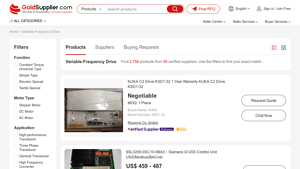
China Variable-Frequency Drive Manufacturers & Suppliers | Goldsupplier.com
Website: goldsupplier.com
The Goldsupplier.com Variable-Frequency Drive category lists 2,758 products from 59 verified suppliers, featuring industrial automation and motor control solutions. Key products include the KUKA C2 Drive KSD1-32 for robotics applications, and the Siemens G120X Control Unit (Model 6SL3200-0SC10-0BA0) supporting USS/Modbus/BACnet communication protocols for high-performance transducer applications. …
B2B Engineering FAQs About Three Phase Variable Frequency Drive
-
When converting single-phase input to three-phase output using a VFD, what derating factor is required, and why is an input line reactor recommended?
When feeding a three-phase VFD with single-phase power (common in rural agricultural installations up to 3 HP), the input current concentrates on two lines rather than three, requiring a derating factor of approximately √3 (1.73). As a rule of thumb, select a VFD with a current rating at least 1.73 times the motor’s full-load current, or roughly two physical sizes larger than the motor’s nameplate rating. Additionally, a 5% impedance input line reactor is strongly recommended to limit inrush current during DC bus capacitor charging, protect the rectifier bridge from voltage spikes, and reduce harmonic distortion (THDi) fed back to the supply. This configuration effectively converts the VFD into a phase converter while ensuring reliable operation of standard three-phase induction motors on single-phase grids.
-
How does PWM carrier frequency affect motor insulation stress, and what mitigation measures are required for cable runs exceeding 50 meters?
IGBT-based VFDs utilize high-frequency Pulse Width Modulation (PWM) with rise times typically <0.1 µs, creating steep voltage wavefronts (high dV/dt) that can stress motor insulation and generate reflected waves in long cables. For cable runs exceeding 50 meters (or 30 meters in harsh agricultural environments), the reflected wave phenomenon can create voltage spikes up to 2-3 times the DC bus voltage (potentially >1200V on 460V systems), leading to premature motor winding failure. Mitigation requires installing output line reactors, dV/dt filters, or sine-wave filters at the VFD output to slow voltage rise times. For solar pumping systems with submersible motors requiring 100m+ cable runs, Boray Inverter recommends sine-wave filters to protect both the motor insulation and the submersible cable’s integrity.
-
What are the fundamental DC bus topology differences between a standard grid-tied VFD and a Solar Pump Inverter (SPV) for agricultural applications?
While both utilize a rectifier stage, DC link, and inverter bridge, a Solar Pump Inverter (SPV) is optimized for direct DC input from photovoltaic arrays without grid rectification. Standard VFDs maintain a fixed DC bus voltage (e.g., ~650V DC for 460V AC input), whereas SPVs feature wide MPPT (Maximum Power Point Tracking) voltage ranges (typically 200V–800V DC) to accommodate varying solar irradiance. SPVs incorporate specialized MPPT algorithms that adjust the DC bus reference to extract maximum power from the PV array, whereas grid-tied VFDs prioritize constant V/Hz control. Additionally, solar pump inverters include dry-run protection, tank-full detection, and sleep/wake functions specifically designed for irrigation cycles—features absent in standard industrial VFDs.
-
In multi-pump booster stations, how does master-slave communication between VFDs optimize energy efficiency compared to individual pump control?
Networked VFD systems utilizing RS-485 (Modbus), CANopen, or proprietary protocols enable intelligent pump staging and destaging based on real-time demand. In a master-slave configuration, the master VFD modulates system pressure while slave drives add or remove pumps to maintain flow with optimal efficiency. This prevents the “hunting” behavior common with individual pressure switch controls and allows pumps to operate at their Best Efficiency Point (BEP) rather than cycling on/off at full speed. For agricultural irrigation projects, this topology reduces energy consumption by 15–30% compared to single-pump operation, minimizes water hammer through soft-start sequencing, and provides redundancy—if one drive faults, the system automatically reconfigures to maintain partial flow.
-
What braking resistor specifications are required for high-inertia centrifugal pumps, and how is duty cycle calculated?
High-inertia loads (large impellers, deep-well turbines) require dynamic braking to prevent DC bus overvoltage during deceleration. The braking resistor ohmic value is determined by the VFD’s DC bus voltage (V) and desired braking current: R = V / I_brake, typically resulting in values between 10Ω and 100Ω for low-voltage drives. Wattage calculation must account for duty cycle (%ED): P_continuous = (V² / R) × %ED. For centrifugal pumps with short deceleration ramps (10–20 seconds), a 10% duty cycle is usually sufficient, whereas high-inertia borehole pumps may require 20–25% duty cycle. Boray Inverter recommends thermally protected resistors with IP65 enclosures for outdoor agricultural installations to prevent moisture ingress during resistor heating cycles.
-
What harmonic current distortion (THDi) levels are typical for 6-pulse VFD rectifiers, and what active filtering solutions are suitable for compliance with IEEE 519?
Standard 6-pulse diode bridge rectifiers typically generate total harmonic current distortion (THDi) of 80–120%, with dominant 5th, 7th, 11th, and 13th harmonics. For installations requiring IEEE 519 compliance (particularly when multiple VFDs are installed on weak rural grids), passive solutions include 3% or 5% DC bus chokes (which reduce THDi to approximately 35–45%) or AC line reactors. Active solutions include Active Front End (AFE) drives or Active Harmonic Filters (AHF), which can reduce THDi to <5%. For solar pumping stations connected to generator backup systems, DC chokes are essential to prevent generator overheating caused by harmonic currents and to ensure stable voltage regulation during cloud transients.
-
What environmental protection ratings (IP) and thermal management considerations are critical for VFDs in outdoor agricultural or desert solar pumping applications?
Outdoor agricultural VFDs require minimum IP65 (dust-tight, protected against water jets) or IP66 (protected against powerful water jets) enclosures to withstand irrigation spray, dust, and humidity. Conformal coating on PCBs is essential for protection against corrosive atmospheres (fertilizer vapors, salt air in coastal regions). Thermal management requires derating: VFDs typically derate 2–3% per °C above 40°C ambient. For desert solar pumping, select drives with wide temperature ranges (-20°C to +60°C) and forced ventilation with filtered air intakes. Boray Inverter recommends side-by-side mounting with minimum 100mm clearance for heat dissipation, and the use of sun shields or external cooling fans when ambient temperatures exceed 45°C to prevent thermal runaway of the DC bus capacitors.
-
How does V/Hz control differ from Sensorless Vector Control (SVC) in submersible pump applications, and when is each method preferred?
V/Hz (Volts per Hertz) control maintains a constant ratio of voltage to frequency, providing simple speed control suitable for centrifugal pumps with quadratic torque loads (where torque varies with speed squared) and stable load curves. However, for deep-well submersible pumps with high starting torque requirements, varying water levels, or applications requiring precise pressure control (drip irrigation), Sensorless Vector Control (SVC) is preferred. SVC uses motor current feedback to estimate rotor flux and torque, providing 150–200% starting torque at 0.5 Hz without encoder feedback. This prevents “pump stall” conditions in low-water scenarios and enables precise torque limiting to detect dry-running conditions—critical for protecting submersible motors in borehole applications where physical inspection is impossible.
Disclaimer
⚠️ Important Disclaimer
The information provided in this guide is for educational purposes. Industrial applications and electrical engineering projects carry inherent risks. B2B buyers and contractors must conduct thorough technical due diligence and verify regional compliance before installation or procurement.
Conclusion: Partnering with Boray Inverter for Three Phase Variable Frequency Drive
The integration of three-phase Variable Frequency Drives represents more than an operational upgrade—it constitutes a strategic imperative for modern industrial and agricultural infrastructure. By enabling precise motor control, eliminating mechanical stress through soft-start capabilities, and delivering substantial energy savings across centrifugal pump systems and conveyor networks, VFD technology has established itself as the cornerstone of efficient electromechanical automation. For EPC contractors and system integrators navigating complex irrigation projects or industrial retrofit initiatives, the selection of drive technology directly impacts long-term reliability and total cost of ownership.
However, field-level technical superiority begins with manufacturing excellence at the source. Shenzhen Boray Technology Co., Ltd. stands at the forefront of this paradigm as a specialized innovator in Solar Pumping and Motor Control Solutions based in China. With an R&D team comprising 50% of its workforce, Boray Inverter has achieved deep mastery in both Permanent Magnet Synchronous Motor (PMSM) and Induction Motor (IM) vector control technologies—critical competencies for high-performance agricultural and industrial applications. The company’s dual modern production lines, coupled with rigorous 100% full-load testing protocols, ensure that every unit meets stringent international standards for reliability in harsh environmental conditions.
Boray’s technical footprint extends across global agricultural irrigation systems, industrial automation installations, and solar pumping projects, where precision control and energy efficiency are non-negotiable. Whether specifying drives for submersible pump arrays or complex material handling systems, Boray Inverter delivers engineered solutions tailored to specific torque curves and environmental parameters.
To explore customized VFD configurations, obtain detailed technical documentation, or request competitive wholesale quotations for your next project, contact the engineering team at borayinverter.com. Partner with Boray to transform your motor control infrastructure from standard operation to optimized performance.