Introduction: Sourcing Fan Variable Frequency Drive for Industrial Use
Industrial ventilation and HVAC systems account for nearly 40% of global energy consumption in manufacturing and agricultural facilities, yet fixed-speed fan motors continue to waste power by running at full capacity regardless of actual demand. For engineers and EPC contractors managing complex airflow requirements—from grain drying operations to solar-powered cooling systems—this inefficiency translates directly into inflated OPEX and reduced system longevity.
A Fan Variable Frequency Drive (VFD) serves as the critical interface between your power supply and intelligent airflow management. Unlike conventional multi-speed motors limited to discrete settings, modern fan VFDs deliver granular speed control through precise frequency modulation, eliminating high inrush currents while maintaining optimal static pressure compensation across variable duct loads. Whether retrofitting existing HVAC infrastructure or designing solar pumping integration for agricultural ventilation, the right drive specification determines not just energy savings—often 30-50% reduction—but operational reliability in harsh industrial environments.
This comprehensive guide examines the technical landscape of fan VFD sourcing, from IP-rated enclosures for dusty agricultural settings to harmonic distortion mitigation strategies essential for sensitive automation networks. We’ll analyze drive topologies specific to centrifugal and axial fan applications, decode critical specifications including PWM carrier frequencies and braking unit requirements, and evaluate global manufacturer capabilities—from specialized OEMs like Boray Inverter to full-scale automation distributors. For project managers balancing CAPEX constraints with 20-year lifecycle costs, understanding these distinctions ensures your motor control architecture delivers both immediate efficiency gains and long-term scalability.
Article Navigation
- Top 3 Fan Variable Frequency Drive Manufacturers & Suppliers List
- Introduction: Sourcing Fan Variable Frequency Drive for Industrial Use
- Technical Types and Variations of Fan Variable Frequency Drive
- Key Industrial Applications for Fan Variable Frequency Drive
- Top 3 Engineering Pain Points for Fan Variable Frequency Drive
- Component and Hardware Analysis for Fan Variable Frequency Drive
- Manufacturing Standards and Testing QC for Fan Variable Frequency Drive
- Step-by-Step Engineering Sizing Checklist for Fan Variable Frequency Drive
- Wholesale Cost and Energy ROI Analysis for Fan Variable Frequency Drive
- Alternatives Comparison: Is Fan Variable Frequency Drive the Best Choice?
- Core Technical Specifications and Control Terms for Fan Variable Frequency Drive
- Future Trends in the Fan Variable Frequency Drive Sector
- B2B Engineering FAQs About Fan Variable Frequency Drive
- Disclaimer
- Conclusion: Partnering with Boray Inverter for Fan Variable Frequency Drive
Technical Types and Variations of Fan Variable Frequency Drive
Fan Variable Frequency Drives (VFDs) exhibit significant architectural diversity based on input power topology, integration methodology, and control philosophy. For industrial engineers and EPC contractors, selecting the correct variation is critical—not only for motor compatibility but for optimizing energy harvest in solar-hybrid applications or navigating legacy single-phase infrastructure constraints. Below are the five primary technical classifications governing modern fan control systems.
| Type | Technical Features | Best for (Industry) | Pros & Cons |
|---|---|---|---|
| Single-Phase Input / Three-Phase Output | • Input: 120V/220V AC single-phase • Output: 200-240V or 380-480V three-phase via DC bus inversion • Phase conversion topology with active rectification |
Agricultural facilities, rural commercial HVAC, legacy building retrofits | Pros: Eliminates utility three-phase upgrade costs; enables high-efficiency three-phase fan motors on single-phase grids. Cons: Typically limited to <10 HP (7.5 kW); higher input current draw necessitates oversized circuit protection. |
| Solar-Powered DC-AC Fan VFD | • Input: 200-800V DC (direct PV array coupling) • Integrated MPPT (Maximum Power Point Tracking) • Hybrid mode: automatic grid fallback when irradiance is insufficient |
Off-grid ventilation, greenhouse circulation fans, solar pumping auxiliary cooling systems | Pros: Energy independence; direct PV coupling eliminates inverter losses; optimal for remote installations. Cons: Output fluctuates with solar irradiance; requires battery storage or grid hybridization for 24/7 critical ventilation. |
| Standard Three-Phase Industrial VFD | • Input: 380-480V AC three-phase (50/60 Hz) • PWM carrier frequency 2-16 kHz (adjustable for acoustic tuning) • V/Hz control or sensorless vector control |
Manufacturing plants, large commercial HVAC, data center cooling towers | Pros: Scalable from 1 HP to 1000+ HP; robust harmonic mitigation options (line reactors/DC chokes); mature diagnostic ecosystems. Cons: Requires three-phase infrastructure availability; higher initial electrical installation costs. |
| HVAC-Specific Closed-Loop Control VFD | • Integrated PID controllers with auto-tuning • 4-20mA/0-10V analog inputs for pressure transducers • Static pressure/constant volume (CAV) algorithms • BACnet MS/TP or Modbus RTU communication |
Clean rooms, hospital HVAC, smart building automation, laboratory fume hoods | Pros: Precise airflow modulation matching system static pressure curves; eliminates mechanical dampers; demand-based energy savings. Cons: Complex commissioning requiring system balancing; sensor dependency introduces additional failure points. |
| Integrated Motor-Drive (IMD) Fan Systems | • IP55/65 rated enclosure (motor-mounted or fan-housing integrated) • Pre-configured motor parameters (matched to specific fan load curves) • Minimal wiring (single power entry, no control cabinet) |
OEM air handling units, rooftop HVAC retrofits, space-constrained agricultural ventilation | Pros: Reduced installation labor and wiring costs; optimized thermal management between drive and motor; plug-and-play replacement. Cons: Limited accessibility for troubleshooting; drive replacement necessitates motor/fan downtime; restricted to specific motor frame sizes. |
Single-Phase Input / Three-Phase Output VFDs
These drives utilize a diode bridge and DC bus capacitor bank to synthesize three-phase power from single-phase utility sources. For agricultural project managers operating in rural locales without three-phase infrastructure, this topology enables the deployment of high-efficiency three-phase centrifugal fans—avoiding the inefficiencies and higher maintenance of single-phase shaded-pole motors. When specifying, engineers must account for the approximately 1.73x current imbalance on the input side, requiring oversized input fuses and line reactors to mitigate harmonic distortion (typically 5th and 7th order) fed back to the grid.
Solar-Powered DC-AC Fan VFDs
Distinct from standard AC-input drives, these specialized inverters accept high-voltage DC directly from photovoltaic arrays. Boray Inverter’s expertise in solar pump VFDs translates directly to fan applications: the MPPT algorithm continuously adjusts the motor frequency to match available solar irradiance, maximizing energy harvest. In hybrid configurations, the drive automatically switches to grid power when DC bus voltage drops below operational thresholds (e.g., during cloud cover), ensuring continuous ventilation for critical applications like livestock housing or greenhouse pollination control. System designers should specify drives with wide DC input voltage ranges (e.g., 200V-800V) to accommodate varying PV string configurations.
Standard Three-Phase Industrial VFDs
The workhorse of commercial HVAC and heavy industry, these drives employ Insulated Gate Bipolar Transistor (IGBT) switching to deliver variable voltage/frequency to standard AC induction motors. For fan applications, selecting variable torque (VT) mode (quadratic V/Hz curve) is essential, as fan load torque increases with the square of speed. This prevents over-fluxing the motor at lower speeds, unlike constant torque applications. Engineers should specify drives with automatic energy optimization (AEO) functions, which further reduce magnetization current when operating below base speed—critical for achieving the 30-50% energy savings typical in HVAC retrofit projects.
HVAC-Specific Closed-Loop Control VFDs
These drives transcend simple speed control by integrating programmable logic controllers (PLCs) and PID algorithms directly within the drive firmware. When paired with duct static pressure transducers or building pressure sensors, the VFD continuously modulates fan speed to maintain setpoints regardless of filter loading or damper position changes. As noted in HVAC applications, system static pressure is dynamic; a fixed-speed change fails to account for velocity pressure variations. Closed-loop VFDs eliminate “hunting” (oscillating speed changes) through derivative control tuning, maintaining constant air volume (CAV) or variable air volume (VAV) as required by ASHRAE standards.
Integrated Motor-Drive (IMD) Systems
Representing the convergence of motor and control electronics, IMDs mount the VFD power stage and control board directly onto the fan motor or within the fan housing. This eliminates the need for external control panels and lengthy motor cable runs—reducing electromagnetic interference (EMI) and voltage reflection issues that plague long lead lengths in traditional VFD installations. For EPC contractors, this simplifies BOM management and reduces installation time by up to 40%. However, thermal management is critical; the drive must dissipate heat without relying on the motor’s cooling fan at low speeds, necessitating drives with independent heat sinks or liquid cooling options for continuous low-speed operation.
Technical Selection Note: When specifying any fan VFD, verify the drive’s carrier frequency settings. Higher frequencies (8-16 kHz) reduce motor acoustic noise (critical for HVAC comfort) but increase switching losses. For solar applications, prioritize drives with DC voltage ride-through capability to prevent nuisance tripping during transient cloud cover.
Key Industrial Applications for Fan Variable Frequency Drive
Variable Frequency Drives (VFDs) transform fixed-speed fan operations into intelligent, demand-responsive systems. By modulating three-phase motor speed to match real-time airflow requirements rather than cycling between discrete speeds or relying on mechanical dampers, VFDs eliminate energy waste from over-ventilation while mitigating inrush current and mechanical stress. The following industrial sectors represent high-impact deployment scenarios where precision motor control delivers measurable ROI and operational resilience.
| Sector | Application | Energy Saving Value | Sourcing Considerations |
|---|---|---|---|
| HVAC (Commercial/Industrial) | Air Handling Units (AHUs), Energy Recovery Ventilators (ERV), and Rooftop Power Exhaust Fans | 30–60% reduction via continuous static pressure compensation and demand-controlled ventilation; eliminates high inrush current penalties during startup | • Line reactors or DC chokes for harmonic mitigation (IEEE 519 compliance) • BACnet/Modbus RTU communication protocols for BMS integration • Analog input channels (4-20mA/0-10V) for pressure transducer feedback |
| Agriculture (Greenhouses & Livestock) | Tunnel Ventilation Fans, Circulation Fans, and Evaporative Cooling Pad Systems | 20–40% savings through temperature/humidity-based V/Hz curves; reduced mechanical wear extends motor life in continuous 24/7 duty cycles | • IP55/IP65 enclosure ratings for high-humidity, corrosive ammonia environments • Solar DC input compatibility (400VDC–800VDC bus) for off-grid installations • Battery backup integration and automatic grid/solar switching capability |
| Water & Wastewater Treatment | Odor Control Scrubber Fans, Aeration Blowers (Centrifugal), and Digester Gas Mixing Fans | 25–45% reduction via Dissolved Oxygen (DO) or process gas feedback loops; soft-start functionality prevents mechanical shock on belt-driven assemblies | • Conformal-coated PCBs for corrosive gas protection (H₂S, chlorine) • Embedded PID controllers for closed-loop process integration • Multi-pump/fan cascade control logic for redundant duty sharing |
| Cement & Mining (Heavy Industry) | Kiln Cooling Fans, Raw Mill Baghouse Dust Collection, and Clinker Cooler Ventilation | 15–30% energy savings via process temperature modulation; significant reduction in belt slippage and bearing maintenance costs | • High-ambient temperature operation (>50°C) with derating curves • Heavy-duty braking resistors for high-inertia fan deceleration • Input line chokes to protect against grid voltage fluctuations and voltage unbalance |
HVAC: Precision Airflow Management
In commercial HVAC systems, fixed-speed fans cannot adapt to the dynamic static pressure changes introduced by dirty filters, damper positions, or ductwork resistance variations. As noted in building automation studies, a VFD paired with a pressure transducer enables true modulating control—varying fan speed to maintain constant air volume (CAV) or static pressure setpoints as system resistance fluctuates. This eliminates the inefficiency of “over-riding” fixed speeds with mechanical dampers and prevents the electrical stress of high inrush currents (up to 600% of FLA) during direct-on-line starts, thereby extending motor insulation life and reducing circuit breaker nuisance trips.
Agriculture: Climate Control & Solar Integration
For greenhouse and livestock operations, ventilation demands fluctuate diagonally with solar irradiance and ambient temperature. Integrating fan VFDs with solar PV arrays (via common DC bus architectures) allows agricultural EPC contractors to deploy off-grid ventilation systems that ramp fan speed proportionally to available solar power. This eliminates the energy storage requirement for ventilation loads during daylight hours. When specifying drives for these environments, engineers must prioritize ingress protection (IP55 minimum) and conformal-coated electronics to withstand corrosive atmospheres high in ammonia or humidity.
Water Treatment: Process-Linked Aeration
In wastewater treatment plants, aeration accounts for 60–80% of total energy consumption. While traditional blowers operate at fixed speed with throttling valves, VFD-controlled centrifugal aeration fans modulate airflow based on real-time Dissolved Oxygen (DO) levels. This precise process control avoids the energy penalty of blowing excess air into basins. Additionally, the VFD’s soft-start capability is critical for large centrifugal blowers with high inertia, preventing belt whip and gearbox damage during startup sequences while allowing seamless switching between duty/standby fan configurations.
Cement & Mining: High-Inertia Dust Control
Dust collection systems in cement plants utilize large centrifugal fans with high rotational inertia. Starting these motors across-the-line creates mechanical shock loads that accelerate bearing wear and belt degradation. VFDs provide controlled acceleration ramps (typically 10–60 seconds) and regenerative braking options to manage deceleration of heavy impellers. Sourcing considerations must include high-ambient temperature ratings due to proximity to kilns, and input line reactors to mitigate harmonic distortion that could interfere with sensitive kiln control instrumentation nearby.
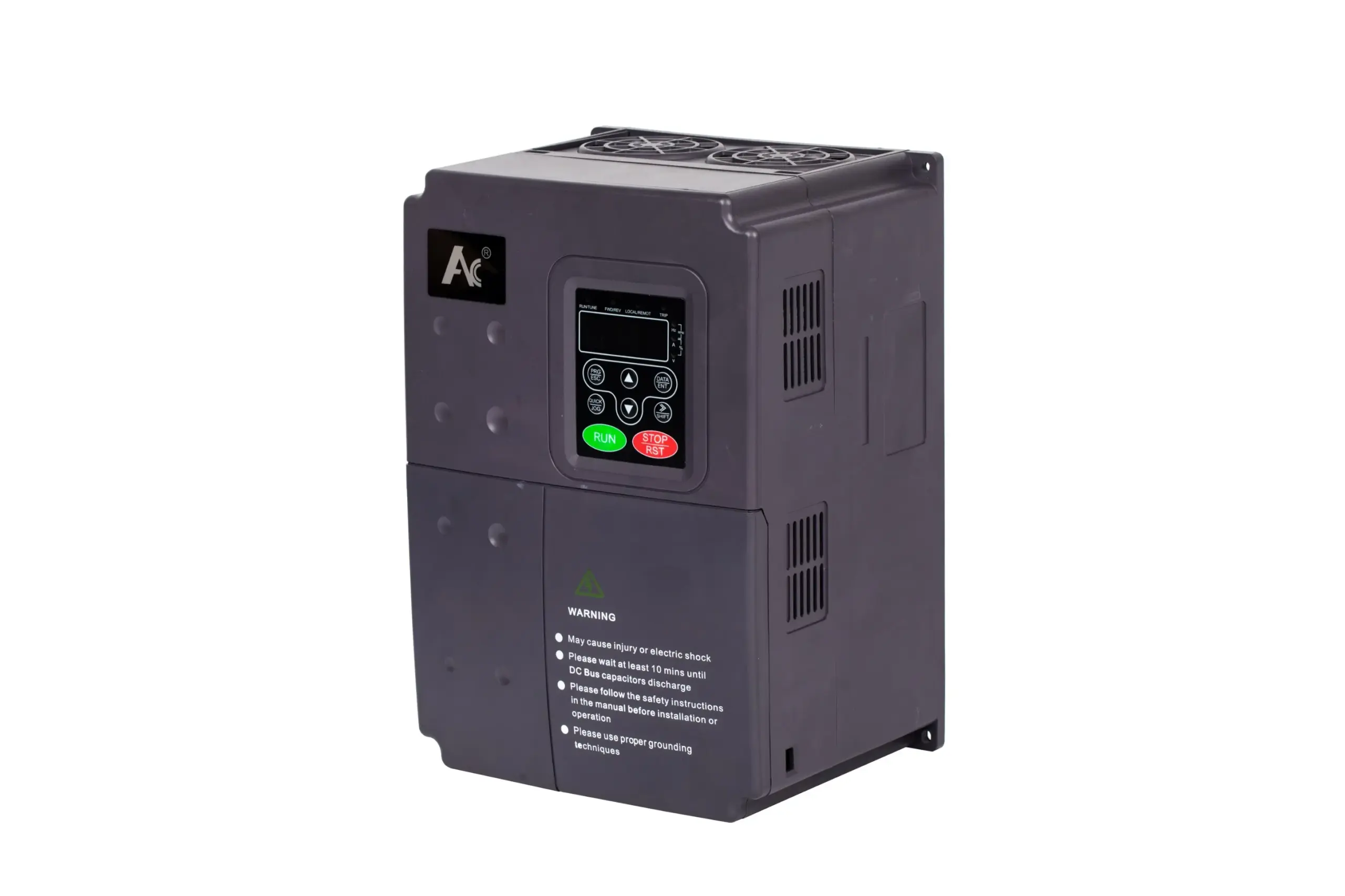
Top 3 Engineering Pain Points for Fan Variable Frequency Drive
Scenario 1: Harmonic Distortion and Power Quality Degradation
The Problem: Variable Frequency Drives, while essential for fan speed control, inherently generate harmonic currents that feed back into the electrical distribution system. In industrial facilities with multiple VFDs running HVAC fans, exhaust systems, or cooling towers, these harmonics accumulate, causing voltage distortion, overheating of neutral conductors and transformers, and interference with sensitive control equipment. As noted in HVAC applications, this “noise” transmission through power lines can trip protective devices, complicate over-current protection selection, and reduce the lifespan of connected equipment, creating compliance issues with IEEE 519 or local power quality standards.
The Solution: Implement line reactors or DC link chokes on the input side of the fan VFD to mitigate harmonic currents by increasing impedance and smoothing the current waveform. For high-power agricultural or industrial fan applications with strict power quality requirements, specify drives with active front-end (AFE) technology or 12-pulse/18-pulse configurations. Additionally, ensure proper grounding and shielding of motor cables to prevent conducted emissions, protecting both the VFD investment and the broader facility electrical infrastructure from premature failure.
Scenario 2: Environmental Harshness and Thermal Management Failures
The Problem: Fan VFDs deployed in agricultural ventilation, wastewater treatment plants, or heavy industrial environments face corrosive atmospheres, dust infiltration, extreme temperature fluctuations, and humidity—conditions far exceeding standard office-grade electronics ratings. Without adequate protection, dust accumulation on heat sinks leads to thermal runaway and drive tripping, while moisture causes PCB corrosion and premature failure. This is particularly critical in solar-powered pumping stations or remote agricultural sites where maintenance access is limited, ambient temperatures fluctuate dramatically, and equipment must operate reliably in unmanned conditions.
The Solution: Specify VFDs with IP54 or IP66-rated enclosures for dusty/wet environments, ensuring conformal coating on internal PCBs to resist moisture and chemical corrosion. Implement drives with advanced thermal management features, including automatic derating at high temperatures, external heat sink options, and fan-less cooling designs where possible. For solar-powered or remote fan applications, select drives with wide operating temperature ranges (-10°C to +50°C or wider) and robust EMI filtering to ensure reliable operation in harsh, unmanned installations without climate-controlled enclosures.
Scenario 3: Static Pressure Variations and Imprecise Airflow Control
The Problem: Fixed-speed fan motors cannot adapt to varying static pressure conditions inherent in complex ductwork systems, filter loading, or seasonal ventilation demands. When operating at full speed against partially closed dampers or dirty filters, fans consume excess energy while generating unwanted noise and mechanical stress on belts and bearings. Conversely, traditional multi-speed motors offer only discrete steps (typically 2-3 speeds) that cannot precisely match airflow to actual demand, resulting in energy waste or insufficient ventilation—critical issues in precision agriculture, data center cooling, or industrial process ventilation where air volume directly impacts productivity, livestock health, or equipment safety.
The Solution: Deploy closed-loop VFD control systems integrating pressure transducers or airflow sensors that continuously monitor system static pressure. Configure the drive with PID control algorithms to automatically adjust motor speed in real-time, maintaining constant air volume (CAV) or variable air volume (VAV) as conditions change. This approach eliminates the need for mechanical dampers to restrict flow, reduces energy consumption by 30-50% compared to fixed-speed operation, and extends mechanical life by utilizing soft-start ramp profiles (0.1-3600 seconds programmable acceleration) that eliminate the high in-rush currents and mechanical shock associated with across-the-line starting.
Component and Hardware Analysis for Fan Variable Frequency Drive
The internal architecture of a Fan Variable Frequency Drive (VFD) determines not only operational efficiency but also the system’s resilience against harmonic distortion, thermal cycling, and grid transients—critical factors in HVAC, agricultural ventilation, and solar-powered pumping applications. Unlike fixed-speed motor starters, fan VFDs must continuously modulate output frequency to match variable static pressure demands while mitigating inrush currents that stress distribution networks. This requires a precise orchestration of power semiconductors, thermal management systems, and real-time control algorithms.
Power Semiconductor Integrity: IGBT Modules
At the heart of every fan VFD lies the Insulated Gate Bipolar Transistor (IGBT) module, responsible for the AC-DC-AC conversion process that enables variable frequency output. In HVAC and large-scale agricultural ventilation systems, these modules operate at switching frequencies typically between 2–16 kHz to maintain sinusoidal current waveforms that minimize motor heating. High-quality IGBT modules feature low thermal resistance (Rth < 0.5 K/W) and integrated freewheeling diodes to handle regenerative energy from high-inertia fan loads. For solar pump inverter applications—where input voltage fluctuates with irradiance—IGBTs must accommodate wider DC voltage ranges (typically 200V–800V) while maintaining consistent switching characteristics to prevent torque pulsations in centrifugal blowers.
Control Architecture: DSP and MPU Systems
The Digital Signal Processor (DSP) or Microprocessor Unit (MPU) functions as the VFD’s central nervous system, executing vector control algorithms that decouple motor flux and torque components. Advanced fan VFDs utilize 32-bit DSPs operating at 100+ MHz to calculate PWM patterns in real-time, enabling precise airflow modulation in response to pressure transducer feedback (as required in modulating power exhaust systems). Critical quality indicators include Analog-to-Digital Converter (ADC) resolution (minimum 12-bit for smooth speed transitions) and ambient temperature operational ranges (-10°C to +50°C for enclosed industrial environments). In solar pumping integrations, the controller must additionally manage Maximum Power Point Tracking (MPPT) algorithms when configured for DC input, requiring robust electromagnetic compatibility (EMC) shielding to prevent algorithmic interference from switching noise.
Thermal Management and Heatsink Engineering
Fan VFDs operating in continuous-duty HVAC applications generate significant thermal losses (typically 2–4% of rated power) concentrated in the IGBT junctions. Thermal management systems must dissipate this energy to maintain junction temperatures below 125°C, the threshold beyond which semiconductor degradation accelerates exponentially per the Arrhenius equation. High-performance VFDs employ aluminum heatsinks with anodized finishes (thermal conductivity > 200 W/mK) combined with forced-air cooling systems rated for 50,000+ hours MTBF. For outdoor agricultural or solar installations, heatsink designs must account for dust accumulation and corrosive environments, often utilizing fin geometries optimized for natural convection or liquid cooling loops in high-power (>75 kW) centrifugal fan applications.
Power Quality Components: Line Reactors and EMI Filters
As noted in HVAC applications, VFDs introduce harmonic distortion back into the power supply, potentially affecting sensitive equipment on shared transformers. Internal line reactors (AC chokes) and DC link reactors serve to increase impedance, reducing current harmonics (THDi) from 80% to approximately 35% while buffering against voltage spikes. EMI filters on both input and output sides mitigate conducted emissions that can interfere with pressure transducer signals or building automation systems. Quality indicators for these passive components include inductance tolerance (±5%), insulation class (H-class for 180°C thermal endurance), and saturation characteristics under high inrush conditions.
Component Specification Table
| Component | Function | Quality Indicator | Impact on Lifespan |
|---|---|---|---|
| IGBT Power Module | AC-DC-AC conversion; high-speed switching for variable frequency output | Thermal resistance (Rth(j-c) < 0.6 K/W); switching frequency stability across temperature; short-circuit withstand capability (10μs min) | Critical—thermal cycling fatigue is the primary failure mode; 10°C reduction in junction temperature doubles operational lifespan |
| DSP/MPU Controller | PWM generation; vector control algorithms; protection logic execution | Processing speed (>100 MHz); ADC resolution (≥12-bit); operating temperature range (-10°C to +60°C); vibration resistance (5g) | High—determines protection response time (<2ms) and prevents catastrophic failures from undetected ground faults |
| DC-Link Capacitors | Energy storage; ripple current absorption; voltage stabilization | ESR (Equivalent Series Resistance) < 10mΩ; ripple current capacity at 105°C; rated lifespan (≥100,000 hours at rated voltage) | Critical—electrolytic capacitors degrade via electrolyte evaporation; film capacitors offer 3x lifespan in high-temperature solar applications |
| Cooling Heatsinks | Thermal dissipation from semiconductors to ambient environment | Thermal conductivity (>200 W/mK for aluminum); fin density optimization (balance between surface area and dust accumulation); forced air CFM rating | Critical—directly determines IGBT junction temperature; clogged or undersized heatsinks reduce lifespan by 50%+ |
| Line Reactors/EMI Filters | Harmonic current limitation; dv/dt spike suppression; conducted emission reduction | Inductance tolerance (±5%); current saturation characteristics; insulation class (H-class); insertion loss at switching frequency | Medium-High—protects IGBT modules from voltage transients and prevents premature aging of motor winding insulation |
| Enclosure & PCB Assembly | Environmental protection; structural integrity; electromagnetic shielding | IP rating (IP54 minimum for dust/water; IP65 for outdoor solar); conformal coating (acrylic/urethane) thickness (25–75μm); solder joint reliability (IPC-A-610 Class 3) | Medium—critical in agricultural/solar environments where humidity, dust, and corrosive gases accelerate corrosion and short-circuit failures |
Integration Considerations for Solar and Hybrid Systems
When deploying fan VFDs in solar pumping or hybrid energy systems, component selection must account for DC bus voltage fluctuations and intermittent power availability. IGBT modules require enhanced voltage derating (typically 1.5x safety margin) to handle open-circuit voltage spikes from photovoltaic arrays. Additionally, the cooling system must operate effectively during low-speed, high-torque conditions common in solar irrigation—where reduced fan speeds decrease airflow across heatsinks while solar irradiance peaks increase thermal loading. EPC contractors should verify that VFD hardware includes integrated DC fusing and ground fault protection suitable for floating DC arrays, eliminating the need for external protection that introduces additional failure points.
For automation distributors and project managers, specifying VFDs with modular component architectures—where IGBT modules, control boards, and cooling systems are field-replaceable—significantly reduces Mean Time To Repair (MTTR) in remote agricultural installations. This hardware-level redundancy ensures that ventilation and pumping systems maintain operational continuity during critical growing seasons or industrial process cycles.
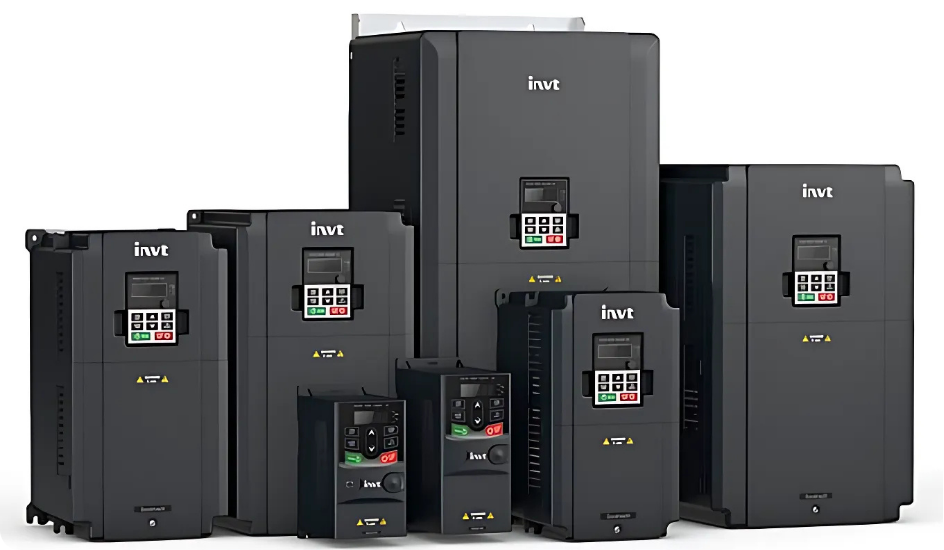
Manufacturing Standards and Testing QC for Fan Variable Frequency Drive
At Boray Inverter, our fan-specific Variable Frequency Drive (VFD) production lines integrate the rigorous quality protocols developed for solar pump inverter applications—where failure in remote agricultural installations is not an option—into HVAC and industrial ventilation solutions. This cross-domain expertise ensures that every fan VFD withstands the thermal cycling, harmonic stresses, and environmental contaminants inherent in continuous-duty air handling systems.
PCB-Level Environmental Protection
Fan VFDs operate in environments ranging from clean rooms to agricultural facilities with high particulate loads and humidity fluctuations. Our manufacturing process mandates IPC-A-610 Class 3 compliant PCB assembly, followed by automated selective conformal coating using polyurethane or acrylic compounds (thickness: 25-75μm per IPC-CC-830). This coating provides dielectric insulation against voltage arcing in dusty HVAC plenums and protects against moisture ingress in evaporative cooling applications—critical for preventing corrosion of high-frequency switching circuits. All coated assemblies undergo UV fluorescence inspection to ensure complete coverage of solder joints and component leads, eliminating pin-hole defects that could lead to field failures in high-humidity grain storage or livestock ventilation installations.
Component Qualification and Traceability
We source IGBT modules and DC-link film capacitors exclusively from Tier-1 suppliers with AEC-Q100 automotive-grade qualification, ensuring tolerance to the voltage spikes generated by fan motor inductive loads. Each component lot is traceable via barcode serialization, enabling root-cause analysis should any field anomalies occur. For agricultural projects utilizing solar-powered ventilation, we specify capacitors rated for 105°C ambient operation with 100,000-hour lifespan calculations, accounting for the harmonic distortion challenges noted in HVAC applications where line reactors may not be immediately installed.
Environmental Stress Screening (ESS)
Prior to final assembly, all power boards undergo high-temperature aging (HTA) in thermal chambers cycling between -40°C and +85°C for 72 hours. This process accelerates potential early-life failures (ELF) in solder joints and semiconductor bonds—particularly critical for fan VFDs subject to seasonal temperature swings in rooftop HVAC units or greenhouse ventilation systems. Following thermal cycling, boards receive powered burn-in at 110% rated load for 8 hours, simulating the locked-rotor conditions and static pressure variations that occur when HVAC dampers modulate or filters clog.
100% Full-Load Production Testing
Unlike sampling-based quality assurance, every fan VFD leaving our facility undergoes 100% full-load testing at rated motor horsepower. We connect each unit to a dynamometer-equipped three-phase induction motor, verifying:
– Output voltage symmetry (±1% phase-to-phase balance) under 0-100% load steps
– Harmonic distortion levels (THDi <5% with optional DC chokes) to prevent interference with building automation systems
– Dynamic response to 0-10V/4-20mA control signals simulating pressure transducer feedback in constant air volume (CAV) applications
– Thermal performance of heatsink assemblies at 50°C ambient, ensuring reliable operation in non-climate-controlled electrical rooms
EMC and Safety Certifications
Our fan VFDs carry CE marking per the Low Voltage Directive (2014/35/EU) and EMC Directive (2014/30/EU), with specific attention to EN 61800-3 for adjustable speed electrical power drive systems. For North American HVAC markets, designs comply with UL 508C and CSA C22.2 No. 274, including integrated line reactors to mitigate harmonic distortion that can disrupt sensitive building management systems—a common issue in multi-speed fan retrofits where VFDs replace traditional contactors.
Ingress Protection and Mechanical Validation
Given the prevalence of washdown requirements in food processing ventilation and outdoor agricultural drying applications, fan VFD enclosures undergo IP54 (standard) through IP66 (washdown-rated) validation testing per IEC 60529. Sealing verification includes thermal imaging during operation to detect gasket leaks that could allow dust infiltration onto conformal-coated PCBs. All fan-specific parameter settings—including PID configurations for static pressure control and sleep/wake functions for energy recovery ventilation (ERV) systems—are pre-loaded and verified during final functional testing.
Documentation and EPC Compliance
For engineering, procurement, and construction (EPC) contractors managing large-scale industrial ventilation or solar-powered agricultural projects, we provide comprehensive test reports including:
– High-potential (hipot) insulation test results (1000V AC, 60 seconds)
– Ground continuity verification (<0.1Ω)
– Efficiency curves at 25%, 50%, 75%, and 100% load points
– Harmonic spectrum analysis reports
This manufacturing rigor ensures that whether deployed in a data center cooling application requiring 24/7 reliability or a solar-powered irrigation system with variable wind loading, Boray fan VFDs deliver the precision speed control and longevity that industrial automation demands.
Step-by-Step Engineering Sizing Checklist for Fan Variable Frequency Drive
Proper sizing of Variable Frequency Drives (VFDs) for fan applications requires rigorous analysis of both aerodynamic system requirements and electrical infrastructure constraints. Unlike fixed-speed motors, fan VFDs must accommodate dynamic static pressure variations while mitigating harmonic distortion and inrush current elimination—critical factors in large-scale HVAC, agricultural ventilation, and industrial process cooling. The following engineering checklist ensures compatibility with three-phase induction motors, solar-compatible DC bus architectures (where applicable), and compliance with international grid codes.
1. Mechanical Load Characterization & System Curve Analysis
Before electrical selection, quantify the aerodynamic load profile to determine the required Variable Torque (VT) operational envelope:
– Airflow Requirements: Calculate design CFM (Cubic Feet per Minute) at maximum and minimum occupancy/thermal loads. Fan affinity laws dictate that power consumption drops cubically with speed reduction—verify that the VFD supports quadratic V/Hz curves optimized for centrifugal and axial fan loads.
– Static Pressure Mapping: Measure total system static pressure (inches WC) at design airflow, accounting for ductwork resistance, dampers, filters, and future fouling. As noted in HVAC applications, static pressure increases non-linearly with air velocity; the VFD must maintain precise speed control (±0.5% accuracy) to prevent over-pressurization when distribution resistance changes.
– Fan Type Specification: Identify if the application uses backward-inclined, forward-curved, or vane-axial fans. Backward-inclined units often require higher starting torque; verify the VFD’s Starting Torque capability (typically 150% rated torque for 60 seconds) and Breakaway Torque for sticky bearings or high-inertia wheels.
2. Motor Nameplate Verification & Insulation Coordination
Match the VFD to the existing or specified motor with particular attention to PWM switching stresses:
– Power Rating: Size the VFD to the motor’s Full Load Amps (FLA), not just horsepower. Apply a minimum 10% safety margin above the motor’s FLA for HVAC fan duty cycles, and 15-20% for agricultural dust-filtering applications with high particulate loading.
– Voltage Compatibility: Confirm input voltage (380V, 400V, 460V, or 480V ±10%) and phase configuration. For rural agricultural sites with single-phase grid access, specify VFDs capable of Single-Phase Input to Three-Phase Output conversion (derated to 50% of rated three-phase capacity) to operate standard three-phase fan motors without phase converters.
– Insulation Class: Verify the motor utilizes Class F insulation with inverter-duty ratings (NEMA MG1 Part 31) to withstand voltage spikes from IGBT switching. If retrofitting standard motors, install dV/dt filters or specify VFDs with optimized PWM carrier frequencies (2-4 kHz) to prevent winding insulation breakdown.
3. Supply Side Electrical Infrastructure & Harmonic Mitigation
Address power quality issues that affect upstream equipment, particularly in facilities with sensitive automation:
– Harmonic Distortion Assessment: Calculate anticipated Total Harmonic Distortion (THD). Fan VFDs without mitigation can generate 5th and 7th harmonics exceeding IEEE 519 limits. Specify AC Line Reactors (3-5% impedance) or DC Chokes as economical harmonic current reduction methods, or active front-end (AFE) drives for critical installations.
– Short-Circuit Current Rating (SCCR): Verify the VFD’s SCCR exceeds the available fault current at the installation point. Coordinate with upstream protection; VFDs eliminate high inrush currents (typical DOL starters draw 600-800% FLA), allowing for smaller circuit breakers but requiring semiconductor fuses or Type 2 coordination for internal protection.
– EMC Compliance: For industrial environments, ensure the drive meets IEC 61800-3 Category C2 or C3 emission limits. Use shielded motor cables with 360-degree grounding clamps to prevent radiated interference with nearby sensors or solar monitoring equipment.
4. Environmental Derating & Protection Specifications
Industrial and agricultural fan applications demand robust enclosures and thermal management:
– Ingress Protection (IP) Rating: Specify IP54 minimum for indoor industrial HVAC; IP65 or IP66 for agricultural ventilation exposed to dust, humidity, or chemical washdowns. Verify fan-cooled VFDs have sufficient clearance for air intake (typically 100mm minimum) or specify liquid-cooled units for dusty environments.
– Temperature Derating: Apply derating curves for ambient temperatures above 40°C (104°F). For every 1°C above 40°C, reduce continuous output current by 2-3%. In solar-powered agricultural setups with outdoor enclosures, verify operation up to 50-60°C with automatic current limiting.
– Altitude Correction: For installations above 1,000 meters (3,300 feet), derate the VFD output current by 1% per 100 meters due to reduced air cooling capacity and dielectric strength reduction.
5. Control Architecture & Feedback Loop Integration
Modern fan VFDs require flexible I/O for building automation and process control:
– Analog Inputs: Configure 4-20mA or 0-10V inputs for pressure transducers (differential pressure sensors across filters) or CO₂ sensors. Ensure the VFD supports PID control with auto-tuning to maintain constant static pressure or constant air volume (CAV) as filters load or damper positions change.
– Digital Interlocks: Program minimum run speeds (typically 20-30% of base frequency) to prevent motor overheating at low RPMs and verify stall prevention functions.
– Communication Protocols: Specify Modbus RTU/TCP standard; add BACnet MS/TP or IP for HVAC integration, or CANopen for agricultural automation networks. For solar hybrid systems, ensure compatibility with solar pump inverter communication protocols for coordinated DC bus management.
6. Solar Integration & Hybrid Power Considerations (If Applicable)
For off-grid or hybrid agricultural ventilation systems utilizing Boray’s solar pump inverter technology:
– DC Bus Voltage Range: Verify the VFD’s DC input range matches the solar array’s Maximum Power Point Voltage (Vmp) and Open Circuit Voltage (Voc). Typical 380V AC drives require approximately 513V DC bus minimum; size PV string configurations accordingly.
– MPPT Compatibility: If operating solely on solar, ensure the drive includes Maximum Power Point Tracking or interfaces with external MPPT controllers to optimize PV output during variable irradiance.
– Grid Fallback Logic: For hybrid systems, specify automatic AC grid fallback when solar irradiance is insufficient to maintain minimum fan speed requirements for livestock ventilation or critical cooling.
7. Documentation & Commissioning Verification
Finalize the specification with commissioning protocols:
– VFD Parameter Checklist: Document motor nameplate data entry (poles, rated current, rated speed), acceleration/deceleration ramps (typically 10-30 seconds for large HVAC fans to prevent duct pressure shocks), and skip frequencies to avoid mechanical resonance.
– Thermal Overload Protection: Set electronic thermal overload relays (EOL) to match motor FLA and cooling method (self-cooled vs. forced ventilation).
– Backup Power Strategy: For critical exhaust or smoke evacuation fans, verify the VFD bypass contactor configuration allows full-speed operation during drive failure or fire mode override.
Engineering Note: Always cross-reference the fan manufacturer’s performance curves against the VFD’s torque-speed envelope. Undersizing the drive for high-static-pressure startup conditions—common in agricultural grain drying or industrial baghouse applications—will result in overcurrent faults and reduced equipment lifespan. When in doubt, specify the next higher current rating rather than operating at 100% capacity continuously.
Wholesale Cost and Energy ROI Analysis for Fan Variable Frequency Drive
For industrial procurement teams and EPC contractors evaluating motor control strategies, the financial justification for fan Variable Frequency Drives (VFDs) extends far beyond the initial Bill of Materials (BOM). When sourced through wholesale channels, fan VFDs—particularly those engineered for integration with solar pumping infrastructures or hybrid HVAC systems—deliver quantifiable Total Cost of Ownership (TCO) advantages that retail procurement models cannot match.
B2B Pricing Architecture: Volume Procurement vs. Retail Acquisition
Wholesale Tier Structures
Industrial distributors and automation integrators accessing Boray Inverter’s B2B channels typically encounter a three-tier pricing matrix based on annual volume commitments:
- Project-Based Tier (1–24 units): Suitable for single-site HVAC retrofits or agricultural ventilation projects. Pricing reflects 15–20% reduction from retail MSRP, inclusive of application-specific parameter pre-configuration.
- Distributor Stocking Tier (25–100 units): Intended for regional automation distributors maintaining inventory for MRO (Maintenance, Repair, Operations) demand. Wholesale discounts extend to 30–35%, with favorable payment terms (Net 60/90) and co-marketing support for technical documentation.
- EPC/OEM Partnership Tier (100+ units): Reserved for large-scale EPC contractors deploying solar-powered irrigation systems or data center cooling projects. At this volume, unit costs approach 40–45% below retail, with value-added services such as harmonic analysis reports and integrated line reactor bundling—critical for mitigating the harmonic distortion inherent in VFD installations (as noted in HVAC applications requiring Line Reactors to isolate electrical noise).
Single-Phase to Three-Phase Conversion Economics
A distinct cost advantage in wholesale fan VFD procurement lies in the ability to deploy three-phase motors on single-phase infrastructure. Rather than procuring expensive single-phase motors or phase converters, B2B buyers can utilize VFDs to convert 120V/220V single-phase input to three-phase output, reducing motor costs by 20–30% while gaining variable speed capabilities. This is particularly advantageous in agricultural settings where three-phase grid access is limited but solar DC bus integration is prioritized.
Energy ROI: The Affinity Law Advantage
The financial calculus for fan VFDs relies heavily on the affinity laws governing centrifugal loads. In fan applications, power consumption correlates with the cube of the rotational speed:
$$P \propto n^3$$
Quantified Savings Scenarios:
* 20% Speed Reduction: A fan operating at 80% rated speed consumes approximately 51% of full-load power, yielding 49% energy savings.
* 50% Speed Reduction: Operating at half speed reduces power consumption to 12.5%, achieving 87.5% energy savings—critical for nocturnal or partial-load ventilation in solar-powered greenhouse applications.
Payback Period Analysis:
For a 10HP (7.5kW) industrial ventilation fan operating 6,000 hours annually:
* Without VFD: Fixed-speed operation draws 7.5kW continuously = 45,000 kWh/year.
* With VFD: Variable load profile averaging 70% speed (34.3% power) = 15,435 kWh/year.
* Annual Savings: 29,565 kWh × $0.12/kWh (global industrial average) = $3,548/year.
At a wholesale procurement cost of $450–$600 per unit for a 10HP IP54-rated fan VFD (vs. $850–$1,100 retail), the simple payback period ranges from 1.5 to 2.0 months, with ROI exceeding 600% over a five-year operational life.
Solar Integration Synergies
When deployed in hybrid solar/grid fan systems (such as ventilation for solar pump stations or agricultural drying facilities), VFDs with DC bus connectivity eliminate inverter conversion losses. By accepting direct PV array input (400–800VDC) and managing fan speed via MPPT algorithms, these systems reduce reliance on battery storage for ventilation loads, cutting capital expenditure by 30–40% compared to AC-coupled alternatives.
Warranty Cost Analysis and TCO Implications
Wholesale procurement agreements must evaluate warranty structures as line-item cost factors:
- Standard 24-Month Warranty: Typically included at wholesale tiers, covering manufacturing defects and component failure. Represents baseline TCO with minimal risk premium.
- Extended 60-Month Industrial Warranty: Adds 8–12% to unit cost but covers IGBT modules and capacitors under continuous duty cycles. For fan applications in harsh environments (dusty agricultural facilities or coastal HVAC installations), this extension prevents replacement costs that typically exceed $300–$500 per unit for drives 7.5HP and above.
- Inrush Current Mitigation Savings: VFDs eliminate high inrush currents (up to 600% FLA in direct-on-line starters), reducing stress on upstream electrical infrastructure. This extends the lifespan of circuit breakers and contactors, reducing electrical maintenance costs by approximately $75–$150 per motor annually.
Harmonic Mitigation as Cost Avoidance
Source data indicates VFDs introduce harmonic distortion requiring Line Reactors or Isolation Transformers. Wholesale procurement models that bundle DC chokes or AC line reactors (typically 3–5% of drive cost) prevent downstream equipment damage and utility penalty charges—avoiding potential $2,000–$5,000 costs in industrial facilities where power quality standards (IEEE 519) are enforced.
Strategic Procurement Recommendations for Distributors
For Automation Distributors: Stock 3-phase fan VFDs in the 1HP–20HP range (0.75kW–15kW) with integrated EMC filters and IP54 enclosures. These cover 80% of agricultural ventilation and commercial HVAC retrofit markets. Emphasize the soft-start functionality to mechanical contractors—eliminating belt wear and pulley stress in belt-driven fan systems extends mechanical component life by 3–5 years.
For EPC Contractors: Specify VFDs with Modbus RTU/RS485 or CANopen communication for integration with Building Management Systems (BMS) or solar pump controllers. The ability to modulate fan speed based on static pressure transducers (maintaining constant air volume despite dirty filters or variable duct resistance) ensures system efficiency guarantees are met, protecting project margins.
For Agricultural Project Managers: In solar-powered irrigation projects, specify fan VFDs capable of dual-mode operation (solar DC input during daylight, grid AC input at night). This eliminates the need for separate ventilation inverters and reduces wiring complexity by 40%, delivering immediate material cost savings while ensuring continuous crop protection ventilation.
By leveraging wholesale volume pricing and specifying VFDs optimized for fan affinity laws and solar compatibility, industrial buyers transform motor control from a capital expense into a high-yield energy investment with payback periods measured in months, not years.
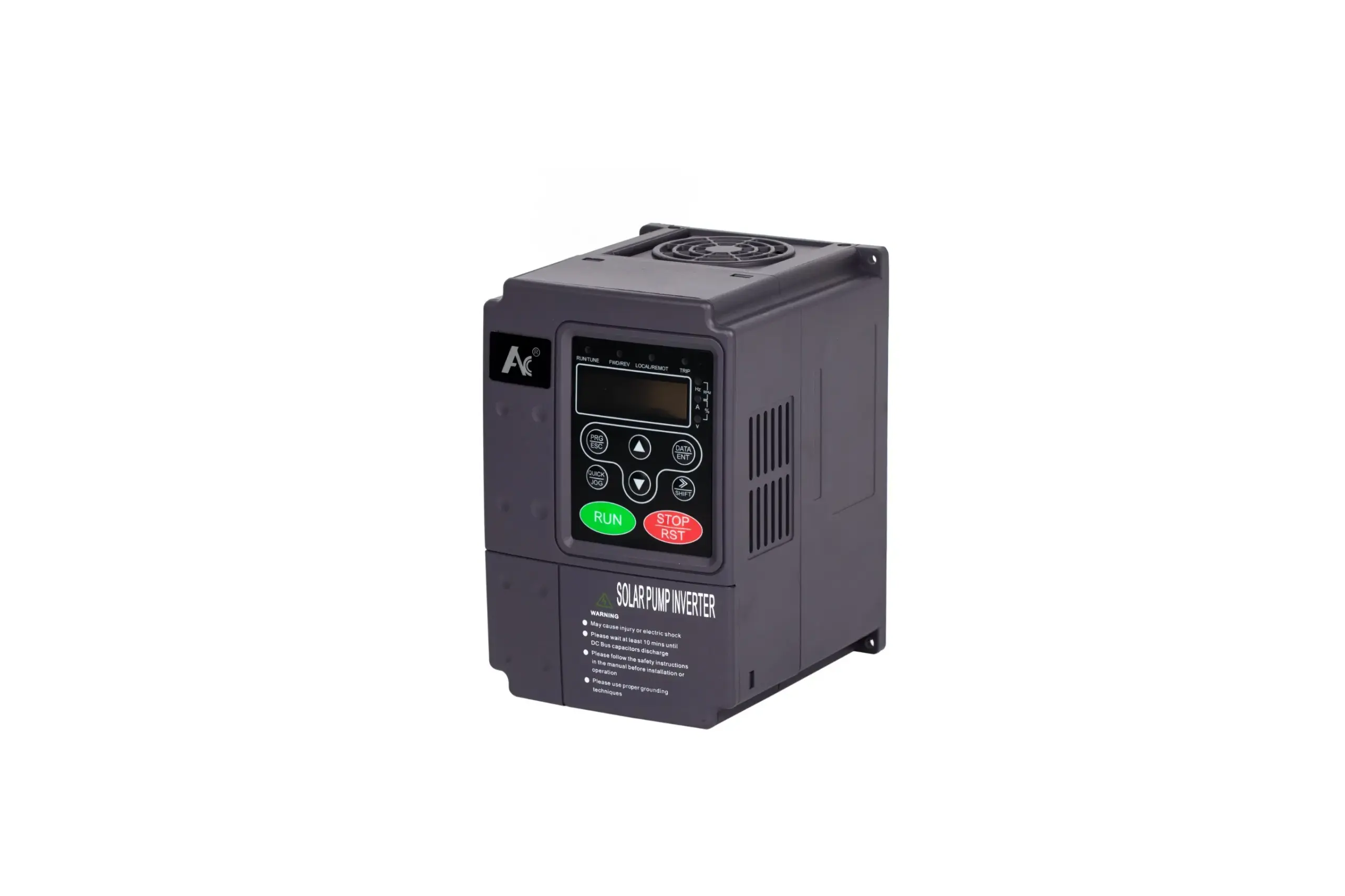
Alternatives Comparison: Is Fan Variable Frequency Drive the Best Choice?
When specifying motor control for centrifugal or axial fan applications, engineers must evaluate not only the initial capital expenditure but also the total cost of ownership (TCO), energy recovery potential, and system integration complexity. While the Variable Frequency Drive (VFD) represents the gold standard for precise airflow management, several alternative technologies compete for specification in HVAC, agricultural ventilation, and industrial process cooling. Below, we analyze the technical and economic trade-offs between VFDs and their primary alternatives—Soft Starters, Electronically Commutated (EC) Fans, and grid-tied versus solar-powered architectures—along with motor topology considerations for Permanent Magnet Synchronous Motors (PMSM) versus Induction Motors (IM).
VFD vs. Soft Starter: Beyond Inrush Current Mitigation
Soft Starters (SS) and VFDs both address the high inrush current (typically 6-8x FLA) inherent in Direct-On-Line (DOL) motor starting, but their operational philosophies diverge significantly post-startup. A Soft Starter utilizes thyristor-based phase-angle control to ramp voltage during start and stop sequences, reducing mechanical stress and electrical demand charges. However, once the motor reaches nominal speed, the Soft Starter bypasses to full line voltage, offering no speed control capability.
For fan applications governed by the Affinity Laws—where power consumption drops by the cube of the speed reduction (P ∝ n³)—this limitation is critical. A Soft Starter cannot modulate airflow in response to static pressure changes, temperature setpoints, or Particulate Matter (PM) loading in filtration systems. Consequently, systems employing Soft Starters must rely on mechanical throttling (dampers) or cycling (on/off control), sacrificing the 30-50% energy savings potential available through VFD-based variable speed operation. Furthermore, Soft Starters do not provide Power Factor correction during running conditions, whereas modern VFDs maintain near-unity PF across the speed range.
Selection Guidance: Specify Soft Starters only for fixed-speed applications where limiting starting current is the sole requirement and energy savings are not a priority. For any application requiring dynamic airflow balancing—such as greenhouse ventilation or data center cooling—VFDs are mandatory.
VFD vs. EC Fans: Integrated vs. Modular Control
Electronically Commutated (EC) fans represent an integrated approach, combining a brushless DC motor (typically interior permanent magnet) with onboard rectification and inversion electronics. These “motor+drive” units offer high efficiency (often IE5 levels) and simple 0-10V or MODBUS speed control without external VFD cabinets.
However, EC technology presents distinct limitations in industrial B2B contexts:
* Retrofit Incompatibility: EC fans require complete replacement of the motor and impeller assembly. In existing HVAC infrastructure or heavy-duty industrial ventilation (e.g., mining or chemical processing), retrofitting EC fans necessitates mechanical redesign of bearing housings and shaft couplings.
* Power Limitations: EC motors are typically limited to sub-20kW applications. Large-scale agricultural drying or cooling tower fans (>75kW) remain the domain of AC induction motors controlled by standalone VFDs.
* Thermal Management: Integrated electronics within the motor housing struggle in high-ambient environments (>50°C) common in solar pumping stations or desert industrial sites. External VFDs allow for remote mounting in climate-controlled electrical rooms.
Selection Guidance: EC fans excel in OEM applications for new, light-duty HVAC equipment. For heavy industrial retrofits, agricultural projects requiring >15kW motors, or environments with extreme thermal cycling, discrete VFDs paired with robust AC motors offer superior flexibility and serviceability.
Solar-Powered VFD vs. Grid-Powered Systems
In remote agricultural or off-grid industrial applications, the choice extends beyond motor control topology to power source architecture. Solar Pump Inverters—a specialized subset of VFDs optimized for photovoltaic (PV) arrays—can be adapted for fan applications in irrigation cooling, livestock ventilation, and solar drying systems.
| Parameter | Grid-Powered VFD | Solar VFD (PV-Powered) |
|---|---|---|
| Power Source | AC Grid (380V/480V 3-phase) | DC Solar Array (200-800Vdc) |
| MPPT Algorithm | N/A | Essential for maximizing PV output |
| Grid Dependency | High | Zero (with battery or water storage backup) |
| Operating Cost | Electricity tariffs | Near-zero marginal cost |
| Initial Investment | Lower (equipment only) | Higher (PV panels + inverter) |
| Speed Variability | Unlimited | Limited by solar irradiance; requires V/Hz optimization |
Solar VFDs, such as those derived from Boray Inverter’s solar pumping technology, incorporate Maximum Power Point Tracking (MPPT) to ensure fan operation continues even during fluctuating irradiance conditions. Unlike standard grid VFDs, these drives must handle wide DC bus voltage swings and provide specialized “weak grid” ride-through capabilities. For EPC contractors designing sustainable agricultural projects, solar VFDs eliminate trenching costs for remote pump stations and ventilation systems, though they require oversizing of the PV array to account for morning/evening partial load conditions.
Motor Topology: PMSM vs. IM in VFD Applications
The efficacy of a Fan VFD is also contingent upon the motor technology it controls. While standard VFDs operate Induction Motors (IM) via V/Hz control, high-efficiency applications increasingly utilize Permanent Magnet Synchronous Motors (PMSM) requiring Sensorless Vector Control or Field-Oriented Control (FOC).
- Induction Motor (IM): Robust, inexpensive, and tolerant of harsh environments. VFDs control IMs through scalar V/Hz methods, though this results in slip losses (2-5% efficiency penalty) and reduced torque at low speeds.
- PMSM: Offers 10-15% higher efficiency than premium efficiency IMs and maintains constant torque down to very low speeds (critical for maintaining laminar flow in cleanroom applications). However, PMSMs require VFDs with specific motor parameter autotuning and rotor position estimation algorithms. They also risk demagnetization if driven by generic VFDs without current vector optimization.
For solar-powered fan applications where every watt of PV capacity counts, the PMSM+VFD combination maximizes the energy harvested-to-airflow ratio, though at a 20-30% motor cost premium.
Comparative Analysis Matrix
| Feature | VFD + AC Induction Motor | Soft Starter + AC Motor | EC Fan (Integrated) | Solar VFD + Motor |
|---|---|---|---|---|
| Speed Control Range | 10:1 (V/Hz) to 1000:1 (Vector) | Fixed only | 10:1 | 5:1 (irradiance dependent) |
| Energy Savings Potential | 30-60% (Affinity Laws) | 0-5% (cycling losses) | 40-70% | 100% of grid energy avoided |
| Harmonic Distortion (THDi) | 3-5% (with DC choke) | <2% (line-friendly) | <10% (high frequency PWM) | 3-5% |
| Retrofit Feasibility | High (uses existing motor) | High | Low (mechanical redesign) | Medium (requires PV array) |
| Control Precision | Excellent (PID loop capable) | None | Good | Moderate (MPPT priority) |
| CAPEX Index | 1.0x (baseline) | 0.4x | 1.3x | 2.5-4.0x (including PV) |
| Maintenance | Low (external electronics) | Very Low | Medium (integrated electronics heat-sensitive) | Low (IP65 solar drives available) |
| Optimal Application | Variable HVAC, Industrial process cooling | Fixed-speed pumps/fans | OEM rooftop units, CRAC | Off-grid irrigation, livestock ventilation |
Strategic Recommendation
The Fan VFD remains the superior choice for variable torque applications requiring precise airflow modulation, energy recovery through speed reduction, and integration into Building Management Systems (BMS) or agricultural automation networks. While Soft Starters suffice for fixed-speed inrush limitation and EC Fans offer plug-and-play efficiency for new light-duty equipment, only VFDs provide the flexibility to optimize system curves against changing static pressures in complex duct networks.
For EPC contractors and project managers evaluating sustainable infrastructure, Solar VFDs represent a compelling hybrid approach, leveraging the MPPT algorithms proven in solar pumping applications to drive ventilation fans with zero operational carbon footprint. When paired with high-efficiency PMSM technology and proper harmonic filtering (Line Reactors or Active Front Ends), the modern Fan VFD delivers the lowest lifecycle cost and highest operational flexibility across industrial, agricultural, and commercial sectors.
Core Technical Specifications and Control Terms for Fan Variable Frequency Drive
When specifying Variable Frequency Drives for centrifugal and axial fan applications—whether in HVAC air handling units, agricultural ventilation, or industrial process cooling—engineers must evaluate both the electromechanical control architecture and the commercial frameworks governing cross-border procurement. Fan systems operate under the affinity laws, where power consumption drops cubically with speed reduction, making precise speed control via VFDs critical for energy optimization. Below are the essential technical specifications and commercial terms relevant to EPC contractors and automation distributors.
Motor Control Algorithms and Feedback Systems
Vector Control (Field-Oriented Control – FOC) vs. V/Hz Control
For high-inertia fan loads requiring high starting torque (particularly in backward-incline plenum fans or material handling blowers), sensorless vector control decouples flux and torque components, delivering up to 150% rated torque at 0.5 Hz. This contrasts with standard V/Hz (Volts-per-Hertz) control, which maintains a constant flux ratio but offers inferior low-speed performance. Vector control is essential when operating fans across wide speed ranges to maintain constant air volume (CAV) despite fluctuating static pressure from dirty filters or duct damper adjustments.
PID Process Control Integration
Fan VFDs deployed in building automation or greenhouse climate control utilize embedded PID (Proportional-Integral-Derivative) controllers to modulate motor speed based on feedback from pressure transducers or airflow sensors. As static pressure varies within the distribution network—due to duct geometry, curb adapters, or seasonal filter loading—the VFD automatically adjusts frequency to maintain setpoint, eliminating the “too much/too little air” scenarios common with fixed two-speed motors. The PID loop typically accepts 4-20 mA or 0-10 VDC signals from external sensors.
Maximum Power Point Tracking (MPPT) for Solar-Hybrid Fan Systems
While MPPT is standard in solar pumping inverters, hybrid fan applications utilizing photovoltaic (PV) arrays require VFDs with integrated MPPT algorithms to maximize energy harvest from variable irradiance. These specialized drives convert DC bus voltage from solar panels to three-phase AC for motor operation, automatically tracking the voltage-current curve to extract peak wattage. This specification is critical for agricultural drying facilities or remote ventilation projects operating off-grid or with net-metering configurations.
Electrical Specifications and Power Quality
Input Voltage Flexibility and Phase Conversion
Industrial fan VFDs must accommodate global voltage standards: 380-480V three-phase (±15% tolerance) for industrial plants, and 220V single-phase input configurations for rural agricultural installations. Advanced drives offer single-phase to three-phase conversion, allowing three-phase motors to operate from single-phase rural grids by synthesizing the missing phases through the DC bus and IGBT inversion stage—a cost-effective solution for retrofitting existing fan stations without three-phase infrastructure upgrades.
Harmonic Mitigation and Inrush Current Elimination
VFDs inherently eliminate high inrush currents (typically 6-8x FLA in DOL starters) by providing soft-start ramp profiles (0-3600 seconds adjustable). However, the non-linear switching of IGBTs introduces harmonic distortion (THDi) back into the supply network. Specifications should mandate internal DC chokes or external line reactors (3% or 5% impedance) to limit THDi to <5% IEEE 519 standards, preventing interference with sensitive control equipment and reducing utility penalties.
Protection and Environmental Ratings
For harsh industrial or agricultural environments (dust, humidity, chemical vapors), specify IP54 or IP65 enclosure ratings with conformal-coated PCBs. Critical protection functions include:
– Phase loss detection (input/output)
– Stall prevention during rapid static pressure spikes
– Automatic torque boost for breakaway torque in clogged fan scenarios
– Overvoltage/undervoltage ride-through for grid instability
Pulse Width Modulation (PWM) and Carrier Frequency
The switching frequency (carrier frequency) of the PWM output stage—typically 2-16 kHz—affects both motor noise and thermal losses. Higher frequencies (>8 kHz) reduce audible motor whine (critical for HVAC occupant comfort) but increase VFD switching losses. Agricultural applications may prioritize lower frequencies (2-4 kHz) for higher efficiency and longer cable runs between drive and motor.
International Commercial Terms (Incoterms 2020)
For EPC contractors and distributors procuring VFDs from Chinese manufacturers like Boray Inverter, precise Incoterms definitions govern risk transfer and logistics costs:
FOB (Free On Board)
The seller delivers goods cleared for export onto the vessel at the named port of shipment (e.g., FOB Shenzhen). Risk transfers when goods pass the ship’s rail; the buyer assumes ocean freight, insurance, and destination port charges. Suitable for buyers with established freight forwarding networks.
CIF (Cost, Insurance, and Freight)
The seller contracts for carriage and minimum insurance coverage to the destination port, but risk transfers to the buyer upon loading at origin. CIF provides cost predictability for project budgeting but requires buyers to verify insurance coverage adequacy for sensitive electronic drives.
EXW (Ex Works)
The buyer assumes all costs and risks from the factory door, including export clearance and inland transport. This term offers maximum control to experienced importers but places significant logistics burden on the buyer for heavy electrical equipment requiring specialized handling.
DDP (Delivered Duty Paid)
The seller delivers duty-paid to the named destination, absorbing all transport, insurance, and customs clearance costs. Ideal for turnkey EPC projects where the contractor requires fixed pricing certainty, though sellers typically embed logistics premiums in unit pricing.
Technical Compliance Documentation
Regardless of shipping terms, specifications should require IEC 61800-2 compliance certificates, CE marking for European projects, and UL/cUL listings for North American installations. Factory Acceptance Testing (FAT) protocols—including full-load testing with simulated fan inertia loads—should be specified under Quality Assurance terms distinct from commercial Incoterms.
Future Trends in the Fan Variable Frequency Drive Sector
The fan Variable Frequency Drive (VFD) sector is undergoing a paradigm shift driven by digitalization, decarbonization mandates, and the convergence of operational technology (OT) with information technology (IT). As HVAC, agricultural ventilation, and industrial process cooling systems face escalating demands for energy efficiency and grid independence, next-generation fan control solutions are evolving beyond simple speed regulation toward intelligent, interconnected energy management nodes. For EPC contractors and automation distributors, understanding these trajectories is critical for specifying future-proof motor control architectures.
AI-Driven Automation and Adaptive Static Pressure Management
Traditional fan VFDs relied on fixed setpoints or basic PID loops to manage airflow, often struggling with the dynamic static pressure variations inherent in complex duct networks—particularly when dirty filters, damper adjustments, or seasonal configuration changes alter system resistance. Emerging trends leverage machine learning algorithms embedded directly in drive firmware or edge controllers to enable real-time system identification. These intelligent VFDs continuously analyze motor load signatures and pressure transducer data to predict optimal operating curves, automatically adjusting frequency outputs to maintain constant air volume (CAV) or demand-controlled ventilation (DCV) without manual recalibration. This advancement eliminates the “speed two” airflow imbalances described in legacy multi-speed motor applications, delivering precision comparable to Electronically Commutated (EC) fans while retaining the robust torque characteristics and high-power handling of three-phase induction motors controlled by advanced VFDs.
Renewable Energy Integration and Solar-Powered Fan Systems
The intersection of solar photovoltaic (PV) systems and fan VFD technology represents a significant growth vector, particularly for agricultural ventilation, greenhouse climate control, and remote industrial facilities. Modern fan VFDs are increasingly designed with dual-input capabilities, accepting both standard AC grid power and DC power directly from solar arrays through integrated Maximum Power Point Tracking (MPPT) algorithms. This “solar-ready” architecture eliminates the need for separate solar inverters in pumping and ventilation applications, reducing Balance of System (BOS) costs by up to 30%.
For agricultural project managers, solar-powered fan VFDs enable daytime ventilation that tracks solar availability—precisely when greenhouse heat loads peak—without drawing from the grid. Advanced systems now incorporate hybrid energy storage integration, allowing VFDs to seamlessly transition between solar, battery, and grid sources while maintaining continuous airflow for critical livestock or process cooling applications. Boray Inverter’s expertise in solar pump VFDs directly translates to these fan applications, where similar MPPT and anti-islanding protections ensure compliance with utility interconnection standards while maximizing renewable energy penetration.
IoT-Enabled Condition Monitoring and Digital Twin Implementation
The proliferation of Industrial Internet of Things (IIoT) sensors is transforming fan VFDs from standalone power conversion devices into data-rich assets. Next-generation drives feature embedded Ethernet/IP, Modbus TCP, and MQTT protocols, transmitting real-time parameters—including bearing temperature via motor-mounted sensors, vibration analysis, and harmonic distortion metrics—to cloud-based analytics platforms. This connectivity enables predictive maintenance models that detect bearing degradation or belt misalignment weeks before failure, addressing the mechanical stress factors that traditionally shorten motor life in belt-driven fan applications.
Digital twin technology is further enhancing this capability. By creating virtual replicas of physical fan and drive systems, engineers can simulate the impact of static pressure changes, filter loading scenarios, and VFD speed adjustments without disrupting actual operations. For large-scale HVAC retrofits or agricultural ventilation projects, digital twins allow EPC contractors to validate energy savings projections and harmonic mitigation strategies—such as the specification of line reactors or active front-end (AFE) drives—prior to physical installation, reducing commissioning time and ensuring compliance with IEEE 519 power quality standards.
Convergence with EC Technology and Advanced Motor Control
While EC fans (integrated motor-drive units) continue gaining market share in low-power HVAC applications, the industry is witnessing a counter-trend toward high-performance VFDs capable of optimizing both induction motors and permanent magnet synchronous motors (PMSMs) in fan service. Advanced VFDs now incorporate sensorless vector control and permanent magnet motor control algorithms, allowing them to achieve the efficiency levels of EC fans while handling the higher horsepower requirements (5HP and above) and harsh environmental conditions typical of industrial process ventilation and agricultural applications. This hybrid approach offers distributors and contractors greater flexibility, enabling them to standardize on robust three-phase motor architectures while still delivering the precise, variable-speed control and energy recovery capabilities previously associated only with integrated EC solutions.
Cybersecurity and Grid Code Compliance
As fan VFDs become networked endpoints, cybersecurity has emerged as a critical design consideration. Future VFD firmware incorporates encrypted communication channels, secure boot capabilities, and role-based access controls to prevent unauthorized parameter manipulation in critical infrastructure applications. Simultaneously, evolving grid codes in regions with high renewable penetration require fan VFDs to provide active power factor correction and low-voltage ride-through (LVRT) capabilities—features that maintain system stability during grid disturbances and support the broader integration of variable renewable energy sources.
For industrial engineers and automation distributors, these trends signal a transition toward specifying fan VFDs not merely as motor controllers, but as intelligent energy nodes capable of bridging mechanical ventilation requirements with renewable generation, predictive analytics, and smart grid participation.
Top 3 Fan Variable Frequency Drive Manufacturers & Suppliers List
Top Manufacturers & Suppliers of Variable Frequency Drives
Website: darwinmotion.com
Siemens: Sinamics series VFDs for simple pumps to complex machinery, emphasizing efficiency and versatility. Schneider Electric: Altivar series with energy savings, high performance, and easy-to-use interface for HVAC to manufacturing applications. Darwin Motion: Matrix-900, Matrix 350, Matrix 500, Matrix 680, and Matrix 880 series covering low, medium, and high voltage applications, designed for …
Best Variable Frequency Drive Brands Manufacturers and Suppliers …
Website: thefrequencyinverters.com
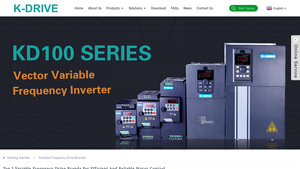
SHENZHEN K-EASY AUTOMATION CO., LTD. manufactures a comprehensive range of Variable Frequency Drives (VFDs) and industrial automation solutions. Key product categories include: (1) Vector Frequency Inverters: KD600 Series (general purpose), KD600M (high-performance), KD700 Series (book type compact), and KD100 Series (mini vector); (2) Application-Specific Drives: KD600E (elevator/lift control), C…

Analysis of the Top 25 Variable Frequency Drive (VFD) Companies …
Website: finance.yahoo.com
The provided text does not contain any key product details regarding solar inverters, VFDs, or industrial automation. The content appears to be a generic Yahoo error page (‘Oops, something went wrong’) accompanied by site navigation menus (News, Health, Shopping categories) rather than the actual article content about variable frequency drives or solar inverters.
B2B Engineering FAQs About Fan Variable Frequency Drive
-
How do I properly size a Fan VFD for three-phase motors in high-temperature agricultural environments to avoid thermal derating?
When specifying a Variable Frequency Drive for centrifugal fans in agricultural drying or ventilation systems, you must account for both the motor’s Full Load Amperage (FLA) and the ambient operating temperature. Standard VFD ratings assume 40°C ambient conditions; however, solar pump houses or livestock ventilation enclosures often exceed this. For every 1°C above 40°C, you typically need to derate the drive by 2-3%. Therefore, for a 10HP fan motor operating in a 50°C environment, you should select a 15HP-rated VFD or implement forced ventilation with heat exchangers. Additionally, ensure the VFD’s constant torque rating matches the fan’s load profile—centrifugal fans follow the Affinity Laws (torque varies with the square of speed), allowing for potential undersizing compared to constant torque applications, but always maintain a 1.1 service factor buffer for agricultural dust loading on bearings. -
What harmonic mitigation strategies are required when deploying multiple fan VFDs in industrial facilities to prevent grid distortion and protect sensitive solar pumping inverters on the same network?
As noted in HVAC applications, VFDs inherently produce harmonic distortion through non-linear switching of IGBTs. When multiple fan drives operate on the same distribution network as solar pump inverters or precision control systems, Total Harmonic Distortion (THD) can exceed IEEE 519 limits. The most economical solution for individual drives under 50HP is the integration of DC link chokes or 3% line reactors on the input side, which reduce THD from approximately 80% to 35%. For larger EPC projects with centralized fan banks, consider active front end (AFE) drives or passive harmonic filters. Crucially, never share a single line reactor between multiple VFDs; each drive requires dedicated impedance matching to prevent cross-coupling of harmonic currents that could interfere with MPPT algorithms in connected solar pumping systems. -
Can solar pump inverter technology be integrated with fan VFD systems for hybrid renewable HVAC or agricultural drying applications?
Yes, Boray’s solar pump inverter architecture—designed for maximum power point tracking (MPPT) and DC bus voltage management—can be adapted for fan applications in hybrid ventilation systems. By utilizing a common DC bus configuration, solar energy can directly power fan VFDs during daylight hours while grid power supplements during low irradiance. The critical integration point is the DC bus voltage compatibility; solar pump inverters typically operate at 550V-800V DC, which matches standard industrial VFD DC link requirements. For agricultural grain drying operations, this allows direct PV-to-fan coupling without battery storage, using the VFD’s built-in PID controller to modulate airflow based on grain moisture sensors while prioritizing solar energy utilization over grid import. -
How does the soft-start functionality of fan VFDs extend motor winding life compared to traditional across-the-line starting, and what are the implications for maintenance scheduling in remote installations?
Standard DOL (Direct On Line) starting draws 600-800% inrush current, creating thermal stress on motor windings and mechanical shock on fan bearings. A VFD eliminates this by ramping voltage and frequency gradually, limiting starting current to 110-150% of FLA. This reduces winding temperature rise by approximately 40°C per start cycle, effectively doubling insulation life according to the Arrhenius equation (halving life for every 10°C increase). For remote solar pumping stations or agricultural ventilation systems where maintenance access is costly, this translates to extended bearing life (reduced lubricant shear) and elimination of mechanical belt slippage during startup. EPC contractors should specify VFDs with automatic torque boost functions to overcome static friction in large axial fans without exceeding current limits. -
What are the critical control methodology differences between sensorless vector control and standard V/F control for centrifugal fans operating under variable static pressure conditions?
While V/Hz (Volts per Hertz) control is sufficient for fixed-load centrifugal fans, modern HVAC and industrial process ventilation requires dynamic response to changing static pressure—such as when dampers modulate or filters load up. Sensorless vector control (SVC) provides 0.5% speed regulation accuracy versus 3-5% for V/Hz, by mathematically modeling motor flux and torque current. This is critical for maintaining constant airflow (CFM) as system resistance changes; without closed-loop feedback, a V/Hz-controlled fan will deliver significantly reduced airflow as static pressure increases, potentially causing insufficient ventilation in livestock facilities or overheating in electrical rooms. For solar-powered fan applications, SVC also provides better low-speed torque characteristics, preventing stall conditions when PV voltage fluctuates. -
How do you calculate energy savings ROI when retrofitting fixed-speed fans with VFDs in large-scale EPC ventilation or solar-powered agricultural projects?
Energy savings follow the Affinity Laws: power consumption is proportional to the cube of the fan speed (P ∝ N³). Reducing fan speed by 20% yields approximately 50% energy savings. For a 50HP fan operating 6,000 hours annually at full speed (37.3kW load), energy consumption is 224,000 kWh. With VFD control maintaining 80% speed average (accounting for variable occupancy/temperature), consumption drops to 115,000 kWh—a savings of 109,000 kWh/year. At $0.12/kWh, this yields $13,080 annual savings, providing sub-18-month payback on the VFD investment. In solar pumping hybrid systems, these savings extend battery life or reduce required PV array size by 40-50%, significantly reducing CAPEX for off-grid agricultural installations. -
What IP ratings and enclosure specifications are mandatory for fan VFD installations in outdoor agricultural, wastewater treatment, or dusty industrial environments?
Standard IP20 VFDs are unsuitable for outdoor fan applications. For agricultural environments with high humidity and particulate matter (dust, pollen, chemical fertilizers), specify IP55 or NEMA 12 enclosures with conformal-coated circuit boards. In wastewater treatment plants with corrosive gases, IP66 stainless steel enclosures are required. Critical considerations include: (1) Ambient temperature derating as mentioned previously; (2) Isolated cooling channels to prevent contaminated air from passing over electronic components; (3) UV-resistant cable glands for solar field installations. Boray’s solar pump inverter enclosures, typically rated IP65 for outdoor agricultural use, provide a reference standard for fan VFD protection in similar harsh environments—ensuring 10+ year operational life without failure from moisture ingress or conductive dust. -
How do fan VFDs handle regenerative energy from high-inertia loads during deceleration, and what braking resistor specifications are required for large industrial ventilation systems?
When decelerating large centrifugal fans or axial flow fans with high inertia (large impeller mass), the motor acts as a generator, pumping energy back into the VFD’s DC bus. Without dissipation, DC bus voltage can exceed 800V, triggering overvoltage faults. For fans with deceleration times under 10 seconds, dynamic braking using chopper circuits and braking resistors is required. Calculate resistor wattage using: Pbrake = (J × ω²) / (2 × t × η), where J is moment of inertia, ω is angular velocity, t is braking time, and η is efficiency. For a 100HP fan with 50kg·m² inertia decelerating from 1800 RPM in 5 seconds, approximately 15kW braking capacity is needed. Alternatively, for solar-integrated systems, regenerative VFDs can return this energy to the DC bus to power other pumps or fans, maximizing system efficiency without resistor heat losses.
Disclaimer
⚠️ Important Disclaimer
The information provided in this guide is for educational purposes. Industrial applications and electrical engineering projects carry inherent risks. B2B buyers and contractors must conduct thorough technical due diligence and verify regional compliance before installation or procurement.
Conclusion: Partnering with Boray Inverter for Fan Variable Frequency Drive
Implementing fan variable frequency drives represents more than an operational upgrade—it is a strategic investment in energy resilience, system longevity, and precision environmental control. Whether optimizing HVAC airflow in commercial complexes, managing ventilation in industrial facilities, or driving agricultural drying and irrigation systems, the ability to modulate motor speed with vector precision eliminates the inefficiencies of fixed-speed operation while dramatically reducing inrush currents and mechanical wear. As global industries pivot toward decarbonization and intelligent automation, the integration of advanced VFD technology has transitioned from optional efficiency to competitive necessity.
However, the performance of your fan control system ultimately depends on the engineering integrity of your drive manufacturer. Shenzhen Boray Technology Co., Ltd. stands at the forefront of motor control innovation, delivering specialized Solar Pumping and Motor Control Solutions engineered for the demands of modern industry. With an R&D team comprising 50% of its workforce, Boray Inverter has achieved mastery in both Permanent Magnet Synchronous Motor (PMSM) and Induction Motor (IM) vector control technologies, ensuring optimal torque response and energy efficiency across variable load profiles.
Our manufacturing infrastructure features two state-of-the-art production lines supported by rigorous 100% full-load testing protocols, guaranteeing that every unit shipped meets the highest standards of reliability for continuous-duty agricultural, irrigation, and industrial automation applications worldwide. From customized VFD configurations for complex HVAC retrofits to wholesale supply for EPC contractors managing large-scale solar pumping installations, Boray Inverter combines technical sophistication with manufacturing scale to accelerate your project success.
Contact the Boray Inverter team today at borayinverter.com to discuss your specific fan VFD requirements, request technical specifications, or obtain competitive wholesale quotations tailored to your regional standards and application demands.