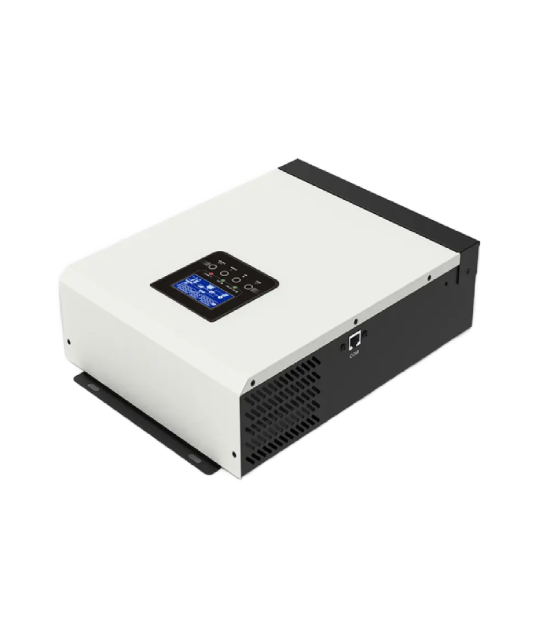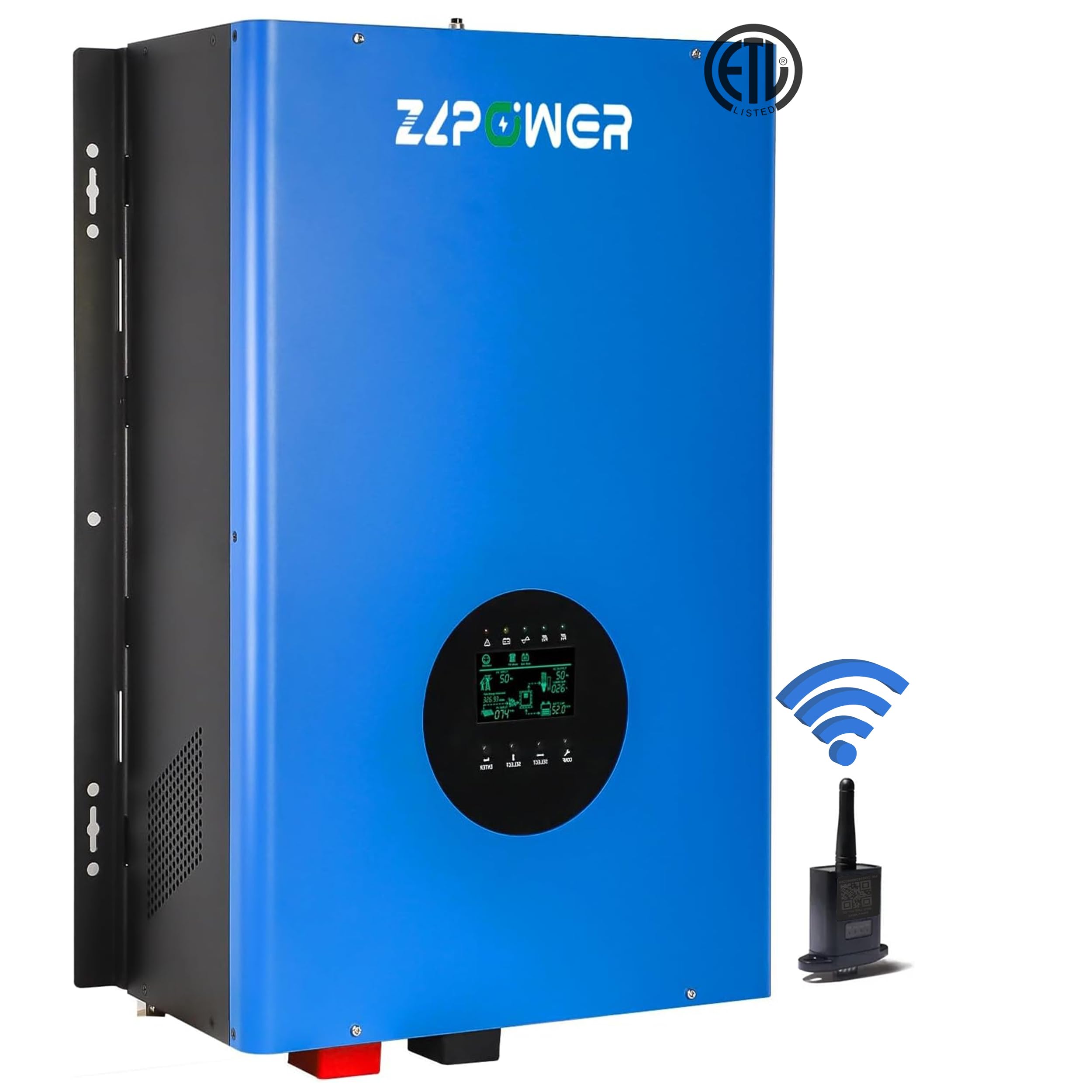
Grid instability and soaring demand charges are silently eroding your operational margins. For facilities running pumps, conveyors, or critical motor loads around the clock, a standard grid-tie solar setup leaves you vulnerable when the sun sets or the utility fails.
Enter the hybrid inverter: the intelligent bridge between solar generation, battery storage, and your critical loads. Unlike conventional inverters that simply convert DC to AC, hybrid systems dynamically manage multiple power sources—drawing from panels, batteries, or the grid—to ensure your motors keep running and your energy costs stay predictable.
Understanding this technology isn’t just about sustainability; it’s about engineering resilience into your power infrastructure while capturing peak shaving and backup power opportunities that directly impact your profitability.
What Is a Hybrid Inverter for Solar Panels?
A hybrid inverter is an integrated power conversion system that combines the functionality of a traditional solar grid-tied inverter and a battery inverter into a single, bidirectional power electronic unit. Unlike standard inverters that only convert DC photovoltaic (PV) power to AC for immediate consumption or grid export, hybrid inverters manage multi-source energy flows—solar generation, battery storage, and utility grid power—through intelligent power electronics and advanced control algorithms.
From a procurement perspective, hybrid inverter costs typically range from $0.15–$0.35 per watt for residential systems (3–10 kW) and $0.08–$0.20 per watt for commercial/industrial scales (30–100 kW), with total system costs influenced by power rating, voltage architecture, and protection ratings. The unit price includes the power conversion stage (IGBT/SiC modules), MPPT charge controllers, battery management system (BMS) interfaces, and enclosure hardware.
Technical Specifications Driving Cost and Performance
Power Rating and Voltage Architecture
kW Rating: Industrial hybrid inverters typically span 3 kW to 100 kW+ for commercial applications. Selection must account for 1.25x oversizing to manage temperature derating—an inverter rated for 50 kW at 25°C may deliver only 40 kW at 45°C ambient.
Voltage Configuration:
– Single-phase (220–240V): Suitable for residential and light commercial loads up to 10 kW
– Three-phase (380–480V): Required for industrial motor loads and commercial buildings; ensures balanced grid injection and compatibility with three-phase pump systems
MPPT Efficiency and Tracking Channels
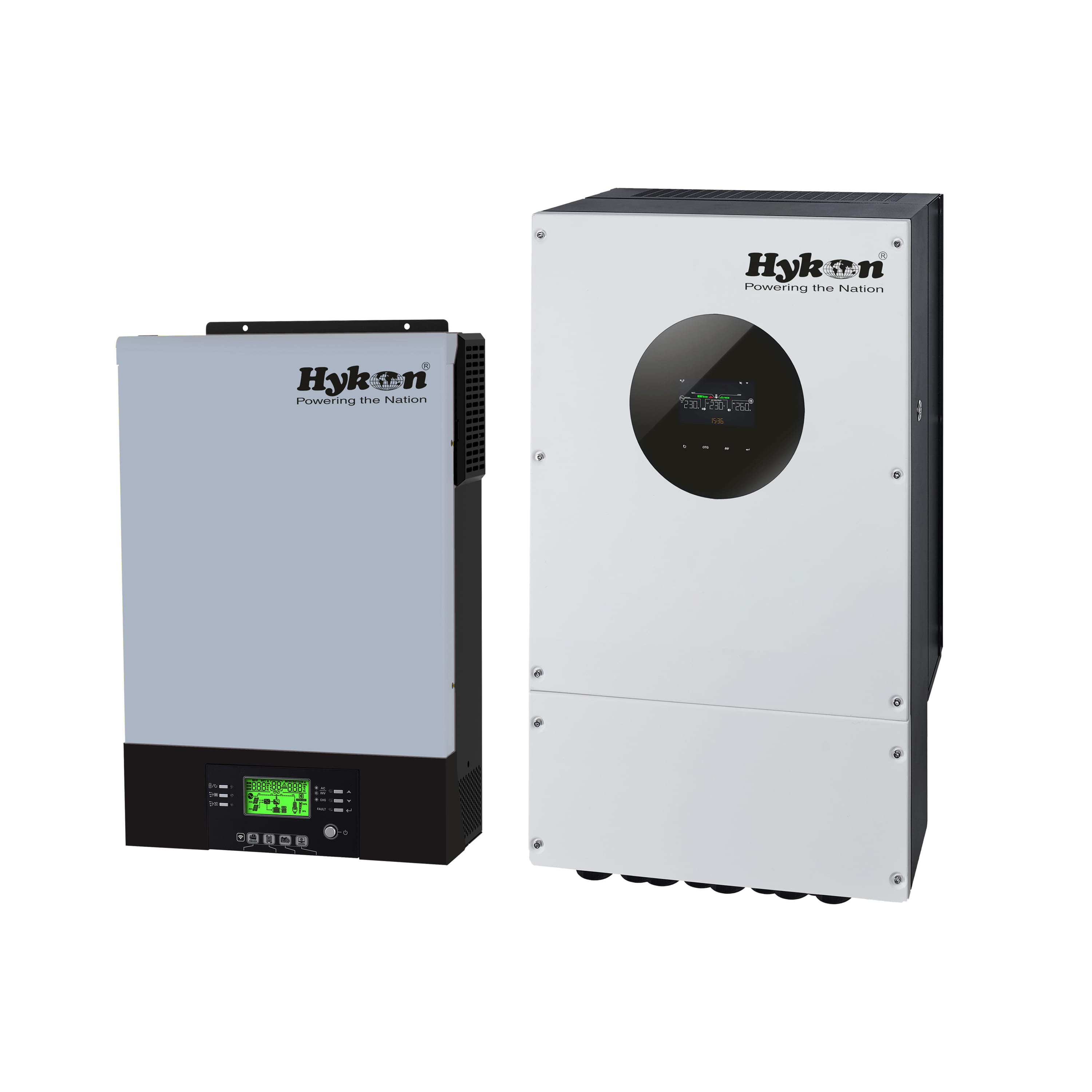
Maximum Power Point Tracking (MPPT) efficiency directly impacts ROI. High-quality hybrid inverters achieve 98.5–99.0% MPPT efficiency with multiple independent trackers (2–4 MPPTs), critical for installations with varying panel orientations or partial shading conditions. Each additional MPPT channel adds $150–$300 to unit cost but can increase energy harvest by 5–15% annually.
Environmental Protection Ratings
For harsh industrial environments, IP65-rated enclosures (dust-tight and protected against water jets) are mandatory for outdoor installation, adding 20–30% to base cost compared to IP20 indoor units. Operating temperature ranges (-25°C to +60°C) and conformal coating on PCBs determine reliability in high-humidity or saline environments.
Vector Control and Power Quality
Advanced hybrid inverters utilize Field-Oriented Control (FOC) algorithms for motor drive compatibility, particularly when integrated with solar pumping systems. Total Harmonic Distortion (THD) should remain below 3% for grid-tied operation to comply with IEEE 519 and local utility interconnection standards. Units with active filtering capabilities command premium pricing but eliminate need for external power conditioning equipment.
Battery Compatibility and Chemistry
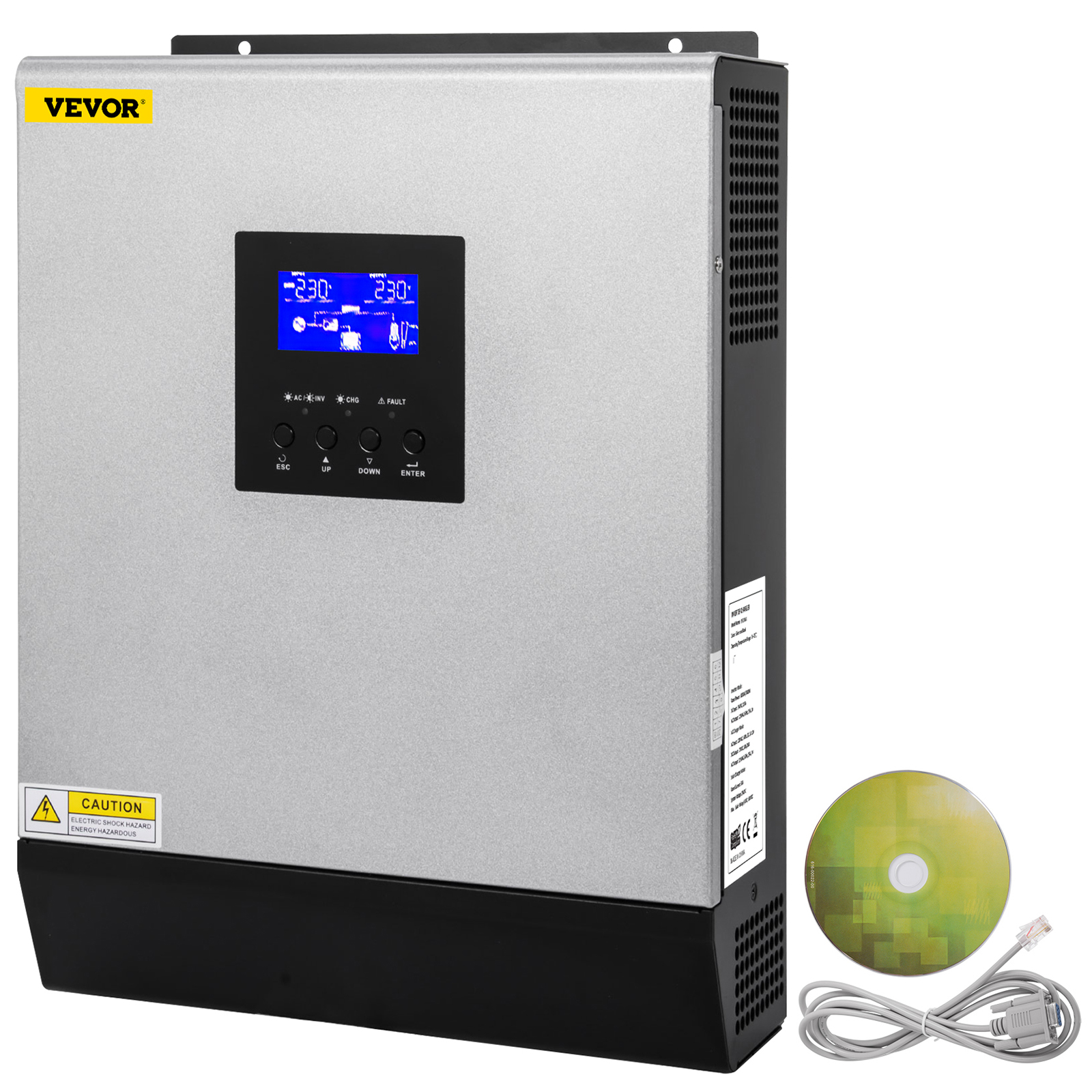
Voltage compatibility ranges (48V, 400V, or 800V DC battery buses) and chemistry support (LiFePO4, NMC, or lead-acid) affect system architecture. High-voltage battery systems (400V+) reduce copper losses but require specialized safety certifications (UL 1973, IEC 62619), impacting procurement costs by 10–15%.
Industrial Sizing and Sourcing Guidelines
Load Analysis and Oversizing: Calculate peak load demand and add 20% margin for future expansion. For solar pumping applications, match inverter kW rating to motor FLA (Full Load Amps) multiplied by √3 × V × power factor, with additional 30% headroom for starting currents in IM (Induction Motor) applications.
Temperature Derating Curves: Request manufacturer-specific derating curves. In tropical climates (40°C+ ambient), specify inverters with active cooling or oversized heat sinks to prevent thermal throttling during peak solar hours.
Communication Protocols: Ensure compatibility with existing SCADA or building management systems. Modbus RTU/TCP, CAN bus, and RS485 are standard; proprietary protocols may lock you into specific battery ecosystems.
AC vs. DC Coupling Economics:
– DC-coupled systems (direct PV-to-battery connection) offer 3–5% higher round-trip efficiency and are optimal for new installations
– AC-coupled systems simplify retrofitting existing solar arrays but require additional conversion stages, reducing efficiency by 2–4%
Harmonic Mitigation: For industrial sites with VFD loads, specify hybrid inverters with active front-end (AFE) rectifiers to prevent grid resonance issues and ensure compliance with power quality standards.
Why Source Inverters/VFDs from China?
Related Technical Insight
China maintains a dominant position in power electronics manufacturing due to vertical integration of semiconductor supply chains, advanced R&D capabilities in silicon carbide (SiC) and IGBT technologies, and economies of scale that reduce per-unit costs by 30–40% compared to Western manufacturers without compromising IEC/UL certification standards.
Chinese factories offer unmatched customization flexibility—OEM/ODM partners can modify firmware for specific grid codes, adjust hardware configurations for regional voltage standards, and integrate proprietary communication protocols within 4–6 week development cycles. Advanced production facilities utilize automated SMT lines, automated optical inspection (AOI), and 100% burn-in testing protocols that match or exceed international quality benchmarks.
For procurement managers, direct sourcing eliminates distributor markups (typically 25–35%) while providing access to the latest MPPT algorithms and battery management technologies developed specifically for high-penetration renewable energy markets.
Boray Inverter: Your Strategic OEM/ODM Partner
Boray Inverter specializes in high-performance Solar Pump Inverters and Variable Frequency Drives engineered for demanding industrial applications. Our technical advantage stems from a workforce composition where 50% are dedicated R&D engineers, ensuring continuous innovation in motor control algorithms and power conversion efficiency.
We have achieved mastery in PMSM (Permanent Magnet Synchronous Motor) and IM (Induction Motor) vector control, delivering precise torque control and optimized energy efficiency for agricultural pumping and industrial automation systems. Our manufacturing infrastructure includes two modern production lines equipped with automated testing stations that perform 100% full-load testing before delivery, ensuring zero-defect shipment standards.
Whether you require standard hybrid inverters for solar storage applications or customized VFD solutions with specific harmonic filtering requirements, Boray provides competitive wholesale pricing and comprehensive technical support. Contact our engineering team today to discuss your project specifications and receive detailed quotations for OEM/ODM partnerships.
Frequently Asked Questions (FAQs)
What is the fundamental difference between a hybrid inverter and a standard solar inverter?
A standard solar inverter performs unidirectional DC-to-AC conversion for immediate use or grid export, shutting down during grid outages for safety (anti-islanding). A hybrid inverter adds bidirectional power conversion capabilities, battery charge control, and grid-forming functionality, allowing it to operate in island mode during outages and manage energy arbitrage between solar, batteries, and grid power.
Can hybrid inverters operate effectively without battery storage?
Yes, most hybrid inverters function as standard grid-tied inverters without batteries, converting PV power to AC for immediate consumption or net metering. However, the full economic and functional benefits—including backup power during outages and peak-shaving capabilities—require integration with battery storage systems. Many industrial buyers install hybrid inverters initially to accommodate future battery additions without hardware replacement.
Should I choose AC-coupled or DC-coupled architecture for my existing solar installation?
For existing solar arrays, AC-coupled hybrid inverters are typically more cost-effective as they utilize the existing inverter infrastructure, adding battery backup through AC bus connection. For new installations, DC-coupled systems offer superior efficiency (3–5% higher round-trip efficiency) by eliminating additional conversion stages between PV modules and batteries, though they require compatible high-voltage battery systems.
How do I calculate the correct kW rating for a hybrid inverter in industrial applications?
Calculate based on maximum continuous load plus 25% safety margin. For motor loads (pumps, compressors), size the inverter at 1.5× the motor rated power to handle inrush currents. Consider simultaneous loads: if your facility has 30 kW of lighting and HVAC plus a 15 kW pump, specify a 50–60 kW hybrid inverter to accommodate diversity factors and temperature derating.
What is the expected service life and warranty period for industrial hybrid inverters?
Quality industrial hybrid inverters utilize electrolytic capacitors rated for 100,000+ hours at rated temperature, yielding 10–15 year operational lifespans. Standard warranties range from 5–10 years, with premium manufacturers offering 10–12 year coverage on power electronics. Ensure warranty terms cover both parts and labor, and verify that the manufacturer maintains local service centers or rapid replacement logistics for critical applications.