Your VFDs are only as smart as the team running them. While variable frequency drives promise 30-50% energy savings and precision motor control, those benefits evaporate without proper operator training. Misconfigured parameters, ignored fault codes, and reactive maintenance turn your efficiency investment into unplanned downtime and premature drive failure.
For facility managers balancing OPEX constraints and EPC contractors protecting project margins, effective VFD training isn’t a technical checkbox—it’s the bridge between capital expenditure and actual ROI. When technicians can diagnose harmonics issues before they damage bearings or optimize torque curves for seasonal agricultural loads, you transform hardware costs into sustainable operational advantages.
Variable Frequency Drive Training: Technical Investment Analysis and Procurement Strategy
1. Engineering Cost Breakdown: VFD Training Investment Tiers
Variable Frequency Drive training represents a strategic capital allocation ranging from $295 for foundational seminars to $2,295 for comprehensive three-day certification programs. This pricing spectrum reflects distinct technical depths and delivery methodologies:

Tier 1 – Foundational Knowledge ($295–$400)
Single-day classroom or 0.5-hour eLearning modules covering VFD theory, basic safety protocols, and parameter navigation. Suitable for facility managers and procurement specialists requiring specification literacy without hands-on troubleshooting.
Tier 2 – Application-Specific Commissioning ($600–$800)
One-to-two-day intensive programs combining theoretical instruction with supervised programming exercises. These courses typically focus on specific manufacturer ecosystems (e.g., PowerXL DG1/SVX, FR-A800 series) and include warranty-extension incentives upon certification completion.
Tier 3 – Advanced Troubleshooting & Multi-Platform Integration ($2,000–$2,500)
Three-day hands-on laboratories utilizing oscilloscopes, motor analyzers, and live fault simulation across multiple drive platforms (Allen-Bradley PowerFlex, ABB ACS, Mitsubishi FR series). These programs award Continuing Education Units (CEUs) and qualify technicians for complex industrial maintenance roles.
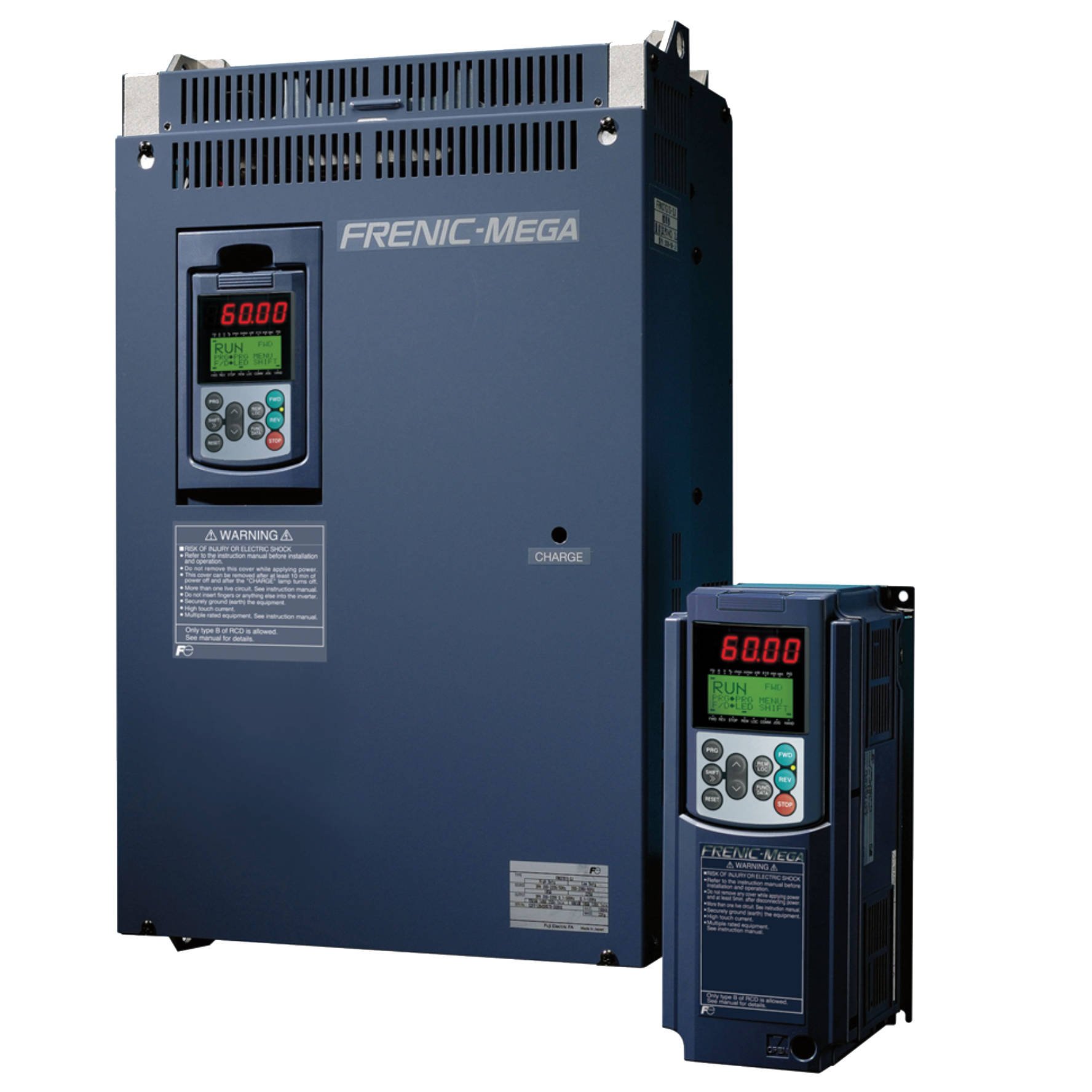
Cost Drivers: Pricing correlates directly with lab equipment fidelity (real motors vs. simulators), instructor field-experience credentials (decades of industrial repair expertise vs. academic-only backgrounds), and certification body accreditation (ACCET, state electrical board approvals).
2. Technical Specifications Affecting Training Complexity and Hardware Selection
When procuring VFDs or designing training curricula, these engineering parameters determine both operational capability and educational requirements:
Power Rating and Voltage Topology
Systems ranging from 0.75kW single-phase 220V residential pumps to 500kW+ three-phase 690V industrial drives require fundamentally different safety protocols and commissioning procedures. Higher voltage classes (>600V) necessitate specialized high-voltage electrical safety training and arc flash certification prerequisites.
Motor Control Algorithms
– V/Hz Control: Basic scalar control suitable for centrifugal pumps and fans; requires minimal training (parameter entry only).
– Sensorless Vector Control: Requires understanding of motor equivalent circuits and auto-tuning procedures; training must cover slip compensation and torque optimization.
– Field-Oriented Control (FOC) for PMSM: Advanced vector control for Permanent Magnet Synchronous Motors demands specialized training in encoder feedback systems, rotor position alignment, and flux weakening strategies—critical for high-efficiency solar pumping applications.
Environmental Protection Ratings
– IP20/NEMA 1: Cabinet-mounted drives for controlled environments; training focuses on panel wiring and EMI filtering.
– IP65/NEMA 4X: Outdoor-rated drives for agricultural solar pumping or wastewater applications; training must include gland cable entry techniques, thermal management in direct sunlight, and ingress protection maintenance.
Application-Specific Requirements
Solar pump inverters require additional training in Maximum Power Point Tracking (MPPT) algorithms, DC input voltage window optimization, and photovoltaic array configuration—distinct from standard AC-fed VFD curricula.
3. Procurement Strategy: Sizing Training to Operational Requirements
Industrial buyers and project managers should implement the following sourcing protocols to maximize ROI and prevent system failures:
Align Training with Installed Base Inventory
Avoid generic “theory-only” courses if your facility operates specific drive families. Mismatches between training equipment (e.g., ABB ACS-350) and installed hardware (e.g., Eaton SVX) create knowledge gaps during actual fault conditions. Prioritize manufacturer-authorized programs that provide programming software licenses and technical manuals for your specific models.
Evaluate Warranty Implications
Several manufacturers extend standard 2-year warranties to 3 years upon completion of certified commissioning training. For large-scale deployments (>50 units), calculate training costs against potential warranty extension value and reduced service contractor dependency.
Related Technical Insight
Train-the-Trainer Economics
For multinational or multi-site operations, invest in Tier 3 certification for senior maintenance engineers who can subsequently train internal teams, rather than funding individual external courses for all technicians. This approach reduces per-person training costs from $2,000+ to approximately $200–$300 per secondary trainee.
Hands-On vs. Virtual Reality
While virtual simulations reduce travel costs, insist on physical motor-drive interaction for troubleshooting training. Scopemeter interpretation of PWM waveforms, bearing current detection, and physical parameter entry cannot be adequately replicated in purely digital environments.
4. Why Source Inverters/VFDs from China?
Chinese manufacturing has evolved beyond cost-cutting to become the global epicenter for advanced motor control R&D and OEM customization:
Advanced Vector Control R&D
Leading Chinese manufacturers now employ sophisticated Field-Oriented Control algorithms rivaling European and Japanese counterparts, with particular expertise in dual-rating drives for both Induction Motors (IM) and Permanent Magnet Synchronous Motors (PMSM).
Cost-Effective Manufacturing Without Compromise
Direct sourcing from tier-1 Chinese factories eliminates distributor markups (typically 30–40%) while maintaining IEC 61800-5-1 compliance and CE certification. Modern Chinese production facilities utilize automated SMT lines and automated testing rigs ensuring consistent quality at volume.
OEM/ODM Flexibility
Chinese manufacturers offer rapid prototyping for application-specific requirements: custom firmware for solar pumping MPPT curves, specialized coatings for high-humidity environments, and private-label branding for system integrators—capabilities often unavailable or prohibitively expensive from legacy Western brands.
5. Boray Inverter: Engineering Partnership for Advanced Motor Control
Boray Inverter represents the convergence of rigorous R&D investment and precision manufacturing capabilities essential for demanding B2B applications. Our technical differentiation includes:
- Research-Intensive Workforce: 50% of our personnel are dedicated R&D engineers specializing in motor control algorithms and power electronics.
- Vector Control Mastery: Proprietary firmware optimized for both PMSM (high-efficiency solar pumping) and IM (industrial process control) vector control, delivering >95% efficiency across variable load conditions.
- Manufacturing Excellence: Two modern, fully-automated production lines with 100% full-load burn-in testing before delivery, ensuring zero DOA (Dead on Arrival) rates and verified thermal performance under maximum current conditions.
- Customization Capability: OEM/ODM services including private-label branding, specialized IP ratings (up to IP65), and application-specific parameter default settings for solar agricultural or HVAC systems.
For wholesale pricing, technical documentation, and custom drive solutions tailored to your specific kW ratings and environmental requirements, contact Boray Inverter’s engineering sales team.
Frequently Asked Questions (FAQs)
What is the typical ROI period for investing in advanced VFD training versus outsourcing maintenance?
For facilities operating more than 20 VFDs above 15kW, comprehensive internal training typically achieves ROI within 8–12 months through eliminated service contractor fees ($150–$300/hour) and reduced downtime. The break-even accelerates if training qualifies your team for warranty-extending commissioning authority.
Should we prioritize manufacturer-specific training or generic VFD theory courses?
For immediate operational reliability, prioritize manufacturer-specific training matching your installed base—parameter structures, fault codes, and software interfaces vary significantly between brands. Generic theory serves only specification and procurement teams who need cross-brand literacy for capital planning.
What technical prerequisites should maintenance staff possess before attending VFD training?
Technicians should demonstrate competency in three-phase power theory, motor nameplate interpretation, and basic PLC ladder logic. While introductory courses claim “no prerequisites,” students lacking foundational electrical knowledge struggle with vector control concepts and troubleshooting methodologies.
How does online VFD training compare to hands-on laboratory instruction for troubleshooting competency?
Online modules suffice for installation awareness and parameter navigation. However, hands-on laboratory training is mandatory for developing troubleshooting intuition—interpreting scopemeter readings of dv/dt spikes, distinguishing between mechanical bearing failures and electrical insulation breakdowns, and safely performing live fault isolation requires physical equipment interaction.
Can improper VFD installation void manufacturer warranties even if the hardware is correctly specified?
Yes. Most manufacturers void warranties if commissioning reveals improper input fusing, inadequate heat sink clearance, or incorrect motor cable shielding—errors preventable through proper training. Some manufacturers (particularly in the 690V class) require proof of certified installer training for warranty validation, making training documentation as critical as the hardware invoice.