Nothing derails a project timeline faster than a container stuck at customs. For engineers and procurement managers sourcing Variable Frequency Drives (VFDs), the wrong HS code classification isn’t just a paperwork error—it’s a direct hit to your bottom line and operational schedule.
Understanding the precise HS code for your VFD shipment determines everything from import duties and VAT rates to customs clearance speed. Get it wrong, and you face unexpected tariffs, storage fees, or regulatory red tape that can delay critical motor control installations by weeks. Get it right, and you ensure smooth logistics, predictable costs, and compliance with international trade regulations.
This guide breaks down exactly how to classify VFDs for global shipping, helping you protect your margins and keep your energy efficiency projects on track.
HS Code Classification for Variable Frequency Drives: Technical Reference for Industrial Procurement
Primary HS Code Designations for VFDs
Variable Frequency Drives (VFDs) fall under HS Code 8504.40 within the Harmonized System nomenclature, specifically classified as “Static Converters” for electric motor control. The precise 6-to-10-digit sub-classification depends on technical specifications and destination country requirements:
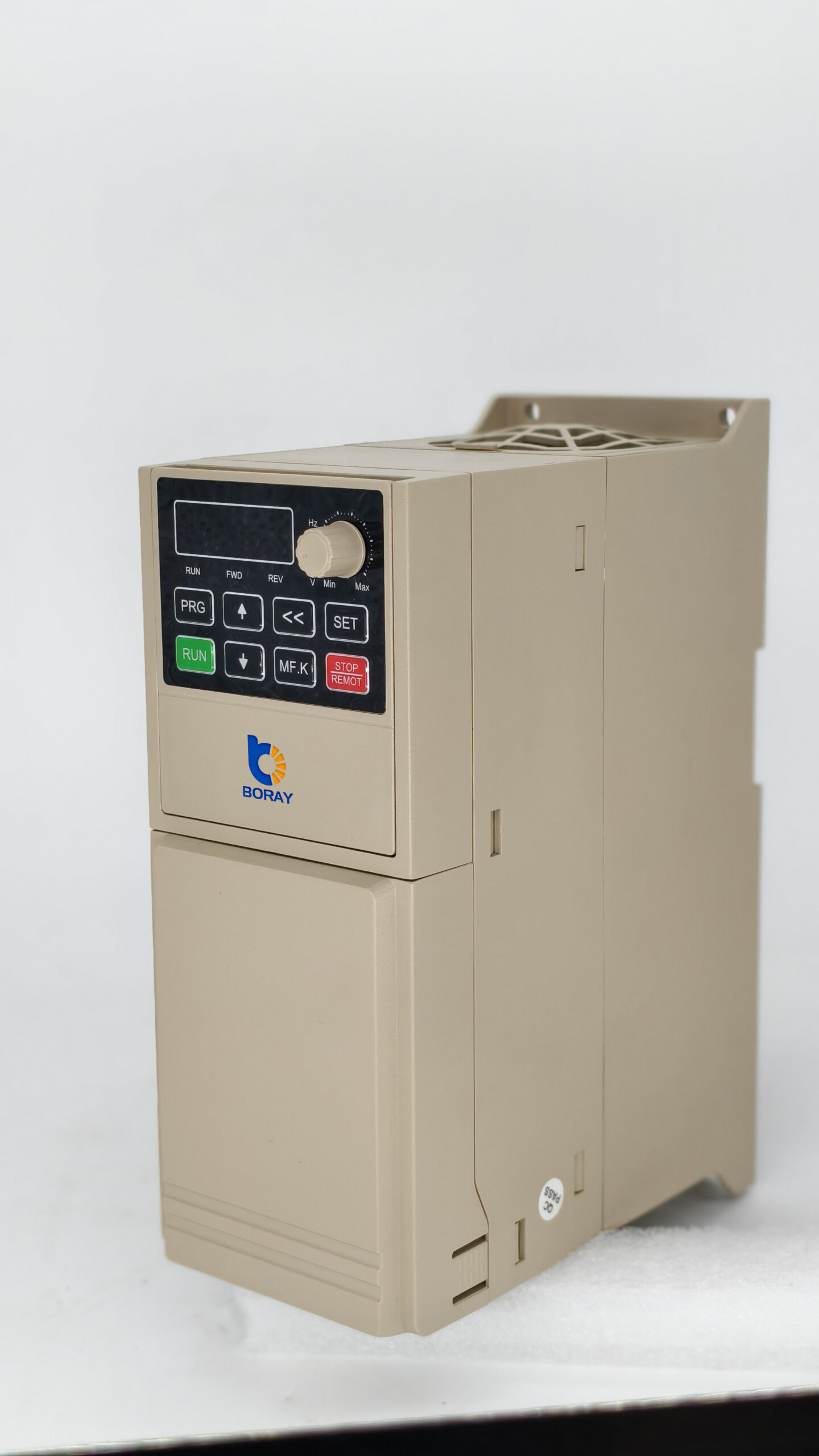
- 8504.40.10 – Electric inverters (single-phase and three-phase general purpose drives)
- 8504.40.40 – Electrical speed drive controllers for AC motors (industrial vector control drives)
- 8504.40.90 – Other rectifiers and static converters (specialized VFDs including solar pump inverters with MPPT)
- 8504.40.99 – Comprehensive category covering programmable VFDs with integrated PLC functions
For customs declaration accuracy, specify whether the unit operates as a standalone motor controller (8504.40.40) or as part of a power conversion system (8504.40.90). Solar-specific VFDs with Maximum Power Point Tracking (MPPT) functionality may require additional classification under 8504.40.95 in certain jurisdictions due to their dual function as power converters and energy optimization devices.
Technical Cost Drivers and Selection Parameters
Power Rating and Voltage Architecture
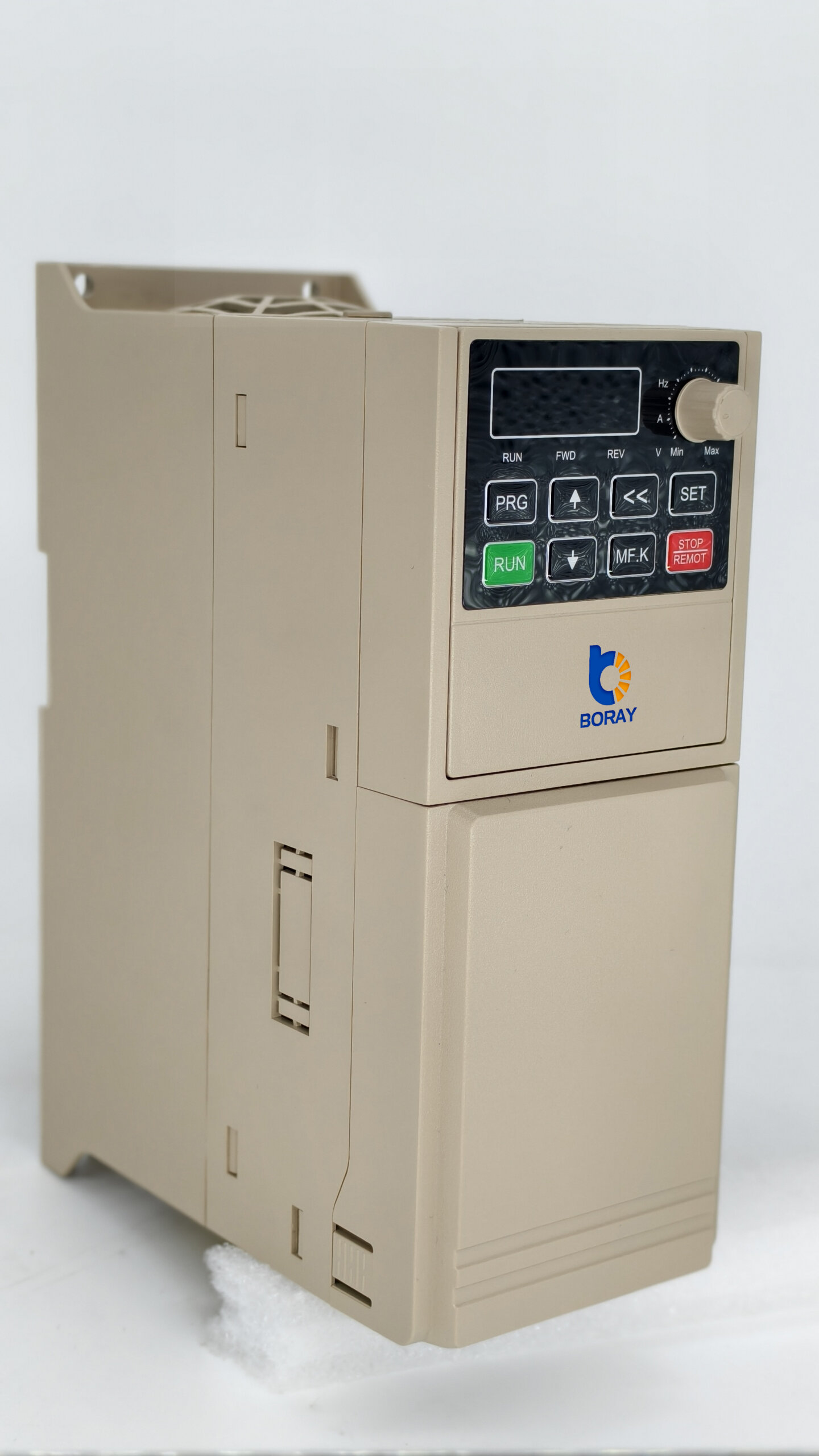
Cost scales exponentially with kW capacity. Units below 7.5kW typically utilize single-phase 220V input with three-phase output, while industrial applications demand three-phase 380V/480V input. High-voltage drives (690V AC and above) require specialized IGBT modules and filtering systems, increasing unit cost by 35-45% compared to standard voltage equivalents.
Motor Control Topology
– V/Hz Control: Cost-effective for fan and pump applications (±2-3% speed accuracy)
– Sensorless Vector Control: Mid-range pricing with 0.5% speed accuracy; suitable for conveyors and mixers
– Closed-Loop Vector Control: Premium tier utilizing encoder feedback for ±0.01% precision in CNC and lifting applications
– Permanent Magnet Synchronous Motor (PMSM) Control: Requires advanced DSP algorithms; adds 15-20% cost premium but delivers 30% energy savings versus induction motors
Environmental Protection Ratings
IP20 enclosures suit controlled cabinet installations, while IP54/IP65 rated drives with conformal-coated PCBs command 25-40% price premiums for dust, moisture, and chemical resistance. NEMA 4X stainless steel variants for food processing or marine applications represent the highest cost tier due to 316L stainless construction and gasket sealing systems.
Efficiency and Thermal Management
Drives with 98%+ conversion efficiency utilizing SiC (Silicon Carbide) components reduce heat sink requirements and operational costs but increase initial procurement costs by 20-30% compared to traditional IGBT-based units. Forced air cooling versus liquid cooling systems affects both BOM cost and installation complexity.
Grid Integration Features
Regenerative braking units (8504.40.70) add 18-25% to base drive cost but enable energy recovery during deceleration. Active front-end (AFE) configurations for harmonic mitigation (99% with automatic dry-run protection and water level control algorithms for agricultural pumping systems
We provide comprehensive OEM/ODM services including firmware customization, private labeling, and application-specific parameter configurations. Our quality management system ensures MTBF (Mean Time Between Failures) ratings exceeding 50,000 hours across our VFD-HS and Solar Pump series.
Related Technical Insight
Contact Boray Inverter today for wholesale pricing structures, technical documentation packages, and customized drive solutions tailored to your specific motor control requirements.
Frequently Asked Questions (FAQs)
What is the correct HS code for importing VFDs with integrated PLC functionality?
VFDs with built-in programmable logic controllers typically fall under 8504.40.90 (Other static converters) rather than 8504.40.40, as the primary function remains power conversion despite the added control intelligence. However, if the PLC represents a separate modular unit, declare the VFD under 8504.40.40 and the PLC module under 8537.10.90.
How do I determine whether to classify my solar pump inverter under 8504.40 or 8501.10?
Solar pump inverters are correctly classified under 8504.40 (static converters) because they function as AC motor drives with DC input conversion. HS Code 8501.10 applies only to standalone electric motors, not to the control electronics. Ensure your commercial invoice specifies “Solar Pump Inverter with MPPT” to avoid misclassification as a general power supply (8504.40.60).
What documentation is required for customs clearance of high-power VFDs (100kW+)?
Shipments exceeding 100kW require technical datasheets showing input/output voltage specifications, harmonic distortion levels (THDi), and EMC compliance certificates (EN 61800-3). Additionally, provide the motor compatibility chart and torque-speed curves to verify the drive’s classification as industrial equipment rather than consumer electronics.
Why does the HS code matter for warranty and service parts procurement?
Correct HS classification determines duty rates on replacement PCBs, IGBT modules, and capacitors. Importing service parts under incorrect codes can result in 5-12% unnecessary duty penalties. Maintain consistency between your VFD import codes (8504.40) and spare parts (8504.90 for parts/accessories of static converters) to streamline warranty logistics.
Can I use a general-purpose VFD HS code for specialized applications like crane control or elevator drives?
While technically possible, specialized applications require specific sub-classification. Crane and elevator drives with safety features (STO – Safe Torque Off, EN ISO 13849) should utilize 8504.40.40 with supplementary declaration of safety functions. Using generic codes may trigger customs inspections and delay clearance, particularly for safety-critical equipment requiring TÜV or CE-MD compliance verification.