With the growing global demand for clean energy and sustainable agriculture, solar water pumping systems are rapidly becoming an ideal solution for irrigation in arid areas and off-grid farmland. VFDs transform the way traditional solar water pumps operate, bringing their efficiency, reliability, and intelligence to unprecedented levels.
Traditional solar water pumping systems are directly driven by photovoltaic panels, and their output power is entirely dependent on sunlight intensity. This results in unstable pumping speeds, leading to sharp drops in water output and even system shutdowns in the early morning, evening, or when obscured by cloud cover, making continuous water supply impossible. Furthermore, the high inrush current generated when the motor is directly started can easily damage the equipment.
The frequency converter (VFD) acts as the “intelligent brain” of the system. It uses maximum power point tracking (MPPT) technology to adjust the motor’s frequency and voltage in real time, ensuring maximum power output from the photovoltaic array regardless of lighting conditions.
Four revolutionary advantages of VFDs:
- Significantly improved efficiency and water yield: The MPPT function increases solar energy utilization by up to 30%, enabling efficient operation even in low-light conditions and significantly increasing total daily water withdrawal.
- Soft start and soft stop protection devices: These devices eliminate inrush current during startup, reduce mechanical and electrical stress on pumps, motors, and pipelines, and lower failure rates and maintenance costs.
- Enable fully automatic and unattended operation: Modern VFDs can easily integrate intelligent controllers and sensors. The system can automatically start and stop based on light intensity and, by interacting with water level sensors, flow meters, or soil moisture sensors, implement precise irrigation modes such as on-demand and constant-pressure water supply, significantly reducing manual effort.
- Enhanced system reliability and adaptability: Even under rapidly changing light conditions (such as passing clouds), the VFD’s internal DC bus capacitors store energy, smoothing power fluctuations and avoiding frequent pump starts and stops, ensuring continuous and stable operation.
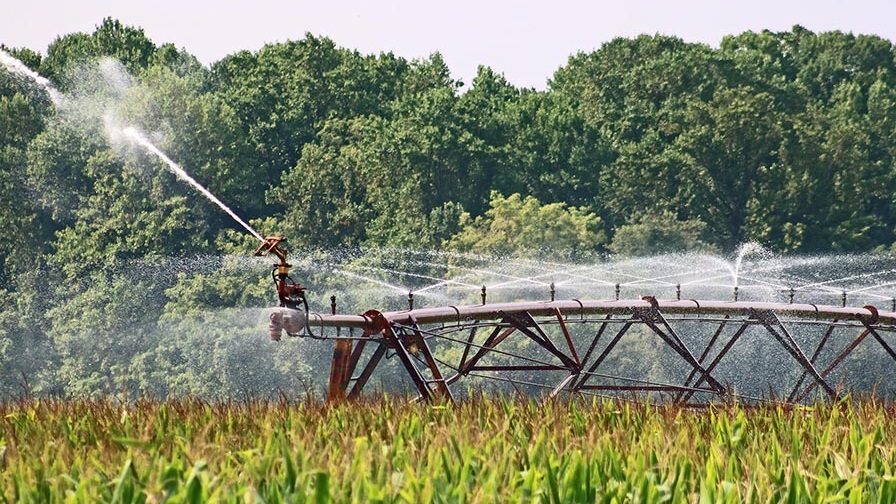
Currently, this technology has been widely used in agricultural irrigation, desertification control, grassland animal husbandry, domestic water supply, and urban waterscapes. In regions with abundant solar resources but limited grid coverage, such as Africa, the Middle East, Asia, and South America, intelligent solar water pumping systems equipped with inverters are becoming critical infrastructure for ensuring food security and promoting community development.
With the integration of Internet of Things (IoT) technologies, future solar water pumping systems will use inverters as gateways to enable remote monitoring, data analysis, and predictive maintenance, making greater contributions to global water resource management and sustainable agricultural development.