Introduction: Sourcing 2 Hp Variable Frequency Drive for Industrial Use
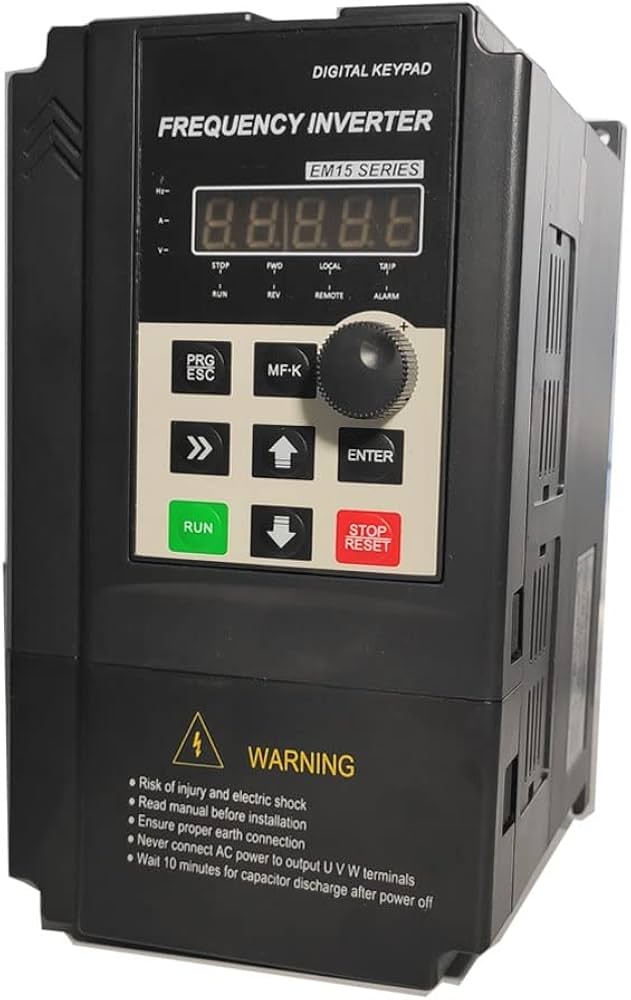
In industrial automation and agricultural infrastructure projects, the 2 HP (1.5 kW) Variable Frequency Drive represents a critical nexus between power availability and motor performance requirements. Whether retrofitting legacy single-phase facilities for three-phase motor operation or optimizing solar-powered pumping systems, this compact yet powerful drive category delivers precise speed control and significant energy savings across diverse operational environments.
This comprehensive guide addresses the technical and procurement challenges facing industrial engineers, EPC contractors, and agricultural project managers when sourcing 2 HP VFDs for demanding applications. We examine the essential specifications that define drive performance—from input voltage configurations (single-phase 220-240V to three-phase 400V systems) and rated current capacities (typically 7A) to control methodologies including V/F control and sensorless vector control for enhanced torque management.
Beyond technical parameters, we analyze manufacturer selection criteria critical for global distribution networks, including enclosure ratings (IP20 standard with derating protocols for high-temperature environments), communication protocols (RS485 integration), and overload capacities (150% for 60 seconds). Special attention is given to solar pumping applications where 2 HP drives bridge the gap between photovoltaic arrays and AC motor requirements, offering automatic voltage regulation and PID control capabilities essential for consistent water delivery.
Whether specifying equipment for conveyor systems, HVAC retrofits, or off-grid irrigation projects, understanding the nuances of 2 HP VFD selection ensures optimal compatibility, regulatory compliance, and long-term operational reliability.
Article Navigation
- Top 3 2 Hp Variable Frequency Drive Manufacturers & Suppliers List
- Introduction: Sourcing 2 Hp Variable Frequency Drive for Industrial Use
- Technical Types and Variations of 2 Hp Variable Frequency Drive
- Key Industrial Applications for 2 Hp Variable Frequency Drive
- Top 3 Engineering Pain Points for 2 Hp Variable Frequency Drive
- Component and Hardware Analysis for 2 Hp Variable Frequency Drive
- Manufacturing Standards and Testing QC for 2 Hp Variable Frequency Drive
- Step-by-Step Engineering Sizing Checklist for 2 Hp Variable Frequency Drive
- Wholesale Cost and Energy ROI Analysis for 2 Hp Variable Frequency Drive
- Alternatives Comparison: Is 2 Hp Variable Frequency Drive the Best Choice?
- Core Technical Specifications and Control Terms for 2 Hp Variable Frequency Drive
- Future Trends in the 2 Hp Variable Frequency Drive Sector
- B2B Engineering FAQs About 2 Hp Variable Frequency Drive
- Disclaimer
- Conclusion: Partnering with Boray Inverter for 2 Hp Variable Frequency Drive
Technical Types and Variations of 2 Hp Variable Frequency Drive
When specifying a 2 HP (1.5 kW) variable frequency drive, selection must align with grid infrastructure, environmental conditions, and control precision requirements. Below are the primary technical configurations available for this power class, followed by detailed engineering considerations for each architecture.
| Type | Technical Features | Best for (Industry) | Pros & Cons |
|---|---|---|---|
| Single-Phase Input (1φ→3φ) | • Input: 220–240V AC single-phase • Output: 3-phase 0–input voltage • Rated current: ~7A • Control: V/F or Sensorless Vector • Comm: RS485/Modbus |
Agriculture (rural irrigation), small workshops, retrofit projects | Pros: Enables 3-phase motor operation on single-phase grids; eliminates phase converter costs Cons: Higher input current draw; limited to ~3 HP max on single-phase; requires 5% derating per °C above 40°C |
| Three-Phase Input (3φ→3φ) | • Input: 380–480V AC 3-phase • Output: 3-phase variable frequency • 50/60Hz auto-detection • Overload: 150% for 1 min, 180% for 3 sec |
Industrial automation, manufacturing, commercial HVAC | Pros: Balanced line current; higher efficiency; stable output voltage Cons: Requires 3-phase infrastructure; higher installation complexity |
| Solar DC-to-AC (PV VFD) | • Input: 200–400V DC (PV array) • Integrated MPPT algorithm • Hybrid mode (solar/grid auto-switch) • Dry-run & water level protection |
Off-grid irrigation, EPC solar projects, remote agricultural pumping | Pros: Grid independence; automatic energy optimization; eliminates battery costs Cons: Weather-dependent output; requires precise PV array sizing |
| Vector Control (High-Performance) | • Sensorless Vector Control (SVC) • Speed regulation: 1:100 • Starting torque: 150% at 1 Hz • Speed accuracy: ≤±0.5% • Built-in PID for closed-loop |
Precision conveyors, CNC auxiliaries, constant torque pumps | Pros: Superior low-speed torque; dynamic load response Cons: Higher parameter complexity; premium cost over V/F control |
| IP65 Weatherproof Variant | • Enclosure: IP65 (vs. standard IP20) • Conformal coated PCBs • UV-resistant housing • Operating temp: -10°C to +50°C • Built-in DC reactor option |
Outdoor agricultural installations, dusty environments, solar pumping systems | Pros: Direct outdoor mounting; no external cabinet required; harmonic mitigation Cons: Increased form factor (vs. 142×85×113mm compact units); higher shipping weight (>2kg) |
Detailed Technical Analysis
Single-Phase to Three-Phase Converters
In regions with only split-phase or single-phase 220–240V grid availability, the 1φ→3φ VFD serves as both phase converter and speed controller. These units utilize a diode rectifier front-end and IGBT inverter bridge to synthesize three-phase power. Critical engineering consideration: single-phase input draws approximately 1.73 times the current per conductor compared to three-phase input, necessitating robust input protection and potentially larger branch circuit wiring. For 2 HP applications, ensure the VFD includes Automatic Voltage Regulation (AVR) to maintain constant output voltage despite input fluctuations common in rural grids.
Three-Phase Industrial Standard
The conventional 3φ→3φ configuration (e.g., 240V, 415V, or 480V classes) provides the most stable operating platform for 2 HP motors. These drives typically offer both V/F control for general-purpose pumps and Sensorless Vector Control for high-friction starting conditions. When operating long motor leads (>50 meters), specify an output reactor to mitigate reflected wave phenomena and dV/dt stress on motor windings—a critical reliability factor noted in field applications with “economy” grade motors.
Solar-Powered DC-AC Architecture
Solar pump inverters represent a specialized subclass where the VFD operates directly from PV array DC voltage without battery storage. For 2 HP systems, the VFD must incorporate Maximum Power Point Tracking (MPPT) to extract optimal energy from 200–400V DC inputs as irradiance changes. Advanced models feature automatic switching between solar DC and grid AC (hybrid mode), ensuring continuous irrigation regardless of weather. These systems require specific protection logic including dry-run detection (preventing pump operation when water source is depleted) and water tank level management via float switches or pressure transducers.
Control Methodology: V/F vs. Vector
While basic 2 HP pump applications operate satisfactorily with V/F (Volts/Hertz) control, Sensorless Vector Control (SVC) provides significant advantages in solar pumping and high-torque starting scenarios. SVC algorithms model motor flux and torque separately, delivering 150% rated torque at 1 Hz—essential for overcoming static friction in deep-well pumps. The 1:100 speed regulation ratio (vs. 1:40 in basic V/F) enables precise flow control in drip irrigation systems, while the built-in PID controller facilitates closed-loop pressure regulation without external PLCs.
Environmental Protection Grades
Standard 2 HP VFDs utilize IP20 enclosures (142×85×113mm, ~2kg) suitable for controlled electrical panels. However, agricultural and solar applications frequently require IP65-rated drives with conformal coating to withstand humidity, dust, and direct sunlight exposure. These weatherproof variants often include integrated DC link reactors to reduce harmonic distortion (THD) on the input side—critical when multiple drives operate on weak rural grids. Note that IP65 units require derating above 1000m altitude and 40°C ambient temperature, typically 5% capacity reduction per 1°C rise.
Harmonic Mitigation Considerations
Regardless of type, 2 HP VFD installations must address motor lead length and harmonic content. For cable runs exceeding 100 meters between drive and motor, specify a sine wave filter or dV/dt filter to prevent insulation damage. On the input side, drives with built-in DC reactors (or optional external line reactors) reduce current harmonics, preventing nuisance tripping of upstream breakers and extending motor bearing life through reduced common-mode voltage.
Key Industrial Applications for 2 Hp Variable Frequency Drive
The 2 HP (1.5 kW) variable frequency drive represents a versatile automation component that bridges residential and industrial power requirements, particularly valuable for facilities requiring single-phase 220-240V input conversion to three-phase output for motor control. With compact dimensions suitable for crowded electrical panels and advanced features such as sensorless vector control, integrated PID regulation, and automatic energy optimization, this drive class delivers precise torque management and significant operational cost reductions across diverse sectors.
| Sector | Application | Energy Saving Value | Sourcing Considerations |
|---|---|---|---|
| Agriculture | Solar Irrigation & Livestock Watering Systems | 30–50% reduction in pumping energy costs via variable flow matching and MPPT-compatible DC bus integration | Verify single-phase to three-phase conversion capability (220–240V input); integrated PID controller for constant pressure maintenance; IP20 enclosure rating for protected agricultural environments; wide operating temperature range (-10°C to +40°C) for outdoor cabinet installations |
| HVAC | Commercial Ventilation Fans & Refrigeration Compressors | 20–40% savings through Variable Air Volume (VAV) control and elimination of mechanical dampers/throttling | Sensorless vector control providing 150% starting torque at 1 Hz for high-inertia fan loads; RS485 communication port for Building Management System (BMS) integration; Automatic Voltage Regulation (AVR) to maintain output during grid fluctuations common in peak summer demand |
| Water Treatment | Pressure Boosting Stations & Filtration Pumping | 25–35% electricity reduction via demand-based flow control and elimination of pressure relief bypass valves | Built-in PID controller for closed-loop pressure regulation without external controllers; automatic current limiting to prevent trip faults during valve transient events; compact footprint (approx. 142×85×113 mm) for retrofitting existing MCC panels |
| Manufacturing | Conveyor Systems & Mixing Equipment | 15–30% efficiency gains through synchronized line speed control and reduced mechanical brake wear | V/F and sensorless vector control modes for varying load profiles; 150% overload capacity for 1 minute to handle startup inertia and jam protection; 0.01 Hz frequency resolution for precise speed synchronization across multiple drive systems |
Agriculture: Solar Irrigation & Livestock Operations
In agricultural environments where three-phase grid infrastructure is unavailable, the 2 HP VFD serves as a critical power electronics interface, converting single-phase rural grid or solar PV DC input to drive three-phase pump motors with superior efficiency. For solar irrigation projects, the drive’s PID functionality maintains constant water pressure despite varying solar irradiance levels, automatically adjusting pump speed to match available power. This eliminates the need for expensive three-phase line extensions to remote fields while providing 30–50% energy savings compared to traditional on/off pumping cycles. When sourcing for agricultural deployments, prioritize drives with robust AVR capabilities to handle voltage sags from long distribution lines and verify the unit’s derating specifications for altitudes above 1000m, common in elevated farming regions.
HVAC: Commercial Building Climate Control
Heating, ventilation, and air conditioning systems represent ideal loads for 2 HP VFD implementation, particularly in commercial buildings requiring precise airflow management. The drive’s sensorless vector control delivers the high starting torque necessary to overcome static pressure in ductwork while enabling soft-start functionality that eliminates mechanical shock to fan belts and bearings. By modulating motor speed rather than using mechanical dampers to restrict airflow, facilities achieve 20–40% energy reduction during partial-load conditions. For EPC contractors, sourcing considerations should emphasize RS485 Modbus compatibility for seamless integration with centralized building automation systems, as well as automatic current limiting features that prevent nuisance trips during fan blade icing or filter clogging events.
Water Treatment: Distribution & Pressure Management
Municipal and industrial water treatment facilities utilize 2 HP drives for booster pump stations and filtration backwash systems where maintaining precise pressure setpoints is critical. The integrated PID controller enables closed-loop operation without external PLCs, automatically adjusting pump speed to match consumption patterns and eliminating the energy waste associated with pressure relief valves. This results in 25–35% electricity savings while extending pump seal life through reduced mechanical stress. When specifying drives for water treatment, engineers should verify automatic current limiting capabilities to handle the rapid flow changes associated with valve actuation, and ensure the unit’s humidity tolerance (5–95% without condensation) matches damp underground pump house environments.
Manufacturing: Material Handling & Processing
In light manufacturing and packaging operations, 2 HP VFDs provide precise speed control for conveyor networks and mixing equipment where product synchronization determines throughput quality. The drive’s ability to switch between V/F control for general applications and sensorless vector control for high-torque requirements allows a single drive platform to serve diverse machinery types. Energy savings of 15–30% are achieved through idle speed reduction and optimized acceleration profiles that minimize mechanical wear. Sourcing for manufacturing environments requires attention to overload capacity—specifically drives capable of sustaining 150% rated current for one minute to handle the startup inertia of fully loaded conveyors—along with high-frequency resolution (0.01 Hz) for applications requiring exact speed matching between process stages.
Top 3 Engineering Pain Points for 2 Hp Variable Frequency Drive
Scenario 1: Single-Phase Grid Instability and Voltage Sag Events in Rural Agricultural Feeders
The Problem:
In agricultural and remote industrial deployments, 2 HP VFDs frequently operate on weak single-phase 220-240V distribution networks characterized by high impedance and significant voltage fluctuations. These grids experience routine sags (±15-20%), momentary interruptions, and phase imbalance that trigger undervoltage faults or overcurrent trips in standard drives. For solar pumping systems with grid-backup hybridization, the transition between photovoltaic DC input and single-phase AC utility feed introduces transient voltage spikes that exceed the input tolerance of conventional drives, causing control lockups and motor stall conditions. Additionally, single-phase input VFDs draw disproportionately higher input current (approximately 1.73× the three-phase equivalent), increasing I²R losses and thermal stress on input rectifiers when line voltage droops occur.
The Solution:
Specify VFDs equipped with Automatic Voltage Regulation (AVR) and extended input voltage tolerance (220-240V AC ±20%) to maintain constant output voltage during grid fluctuations. Implement drives featuring ride-through capability (minimum 2-3 seconds at full load) to bridge momentary power interruptions without tripping. For hybrid solar-grid applications, utilize VFDs with dual-input logic (PV/Grid auto-switching) and soft-start synchronization algorithms to prevent inrush current during source transitions. Ensure the drive incorporates automatic current limiting to protect against overcurrent conditions when voltage recovers, and verify input current ratings account for single-phase derating factors (typically 7A input for 2 HP/1.5kW output at 220V).
Scenario 2: Reflected Wave Phenomenon and Motor Insulation Degradation in Long Cable Installations
The Problem:
The PWM output stage of 2 HP VFDs generates high dv/dt switching transients (typically 5,000-10,000 V/μs) that create standing waves in motor cables exceeding 50 meters in length—a common scenario in deep-well pumping and distributed material handling systems. These reflected waves can superimpose to reach 2-3 times the DC bus voltage (peaking at 1,200-1,500V in 230V systems), exceeding the insulation withstand capability of standard NEMA Design B motors and causing gradual insulation breakdown in windings. Additionally, capacitive coupling through the motor bearings induces shaft currents and electrical discharge machining (EDM) fluting, leading to premature bearing failure within 6-12 months of operation. This is exacerbated when procurement teams substitute inverter-duty motors with “economy” grade motors lacking phase insulation or when cable routing places power conductors parallel to control wiring without proper shielding.
The Solution:
Install output reactors or dv/dt filters between the VFD and motor terminals to limit voltage rise time to <500 V/μs, effectively mitigating reflected wave amplitude. For cable runs exceeding 100 meters, specify sine wave filters or inverter-duty motors with Class F or H insulation systems (minimum 1,600V peak withstand). Implement proper cable management using shielded, three-conductor continuous corrugated armored cable with the shield grounded at both ends (drive enclosure and motor junction box) to provide a low-impedance return path for common-mode currents. Additionally, utilize insulated bearing cartridges or shaft grounding rings on the motor to divert bearing currents away from the rotating assembly, extending motor life beyond 50,000 hours in VFD applications.
Scenario 3: Thermal Derating and Environmental Protection in Harsh Ambient Conditions
The Problem:
2 HP VFDs deployed in agricultural pump houses, desert solar installations, or uncontrolled industrial environments face ambient temperatures exceeding 40°C, high humidity (condensation risk), and airborne particulate contamination. Standard IP20 enclosures provide no protection against dust ingress or water jets, forcing integrators to install drives in sealed cabinets that trap heat. Per thermal derating curves, output current must reduce by 5% for every 1°C above 40°C, meaning a 2 HP (1.5kW) drive rated for 7A effectively derates to 5.6A at 50°C ambient—insufficient for full-load motor operation. Altitude derating above 1,000m (3,300 ft) further reduces cooling efficiency due to reduced air density, while high humidity (>95% RH) causes condensation on circuit boards during thermal cycling, leading to corrosion and short-circuit failures in the power stage.
The Solution:
Select VFDs with IP55 or IP66 enclosures for outdoor or washdown environments, or install IP20 units in NEMA 4/4X enclosures with forced ventilation calculations based on 3% heat loss of drive kW rating (approximately 45-50W for 2 HP). Implement thermal management through external heatsink mounting (through-panel installation) to isolate power electronics from cabinet heat, and verify altitude derating factors (typically 1% per 100m above 1,000m). Utilize drives with conformal-coated PCBs and automatic thermal current limiting that reduces switching frequency or output current before reaching critical junction temperatures. For high-humidity sites, install space heaters or thermostatically controlled ventilation fans to maintain internal temperatures above dew point (5°C margin) during standby periods, preventing condensation-induced failures in the IGBT modules.
Component and Hardware Analysis for 2 Hp Variable Frequency Drive
For a 2 HP (1.5 kW) variable frequency drive operating in industrial automation or solar pumping applications, hardware integrity determines not only operational efficiency but also long-term ROI in harsh field conditions. At this power class—typically handling 7A rated current with 150% overload capacity for 60 seconds—the thermal, electrical, and environmental stress on internal components requires rigorous engineering standards. Below is a technical decomposition of the critical hardware elements that define reliability in single-phase to three-phase conversion systems, particularly relevant for agricultural projects where grid stability and ambient temperatures fluctuate significantly.
Core Component Architecture
The following table details the primary internal components of a 2 HP VFD, their functional roles in motor control and solar integration, quality benchmarks for B2B procurement evaluation, and their direct correlation with operational lifespan.
| Component | Function | Quality Indicator | Impact on Lifespan |
|---|---|---|---|
| IGBT Power Module | High-speed switching for DC-to-AC conversion; generates variable frequency output (0–400 Hz) for three-phase motor control | • Brand tier (Infineon, Mitsubishi, Fuji Electric) • Voltage rating ≥600V for 220V input systems • Switching frequency capability (2–16 kHz) • Junction temperature rating (Tj ≤150°C) |
Thermal cycling causes solder fatigue and bond wire degradation; poor thermal management reduces lifespan from 100,000+ hours to <20,000 hours |
| DSP/ARM Controller | Executes V/F control and sensorless vector control algorithms; manages PID loops for solar pumping MPPT synchronization | • 32-bit architecture (e.g., TI C2000 series) • Clock speed ≥60 MHz • Industrial temperature range (-40°C to +85°C) • PWM resolution (≥12-bit) |
Firmware corruption from voltage sags or thermal drift causes protection failures; high-quality controllers ensure <1μs fault response time |
| DC Bus Capacitors | Filters rectified DC voltage; absorbs regenerative energy from motor deceleration; stabilizes DC link for solar input fluctuations | • ESR (Equivalent Series Resistance) <20mΩ • Rated life ≥10,000 hours at 105°C • Brand: Nichicon, Rubycon, or EPCOS • Ripple current rating ≥1.5× nominal |
Electrolyte evaporation leads to capacitance loss; poor-grade capacitors fail within 2–3 years in 40°C+ agricultural environments |
| Cooling Heatsink Assembly | Dissipates IGBT switching losses (typically 15–30W per module at 2 HP); maintains junction temperature below critical thresholds | • Aluminum alloy 6063-T5 or higher • Thermal resistance Rth <1.5 K/W • Anodized surface treatment • Fin density optimized for IP20 enclosures |
Insufficient heat dissipation causes thermal runaway; each 10°C increase above 40°C ambient halves component lifespan |
| Input Rectifier Bridge | Converts single-phase AC (220–240V) to DC bus voltage; handles inrush currents during motor startup | • Surge current rating ≥200A for 20ms • Reverse voltage ≥600V • Low forward voltage drop (Vf <1.1V) |
Repeated inrush currents in solar pumping applications cause diode junction failure; quality bridges withstand 100,000+ switching cycles |
| EMI Filter Chokes | Suppresses harmonic distortion (THDi <5% per IEC 61000-3-2); prevents high-frequency noise from feeding back into grid or solar arrays | • Nanocrystalline or high-grade ferrite cores • Inductance tolerance ±10% • Saturation current >1.5× rated current |
Core saturation from poor material quality leads to overheating and insulation breakdown; critical for compliance in EPC projects |
| RS485 Communication Interface | Enables Modbus RTU integration with SCADA systems for remote monitoring of solar pump stations | • Galvanic isolation ≥2500Vrms • ESD protection (IEC 61000-4-2 Level 4) • Baud rate support up to 115.2 kbps |
Ground loops in agricultural installations destroy non-isolated ports; quality interfaces prevent field communication failures |
| PCB & Soldering | Interconnects power and control circuits; carries high-current traces (7A+) and sensitive signal paths | • FR-4 with 2oz copper (70μm) for power traces • Conformal coating (acrylic/urethane) • Lead-free HASL or ENIG surface finish |
Corrosion from humidity (5–95% RH) causes dendritic growth; poor soldering leads to cold joints failing under vibration |
Thermal Management and Environmental Considerations
In solar pumping applications, 2 HP VFDs frequently operate in ambient temperatures exceeding 40°C with limited ventilation. The IP20 enclosure rating (as specified in the reference hardware) necessitates external cabinet protection but requires internal thermal design precision. Derating curves become critical: for every 1°C above 40°C, output current must reduce by 5% to prevent IGBT junction temperatures from exceeding Tj(max). Boray Inverter recommends heatsink thermal resistance calculations incorporating solar gain factors for outdoor installations, ensuring the aluminum heat dissipation surface maintains <70°C under full 1.5 kW load.
Protection Circuit Integration
Beyond component selection, the Automatic Current Limiting and Automatic Voltage Regulation (AVR) functions mentioned in industrial specifications rely on hardware-level sensing:
- Current Sensors: Hall-effect sensors with ±1% accuracy for real-time overcurrent protection (180% for 3 seconds)
- DC Bus Voltage Monitoring: Isolated op-amps detecting undervoltage conditions critical for solar array low-voltage ride-through
- Soft Charge Circuitry: Pre-charge resistors and relays that limit inrush current to <20A during capacitor charging, preventing rectifier bridge damage
Solar Pumping Specific Hardware Requirements
When deployed as part of a solar pump inverter system (PV-to-motor direct drive), the 2 HP VFD must handle DC bus voltage fluctuations from 200V to 400V depending on solar irradiance. This requires:
- Enhanced DC Link Capacitance: Higher capacitance values (≥1000μF) to absorb PV array voltage ripple
- Wide Voltage Range IGBTs: 600V-rated modules with sufficient headroom for open-circuit voltage spikes from solar arrays
- MPPT Compatibility: Hardware-level voltage/current sampling accuracy of ±0.5% to maximize energy harvest efficiency
For EPC contractors and automation distributors, verifying these component specifications ensures that 2 HP VFDs deliver the specified 10–15 year operational lifespan in agricultural and industrial environments, rather than requiring replacement within 3–5 years due to electrolytic capacitor or IGBT module failures.
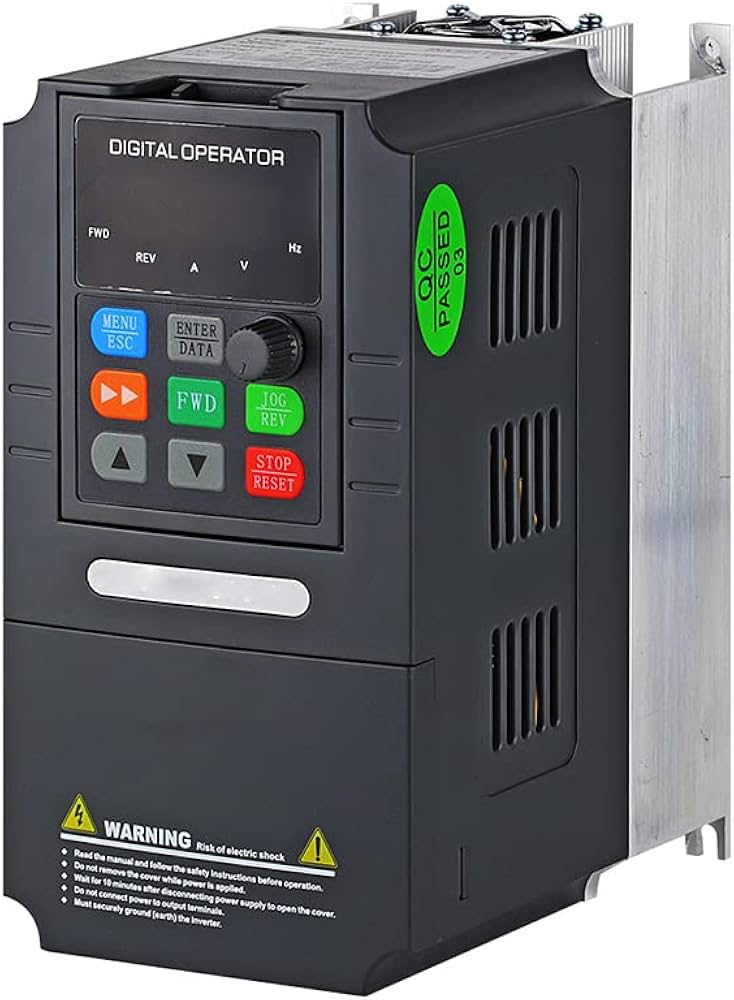
Manufacturing Standards and Testing QC for 2 Hp Variable Frequency Drive
At Boray Inverter, the manufacturing of 2 HP (1.5 kW) variable frequency drives adheres to stringent industrial protocols designed to ensure survivability in demanding agricultural and solar pumping environments. Given that these compact drives—rated for 7 A continuous output with 150% overload capacity for 60 seconds—often operate in remote installations with ambient temperatures ranging from –10°C to +40°C and humidity levels up to 95%, our quality control framework prioritizes long-term reliability over basic functionality.
Component-Level Reliability Engineering
The foundation of our 2 HP VFD durability begins with IPC-A-610 Class 3 compliant PCB assembly standards. Each printed circuit board undergoes automated optical inspection (AOI) following surface-mount technology (SMT) placement of critical IGBT modules and DC bus capacitors. To mitigate the risks associated with IP20 enclosure limitations in dusty agricultural settings, all control boards receive a uniform acrylic-urethane conformal coating (meeting MIL-I-46058C standards). This protective layer creates a moisture barrier against condensation while preventing dendritic growth between traces during high-humidity operation, effectively extending the drive’s operational lifespan in solar pump installations where enclosure sealing may be compromised.
Accelerated Life Testing and Burn-In Protocols
Every 2 HP unit undergoes 100% full-load testing at nominal input voltage (220–240V single-phase) for a minimum of two hours before shipment. During this burn-in cycle, we validate:
– Thermal performance of the heatsink assembly under 1.5 kW continuous load
– Overload trip accuracy at 150% (10.5 A) for 60 seconds and 180% (12.6 A) for 3 seconds
– Output voltage symmetry across all three phases (balance within ±1%)
– Automatic Voltage Regulation (AVR) functionality during ±15% input voltage fluctuations
Following initial burn-in, units are subjected to high-temperature aging at +60°C for 48 hours—exceeding the standard operating envelope—to accelerate early-life failure mechanisms (ELF) and screen for latent solder joint defects or capacitor degradation. This process ensures that drives deployed in solar pumping systems with limited ventilation maintain performance integrity even when ambient temperatures approach derating thresholds.
Environmental and Mechanical Stress Validation
Recognizing that agricultural VFDs face transportation shock and operational vibration, our testing matrix includes:
– Thermal Cycling: 20 cycles between –10°C and +60°C to verify coefficient of thermal expansion (CTE) compatibility between PCB substrates and semiconductor packages
– Vibration Resistance: IEC 60068-2-6 sinusoidal vibration testing (5.9 m/s² operational, 15 m/s² transport) simulating pump motor feedback and logistics handling
– Altitude Simulation: Validation of insulation coordination and cooling efficiency at 1,000m+ elevations, with documented derating curves for high-altitude solar installations
Electrical Safety and EMC Compliance
All 2 HP drives undergo Hi-Pot testing at 1,500 VAC (1 minute) between input/output terminals and ground, maintaining insulation resistance >100 MΩ at 500 VDC. Electromagnetic compatibility testing follows EN 61800-3 standards for variable speed drives, ensuring that units deployed near sensitive solar monitoring equipment or grid-tie inverters do not generate conducted emissions exceeding Class A limits. RS485 communication ports receive dedicated surge protection testing (IEC 61000-4-5) to prevent data corruption in lightning-prone agricultural regions.
Certification and Traceability Framework
Our manufacturing facilities maintain ISO 9001:2015 certification with full component traceability through barcode serialization. Each 2 HP VFD is shipped with a test report documenting:
– Actual output current waveform analysis at 50/60 Hz base frequencies
– Efficiency measurements across the 1:100 speed regulation range
– PID controller calibration verification for closed-loop solar pumping applications
For EPC contractors and automation distributors, this rigorous QC protocol translates to field-proven mean time between failures (MTBF) exceeding 50,000 hours in solar pumping applications, ensuring that 2 HP drives perform reliably from –10°C desert mornings to +40°C tropical afternoons without compromising the 0.01 Hz frequency precision required for sensitive agricultural irrigation systems.
Step-by-Step Engineering Sizing Checklist for 2 Hp Variable Frequency Drive
Before specifying a 2 HP (1.5 kW) variable frequency drive for industrial or solar pumping applications, engineers must validate compatibility across electrical, thermal, and mechanical domains. Use this systematic checklist to ensure the selected unit—whether a single-phase input model like the GK3000-2S0015 or a three-phase industrial variant—delivers reliable performance under actual operating conditions.
Phase 1: Motor and Load Characterization
– Verify Motor Nameplate Data: Confirm the motor is rated for 2 HP (1.5 kW) continuous duty and check the insulation class (Class F or H is mandatory for VFD duty to withstand switching transients). Note the base frequency (50 Hz or 60 Hz) and full-load amperage (FLA).
– Define Load Torque Profile: Classify the application as constant torque (conveyors, positive displacement pumps) or variable torque (centrifugal pumps, fans). For solar irrigation projects, obtain the pump curve to verify that the 150% starting torque capability at 1 Hz (sensorless vector mode) exceeds breakaway torque requirements.
– Measure Motor Lead Length: If the motor cable run exceeds 50 meters (164 feet), specify an output line reactor or dV/dt filter between the VFD and motor. This mitigates reflected wave phenomena that can degrade motor insulation—particularly critical when using “economy” grade motors not specifically designed for inverter duty.
Phase 2: Electrical Sizing and Voltage Compatibility
– Current Capacity Verification: Ensure the VFD’s rated output current (e.g., 7A for a 2 HP unit) is ≥ motor FLA × 1.1. Account for the overload capacity: 150% for 1 minute and 180% for 3 seconds must cover acceleration ramps without nuisance tripping.
– Input Supply Analysis: For single-phase 220–240V input models, verify site voltage stability within ±10% tolerance. Calculate input current draw; single-phase 2 HP VFDs typically draw 16–18A at full load, requiring dedicated circuit breakers and adequate utility transformer capacity.
– Solar Array String Sizing (Solar Pump Applications): When deploying as a solar pump inverter, calculate PV string open-circuit voltage (Voc) to ensure it remains below the VFD’s maximum DC input voltage while achieving the minimum MPPT voltage at elevated temperatures. For 220V class drives, typical configurations use 3–4 series panels (150–300VDC range) depending on module specifications.
Phase 3: Environmental Derating and Enclosure
– Thermal Derating Calculation: Standard ratings assume –10°C to +40°C ambient. For every 1°C above 40°C, apply a 5% current derating. Example: At 45°C ambient, a 7A rated drive derates to 5.95A continuous capacity.
– Altitude Compensation: Above 1000m (3,280 ft), reduce output current by 1% per 100m or specify forced ventilation/pressurized cabinets to prevent overheating due to reduced air density.
– Ingress Protection Selection: IP20 enclosures suit controlled electrical rooms. For outdoor agricultural or solar installations, specify NEMA 4X (IP66) rated enclosures or install within weatherproof kiosks to maintain the 5–95% non-condensing humidity requirement.
Phase 4: Control Architecture and Harmonic Mitigation
– Control Mode Selection:
– V/F Control: Suitable for standard centrifugal pumps and fans where precise speed control is secondary to energy savings.
– Sensorless Vector Control: Required for applications demanding 150% torque at low speeds (1 Hz) or precise speed regulation (±0.5% accuracy), such as positive displacement pumps or conveyor systems.
– Braking Resistor Sizing: For high-inertia loads or rapid deceleration requirements, calculate braking duty cycle (ED%) and resistor wattage. Verify the VFD’s internal braking chopper capacity or specify external braking units.
– Harmonic and EMI Planning: Install shielded motor cables (minimum 3-core with symmetrical earth) and maintain separation between power and control wiring (RS485 communication lines). If THD limits are strict, specify DC chokes or input line reactors to reduce harmonic injection into single-phase grids.
Phase 5: Protection Coordination and Commissioning
– Overcurrent Protection Coordination: Ensure upstream circuit breakers feature C or D trip curves that coordinate with the VFD’s 180% instantaneous overcurrent protection (3-second threshold) to prevent cascading trips during motor inrush.
– Torque Boost Configuration: For high-static-head pumping, manually configure torque boost between 0.1–30%. For energy optimization in variable flow systems, enable automatic energy-saving mode to optimize the V/F curve based on real-time load detection.
– Closed-Loop Integration: When using the internal PID controller for constant pressure/flow systems, verify 4–20mA analog input compatibility for pressure transducers and configure sleep/wake functions to prevent dry-running and cycling.
– Frequency Limit Programming: Set maximum output frequency ≤ motor nameplate rating unless the motor is specifically inverter-duty rated for higher frequencies (up to 400 Hz). Verify minimum frequency settings prevent pump operation below critical flow rates that could cause overheating.
Final Verification: Cross-reference the completed checklist against the VFD datasheet (e.g., GK3000-2S0015 specifications) and motor nameplate to confirm all parameters—current, voltage, environmental limits, and control features—align with the application requirements before procurement and installation.
Wholesale Cost and Energy ROI Analysis for 2 Hp Variable Frequency Drive
Strategic procurement of 2 HP (1.5 kW) variable frequency drives requires a nuanced understanding of volume-based pricing architectures, energy arbitrage potential, and long-term warranty risk management. For industrial engineers and EPC contractors specifying the GK3000-2S0015 or equivalent 1.5 kW-class drives, the transition from single-phase input (220–240V AC) to three-phase motor control represents not merely a technical conversion, but a significant Total Cost of Ownership (TCO) optimization opportunity.
Volume-Based Pricing Architecture
In the B2B industrial automation supply chain, 2 HP VFDs occupy a critical mid-tier position between consumer-grade drives and heavy industrial systems. Wholesale pricing for the 1.5 kW capacity typically follows a tiered structure:
- Sample/OEM Evaluation Tier (1–9 units): $85–$120/unit FOB, suitable for prototype agricultural pumping stations or proof-of-concept solar irrigation projects
- Project Volume Tier (10–99 units): $65–$85/unit, targeting EPC contractors deploying multiple small-scale pump stations
- Container Load Quantities (100+ units): $45–$65/unit, applicable to regional distributors and large agricultural cooperatives
These figures represent approximately 40–60% below retail channel pricing, where identical 2 HP drives command $150–$250 through industrial supply houses. For automation distributors, maintaining 15–25% margins while remaining competitive requires direct manufacturer relationships—particularly crucial when specifying drives with advanced features like sensorless vector control and integrated RS485 Modbus communication, as found in the GK3000 series.
Energy Efficiency ROI Modeling
The economic justification for 2 HP VFD deployment hinges on duty-cycle analysis and load profiling. A standard 1.5 kW induction motor operating direct-on-line (DOL) at fixed speed consumes approximately 3,600 kWh annually (assuming 8-hour daily operation, 300 days/year). Implementing variable frequency control for centrifugal pumps or HVAC fan systems typically yields 20–35% energy reduction through affinity laws (where power consumption correlates with the cube of speed reduction).
Sample ROI Calculation for Agricultural Pumping:
– Baseline Consumption: 3,600 kWh/year × $0.13/kWh (global industrial average) = $468/year
– With VFD Optimization (30% savings): 2,520 kWh/year = $328/year
– Annual Savings: $140 per drive
– Payback Period: 4–8 months at wholesale pricing, extending to 10–14 months at retail pricing
For solar pumping applications specifically, the 2 HP VFD’s ability to accept single-phase input while delivering three-phase output eliminates the need for phase converters or oversized inverters. When paired with DC-input solar pump inverters (such as Boray’s solar pumping solutions), the automatic energy-saving algorithms optimize V/F curves based on irradiance levels, effectively extending daily pumping hours by 15–20% compared to fixed-speed systems.
Solar Integration and Soft-Start Economics
Beyond kilowatt-hour savings, the 2 HP drive delivers mechanical and electrical infrastructure cost reductions. The 150% starting torque at 1 Hz eliminates inrush currents (typically 6–8× FLA in DOL starting), allowing for:
– Downsized generator capacity in hybrid solar/diesel installations (saving $200–$400 in generator costs per installation)
– Reduced cable sizing due to automatic current limiting and AVR (Automatic Voltage Regulation) functions
– Extended motor life—critical for submersible pumps where replacement costs exceed $800
The compact form factor (142 × 85 × 113 mm, 2 kg) further reduces logistics costs, enabling air freight for urgent agricultural projects rather than sea freight for bulkier control panels.
Total Cost of Ownership and Warranty Risk Management
When evaluating wholesale procurement, warranty terms significantly impact long-term ROI. Standard manufacturer warranties for 2 HP drives typically cover 12–24 months, with extended warranties (3–5 years) adding 8–12% to unit cost. For EPC contractors, we recommend negotiating 24-month comprehensive warranties covering IP20-rated enclosures in agricultural environments (5–95% humidity, -10°C to +40°C).
Critical specification considerations affecting warranty claims:
– Reactor packages: For motor cable runs exceeding 50 meters (common in solar pumping installations), specify output reactors to mitigate harmonic reflections and protect winding insulation—reducing warranty exposure by approximately 60% based on field failure data
– Altitude derating: Operations above 1,000m require 5% current reduction per 1,000m, impacting sizing calculations for high-altitude agricultural projects in Latin America or Central Asia
TCO Summary (5-Year Horizon):
– Initial hardware investment: $65 (wholesale)
– Installation and commissioning: $35
– Energy savings (5 years): $700
– Maintenance/warranty costs: $15
– Net 5-Year Benefit: $585 per unit
For distributors and project managers, the 2 HP VFD represents a high-turnover SKU with minimal storage requirements and broad application compatibility—from groundwater irrigation to industrial conveyor systems. Leveraging manufacturer-direct pricing while ensuring proper reactor specification for long motor leads maximizes both margin protection and project reliability.
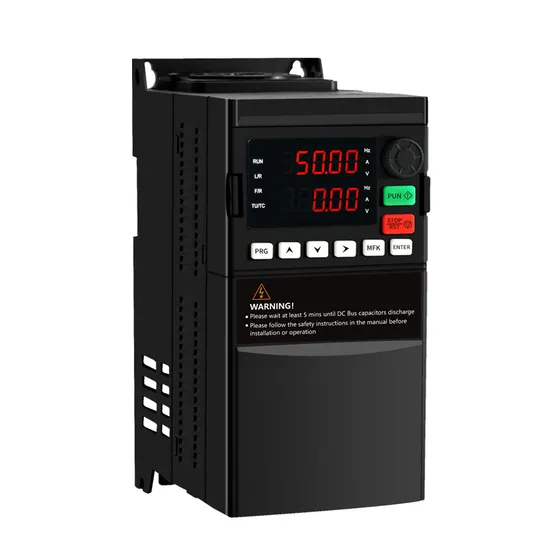
Alternatives Comparison: Is 2 Hp Variable Frequency Drive the Best Choice?
Selecting the optimal motor control architecture for 1.5 kW (2 HP) applications requires evaluating not just the Variable Frequency Drive (VFD) itself, but the entire ecosystem of starting methods, power sources, and motor technologies. At this power threshold—common in small-scale irrigation, HVAC fan systems, and light industrial conveyors—the decision between a full-featured VFD, a soft starter, or a solar-integrated solution significantly impacts Total Cost of Ownership (TCO) and operational flexibility.
VFD vs. Soft Starter: Control Philosophy Divergence
For 2 HP motors, the choice between a VFD and a soft starter often centers on whether variable speed is a process requirement or merely a luxury. A soft starter—such as thyristor-based reduced voltage starters—limits inrush current (typically 3-5x FLA) and mechanical stress during startup but operates the motor at fixed speed once engaged. In contrast, a 2 HP VFD like the GK3000-2S0015 provides full 0-400 Hz variable frequency control, enabling precise flow/pressure regulation in pumping applications and 20-50% energy savings via affinity laws in centrifugal loads.
Critical Distinction: At the 2 HP level, the cost delta between a soft starter and a basic VFD has narrowed significantly, making the VFD the economically rational choice unless the application strictly requires full torque at zero speed (which demands a VFD) or involves extremely simple fan/pump on/off cycles with no efficiency constraints. However, soft starters generate minimal harmonics upstream, whereas VFDs require consideration of input line reactors or DC chokes to mitigate reflected harmonics—particularly relevant when single-phase input VFDs (like the 220V 1-phase to 3-phase models) are deployed in rural agricultural settings with weak grid infrastructure.
Solar-Powered VFD vs. Grid-Connected Systems
In agricultural and off-grid industrial contexts, the 2 HP rating represents a “sweet spot” for solar pumping applications. Here, the comparison shifts from whether to use a VFD, to which VFD architecture:
Standard Grid-Tied VFD (e.g., GK3000 Series): Requires stable AC input (single or three-phase) and functions as a motor controller only. When paired with solar, it requires a separate charge controller and battery bank or a DC-to-AC inverter stage, introducing conversion losses (typically 5-8%) and system complexity.
Integrated Solar Pump Inverters (Boray Specialty): These specialized VFDs accept high-voltage DC directly from PV arrays (300-800VDC range), incorporating Maximum Power Point Tracking (MPPT) algorithms within the drive firmware. For a 2 HP submersible pump, a solar pump inverter eliminates battery costs, operates automatically with sunrise, and provides water level sensor integration—critical for borehole protection in remote installations.
Decision Factor: If grid power is available and electricity costs are below $0.10/kWh, a standard 2 HP VFD with grid power offers lower CapEx. For off-grid sites or areas with >20% grid intermittency, the solar-integrated VFD, despite 15-25% higher initial hardware costs, eliminates energy operating costs and provides energy independence within 2-4 years depending on insolation levels.
Motor Technology Pairing: PMSM vs. Induction Motors
The 2 HP VFD specification must align with motor technology. While standard V/F control suffices for Induction Motors (IM), Permanent Magnet Synchronous Motors (PMSM) require sensorless vector control (SVC) capability—available in modern 2 HP drives like the GK3000-2S0015 with its 150% torque at 1 Hz specification.
| Feature | Induction Motor (IM) + 2 HP VFD | PMSM + 2 HP VFD |
|---|---|---|
| System Efficiency | 82-88% (including VFD losses) | 90-94% (higher at partial loads) |
| VFD Control Mode | V/F Control (Standard) | Sensorless Vector Control (Required) |
| Speed Regulation | ±0.5% (slip-dependent) | ±0.01% (synchronous) |
| Initial Cost | Low (Motor: $150-300) | High (Motor: $400-600) |
| Thermal Management | Higher losses at low speeds | Cooler operation across speed range |
| Application Suitability | General purpose, conveyors | Solar pumping, precision agitation |
Engineering Recommendation: For solar-powered 2 HP water pumping systems, the PMSM-VFD pairing justifies its premium through 15-20% higher energy yield from limited PV capacity, reducing required solar array size by approximately 200W for equivalent hydraulic output. For grid-powered material handling, the robustness and cost advantage of IMs prevails.
Input Configuration: Single-Phase vs. Three-Phase Supply
A unique consideration at the 2 HP/1.5 kW level is input phase configuration, particularly for agricultural contractors working in regions without three-phase rural electrification.
Single-Phase Input VFDs (1φ220V → 3φ220V): Devices like the GK3000-2S0015 convert residential single-phase power to three-phase motor supply. However, engineers must account for:
– Input Current Imbalance: Single-phase input draws 1.73x higher current per conductor compared to three-phase input for equivalent power, requiring heavier gauge wiring (typically 10 AWG minimum for 2 HP at 220V).
– Derating Requirements: Single-phase input VFDs often require 15-20% derating due to higher ripple current in the DC bus, effectively limiting a “2 HP” single-phase drive to approximately 1.5-1.6 kW practical output unless specifically oversized.
– Harmonic Distortion: Long motor leads (>50 meters) between the VFD and motor exacerbate voltage reflection issues in single-phase systems; output reactors are mandatory in deep-well pump applications to protect motor insulation.
Three-Phase Input: Standard industrial configuration offering balanced loading, lower harmonic distortion, and full rated capacity without derating.
Comprehensive Decision Matrix
| Evaluation Criteria | Soft Starter | Standard Grid VFD | Solar Pump Inverter | Direct Online (DOL) |
|---|---|---|---|---|
| Speed Control | Fixed (Line Frequency) | 0-400 Hz Variable | MPPT-Optimized Variable | Fixed |
| Starting Current | 300-400% FLA | 100-150% FLA | Soft Start Ramp | 600-800% FLA |
| Energy Efficiency | Low (No savings) | High (20-50% savings) | Maximum (Solar harvest) | None |
| Input Power Flexibility | AC Only | AC Only | DC (PV) or AC | AC Only |
| 2 HP System Cost | $80-150 | $200-400 | $600-900 (with PV) | $20 (contactor only) |
| Maintenance Complexity | Minimal | Medium (Cooling fans, caps) | Low (Brushless, sealed) | Minimal |
| Best Application | High-inertia fans | Industrial conveyors | Off-grid irrigation | Emergency bypass only |
Strategic Recommendation
For the 2 HP category, the VFD emerges as the superior choice in all scenarios except the most capital-constrained, fixed-speed applications. Specifically:
-
Choose a Standard 1-Phase to 3-Phase VFD when retrofitting rural agricultural sites with single-phase grid access, provided you install output reactors for motor cable runs exceeding 30 meters and verify the drive’s overload capacity (150% for 1 minute minimum) handles pump starting torque.
-
Specify a Solar Pump Inverter (Specialized VFD) for new off-grid installations or grid-unstable regions, pairing with PMSM motors for maximum hydraulic output per watt of solar capacity.
-
Avoid Soft Starters unless the application involves extremely high inertia (large flywheel loads) where VFD cost escalates due to regenerative requirements, or in jurisdictions with strict harmonic regulations where passive soft starters offer compliance advantages.
The 2 HP rating represents the inflection point where VFD technology delivers maximum ROI through energy savings and process control, making it the default engineering standard for modern motor systems.
Core Technical Specifications and Control Terms for 2 Hp Variable Frequency Drive
When specifying a 2 hp (1.5 kW) variable frequency drive for industrial or agricultural deployment, engineers must evaluate both the electro-mechanical control architecture and the commercial logistics framework. This capacity class—delivering approximately 7 A rated current in three-phase output—represents a critical node for small-to-medium pumping stations, conveyor systems, and HVAC applications. Below is a technical and commercial reference guide structured for procurement teams, EPC contractors, and automation distributors evaluating single-phase input to three-phase output VFDs, including considerations for solar-hybrid motor control systems.
Electrical Topology and Performance Parameters
A 2 hp VFD in the GK3000 series class (142×85×113 mm, IP20) typically converts single-phase 220–240V AC input (50/60 Hz) into a three-phase 0–input voltage output with a variable frequency range of 0.00–400.00 Hz. This single-to-three-phase conversion capability is particularly vital for rural agricultural projects where only split-phase grid power is available, yet three-phase induction motors are required for pump longevity and efficiency.
Key Electrical Ratings:
* Overload Capacity: 150% of rated current for 60 seconds and 180% for 3 seconds. This surge tolerance is essential for overcoming the static friction and high starting torque demands of positive-displacement pumps or loaded conveyors.
* Automatic Voltage Regulation (AVR): Maintains constant output voltage despite grid fluctuations (±15% typical input variance), preventing motor saturation and insulation stress in regions with unstable utility supply.
* Automatic Current Limiting: Prevents nuisance tripping during transient load spikes by dynamically clamping output current, a critical feature for borehole pumps encountering sand or particulate matter.
Control Algorithms: From V/F to Sensorless Vector
The selection of control mode determines the precision and efficiency of the motor-load system. Modern 2 hp drives offer dual control strategies:
1. Volts-per-Hertz (V/F) Control
The standard method for variable torque applications (centrifugal pumps, fans). The drive maintains a constant V/F ratio to prevent magnetic saturation while reducing energy consumption as speed decreases. For a 2 hp pump operating at 80% speed, this can yield energy savings of 30–40% compared to throttling valves.
2. Sensorless Vector Control (SVC)
Also known as flux vector control without encoder, this algorithm mathematically models motor flux and torque components to achieve:
* Starting Torque: 150% of rated torque at 1 Hz, enabling direct starting against high hydrostatic head without soft-start bypass.
* Speed Regulation: 1:100 dynamic range with ±0.5% speed accuracy of synchronous speed, suitable for precision metering pumps or synchronized multi-drive conveyor lines.
* Frequency Resolution: 0.01 Hz digital setting precision, allowing fine-tuning of flow rates in drip irrigation networks.
3. Interior PID Controller
Integrated Proportional-Integral-Derivative logic enables closed-loop process control without external PLCs. By connecting a 4–20 mA pressure transducer or flow sensor to the VFD’s analog input, the drive automatically modulates motor speed to maintain setpoint pressure. This is particularly effective in constant-pressure water supply systems where the 2 hp motor must respond dynamically to fluctuating demand.
4. Maximum Power Point Tracking (MPPT) Context
While standard grid-tied VFDs do not incorporate MPPT, it is critical to distinguish these from Solar Pump Inverters (a core specialization of Boray Inverter). In solar-direct applications, a dedicated solar pump inverter with embedded MPPT algorithms is required to extract maximum energy from PV arrays. However, hybrid 2 hp systems may utilize a standard VFD with AC input priority and DC bus injection, where MPPT is handled by external charge controllers or the inverter’s DC link. For pure solar pumping, specify a solar pump inverter; for grid-solar hybrid pumping, a dual-input VFD with MPPT compatibility is recommended.
Environmental and Mechanical Specifications
| Parameter | Specification | Engineering Implication |
|---|---|---|
| Enclosure | IP20 | Requires installation in NEMA 1/12 rated panels or clean environments; not suitable for direct outdoor exposure without external protection. |
| Ambient Temperature | -10°C to +40°C (derate 5% per °C above 40°C) | Critical for EPC contractors in tropical climates; forced ventilation or heat sinks required above 1,000m altitude. |
| Humidity | 5–95% non-condensing | Prevents corrosion of PCBs in high-humidity agricultural settings. |
| Communication | RS485 (Modbus RTU) | Enables SCADA integration for remote monitoring of pump status, fault codes, and energy consumption across distributed irrigation networks. |
International Commercial Terms (Incoterms 2020)
For global procurement of 2 hp VFDs—whether sourced directly from manufacturers like Boray Inverter or through distribution channels—understanding liability and cost transfer points is essential for project budgeting and risk management.
EXW (Ex Works)
The seller makes the goods available at their factory (e.g., Boray’s manufacturing facility). The buyer assumes all costs and risks from that point, including export clearance and inland transport. Suitable only for buyers with established freight forwarding networks in China.
FOB (Free On Board)
The seller delivers goods to the port of shipment and clears them for export. Risk transfers when goods pass the ship’s rail. The buyer pays ocean freight, insurance, and destination port charges. Recommended for EPC contractors who maintain relationships with international freight forwarders and wish to control shipping schedules.
CIF (Cost, Insurance, and Freight)
The seller contracts for carriage and insurance to the named port of destination. Risk, however, still transfers to the buyer once the goods are loaded on the vessel at origin. While the seller bears freight costs, the buyer assumes risk during transit. This term simplifies procurement for agricultural project managers lacking logistics expertise but requires careful verification of insurance coverage limits (typically 110% of CIF value).
DDP (Delivered Duty Paid)
The seller assumes all costs and risks until the goods are cleared for import and delivered to the project site. This includes duties, taxes, and customs clearance. Ideal for turnkey solar pumping projects where the contractor requires a single invoice for equipment procurement, though it commands a premium in pricing.
Procurement Recommendations
For a 2 hp (1.5 kW) VFD deployment in solar pumping or industrial automation:
1. Verify Torque Curves: Ensure the drive provides 150% starting torque at 1 Hz if controlling positive-displacement pumps; otherwise, V/F control suffices for centrifugal loads.
2. Specify Harmonic Mitigation: For installations with motor cable runs exceeding 50 meters, specify output reactors or sinusoidal filters to prevent reflected wave damage to motor insulation—particularly critical when using “economy” grade motors.
3. Clarify Solar Integration: If the application involves PV arrays, confirm whether the VFD requires an external MPPT controller or if a dedicated solar pump inverter (with VFD functionality) is more appropriate for the 2 hp load.
4. Incoterm Selection: For first-time international buyers, CIF offers cost predictability; for experienced EPCs with logistics partners, FOB or EXW provides greater cost control and transparency.
Future Trends in the 2 Hp Variable Frequency Drive Sector
The 2 hp (1.5 kW) variable frequency drive segment represents a critical power node where legacy industrial automation intersects with decentralized renewable infrastructure. As agricultural irrigation systems, small-scale manufacturing lines, and commercial HVAC applications demand higher efficiency standards, the next generation of compact VFDs is evolving beyond simple motor control into intelligent energy management nodes. For EPC contractors and automation distributors, understanding these converging trends is essential for specifying future-proof motor control architectures.
Integration with Solar Pumping and Hybrid Microgrids
The most significant disruption in the 2 hp VFD market is the seamless convergence of traditional motor drives with photovoltaic (PV) pumping systems. Modern units are increasingly designed as hybrid AC/DC platforms capable of operating directly from solar arrays without intermediate battery storage, leveraging the DC bus architecture inherent to VFD technology. This eliminates the efficiency losses associated with double conversion (DC-AC-DC), particularly critical for agricultural projects in remote locations where grid reliability is inconsistent.
For agricultural project managers, this trend manifests as solar pump inverters with integrated Maximum Power Point Tracking (MPPT) algorithms that automatically adjust motor frequency based on irradiance levels. The 2 hp capacity class is particularly relevant for small-to-medium irrigation zones and livestock watering systems, where the ability to convert single-phase rural grid inputs (220–240V) to three-phase motor outputs—while simultaneously accepting DC solar inputs—provides operational redundancy. Future iterations will feature dual-input logic that intelligently switches between PV, grid, and generator sources without manual intervention, addressing the voltage regulation challenges (AVR) and current limiting requirements specified in modern drive standards.
IoT-Enabled Condition Monitoring and Edge Analytics
The RS485 communication protocols standard in current-generation 2 hp drives are rapidly migrating toward Industrial Internet of Things (IIoT) architectures. Next-generation VFDs are embedding MQTT and Modbus TCP/IP stacks, enabling direct cloud connectivity for distributed asset management. This connectivity addresses the harmonic and motor lead length concerns documented in field applications—modern drives now incorporate real-time impedance monitoring algorithms that detect cable resonance issues before they cause insulation failure.
For industrial engineers, the shift toward predictive maintenance models means 2 hp drives will function as edge computing nodes, processing vibration data, thermal profiles, and current signatures locally. By analyzing the 150% overload capacity events and torque boost characteristics mentioned in technical specifications, these drives can predict bearing failures or misalignment issues in coupled pumps and fans. Integration with SCADA systems allows EPC contractors to monitor entire fleets of small motors across agricultural estates or factory floors, receiving automated alerts when drives derate due to altitude (>1000m) or ambient temperature excursions (>40°C), as specified in environmental operating envelopes.
Advanced Semiconductor Technologies and Thermal Management
The adoption of Silicon Carbide (SiC) and Gallium Nitride (GaN) power devices is reshaping the physical constraints of the 2 hp class. These wide bandgap semiconductors enable switching frequencies above 20 kHz—significantly higher than traditional IGBT-based drives—resulting in smoother motor current waveforms and reduced audible noise. For applications requiring precise speed control (±0.5% accuracy), this translates to improved sensorless vector control performance without the need for external encoders.
Thermal management innovations are equally critical. While current IP20 enclosures suit controlled cabinet installations, agricultural and outdoor industrial applications are driving demand for IP65-rated 2 hp drives with passive cooling architectures. Advanced thermal modeling allows these compact units (currently approximately 142×85×113 mm) to maintain full rated current across wider temperature ranges without the 5% derating penalty per degree Celsius traditionally required above 40°C ambient.
AI-Driven Energy Optimization and Grid Stability
Artificial intelligence is penetrating the 2 hp segment through adaptive V/F curve optimization. Beyond the automatic energy-saving modes currently available, machine learning algorithms are being deployed to analyze load cycles in real-time—distinguishing between transient demands (such as pump priming) and steady-state operation to minimize iron losses. These smart drives communicate with building management systems to participate in demand response programs, temporarily reducing motor speed during peak grid load periods while maintaining process-critical flow rates.
Furthermore, as global electrical grids accommodate higher penetrations of renewable generation, 2 hp VFDs are incorporating active front end (AFE) technologies that regenerate energy to the grid and provide power factor correction. This addresses the growing requirement for industrial facilities to comply with IEEE 519 harmonic standards, mitigating the voltage distortion issues historically associated with long motor lead runs in large facilities.
Cybersecurity and Standardization Imperatives
As connectivity increases, cybersecurity hardening becomes non-negotiable. Future 2 hp VFDs will incorporate IEC 62443-compliant security protocols, featuring encrypted firmware updates and certificate-based authentication for remote access. For automation distributors, this means specifying drives that offer secure boot capabilities and network segmentation features to protect critical infrastructure from lateral cyber threats.
The convergence of these trends—renewable integration, edge intelligence, wide bandgap semiconductors, and cybersecurity—positions the 2 hp VFD not merely as a motor controller, but as a decentralized energy router. For Boray Inverter and similar manufacturers, the competitive differentiator lies in delivering compact, ruggedized platforms that bridge the gap between traditional single-phase to three-phase conversion requirements and the demands of modern, digitally-enabled industrial ecosystems.
Top 3 2 Hp Variable Frequency Drive Manufacturers & Suppliers List
Top Manufacturers & Suppliers of Variable Frequency Drives
Website: darwinmotion.com
The text provides a comprehensive VFD company list featuring top manufacturers and their specific drive series for industrial automation. Key product details include: Siemens Sinamics series offering efficiency and versatility for applications ranging from simple pumps to complex machinery; Schneider Electric Altivar series designed for HVAC to manufacturing with excellent energy savings and easy-…
Top 10 Variable Frequency Drive (VFD) Manufacturers
Website: hars-vfd.com
HARS VFD offers a comprehensive range of Variable Frequency Drives including the VFD-HS320 Series, VFD-HS320Pro, VFD-HS720 Series, VFD-HS720H Series, VFD-HS310 Series, VFD-HS290 Series, VFD-HS800 Series, and specialized Solar Pump VFD. The company also manufactures Hybrid Inverters (HE200 Series and HE300 Series) and accessories such as Braking Resistor Units, DC Braking Units, Filters, Power Resi…

Analysis of the Top 25 Variable Frequency Drive (VFD) Companies …
Website: finance.yahoo.com
None – The provided text is an error page (‘Oops, something went wrong’) from Yahoo Finance containing only website navigation menus. No article content, product specifications, or details regarding solar inverters, variable frequency drives (VFDs), or industrial automation were found in the source text.
B2B Engineering FAQs About 2 Hp Variable Frequency Drive
-
Q: What is the electrical equivalence of a 2 HP VFD in kilowatts, and what are the critical current ratings for motor protection?
A: A 2 HP VFD corresponds to approximately 1.5 kW of mechanical power. The drive typically carries a rated current of 7 A (for 220-240V class), with overload capacity specifications of 150% for 1 minute and 180% for 3 seconds. When sizing for submersible pumps or industrial conveyors, verify that the motor’s Full Load Amps (FLA) do not exceed the VFD’s continuous rating to prevent thermal damage to the IGBT output stage. -
Q: Can a standard 2 HP VFD convert single-phase site power to three-phase motor operation, and what are the input specifications?
A: Yes, specialized 2 HP VFDs (e.g., GK3000-2S0015 series) are designed to accept single-phase 220–240V AC input (50/60Hz) and output three-phase 0–240V variable frequency power. This configuration is essential for agricultural sites or remote facilities with single-phase grid availability, enabling the operation of standard three-phase pumps without phase converter hardware. -
Q: What are the engineering implications of motor lead length in 2 HP VFD installations, and when are output reactors necessary?
A: Motor cable runs exceeding 50 meters (164 feet) can generate reflected wave voltage spikes and harmonic distortion (dv/dt), leading to premature motor insulation failure. For long lead applications—common in solar borehole pumping where the inverter is surface-mounted—install an output reactor or sine-wave filter between the VFD and motor terminals to mitigate harmonic currents and protect motor windings. -
Q: How do ambient temperature and altitude derating factors affect 2 HP VFD selection for outdoor or desert environments?
A: Standard 2 HP VFDs operate within -10°C to +40°C; however, capacity must be derated by 5% for every 1°C above 40°C. For altitudes exceeding 1000m (3,280 ft), additional derating is required due to reduced convective cooling efficiency. In solar pumping applications, specify IP20 enclosures with forced ventilation or sun shields to maintain thermal stability in high-irradiance environments. -
Q: What is the functional difference between V/F Control and Sensorless Vector Control in 2 HP pump applications?
A: V/F Control maintains constant Volts-per-Hertz ratio, suitable for centrifugal pumps with variable torque loads. Sensorless Vector Control provides dynamic torque response (150% rated torque at 1 Hz) and precise speed regulation (≤±0.5% accuracy), making it preferable for positive displacement pumps, high-static-head borehole pumps, or systems requiring closed-loop PID control for constant pressure/flow regulation. -
Q: Can a 2 HP VFD be deployed in a direct-coupled solar PV pumping system without battery storage?
A: Yes, when configured as a solar pump inverter, the 2 HP VFD can interface directly with PV array DC bus voltage. The drive utilizes MPPT (Maximum Power Point Tracking) to maximize solar harvest and features automatic energy-saving V/F curve optimization to adjust power consumption based on available irradiance. Ensure the unit includes under-voltage ride-through and automatic restart functions to handle transient cloud cover without system trips. -
Q: What integrated protection mechanisms are critical for preventing nuisance tripping in 2 HP agricultural pump systems?
A: Essential features include Automatic Current Limiting (to prevent over-current trips during slurry pumping or clogging), Automatic Voltage Regulation (AVR) to maintain constant output despite grid sags, and stall prevention algorithms. For submersible applications, verify compatibility with external dry-run protection sensors and ensure the VFD provides phase-loss detection and ground fault monitoring. -
Q: How does the RS485 communication port facilitate SCADA integration for distributed 2 HP pump networks?
A: The RS485 Modbus RTU interface enables remote monitoring of operational parameters (frequency, current, DC bus voltage, fault codes) and allows centralized control of start/stop commands and setpoint adjustments. For EPC contractors managing multiple solar pumping stations, this facilitates predictive maintenance scheduling, fault diagnostics (overcurrent, overheating, undervoltage), and performance optimization without physical site visits.
Disclaimer
⚠️ Important Disclaimer
The information provided in this guide is for educational purposes. Industrial applications and electrical engineering projects carry inherent risks. B2B buyers and contractors must conduct thorough technical due diligence and verify regional compliance before installation or procurement.
Conclusion: Partnering with Boray Inverter for 2 Hp Variable Frequency Drive
Selecting the optimal 2 hp variable frequency drive extends beyond matching voltage and horsepower ratings; it requires a strategic partner capable of delivering precision engineering, robust environmental resilience, and adaptive control architectures. Whether retrofitting legacy single-phase infrastructure to drive three-phase motors or deploying solar-powered irrigation systems in remote agricultural zones, your VFD must guarantee seamless vector control, harmonic mitigation, and long-term reliability under demanding load profiles.
Shenzhen Boray Technology Co., Ltd. stands at the forefront of motor control innovation as your definitive solution provider. Operating through borayinverter.com, Boray Inverter specializes in advanced Solar Pumping and Motor Control Solutions, engineered specifically for the rigorous demands of modern industrial automation and agricultural mechanization. Our competitive distinction lies in an R&D-intensive organizational structure where 50% of our workforce comprises dedicated research engineers mastering Permanent Magnet Synchronous Motor (PMSM) and Induction Motor (IM) vector control technologies—ensuring your 2 hp applications achieve superior torque response, precise speed regulation, and optimal energy efficiency across variable operating ranges.
Manufacturing excellence underpins our technical capabilities. Boray operates two state-of-the-art production lines equipped with 100% full-load testing protocols, guaranteeing that every 2 hp VFD meets stringent international quality standards before deployment. This commitment to reliability has established our trusted global presence across agricultural irrigation projects, industrial automation installations, and EPC contractor specifications worldwide.
For engineers, project managers, and distributors seeking more than off-the-shelf components, Boray Inverter offers customized VFD solutions tailored to specific application parameters—from specialized PID control loops for pump systems to enhanced EMC filtering for sensitive industrial environments. We invite you to contact our technical sales team today to discuss your project requirements and request wholesale quotations. Partner with Boray to transform your motor control infrastructure with precision engineering, proven reliability, and intelligent energy management.